logo mobile sidebar
support-image-mobile
Share your ideas with our local expert team - we’re here to listen and help you shape a meaningful journey through Indochina.
(+84) 868 663 993
Asia Leading Tour Operator 2025
tripadvisor travelers choice awards 2024
Travelers' Choice Awards 2025

Author: Linh Nguyen

Tam Giang Lagoon: Hue’s Hidden Paradise Of Sun Views

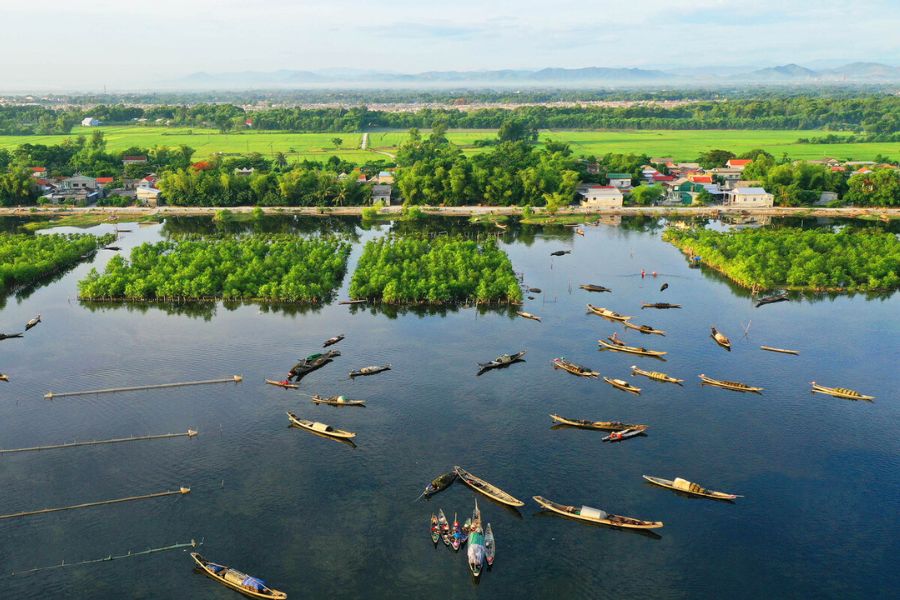
Tam Giang Lagoon is the largest brackish water lagoon in all of Southeast Asia and is located in Thua Thien Hue. It offers a wonderful variety of scenery, beautiful fishing villages, and sunsets that are simply mesmerizing.

Introduction To Tam Giang Lagoon

Tam Giang Lagoon is the largest brackish-water lagoon in Southeast Asia, is part of the Tam Giang-Cau Hai lagoon system, and is almost 70 kilometers long with about 22,000 hectares of water surface.

Tam Giang Lagoon is an undiscovered paradise

In addition to its scenic beauty, Tam Giang Lagoon is an ecosystem unlike any other cultural resource. Visitors can see how traditional fishing methods handed down through generations are practiced, see floating houses on the lagoon, and enjoy food that came directly from the lagoon. If you come to take pictures, go for a boat trip at dawn, or simply sit and breathe, Tam Giang Lagoon offers a unique experience of natural beauty coupled with the real life of local people.

History Of Tam Giang Lagoon

As noted in historic references, Truong Nha Ho and Tam Giang Lagoon struck fear in the hearts of travelers. Previously, travelers to Hue City had to either travel through forest roads or illegally cross the water of Tam Giang Lagoon. Truong Nha Ho was a large, thick forest known for the notorious authors of banditry that thrived there. Tam Giang Lagoon, which means “shallow sea,” was known for dangerous waters. During the Reign of Emperor Minh Mang, it was both renamed Tam Giang. The narrow river mouths created whirlpools, and during strong winds and through wave actions, boats could easily tip over. It was dangerous to travel.

Tam Giang Lagoon is the largest brackish-water lagoon in Southeast Asia

In 1722, Nguyen Khoa Dang was sent to pacify the trouble caused by banditry in Truong Nha Ho. Upon arriving in Hue, Nguyen Khoa Dang was sent to pacify the deadly waves in Tam Giang Lagoon. Nguyen Khoa Dang instructed cannon fire on the aforementioned “tsunami waves.” The waves mysteriously subsided after three cannon shots. This incident became legendary, marking a turning point. The villagers could live free from fear, and boats could safely traverse the lagoon without the violent waters.

Top 4 Iconic Attractions In Tam Giang Lagoon

From tranquil fishing villages to colorful mangrove forests, each corner of the lagoon brings a new experience for anyone traveling in the area. Here are 4 unforgettable destinations that should not be missed.

Chuon Lagoon

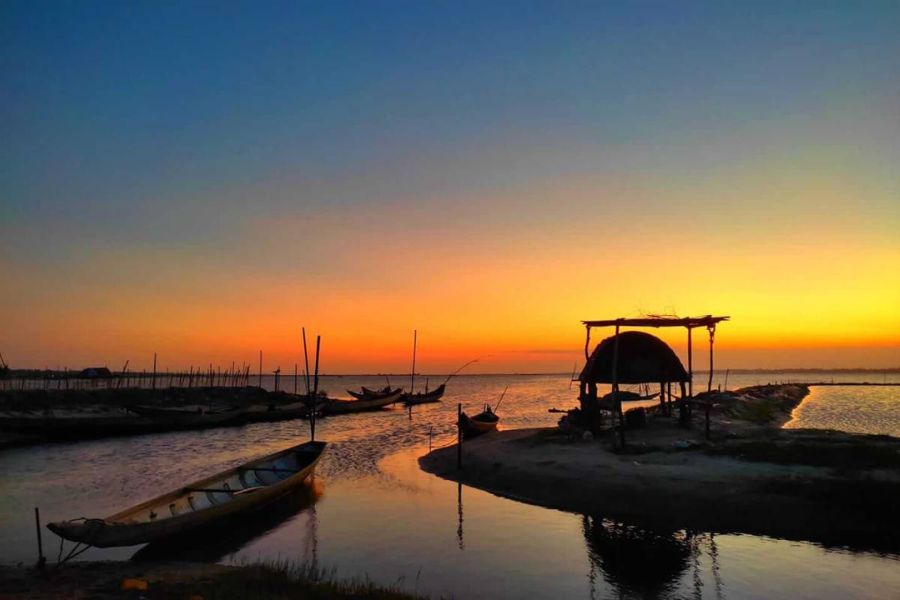
Chuon Lagoon is a photographer’s dream where you can capture stunning images any time of the day, from peaceful and romantic sunrises to colorful and vibrant sunsets. From April to July, the lagoon is teeming with wildlife during the seafood harvesting season. Visitors can witness the busy life of local fishermen and try freshly made specialties from the region while they are there.

Annually on the days of 15th, 16th, and 17th of the 7th lunar month, the To lang Chuon Festival is held here with cultural performances, folk games, and food and drink from the region’s cuisine. This is an event that you will not want to miss if you come and experience the culture is your aim.

Chuon Lagoon is a photographer's dream

Thai Duong Ha Fishing Village

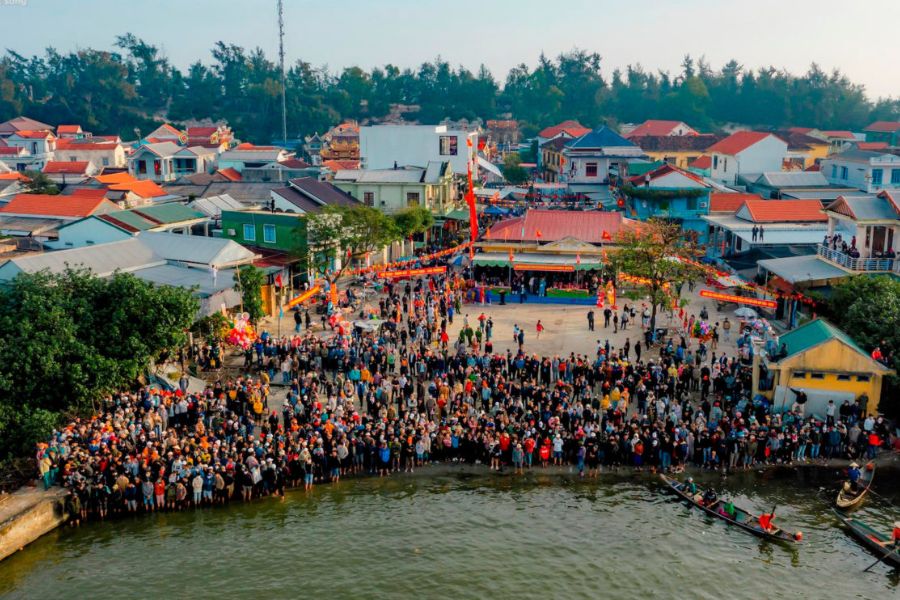
A trip to Tam Giang Lagoon would not be complete without a stop at Thai Duong Ha Fishing Village. You will get to experience the daily lives within the fishing community through witnessing fishermen cast nets, to seeing the busy marketplace.

There are cultural landmarks within the village, like the Thai Duong Ha Communal House, which displays solemn ancient architecture, and also Tran Quoc Pagoda, one of the oldest and most beautiful temples in the area. This destination provides great interest for travelers interested in culture and history.

Ru Cha Mangrove Forest

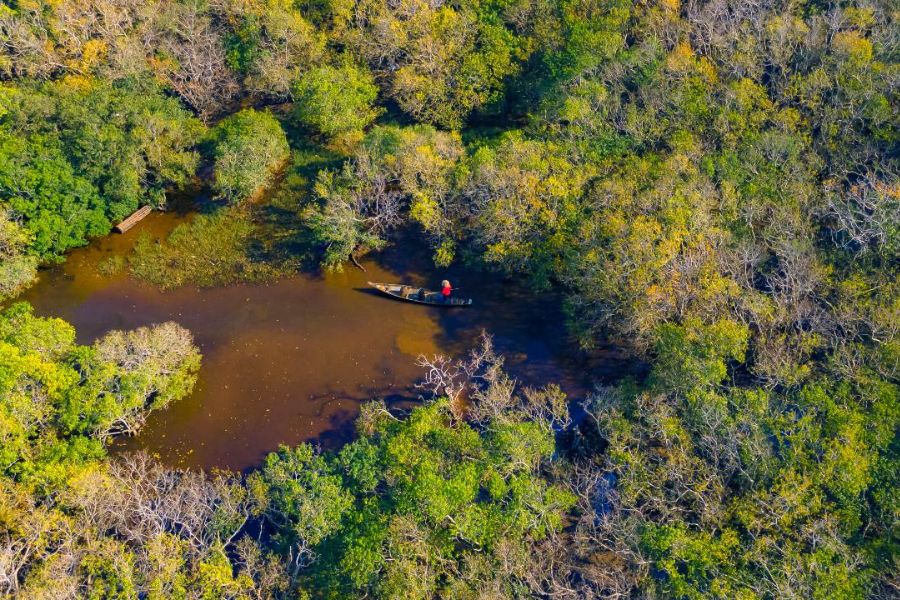
Ru Cha is a mangrove forest located at Thuan Hoa Village, about 15 km from Hue City. Ru Cha is the last untouched mangrove forest in the Tam Giang Lagoon system. The area of the mangrove forest spans around 5 hectares, with the most visible and numerous elements of mangrove trees.

Ru Cha Mangrove Forest spans around 5 hectares

Visitors can wander through the area by paddling a small bamboo boat on the winding waterway while listening to the rare species of birds, or walk along a narrow concrete path while being surrounded by the amazing webs of trees. Ru Cha’s natural beauty with an angelic and mystical atmosphere, which is particularly appealing to nature-lovers and photographers.

Tam Giang Floating Market

Compared to the bustling floating markets of southern Vietnam, Tam Giang’s is more peaceful but filled with life. The floating market gathers small wooden boats with lights on the lagoon, and trading will start at around 4 AM. They are selling fresh seafood and daily essentials.

The Tam Giang floating market is quieter than the floating markets of the south, but it gives the visitor a good insight into the simple and authentic life of the lagoon’s fishing community. It is an early morning experience that encompasses the charm and tranquility of this unique location.

a festive in Thai Duong Ha Fishing Village

5 Cultural Experiences You Shouldn’t Miss

Tam Giang Lagoon is not only an attractive place, but also a dynamic cultural space wherein local traditions merge with natural rhythm. From watching the sunrise, through daily floating markets, every experience here connects you to the spirit of lagoon life in Hue.

Watch The Sunrise And Sunset On Tam Giang Lagoon

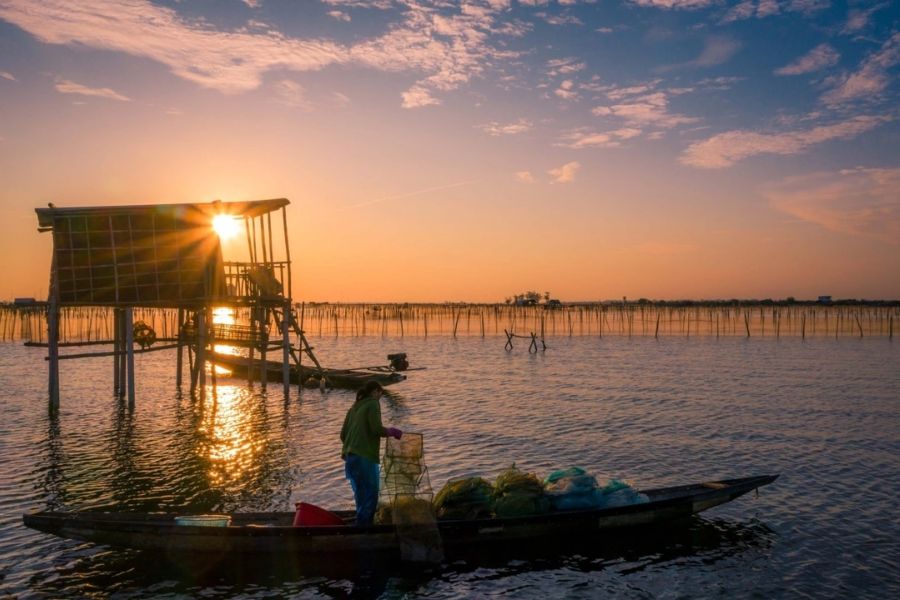
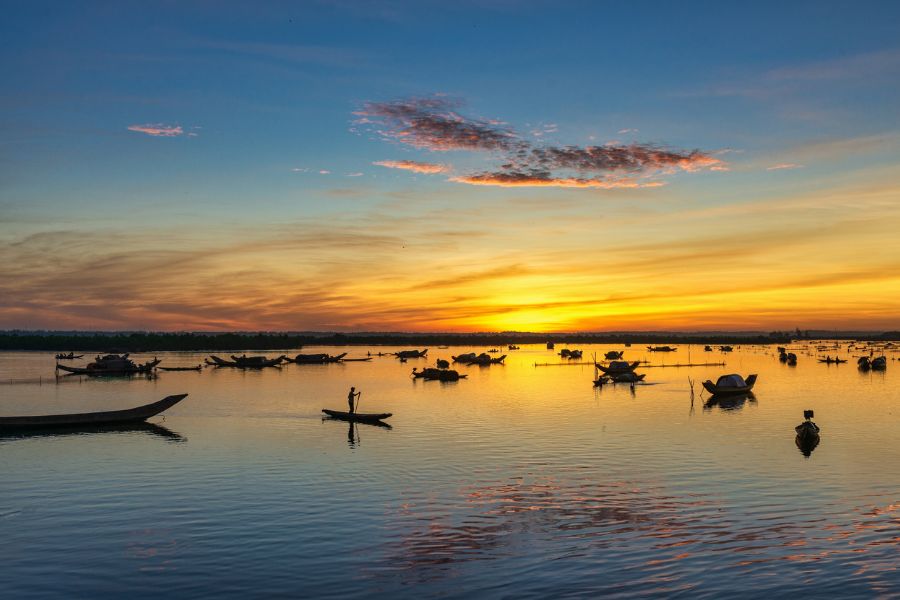
Tam Giang is at its glory as the sun rises and sets. With a golden sun like a giant glowing egg, the whole surface of the water transforms as the sun floats above or sinks below. It is just pure and unadulterated beauty, like nowhere else in Vietnam. Watching these moments is one of the most unique experiences that you should try at least once when visiting Hue city.

Sunset On Tam Giang Lagoon

Paddle Boarding Or Rowboat Cruising

You have to try stand-up paddleboarding (SUP) or rowing a wooden boat in the lagoon. You can paddle by the floating market, through the beautiful mangrove areas, and see the delicious green colors of the mangrove apple. The still waterways also offer you unique photos, especially in the narrow channels specific only to Tam Giang Lagoon.

The services are reasonably priced, starting from only 100,000 VND per person. Paddleboarding and rowing around in a rowing boat are affordable activities for a group of friends who want to enjoy the majestic scenery the lagoon offers.

Visit Local Floating Markets

The floating markets of Tam Giang Lagoon are not just where you can come to trade for fresh seafood. They are also essential to the culture of the lagoon, bustling with the sounds of selling and bargaining, and boast about many colorful or different types of boats. Markets like Chuon Lagoon Market and My Thanh Market are the best ones to experience local life.

A unique specialty of Hue to try while visiting floating markets is Banh Khoai Ca Kinh (crispy pancake with goby fish). Early in the morning is the best time to visit the floating markets for the freshest seafood and a busy atmosphere with warm hospitality from local fishermen.

Visit Local Floating Markets of Tam Giang Lagoon

Capture The Perfect Check-In Picture

The serene and poetic beauty of Tam Giang Lagoon is what makes it such a perfect place for Instagram photography. Whether you are checking in along the edges of the lagoon, sitting in a little boat, or visiting somewhere like Hen Islet or Cau Hai Lagoon, you will have no issue finding postcard views. Each photo will be a memento from your time spent in this peaceful corner of your Hue trip!

Taste Local Specialties

The fertile nature and seafood variety of Tam Giang Lagoon have contributed to a significant culinary history of the region, with fresh, quality ingredients being the foundation of every dish. Seafood is called the “living gold” of Tam Giang. Visitors to the lagoon will be offered different types of catches, red snapper, grouper, rabbitfish, brown spotted grouper, crabs, clams, frogs, and more at very cheap prices.

Entrance Fee

Best of all, the lagoon does not have an entry fee, so be able to appreciate the stunning scenery without buying a ticket. Was there an entry fee, you may have to pay for whether you want use of the connectors.

Examples of connectors include renting a motorbike in Hue at approximately 120,000-150,000 per day, stand up paddle boarding (SUP) on the lagoon costing around 100,000VND per person or you can opt for boat trip with local operators who will have varying pricing.

Best Time To Visit Tam Giang Lagoon

The most magical times to enjoy Tam Giang Lagoon are at sunrise or sunset. As the sun appears above the horizon or slowly sinks behind the horizon, the water reflects beautiful gold, orange, and purple colors, which creates a scene like a painting. The exploitation time is the dry season from March – August, sunny days, clear blue sky, a little rain, the nature is extremely beautiful for exploring and taking photos.

March to August is a great time to visit Tam giang lagoon

How To Get To Tam Giang Lagoon

Tam Giang Lagoon is only about 45 minutes from Hue City center, so you can easily reach this destination by motorbike, car, or as part of an organized tour. If you’re a local traveler or staying in Hue, renting a motorbike is one of the easiest and most liberating options to enjoy the adventure. The price is about 120,000-150,000 VND/day.
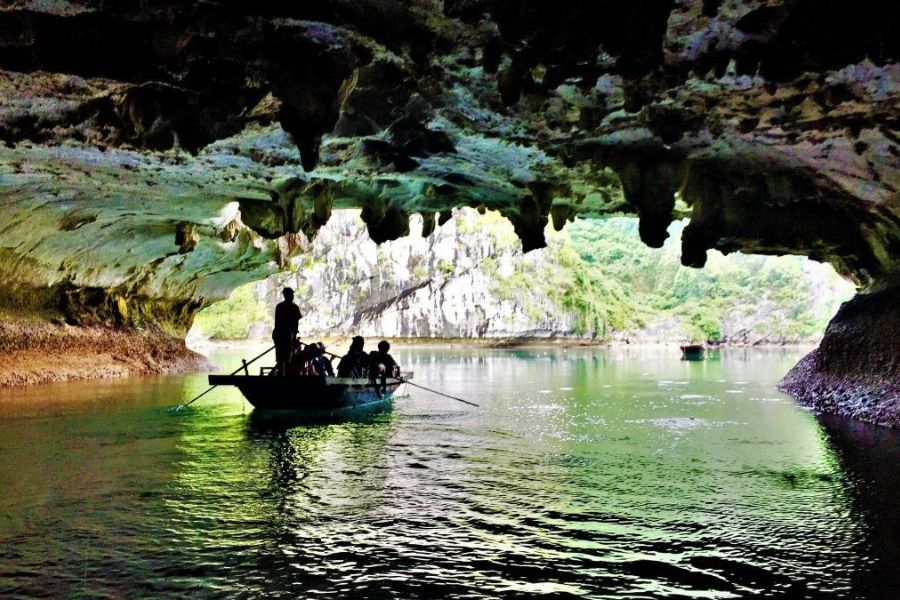
From Hue City

Route 1: Departing near or around Hue Imperial City, ride through Bao Vinh Ancient Village and continue to follow the markers or use Google Maps towards Con Toc ferry. After crossing the ferry, you will be at the lagoon after approximately 35 minutes.

Route 2: Head towards Thuan An Beach, continue along National Highway 49B, cross Tam Giang Bridge, and keep going until you reach the lagoon. This route takes approximately 45 minutes and offers a much prettier ride.

You can get to Tam giang lagoon from hue city

From Other Cities

You can travel to Hue from Hanoi or Ho Chi Minh City, either by plane, train, or bus. The most direct way is to fly to Hue’s Phu Bai International Airport and then continue by car or motorbike. There are trains or buses available too, but flights will save you a lot of time. The price of each one-way flight is approximately 800,000-1,000,000 VND.

Things To Know Before Traveling To Tam Giang Lagoon

Tam Giang Lagoon is a beautiful natural destination, but to truly enjoy your experience, it is important to be prepared. To help you do this, here are some useful tips from Seni World for you:

  • The dry season from March to August is a great time to visit, as you avoid the rain and have mild temperatures. The best months are mid-April to mid-June.
  • You will also have some great experiences at sunrise and sunset.
  • Always wear a life jacket while in a boat.
  • Use a local boat service that has a good reputation, and each boat has a local, skilled skipper since they understand the tides and currents during boat tours.
  • Avoid using the boat on days with rain and strong winds.
  • Wear a hat, sunglasses, and sunscreen to protect yourself from the sun.
  • Wear lightweight, comfortable clothing that allows for freedom of movement.
  • Bring a camera or phone to capture special moments, and some spare cash for local specialties and souvenirs.

Final Thoughts: Is Tam Giang Lagoon Worth Visiting?

Tam Giang Lagoon is an undiscovered paradise where marvelous scenery and real local life come together, with amazing views of the sunrise, peaceful waters, and the welcoming hospitality of Central Vietnam. With its distinct treasures, fresh seafood, and gentle atmosphere, Tam Giang Lagoon is an experience you won’t forget. Let Seni World help you get there and enjoy the true beauty of Vietnam.

Top 13 Things To Do In Ninh Binh That Go Beyond the Tourist Checklist

Ninh Binh draws visitors with limestone peaks, rivers, caves, and ancient sites. The list below focuses on the top things to do in Ninh Binh, covering outdoor highlights and options that work even on rainy days.

Explore The Caves And Temples Of Trang An – Route 3

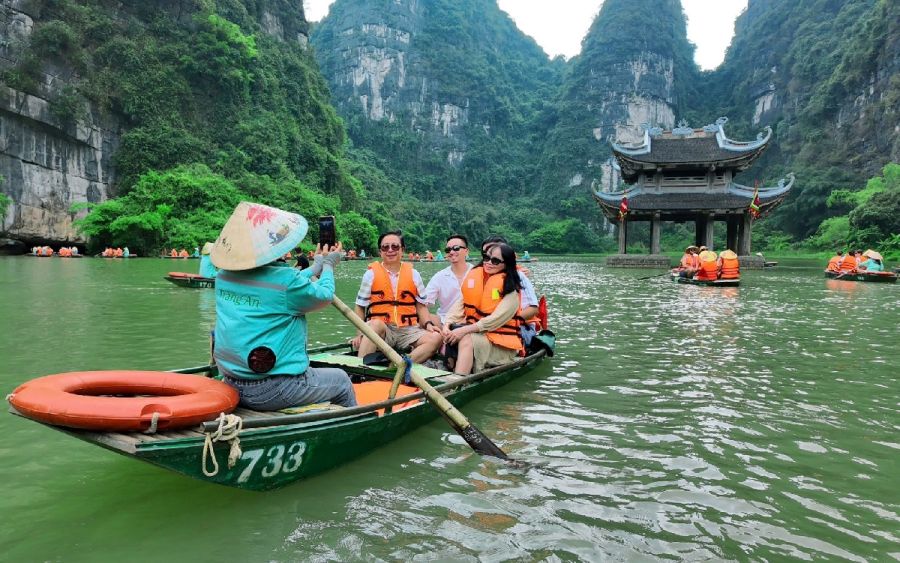
Trang An boat trip

A boat trip through the UNESCO-listed Trang An Landscape Complex is one of the best things to do in Ninh Binh. Route 3 is often considered the most rewarding option. The journey passes through a chain of limestone caves, emerald rivers, and ancient temples. This route feels quieter than the more popular Route 1, with highlights like Hang Sang (Light Cave), Hang Toi (Dark Cave), and the option to try kayaking, which is a newer addition.

The trip blends nature with spirituality and even a bit of cinematic history. Several temples are tucked deep within the karst formations, and parts of the route were used in the movie Kong: Skull Island. The full loop takes about two and a half to three hours to complete. Boats are covered, which makes it a suitable choice even on rainy days. Tickets are typically priced at around 250,000 VND per person.

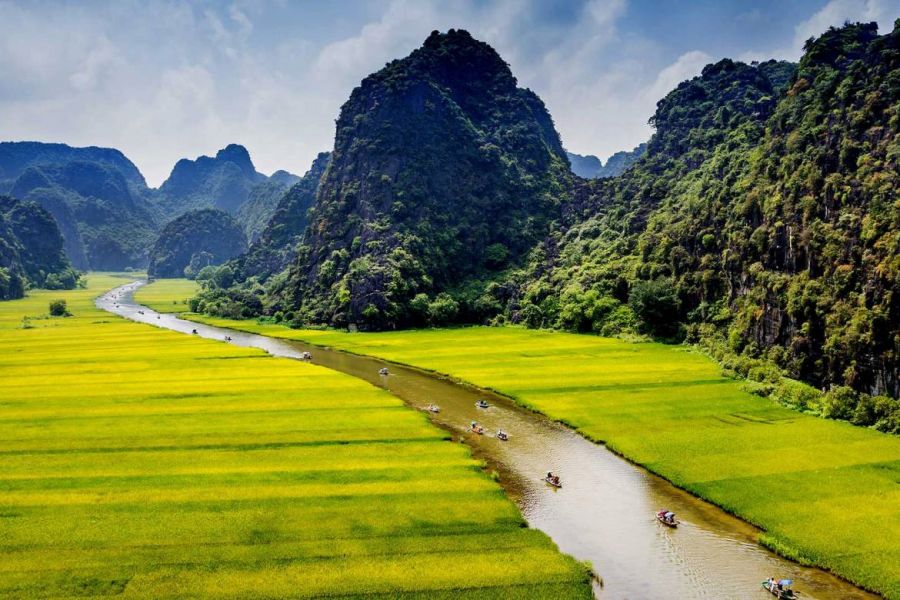
Hike To The Top Of Mua Cave Viewpoint

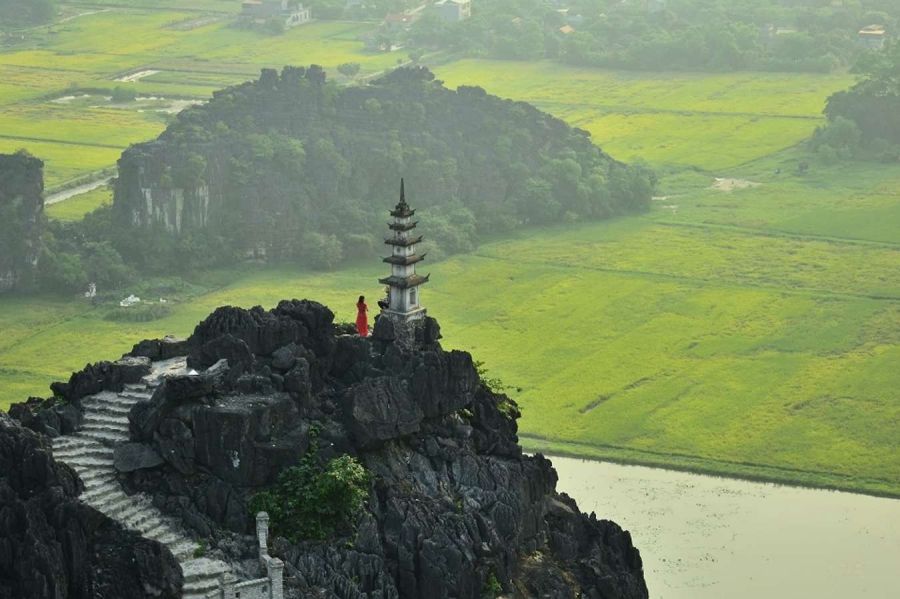
Mua Cave Viewpoint

Mua Cave Viewpoint offers one of the most iconic landscapes in Ninh Binh. After climbing nearly 500 stone steps, visitors reach a ridge that overlooks the Tam Coc rice fields. From the top, it’s easy to see the Ngo Dong River winding between the mountains, and depending on the season, the fields below turn either lush green or golden yellow. The scenery tends to be at its most vibrant from late May to early June, during the rice harvest season.

The climb is short but steep, with sections that may require short breaks. Along the way, there are small rest areas and occasional views that break up the ascent. At the summit, a large dragon statue stretches across the ridge, adding a dramatic touch to the already stunning view. The entrance fee is around 100,000 VND. The viewpoint is especially popular with photographers and couples, and it remains one of the most photographed spots among all the Ninh Binh attractions.

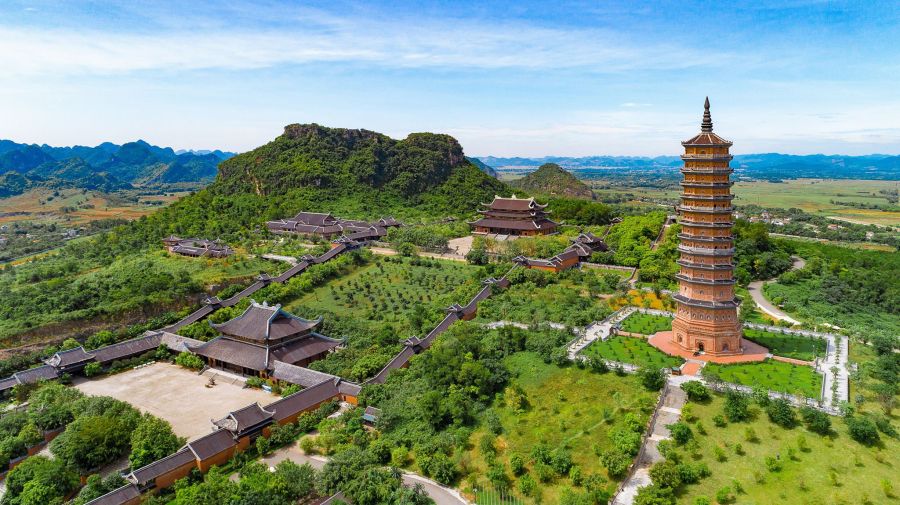
Visit The Bai Dinh Pagoda Complex

Bai Dinh Pagoda Complex

Spanning over 500 hectares, Bai Dinh is a monumental spiritual complex that blends ancient architecture with modern Buddhist grandeur. Located on a peaceful hillside, the complex includes both the old Bai Dinh Pagoda with endless corridors of stone Buddhas and Vietnam’s tallest stupa. The walkways are wide and open, but there’s also an electric buggy service for those who prefer a more relaxed visit.

You don’t need to be religious to appreciate this place. Travelers often spend more time here than expected, as it’s also one of the calmest things to do in Ninh Binh. Bai Dinh is one of the largest Buddhist complexes in Southeast Asia and an essential stop for travelers interested in culture and architecture.

Take A Sampan Ride Through Tam Coc

Take A Sampan Ride Through Tam Coc

Tam Coc is one of Ninh Binh’s top attractions, known for its scenic boat rides through rice paddies and limestone cliffs. The ride takes you through three natural caves: Hang Ca, Hang Hai, and Hang Ba, on small wooden sampans rowed by local women, often using their feet. The best time to visit Tam Coc is from late May to early June, when the rice fields turn golden. This is also considered the best time to visit Ninh Binh for landscape lovers.

Each boat ride lasts about 1.5 to 2 hours and costs around 150,000 VND per boat (for 2 people) plus 120,000 VND per person for entrance. Morning is the best time to avoid crowds and the strong sun. Many travelers combine the ride with a short bike trip around the area or a visit to Bich Dong Pagoda nearby. Tam Coc is ideal for travelers who want a peaceful experience and a glimpse into authentic local life in Ninh Binh.

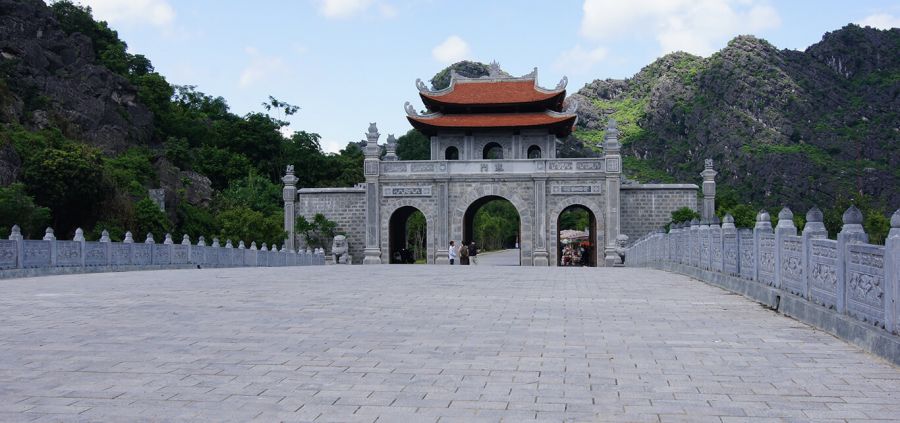
Explore The Ancient Capital Of Hoa Lu

Ancient Capital Of Hoa Lu

It’s hard to imagine that this quiet valley once held the center of power in Vietnam. Surrounded by karst mountains, Hoa Lu Ancient Capital feels small and almost modest, but its history runs deep. In the 10th century, this was where kings ruled and defended the country against northern invasions. Today, the main sites are two wooden temples dedicated to Emperor Dinh Tien Hoang and Emperor Le Dai Hanh, shaded by trees and framed by stone walls weathered by time.

Entrance to the site costs around 20,000 VND, and most visitors spend 30 to 45 minutes walking the grounds. Mornings are the best time to visit, especially on misty days when the limestone hills create a peaceful, almost timeless atmosphere. Hoa Lu is a good cultural stop to combine with Trang An or Tam Coc, offering a quiet but meaningful glimpse into Vietnam’s imperial past.

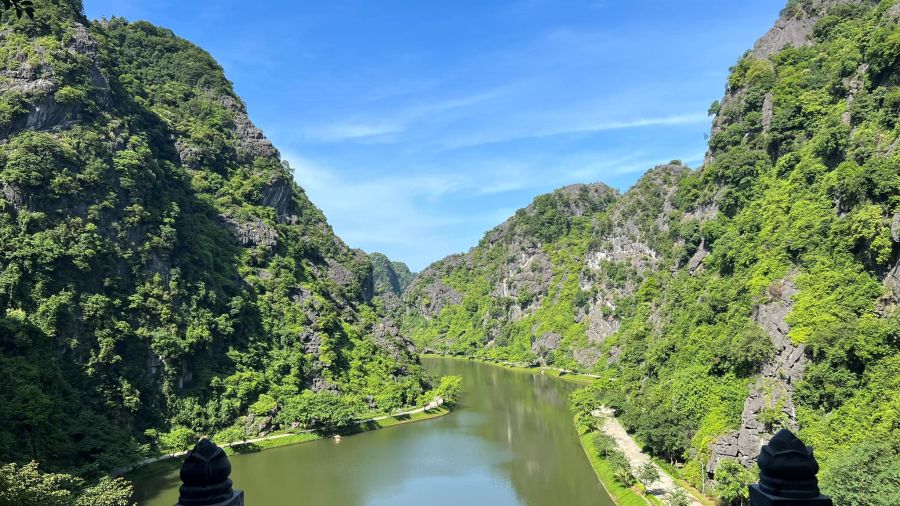
Visit Am Tien Cave

Am Tien Cave

Just a few kilometers from Hoa Lu, Am Tien Cave sits in a quiet valley surrounded by limestone cliffs. At the center is a still green lake often called “Tuyet Tinh Coc” by locals, a name inspired by a Chinese romance story that suits the peaceful scenery. The area feels hidden away, with cool air and a sense of calm that makes it feel far removed from busier tourist stops.

Visitors can follow a short stone path up to the cave, which is halfway up the cliffside. The stairs are manageable, though they can get slippery after rain. Tickets cost about 20,000 VND, and no guide is required. Most people come for the atmosphere and views rather than the cave itself. It’s best to visit in the early morning or late afternoon when the lighting is soft and the lake mirrors the cliffs around it.

Trek Through The Forest Of Cuc Phuong National Park

Cuc Phuong National Park

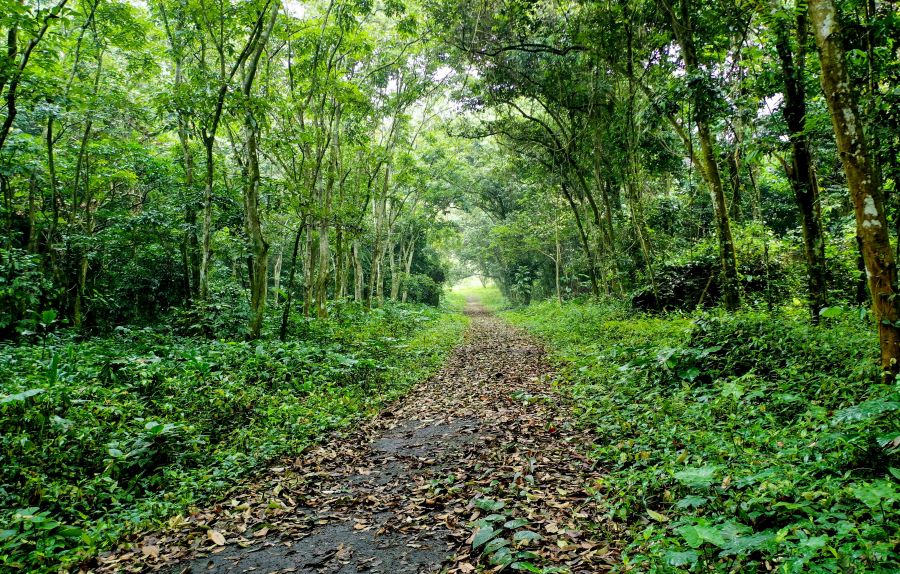
Cuc Phuong is Vietnam’s oldest national park and a top pick for day trips from Hanoi to Ninh Binh, especially for those into nature and wildlife. Located about an hour from Ninh Binh City, the park is home to towering ancient trees, limestone caves, and a primate rescue center near the entrance. Many visitors stop by to see endangered species, but the real highlight is walking beneath the thick forest canopy.

Trekking trails vary from short, shaded loops to longer jungle hikes lasting several hours. The climate inside the forest is noticeably cooler, especially in the morning. Entrance fees apply (around 60,000 VND), and while guided tours are available, the easier paths are well-marked and suitable for independent visitors. Plan to spend at least half a day here if you want to explore beyond the main gates.

Explore The Unique Architecture Of Phat Diem Stone Church

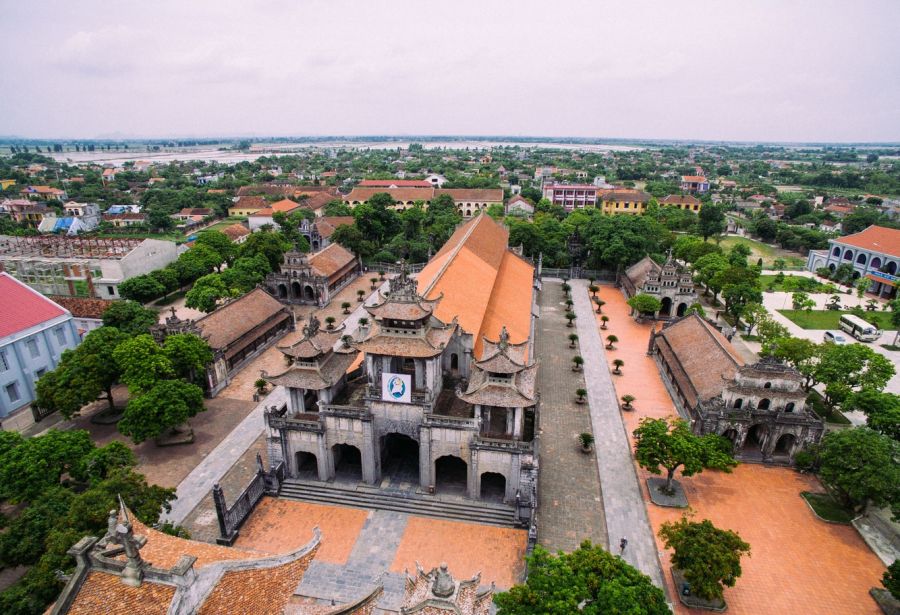
Phat Diem Stone Church

Phat Diem Stone Church doesn’t look like the typical churches travelers expect to find in Vietnam. Built in the late 1800s, its design blends Western Gothic architecture with Eastern elements like curved pagoda-style roofs and wooden carvings. Located in Kim Son District, about 30 kilometers southeast of Ninh Binh City, the church complex includes the main cathedral, smaller chapels, stone bridges, and peaceful courtyards.

There’s no entrance fee, and visitors can explore freely throughout the day. Early afternoons are usually the quietest time. Even if you’re not religious, the craftsmanship and tranquil setting make it one of the most memorable things to do in Ninh Binh. On cloudy days, the grey stone takes on a moody elegance, and the echoes of footsteps make the place feel almost meditative.

Try Local Specialties In Ninh Binh

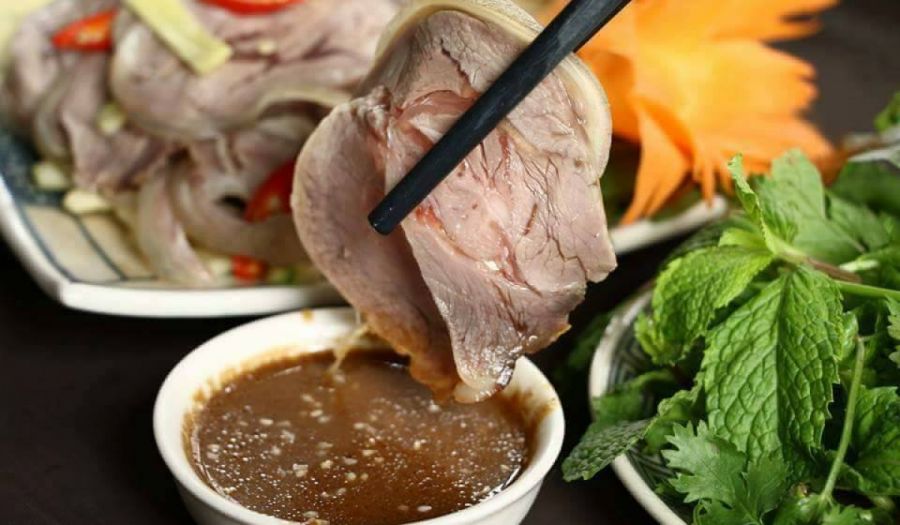
Goat Meat

Goat meat is Ninh Binh’s signature dish, prepared in various ways like grilled, steamed, or stir-fried with lemongrass and ginger. It’s tender, flavorful, and typically served with a tangy dipping sauce made from fermented rice and local herbs. You’ll find it in most restaurants around Trang An or Tam Coc.

Another must-try is crispy rice, or com chay, made by deep-frying compressed rice until golden and crunchy. It’s often topped with shredded pork or dipped in a sweet-and-sour sauce. These two dishes are commonly eaten together, especially at lunchtime. A meal at a mid-range restaurant costs around 120,000 to 180,000 VND per person. For more budget-friendly options, look for roadside eateries near the city center for authentic local flavors.

Encounter Ninh Binh’s Wild Birds At Thung Nham

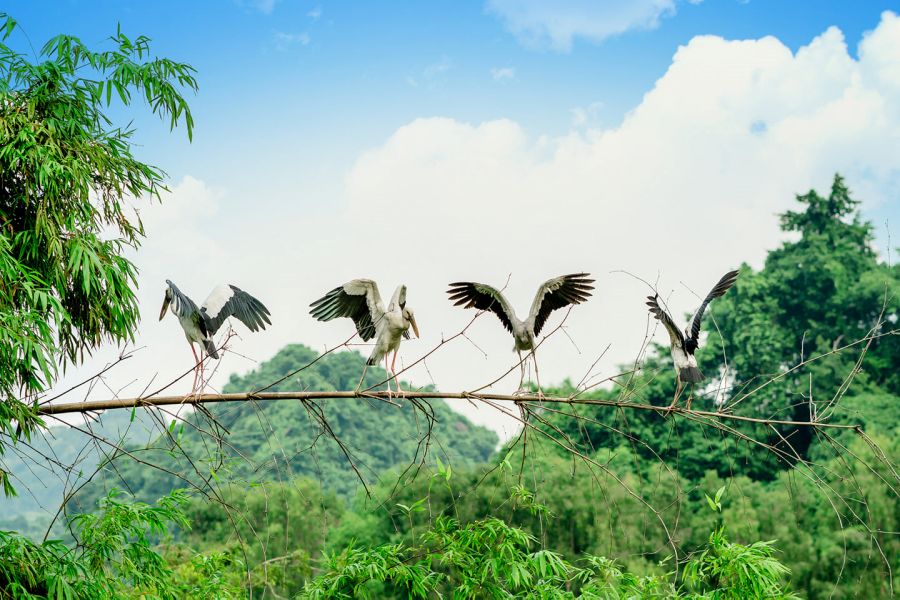
Thung Nham Bird Park

As the sun begins to dip, the cliffs around Thung Nham seem to shift in color, and then the birds start coming in. Thousands of white storks, herons, and other water birds return to roost here every afternoon. The reserve covers both wetlands and forest, making it a peaceful escape for nature lovers just 12 kilometers from Tam Coc.

The park is open all day, but late afternoon is when the birdlife becomes truly spectacular. There’s a small entry fee, usually around 100,000 VND. Some visitors rent boats to glide deeper into the quiet zones, though the main viewing area is accessible on foot. It’s not a loud or busy place. People tend to speak softly here, watching the sky as wings flutter in from every direction.

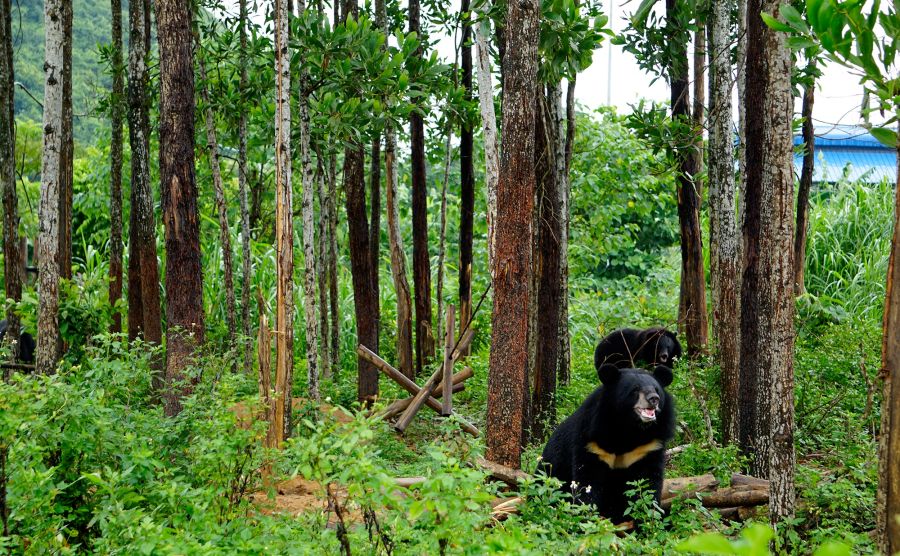
Visit The Bear Sanctuary In Nho Quan

Bear Sanctuary In Nho Quan

Tucked into the forested hills of Nho Quan District, the Bear Sanctuary Ninh Binh is one of Southeast Asia’s largest rescue centers for bears saved from bile farms. This is not a zoo; the animals here live in semi-wild enclosures with space to roam, climb, and relax in hammocks under the trees. Visitors follow shaded walking paths and raised platforms to observe the bears from a respectful distance.

The sanctuary is run by a nonprofit focused on education and conservation. Informational signs explain the bears’ recovery process, and staff are available to answer questions. Admission is about 100,000 VND and includes access to the viewing areas and small exhibitions. Most visitors spend around an hour here. It’s a quiet, meaningful visit, ideal on cloudy days when outdoor hiking feels less inviting.

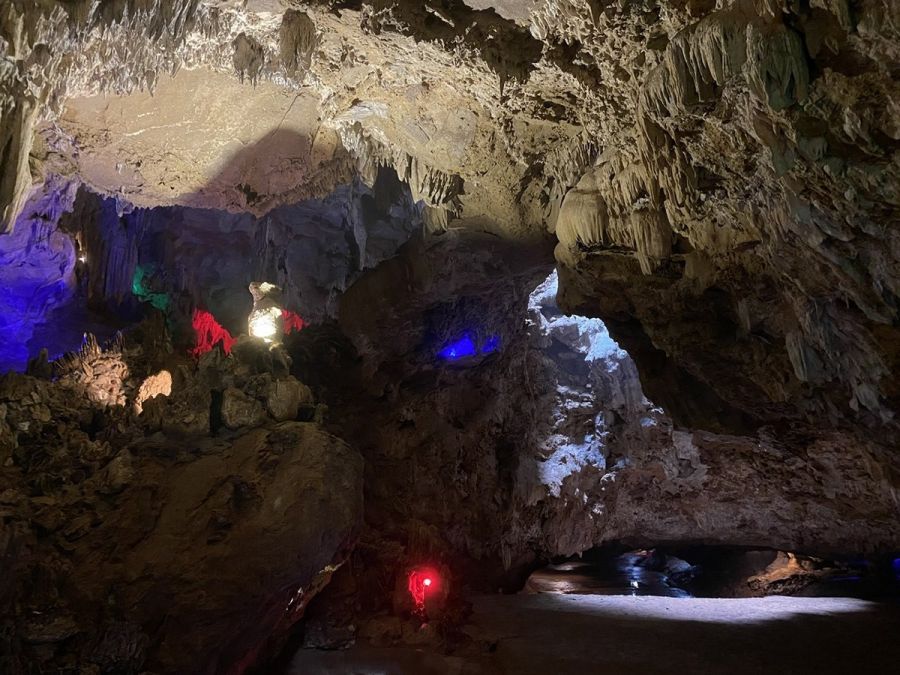
Discover The Galaxy-Like Ceiling Of Thien Ha Cave

Thien Ha Cave

Thien Ha Cave sits quietly in Son Ha Commune, far from the main tourist flow. The entrance is unassuming, but just a few steps inside, the world shifts. After passing through a dry corridor lined with rock formations, visitors board a wooden boat and drift into the darkness. As the cave opens up, the ceiling glimmers with minerals that reflect the boat’s lamp like a sky full of stars—hence the name, “River of Stars.”

Few people make it out this far, which only adds to the atmosphere. The journey takes around an hour on foot and by boat. Fees usually fall below 150,000 VND for the full experience. Unlike the grand scale of Trang An, Thien Ha is one of the more intimate things to do in Ninh Binh, built on silence and the thrill of discovery.

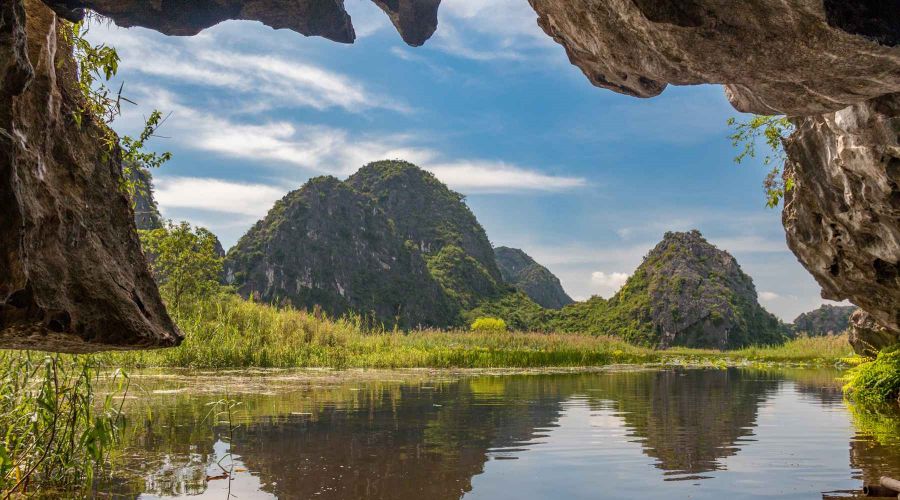
Explore The Quiet Beauty Of Van Long Wetlands

Van Long Wetlands

Van Long feels untouched. The surface of the water stays almost perfectly still, reflecting cliffs, clouds, and reeds in quiet symmetry. Located in Gia Van Commune, this wetland reserve is home to rare birds and the endangered Delacour’s langur, a black-and-white monkey that sometimes appears near the limestone walls at dusk.

Most boat rides take about an hour and a half, depending on the weather and wildlife activity. Local rowers guide each trip through the channels, often pointing out birds in the reeds or monkeys overhead. The experience is at its best early in the morning or just before sunset, when the light is low and the landscape seems to breathe.

Final Thoughts

Ninh Binh offers a mix of famous spots and quiet corners that many travelers miss. Some places are best for early mornings, others feel right when the weather shifts, all part of the many places to visit in Ninh Binh. With this list of things to do in Ninh Binh, you can shape a trip that suits your pace. If you want local advice or help turning this into a real itinerary, just send Seni World a message!

Top 10 Impressive Caves In Halong Bay For Any Trip

Halong Bay is one of the most famous travel destinations in Vietnam, especially for its well-known caves. Natural caves in Halong Bay make it a UNESCO World Heritage Site. It took millions of years to form these caves.

Top 10 Best Caves In Halong Bay

So when you plan your Halong Bay adventure, be sure to include these amazing Halong Bay caves in your itinerary. Each presents a unique encounter, from breathtaking stalactites to tranquil lagoons.

Sung Sot Cave

  • Location: Bo Hon Island, central Halong Bay
  • Fee: Included in most Halong Bay cruise packages; approximate cost: 290,000 VND (for a day cruise ticket on this route).

In Halong Bay, Sung Sot Cave (Surprise Cave) stands out with its big size and great rock shapes. It’s on Bo Hon Island and is one of the biggest and most visited caves in Halong Bay. It covers over 10,000 square meters and is split into two main halls. The first room is 30 meters high, and the second leads to a big underground room. Bright lights hit the rock spikes and pillars, making the place look like another world.

explore sung sot cave in Halong bay

Visitors climbed up rock steps to reach the cave’s entrance, then walked on smooth paths inside both rooms. It takes about 45 minutes to walk through. At the end, the cave shows a lovely view of Halong Bay through natural rock windows.

Luon Cave

  • Location: Bo Hon Island, near Sung Sot Cave
  • Fee: Included in cruise packages; kayaking or bamboo boat rental: 30,000–50,000 VND/person

Luon Cave is the ideal option if you are looking for a serene and restful experience. Unlike other caverns, it is not explored on foot but rather by boat. On Bo Hon Island, next to Sung Sot Cave, is the Luon Cave. A peaceful, enclosed lagoon is reached through a modest archway. Larger vessels are not permitted to enter because of the low and narrow entrance. Visitors must use a bamboo rowing boat or a tiny kayak to go through.

ride boat through Luon Cave

After passing beneath the arches, you will discover a serene lake encircled by towering limestone cliffs. There is calm and clear water. You may see fish swimming beneath your boat or monkeys scaling those cliffs. Alongside the rocks, there are trees and other vegetation all over the place. In addition to being a popular destination for photographers, this location is ideal for nature enthusiasts who wish to experience the tranquility of Halong Bay.

Dau Go Cave

  • Location: Dau Go Island, near Thien Cung Cave
  • Fee: Often included in cruise package; typically covered by general Halong Bay entry ticket (290,000 VND for day cruise)

Dau Go Cave is one of the oldest and most impressive caves in Halong Bay. It is located on Dau Go Island, close to the port of Tuan Chau, which makes it one of the more accessible caves. The name “Dau Go” means “Wooden Stakes Cave.” This name is derived from the legend of General Tran Hung Dao. In the 13th century, he employed wooden stakes to overcome Mongol invaders. Locals claim the stakes were caught in this cave before the fight.

explore Dau Go Cave in halong bay

The cave has three floors linked by natural tunnels. Every floor provides unique views and configurations. Massive stalagmites lounge across the lower level, and upper levels offer panoramic views of Halong Bay through natural apertures. The cave’s formations, which include ‘giant stalactites’ hanging like ancient weapons. Nature carved out shapes of soldiers and war elephants in the rock.

Dark and Bright Cave

  • Location: Border between Lan Ha Bay and Halong Bay, often visited from Cat Ba or overnight cruises
  • Fee: Kayak/ bamboo boat rental: 50,000–100,000 VND/person (often included in cruise price)

Hang Toi and Hang Sang are other names for Dark and Bright Cave. Kayaks and bamboo boats are the primary means of accessing this water cave in Lan Ha Bay, which is close to Halong Bay. The cave’s “Dark” side is a long, low tunnel that requires a light to see because it is completely dark inside. The “Bright” side leads to a large, still water hole surrounded by lush vegetation and tall rock walls. A sense of discovery and a close-up view of the bay’s rock formations are provided by traversing these various sections.

explore Dark and Bright Cave in halong bay

Thien Cung Cave

  • Location: Near Dau Go Island, northwest Halong Bay
  • Fee: Included in Route 1 cruise tickets; covered under general ticket (290,000 VND for day cruise)

Not far from Dau Go is Thien Cung Cave. It is also known as the “Heavenly Palace Cave.” It is the grandest and art-rich cave there. Step into Thien Cung, & see how bright it is. Our cave has lights. They are set up for guests. They show off each rock shape.

explore Thien Cung Cave in halong bay

Many lights make dragon, bird, and man shapes on the walls. Parts of the site look like a big open show spot. The folk here say that long ago, a fairy lived here. She wed a dragon king. They had their big day in this cave. Some say the rock shapes on the walls were guests at the big day. Trust the tale or not, the cave does feel like a magic place. The path to Thien Cung goes upstairs through a small wood. It’s a walk. The view from the top and inside the cave pays you back for the hard walk.

Trinh Nu Cave

  • Location: Bo Hon Island, opposite Trong Cave
  • Fee: Part of the Route 2 itinerary; included in standard cruise ticket (290,000 VND approx.)

Trinh Nu Cave marries nature with romance. According to legend, this young woman had been pressured into marrying an old, rich man. She refused, escaping in a boat. A terrible storm brewed, and she somehow found shelter inside the cave, waiting inside endlessly for her true love, only to die alone. The rock in the center of the cave is considered to represent her lying down with long hair flowing behind her.

explore Trinh Nu Cave in halong bay

Delicate stalactite formations in the cave create smooth, flowing shapes. They are somewhat suggestive of flowing hair and figures, lending credence to that romantic tale. Being quite small, the cave is excellent for small groups. Natural light enters the cavern through various openings, which causes dramatic shadows interspersed with highlights.

Trung Trang Cave

  • Location: Trung Trang Valley, Cat Ba National Park, Cat Ba Island
  • Fee: Included in Cat Ba National Park entrance ticket (Adults: 80,000 VND, Children: 40,000 VND)

Trung Trang Grotto is a wonder in Cat Ba National Park. Situated deep in the jungle and steeped in legend, it is one of the largest and oldest caves on Cat Ba Island, in the magical Halong Bay area. To access the caves, visitors must walk along a 300-meter trail that leads into an enchanted world of fantastical stalactites and stalagmites, deposited by the earth and water for thousands of years.

explore Trung Trang Cave in halong bay

Each grotto has its own enchantment, with gentle lighting suspending the entity in a warm, welcoming, and almost other-worldly glow. And more than simply its edge of price, Trung Trang also has a story- a history; it was once a base during one of Vietnam’s many wars! And in addition to its beauty, Trung Trang provides a satisfying, emotional link to Vietnam’s astoundingly resilient past.

Me Cung Cave

  • Location: Lom Bo Island, near Titop Island
  • Fee: Included in Route 2 cruise tickets; covered under the day cruise pass (290,000 VND)

Because of its scenic beauty and archaeological treasures, Me Cung Cave is one of the most popular tourist destinations in the area. Approximately 2 kilometers southwest of Ti Top Island, on Lom Bo Island, is the spine-tingling excursion into enigmatic old geologic processes.

explore Me Cung Cave in halong bay

The cave’s name pays homage to the intricacy of its passageways. You can explore among beautifully sculpted stalactites and stalagmites inside, taking in the fascinating underground world. Traces of the prehistoric Halong culture from 7,000–10,000 years ago were found here during archeological work. These discoveries offer us a unique look into the way of life of the area’s first inhabitants. A breathtaking view of Me Cung Cave unfolds as you leave the cave.

Thien Canh Son Cave

  • Location: Cong Do Island, Bai Tu Long Bay area (northeast of Halong Bay)
  • Fee: About 200,000 VND–300,000 VND

Thien Canh Son Cave, sometimes referred to as Co Cave, is a pristine and relatively wild cave located in Bai Tu Long Bay, an adjacent area to Halong Bay. It’s quieter and purer than a few of the busier caves.

explore Thien Canh Son Cave in halong bay

Visitors typically hike about 100 stone steps to Thien Canh Son Cave. Inside, you’ll be greeted with a gorgeous display of stalactites and stalagmites, some of which local guides will describe as resembling anything from baby elephants to lotus flowers. Well preserved, the cave’s interior is sublime, and views from its entrance towards the still Bai Tu Long Bay, spectacular.

Trong Cave

  • Location: Bo Hon Island, directly facing Trinh Nu Cave
  • Fee: Included in cruise itineraries (usually paired with Trinh Nu Cave), about 290,000 VND.

Trong Cave (Drum Cave) is thus named from the drumming noise that echoes through its chambers in certain weather. Wind and water drummers. Beautiful stalactites scratch their way through the caverns of the cave. These shapes transform as travelers move through the cave.

explore Trong Cave in halong bay

Trong Cave joins a host of other favorite caves, so they can be visited on regular Halong Bay cruises. What set the cave apart from other caves in the region was its unique acoustics. Some still talk about spooky reverberations from the cave’s shadows, amplifying the magic of their expedition. These echoey sound effects sure do turn into memorable spelunking moments.

Travel Tips To Caves In Halong Bay

Make your cave trip to Halong Bay top notch. Here are the top hints for a great & cool trip.

  • Ideal time to visit: The best time to check out Halong Bay and its caves is from October to April. The air is cool and dry. It has clear skies and good temperatures for trips. Lots of folks come from December to February. You will meet more people then.
  • What to take: Only bring what you need. Take a camera to snap the cool sights. A tiny bag for water & bits is smart too.
  • Wear comfortable shoes: When you’re planning a visit to the caves, remember to wear comfortable shoes! Most caves require some hiking on rocky trails, and you might encounter stairs or slippery areas along the way. Sneakers or sturdy walking shoes are your best.
  • Reserve your tour: Many cruises in Halong Bay include visits to stunning caves in their itineraries. You can book a tour through your hotel, a local travel agent, or straight from a cruise operator. It’s really a good idea to book in advance, especially during the busy season, so you can secure your preferred dates and tours.

explore caves in Halong bay (3)

  • Honor the environment: Respect nature by avoiding touching stalactites or stalagmites. These delicate formations are destroyed as a result. We can all help to keep these magnificent caverns immaculate for the enjoyment of future generations by taking our trash with you.
  • Protect yourself from the sun and stay hydrated: The hike to the caves may pass through some sunny areas, so it is a good idea to pack sunscreen, a hat, and a water bottle. Think about bringing an umbrella or a lightweight raincoat if you are going during the rainy season.

Final Thoughts

There is more to caves in Halong Bay than just rocks. They are brimming with life, art, and ancient stories. Every cave has a story to tell, some about ancient mythology and love stories, others about ancient conflicts or large animals. You may trek up to Sung Sot, kayak through Luon Cave, or visit Thien Cung to see the colors. Each provides you with memorable experiences. All visitors must see these hidden gems of the bay. Allow SeniWorld to assist you by creating a personalized strategy for whatever caves you desire. In Halong Bay, you will enjoy the most unforgettable experience.

Discover Abandoned Water Park Hue And Its Eerie Charm

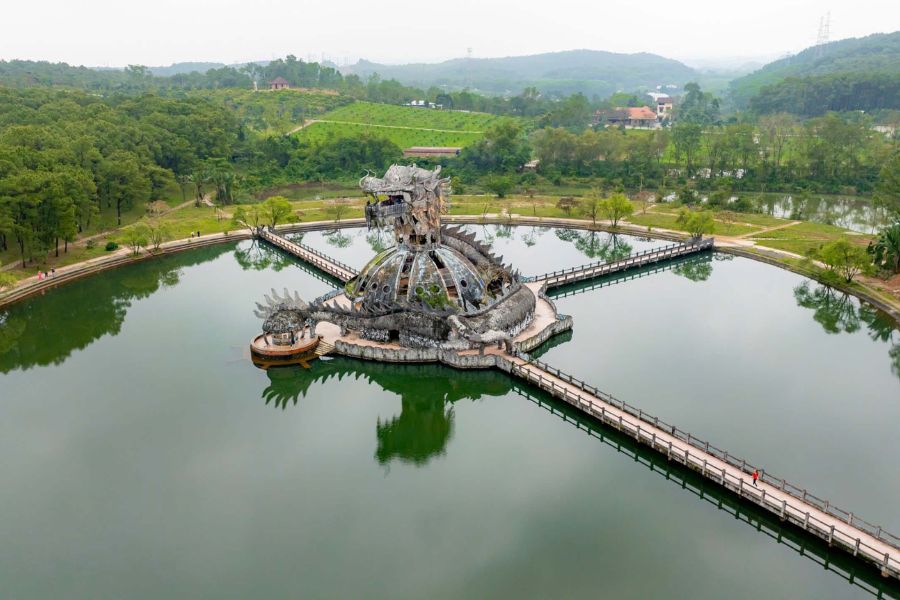
The Abandoned Water Park Hue, formerly a gigantic 49.9-hectare entertainment complex area, remains very quiet and hidden. The ex-owners’ features of the dragon’s dragon-shaped aquarium, soaking pools, and tangled pathways are a unique location for adventurous tourists seeking hidden treasures.

Introduction To The Abandoned Water Park Hue

Set within the grounds of Thien An Hill, just 7-8 km southwest of Hue, the abandoned water park, known locally as Thuy Tien Lake or the Dragon Water Park, is a hauntingly beautiful site overtaken by nature. It was once envisioned as a shimmering aquatic paradise complete with slides, an aquarium, and an amphitheater, but it has since decayed to the point where it beckons avid travelers and urban explorers to its surreal, post-apocalyptic aesthetics.
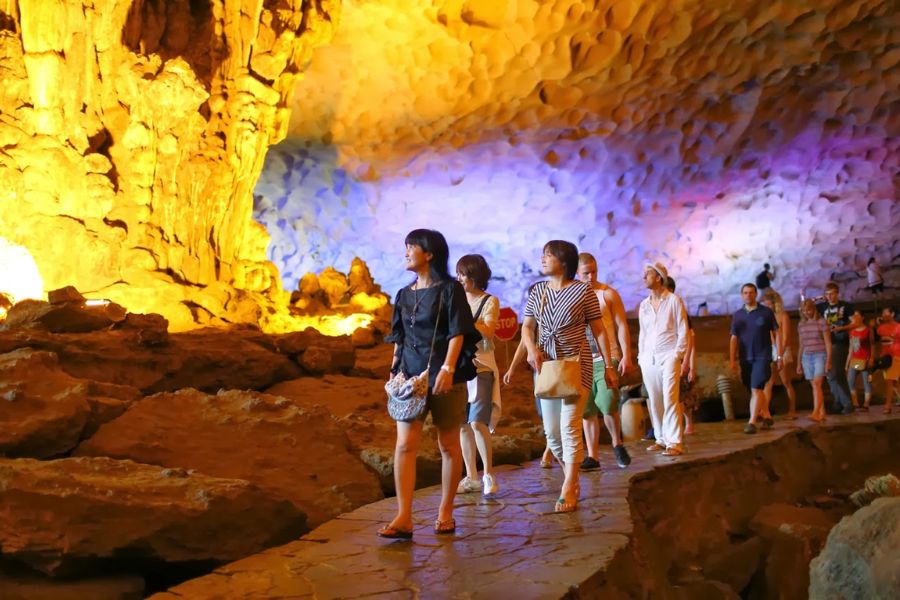
The Abandoned Water Park Hue

Today’s visitors are struck by the beauty and a certain level of eeriness associated with the overgrown structures covered in moss, rusting dragon sculptures, and pools by algae, all reminders of a dream unstated and nature’s soft takeover.

History Of The Abandoned Water Park Hue

The Abandoned Water Park in Hue opened in 2004 after promises of funding from the local government and companies to be a premier spot for entertainment for both residents and tourists alike. However, they never received sufficient visitors and revenue to cover operating costs could not be satisfied. The animals in the aquarium had to be removed.

In 2008, Haco Hue Company was given new development plans to fix and reopen the Water Park, but by 2017, this too halted and could never be completed. The property was then neglected and allowed to fall apart.

The Abandoned Water Park in Hue overview

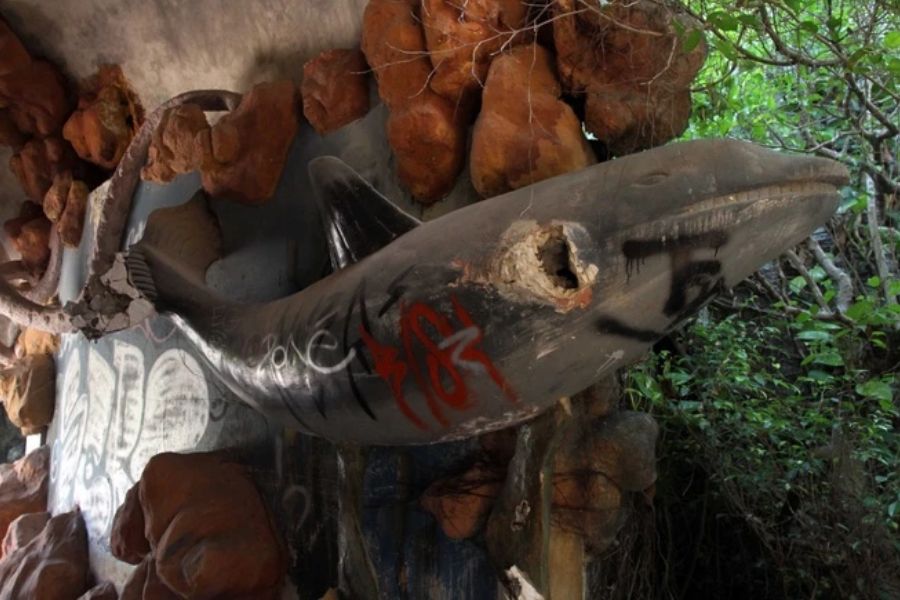
The province later requested new investors, but found no interest. Eventually, the land was stripped and returned to the Department of Natural Resources and Environment. When the Water Park opened 16 years ago, it was iconic, even receiving media attention in the US. Now the property stands neglected, with broken glass, busted stairs, and an aquarium full of waste. The concrete is crumbling, rebar is exposed, and graffiti is considered an upgrade to this once bright place.

Unique Architecture Of The Abandoned Water Park Hue

The Abandoned Water Park Hue, also known as Thuy Tien Lake Water Park, was completed in June 2004, was built in 2000, and occupies almost 50 hectares of land. The park was going to be designed as a large entertainment complex that was unlike other parks. It had structures like an aquarium, an ecological zone, and a water music stage that could hold up to 2,500 people.

Although such dreams were not to be, it was abandoned for many years, leaving a complex blending of eeriness and beauty in the buildings and a quiet takeover of nature, now visited by numerous curious travellers and photographers from all around the world.

7 Cultural Experiences You Shouldn’t Miss

Visit the Abandoned Water Park Hue isn’t just an excursion to a lost location; it’s plunging into a surreal place of history, mystery, and art. There’s a story at every corner, providing travelers with unique opportunities to snap a picture and create lasting memories.

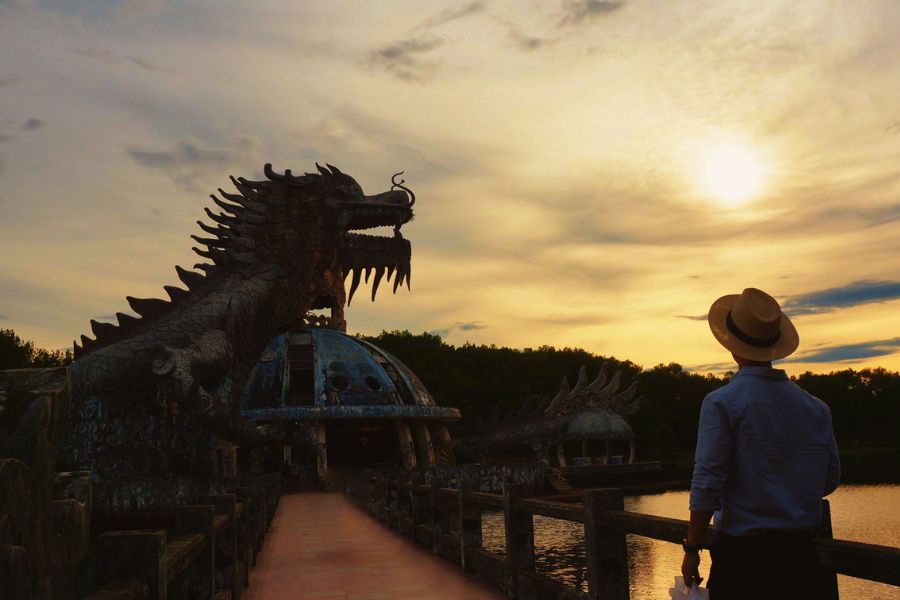
Check In At The Giant Dragon

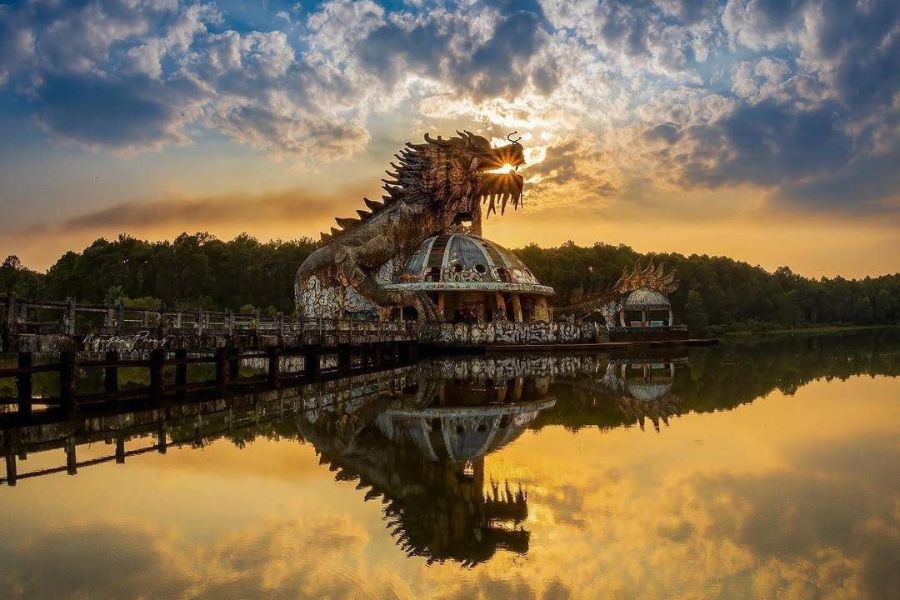
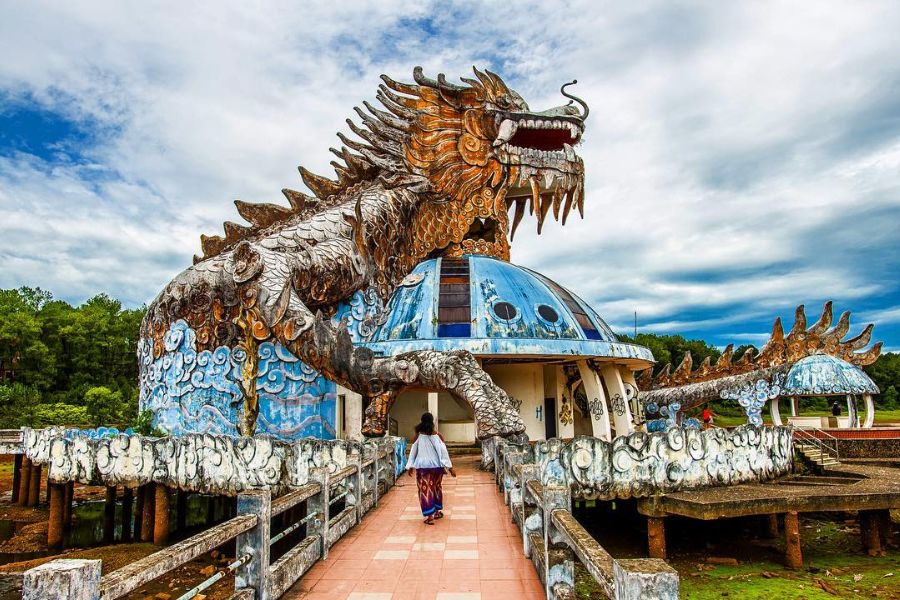
The iconic representation of Thuy Tien Lake is the enormous dragon sculpture coiled up on the derelict aquarium. Its scales have been worn with moss over time, and the stunning details seem vivid against the eerie backdrop. You may enter and venture into the mouth of the dragon for remarkable views of the sprawling lake – a screenshot worthy of any unique travel album.

Check In At The Giant Dragon in Hue

Visit The Abandoned Aquarium

Walking into the aquarium means entering a world lost in time. You can see old empty tanks, broken glass, and mossy walls. Although in decay, the aquarium has a haunting allure, causing visitors to start imagining how it may have been once upon a time alive.

Experience The Water Park And Music Stage

The remnants of twisting water slides used to echo with laughter and splashes; now they sit under the sun and don’t get much attention other than the faded colors quietly reminiscing of joyful thrill-seeking. The empty pools, as well as the open-air music stage where crowds once sat, cheering on another lively show, echo only the sound of the wind now.

Cracked walls, rusty rails, and vibrant patches of graffiti created a gritty post-apocalyptic beauty that draws elements of photography or urban exploration. There is texture, shadow, or a quirky detail around every turn; it is decay and time in the most dynamic way possible in a small section of the park.

Stroll Through The Pine Forest

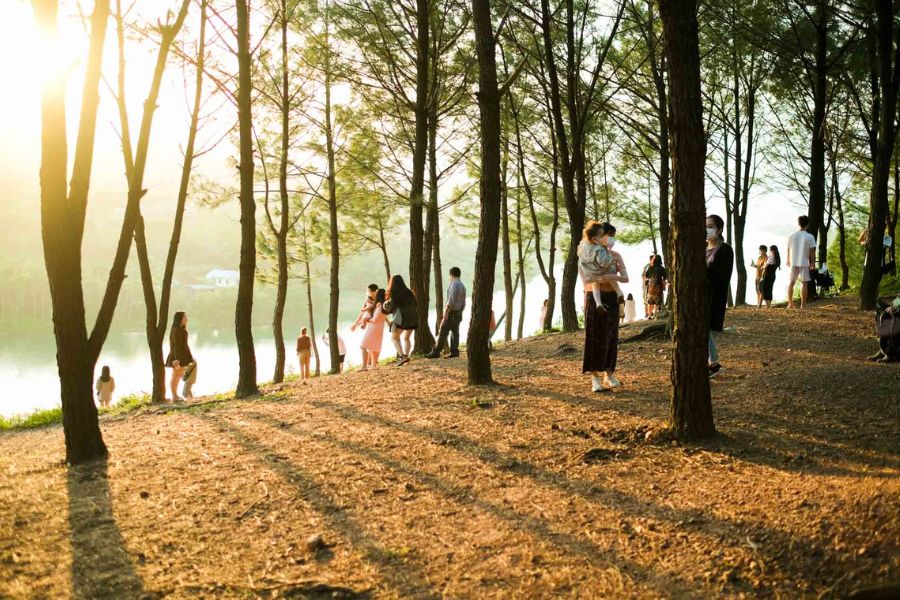
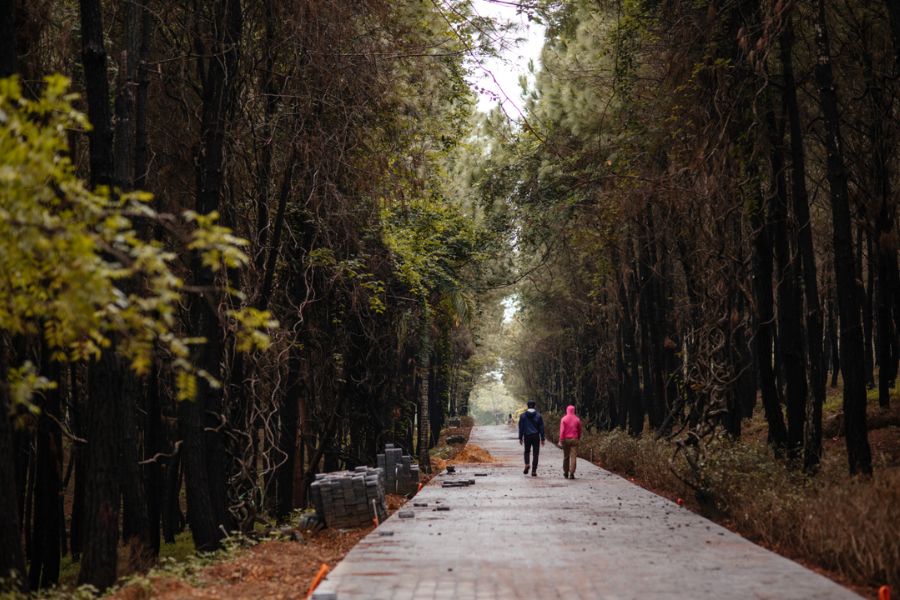
To the side of the lake is the great pine forest. The forest is expansive and clean, the air smells wonderful with the scent of fresh pine trees, and all you hear is a faint wind blowing through the trees. The sun breaks through the tree canopy and shimmers through the low layers of trees.

The calm trails invite you to take your time, listen to the soft rustle of leaves, and breathe. It is a lovely space in nature to simply feel and make sense of things; to appreciate the quiet of nature and natural surroundings, which are most welcomed compared to nearby, empty concrete structures.

Snap A Sarcastic Pic With The Antique Stone Car

Resting hillside above the lake is an antique-style stone car enveloped in green moss and exuding tastefulness and elegance. Its unique shape and outline make it a quirky photo opportunity for the adventurous, especially with the beauty of the towering pines and decaying structures in the background.

Explore The Abandoned Fish Tanks

The abandoned aquariums, which were once alive with rare and exotic aquatic creatures, now lie empty, cracked-open walls tagged with bold and colorful graffiti that tells a different story of the evolution of the park since then. The moisture-laden, mossy air mixes with the echoes of your footsteps inside to create a unique sensory experience.

For urban explorers, the unpleasant decay of the aquariums along with their former purpose reveals something intriguing about the passage of time, and hopefully, you appreciate this place like we do.

Explore The Abandoned Fish Tanks

Watch The Sunrise Early Morning

A sunrise at Thuy Tien Lake is a spectacular moment, which you should experience in Hue. Mist lies heavily upon the tranquil lake, as the sun’s first rays begin to dance over the lake and the yellow-orange sun creates a soft golden glow upon the abandoned structures. In the cool morning air, you can hear the clear morning song of nearby birds, the soft rustle of leaves surrounding you as you take in the perfect silence.

When you are at a high vantage point, such as the dragon’s mouth or the hill adjacent to the lake, you will see the park awash in light, and it may seem like you are in a dream that is suspended between reality and fantasy.

Entrance Fee

Thuy Tien Lake Water Park is officially closed to the public, though it has not stopped guests from still entering, and thus requiring a small payment to the guard on-site, depending on whether you wish to park there or not.

Age group Ticket price
Adults 10,000 VND / ticket
Children over 1m tall 10,000 VND / ticket
Children under 1m tall Free

Note: The cost to park your vehicle is 5000 VND.

Opening Hours

Because the park is abandoned, there are no official opening hours, so you can really visit any time of day. The best time to visit Ho Thuy Tien is during the dry season, December to April, when the weather is sunny with very little rain, and you can walk around and get photos easily. If you visit during the rainy season, from May to November, you will get plenty of green and a nice breeze, just bring a raincoat and wear non-slip shoes.

The Abandoned Water Park in Hue opened in 2004 (2)

Early in the morning or later in the afternoon is the best time during the day because it’s cooler during the day and the beautiful lighting creates a dream-like atmosphere in the park. If you really like the drama, planning your trip on foggy days will make Ho Thuy Tien even more mystically haunting!

How To Get To The Abandoned Water Park Hue

This distinctive park is located not far from Hue’s center, and the path to it is easy to find. You will have the option of riding a motorbike, taking a taxi, or using a motorbike taxi.

So, to start at the center of Hue, go straight along Le Duan Street heading towards Da Vien Bridge. When you cross Da Vien Bridge, continue straight to Phan Chu Trinh Street, turn right on Dien Bien Phu and at the end of that street, turn right onto Le Ngo Cat, and then left to Minh MangKhai Dinh, and turn right onto Thuy Tien Street, and about one kilometer later you will reach Thien An Hill, you can park here and walk to Thuy Tien Lake Park.

Things To Know Before Traveling To The Abandoned Water Park Hue

To ensure that your experience of the Thuy Tien Lake Water Park is safely memorable, please consider the following tips before your visit.

  • Apply sunscreen prior to leaving, as most activities are outdoors and the travel route has limited sun coverage.
  • Bring insect repellent since there is dense vegetation in the park.
  • Wear appropriate, comfortable clothing and sturdy shoes to make walking easier and safer.
  • There is an expected small (unofficial) “entrance fee” ranging from 10,000 VND per person and 5,000 VND for parking.
  • Try not to visit the park alone, especially when visiting secluded or poorly kept overgrown areas.

The Abandoned Water Park in Hue opened in 2004

  • Do not climb on dangerous, unstable, or deteriorating structures, especially if they are inside the aquarium facility or abandoned structures/areas.
  • Bring a flashlight if visiting early morning or late in the evening, as some parts are very dark.
  • Be aware of the wildlife/animals such as snakes or insects, as the environment is very damp and overgrown.

FAQs About The Abandoned Water Park Hue

Below are some of the most frequently asked questions travelers ask before planning a trip to the abandoned water park, along with helpful answers to help you plan your trip.

Is it legal to visit the park?

The park isn’t officially open, so technically speaking, it is illegal to enter. However, travelers have had success accessing the park by talking to on-site security or going down open paths. If you choose to visit the park, it is best to be discreet, respectful, and courteous to any locals or security.

Is the park safe to visit?

For the careful traveler, it is generally safe to visit the park. The park has some old structures, and the park is in a state of disrepair. Many areas of the park have slippery spots, broken glass, and unsteady steps. Avoid climbing on visibly unstable buildings, take care around the edge of the lakes, and the safest option is to visit the park during daylight hours.

Is there a fee to enter the park?

Since the park is abandoned, there is no ticket booth. But some of the visitors said that they paid a small fee (around 10,000-20,000 VND) to a local guard or resident who allowed them to enter.

Final Thoughts: Is The Abandoned Water Park Hue Worth Visiting?

Although there is no longer any splashing waters and crowds of tourists, the lingering ghostly aesthetic and unique atmosphere of the Abandoned Water Park Hue is an unforgettable stop for any adventurous travelers. You can still see decaying waterslides, a dragon-shaped tower, and overgrown paths. You will get a unique mix of mystery, history, and artistry that photographers and urban explorers will love. Plan your visit to Seni World today and explore the dark stories entwined with this brilliantly bizarre site.

Lang Co Beach: A Jewel In The World’s Most Beautiful Bays

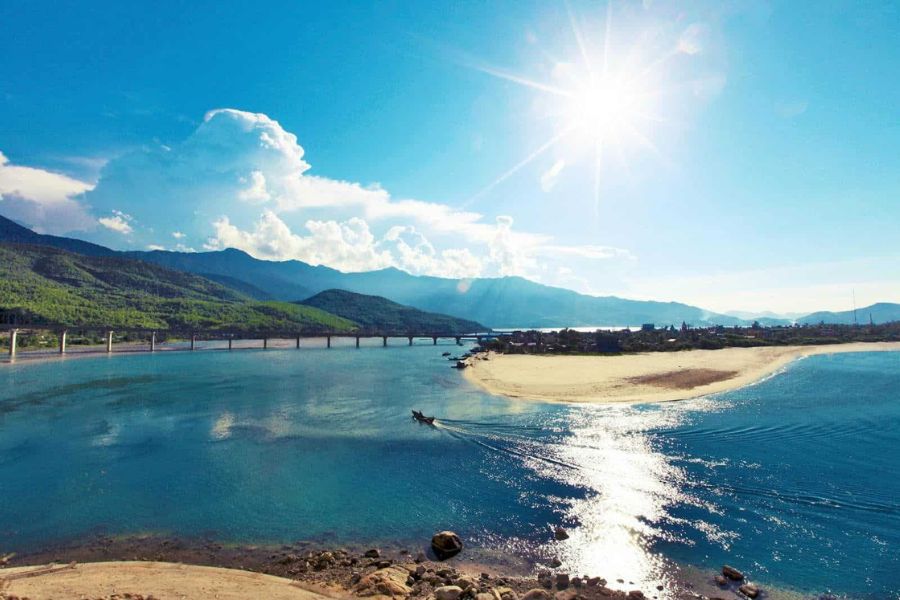
Lang Co Beach in Central Vietnam is famous for its long stretch of white sandy beach, crystal-clear waters, and verdant mountains. It is also one of the most beautiful bays in the world, with fresh seafood and stunning ocean views.

Introduction To Lang Co Beach

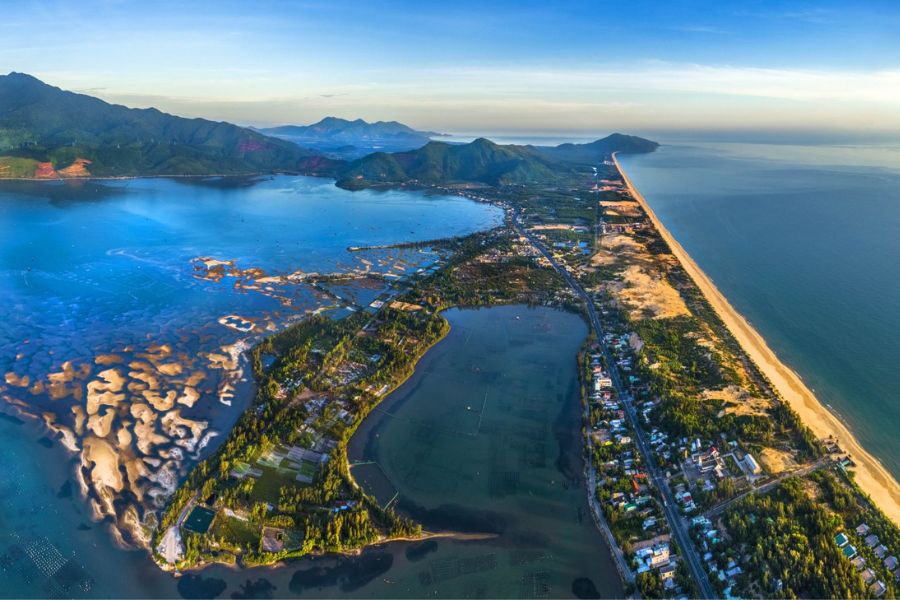
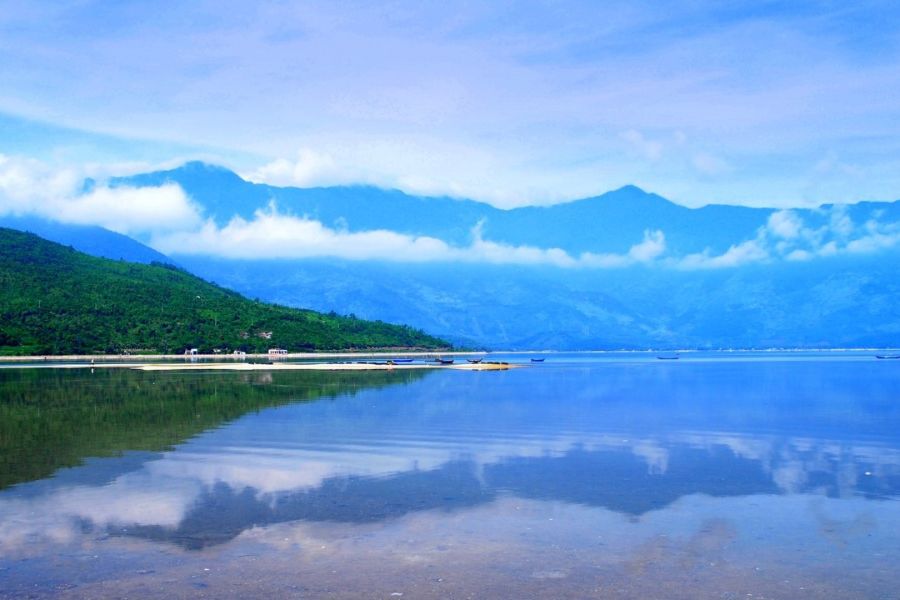
Lang Co Beach, located in Phu Loc District between the ancient capital of Hue and the vibrant city of Da Nang, is a beautiful part of Central Vietnam, and travelers from all over the world fall in love with it. Lang Co is shaped like a crescent with fine white sand, turquoise waters, and the green backdrop of the Bach Ma mountain range, where sea meets sky meets forest.

Lang Co is shaped like a crescent

Lang Co was recognized as one of the “World’s Most Beautiful Bays” in 2009. Situated conveniently along National Highway 1A, Lang Co beach makes for a great stopover on travels between Hue, Da Nang, and Hoi An, allowing visitors to experience both beautiful nature and the local culture in one scenic place.

History Of Lang Co Beach

Lang Co Beach is a remarkable natural area located in Lang Co Town, Phu Loc District, Thua Thien Hue Province, where mountains, forests, and the sea meet. This stunning area, located at the foot of Hai Van Pass, is advertised for its beautiful scenery that Emperor Khai Dinh called a “heavenly paradise” in the early 1900s. The name “Lang Co” is likely derived from the large number of storks that used to roam here before the name slowly transformed over time.

Lang Co Beach is a remarkable natural are

Legend has it that in the summer of 1916, in his first year as emperor, Khai Dinh and his court were the first to lay claim to the area. After being entranced by the pristine natural setting while traveling from Hue to Hai Van Pass, he decided to build a summer residence called “Tinh Viem Palace.” To preserve his memories, Khai Dinh wrote an inscription to the palace that was engraved in stone and placed in Lang Co.

Top 4 Iconic Attractions In Lang Co Beach

Located in addition to its pristine coastline, Lang Co Beach is surrounded by cultural monuments and natural wonders that provide 4 unforgettable experiences for travelers.

Lap An Lagoon

Lap An Lagoon is a breathtaking expanse of brackish water over 800 hectares in surface area, located to the west of Lang Co Bay, extending from the foot of Phu Gia Pass to the mouth of Hai Van Pass. The lagoon is renowned for its still body of water and picturesque mountainous scenery.

Lap An Lagoon in Lang Co Beach

Besides its scenic presentation, Lap An Lagoon features an abundance of ecosystems, particularly the oyster population, which is reputed as a local delicacy and highly nutritious. The local population is famous for oyster farming, and visitors can enjoy the fresh oysters harvested from the shores of Lap An Lagoon while admiring the sunset.

Hai Van Pass

Located along the Hai Van mountain range, which rises more than 500 meters above sea level, Hai Van Pass serves as the natural divide between Hue and Da Nang. The beauty and majesty of the area were recognized by Emperor Le Thanh Tong, who called it “The Most Majestic Gate Under Heaven”.

Whether you choose to drive along the Hai Van Pass or take a motorbike ride, the experience is exhilarating and definitely one to remember. The hairpin turns, misty peaks, and bursts of sun illuminate an ever-changing landscape that germinates visual beauty for both adventurers and photographers.

Bach Ma National Park

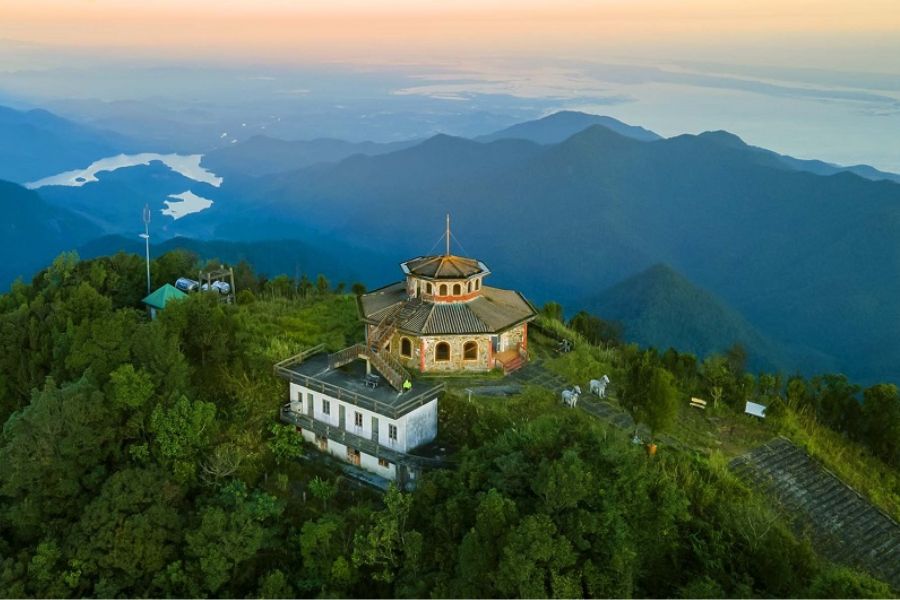
Bach Ma National Park is an ecological wonder known for its stunning scenery and biodiversity. This expanse of untouched rainforest is the natural corridor in Vietnam that runs from the East Sea to the Vietnam-Laos border, creating a microhabitat for numerous plant and animal species. Fresh mountain air, soaring mountain peaks, and tumbling waterfalls are a lovely break from the coastal heat.

Hai Vong Dai on the summit of Bach Ma Mountain

Visitors to Bach Ma can navigate a series of hiking trails that range from the slight to the intense, with trails leading to incredible viewpoints, pristine river estuaries, and secluded swimming holes. The park is also a birdwatching paradise, with over 350 previously recorded species of birds.

Cau Vom Don Ca (Don Ca Arch Bridge)

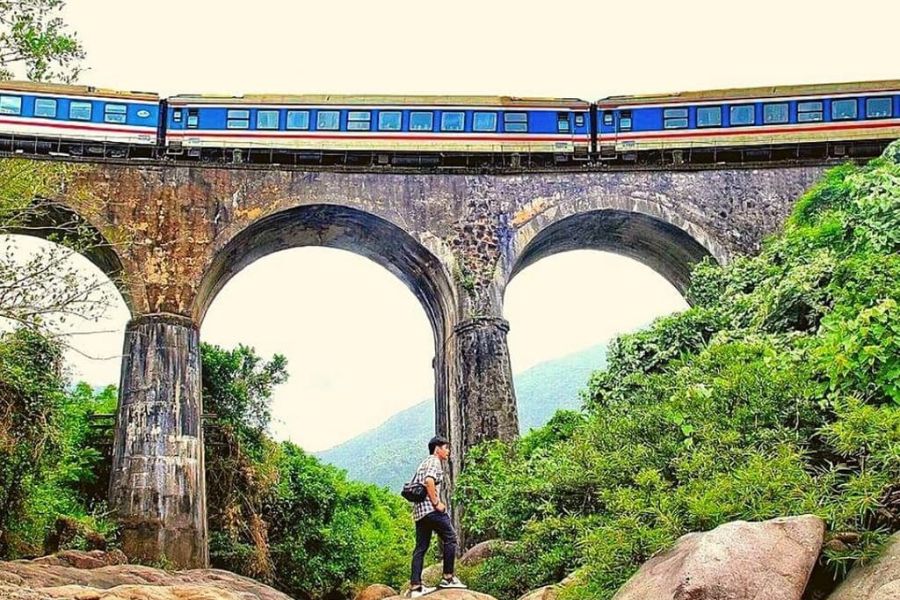
Hidden at the foot of the stunning Hai Van Pass, Cau Vom Don Ca – also known as the “fairy-tale arch bridge” – captures visitors’ attention with its unique and pristine charm. It is surrounded by green trees and mountains, welcoming tourists seeking a laid-back place to escape the chaotic pursuits of other sightseeing tourists.

Built in the early 20th century, the bridge is predominantly of French construction. The bridge has a unique arch type of style that has endured for over 100 years. Visitors can traverse the bridge, breathing the fresh and cool mountain air, and perhaps taking some scenic photos reflecting the backdrop of nature.

Cau Vom Don Ca in Lang Co Beach

4 Cultural Experiences You Shouldn’t Miss

From lying on the beautiful sand that stretches out before you, to discovering hidden natural objects, here are four things you should try.

Swimming And Relaxing On The Sandy Beach

With crystal clear water and soft white sand for kilometers, Lang Co Beach is a beach-goer’s paradise. The soft waves make for a great swimming experience, and the calm vibe invites you to simply relax under the sun with a good book or drink in hand.
crystal clear water and soft white sand of Lang co beach

When you do go to the beach, you can go as early in the morning as you can or just as the sun is beginning to set. At these times, you will get the best views for photos, and you can enjoy pastel clouds on the horizon. This was a nice way to relax before jumping into potentially bigger adventures.

Visit The Beautiful Lap An Lagoon

Located not far from Lang Co Beach, Lap An Lagoon is stunning in its peaceful scenery of which is brimming with marine life. Surrounded by mountains and part of the pristine environment, the lagoon reflects the many colors of the sky, almost like you have actually stepped into a painting!

Visitors get to explore the sandy banks, engage with local oyster farmers, and even eat freshly prepared seafood in front of the lagoon. When you do get a meal, there’s nothing better than eating fresh oysters grilled with scallion oil whilst enjoying the raging lagoon winds, the sun setting to the west, and the calm of the lagoon around you.

Explore Bach Ma National Park

If you love nature, then Bach Ma National Park is a must-see when you are near Lang Co. It is a beautiful, lush park that is filled with wildlife, waterfalls, and stunning views of the ocean and mountains.

Whether you go on a simple hike or one of the harder treks, you will be rewarded with colorful exotic birds, trickling streams, and the nice sound of nature. It is truly a place for you to escape into the untouched jungles of Vietnam.

Enjoy Snorkeling And Underwater Adventure

Lang Co boasts a diverse marine environment, which is why it is a great destination for snorkeling. The shallow reefs contain amazing corals and seas full of vibrant fish, all of which make for a marvelous excursion below the ocean waves.

Most companies that offer snorkeling provide the gear and local insight to ensure a safe adventure into the underwater environment. It is one of those fun activities that combines adventure, beauty, and an enhanced understanding of the coastal environment.

Entrance Fee

You don’t have to pay a fee to swim at Lang Co Beach. Every visitor can lie back on the sand and swim in the pristine waters for free. You can rent floats if you want to or participate in other water activities and services provided by the local vendors along the beach at an additional charge.

Best Time To Visit Lang Co Beach

The best time to visit Lang Co Beach is from April to July, when the weather is typically dry, sunny, and warm, and the waters of Lang Co are calm and turquoise. This time of year is ideal for beach activities, including swimming, sunbathing, and water sports…

The best time to visit Lang Co Beach is from April to July

From August to November, the region is prone to more rain, rougher seas, and murkier waters, and swimming at the beach is not as favorable. However, the opportunity for more cultural and nature-based activities still exists, including going to Lap An Lagoon, trekking in Bach Ma National Park, and tasting some of the well-known seafood of Lang Co.

Between December and March, temperatures tend to be cooler, which is not great for swimming, but the tranquillity of the beach and the beauty of the landscape are inviting to cautiously explore and taste the menu items.

How To Get To Lang Co Beach

Lang Co Beach is roughly 60 km from Hue City and just 25 km from Da Nang City, easily making it a destination on your journey between these two well-known locations.

By Air

If you are on longer travels from major cities like Hanoi or Ho Chi Minh City, then your best and most comfortable option will likely be to fly. Phu Bai International Airport (HUI) in Hue is approximately 75 km from Lang Co, then you have the option of taking a taxi, shuttle bus, or hotel transfer.

  • Estimated Fare: approximately 500,000 – 2,000,000 VND/one way (depending on flight carrier, date of purchase, and seat class)
  • Travel Time: approximately 1 hour flight and 1.5-2 hours driving time to Lang Co.

travel by plane

By Train

If you are traveling by train, you will have a scenic and romantic journey, particularly if your route takes you through the famous and beautiful Hai Van Pass. The main train station is Hue Railway Station, and then you can either take a taxi or a bus to Lang Co.

  • Estimated Fare: approximately 350,000 – 1,200,000 VND/one way (depending on type of train and seating class)
  • Travel Time: 2 – 3 hours from Hue to Lang Co.

By Bus

If you’re traveling on a budget, buses are going to be the cheapest way to go. From the Hue city center, take Bus Route 07 directly to Lang Co.

  • Estimated Fare: 7,000 VND/one way
  • Travel time: Around 1.5 – 2 hours
  • Hours of operation: 05:30 AM – 05:00 PM daily

Things To Know Before Traveling to Lang Co Beach

To get the best out of your Lang Co Bay trip and to have a lasting memory, the best way to prepare is to plan and keep in mind a few simple tips.

  • Distance from the city center: Lang Co Bay is located at least 1 hour away from some major cities, so ensure you plan your transportation and be aware that limited nightlife activities will be available!

Visit The Beautiful Lap An Lagoon

  • Book the right accommodation: Since there will be limited nighttime entertainment available, you could look at resorts or hotels in Hue and simply use the extra facilities and activities you have paid for.
  • Stay safe when in the water: The bay has a dangerous and complicated seabed with rocks and reefs, and there can also be strong currents, so make sure that when swimming, you do it in an area meant for swimming – with warning signs and lifeguards.
  • Look after yourself: Be sure to protect yourself from the sun and bring sunscreen, hats/caps, and sunglasses; it can get hot and sunny!
  • Help keep the environment clean: Do not litter and help take care of the bay’s natural beauty for others to enjoy.

Final Thoughts: Is Lang Co Beach Worth Visiting?

Lang Co Beach is a stunning beach, with its white sand, clear turquoise water, and green mountains in the backdrop, confidently earning it a spot as one of the World’s Most Beautiful Bays! From tranquil moments at the beach, enjoying fresh seafood, and proximity to attractions such as Hai Van Pass and Bach Ma National Park, it is a destination to check off your Vietnam list! If you choose to visit Lang Co Beach, be sure to book your arrangements with Seni World and see the beautiful beach for yourself!

Discover Vong Canh Hill: Hue’s Balcony of Timeless Beauty

Vong Canh Hill, Hue’s location, provides breathtaking views of the Perfume River as well as jungles and ancient royal tombs. The beauty and peace of nature make the hill a good place for a sightseeing trip with photo opportunities and absorbing nature’s calmness!

Introduction To Vong Canh Hill

Located around 7 km southwest of Hue’s center, Vong Canh Hill, which means “hill for looking at the scene,” is a beautiful place where the river touches the forest. With pine trees and light breezes among the pines, it is a viewpoint of the Perfume River as it flows by various royal tombs and quiet villages along the riverbank, providing a dramatic view for your memories.

Vong Canh Hill means _hill for looking at the scene

A popular spot since at least the time of the Nguyen Dynasty, when emperors came to Vong Canh for a view, the charm and serene setting of Vong Canh are still loved today. Whether it is for a golden sunset over the misty river, a quiet stroll through the peaceful pine forest, or to simply gain a sense of peace from the atmosphere, Vong Canh Hill is a wonderful blend of history, nature, and soul.

History Of Vong Canh Hill

Vong Canh Hill is a place of history in Hue; it is a site of significance which is associated with the Nguyen emperors who were known to often visit to take in the beautiful landscapes and relax. This site became a favored destination for the royal family from the Nguyen Dynasty, where they could stand and contemplate the winding turns of the Perfume River as well as the imperial tombs of the Nguyen Emperor.

Vong Canh Hill is more than simply a lovely view. It has historical, cultural importance and is a part of the Complex of Hue Monuments. This hill is also a historic site that bears witness to the life of a royal family and the traditions of the court; it is a place that is able to encompass and reflect upon nature and royal history.

Unique Architecture Of Vong Canh Hill

Commonly known as the “Hue’s balcony,” Vong Canh Hill also has a breathtaking view that captures the uniqueness of nature, history, and culture. Right from the base of the hill, visitors will be captured by the scenery of mighty three-needle pine trees shading the area with their cool, pleasant shade. These types of pines grow in clusters, providing a nice, tranquil, lush green area throughout the year.

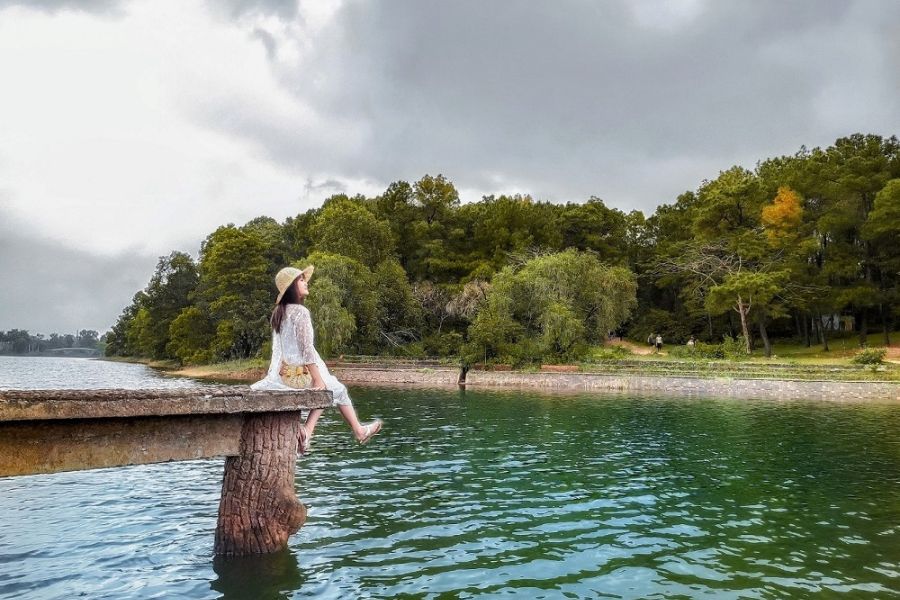
Enjoy The Fresh Cool Air in Vong Canh hill

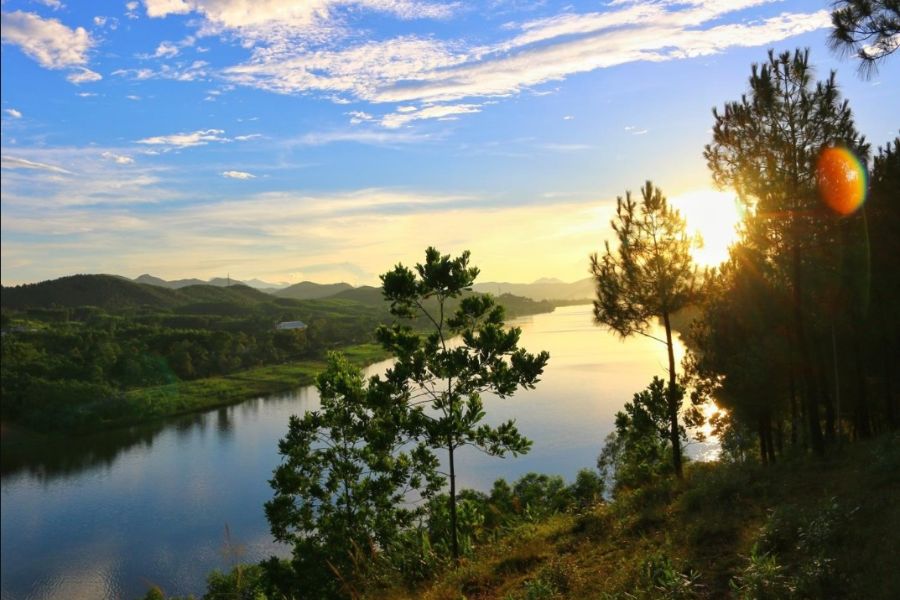
As you make your beautiful way to the top of the hill, the view reveals itself like a traditional watercolour painting. In the distance, the Perfume River edges its way through ancient rooftops and weathered imperial tombs such as Tu Duc Tomb and Minh Mang Tomb. Such beauty and tranquillity can be observed at all times of the day. Misty mornings and shimmering midday, golden sunsets, and sometimes you imagine yourself in a dream, walking through the fog like a fairytale.

Vong Canh Hill has such rich vegetation, including shrubs, purple myrtle, wild grasses, and seasonal wildflowers that punctuate the topography with exciting colours. Accompanied by the soft chorus of chirping birds and rustling sounds of the wind through the pine forest, it is an ideal location to clear your mind and re-energise.

5 Cultural Experiences You Shouldn’t Miss

Vong Canh Hill is not only a stunning viewpoint, but it’s also a spot where you can feel Hue’s poetic beauty and experience nature. Here are some “must-do” things for you to experience when you go.

Enjoy The Amazing View Of Hue from Vong Canh Hill

Vong Canh Hill was once a favourite place of stops for Nguyen Dynasty kings; it has all the qualities of a beautiful place, similar to Da Lat. From here, you can see endless orchards of pomelo, tangerines, oranges, and longans, back to the roofs of the old temples and royal tombs. The coolness of the pine trails, underneath the Perfume River, is huge. A vast scene that feels so warm.

See The Beauty Of Hue By Sunset

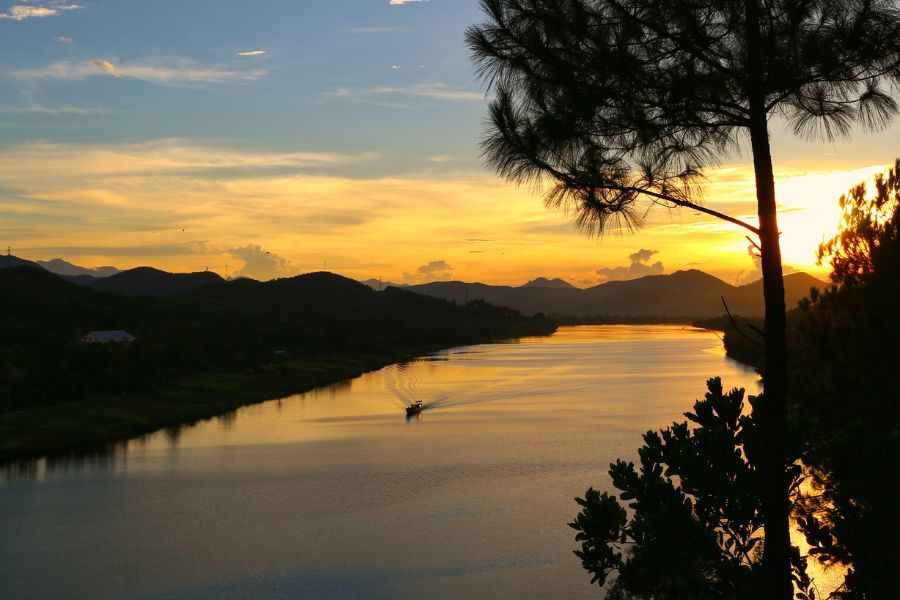
The most beautiful “specialty” of Vong Canh Hill is the sunset. When the sun sets, the entire hillside glows a golden-red colour. The light of the sun emerged through the pine branches, mirrored in the river. It’s when you feel peacefulness in the air. You will remember this. Don’t forget to capture some of the moments, these will be most people’s best travelling photos.

peaceful sunset in Vong Canh hill

Enjoy The Fresh Cool Air All Year-Round

While the center of Hue is hot and dry, Vong Canh Hill has its cooler temperatures from the dense green cover. Still fairly hidden from mass tourism, visitors can experience the original environment, as well as the “natural air purifiers” from the surrounding trees. Perhaps that is why the locals have recently been flocking here to escape the heat and enjoy nature in a quiet place.

Capture Endless Instagram Pictures

With the perfect balance of mountains, rivers, and green land, Vong Canh Hill is a paradise for photographers. Everywhere you turn is a perfect picture spot. The romantic scenery of the pine hills, or the dreamy Perfume River in the evening light, can make perfect spots for photographers! For a little bit more charm, wear a vintage-style outfit or two, as they will mix well with the setting!

Camp Overnight And Forge Unforgettable Memories

If you feel that one day doesn’t allow you to enjoy all the beauty Vong Canh Hill has to offer, why not stay overnight? Invite your friends, pitch a tent, and spend your evening singing, playing games, and telling stories while looking at the stars. Just make sure you bring enough food, drinks, and camping gear, and most importantly, you take everything when you leave except your footprints.

Entrance Fee

Vong Canh Hill is an entirely free attraction. However, if you’re tying it in with destinations such as Tu Duc Tomb, Minh Mang Tomb, and Khai Dinh Tomb, you’ll need to pay the respective entrance fees.

road to Vong Canh hill

Entrance fees for Nguyen Dynasty royal tombs near Vong Canh Hill:

Attraction Adults Children (7–12 years) Children (<6 years)
Minh Mang Tomb 150,000 VND 30,000 VND Free
Tu Duc Tomb 150,000 VND 30,000 VND Free
Khai Dinh Tomb 150,000 VND 30,000 VND Free
Gia Long Tomb 150,000 VND Free Free
Dong Khanh Tomb 100,000 VND Free Free
Duc Duc Tomb 50,000 VND Free Free

Best Time To Visit Vong Canh Hill

Vong Canh Hill is always green, making it a beautiful, calm, and refreshing place at all times that you visit Hue City. No matter when you visit, you will always be greeted with cool air infused with the aroma of pine and the peaceful surroundings. So anytime is a great time to stop. However, if you want to make the most of your time from a photoshoot perspective or just to experience the view at the optimum times, early morning and late afternoon are the highlights.

Vong Canh Hill is an entirely free attraction

In the mornings, the hill greets you with a light chill and thin mist wrapping around the tall pines. This is often the time you can experience a breathtaking sunrise along with a full dawn view over the Perfume River. The first golden rays piercing through the clouds, while being on top of the hill, is a stunning way to greet the day.

For those who feel romantic, around 5 PM is the golden hour at Vong Canh Hill. The sun begins to sink below the mountains, casting warm light over the treetops while silhouetting the riverbanks in the valley below. The soft light filtering through the pines is something you cannot forget easily, as it creates an atmosphere of peace while spending time with friends, loved ones, or taking time to reflect on yourself.

How To Get To Vong Canh Hill

Vong Canh Hill is located about 7 km from the center of Hue City and can be easily accessed via a number of different transport options, depending on your wishes and budget.

From the Hue City center, you can follow Hoai Thanh Street to Le Ngo Cat Street, then turn onto Huyen Tran Cong Chua Street. After going straight for about 4 km, you will reach a parking area under the hill, from which it is only a short walk to the top.

Mode of Transport Travel Time Estimated Cost (VND) Notes
Motorbike 15-20 min 100,000-150,000/day (rental) Flexible, ideal for those who enjoy riding and stopping for photos along the way.
Taxi / Car (Grab) 10-15 min 80,000-150,000/way Comfortable and fast, suitable for families or groups.
Cycling 25-30 min 50,000-80,000/day (rental) Great for those who love exercise and sightseeing at a slower pace.

Things To Know Before Traveling To Vong Canh Hill

Before stepping on Vong Canh Hill, there are some minor preparations you can do to make your trip more pleasant and enjoyable. Here are some important tips to help you have the most enjoyable experience:

  • Protect yourself from the sun: While the hill is shaded and cool, the summer sun in Hue can still be strong. Be sure to put on sunscreen, wear long sleeves, and even pack a hat!
  • Bring something to drink and eat: Staying hydrated and energized is important, especially if you plan on being out for hours or if you want to take beautiful photos when the sun rises and sets.
  • Wear comfortable shoes: Shoes with soft soles or flat sandals are ideal for walking up the hill; you do not want sore feet.
  • Be camera-ready: Ensure your phone/camera is fully charged, bring a tripod (if you’d like), and put a power bank in your bag for those “check-in” times!
  • Use the proper viewpoint: The hill is home to several areas to look down on the iconic curve of the Perfume River, so take your time to find your preference!
  • Leave no trace: If you intend to picnic or camp, be sure to clean up any trash you make before leaving; no one wants to see garbage in the stunning area!

FAQs About Vong Canh Hill

Planning your Vong Canh Hill trip and have a few questions lingering in your mind? Below, you’re likely to find some of the most common questions tourists generally have before visiting, with thorough answers to assist you in preparing for your journey.

What time of the day is best to visit?

You can go any time of the day, but early mornings are misty, cool, and lovely to soak in a sunrise, while later afternoons are great for sunset photos.

How long should you spend at Vong Canh Hill?

Most tourists spend 1-2 hours exploring the site while taking photos and finding an opportunity to relax. If you have combined the trip with a picnic or nearby attractions, then you may wish to spend half a day.

Vong Canh Hill is green and refreshing around the year

Is Vong Canh Hill good for families and children?

Yes! It’s a family-friendly place with paths of gentle slopes and open spaces. Just be sure to bring your own water, snacks, and sun protection if you visit during the hotter months.

Are there amenities available, like food vendors or washrooms?

There are no main amenities available on the hill itself, so the best idea is to bring your own drinks and snacks. There are food and washrooms in the closest villages or tourist areas.

Can I camp overnight at Vong Canh Hill?

Camping is allowed, but is not officially offered. If you choose to camp, please bring all of your equipment, take care of yourselves and the area, and take your rubbish home to look after our environment.

Final Thoughts: Is Vong Canh Hill Worth Visiting?

Anyone looking for natural beauty and cultural significance should visit Vong Canh Hill. Its magnificent views of the Perfume River, poetic pine-laden hills, and proximity to ancient royal tombs present a lovely combo of calm and history. Arriving for peaceful sunrises, romantic sunsets, or simply a timeless feeling in Hue, Vong Canh Hill is beautiful, and this travel piece will stay with you. Plan your trip with Seni World and make your Hue experience even better.

Complete Thuan An Beach Travel Guide For A Calming Getaway

Thuan An Beach, situated approximately 15 kilometers from Hue, is a calm coastal getaway with soft golden sand, azure blue water, and gentle waves for swimming, relaxing, and enjoying the beauty of the coastline in central Vietnam.

Introduction To Thuan An Beach

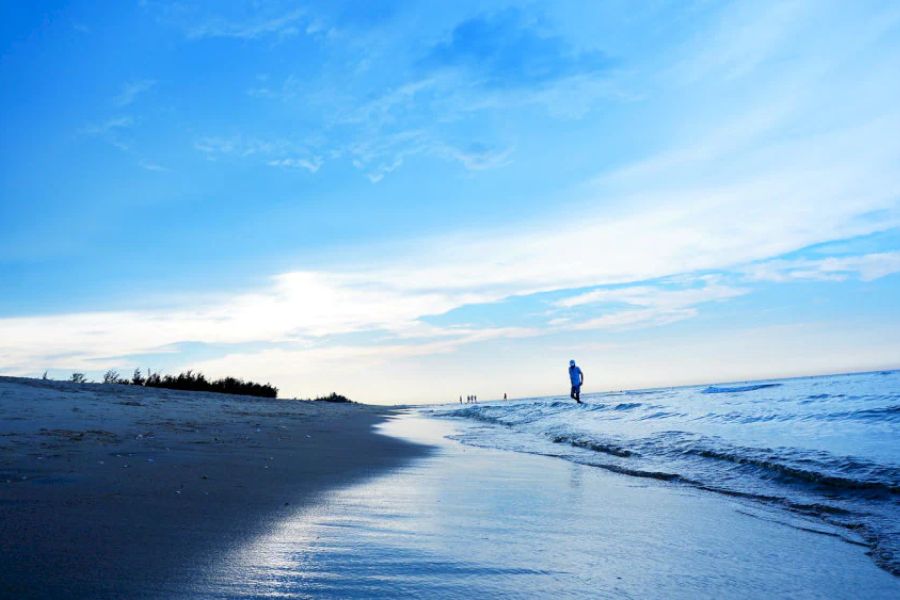
Thuan An Beach is about 15 kilometers from downtown Hue, is a beautiful seaside destination in central Vietnam. The beach stretches with soft golden sands and gentle waves, perfect for relaxing and unwinding from the city. The beach has blue water, and a cool sea breeze is a great place to swim, sunbathe, or just take a leisurely stroll.

Thuan An Beach is a beautiful seaside destination in central Vietnam

Thuan An is not just a stunning beach, but an opportunity to observe the local way of life taking place. Visitors can see fishermen returning with their catch on the day, enjoy fresh seafood from beach vendors, or stop at one of the nearby cultural attractions. Overall, Thuan An Beach is a great option for anyone wanting to enjoy the beauty of coastal Vietnam with scenic views, nice people, and proximity to Hue.

History Of Thuan An Beach

The Thuan An estuary has a historical record dating back to the early 15th century, when it was referred to as Cua Eo under the Ho dynasty. Throughout the centuries, it had other names, but developed its importance when the Nguyen Lords emerged in the 17th and 18th centuries. At that time, the Estuary was the main waterway used by the Huong, Bo, and O Lau Rivers, and was the gateway to the Nguyen Capital. It was also a regional international port, controlling domestic and foreign shipping activities in the merchant center of Thanh Ha – Bao Vinh.

In 1813, King Gia Long renamed the estuary “Thuan An,” meaning “safe and favorable sea gate,” and later had its image embossed onto the Nine Dynastic Urns. King Thieu Tri, later, honored the estuary with a ranking of 10th among “Twenty Scenic Spots of the Imperial Capital.” The military significance of Thuan An, throughout history, was immensely evident, with strong defensive works like the Tran Hai Citadel and Hoa Duan Fort forming a network of extensive protected pathways.

Unique Architecture Of Thuan An Beach

Thuan An Beach is located right at the mouth of the river, where the Perfume River meets the East Sea. Since this is a very special geographical position, it has a long coastal area with wonderful white sand beaches with clear seawater. It is a refreshing and diverse landscape. The beach is uniquely positioned to absorb both the calm river and open ocean, thus giving travelers the opportunity to experience both environments is rare

Thuan an beach is one of Twenty Scenic Spots of the Imperial Capital

Located in Thuan An Town, Phu Vang District (only about 15 km east of Hue City), this beach has a gentle slope down to the surface of the water for swimming and relaxing in the beach area. The combination of river and sea makes Thuan An Beach not merely a recreation area to take in the sun, but also a beautiful green area to take pictures for memories.

6 Unique Experiences You Shouldn’t Miss

Coming to Thuan An Beach in Hue, you don’t only come for the beautiful and pristine beachfront area, but also to explore the culture, history, and daily lives of the locals. Here are some of the experiences you shouldn’t miss when visiting this place.

Cool Off In the Refreshing Water Of Thuan An Beach

Nothing is better than jumping into the cool, blue sea of Thuan An on a bright and sunny summer day. The beach areas are divided into three main swimming beach areas: Beach 1, Beach 2, and Phu Thuan Beach. Each beach area has an idyllic and desirable environment with more quiet and no large crowds, where you can float in the water, splash around, or enjoy some water activity. With the soft white sand and gentle waves, it is also a perfect place to unwind from the heat of the season and float in the water.

The Refreshing Water Of Thuan An Beach

Take Amazing Photos By The Beach

With warm golden sands, tranquil blue water, and overall peacefulness, Thuan An is a photographer’s paradise. You will have countless opportunities to snap perfect Instagram photos from the calm waves lapping the beach to the ‘fishing boats’ waiting offshore. Sunrise and sunset are the best times to photograph when everything is brightly lit and pastel pinks are in the sky, or when the golden light of dusk bathes everything in sunshine.

Check Out Tran Hai Dai

Tran Hai Dai is located near the beach and is an old military post created during the reign of Emperor Gia Long. It was at one time a military outpost to defend Hue’s waterways, but it was also used as a watch post to monitor sea traffic to and from the port of Hue. Now visitors can stroll the grounds, learn about the history, and enjoy panoramic views of the coastline and East Sea.

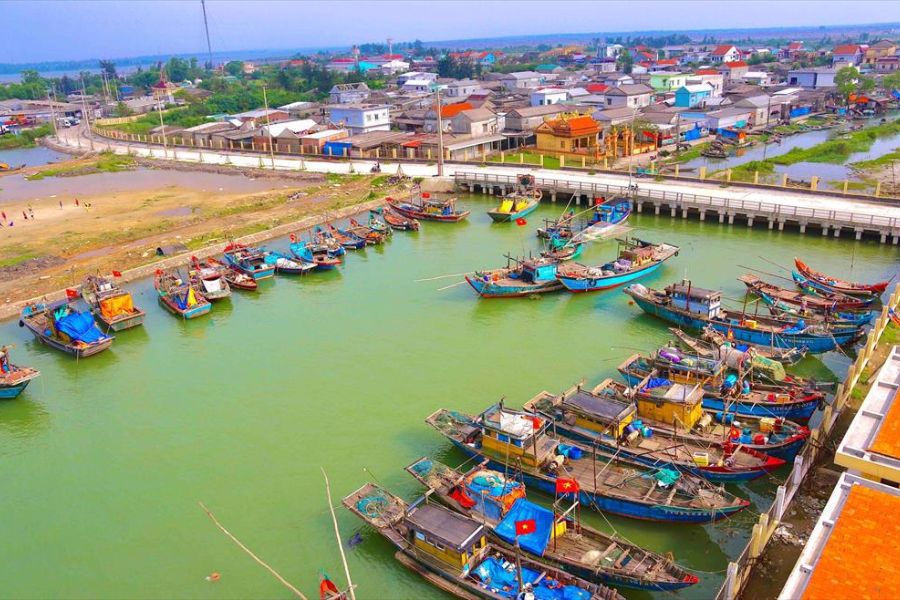
Explore The Busy Thuan An Fishing Port

If you walk a short distance to the Thuan An Fishing Port from the beach, you will be treated to a lively scene in the early morning hours when fishing boats return from fishing trips and head for land. You can see the delivery of crates full of fish, shrimp, and squid, watch fishermen fix their nets, and witness seafood traders make deals. This is a genuine and lively experience that represents coastal life in central Vietnam.

The Busy Thuan An Fishing Port

Discover The Cultural Site Of Thai Duong Lady Temple

The Thai Duong Lady Temple provides insight into the region’s rich cultural heritage. The temple, which is dedicated to the sea goddess, is said to have been built hundreds of years ago and has elements of both Cham and Vietnamese culture. Locals and visitors alike come to the temple to pray for safety, wealth, and calm seas before departing on fishing trips or travels.

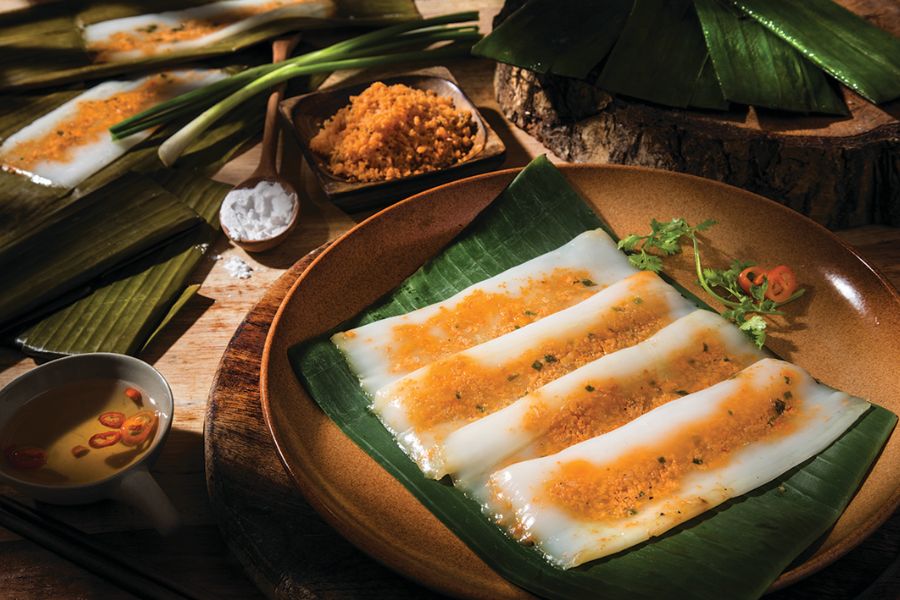
Experience Hue’s Flavorful Food

No one can leave Thuan An without enjoying Hue’s unique dishes. Relish Banh Bot Loc (tapioca dumplings) with their chewy texture and shrimp-and-pork filling, Bun Thit Nuong (grilled pork noodles) with a nutty flavor that comes with peanut sauce, and flavorful Com Hen (clam rice), served with herbs and crunchy toppings. Don’t forget the Banh Ep, which is a crispy stuffed pancake, and freshly harvested seafood that can be grilled, steamed, or prepared to your taste at local beachfront restaurants. Every mouthful gives you a taste of Hue itself.

Traditional Dishes Of Hue

Entrance Fee

The visit to Thuan An Beach is totally free. You will not be charged for entrance to swim or go to the beach at all. If you intend to rent swimming floats, chairs, umbrellas, or buy food and drinks from local sellers, you will have a separate cost for each item or service.

Best Time To Visit Thuan An Beach

The optimal time to visit Thuan An Beach is between April and September, during the summer months. Though the weather in Hue is hot, the sea remains cool enough for swimming, lounging, and a variety of water sports. This is also the time when the beach is the most beautiful, with soft white sand, clear blue skies, and golden sunshine, making for an ideal seaside getaway.

How To Get To Thuan An Beach

When you’re in Hue city center, getting to Thuan An Beach is really easy, with a few transport options to fit your budget and comfort needs. The trip will take you about 20-30 minutes, depending on the traffic you encounter and what you take.

Transport Method Travel Time Price (One Way) Notes
Motorbike Rental ~30 mins 100,000 – 150,000 VND/day Flexible, ideal for exploring nearby spots
Ride-hailing Motorbike ~30 mins 60,000 – 80,000 VND/ride Convenient if you don’t want to self-drive
Taxi / Ride-hailing Car 20–30 mins 200,000 – 250,000 VND/ride Comfortable and suitable for groups or families

Take Amazing Photos By thuan an Beach

Recommended routes

Route 1: From Hue city center, go to Hoai Thanh through Bui Thi Xuan. When you get to Ngoc Khoi Street, turn right, cross the Ga Bridge, and continue to Nguyen Sinh Cung Street. Turn left to Sinh Market, following National Highway 49B for the next 6 km to Thuan An Beach.

Route 2: From the city center, go to Hoai Thanh via the Bui Thi Xuan towards the Bach Ho Bridge and turn into Le Duan Street, go straight through Tran Hung Dao and continue forward until you pass the Gia Hoi Bridge, then turn left into Chi Lang continuing forward for 2 km to Nguyen Van Sieu Street and follow Nguyen Sinh Cung Street and National Highway 49B which is still another 6 km to the beach.

Things To Know Before Traveling To Thuan An Beach

Before visiting Thuan An Beach, a little planning can go a long way in making your trip more enjoyable and safer. Take these suggestions to help you have a safe and unforgettable experience.

  • Pack wisely: Bring personal gear such as clothes, sunscreen, sunglasses, a travel pillow, your phone, and a camera. Use a checklist before your trip, and it will help you not forget anything.
  • Check the weather: Check the weather forecast to help guide you on when to plan your beach trip, photography, and sightseeing.
  • Take care of the environment: Help keep the beach clean by not littering. Leave only footprints behind, and help keep the beach in its natural beauty by disposing of your litter properly.
  • Be safe while swimming: Do not go too far from shore when swimming, and be cautious of strong waves. Wear a life jacket if you are not a strong swimmer.
  • Watch the sun: To ensure you stay cool in the heat of summer, bring a hat, light clothing, and plenty of water.
  • Respect local customs: Dress appropriately and be respectful when visiting temples and other cultural sites.

FAQs About Thuan An Beach

If you are taking your first trip to Thuan An Beach, then you may be thinking about some questions. Below are some of the more popular questions from travelers that may help you if you are looking to enjoy a day at the beach.

Is there an entry fee for Thuan An Beach?

No, there is no entry fee for Thuan An Beach. You can freely swim and relax on the beach without paying an entry fee. However, if you want to rent chairs and umbrellas, floats, or buy food and drinks from food vendors, there are costs.

Are there restaurants or food stalls nearby?

Yes, there are many little seafood restaurants and street food vendors around the beach. There are fresh local food dishes like grilled squid and clams, as well as Hue’s food. Prices tend to be reasonable, but check the menu before ordering.

Thuan An beach at the morning

Can I rent swimming equipment or floats?

Yes, some local vendors rent floats or swimming rings, and some offer jet skis in some areas. Prices for renting are normally quite reasonable; you may even be able to negotiate down the price a little, especially in the low season.

Is swimming at Thuan An beach safe?

Yes, swimming in the sea is considered to be safe, especially in the summer months when the waves tend to be smaller. Families with children should choose a place with a lifeguard for added safety.

Does Thuan An beach have public facilities like showers and restrooms?

Yes, there are basic public facilities like restrooms and showers that are available, although sometimes basic, some facilities were shared with other visitors. If you’re looking for a little more comfort, you can always visit a cafe or restaurant nearby and perhaps use their facilities for a small fee.

Final Thoughts: Is Thuan An Beach Worth Visiting?

Thuan An Beach is just the right mix of nature, local culture, and history. With its golden sand, gentle waves, and welcoming atmosphere, it’s a refreshing natural escape just minutes outside of historic Hue. Whether you wish to swim, walk, or just enjoy some seafood, this coastal jewel has everything for everyone. Plan your trip today with Seni World, and see the tranquil beauty of Thuan An Beach!

Bach Ma National Park – A Haven For Nature & Adventure

Bach Ma National Park is a beautiful natural reserve in Hue, Vietnam, that is known for its cool climate, rich biodiversity, and beautiful hiking trails. It’s the perfect getaway for nature lovers to find peace in Mother Nature.

Introduction To Bach Ma National Park

Bach Ma National Park lies within the verdant Annamite Range, only 40 km south of Hue. With an area of approximately 220 km², Bach Ma Park rises from tropical lowlands to misty mountaintops, nearly 1,450 meters in vertical lift. Bach Ma is recognized as a biodiversity hotspot and conserves over 1,400 plant species, including rare orchids, ferns, and more than 500 animal species, including the critically endangered Saola, red-shanked douc langur, and the brilliant Vietnamese crested argus.

Bach Ma National Park lies within the verdant Annamite Range

Bach Ma’s mountainous terrain with plateau forests, cooler climate, cascading waterfalls, and legacy of French colonial villas delivers visitors a mixture of nature, history, and tranquility, resulting in an enriching experience for adventurers and eco-seekers.

History Of Bach Ma National Park

Bach Ma National Park originated from the French colonial era. In 1925, the French colonial government began a conservation program to protect Edwards’s pheasant (Lophura edwardsi), which was endangered in 1932. The work of M. Girard, an engineer, who built a mountain resort, grew to have over 139 French colonial-style villas, a market, a post office, and a 19-kilometer mountain road to the well-known Morin Hotel on the main road.

Known as the “Dalat of Central Vietnam,” this mountaintop resort town created a cool-climate destination with beautiful destinations such as Vong Hai Dai, Do Quyen waterfall, and Five Lakes trail. In the Vietnam War, Bach Ma was strategically important; U.S. troops occupied the high point, built a temporary helicopter base in 1973. On September 6, 1973, Vietnamese forces retake the high point and establish a large tunnel network, now known as the Bach Ma Tunnels, it is designated a national historic site in 2009.

After reunification, the Vietnamese Government garnered attention to nature conservation, and on July 15, 1991, Bach Ma was designated a national park of 22,031 hectares; the park’s size was changed in 2008 to over 37,400 hectares, including the two provinces Thua Thien Hue and Quang Nam, which enhances the significance of biodiversity protection and eco-tourism.

Top 6 Iconic Attractions in Bach Ma National Park

Bach Ma National Park isn’t just known for its green forest and cool climate, but also for its famous attractions with great views and features associated with those experiences. Below are the must-visit places that you shouldn’t miss on your visit:

Hai Vong Dai

Located on the summit of Bach Ma Mountain, Hai Vong Dai is a great spot to enjoy a 360-degree view of the sea, the forest, and, on clear days, even the city of Hue! The name means “sea-watching pavilion”, and when you’re there, you’ll see why it was called that as well. The climb is shorter than it is daunting, and after you reach the top, you will be greeted by a cool breeze and open sky, which makes for the perfect material for a stunning sunrise or sunset photo.

Hai Vong Dai on the summit of Bach Ma Mountain

Do Quyen Waterfall

Do Quyen Waterfall is one of the park’s biggest attractions that you should visit in Hue, and one of its best natural features. Named after the beautiful rhododendron flowers on the cliffs, Do Quyen Waterfall cascades around 300 meters into a deep valley. Visitors can make the downward trek along hundreds of moss-covered stone steps to the base for the full experience of seeing, feeling, and otherwise known as one of those once-in-a-lifetime experiences!

Five Lakes (Ngu Ho)

You will love the Five Lakes trail (Ngu Ho), which takes you through lush forest to five natural lakes that were formed by streams in the mountains. Each lake is a different depth and has a different feel to it, making it perfect for resting, taking pictures, or dipping your toes into the water to cool off. The trail isn’t too challenging and offers you an opportunity to relax in the serene surroundings of nature, while listening to the birds and surrounded by trees.

Five Lakes on the summit of Bach Ma Mountain

Truc Lam Zen Monastery

Located in the mountains, Truc Lam Zen Monastery is a calm Buddhist retreat set in traditional Vietnamese architectural style. The monastery has lotus ponds, red clay roofs, and cooling breezes from the mountain – indeed, a nice stop for meditation, spiritual reflection, or just appreciating the silence of the forest. The monastery offers not only spiritual insight but an opportunity to connect with the beauty of the Bach Ma National Park’s natural world.

French Colonial Villas

Hidden in the green foliage of Bach Ma National Park are the picturesque ruins of French colonial villas built in the early 20th century. Overgrown with moss and tropical plants, these remnants of the past were summer retreats for French officials to enjoy the cool mountain air along with stunning views.

Though time and war have taken their toll on the mansions, the fine architectural details, arched windows, stone staircases, and crumbling façades still hint at a grander era. Exploring the ruins feels like wandering through a lost chapter of history – a bucket list item for travelers who love heritage, architecture, and mystery.

French Colonial Villas on Bach Ma Mountain

Hobbit Village

At the foot of Bach Ma Mountain is Hobbit Village – a quirky experience based on the Hobbit’s Shire from The Lord of the Rings trilogy. With its round wooden doors, little houses, and landscaping straight out of a storybook, this endearing little village transports you to a world of fantasy.

It is also a perfect attraction for families, couples who look for charming photographic spots and corners to hang out. Kids have plenty of room to play outside in safety, and adults can have fun with the creative designs as well as enjoy the calm atmosphere.

Ticket price: 100,000 VND/adult | 60,000 VND/child

4 Cultural Experiences You Shouldn’t Miss

In addition to its beautiful landscapes and famous attractions, Bach Ma National Park has a variety of cultural and outdoor activities for visitors. Whether you want adventure or a period of contemplation, these activities will add depth to your experience in wonderful ways.

Trekking Through The Ancient Forest

Bach Ma is a trekker’s dream with some truly spectacular trails, such as the trek to Vong Hai Dai, the Five Lakes, Do Quyen Waterfall trek, or the Tri Sao Waterfall. On a trek, you will lose yourself in dense jungle, cross hanging bridges, leap across sparkling streams, and traverse rugged hills. Each trek reveals the untouched charm of the rainforest and provides a refreshing respite from the hustle and bustle of urban life.

Trekking Through The Ancient Forest on Bach Ma Mountain

Bird Watching And Wildlife Experiences

For birdwatchers and wildlife lovers, Bach Ma National Park is a birdwatcher’s and wildlife lover’s dream with more than 350 species of birds and countless others. As you explore under the ancient canopy, native birds will serenade you. Be sure to keep your eyes peeled, as you may just come across the rare crested argus, silver pheasant, hornbills, and so on. There is astounding and deep, rewarding biodiversity for those who have the time to appreciate it.

Camping Beneath The Forest Canopy

Reconnect with nature by camping under the giant, ancient trees in the pristine forests of Bach Ma. You will inhale crisp, fresh mountain air while enjoying the sound of leaves rustling above you and distant waterfalls gurgling below. The surrounding atmosphere creates tranquility and connection that can be hard to replicate. You can either bring your tent or rent camping gear from the many local services operating within the park.

Cycling To The Summit

For physically active individuals, riding a bicycle to the summit of Bach Ma is an exhilarating challenge. The 16-kilometer route climbs steep, forest-lined roads that will tax your endurance, but the rewards are unparalleled scenery and the exhilaration of cycling to the top under your power.

Note: This is a one-way cycling tour. Visitors and bicycles are transported back down (driven) for safety. Remember to contact park management and book your bicycle excursion 5-7 days in advance.

Entrance Fee

Before your exploration of Bach Ma National Park begins, please make sure to pick up an entrance ticket at the main entrance gate. The entrance fees and transport services for Vietnamese visitors and international visitors are currently:

Visitor Type Route Group Size Price (VND)
Vietnamese Visitors Round-trip: Barie – Bach Ma Summit 7 – 12 people 850,000
1 – 6 people 750,000
One-way: Barie – Bach Ma Summit or vice versa 7 – 12 people 600,000
1 – 6 people 500,000
International Visitors Round-trip: Barie – Bach Ma Summit 5 – 8 people 850,000
1 – 4 people 750,000
One-way: Barie – Bach Ma Summit or vice versa 5 – 8 people 600,000
1 – 4 people 500,000

Opening Hours

Bach Ma National Park is typically open from 7:00 AM to 5:00 PM, and entrance is not allowed after 3:00 PM to allow time for travel and exploration. Opening hours may change according to season or specialty, so you may want to check the following contact information in advance:

Best Season: From March to December, when the weather in Hue is dry and less rainy for trekking and outdoor activities.

How to Get to Bach Ma National Park

Bach Ma National Park is easily reached if you’re in Hue, located between the main thoroughfare of Hue to Da Nang, and can be reached by both bikes and cars. So, depending on your origin points, use the following routes and tips for getting there:

From Hue City

You can take National Highway 1A, which travels south toward Da Nang. After Phu Loc town, look out for a green round road sign “Bach Ma National Park” on the right-hand side. Once you turn here, take Tran Dinh Tuc street, and you will end up at the main entrance.

Note: Please don’t confuse this with the road leading to Truc Lam Bach Ma Zen Monastery – they are separate places!

Bach Ma park Known as the Dalat of Central Vietnam

From Da Nang City

To begin your adventure, head north on National Highway 1A. After passing through Hai Van Pass and driving 60km, you will arrive at Cau Hai market. From there, drive another 1km and turn left onto Tran Dinh Tuc Street, where you will arrive at the park’s entrance.

From The Park Entrance To The Summit

Once you’ve reached the main gate, you have two options – walk 16km (4-5 hours) to the summit, or pay extra and rent a car to save energy and time. The fact that there are rental cars available at the gate makes traveling as a group sensible.

Things to Know Before Traveling to Bach Ma National Park

Some helpful tips will help you have the most successful trip to Bach Ma National Park, so be prepared to maximize your time.

  • Where to sleep: You can camp in the forest, stay in one of the colonial-style villas like Do Quyen, Kim Giao, or Phong Lan, or, for budget travelers, stay in one of the homestays or guesthouses at the base of the mountain.
  • What to dress in: You should wear long-sleeved and light clothing, a light jacket, and some good hiking shoes. It is also recommended to wear long socks to prevent getting leeches while trekking.
  • What to bring: Insect repellent, any basic medicines, phone/camera fully charged, and any snacks if you need to bring them.
  • Trekking or driving to the top: You can trek 19 km to the top of the mountain, or you can have a driver at the park entrance. Choose what is best for your fitness level.
  • Respect the environment: Littering, breaking branches, or harming any flora or fauna is strictly prohibited. Make sure to respect park rules to promote the well-being of the ecosystem

Final Thoughts: Is Bach Ma National Park Worth Visiting?

Bach Ma National Park is an absolute paradise for nature lovers. The park is renowned for its cool climate, lush jungles that are perfect for exploration, wildlife discoveries, and stunning viewpoints. If you’re looking for something different that is off the beaten path while in Vietnam, we highly recommend a visit to Bach Ma. Let Seni World create your ideal Vietnamese itinerary to this peaceful site.

An Dinh Palace: A Royal Heritage Of Time

An Dinh Palace is a romantic blend of European and Vietnamese ways. It shows the regal charm of the Nguyen Dynasty. A quiet spot full of history and charm, it’s a go-to place for many who visit.

Introduction To The An Dinh Palace

An Dinh Palace represents one of Vietnam’s most fascinating examples of architectural fusion. This big palace was once the house of Emperor Khai Dinh, and later, the last emperor, Bao Dai, stayed there during his peak in Vietnam.

An Dinh Palace is a romantic blend of European and Vietnamese ways

Entering An Dinh Palace feels like entering a living story, in which every room tells how Vietnam experienced Eastern and Western styles intertwined. An Dinh Palace allows you to see how the members of the imperial family live, unlike other bigger places in Hue, like the Imperial City. The preservation of artifacts, the atmosphere, and the configuration of the structure are all representative of the early 1900s, which was an important yet complex time in Vietnam’s royal history.

History Of An Dinh Palace

The story of An Dinh Palace is connected to the last rulers of the Nguyen dynasty, King Khai Dinh and his son, Bao Dai. Originally constructed in 1902 as a residence for the crown prince, it became the lavish palace we recognize today after Khai Dinh ascended to the throne. By 1922, the structure, as a gift to his son, had transformed into the primary house for the royal family, providing personal space away from the formalities of the Imperial City.

An Dinh Palace was constructed in 1902

After Bao Dai abdicated his throne in 1945, the palace remained the last residence in Vietnam for him and his family. In 1955, Queen Mother Tu Cung gifted the property to the government. Although neglected for some time, An Dinh Palace has been professionally restored and is now a UNESCO World Heritage site. It keeps the authentic stories of the last royalty.

The Architecture Features Of An Dinh Palace

The best part of the An Dinh Palace is its architecture, a blend of Asian and Western styles. There were once ten great buildings on the palace land, but now only three are left because of time: the Main Gate, Trung Lap Pavilion, and Khai Tuong Pavilion.

The Main Gate

As you step in, you first see the two-floor Main Gate, a true piece of art. It’s made in the Vietnamese “tam quan” (three-door) style, and it puts on a grand show. It has nice porcelain and bits of broken glass, with old Vietnamese marks like dragons, phoenixes, and the four seasons. The top of the gate joins East and West, with a crown-like thing and a big pearl on top, standing for kings and luck.

An Dinh Palace's Main Gate

The Trung Lap Pavilion

Just after you walk through the main gate, you come to the Trung Lap Pavilion. This big, eight-sided place has a bronze figure of King Khai Dinh in the middle. This place was once for big parties and meeting guests. It has an open feel and fine details, giving a royal vibe, and leads to the main spot, the grand Khai Tuong Pavilion.

The Khai Tuong Pavilion

The Khai Tuong Pavilion is the top building at the center of An Dinh Palace, a three-level structure that illustrates how the palace combines different types of buildings. The building appears like a large European house, but the large, arched windows suggest French influence, the tall posts suggest Roman influence, and the front features, which are generous and nice. The color of the building is rich yellow, and it stands out against the green tree lines.

The walls and top of the pavilion illustrate fine artwork and wall paint that merge styles of wok from the west with stories of Vietnam. The first floor will grip your emotions with six large wall arts of important old stories and major events of Vietnam. The second and third floors emulate the kings’ daily life for the royal family of Nguyen dynasty. The descriptive name of the “Khai Tuong”, meaning “the beginning of good luck,” as speculation of future developments for the royal family is one hope for better days.

6 Cultural Experiences You Shouldn’t Miss

An Dinh Palace gives guests many ways to learn about the royal culture of Vietnam and see how old ways changed with time. Each visit lets people see the deep cultural roots that made Vietnam what it was in the early 1900s.

Explore the Royal Living Quarters

The private family areas of An Dinh Palace show close looks at how Vietnamese kings lived when old royal ways met new world styles. These rooms keep their original furniture and show parts that tell us about daily life – things you don’t see in the bigger, public palace parts.

statue of vinh thuy price in an dinh palace

Going through the king’s study, you see what he liked and the cultures that helped form how he saw the world. Books in French, Vietnamese, and Chinese show the mix of languages the Vietnamese kings knew at this time. Own items and art show how the royal family mixed the old Vietnamese style with new European ways.

Participate In Traditional Tea Ceremonies

An Dinh Palace sometimes has old Vietnamese tea events that show how this key custom kept giving shape and sense to the lives of royal families even when other ways changed to mix with Western styles.

These tea events are held in rooms of the palace that are made to look as they did long ago, with real items used in ceremonies that the royal court owned. People taking part learn what the symbols mean in making and giving tea, and also feel the quiet moments that made these events key for helping the royal family deal with stress and make their bonds stronger.

Attend Traditional Music Performances

The palace often puts on traditional music shows that make the old rooms come to life with real cultural bits. These shows use the kinds of music tools and tunes that were used to amuse the royal court when the palace was busy.

In the palace’s big front room, the music from the court shows how the old arts from Vietnam kept their place even when things from Europe started to mix into other parts of life at court. The sound in these big, old rooms makes the music better and helps those who come by get a deeper feel for the culture.

Admire The Wall Art

In the big house, some noteworthy finds are the frescoes that look like they’re from Europe. They’re on walls and tops of rooms. These bright, full-of-color art pieces are in good shape, and they mix East and West looks well. Some show tales of myths, while others show normal day things or mean something more. Seeing this art in a royal house in Vietnam is not common. It shows that, back then, the Nguyen rulers liked to try new things and were open to new ideas. If you get close to these paintings, you can see the careful paint work and feel a sense of beauty that makes you think.

The Wall Art in an dinh palace

Learn About Queen Mother Tu Cung

The warmest part of the big house is the living area of Queen Mother Tu Cung, who was the mother of Emperor Bao Dai. Her rooms are just as they were, with things she owned, simple but full of meaning, from family photos to written notes and even simple tools. You can still feel her there, sharing a look into her strong, quiet power, even when things were changing around her. Knowing her story brings the history of the Nguyen rulers to a personal level, more than just kings and big houses, showing us how mothers behind the kings helped shape history too.

Enjoy The Quiet Moments In The Yard

After you see inside, go out to the middle yard. There, mossy stone paths, cool trees, and a quiet wind let you have a calm time. The mix of old European style and old Vietnamese garden feel makes a calm peace. It asks you to sit, think, or snap photos slowly. It’s a quiet spot away from the busy parts of Hue, a place to take it slow and sense the old times. If you love history or just want some quiet, the garden at An Dinh Palace is a whole vibe on its own.

Entrance Fee

The price to get into An Dinh Palace is quite cheap, so all kinds of people can visit.

  • Adults: 50,000 VND each.
  • Children: Free.

Keep in mind: These prices can change. It’s advisable to check with the official ticket office or a local tour guide to get the latest details.

Opening Hours

An Dinh Palace is open from 7 am to 5 pm each day. These set open times let guests plan their Hue trips well. They have enough time to deeply see the palace and its gardens.

The best time to go is in the early morning or late in the day to stay away from the hot noon sun. The light is softer then, too, which is great for taking photos. The cool, dry months from March to May are the best for walking around.

The An Dinh Palace's The Khai Tuong Pavilion

How To Get To An Dinh Palace

An Dinh Palace sits by the An Cuu River in Hue, in a spot that’s easy to reach. You can get there in many ways. Its place in the heart of Hue’s old area lets you see more old spots on the same trip.

Transport Method Duration Cost Recommended For
Walking 15 – 25 minutes Free Budget travelers, exercise enthusiasts
Bicycle rental 5 – 10 minutes 40,000 – 60,000 VND/day Eco-friendly exploration
Motorbike taxi 5 – 8 minutes 20,000 – 35,000 VND Quick, convenient transport
Regular taxi/Grab 8 – 12 minutes 35,000 – 50,000 VND Comfort, air conditioning

From Hue Railway Station

Transport Method Duration Cost
Taxi 12 – 18 minutes 70,000 – 90,000 VND
Local bus 25 – 35 minutes 8,000 – 12,000 VND
Motorbike taxi 15 – 20 minutes 50,000 – 70,000 VND

From Phu Bai Airport

Transport Method Duration Cost
Airport shuttle 50 – 65 minutes 80,000 – 120,000 VND
Private taxi 30 – 40 minutes 350,000 – 450,000 VND
Motorbike taxi 35 – 45 minutes 180,000 – 250,000 VND

Things to Know Before Traveling to An Dinh Palace

Getting ready well makes your palace trip better, letting you fully enjoy the beauty and meaning of this old place. Knowing the right things to do in Hue and the culture helps you use your time well at the royal home.

taking photo at an dinh palace

  • The An Dinh Palace is not very strict about what to wear, like some holy places, but you should still dress well when you walk through royal rooms.
  • Good shoes for walking are key, as you will walk on many kinds of floors, from shiny wood to stone paths. Wearing simple clothes shows you know why royal places are important.
  • You can usually take your photos in most parts of the palace, but some areas with special items might have rules. If you want to use big photo tools, you need to get a permit and might have to pay more. Flash photos may be off-limits in some spots to keep old items and decorations safe.
  • An Dinh Palace is a key cultural spot for the people of Vietnam, so guests must show the right respect and interest when they visit. Keep voices low and avoid actions that may ruin the quiet feeling that many look for in such old places.

Final Thoughts: Is An Dinh Palace Worth Visiting?

An Dinh Palace offers a great visit for those looking to learn about Vietnam’s rich culture and the special time when East and West met in Vietnamese royal life. It blends unique building styles, personal stories, and deep cultural meanings. Let SeniWorld lead you to the best An Dinh Palace trip and find out why this great building still draws people from all over the world!

Truong Tien Bridge: A Great Historical Testimony Still Standing

Spanning over Perfume River, Truong Tien Bridge shows the long story of Hue. For years, it has linked the two sides of the river, blending the city’s past, present, and future in a grand mix of skill and tradition.

Introduction To Truong Tien Bridge

Truong Tien Bridge, also known as Trang Tien Bridge, is a key icon of Hue, Vietnam. It spans the Perfume River with grace. This old bridge links the north of Hue, where the Imperial Citadel sits, to the south, filled with busy markets and new roads. It was built during the time of French rule and was fixed many times. The bridge has been a major path for travel and has seen a lot of Hue’s deep and wild past, including the Nguyen Dynasty, colonial rule, and the Vietnam War.

Truong Tien Bridge overview

Its strong Gothic tops and six steel parts, made by the known Eiffel company, bring a mix of European buildings and a local feel. Today, Truong Tien Bridge is more than a tool for travel. It stands for Hue’s strength, beauty, and culture. If you love history or just want a good trip, a walk on the bridge at dawn or dusk, when light plays on the water, gives you a very moving time and makes you feel close to the heart of the city.

History Of Truong Tien Bridge

Truong Tien Bridge has a story as full and big as the town it lives in. It was first built in 1897 when King Thanh Thai wanted a steel bridge over the Perfume River. He gave this big job to the big French group Eiffel. This was a key time in Vietnam’s past, as it was the first bridge in Indochina made with new Western ways of building.

Truong tien bridge was first built in 1897

Done in 1899, the bridge was first named Thanh Thai for the king. But its name changed a lot after that, with the big shifts in Vietnam’s rules. It was called Clémenceau in French times, then Nguyen Hoang after the big change in 1945. Only in 1975, when Vietnam came back as one, did it get its now-known name: Truong Tien, or Trang Tien. This name comes from the “Truong Tien” mint nearby, linking it to the city’s work and cultural story.

Unique Architecture Of Truong Tien Bridge

More than just a way to get over the river, Truong Tien Bridge is a key sign of Hue’s mix of culture and old colonial past. Its build shares a tale of both use and beauty, showing off the city’s style in each arch and rail.

Steel Arches And Big Gothic Marks

At the core of the bridge’s look are six big curved steel arches, spanning 403 meters of the Perfume River. These arches make the bridge’s flow match the river’s moves below it. Made in the early 20th century when the French were in charge, the look shows clear French Gothic marks, seen most in the sharp arch shapes and the deep detail work. This mix of Western build and Hue’s smooth beauty makes the bridge stand out as a key sight, more so when viewed from afar or from a boat moving under it.

Truong tien bridge look shows clear French Gothic marks

A Mix Of Light And Color

The bridge looks nice and old in the day, but its real charm shows at night. In 2002, they put in new lights that change the bridge into a bright mix of colors. The lights keep shifting, covering the steel bends in blue, red, green, and purple. This view is so cool to watch, and it shines on the calm waters of the Perfume River below. With this update, the bridge has become a big spot to see at night. Here, people from the town and visitors come to walk, snap pictures, and just enjoy the lovely air.

Fitting In With Nature

The bridge’s six steel arches are not only visually stunning but also represent the strength and elegance of Hue itself. The Gothic arches make great frames for looking at the Perfume River and the land around it. People who take photos and make art really like how each arch shows a new view of Hue’s beauty.

The bridge is made of steel and has developed a unique appearance over the years, giving it a worn but still attractive look. This fits well with the old royal buildings of Hue that you can see from the bridge. This old look has made the bridge even nicer to see.

4 Cultural Experiences You Shouldn’t Miss

More than just a key piece of architecture, the Truong Tien Bridge lets visitors dive into the deep culture of Hue and its present-day life. Every visit gives a new view on why this bridge means so much to people in Vietnam.

Take an Evening Stroll at Sunset

The best time to see Truong Tien Bridge is in the soft light before the sun goes down. As the hot day cools, locals start their walks across the bridge. The late sun turns the steel into dark shapes while the Perfume River down below shows off the sky’s shifting colors. At this time, you’ll see real life in Hue. Young couples walk close, old folks sit on the bridge’s seats sharing tales, and kids dash around the arches. The cool night air mixes city sounds with the calm river below.

Sunset in the truong tien bridge

Street photographers find this the best time to catch the feel of the bridge. The mix of old bridge style, soft light, and people moving creates pictures that show the heart of Hue. Many return on different nights to see how the weather or seasons change the appearance of the bridge.

See Dragon Boat Races On Big Days

The Perfume River under Truong Tien Bridge hosts great dragon boat races a few times each year, mostly on big local party days. The calm river turns into a lively spot of fun races and joy.

If you stand on the bridge as the races go on, you get the best spot to see the bright boats zip by as teams row in time to loud, old drums. The bridge is like a big stand where folks crowd, yell, and enjoy the boat races.

Dragon Boat Races on the perfume river

The high, curved parts of the bridge make the race sounds even louder, pulling you into the sound scene. With folks yelling, drums thumping, and oars hitting the water, you hear a tune that fits the fun of these big days well.

Experience the Night Market Nearby

Take a quick walk from the Truong Tien Bridge, and you will find the Dong Ba Night Market. As the sun sets behind the Perfume River, the market lights up with bright lanterns, busy food spots, and loud, happy talk. You can smell cooked meats, fresh green stuff, and sweet coconut all around, pulling in both locals and visitors to this full-of-life place.

dong ba night market

Here, try out local food like Banh Khoai (crispy pancakes with shrimp and bean sprouts from Hue), Che Hue (a sweet, colorful soup), and even dishes with Mam Ruoc, a hot shrimp paste with a strong taste, you won’t forget. You also see stalls packed with silk scarves in deep colors, hand-stitched bags, and the famous Non La (cone hats) that show off Vietnam’s old-style grace. Many goods come from local crafters, so when you buy something, you help keep old crafts alive.

Take a Cyclo Ride Around the Citadel

Right by the bridge to the Imperial City, you’ll find cyclo drivers ready to give rides. These well-known three-wheel cabs have been on Hue’s roads for many years. Riding one not just makes getting around easy, it’s also a deep dive into the local way of life. The slow speed lets you see the old fort walls, spot secret green spots, look at marks of French old-style design, and watch daily life. Many cyclo drivers have lived in Hue all their lives. They also act as city tour guides, telling their own stories and facts about the royal days and the changing face of the town. Alone or with a friend, a cyclo trip is a calm, thoughtful way to really see Hue’s heart.

Entrance Fee

One of the best things about the Truong Tien Bridge for those who want to save money is that it’s free to cross. It’s a working bridge that helps the people who live in Hue get where they need to go. Unlike some other old places in Vietnam that ask you to buy a ticket, Truong Tien Bridge is open to all.

truong tien bridge at night

Opening Hours

Truong Tien Bridge serves as an open road with no closed times. You can go there at any hour, day, or night. Being open all the time lets people see how the bridge looks at different times and in different seasons.

Best time to go: The dry months, March through August, are the best time to see Hue. April and June are good, with exciting events like the Hue Festival, adding fun to your trip.

How To Get To Truong Tien Bridge

In the north, the start of the bridge is in Phu Hoa ward, and the other end is in Phu Hoi ward, right in the middle of Hue city, Vietnam. This spot lets you get to Truong Tien Bridge in many ways to move around easily.

travel to Hue by Train

From Hue City Center

Transport Method Duration Cost Notes
Walking 5 – 15 minutes Free Most hotels in the city center are within walking distance
Bicycle 3 – 10 minutes 30,000 – 50,000 VND/day rental Popular option, bike rentals available citywide
Motorbike taxi 2 – 5 minutes 15,000 – 25,000 VND Convenient for longer distances within the city
Regular taxi 3 – 8 minutes 25,000 – 40,000 VND Available via the Grab app or street hailing

From Hue Railway Station

Transport Method Duration Cost
Taxi 15 – 20 minutes 60,000 – 80,000 VND
Local bus 30 – 45 minutes 7,000 – 10,000 VND
Motorbike taxi 10 – 15 minutes 40,000 – 60,000 VND

From Phu Bai Airport

Transport Method Duration Cost
Airport shuttle 45 – 60 minutes 60,000 – 100,000 VND
Private taxi 25 – 35 minutes 300,000 – 400,000 VND
Motorbike taxi 30 – 40 minutes 150,000 – 200,000 VND

Things To Know Before Traveling To Truong Tien Bridge

To make your visit to the lovely city of Hue nice and easy, here are some key things to think about before you head out. A bit of planning will let you dive deep into the city’s own feel and rich history.

  • Hue is a city you should see on foot, and you will walk a lot, more so if you plan to see old spots and walk by the Perfume River. Put on a pair of comfy sneakers or walking shoes that you can keep on all day to keep away blisters and sore feet.
  • Do not forget to bring sunscreen, a hat, and shades. The sun may be very strong, more so when you are in open places like the Citadel or the big gardens by the royal graves. Keeping water with you and being safe from the sun will make sure you feel great throughout your visit.
  • While it is safe to walk on Truong Tien Bridge, the streets of Hue are full. Make sure to look out when you cross the street, as bikes are the main way to get around.
  • At holy places near Truong Tien bridge, like pagodas, dress in a way that covers your shoulders and knees. This shows you respect the local ways and the holy feel of these spots.
  • The Truong Tien Bridge is open to photos, but think of the local folks who use the bridge daily. Make sure not to stop those walking by when you take pictures, and always get a yes before taking photos of local people.

Final Thoughts: Is Truong Tien Bridge Worth Visiting?

Truong Tien Bridge is not just an old landmark; it’s the real heart of Hue. Going to Truong Tien bridge gives you not only top views and cool photo spots but also a true feel of this old royal town. It’s a top spot that shows the calm beauty and lasting soul of Hue. Let SeniWorld take you on the best Truong Tien Bridge trip and find out why this old bridge still wins hearts and minds from all over the globe!