


The Angkor National Museum in Siem Reap offers a contemporary and engaging experience to explore Khmer Empire history and culture in order to provide visitors with deeper insights into the cultural background of Angkor Wat and its distinct temples.
Introduction to Angkor National Museum
The Angkor National Museum in Siem Reap gives a fascinating insight into the golden age of the Khmer Empire, which describes the historical and cultural background of the ancient temples of Angkor. The modern museum was opened in the year 2007 to display thousands of artifacts found in the area of the Angkor archaeological sites using the latest multimedia technology to describe the accomplishments of the Khmer people during the 9th to the 14th centuries.
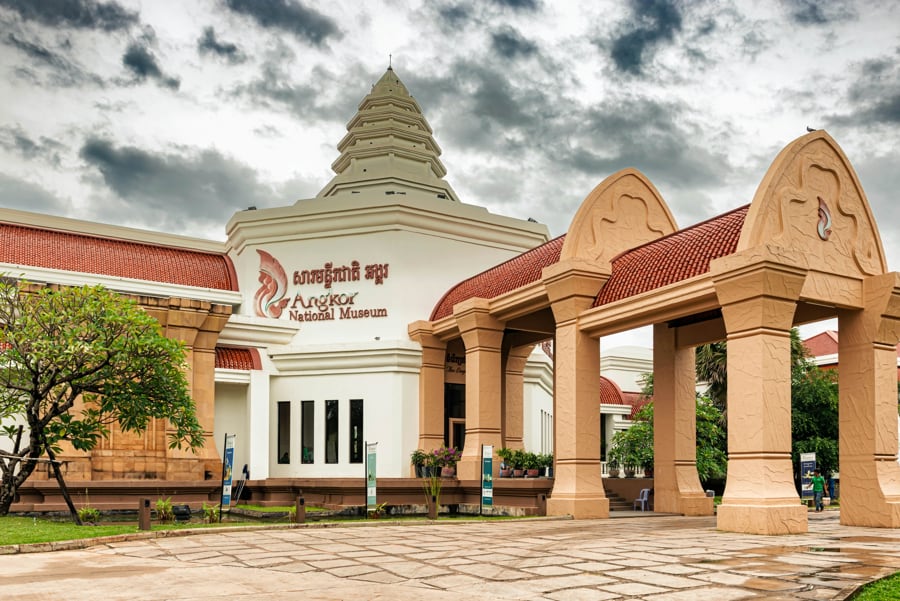
A visit to the Angkor National Museum is a must for those wanting an insight into the history and culture surrounding the temples. The displays take you on an epic journey of legendary tales involving the kings, religion, architecture, and even the daily life of the people, while the audio guide in several languages is an added bonus for foreign visitors. The museum brings together the learning aspect with technological innovation and increases your perspective on the history surrounding the temples.
History of Angkor National Museum
The Aim of Angkor National Museum is to acquire, preserve and exhibit artefacts from Cambodia’s Khmer Empire which lasted from the 9th to the 14th Centuries, and to educate the public about the Art and Culture of Cambodia’s Khmers. Most of the artefacts have been excavated from the neighbouring Angkor Archaeological Sites, and are the key to understanding how this giant empire existed as a result of their daily lives as well as their religious and creative activities.
The museum officially opened its doors on the 12th of November in the year 2007 and is known as the Angkor National Museum. This museum was established with the aim of reviving the golden era of the Khmer Empire. This revival is done by making use of contemporary methods of presenting information. The museum currently consists of eight galleries and is of utmost importance in preserving the history of Cambodia and educating tourists about the legacy of Angkor.
Unique Architecture of Angkor National Museum
The Angkor National Museum’s uniqueness stems from both its exhibits and its modernity regarding both museum design and architectural style. The museum’s architectural design is a mixture of Khmer design concepts with modernism and utilises modern materials.
Ground Floor (Level 1): World of Angkor Architecture and Daily Life
The First Floor provides exhibits highlighting many aspects of Angkor Culture, including the architectural brilliance and achievements of Angkor’s culture. Visitors will begin their journey at the entrance to the entrance and the center atrium. This area features soft lighting and is designed to create an atmosphere of tranquility and near-sacredness. The next gallery to visit is Gallery D, the Angkor Wat Gallery.
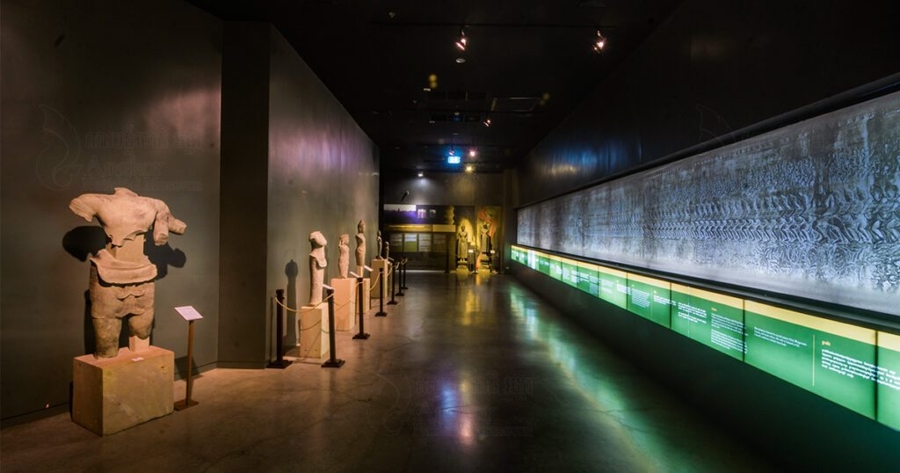
Gallery E covers Angkor Thom. The Great City illustrates how the design of Angkor Thom impacted the kings of the ancient capital and how the city of Angkor Thom was laid out, as well as how powerful the kings were during this time.
Gallery F: Stories From Stones is a gallery that tells its stories via stone carvings and reliefs. The gallery uses epic storytelling and explanations.
Gallery G: The Ancient Costume Hall is a gallery that holds traditional costumes and also explains the background and lifestyle represented by the costumes. The floor ends at the Museum Shop, where one can purchase literature and products about Khmer Culture.
Upper Floor: Level 2 – Khmer Civilization, Kings, and Religion
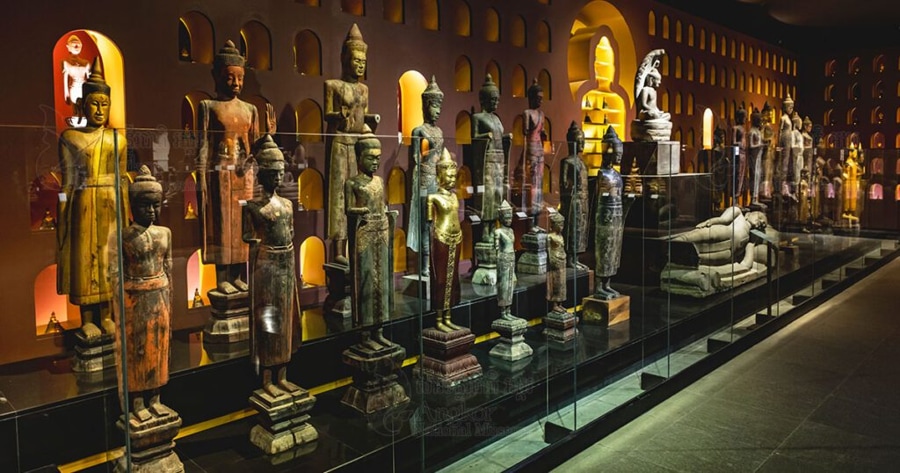
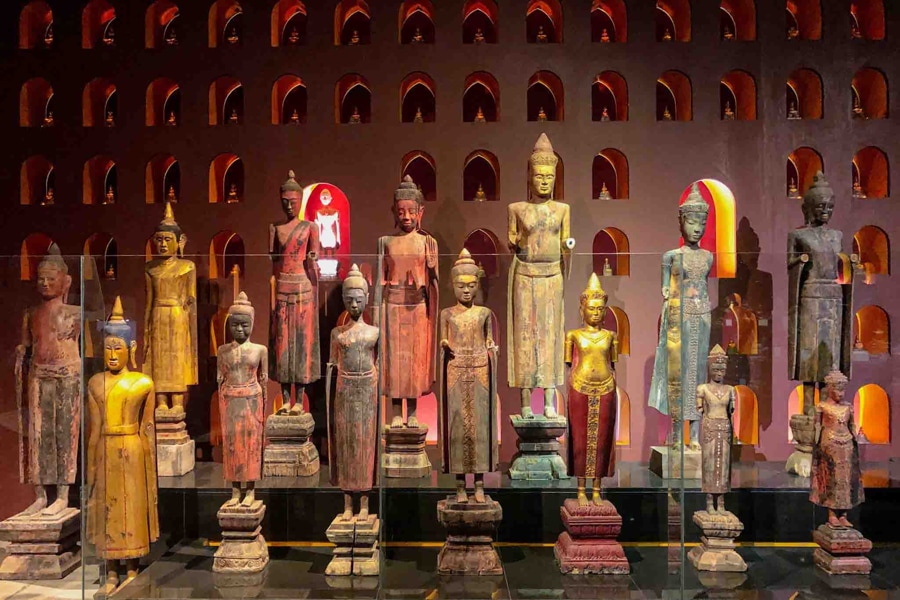
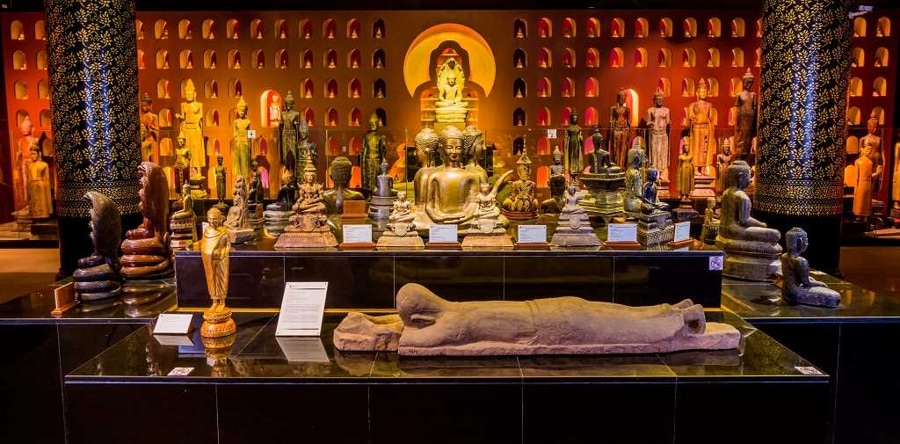
On the second floor, visitors learn about the origins and spiritual influences of the Khmer Empire. The introduction historian explains the origins of the Khmer Empire at the Introduction Hall, where there are many artifacts showing the many aspects of life and influences. One piece that stood out is the Gallery of 1,000 Buddha Images, which has rows of carved Buddha statues.
Gallery A discusses the context, accomplishments, and heritage of Khmer culture. Gallery B displays the transition from Hinduism to Buddhism and how the change has influenced Khmer art and architecture; Gallery C is devoted to many of the outstanding leaders during the time of Angkor’s glory. Interactive displays, narratives, and panorama experiences to connect the emotional connection of history via the floor include witnessing an amazing angle of sunrise over Angkor Wat.
5 Unforgettable Experiences You Shouldn’T Miss
Learning about the history of the Angkor National Museum is not limited to the display of more than 1,000 Buddha statues; it is a way to learn about the Khmer Empire’s rise to power. The museum utilizes technology, art, and narrative to create different ways for visitors to connect to and understand both the cultural significance and the history that surrounds the Angkor monuments.
Exploring The Gallery of 1,000 Buddha Images
The Museum also has an exhibit of 1,000 Buddha Statues, located in the museum itself, as one of the exhibits that people can find at the museum and visit. This exhibit is very calming and peaceful in nature and has attracted many visitors because of its vast array of Buddhist statues from various time periods, showing the evolution of Buddha. Visitors are able to witness the different transformations made to the art and beliefs associated with Buddha through this collection, as well as experience the calmness of the area surrounding the exhibit.
Learning Khmer History Through Interactive Multimedia
The Museum incorporates cutting-edge multimedia technologies to immerse visitors in the story of Angkor, effectively bridging the gap between Angkor’s past and present. Visitors can gain a more comprehensive appreciation of Angkor’s rich history, from how the Khmer built their magnificent temples and cities to how regions in and around Angkor evolved during three periods of notable change.
You can also can interactive multi-touch panels that display written summaries of historical information and photographs of Angkor and its architecture over a long time span. These panels present the material in an accessible form for first-time guests who will visit Angkor’s temples on their upcoming trip.
Discovering Angkor Wat and Angkor Thom In Detail
The museum is designed for visitors to learn in detail about Angkor Wat and Angkor Thom, including scale models, charts, and multimedia displays, on site, including designs, meanings, and construction methods of these temples. There are some factors that you may not fully appreciate during your time at either site, and this gives you a better understanding of the details.
Admiring Masterpieces of Khmer Sculpture
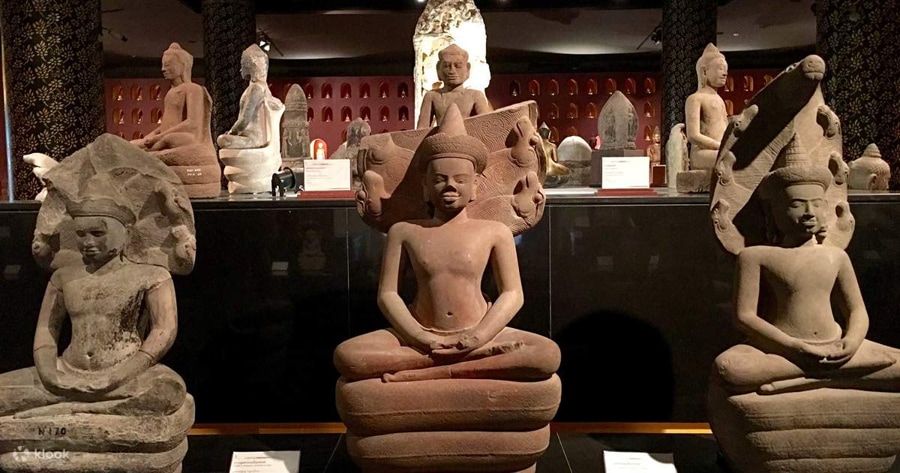
The Angkor National Museum has an extensive selection of Khmer sculptures, including statues depicting a seated Buddha sheltered by a Naga, the early Vishnu statue from Sambor Prei Kuk, and the intricately carved lintels from Banteay Srei.
Enjoying the physicality of these artistic works affords you a closer look at craftsmanship as well as artistry and provides insight into how spirituality is communicated through Khmer sculpture over different eras. By seeing and feeling the sculptures in person, you can establish a much stronger connection with Khmer art and history.
Experiencing A Virtual Sunrise at Angkor Wat
The Panoramic Video of Sunrise at Angkor Wat is one of the museum’s most popular exhibits. The video provides an immersive experience through both sound and visuals of a sunrise over Angkor Wat, without the usual present crowds.
This exhibit allows viewers to feel as though they are actually present at the temple and provides insight into how a visit to Angkor Wat at dawn would feel from a visitor’s perspective. The exhibit is therefore educational and enjoyable for visitors.
Entrance Fee
In addition to the cost of visiting Angkor National Museum (12 USD), tourists can purchase audio guides to help them understand the exhibits and other displays located inside the museum for a fee of 3 USD. Traveling to Angkor National Museum every day allows for an easy addition to travel itineraries for visitors to Siem Reap and the surrounding areas.
Opening Hours
Angkor National Museum welcomes everyone. Their doors are open seven days a week from 8:30 AM – 6:30 PM for your convenience. Since they close early each evening, it is highly recommended to arrive at the museum earlier in the day to allow ample time for all exhibits.
The best times to visit Angkor National Museum would be between November and March, as this is generally when the weather is most pleasant in Siem Reap. As well, the late morning to early afternoon hours provide excellent opportunities to take full advantage of the air-conditioned surroundings without sacrificing the full cultural experience.
How to Get to Angkor National Museum
The Angkor National Museum is easily recognisable, as it sits at 968 Charles de Gaulle Boulevard in Siem Reap, conveniently located within a short distance or drive from the central area of Siem Reap, and on the road from Siem Reap to the world-famous site of Angkor Wat. For flexibility in getting to the museum, transportation can be offered at a range of prices.
- Tuk-tuk: The most commonly used and easiest-to-get-to mode of transport, a tuk-tuk from Siem Reap generally takes 5-10 minutes to arrive at the museum. Cost varies from 2-5 USD, but may be more or less.
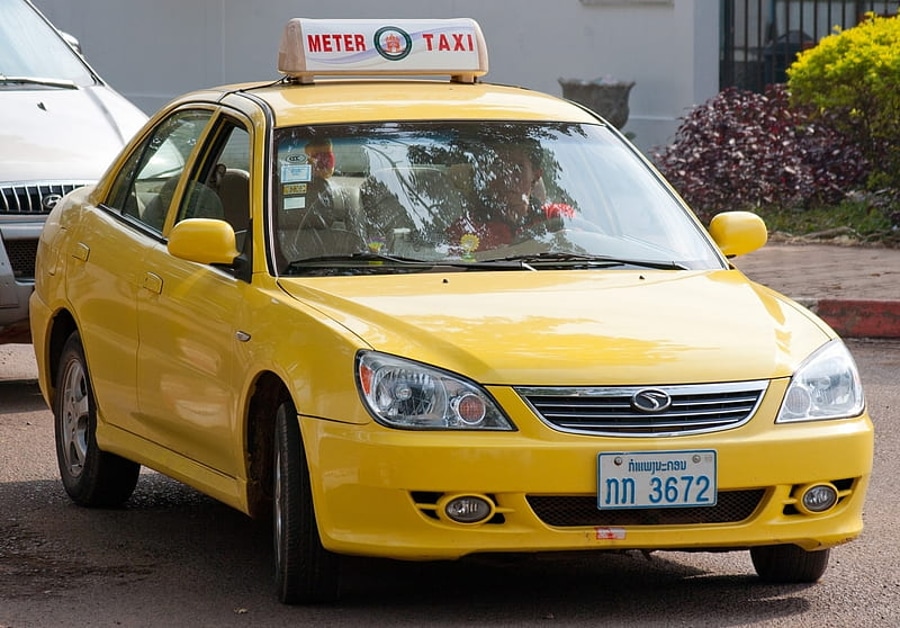
- Taxi or Private Car: For visitors who would prefer to have a private and cool way to get there, and especially if it is hot outside, taxis or private cars can be among the cheapest and quickest ways to travel from the centre of downtown to the museum. It should be expected to pay at least $5.00-$8.00 USD one way when using this method from downtown.
- Bicycle: For budget travellers or those looking for a slower, more scenic approach to the museum, renting a bicycle is an ideal method of transport. You can expect to spend between 1-2 USD to rent a bicycle for a day, while the museum can easily be reached via major routes that run to and from it.
- Walking: Alternatively, in the event that you find yourself in the vicinity surrounding Old Market and/or Charles de Gaulle Avenue, then getting to the museum on foot is also an option, which would take some 20 to 30 minutes.
Things to Know Before Traveling to Angkor National Museum
A bit of preparation beforehand goes a long way in enjoying what the Angkor National Museum has to offer, and this will enable you to appreciate this experience in Siem Reap even more. What you might find useful for planning purposes are:
- It is recommended that you pay a visit to the museum before heading to Angkor Wat as this would provide you with crucial information that would be helpful for a visit experience at this temple.
- Audio guides are highly recommended, ideally for anyone who has not been to the museum before, as they are full of commentary related to the galleries and timelines.
- At least 1.5 to 2 hours for those who want to tour the museum without rushing through the viewing of the videos and reading of the information displayed throughout the museum.
- You should dress in comfort and in modest attire since there are religious relics and statues that may be revered at the museum.
- Photography is not allowed inside certain areas where exhibits are displayed, so it is important to check those signs or instructions from museum officials.
- Because the museum is completely air-conditioned, this is one of the best locations to be during exceptionally hot weather days or during a break between visiting other outdoor locations around the city.
- Do not forget to pay a visit to the museum’s gift shop, where you can buy carefully selected souvenirs, such as art and history-related literature about the Khmer Empire.
Final Thoughts: Is Angkor National Museum Worth Visiting?
Visiting Angkor National Museum will surely be one of the to-dos, particularly among those coming to discover more about the historical significance of the Angkor temples. Within this museum, there are organised exhibits, historical artifacts, and superior multimedia show systems, among others, that make this museum an effective means of relaying the story of the golden age of the Khmer culture in Cambodia. This will surely be the best way to experience the heritage of the country when Seni World gives you a tour of this museum, among others.


Related articles


