


Bun Rieu is a traditional Vietnamese dish, and it’s a noodle soup. The soup has a light broth, yet it’s packed with taste, and it’s made from tomatoes and crab. The dish also includes rice vermicelli, tofu, and herbs. The taste of crab is sweet, and it’s combined with a soft tang from the tomatoes, along with fragrant herbs, making for a meal that people all over Vietnam enjoy.
What Is Bun Rieu
Bun Rieu is one of the popular noodle soups in Vietnam, especially in Northern Vietnam. The soup is made with rice vermicelli noodles and has a light broth with crab and tomatoes. Bun Rieu has been one of the most popular soups in Vietnam due to its unique crab mixture, which is called “riêu.” The crab mixture is made with crab meat, eggs, and sometimes minced pork. The crab mixture forms delicate crab curds that float in the broth.
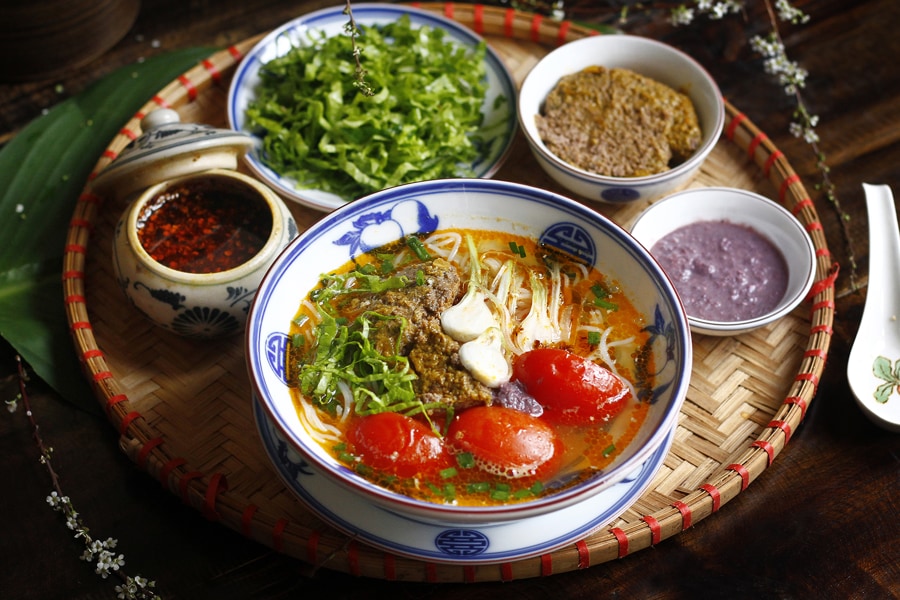
One of the main reasons why Bun Rieu has been so popular with many people is due to its refreshing mix of flavors. The soup has a mild sourness due to the tomatoes and vinegar in the broth, but it also has crab meat that adds sweetness to the soup. The soup is also accompanied by fried tofu, herbs, shredded vegetables, and sometimes shrimp paste to add flavor to the soup. The soup has been able to win the hearts of people due to its mix of healthy ingredients and delicious taste, making it one of the most popular dishes in Vietnam that travelers should try when visiting Vietnam.
The Origin And Cultural Significance Of Bun Rieu
Likely, Bun Rieu began in Vietnam’s Northern Delta, particularly in the Red River Delta. Bun Rieu began as an uncomplicated, traditional dish for farmers or working-class people. It was an ordinary dish that reflected the soul of the people. Bun Rieu broth is special. It is light with a hint of tanginess. The broth is made from crushed freshwater crab, tomatoes, fermented rice vinegar, and shrimp paste. These ingredients give the broth an enriching taste that is also invigorating.
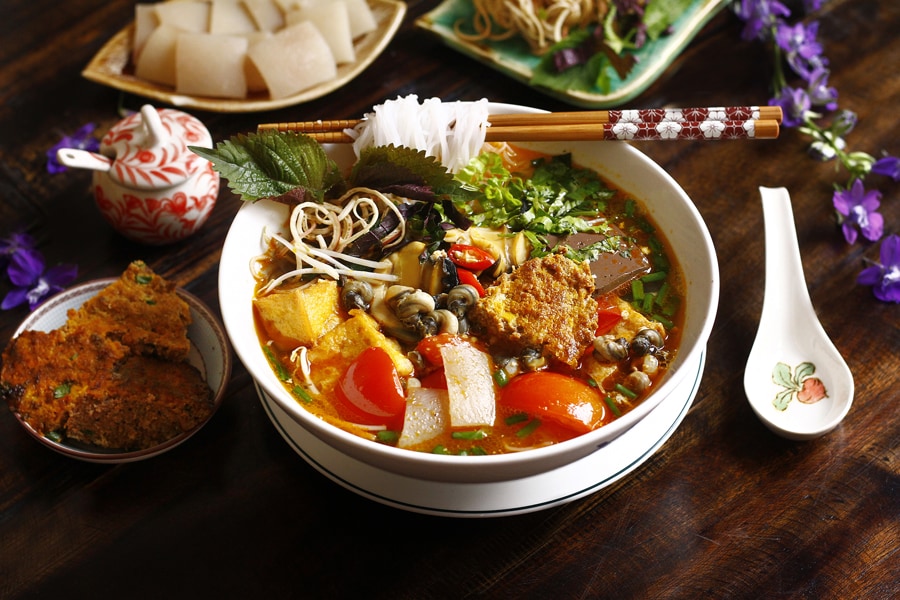
Over time, Bun Rieu spread beyond Northern Delta Vietnam. The dish became popular all over the country. In the process, Bun Rieu acquired numerous regional interpretations. However, it never lost its essence. Bun Rieu is more than an ordinary dish today. It is an icon of Vietnamese home cooking.
How To Make Bun Cha At Home (Authentic Recipe)
You may be surprised to learn that you can make Bun Rieu at home if you enjoy its zesty, fresh flavors. You can make a real bowl of Bun Rieu in your own kitchen with the correct ingredients and a few easy steps.
3.1. Main Ingredients For Making Bun Rieu Process
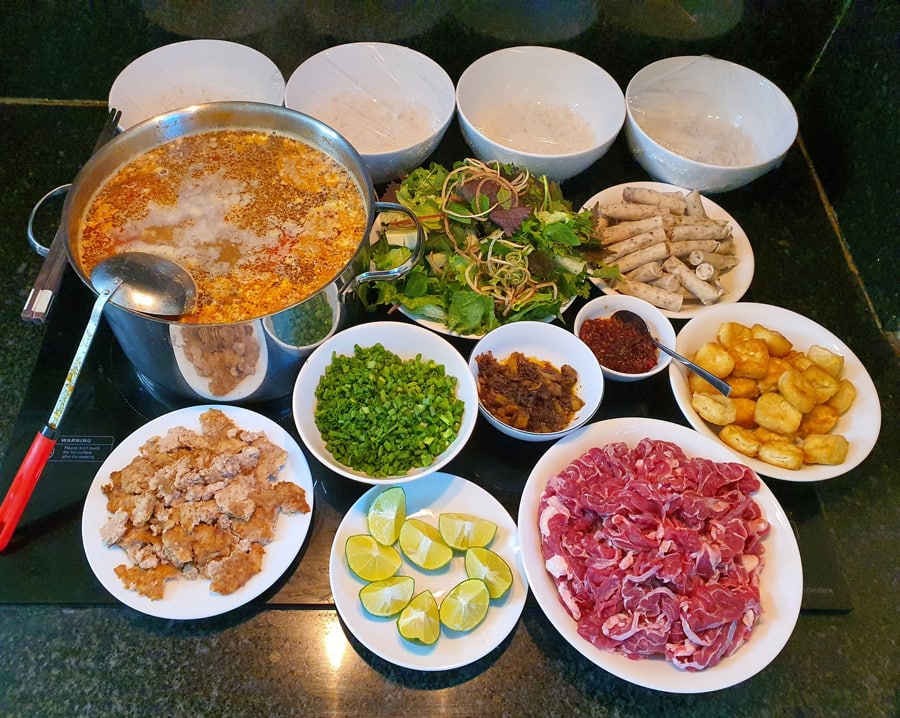
It is crucial to prepare the key components that give Bun Rieu its distinctive flavor before beginning the cooking process. The amounts of ingredients listed below are appropriate for four to five servings.
|
Main Ingredient
|
Quantity
|
|
Fresh rice vermicelli
|
1 kilogram
|
|
Freshwater crab
|
500 grams
|
|
Minced pork
|
100 grams
|
|
Dried shrimp
|
50 grams
|
|
Chicken eggs
|
2 eggs
|
|
Tofu (fresh or fried)
|
3 pieces
|
|
Tomatoes
|
2-3 fruits
|
|
Garlic, chili, scallions, cilantro
|
A small amount of seasoning
|
|
Fresh vegetables
(banana blossom, shredded water spinach, lettuce, bean sprouts)
|
1 large plate
|
|
Fish sauce, shrimp paste, vinegar, sugar, salt, and seasoning powder
|
Used for broth and seasoning
|
|
Cooking oil
|
1-2 tablespoons
|
3.2. Step-By-Step Guide To Cooking Bun Rieu
Once all ingredients are ready, you can begin cooking. Bun Rieu is a three-step process: preparing the crab mixture, cooking the broth, and preparing the noodles and topping ingredients.
Step 1: Prepare the vegetables and tofu
Wash scallions and tomatoes thoroughly. Cut tomatoes into wedges and chop scallions finely. Cut tofu into small cubes and fry in hot oil until tofu is golden brown and slightly crunchy.
Step 2: Prepare the crab mixture
Freshwater crabs should be cleaned before cooking. The crab roe should be set aside, then grind the crab shells until they are finely crushed. The ground crab should be mixed with water, then strained to remove the crushed crab shells, resulting in crab liquid. As the crab liquid is warmed, the crab protein will naturally coagulate into curd form, which rises to the surface of the water.
Step 3: Cook the broth
The crab broth can then be seasoned with salt, sugar, seasoning powder, fish sauce, and a hint of shrimp paste to intensify the flavor. Meanwhile, in another pan, garlic can be sautéed in oil until fragrant and then mixed with crab roe and a hint of annatto oil for color before adding some of it to the broth. Stir-frying tomatoes can then be done before adding them to the broth for a boost in flavor and a bright orange-red color.
Step 4: Prepare the egg and shrimp topping
For the topping, dried shrimp is rehydrated in warm water, then ground and mixed with minced pork, eggs, garlic, and spices, and then steamed until cooked, resulting in a firm yet tender topping, which will later be cut into small pieces.
Step 5: Assemble and serve the dish
Lastly, the rice vermicelli noodles are briefly blanched, then placed in the serving bowls. The toppings include fried tofu, crab curds, and egg, which are all arranged on the dish prior to the hot broth being poured over the food. The complete Bun Rieu dish is garnished with chopped scallions and served with fresh vegetables such as banana blossom, water spinach, lettuce, and bean sprouts.
How To Eat Bun Rieu Like A Local
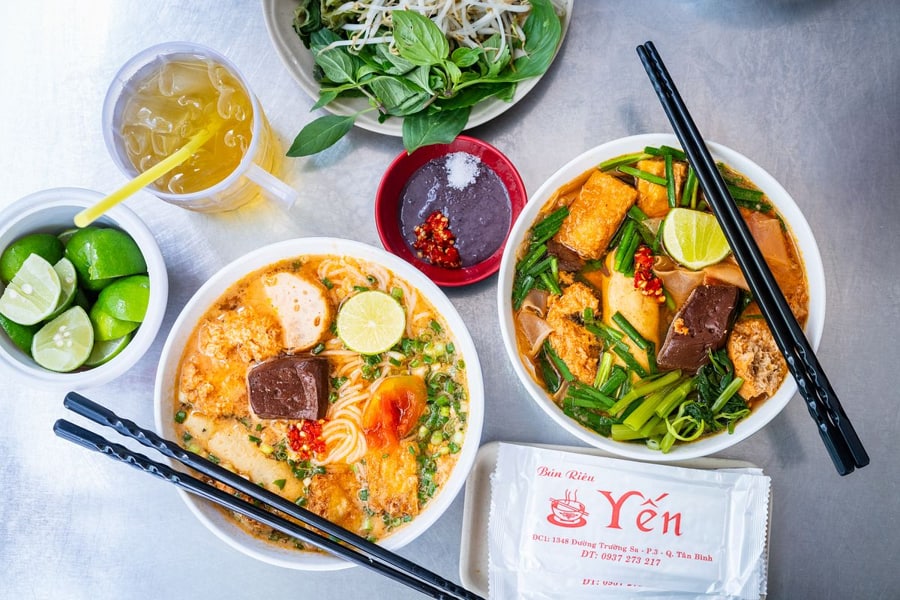
However, it is not just a simple act of enjoying a bowl of noodle soup by slurping it. It is the art of blending different tastes with herbs and seasonings. Locals can create their own bowl by following a few simple steps to get the perfect blend of taste.
Step 1: Prepare the shrimp paste seasoning
Start off by placing a small amount of shrimp paste in a separate bowl. Mix in some chili paste, a pinch of lime (or kumquat) juice, and a pinch of sugar until you achieve a light frothy consistency. When working with shrimp paste, it is a good idea to try a small amount before using it in a recipe to test its strength.
Step 2: Add fresh vegetables
Next, add fresh vegetables such as shredded water spinach, banana blossom, bean sprouts, perilla leaves, and Vietnamese balm to the bowl. The herbs and vegetables help to cut through the richness of the crab.
Step 3: Add extra toppings and spices
Some locals prefer to add a higher tasting dimension by adding fried shallots, pork fat, or even a dash of satay and chili oil. This enhances the aroma of the soup and adds a bit of spice according to personal preference.
Step 4: Mix everything and enjoy
Lastly, the noodles, broth, herbs, and spices should be gently mixed together until the flavors blend well. As long as everything is well mixed, the Bun Rieu bowl will have the perfect harmony of sour, savory, fresh, and spicy flavors.
Where To Try The Best Bun Rieu In Vietnam
Bun Rieu is a popular Vietnamese noodle soup that is popular all over Vietnam. However, Hanoi is one of the best places to try Bun Rieu in its most original form. In Hanoi, you can find a number of old eateries that have refined their skills in cooking Bun Rieu, a popular Vietnamese noodle soup.
Some popular places where you can try delicious Bun Rieu in Vietnam:
-
Bun Rieu Co Hoan: 14 Hang Luoc Street, Hoan Kiem, Ha Noi
-
Bun Rieu Cua Hang Bac: 11 Hang Bac Street, Hoan Kiem, Ha Noi
-
Bun Rieu Quang Nhat: 216 Doi Can Street, Ba Dinh, Ha Noi
-
Bun Rieu Huong Beo: 68 Hai Ba Trung Street, Hoan Kiem, Ha Noi
-
Bun Rieu Hang Cot: 17 Hang Cot Street, Hoan Kiem, Ha Noi
-
Bun Rieu Hoang Ky: 122BC5 To Hieu Street, Cau Giay, Ha Noi
-
Bun Rieu Co Dung: 18 Nguyen Sieu Street, Hoan Kiem, Ha Noi
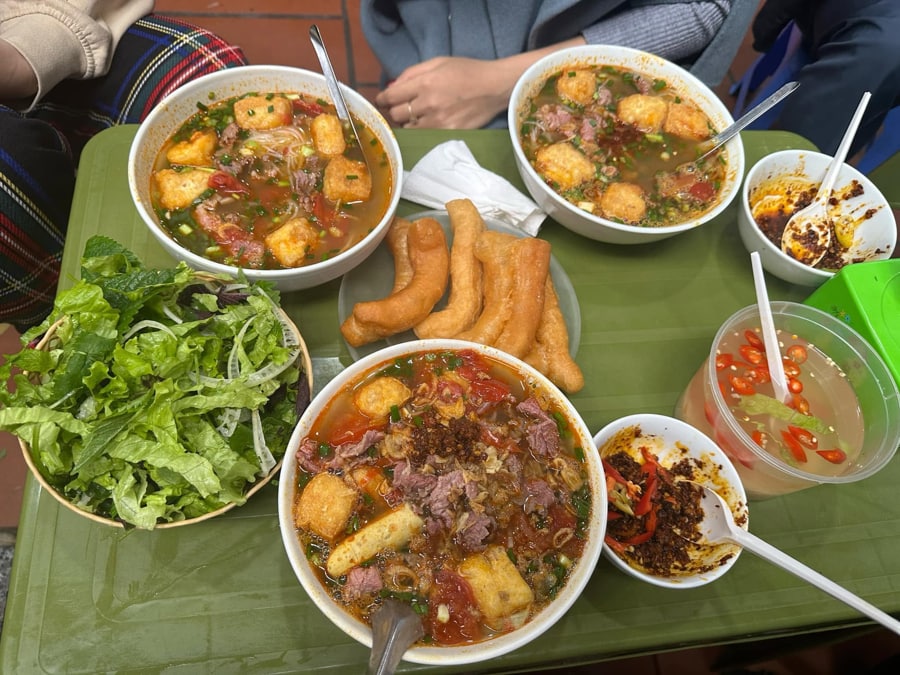
Useful Tips For Enjoying Bun Rieu In Vietnam
An experience to savor is trying Bun Rieu in Vietnam, and doing it with some local food habits is a must. The following are some food pointers that allow you to savor the dish in the same way that many Vietnamese do and truly taste the unique flavors.
-
The best Bun Rieu is usually found in street food stalls or family-run eateries where the broth is made fresh every day.
-
When eating Bun Rieu, herbs like lettuce, perilla, and cilantro are usually served with the dish. Mixing the herbs into the dish balances the rich broth and creates a lighter taste.
-
Squeezing a bit of lime into the dish allows the tangy taste of the tomato-based broth to shine.
-
Some people prefer a bit of chili sauce or shrimp paste to give the dish a deeper and richer taste. Shrimp paste, with its strong aroma, should be added in small quantities.
-
The dish is best served hot, and the warmth of the broth brings out the sweetness in the crab and tomatoes.
-
Tofu, crab cakes, or sometimes pork and blood pudding are added to the dish, making it a more filling meal.
-
Many famous Bun Rieu food stalls usually open in the morning and sell out by midday, so it is best to arrive early to savor the fresh dish.
FAQs About Bun Rieu
Bun Rieu is one of the most popular Vietnamese noodle soups out there, but many tourists wonder what it’s really made of and how it’s traditionally consumed. To answer that, here’s a simple FAQ that should enlighten everyone on the world of Bun Rieu and what it has to offer:
-
What makes Bun Rieu different from other Vietnamese noodle soups?
Bun Rieu is different from other noodle soups because of the presence of a light tomato-based broth, as well as the presence of the “riêu” topping, which consists of crab. The combination of the crab and the broth gives the soup a light, tangy taste that is not found in other noodle soups, such as the richer broths of Bun Bo or Pho.
-
Is crab really part of Bun Rieu?
Yes, it is traditionally part of Bun Rieu, as the crab gives the soup a natural sweetness that can’t be replicated by other broths. However, some modern adaptations of the soup also incorporate other meats such as pork, shrimp, and other seafood to enhance the flavor of the broth, although the crab-based mixture remains the main ingredient of the soup.
-
Can Bun Rieu be enjoyed at any time of the day?
Bun Rieu is a versatile dish that can be enjoyed at any meal, be it breakfast, lunch, or dinner. In Vietnam, vendors may start serving Bun Rieu as early as morning, making it a perfect dish for breakfast. The hot and savory broth is perfect on a chilly day, too.
Discover Bun Rieu’s Food Culture With Seni World
Tasting Bun Rieu has a certain sensation of discovering a small story about the lives of the Vietnamese and their cooking traditions. It’s a story of how locals transform simple ingredients like freshwater crab, tomatoes, tofu, and herbs into a bowl of food filled with explosive flavors. In Vietnam, and especially in Hanoi, eating Bun Rieu from a street stall during peak hours isn’t just about the food, but also about the atmosphere and the rhythm of life.
As a traveler looking for something more than just an average experience, Seni World offers a chance to experience Vietnam through its food culture. By exploring the market and partaking in popular dishes such as a hearty serving of Bun Rieu at a hidden food venue, these experiences enable travelers to connect with the true essence of Vietnamese food culture.
Final Thoughts
Bun Rieu is the perfect example of how a small list of ingredients can come together to create a dish that is both rich, savory, and uniquely Vietnamese. The crab, tomato, tofu, and herbs combine for a delightful taste experience that is both cozy and refreshing. For many travelers, the experience of enjoying Bun Rieu at a street stall or traditional cafe is one of the most authentic culinary experiences Vietnam has to offer. Looking for a way to immerse yourself in Vietnam’s exciting culinary culture, where you can enjoy dishes that locals can’t get enough of, such as the popular dish of Bun Rieu? Seni World can help you find the best places to enjoy this dish and many others on one of their tours.
Content Seniworld
Subscribe
Login
0 Comments
Oldest


Related articles
Vietnam Travel Guide


