


The Cao Dai Temple in Tay Ninh is the most unique religious destination in Vietnam, known for its colorful architecture and the combination of its beliefs in Buddhism, Taoism, Confucianism, and Christianity.
Introduction To Cao Dai Temple
The Cao Dai Temple, or Cao Dai Holy See, is one of the most popular religious tourist sites in Tay Ninh and a special cultural symbol in southern Vietnam. Founded in the early 20th century, the temple is famous for its colorful architecture, symmetrical design, and symbolic elements that represent the basic principles of Cao Daiism. This unique religion combines elements of Buddhism, Taoism, Confucianism, and Christianity, making the temple an interesting place to visit for tourists who focus on spirituality and cultural diversity.
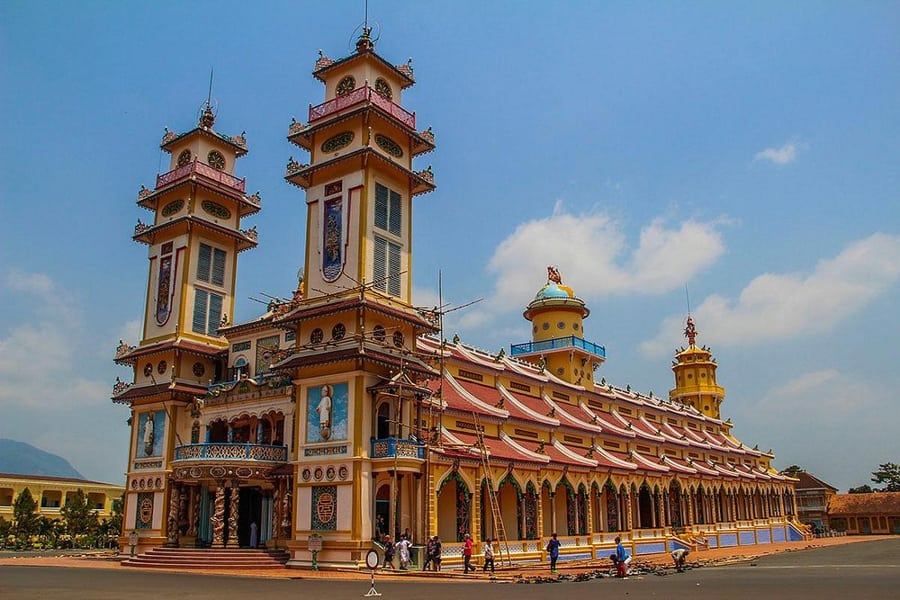
A visit to the Cao Dai Temple is more than just a visual experience; it is an immersion into the culture. Visitors can take part in the daily prayer sessions to observe the traditional rituals, harmonious singing, and serene environment in the main hall. With its historical and spiritual values, the Cao Dai Temple is a great place to visit for tourists who are interested in gaining a deeper understanding of the religious heritage of Vietnam while exploring the most popular site in Tay Ninh.
History Of Cao Dai Temple
The history of Cao Dai Temple is also connected to the birth of a unique Vietnamese religion called Cao Daiism, which emerged in 1926 in the province of Tay Ninh. This unique Vietnamese religion appeared at a time of social change, seeking to bring together the dominant world religions of the East and West under a single banner. Construction of the Cao Dai Holy See began in the 1930s, a process that took decades to complete, giving rise to a magnificent complex of religious buildings that symbolize harmony, peace, and unity of the world through its unique architectural style.
Over the years, Cao Dai Temple has been a spiritual center for millions of believers in Vietnam and abroad. Local communities in Tay Ninh have also been instrumental in maintaining the spiritual traditions of the temple. Today, the temple has come to be recognized as a place of worship as well as a historical site that symbolizes the spiritual values of southern Vietnam.
Unique Architecture Of Cao Dai Temple
Cao Dai Temple is renowned for its distinctive architecture, which features bold colors, symbolic structures, and spiritual significance. All aspects of its design are based on the philosophy of Cao Daiism, emphasizing harmony between religions, nature, and humanity.
Lotus-Shaped Entrance and Twin Towers
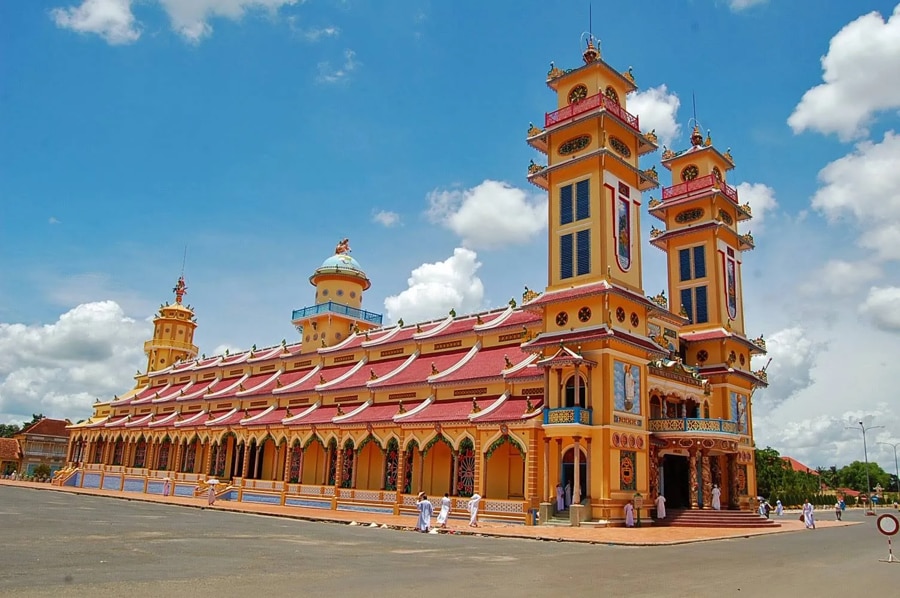
The entrance of the Cao Dai Temple has twin towers that symbolize purity, enlightenment, and awakening. The twin towers are tall and guide visitors towards the holy center, symbolizing the union between heaven and earth. The symmetrical twin towers also symbolize the Caodai belief in order and harmony, and the bright colors immediately grab the visitor’s attention. The twin towers not only serve as a landmark but also symbolize the spiritual journey that awaits the visitor at the temple complex.
Main Hall of the Cao Dai Holy See
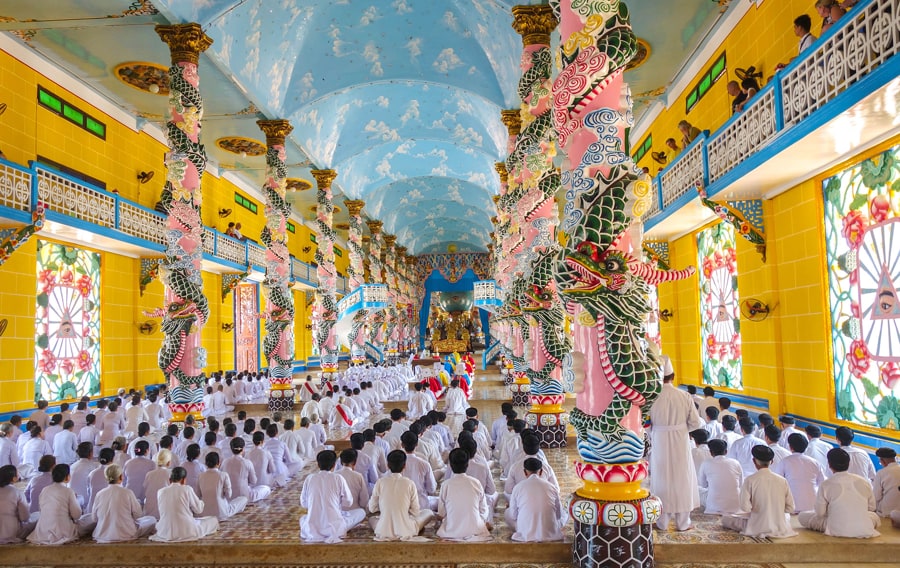
The Main Hall is the focal point of Cao Dai Temple architecture, with the most impressive interior space within the temple compound. In this hall, a long hall with a symmetrical structure, columns wrapped with dragons, directs the visitor’s eyes toward the Divine Eye altar. The use of vibrant colors, carvings, and placement of platforms symbolize order and balance, creating a space where devotees can view rituals with respect, thus making the Main Hall a sacred space with impressive architectural attributes.
Symbolic Colors and Decorative Elements
Another very distinctive architectural feature of Cao Dai Temple is the use of symbolic colors and decorative elements. Yellow, blue, and red colors are predominantly used in the design, symbolizing Buddhism, Taoism, and Confucianism respectively. These colors symbolically represent the fundamental tenet of combining multiple religions into one. The use of cloud, dragon, and holy symbol decorations also adds to the spiritual ambiance of the temple, making the entire structure a living embodiment of the philosophy of Caodaism.
Unforgettable Experiences You Shouldn’t Miss
Cao Dai Temple promises a unique experience for its visitors as it provides more than just a place for sightseeing. Immersive experiences in culture and spirituality can be found here, which cannot be experienced anywhere else in Vietnam.
Attend a Daily Prayer Ceremony
Another experience that will leave a lasting impression on you at Cao Dai Temple is the daily prayer ceremony, which takes place at regular intervals. You can observe the devotees, dressed in white, as they conduct their choreographed rituals to the sound of soothing chanting. The ambience in the Main Hall is serene and respectful, allowing tourists to get a firsthand glimpse into the faith and harmony of Caodaism without any interruptions.
Exploring the Main Hall and Sacred Architecture
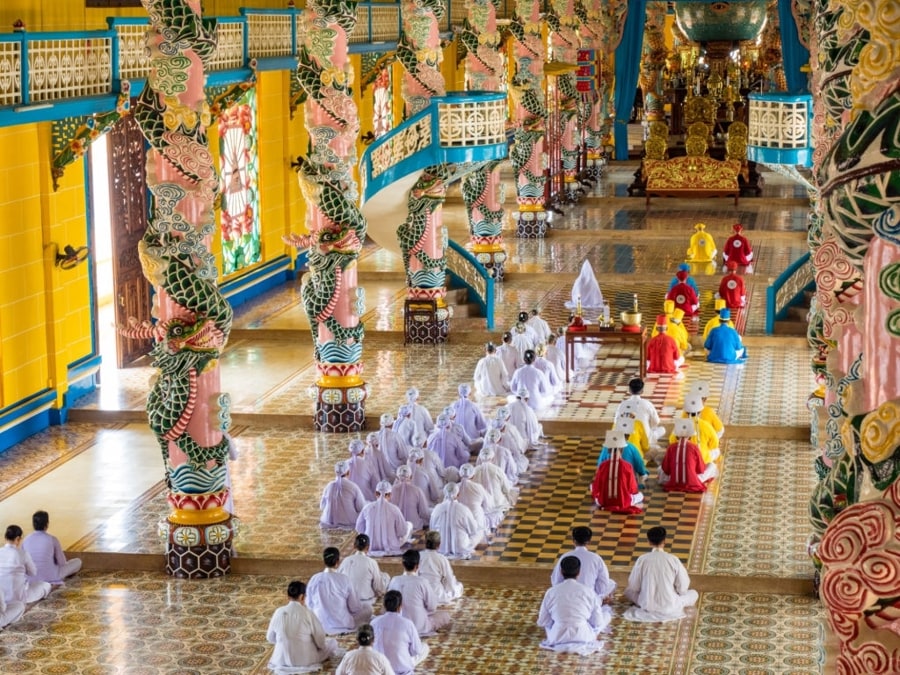
The experience of moving through the Main Hall of Cao Dai Temple is an aesthetically pleasing experience. The long and symmetrical design of the hall, along with dragon columns and vibrant colors, directs travelers towards the Divine Eye. Every aspect of this architecture symbolizes religious order and unity. The experience of moving at a slower pace in this hall is best suited for travelers interested in religious architecture and the meaning behind such designs.
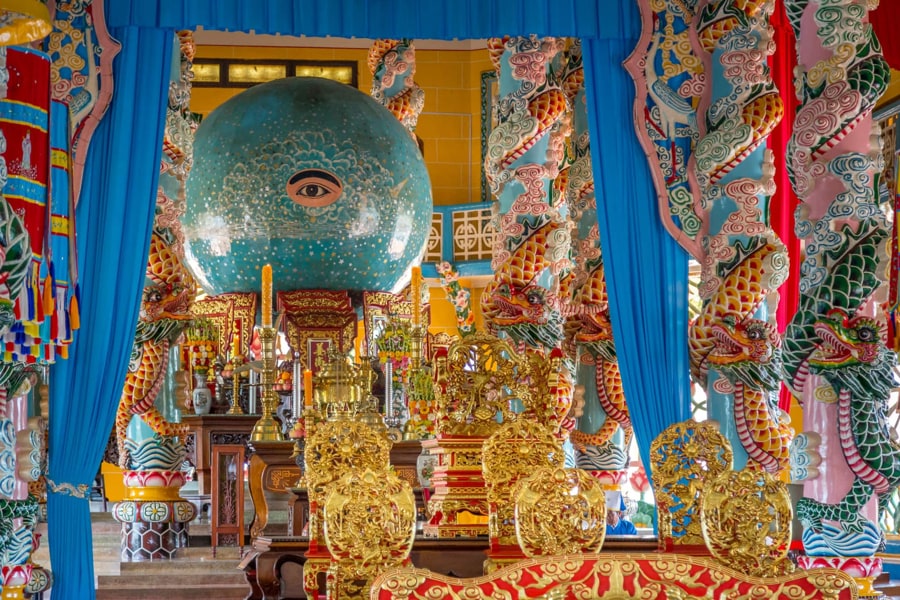
Capture Stunning Photos of the Temple Complex
The Cao Dai Temple is one of the most photogenic religious complexes in southern Vietnam. From the bright and colorful exterior and two towers of this unique temple to the well-designed interior spaces, there are plenty of opportunities to capture unique photographs. The early morning or late afternoon sun will add to the bright and vibrant colors of this religious complex. Photography enthusiasts will enjoy taking photographs of this unique architecture and capturing candid shots of daily life.
Entrance Fee
Visitors can enter Cao Dai Temple for free, which makes it a wonderful place to explore for all travelers. Travelers can explore the temple compound, see the unusual architecture, and witness daily prayer services without the need to purchase a ticket. Although there is no cost to enter this temple, donations to support temple upkeep and religious activities are appreciated. Travelers must dress modestly when visiting this temple to have a meaningful experience in this sacred place
Opening Hours
It is open every day of the week, and tourists can visit the site and observe religious activities at any given time of the day. The best time to visit the temple is during prayer ceremonies, which take place at 6:00 AM, 12:00 PM, and 6:00 PM. These ceremonies provide tourists with further insight into the religion and its customs.
The best time to visit Cao Dai Temple is during the dry season, which falls between December and April. The weather is pleasant and perfect for travel and sightseeing. It is recommended that tourists visit the temple in the morning since it is cooler and there are fewer people around. The visit will provide tourists with a peaceful experience and enable them to take interesting pictures and observe religious activities in the temple located in Tay Ninh.
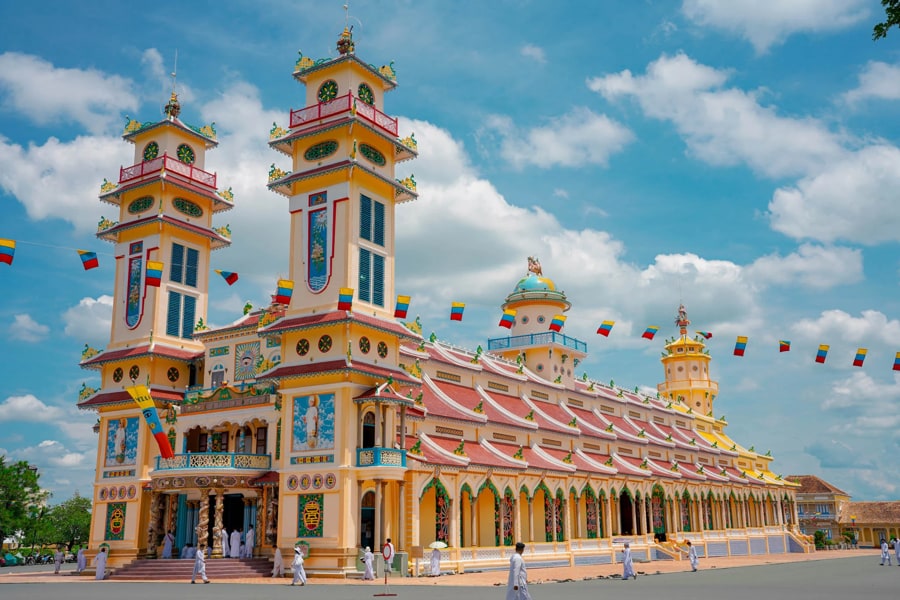
How To Get To Cao Dai Temple
The Cao Dai Temple is in Tay Ninh City, and it is 95 km northwest of Ho Chi Minh City. This makes it easily accessible by different means of transport. The different means of transport include personal vehicles, motorbikes, and tour buses
| Transportation | Estimated Time | Approximate Cost (One Way) | Notes |
| Car / Taxi | 2.5 to 3 hours | 1,500,000 to 2,000,000 VND | Comfortable, flexible schedule |
| Motorbike | 3 to 3.5 hours | 200,000 to 300,000 VND (fuel) | Requires valid driving license |
| Public Bus | 3 to 4 hours | 120,000 to 180,000 VND | Budget-friendly, less flexible |
| Guided Tour | Full day | From 800,000 VND | Includes transport and guide |
When traveling to Tay Ninh by motorbike, travelers need to bring a valid driving license and safety gear. The roads to Tay Ninh are generally in good condition, but there may be heavy traffic during peak hours near Ho Chi Minh City.
Things To Know Before Traveling To Cao Dai Temple
Therefore, before visiting Cao Dai Temple, tourists are encouraged to have some information about the rules and cultural practices involved. This will help you have a wonderful time and enjoy the spiritual experience at this sacred religious site.
- Dress modestly by covering your shoulders and knees and wearing neat clothing while removing hats and sunglasses before getting into the main hall.
- Come at least 15 minutes before prayer time and get a seat quietly without disturbing ceremonies. Moving around is strictly prohibited inside the temple.
- Keep quiet and be silent during ceremonies, and do not talk. Follow instructions from temple officials to maintain a peaceful and spiritual environment for worshipers.
- You can take photos while inside the temple, but do not take photos with flash and close-up shots of people while they are praying.
- Wear comfortable shoes because you might need to walk around inside and outside the temple.
- It is recommended that you carry water and some protection against the sun because you might visit this temple at midday, and it is hot in Tay Ninh.
- You should not touch anything inside the temple and ask permission before touching monks and followers and participating in ceremonies.
FAQs About Cao Dai Temple
Tourists always have some common queries before finalizing their trip to Cao Dai Temple. The following are some of the FAQs that will help tourists have a smooth and respectful experience at this religious site.
Is Cao Dai Temple free to visit?
Yes, Cao Dai Temple is totally free for everyone. There is no entry fee required to visit this temple and watch prayer ceremonies. However, donations are always welcome from tourists in support of the maintenance of this temple. Visiting this temple is free and open for both domestic and international tourists at any time of the year.
Are there any prayer ceremonies that visitors can attend at Cao Dai Temple?
Yes, visitors can attend daily prayer ceremonies that take place at specific times of the day, such as early morning, noon, and evening. Tourists can observe the ceremonies quietly in designated areas in the Main Hall. It is important that visitors arrive early in order not to disturb the devotees.
What should one wear while visiting Cao Dai Temple?
Visitors should wear modest clothing while visiting Cao Dai Temple. One should wear clothing that covers their shoulders and knees while visiting Cao Dai Temple. Also, one should remove their hats and sunglasses while visiting the Main Hall. Wearing appropriate clothing is a sign of respect for the temple and allows one to enter the temple without restrictions.
Is there any restriction on photography inside Cao Dai Temple?
Photography is generally allowed in some areas of the complex, particularly outside and from some viewpoints inside the complex. However, flash photographs, drone shots, and close shots of worshippers during ceremonies are not encouraged. It is always advisable for visitors to follow the signs and rules at these sites.
Final Thoughts: Is Cao Dai Temple Worth Visiting?
Cao Dai Temple is a must-visit place for travelers who want to explore Vietnam beyond the ordinary tourist sites. The colorful architecture, serene environment, and prayer ceremonies at the temple give visitors a glimpse of the spirituality and depth of Vietnamese culture. The temple is open for free visits and is accessible for all types of travelers. Add Cao Dai Temple to your Tay Ninh tour with Seni World and discover one of the most unique temples of Vietnamese culture and religion.


Related articles


