


Visit the Cu Chi Tunnels near Ho Chi Minh City, an elaborate underground tunnel system that was used as a concealed hideout during the war. Tourists can walk through this historic tunnel system to gain insight into Vietnam’s resilience and ingenuity.
Introduction To Cu Chi Tunnels
The Cu Chi Tunnels are a large tunnel system located in the Cu Chi District of Ho Chi Minh City, Vietnam. The tunnels ran more than 250 kilometers and were an important base for the Viet Cong in the Vietnam War. They were used for hiding during combat, as well as for communication and supply routes, hospitals, food and weapon storage, and sleeping quarters for many North Vietnamese fighters.
Today, the tunnels represent the Vietnamese resilience and ingenuity under the conditions of war. Tourists can visit and view sections of the tunnels that have been preserved, and will gain an appreciation of the difficult conditions experienced by people living and fighting underground.
History Of Cu Chi Tunnels
The Cu Chi Tunnels originally served as a tactical base throughout the resistance to French colonialism during the years 1946 to 1948. Residents from the villages of Tan Phu Trung and Phuoc Vinh An worked together to dig small tunnels underground for hiding places, storage for weapons, and places for soldiers to hide while waiting to attack. At the beginning, each village had its own tunnel, but over time, the tunnels got connected and became a larger underground tunnel system.
When the Vietnam War began, the Viet Cong expanded and reinforced the tunnels to make them highly complicated and highly durable. The Cu Chi Tunnels became a safe location for leaders in the Saigon-Gia Dinh area, and they assisted in many military operations that contributed greatly to national reunification.
Today, the Cu Chi Tunnels are regarded as one of the amazing man-made structures in the world and among the top seven strange sites to visit while traveling in Southeast Asia. The Cu Chi Tunnels attract hundreds of thousands of people to come and visit annually from around the globe.
Unique Architecture Of Cu Chi Tunnels
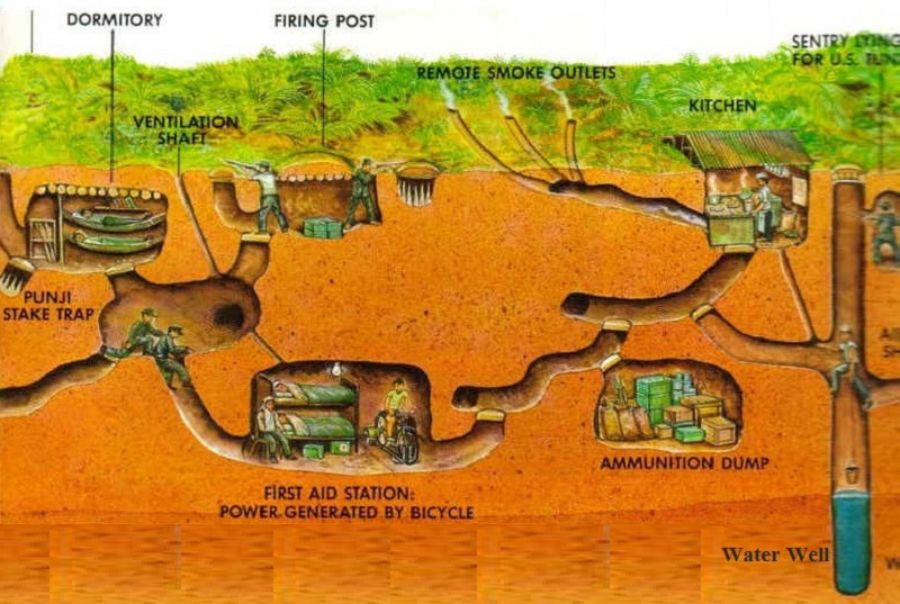
The Cu Chi tunnel network is an amazing example of guerrilla engineering and survival ingenuity. Each site served various military and administrative functions during the resistance:
Preserved Sites: Ben Duoc and Ben Dinh
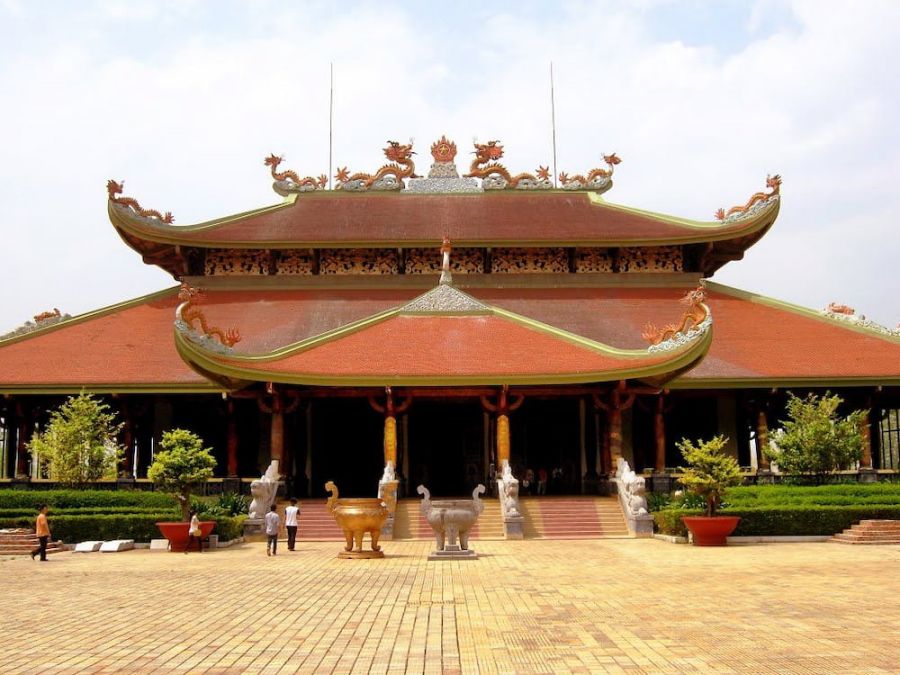
Ben Duoc was the main base for the regional party committee and military command and is in Phu Hiep hamlet, An Nhon Tay commune. It was recognized as a National Historical – Cultural Monument in 1979. Ben Dinh, the former district party base, is located in Ben Dinh hamlet, Nhuan Duc commune, and was listed as a national historic site in 2004.
Tunnel Layout, Depths, And Functionality
The Cu Chi tunnels encompass roughly 250 kilometers of tunnels, which were built in multiple layers for more protection and tactical possibilities. The three main levels are an upper level about 3 meters underground (which could withstand artillery fire and the weight of armored vehicles); a middle level about 5-6 meters underground (where small bombs couldn’t penetrate); and a lower level of about 10-12 meters (which could withstand the most powerful bombing).
As the major network of spine tunnels connects to shorter side tunnels that branch, at times interconnect with each other, and terminate when terrain prevents further construction, several tunnels actually go underground to the Saigon River for covert movement and resupply.
Living Quarters, Facilities, And Camouflage
Even though they were excavated by hand using rudimentary tools, numerous tunnels have functional rooms with distinct uses arranged within them: command centers, sleeping rooms, caches for weapons and food, field hospitals, and storage.
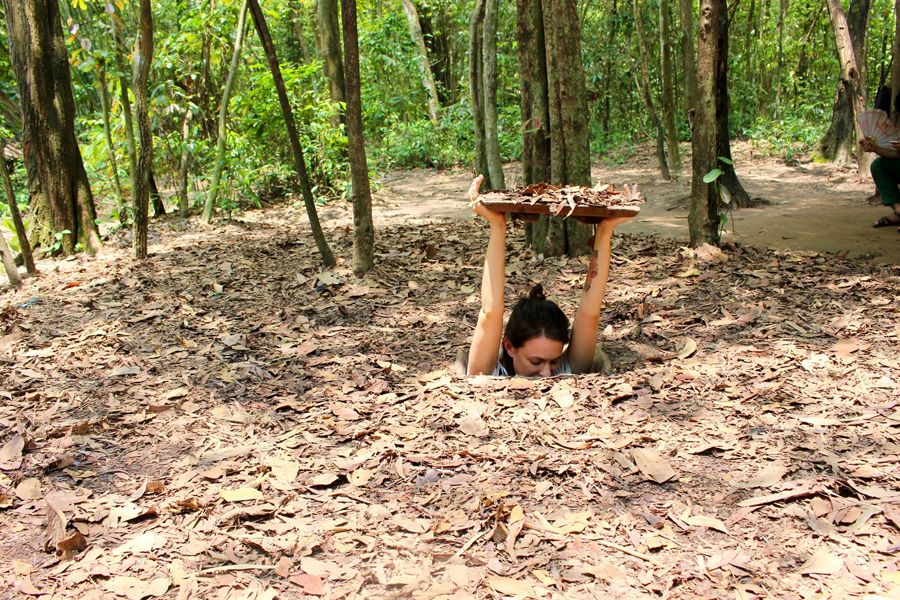
Tunnel entrances from level to level were small trap doors camouflaged to conform to the local terrain and made to the proportions of a Vietnamese person’s anatomy, making it difficult for foreign soldiers to fit into the entrances. The tunnels, being narrow and low, required anyone passing into, through, or between levels to crouch, which slowed and tired intruders and gave defenders an advantage on their home turf.
Airflow, Deception, And Defensive Systems
Air was circulated through ventilation shafts discreetly located every 10-15 meters; from above, they sometimes looked like termite hills. In some instances, those shafts also served as concealed firing positions. To elude detection by dogs, guerrillas used a clever approach and smeared clothing, soap, or pepper at tunnel mouths to overpower the human odor.
On the surface and near the tunnel mouths, a comprehensive defense of fighting bunkers, spike pits, minefields, and booby traps was established with a layered “village-battle” set-up that used local knowledge and equipment in devastating effect.
6 Unforgettable Experiences You Shouldn’t Miss
A trip to the Cu Chi Tunnels provides insight into the steadfast history of Vietnam and the remarkable ingenuity of its people. In addition to learning about life during the war, visitors can partake in engaging experiences, cultural displays, and even outdoor fun and games to make this experience one that you will never forget.
Explore The Incredible Tunnels
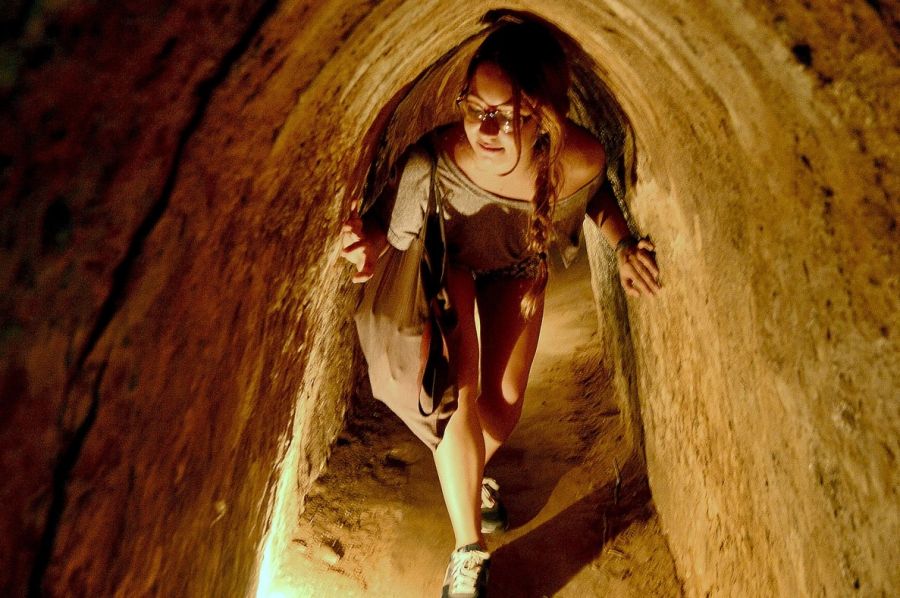
One of the most exhilarating parts of your trip to Cu Chi is the experience of crawling through tunnels. This experience will give you a real sense of the hardships faced by soldiers, which can cultivate admiration for their courage and determination. Additionally, near the entrance to the tunnels, you can sample traditional foods of cassava, sweet potato, and yam with sesame salt, just as the soldiers and locals ate.
Explore The War Reenactment Area
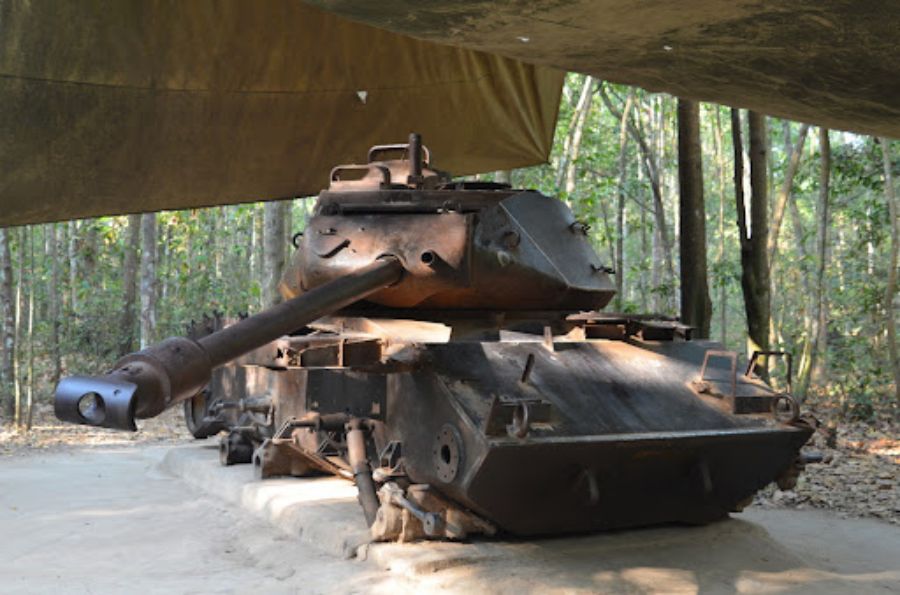
A moment’s walk from the main tunnels is a reconstructed war zone. In the small tunnel room, a large screen displays historical videos of daily life and battle during the resistance. There are also real objects from the war, such as weapons, tanks, and aircraft used by the Vietnamese forces. All objects are expertly preserved, and visitors may not touch any of these objects, as they want to shield them from wear and tear.
Moonlit Guerrilla Night Tour
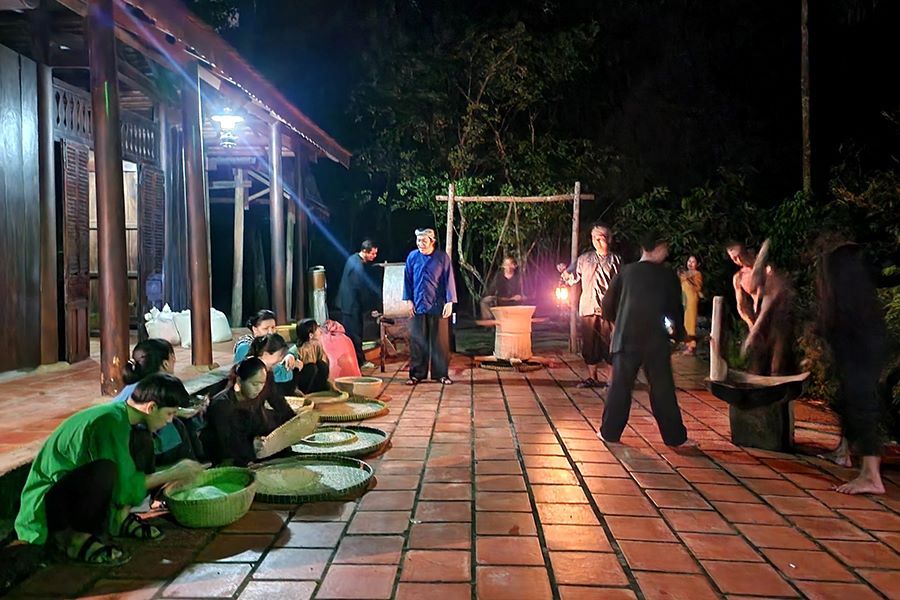
The night tour of Cu Chi emphasizes life in the tunnels under the moonlight. Visitors get to see digging tunnels, weaving, making food, cultural demonstrations, and more, while simulating the sounds of war outside. This experience allows for a vivid experience watching people with their daily routine and guerrilla fighters faced with challenges in the 1960s.
Check Out Adventurous Shooting Games
Shooting ranges are a favorite among young tourists looking for thrills as well as a competitive spirit. Options range from military-style shooting to paintball. Bullet costs range from 40,000-60,000 VND per round. Paintball is best with a group and helps strengthen team play and reflexes. The fee for using the paintball area is typically 50,000 VND per person for 60 minutes, with an additional cost of approximately 3,000 VND per ball of ammunition.
Play Water-Related Games Or Visit Outdoor Games

In the re-enactment section of the site, you can walk 15 minutes toward a nice spot around a lake with trees, entering an area where you can kayak, swim, or ride a bike. In addition, you will find miniature statues of famous attractions from Vietnam, such as the One Pillar Pagoda and Ho Chi Minh Museum.
Wildlife Rescue Station
The wildlife rescue station is only a few kilometers away from the tunnels and is a highlight for school groups or animal lovers. It is the largest wildlife hospital in southern Vietnam and is currently providing care for approximately 3,600 rare animals, including some species listed in the Red Book. The station is designed to resemble natural habitats as closely as possible to provide an experience you won’t forget, and which serves as a learning experience too.
Entrance Fee
Exploring the Cu Chi Tunnels provides a wonderful view of Vietnam’s past. The fees to enter the tunnels differ depending on visitor needs, with discounts and free access provided for those who qualify. The information below is specifically for your information:
General Admission Fees
| Visitor Type | Ticket Price (VND) |
| Adults (Vietnamese citizens) | 35,000 VND/person |
| Adults (Foreign visitors) | 70,000 VND/person |
| Children aged 7-16, Students | 50% off standard ticket |
| Children under 7, Disabled, Seniors, Armed Forces, Revolution Contributors, Low-income households | Free |
Reenactment Area Fees
| Year / Activity | Ticket Price (person/visit) |
| Reenactment Area 2024 | 65,000 VND |
| Reenactment Area from 01/01/2025 | 85,000 VND |
Additional Activities Fees
| Activity | Ticket Price (person/visit) |
| Ticket Price (person/visit) | 65,000 VND |
| Games / Shooting activities | 50,000 VND |
Opening Hours

The Cu Chi Tunnels operate from 7:00 AM until 5:00 PM every day, including Sundays and public holidays.
When you decide to visit the tunnels, it can greatly influence your experience. The dry season between December and April, for example, is the best time to see the tunnels because it’s cooler inside the tunnels and the surrounding roads are not muddy. If you want to avoid large crowds of tourists and take your time walking through the tunnels, you can choose to go in the morning hours until 9:00 AM or in the afternoon after 2:00 PM.
How To Get To Cu Chi Tunnels

Reaching the Cu Chi Tunnels from Ho Chi Minh City is easy, and you have various options, depending on your individual budget, comfort level, and speed desired.
Traveling By Motorbike Or Car
To get to the Cu Chi Tunnels, head out from the city center and then travel from Ben Thanh through Cach Mang Thang Street, then Truong Chinh, An Suong Bridge, National Route 22, Ba Trieu, and Trung Nu Vuong. You can also pass through Hoc Mon town, go over Sang Bridge, take Provincial Road 15, Ben Nay Bridge, Tan Quy intersection, and then Phu Hoa Dong Market, and you’ll be able to reach the Cu Chi Tunnels easily.
Taking A Taxi
If you are traveling with luggage, need a comfortable ride, or only want to pay for one ride, then a taxi will be a good option for you. The drive is approximately 70 km, with an average total of 500,000-600,000 VND for the taxi ride from the city center.
Using The Bus
For those on a budget, travelers can buy a ticket on bus number 13 at Ben Thanh bus station, stating the Cu Chi bus station, and then transfer to bus number 79 to the Cu Chi Tunnels. The total time is about two and a half hours.
A more fun and unique way to travel to the Cu Chi Tunnels is by canoe or boat to experience the riverside scenery and take fun photos.
Canoe Or Boat Trip
Finally, to make life easier, try to book accommodations near the city center to easily access the Cu Chi Tunnels and other attractions within Ho Chi Minh City.
Things to Know Before Traveling to Cu Chi Tunnels
It’s a good idea to be prepared before visiting the Cu Chi Tunnels so you can enjoy your trip as much as possible. Knowing a few practical tips will help you be safe and comfortable while you’re there.
- Dress code aside, wearing neat, dark-colored clothing is highly recommended to avoid unsightly dirt while visiting the tunnels. But there is no strict dress code.
- Comfortable sneakers or walking shoes are essential because you will be walking through multiple areas of the tunnels.
- Be sure to wear sunscreen and bring insect repellent! This will protect you from sunburn and bugs!
- The tunnels remain open during the Vietnamese Lunar New Year holiday from the end of January until early February, throughout the same hours as regular business days.
- People who are claustrophobic or have high blood pressure are not recommended to visit the small tunnels and should only visit the bigger tunnels for safety purposes.
Final Thoughts: Are The Cu Chi Tunnels Worth Visiting?
A day spent visiting Cu Chi Tunnels is an unforgettable experience in both journeying into Vietnam’s fascinating history and resilience, combining excitement, education, and cultural insight. Exploring the winding tunnels offers showcases of both the ingenuity as well as courage of the people of Vietnam, both in exhibits and activities. Be sure to plan your visit with Seni World to make the most out of your visit.


Related articles


