


Vang Vieng is celebrated for both its breathtaking limestone geography and its expansive, active food culture. The food in Vang Vieng ranges from traditional festival foods to one-of-a-kind local fare, providing travelers with a unique taste of Laos.
Laap – The Good Fortune Dish Of Laos
Laap is often cited as Laos’ national dish and carries a heightened status in cultural practices. It is often enjoyed during festivals, celebrations, and family gatherings, since it represents good fortune, wealth, and happiness. Laap is made of minced chicken, beef, or pork, and is most frequently seasoned with herbs, lime, roasted rice powder, and chili.
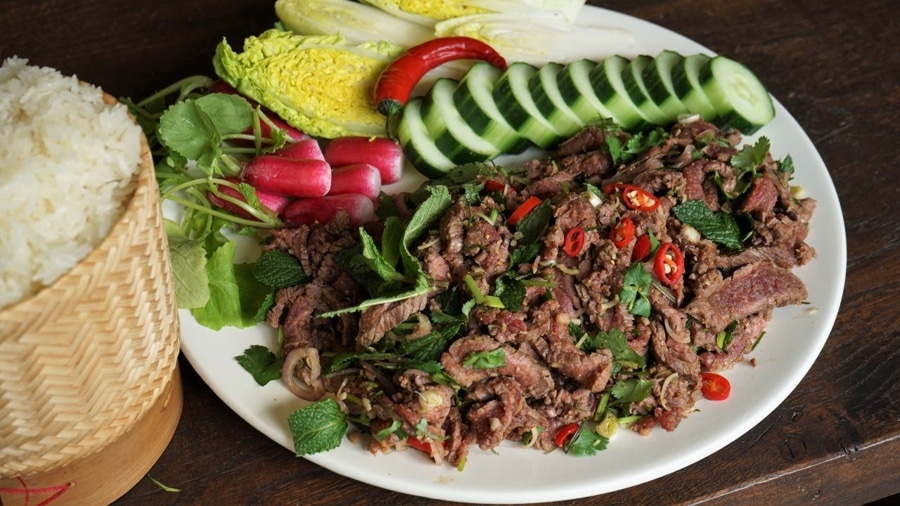
Laap is served with fresh vegetables and sticky rice combined for a fresh, balanced meal. The profile of flavors is fresh, citrussy, and slightly spicy, erasing any memory of unpleasant flavors, and is a delightful welcome into Lao food culture. Whether you are consuming Laap as a guest in a local home or in a restaurant, every bite is a distribution of Laos’ flavors and culture.
Sai Oua – Lao Herbal Sausage
Sai Oua is a delicious sausage from Laos that is especially common in the northern parts of the country and with travelers visiting Vang Vieng. Prepared from ground pork, the filling also contains lemongrass, kaffir lime leaves, shallots, herbs, and chili. Sai Oua is typically grilled on a charcoal grill, which imparts a smoky flavor and crispy skin. Each bite is fragrant, savory, and full of herbs, which gives it a distinctly Lao flavor.
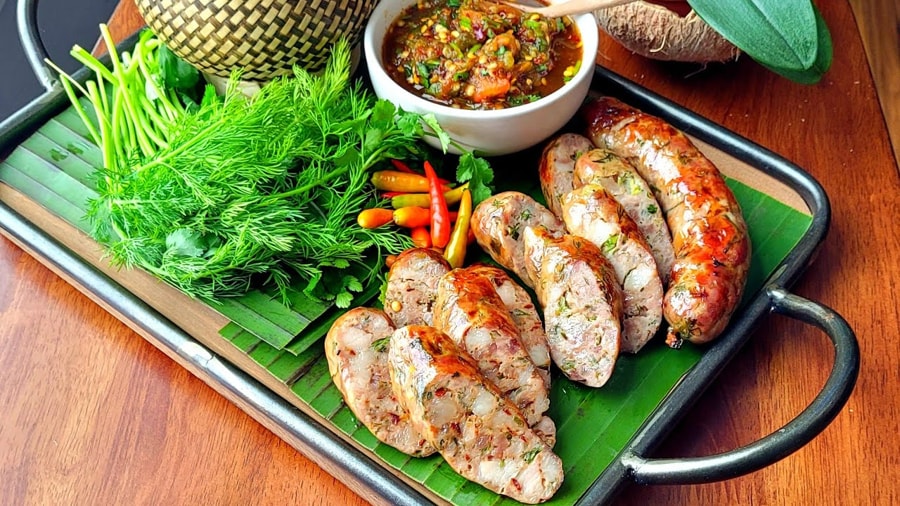
Sai Oua is tasty on its own, or it can also be eaten with sticky rice, vegetables, or dipping sauce. It is definitely one of the easiest and most enjoyable street foods you can try while you are traveling.
Mok Pa – Steamed Fish In Banana Leaves
Mok Pa, a classic steamed fish recipe of Laos, is made using ingredients typically available at home. The main ingredient is fresh fish, usually tilapia or carp, while mok pa’s spice pastes are composed of garlic, chilies, galangal, fresh herbs and a preferred Lao “mak khén” spice.
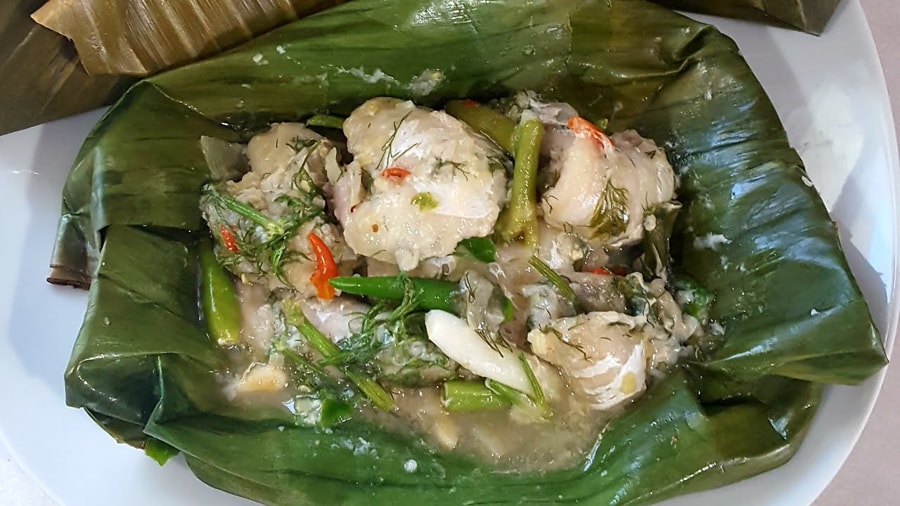
Banana leaves wrap around the fish, and then it’s placed onto a grill of charcoal to steam. The wrap keeps all of the moisture from cooking so that it cooks the fish directly in the spices, giving it a rich, earthy flavour. The finished mok pa will be moist, flavourful with the right balance of spices, herbs and aromas, and served with plain boiled sticky rice and fresh vegetables. Mok Pa demonstrates genuine Lao food in a very humble but true way.
Laap Naam Tok – Grilled Lao Minced Meat Salad
Laap Naam Tok is a type of Laap that uses grilled or smoked meat as an ingredient. The most common types of meat used in Laap Naam Tok are beef and pork, which are minced with fresh herbs, lime juice, toasted rice powder, chili pepper, and kaffir lime leaves. The grilled flavour adds an extra dimension to Laap Naam Tok than regular Laap, plus the smokiness transferred from grilling is an added bonus. Also, like regular Laap, Laap Naam Tok comes with sticky rice and crunchy vegetables to balance its richness.
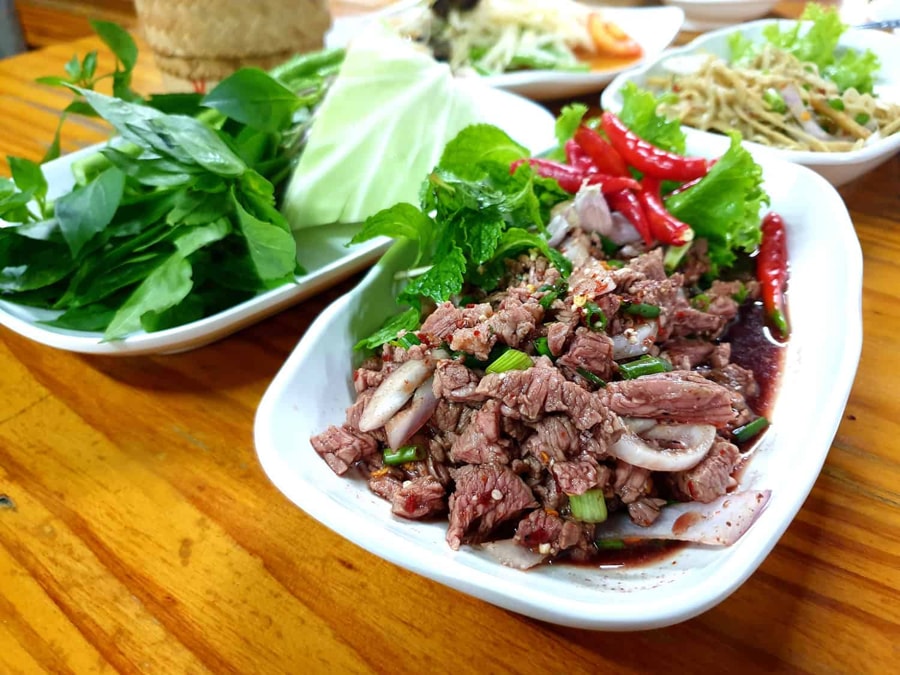
Laap Naam Tok is perfect for those who enjoy barbecuing and want to experience some of the bolder Lao flavours. Overall this rustic meal captures the community-oriented style of eating of large portions where everyone shares.
Naem Khao Tod – Salad Of Crispy Rice
Naem khao tod is an unusual and celebrated food in Laos, meaning “salad from crispy rice.” This salad is made from deep-fried rice balls that are broken apart and then mixed with herbs, peanuts, shredded coconut, dried chili, and fermented pork sausage, contributing to a nice combination of crunchy rice and chewy sausage.
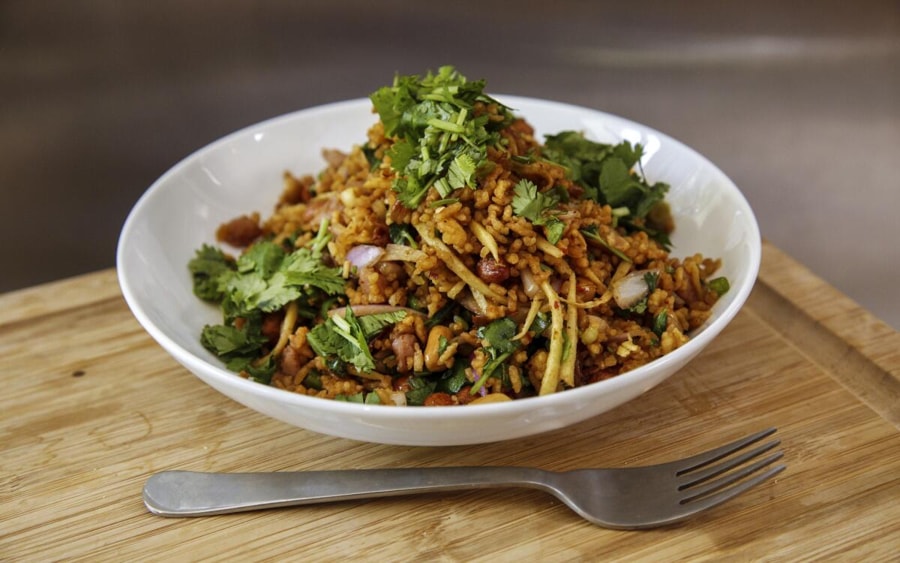
The flavor is tangy, savory, and slightly spicy while providing something utterly different from the more typical salads of Southeast Asia. This dish is a popular offering in any restaurant and on the streets throughout the country. You may find it throughout the region, but trying it in Laos will provide the fullest and greatest experience.
Khao Soi – Lao Noodle Soup
The Lao version of Khao Soi is lower in liquid than the Thai version and is made with thick rice noodles, flavored with a mildly creamy broth. The broth often contains chicken or beef and is stewed with vegetables such as potatoes, carrots, or onions. The coconut milk adds a smooth, rich texture and a little sweetness to the broth. Each bowl of Khao Soi is served with fresh herbs and lime to brighten the flavor.
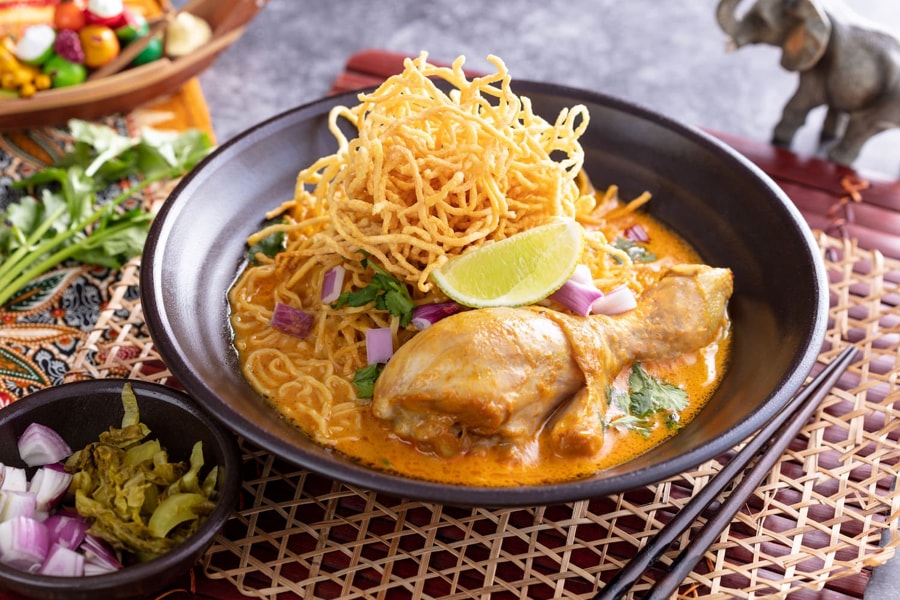
Khao Soi is a common meal in the homes and restaurants of Laos and is simply comforting, satisfying, and full of flavor; a hearty bowl of Khao Soi is ideal after a full day of adventures, exploring the beautiful Vang Vieng valley.
Sien Savanh – Dry Beef In Lao Language
Sien Savanh, a specialty from Savannakhet, is now found throughout the whole country of Laos as many people enjoy it. Sien Savanh is made by taking thinly sliced marinated beef that has been dried under the sun, giving it a rich flavor, then grilling it or cooking by other means using dry heat.
The result is a chewy, savory delicacy that finishes sweet and smoky. Traditionally eaten with sticky rice, it can also be served with spicy chili dipping sauce. Since it is preserved well, many tourist buy it for gifts for others or as souvenirs, and it is a good way to experience Lao Food. Sien Savanh is an extraordinary snack for sharing between friends when enjoying drinks or meals together.
Khao Niew – Sticky Rice
Sticky rice (khao nieow) is much more than just food; it has a social role within the Laotian community. Sticky rice accompanies nearly all types of Lao meals (e.g., grilled meats, salads, stews, and dipping sauces). The method for cooking sticky rice involves steaming it in bamboo containers until it reaches an ideal consistency, soft and slightly chewy.
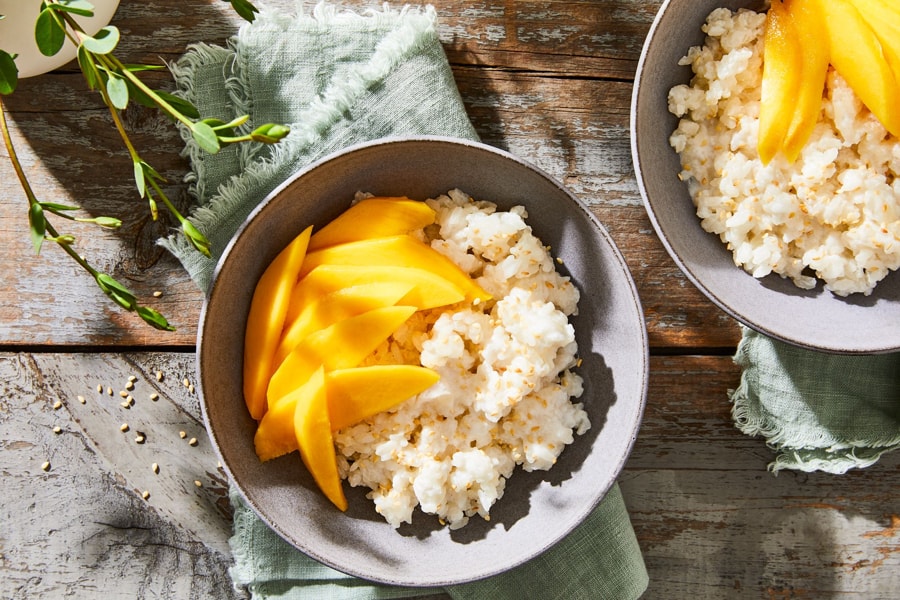
Community meals consist of families and friends gathering together at a table to share a variety of dishes while forming a cohesive community atmosphere by pinching, forming, or rolling sticky rice with their fingers. Khao nieow plays an important social role in traditional Lao Festivals and celebrations. It may be a simple food item, but it represents something profound in the culture.
Or Lam – Spicy Lao Stew
Or Lam originates from the former royal capital of Luang Prabang and is essentially another type of stew. The Or Lam meat can be either chicken or pork that’s mixed with sturdy veggies like sweet potatoes, squash, mushrooms, and eggplants. The most interesting part about this stew’s identity would be ‘mak khen,’ or the Lao pepper.
This is an aromatic chicken or pork broth made especially for a cold and cozy night out with family and friends. This particular dish embodies the Lao cooking tradition of using earthy ingredients in bold seasonings. Or Lam is a Lao comfort food.
Ping Kai – Lao Grilled Chicken
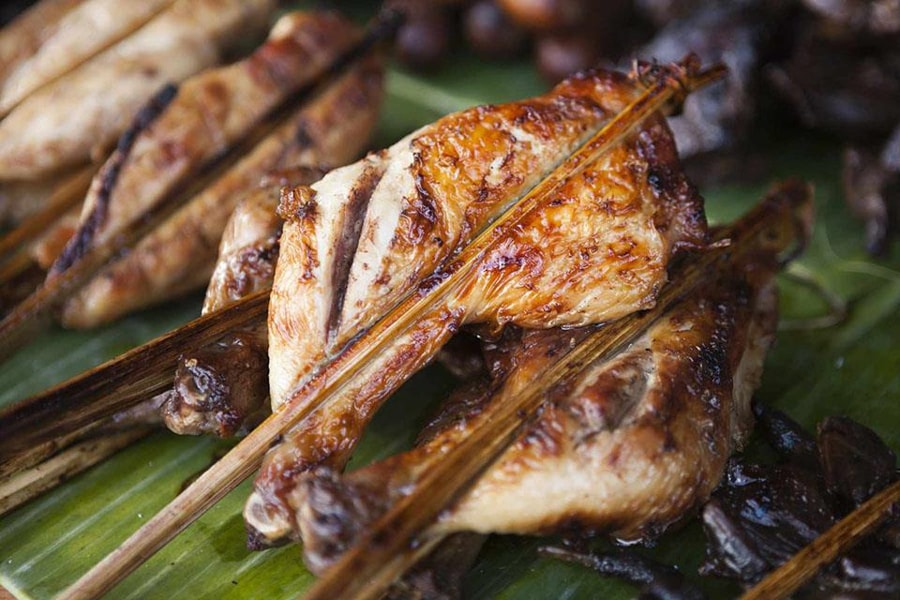
Ping Kai in Laos is one of the most popular grilled food recipes and a common food item in markets or family gatherings. The chicken is first marinated in garlic, herbs, soy sauce, and coconut milk. The chicken is finally grilled over charcoal and cooked slowly so that the chicken meat turns tender and has a golden brown and crispy exterior. The aroma of burning charcoal mixed with sweet and savory flavors makes Ping Kai not only memorable but also leaves the taste buds craving more. Ping Kai is best enjoyed in open or communal table seating.
Khao Piak Sen – Lao Rice Noodle Soup
Khao Piak Sen is the warm noodle soup may be likened to ‘pho’ in the Lao tradition and is enjoyed in the following way: there are thick and chewy ‘noodles’ made from ‘rice flour’ in ‘a rich broth skimmed from pork or chicken bones,’ and ‘some aromatics like dried ginger, lemongrass, or boiled shallots are added.’
The herbs, the lime wedges, or even the fried shallot pieces are added when the food is being served. Many Lao locals take this food either for breakfast or lunch. By being hot food, khao piak sen functions as comfort food in Lao cuisine.
Khao Jee – Lao Grilled Sticky Rice Cake
Khao Jee is another street food in Thailand that has received international attention after being voted one of the best street foods in the world by CNN. Khao Jee is made in the following way: You take this sticky rice and shape it around a stick; you put egg yolk and seasonings on the food and grill it until golden brown. Inside, the food is warm; the outside part is crispy.
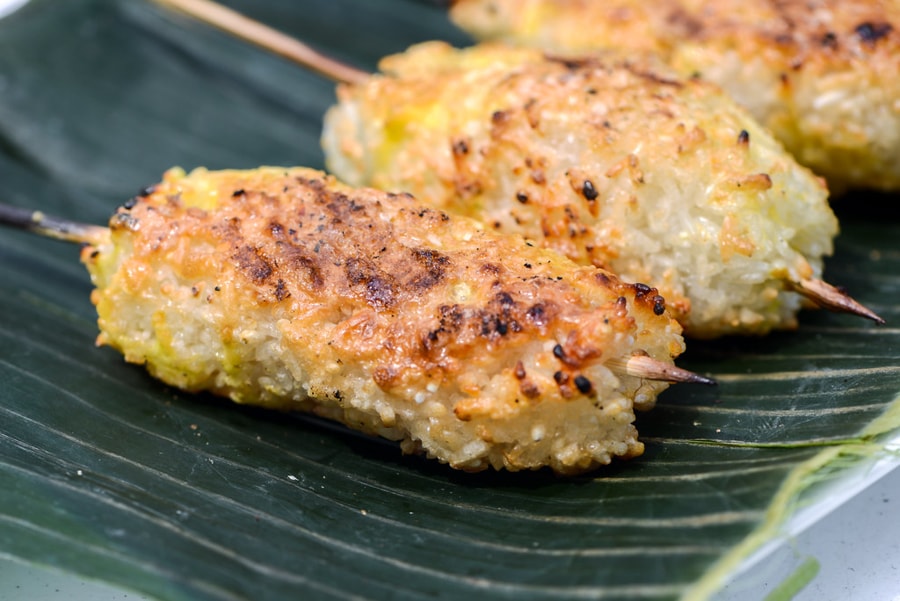
Flavours are simple yet very refreshing and satisfying, especially when consumed hot from the grill. Khao Jee appears in many Lao households and restaurants and is not expensive, it’s available anytime and anywhere. This food shares many qualities with Lao street food.
Kaipen – Crispy River Weed
Kaipen is indeed a very special and delicious snack made from river weed harvested from the Mekong River areas. It’s seasoned with lots of spices and dried in the sun before being deep-fried until crispy and crunchy like crackers. The best way to eat this delicacy would be with either chili or sweet and sour sauce. The taste would be quite salty yet surprisingly sweet. It’s quite common to munch this while drinking beers too! This is indeed one of the most unforgettable dishes of all for foodies like me!
Insect Dishes Of Laos
Surprisingly, insects are quite popular in Lao cuisine. Crickets that are fried, or silkworms that are roasted, bamboo worms, or grasshoppers that are grilled are quite common insect dishes in Lao cuisine. These insects are rich in nutritional values and serve as good sources of protein too. Without the slightest doubt, they are quite flavorful and delicious too. Salt-rice or sticky-rice recipes are common in Lao dishes.
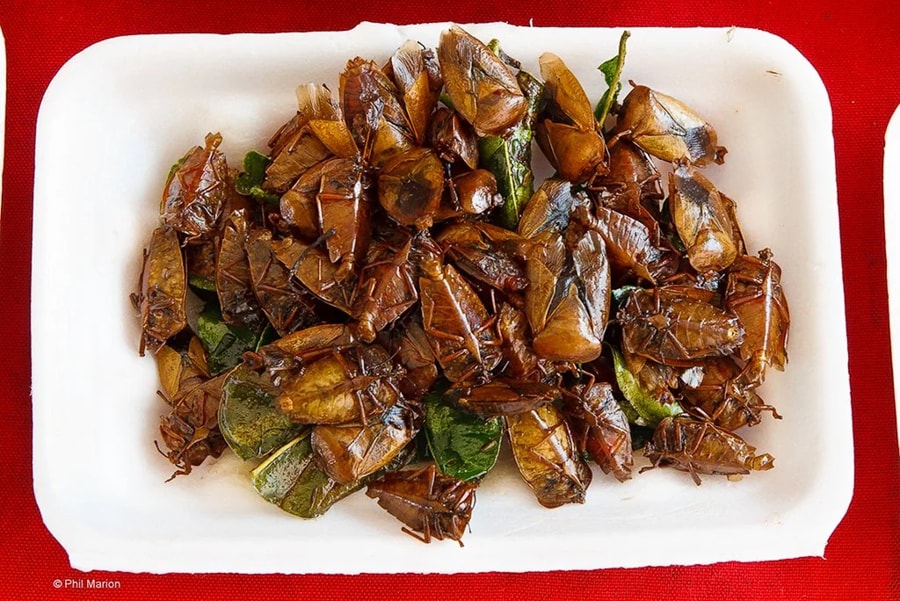
For the traveler, this may be quite unconventional, but the chance to indulge in entomophagy or crickets would be quite the adventure and the best possible exposure to the Lao food culture. Entomophagy also embodies diversity and the creative nature of Lao cuisine.
Tam Mak Hoong – The Iconic Lao Papaya Salad
Tam Mak Hoong, or Spicy Papaya salad in Laos, is one of the most beloved Lao dishes in the country and should not be missed in Vang Vieng. This salad consists of thinly sliced green papaya and is mixed with garlic, chilies, Laos’s iconic fermented fish sauce, the pungent prahoc or prahok in other Lao dishes, and fresh lime juice. The Lao Spicy Green Papaya salad doesn’t taste like the Thai salad’s sweeter cousin in Thailand in terms of taste because of the prahoc. The Lao version’s umami taste bursts in one’s mouth. The taste involves spicy, sour, salty, and umami.
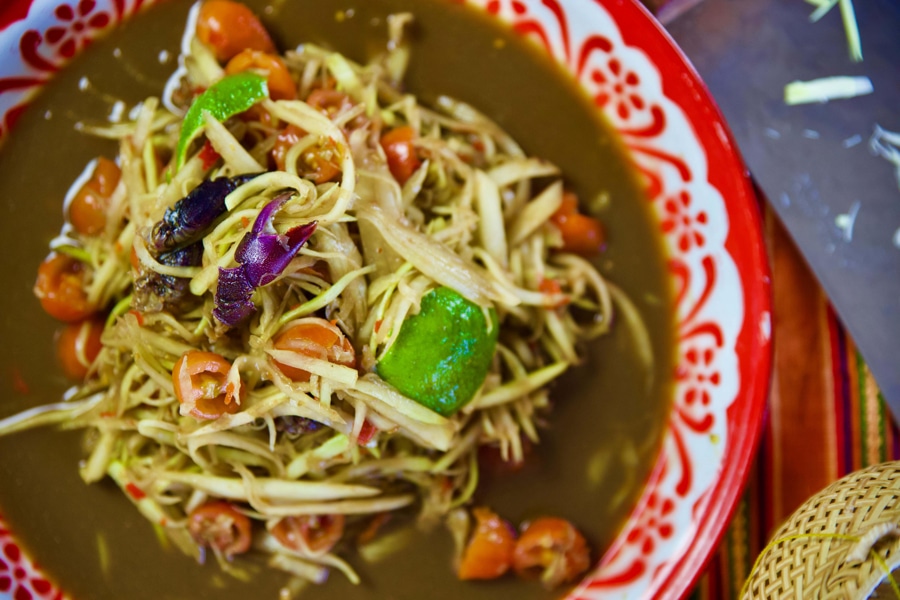
This would taste well served either with glutinous or grilled meat and can be enjoyed in Lao cuisine’s distinctive style in combination with other dishes in either light or more substantial celebrations. It symbolizes the lively and distinct character of Lao’s everyday dishes. This should not be missed in Vang Vieng.
Final Thoughts
The food you can investigate in this region of Laos incorporates more than the enjoyment of food; it’s the discovery of the nature of Lao food. Whether salads that are spicy and fresh in taste, or meat barbequed just right, or soups that are aromatic or earthy and sticky from the regions’ signature staple food in Laos, each provides significant storytelling in terms of legacy and family or regional pride in particular. For those seeking the most genuine adventure in both Vang Vieng and food, Seni World can be your perfect guide.


Related articles


