


Ha Giang food reflects the ethnic culture of the region and its inherent rustic ingredients and only methods of preparation. For backpackers and foodie travelers alike, eating Ha Giang food is an experience you won’t soon forget.
Thang Co (Traditional Horse Meat Soup)
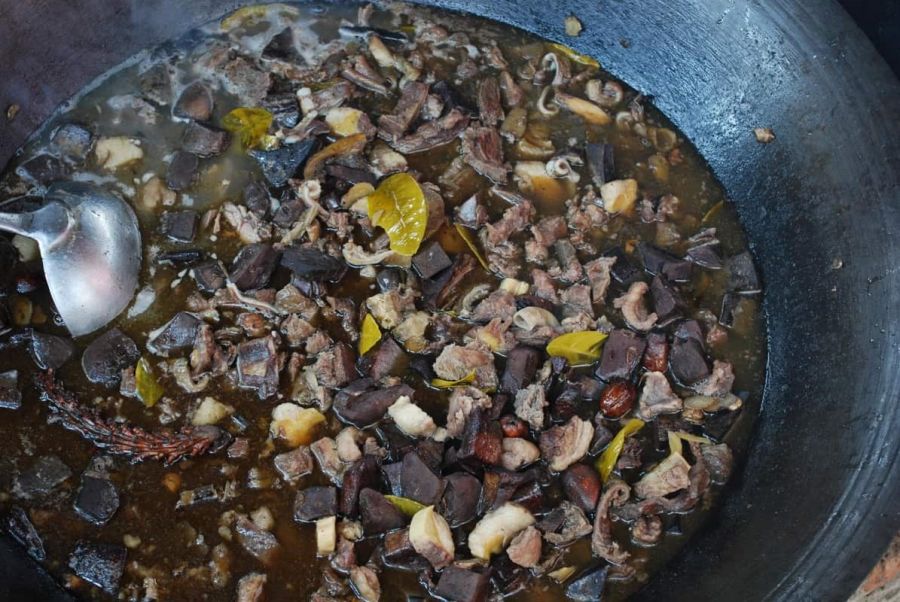
Thang Co is one of the earliest and most recognizable ones among the cuisine of ethnic Hmong in Ha Giang. Normally, Thang Co is made with horses and cooked with organs like the heart, liver, and intestines. It is flavoured with local herbs like cardamom, lemongrass, ginger, and “mac khen” (mountain pepper, which is only found in this region).
It smells strongly of offal, and the flavor is not only unusual but can be very off-putting to those not well-acquainted with organ meats. But to the inhabitants, it’s a comfort food, best enjoyed with fresh vegetables and a glass of warm corn wine. Eating Thang Co isn’t about trying out a new food; it’s about knowing the culture, the rites, and the relationship among the people of the ethnicity. It smells strong and gamy of offal, and the flavor is not only unusual but can be very off-putting to those not well-acquainted with organ meats.
For a real taste of this Ha Giang food, check out one of the Sunday markets in Dong Van or Meo Vac. Thang Co is typically served hot, communally, with people sitting around, chatting. The price for a portion for 2–3 people typically is around 100,000 – 150,000 VND.
Chao Au Tau (Au Tau Porridge)
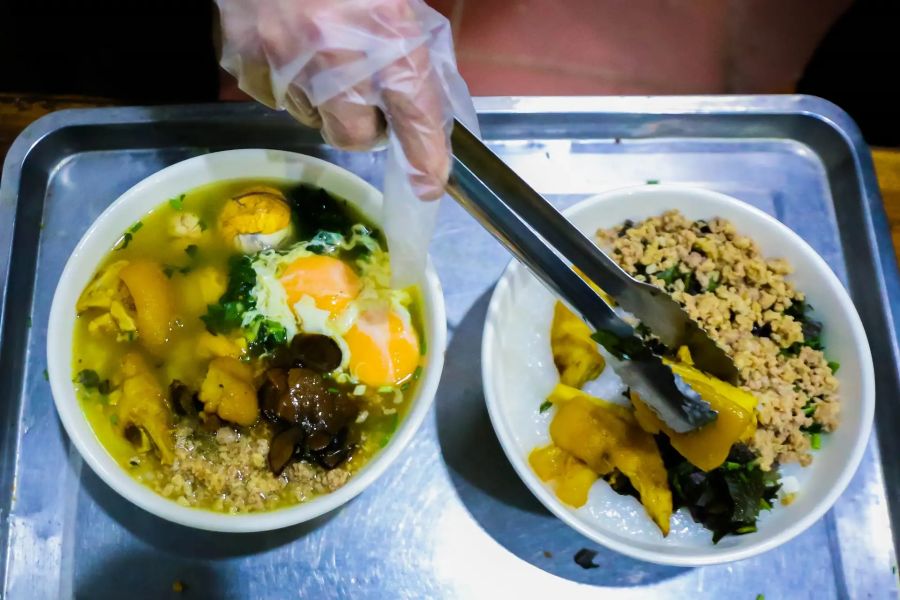
If you are interested in Ha Giang traditional medicinal cuisine, try Chao Au Tau (Au Tau porridge). This nourishing porridge is made from a bitter root plant called au tau, which only grows in the cold, mountainous areas like Ha Giang.
According to the locals, this dish aids sleep, reduces joint pain, and increases energy, making it especially popular on cold nights. Chao Au Tau usually combines sticky rice, simmered pork, shallots, and is topped with green onions. It has a bitter taste but is delicious when you juxtapose it with the soft meat and flavors of the rice. Chao Au Tau is often sold by elderly ladies in small street stalls or late-night diners in the city.
Banh Tam Giac Mach (Buckwheat Cake)
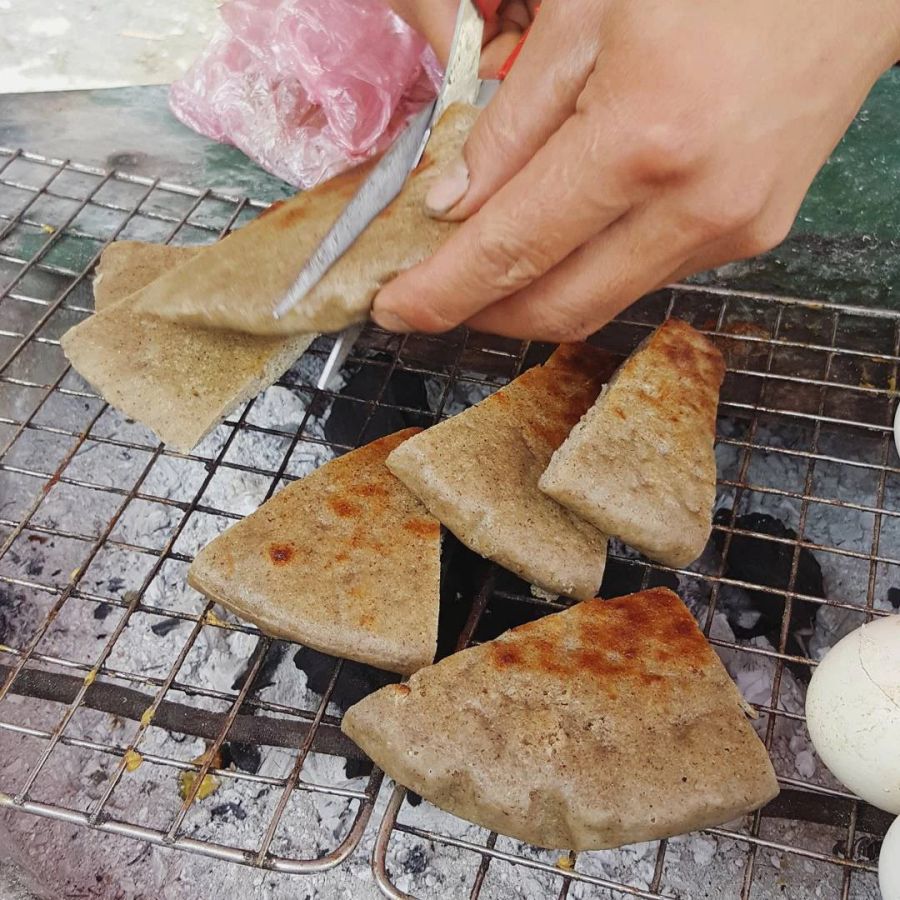
The seeds are ground into flour, mixed with water, and steamed or griddled into dense, slightly chewy cakes. They have a mild taste and are nutty. Some people grill the cakes over hot coals; this imparts a smoky fragrance and provides the cake with crisp edges. Others like to eat them while they are warm and softer, tinged with a touch of honey or sesame salt. Either way, it’s a snack symbolic of the highland life.
These buckwheat cakes can be found primarily in village markets like Dong Van Market or during the Buckwheat Flower Festival in late autumn. They’re not street food at all. They’re also a testament to the resilience of people living in rocky, hard-to-farm terrain who manage to turn even the lowliest of crops into something nourishing and memorable.
Xoi Ngu Sac (Five-Color Sticky Rice)
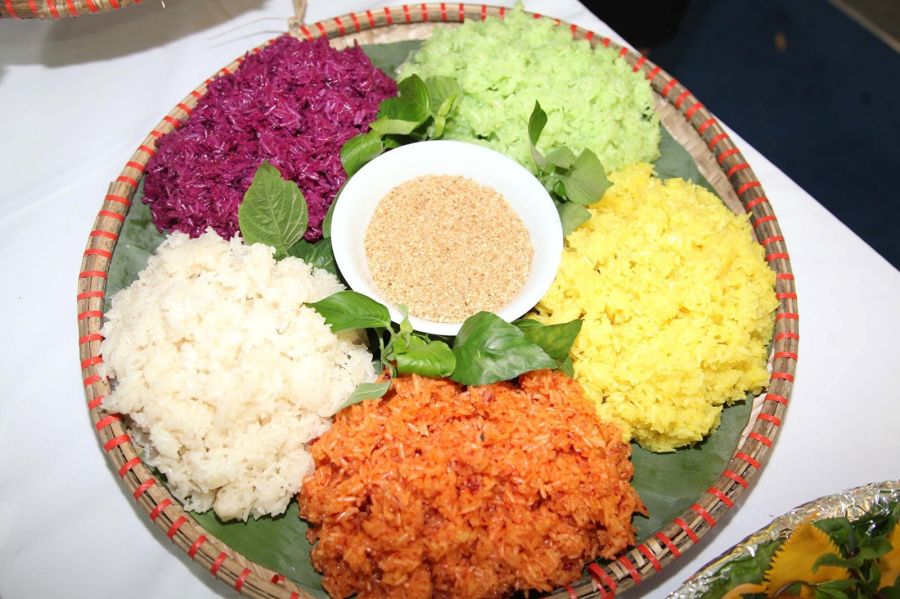
One of the most spectacular and important Ha Giang foods from a visual and cultural standpoint is Xoi Ngu Sac (five-color sticky rice). This is a traditional dish that can be seen at ethnic festivals, weddings, or Tet (Vietnamese Lunar New Year). Every color is made from real ingredients: magenta leaves for purple, turmeric for yellow, and pandan leaves for green.
The sticky rice, which can be soft and fragrant, is often eaten with sesame salt, grilled meat, or boiled eggs. If you are doing a cultural festival in Ha Giang and you are looking for what to eat in Ha Giang, then Xoi Ngu Sac rice should be one of your savory menu items. It can typically be found at local markets and community events, especially in districts such as Quan Ba or Dong Van.
Thit Trau Gac Bep (Smoked Buffalo Meat)
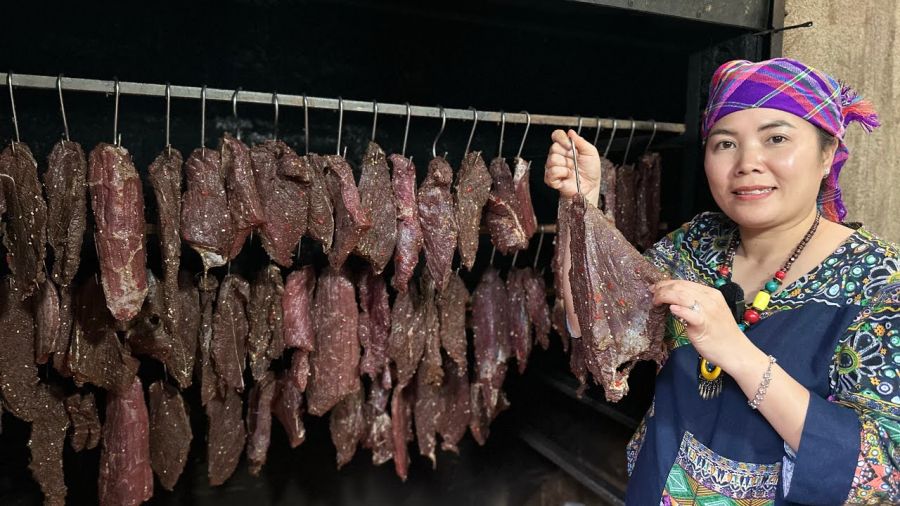
Buffalo meat smoked is one of the most famous delicacies of the Tay–Dao people in Ha Giang. Rather than using modern technology, villagers use ancient methods: smoking the meat over wood fires within their stilt houses for weeks, or even months.
To make the dish, fresh buffalo flesh, often from the thigh or shoulder, is sliced long, thin, and marinated with time-honored mountain spices. The seasoning often contains salt, chili, garlic, and “mac khen”, a wild pepper that grows exclusively in the forests of Vietnam’s north. The result is a chewy, smoky, high-protein dish that’s ideal as an appetizer or side dish. Locals will frequently tear it by hand and dunk it in spicy chili sauce, or pair it with corn wine.
You can buy this dish as a souvenir for the price of about 900,000 – 1,200,000 VND/kg.
Corn Wine
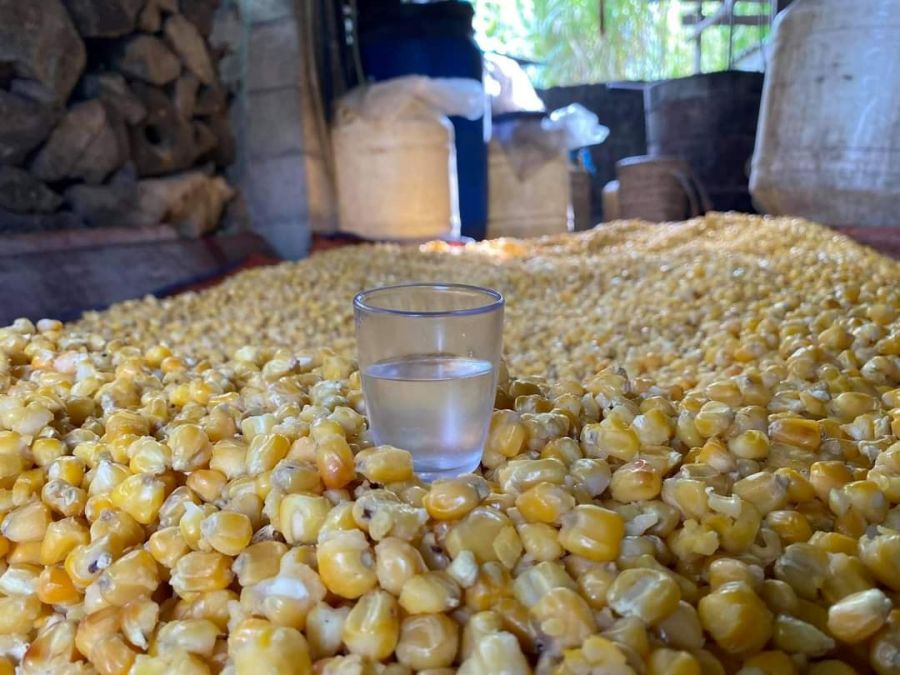
No tour of Ha Giang food is complete without sampling corn wine, which is the drink of choice for almost any ethnic group in the region. Unlike the lowlands along the coast, where rice is the staple food, corn is more than just food in Ha Giang. It is also a part of life itself. Locals ferment and distill the corn after harvesting, using handmade clay or bamboo equipment. And all of this is purely natural and handed down through generations.
In Ha Giang, if you are invited into someone’s home at any time of the day, it would be impolite to refuse a sip of corn wine. Not a food, corn wine is, however, so deeply ingrained in local food dining culture that it deserves a place amongst the best food in Ha Giang you have to try!
Banh Cuon (Ha Giang Steamed Rice Rolls)
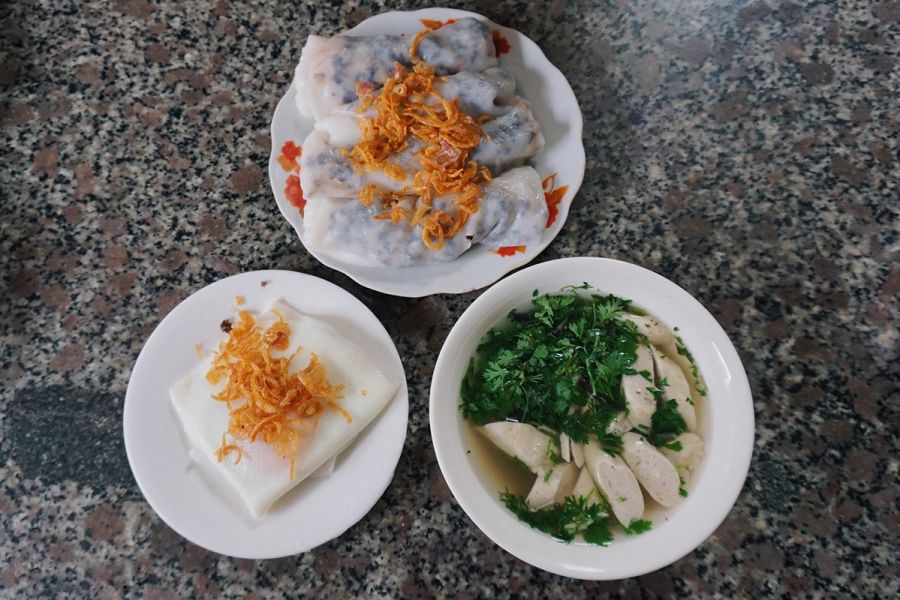
Banh Cuon can be found throughout Vietnam, but the one in Ha Giang has a special variation that distinguishes it from others. Here, the rice rolls are stuffed with egg or minced wood ear mushrooms, and instead of the standard fish sauce, they are served with a bowl of savory pork bone broth. This slight but significant twist makes the dish warm and hearty, a dish more suited to the cold mountain air.
Locals routinely eat them for breakfast or lunch. If you want to know what to eat in Ha Giang in the early morning, then this comforting dish will do the trick. You’ll come across it at street stalls and small local eateries, particularly in Ha Giang City. It costs about 25,000 – 40,000 VND per serving.
Banh Thang Den (Victory Cake)
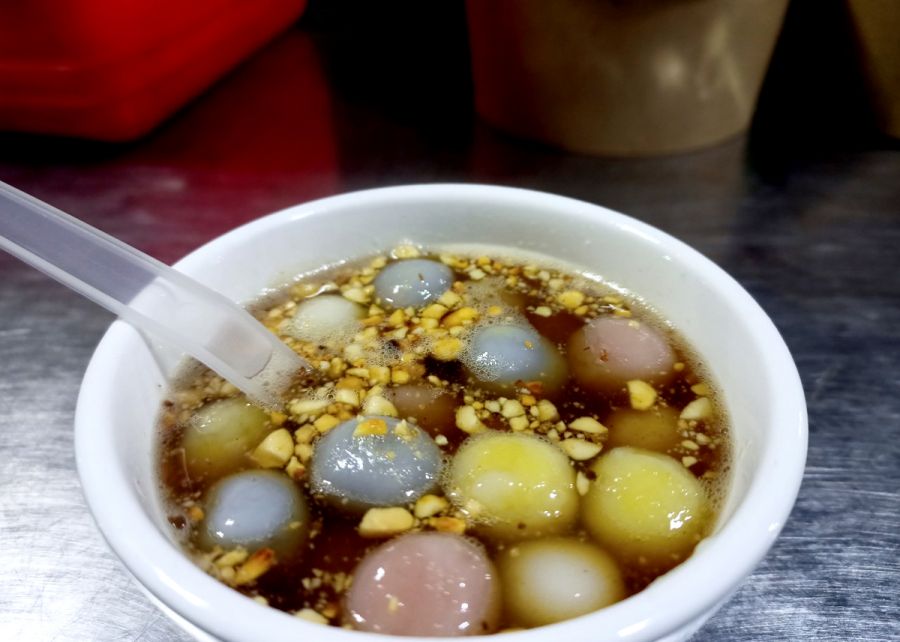
Banh Thang Den is a sweet treat that has been part of the culture of Ha Giang’s ethnic groups through many generations. The dough, made from glutinous rice flour, is balled by hand and filled with a granular filling of sesame seeds, crushed peanuts, and sugar. The rice balls are boiled until they rise to the surface of the water and become soft and chewy. Finally, into a bowl of hot, steamy ginger syrup they go, taking a sweet, spicy bite of heat to warm the insides, just the thing for a cool night in the mountains.
Victory Cake is not just a tasty snack; it’s a cultural keepsake. You will find this Ha Giang food in night markets or during local festivals, at least in towns like Dong Van or Meo Vac.
Men Men (Steamed Cornmeal of the H’Mong)
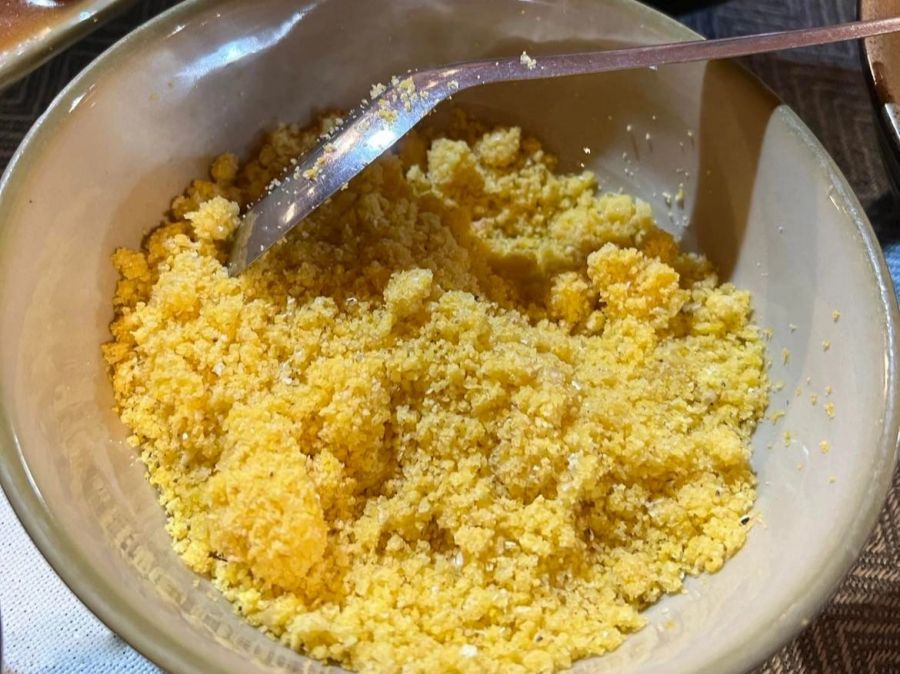
One of the simplest but also most important dishes in Ha Giang is Men Men, a steamed cornmeal cake and one of this ethnic group’s staple foods. Men Men provides a stark reflection of the locals’ resourcefulness and profound connection to the land.
The dry corn is first soaked in water and then ground using stone mills into a fine powder before steaming twice in a traditional bamboo steamer. The result is slightly dry, grainy, and crumbly. But when swirled in a rich broth or ordered alongside pork shoulder or stir-fried leafy greens, it becomes a filling, warm embrace of a meal.
Men Men isn’t something you can order in tourist restaurants, it’s found in the kitchens of ethnic families and rural market stalls. The experience of trying it is instructive about how people in Ha Giang live with and off of what nature offers.
Sour Pho
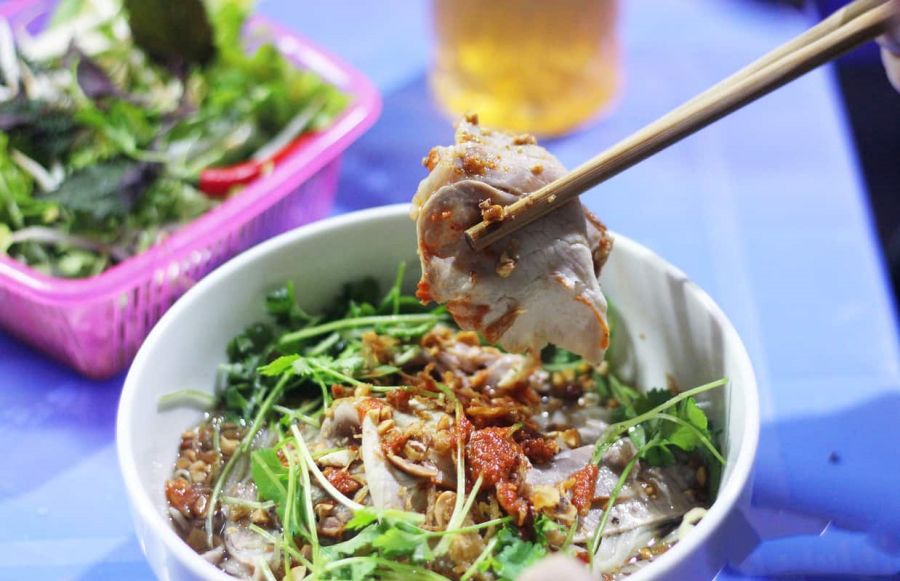
Pho may be the best-known of Vietnam’s noodles, but Ha Giang serves up its very own modification with Sour Pho, a dry version rich in flavor and texture. Instead of traditional piping-hot broth, this iteration opts for soft rice noodles with roasted pork, fresh herbs, pickled vegetables, peanuts, and fried shallots. The whole thing is then doused in a tangy-sweet vinegar-based sauce, which brings all the elements together.
This dish is also an example of the Ha Giang cook’s art of adjusting Vietnamese food to the local surroundings and palate. If you find a quick lunch stop in Ha Giang City, or when browsing your way through the small cafes around the mountain loop, this is some of the best Ha Giang food for visitors who want a little bit of something familiar and something more adventurous.
Final thoughts
Ha Giang food is a cultural journey influenced by the ingenuity and traditions of its people. From rich, smoky buffalo meat to vibrant sticky rice and porridge, every dish in this part of the world has a story you can eat. If you’re looking to see Ha Giang through its food and culture, why not travel with ease and local insight? SeniWorld offers customizable tours, transportation, and local guide services that ensure you don’t miss a single flavor in Ha Giang.


Related articles


