


The Ho Chi Minh City Museum is an important experience to discover this city’s interesting history, vibrant culture, and revolutionary traditions. With interesting exhibits and unique treasures, it offers an in-depth and engaging experience of the nation.
Introduction To Ho Chi Minh City Museum
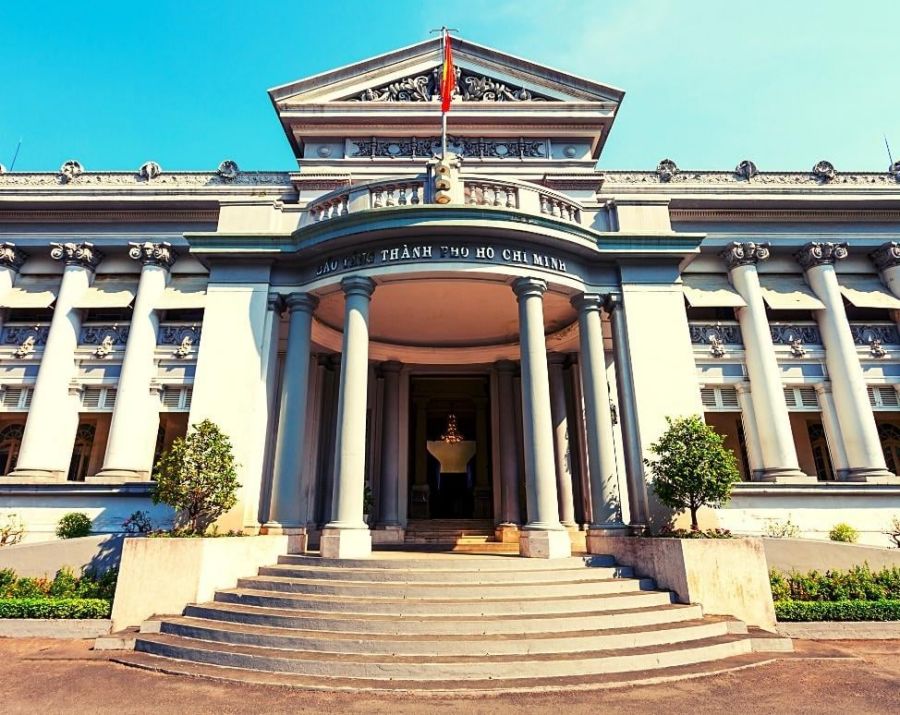
Located in District 1, the Ho Chi Minh City Museum is among the most visited museums in the city, drawing in thousands of visitors every year. The museum is not only located in the less than 2-hectare grounds surrounded by four main streets, Pasteur, Ly Tu Trong, Nam Ky Khoi Nghia, and Le Thanh Tong, which are very central and accessible for travelers.
The museum is located inside a colonial building over 100 years old, which is both valuable in terms of architecture and relics. It is an appealing journey to explore the history of the city, which was, in earlier years, the capital of the South, which is a “must-see” for anyone wishing to learn about Saigon’s culture and history.
History Of Ho Chi Minh City Museum
The Ho Chi Minh City Museum features a captivating past that parallels the evolution of the city itself. Constructed between 1885 and 1890, the building was designed by the French architect Alfred Foulhoux in a Neoclassical style. After its completion, it became the Governor’s Palace of Cochinchina, before adopting several roles as the home of local high-ranking officials and as the headquarters for various South Vietnamese regimes. For a lengthy period in the years leading up to 1975, it was called the Gia Long Palace.
During the August Revolution, it was used by the Provisional Administrative Committee of the South as an office. It was the venue for a momentous student demonstration on January 9, 1950, demanding that the French colonialists and the Bao Dai government free patriotic students who had been detained. The event was cruelly repressed with the loss of life for young student Tran Van On, and since then, the palace has been linked to the “National Day of Students and Pupils” in Vietnam.
After the reunification of Vietnam in April 1975, the building was changed into a cultural space of exhibitions and performances. On August 12, 1978, the People’s Committee of Ho Chi Minh City officially established it as the Ho Chi Minh City Revolutionary Museum. The museum was renovated in 1999 to a new form and is currently known as the Ho Chi Minh City Museum. After that, in 2012, the building was recognized as a National Architectural and Artistic Monument. By 2015, it had been awarded the title of one of the first top tourist areas in Vietnam, as designated by the Vietnam National Administration of Tourism.
Unique Architecture Of the Ho Chi Minh City Museum
The Ho Chi Minh City Museum serves not only as a place for the preservation of useful objects but also as an architectural work of art combining Eastern and Western elements. Below are some of the most unique highlights that make this museum a worthy architectural and historical jewel.
Stunning European-Inspired Architectural Features
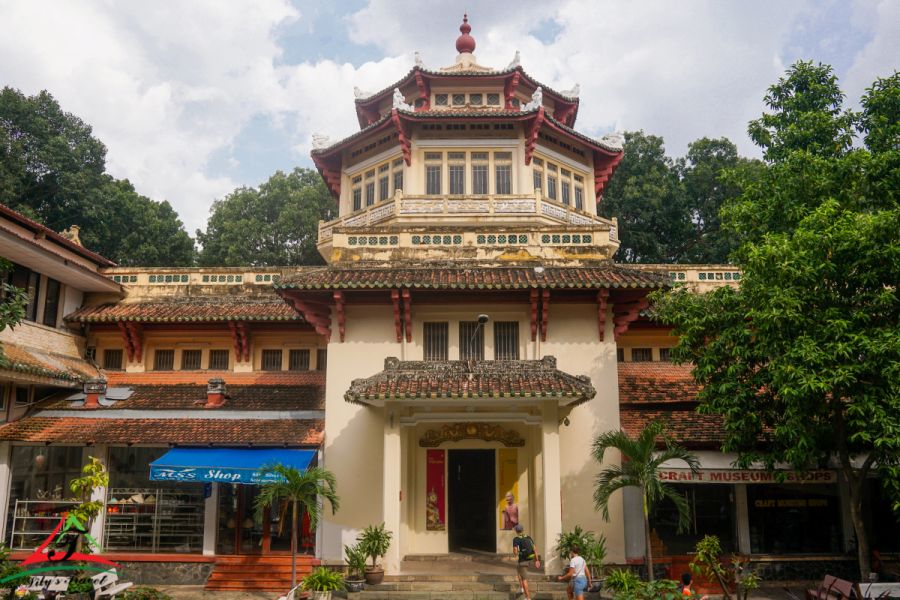
Previously called the Gia Long Palace, the building was designed by a French architect named Alfred Foulhoux in a Gothic style integrated with a few Asian influences on the roof. The building’s overall shape was created by using large columns along the front facade, similar to that of the Louvre Museum in Paris. In 1943, the original entry gate was changed to a portico with columns, but the elegance remains.
The triangular pediment has a beautifully carved, solemn human head that is encircled with decorative carvings representing universe symbols: willow branches, coiled snakes, roosters, and owls representing day and night, and a sun-like halo. Also, there are unique bas-reliefs inspired by Greek myths, tropical plants, and animals that combine the West’s grandeur with the charm of the East.
Excellent Exhibit Space Within the Museum
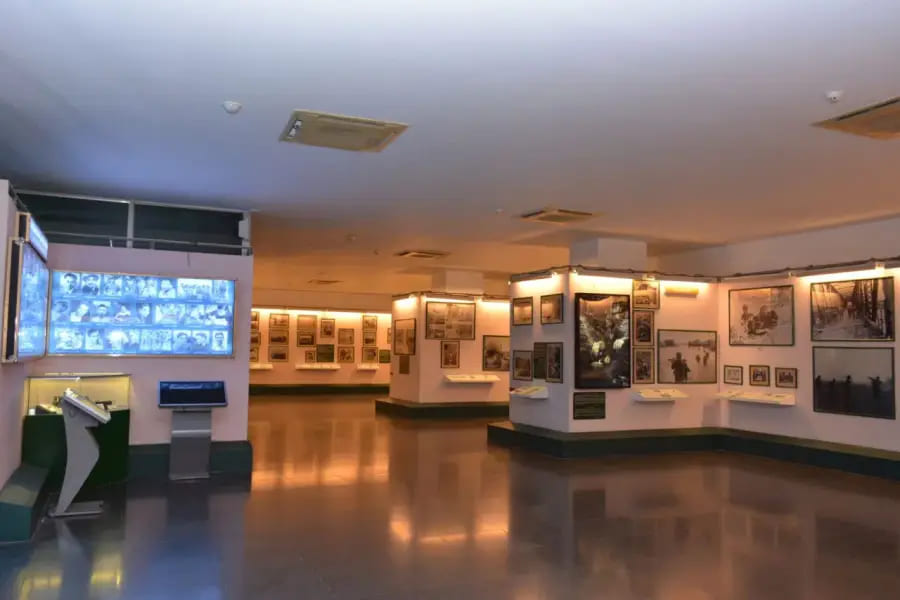
In addition to its breathtakingly beautiful facade, the museum is also beautiful because of its diverse system of exhibits that tell the long and colorful story of Saigon – Ho Chi Minh City’s history.
- Nature & Archaeology: This room features more than 200 objects, images, and maps that provide a presentation of the geological features, climate, and biodiversity of the city, along with prehistoric objects from as long as 3,500 years ago.
- Saigon as a Trade Center: With more than 500 objects on display, this exhibition details the economic situation of the city through its ports and markets, along with trading implements and systems of transportation.
- Geography & Administration: Visitors can enjoy a visual history of the city from 1698, including the famous bronze seal of General Le Van Duyet.
- Revolutionary Fighting (1930-1954 & 1954-1975): Hundreds of objects, papers, and belongings of soldiers serve to describe the fighting in Vietnam against the French and American Wars.
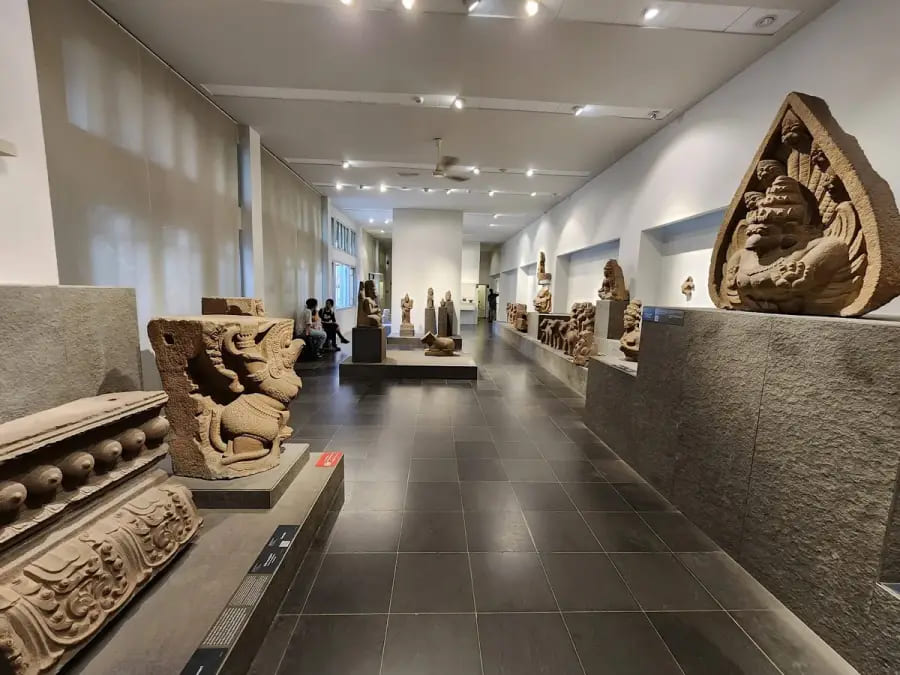
- Culture of Saigon: Within this exhibit, the museum goes into detail in the explanation of the different communities represented in the city of Saigon, Vietnam. Chinese, Khmer, and Champa are looked at through their traditions, beliefs, education, and arts.
- Currency of Vietnam: An interesting venture through time, this aspect of the exhibition goes from the 10th century to the present, documenting the evolution of money and displaying coins and paper from different dynasties and periods of time in history.
3 Unforgettable Experiences You Shouldn’t Miss
The Ho Chi Minh City Museum is not only an educational destination but also a cultural destination of culture and unique activities. Let’s find the most entertaining things to do in this location, as well as in Ho Chi Minh City!
Admire The Fusion Of European And Asian Architecture
The museum is distinguished by its balanced architectural form of Western and Eastern styles. The main building is designed with Renaissance influences, including symmetrical balance, classical reliefs, and symbols of Greek mythology adorning its facade. The curved roof exemplifies traditional Asian architecture. This result is a unique and photo-worthy comparison of architecture. Many visitors remark on how many aesthetic corners they encountered here.
Discover The Formation And Development Of Saigon
Step inside the museum and you will travel through the past of Saigon that starts as an untouched land until now, “time of development to a modern city”. Begin your journey in the Geography – Administration Room, which covers the changes to the physical landscape of the city. In the Nature – Archaeology Room, you will see ancient items such as jewelry, stone axes, and artifacts from the prehistoric period. The exhibit displays ancient maps documenting over 300 years of history.
There’s also a space entitled “Saigon – Ho Chi Minh City Culture”, which describes traditions of the Viet, Hoa, Cham, and Khmer ethnicities, so you can appreciate the cultural beauty represented in the city’s ethnic groups.
Capture Artistic Photos With Classic Backdrops
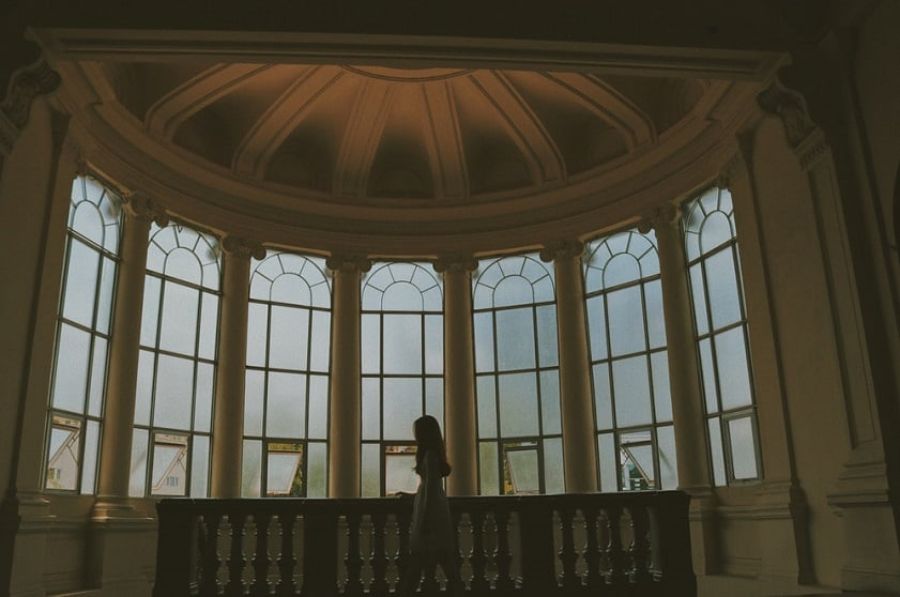
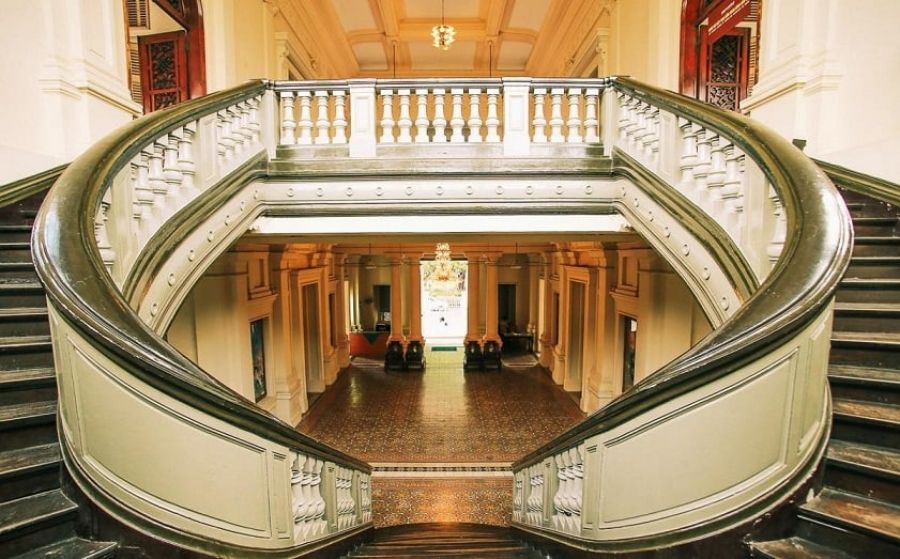
With its vintage design, the museum has established itself as a go-to photography location for younger travelers. There is so much charm in each space; the staircases, arched windows, and long hallways, the vintage film look comes easily to mind. The crafted embellishment and marriage of East-West details create a rich medium for tourists and locals alike to show up and take their best “Instagram” photos. In fact, the museum has been the inspiration for professional fashion shoots and creative art projects.
Entrance Fee
To enter the museum of Ho Chi Minh City, each person is expected to pay around 30,000 VND. You will need to pay 20,000 VND for each camera you choose to bring. Students carrying a current student ID will receive 50% off ticket prices. This makes for an inexpensive and educational experience.
Opening Hours
The Ho Chi Minh City Museum is open from Monday to Sunday: 8:00 AM – 5:00 PM. The best time to visit is on either a weekday or a weekend in Ho Chi Minh City when the museum is open and is less crowded.
If you visit in the morning, you will be able to have more leisure and photograph with better opportunities, but if you visit in the afternoon, you can explore specific exhibitions and grounds in more leisure and a slower pace.
How To Get To Ho Chi Minh City Museum
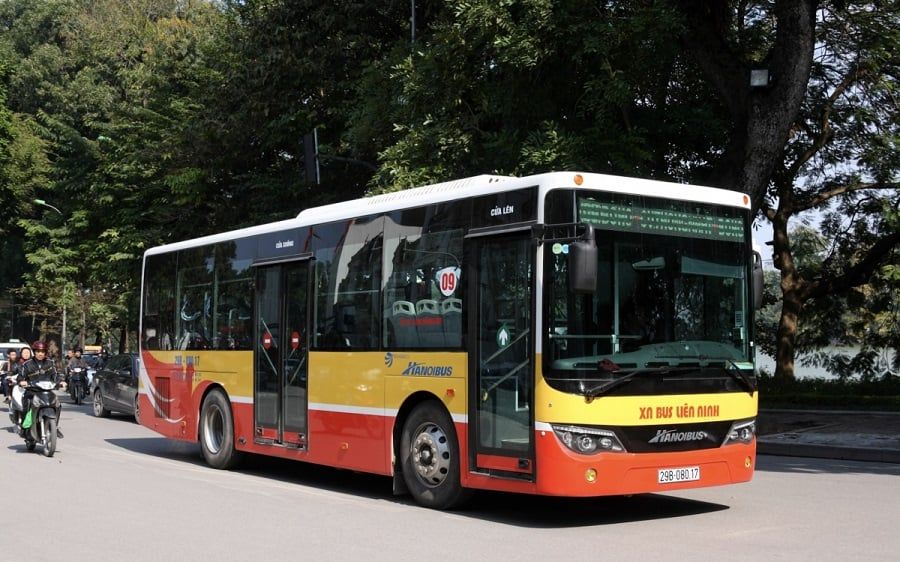
Since the museum is positioned in the center of the city, visitors have many options for getting there.
- By Personal Vehicle: The museum is located on Ly Tu Trong Street. It’s a good idea to confirm your route on Google Maps since two of the side streets, Nam Ky Khoi Nghia and Pasteur, are one-way streets.
- By Public Transport: You could take one of the buses 04, 18, or 36 from the Ben Thanh Market or Ham Nghi Street. Then get off at the Pasteur – Ly Tu Trong stop and walk the 50 meters to the museum.
Note: It is common for first-time visitors to confuse the Ho Chi Minh City Museum (District 1) with the Ho Chi Minh Museum – Nha Rong Wharf (District 4). Please check that you are traveling to the correct location.
Things To Know Before Traveling To The Ho Chi Minh City Museum
Prior to planning a visit to the museum, it would be beneficial to familiarize yourself with some basic rules and guidelines to ensure you can relish your museum experience without disregarding its significance and historical and cultural values.
- Dress properly and respectfully when entering this place.
- Do not enter with flammable materials, weapons, or items that can pollute the space.
- Food and drink are not permitted inside the museum; maintain cleanliness and be considerate of noise levels.
- Do not handle historical objects, displays, or restricted areas.
- Adhere to the instructions of museum personnel to promote safety and order while you explore.
FAQs About Ho Chi Minh City Museum
Travelers frequently seek answers to common inquiries regarding the Ho Chi Minh City Museum prior to their visit. The following list captures some answers to common questions and is provided to assist with planning your visit effectively.
How much time should I spend visiting the museum?
Most visitors spend approximately 1-2 hours visiting the museum. At this time, they can typically enjoy the architecture and visit the rooms adequately. However, if you are a history buff, it would be a longer visit.
Can I take pictures while visiting the museum?
Definitely, photography is allowed inside the museum, but you will have to pay a surcharge for an extra camera fee. Also, in some exhibition rooms, flash photography may be prohibited as a means to protect the exhibits. Although it is acceptable in most cases, it’s recommended to check with staff before taking any pictures.
Would the museum be enjoyable for children?
Yes! Children are able to enjoy themselves in the museum, especially during the display presentations that demonstrate the history and culture of Saigon. The exhibits themselves would be distracting, but can be educational and informative for younger visitors. Nevertheless, parents should advise children about what is quiet and sacred within the context.
Why is the museum worth visiting?
The museum represents a distinctive combination of French colonial architecture located in southern Vietnam while embracing its own foundational history and historic trajectory. It is interesting to learn about the previous history of Saigon and compare it in relation to contemporary Saigon.
Final Thoughts: Is the Ho Chi Minh City Museum Worth Visiting?
The Ho Chi Minh City Museum is not simply a heritage place; it’s the place where the history and cultural identity of the city are brought to life. With its stunning French colonial architecture and the many priceless artifacts highlighting important events in Vietnam’s diverse and complicated history, the museum gives visitors an abundant understanding of the city’s heritage. Whether you’re planning to visit today with Seni World or any experience to guide you, take the time to hear the stories that contributed to Ho Chi Minh City’s culture.


Related articles


