


Independence Palace is in the center of Ho Chi Minh City and is a historical icon representing Vietnam’s resilient spirit. With an interesting design and a rich background, it gives visitors a glimpse into the political and cultural past.
Introduction To Independence Palace
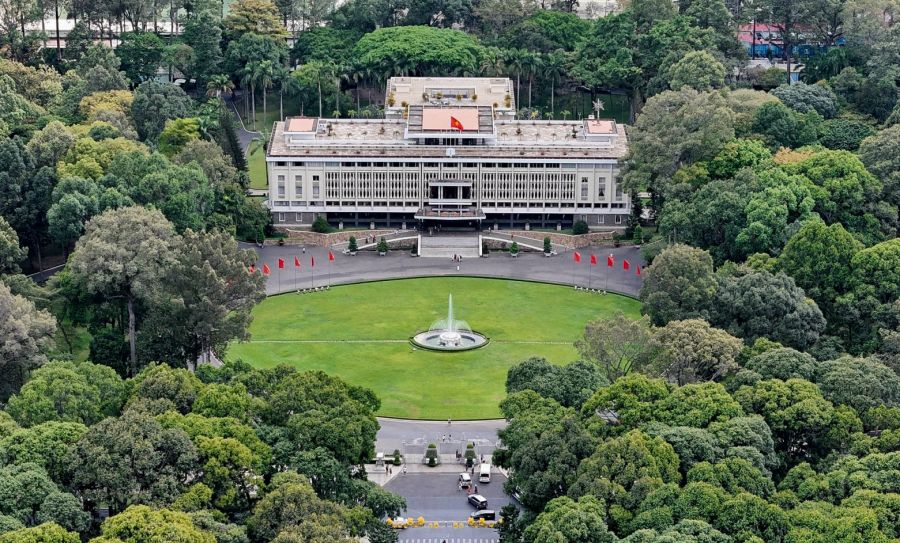
Independence Palace is located at 135 Nam Ky Khoi Nghia Street in Ho Chi Minh City and is a representation of Vietnam’s history and resilience. The palace was built in 1966 as the presidential residence and government headquarters during the Vietnam War, which was established as the Norodom Palace. The Palace became available for worldwide television viewership when a North Vietnamese tank crashed through its gates on April 30, 1975, representing the end of the Vietnam War and the reunification of Vietnam.
Visiting the Independence Palace provides guests with an opportunity to experience the history of Vietnam up close. Guests can enter and see preserved rooms, such as presidential offices, the war room, and underground escape rooms. The history of South Vietnam’s leaders can be found in one place. The Independence Palace is a historical and cultural site, an architectural landmark that brings together modernist architecture with Vietnamese cultural elements.
History Of Independence Palace
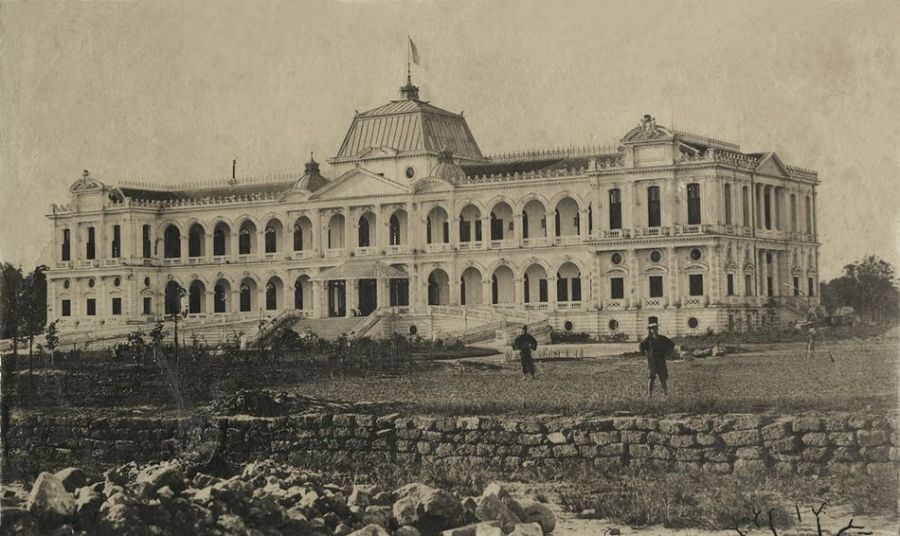
The Independence Palace has a long tradition, starting in 1867, when the French constructed a residence for the governor on what is now Nam Ky Khoi Nghia Street, replacing the former mansion on Catinat Street. In 1868, construction began under architect Achille Antoine Hermite and was completed in 1873. The complex was named Norodom Palace, after the reigning king of Cambodia at that time.
During World War II, the Japanese used the palace as their military headquarters until they were driven from Saigon in 1945. After the French left Indochina in 1954, the palace was then given to the Saigon government. Ngo Dinh Diem renamed the complex Independence Palace in 1955. In a coup d’état in 1962, the palace suffered significant damage.
Afterward, Ngo Viet Thu, architect, redesigned and rebuilt the palace into what remains today, and it was completed in 1966. The new palace remained the presidential site until 30 April 1975, then it became a historic site after that day for interested visitors.
Unique Architecture Of Independence Palace
The Independence Palace consists of three key areas, each with its own unique design and historical value. Enjoying the experience of each of these areas contributes to building an appreciation of the historical and architectural significance of the Independence Palace.
Why Independence Palace Special?
Independence Palace is a notable architectural work that merges traditional Eastern architecture with contemporary Western architecture, a feat that is meticulously executed by architect Ngo Viet Thu.
According to architect Huynh Van Muoi, the palace exhibits a combination of elements extracted, for inspiration, from symbols in Chinese characters, with its bamboo structures made to represent some of the symbols, such as Cát, Khẩu, Trung-Tam, Chủ, and Hưng. This combination of symbolism and architectural design is what makes Independence Palace more than just a governmental function, but an artistic engineering of the cultural words it represents.
The layout of the building is also amazing. The front façade, the balconies on the second and third floors, the eaves, and the wooden pillars jointly represent the character Hưng. The roof is a representation of the character Khẩu, which stands for the appropriate use of freedom of speech. When it is added, alongside a flagpole in the center, it forms Trung, and when the eaves, the roof, and an honorary balcony are put together, they form a notable Tam. Adding a vertical stroke gives a representation of Vương, then the last dot on the tower completes the character for Chủ.
Fixed Area
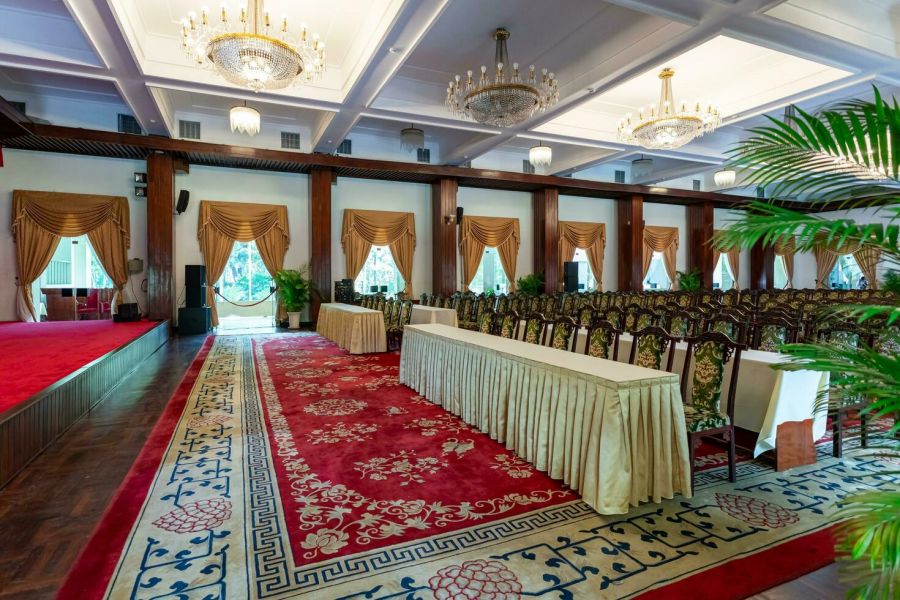
The Fixed Area was designed for the government officials of the time to be their work and living space. It is made up of the ceremonial hall, banquet hall, cabinet room, security council room, the office of the president, offices for other government officials, and sleeping quarters, living space, and recreational rooms. Many visitors are amazed at the elegance of the refined architecture and the simplicity of the rich appearance of the furniture designed for various rooms.
Themed Area
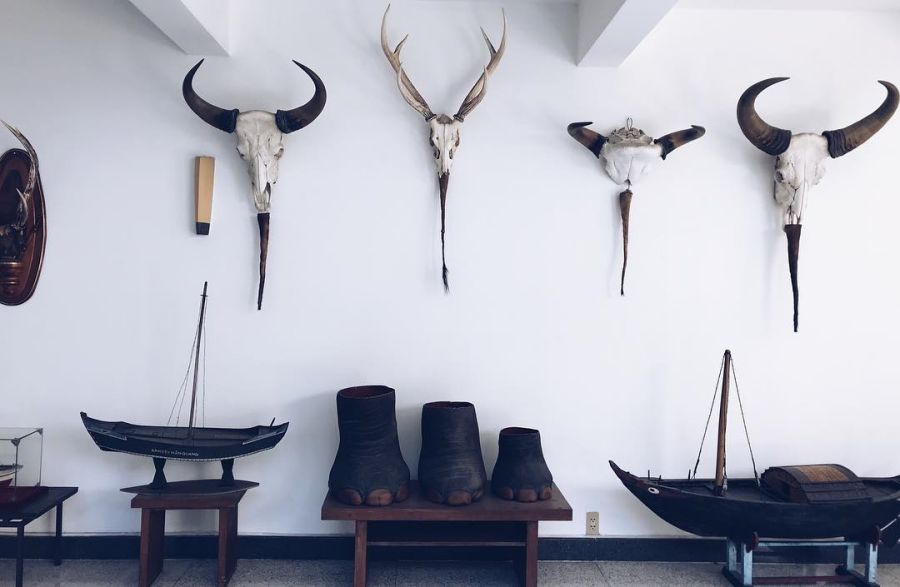
The Themed Area displays historical artifacts and, on a regular basis, hosts exhibitions for visitors. This area encourages learning about a period of Value in Vietnam, but specifically learning about the details historians frequently overlook when learning about a time of significance. This area offers an opportunity to see and further learn about details not typically included in content contextualized to the exhibit’s time period. Additionally, guided tours are available, which introduce and explain the historical stories hidden behind the interaction with themes and artifacts on display.
Supplementary Area
The Supplementary Area keeps a bounty of photographs and historical materials curated by researchers to ensure their journey forward into the future. Beyond the main areas, visitors can also visit the basement and walk the grounds of the palace. Each corner of the palace is interesting, and the lawns and trees provide beautiful photo opportunities that will give visiting families lasting memories of Ho Chi Minh City.
3 Unforgettable Experiences You Shouldn’t Miss
A trip to Independence Palace is not only about experiencing Vietnam’s history; it is packed with a number of adventures for every type of traveler. Whether traversing lovely architecture or snapping a flawless pic, there is something here for every individual.
Explore the Architecture
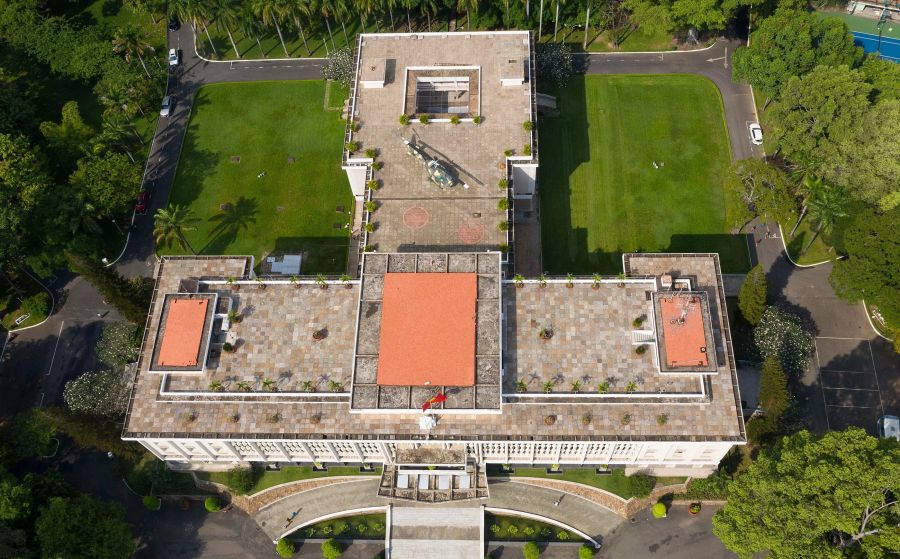
Visitors can appreciate the beauty of this historic site, which was created with care, elegance, and meticulous detail. They can stroll through spacious green grounds and seamlessly witness the relationship between traditional Vietnamese characteristics and modernist architecture. The chamfered edges and multiple buildings set it apart, and every corner of the palace shows the thoughtful craft of the building’s designers.
Discover the History
Visitors can immerse themselves in Vietnam’s history through the exhibitions, particularly the one titled “From Norodom Palace to Independence Palace 1868-1966.” They can view unique artifacts, historic documents, and displays that contributed to important moments in Vietnam’s history, including those that took place during wartime periods and the reunification of the country. This journey further engages travelers in the understanding of the nation’s history, which is one of the most special experiences in Ho Chi Minh City.
Capture Memorable Photos
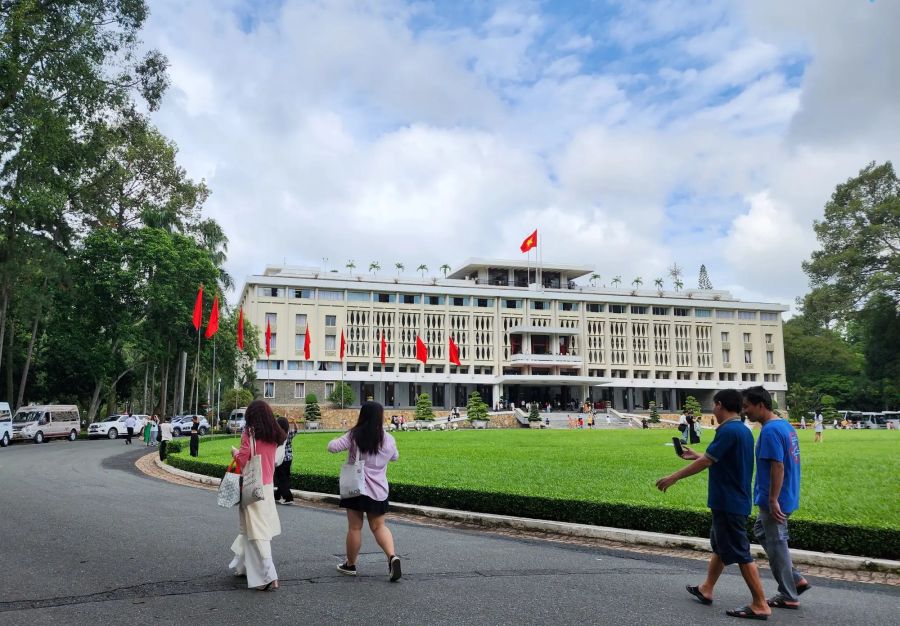
Visitors are welcome to capture lasting memories in various locations throughout the palace. They can get images of the unique architectural details, large rooms, and peaceful gardens that showcase the charm and historical importance of the venue. Each image serves as a replica of their visit.
Entrance Fee
The visit to the Independence Palace is exceptionally affordable and a great value for visiting a historic site. There are tickets for each visitor category (adult/child/student) with either a single-site entry or a combined ticket with the exhibition.
| Ticket Type | Adults | Students | Children |
| Independence Palace Only | 40,000 VND | 20,000 VND | 10,000 VND |
| Palace and Exhibition “From Norodom Palace to Independence Palace 1868-1966” | 65,000 VND | 45,000 VND | 15,000 VND |
Opening Hours
When people are asked about their own visit to Independence Palace, the opening hours are among the most frequently raised inquiries. In regard to the main historical building, it opens daily from 8:00 AM to 4:30 PM.
The space is also home to an exhibition titled “From Norodom Palace to Independence Palace 1868-1966,” which operates from 8:30 AM to 4:30 PM. The palace is open to guests every day of the week, and every day of the year, holidays included, with the exception that the palace will inform visitors in advance.
Opening hours can vary due to national holidays and special events, or if there are VIP group visits. We encourage visitors to confirm the hours before their visit, especially during the big holidays of Tet, April 30 – May 1, and September 2, which is National Day.
How To Get To Independence Palace
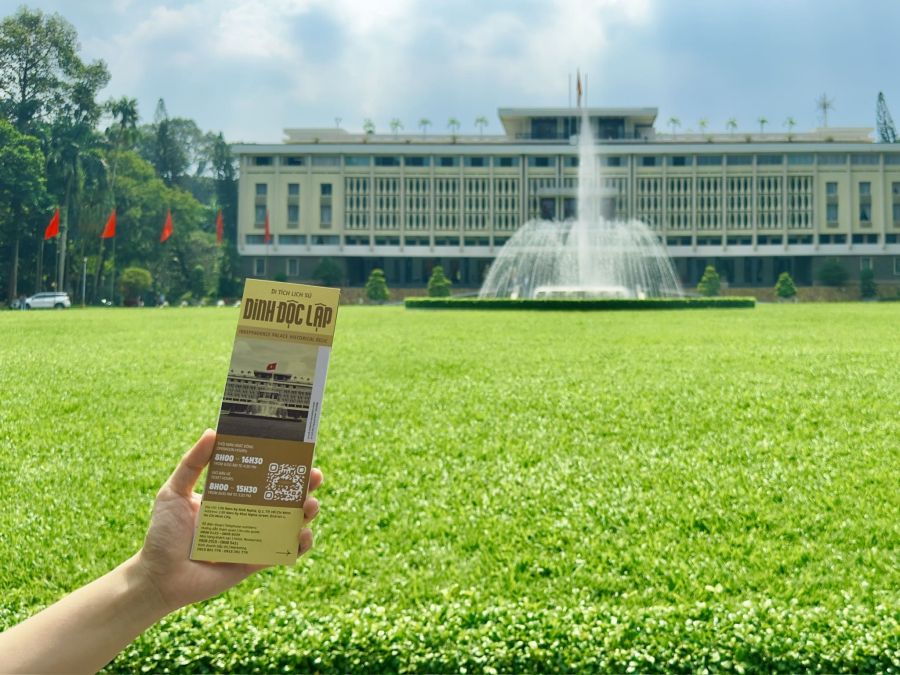
Independence Palace is situated close to the central area in Ho Chi Minh City, so it’s accessible from virtually every location in the city. When approaching Independence Palace, it is up to you how to travel based on convenience, budget, and how comfortable you are navigating through Ho Chi Minh City traffic. Here are your options:
- Taxi: Booking a taxi through your hotel’s lobby will be the quickest and most direct way to travel. Remember to book licensed taxi companies for a trip that is both safe and comfortable.
- Car: You may park at Tao Dan Park or on Huyen Tran Cong Chua Street just before the palace.
- Bus: If you are unfamiliar with the city, public buses are a popular choice. The more popular routes are 001 (Ben Thanh – Cho Lon), 002 (Ben Thanh – Mien Tay), 003 (Ben Thanh – Thanh Loc), 004 (Ben Thanh – Cong Hoa – An Suong), and 005 (Ben Thanh – Bien Hoa).
- Motorbike: This is a very common transport option for locals or visitors from surrounding provinces. However, Ho Chi Minh City can become a bit congested. The experience may feel slower and may be challenging for new arrivals.
Things To Know Before Traveling To Independence Palace
Prior to heading to the Independence Palace, it is best to know the rules and guidelines for visiting so that you can have a safe, respectful visit. Following these tips should help you enjoy your visit while still preserving the history of the site.
- Dress modestly and respectfully when entering this palace.
- During your visit, please follow the directions presented on signs and any instructions from security staff members.
- Do not bring any luggage, to the best of your ability, into the palace.
- Food and beverages are not permitted inside the historic site.
- Animals or pets are not permitted inside the palace.
- Any individual could get injured from weapons, harsh chemicals, and flammable materials.
- Lastly, you will be responsible for any academy fees you will maintain to pay for damages incurred during your visit to the palace.
FAQs About Independence Palace
If you are visiting Independence Palace, it is helpful to have a general idea of the questions that tourists tend to ask. Here are some frequently asked questions (FAQs) to assist you with your travel plans and optimize your visit.
Can I take photographs inside the palace?
Because almost all areas of the palace and grounds can be photographed, you are welcome to take photographs during your visit. While most exhibit rooms allow photographs, it is important to check the posted rules in the room if there are any restrictions. Flash photography may be restricted or prohibited to protect exhibits within the palace.
Are guided tours available at Independence Palace?
Yes, guided tours are provided by a professional tour guide who can give a detailed explanation of the palace’s history and architecture. An additional benefit of a guided tour is that it will help you better understand the historical significance of the exhibited artifacts. If you want to join a tour, Seni World recommends booking your tour in advance during peak hours of the day.
How long should I allot for a visit?
The recommended time for a visit is approximately 1.5 to 2 hours to see the key rooms, the underground bunker, and the surrounding area of the palace and grounds fully. If visitors take their time and want to enjoy the gardens or take photographs of exhibits and the outdoors, it is okay to invest more time in their visit.
Final Thoughts: Is Independence Palace Worth Visiting?
Independence Palace is not simply an iconic historical location. The palace is an extraordinary intersection of history, architecture, and culture. The palace offers a distinct insight into Vietnam’s past. It is a privilege to see the bespoke designs, incredible symbols, beautiful restored rooms, and interactive displays, creating the perfect recipe for an unforgettable trip. Plan your visit with the help of Seni World to experience this landmark to the fullest.


Related articles


