


The Nho Que River is a stunning natural treasure in Ha Giang, flowing between tall limestone mountains and the great Tu San Canyon. The river’s emerald-green waters and scenery are sure to impress anyone who appreciates nature and adventure.
Introduction To The Nho Que River
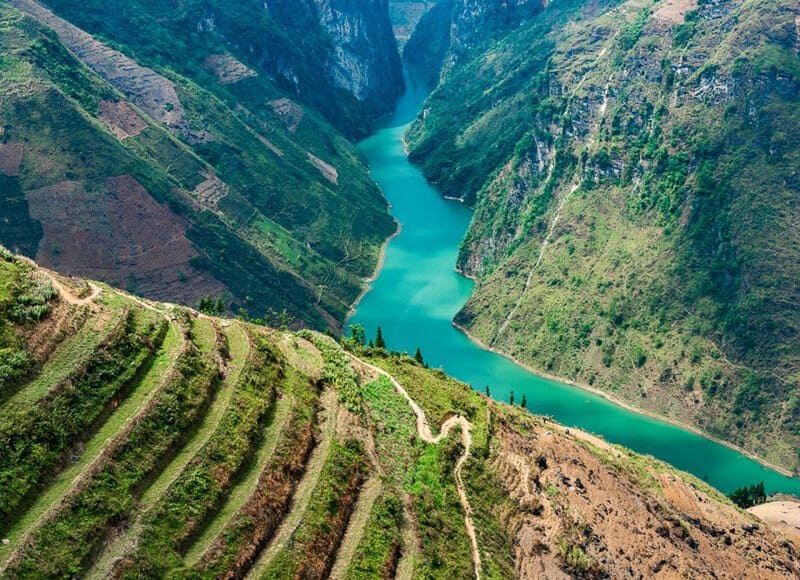
The Nho Que River runs for approximately 192 km through the province of Ha Giang and Cao Bang into Vietnam from China, meandering past some of the most beautiful limestone cliffs and emerald waters you may have ever witnessed before. Referred to as the “jade ribbon” of the Dong Van Plateau, this is a must-see destination for nature lovers, photographers, and adventure enthusiasts alike.
What amazes locals and tourists alike is the incredible scenery, including the unique canyon walls known as Tu San, where walls drop nearly 1,000 m straight down, and the surrounding water, called the Awakened Nho Que, glimmers against the light like liquid silk. A boat cruise or kayak trip is the best option for those looking to unwind and truly appreciate the wild beauty and tranquillity of the area, and create an unforgettable travel experience.
History Of The Nho Que River
The Nho Que River starts in China and is known as the Nanli River (南利河) or the Pumei River (普梅河) before flowing into Vietnam’s remote northern region of Ha Giang. For a brief moment, it forms a natural border of Vietnam and China, before the river snakes deeply into the Dong Van Plateau.
The Nho Que is a tributary of the Gam River and has shaped some of the most spectacular landforms in Vietnam, such as the famous Tu San Canyon. In 2009, it was introduced as a National Scenic Site and hailed as one of Vietnam’s most unusual tectonic valleys, a natural marvel that has been born over millions of years.
Unique Architecture Of Nho Que River
Famous for its tapering water and twisting and turning shape, the Nho Que River flows through cliffs and valleys of great heights and depths. The river begins its journey from Nghiễm Sơn in Yunnan, China, and flows a total of around 192 kilometers (roughly 28.5 miles) through Vietnam’s Hà Giang province, passing through the towns of Dong Van and Mèo Vạc, and joins the Gâm River.
The most beautiful portion of the river flows into the Tu San Canyon, where the walls of cliffs rise sharply and directly from the emerald waters. These cliffs rise between 700 and 1000 meters on either side of the river. This section of the river is known as the deepest canyon in Southeast Asia, providing a much more dramatic and poetic landscape that is very unique and unlike anywhere else in Vietnam.

3 Cultural Experiences You Shouldn’t Miss
You won’t just be sightseeing on a trip to the Nho Que River: you’ll also have the opportunity to become fully immersed in the nature, culture, and adventure of Ha Giang. Here’s a great list of things to try:
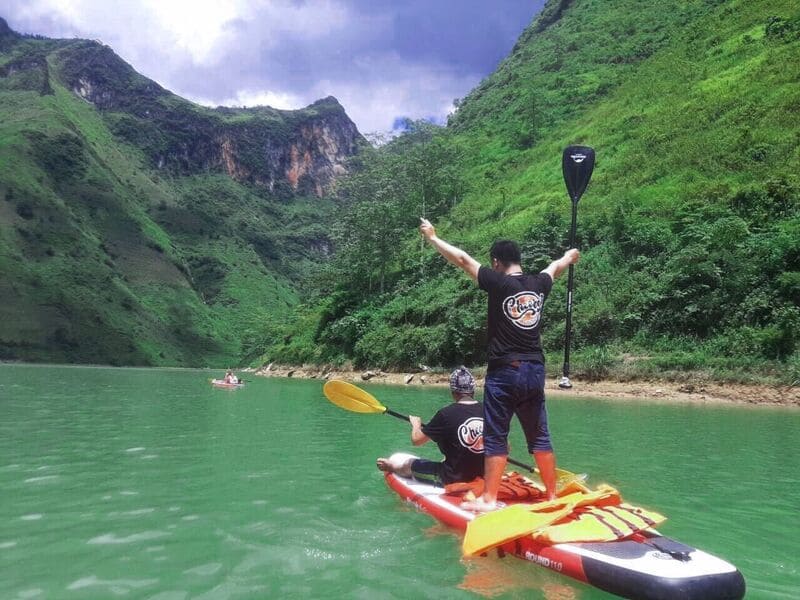
Cruise On The River And Take In Tu San Canyon
Drift along the emerald waters of the Nho Que River while viewing the stunning Tu San Canyon – the deepest canyon in Southeast Asia. Amazing cliffs reach 1,000 meters, making it feel like you are drifting between sky and stone. The air is pristine, the water is described as “mother’s milk”, and the scenery is to die for.
You will have the choice of a motor boat or a self-paddled wooden or metal boat. Prices range from 100,000 to 150,000 VND per person. Although the ride is fairly straightforward, it is recommended to hire a local guide to experience the ride as a newcomer to the Nho Que.
See The River From Ma Pi Leng Pass
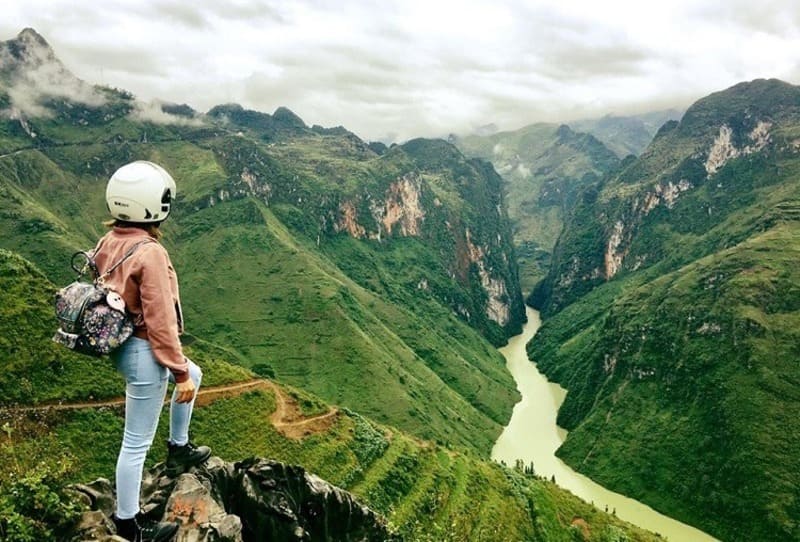
Once upon a time, the view of the Nho Que River couldn’t get any better than viewing it from the famous Ma Pi Leng Pass! Situated too high to see the panoramic view of the Nho Que River, Ma PI Leng Pass is a bird-eye view of everything underneath it!
You will feel as if you are looking at a painting altogether, everything melds, including the blue of the rivers with the foliage surrounding it, and the sky running away in the distance. Bring your camera, all potential shots will be postcard material.
Try Kayaking Through The Crystal Blue Waters
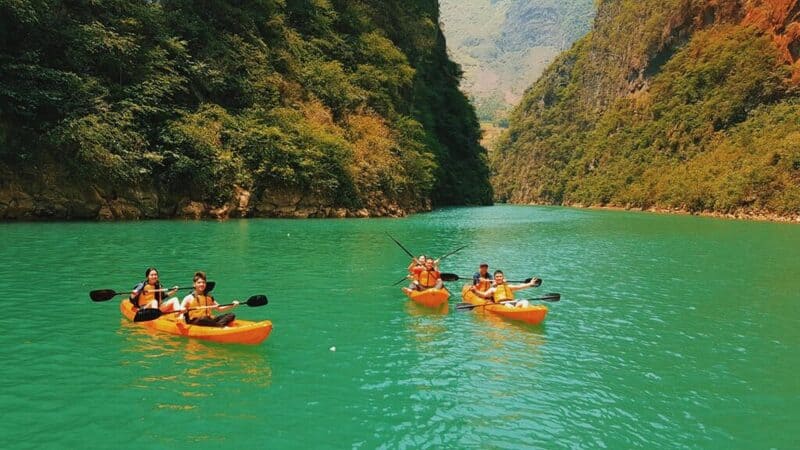
Kayaking is an immersive but quiet way to explore the river up close. Paddle along the gentle currents, weave your way between high cliffs, and indulge in the untouched beauty that surrounds you.
The best months to kayak are October to November and February to March, when it’s always sunny, especially with seasonal flowers blossoming from the mountains. Book your kayak tour and day at least a day in advance. Rentals cost 100,000-150,000 VND for 30-60 minutes of admiration and marveling!
Renting Boat Fee
Boating is a great way to experience the beauty of the Tu San Canyon if you’re coming to the Nho Que River for the first time. You can access the river from either the Ta Lang Wharf or Xin Cai Wharf on scenic but steep roads. Be careful driving, or find a local driver for about 150,000 VND/vehicle.
Here are the common boating options along the river and estimated prices:
| Boat Type | Price (per person) | Notes |
| Motorboat | 100,000 – 150,000 VND | Best for group travelers. Option to share or rent the whole boat |
| Self-paddled boat | 100,000 – 150,000 VND | Choose between a wooden or a metal boat. You can hire a rower if needed |
| Kayak | From 50,000 VND | Great for sporty visitors who want to explore the river more closely |
Note: The road to the boat docks can be narrow and curvy. If you are driving a car, you should park near the Trang Huong Bridge and walk for about 2 km. For the best experience, contact the rental supplier at least one day ahead of time.
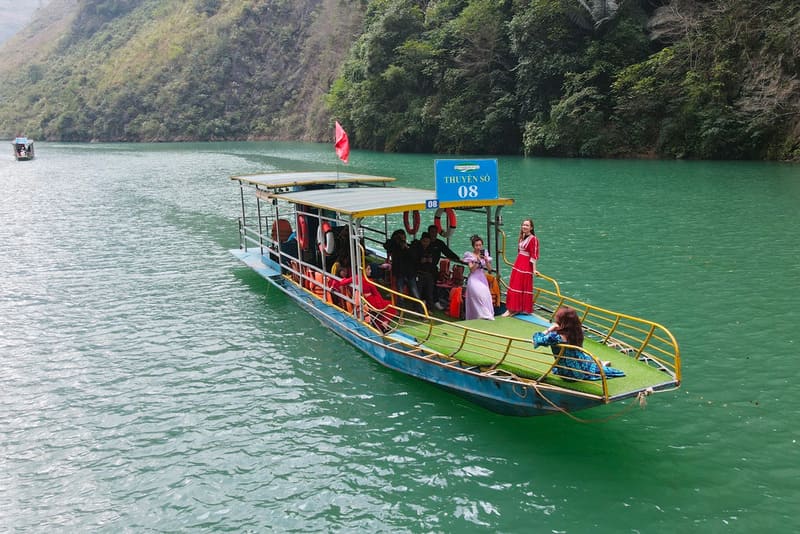
The Best Time To Visit The Nho Que River
You can come to visit the Nho Que River all year round, but the most enchanting time is between the months of October and November. The weather starts to cool, and the mist adds an enchanting layer of mystery to the dramatic landscapes.
It is also the blooming season of the buck wheat flowers that blanket the mountain slopes in soft colors of pink and purple, all contrasted against the jade green river. The beautiful, surreal scenery will almost put you in a dream-like state, making it the perfect time to simply ride a boat peacefully and enjoy the poetic beauty of Ha Giang.
How To Get To The Nho Que River
Traveling to the Nho Que River is an adventure in itself, especially if you’re coming from outside of Ha Giang. Below are common transportation options to reach this beautiful location:
By Plane
There is no airport in Ha Giang, so your first trip will be to fly into Hanoi. From there, you can take a sleeper bus or arrange a private car to travel to Ha Giang. For the lowest price flight and travel arrangements, contact Seni World for assistance and special offers.
By Sleeper Bus
Buses from Hanoi to Ha Giang are easy on the budget and have many departures throughout the day. Bus tickets from Hanoi typically range from 250,000 to 600,000 VND, depending on the bus. The following bus companies are reputable, such as Bang Phan Bus, Manh Quan Bus, and Quang Nghi Limousine.
By Motorbike
If you are adventurous, consider riding a motorbike from Hanoi to Ha Giang. It is about 300 km, and there are great views on the way to Ha Giang. The only thing to consider is that the route includes winding mountain passes and steep slopes; therefore, it is not recommended for inexperienced riders.
Things To Know Before Traveling To The Nho Que River
Before heading out on your journey to the Nho Que River, it’s a good idea to be well-prepared. Here are some important tips to help you enjoy an easy and memorable trip:
- Spring and autumn (especially from September to December) are the best times to visit for cool, bright, and calm river conditions.
- Watch the road! The road to the river is narrow and steep. If you are riding a motorbike, make sure you have good skills and check your bike ahead of time.
- Boats can fill up quickly in peak season. It’s a good idea to reach out to a boat provider one day ahead so you do not have to wait.
- Bring warm clothes, especially in winter, as the air on the river can be cooler than the mountain passes.
- Don’t forget personal items, including hats, sunglasses, sunscreen, and, most importantly, life jackets. If you’re unsure of the way, ask the locals or use Google Maps to help reach the dock for the boat.
FAQs About Nho Que River
If you are planning a trip to the Nho Que River, you probably have a few questions in advance. Here are some of the frequently asked questions to help you with your planning:
Why is it called the Nho Que River?
The name “Nho Que” derives from the local language, and it refers to the river enduring in the life and culture of ethnic communities in the Hà Giang region.
Is it safe to ride a boat on the Nho Que River?
Yes, riding a boat on the river is safe. Visitors will receive life jackets, and the boats are controlled by local guides with many years of experience.
How long does a boat ride last?
A boat tour on the Nho Que River lasts between 30 minutes to 1 hour, typically, depending on the type of boat and tour.
Can you swim in the Nho Que River?
Swimming is not recommended due to the river’s depth and flow. Enjoy the view of the river and its landscape from the boat.
Final Thoughts: Is The Nho Que River Worth Visiting?
The Nho Que River captivates travelers with its magnificent views, emerald-green water, and serene experience offered by boat rides on the waterway in northern Vietnam. The range of scenic experiences offered by the waterway is special for nature and adventure lovers alike. Let Seni World help you plan your visit to this beautiful river treasure.


