


The People’s Committee of Ho Chi Minh City is a unique French civic building located in the city center, and it is beloved for its elegant architecture, distinct historical significance, and gorgeous exterior, showing the charm and history of Saigon.
Introduction To The People’s Committee Of Ho Chi Minh City
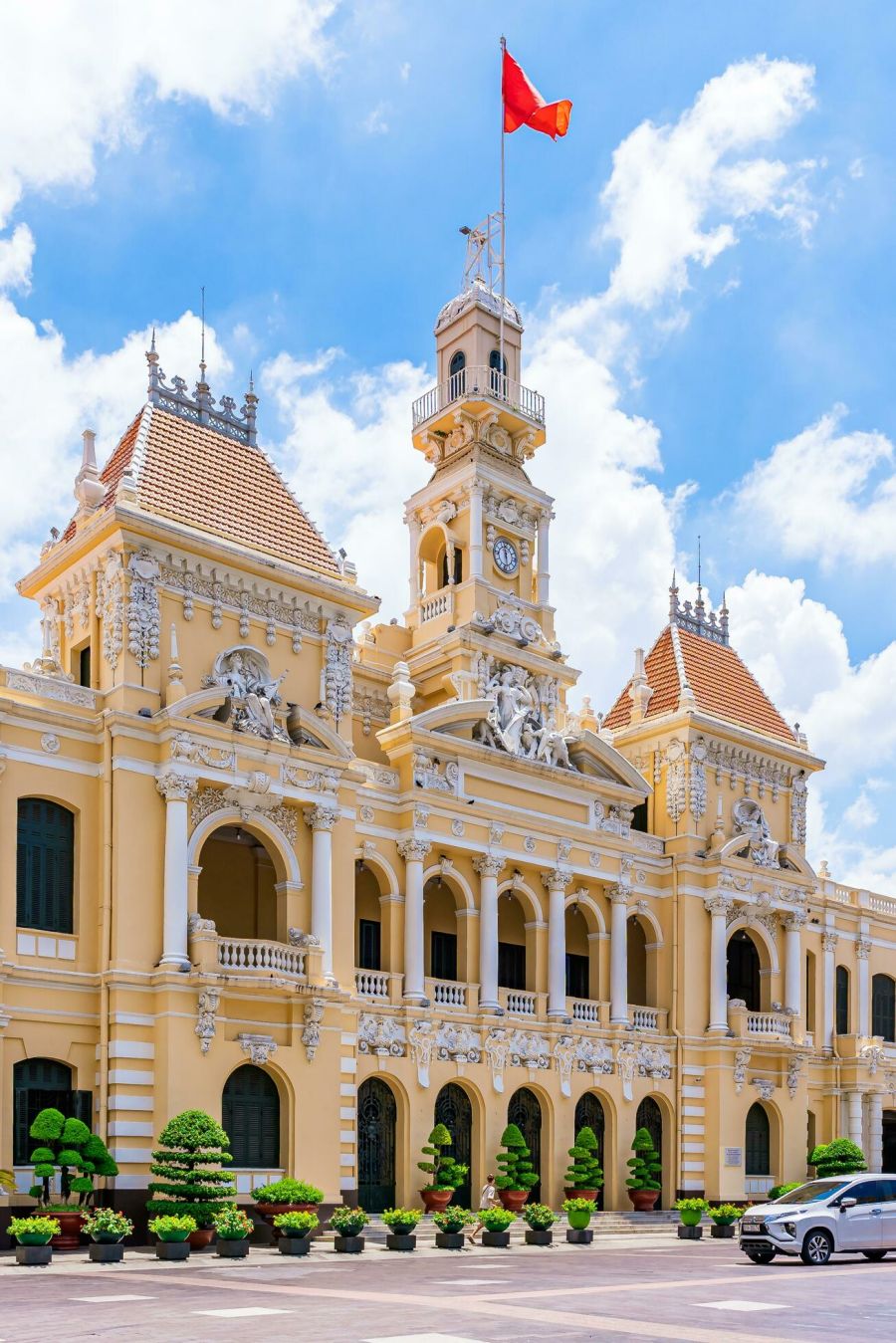
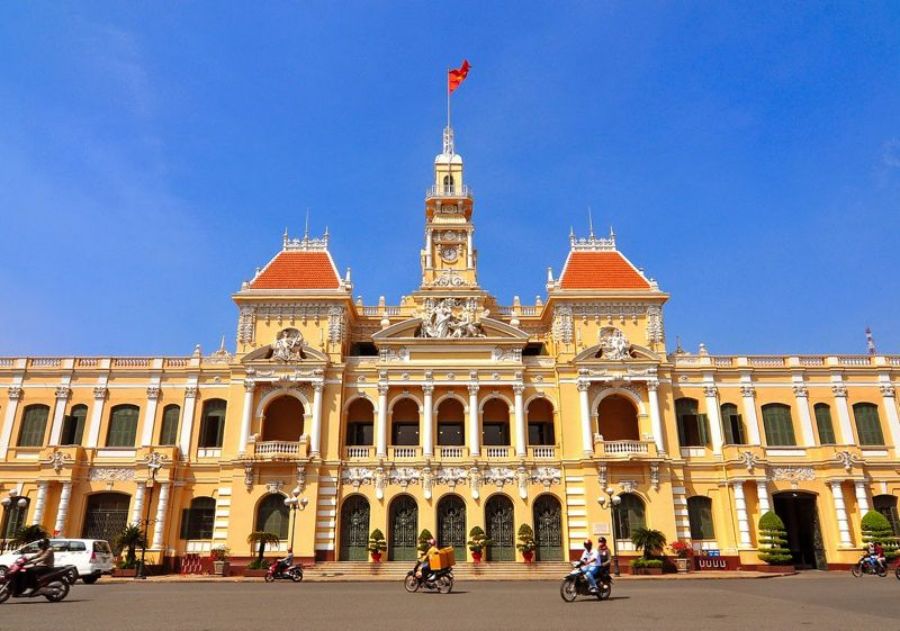
The Ho Chi Minh City People’s Committee Building, or City Hall, is one of Saigon’s trademarks. Constructed between 1902 and 1908 during the French colonial period, this fantastic building features classic French Renaissance architecture, a variety of decorative details, arch windows, and a central clock tower that lights up at night. The People’s Committee Building is located in the center of District 1, at the end of Nguyen Hue Walking Street, which makes it a popular photo opportunity for both locals and travelers.
As the People’s Committee Building is a government office and not open to the public, visitors will not be able to enter the building, but the grand exterior and historic charm make it one of the most photographed buildings in the city. Whether viewed during the day or illuminated by night, the People’s Committee Building encapsulates the elegance and classic appeal of old Saigon. It is worth visiting if you go to Ho Chi Minh City.
History Of The People’s Committee Of Ho Chi Minh City
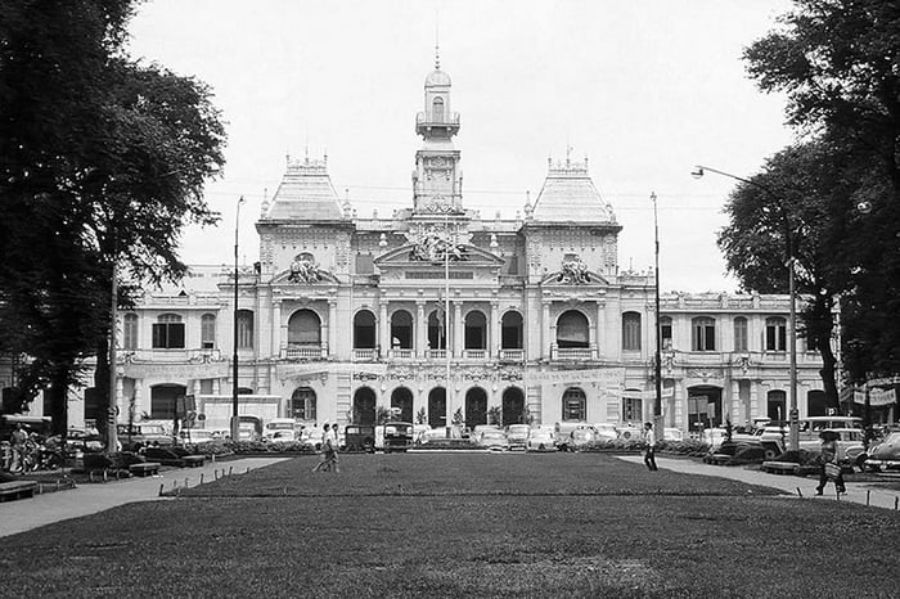
The People’s Committee of Ho Chi Minh City, formerly the Saigon City Hall (Hôtel de Ville de Saigon), was constructed during the French colonial period between 1898 and 1909. The building was designed by architect Paul Gardès and is built in a style that reflects French Renaissance architecture and features sculptures by Louis Lucien Ruffier. At the end of Nguyen Hue Boulevard, the building quickly became a symbol of administrative power and urban grandeur in Saigon.
In its 120 years of existence, this monument has seen a number of significant events in Vietnam’s history. On August 25, 1945, Dr. Pham Ngoc Thach proclaimed the establishment of the Provisional Administrative Committee of the South from its balcony, a significant moment in the country’s revolutionary history.
After 1975, it became the official venue of the People’s Committee of Ho Chi Minh City. Although the building has undergone numerous restorations, it maintains its original splendor and charm, and it has been preserved as both an architectural masterpiece and a cultural signature treasure of Ho Chi Minh City.
Unique Architecture Of The People’s Committee Of Ho Chi Minh City
Located at the busy center of District 1, the People’s Committee of Ho Chi Minh City is a stunning example of colonial architecture. Its unique style combines European design with Vietnamese flair that continues to act as an iconic landmark in the ever-growing city.
Overview Of Architecture
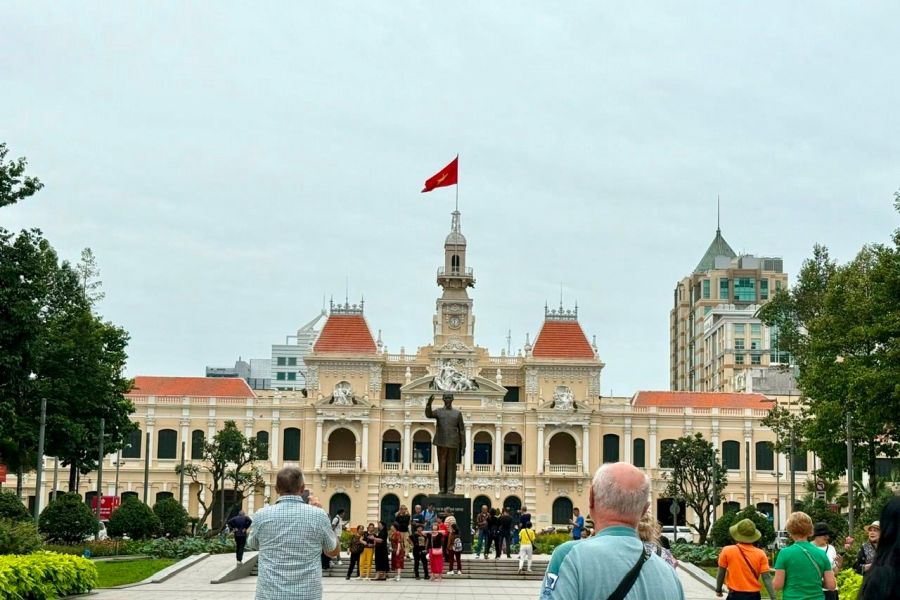
The Ho Chi Minh City People’s Committee Building was influenced by the Hôtel de Ville in Paris, designed by French architect Fernand Gardès. The building was completed between 1902 and 1908, and its facade reflects the architectural style of the French Third Republic (1870-1914). The distinctive yellow-and-white facade, sloping arched windows, and ornamental details reflect the elegance of European art fused nicely with the urban site of Saigon. The building has become one of the symbols of colonial history and is considered one of the finest examples of French architecture in Vietnam.
The Exterior Design
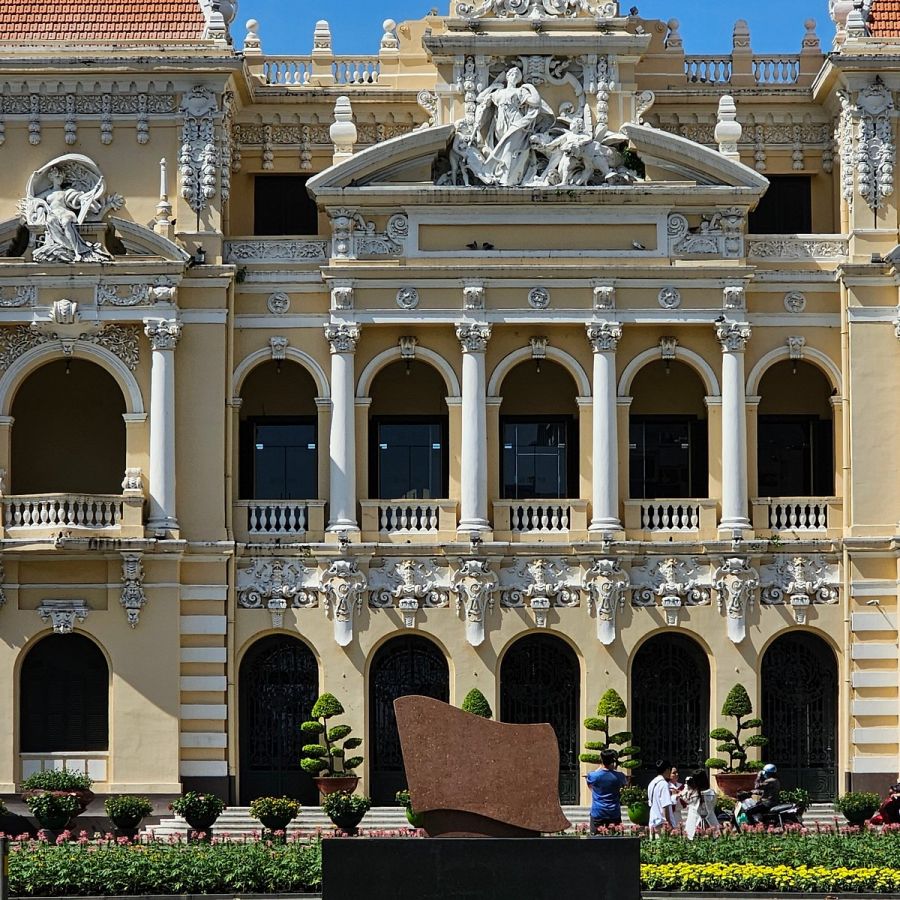
Its most admirable attributes are its Renaissance-style design, Art Nouveau ironwork, and Baroque and Rococo reliefs derived from the 16th to 18th centuries. Inside, the luxurious decorations reflect the grandeur of the Louis XV style with an abundance of luxurious floral patterns, laurel wreaths, and ornamental sculptures that promote prosperity and success. The chandeliers, stained glass, and carved wood accents demonstrate the craftsmanship of the period, and the complexity of Asian detail present through both ceramic and textiles and woodwork that nicely articulated East and West.
The Interior Design
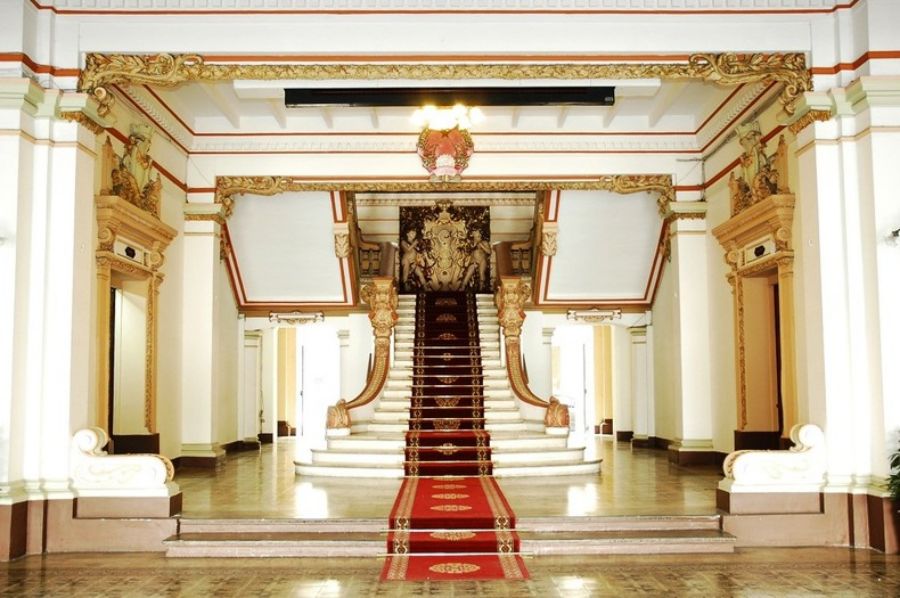
The building’s most notable features are its Renaissance design, the ironwork of Art Nouveau style, and Baroque and Rococo architectural reliefs created from the 16th to 18th centuries. Inside, the exquisite decorations are in keeping with the magnificence of the Louis XV style, showcasing many lavish floral patterns, laurel wreaths, and decorative sculpture signifying prosperity and a successful future.
The chandeliers, stained glass, and carved wood accents reflect the craftsmanship of time, but are made even more complicated with the inherent detail of Asia shown in the ceramics and textiles, and woodwork that defined East and West beautifully.
Unforgettable Experiences You Shouldn’t Miss
A visit to the People’s Committee of Ho Chi Minh City isn’t merely about visiting. It’s an opportunity to go inside one of the country’s esteemed landmarks. After registration of your emailed QR code and your ID checked, you will pass through security and receive your headset and wristband before beginning the tour.
On the ground floor, you will dress in shoe covers and explore the grand hall and the international reception room learning the history of the building, architecture, and the building’s national heritage status. On the first floor you will admire the reception rooms, get to see the city’s planning map, and learn about the evolution of Saigon’s place names derived from interesting video clips.
Lastly, guests can comment on their impressions in the visitor’s book and browse the souvenir area that includes keepsakes and travel books on exciting Ho Chi Minh City.
Entrance Fee
Access to the People’s Committee of Ho Chi Minh City is typically free of charge, as it is an administrative building providing official public services. If your reason for visiting is an administrative one, you may have to pay some fee, depending on the service or procedure. If your visit is as a part of a guided tour, the price may vary and will depend on the tour operator and offering.
Opening Hours
The People’s Committee of Ho Chi Minh City is home to 28 visitation slots every day. Morning visits begin at 8:00 AM, while in the afternoon they start at 2:00 PM. Each visit is scheduled 15 minutes apart, with a maximum capacity of 40 people per visit.
For the best experience, the morning is suggested for visiting when the air is fresh and lighting is ideal for photography. In the morning, it’s also a bit quieter to enjoy the beautiful, historic building.
How To Get To People’s Committee Of Ho Chi Minh City
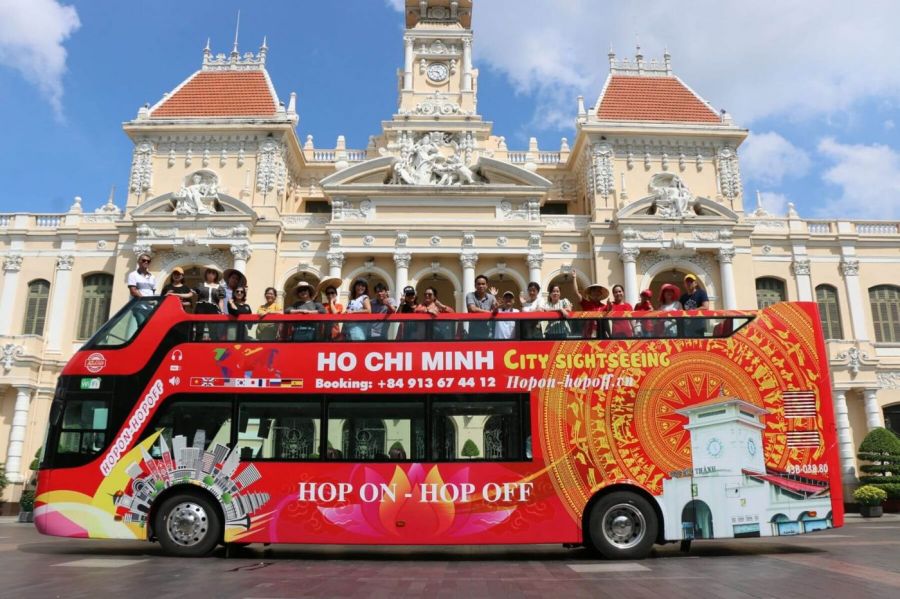
The People’s Committee of Ho Chi Minh City is situated at 86 Le Thanh Ton Street, Ben Nghe Ward, District 1, right in the city center. Visitors can reach the People’s Committee by bus, taxi, motorbike, or ride-hailing service. It is also located near the main roads of Dong Khoi Street and Ton Duc Thang Street, making it reasonably easy to reach from virtually anywhere in the city.
Things To Know Before Traveling To The People’s Committee Of Ho Chi Minh City
Before you visit the People’s Committee of Ho Chi Minh City, be sure to note that this is a gorgeous landmark with a visiting policy and limited tours available each day. Here are a few key notes to make your trip smooth and memorable:
- Because the visitor count is capped each day, please confirm the visit schedule and register in advance.
- Make sure to confirm all personal information when registering, such as the ID information. Also, be sure to bring your original ID for the security clearance.
- If you are bringing children with you, you will need to register them in advance and bring their birth certificates.
- Please leave bulky bags, bags, and backpacks at home as there is no bag storage on site.
- Arrive at least 15 minutes before your time slot to check in. If you are late for your assigned time slot, your visit will likely be canceled.
- Mobile phones are allowed; however, professional cameras and film equipment are not allowed.
- Only register when you are absolutely certain you will attend – spaces are limited, and cancellations could prevent someone else who is interested from being able to participate in this unique opportunity.
FAQs About People’s Committee Of Ho Chi Minh City
Before going to the People’s Committee of Ho Chi Minh City, most travelers have common inquiries about hours of operation, admission fees, and whether or not photography is permitted. Here are some helpful answers that will make the visit enjoyable and stress-free.
Is the People’s Committee of Ho Chi Minh City open to the public?
Yes, the building is open to guests on select days, across certain time slots. You must register online in advance and bring your ID card for verification. You cannot just walk in, since it is for security reasons.
Can I take photos inside the People’s Committee of Ho Chi Minh City?
You can bring your mobile phone with you, but not professional cameras. Photography is still restricted in some areas for the protection of buildings and works of art. Always listen to instructions provided by staff members during your visit.
Is there a dress code for visiting?
Yes, the Visitors are expected to be well-dressed and appropriately attired. No shorts, sleeveless tops, or revealing clothes should be worn. Since this is a government building, respectful dressing is important.
What else can I see near the People’s Committee of Ho Chi Minh City?
All of the buildings near the People’s Committee of Ho Chi Minh City are landmarks themselves, such as Nguyen Hue Walking Street, Saigon Opera House, and Notre Dame Cathedral. You can actually walk to all of these landmarks after your visit.
Final Thoughts: Is The People’s Committee Of Ho Chi Minh City Worth Visiting?
If you enjoy history, culture, and architecture, you should definitely visit the People’s Committee of Ho Chi Minh City. This beautiful building is not simply a government building, but it’s a living embodiment of Saigon’s colonial past, along with modern grace. With its incredible French colonial façade, elegant carvings, and expansive interior, this building is one of the most photographed places in the city. Let Seni World take you closer to the everlasting beauty of this architectural gem when you travel to Ho Chi Minh City next.


Related articles


