


The golden pagoda of Vientiane, Pha That Luang, is a sacred national symbol and magnificent Buddhist architecture. Its deep significance, extensive history, and rich design make it a worthwhile destination for travelers eager to explore culture and heritage.
Introduction To Pha That Luang
Pha That Luang, or the Great Sacred Stupa that is also known as, is regarded as the most important national monument in Laos and a symbol of Buddhism and Lao sovereignty. It was built soon after the Laotian capital was relocated from Luang Prabang to Vientiane, to further legitimize the authority of the monarchy. Its golden surface glows brilliantly in the tropical sun, evidently dominating the skyline of the capital Vientiane, and capturing the gaze of tourists who flock to the site from all over the world.
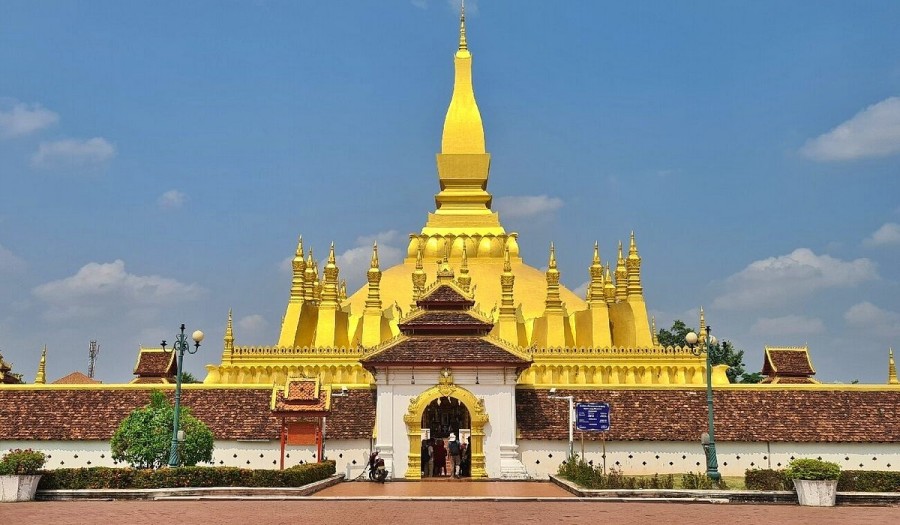
Visiting Pha That Luang allows you to experience hundreds of years of history, culture, and devotion. The stupa today contains the stories and beliefs of thousands of years of practicing Buddhism. First constructed in the year 1566, under the orders of King Setthathirath, it survived wars, destruction, and rebuilding of the site, and has remained a testament to Lao courage. A visitor to Pha That Luang will be able to walk around the peaceful temple, admire the impressive stupa, and learn about the stories of its past.
History Of Pha That Luang
According to the legend, Pha That Luang was originally built as a Hindu temple in the 3rd century. It was said to be the site where missionaries sent by Emperor Ashoka of the Maurya Empire, with five Arahants, deposited a revered relic, allegedly a piece of Buddha’s breastbone.
By the 13th century, the original structure had been reconfigured to become a Khmer shrine, which eventually fell into disuse. In the 16th century, King Setthathirath decided to relocate the capital from Luang Prabang to Vientiane and called for the construction of a large Buddhist stupa on the original foundation of a Khmer temple.
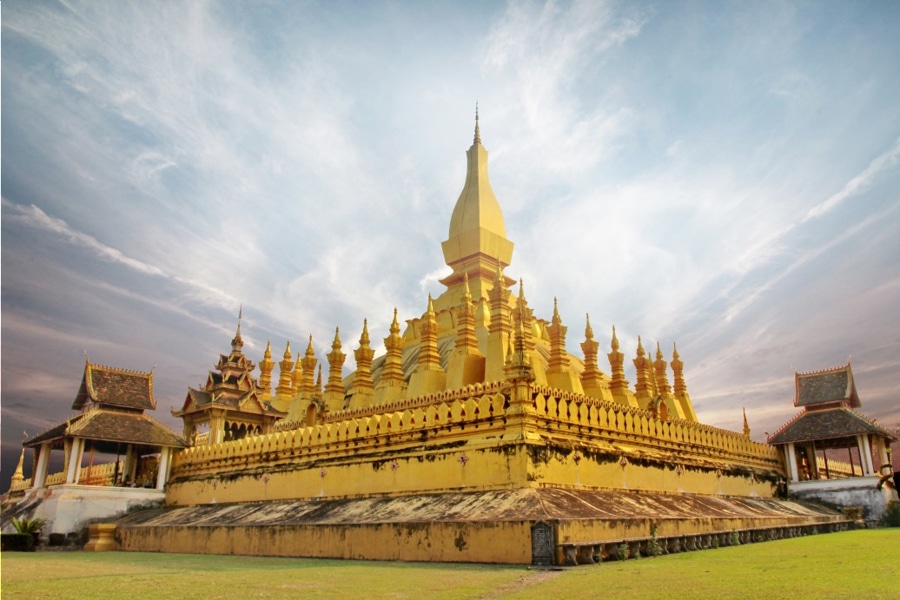
In 1828, Pha That Luang sustained major damage during the second Siamese-Lao War and was left abandoned for a long period of time. The French made an attempt to restore the monument in 1900, using detailed architectural drawings made by Louis Delaporte in 1867, but the work was not completed. It was not until 1930 that reconstruction started. Then, it was badly damaged a second time during the Franco-Thai War as a result of aerial bombardments. After World War II, Pha That Luang was restored to its current magnificent state, and it became a national symbolic monument of Laos.
Unique Architecture Of Pha That Luang
Pha That Luang is a remarkable piece of architecture in Laos, both well-known for its spiritual meaning and spectacular craftsmanship. Its structure is representative of advanced Buddhist teachings, as well as skilled Lao artisanship and artistry.
Grand Main Stupa
The primary stupa is the most remarkable structure in the site of the complex and is arguably the greatest stupa in size in Laos. The stupa has an enormous square base measuring 90 x 90 meters, and it extends up to a height of 45 meters. The main stupa also includes about 30 smaller stupas surrounding the central tower, all coated in brilliant gold paint. The stupa’s upper structure makes for a pointed reference that associates with a great arrow piercing the sky, creating a grand and impressive form.
Lotus-Shaped Foundation
The base of the stupa is characterized by the large square lotus pedestal base, which symbolizes purity and enlightenment in Buddhism. The series of petals in the lotus base appears to emanate outward in 4 directions that represent such awareness in Buddhist philosophy. Finally, above the lotus structure is a square tiered platform, where as it rises, the tiers successively get smaller. The tiered approach emphasizes both intentional spiritual symbolism and precision in artistry.
Three-Tiered Structure
Pha That Luang is divided into three sections relating to stages of Buddhist thought; the first level measures 67 x 68 meters, the second level is 47 meters, and the third level is 29 meters, one each of its four corners. Only the tip of the stupa is gilded in real gold, with the rest overlaid in gold paint. Though the total amount of gold used to cover the stupa was recorded or estimated to be around 1,000 kilograms, it contributed to the structure’s value and importance, for the nation and spiritually.
Surrounding Walls And Sculptural Art
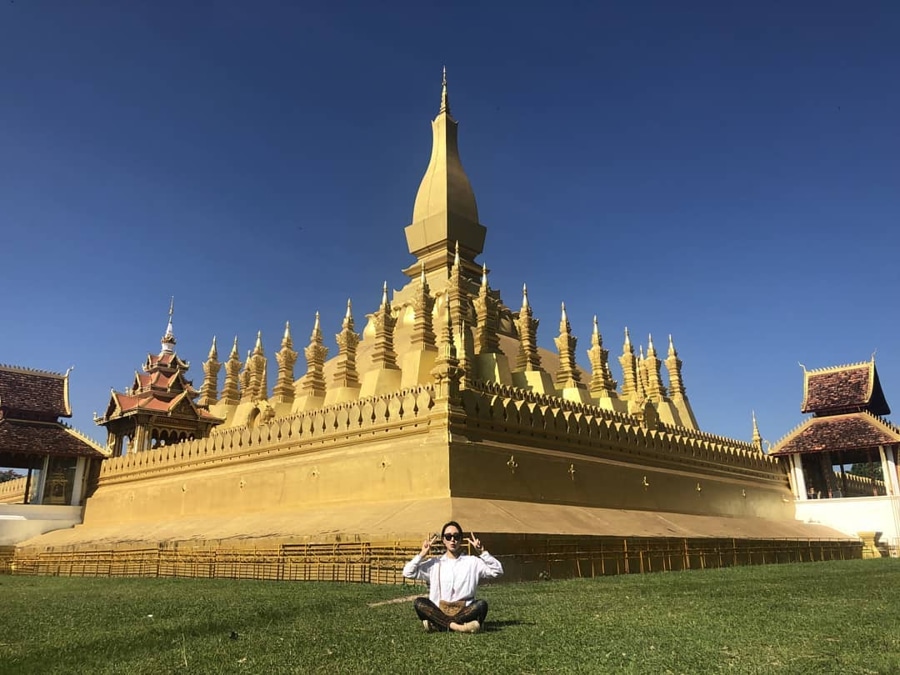
The enclosure has perimeter walls that have an extensive length of 85 meters and has many sculptures, which show the influence of both Lao and Khmer cultures. Visitors can see inside the monument, historical murals that have painted scenes, and many Buddha statues placed throughout the courtyard. The paintings and sculptures here contribute a deeper sense of meaning and dimension, cultural vitality, and a sense of reverence and an aura of the sacred.
Harmony Of Scale And Design
Regardless of height, Pha That Luang fits nicely into its counterpart elements. It has soft curving lines, although it has deep horizontal composition and golden finishes, and graciously appears strong, gently elegant, and peaceful in a sacred way. For this great balance, Pha That Luang remains today the national symbol of Laos and a cultural symbol of architecture.
5 Unforgettable Experiences You Shouldn’t Miss
Pha That Luang is a site that goes beyond just a visit; it is a site to actually engage. Spiritual practices, cultural experiences, and everything in between can all offer meaningful and memorable moments while at this Buddhist stupa.
Participate In Prayer And Spiritual Offerings
One of the most memorable experiences at Pha That Luang, Vientiane, is participating in a traditional offering and prayer. Visitors can come equipped with candles, incense, flowers, food, and small donations to express gratitude and for peace and prosperity. It is a peaceful place, filled with incense, the low murmur of prayers, and a gathering of local people and pilgrims. One can really feel community and devotion.
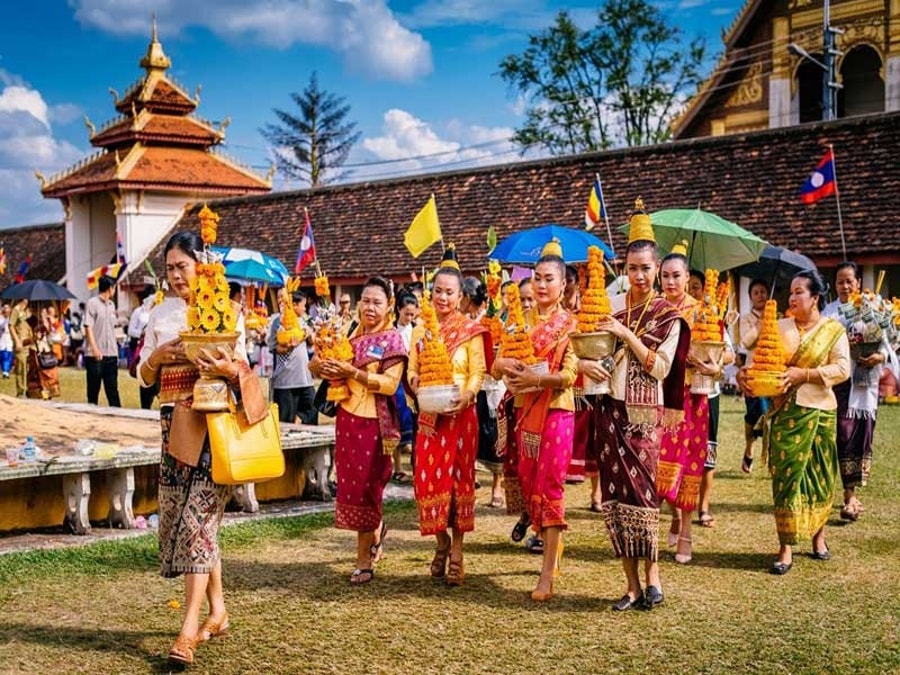
Take Part In The Buddha Cleansing Ritual
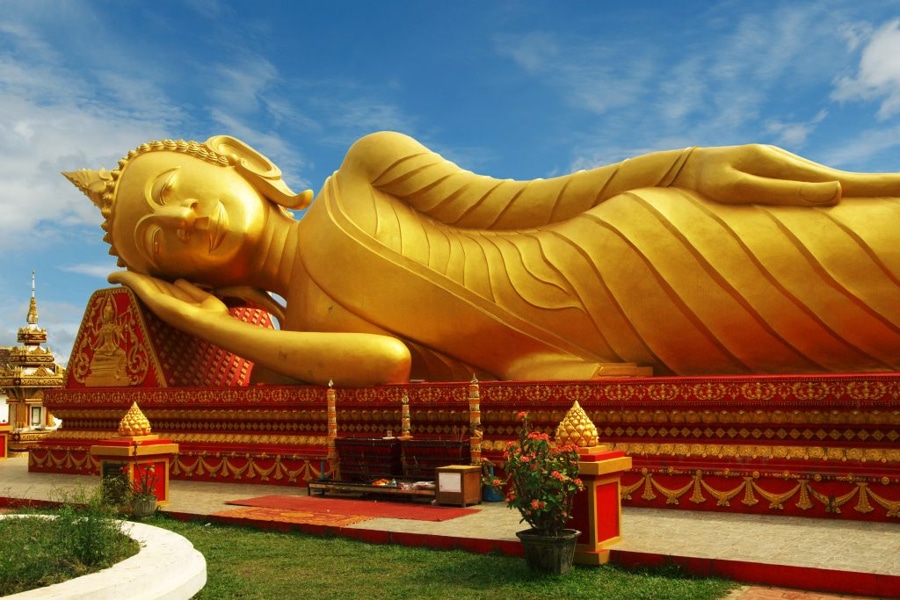
During periods of religious significance, you may be able to participate in the widely practiced ritual known as Buddha bathing or washing the Buddha. Visitors politely wait in acceptably long lines to pour perfumed water over statues of the Buddha. It is an important ceremony of purification and renewal. It symbolizes the cleansing of unwholesome thoughts and the aspiration for good luck in life. The ceremony is serene and meditative and provides a moment for calm reflection.
The experience is appealing to many travelers, offering more than just an interesting cultural experience; it is a moment that grounds you emotionally. It is a lovely example of the connection of religion and daily life in Laos and offers insight into the values of simplicity, peace, and reverence.
Admire The Stupa’s Golden Architecture
Strolling around Pha That Luang provides an opportunity to examine one of the most noticeable buildings in Laos. The gleaming golden stupa rises toward the sky like a soaring missile, invoking ideas behind enlightenment and spiritual strength. Its beautifully shaped lotus tiers, symbolic design, and vibrant gold coating make it one of the most striking religious buildings in all of Southeast Asia.
Experience Traditional Festivals
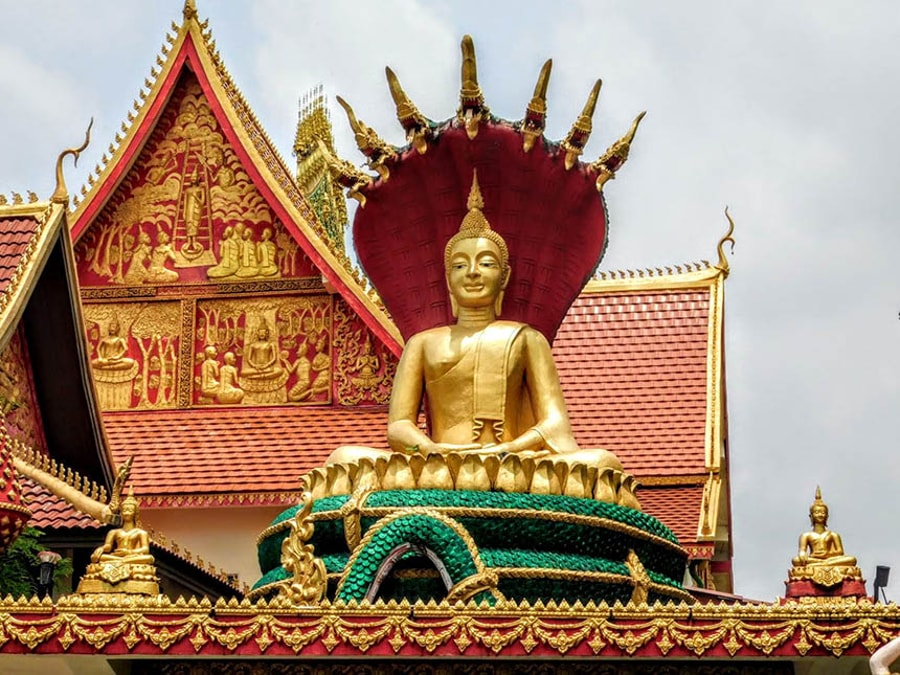
If your travel dates coincide with festival season, your experience will be elevated to a higher level of enjoyment. This location becomes a focal point of celebratory activities, featuring parades, music, cultural performances, and traditional games.
A main highlight of the celebration is the procession of wax models of the ancient stupa, carefully carried by those in attendance in a state of national pride and joy. The celebrations pour an abundance of color throughout the entire temple, plus a lovely crowd of happy revelers wearing colorful clothing, all of which combine together to create an extraordinary festive occasion. Locals and visitors alike create an extraordinary atmosphere.
Understand Its Spiritual And Symbolic Meaning
Pha That Luang is both a beautiful architectural work of art and one of the strongest symbols of Buddhist belief. It is said to house a precious relic of the Buddha and is, therefore, one of the most sacred sites in Laos, if not Southeast Asia.
The three tiers of the stupa represent key principles of Buddhism, ranging from life in the earthly realm to achieving total enlightenment. Many visitors are fascinated and inspired to learn about its meaning. The stupa is designed to depict harmony, balance, and inner peace; qualities the Lao people take seriously.
Entrance Fee
Yes, visitors will need to buy an entrance ticket if they want to see the main stupa and the inner cloister areas of Pha That Luang. Generally, this ticket price is around 5,000-10,000 Lao Kip (approximately 1 USD), depending on the time of year and recent local regulations. This small price helps to contribute to the preservation and maintenance of the sacred site.
Opening Hours
Pha That Luang is typically open from 8:00 AM to 5:00 PM most days, allowing enough time for visitors to see the stupa and cloister as well as the entire complex. Most tourists prefer to visit in either the morning or late afternoon when the temperatures are lower and the golden stupa looks stunning in the softer light of day.
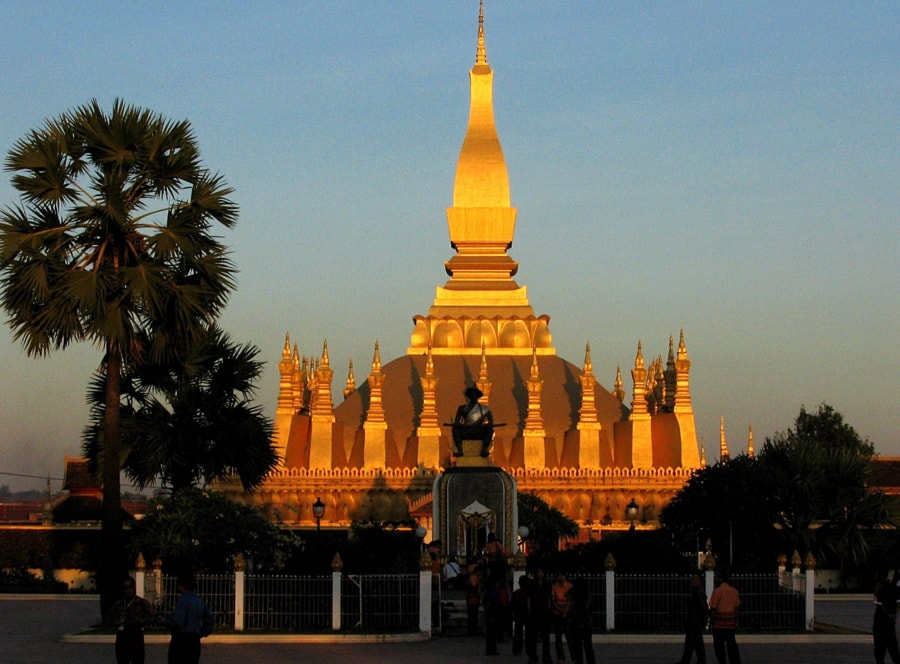
The best time to visit is during the dry season from November to February, during pleasant temperatures and clear skies, which is ideal for sightseeing or photography. If you truly want a memorable cultural experience, consider visiting in November during the That Luang Festival, the most important of all Buddhist celebrations in Laos, with thousands of people gathering for rituals, ceremonies, and traditional performances.
How To Get To Pha That Luang
To get to Pha That Luang, the methods you can take are a tuk-tuk, taxi, or bus from the center of Vientiane, depending on your budget and style of travel:
- Tuk-tuk: A fun and popular option for getting around town. Lots of locals ride the back of these, so it’s a local and great experience overall. Expect to pay around 50,000 kip (about 5 USD) for your trip, but try to negotiate with the driver.
- Taxi: A little quicker and more comfortable than a tuk-tuk if you just want to get there directly. Expect to pay around 10-15 USD from the center of town.
- Bus: This option is for budget travelers and will give you an affordable experience for the stupa. Expect to pay less than 2 USD per person.
Things To Know Before Traveling To Pha That Luang
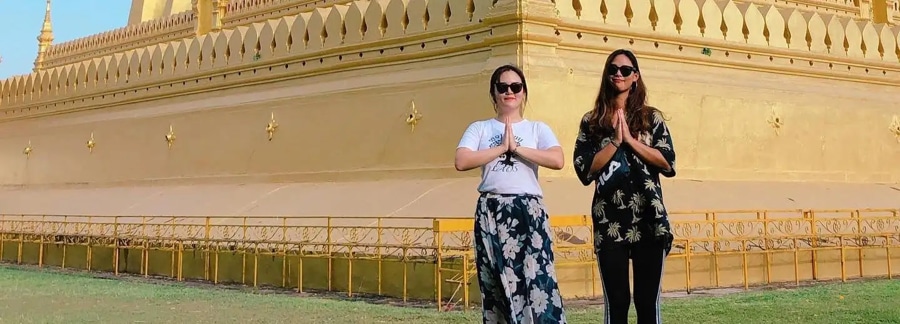
Visiting Pha That Luang is an unforgettable experience; however, there are a few key things to remember in order to have an enjoyable and respectful visit:
- Pha That Luang is a sacred religious site, so please wear clothing that covers your shoulders and knees, and avoid anything too revealing or flashy.
- Do not touch the monks and their property: It is not appropriate to touch the monks and their things; also, be respectful and do not hurt the stereotype or the ritual.
- Do not wear shoes when entering temple areas or the main stupa complex: Shoes should be removed outside the main stupa complex, and in certain areas as a sign of respect.
- Photography is not allowed in some places: Please do not take pictures in worship or shrine areas without first asking, as it may not be allowed.
- Bring flowers, a stick of incense, or a donation of some kind if you plan to visit any of the local rituals taking place there.
- Pack water, and take breaks: Walking around the surrounding large complex can be exhausting. Make sure to drink plenty of water and take breaks when needed.
Final Thoughts: Is Pha That Luang Worth Visiting?
Pha That Luang is a must-see for anyone spending time in the capital, as it offers a unique opportunity to be transported to both the history of the site and the spirituality and cultural pride that it embodies. The golden stupa, sacred ambiance, and storied past inspire deep feelings of contemplation and admiration. Walking the grounds of this site allows travelers to connect with and understand Lao heritage and the country much deeper than is usually possible with other surface experiences. Contact Seni World to create your plans for a fulfilling and enlightening visit to Pha That Luang!


Related articles


