


The Saigon Opera House is a breathtaking French colonial building that displays performances of a world-class standard. If you’re an art lover or historian visiting bustling Saigon, this is one of the important attractions to choose to visit.
Introduction To The Saigon Opera House
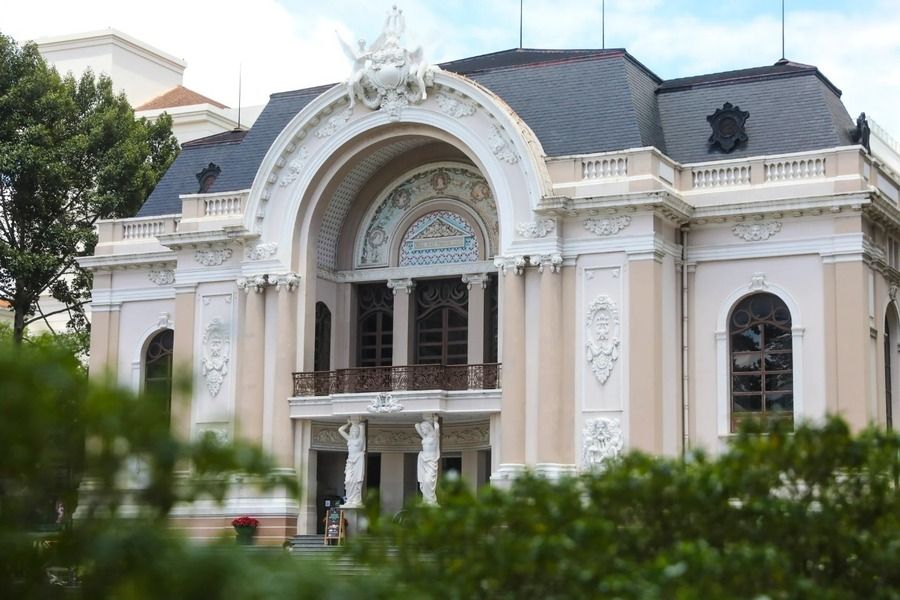
The Saigon Opera House, or the Municipal Theatre, is one of the most beautiful remnants of French colonialism in Ho Chi Minh City. It was completed in 1898 and was designed by French architect Félix Olivier, who drew inspiration from the Opera Garnier in Paris. The building’s unique and exquisite details include stone-carved ornamentation, crystal chandeliers, and beautiful balconies.
Now, people visit the opera house to see the beautiful exterior of the building, revel in the grand interiors of the opera house, and enjoy cultural performances such as symphony concerts and A O Show, a traditional Vietnamese performance. The Saigon Opera House guarantees an amazing experience for everyone, whether one loves architecture, art, or just wants to enjoy some of the cultural heartbeat of Saigon.
History Of The Saigon Opera House
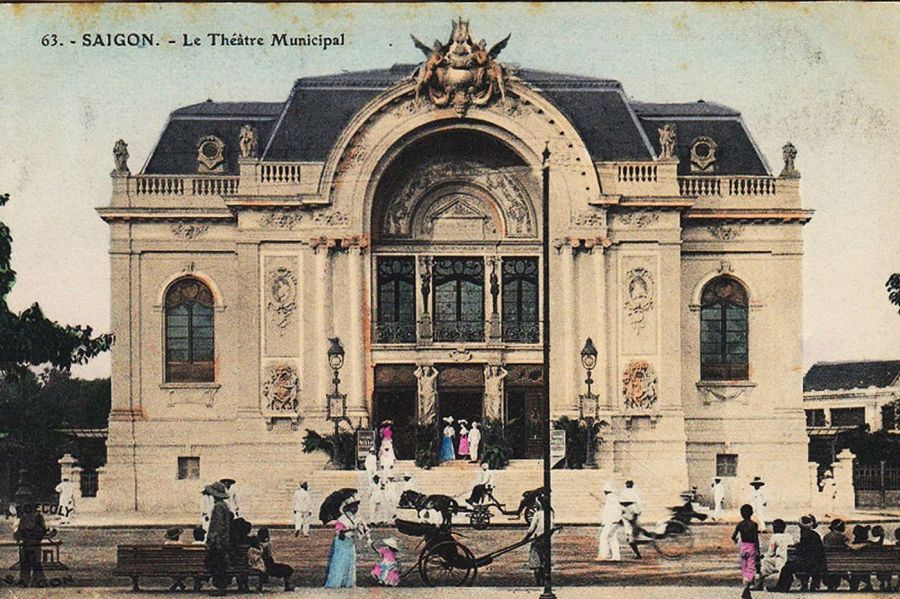
The Saigon Opera House, or Municipal Theatre, has roots in the French colonial period of the mid-1800s. After France had colonized Southern Vietnam, a company of French performers was invited to entertain French soldiers in 1863. At first, shows took place in the Governor’s Mansion wooden house located near where Dong Khoi and Nguyen Du streets meet today. A few years later, a wooden temporary theatre was constructed on the current site of the Caravelle Hotel. Beginning in 1898, the 3 French architects Félix Olivier, Ernest Guichard, and Eugène Ferret embarked on building a new, larger theatre. The theatre was officially opened on January 1, 1900, featuring Baroque revival and elaborate ornamentation, reminiscent of the Opéra Garnier in Paris.
In the years between World War I and World War II, the theatre was run by the city government and became a popular entertainment spot for the developing middle class. The popularity of the theatre declined with the rise of nightclubs and cabarets, and it was so bad that the theatre sustained extensive damage from the Allied bombing in 1944 and was later taken over. The theater was closed down and then turned into a shelter for French civilians fleeing from Northern Vietnam until 1960, when it housed the Lower House of the Republic of Vietnam.
After Vietnam’s reunification in 1975, the theatre returned to its original use and became a performing arts theatre again. In 1998, on the occasion of Saigon’s 300th anniversary, the city government undertook major renovations to return the building to its former French colonial glory for $1.7 million USD. In 2005, external lighting was added, making the building even more beautiful at night. In 2012, the Saigon Opera House was recognized as a national architectural monument, and currently, it is a cultural monument in Ho Chi Minh City, as it is a proud reminder of its artistic history and as a timeless architectural piece of beauty.
Unique Architecture Of Saigon Opera House
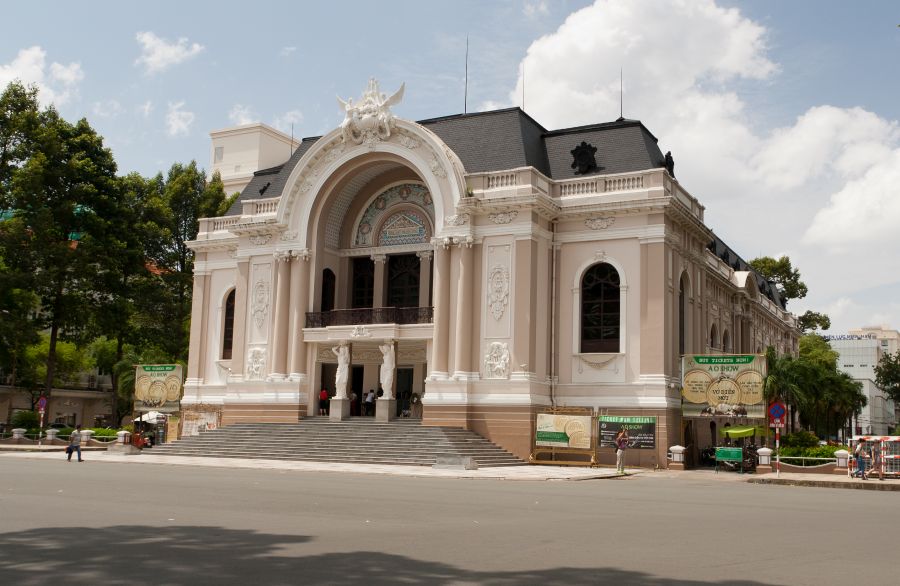
The Saigon Opera House takes up over 2,000 square meters of space, is modeled after the Opera Garnier in Paris, and is styled with Flamboyant Gothic influences. Due to its charming European-style architecture, the Opera House is a popular tourist destination and one of the most photographed attractions in Ho Chi Minh City.
Exterior Design
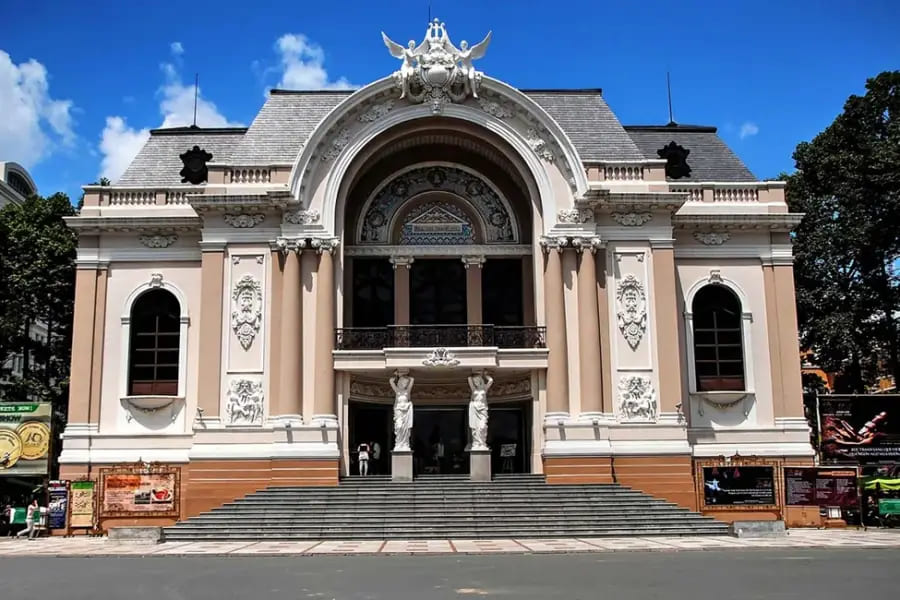
The Opera House in Saigon consists of an entrance level and two upper levels. The building has tall balconies and arched windows on each side, which are architectural elements related to classical French architecture. On top of the entrance sit two female statues, about 4.5 meters tall, representing the Greco-Egyptian Erechtheion and supporting the columns.
Above the arched entrance are two angels with a lyre, the symbol of music in Greek mythology. The arch itself shows reliefs of the head of Pan, the god of rustic music. Under the inner arch, five deity figures are painted on the ceramic tiles. In the center is a smaller temple with a female figure and the words, “Nha hat Thanh pho” (City Opera House).
Interior Design
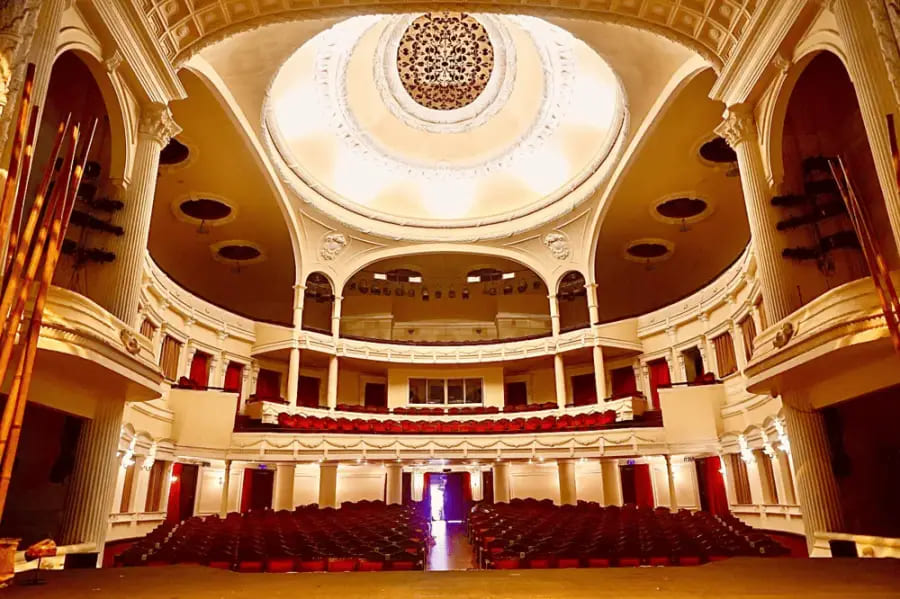
The theater interior seats almost 500 patrons, with 338 seats on the main level and 130 seats across two balconies. In 2007, a refurbishment was completed, purchasing plush cushions for all seats for the audience’s enjoyment while they see a show, be it ballet, classical concerts, or a traditional Vietnamese show.
From the perspective of the stage, the crowned ceiling with fine carvings is present in the typical Flamboyant Gothic style as well. The space glows with elegant reliefs and old chandeliers, as it puts both a warm and luxurious feeling together. The decorative air vents add an upper wall with a floral motif and a classy finishing touch to this architectural wonder.
5 Unforgettable Shows You Shouldn’t Miss
The Saigon Opera House features a capacity of 1,800 seats, an open atmosphere, and state-of-the-art sound and lighting. It offers a dynamic selection of performances, ranging from traditional Vietnamese art to modern productions, each presenting an imaginative and emotional experience. You won’t want to miss any of the shows.
A O Show
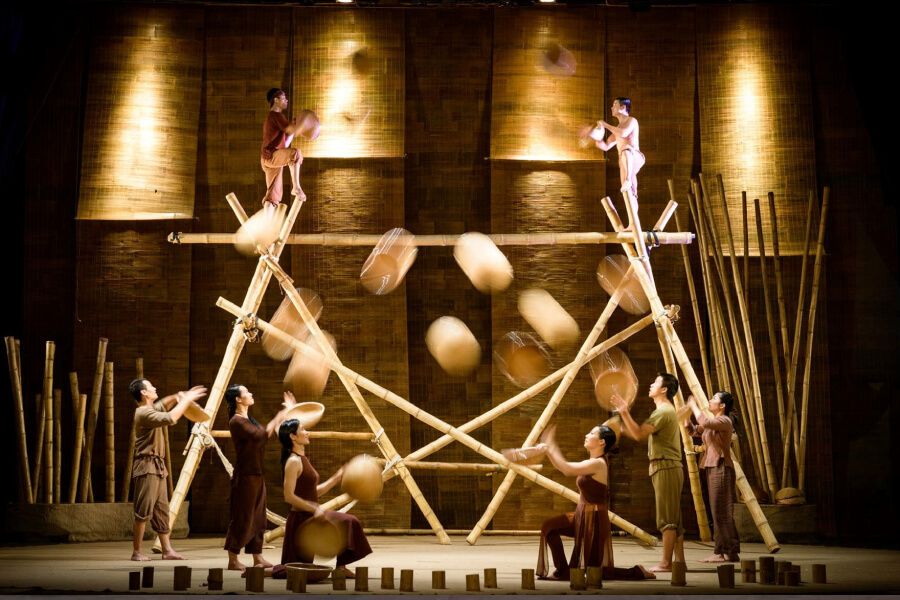
The name “À Ố” fuses the sounds of the words “village” and “city” to reflect the duality of life between rural and urban settings in Vietnam. The performance takes audiences to the gentleness of the southern countryside through uncomplicated bamboo props and expressive movement that speaks to tranquil times filled with laughter, toil, and a serene warmth that comes from each generation, and a tribute to the evolution of a nation.
The Mist
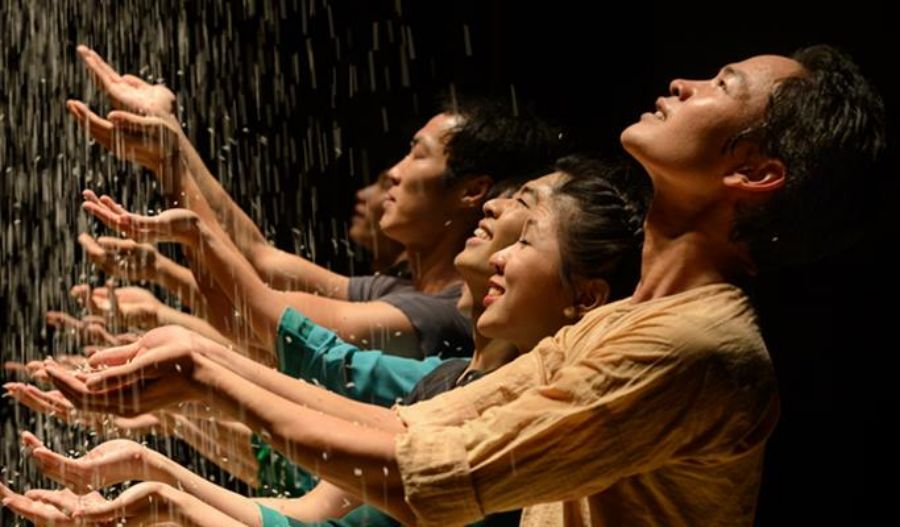
“The Mist” uses fluid contemporary and ballet dance movements to portray the lives of farmers in Vietnam. The performance is about the rice growing process, from working early in the morning to the excitement of the harvest. “The Mist” encompasses beautiful lighting, elegant costumes, and moving music to drum up a beautiful tribute to rural Vietnam and its struggles.
Opera Gala Nights
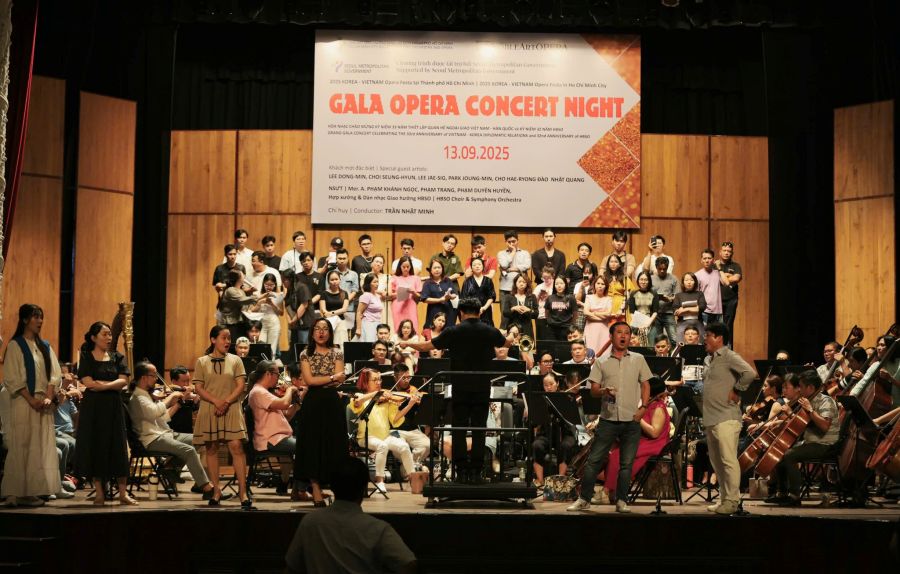
If you love classical music, you should see the Opera Gala Nights. World-famous classical works by Bach, Mozart, and Beethoven will be performed by local and international orchestras. The beautiful music, together with the stunning setting of the theater, makes for a most enjoyable evening of elegance.
Vietnamese Music Nights
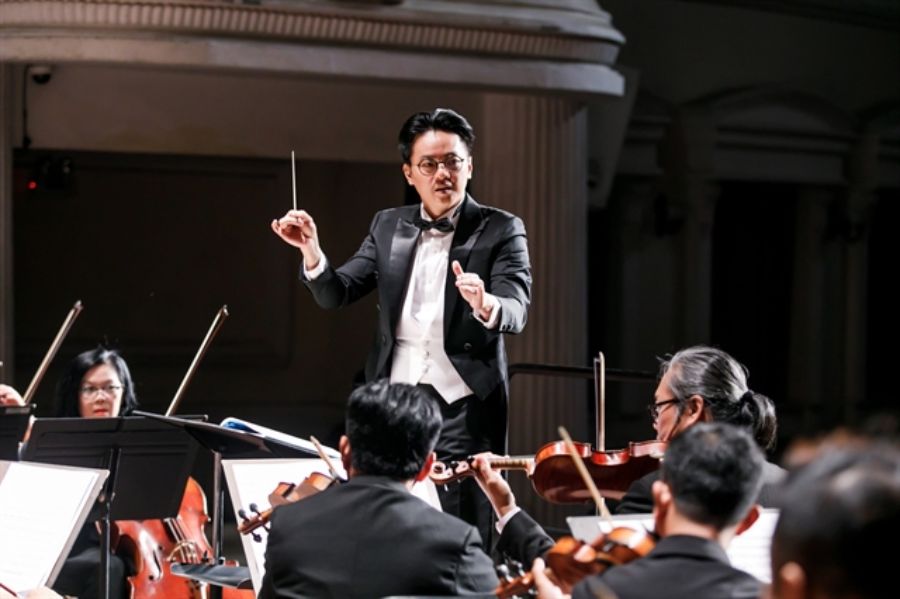
At the Saigon Opera House, visitors can also find an eclectic assortment of Vietnamese music programming that embodies the country’s cultural pride. These performances may include folk music, songs with patriotic themes, and touching performances that celebrate the spirit of the Vietnamese people. This is a lovely and easy way to experience Vietnamese artistry in a prestigious venue.
Classical Ballet And Musical Performances
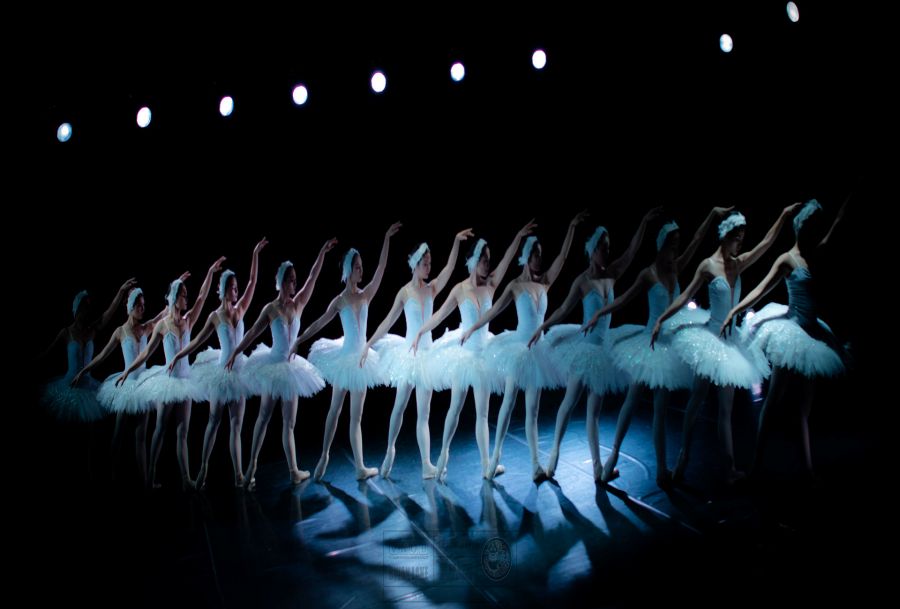
People may also experience some of the most iconic ballet and musical recreations performed by dancers, actors, and a live orchestra. These performances are comprised of evenings that culminate in beautifully honed choreography and thought-provoking storytelling that bring artistry and culture together. If you enjoy classical or contemporary, the following performances will bring joy to the heart of Saigon!
Entrance Fee
Travelers can buy tickets to the Saigon Opera House either by buying them at the box office or booking them online via the official website. The only way to see the inside is to attend a live show, but following the show, you’re free to wander and take pictures of the beautiful building.
- Special performances: 150,000 – 900,000 VND per ticket
- Regular shows: 80,000 – 650,000 VND per ticket
Note: Prices are subject to change depending on the type of show and seating area, so it’s best to check the schedule for the latest information yourself.
Opening Hours
The Saigon Opera House’s open hours are Monday through Friday from 9:00 AM – 4:30 PM and Saturday and Sunday from 9:00 AM – 12:00 PM.
If you want to really appreciate the beauty of the Opera House, the best time to visit is evening time while it is illuminated, and you can attend a live show. The dry season (December to April) is another great time to visit because the weather is nice and perfect for being outside to walk around the surrounding attractions in District 1.
How To Get To The Saigon Opera House
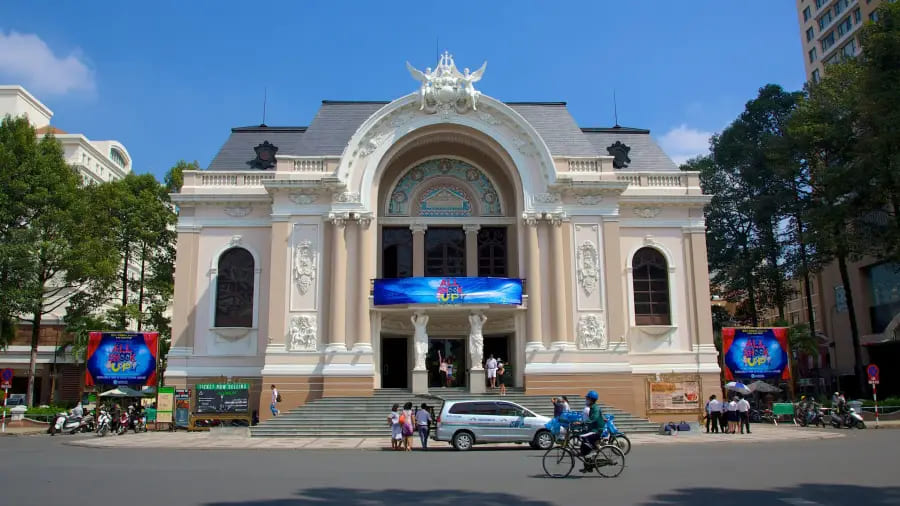
The Saigon Opera House occupies a very central position in District 1, making it easy to visit from virtually any location in Ho Chi Minh City. It’s not uncommon for visitors to experience the Opera House after visiting well-known central destinations such as Ben Thanh Market, the Zoo and Botanical Garden, or Nguyen Hue Walking Street. You will get to the Opera House in no time by following the major streets of Dong Khoi, Le Loi, and Pasteur.
The Opera House is kins to the easily identifiable City Theatre Metro Station, which is connected to Line 1 (Ben Thanh – Suoi Tien) of the future metro system. Visiting the site via the metro is a quick and photogenic way to arrive at the Opera House. It will save time and will allow you to see one of Saigon’s newest transport systems.
If you’re looking to take a public bus system to the Opera House, several major routes stop close to the Opera House:
- Bus 03: Ben Thanh – Thanh Loc
- Bus 19: Ben Thanh – National University
- Bus 45: District 8 Bus Station – Mien Dong Bus Station
Things To Know Before Traveling To The Saigon Opera House
Before making a visit to the Saigon Opera House, it is worth planning to have the best visit you can. Here are some helpful tips to keep in mind to best enjoy your visit in a smooth and respectful manner.
- Review the schedule of performances ahead of time in order to book your podium and attend on time.
- Expect to be in attendance for a specific performance, so try to arrive 15-30 minutes early to find a seat, take pictures, and engage in the space before the performance begins.
- In most instances, and at least in Vietnam, the artist interact with the audience after their performance, so don’t forget your camera or your phone to capture some good memories.
- If you can help it, avoid entering the theater with food or drink that gives off strong odors to contribute to an enjoyable atmosphere.
- Dress neatly and appropriately for the evening. Formal to smart-casual is often cited as the dress code, and avoid any clothing that is inappropriate or outlandish.
FAQs About Saigon Opera House
Before visiting the Saigon Opera House, many travelers have a few typical questions regarding its history, performances, and how to visit the venue. Below are some common questions to make planning your visit easier.
Can I go into the Opera House without seeing a show?
No, the interior of the building is only open for visitors who have purchased a ticket for a show. This ensures that the historical building remains intact while allowing guests the most out of their experience. You can still enjoy and take photos of the beautiful exterior of the building.
Can I take photos inside the Opera House?
You can take photos outside in front of the building and in the lobby before shows begin. However, it is generally only prohibited to take any photos during performances so as not to disrupt the artist or other guests. Please check ticketed specific events for the above rules when attending each show.
How can I buy tickets for shows?
Tickets may be bought from the box office or online via the official website. It is advised to arrange to buy tickets ahead of time, especially for performances that are known to sell out. Ticket costs will vary based on the show type and location for seating.
Final Thoughts: Is Saigon Opera House Worth Visiting?
The Saigon Opera House transcends being a mere architectural treasure. It is a cultural icon in itself, embodying the spirit of Ho Chi Minh City. With its beautiful French colonial architecture, impeccable performances, and a fascinating past, this theater provides a glimpse into the past and artistic present of the city. Explore the timeless beauty of Saigon along with Seni World, where every trip celebrates culture, art, and memories you won’t forget.
Related articles


