


Sapa Church, also known as Stone Church, is a popular chapel in Vietnam’s foggy mountain town. It is surrounded by green hills and iconic terraced fields, and it combines culture, history, and photo opportunities in one place.
Introduction To Sapa Church
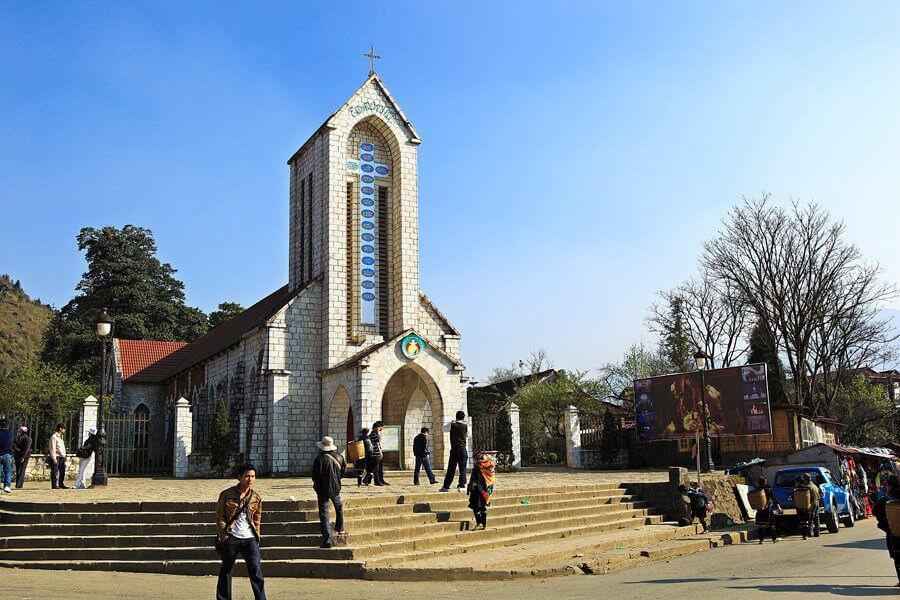
Sapa Church is one of the best preserved and completed ancient architectural remnants from the colonial time of the French. This spectacular stone church is so synonymous with Sapa that it has become a must-see for any visitor to this part of Vietnam’s mountainous northwest.
Aside from its stunning design, visitors can learn about Vietnam’s colonial past while taking part in a religious ceremony in this spiritual sanctuary. It will be unfortunate if you visit Sapa without taking a photo of Sapa Stone Church, a must-visit attraction when coming to the city of mist. If you are a lover of architecture, history, or a moment of serenity all on your own, Sapa Church offers an unforgettable experience.
History Of Sapa Church
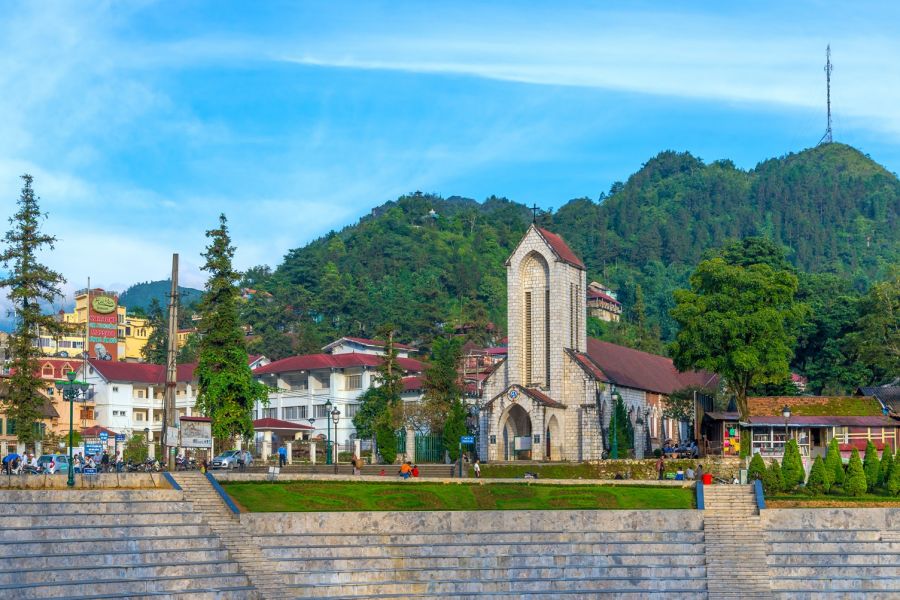
Based on historical documentation, the construction of the Sapa Church was initiated in 1902 and completed after 10 years of intense effort, in 1935. The French settlers and missionaries founded Sapa as a hill station retreat, and the church served as a central meeting point for the burgeoning Christian community. The Sapa Church had not only withstood Japanese occupation during World War II, but also the French-Vietnamese wars and the reunification of Vietnam. This church remains beautiful as the day it was built after many restorations and repairs.
Not only a spiritual sanctuary for Catholics, but Sapa Church also represents a unique symbol of spiritual and cultural life for ethnic minorities, such as the Hmong, the Dao, and the Tay. They have blended Christian rituals with their traditions. This fusion of traditions gives an unusual aspect to the spiritual climate that the visitors can feel even today.
Unique Architecture Of Sapa Church
Located at the center of Sapa town, the Sapa Church is not just a religious site but also a beauty spot, an architectural work as well as a beautiful Old French building with the Vietnamese countryside in mist. The church intersects Gothic influences with indigenous material. Here are some outstanding architectural features of Sapa Church.
The Orientation Of Sapa Church
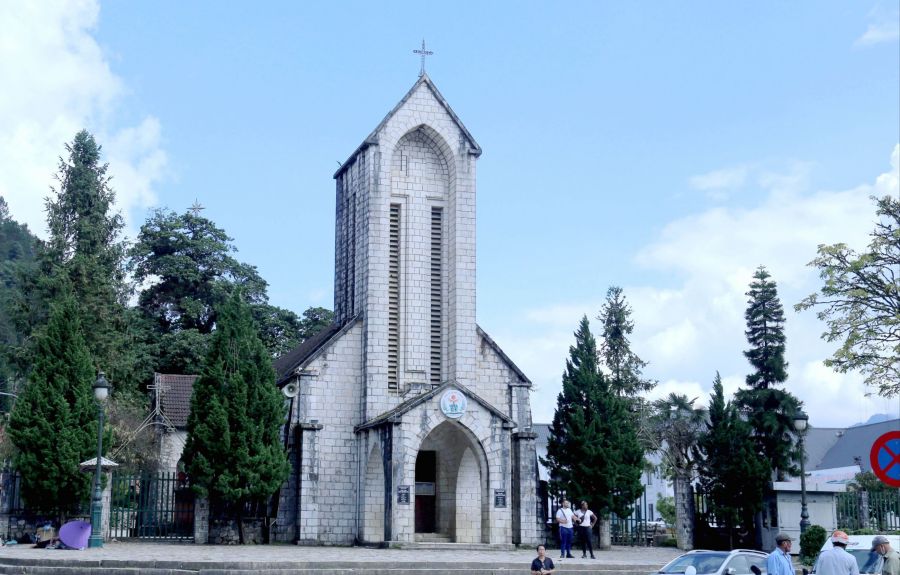
The old stone church of Sapa was set to face the East (where the sun rises). This is a very holy idea, which is known as receiving the source of light and brilliance that God gave. The West is at the back of the church, where Kito was indeed born and bred.
European Gothic-style Architecture
The whole of the house is composed of stone, including walls, floors, towers, and bells. They are held together by lime, sand, and molasses. With a total area of more than 6000 square meters of land, the ancient stone church of Sapa is quite large, with many areas such as the church area, monks’ quarters, livestock area, chapel, front yard, fence, and Holy Garden.
Inside the church is amazing, you will be surprised by the European designs. Even in the smallest details, the Gothic La architectural style is grafted onto the ancient stone Sapa Church. The appearance and architecture here are in the shape of a cross in ancient Roman Gothic architecture.
Unique Dome
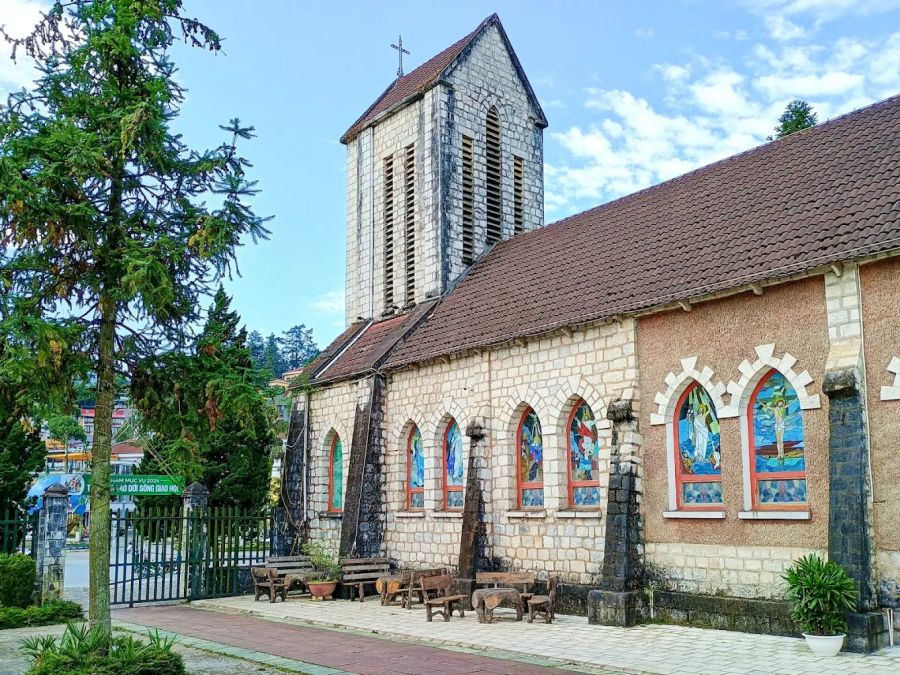
The church has red tiles on the roof and is triangular in shape. The two edges of the roof tiles are made in a simple, straight shape. The ceiling was made of straw, which was renewed continuously over many generations. However, the bell tower is made of lime, straw, and iron, which has managed to survive all these years without any fixing.
Stained Glass Windows
The inside stained glass windows combine the elements of traditional European religious art with the modern Vietnamese artistic style. The windows illustrate events in the life of Christ, presented in a modern style that opens the biblical narratives to a variety of local audiences.
The stained glass serves both decorative and functional purposes. In daylight, the sun streams in through these windows and lights up the stone floor and the wooden benches with colorful patterns of amazing light. The intensity of light through these windows varies during the day, thereby creating various moods for the different religious meditations.
Paint Color
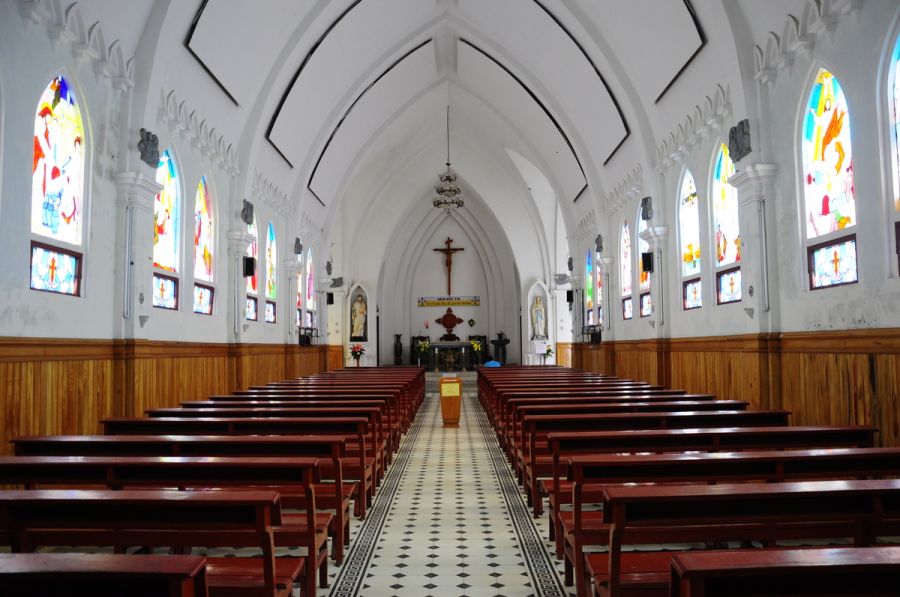
The white inside enhances the luxury of the Sapa Church, offering a more spacious and airy feeling. The walls are paneled with wood, which is easier to clean. Especially, the right wall in the cross is sanded like stalactites, slowly flowing down, which makes the church more special.
Architectural Harmony With Natural Setting
Most remarkably, the Gothic style of the church is perfectly combined with the natural scenery of Sapa. From several directions around the town of Sapa, the church looks unforced, like it grows from nature. The photos, accordingly, showcase both the architectural accomplishments of mankind and the grandeur of mountains.
In the building’s position, natural light, seasonal breezes, and flooding patterns are maximised, and the house is lifted above ground to protect from the flooding, while maintaining accessibility from the town center.
4 Cultural Experiences You Shouldn’t Miss
Sapa Stone Church, which is not only a popular tourist destination but also has a lot of interesting things, encourages tourists to explore. Here are some interesting experiences that you should not miss when coming to Sapa Stone Church:
Join A Local Sunday Mass
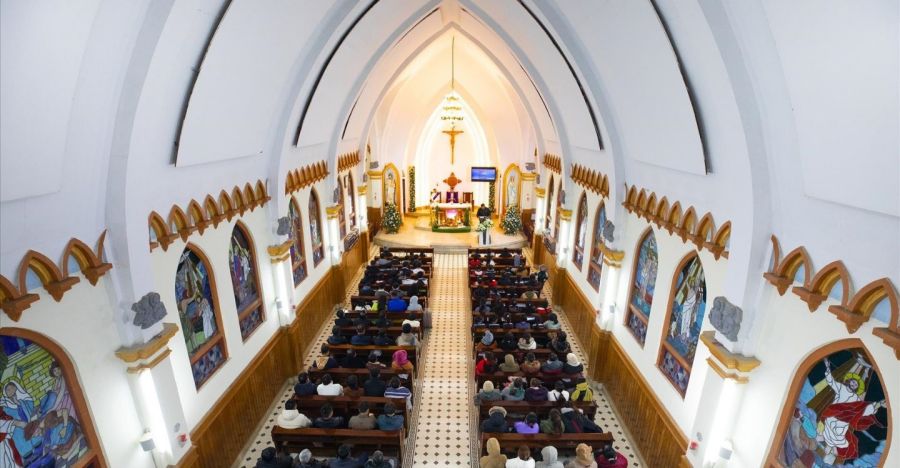
One of the biggest cultural experiences at Sapa Church is a Sunday morning mass. Open to both tourists and villagers, the mass provides an unusual opportunity to see how Roman Catholicism mingles with the culture of Vietnam’s ethnic minorities. You’ll listen to hymns sung in Vietnamese and, often, in indigenous languages of communities such as the H’Mong or the Dao. It’s a peaceful place, and spiritual too, with strong ties to the community. It’s worth getting there early, though, before 7.30 AM if you want somewhere to sit, and dressing modestly is best.
Experience Unique Food
Don’t miss the delicious local specialties while coming to Sapa Stone Church. You should try a delicious fresh sturgeon hotpot, armpit pork, or crispy fried stream fish. The tasty small food stalls roadside along the cool mountain will naturally make you excited. Don’t forget to pick up buffalo jerky or other ethnic fare as gifts for the relatives.
Take Part In Love Market
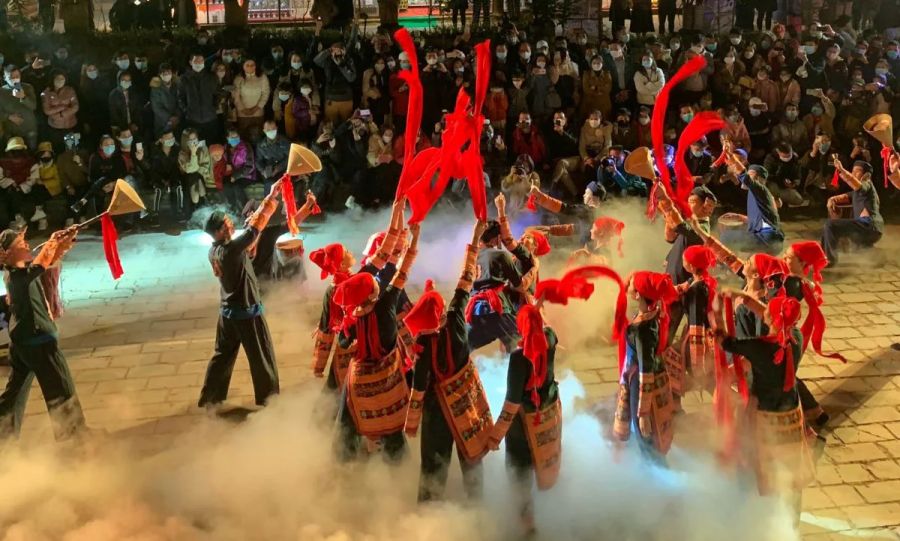
Right in the town’s center, Sapa Church and the surrounding area are especially lively on Saturday nights, when the Love Market operates. This is a tradition dating back centuries for ethnic minority groups like the H’Mong and Dao. It’s where young men and women once gathered to sing, dance, and show their affection the way courtship was done back then. Today, as modernised as it may be, though, the market, which prides itself on its colour and vibrancy, is still filled with cultural displays, crafty souvenirs, traditional clothes, and ethnic performances.
Attend Ethnic Performances In The Church Square
At all times of year, particularly during big festivals, like Tet or the regular market day in each village, the square in front of Sapa Church is a lively cultural theater. Groups like the H’Mong, Dao, and Tay come together here to present their traditional arts and demonstrate their heritage through flute melodies, folk dances, and fashion in colorful costumes.
These are not just performances for entertainment; they’re living representations of cultural heritage, and they are frequently put on in collaboration with local tourism bureaus. For tourists, it’s a special opportunity to see the diversity and richness of Sapa’s ethnic traditions up close.
Entrance Fee
The Sapa Church is free for all visitors. This is how the church remains accessible to both tourists and locals alike, and preserves its status as a house-in-the-street, as a cultural public monument.
There are no hidden fees or photography charges, which I think makes it one of the best budget-friendly attractions for those traveling to Sapa. The free admission extends to special religious holidays and cultural celebrations, and visitors will be able to enjoy more immersive cultural programming for no extra charge.
Sapa Church Opening Hours
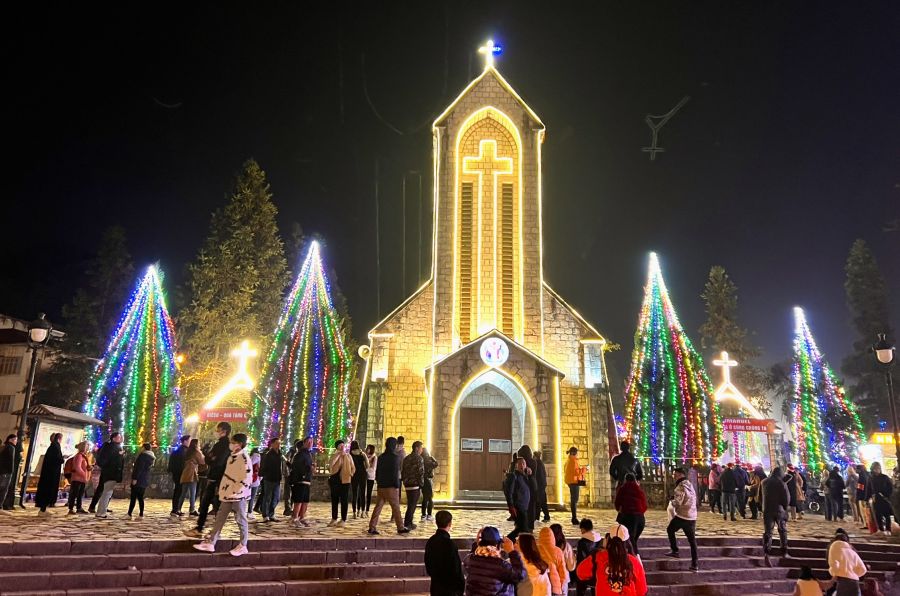
Sapa Church has no closing time since it is a religious structure. But ceremonies tend to be at set times, particularly on Sundays. In particular:
Opening hours:
- Sapa Stone Church is open daily for tourists; there is no official closing time.
- You may visit and photograph it at any time.
| Ceremony hours |
| Weekdays |
| 05:00 AM: Morning Prayer |
| 06:30 PM: Evening Prayer |
| 07:00 PM: Mass |
| Sundays |
| 08:30 AM: Morning Prayer |
| 09:00 AM: Mass |
| 06:30 PM: Eucharistic Adoration |
The best time to visit is from April, May, June, September, and October. Sapa weather during these months is quite moderate with less rain and clearer skies, which makes it easier to sightsee and take photos.
How To Get To Sapa Church
The stone church stands in the center of town across from the square. This is great as most accommodation and places of interest are quite close to it.
| Transportation Method | Cost Range | Travel Time | Notes |
| Walking from Sapa Center | Free | 5 – 10 minutes | Most convenient option |
| Motorbike Taxi | 20,000 – 50,000 VND | 3 – 5 minutes | For distant accommodations |
| Private Car | 100,000 – 200,000 VND | 5 – 10 minutes | Good option for families or groups |
| Tourist Bus | Included in tour packages | Varies | Part of organized tours |
Tips:
- Motorbikes can skid. There is fog and rain, in particular. Always use a helmet and slow speed.
- Walkers: Make sure you have sturdy shoes with grippy soles; that wet stone is slippery!
- Taxi/Grab: The app should be downloaded before arrival, as your internet may be weak in Sapa town.
Things To Know Before Traveling To Sapa Church
Before we take you to explore the Sapa Church, you had better be well prepared. Visiting for cultural immersion, spiritual exploration, or photography, these essential travel tips will help you travel easily.
- Dress modestly and respectfully: Sapa Church isn’t just a tourist spot; it’s a functioning church. You should dress appropriately when visiting to respect the local religious community. Do not wear shorts, tank tops, or clothing that is revealing. If you do decide to attend Mass here, dress inconspicuously, in long sleeves and dark colors, so that you fade respectfully into the background of the local faithful.
- Prepare for the weather: The weather in Sapa is unpredictable. A morning sun can soon become foggy or drizzly. Because the church is outdoors in an open square, you should dress in layers and bring a light raincoat or an umbrella, particularly during the rainy season from May to September.
- Avoid peak hours: The Sapa Church is a well-known spot, so it can get fairly packed here, especially in the late morning, and even more so on market days or during festivals. For fewer people and the best lighting, come early in the morning (around 06:30 – 08:00 AM) or at sunset when warm lighting shines on the church.
- Stay safe: Sapa is relatively safe for visitors, although petty theft may occur in crowded pockets of the area. Mind your belongings, especially during weekend events or concerts in the church square.
- Bring cash: Although some of the big restaurants and hotels of Sapa may take cards, many of the street vendors, souvenir stalls, and food vendors around the church only accept cash. Carry with you smaller denominations of Vietnamese dong (VND) for snacks, donations, or locally produced goods.
Final Thoughts: Is Sapa Church Worth Visiting?
The Sapa Church is a must in every Sapa trip. It is easily accessible from the city center, so it’s an ideal stop-off to make a big impression in a short time. Are you ready to visit Sapa Church? Let Seni World take you on a trip in Sapa: from the stone church to the terraced fields. Begin your travel with us today!


