


Tuol Sleng Genocide Museum in Phnom Penh is a grim reminder of the tragic history of Cambodia under the Khmer Rouge rule. It is a prison-turned museum where one can learn about the history of the prison and reflect on the strength of humanity and the significance of remembering.
Introduction To The Tuol Sleng Genocide Museum
Tuol Sleng Genocide Museum is a former peaceful high school located in Phnom Penh and is one of the most macabre symbols of the former Khmer Rouge government because of its conversion into the infamous S21 prison. Between 1975 and 1979, this location was noted for the imprisonment and torture of numerous innocent civilians, leaving an unpleasant mark on the history of Cambodia. At present, the old buildings stand intact, including detention cells converted from classrooms, rooms full of written testimonies, and a series of gruesome images of captives.
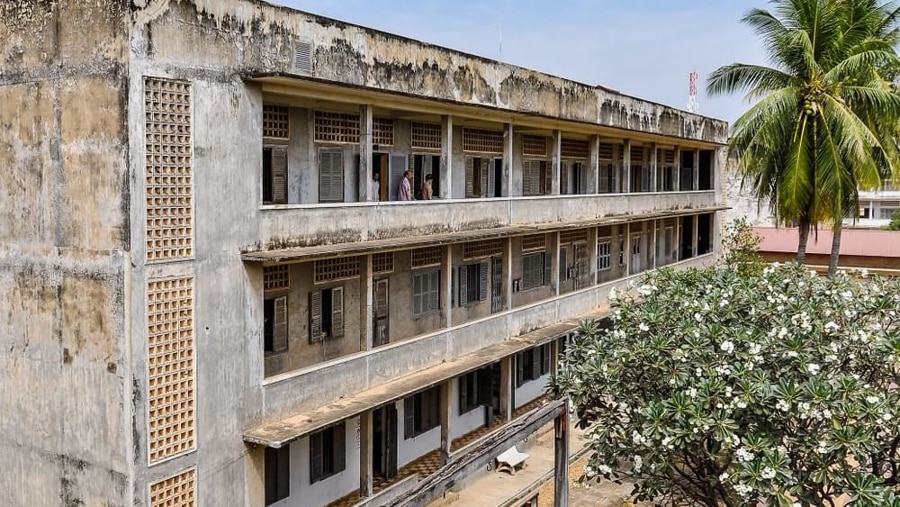
It is not an easy outing emotionally, but it is a very significant one. This is because the museum is a location for remembrance and learning, and it helps one appreciate just what the tragedy is and what strength the surviving people must have shown during those times. It is a significant stop for those who would be interested in learning about the history of Cambodia.
History Of the Tuol Sleng Genocide Museum
A history of the Tuol Sleng Genocide Museum is inextricably linked with the turbulent history of Cambodia itself. Before becoming one of the most terrifying memorials of the rule of the Khmer Rouge, this location passed through a series of significant transformations, symbolizing the dramatic history of the region itself.
It was first constructed in 1962 as Ponhea Yat High School, offering education to children of the area. But by 1970, with a political change being brought about by the U.S., it came under a new name, Toul Svay Prey High School. It is a drastic changeover because in 1975, the Khmer Rouge captured power and turned the school into the infamous Security Prison 21, known as S-21.
The facilities were fully completed with the conversion of a high-security prison and torture facility in 1976. S-21 turned out to be one of the key prisons used by the ruling party, containing approximately 17,000 inmates, with electrified fences and torture rooms meant to make escape impossible. When the Khmer Rouge fell apart in 1979, history records 10,499 people being imprisoned here, excluding children, of whom only a few were left alive.
After achieving a period of peace in Cambodia, the infamous prison site is currently known as the Tuol Sleng Genocide Museum, with evidence and records of the abuses maintained intact in a historical manner.
Unique Architecture Of Tuol Sleng Genocide Museum
Tuol Sleng means ‘Hill of the Poisonous Tree’ in Khmer and symbolizes the painful history associated with the location. It used to be a school, later turned into a prison by the Khmer Rouge, and the design of the museum reflects the memories of the mass suffering associated with this location.
The Outer Grounds And Perimeter
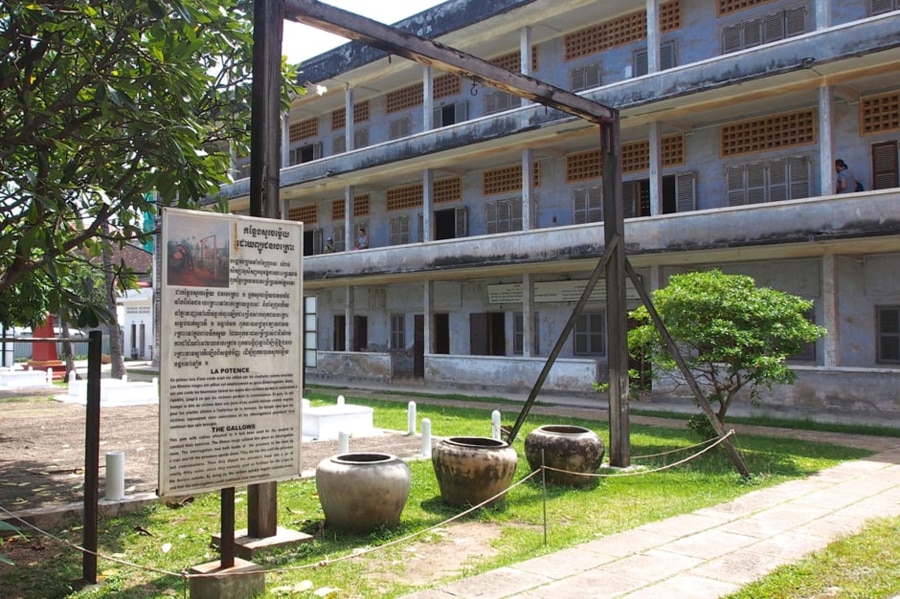
This museum compound is approximately 600 by 400 meters in area, with tall concrete walls and rusted barbed wire enclosing it. It appears bland from the exterior, with nothing special standing out about these buildings, that is, if one doesn’t pass through the iron gate. This courtyard used to be a school playground but is now a tomb-like area devoid of activity, despite the tragic occurrences within it.
The Four Main Buildings
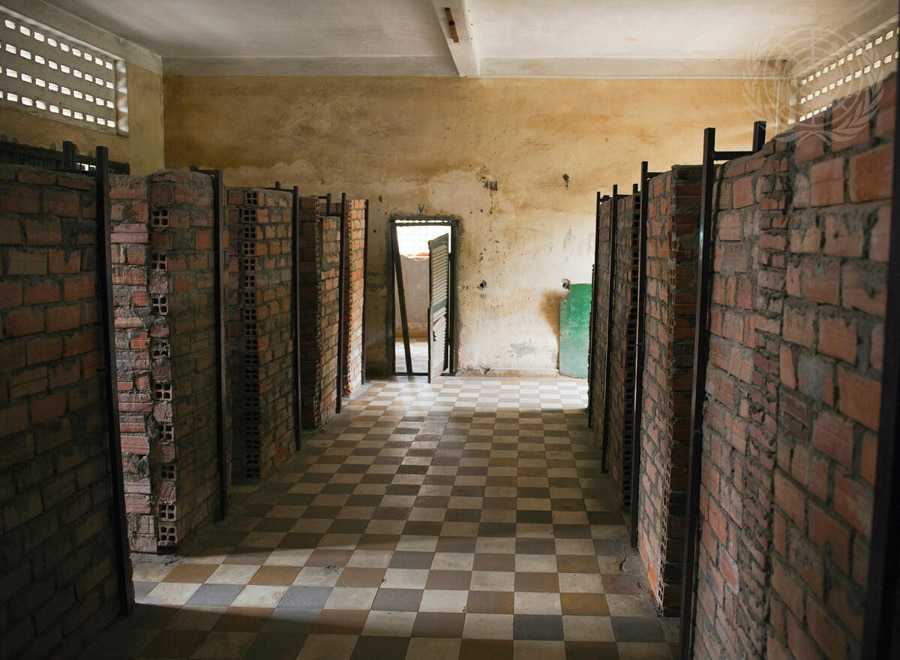
Tuol Sleng is comprised of four long buildings, which were former classrooms. The buildings were later used by the Khmer Rouge government as detention, questioning, and torture cells. The classrooms were later divided into smaller cells made of wood and bricks, leaving only a small space for the inmates. Inside the cell, metal beds, chains, and everyday household items used as torture equipment can be seen today.
The Barbed-Wire Corridors
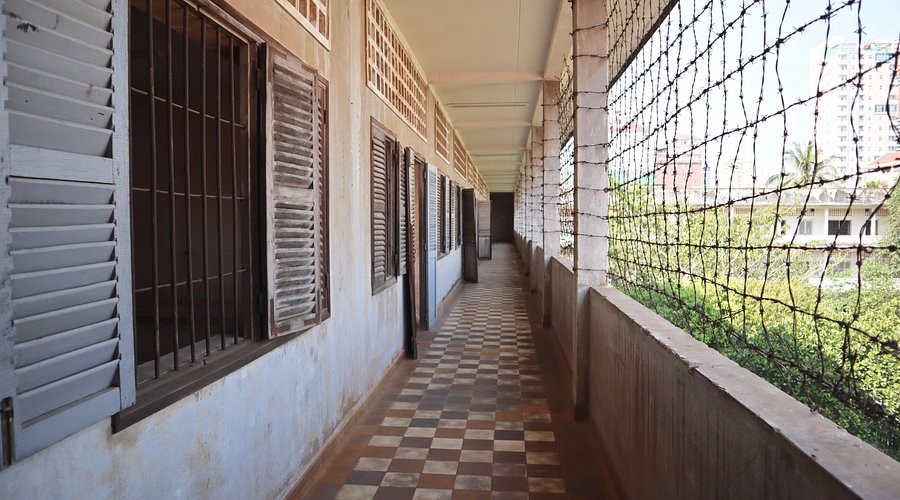
Many corridors and balconies were covered in thick wrappings of barbed wire, so that escape and suicide were out of question for the prisoners. But today, these wire cages remain suspended along the walkways of the second floor of the jail, and this is what gives one a sense of the terror that existed within these walls.
The Interrogation And Torture Rooms
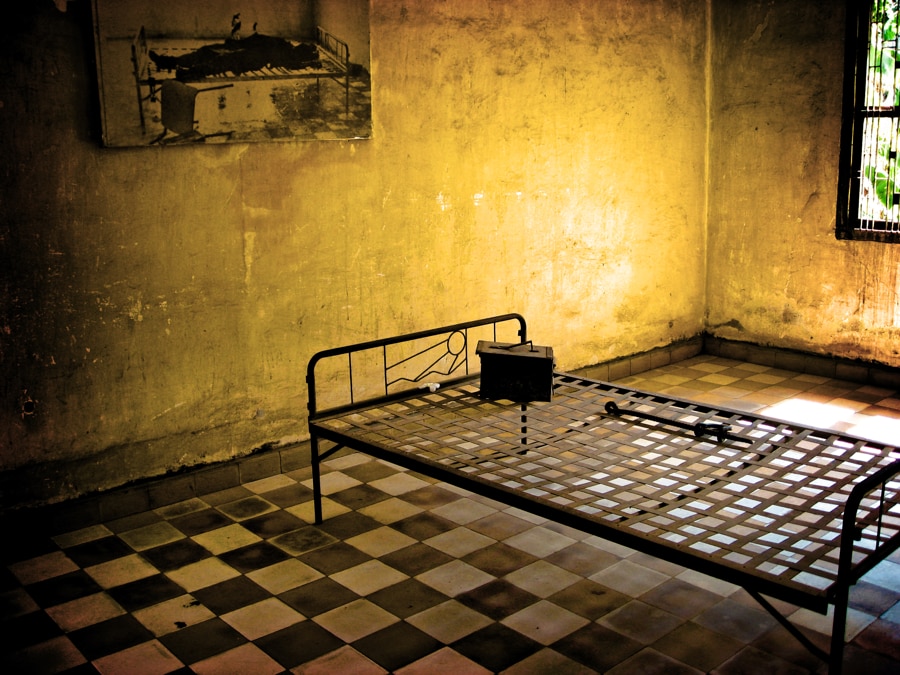
Certain areas have been left just as they were when discovered in 1979. The rusted metal beds, ammunition boxes, clubs made of wood, pliers, and other primitive tools fill up vacant spaces, symbolizing a common reaction to what transpired in these areas. The effect of the old tiles and dim lighting creates an eerie environment that most people would rather avoid.
The Painting Gallery
But on the upper floors, a painting gallery shows scenes of torture and imprisonment in graphic detail. The paintings were done by survivors who were forced to create works of art in exchange for their lives. This emotional art makes these galleries some of the most meaningful and haunting parts of the museum.
The Photographic Portrait Rooms
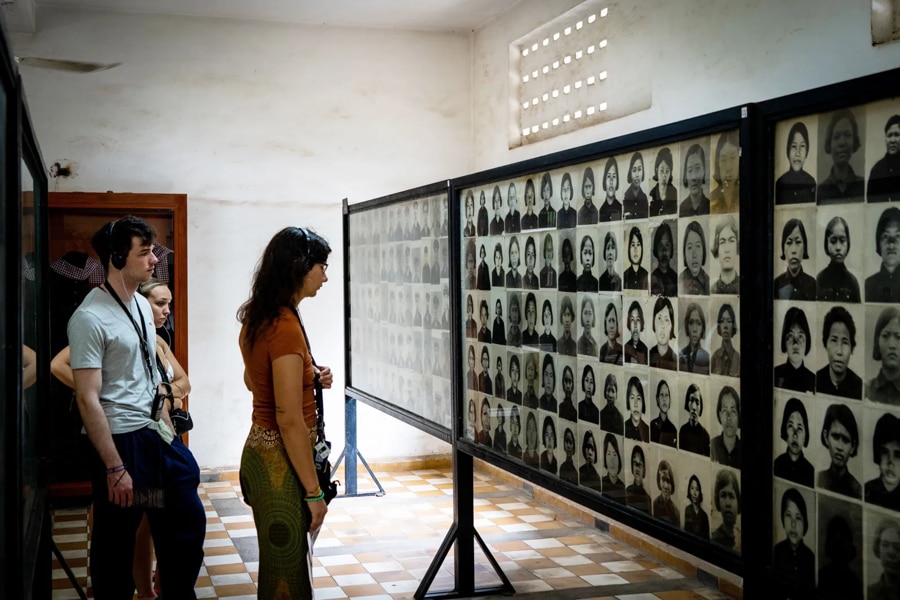
There is a section with thousands of images of prisoners, with faces full of fear, confusion, defiance, or child-like innocence. Each photograph is a story in itself, and the magnitude of these images is just shocking. The images form a historical document and a reminder of the cost of the Khmer Rouge Regime.
The Skull Room
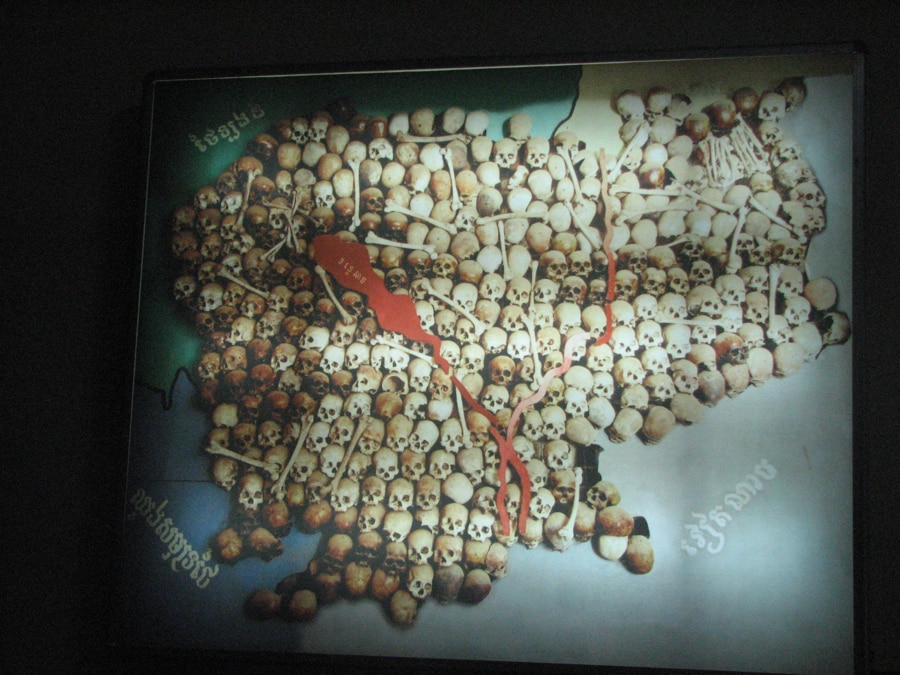
The last room houses shelves of skulls and bodies with evidence of blunt trauma injuries. This is a remembrance of the victims, as well as an exhibition of the brutality committed within S-21. It is among the most difficult sections within the museum.
5 Unforgettable Experiences You Shouldn’t Miss
A visit to the Tuol Sleng Genocide Museum is much more than a historical tour; it is an emotional journey where one is compelled to think, reflect, and understand the pain and suffering experienced by Cambodia and the people who were subjected to the brutality of the Khmer Rouge.
Explore The Original Prison Cells
A walk through these confined cells made of wood and bricks is one of the most frightening experiences one can have in Phnom Penh. This is because these cells were previously used as classrooms and were turned into isolation cells for tens of thousands of prisoners. It is here that you can see the iron chains, the stains on the floor, and the icy coldness of the cells. This is a reminder of the torturous acts performed here because the cells have remained just the same after the travesty, and one can understand the living conditions of the convicts here.
Watch The ‘Torture Instruments and Interrogation Rooms’
There is original torture equipment used by the Khmer Rouge on display in the museum, and this can be a rather grim but educational experience nonetheless. The torture cells will often be fitted with metal bed frames, boxes of ammunition, and equipment with a story to tell in itself about the violence inflicted on people within these cells.
The empty floors and peeling walls will only serve to emphasize the hopelessness once present within these cells among the prisoners being held here. These cells will serve to make one reflect on the importance of human rights and what can befall a person who promotes an extreme form of belief.
Take Time With The Survivor Paintings
A rather emotional part of the museum is the painting made by those who suffered in S-21, which shows intriguing paintings about torture, everyday struggles, and violence with a profound level of emotional expression. These paintings act as a historical document because they create a moment in history that cannot be defined with words.
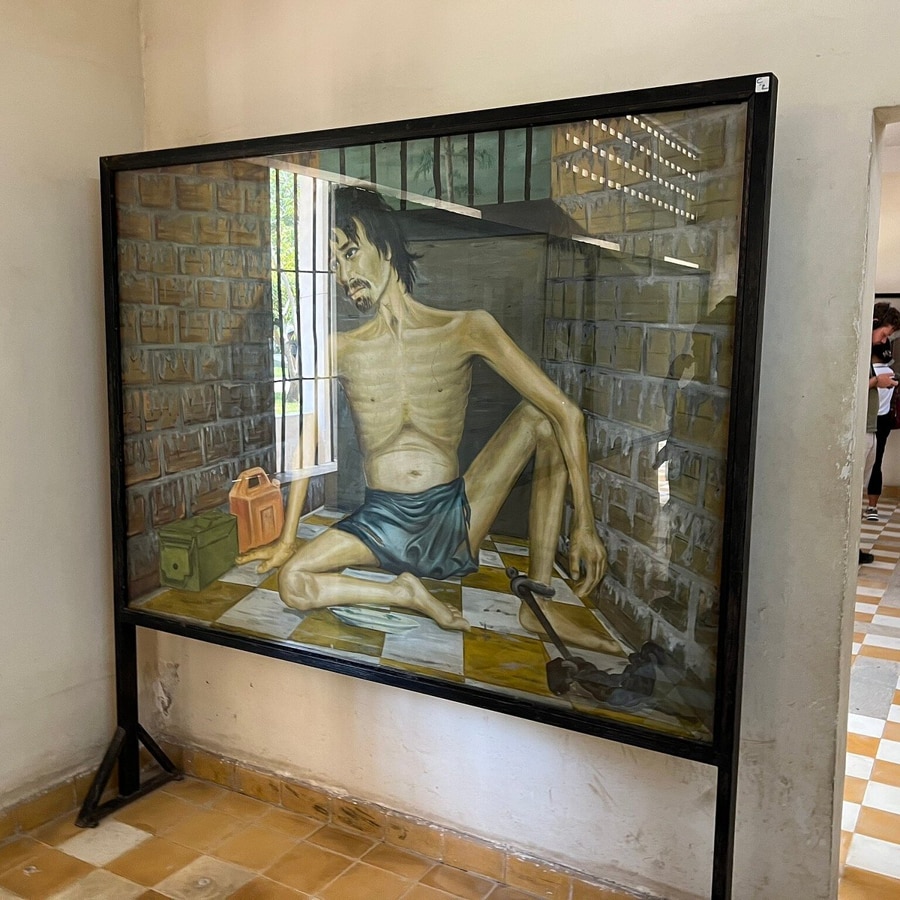
These paintings were made by those who were previously prisoners and used painting as a means of expression for history and survival. These paintings will allow you a moment to connect with the victim emotionally. The paintings turn a physical museum into an emotional one.
Study The Portrait Walls Of Prisoners
The galleries containing thousands of prisoner photographs are some of the most memorable parts of the museum. It takes a moment to realize what these pictures represent: the fear in the eyes of adults, the confusion of children, and the expression of unknown outcomes for what lies ahead for these prisoners. It is staggering just reviewing the number of these prisoner pictures, the evidence of the tragedy that occurred here. This one section alone would leave a lasting impact on you after leaving the museum.
Visit The Memorial Room Of Human Remains
The last room of the museum is occupied by shelves containing skulls and bones, impeccably conserved to show proof of the tragedy that occurred. Though traumatic to view, this is a symbol of remembrance and commemoration of the numerous people who lost their lives. The skulls demonstrated visible signs of trauma, symbolizing the brutality they went through. The quietness in this room encourages one to reflect upon the vulnerability of life.
Entrance Fee
A visit to the Tuol Sleng Genocide Museum will require a small entry fee, estimated between 3 and 5 US dollars, for every visitor. This entry fee is an important source of funds used for maintaining the museum, including its exhibits, which serve as a reminder of those who suffered under the rule of the Khmer Rouge leaders. There may be extra costs for a guided tour, but one can visit the museum on your own too.
Opening Hours
Tuol Sleng Genocide Museum is open from 8:00 AM to 5:00 PM every day, giving one plenty of time to visit the museum.
However, if you want a quiet moment of reflection as you visit the museum, it is better to go early in the morning. This is because Cambodia’s climate is tropical, leading to high heat in the afternoon, especially during the period between March and May Phnom Penh, making it ideal for a tour in the morning when you can walk around the museum comfortably. A visit during the dry season, which runs from November to March, is perfect since the climate is cooler and favorable for a visit to the museum.
How To Get To the Tuol Sleng Genocide Museum
The Tuol Sleng Genocide Museum can be reached easily because it is located in the city centre of Phnom Penh. Walking is a viable alternative if you can access the museum directly from your accommodation. For those who want a faster means of transport, a tuk-tuk can be taken from most areas of Phnom Penh.
For instance, from the Royal Palace to the museum, the distance is estimated to be about 3 km, with a cost of approximately 2-3 USD by tuk-tuk. However, you can hire private cars or use a taxi app if you would rather travel by an air-conditioned vehicle.
Things To Know Before Traveling To the Tuol Sleng Genocide Museum
A visit to the Tuol Sleng Genocide Museum can be a truly emotional and very educational journey about what occurred in the history of Cambodia under the rule of the Khmer Rouge. For you to fully appreciate your visit to this museum, some preparations need to be taken into consideration.
- Wear modest attire that covers your shoulders and legs because the museum is a serious site of commemoration.
- The exhibits, including pictures and instruments of torture, can be very disturbing, so care must be taken here.
- A knowledgeable guide can offer historical background and inform you of the meanings behind each exhibit.
- The cost of a single entry, so-called ‘tickets,’ is approximately 3 to 5 U.S.
- There may be some areas where photography is allowed, while it is prohibited in some areas, so one needs to be aware of the museum’s rules.
- Take a slow pace through the exhibits so you can reflect on the history, because this is definitely a location where you don’t want to hurry.
Final Thoughts: Is Tuol Sleng Genocide Museum Worth Visiting?
As a traveler looking to expand your knowledge and understanding of Cambodia’s history, the Tuol Sleng Genocide Museum is definitely an experience that shouldn’t be missed. A trip to this museum serves to add a meaningful memory to your adventure in Phnom Penh and offers you insight into the perseverance of the Cambodian people. Whether you are planning a trip to Cambodia or are already there, we recommend applying the expertise of Seni World throughout your travels.


Related articles


