


Vinh Nghiem Pagoda is a renowned Buddhist temple located in Ho Chi Minh City, celebrated for its serene ambiance, traditional Vietnamese architectural style, and spiritual importance, rendering it a significant cultural site for both residents and tourists alike.
Introduction To Vinh Nghiem Pagoda
Vinh Nghiem Pagoda ranks among the most renowned Buddhist temples in Ho Chi Minh City, drawing visitors with its tranquil ambiance and unique Vietnamese architectural style. Situated conveniently close to the city center, this pagoda is readily accessible and serves as a significant spiritual and cultural landmark. Constructed in the traditional style of northern Vietnam, Vinh Nghiem Pagoda embodies profound Buddhist principles while providing a serene escape from the bustling urban environment. Its expansive grounds, notable stone stupa, and peaceful prayer halls render it a favored destination for both tourists and local devotees in search of contemplative solitude.
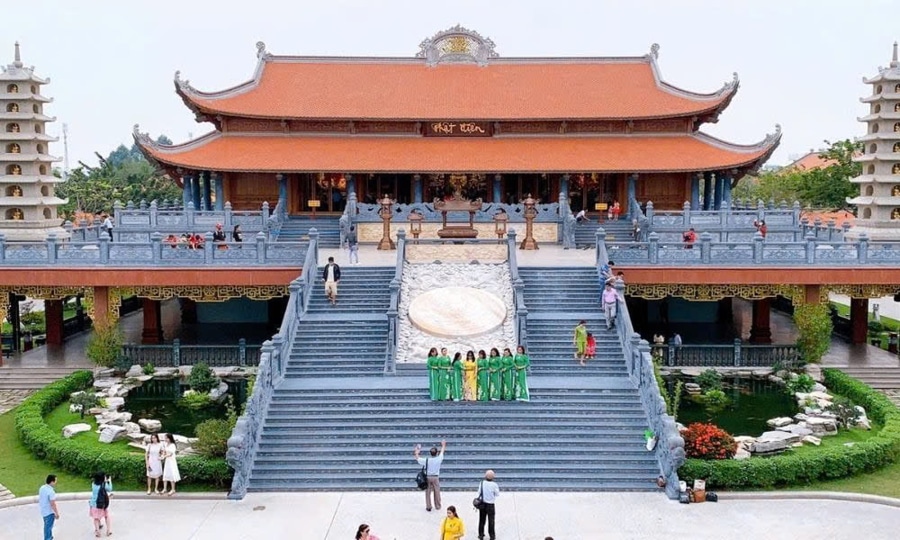
A visit to Vinh Nghiem Pagoda provides travelers with the opportunity to immerse themselves in genuine Vietnamese Buddhism while gaining insight into the nation’s religious heritage. This site is particularly attractive to enthusiasts of culture, photography, and those seeking spiritual tourism. With no admission charge and a hospitable environment, it serves as an excellent location for contemplative exploration. Whether one seeks to appreciate architectural beauty, witness daily rituals, or simply savor a moment of peace, Vinh Nghiem Pagoda presents a significant and enriching travel experience in Ho Chi Minh City.
History Of Vinh Nghiem Pagoda
Constructed in the early 1970s by the esteemed Buddhist monks Thich Tam Giac and Thich Thanh Kiem, Vinh Nghiem Pagoda introduced northern Vietnamese Buddhist traditions to Ho Chi Minh City. Drawing inspiration from the ancient pagodas of Bac Ninh Province, it was designed in a traditional Mahayana style. The establishment of this pagoda represented a significant advancement in the preservation of traditional Buddhist architecture and spiritual practices in southern Vietnam amidst a time of swift urban growth.
Over the years, Vinh Nghiem Pagoda has established itself as a significant hub for Buddhist practices, education, and ceremonies within the city. The temple has served as the venue for numerous important religious events and continues to draw monks, devotees, and visitors from all over Vietnam. Presently, it exists not only as a site of worship but also as an emblem of cultural continuity, showcasing the lasting impact of Vietnamese Buddhism in contemporary Ho Chi Minh City.
Unique Architecture Of Vinh Nghiem Pagoda
Vinh Nghiem Pagoda is distinguished not only as a center of spirituality but also as an exceptional representation of traditional Vietnamese Buddhist architecture in Ho Chi Minh City. Every edifice within the complex embodies profound symbolism, meticulous design, and a significant link to Buddhist heritage.
Principal Hall (Chinh Dien)
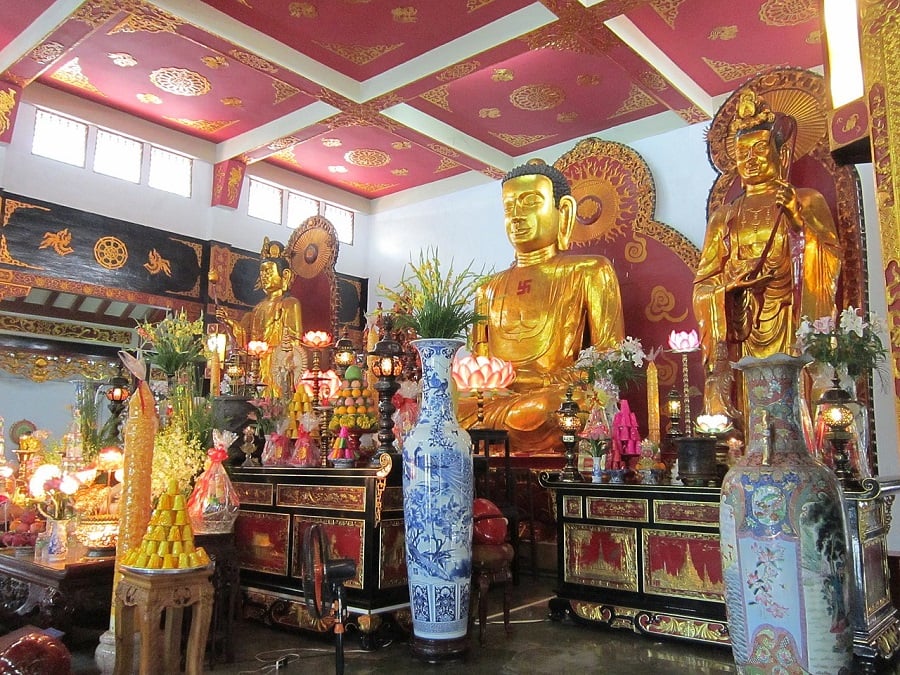
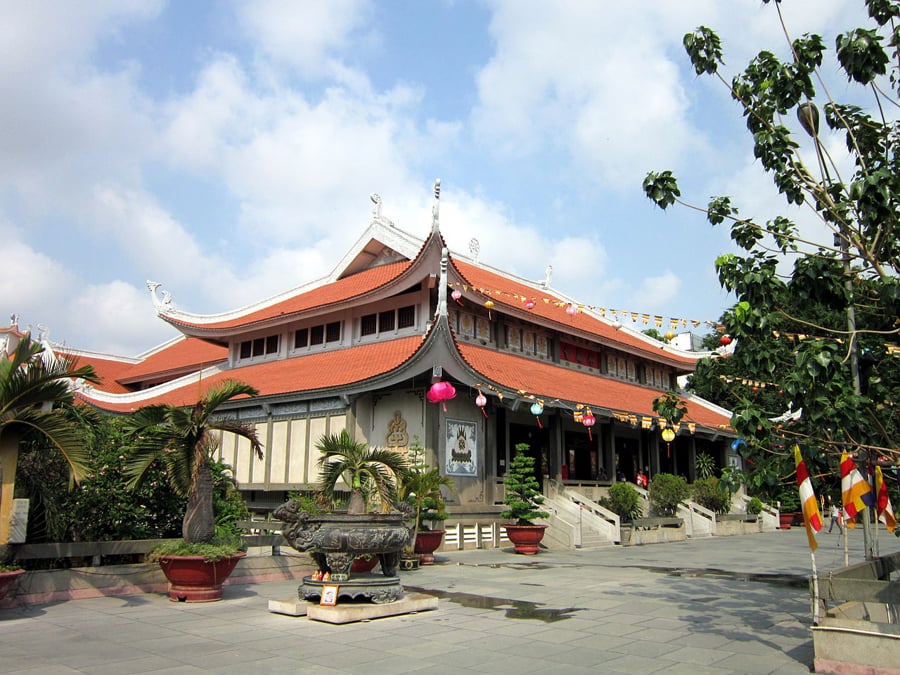
The Main Hall of Vinh Nghiem Pagoda serves as the central architectural and spiritual hub of the complex. Exhibiting a traditional northern Vietnamese design, it boasts lofty ceilings, robust wooden columns, and elegantly curved tiled roofs that embody classic Buddhist symbolism. The interior’s tranquil and expansive arrangement fosters a reverent ambiance conducive to prayer and meditation. This hall hosts significant Buddhist ceremonies, providing visitors with the opportunity to witness genuine religious practices while admiring exquisite craftsmanship and harmonious architectural equilibrium.
Stone Stupa (Bao Thap)
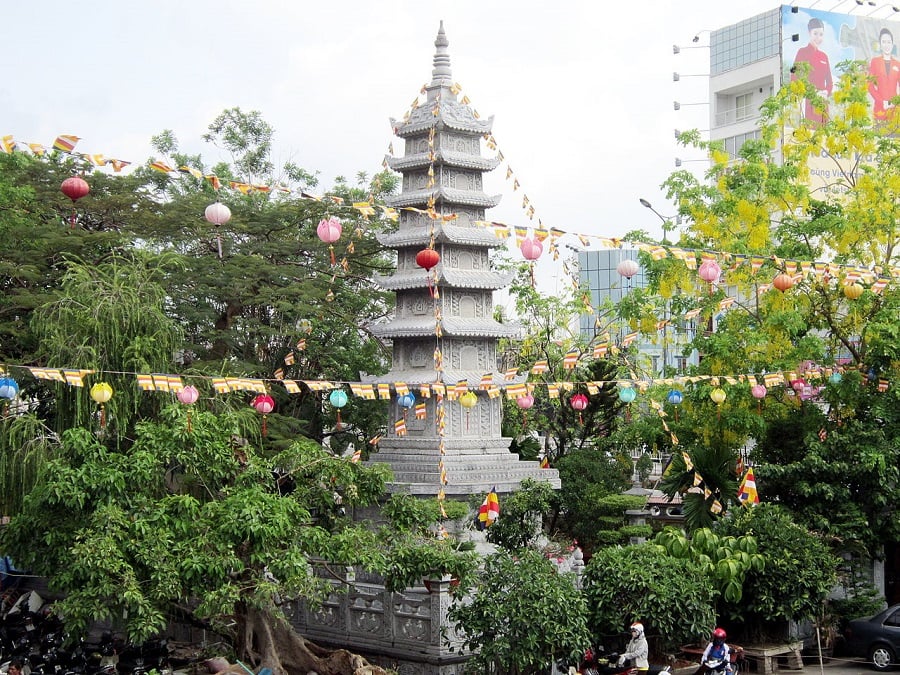
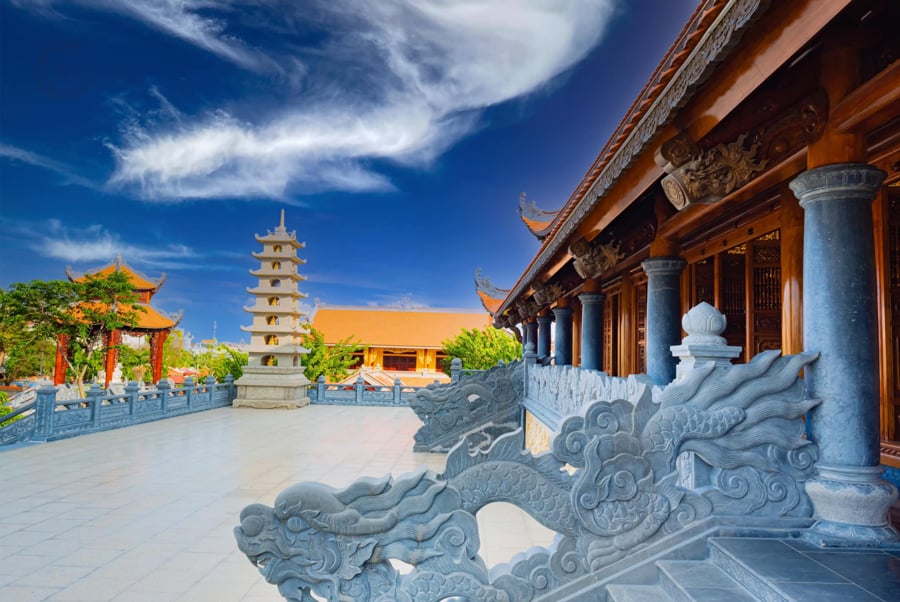
The stone stupa stands as one of the most emblematic architectural features of Vinh Nghiem Pagoda, readily identifiable from a distance. Towering above the pagoda grounds, it embodies the concepts of enlightenment and spiritual awakening within the Buddhist tradition. Constructed from durable stone and characterized by its clean vertical lines, the stupa signifies strength, stability, and devotion. Its presence enhances the visual complexity of the temple complex and functions as a significant landmark, rendering it a favored location for both photography and moments of quiet contemplation.
Courtyard And Clock Tower
The architectural components of Vinh Nghiem Pagoda are intricately linked by the courtyard and bell tower. The open courtyard fosters a serene environment, facilitating the entry of natural light and airflow, which amplifies overall tranquility. Adjacent to this, the bell tower serves as a spiritual emblem, its profound resonating sound signifying times for prayer. Collectively, these edifices enhance the pagoda’s harmonious design and peaceful ambiance, providing visitors with a respite of calm amidst the urban landscape.
4 Unforgettable Experiences You Shouldn’t Miss
A visit to Vinh Nghiem Pagoda provides an opportunity that transcends mere sightseeing; it enables travelers to pause and engage with the spiritual and cultural traditions of Vietnam. Whether through moments of quiet contemplation or the observation of everyday Buddhist practices, each encounter leaves a profound impact on those who come.
Participate In A Tranquil Prayer Gathering
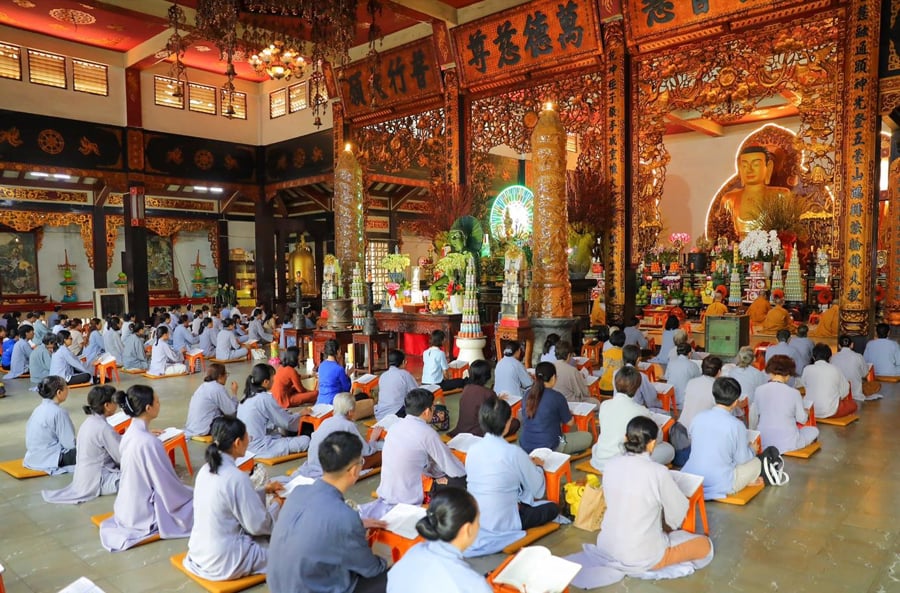
Engaging in a prayer session at Vinh Nghiem Pagoda offers a profoundly soothing experience. Guests have the opportunity to silently witness monks reciting sutras and locals presenting incense, which together foster a tranquil environment. This occasion enables travelers to gain insight into Buddhist practices while savoring a unique sense of tranquility amidst the bustling heart of Ho Chi Minh City. So if you have a chance, you should add this place to your list of the best activities to do in HCMC.
Appreciate The Aesthetic Of Traditional Buddhist Architecture
For enthusiasts of culture and history, an examination of the architectural intricacies of the pagoda is essential. Each aspect, from the elegantly curved tiled roofs to the robust wooden columns and stone edifices, embodies the traditional Buddhist design of northern Vietnam. A stroll through the complex provides an opportunity to appreciate the artistry, symbolism, and thoughtfully arranged spatial design.
Engage With The Local Spiritual Traditions
Vinh Nghiem Pagoda serves as a vibrant site of worship, rendering it an excellent venue for immersing oneself in the genuine spiritual practices of the local populace. Guests have the opportunity to witness daily offerings, observe respectful traditions, and partake in religious ceremonies conducted by the community. Such engagement offers a significant understanding of the ongoing impact of Buddhism on contemporary life in Vietnam.
Enjoy Serene Contemplation Within The Courtyard
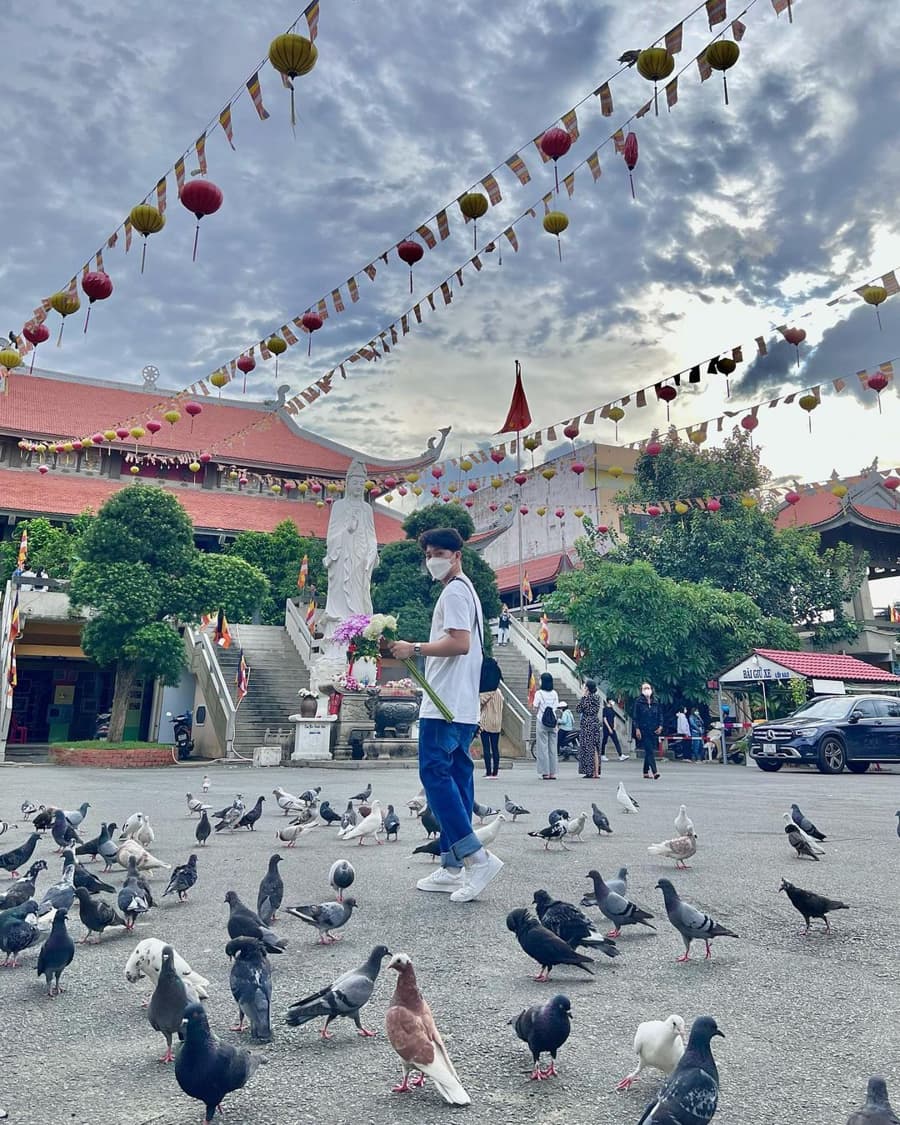
The open courtyard of Vinh Nghiem Pagoda provides an excellent setting for tranquil reflection and relaxation. Encircled by hallowed edifices and the soothing sounds emanating from the bell tower, this area offers visitors the opportunity to rest, meditate, or merely appreciate the serene atmosphere. It serves as an ideal retreat from the bustling streets that lie beyond the temple grounds.
Entrance Fee
Access to Vinh Nghiem Pagoda is entirely free, enabling guests to discover this significant spiritual location without incurring any expenses. Nevertheless, visitors are invited to offer modest voluntary donations, typically between USD 1 and USD 5, to assist in the upkeep of the temple and its daily religious practices. While these contributions are not mandatory, they are valued.
Opening Hours
Vinh Nghiem Pagoda welcomes visitors every day, typically from 6:00 AM to 9:00 PM, providing opportunities for a serene experience either early in the morning or later in the evening. While the pagoda remains accessible throughout the year, it tends to attract larger crowds during significant Buddhist festivals, particularly on full moon days, the Lunar New Year, and other notable religious observances when numerous locals gather to pray and present offerings.
The optimal periods for visiting Vinh Nghiem Pagoda are early morning or late afternoon, as these times provide cooler weather and a more tranquil atmosphere. The dry season in Ho Chi Minh City, spanning from December to April, presents more favorable conditions for both walking and sightseeing. For those who favor a serene and contemplative experience, as well as enhanced opportunities for photography, it is advisable to visit outside of peak festival periods.
How To Get To Vinh Nghiem Pagoda
Reaching Vinh Nghiem Pagoda is straightforward due to its central placement within Ho Chi Minh City. Located on Nam Ky Khoi Nghia Street in District 3, the pagoda can be easily accessed from key tourist destinations and is well-served by public transportation and main thoroughfares.
Via Taxi Or Ride-Hailing Services
Utilizing a taxi or a ride-hailing service represents the most convenient method for arriving at Vinh Nghiem Pagoda. Typically, the trip from District 1 lasts approximately 10 to 15 minutes, contingent upon traffic circumstances. One should proceed along Nam Ky Khoi Nghia Street in the direction of District 3, where the pagoda will be prominently visible along the main thoroughfare.
By Bus Or Motorcycle
Public transportation in the form of buses operating on or adjacent to Nam Ky Khoi Nghia Street offers an economical means of accessing the pagoda. Travelers may disembark at a nearby bus stop and proceed on foot for a brief distance to reach the entrance. Additionally, the rental of motorbikes is a favored alternative, affording travelers the flexibility to navigate while adhering to well-marked road signs that guide them directly to Vinh Nghiem Pagoda.
Things To Know Before Traveling To Vinh Nghiem Pagoda
Prior to visiting Vinh Nghiem Pagoda, it is beneficial to familiarize oneself with several fundamental guidelines to guarantee a respectful and pleasant experience. Being an active Buddhist temple, the pagoda adheres to traditional customs of which visitors ought to be mindful.
- To demonstrate respect, particularly when entering prayer halls and sacred spaces within the pagoda complex, it is advisable to wear modest attire that adequately covers the shoulders and knees.
- To uphold the tranquil environment for monks, worshippers, and fellow visitors, it is essential to remain silent and speak in hushed tones while within the temple.
- In accordance with traditional Buddhist customs, it is necessary to remove hats, sunglasses, and shoes prior to entering indoor worship spaces.
- Photography is allowed in the majority of locations. However, it is advisable to refrain from using flash and to avoid capturing images during prayer ceremonies or meditation sessions.
- To experience a more serene spiritual atmosphere, along with cooler temperatures and reduced crowds, it is advisable to visit either in the early morning or late afternoon.
- While small voluntary donations to assist with the maintenance of the temple are welcome, contributions remain entirely optional and are not a prerequisite for entry.
- You can also combine your trip with visits to famous sites like the Jade Emperor Pagoda and the Notre Dame Cathedral in Saigon if you are interested in spiritual and religious culture.
FAQs About Vinh Nghiem Pagoda
Prior to visiting Vinh Nghiem Pagoda, it is common for travelers to have inquiries, particularly concerning etiquette, hours of operation, and available activities. The subsequent frequently asked questions are designed to assist visitors in preparing for a respectful and enriching experience.
Is there a fee required for entry to Vinh Nghiem Pagoda?
No, all visitors can enter Vinh Nghiem Pagoda at no cost. There is neither an official ticket price nor a compulsory charge. Nonetheless, small voluntary donations are appreciated to assist with the temple’s daily operations and maintenance. These contributions remain entirely optional.
When visiting the pagoda, what attire is appropriate for guests?
Visitors should wear modest clothing that adequately covers both shoulders and knees. Given the warm climate, light and comfortable garments are recommended. Attire that is revealing or excessively casual should be avoided, as the pagoda serves as an active place of worship. Dressing in a respectful manner contributes to a positive experience for all visitors.
Are tourists permitted to capture photographs within Vinh Nghiem Pagoda?
Generally, photography is allowed in outdoor areas as well as certain interior spaces. Visitors are advised to refrain from using flash and to avoid taking photographs during prayer sessions. It is essential to remain considerate of both monks and worshippers while photographing. Respectful photography is highly encouraged.
Final Thoughts: Is Vinh Nghiem Pagoda Worth Visiting?
Vinh Nghiem Pagoda serves as an enriching destination for those travelers in search of cultural significance and spiritual tranquility within the bustling environment of Ho Chi Minh City. The pagoda’s traditional architecture, serene ambiance, and genuine Buddhist practices provide a visit that transcends conventional sightseeing experiences. Its central location and complimentary admission ensure accessibility for all types of travelers. Regardless of whether your interests lie in religion, history, or contemplative reflection, this temple presents enduring value. Consider organizing your cultural exploration in Vietnam and discovering additional inspiring locations with Seni World.


Related articles


