


Wat Xieng Thong in Luang Prabang is a beautiful Buddhist temple built in the 16th century with elaborate carvings, golden mosaics, and layered roofs. It showcases the rich culture of Laos and provides visitors with a calm spiritual experience in a historic environment.
Introduction To Wat Xieng Thong
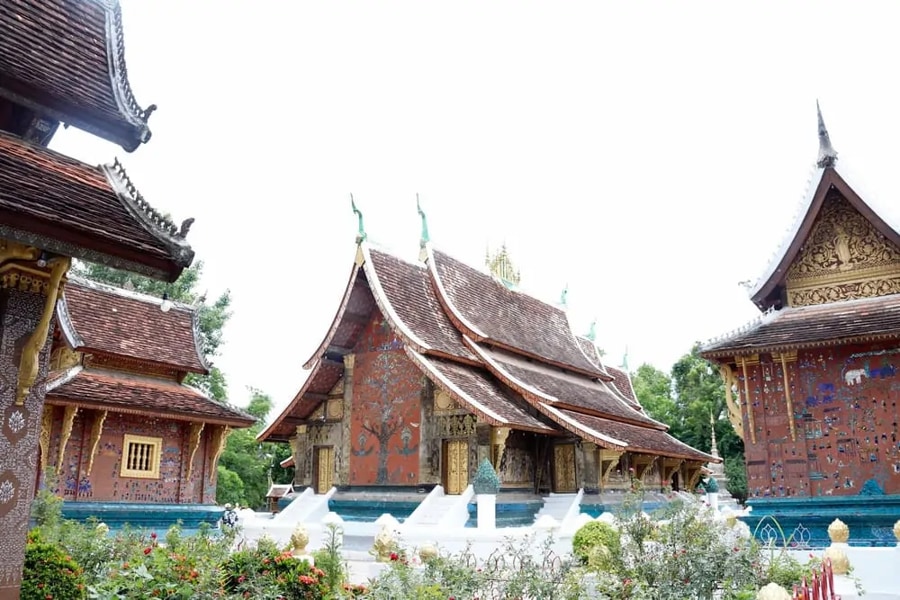
Located at the top of the Luang Prabang peninsula at the confluence of the Mekong and Nam Khan rivers is Wat Xieng Thong, a prime example of Luang Prabang’s Buddhist architecture. Built in 1559-1560 under King Setthathirath, the roofs of Wat Xieng Thong dramatically sweep toward the ground, the rich golden facades gleam in the tropical light, and the famous “Tree of Life” mosaic decorates the rear wall of the temple.
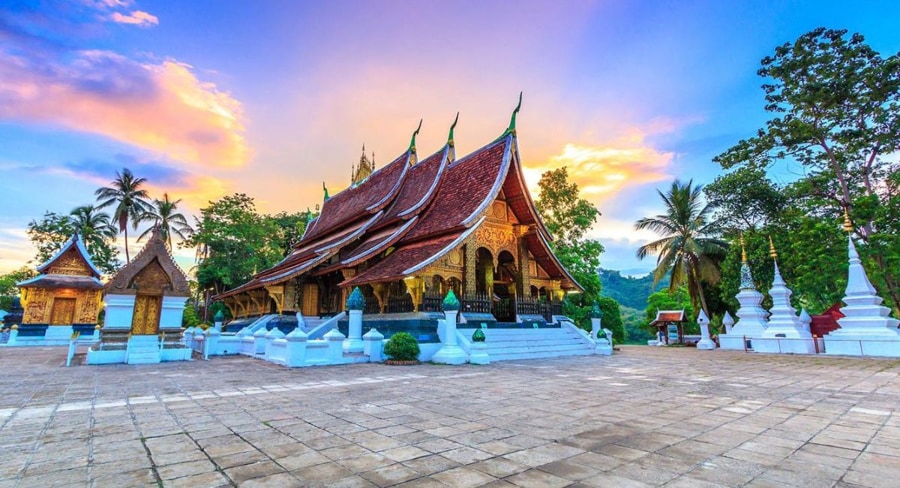
While the aesthetic beauty of the temple is compelling, visitors have been drawn from throughout the globe for its cultural and spiritual significance. For centuries, it served as Laos’ royal temple, a site for coronations, and a center for festivals, and in doing so reflected the links between religion, monarchy, and art. Today, Wat Xieng Thong is also a peaceful site for travelers to connect with Lao tradition while visiting one of Luang Prabang’s most beautiful landmarks.
History Of Wat Xieng Thong
Built in 1559-1560 during the reign of King Setthathirath, Wat Xieng Thong is among the oldest and most significant temples in Luang Prabang. Remarkably, the temple withstood the destruction from the invasion of the Black Flag Army in 1887, remaining largely intact in its original architecture and design.
In the 1970s, the temple served as a site for the coronation of Laotian kings, blending royal and religious traditions in ceremony. Today, Wat Xieng Thong remains a prominent temple in the spiritual life of Luang Prabang, functioning as the site of many annual festivals and celebrations of culture reflecting the deep history of Buddhism in Laos.
Unique Architecture Of Wat Xieng Thong
Wat Xieng Thong is not just a sacred site for devout religious beliefs but a remarkable piece of traditional Lao architecture. Each building within the temple grounds has a story to tell about faith, artistry, and cultural pride, thus finding itself as one of the most beautiful sites in Luang Prabang, and below are some highlights of its architectural elegance.
The Sim – The Main Sanctuary Of Grace
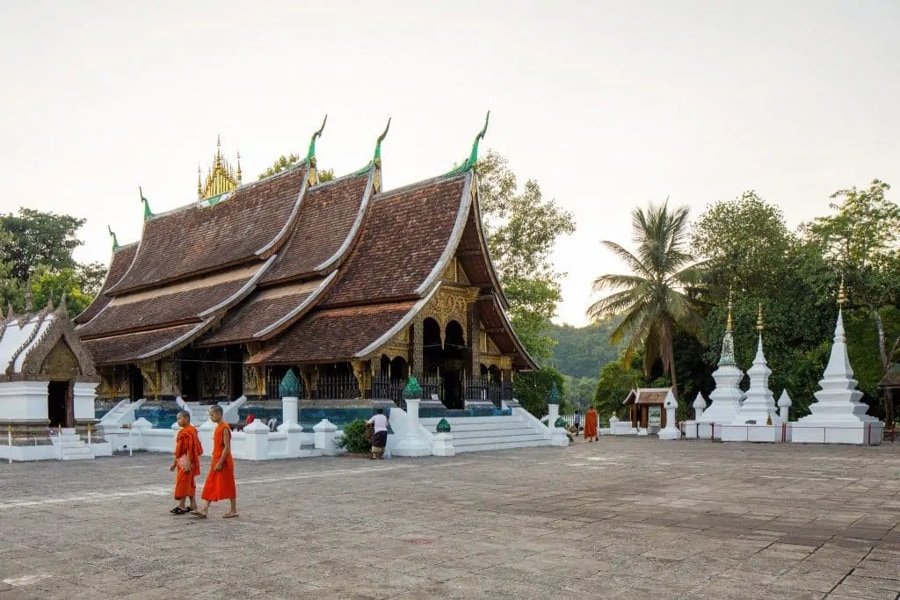
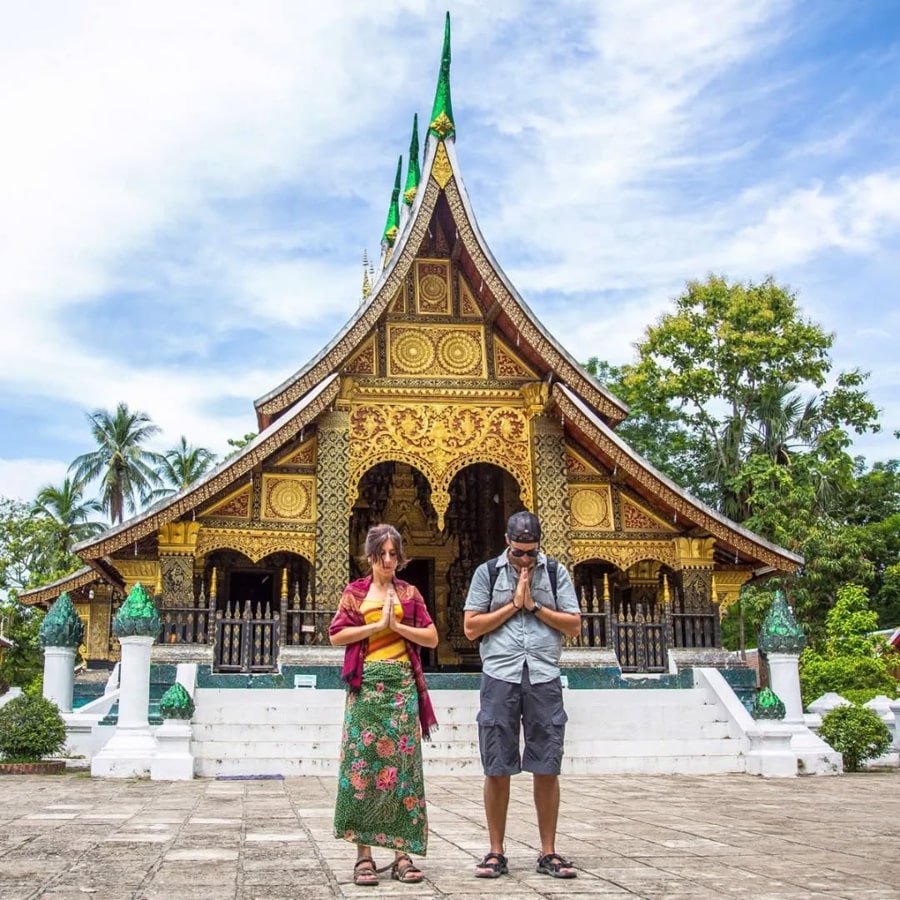
The Sim, or main ordination hall, is actually the centerpiece of Wat Xieng Thong and is the most opulent structure on the grounds. Sporting elegantly sloping, multi-tiered roofs nearly touching the ground, the building is a prime representation of traditional Lao architecture. Every detail of the Sim is lavishly designed with gold patterns and outcomes of intricate carvings, depicting their faith whilst also exuding a dominant artistic adornment.
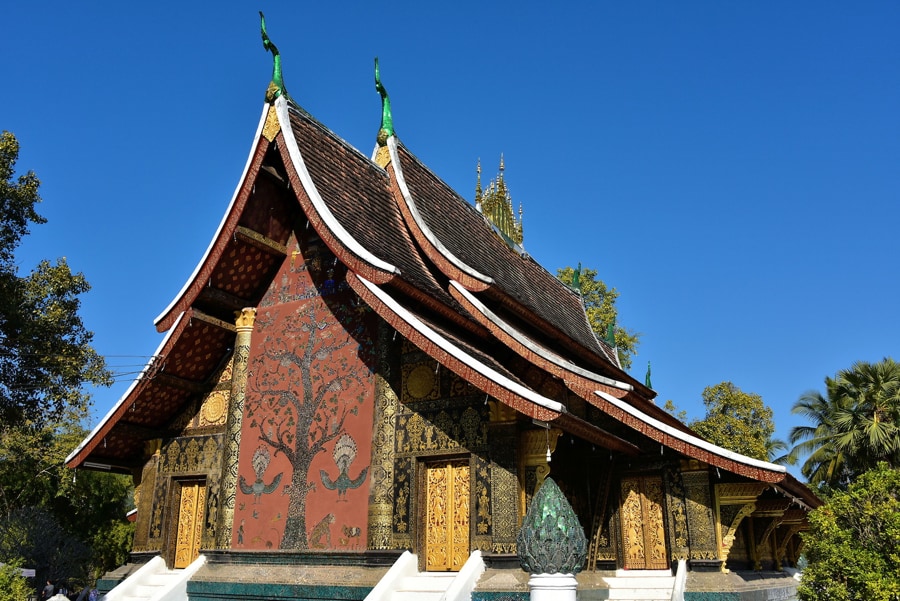
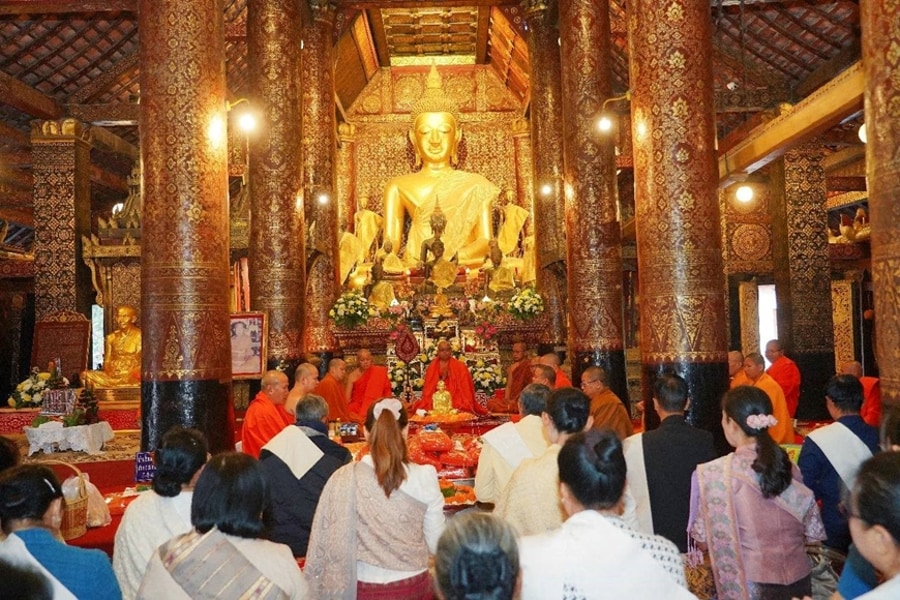
The main Buddha image is the only statue amongst the vastly colored murals telling the story of the life of the Buddha and ancient legends, which all collectively provide a serene and sanctified location for meditation and prayer.
A Compound Of Sacred Chapels
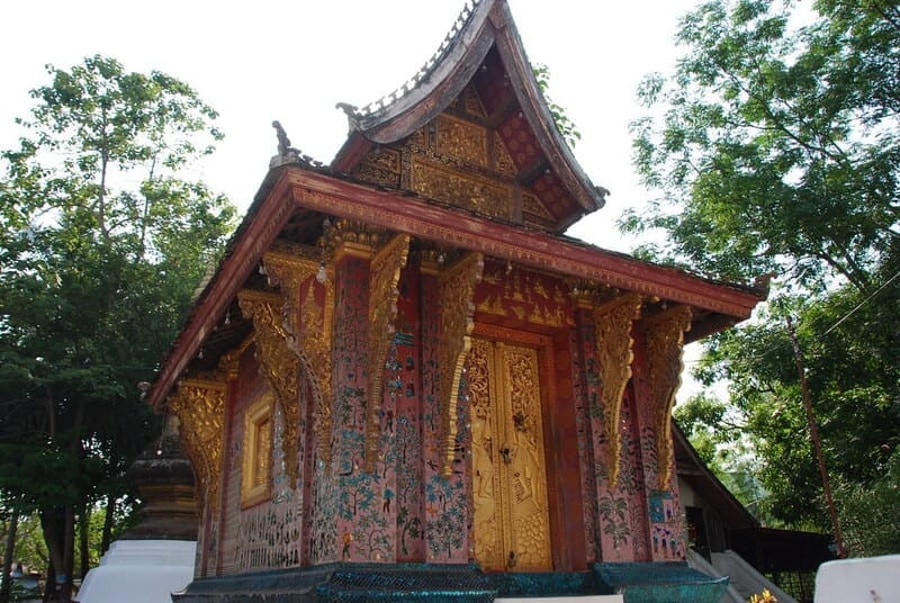
There are several smaller chapels that surround the Sim, each possessing its distinct architectural character, personality, and spiritual interpretation. The most distinguished of these chapels is the Red Chapel, a small but spectacular chapel decorated with luminescent glass mosaics on vibrant red walls that shimmer in the sunlight.
The Red Chapel also harbors a unique reclining Buddha statue, likely from the 16th century. The adjacent Chapel of the Standing Buddha, adorned with a tall and elegant statue exemplifying compassion and enlightenment, complements the duo of chapels that give visitors insight into both Lao spiritual expression and artistic variety.
Ho Trai – The Temple Library
The Ho Trai, or temple library, exemplifies innovation and devotion. To avoid dampness and termites attacking sacred Buddhist scriptures, the Ho Trai is built on wooden stilts. The structure exemplifies harmony between function and design. Gold stencils adorn the exterior, and intricate carvings epitomize dedication.
The Ho Trai had colored palm-leaf manuscripts in ancient times that preserved Buddhist teachings. The raised wooden-stilt foundation, intentional design choices, beautiful carvings, and abstract and figurative motifs of Ho Trai signify the auspiciousness of elevated knowledge and enlightenment in Buddhism.
The Drum Tower And Royal Crematorium
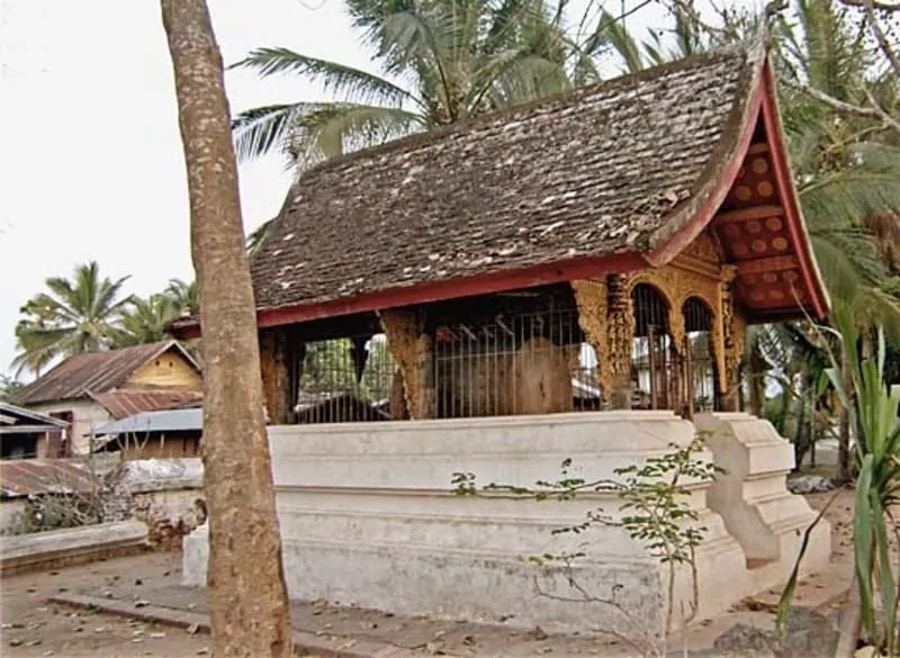
The tall wooden frame of the Drum Tower, with its beautifully carved details, would once have been the site of a rhythmic beating during the temple ceremonies and festivals. This served as a spiritual communication, calling monks and the local populace to gather in worship.
Nearby, a royal crematorium, with expensive embellishments decorated with gold, was erected to honor Lao kings and members of the royal family. Together, these structures create a somber and regal space that conveys a sense of the spiritual and royal heritage of Luang Prabang.
Vibrant And Symbolic Decorations
Every corner of Wat Xieng Thong is filled with color, artistry, and meaning. The temple walls are embellished with gold stencils, elaborate wood carving, and mosaic panels that cover the walls and depict scenes from Buddhist mythology and Lao life.
Among the most celebrated pieces of art in the temple is the famous “Tree of Life” mosaic that occupies the back wall of the Sim, along with vibrant glass, a splendid piece that represents creation and renewal. The artistic details exhibit the exceptional craftsmanship of the Lao artisans, and they embody the rich spiritual and cultural essence of the temple.
6 Unforgettable Experiences You Shouldn’t Miss
A trip to Wat Xieng Thong can be more than just a place to view art, culture, and spirituality. Here are some key nuggets of experiences that make this temple a must visit in Luang Prabang.
Take In The Beautiful Architecture
The temple is a prime example of traditional Lao architecture with its elegantly swooped roofs and finely detailed decorations. All of the buildings demonstrate the skill of talented artisans in gilded carvings and details on wooden panels. Walking around the temple complex allows visitors to appreciate how the design of the buildings reflects a combination of beauty and spiritual stories within the architecture. The eyeful details and colors truly give visitors a taste of Lao culture.
Explore The Culture And History Of Laos
The temple contains captivating insight into the history and tradition of Lao Buddhism. Stunning murals, sculpted figures, and calming spaces provide glimpses into the lives of prior generations, and assist visitors in contextualizing the cultural and spiritual backdrop of Laos. Visitors learn to connect with the spiritual foundations of the nation through understanding the art and history on display, and ultimately, this enriches their experience and legacy of culture.
Enjoy The Spiritual Calm
To venture into the peaceful nature of Wat Xieng Thong is to go on a spiritual experiential opportunity that does not compare to any other place. The calm halls, gentle chanting, and sacred space invite moments for calm contemplation. Almost all visitors feel the calmness, the connection, the appreciation of the temple not only for its stunning beauty, but also for its preserved spiritual roots.
Engage In Traditional Festivals
Wat Xieng Thong is part of the numerous higher-profile Buddhist festivals, including Vesak and That Luang, all of which are celebratory gatherings of culture. The temple comes alive with rituals, performances, and festivities that extend to the surrounding area. Visiting during these ceremonies provides a first-hand understanding of Lao religiosity – the joyful spirit of local communities gathering in celebration of their religiosity.
Enjoy Local Art and Handcrafts
Additionally, the temple exhibits traditional arts and handicrafts of the Lao. The visual art is illustrated by bright colors of Thangka paintings and textile weaving, among others, all of which emphasize the region’s tradition of cultural expression. Many tourists are fascinated by experiencing the work that occurs in the fields of art and textiles, which provides insight into the skill and dedication needed to keep unique expressions of culture alive across generations.
Pray For The Peace and Blessings
A spiritual landmark for Laos, local followers and travelers seeking blessings for peace and happiness of body and mind. Visiting Wat Xieng Thong is a common experience in Luang Prabang to remember people making prayers, lighting incense, or simply meditating in many spaces in the temple or temple grounds. Visitors become engaged with the temple on a personal level, so they leave with a certain sense of peace and appreciation of the spiritual aspects of the temple.
Entrance Fee
The standard entrance fee to Wat Xieng Thong is around 20,000 LAK (about 2.5 USD per person). This ticket grants guests entry to the temple’s main areas and gives them an opportunity to take in the beautiful architecture and cultural history it has to offer.
Opening Hours
Wat Xieng Thong is open every day from 8:00 AM until 5:00 PM. However, special events, ceremonies, or festivals may sometimes change the visiting hours, so check ahead if you want to avoid a disruptive surprise. You can visit any time throughout the year. However, afternoons are best. The sunset creates a golden light across the temple at sunset and produces a calm, picturesque view of peaceful Luang Prabang.
How To Get To Wat Xieng Thong
Wat Xieng Thong is situated at the northern end of the Luang Prabang peninsula, at the confluence of the Mekong and Nam Khan rivers, wedged between Khem Khong Road and Sakkaline Road. Most people are able to walk to the temple from anywhere in central Luang Prabang comfortably. Those staying further away may take bicycles, motorbikes, or tuk-tuks, convenient modes of transportation.
Although many travelers prefer to walk to the temple, if you choose to take a mode of transportation, it is wise to seek advice from your hotel or guesthouse. Bicycles and motorbikes can also be rented directly from your accommodation. While it is best to travel in groups rather than solo, riding a motorbike or car around town will make it safer. You can consider the following options:
- Tuk-tuk: Rental prices are around 200,000 LAK (~23 USD) for a few hours, or 250,000 LAK (~29 USD) for up to 6 hours. A tuk-tuk can fit 6-8 people comfortably, and drivers know all the local routes. There might be a small fee of 10,000 LAK (~1.2 USD) to cross the Nam Song River.
- Motorbike rental: A daily rental is usually about 100,000 LAK (~12 USD) plus the cost of gas. This is a great option because you can spend as much time as you like at the different temples or in the area.
- Bicycle: It is very easy and inexpensive to rent a bike to reach Wat Xieng Thong. It should only take a few minutes to get to most places if you are riding one. Daily rent prices are about 25,000 LAK (~2.9 USD).
Things To Know Before Traveling To Wat Xieng Thong
Before visiting Wat Xieng Thong, please consider that this is not only a well-known travel site, but also a place of great religious significance. Out of courtesy and respect for this sacred site, it is a good idea to take a look at a few helpful points to keep in mind as a traveler:
- While you can take pictures in most areas, just be sure to pay attention to any signage restricting photographs. This is particularly important in holy areas, as they can take away from the experience of those who are praying.
- Dress appropriately in the temple. No short skirts, sleeveless tops, or revealing clothing should be worn. Shoes must be removed before entering the main hall.
- Be quiet and consider the others who may be praying or meditating. It is important to preserve the tranquil and spiritual environment in temples.
- Visiting in the early morning or late afternoon will help to avoid large crowds and give you the pleasure of experiencing the temple surrounded by soft light.
- Bring cash to pay for the entry fee, and perhaps a small donation, as credit cards are not accepted.
- If you join a tour, observe your guide’s instructions and listen to their explanation so you can understand the symbolism and architecture of the temple and the significance of the history.
- Please do not touch the statues, murals, or any object in the temple, as it may be considered disrespectful in Lao culture.
Final Thoughts: Is Wat Xieng Thong Worth Visiting?
Wat Xieng Thong is a timeless work of art that tells the story of the spirit, artistry, and religious faith of Laos. Every detail, from the golden carvings to the gardens infused with calmness, indicates devotion to tradition and belief. When visiting, you will have the rare opportunity to witness the heart of Luang Prabang’s cultural heritage and see one of Southeast Asia’s most beautiful temples. Prepare for an unforgettable Luang Prabang trip with the help of Seni World, and let the magic of Wat Xieng Thong capture your heart.


Related articles


