


The Japanese Covered Bridge is a historical and cultural treasure and the pride of Hoi An, which has a mixture of Japanese, Chinese, and Vietnamese influences. Seni World’s travel guide will show you its history, attractions, and important travel tips.
Introduction To The Japanese Covered Bridge
The Japanese Covered Bridge in Hoi An is also called Chua Cau, is one of the most popular destinations in the Central Vietnam itinerary, symbolizing the old town’s rich cultural exchange for the duration of its golden trading generation. The bridge has an elegant design, complicated carvings, and also has a small temple dedicated to the Taoist deity of weather.
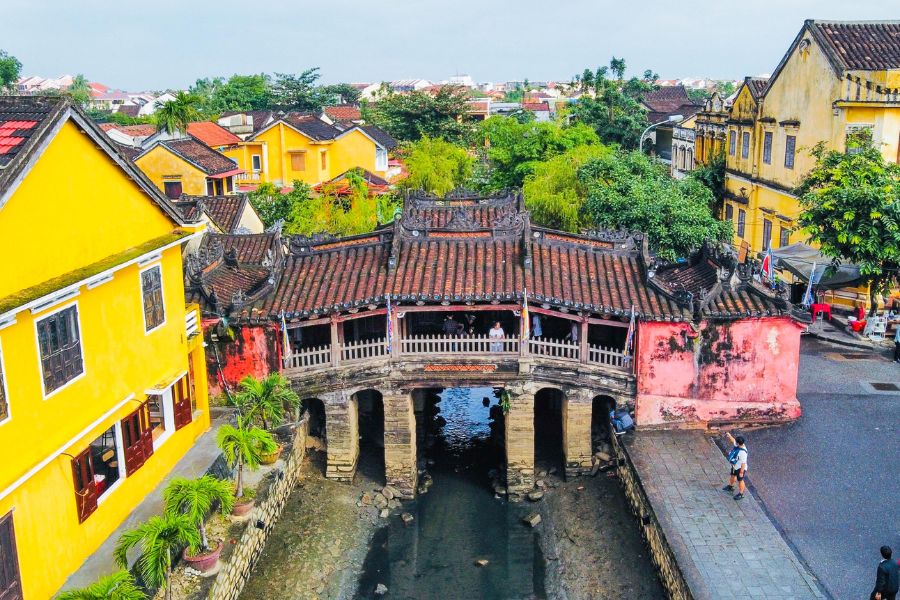
This is a harmonious combination of Japanese, Chinese, and Vietnamese cultures and religions. Today, the Japanese Covered Bridge not only functions as a crossing but also as a historical and cultural treasure and the pride of Hoi An Ancient Town.
History Of The Japanese Covered Bridge
The Japanese Covered Bridge in Hoi An was built in the early 17th century and is a captivating symbol of the old town’s multicultural heritage. The wooden bridge was constructed by the Japanese community to connect their zone with the Chinese district, and it has a mixture of Japanese, Chinese, and Vietnamese structures.
Over centuries, the Japanese Covered Bridge has been restored numerous times, but it still keeps its original wonderful attraction and stands as a testament to Hoi An Ancient Town’s brilliant past as a well-known international trading port.
Unique Architecture Of The Japanese Covered Bridge
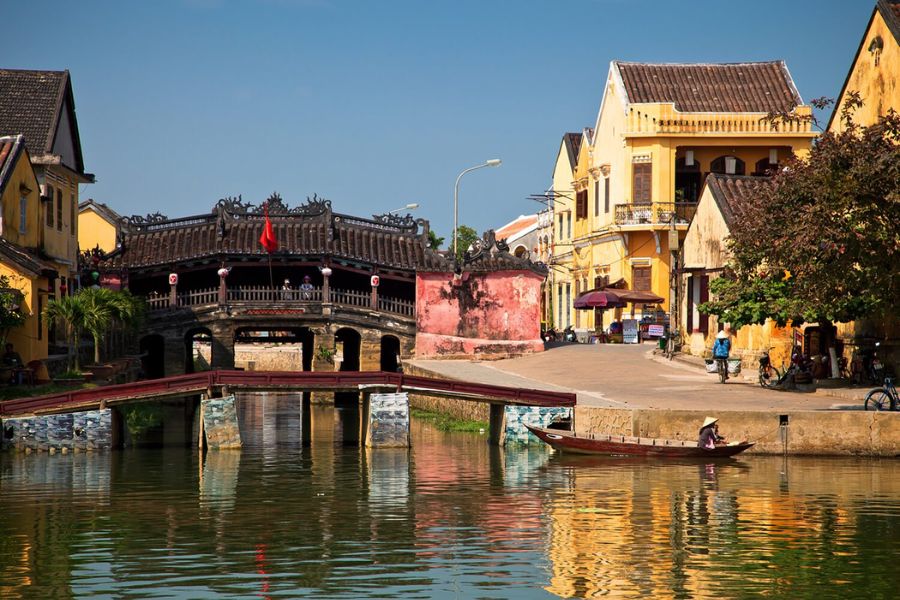
The Japanese Covered Bridge is a historical and cultural treasure and the pride of Hoi An Ancient Town, which has a harmonious combination of Japanese, Chinese, and Vietnamese cultures and religions. Here are 5 unique architectural features of the famous Japanese Covered Bridge:
Arched Wooden Structure
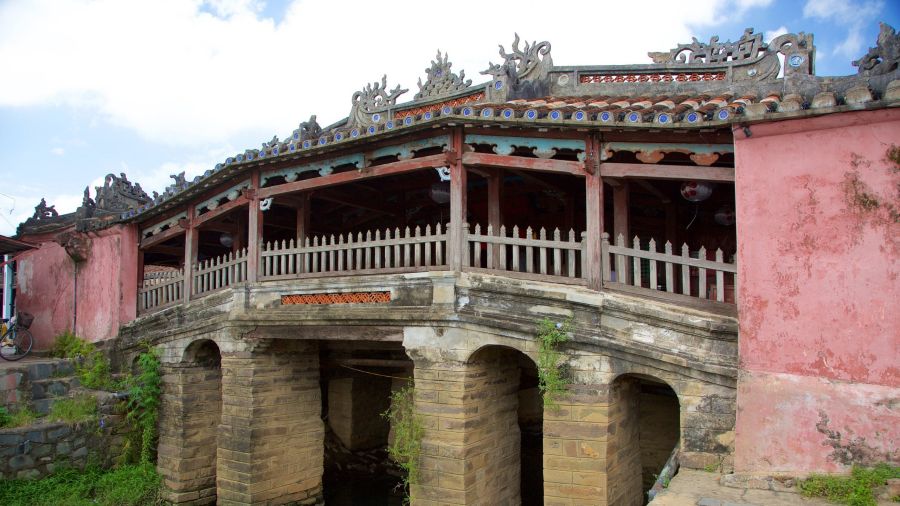
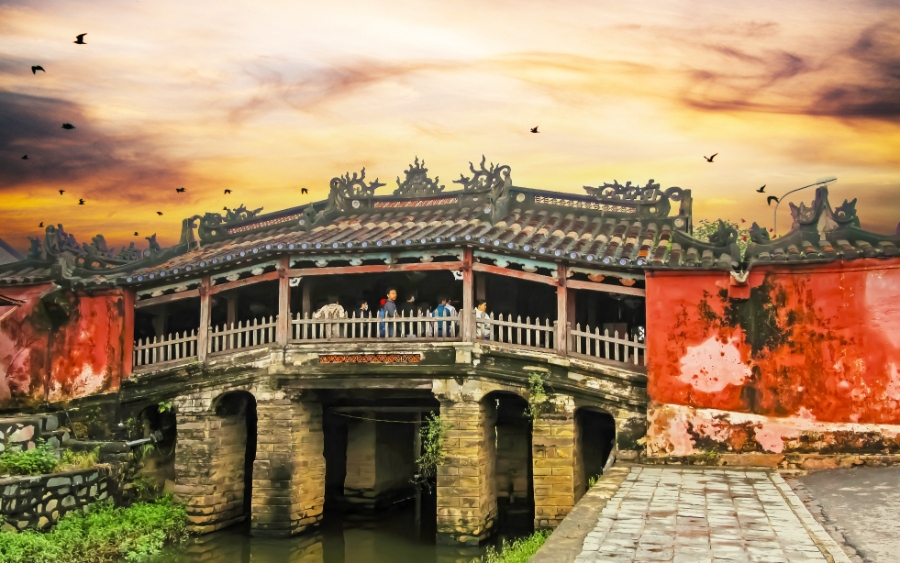
The Japanese Covered Bridge has the design of a gently arched wooden frame, permitting it to span the Thu Bon River’s canal elegantly. The bridge’s arch not only has a structural strength, but also makes a graceful image and is very different from many other bridges in Vietnam. Its use of sturdy wood showcases conventional Japanese craftsmanship adapted to the local vibe.
Tiled Roof Design
One of the Japanese Covered Bridge’s most unique points is its tiled roof, which protects pedestrians from both the tropical sun and heavy rains. The curved roofline shows Japanese architectural beauty, and the layered tiles have a harmonious rhythm in their general look. These useful yet inventive features increase the bridge’s appearance like a temple rather than a simple crossing.
Animal Statues Like Dogs And Monkeys
Guarding the entrances of the Japanese Covered Bridge are statues of a dog on one side and a monkey on the other. They represent the years of building this place, which started in the Year of the Monkey and was finished in the Year of the Dog. These figures are special iconic guardians of this destination, protecting the bridge as well as its vacationers.
Small Temple Inside The Bridge
One more unique architectural feature of the bridge is housing a small shrine dedicated to the Taoist deity Tran Vo Bac De, who is the god of weather and protection. Traders and vacationers prayed here many times for safe journeys and pleasant situations at sea. This meaning elevates the bridge from a simple passageway to a religious and cultural place.
Fusion Of Japanese, Chinese, And Vietnamese Influences
In spite of being constructed by the Japanese, the Japanese Covered Bridge includes architectural elements from both Chinese and Vietnamese traditions. The carefully carved motifs, beautiful roof decorations, and conventional structural details replicate a combination of cultures that coexisted in Hoi An during its trading port era. This fusion is a symbol of cultural harmony.
5 Cultural Experiences You Shouldn’t Miss In The Japanese Covered Bridge
Not only can you find out unique architectural features of the famous Japanese Covered Bridge, but you can also learn more about and unwind in cultural experiences in this well-known destination. Here are 5 cultural experiences you should not miss when exploring the impressive area around the Japanese Covered Bridge:
Capture The Symbol Of Hoi An
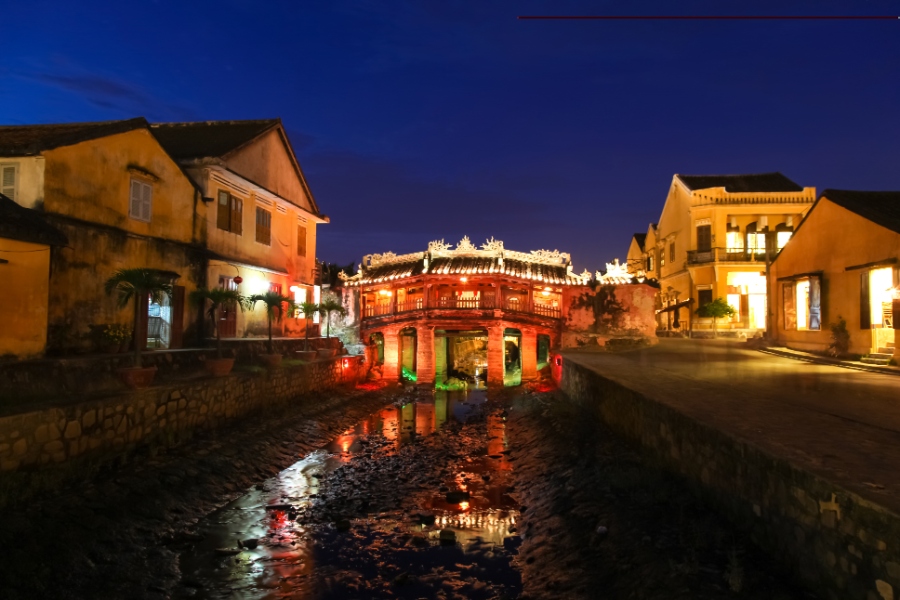
Taking pictures at the Japanese Covered Bridge is one of the great things to do in Hoi An, as it represents the very identity of this Ancient Town. In particular, this bridge is featured on Vietnam’s old 20,000 VND banknote. Therefore, the bridge is not just a local icon. It is a national symbol. Capturing it during the day or at night, when it’s superbly lit, brings you various memorable moments.
Join A Guided Storytelling Tour
Listening to local tour guides, you can have an opportunity to understand more about the myths, legends, and history behind this famous bridge, as well as Hoi An’s multicultural heritage. Special stories of Japanese traders, iconic animals here, and the bridge’s role in connecting communities make this attraction a cultural adventure through time.
Witness Lantern Illumination At Night
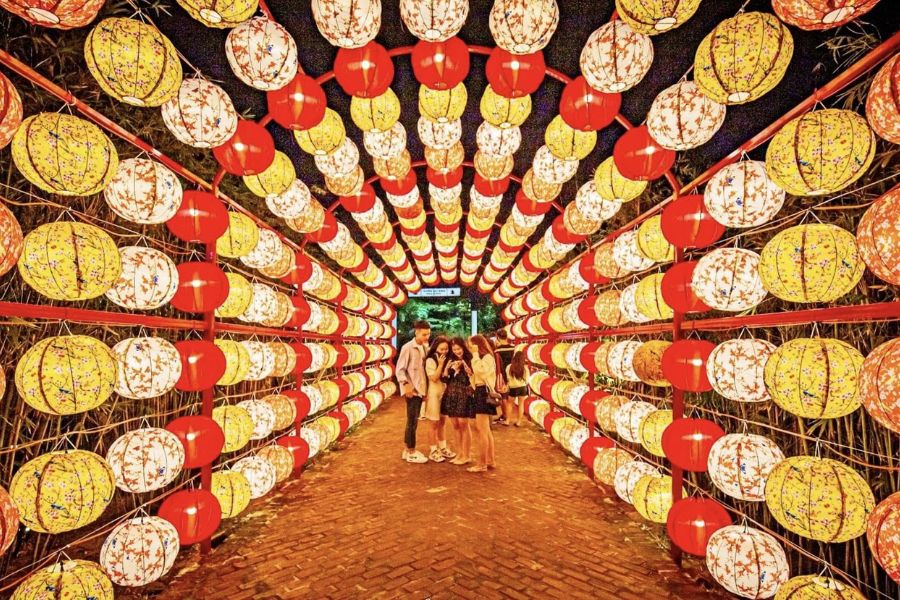
At night, the Japanese Covered Bridge glows underneath brilliant lanterns, creating a poetic and spiritual atmosphere. Strolling across the bridge, travelers can revel in lantern lighting, which is Hoi An’s most impressive cultural point. Besides, don’t forget to enjoy this place as a social gathering spot when communicating with various friendly local people.
See Rituals At The Small Shrine
Inside the bridge, the local people light incense and make traditional offerings at a small shrine to Tran Vo Bac De, who is the deity of climate and safety. Witnessing or peacefully taking part in this activity, tourists can have a chance to find out more about the living traditions that link the wonderful Hoi An’s present to its proudly centuries-old history.
Celebrate During Festivals
The Japanese Covered Bridge will be an energetic focal point all through Hoi An’s Lantern Festival and many different cultural events. Visitors can unwind in traditional performances, games, and ceremonies here. This time, the bridge is no longer only a historic monument but also a particular cultural stage. Experiencing the bridge in festivals, you can feel its position as the living heart of the local community.
Entrance Fee Of The Japanese Covered Bridge
Here is a table that Seni World has collected the Japanese Covered Bridge entrance fees. These fees can slightly vary according to the real-time travel season:
| Visitor Type | Price (VND) | Validity | Includes | Notes |
| Vietnamese Visitor | 80,000 VND | 24 hours | This is the entrance fee to Hoi An Ancient Town and 5 sightseeing sites (including the Japanese Covered Bridge). | You need to buy a ticket because the Japanese Covered Bridge is in the Hoi An Ancient Town. |
| Foreign Visitor | 120,000 VND | 24 hours | It is free for children under 16 years old. | |
| Extra Sight Tickets | From 20,000 to 40,000 VND each | Same day | For exploring more sites beyond the first 5. | It is an optional type if you want to visit more vacation spots here. |
Opening Hours Of The Japanese Covered Bridge
Seni World has also summarized all the Japanese Covered Bridge opening hours for you. Thanks to them, you can schedule a pleasant and happy trip to this iconic destination in Hoi An:
| Area | Opening Hours | Notes |
| Japanese Covered Bridge (for exterior view) | Open all day (24/7) | Travelers can freely see and take memorable photos of the bridge’s exterior anytime. |
| Inside the bridge and shrine | From 07:00 AM to 05:30 PM daily | Entry to this place requires a Hoi An Ancient Town sightseeing ticket, which consists of access to 5 heritage sites. |
| Lantern lighting at night | After sunset until about 10:00 PM | The Japanese Covered Bridge is illuminated with colorful lanterns, a wonderful time for photos (viewing from outside only). |
From February to April and from September to January are the best times to visit Hoi An in general and the Japanese Covered Bridge in particular. This is the reason why the open hours of this place can be different. So you need to carefully confirm with the Japanese Covered Bridge’s manager in advance.
How To Get To The Japanese Covered Bridge
In this Japanese Covered Bridge journey, you should choose the right way to get to this spot to be pleasant, as well as have a budget-friendly price. Here are hints from Seni World about how to get to the Japanese Covered Bridge:
| Starting Point | Transportation Options | Estimated Travel Time | Notes |
| Da Nang International Airport or Da Nang City Center | Taxi, private car, shuttle bus, motorbike rental, and public bus no.1 | From 45 to 70 minutes | Hoi An is about 30 kilometers away. After arriving at the bus stop or parking area, you need to walk into the pedestrianized Ancient Town to reach the Japanese Covered Bridge. |
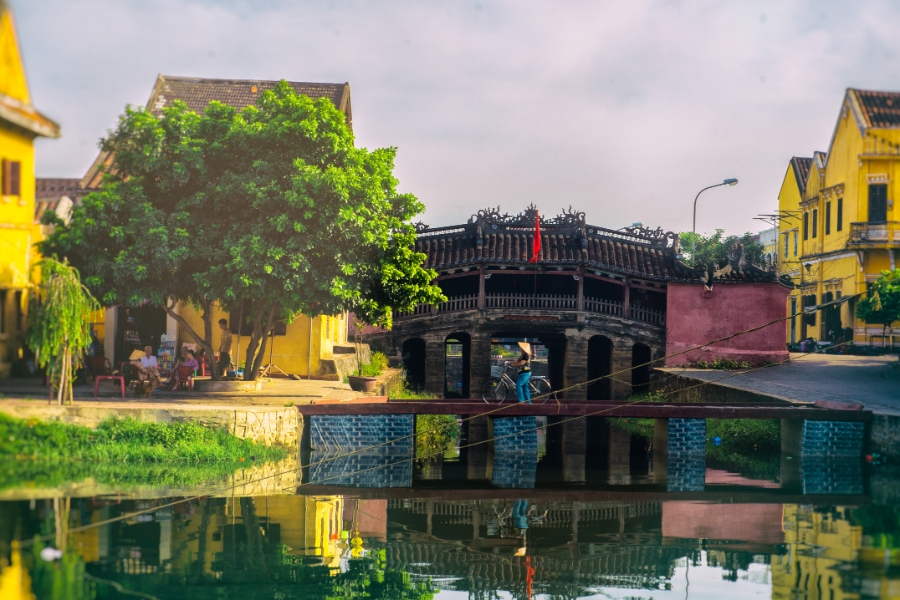
| Hoi An Ancient Town Entrance | Walk or bike | From 5 to 15 minutes (depending on location) | The Japanese Covered Bridge is centrally positioned on Nguyen Thi Minh Khai Street, easily accessible on foot or by bike. |
| Hoi An Beaches (An Bang Beach, Cua Dai Beach) | Bike, motorbike, and taxi | From 15 to 25 minutes | Various roads from the beach lead directly to Hoi An Ancient Town, and there are parking areas available outside the walking streets. |
Things To Know Before Traveling To The Japanese Covered Bridge
To have an exciting, convenient, happy, and safe Hoi An itinerary, as well as the Japanese Covered Bridge trip, you should remember the following essential travel tips. These tips will help you investigate this place comfortably, but still respect the culture and society, and protect yourself best:
- No separate entrance fee for the Japanese Covered Bridge: There is no special entrance fee for the bridge. It is included in the Hoi An Ancient Town, and we have summarized details for you in the above section.
- Go early morning: Let’s come here before 09:00 AM for cooler, fewer crowds, as well as better photo opportunities.
- Return at night: The bridge is fantastically illuminated with colorful lanterns after sunset, creating a magical atmosphere. So you should stay here at night to witness this view.
- Keep away from noon heat: The roof of the Japanese Covered Bridge gives shade, but the surrounding location can get particularly hot at midday. Therefore, you need to choose a suitable time to visit here, like early morning or late afternoon.
- Note your apparel: You should get dressed simply with mild garments and comfortable footwear, because you will be on foot on uneven old streets. Moreover, remember that there is a small Taoist temple on the bridge, so get dressed modestly but still be polite when arriving at this place.
- Stay respectful in photos: Say no to climbing or sitting on delicate parts of the Japanese Covered Bridge.
- Seize both angles: You can take photos of the bridge from Nguyen Thi Minh Khai Street and from the riverside for extraordinary views.
- Prepare cash: Cash (Vietnamese Dong or VND) is the most convenient way to pay for entrance tickets, food, beverages, and traditional souvenirs nearby. Many small stores and food stalls don’t accept online payment or cards.
- Book a local tour guide: Let’s enjoy an excursion with a local tour guide to add more intensity. You can listen to interesting legends and stories tied to this well-known bridge.
Final Thoughts: Is The Japanese Covered Bridge Worth Visiting?
The Japanese Covered Bridge is a historical and cultural treasure and the pride of Hoi An Ancient Town, which has a harmonious combination of Japanese, Chinese, and Vietnamese cultures and religions. If you want to take a Japanese Covered Bridge adventure, as well as consult things to see and do in this place, and receive support for the visa process, let’s contact Seni World, a reputable tour operator from Vietnam. We are here to help you from A to Z on your Japanese Covered Bridge discovery trip.


