


My Son Sanctuary is a UNESCO World Heritage Site in Central Vietnam and one of Southeast Asia’s most important Hindu temple complexes. Seni World’s travel guide will show you its history, culture, attractions, entrance fees, and important travel tips.
Introduction To My Son Sanctuary
My Son Sanctuary, located about 40 kilometers from Hoi An, is a UNESCO World Heritage Site and one of Southeast Asia’s most important Hindu temple complexes. The sanctuary is devoted especially to the worship of Shiva, the Hindu god of both creation and destruction. Therefore, My Son Sanctuary is very famous among international travelers and is one of the most highlighted spots in the Central Vietnam itinerary.

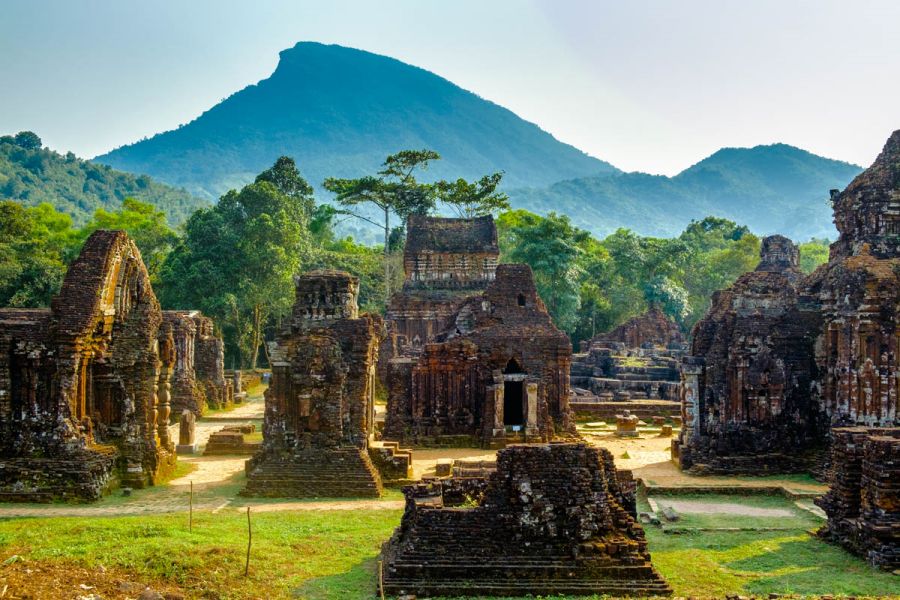
Surrounded by huge mountains, My Son Sanctuary is home to a variety of attractive red-brick towers and shrines that exhibit the tremendous Cham artistry, architecture, and devotion inspired by the Indian style. Nowadays, the sanctuary stands not only as an archaeological treasure of Central Vietnam but also as a cultural image reflecting the rich history and culture of this place.
History Of My Son Sanctuary
My Son Sanctuary was the spiritual and political capital of the old Champa Kingdom, which flourished from the 4th to the 13th century. Mainly dedicated to the Hindu god Shiva, the sanctuary was a sacred place for royal ceremonies, religious offerings, as well as a burial area for Cham kings. Over the centuries, Cham artisans built more than 70 unique temples and towers using great red brick and sandstone.

They are superior techniques and complicated carvings that showcase both Indian and local influences. No matter suffering damage from wars and natural decay, My Son Sanctuary is still one of Southeast Asia’s most symbolic and very important archaeological destinations and was proudly recognized as a UNESCO World Heritage Site in 1999.
Unique Architecture Of My Son Sanctuary
My Son Sanctuary is a UNESCO World Heritage Site, one of Southeast Asia’s most important Hindu temple complexes, as well as a wonderful attraction in Hoi An. Here are 5 unique architectural features of the well-known My Son Sanctuary:
Red Brick Masonry Without Mortar
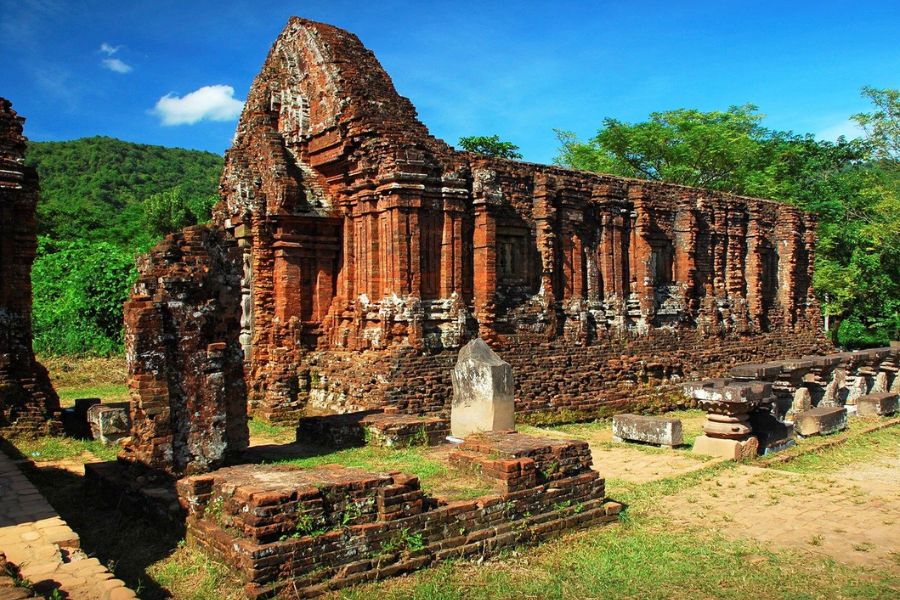
The temples of My Son Sanctuary are constructed basically from red bricks, exquisite and highlighted for their durability and seamless joints. Unlike normal building ways, the Cham builders used no visible mortar because historians have researched and believe that they used a natural resin or a special technique that bonded the bricks tightly together. This particular masonry approach remains a mystery and is a key, impressive factor in the My Son Sanctuary’s endurance over centuries.
Hindu-Inspired Tower Design
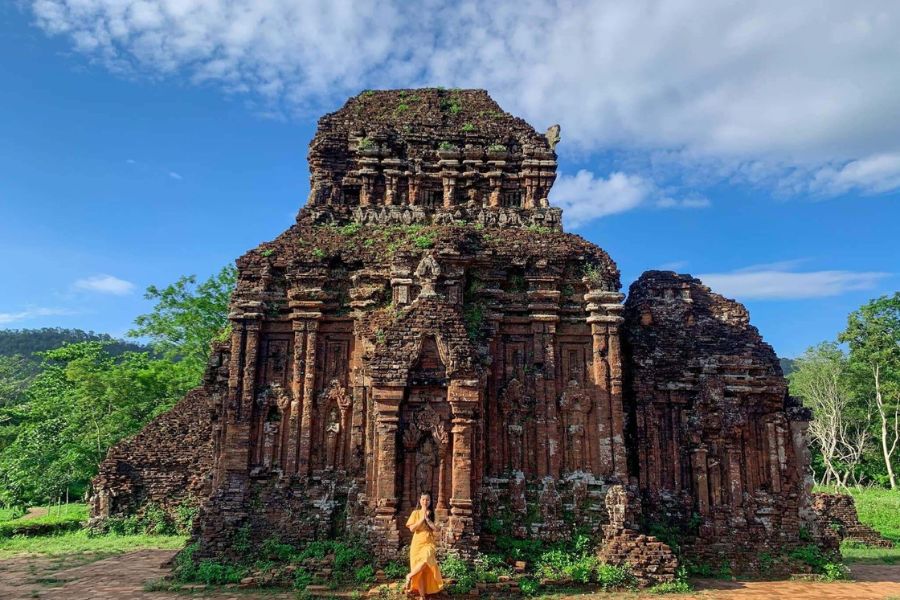
The primary sanctuaries, known as Kalan, were built as image representations of Mount Meru, the sacred axis of the Hindu universe. These towers have tall and tapering spires and were dedicated to Shiva. They were also designed as locations to house lingas and important perform rituals. The verticality of the layout emphasized a religious connection between earth and heaven.

Intricate Sandstone Carvings
My Son’s temples are decorated with sandstone sculptures and bas-reliefs depicting wonderful images of Hindu gods, apsaras (also called celestial dancers), sacred animals, and mythological scenes. Every carving showcases not only Cham artistry but also Indian spiritual impact, combining elegance with symbolism. Seeing these intricate decorations at My Son Sanctuary, you can feel that they are both the captivating point of art and the religious expressions of devotion.
Multi-Layered Temple Complex Layout
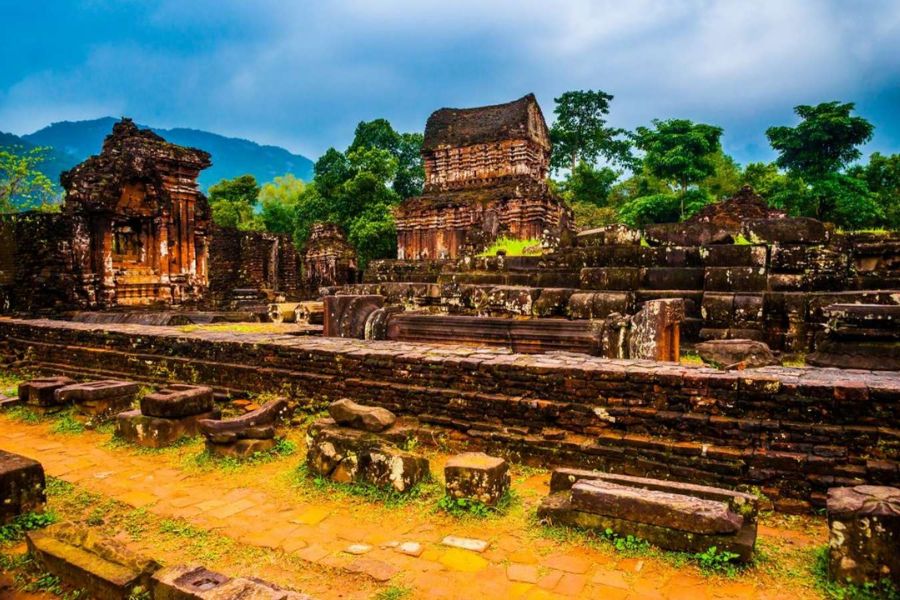
The sanctuary is divided into groups of temples and towers. They are arranged in clusters around a main shrine. Every cluster commonly consists of a central temple (for worship), smaller towers (for storage of holy items), and auxiliary structures. The spatial space and organization display Hindu cosmology, with the main sanctuary in the middle at the role of the divine cosmos.
Fusion Of Indian And Indigenous Cham Styles
With the strong impact of the Hindu temple structure from India, My Son Sanctuary contains local Cham elements from Vietnam, which include decorative patterns inspired by nature and indigenous beliefs. This fusion created an exceptional style particular to Champa culture, making My Son more different and unique than other Hindu temple attractions in Southeast Asia.
5 Cultural Experiences You Shouldn’t Miss At My Son Sanctuary
Not only can you find out unique architectural features of My Son Sanctuary, but you can also find out more about and revel in cultural experiences in this famous destination. Here are 5 cultural experiences you should not miss when uncovering the captivating area around the My Son Sanctuary:
Watching Cham Dance Performances
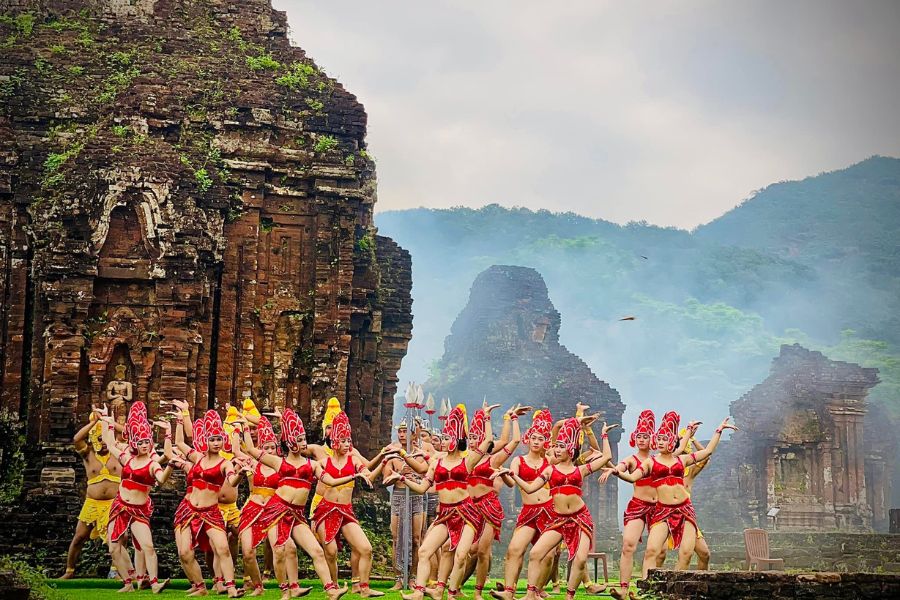
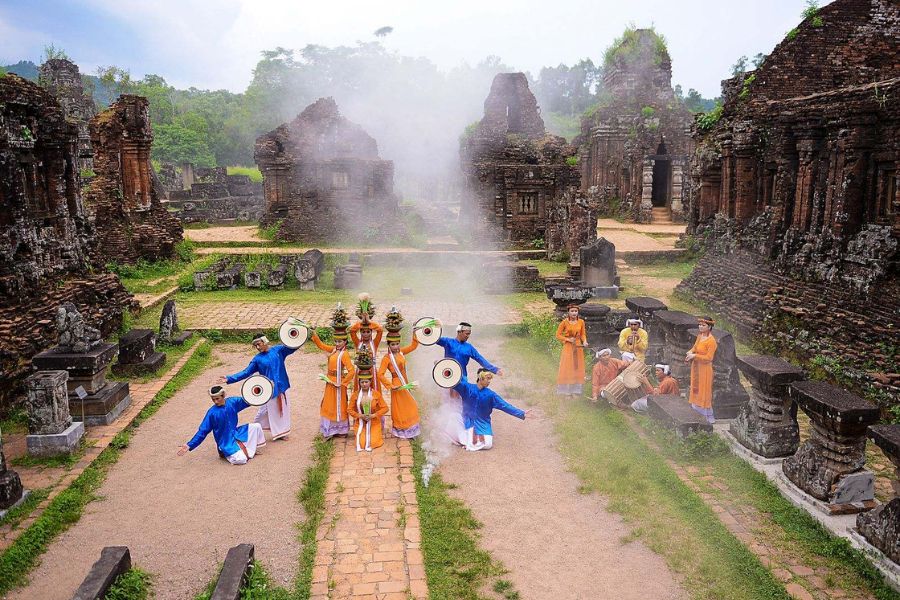
One of the most memorable things to do in a Hoi An trip, in general, and in My Son Sanctuary, in particular, is enjoying the daily Cham dance performances held near the entrance of this place. Local performers wearing conventional costumes bring to life historical rituals through unique Apsara dances, graceful moves, and rhythmic drum beats. These special performances recreate the spiritual vibe of ceremonies as soon as shown in the temples of the past.
Listening To Traditional Cham Music
Besides the dances, travelers can have an opportunity to unwind in the distinct sounds of Cham musical instruments, including gongs and drums. The music here, deeply religious and symbolic, is traditionally performed to honor Hindu deities during the sacred temple rituals. Listening to these special melodies against the backdrop of the ruins, you can feel more added intensity for this cultural adventure.
Exploring Ancient Hindu Ritual Sites
Strolling through the temple groups at My Son Sanctuary, you can see that this is a great journey into spaces once reserved for kings and priests. They were dedicated to Shiva, represented by lingas, and were sacred locations of worship. Witnessing the layout of these sanctuaries and ruins, you can gain deep insight into the spiritual existence among the lives of the Champa civilization.
Visiting The My Son Museum Outside
Before or after discovering the ruins, don’t forget to explore the onsite museum so you can better recognize both the cultural and historical significance of this destination. The My Son Museum showcases Cham sculptures, old artifacts, and informative details that are displayed carefully. They designate how this attraction functioned as both a religious and political center.

Participating In A Guided Cultural Tour
Taking part in a guided excursion with a local expert, you will have a richer cultural experience. Tour guides will share more stories and legends of the Champa kings, information about Hindu influences, and insights into Cham traditions that are nonetheless alive today. This personal storytelling style will change your journey from a simple sightseeing into an adventure through the living culture of the Cham people from past to present.
Entrance Fee Of My Son Sanctuary
Here is a table that Seni World has summarized for My Son Sanctuary entrance fees. These fees can slightly vary according to the real-time travel season:
| Ticket Type | Price (VND) | Notes |
| Adult (local and international visitors) | 150,000 VND | This price includes entrance to My Son Sanctuary, electric shuttle transfer from the entrance to the destination, and access to the My Son Museum. |
| Children under 15 years old | Free | The child may need to have an ID, or proof of age may be required. |
| Vietnamese Students | Discounted (with a valid student ID) | Price may vary depending on policy at the time of visit. |
| Cham people | Free | This is a part of cultural preservation policies. |
Opening Hours Of My Son Sanctuary
Seni World has also collected all the My Son Sanctuary opening hours for you. Thanks to them, you can arrange a comfortable and happy trip to this UNESCO World Heritage Site:
- Daily opening hours: From 06:00 AM to 05:00 PM.
- Cham dance performances: These shows are usually held 3 times a day at 09:30 AM, 10:30 AM, and 02:00 PM. The schedule may change depending on the season or real-time special events.
From February to April and from September to October are the best times to visit Hoi An in general and My Son Sanctuary in particular. This is the reason why the opening hours of this attraction can be different. So you need to check before and carefully confirm with the My Son Sanctuary’s manager.

How To Get To Of My Son Sanctuary
In this My Son Sanctuary journey, you should choose the right way to get to this place to be convenient, as well as have an affordable price. Here are hints from Seni World about how to get to the My Son Sanctuary:
| Starting Point | Transportation Options | Estimated Travel Time | Notes |
| Da Nang International Airport or Da Nang City Center | Taxi, private car, motorbike rental, and guided tour bus | From 1.5 to 2 hours | The distance between the 2 places is about 60 kilometers. So a private car or a guided tour is the most comfortable option. |
| Hoi An Ancient Town | Taxi, private car, motorbike rental, and guided tour bus | From 1 to 1.5 hours | Roughly 40 kilometers, so besides transportation like from Da Nang, some skilled travelers choose a motorbike or a half-day tour from Hoi An Ancient Town. |
| From Da Nang Or Hoi An Hotels | Guided tours (you can choose half-day or full-day) | Depend on your itinerary | It includes round-trip transportation, entrance tickets, as well as a local guide for travelers. |
| Hue City | Private car and guided tour bus | From 3.5 to 4 hours | This is around 145 kilometers, and often combined with a stop in Da Nang City or Hoi An Ancient Town before arriving at My Son Sanctuary. |
Things To Know Before Traveling To My Son Sanctuary
To have an interesting, convenient, memorable, and safe Hoi An itinerary, as well as a My Son Sanctuary trip, you should remember the following important travel tips. These tips will help you navigate this place conveniently, but still respect the culture and society, and protect yourself best:
- Arrive early in the morning: If you want to keep away from the heat and large excursion groups, let’s arrive at this place early in the morning.
- Wear comfortable walking shoes: Because you will discover more on choppy paths and walk through temple ruins, you need to wear comfortable walking shoes.
- Dress respectfully: You must wear simple and polite apparel, with shoulders and knees covered, because My Son Sanctuary is a sacred site.
- Protect your skin: Carry a hat, sunglasses, and sunscreen with a high SPF level to protect your skin from the sun, as there is little shade in some areas.
- Stay hydrated: Don’t forget to drink enough water to ensure your health. Even though you can also buy refreshments at the entrance, you should still bring a bottle of water in your baggage.
- Book a local tour guide: Let’s enjoy a journey with a local tour guide to have a more interesting experience. You can understand deeply about the Champa history and culture, Hindu influence, and temple significance.
- Prepare cash: Cash (Vietnamese Dong or VND) is the most convenient way for you to pay for entrance tickets, food, beverages, and conventional souvenirs nearby. Many small vendors and food stalls don’t accept online payment or cards.
- Combine your visit with Hoi An: My Son Sanctuary is approximately 1 hour away, so let’s combine a trip between the 2 places. In case you don’t know how to arrange a perfect trip, contact Seni World for more consulting.
Final Thoughts: Is My Son Sanctuary Worth Visiting?
My Son Sanctuary is a UNESCO World Heritage Site and one of Southeast Asia’s most important Hindu temple complexes that showcase both Indian and local influences in architecture. If you want to take a My Son Sanctuary adventure, as well as consult things to see and do in this destination, and receive support for the visa process, let’s contact Seni World, a reputable tour operator from Vietnam. We are here to help you from A to Z on your My Son Sanctuary discovery journey.


