


Angkor Thom is the magnificent former capital of the Khmer Empire, famous for impressive gates, smiling stone faces, and magnificent temples. As a tourist destination, Angkor Thom allows tourists to gain an understanding of Khmer architecture, the Khmer religion, and the Khmer monarchy.
Introduction to Angkor Thom
The historical site of Angkor Thom is an exceptional site in Cambodia and a travel attraction within the Angkor Archaeological Park. It was the last and longest-lasting capital of the Khmer Empire, covering approximately 9 km. Today, Angkor Thom remains a partial representation of how the Khmer Empire accomplished a magnificent legacy within the ancient Khmer civilization.
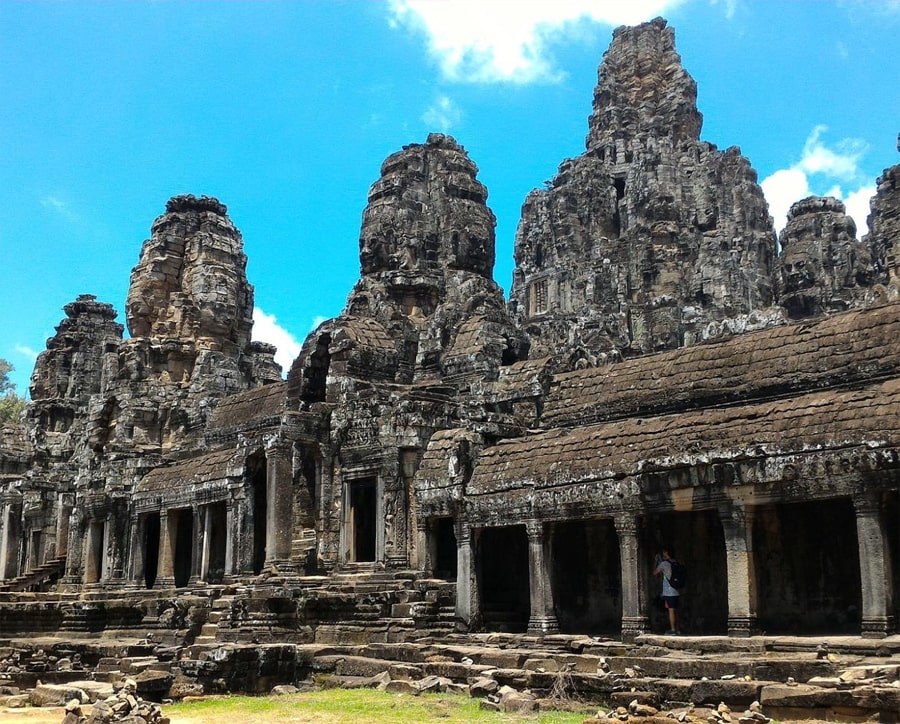
Angkor Thom was built during the 12th Century during the reign of King Jayavarman VII. It was constructed as a fortified city using enormous stone walls, grand gates, and significant religious monuments representing the strength and cultural sophistication of the Khmer Empire. Bayon Temple, with its unique smiling faces, is located in the center of Angkor Thom and attracts history buffs and culture enthusiasts from all over the world.
History of Angkor Thom
“Angkor Thom” is derived from the Khmer word “Angkor”, which means “city”. The word “Thom” translates to “Great”. These words reflect the enormous size and aspirations of Angkor Thom as a walled city, which was built in the late 12th century by King Jayavarman VII to be the capital for the Khmer Empire during a time when the Khmer Empire was very powerful and underwent very significant changes in religion.
When Jayavarman VII took the throne, he started building Angkor Thom and Bayon, the state temple associated with it, as he envisioned the capital being the political and spiritual center of his empire. The actual size of Angkor Thom is 9 square kilometers, and it is engineered as a city in the following manner: monumental gates, Royal Squares, and places of worship. Angkor Thom was a vital place of commerce from its founding until it was slowly lost by abandonment in the 16th century, leaving it with an archeological legacy that is one of the greatest examples in Southeast Asia.
Top 6 Iconic Attractions in Angkor Thom
When you visit Angkor Thom, you are not just visiting ancient temples but exploring the cultural, religious, and historical core of the Khmer Empire. Each area of Angkor Thom will give you a different perspective on this great royal city.
Bayon Temple
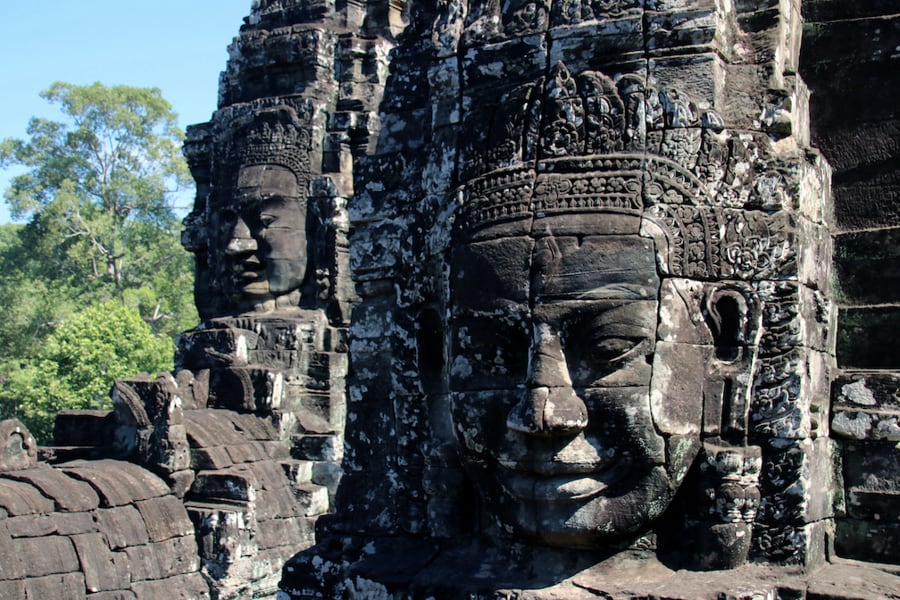
Bayon is the most recognisable monument of Angkor Thom and is usually the first stop you will make once you enter via the South Gate. The temple is particularly known for its 54 towers, which have four huge smiling faces on each tower, making 216 faces altogether.
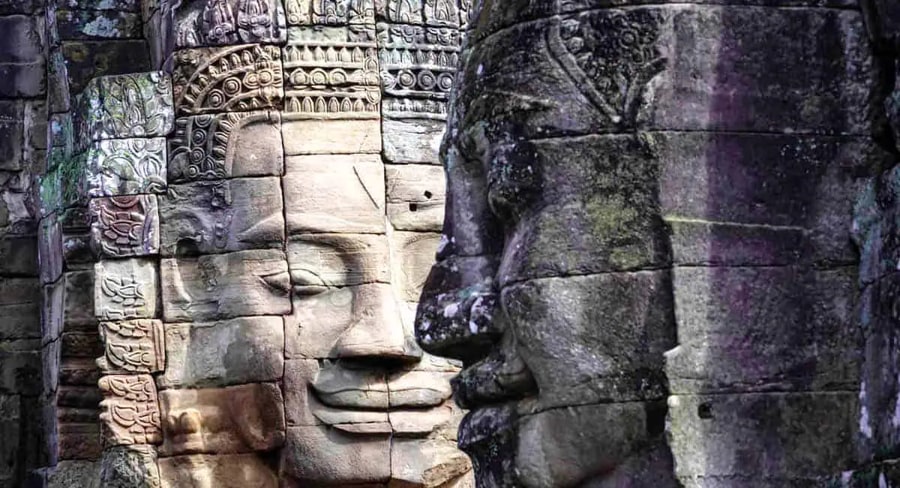
Many people believe that the faces are representations of Avalokiteshvara (the Bodhisattva of compassion) or of King Jayavarman VII himself. Within Bayon, the bas-reliefs will provide you with vivid images of the lives of the Khmer people and their religion, and how they fought during the time of the Khmer Empire.
Baphuon Temple
Baphuon, north of Bayon, is an 11th-century temple characterised by its massive, pyramid-like structure. The temple was originally built to be the temple of King Udayadityavarman II and was symbolic of Mount Meru, or the centre of the Universe, according to Hindu Cosmology. The Temple is built on three levels and was accessed from a long, elevated path, and along each side of the path, you could find the ancient reservoirs of water.
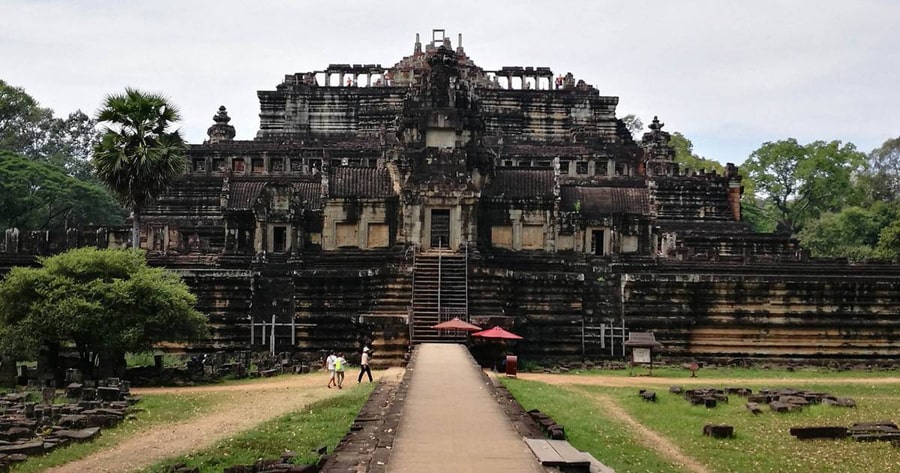
Along the western side of the temple, there is a dramatic 70-metre-long reclining statue of Buddha that was added at a later point in time. This statue illustrates how, in the area, Hinduism transitioned to Buddhism during this period of time. Visitors to the Upper Platform could see panoramic views of all of Angkor Thom and the surrounding forests.
Phimeanakas Temple
Phimeanakas is a Hindu temple built in the 10th century in the Khleang architectural style with a unique three-tiered pyramid shape. Kings used Phimeanakas as a place of worship for Hindu gods. When visitors arrive at Angkor Thom, they can either walk a short distance along shaded forest trails from Baphuon Temple or take a motorbike up to Phimeanakas. Phimeanakas is smaller than many other temples in Angkor Thom, but it stands about 40 meters high, which makes it a very prominent feature within the area of the former Royal Palace.
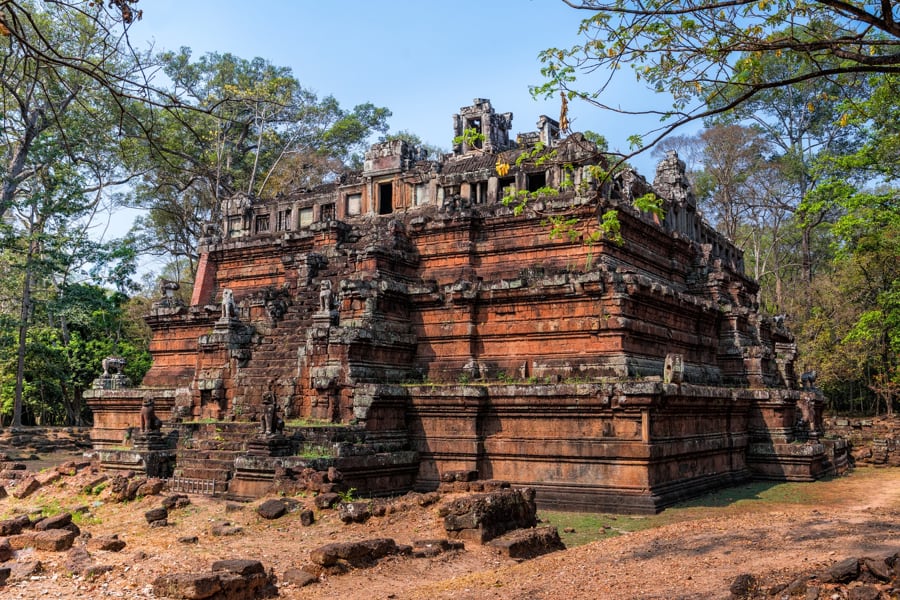
Phimeanakas is primarily made from laterite stone and has a central sanctuary – a place of worship. Therefore, Phimeanakas was originally built as a private royal chapel and was not intended for large groups of worshippers. Since Phimeanakas is located at the center of the royal complex, it is quieter and more intimate than the other major monuments in the area. Many visitors often do not spend much time at Phimeanakas, so it is often considered a peaceful, relaxing stop for those who are visiting Angkor Thom.
Preah Palilay Temple
Located in a secluded forested area north of Phimeanakas, Preah Palilay is less crowded and provides a quieter ambiance than other temples. The temple is small; however, it possesses a special personality that integrates Hindu & Buddhist elements with ancient shrines positioned next to large seated Buddha figures.
Preah Palilay’s layout consists of painted laterite, a cross-shaped courtyard, including Seven-headed Naga balustrades, guardian Dvarapala statues, and Lion statues guarding the entrance to the temple. A key attraction at Preah Palilay is how it remains culturally relevant. Many people from the surrounding area frequently visit Preah Palilay, as it serves as an excellent location to take wedding photos and other family portraits.
Terrace of The Elephants
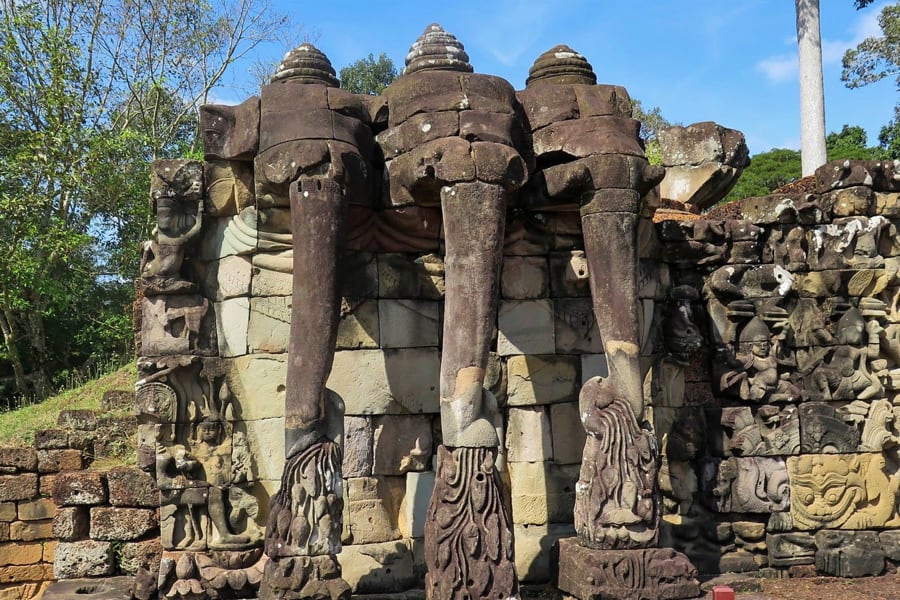
The Elephant Terrace, located within Angkor Thom, is among the largest ceremonial platforms, measuring almost 300 metres long and 2.5 metres high. Constructed during the reign of King Jayavarman VII, it served as a place of viewing for royal processions, military parades, and other public ceremonies. The design of the terrace features detailed carvings of elephants, garudas, and various mythical creatures, which represented authority and power. Although today the Elephant Terrace is open and has ample shade, it provides visitors with a beautiful setting to contemplate the grandeur of past ceremonies.
Terrace of The Leper King
The Terrace of the Leper King, next to the Terrace of the Elephants, is one site that has an intriguing name and impressive stone carvings. The name may come from either a leper-like statue or from stories about Yasovarman I, king of the Khmer Empire. The terraced walls have beautiful carved bas-reliefs showing gods, demons, nagas, and other celestial beings. Visitors who take a short secret entrance located behind the terrace’s main wall can see these incredible carvings up close. The detail in these carvings makes the experience one of discovery as well as awe.
5 Unforgettable Experiences You Shouldn’T Miss
Angkor Thom is more than just ancient temples. It’s also about the immersive experiences in Siem Reap you have that allow you to feel the heartbeat of the old Khmer Capital. Whether you’re walking slowly or engaging in an active exploration of Angkor Thom, every activity that you do gives you a different insight into the history, culture, and atmosphere of Angkor Thom.
Explore The Royal Square
The Royal Square of Angkor Thom was the political and ceremonial center of this amazing city. The Great Square was also where many royal ceremonies, keynote speeches, even military parades, and gatherings of nobles took place, as well as where the king would host elaborate public events. Look closely at the intricate carvings of elephants, dancers, and other mythological figures in the Elephant Terrace and the Terrace of the Leper King. They reflect the power and artistic elegance of the Khmer court.
Cycle Along The Ancient Walls
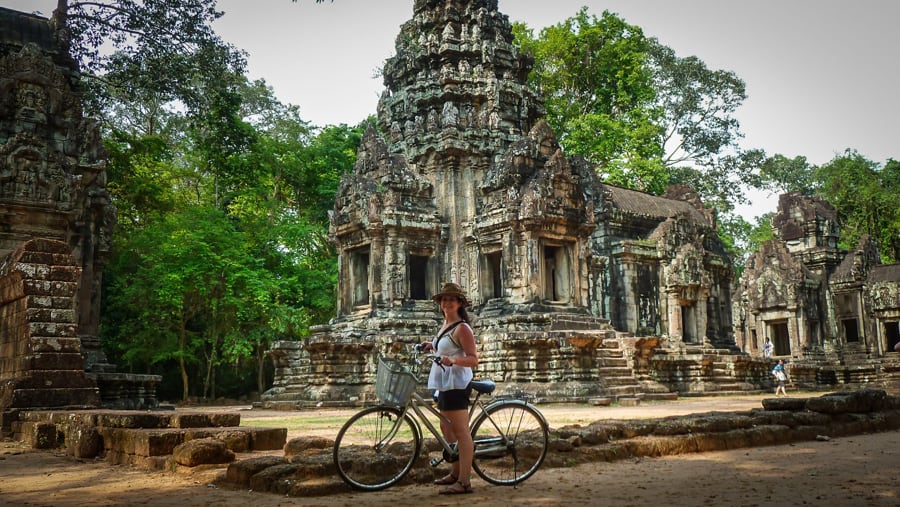
Cycling around Angkor Thom is an immersive and fun way to see the ancient capital of Angkor. With shaded roads by large trees, you can ride comfortably, even in warm weather, while becoming more intimately connected to nature around you. There are numerous opportunities for taking photographs and enjoying quiet moments as you slowly ride beside the great stone walls and through the ancient city gates, which give you a true sense of the scale and enormity of Angkor Thom.
Find Hidden Temples and Quiet Areas
Many smaller temples and little-known ruins that make up Angkor Thom are waiting to be discovered. Visiting the quieter parts of this historic site allows you to gain a more intimate relationship with it as nature takes back its territory from the ancient stone structures. Travelers who appreciate taking their time while traveling, or who are interested in photography or simply taking the time to think, will find these secret locations within a very historical context.
Visit Bayon Temple and The Smiling Faces
Bayon Temple is located at the center of Angkor Thom and leaves an unforgettable imprint on all who come to visit. Its architecture with hundreds of smiling faces creates an atmosphere of serenity coupled with an element of mystique. Take time to walk through the galleries to observe the reliefs to learn about daily life and rituals practiced by the Khmers during their historical period.
Explore The South Gate at Sunrise or Sunset
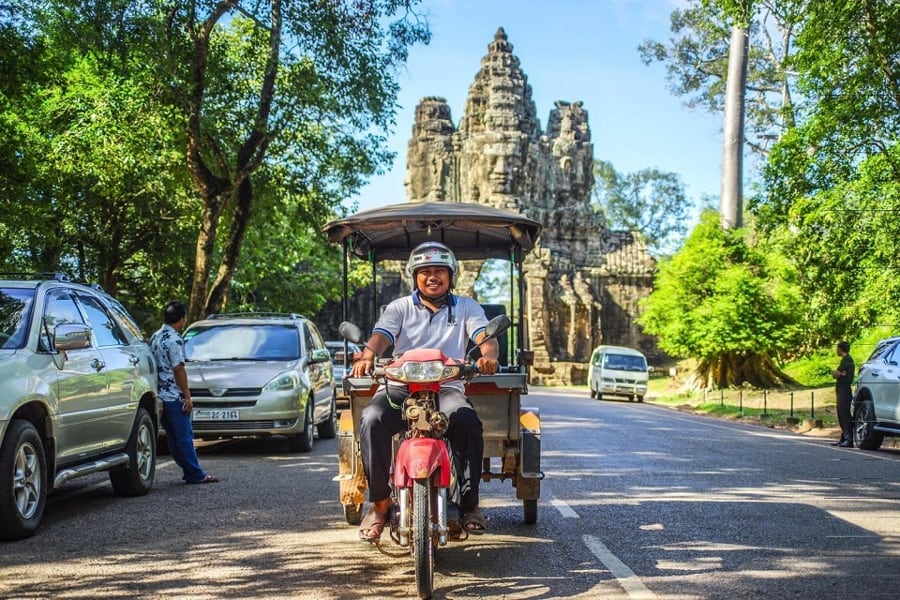
Also, among the most desired times to visit the South Gate would be during sunrise or sunset, as this would give you one of the most breathtaking views in Angkor Thom itself. During this time, the sun’s shadows add to the symbolic meaning of this gate as the entrance to the said walled city, with fewer tourists as well, since most would already have visited other attractions in Angkor Thom by this time.
Entrance Fee
Angkor Wat provides tourists with access to Angkor Thom, as well as to all other locations that make up the Angkor Archaeological Park. There are three main types of tickets available. These options let you choose a ticket based on your own pace and how long you want to spend visiting different sites.
| Ticket Type | Price (USD) | Validity |
| 1-Day Pass | 37 USD | Valid for 1 day from the time of purchase |
| 3-Day Pass | 62 USD | Valid for 7 days from the time of purchase |
| 7-Day Pass | 72 USD | Valid for 1 month from the time of purchase |
Opening Hours
Angkor Thom is most often visited between the hours of 5:00 AM – 5:30 PM on the day visited, as are other temples within the Angkor Archaeological Park. Certain parts of the actual pyramidal structure can be accessed earlier in the morning to view the area at sunrise, but the majority of sites within the inner temple areas open at regular business hours.
The preferred time of year to visit Angkor Thom would be during the dry season between November – March in Siem Reap because of cooler and more pleasant weather and the ability to walk or ride bicycles without hot, humid conditions.
Visiting Angkor Thom early in the morning or late in the evening has the advantages of cooler temperatures and lower levels of direct sunlight, thus providing the best lighting in terms of providing additional beauty to the sculptured designs in the stone. Additionally, visiting during these times allows visitors to avoid the crowds and experience Angkor Thom with a more tranquil and peaceful atmosphere within the picturesquely ancient city.
How to Get to Angkor Thom
To visit Angkor Thom, one must first arrive in Siem Reap, Cambodia. Siem Reap is the nearest major gateway to the Angkor Archaeological Park. Accessing Angkor Thom’s South Gate from the center of Siem Reap takes approximately 8 kilometers, which is easy to do because of the numerous readily available transport services.
- Tuk Tuk is the most common and genuine mode of transportation to reach Angkor Thom. It would take 10-15 minutes to reach Angkor Thom from the center of Siem Reap, but it could be up to 25 minutes, considering the traffic. The average daily cost regarding the tuk tuk along with the driver would be USD 15-25.
- Bicycle rental is most suitable for those travelling to Siem Reap and are interested in a slow, absorbing experience. The journey to Angkor Thom by bicycle generally takes around 30 to 40 minutes, and it’s quite cheap to rent a bicycle, which costs USD 1 to 3 per day.
- Taxi or private cars are the most comfortable mode of transportation, especially during hot weather conditions. Time taken is approximately 10 to 15 minutes; costs between USD 25 to 40 per day depending on the route and period of use.
- Self-driving is allowed for foreigners who have an international driving license. The cost of car rental is generally about USD 35-50 per day, which gives you complete freedom to tour the Angkor Thom temple as well as others in the surrounding areas.
It is likely that most tourists gain access to Angkor Thom through the famous South Gate, which is a very impressive way to start your journey into the ancient capital city of the Khmer.
Things to Know Before Traveling to Angkor Thom
In preparation for your visit to Angkor Thom, it will be advantageous to have prior knowledge of how best to prepare for a positive experience at this expansive and historically significant site. Knowing several practical suggestions prior to your trip will help to enhance the experience of visiting this grand site.
- Wear flat, comfortable shoes while visiting Angkor Thom. The site has many rocky walking paths covering many miles.
- Dress appropriately by wearing clothing that covers your knees and shoulders while visiting temples such as Bayon.
- Try to arrive at the site early in the morning or late in the day to avoid peak hours when it is hottest and when there are large groups of tourists visiting at the same time.
- If you plan to travel from destination to destination within the complex of Angkor Thom, consider renting a bicycle or hiring a tuk-tuk.
- Assemble enough sunscreen, water, and hats for the visit, as shaded areas are limited in many parts of Angkor Thom.
- Take the time to read the signs and, if necessary, hire a local guide so you can appreciate the historical significance and symbolism behind the carvings.
- Make sure you have your Angkor pass with you at all times. You may be stopped at some of the entrances to the complex.
Final Thoughts: Is Angkor Thom Worth Visiting?
A visit to Angkor Thom is a must for every traveler’s Cambodia tour who wishes to grasp the real power and splendor of the ancient Khmer Civilization. The imposing stone gates, the calm and smiling faces at Bayon Temple, and the preserved ruins tell a vast yet intimate tale. As one ambles along the streets of Angkor Thom, one can walk through the royal cities, the holy sites, as well as village life, all frozen forever in stone. Let Seni World guide you through these walls, as it weaves ancient legends, symbols, and beauty.


Related articles


