logo mobile sidebar
support-image-mobile
Share your ideas with our local expert team - we’re here to listen and help you shape a meaningful journey through Indochina.
(+84) 868 663 993
Asia Leading Tour Operator 2025
tripadvisor travelers choice awards 2024
Travelers' Choice Awards 2025

Author: Linh Nguyen

Discover Hoi An In April: Culture, Festivals, And Sunshine

Traveling to Hoi An in April is the perfect time to visit, with its warm sunshine, mild weather, and cultural festivities. You can travel through ancient streets, indulge in local cuisine, and be part of traditional celebrations; it is a vibrant yet laid-back place to visit!

Where Is Hoi An?

Hoi An is an old town along the central coast of Vietnam, located 30 kilometers south of Da Nang. This ancient town is renowned for its preserved architecture, brightly lit lantern streets, and diverse cultural background, to the extent that Hoi An is recognized as a World Heritage Site by UNESCO. The towns’ traditional charm and lively ambiance are a fantastic draw for travelers from all around the world.

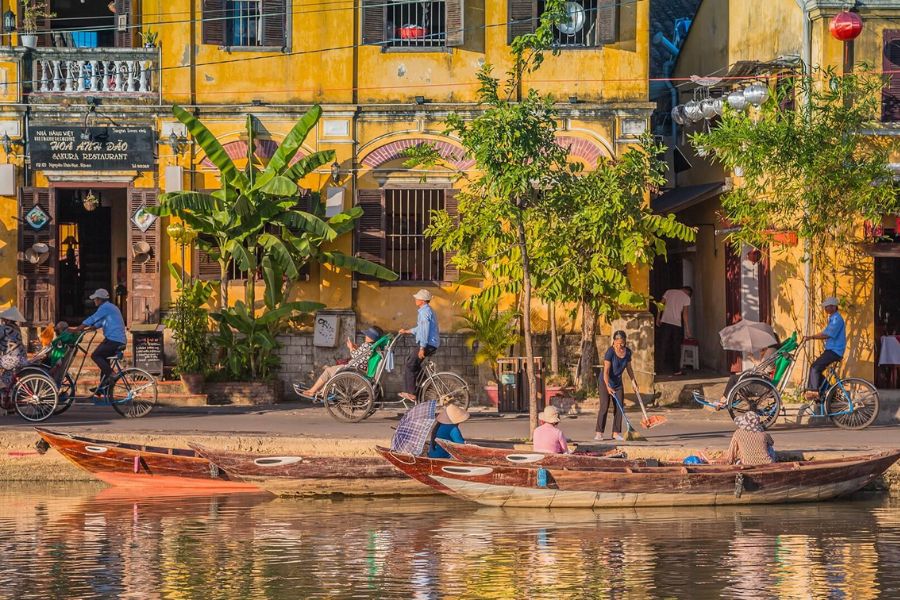
Wander Around Hoi An Ancient Town (2)

The month of April particularly draws in visitors to Hoi An as it has lovely weather and a festive feel, because it’s warm and sunny with some occasional festivities, and with an ideal environment for outdoor visitation, April is one of the best months to explore the stunning and rich traditions of the town.

What Is The Weather Like In Hoi An In April?

April in Hoi An is known for warm and pleasant weather, making it one of the best months for travel, where the days are hot and sunny with the occasional light rain, which adds a special freshness to the atmosphere. With mild humidity and comfortable conditions, it’s the perfect time for outdoor sightseeing, cultural experiences, and beach activities.

Weather Aspect Details
Temperature Daytime highs: ~23 – 28.9 °C

Nighttime lows: ~23 °C

Humidity High, around 84%
Rainfall Occasional light showers, but not disruptive
Cloud Cover Generally clear to partly cloudy skies
Weather Pattern A mix of sunshine and refreshing rain, ideal for outdoor activities

What To See And Do In Hoi An In April

April is a perfect time to discover the charm of Hoi An, when the weather is warm, the lantern-lit streets are glowing so beautifully, and festivals make the destination even more charming. Below are the best things you shouldn’t miss during your trip.

Sail Along The Peaceful Hoai River

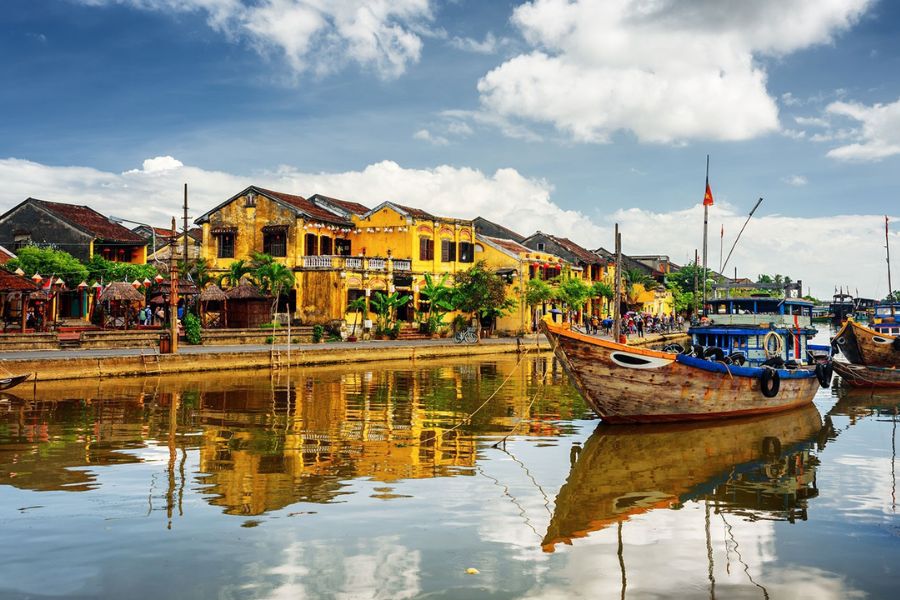
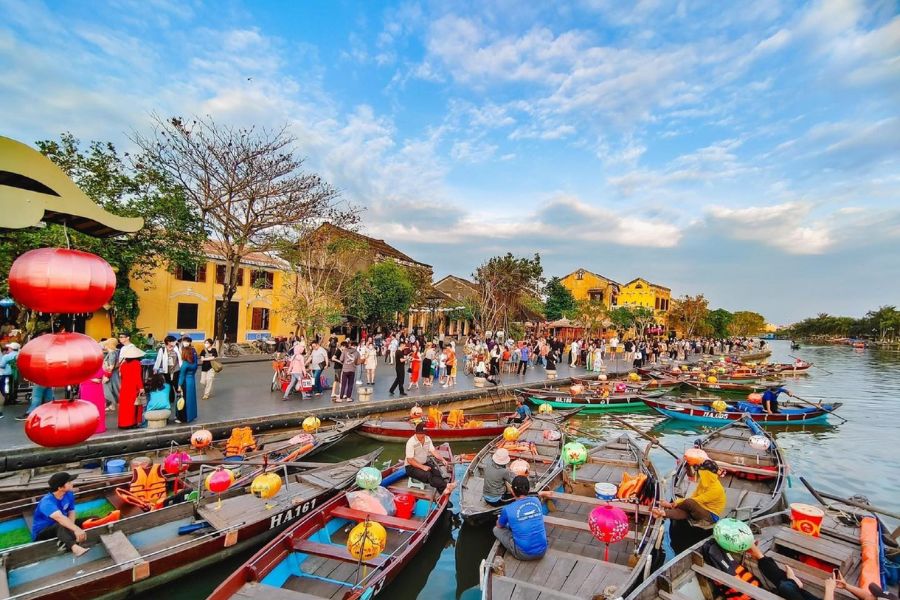
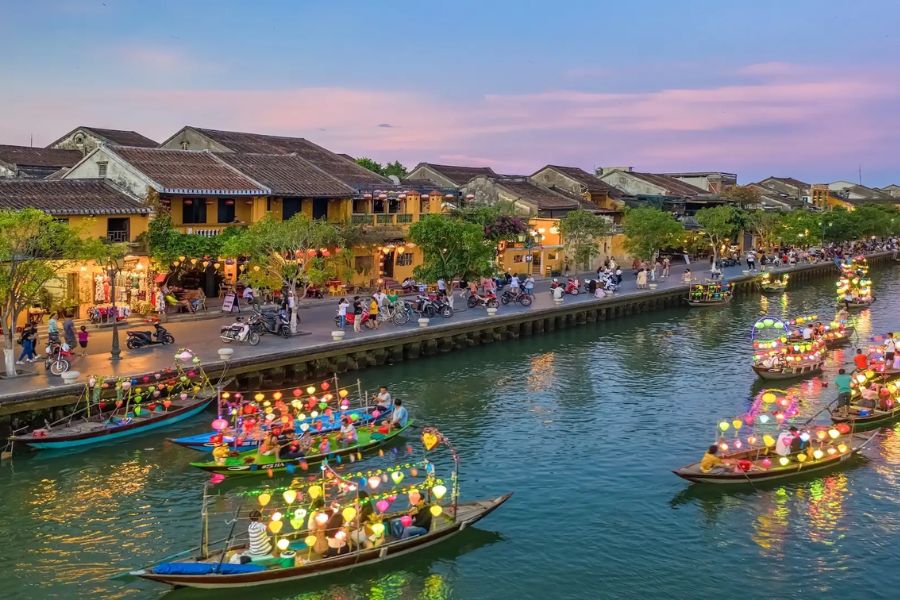
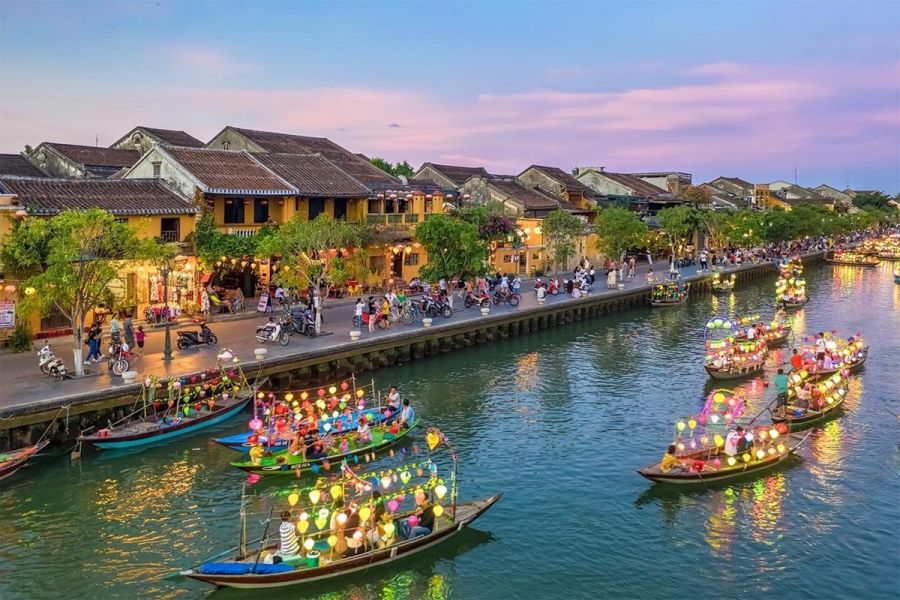
The Hoai River is one of the key visual icons of Hoi An, providing a serene yet magical view of the ancient town. With a boat trip you’ve experienced throughout your trip, you are also able to admire the riverside architecture, floating lanterns, and release a lantern to wish. Nighttime is by far the most stunning time; the streets are distinguished by colourful lanterns that shimmer in the water.

Enjoy the Lantern Festival on the Hoai River

Further, it is recommended to experience Hoi An on the 1st or 15th day of the lunar month, the heady rhythm of the Lantern Festival, to soak in the atmosphere. If you have a chance, you really should try this iconic activity in Hoi An.

Cycling Around The Ancient Town

It is wonderful to cycle around the ancient town of Hoi An in the month of April, when the skies are blue and the sun bathes in golden hues. With the slow pace, you have been able to cycle around the many mossy yellow walls, colourful bougainvillea-covered streets, with quiet paths for exploring; you have been able to create photo opportunities looking as if you are walking in a painting. Whether it is the romantic corners of the old town or the emerging countryside fields dipped in brilliant sunlight, this is a way to relax while providing opportunities for memorable pictures.

Cycling Around The Ancient Town

Attending The Whale Worship Festival In Hoi An Fishing Village

If you find yourself in Hoi An in April, make sure you attend the Whale Worship Festival (Le Te Ca Ong) at the fishing village. This traditional festival is dedicated to Ca Ong, or the Whale God – he is said to protect fishing boats and fishermen, while ensuring the fishermen return home safely after their trips. During your visit, you will see solemn boat processionals, colorful folk performances, and community celebrations filled with colors and spirit. You’ll enjoy a unique and colourful experience of the cultural heart of Hoi An outside of the old town.

Enjoy Farming Life At Tra Que Vegetable Village

Located just 3 km from the old town, Tra Que Vegetable Village is a green paradise in which visitors can join and experience authentic rural life. April is one of the best months to experience the village, as it will be lush and green. Depending on available options, you will be able to participate in farming activities, from tilling soil, scooping sand, planting seeds, and harvesting vegetables, or joining daily cooking classes where you can prepare straw-hat locals’ specialties, vegetarian Quang noodles, and crispy pancakes. Overall, it will be a lively and worthwhile cultural experience, bringing the meaning closer to the village’s farming world.

Enjoy Farming Life At Tra Que Vegetable Village

Experience Hoi An Impression Theme Park

At the end of April, Hoi An Impression Theme Park celebrates a street festival, featuring circus acts, magic performances, parades, and a street dance spectacle. The highlight is the dynamic Hoi An Cypher dance battle and vibrant LED & laser light shows, all taking place with free entry. It is a favorite for both locals and travelers, and provides a highlight to your trip in April.

Drinking Coffee With A Rice Field View

Instead of visiting the typical coffee shops in the old town, April can be great to visit unique cafés overlooking acres of green rice paddies. You can enjoy the open-air cafés, which allow you to relax in a fresh environment in nature. These cafés usually have beautiful views and stunning, picturesque spots for you and your friends to take great photos. Some places we recommend are Roving Chillhouse, Chic Chillax, Lua Café, and Hoa Lua Café. They are a great way to unwind after walking around.

Drinking Coffee in Hoi an

What To Pack For Hoi An In April

Strategic packing for your trip to Hoi An in April is a way to stick to comfort and maximize your explorations. The weather is mild and enjoyable, but there will be plenty of sunshine and possibly cool breezes in the evening.

Light and breathable clothing

For wandering around the Ancient Town, you want casual cotton or linen outfits – T-shirts, shorts, and loose-fitting dresses and pants. You’ll also find you need a light jacket or cardigan for evening breezes.

Swimwear and beach items

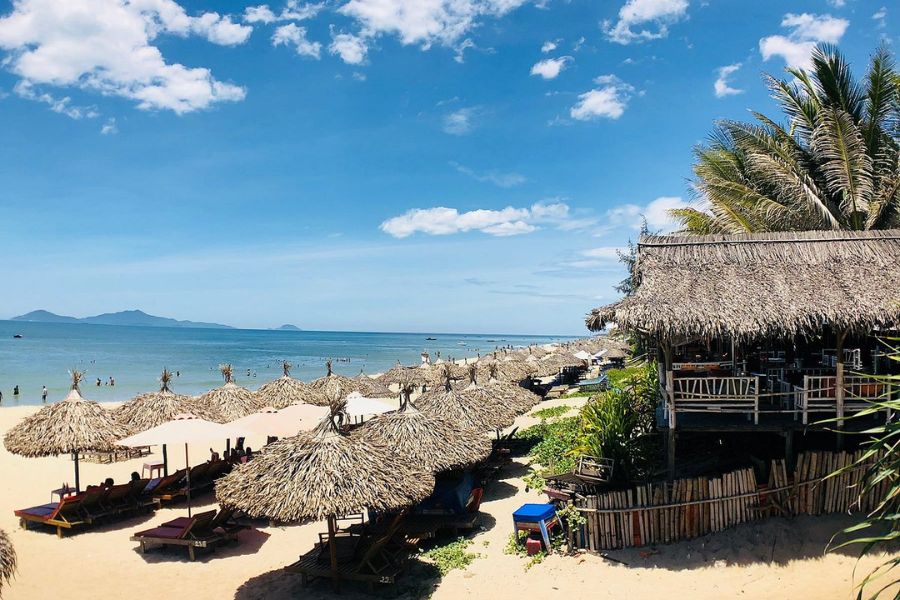
If you plan to go to the beach, to Cua Dai, for example, pack your swimsuit, a lightweight scarf or cover-up for convenience, as well as flip-flops.

cua dai beach

Sun protection gear

Sunscreen, sunglasses, and a wide-brimmed hat will protect you against UV rays. Even in February, the sun can be aggressive during the day.

Comfortable footwear

Bring flats (sandals or sneakers), as you will be doing quite a bit of walking around the lantern-lit streets and countryside trails. Avoid heeled shoes, as the old-town streets do not have a smooth surface.

Other personal care products

Take insect repellent if you plan to experience any omnidirectional or outdoor experiences, such as Bay Mau Coconut Forest. Toiletries, hand sanitiser, and wet wipes are also useful. If you have ongoing medications, bring them in your daypack.

Electronics and money

A camera or smartphone is key for capturing the colourful nature of Hoi An. You should also bring some cash for local markets and food stalls, as not all places accept card payments.

Travel Tips For Visiting Hoi An In April

April is a great month to visit Hoi An because of the great weather, but also because it’s the start of the travel peak season due to national holiday periods. To make your trip easier and simpler, come April, here are some travel tips to keep in mind while traveling to Hoi An:

  • Book flights and hotels early to avoid being saddled with high holiday prices and having limited availability.
  • Bring sun protection, like a hat, sunscreen, light long-sleeved clothing, and even a small umbrella.
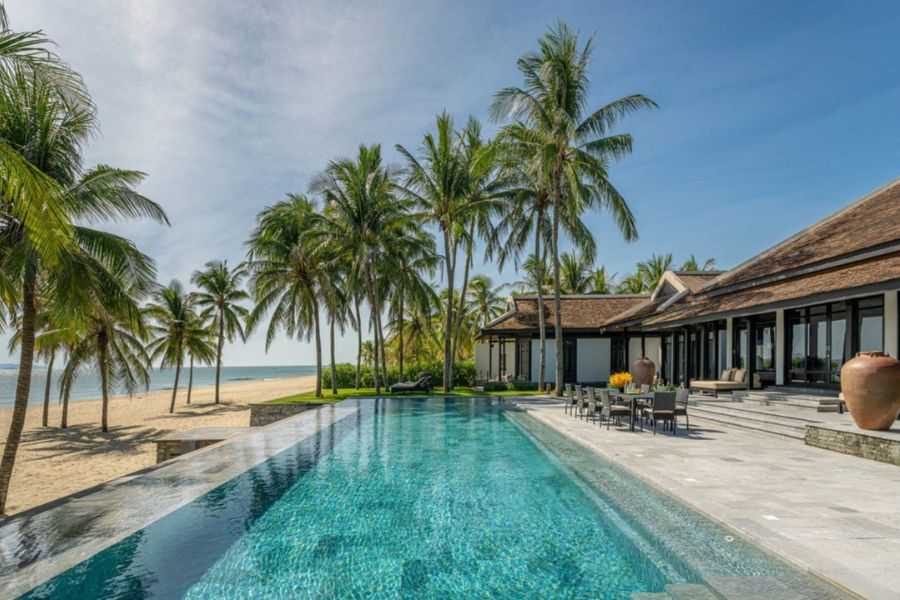
Four Seasons Resort The Nam Hai Hoi An

  • Be more observant of your belongings in crowded places around certain activities, like as festivals and holiday periods.
  • Get up early to experience the quiet side of Hoi An first before it gets busy.
  • Consider booking restaurants or popular activities ahead of time, as the month of April attracts a high number of travelers.
  • Consider renting a bicycle so you can move around and experience other hidden spots outside of the busy streets.

FAQs About Visiting Hoi An In April

April is one of the ideal times to visit Hoi An because you can enjoy warm sunshine, experience a festive atmosphere, and typically have days with very little rain. Below are some frequently asked questions with answers to help you plan your trip.

Are there any festivals going on in Hoi An in April?

Yes, you might be lucky and get to experience the Hoi An Lantern Festival, which is different from the Full Moon Festival. The Hoi An Lantern Festival occurs on the 14th day of the lunar month. When this festival occurs, the Old Town brightens up with colorful lanterns, and it’s a beautiful atmosphere.

Wander through the Ancient Town

Is Hoi An busy in April?

April is relatively busy, but not as crowded as the high peak summer season. You’ll see a vibrant but relaxed atmosphere and lots of room to enjoy attractions without feeling overwhelmed.

Can I go to the beach in April?

Definitely. April is such a good month for the beach. Hoi An’s beach weather in April is hot enough to enjoy swimming and sunbathing. An Bang beach and Cua Dai beach are near the Old Town and are both great beaches.

How should I get around in Hoi An in April?

Walking and biking are by far the best ways of getting around the Old Town, as pedestrian-friendly as it is. For journeys to the beach or surrounding villages, rent a bicycle or scooter, or get a taxi.

Are hotels in Hoi An expensive in April?

Prices for accommodation in April are moderate. Since it is not high season quite yet, if you book in advance, you can find some great deals on boutique hotels, homestays, and even luxury resorts.

What activities should to do in April?

You should stroll the lantern-lit streets, take a boat trip down the Thu Bon River, see ancient houses and temples, take a cooking class, and relax at nearby beaches like An Bang or Cua Dai.

Do I have to book tours in advance?

You can book many activities once you arrive. However, it is usually best to book popular tours such as the lantern-making workshop and day trips to My Son Sanctuary in advance for better availability and time-saving. As an old historical and cultural site, Hoi An promises to bring many unforgettable memories for you!

Final Thoughts: Is April A Good Time To Visit Hoi An?

April is a great time to visit Hoi An because the weather is warm and lovely, the flowers are blooming, and the activities and festivals are making the destination even more appealing than usual. From wandering the streets to celebrating at the festivals, everything feels livelier and more delightful in April. If you’re visiting Vietnam, ensure that you discover Hoi An in April for the perfect combination of holiday and exploration. Start your planning journey with Seni World today to make the most of your time in Hoi An.

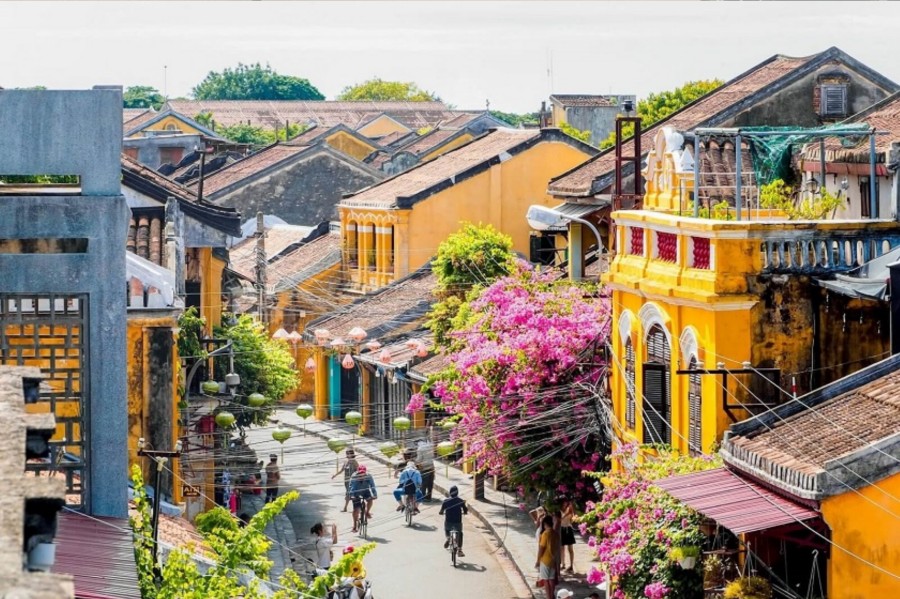
Your Guide To Visiting Hoi An In March For A Spring Escape

In March, Hoi An greets tourists with warm sunshine, clear skies, and a relaxed atmosphere. It is an ideal time to stroll around lantern-lit streets, savor local dishes, and discover cultural gems without the heavy rain or debilitating heat.

Where Is Hoi An?

Hoi An is a lovely ancient town located in Central Vietnam in Quang Nam Province along the Thu Bon River, not far from Da Nang. Hoi An was once a busy international trading port from the 15th to 19th centuries, and is known for its charm, beautiful lanterns, fascinating and diverse architecture, and cultural heritage, giving it a character that is different from other areas of Vietnam.

Hoi An is a lovely ancient town located in Central Vietnam

Visiting Hoi An in March is optimal, as the weather is usually nice and dry, which is ideal for wandering through the ancient streets, checking out the market squares, and relaxing by the river. Tourists can appreciate the town’s lively culture and serene charm without heavy-footed tourist crowds; many agree the experience is unforgettable.

What Is The Weather Like In Hoi An In March?

March offers wonderful mild and pleasant temperatures in Hoi An with generally temperatures high of 26 °C and a night low around 21 °C. With humidity remaining relatively high (~86.8 %), rain is limited to ~11-12 days and around 63 mm in total, making it an ideal month to sight-see comfortably with clear skies and traditional spring weather with nearly 9-10 hours of sunshine each day.

Local market in hoi an

Weather Aspect Details
Temperature Daytime: ~ 26 °C (79 °F)

Nighttime: ~ 21 °C (70 °F)

Humidity High, around 75 – 80 %, noticeably humid but bearable
Rainfall Moderate, approximately 63 mm total, over 11 – 12 rainy days
Cloud Cover Partly cloudy, with around 9.4 hours of sunshine per day
Weather Pattern Warm and humid with limited rainfall, ideal for outdoor exploration

What To See And Do In Hoi An In March

Visiting Hoi An in March is a perfect time for travelers to blend historic culture, beautiful scenery, and interesting local activities. It is early in the year when the weather is very comfortable, making it a perfect time to stroll along the historic streets, or enjoy the riverside view in Hoi An, and experience something special while taking in the charm of this ancient town.

Attend Ancient Temples To Experience Hoi An’s Spiritual Legacy

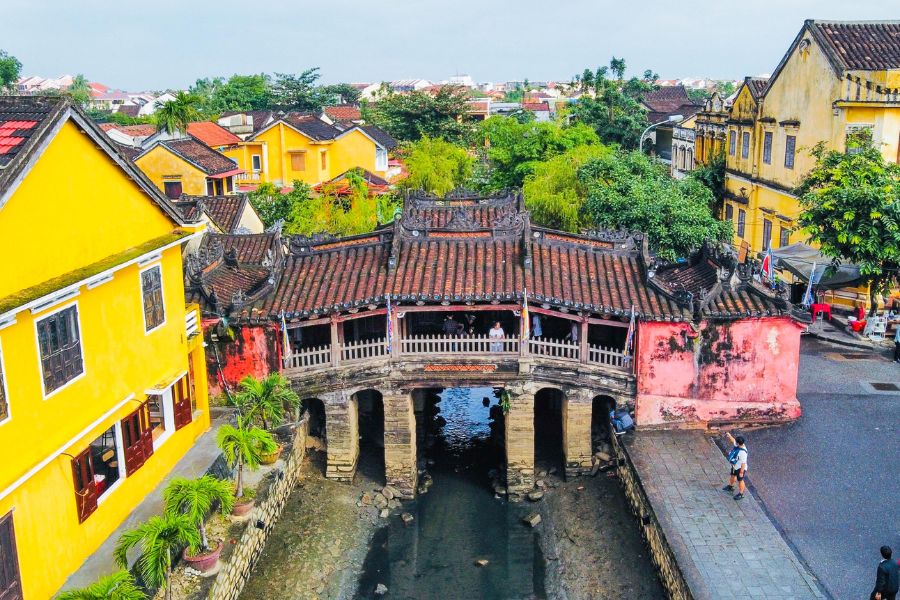
The temples of Hoi An have stood for hundreds of years. They provide a wonderful example of traditional Vietnamese architecture and spiritual life. While often small in size, the temples usually achieve a sense of peace and solemnity, quiet enough to remember and reflect on the town’s wearisome history. The town has several temples, including Chua Cau and Chua Ong, that allow travelers to observe hundreds of years of religious traditions and see how they remain an integral part of local life.

chua cau (japanese cover bridge) in hoi an

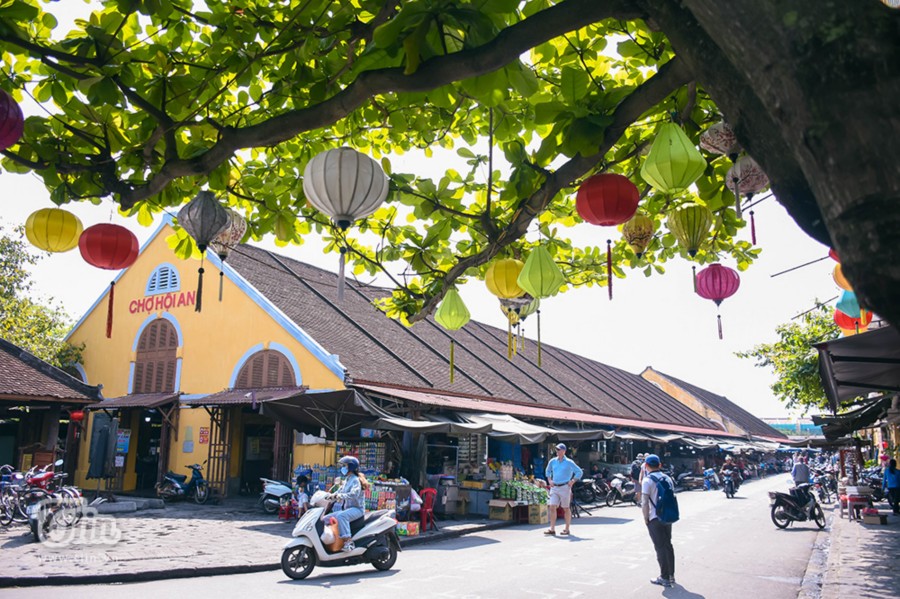
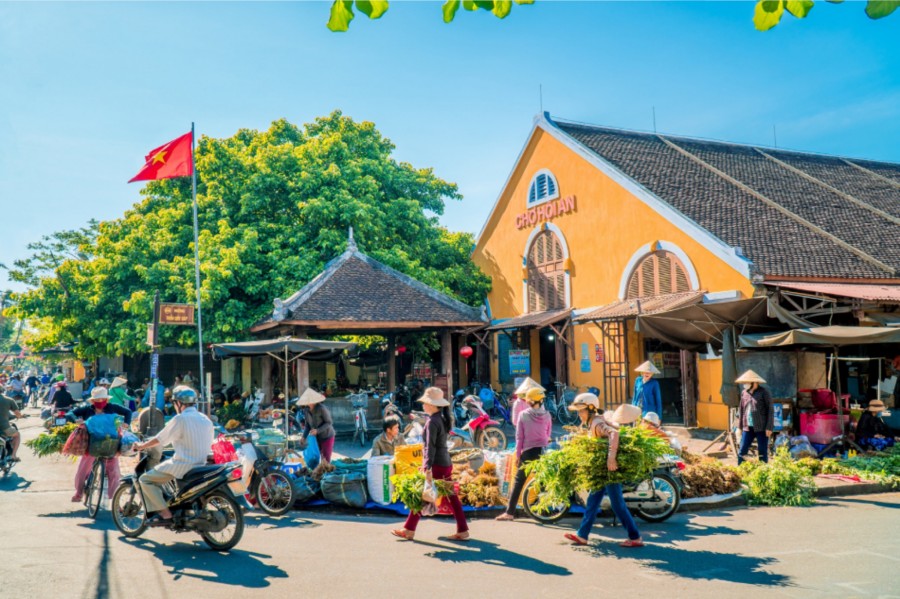
Visit Popular Markets To Experience Local Life

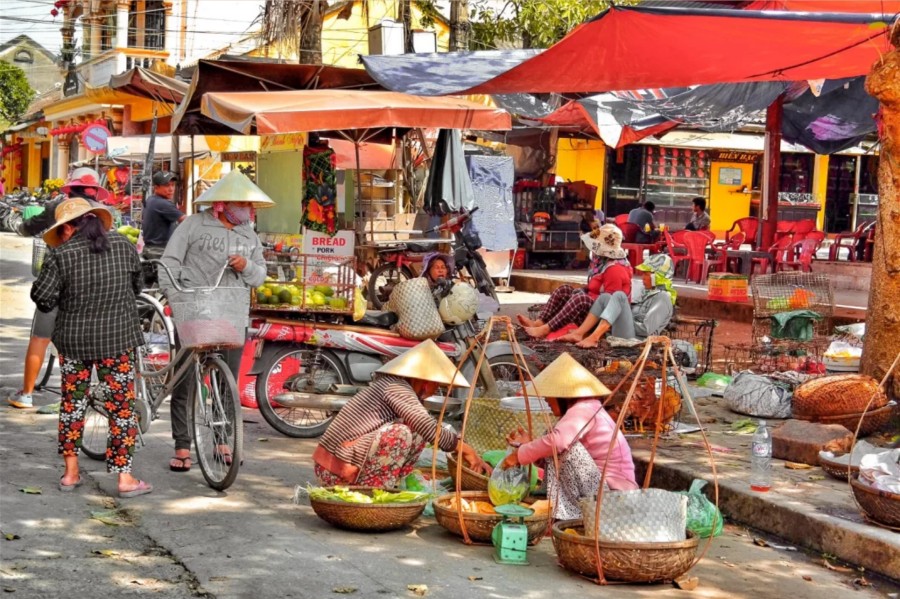
Visiting Hoi An’s markets creates lots of energy, color, and local life around you. You can experience some of Hoi An’s traditional street food, eat local snacks, shop for handmade crafts, and watch locals in and around the stalls of their workday. The markets are a wonderful way to see the bustle of a local town and more accurately understand its community.

Experience Hoi An’s Unique Tastes

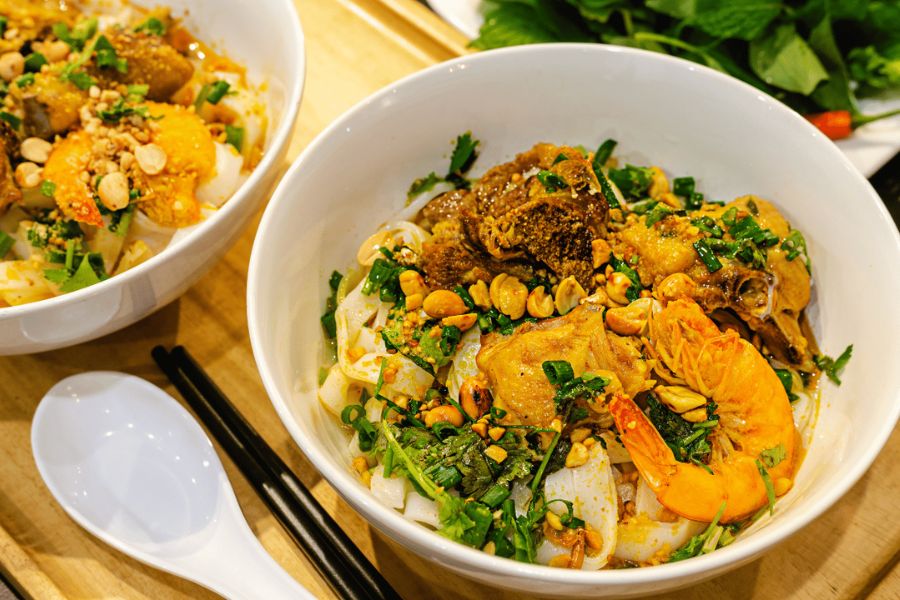
Located in Central Vietnam, Hoi An is famous for its food. Visitors will, of course, know many of the local dishes, and travelers aren’t likely to head there without trying Mi Quang, Banh Dap, or Cao Lau. Aside from the obvious taste, visitors get to enjoy what’s possibly the most hospitable, welcoming seaside town, while dining in local cafes or from street food vendors.

My Quang is a famous local food in Hoi an

Watch The Hoi An Memories Show

The “Hoi An Memories” show is a remarkable recreation of the town and its history, culture, and traditions that most visitors unfamiliar with aspects of Vietnamese society find enthralling and beautiful. Visitors will see ancient houses, assembly halls, temples, and how locals go about their daily business, with lively music on stage. There is no better way to connect with Hoi An than with an evening performance, with the natural and cultural heritage you’ll appreciate in a quantity of fruits or flowers in your own home.

Hoi An Memories Show

Walk To The Hoai River For Riverside Relaxers

March is a great period to see the scenic beauty of the Hoai River in Hoi An, either on a boat expedition, releasing floating lanterns, or walking on the riverside. With calm water and colorful sunsets, along with evening shows, the Hoai River offers a peaceful ambience that might inspire you to take photos, discover the banks of Hoi An, or just lie back and enjoy the charm of Hoi An at your own pace.

Admire Historical Influences In The Chinese Assembly Halls

The Chinese Assembly Halls are an indicator of Hoi An’s history of trade and the growth of Chinese merchants. These assembly halls are beautifully decorated with artwork showing interesting work with intricate architecture, great carvings, and cultural traditions. By visiting these assembly halls, you will have an understanding of what it was like to live with the Chinese community, who contributed to Hoi An’s development during the 17th and 18th centuries.

The Chinese Assembly Halls in hoi an

Night Squid Fishing On Cu Lao Cham Island

If you want to take part in night squid fishing with local fishermen, it’s only a short boat ride from Hoi An to Cu Lao Cham Island. This is a great experience for travelers to participate in local fishing techniques, enjoy the calm of the sea in a unique night environment, and eat fresh seafood on the boat. March is especially nice for this activity as the seas are calm and the weather is still mild, meaning your experience will be safer while you take part in this magnificent event.

Bay Mau Coconut Forest For Eco-Tourism Thrills

Bay Mau Coconut Forest is a great experience for nature and adventure lovers. Visitors can enjoy walking through the coconut gardens, riding in the traditional basket boats, experiencing the craft of coconut leaves, and enjoying the benefits of eating fresh air. The forest provides an experience that is both immersive and relevant to knowing about local traditions and eco-tourism activities.

Bay Mau Coconut Forest in hoi an

What To Pack For Hoi An In March

If you’re visiting Hoi An in March, with warm and pleasant weather, then it is worth considering what to pack to stay comfortable and well-prepared. From sun protection to comfortable footwear, here’s what to pack to help your trip go as smoothly as possible.

Rain gear and sun protection: 

Be sure to carry a compact umbrella or a light rain slicker in case of an unexpected rain shower. March in Vietnam has many sunny hours, but that doesn’t mean you shouldn’t pack your sunscreen, sunglasses, and broad-brimmed hat to protect your skin from UV rays.

  • Insect repellent: Bring mosquito repellent/ anti-bite cream to keep the insects away while you explore the streets of Hoi An or visit outdoor sites.
  • Comfortable footwear: Pack sandals or flat shoes that you can walk in comfortably and still work for day-long trips. You’ll likely be exploring the ancient streets of Hoi An for many hours a day.

Visit Popular Market in hoi an

  • Portable charger: Bring a portable power bank. This will help ensure that your phone and any other electronic devices you carry can stay charged for your pictures and staying connected.
  • Light clothing: The weather in Hoi An will be warm in March, so pack for thin clothing that will keep you comfortable. Light clothing will keep you cool while you walk around town or out visiting the markets.
  • Small bag or tote: Bring a small bag or tote to organize personal items while you are out in town, and to keep your items secure.
  • Umbrella or extra raincoat: Although March will likely be dry, it is prudent to carry an umbrella or raincoat for unexpected rain.

Travel Tips For Visiting Hoi An In March

March is an amazing time to visit Hoi An, and with some planning, your trip will be even more fun and easy to organize. From wandering the streets of the ancient town to avoiding tourist traps, here are some useful things we found to enhance your experience.

  • Renting a bicycle or cyclo is a fun way to see the ancient town. Bicycle rentals usually go for about 40,000 VND. It is worth mentioning that motorbikes are not allowed inside the Old Town.
  • March is high-traffic time in Hoi An. To get the best value and hotels you want, book flights and accommodations in Hoi An 2-3 weeks in advance.
Walk To The Hoai River in hoi an

  • To avoid the bigger crowds, plan your route in the early morning or late afternoon for more uninterrupted sightseeing or travel to popular locations during the less populated hours.
  • Some days were sunny and hot in March. Bring some hats, small umbrellas, and sunscreen, especially if walking in outside areas.
  • To save on travel costs, look for flight packages or combo deals booked early in December, which typically cost less than packages booked at the last minute.

FAQs About Visiting Hoi An In March

Are you planning to visit Hoi An in March? Here is a selection of typical questions travelers have when visiting, together with some thorough answers to help you maximize your trip.

Is March a good time to visit Hoi An?

Definitely, March is one of the best times to visit Hoi An. The weather is warm and nice with lots of sunshine and little rainfall, and lower humidity than you would find in the summer months, which makes it great for wandering around the Old Town, biking through the countryside, or hanging out on the beaches.

Bay Mau Coconut Forest in hoi an (2)

Does it rain much in Hoi An in March?

Rainfall is very low in March, so yes, it is very low compared to the rainy months from September to December. You might experience a light rain shower or two in March, but other than that, most of the days are dry and sunny for you to enjoy excursions and sightseeing.

Can you swim at the beach in Hoi An in March?

Of course! The weather is warm, and the sea is usually calm and clear, and great for swimming or relaxing on the shore at An Bang or Cua Dai Beach. Many visitors enjoy spending time at the beach when they visit for the day before walking in to enjoy the many seafood restaurants nearby.

an bang beach in hoi an

In March, how busy is Hoi An?

While Hoi An does receive a decent number of tourists in March due to good weather, it is not usually as busy as the summer months. You will enjoy the bustling atmosphere of Hoi An while not having to deal with excessive numbers of tourists.

What outdoor activities are best to do in March?

March is the ideal time to bike around the countryside, take boat tours along the Thu Bon River, and visit traditional craft villages. March’s mild weather is also great for trekking in the surrounding areas like the Marble Mountains or My Son Sanctuary.

Is it possible to combine Hoi An and other destinations in March?

Indeed, March has great conditions to combine Hoi An with multi-destination trips into Da Nang and Hue. The weather is stable across Central Vietnam, and you can enjoy beach or historical explorations in either Da Nang or Hue without having to worry about the weather.

Final Thoughts: Is March a Good Time to Visit Hoi An?

March is a great month of the year to visit Hoi An because it has great weather, fewer people, and is the perfect month to wander about the historic streets, the beautiful markets, and the amazing riverside views. While there is so much cultural entertainment, preserved historical temples, picturesque boat tours, and local food experiences abound, the time spent will surely leave a unique memory. So, plan your Hoi An trip in March with Seni World, take in Hoi An’s charm, and make it a great moment!

Hoi An In February: Celebrate Tet Festival In The Ancient Town

Hoi An in February is a delightful combination of cooler weather, a lively atmosphere, and fewer tourists. The pleasant temperatures are great for wandering Hoi An’s lantern-filled streets, strolling along the river, and enjoying the cultural festivals in this vibrant town.

Where Is Hoi An?

Hoi An is a stunning ancient town in central Vietnam, on the banks of the Thu Bon River and about 30 km south of Da Nang. As a UNESCO World Heritage site, it is famous for its preserved architecture, streets illuminated with colorful lanterns, and a blend of influences from Vietnamese, Chinese, and Japanese cultures.

Hoi An is a stunning ancient town in central Vietnam

February is a very popular month to visit Hoi An because of the weather and relaxed amount of rain- you are almost guaranteed perfect conditions to explore the Ancient Town in the warm spring sunshine! February also might include some exciting local cultural events (especially around Tet or Vietnamese Lunar New Year), so that although weather conditions are relaxing, it is also a great time to experience some celebration!

What Is The Weather Like In Hoi An In February?

In Hoi An, February is a lovely, mild month that will ease you out of winter and into the beginning of spring. Expect daytime temperatures around 23-25 °C, with evening temperatures dropping to around 19-20 °C.

There is very little rain, and expectations will usually be 1-2 days of rain per month! and about 6-7 hours of sunshine each day. While humidity is still fairly low, the feeling of fresh air makes February an excellent time for visitors to explore the area around the Ancient Town and countryside, without the crowds or heat of the months before.

Enjoy the Lantern Festival on the Hoai River

Weather Aspect Details
Temperature Daytime: 23 – 25 °C

Nighttime: 19 – 20 °C

Humidity High, around 85 – 87%, but manageable with mild temperatures
Rainfall Low, around 60 mm total, with only about 4 – 5 rainy days
Cloud Cover Partly cloudy; expect around 6.5 hours of sunshine per day
Weather Pattern Mild, mostly dry, and pleasant, great for outdoor exploration

What To See And Do In Hoi An In February?

February is one of the most magical months to visit Hoi An with the nice weather. The town becomes cheerful in cultural festivities, pushing tourists to eat local delicacies, play folk games, local tunes, and attend dance performances. This is the perfect time to enjoy very local traditions and appreciate the romance of the beauty of the Ancient Town. Here are a few must-have experiences.

Enjoy the Lantern Festival on the Hoai River

Tet Nguyen Tieu, or the Lantern Festival, is one of the cutest things to witness in Hoi An during February. The days are lit up by thousands of lanterns, temples do solemn rituals, and that has always been incredible games that bring the community together.

ride boad on river in hoi an (2)

The most special experience you will have is taking a wooden boat at night on the Hoai River, and releasing colourful paper lanterns into the water, a gesture of hope for peace, prosperity, and happiness. A part of what the festival means is that not only are you witnessing beautiful things, but you are engaging with centuries of Hoi An tradition and spirituality.

Wander Around Hoi An Ancient Town

Hoi An Ancient Town is a living museum of Hoi An dressed in its finest for February. Wandering through the cobblestoned streets of this gorgeous town, you will come across beautiful yellow houses draped in moss, ornately built merchant homes of wood, and uncanny cultural relics of the nation’s Vietnamese, Chinese, and Japanese roots.

During the day is a fantastic time to take photos, shop for handicrafts, or have a coffee at a riverside cafe. At night, the whole town is a spectacle to behold, every alley lit in paper lanterns, and the reflections on the Thu Bon River sparkle like a fairytale. You won’t forget it.

Wander Around Hoi An Ancient Town

Visit Pagodas And Pray For Good Fortune

February is an ideal time of year for spiritual contemplation as locals flock to pagodas to welcome positive energy for the new year. The two stops that may interest you in the heart of the old town are the Japanese Covered Bridge (Chua Cau) and Ba Mu Pagoda. The Japanese Bridge, a 17th-century bridge (still standing strong), is the only architectural relic symbolizing peace and protection from worldly woes.

And, Ba Mu Pagoda, with its large Tam Quan gate and finely carved details, is equally of interest. Visiting these places allows you to experience the artistic talents of Hoi An’s religious sites, and while you admire their beauty, you can even join in the locals’ prayers for a year of health, happiness, and wealth.

Japanese Covered Bridge in Hoi an

Explore Cam Ha Flower Village

A short bicycle ride away from the town center, Cam Ha Village is alive in February as farmers prepare to plant their colourful flower gardens and kumquat orchards for Tet. The village is known for ornamental plants, which symbolize good luck and wealth for the upcoming year. While walking through the plots, you can breathe in the fragrant scents of chrysanthemums, marigolds, and gladiolus, and you can also see farmers tending to their plants. Not only is this a photographer’s delight, but it is one of the few opportunities you will have to see real rural life and festive events in central Vietnam.

Savoring The Culinary Delights Of Hoi An

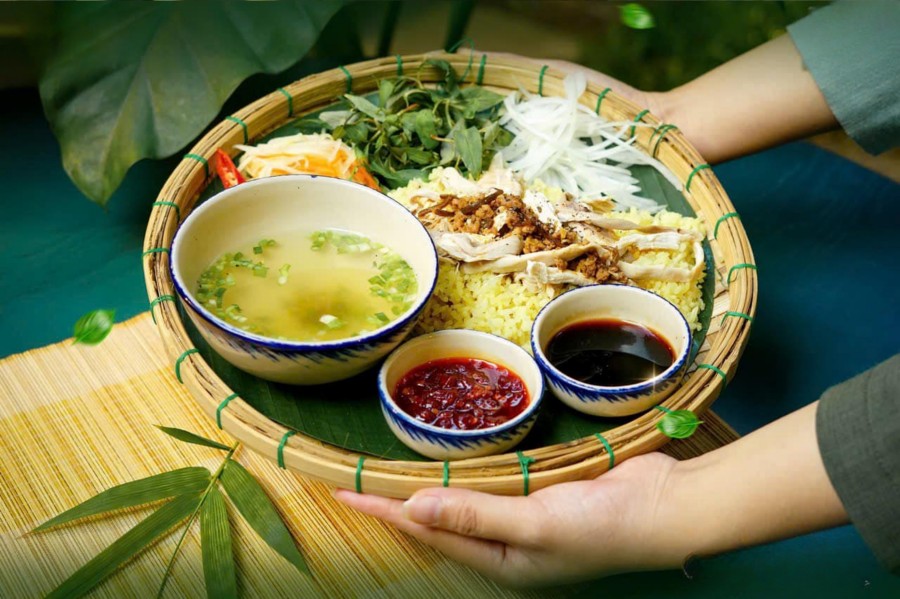
If you’re a food lover, Hoi An is a perfect spot of deliciousness, and February is the best month to enjoy it. The cool nights of February invite you to enjoy hot bowls of Mi Quang or try famous cao lau noodles unique to Hoi An. A meal of Cao Lau may be accompanied by chewy noodles and smoky pork. You are also able to try Hoi An Banh Mi, which is known as one of the best sandwiches in the world, or Hoi An chicken rice.

Cao lau in Hoi an

In February, the Tet Festival will mean you will find stalls and stalls of all sorts of festive goodies. Flavorful green bean cakes, sesame candies, or Banh Phu The (Vietnamese conjugal cake), all of which will transport you to the day of seeing locals celebrate traditional Tet New Year’s celebrations. Exploring Hoi An’s food legacy is as much about culture as it is about eating. Therefore, don’t miss sampling Hoi An’s unforgettable food on your trip!

What To Pack For Hoi An In February?

Being smart about what to pack for Hoi An during February will ensure that you maximize your experience while you enjoy the warm days and cooler evenings. Here’s what you simply can’t do without:

Clothing layers

When packing warm-weather clothing for the day, keep in mind that you should pack light and breathable tops such as T-shirts, blouses, or dresses. It may be worth bringing along a thin jacket, cardigan, or light sweater as mornings and evenings can be a little chillier than the daytime.

Wander Around Hoi An Ancient Town (2)

Comfortable shoes

Exploring Hoi An means many hours on your feet walking ancient streets and through markets, so you will need to pack comfortable shoes such as sneakers or sandals. Don’t bring a brand-new pair of shoes. You do not want to get used to a new pair of shoes by ending up with blisters after having to walk for an extended period of time!

Rain gear and sun protection

Keep in mind that there will be occasional showers in February, so bring a small umbrella or a light, packable raincoat. The sun will still be very strong around midday, so don’t forget sunscreen, sunglasses, and a broad-brimmed hat to protect against UV rays.

Other personal care items

Consider carrying travel-size toiletries and hand sanitizer, and wet wipes for convenience. If you will be spending time outdoors, lip balm and moisturizer can keep your skin feeling comfortable. Bring personal medication that you may need while traveling (painkillers, allergy medication, digestive tablets, etc.).

Electronics and other items

Make sure to bring your phone or an excellent camera to capture the gone bys’ lantern-lit nights, temples, and active streets. A portable charger can be beneficial if you are out all day exploring. A small bag for laundry or wet clothes can keep your suitcase tidy.

Travel Tips For Visiting Hoi An In February

While it’s fair to say that February is about as good as it gets for weather in Hoi An, especially when taking travel needs into consideration, you can make your trip even more enjoyable with a few smart preparations. The following travel tips may prove helpful.

  • It is still possible for light rain to fall, so bringing along a small umbrella or thin raincoat is best.
  • Sunscreen, sunglasses, and a wide-brimmed hat are must-have items! You’ll want to capture pictures of the beautiful pastel buildings on the lantern-lit streets, and you’ll need a good camera to do it!

ride boad on river in hoi an

  • Visit traditional craft villages, historical sites, and temples during the day, then take part in the magical lantern-lit atmosphere and the bustling night market in the evening.
  • February is peak season, so you will want to book your accommodation and flights at least 2 weeks in advance to avoid inflated rates and a lack of options.
  • Hoi An can easily be combined with trips to Da Nang or Hue to enhance your cultural and scenic experience.
  • Traveling with a guided tour does provide an easier option, but traveling by yourself does provide better flexibility. Either way presents a unique opportunity that’s well worth considering!

FAQs About Visiting Hoi An In February

If you are visiting Hoi An in February, then you may be wondering about the weather, what events are happening, and what to reasonably expect during this festival period. Below are some helpful answers to some of the most commonly asked questions.

Can I experience Tet Festival in Hoi An?

Yes! Tet happens between late January and February, as the Vietnamese Lunar New Year. During Tet in Hoi An, the well-decorated ancient town is decorated with thousands of colourful lanterns and flowers, and residents celebrate the festival with traditional performances, food, and cultural rituals.

Are tourist attractions open during Tet in Hoi An?

Most tourist attractions and shops are open in Hoi An, but not all local accommodation and businesses will operate during Tet as they may have a few days off to celebrate Tet with family. However, popular tourist attractions, most restaurants, and hotels are functioning, especially in the ancient town.

Tet Festival in Hoi An

Does Hoi An get busy in February?

Yes, it can get busy in February (especially during Tet), as many visitors flock to the town to get a taste of its festive atmosphere, so it’s best to book accommodation and tours in advance. That said, the festive spirit makes the busy crowds worthwhile.

What is special in Hoi An in February?

In addition to roaming the ancient town by lantern light, you’ll be able to join in the Tet festivities, sample seasonal dishes, and take part in cultural activities like lantern-making workshops. You’ll also be fresh for night markets and local performances.

Final Thoughts: Is February A Good Time To Visit Hoi An?

Absolutely yes! February is certainly one of the best months to travel to Hoi An, with its lovely and neutral climate, lively festive vibes, and the opportunity to celebrate the Lunar New Year and Lantern Festivals. The styles and colors of Hoi An make every bit of your traveling experience super colorful and joyful, from touring the romantic ancient town and flower villages to sampling delicious local Quang Nam cuisine. If you are planning your adventures around Vietnam, ensure you experience this enchanted month in Hoi An with Seni World.

Hoi An In January: A Peaceful Spring Stroll Through The Ancient Town

Hoi An is an incredible destination at any time of the year, but visit it in January and you will be greeted with mild weather, the Tet holiday, and a relaxed pace of life that only January can provide.

Where Is Hoi An?

Hoi An is a quaint ancient town in Central Vietnam known for its history and lifestyle. Hoi An is a UNESCO World Heritage Site. The town has beautiful architecture, a colourful lantern festival, and a peaceful riverside atmosphere – originally a trading port, now it is a favourite destination for tourists wanting to experience life both ways: traditional beauty and a relaxing lifestyle.

Local market in hoi an

January is one of the best months to visit Hoi An as it has pleasant weather and a lively yet relaxed atmosphere. What makes January especially popular for visiting Hoi An is the combination of the beautiful tranquillity of the Old Town, the colorful lantern festival, and less activity, causing the relaxed environment to be more approachable and enjoyable. With engaging cultural activities and no scorching heat or heavy rains, people searching for a good cultural find while being relaxed will find Hoi An in January especially favourable.

What Is The Weather Like In Hoi An In January?

January in Hoi An signals the start of the dry season, and could be one of the best months to visit. The weather is generally congenial and mild, with cooler mornings and evenings followed by warm, but not hot, afternoons. The rain is down from the late rainy season, and the skies are usually clearer, making the destination ideal for walking around the Old Town, cycling, or taking a boat ride. The general ambience, too, is fresh and wholesome, making it an ideal time for sightseeing and spending time outdoors.

Release Paper Lanterns On The Hoai River

Weather Aspect Details
Temperature Daytime: 20 – 23 °C

Nighttime: around 18 – 20 °C

Humidity Moderate, more comfortable than the rainy season
Rainfall Around 90-150 mm; light rain possible but less frequent
Cloud Cover Partly cloudy skies, with more sunshine compared to previous months
Weather Pattern Cool, dry, and pleasant; a good balance of sunshine and fresh breezes

What To See And Do In Hoi An In January

Experiencing Hoi An in January is lovely because the weather is cool and pleasant, so exploring the town at a leisurely pace becomes easy. You can meander down ancient laneways, sample local foods, and enjoy many other activities that showcase this heritage city.

Wander through the Ancient Town

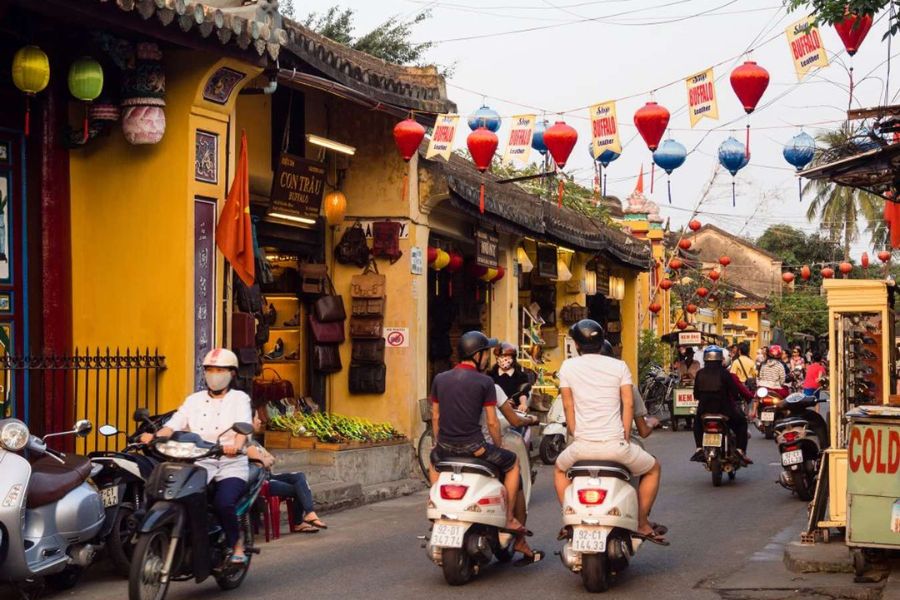
Walking through Hoi An’s Ancient Town is like a portal to time long past. As a UNESCO World Heritage site, this area contains over a thousand historical homes and buildings, temples, and assembly houses. While on foot around the lantern illuminated streets of Hoi An, exploring the beautiful mix of Vietnamese, Chinese, and Japanese architecture, you will experience local life around you. The relaxed rhythm of life and friendly grins and smiles from the people add to the charm of Hoi An, a place that transcends time.

Wander through the Ancient Town


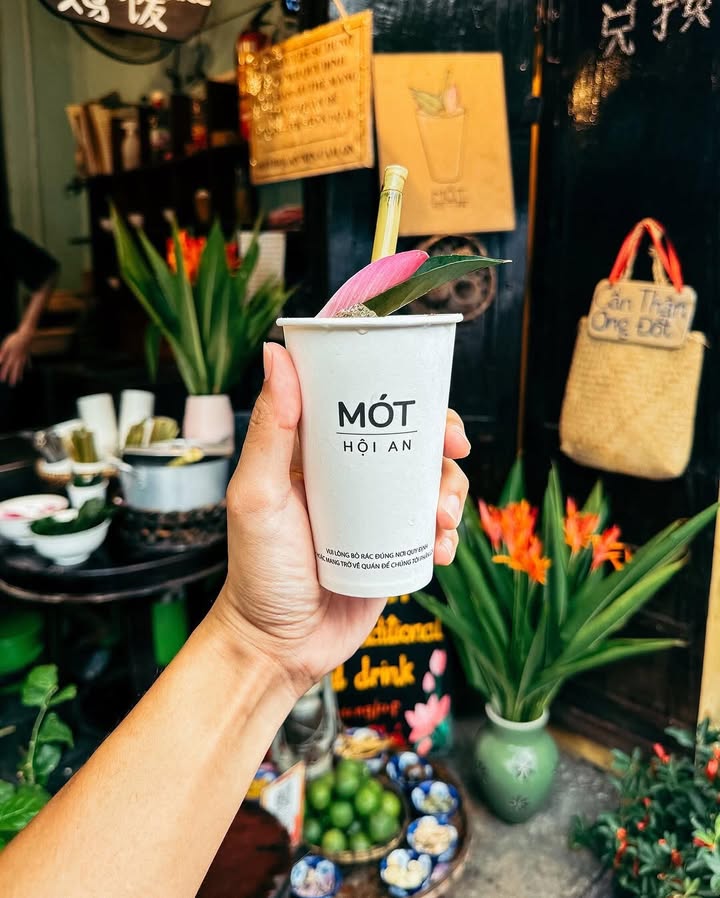
Check In With Famous Mót herbal tea

Of the multitude of pleasures that Hoi An has to offer, “Mót” herbal tea has become a symbol of the town’s youthful energy and inventiveness. Mót is a small, but now famous street-side shop that serves cups of fragrant herbal tea infused with lotus leaves and lemon and is presented with equally delicate flower embellishments – perfect for photos!

Mót herbal tea has become a must-visit for anyone, young travelers and culture vultures alike, coming to Hoi An. Stopping by for a cup of Mót is more than just quenching your thirst; it is participating in an experience that lives and breathes Hoi An’s vibrant and welcoming spirit.

try Mot water in Hoi an

Experience Pottery Making in Thanh Ha Village

Only three kilometers from the Ancient Town, Thanh Ha Pottery Village is an ancient place where tradition has been preserved for so long. Visitors are invited to wander through the workshops filled with handmade pottery and illustrations of the important history surrounding the craft, which once supplied ceramics to the region.

The best part might be the opportunity to sit with the local craftspeople to hand-build your pottery, such as a cup, a vase, or a decorative figure. It is meaningful to connect to the cultural heart of Hoi An with your own hands. Not only did you have an experience, but you made something memorable to take home.

Admire Famous Temples and Pagodas

Hoi An truly comes alive in its temples and pagodas, most of which are over a hundred years old and are significant pieces of culture filled with symbolism. From the famous Chua Cau (Japanese Covered Bridge) to Ong Pagoda and Ba Mu Pagoda, each location tells stories and has deep cultural meanings that communicate the diversity of Hoi An’s history and tradition.

Japanese Covered Bridge in Hoi an

Visitors are drawn to these sites, not only for the sacred relevance but because of Hoi An’s intricate architecture and beautifully detailed carvings, both in historic and artistic forms. Basking in each site gives one the opportunity to connect with the cultural roots of Hoi An, while simultaneously enjoying the peace, as they escape the busy streets on foot.

Savor Hoi An’s Food Heaven

No trip to Hoi An is complete without experiencing its diverse flavors and rich culinary tradition. The town itself has signature foods like Cao Lau (somewhat chewy noodles in a pork broth), Mi Quang (a bowl of comfort that embodies central Vietnam with delicious noodles), and Hoi An chicken rice (served with fragrant rice and ample tasty chicken).

Street food enthusiasts will have a field day with Hoi An’s legendary crispy sauce-filled Banh Mi that some consider to be amongst the world’s best. Each food tells a story of local tradition and flavor, which is exceptional in its own right, but dining in Hoi An is just as memorable as wandering its streets.

Hoi an Street food

What To Pack For Hoi An In January

Smart packing can help make your January travel experience to Hoi An much more pleasant. Temperatures can range from cool breezes to sunshine and even light rain, so it is a good idea to have clothing that is versatile and practical items that you can use in rainy or sunny conditions.

Light jackets and warm layers

Include a windbreaker, thin sweater, or light wool coat to keep warm on those cool evenings and breezy days. Layering your clothes will allow you to adjust easily to the weather changes throughout the trip.

Comfortable clothing

Bring T-shirts, blouses, and light shirts that you can wear with long pants or skirts for a smart casual look. The combination is perfect whether you are walking through the Ancient Town or dining out in the evenings.

Hoi an in january

Rain gear and sun protection

While rain is always a possibility, you might even want to get a thin umbrella or raincoat, as you never know when a sudden shower will pop up. And even in January, you will certainly have sunny hours, so as a precaution, be sure to pack your sunscreen, sunglasses, and baseball or sunhat essentials to avoid UV damage.

Comfortable footwear

Choose a pair of sneakers or flats that you can walk long distances in comfortably. There is a lot to see and do in Hoi An’s cobblestone streets and markets, so ensure your feet are happy!

Health and personal care items

Include your daily toiletries, hand sanitizer, and wipes for convenience. Also consider adding lip balm and moisturizer in case you get dried out, and any personal medications as well.

Optional extras

A reusable water bottle, a lightweight scarf for warmth or style, and a power bank for your phone or camera are good options to add to your packing list.

Travel Tips For Visiting Hoi An In January

Visiting Hoi An in January is a delightful experience, but there are a few practical tips to maximize your trip. From acquiring goods sensibly to managing with the weather, if you keep these suggestions in mind, you will have a restful and enjoyable time.

  • Always ask for prices prior to shopping to avoid misunderstandings, and don’t be afraid of bargaining in a friendly manner.
  • If you happen to be the first customer of the day at a shop, buy something small as a good luck gesture.
  • If you plan to rent a boat to go out on the Hoai River, confirm the price in advance.

ride boat on Hoai River in Hoian

  • Carry a light raincoat or umbrella; just because it is January does not mean there will not be a quick shower.
  • Make a plan for both indoor and outdoor activities to make the most of the changing weather.
  • To avoid crowds, to the best of your ability, do your sightseeing in the early morning or late afternoon.
  • Book flights and accommodation in Hoi An at least two weeks in advance to get better prices.

FAQs About Visiting Hoi An In January

When visiting Hoi An in January, travelers often wonder about the weather, things to do, and overall expectations of visiting Hoi An. For you, here are some great answers.

Will I be able to enjoy the beach in Hoi An In January?

Even though January is not prime beach time in Hoi An, you can certainly find sunny days and enjoy An Bang or Cua Dai Beach. The water may be a little cool, and swimming isn’t common, but the beach gives you the ability to take long walks along the wide sandy stretches, enjoy a nice seafood meal, or simply relax and soak in the calm scenery without the summer crowds. In fact, the quieter beaches are a real treat for many travelers looking for calm.

Seafood in cua dai beach is as fresh as feet

What unique cultural experiences can I expect in January?

January is a particularly fun time for cultural experiences in Hoi An, given that all of the preparations for Tet are well underway. You may see families decorating their homes, local markets filled with flowers and food, and all sorts of joyful festivities. This is a perfect time to try some Tet food, visit a lantern-making workshop, or take a cooking class that highlights Tet food.

Is January good for day trips from Hoi An?

Absolutely! You will find January’s cooler weather especially pleasant for day trips. You won’t be sweating in the summer heat when you visit My Son Sanctuary, or taking a cycling tour into the rice paddy, or even taking a boat trip on the Thu Bon River. Day trips to nearby Da Nang and the Marble Mountains will also be relaxing, and not hot this time of year. The weather also has a refreshing quality in the outdoor experiences and will definitely make you remember them!

Do I need to pack warmer clothes for Hoi An in January?

Definitely. It is important to bring a few warm layers for cooler evenings. During the daytime, when using the warmer light, clothing is comfortable, though a sweater, light jacket, or scarf will help your evenings to be more cozy, especially if you have a table on the river or are having illuminated lantern walks.

Final Thoughts: Is January A Good Time To Visit Hoi An?

January is definitely one of the best months to experience Hoi An! With so many things to do, the weather being perfect, a festive charm, and experiencing a slice of local life, Hoi An is at once dynamic and tranquil. Whether you want to meander through the Ancient Town that is lit up with lanterns, eat local food, or join in on the New Year festivities, Hoi An is the ideal place to be in January. Planning your trip is essential to make the most of your time in Hoi An with Seni World today!

Your Complete Hoi An To Phong Nha Travel Itinerary

Traveling from Hoi An to Phong Nha takes you from the streets of an ancient town to natural wonders. Although this journey may take a few hours, it combines historical, cultural, and beautiful landscapes, proving to be a fantastic trip through the center of Vietnam.

Overview of Hoi An To Phong Nha

Traveling from Hoi An to Phong Nha has become an increasingly popular option for many visitors wanting to experience both the cultural gems and natural wonders of the central part of Vietnam. Hoi An is a popular destination for its ancient town, lantern-filled streets, and traditional cuisine, while Phong Nha boasts beautiful limestone mountains, dense jungles, and some of the most impressive caves in the world. Traveling to these locations together is an experience of history, relaxation, and adventure.

Hoi An Ancient Town overview

Many people choose to take this route because it showcases two completely different, exciting, and interesting sides of Vietnam. Hoi An provides a comfortable, historic setting representative of the country’s cultural identity, while Phong Nha reflects the untamed, natural beauty of Vietnam and offers outdoor activities such as cave exploring, kayaking, and hiking in the jungle. Together, these two journeys offer a balanced travel experience for lovers of culture and outdoor adventure.

How Far Is It From Hoi An To Phong Nha?

Hoi An is around 343 kilometers from Phong Nha. While this may sound like a long distance, it is very much a doable transfer with plenty of options you can take, depending on your ability to travel economically and comfortably.

Since there are no direct flights between Hoi An and Phong Nha, most travelers will go by either road or rail. The average travel time is 7 to 8 hours, but it may take longer should the traffic be heavy or the weather be poor. The route will be scenic in its own right, passing through lovely towns, countryside, and coastline until kissing the mountainous region of Phong Nha. Therefore, it isn’t just a transfer, but also an experience!

Phong Nha Ke bang national park

How to Travel From Hoi An To Phong Nha?

There are many ways to get from Hoi An to Phong Nha, and they range in comfort, cost, and adventure. You can go by bus, private car, motorbike, or train, depending on how much you want to pay.

By Bus

Traveling by bus is the simplest and cheapest option for traveling from Hoi An to Phong Nha. You will generally have to transfer buses in Hue, which is about four hours from Hoi An, and the total journey takes about 8.5 hours and costs about 17 USD. However, some buses will also stop at places of interest like the DMZ Bridge and Vinh Moc Tunnels to make the journey easier while also allowing you to see more along the way.

By Private Car

If you prefer the most comfortable way to travel, you should go by private car. You can typically rent a car along with a professional driver who is English-speaking, and you can get door-to-door service. Prices for a four-seat car start at around 4,557,000 VND (~190 USD), while an 8-seat minivan costs approximately 6,077,000 VND (~255 USD). You can also ask the driver to stop at important historical places on the way, such as Quang Tri DMZ, Hien Luong Bridge, and Vinh Moc Tunnels, making the trip both relaxing and educational.

travel from hoi an to phong nha by car

By Motorbike

If you love adventure, then taking a motorbike from Hoi An to Phong Nha is an amazing experience. There are many rental companies that offer one-way rentals so you can get to Phong Nha without returning the bike to Hoi An. This route, which takes you near the Ho Chi Minh West Trail, is among the most scenic trails in the world, passing through secluded forests, picturesque mountains, and rural villages.

Because the route is so remote, you will find little in the way of fuel stops or repair shops, so it is advised to travel in groups. You can travel on an amazing trip by visiting some stops, such as A Nor Village in Hue, Khe Sanh, and Ta Con Airfield.

travel from hoi an to phong nha by motorbike

By Train

Another way to travel is by train (with a small transfer involved). You will first need to take a bus (or private transfer) from Hoi An to Da Nang (40 minutes) and then board the train to Dong Hoi. Once you reach Dong Hoi, you can take a bus (or a private transfer) to Phong Nha.

The train journey takes 6-8 hours (including transfers) and costs between 250,000-500,000 VND, depending on which seat you choose. The ride by train offers one of the most beautiful and scenic rides in Vietnam, with sights such as the picturesque Hai Van Pass and splendid views of central Vietnam’s rural scenery.

travel from hoi an to phong nha by train

Tips For Traveling From Hoi An To Phong Nha

Traveling from Hoi An to Phong Nha can be a long, exciting journey. However, being well planned can help make your journey smooth and pleasant. In addition to having the appropriate essentials packed for the tour, a few suggestions may help you enjoy an adventure.

  • Clothing: Wear lightweight and breathable clothing, and a warm jacket if you are travelling in the winter or planning to visit caves.
  • Footwear: Comfortable sneakers or flat shoes are best for walking and exploring.
  • Sun protection: Bring sunscreen, a hat, and sunglasses to protect you from serious sun exposure.
  • Camera/phone: Don’t forget to capture the beauty and memories.
  • Cash: Not all places will accept card payments, so make sure to carry enough cash.
  • Book tour tickets ahead of time: Especially in peak season, it is best to book tours and cave tickets ahead of time, so you won’t end up waiting.
  • Respect the environment: Help keep the sites clean and be sure to follow the rules at attractions.
  • Pick the right accommodation: Phong Nha has it all, whether you want to stay in a homestay on a budget or a luxurious hotel. Note that you should try to find something that fits your budget and travel style.

Quang Binh, Phong nha - ke bang

Recommended Stops Along the Way

Regardless of which mode of transport you decide on, your trip from Hoi An to Phong Nha is going to include beautiful scenery and cultural high points along the way. There are sights worth stopping for along the way.

Da Nang

If you’re going by train or bus, there’s a good chance you will pass through Da Nang, a fun, bustling coastal city, and checking this place out is a great way to set off on your trip. Da Nang has a mixture of modern architecture and natural beauty, which should delight anyone visiting. Take a few hours to discover its main highlights. You can walk across the famous Dragon Bridge, climb the Marble Mountains for views from on high, or escape into the greenery of the Son Tra Peninsula, full of monkeys.

Foodies will also be happy as Da Nang has some of the best street food you can find, and if you’re at the beach, you are almost guaranteed fresh seafood. So there are plenty of reasons to stop in Da Nang before your onward journey.

dragon bridge in Danang at night

Hai Van Pass

This famous mountain pass is often deemed to be one of the most picturesque drives in the whole of Vietnam. It follows alongside the Truong Son Mountains with the East Sea glittering below. The views are dramatic, as are the turns of the road itself. Stop off at the top, take in the coastline at your feet, and enjoy the cool mountain breeze. Whether you are travelling by motorbike or bus, though the Hai Van Pass is a road, it is much more than this; it is a travel experience that feels like the boundary between more than just two places.

Hue

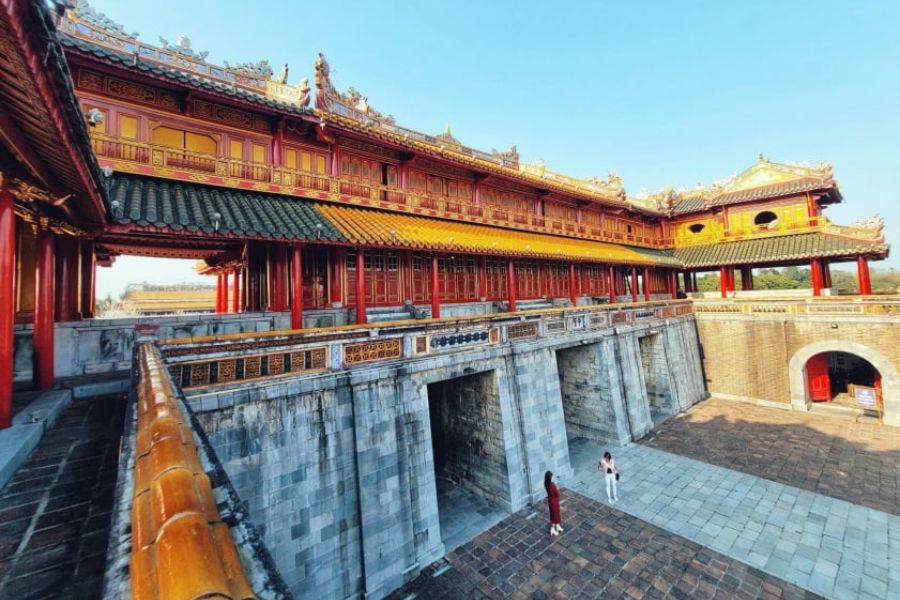
Hue is known as the ancient imperial city of Vietnam, where history, culture, and a sense of charm exist together. This is the place where you can walk in the Imperial City with its moats, temples, and gates, all tell-tale remnants of the Nguyen dynasty. The royal tombs showcase amazing architecture amid unspoiled landscapes.

a picture of Hue Old Capital

You can enjoy a slower pace, looking out across the beauty of the city, and travelling by boat along the Perfume River. Hue food is also a jewel in this city with specialities like Bun Bo Hue (Hue-style beef noodle soup), and beautiful, delicate royal-inspired cuisine, so not only is it a cultural stop, you will also thank your taste buds.

Dong Hoi

Natural backups in Dong Hoi, a quiet beach town in Quang Binh province, are a popular stop-off for travelers heading to Phong Nha. The soft, white-sand beaches, clear water, and laid-back vibe offer an ideal location to relax and refresh after traveling. During your stay, you can shop in local markets, try the local specialties (including fresh seafood and Quang Binh-style noodle soups), or watch the sunset at Nhat Le Beach.

Dong Hoi is just a short drive from Phong Nha, so it offers a nice detour. By spending a night in Dong Hoi, you can unwind and welcome the beauty of Quang Binh before it takes you into the caves and the national park.

Nhat Le Beach in the morning

FAQs About Traveling From Hoi An To Phong Nha

If you’re going from Hoi An to Phong Nha, you may have a couple of different questions. I’ve included some of the frequently asked questions, along with some answers that might make your trip easier.

Can I fly from Hoi An to Phong Nha?

It is not possible to fly directly from Hoi An to Phong Nha. The nearest airport to Phong Nha is Dong Hoi, so you would have to travel from Hoi An to Da Nang International Airport, take a flight from Da Nang to Dong Hoi, and then travel from the airport to Phong Nha by either bus or taxi.

What is the best option for traveling from Hoi An to Phong Nha?

The best option for traveling from Hoi An to Phong Nha is to take a night sleeper bus, which means you will save both accommodation and travel time. The most efficient option is to train from Da Nang to Dong Hoi and then bus or taxi to Phong Nha. Private cars are available too for a more comfortable trip, but are more expensive.

Can I fly from Hoi An to Phong Nha?

There is no direct flight from Hoi An to Phong Nha. The nearest airport is in Dong Hoi. To take a flight, you will first need to travel from Hoi An to Da Nang International Airport. You will then fly from Da Nang to Dong Hoi and take a bus/taxi from Dong Hoi to Phong Nha.

travel from hoi an to phong nha by plane

When is the best time to travel from Hoi An to Phong Nha?

For travelling, March to September (dry season) is the best time to travel between Hoi An and Phong Nha because during this time the weather is more stable and roads are generally better. Travelling during the rainy season (October to December) may result in delays with heavy rain.

Final Thoughts

The trip from Hoi An to Phong Nha is more than a ride. It’s an experience that takes you from the historic charm of an ancient town to the breathtaking splendor of Vietnam’s natural sights! Regardless of how you decide to travel, you will be treated to beautiful countryside views, glimpses into the life of the locals, and a richer experience of the country’s culture. If you’re excited about this great experience and want to have a hassle-free journey, allow Seni World to be your trusted travel partner in planning your unique trip in Vietnam!

Best Ways To Travel From Hoi An To Ninh Binh Safely

Traveling from Hoi An to Ninh Binh encompasses a long journey across Vietnam, a full distance of roughly 691 km. The travel time is roughly 10 hours traveling by car, or roughly 14-15 hours by bus.

Overview Of Hoi An To Ninh Binh

Hoi An and Ninh Binh are two of Vietnam’s most delightful stops in the country, each providing a very different experience for the traveller. Many choose to visit both places to explore the opposite nature of each location. Hoi An is rich in history with picturesque lanterns and historic streets, a must stop for culture and life lovers alike. Ninh Binh, also known as “Ha Long Bay on Land”, is a beautiful mix of limestone mountains, tranquil bodies of water, and lush rice fields. Both places offer cultural heritage and natural beauty, with beautiful surroundings.

Hoi An ancient tower Lantern Festival

The difference in scenery is what makes the combination of Hoi An and Ninh Binh such an appealing journey, and their contrasts create richness in experience. With Hoi An’s bustling old town and Ninh Binh’s peaceful and scenic landscape, you are sure to gain a rich experience travelling through Vietnam. The journey provides both unique and irresistible experiences of local life, along with the tranquillity of Vietnam’s natural wonderland!

How Far Is It From Hoi An To Ninh Binh?

The distance between Hoi An and Ninh Binh is roughly 691 kilometers, resulting in a longer trip in Vietnam. Travel to both sites will highlight the stark differences in Ninh Binh’s limestone formations and Hoi An’s beautiful old town. While the trip is relatively far, it is not that basic share travelers find the long trip justifiable because both places are different experiences.

cycling through green field in Ninhbinh

Time blowing between the two locations: by car it is about 12-13 hours without abatement or dangers. By sleeper bus, it is only longer from 13 hours, 55 minutes to 15 hours, with traffic and stops included. Therefore, when many people travel, they prefer to do it while they sleep at night on a bus. Some combine it with a brief flight to make it quicker.

How To Travel From Hoi An To Ninh Binh?

Traveling via Hoi An to Ninh Binh can be a slow journey because there is no direct route, but you can choose from several means of transport, depending on your budget and preferences.

trip by bike in ninh binh

By Train

Because Hoi An does not have a train station, you first need to travel to Da Nang Railway Station (about 30 km from Hoi An). From Da Nang, you can take a train to Ninh Binh. This usually takes 14-16 hours. The price of the tickets depends on the seat type (hard seat, soft seat, or sleeper berth), and the prices range from around 500,000-1,000,000 VND.

By Bus

One of the cheapest ways to get to Ninh Binh is to take a sleeper bus directly. The bus ride from Hoi An to Ninh Binh is usually around 17-19 hours. The price of the bus ticket is about 600,000-800,000 VND. While it is an affordable option, the distance you have to travel makes it a bit tiring, so keep this for budget travelers.

travel from hoi an to ninh binh by bus

By Plane And Taxi/Train

Another option is to fly from Da Nang International Airport to Hanoi (around 1.5 hours). After landing, you would need to grab a taxi, shuttle, or train to Ninh Binh, which is another 1.5-2 hours. Flight tickets typically range in cost from 900,000-1,500,000 VND, and it costs about 150,000-300,000 VND to do the Hanoi-Ninh Binh transfer. This option can be the quickest, most convenient, and most comfortable way to travel from Da Nang to Ninh Binh.

By Private Car

If you value comfort and prefer flexibility, hiring a private vehicle is an option. The trip to Ninh Binh takes about 15-16 hours, and the price will depend on the type of vehicle, generally priced at around 6,000,000-8,000,000 VND for the trip. This option is ideal for families or small groups who want their own space and the ability to stop to check out sites on route.

Tips For Traveling From Hoi An To Ninh Binh

Traveling from Hoi An to Ninh Binh involves a decent amount of travel time, so with a bit of foresight and planning, you can ensure your journey will be enjoyable and go smoothly without unnecessary detours. Here are some helpful tips to ensure you get the optimum experience on this journey.

  • Book your tickets in advance: Sometimes buses, trains, and flights fill up, especially during the high season.
  • Take an overnight transport option: An overnight bus or train can save you time, and you save on one night’s accommodation.
  • Travel light and comfortably: Travel is easier if you only take what you need for longer trips.

Bai dinh pagoda in ninh binh

  • Take some snacks and water: The journey may take a while, with the potential of not having the best food options at your stops.
  • Look into transport options in Ninh Binh: If you need transport to your accommodation in advance, it’s smart to have transport arranged in advance, as the bus/train stations may not be located in proximity to tourist areas.
  • Stay flexible: As weather and traffic can greatly affect schedules in Vietnam, you never know what could come up, so allow for buffer time!

Recommended Stops Along the Way

The trip from Hoi An to Ninh Binh takes you through a variety of beautiful areas, each with its own charm in Vietnam’s landscape. If you have the time, stopping at some of the areas mentioned below will make your trip even more memorable and worthwhile.

Hue – The Imperial City

Hue, Vietnam’s former imperial capital, is an essential stop on the journey north. Hue has the UNESCO-listed Imperial Citadel, the royal tombs, and ancient pagodas to remind visitors of Vietnam’s royal history. Additionally, Hue is known for its unique and distinct cuisine, like Bun Bo Hue (Hue-style beef noodle soup), Banh Beo (steamed rice cake with toppings), and Nem Lui Hue (grilled pork skewers), as well as its serene beauty due to the Perfume River. The opportunity to spend time in Hue allows you to immerse yourself in Vietnam’s cultural heritage while being in a relaxed setting.

ngo mon in Hue Imperial City

Phong Nha – Ke Bang National Park

For nature lovers and adventure seekers, a stop-off in Phong Nha-Ke Bang National Park is an ideal choice. The UNESCO World Heritage site features scenic limestone karsts and the world’s biggest and most unique caves, including the famous Son Doong and Paradise Cave. In Phong Nha National Park, visitors can take a boat trip on the Son River, trek through jungles, and admire impressive landscapes. It is a delightful detour destination to experience Vietnam’s wild and unspoiled beauty.

Thanh Hoa – Gateway To Pu Luong Nature Reserve

A provincial capital and a regional trader, Thanh Hoa, is the best entrance to Pu Luong Nature Reserve. Set amongst stunning mountains sprinkled with rice terraces and traditional villages, visitors can enjoy a retreat into nature in Pu Luong, trek through lush valleys, visit ethnic Thai communities, enjoy lookout points, and much more! This will be a nice stop for travelers to relax in the beauty and tranquility of Vietnam’s natural landscapes and rural charms.

Pu Luong Nature Reserve

Vinh City – A Beach Town

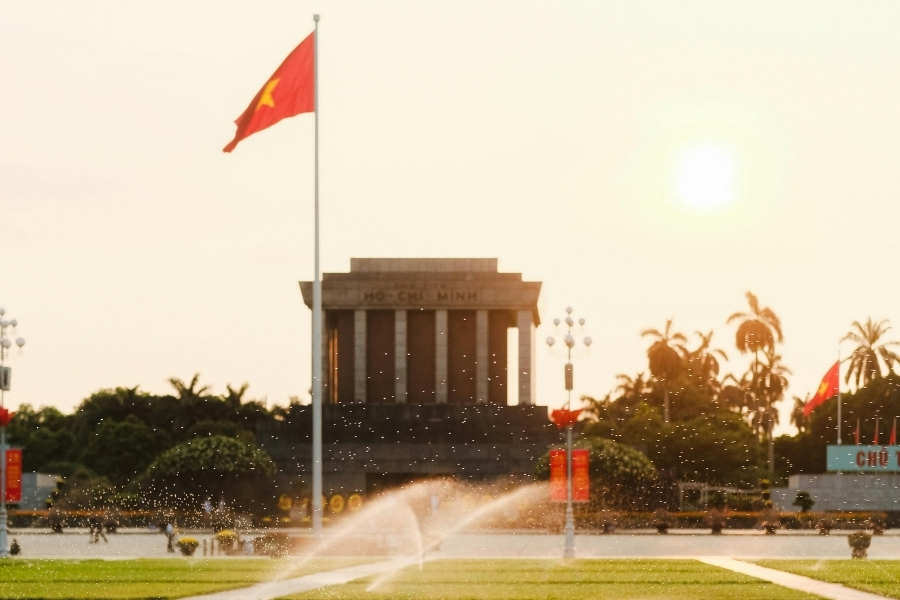
Vinh is a city on the coast of Vietnam that acts as a little stop-off on your journey along the coast. Often overlooked, Vinh is an intriguing stop for travelers to get a glimpse of local authenticity. In Vinh, you can visit the Ho Chi Minh Square, named after Vietnam’s favourite leader, explore local markets, filled with fresh food and street food, and just a little north, Cua Lo Beach, which is a relaxing way to enjoy the sandy beach and fresh sea breezes before you continue your trip north.

Tam Coc – “Halong Bay On Land”

Tam Coc is an experience you will want to have before arriving at Ninh Binh city, and you should not miss it! Tam Coc, long known as Halong Bay on land, is stunningly beautiful with dramatic limestone cliffs and karst hills rising above winding rivers and rice paddies. The best way to explore Tam Coc is on a boat ride down the Ngo Dong River, as you glide past caves and towering karst formations. It is a peaceful yet beautiful introduction you will enjoy before experiencing Ninh Binh itself.

view of Tam Coc Bich Dong from above

FAQs About Traveling From Hoi An To Ninh Binh

If you’re planning your trip for the first time from Hoi An to Ninh Binh, you may have a ton of questions in mind. To help make things simpler, we have outlined some of the FAQ’s with detailed answers below that can help avoid headaches along your journey.

How far is it from Hoi An to Ninh Binh?

Depending on the route, the distance is estimated to be around 700-750 kilometers. Because of the distance, many travelers take an overnight train or direct bus rather than trying to drive on their own.

What is the cheapest way to travel from Hoi An to Ninh Binh?

The cheapest way is via sleeper bus, which will cost anywhere from $20-30 per ticket. It is slower and not nearly as comfortable as the train or flight option, but for travelers on a budget, this is a good option to choose.

boat on river in ninh binh

What is the quickest way to travel from Hoi An to Ninh Binh?

The quickest way to get there is to fly from Da Nang Airport to Hanoi (around 1.5 hours) and then take a train, bus, or private car onward to Ninh Binh (around 1.5-2 hours). If saving time is critical, this is the best option to choose.

Is there a railroad from Hoi An to Ninh Binh?

No, there is no train station in Hoi An. Firstly, you must travel to Da Nang Railway Station, which is roughly 30 km from Hoi An. Once in Da Nang, you can catch a direct train to Ninh Binh, which takes approximately 14-15 hours.

Is it safe to travel overnight from Hoi An to Ninh Binh?

Yes, overnight buses and trains are generally safe for travelers. It is a good idea to keep close watch of your valuables on buses and trains and book your ticket with reputable transport providers.

Can I book online in advance?

Yes, you can. All buses, trains, and even flights can be booked online via reputable Vietnamese booking websites or apps. It is strongly advised to book your ticket as early as you can, especially during weekends or holidays.

Final Thoughts

Traveling from Hoi An to Ninh Binh is a beautiful journey between two of the most interesting towns in Vietnam. Whether you enjoy a short flight, a train ride, or a road trip, each with its own unique experience. If possible, try to plan ahead and pick the best transport for your trip. Are you planning to explore Ninh Binh after Hoi An? Let Seni World help design the itinerary for a great trip in Vietnam!

How To Travel From Hoi An To Halong Bay With All Transport Options

The route from Hoi An to Halong Bay links Vietnam’s heritage town with its most famous natural wonder. Distances may be long, but practical transport options make combining both destinations simple and rewarding for travelers.

Overview Of Hoi An To Halong Bay

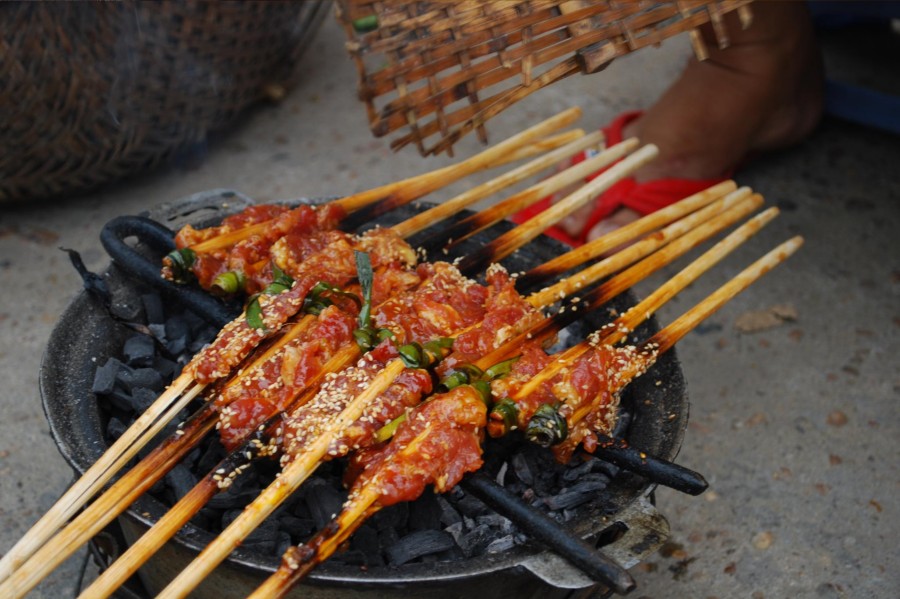
Both Halong Bay and Hoi An have very distinct features, and that is an exclusive feature of traveling to Vietnam. In the ancient town of Hoi An, you can stroll past yellow-walled houses and tailor shops, then sit down for local specialties that show you the best of what to eat in Hoi An. Hoi An contrasts with the majestic limestone peaks that peacefully rise in Halong Bay. Seeing both places on a single trip allows you to witness the two different faces of Vietnam.

grilled meat in hoi an

Traveling from Hoi An to Halong Bay is a long journey that cuts across the country. Along the way are the central beaches, the lowland rice fields, and the bustling cities in the north that lead you to the Gulf of Tonkin. Nowadays, the journey of traveling from Hoi An to Halong Bay alongside other tourists is one filled with adventure, and as a result, the journey itself becomes a memory.

How Far Is It From Hoi An To Halong Bay?

The journey between Hoi An and Halong Bay is more than a mere number on the map. The regions Hoi An and Halong Bay are separated by roughly 1,000 to 1,100 kilometers. Therefore, by any kind of travel, it takes one and a half to a full day. That is with continuous breaks.

To travel by bus in direct service takes between 16 and 20 hours. Meanwhile, private cars can operate a little faster if the scheduling is not strict. When going by plane from Da Nang to Hanoi, and then continuing by road, the travel time is still 6 to 7 hours. In short, it is a lengthy transfer, but it links two incredible sights in Vietnam.

Quang Ninh Museum

How to Travel From Hoi An To Halong Bay?

Covering the long distance between Hoi An and Halong Bay can be done in many ways, each offering a different balance of time, comfort, and cost. From overland journeys that reveal Vietnam’s landscapes to quick flights that save a full day, the choice depends on how you want to shape your trip.

By Motorbike

A motorbike journey all the way through Hoi An to Halong Bay certainly is a daunting task. It is more than a thousand kilometers, in addition to the fact that the roads will require some patience and strength. But the payoff is more than that, it is the freedom to work at your own speed and see Vietnam changing bit by bit right in front of your eyes.

Keeping your attention to the weather is essential while dealing with the unpredictable traffic on Highway 1A, especially heavy trucks. The wearisome distance and the long hours make it even more demanding. While this kind of travel is demanding in general, for seasoned travelers, this kind of travel offers a unique kind of excitement that a plane cannot offer.

travel from hoi an to halong bay by motorbike

Aspect Details
Route Option 1 Hoi An → Hue → Dong Hoi (Quang Binh) → Vinh (Nghe An) → Ninh Binh → Hanoi → Halong Bay. This follows National Highway 1A, the most direct coastal route, with plenty of cities to rest in between.
Route Option 2 Hoi An → Kon Tum → Pleiku → Buon Ma Thuot → Gia Nghia → Hoa Binh → Hanoi → Halong Bay. This follows the Ho Chi Minh Highway, quieter and more scenic, cutting through highlands and small towns.
Route Option 3 A mixed journey combining Highway 1A and Ho Chi Minh Highway, allowing you to enjoy both the coast and the mountains before reaching Hanoi.
Distance Roughly 1,000 – 1,200 km, depending on the route.
Travel Time At least 4 – 6 days with overnight stays. Riders usually stop in major towns rather than pushing through.
Suggested Stops Hue: pause to see the Imperial Citadel and taste central Vietnamese food.

Phong Nha: explore the famous cave systems in the national park.

Ninh Binh: ride through limestone karsts and rice paddies at Tam Coc or Trang An, an experience often compared with the charm of Hoi An’s activities and attractions.

Hanoi: rest before the final leg north to Halong Bay.

By Bus or Minivan

For tourists, the easiest way to travel the distance between Hoi An and Halong Bay is by bus or minivan. Though the ride can be lengthy, and usually transfers are avoided, a direct bus is preferred; they tend to be more expensive. A lot of people prefer this method for low cost and daily availability, and tourists follow for the same reason.

Services tend to vary in quality. You can get a cheap seat with a standard sleeper bus, and you will face crowded cabins and frequent roadside stops. Boutique sleeper buses and limousine-style minivans are more expensive but offer better reclining seats, fewer passengers, and smoother rides. Most buses depart in the evening, allowing you to spend the night traveling and arrive in the north early the next morning.

travel from hoi an to halong bay by minivan

Vehicle Type Price (VND & USD) Travel Time Notes & Tips
Standard Sleeper Bus ~520,000 – 550,000 VND (22 – 24 USD) 18 – 20 hours This is the cheapest option and usually the most crowded. The buses make several roadside stops, and the cabins are quite basic, so bringing a blanket or travel pillow can make the long ride more bearable.
Cabin / VIP Sleeper Bus ~1,200,000 – 1,400,000 VND (50 – 55 USD) 18 – 20 hours These buses provide private cabin-style berths with more space and privacy. The comfort level is higher, but tickets sell out quickly during weekends and holidays, so booking in advance is strongly recommended.
Limousine Minivan (9–16 seats) ~600,000 – 1,000,000 VND (27 – 40 USD) 18 – 20 hours Limousine minivans carry fewer passengers and feature wider reclining seats. Many operators offer hotel pick-up in Hoi An and drop-off closer to Halong Bay, making the journey smoother despite the long travel time.

By Private Car

Going by a private car from Hoi An to Halong Bay means you have an itinerary that works for you. You control the start time, the stops, and their lengths. While the distance exceeds 900 km and there are hours of highway driving, the legs you want to take on the route can be as casual or active as you want. You can take a stretch break at a café in Hue, admire the green hills next to Vinh, or simply gaze at the changing terrain while riding.

While the price of a private car is higher than that of a bus, the higher price entitles you to greater convenience and flexibility. Drivers are generally courteous and well-mannered, tending to offer water or soft music.

travel from hoi an to halong by private car

Vehicle Type Estimated Price (one-way) Estimated Travel Time Notes & Tips
4‑Seater Sedan Around €99 (~2,500,000 VND) for Hoi An → Hue portion; full Hoi An → Halong estimated at $60-120/day depending on duration 18 – 20 hours with breaks along the way Comfort, compact luggage space, best for couples or solo travelers with small luggage. Booking early gives a better rate.
7-Seater SUV Approximately €109 (~2,700,000 VND) zone rate; full trip likely $90 – 140/day Similarly, around 18 – 20 hours More room for luggage and people. A good fit for small families or groups wanting space and reliability.
16-Seater Minibus Around €139 (~3,400,000 VND) for regional trips; van rentals can run $139+/day Still about 18 – 20 hours, depending on stops Ideal for groups of 8 – 15 with lots of bags. Everyone stays together, and you can even request short photo or snack breaks along the route.

By Flight

In terms of travel to Halong Bay, the flights are the fastest option in bridging the greater distance from Hoi An to Halong Bay. Hoi An does not have an airport. Therefore, the traveller would have to go to Da Nang International Airport, which is 30 km away. There are short flights from Da Nang to Hanoi that take around one hour. Upon landing, the shuttle or car to Halong Bay would take 2.5 to 3.5 hours.

For numerous individuals venturing into new regions, this alternative is an equilibrium between travel time and comfort. Although flights may seem costlier than tickets for trains or buses, flights ensure that the individual does not lose an entire day, as one would in the case of land transportation. In-flight services, Vietnam Airlines, Vietjet Air, and Bamboo Airways have multiple daily flights operating on the Da Nang–Hanoi route, meaning that flights can be scheduled without hassle.

travel from hoi an to halong by flight

Aspect Details
Travel Time ~1 hour 20 minutes by flight (Da Nang → Hanoi), plus 2.5-3.5 hours by road (Hanoi → Halong Bay).
Airlines Vietnam Airlines, Vietjet Air, Bamboo Airways – multiple daily departures.
Estimated Price From 800,000 VND (~$35) in low season to 2,000,000 VND (~$85) in peak months, booking early helps secure cheaper fares.
Notes & Tips There is no airport in Hoi An — the nearest one is Da Nang International Airport (DAD). For Halong Bay, travelers often use Noi Bai International Airport (HAN) in Hanoi, but Van Don International Airport (VDO) in Quang Ninh (opened in 2018 and located about 50 km from Halong) is actually the closest option. Booking morning flights gives you enough daylight to continue the journey comfortably and start your Halong Bay journey without rushing.

Tips For Traveling From Hoi An To Halong Bay

Covering such a long stretch of Vietnam means more than just picking a bus or flight—it’s also about planning the little details that make the journey smoother. These tips are drawn from what seasoned travelers often wish they had known earlier, and they can save both time and energy on the road north.

  • Evening sleeper buses allow you to save on a full night of accommodation. Bear in mind, earplugs and an eye mask can turn an uncomfortable evening into a decent night of sleep.
  • Booking early morning flights can allow you to connect to a same-day transfer to Halong Bay without feeling rushed upon arrival.
  • Train travellers often have issues finding soft sleeper cabins, especially on weekends, since this ticket option sells out quickly. You can avoid ending up on a 16-hour ride with a hard seat.

cruise through Halong bay

  • Summers in northern Vietnam can change in an instant with heavy rainstorms. These cause delays with buses and trains. So building in a time buffer at the beginning of your schedule will keep you flexible.
  • You might find that tickets for buses and trains are cheaper to purchase directly from a local agency in Hoi An instead of using an international booking site. Online booking sites can provide more language support from initial bookings to cancellations without penalties.
  • There are luggage delivery options in Vietnam that can also deliver large bags separately. This is an especially useful option if you want to travel lightly on overnight buses or trains.
  • At Noi Bai Airport in Hanoi, the late-night ground transport options to Halong Bay are limited, and so usually means an overnight stay in Hanoi if you arrive too late in the evening.

Final Thoughts

The journey from Hoi An to Halong Bay is never a quick transfer; it’s a passage across Vietnam that shows you just how diverse the country can be. What matters most is choosing the way that fits your time, budget, and travel style. If you want help planning or combining these routes, Seni World is here to take care of the details so you can focus on the experience. From booking tickets to arranging cruise cabins, we make the long stretch from Hoi An to Halong Bay feel like part of the adventure instead of an obstacle.

Hoi An To Hanoi Complete Journey With Transport And Useful Advice

Traveling from Hoi An to Hanoi takes you from the lantern-lit charm of central Vietnam to the vibrant capital in the north. Many visitors choose this journey to enjoy both ancient heritage and modern city life.

Overview Of Hoi An to Hanoi

Hoi An and Hanoi are two distinct parts of Vietnam, which is even more so when speaking of central and northern Vietnam. To the centre, Hoi An warmly welcomes tourists with its softly lit streets, calm river cafes, and relaxed lifestyle. As you head north, the coastlines transform into rich plains, which are home to old towns and bustling traditional markets.

Take A Boat Ride On The Thu Bon River in Hoi An


On the other hand, Hanoi comes with the opposite. The capital is filled with a lot of history as well as the sounds of buzzing scooters, street shops, a blend of traditional music, and even vendors’ calls. After spending days in Hoi An, travelling to Hanoi enables you to immerse yourself in a place in ancient and modern Vietnam, which is a strong contrast to the places you have visited.

How Far Is It From Hoi An to Hanoi?

About 800 to 820 kilometers by road, Hoi An and Hanoi are fairly close together. Since Hoi An lacks an airport or a rail station, the majority of travelers pay perfect attention to Da Nang (approximately 30 km) and head north afterwards. The overall time of transport is considerable, depending on the pathway and transport mode.

Ho Chi Minh Mausoleum in Hanoi

When flying an aircraft, the route between Da Nang and Hanoi only takes a little over 1 hour and 20 minutes, but when it comes to airport transfers and check-in time, you need to count on an additional few minutes. The journey takes 15 to 18 hours by bus or sleeper coach. Via train, the trip between Da Nang and Hanoi should take approximately 16 to 17 hours, with more time possible should you decide to further explore the highlands of the north.

How to Travel From Hoi An to Hanoi?

Making the long journey north can be done in several ways, each with its own balance of time, cost, and comfort. Travelers can choose the option that best matches their schedule and style.

By Motorbike

For the more daring travellers, motorbiking all the way from Hoi An to Hanoi certainly is an adventurous pick. The route is more than 800 kilometers and takes you through a variety of sights, starting from central beaches to the foggy mountains of the north. Completing the journey on a bike allows you to take a break whenever you want, to fishing villages, to hidden twists of the passes, and rice fields.

The reward is the freedom and immersion that come with navigating a new city on your own, but the freedom doesn’t come without its challenges. Traffic on major highways can be grueling; the weather in Vietnam is notorious for its swift changes. This mode of travel, unless backed by strong riding experience and ample time, is best left for lightly-traveling, intrepid backpackers.

you can travel from Hanoi to Hoian by motorbike

Aspect Details
Route Route 1: From Hoi An → Da Nang → Hue → Dong Hoi (Quang Binh) → Vinh (Nghe An) → Ninh Binh → Hanoi. This is the fastest and most direct road, running along National Highway 1A. You will encounter many towns and services along the way, but also heavy traffic

Route 2: Hoi An → Da Nang → Hue → A Luoi → Khe Sanh → Phong Nha → Tan Ky (Nghe An) → Hoa Binh → Hanoi. This route follows the inland Ho Chi Minh Highway, quieter than QL1A, and takes you through mountains, forests, and ethnic minority regions

Route 3: Ride north on QL1A to Hue, then switch to the Ho Chi Minh Highway to Phong Nha. From there, return to QL1A near Vinh and continue to Hanoi. This mix combines coastal scenery with mountain landscapes

Distance Hoi An to Hanoi distance is 820 km via QL1A, up to 1,000 km on the Ho Chi Minh Highway
Travel Time 2 – 3 days if you ride long hours, but most travelers take 4–5 days with overnight stops
Suggested Stops Hue: You can explore the Imperial City and enjoy dinner by the Perfume River

Phong Nha: It is worth stopping to see the caves of Phong Nha–Ke Bang National Park

Ninh Binh: Many travelers take a boat trip through Trang An or Tam Coc, much like exploring the highlights in Hoi An before heading north

Thanh Hoa: The countryside here offers rice fields and peaceful villages, a good place to rest

By Bus or Minivan

Taking the Hoi An to Hanoi bus is among the most budget-friendly and straightforward ways to cover the distance. Since you don’t have to make multiple transfers, you can board the bus in Hoi An or Da Nang and disembark in Hanoi, which enables many travelers to opt for this mode of traveling. The vans and minibuses are quite popular as well, having several departures each day, which makes planning your trip quite easy, even during the busy season.

The trip is usually long, mostly conducted at night, and the level of comfort largely depends on the service you choose. More passengers are crammed into standard sleeper buses, while limousine minivans transport fewer customers and offer larger seats along with gentler rides. If you’re on a budget, buses are the way to go, but if you want to get a decent amount of rest and comfort during your travel, minivans are worth the premium.

travel from hoi an to hanoi by bus

Vehicle Type Estimated Price (USD/VND) Travel Time Notes & Tips
Standard Sleeper Bus Around $16 – 23 (~400,000 – 550,000 VND) Approximately 15 – 18 hours Very economical and widely available. Expect frequent stops for toilet and food breaks; seating can be tight.
VIP/Luxury Sleeper Bus Around $30 – 40 (~700,000 – 900,000 VND) About 16 hours Offers full-flat beds with fewer passengers, better privacy, and often hotel pickup/drop-off. Comfort is noticeably higher.
Limousine Minivan Typically $25 – 35 (~600,000 – 800,000 VND) About 15 – 17 hours Fewer seats, spacious reclining seats, often include hotel transfers, USB ports, and occasionally Wi-Fi. Ideal for those who value comfort on long rides.

By Private Car

The ride in a personal vehicle between Hoi An and Hanoi is the way to enter a comfort zone as soon as you leave your hotel. You could have a break by the side of the road, have a stretch of your legs at a mountain pass, or even pull over and take a photo of the landscape. However, when it comes to families traveling with children or groups of friends who appreciate privacy and time, it can be very much worth it.

travel from hoi an to hanoi by car

Vehicle Type Estimated Price (USD & VND) Notes & Tips
4-Seater Sedan Around $90 – 100 (~2.4 – 2.6 million VND/day) Ideal for small groups or couples with light luggage. Includes driver and fuel for a full day.
7-Seater SUV / MPV Around $100 – 110 (~2.8 – 3.2 million VND/day) Better for families or groups with more luggage. Offers more space and comfort.
16-Seater Van Around $110 – 120 (~3.2 – 3.5 million VND/day) Best for larger groups who need room and want to split costs.
Local Hoi An Private Car (Sedan) Around $60 (~1.4 – 1.6 million VND) A cost-saving local option if you’re departing from Hoi An. Includes driver, petrol, tolls, and bottled water—enough for a comfortable day trip.

By Train

Those customers who appreciate taking the time for a journey, then one will not forget the Hoi An to Hanoi train. The trains leave the adjacent Da Nang and follow the coast of Vietnam until they reach the capital. On the road, you will encounter fishing villages, rice paddies, and mountain landscapes slowly evolving with every province. For many travelers, this slow ride becomes a highlight of their Vietnam trip, as no flight can give you such views.

The journey is lengthy, nearly a day on the rails, and yet there are a number of cabin options that make it workable. Daytime rides are appropriate for sitting in seats, whereas a sleeper berth enables you to sleep overnight. Its prices are affordable, and the rhythm of the train helps one relax more easily, socialize with other inhabitants, or just read a book until one can see Hanoi.

travel from hoi an to hanoi by train

Aspect Details
Travel Time About 16 – 18 hours, depending on the train schedule. Delays can occur, especially in the rainy season.
Cabin Types Hard seat: Cheapest option, but very basic and uncomfortable for long rides.

Soft seat (AC): Air-conditioned and cushioned, better for daytime trips.

Hard sleeper (6-berth cabin): Affordable overnight option with shared berths.

Soft sleeper (4-berth cabin): More privacy and comfort, suitable for families or travelers wanting proper rest.

Estimated Price From 400,000 – 700,000 VND (~20 – 30 USD), depending on seat type and booking time.
Best For Travelers who prefer a slow but scenic journey, enjoy countryside views, or want to sleep overnight in a berth instead of sitting through the night.
Notes Tickets can be booked online through platforms like 12go.asia, bought at Da Nang Railway Station, or arranged via travel agencies. Foreign travelers should carry passports. Bringing water, snacks, and motion sickness pills is recommended.

By Flight

The Hoi An to Hanoi flight (route via Da Nang) has earned the rapid ranking of the fastest of all travel options. It only requires a little more than an hour to get to Hanoi from the airport, as opposed to buses or trains. For travellers with a tight schedule, flying will save more energy and allow more time to travel in the capital or even further north to sites such as Sapa or Ha Giang.

travel from hoi an to hanoi by flight

Aspect Details
Flight Duration Around 1 hour 20 minutes from Da Nang (DAD) to Hanoi (HAN). Add 45 – 60 minutes to transfer from Hoi An to Da Nang Airport.
Airlines Vietnam Airlines, Vietjet Air, Bamboo Airways. Multiple flights daily.
Estimated Price From 800,000 – 1,800,000 VND (~35 – 75 USD), depending on booking time and promotions.
Airports Departure: Da Nang International Airport (DAD). Arrival: Noi Bai International Airport (HAN). There is no airport in Hoi An.
Best For Travelers who value speed and comfort, or those with limited time who want to maximize sightseeing in Hanoi.
Notes Book early during peak seasons for better fares. Allow extra time for airport check-in and luggage. From Hanoi’s Noi Bai Airport, it takes about 45 minutes by taxi or shuttle to reach the Old Quarter.

Tips For Traveling From Hoi An to Hanoi

An over 800-kilometer trip isn’t a quick jump, so a couple of useful preparations can help make the trip easier and much more enjoyable. This commentary is taken from what many travelers face on the road.

release lanter in Hoian

  • Buses and trains typically arrive in Hanoi between 5-6 am, so book an early check-in hotel in advance, so you don’t have to wait at the reception.
  • Summer thunderstorms in central Vietnam can slow trains and buses down; it’s best to have a buffer day in your schedule to enjoy Hoi An at its best.
  • Flight and train tickets sell out quite quickly during Tet and other holidays; it is very important to book at least two weeks in advance.
  • Traveling by bus is not very comfortable on long trips, as you can sometimes be crammed in with huge suitcases as well; if you have large bags, you would be best to go on trains or flights.
  • Ninh Binh or Phong Nha stopovers break the trip into two shorter legs, and you get the chance to see more amazing places.
  • Noi Bai Airport is around 30-45 minutes from the Hanoi Old Quarter, and so a pre-booked transfer saves on the time when you arrive and avoids haggling and stress.

Final Thoughts

Hoi An charms with quiet nights by the river, while Hanoi stirs with the constant hum of its streets. The stretch between them is long, yet that very distance makes the journey feel like a story unfolding. Some travelers want the quickest route, others enjoy the slow rhythm of the road, but in every case, the contrast between the two cities is the real reward. Seni World can help smooth out the details, so the focus stays on the experience itself.

Shopping In Hoi An With 18 Best Spots For Local Markets And Crafts

Shopping in Hoi An offers more than bargains; it is a cultural journey through lantern markets, tailor shops, and craft villages. Discover the top 18 places where travelers can find authentic keepsakes and meaningful gifts.

Bustling Markets and Shopping Streets in Hoi An

Shopping in Hoi An always begins with its lively markets and busy pedestrian streets. These are the places where colors, scents, and sounds of the old town come alive, offering both souvenirs and an authentic slice of local life.

Hoi An Night Market

  • Address: Nguyen Hoang Street, An Hoi Island (opposite the Japanese Covered Bridge)
  • Opening hours: 05:00 PM – 11:00 PM daily

In the evening, the nighttime market offers a multitude of things to browse. More than fifty stalls line the street, offering hand-painted fans, silk scarves, and even wooden carvings and jewelry. For many, the nighttime market in Hoi An is the highlight of their trip as it has a festive atmosphere and numerous food options. A bustling crowd makes the market liveliest between 7 and 9 PM, when the lanterns light up the area.

Hoi An Night Market

Hoi An Central Market

  • Address: Tran Phu Street, Cam Chau Ward
  • Opening hours: 06:00 AM – 06:00 PM daily

This area is the most vital part of daily activities in Hoi An. In the early hours, the market comes to life with vendors offering fresh vegetables, herbs, and even seafood sourced from the Thu Bon River. By late morning, the food stalls are packed with locals stuffing food, which opens an opportunity for tourists to indulge in Hoi An’s authentic cuisine with the locals. This particular market provides insight into how people trade and dine, which continues to be an honest experience of the market in the town.

hoi an centre market

Tran Phu, Nguyen Thai Hoc, And Le Loi Streets

  • Address: Old Town Quarter, Minh An Ward
  • Opening hours: Most shops open 09:00 AM – 09:00 PM

These three parallel streets run through the center of the Ancient Town and are perfect for a leisurely stroll. The mix of stores is diverse: leather workshops displaying handmade bags, art galleries tucked inside heritage houses, and boutique shops selling unique ceramics or jewelry. Prices are higher than at the markets, but the quality is also more refined. Shopping here is as much about soaking in the scenery as it is about buying something.

Handicrafts And Unique Gift Shops In Hoi An

Shopping in Hoi An is not only about lively markets; the town is also filled with small shops where craftsmanship takes center stage. These stores focus on handmade details, eco-friendly products, and designs that carry cultural meaning.

Reaching Out Arts & Crafts

  • Address: 103 Nguyen Thai Hoc Street, Minh An Ward
  • Opening hours: 09:00 AM – 09:00 PM daily

This is one of the most amazing social enterprises in Hoi An. They offer ceramics, tea sets, as well as decorative items, all made by artisans with disabilities at the workshop. It is nice to browse as the tranquil and elegant space is in sharp contrast with the outside chaos. While the prices are higher than at street markets, the artisanship, quality, and heart behind each product are always a good deal for traveling people who are looking for significance in gifts.

Reaching Out Arts & Crafts in hoi an

Sen’s FAIFO

  • Address: 57 Le Loi Street, Minh An Ward
  • Opening hours: 09:00 AM – 09:00 PM daily

Sen’s FAIFO combines a concept store with a café, offering a curated selection of tea, organic coffee, and eco-friendly gifts. The focus is on sustainability, with locally sourced ingredients and handmade packaging that reflects the charm of shopping in Hoi An. Many travelers stop here for a drink before browsing herbal teas, handmade soaps, or decorative crafts, making it a refined and responsible shopping stop.

Mountain’s Color

  • Address: 83 Phan Chu Trinh Street, Cam Pho Ward
  • Opening hours: 09:00 AM – 08:00 PM daily

This shop focuses on handmade items crafted by ethnic minority groups from Vietnam’s northern highlands. Each piece—from handwoven bags and embroidered fabrics to wooden accessories—tells a story of traditional craft and natural materials. The vibrant colors and textures stand out from the more tourist-oriented souvenirs found elsewhere in town. Shopping here supports rural communities while giving visitors a truly distinctive keepsake.

Art Stamps

  • Address: 82 Tran Phu Street, Minh An Ward
  • Opening hours: 08:30 AM – 08:30 PM daily

Small shops like Art Stamps are known for their rubber stamps and leather goods. The shop is especially known for stamps that travelers can personalize with their names, zodiac signs, or beautiful stamps inspired by old Hoi An house designs. These unique stamps create an add-on to Hoi An souvenirs. This place is especially beloved by families with children, as many of their custom works can be collected the next day as personalized gifts.

Art Stamps in hoi an

Lotus Leaf Fine Arts & Jewellery

  • Address: 85 Tran Phu Street, Minh An Ward
  • Opening hours: 09:00 AM – 09:00 PM daily

For those seeking something more elegant, Lotus Leaf offers fine jewelry and art pieces inspired by Vietnam’s national flower. The designs blend modern style with traditional symbolism, making each item both wearable and meaningful. The shop’s atmosphere feels like a small gallery, with displays carefully arranged to highlight craftsmanship. Travelers often choose pieces here as special gifts or keepsakes that hold lasting value beyond their trip.

Fashion and Tailor-Made Outfits in Hoi An

Tailor-made clothing is one of the strong attractions offered in Hoi An. From every part of the world, visitors arrive in this town to get suits, dresses, or even casual wear, which are delivered in a couple of days.

BeBe Tailor

  • Address: 05–09 Hoang Dieu Street, Hoi An
  • Opening hours: 08:30 AM – 09:30 PM daily

BeBe Tailor is often recommended as the go-to shop for first-time visitors. With a huge selection of fabrics and professional staff, it operates more like a fashion studio than a small local tailor. The process is efficient: customers choose fabric, discuss styles, and return for fittings the next day. Prices are higher than in smaller shops, but consistency and quality make BeBe a safe choice if time is limited.

BeBe Tailor in hoi an

A Dong Silk

  • Address: 40 Le Loi Street, Hoi An
  • Opening hours: 08:00 AM – 09:00 PM daily

Known for its attention to detail, A Dong Silk has built a reputation for elegant designs and premium fabrics. Many travelers on a Vietnam trip come here for formal wear such as suits, evening dresses, and ao dai. Staff are patient during fittings and happy to make adjustments until the garment feels right, a service that makes shopping in Hoi An feel both personal and professional. Turnaround time is usually two to three days, so it is best to visit early in your stay.

A Dong Silk in hoi an

Blue Chic

  • Address: 46 Tran Hung Dao Street, Hoi An
  • Opening hours: 09:00 AM – 08:30 PM daily

Blue Chic appeals to travelers looking for casual and stylish outfits rather than formal wear. The shop is smaller but friendly, with designers who help create modern dresses, shirts, and trousers. Customers often note the reasonable pricing compared to bigger names, while still receiving garments that feel customized. It is a good pick for visitors who want something wearable every day rather than occasion-specific.

blue chic in hoi an

Ba Ri Tailor

  • Address: 639 Hai Ba Trung Street, Hoi An
  • Opening hours: 08:00 AM – 09:00 PM daily

Ba Ri is a long-standing family-run tailor that balances quality with approachable prices. The shop is not as polished as BeBe or A Dong, but its loyal customers praise honest service and reliable craftsmanship. Turnaround is usually quick—sometimes within 24 hours—making it convenient for short stays. This is a strong choice for travelers who want good value without sacrificing fit.

Lusi Tailor

  • Address: 03 Tran Hung Dao Street, Hoi An
  • Opening hours: 09:00 AM – 09:00 PM daily

Lusi Tailor is often described as friendly and flexible, ideal for travelers who prefer a relaxed fitting process. The shop offers a mix of casual wear and formal clothing, with fabric options spanning cotton, silk, and linen. Staff are known for giving honest advice about styles that suit different body shapes. For many visitors, the personal attention here makes the experience just as memorable as the finished outfit.

lusi tailor in hoi an

Metiseko

  • Address: 142 Tran Phu Street, Minh An Ward
  • Opening hours: 09:00 AM – 09:00 PM daily

Metiseko is a luxury label, situated in Vietnam, which has emerged to plan a highly sustainable fashion. Its lines are designed with organic cotton and natural silk, which are dyed with green techniques describing the Vietnamese heritage in a modern design. Buyers will discover dresses, robes, trousers, and accessories elegant and comfortable to touch. Compared to regular tailor stores, prices are more expensive, but each item will last and include silk and organic cotton.

Metiseko in hoi an

Sunday in Hoi An

  • Address: 73 Tran Hung Dao Street, Minh An Ward
  • Opening hours: 09:30 AM – 08:30 PM daily

Sunday in Hoi An offers a curated mix of bohemian-inspired clothing, homeware, and accessories. The boutique has a laid-back aesthetic, with soft fabrics, earthy tones, and handcrafted details that appeal to travelers seeking something different from traditional tailoring. Many visitors enjoy browsing here after their fittings, picking up unique décor pieces or casual wear.

Traditional Craft Villages in Hoi An

Beyond the town center, Hoi An’s charm also lies in its traditional craft villages, where skills have been passed down for generations. Visiting these places is not only about shopping but also about experiencing how artisans work and preserve their heritage.

Hoi An Silk Village

  • Address: 28 Nguyen Tat Thanh Street, Tan An Ward
  • Opening hours: 08:00 AM – 09:00 PM daily

Hoi An Silk Village introduces visitors to the full journey of silk making, from raising silkworms to weaving fabric by hand. The site feels like a living museum, with traditional houses and mulberry gardens framing the workshops. Guests can watch artisans at work, learn about different types of silk, and purchase high-quality scarves, clothing, or home décor items.

Hoi An Silk Village

Thanh Ha Pottery Village

  • Address: Pham Phan Street, Thanh Ha Ward (3 km west of the Old Town)
  • Opening hours: 08:00 AM – 05:30 PM daily

This village, which dates back over 400 years, is still one of the best places to see how pottery is done. The pottery is handmade as well as made with foot-powered wheels, which results in the making of tiny figurines, small jugs, and large clay vases. Tourists get to enjoy more than just shopping, as the molding of the clay provides an opportunity that is a rare experience in Hoi An. The souvenir shops around the village sell colored cups, pots, and elegant decorations.
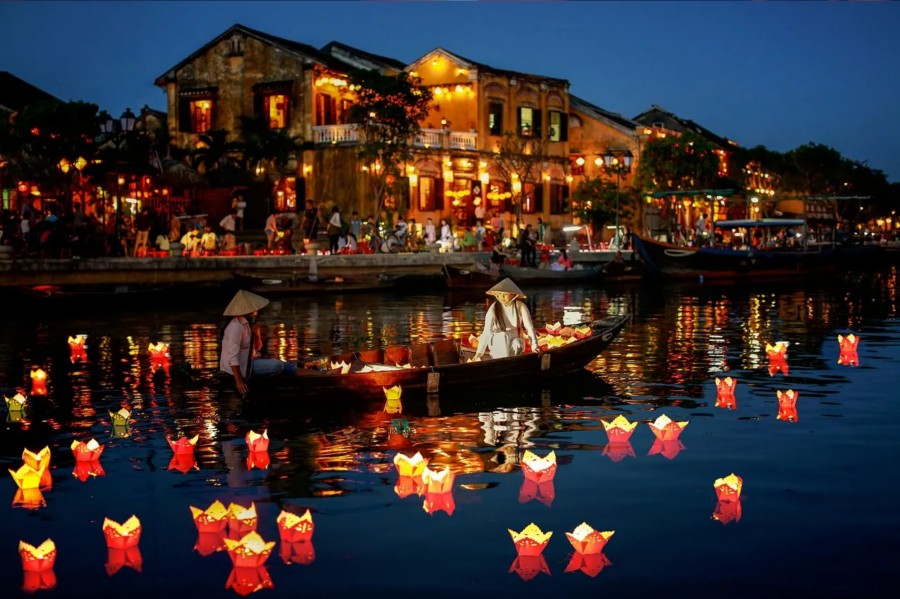
Kim Bong Carpentry Village

  • Address: Cam Kim Island, across the Thu Bon River from the Old Town
  • Opening hours: 08:00 AM – 05:00 PM daily

Kim Bong is recognized for its woodworking, for which this region used to be known for having experts who contributed to the royal works in Hue. The village still produces fine furniture, religious statues, and other household items crafted with local wood. While walking around the shops, you can be offered a special gift of witnessing the craftsmanship of the masters. It is quite common to purchase small wooden keepsakes representing a region that has maintained its tradition for so long.

Final Thoughts

A day spent shopping in Hoi An can feel as rewarding as a sightseeing tour. Each stop leaves you with something tangible and a memory tied to the place where it was made. Travelers who take time to browse slowly often discover pieces that stay with them long after the trip. If you are planning your journey, Seni World can help you weave shopping into an itinerary that balances culture, relaxation, and exploration.

Discover Hoi An Nightlife With Best Activities And Local Foods

Hoi An nightlife feels like stepping into another world, where rivers sparkle with floating lanterns and streets hum with life. In nearby Da Nang, the city keeps travelers awake with night markets, street food, and lively beachside energy.

Top 7 Things To Do In Hoi An At Night

When daylight fades, Hoi An takes on a different soul. Lanterns glow above the streets, music drifts from riverbanks, and the town reveals some of the most charming activities in Hoi An after dark.

Wander Through The Lantern-Lit Ancient Town

As the sun drops below the horizon, Hoi An Ancient Town transforms, taking on a timeless glow. From wooden balconies, lanterns of every hue hang while they also line the narrow streets, providing an elegant illumination that the Hoai River further reflects. History and romance become inseparable when you stroll down Nguyen Phuc Chu Street or the Japanese Covered Bridge.

Explore Hoi An Ancient Town at night

The lanterns in Hoi An are imbued with deeper significance. They are warm symbols of luck, peace, and prosperity. Many families continue the tradition of making them by hand, using bamboo and silk. Tourists make it a point to stop and marvel at the craftsmen or to purchase a lantern to take home as a souvenir, a small and sweet memento of Hoi An’s night charm.

Release Paper Lanterns On The Hoai River

One of the most magical traditions of Hoi An at night is putting a lantern of symbolic purposes made of bamboo frames in the Hoai River. Each lantern contains a message, a wish to love, be healthy, or be happy. It is also the intimate and cozy memory of a picture of glowing lanterns. The full moon event boosts the activities, where the entire river becomes bright with colours, making the event all the more memorable.

The lanterns are purchased along the banks of the rivers at a cost as low as 10,000 to 20,000 VND, and setting them up is a simple process. To avoid all the noise, you can also hire a wooden boat riding about 150000-200000 VND and put your lanterns out there in the water without the crowds.

Release Paper Lanterns On The Hoai River

Explore The Bustling Hoi An Night Market

Hoi An nightlife reaches its peak with the Nguyen Hoang Street’s night market. Stalls line the riverbank with bright lanterns, along with handmade jewelry and other small-town souvenirs. The market offers an opportunity to pick low-priced souvenirs packed with the town’s essence while enjoying a delightful experience for the senses.

The market’s food is well known as the vendors offer snacks ranging from grilled meat skewers to sweet treats, both of which are diluted by their enticing aroma, which fills the air while roaming between stalls. Even in the absence of shopping, the crowd and bright light energy are one of the fantastic parts of the evening in Hoi An.
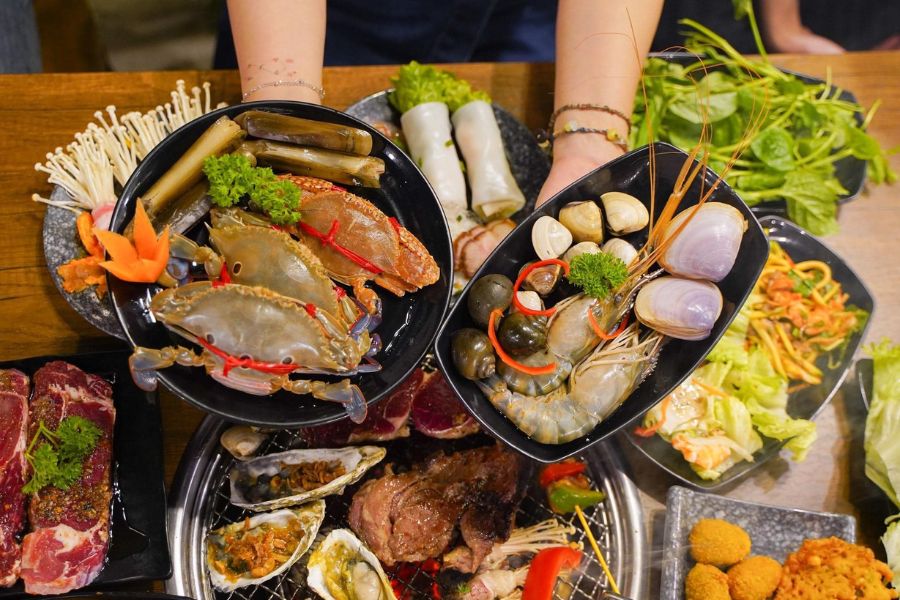
explore hoi an night market

Enjoy Traditional Folk Performances

Hoi An is not only about pretty lanterns but also about the culture that comes alive after dark. In the town square and along the riverside, you will often find performances by Bai Choi, a traditional game that combines music, poetry, and storytelling. It is lively, playful, and gives you a taste of the town’s heritage.

There are other new shows to consider, such as folk dances and water puppet performances, which occur at certain times. These services are offered in central Vietnam, and are very memorable and fun to relax while they entertain you and educate you at the same time. For tourists who wish to go beyond simple tours, the performances in the open under the night sky enrich the Hoi An nightlife, which is unforgettable.

Stroll Through Hoi An Ancient Town At Night

Unwind At A Rooftop Bar Or Live Music Venue

If you enjoy a bit of nightlife, the little town of Hoi An has a ton of bars and places with music. The ancient town has rooftop bars like The Deck that serve exquisite drinks and also offer amazing views, while shops like Guitar Hawaii offer leisurely acoustic sessions at their stores.

Cocktails in Hoi An are surprisingly affordable, often made with local ingredients like lemongrass or passionfruit. Travelers looking for something different can also try speakeasy-style bars such as Mezcal Coctelería, which serve creative drinks in a cozy atmosphere.

Watch The Hoi An Memories Show

The Hoi An Memories Show is, without a doubt, the best part of the nightlife in Hoi An. Situated on a huge outdoor stage on the Thu Bon River, the show features hundreds of actors, dancers, and traditional musicians. The show uses light, music, and dance to depict Hoi An’s unbelievable trading port history and its wonderful culture.

The show usually starts around 8:00 pm and lasts for about an hour. Tickets range from 600,000 to 1,200,000 VND depending on the seating zone, with VIP sections offering the best view of the entire stage. For many travelers, this is more than entertainment; it is a chance to understand Hoi An’s identity through art, leaving you with lasting impressions of the town after dark.

Hoi an memories land

Relax On An Bang Beach At Night

An Bang is around 10–15 minutes by car from the Old Town, so it is really convenient to get there, especially after a long day spent at the market. An Bang’s local bars and restaurants stay open late and serve seafood as well as seafood dishes and cocktails at a modest price. An Bang is the best place to relax to end the night on any trip to Hoi An, as it offers a chill vibe that is unlike the center, which is full of life.

An Bang is only about a 10–15 minute drive from the Old Town, making it an easy escape after a busy evening in the market. Local bars and restaurants stay open late, serving seafood dishes and cocktails at reasonable prices. It is an ideal way to end the night on any Hoi An trip, if you prefer a laid-back atmosphere away from the bustle of the center.

What To Eat In Hoi An At Night

Evenings in Hoi An are inseparable from food. The streets turn into a showcase of the best Hoi An food, with small eateries filling the air with grilled meats, herbs, and noodles

Cao Lau (Hoi An Noodles)

No night in Hoi An is complete without a bowl of Cao Lau (Hoi An noodles), the town’s most iconic noodle dish. Thick noodles are topped with slices of tender pork, crunchy croutons, and fresh herbs, all tied together with a light yet flavorful broth. The chewy texture of the noodles is unique because they are made with water drawn from an ancient well in town, giving the dish its unmistakable character.

  • Recommendations: Cao Lau Thanh (26 Thai Phien); stalls inside Hoi An Central Market.

Cao lau is a specialty from Hoi An

Banh Mi Hoi An (Hoi An Baguette Sandwich)

Hoi An is also famous for its Banh Mi, a Vietnamese baguette sandwich stuffed with grilled pork, pâté, herbs, and a mix of tangy sauces. The bread here is extra crisp, making each bite satisfying and full of flavor. Many travelers stop by after exploring the night market, as it’s the perfect grab-and-go option to enjoy while strolling under the lanterns.

  • Recommendations: Banh Mi Phuong (2B Phan Chau Trinh); Madam Khanh “The Banh Mi Queen” (115 Tran Cao Van).

White Rose Dumplings (Banh Bao Banh Vac)

This is a delicate food exclusive to Hoi An, in which the wrapper of the rice flour is translucent, and it is partially in the form of a rose. Dumplings are filled with minced shrimp or pork and then adequately steamed inside before being garnished with crisp shallots. Their light taste matches well with a light plain dipping sauce, and they would be light, but a memorable night bite.

  • Recommendations: White Rose Restaurant (533 Hai Ba Trung); stalls around Hoi An Central Market.

Banh Bao Banh Vac Hoi an

Com Ga Hoi An (Hoi An Chicken Rice)

Fragrant turmeric rice served with shredded chicken, fresh herbs, and a touch of chili sauce makes Com Ga (Hoi An chicken rice) a favorite local dish. It is comforting, flavorful, and perfectly balanced, offering both warmth and freshness. For many visitors, this dish is the ultimate comfort food after a long evening exploring lantern-lit streets.

  • Recommendations: Com Ga Ba Buoi (22 Phan Chau Trinh); Com Ga Ty (27 Phan Chau Trinh).

com ga hoi an

Grilled Meat Skewers

The smoky aroma of grilled skewers is one of the first things you notice when walking through the night market. Vendors grill pork, beef, or chicken on sticks, often brushing them with a sweet-salty glaze that caramelizes beautifully over the fire. Wrapped in rice paper with herbs and dipped in chili sauce, these skewers are quick, tasty, and very affordable.

  • Recommendations: Hoi An Night Market stalls along Nguyen Hoang Street

grilled meat in hoi an

Mi Quang (Quang Style Noodles)

Although Mi Quang (Quang-style noodles)originates from Quang Nam province, it has become a staple in Hoi An’s evening food scene. The dish features wide yellow noodles served with shrimp, pork, or chicken, topped with peanuts, herbs, and crispy rice crackers. Unlike pho, the broth is minimal but rich in flavor, making it both hearty and refreshing at the same time.

  • Recommendations: Mi Quang Ong Hai (6A Truong Minh Luong); street vendors near Hoi An Central Market.

My Quang is a famous local food in Da Nang

Hoanh Thanh Chien (Fried Wonton)

Often called the “Hoi An pizza,” Hoanh Thanh Chien (fried wontons) are topped with shrimp, pork, and fresh vegetables, then drizzled with a sweet and tangy sauce. The crispy base, combined with the colorful toppings, creates a dish that is as photogenic as it is tasty. It is a favorite evening snack for travelers who want something crunchy and full of flavor.

  • Recommendations: Miss Ly Café (22 Nguyen Hue); Hoanh Thanh Anh Dung (14 Ba Trieu).

Hoanh Thanh Chien hoi an

Tips To Experience Da Nang By Night

Hoi An by night can be magical, but also overwhelming if you do not know what to expect. A few thoughtful insights will help travelers enjoy the town in a way that feels both relaxed and authentic.

  • The streets around the Japanese Covered Bridge often get packed in the evening, so exploring smaller alleys nearby gives you more space while keeping the same lantern-lit charm.
  • Boating along the Hoai River feels more mellow and serene later that night when all the tour guides and others have gone home for the day.
  • Local families tend to sell lanterns at a fraction of the cost of vendors located near the main bridge. In addition, by purchasing local, you are supporting the local community.
  • Street food at the night market is enticing, but some of the best meals can be found at small restaurants hidden away on side streets where the locals eat.
  • While summers in Hoi An can be humid all night long, carrying a bottle of water, you can still be comfortable while walking around.
  • The Full Moon Festival creates an ethereal glow for the Old Town; many travelers suggest this is the best time to visit Hoi An.

  • Restaurants may also close earlier than the bars and cafes, so plan an evening where you have dinner first to experience everything and not miss out.

Final thoughts

By living in Hoi An nightlife, you go to a town that lights up at night, where the culture, delicacies, and music make great impressions on you. Every part of the Old Town will be different, and it can include minimalist walks along the rivers to the bustling night market. Seni World promises easy ways of capturing the best of those moments in order to add more color to any Vietnam trip.