


The Imperial Citadel of Thang Long is a UNESCO World Heritage Site located in Hanoi, Vietnam. With more than 1,000 years of history, there are ancient architectural structures to appreciate, royal artifacts to learn about, and a rich cultural heritage to enjoy.
Introduction To The Imperial Citadel Of Thang Long
The Imperial Citadel of Thang Long is undeniably a heritage site that should be on your must-see list when visiting Hanoi, Vietnam. The oldest portion of the complex was founded over a thousand years ago and was the political and cultural center of Vietnam from the Ly to the Nguyen dynasties. In 2010, it was inscribed as a UNESCO World Heritage Site, which expresses both national and international importance.
When you walk through the citadel, you will experience ancient gates, grand palaces, and archaeological sites that have revealed thousands of years of Vietnam’s history. The site is serene, and surrounded by trees, ancient remnants of dynasties long gone create a feeling that connects you to Vietnam’s imperial past. The Imperial Citadel of Thang Long is definitely a must-see site if you want to take in history and see it come alive.
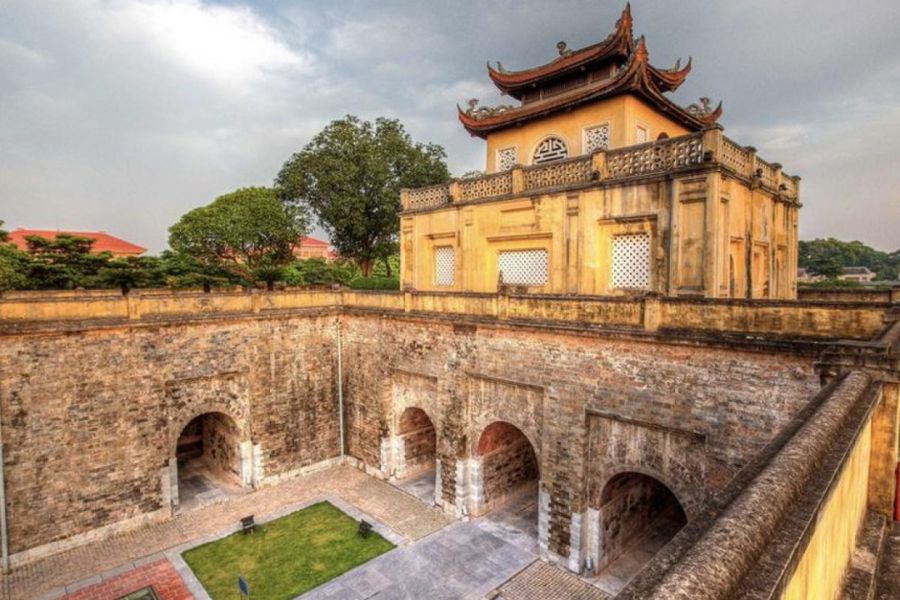
History Of Imperial Citadel Of Thang Long
The Imperial Citadel of Thang Long dates back to 1010, when King Ly Thai To moved the capital from Hoa Lu to Dai La. According to Vietnamese legend, upon arriving, he witnessed a golden dragon soaring into the sky, a potent sign, hence he renamed the city “Thang Long”, which means “Ascending Dragon”. Within that same year, the original imperial citadel was constructed as the roots for Thang Long to become the political heart of a united and independent Vietnam.
The citadel was laid out dualistically on three layers of walls: the Forbidden City for the royal family, the Imperial City for the royal family’s court officials, and finally the outside La Thanh wall for the citizens of the city. Over more than a millennium, many portions of the structure endured through wars or the abandonment and reopening of the citadel through enormous dynastic changes. Today, the sections preserved are the best representation of Vietnam’s incredible imperial past and the nature of national identity.
Top 7 Iconic Attractions in Imperial Citadel Of Thang Long
The Imperial Citadel of Thang Long is not just a UNESCO World Heritage Site; it is a gigantic complex with old artefacts, war bunkers, and years of architecture. When vehemently booking your stay in Hanoi, make sure not to miss these attractions that provide historical meaning.
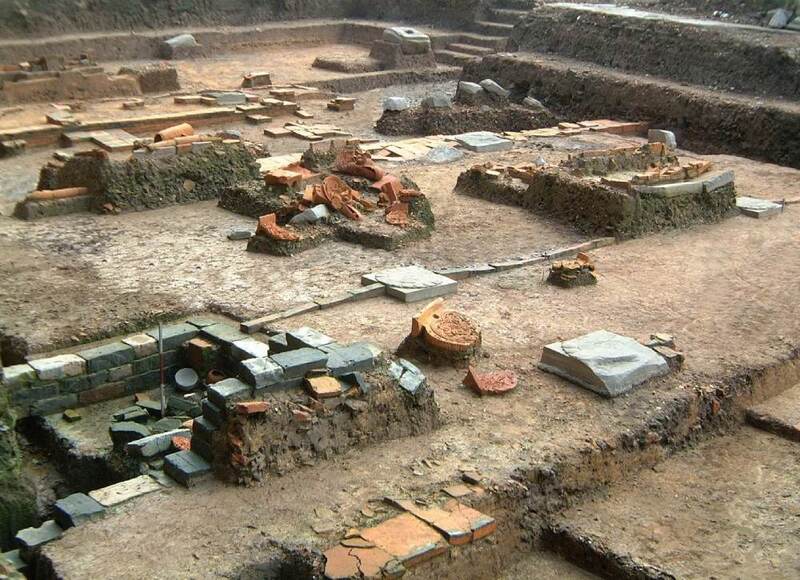
18 Hoang Dieu Archaeological Site
This site is truly the heart of ancient Hanoi. As you stroll through the carefully excavated ground, you will see layers of structure and foundations from over 1,300 years ago. You will see the remnants of the Dai La Citadel of the Tang Dynasty, royal palaces of the Ly and Tran dynasties, and later administrative buildings of the Nguyen era, which are all supported by layers of bricks and layers. There is more history here than you can fathom. Informational panels and artefacts on display make this site educational and fascinating for history aficionados.
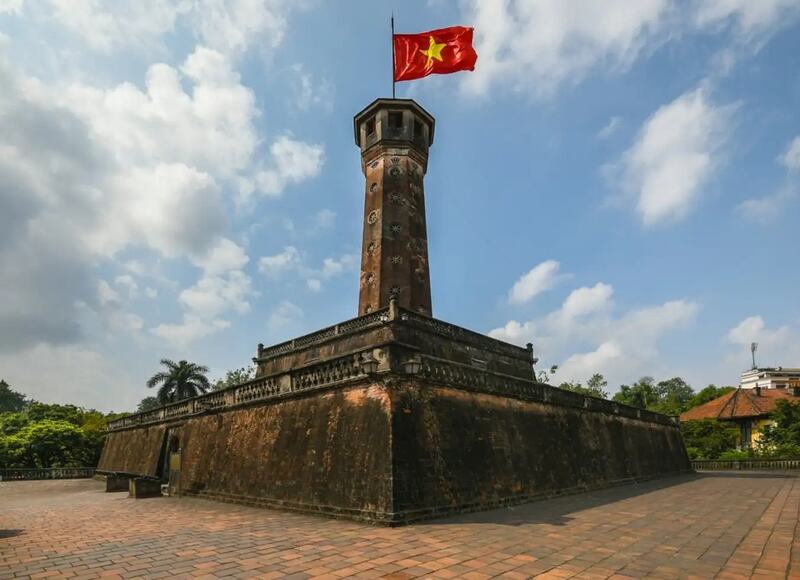
Hanoi Flag Tower (Cot Co Ha Noi)
The Hanoi Flag Tower was built in 1812 during the Nguyen Dynasty and is one of the few architectural works that survived the destruction of French colonialism. It is 33.4 meters high, with a three-section pyramid base and spiral stairways leading to the top, where a circular watchtower stands with the Vietnam flag to signify the site. Given its symbolism and views of Hanoi, the Flag Tower is a historical site of significance to the capital and a location where many visitors can take great selfies and recall the pride of being in this city.
Kinh Thien Palace (Dien Kinh Thien)
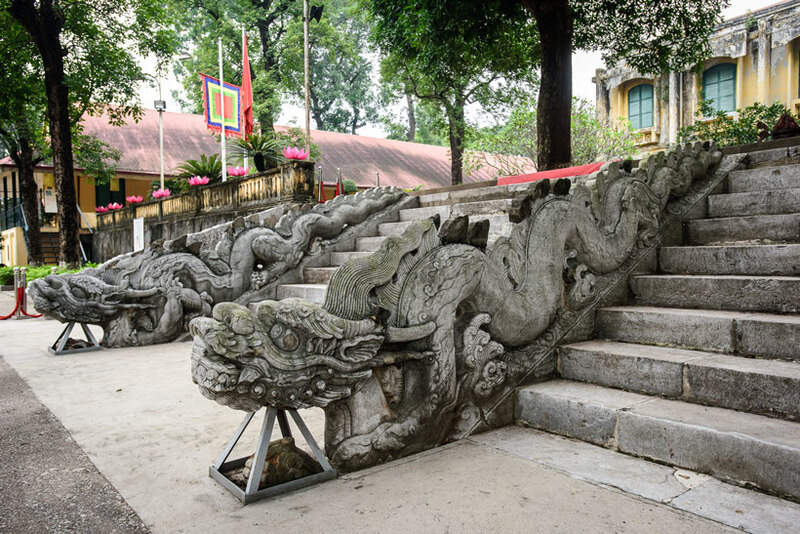
Although the palace structure no longer exists, the platform of Kinh Thien Palace is still a reminder of Vietnam’s royal past. This is where important state ceremonies took place during the Ly, Tran, and Le dynasties. There is a stone platform, stone steps, and dragon carvings remaining at this site to note the aesthetic values of imperial architecture. Standing here on the site, I can imagine the royal court holding deliberations and the significance of this location to the political and cultural life of Vietnam.
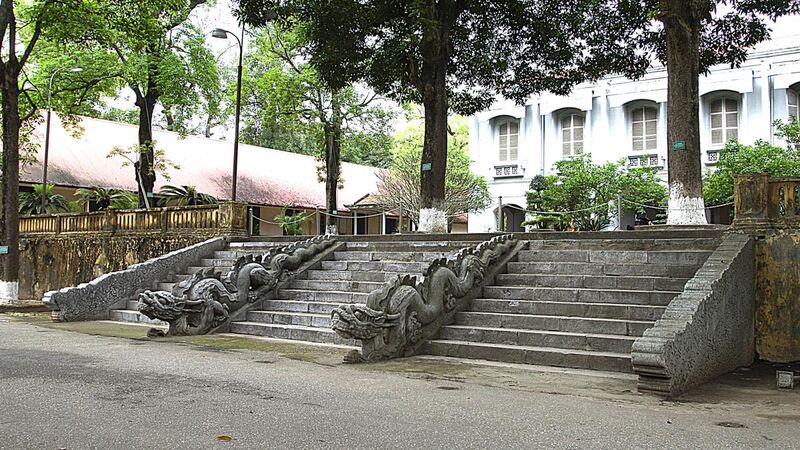
The Stone Dragons Of Kinh Thien Palace
The four stone dragons guarding the main staircase of Kinh Thien Palace are among the most impressive remnants of the Citadel. Made of green stone during the 15th century in the Le Dynasty, the dragons are intricately carved, from the curlicue clouds that run down their backs to the large eyes and curled horns on their heads. The dragons are more than ornamental; they represent power, nobility, and spiritual protection and are regarded as masterpieces of stone sculpting in Vietnamese culture.
Hau Lau (Princess’s Residence)
“Tranquil North Tower”, called Hau Lau, was built as part of the imperial complex to house women of the royal family, queens and princesses, for example. It is located behind Kinh Thien Palace. It was built using feng shui principles as part of a plan to bring peace and protection from the northern side of the citadel.
While the building is simple, the architecture has the gestures of royalty that, as part of the royal family, signify significance. Today, Hau Lau is a more contemplative but meaningful corner of the citadel, where visitors can contextualize and explore a more personal piece of the history of the imperial court.
Bac Mon (Northern Gate)
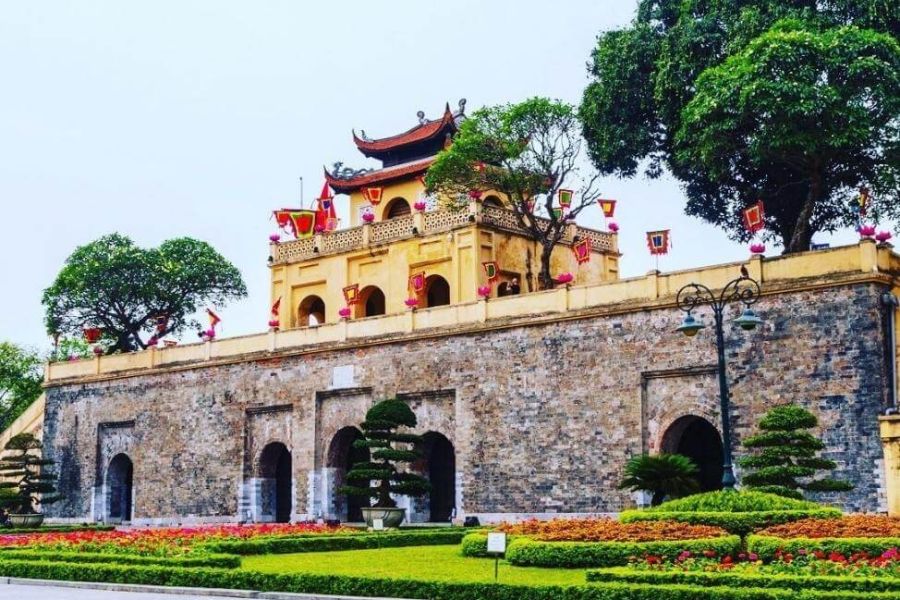
The Bac Mon gate is one of the last remaining original gates of Hanoi’s ancient citadel. It has seen some of the more chaotic moments of the city’s history, including the fierce skirmish in 1882 when the French attacked from the Red River. You can still see two embedded remnants of two cannonball scars on the gate, raw, visible pieces of history.
Today, the gate also serves as a memorial for two heroes of the nation. Nguyen Tri Phuong and Hoang Dieu took their last stand to defend Hanoi. It is a solemn, powerful connection for visitors between the ancient city and its colonial history.
D67 House and War Bunker
On the surface, D67 may appear straightforward, but, nevertheless, it is essential to the development of modern Vietnamese history. The repository was completed in 1967 and was the headquarters above sea level for the Vietnam People’s Army in conjunction with the underground bunker. They maintained every piece of furniture, old phones, old maps, and everything around the building was restored and maintained precisely as it was during wartime.
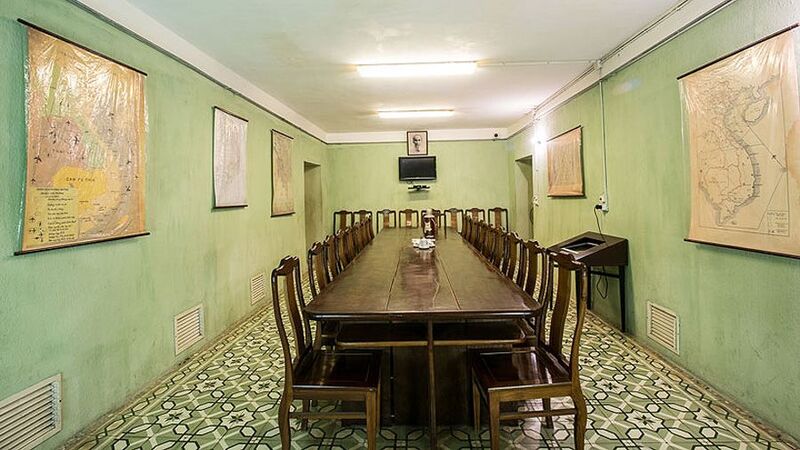
It was here that major and critical decisions were made during significant offensives, including the Tet Offensive in 1968, and the end campaign for the liberation of the South in 1975. For anyone with an interest in wartime history, D67 is pure, authentic, and extremely mournful.
4 Unique Experiences You Shouldn’t Miss
Thang Long Imperial Citadel is not just a site of history; it is a living museum, full of cultural experiences and historical treasures. Here are some unforgettable experiences that you should not skip at the UNESCO heritage site:
Experience Great Architectural Icons
There are many iconic structures on the site, from ancient gates to royal palaces. Each structure tells a different story and embodies the essence of Vietnam’s imperial history. The Hanoi Flag Tower, built in 1812, remains the best-preserved military architecture from the Nguyen Dynasty, and the Northern Gate (Cua Bac) remains the only gate that remains to the ancient citadel that today houses a memorial shrine to Generals Nguyen Tri Phuong and Hoang Dieu. Also, don’t forget to explore Kinh Thien Palace with its unique dragon-carved stairs and stone archways of Doan Mon, the main gate to the palace.
The Magical “Decoding Thang Long” Night Tour
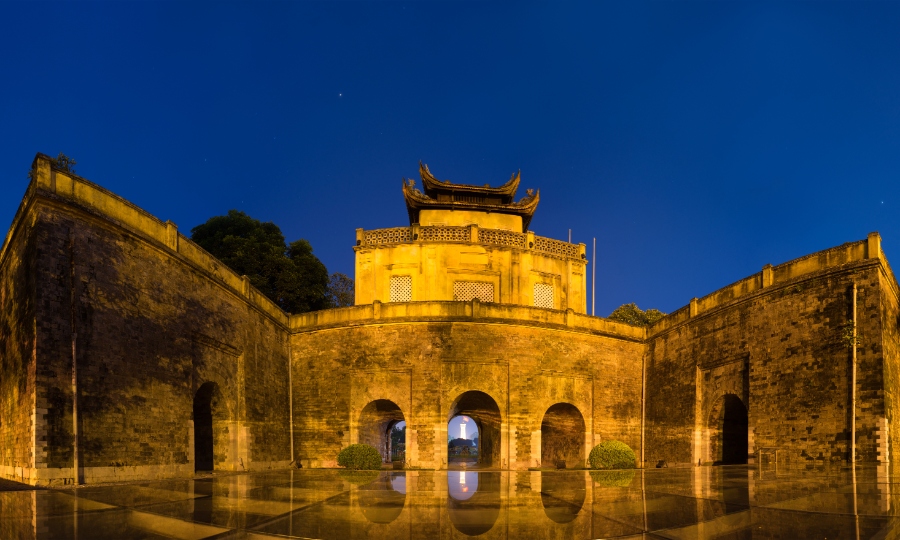
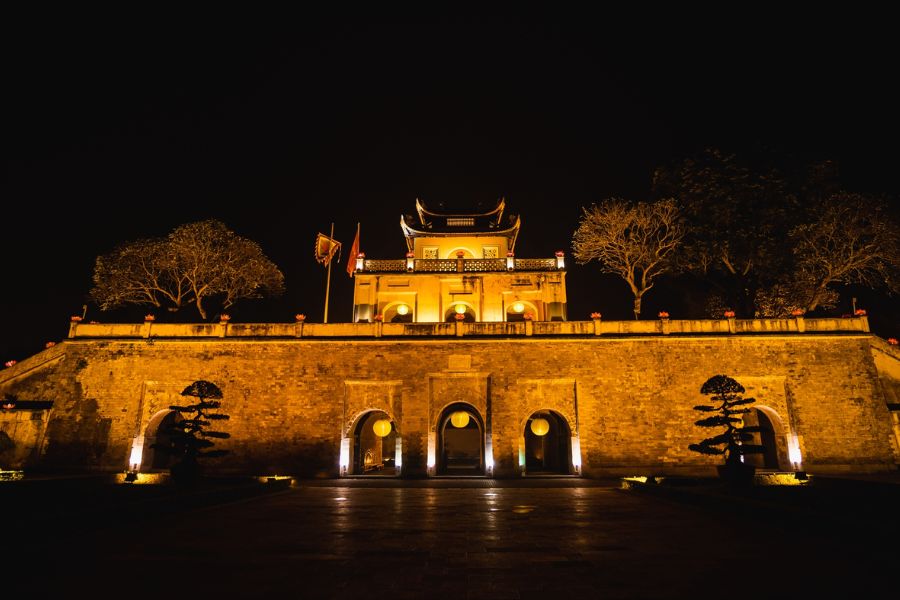
This exclusive 90-minute night tour offers visitors a new way to experience the site by getting creative with light, history, and a bit of tradition. The tour starts at Doan Mon and ends at the archaeological zone. The night tour is held on Saturday and Sunday evenings (6:00 PM, 6:30 PM, and 7:00 PM). A wonderful opportunity to wander on lantern-lit paths through courtyards, to see royal artifacts, and to experience traditional music and dance performances that commemorate Vietnam’s imperial period.
A Photogenic Archaeological Site
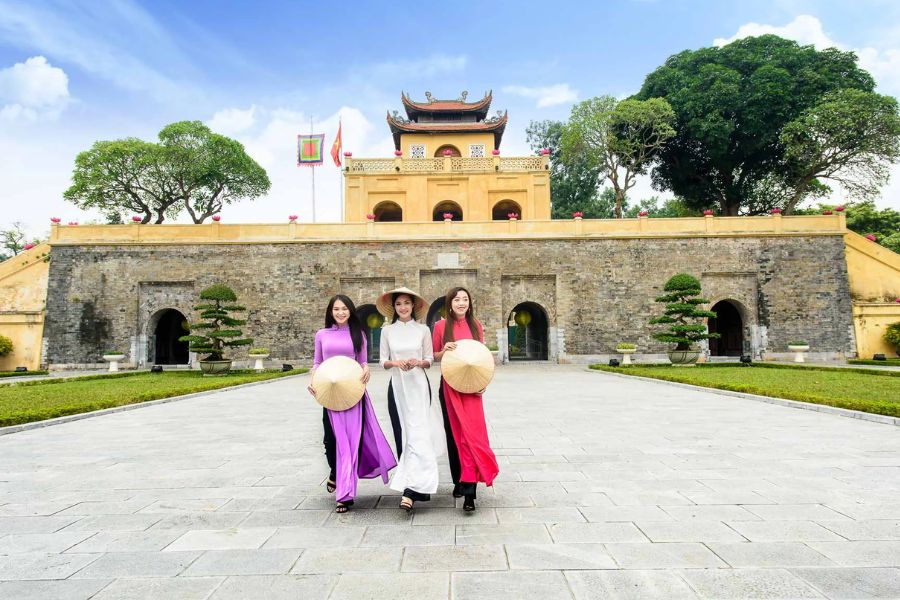
At No. 18 Hoang Dieu Street, there is a part of the citadel that is one of the most exciting – the archaeological site. This site reveals layers of buried history consisting of the Dai La citadel from the Tang dynasty to palaces from the Ly, Tran, and Le dynasties. Its ruins are sort of vintage-looking and preserve the essence of history, which makes the archaeological site one of the best places for cultural photography. Visitors come dressed in traditional costumes, such as ao dai or traditional royal costume, to commemorate their visit with dramatic photographs.
Visit Cultural Exhibitions and Events
Throughout the year, the Imperial Citadel hosts various exhibitions and events involving history, archaeology, and Vietnamese culture. It doesn’t matter if you’re involved in a study course, art courses, or just love history; you will obtain intimate details about the significance and background information of the events. For both locals and visitors, these are fun and interesting ways to connect with interactive ways to experience Vietnam’s past.
Entrance Fee
As of January 1, 2025, the entrance fee to the Imperial Citadel of Thang Long will be adjusted to the following:
| Visitor Category | Ticket Price |
| Standard admission (Vietnamese & International) | 100,000 VND / person |
| 50% Discount (Eligible visitors – see below) | 50,000 VND / person |
| Free Admission (Special cases – see below) | 0 VND |
50% Discount applies to:
- Individuals with severe disabilities;
- Vietnamese citizens who are senior citizens (60 years and older) with a senior citizen ID
- Students ages 16 and over with a student ID from a national educational institution in Vietnam
- Individuals who receive cultural access policy eligibility (ex. ethnic minorities in kn won areas; people with meritorious services; boarding school students)
Free applies to:
- Individuals with extremely severe disabilities.
- Children under 16 (with ID or birth certificate). If documentation is not available, children with height under 1.3m.
Opening Hours
Every day, including weekends and holidays, the Imperial Citadel of Thang Long has operating hours of 08:00 AM until 05:00 PM for visitors, who can experience the site year-round.
The best time of year to visit is during the dry season, from October to April, when Hanoi’s temperatures are cool and more conducive for walking tours. It is also best to visit early in the morning or late in the afternoon to avoid the midday heat and congestion.
How to Get To Imperial Citadel Of Thang Long
Situated in central Hanoi, the Imperial Citadel of Thang Long is located within easy reach of public transportation and private vehicles. This means, whether you want to take a local experience by bus or the comfort of your own vehicle, getting there will be easy and convenient.
By Public Bus
If you are not pressed for time and would like to explore the streets of Hanoi, taking a bus is great because you also get a great price. There are quite a few city buses that go right by the citadel and will stop on streets such as Hoang Dieu, Phan Dinh Phung, Nguyen Tri Phuong, and Dien Bien Phu.
- Operating Hours: 05:00 AM – 09:00 PM
- Frequency: Every 10-20 minutes
- Ticket Price: 7,000 – 10,000 VND per ride
| Bus Number | Route description | Nearest stop to Citadel |
| 18 | National Economics University – same loop | Phan Dinh Phung Street |
| 22A | Gia Lam Bus Station – Trung Van Urban Area | Hoang Dieu Street |
| 23 | Nguyen Cong Tru – same loop | Phan Dinh Phung Street |
| 45 | Times City – Nam Thang Long Bus Station | Hoang Dieu Street |
| 50 | Long Bien – My Dinh National Stadium | Hoang Dieu Street |
Things to Know Before Traveling to Imperial Citadel Of Thang Long
Before visiting the Imperial Citadel of Thang Long, here are some things to be aware of. Here is a list to help you visit and experience this UNESCO World Heritage Site in the best and most respectful way that you can:
- Dress appropriately and modestly: Given the citadel’s significant cultural and historical importance, avoid wearing revealing attire like short skirts, or tank tops, and avoid clothing made of see-through material.
- Follow any instructions by guides or staff at the citadel: Do not enter restricted areas, climb on upper levels, or touch the historical artifacts.
- Keep the site clean: As long as there are waste bins available, make sure to put trash in the bin and not on the grounds of the citadel.
- Do not arrive close to its closing time (5 PM): If you plan to see all the main attractions and exhibits, make sure you arrive a minimum of 1 to 2 hours prior to the closing time.
- Bring a valid ID or documents: If you are entitled to discounts, (students, seniors, etc.) in order to be entitled to reduced entry or free entry.
Final Thoughts: Is Imperial Citadel Of Thang Long Worth Visiting?
The Imperial Citadel of Thang Long is an architectural wonder, but it is also a living history of Vietnam’s millennium-long conquest for independence. With its ancient ruins, royal possessions, and UNESCO World Heritage designation, the site provides an intriguing look at the country’s cultural and political evolution. Let Seni World be your guide as you navigate a wonderful journey into Vietnam’s past.


