


Situated in the serene countryside of southern Cambodia, the Kampot Salt Fields provide an interesting window into the traditional ways of salt collection. Extending over vast mirror-like plains, these salt fields become alive during the dry season with salt collectors carefully collecting sea salt by hand.
Introduction To Kampot Salt Fields
Located in the serene Cambodian countryside, the Kampot Salt Fields are one of the most recognizable and picturesque spots in the region. Spanning the vast coastal plains near the town of Kampot, the glistening white salt fields shine like mirrors to the sky when the dry season sets in. As one of the most significant salt-gathering spots in the country, the Kampot Salt Fields present travelers with the chance to see one of the oldest professions that has defined the region for centuries.
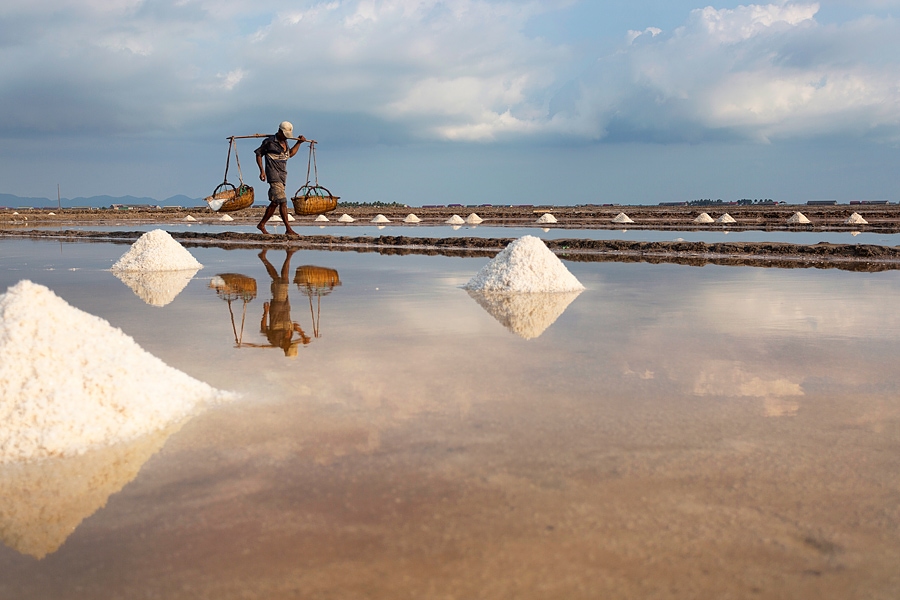
Visiting the Kampot Salt Fields is not just about visiting a beautiful spot; it’s about experiencing the rustic Cambodian lifestyle. Travelers can watch salt farmers at work, harvesting salt from the fields, and enjoy the breathtaking views of the salt fields at sunset. The beauty, serenity, and cultural significance of the spot make the Kampot Salt Fields a must-visit spot for travelers, photographers, and anyone interested in exploring the region beyond the pepper farms.
History Of Kampot Salt Fields
The history of the Kampot Salt Fields can be traced back over a century ago when people living along the coasts of southern Cambodia began to produce sea salt. Due to the suitable weather conditions in the area, which include long dry weather and strong sunlight, the salt production in the area has been very successful over the years. For many generations, Khmer people have been able to preserve the tradition of salt production. This has been done through the passing down of knowledge and techniques from their parents to their children. This has made salt production not only a source of livelihood but also a tradition.
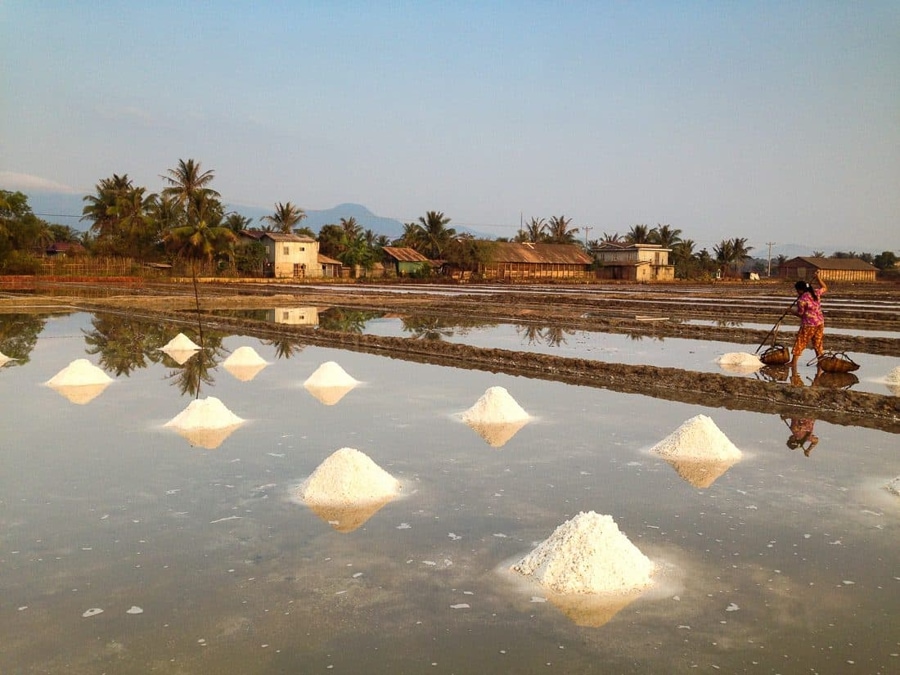
Throughout Cambodia’s modern history, including times of difficulty and adversity, the salt production in the Kampot Salt Fields has been a source of livelihood for rural people. This tradition has been around for a very long time and has undergone very few changes. Currently, the salt fields are a source of tourism for people who wish to experience and learn about the culture of Cambodia.
Top 3 Iconic Attractions In Kampot Salt Fields
Kampot Salt Fields are not just a sea of white, but a beautiful blend of nature, tradition, and rural life. Visiting the different areas of the vast salt field landscape enables one to gain a better understanding of the salt-making process and the cultural value of every sparkling salt crystal.
Salt Evaporation Ponds
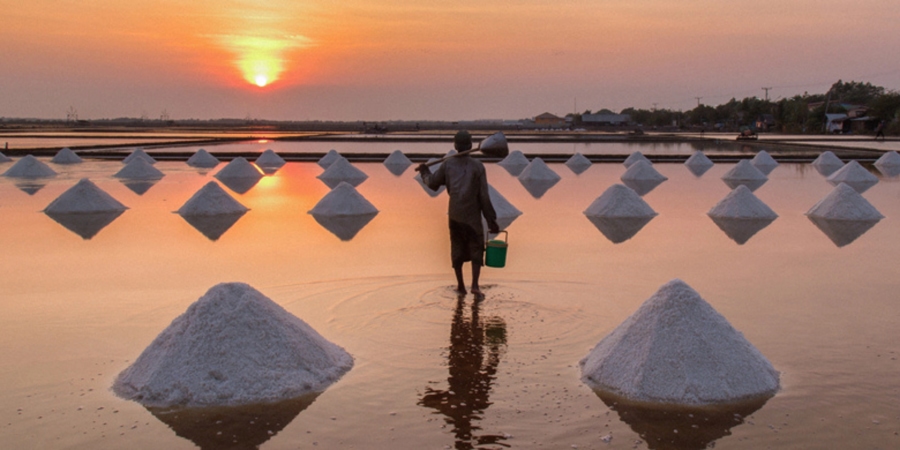
Salt Evaporation Ponds form the core component of the Salt Fields in Kampot. As the name suggests, these rectangular plots are filled with seawater and left under the blistering Cambodian sun for the water to evaporate naturally. As the water evaporates, white crystals of salt start to form, creating a beautiful contrast with the earthy tones of the ground and the sky. During the dry season, the Salt Evaporation Ponds provide a beautiful sight with the reflection of the sky on the water surface, especially during sunrise and sunset.
Traditional Salt Harvesting Areas
This is where tourists can witness the real salt harvesting activity carried out by Khmer farmers. Using traditional wooden equipment, the Khmer people rake the salt crystals into small piles before transporting them to storage. This traditional technique has been passed down through the years, ensuring that traditional methods are used to preserve the salt harvesting tradition of Kampot. This traditional salt harvesting activity is a great way to gain insight into the lives of people living in rural areas.
Salt Storage Warehouses
Among the fields are rustic storage houses where the collected salt is dried and shielded from moisture. Inside these warehouses, one can witness the impressive white mounds stacked high on top of one another, giving one an idea of the quantity produced during peak season. These simple wooden houses are instrumental in maintaining the quality of the collected salt before it is sent out for consumption. These warehouses mark the end of the process from seawater to product, giving tourists a better understanding of the significance of Kampot Salt Fields.
4 Unforgettable Experiences You Shouldn’t Miss
A visit to the Kampot Salt Fields is not just about the visual experience, but also about the rich cultural experience that comes with Cambodia’s rural heritage. These experiences, ranging from hands-on learning to a beautiful sunset, are sure to make your experience unforgettable.
Watch the Traditional Process of Salt Harvesting
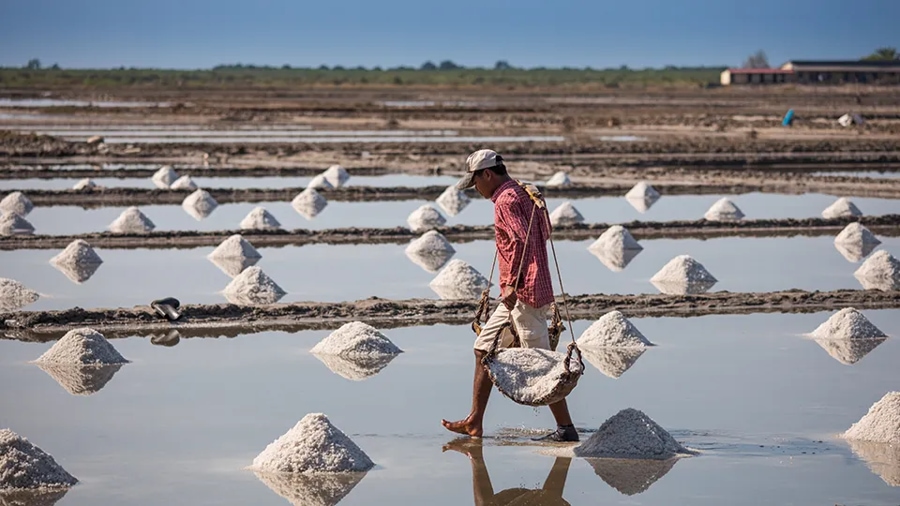
Perhaps one of the most intriguing activities to do at the Kampot Salt Fields is to watch the salt farmers harvest salt. With their simple rakes made of wood, the salt farmers collect salt crystals formed under the sun. This activity gives one a glimpse of the labor and patience involved in salt production. This activity is also a great photo opportunity, especially during the dry season when the salt fields shine brightly under the sun.
Capture Stunning Sunset Reflections
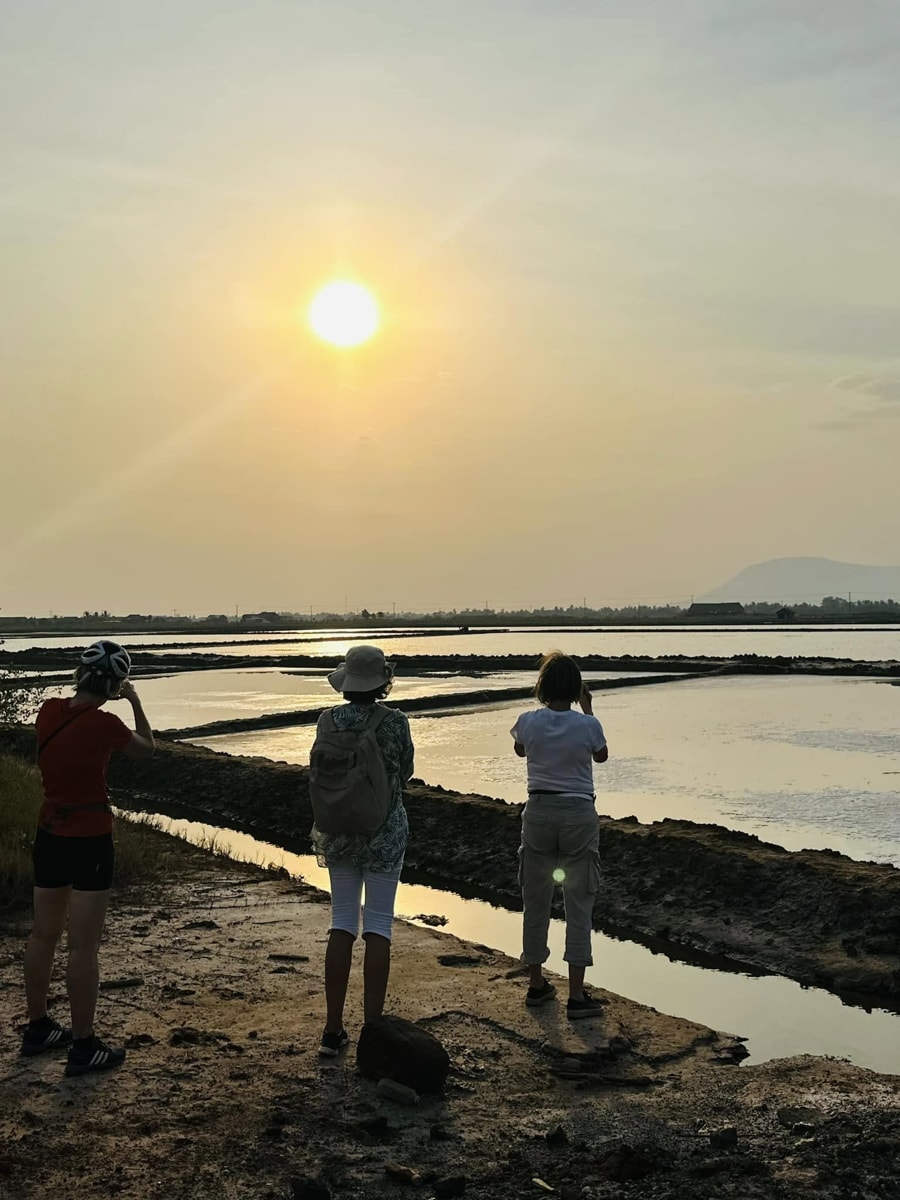
Sunset at the Kampot Salt Fields is an experience you should not miss. As the sun sets slowly, the shallow salt ponds create stunning reflections of golden and pink hues. The reflective surfaces create beautiful silhouettes of the salt field workers and the distant mountains. This serene environment makes the salt fields one of the best photography spots in the region. Arriving at the salt fields in the late afternoon will allow you to experience the cool weather and the best lighting.
Things to Learn About Traditional Salt Making Techniques
Apart from sightseeing, one can also learn about the techniques used to channel seawater into ponds and make pure salt crystals. The farmers here can give you a detailed explanation of the techniques used in salt making, from controlling water to storing it in the ponds. This will give you a new perspective on the traditional techniques used in making salt, which will enrich your travel experience and give you a glimpse of the traditional techniques used in agriculture in Cambodia.
Cycle Through The Peaceful Countryside
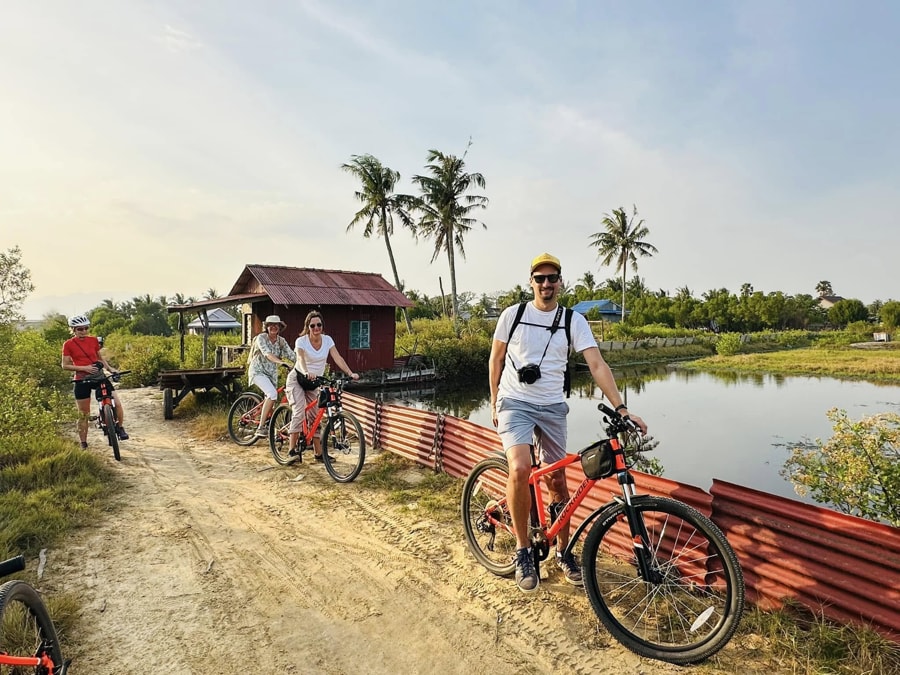
Salt fields on cycles is a wonderful way to get a glimpse into the peaceful countryside. The dirt roads meander through the fields of shimmering salt pans, small wooden houses, and the rice fields. Cycling allows you to explore at a leisurely pace and gives you the opportunity to stop whenever you want and get a glimpse into the peaceful countryside. This is a wonderful way to get a break from the other tourist attractions and still experience the beauty of the countryside.
Entrance Fee
The good news is that most tourists will be delighted to hear that entrance to the Kampot Salt Fields is entirely free of charge. Tourists are free to walk through the vast salt fields, observe the locals harvesting salt, and take photographs without any cost.
Nevertheless, if a tourist decides to park their motorbike or car near the privately owned areas, they might be expected to pay a parking fee of about 0.50 to 1 USD. Although there is no special discount scheme due to the free entrance, tourists are advised to buy salt from the locals as a way of giving back to the community.
Opening Hours
The opening hours of the Kampot Salt Fields are usually from 6:00 AM to 6:00 PM, and the best time to visit is in the early morning and in the afternoon. In the morning, the sun rising above the horizon and shining down on the salt fields is a wonderful sight, and the golden light of the sun is beautifully reflected in the shallow salt fields, making this a great location for photographers. In the afternoon, the sun is also pleasant, but in the middle of the day, the sun is too hot, especially in the dry season, and sun protection is a must if one wants to visit the salt fields during this time.
The best time to visit the Kampot Salt Fields is between the months of January and April, which is the peak season of salt production. This is the time of the year when one can see the local farmers harvesting salt from the fields under the bright Cambodian sun.
How To Get To Kampot Salt Fields
It is very convenient to reach the Kampot Salt Fields, either on your own or on a guided tour. The salt fields are located at a short distance from the town of Kampot, and there are different transport options available at affordable rates.
|
Transport Option
|
Estimated Price (USD)
|
Travel Time
|
Notes
|
|
Tuk-tuk (round trip)
|
8 to 15
|
15 to 20 minutes
|
Flexible schedule, driver waits 1-2 hours
|
|
Motorbike rental
|
5 to 8 per day
|
15 minutes
|
Requires a valid driving license
|
|
Bicycle rental
|
2 to 5 per day
|
25 to 35 minutes
|
Best for early morning or late afternoon
|
|
Private car
|
20 to 30
|
15 minutes
|
Comfortable option for families or groups
|
|
Guided half-day tour
|
25 to 40
|
3 to 4 hours
|
Includes transport and a local guide
|
Important notes: Kampot Salt Fields are situated 5 to 7 kilometers away from the town center. If you are planning to take a motorbike to the location, international visitors are advised to secure an IDP to abide by the country’s regulations on driving. The route is flat but can sometimes be dusty during the dry season and wet during the rainy season. It is best to go there early in the morning to avoid the scorching heat.
Things To Know Before Traveling To Kampot Salt Fields
Prior to visiting the Kampot Salt Fields, it is a good idea to understand the weather, working conditions, and the salt production season. This will help to ensure a more pleasant and smooth experience while visiting this unusual countryside.
-
The best time to visit is between January and April to witness active salt harvesting and farming activities in the bright white expanses.
-
It is advisable to visit early in the morning or in the late afternoon to avoid the scorching sun and to capture the best photography moments with softer light.
-
One should not forget to pack sunscreen, sunglasses, and a hat because there is very little shade on the salt flats.
-
One should also pack comfortable footwear that is appropriate for walking on dusty or slightly muddy terrain during the transition from the dry to rainy season or vice versa.
-
One should also be considerate of the salt farmers and ask their permission before taking close-ups or stepping on the salt farming areas.
FAQs About Kampot Salt Fields
Many travelers have some practical questions before visiting Kampot Salt Fields, especially when planning activities and understanding local experiences. Here are some additional FAQs to help you prepare better:
-
Can I take photos at Kampot Salt Fields?
Yes, visitors are generally allowed to take photos at Kampot Salt Fields. The vast white salt plains create stunning landscapes, especially during sunrise and sunset. However, you should always be respectful and ask for permission if photographing local workers up close.
-
What should I wear when visiting Kampot Salt Fields?
It is recommended to wear light, breathable clothing due to the strong sun and heat. Comfortable shoes or sandals are important because the ground can be uneven and wet in some areas. Don’t forget essentials like sunglasses, sunscreen, and a hat to protect yourself from the sun.
-
How long should I spend at Kampot Salt Fields?
Most visitors spend around one to two hours exploring the salt fields. This gives you enough time to walk around, take photos, and observe the salt-making process. If you enjoy photography or want a more relaxed visit, you may choose to stay longer, especially during golden hour.
Final Thoughts: Are Kampot Salt Fields Worth Visiting?
Kampot Salt Fields is definitely a must-visit if you are looking for a genuine countryside experience in Cambodia that is off the beaten track. The vast fields of white, traditional methods of salt production, and serene countryside setting all contribute to a highly picturesque and culturally rich experience. Especially if you are visiting during the season, this is a great opportunity to experience a way of life influenced by the sun and the sea. For more off-the-beaten-track experiences and travel inspiration, visit Seni World and plan your itinerary to Kampot.
Content Seniworld
Subscribe
Login
0 Comments
Oldest


