


Long Bien Bridge stands quietly over the Red River, carrying the weight of Hanoi’s history and charm. It has become a favorite spot for travelers seeking local stories, vintage beauty, and a deeper sense of the city.
Introduction To Long Bien Bridge
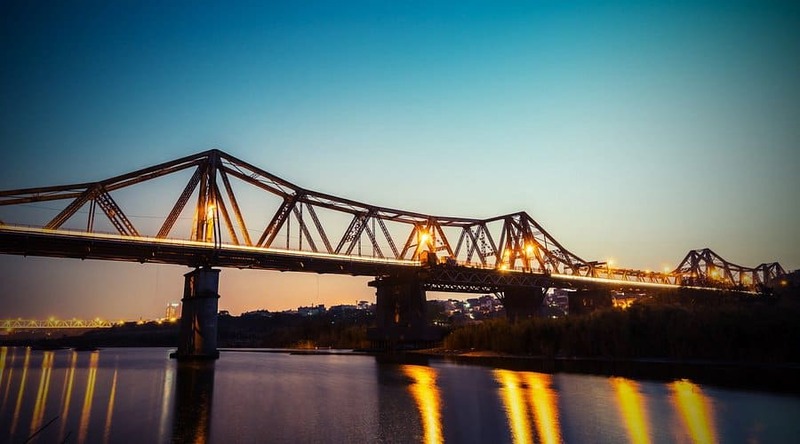
Long Bien Bridge connects the Red River in Hanoi and is arguably the most iconic structure in the city. Built in the French colonial period, it is instantly recognized by its old iron support and railings, rusty tracks, and peaceful views. Although many new bridges have been built since, Long Bien Bridge is still a popular spot for both locals and tourists wanting to experience another, slower, and more peaceful side of Hanoi.
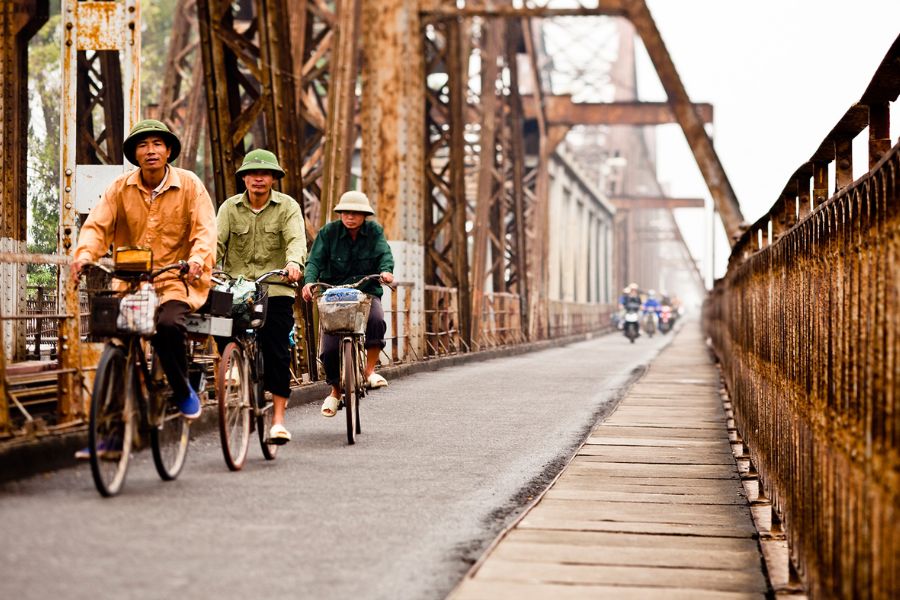
Long Bien Bridge is more than just a bridge. It represents the essence of ordinary life in Hanoi. Locals are cycling over the wooden planks, the vendors are sitting in the shade, and the trains pass inches away. In these fleeting moments, the bridge becomes a moment where the past gently shakes hands with the present.
History Of Long Bien Bridge
Long Bien Bridge was constructed and finished in 1902 during the French colonial period, and was originally named for the Indochinese governor-general Paul Doumer. It was the first steel bridge built to cross the Red River and was one of the longest bridges in Asia at the time. For many locals, it marked a transformative moment for where modern engineering had penetrated the heart of Hanoi.
Over the years, the Long Bien Bridge became strongly associated with the troubled history of the country. It was bombed and hit many times during the American War, and parts of it were damaged and repaired many times. The damaged beam still exists in the structure today, as a simple telling of a story of grit and perseverance.
Unique Architecture Of Long Bien Bridge
Long Bien Bridge may not look grand at first glance, but its structure reveals layers of engineering and emotion. Designed by French architects in the early 20th century, the bridge was built with a steel frame and a riveted truss system, one of the first of its kind in Vietnam.
Steel Truss Frame
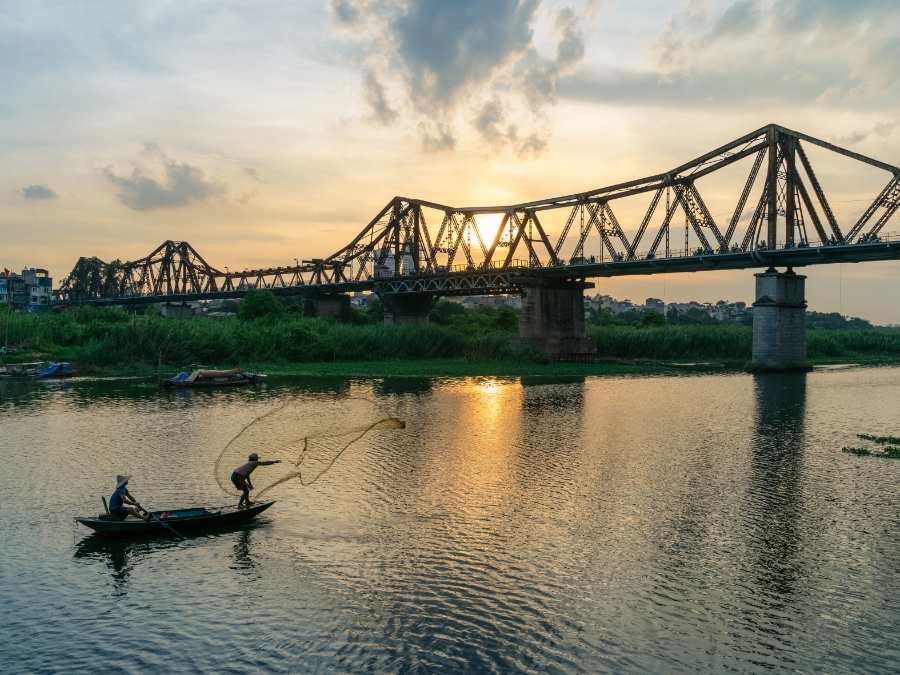
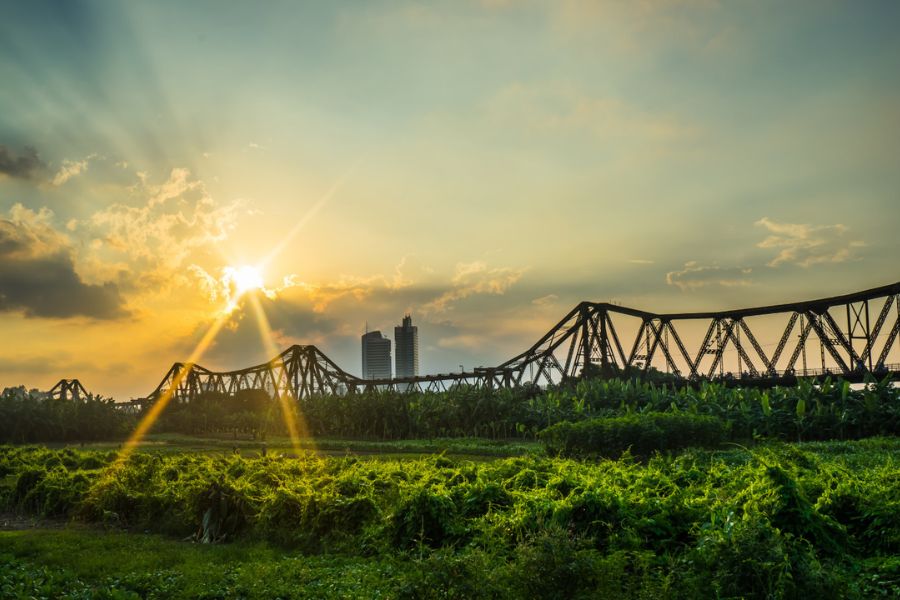
It has a traditional steel truss design via which a row of triangular-shaped supports extends across the Red River. The framework is sturdy and in equilibrium, although the surface is now in a rusty state. The gaps between the beams allow you to get a view through the beams, and the light will move when you move. Such a design will provide some serene beats, particularly in the morning hours or late evenings.
Central Railway Track
There is only one railway track that bisects the bridge and is currently traveled by slow-moving trains every day. The line is raised a bit, and only a few inches separate the path that people walk upon and the line. Upon the approach of the train, people stand aside and wait to see it go by close by. A lot of visitors take the pictures here because the picture provides a mixture of motion and tranquility.
Pedestrian And Bicycle Paths
There are rusty old wooden planks and iron bars on walkways around each side of the train track. In certain areas, the surface is not even, though it is still safe to walk on slowly. Travelers look down at the railing, and there are small boats, green fields, and even farmland. It is a silent walk and one of the most excellent methods to experience a slower side of Hanoi.
Stone Pillars and Foundations
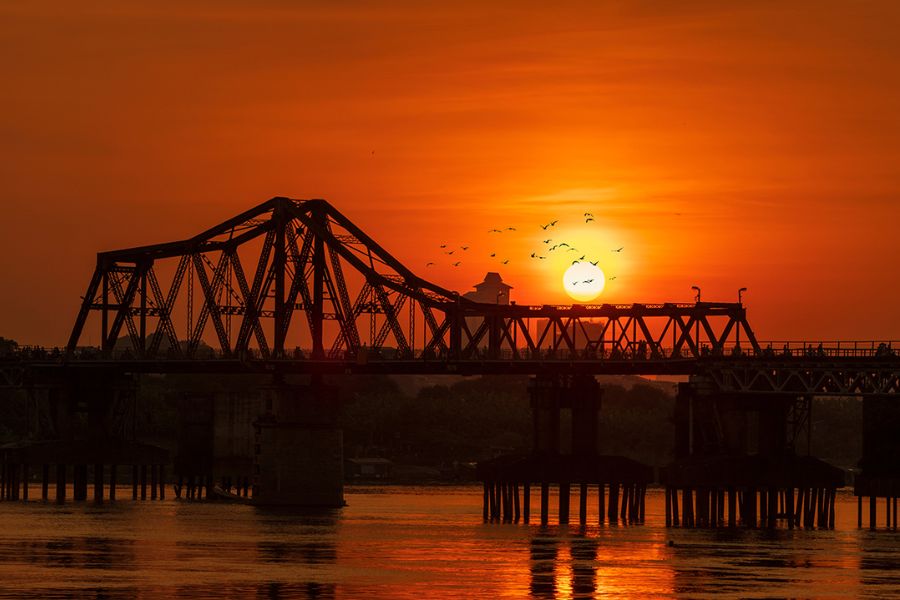
Underneath the bridge, large stone piers rise from the Red River to hold the structure in place. These pillars were built more than a century ago and have remained steady through storms, floods, and war. Some parts are worn or chipped, but they still carry the full weight of trains and people above. The strong stone below and rusted iron above create a peaceful, balanced scene.
4 Cultural Experiences You Shouldn’t Miss
Long Bien Bridge is not only a historical monument but also where life continues to be lived quietly. Travelers can find moments that reconnect them to the pulsation of the city and its people, around and under the bridge.
Visit Long Bien Market In The Early Morning
Just before dawn breaks the western horizon, it becomes one of the busiest locations in all of Hanoi. Long Bien Market serves wholesale goods, with trucks from rural provinces hauling fresh fruits, vegetables, and flowers. Vendors rush around unloading crates, call out prices, and prepare for the final sale of the morning while the city above still sleeps.
The one caveat for travelers who venture early is the traditional tourist experience. Even at sunrise/dawn, this market is not a gift shop. It simply provides a glimpse of life in Hanoi, where everything is moving, but nothing feels hurried. A short hop into the market certainly contributes something richer and deeper to your travel experiences.
Try Grilled Corn And Roasted Sweet Potatoes
At night, Long Bien bridge is a calm meeting place for people who would like to slow their pace after working all day long. Running along both sides of the bridge are small charcoal grills, often with people vending grilled corn or sweet potatoes. You can smell the smoke; it is a warm smell and rises in the air when motorbikes pass by quietly.

It is a very basic but also a very popular street snack that is more popular during the cold months. Natives tend to sit in nearby low stools and either chat up or stare at the city lights. It just takes a few thousand Dong for travelers to have the same scene, accompanied by a cool night atmosphere that only Hanoi at night can provide.
Walk Down To The Red River Flower Garden
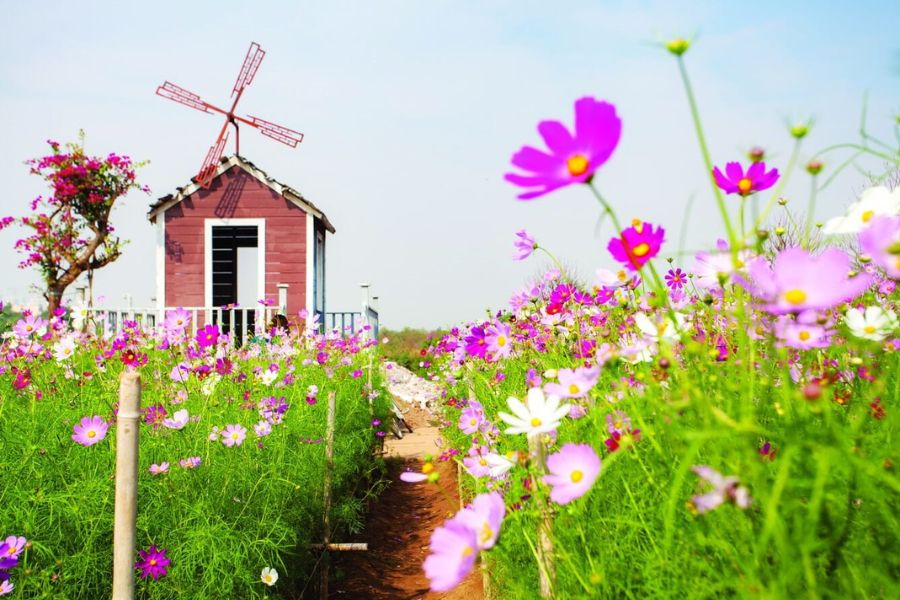
A large flower garden is located just under the bridge, along the riverbank. In the spring and autumn, families plant sunflowers, cosmos, and other colorful flowers in the garden. While it isn’t designated as a tourist spot on tourist maps, the flower garden has become a hip spot for young Hanoians to take photos of.
The flower garden can easily be accessed by a small slope at the end of the bridge. Visitors may walk through the dirt pathways, chill in covered huts, or watch the boats floating past. The flower garden is an oasis of quiet and green space, far removed from the traffic of the road.
Explore The Farming Island In The Middle Of The River
Walking along the mid-span of the bridge, a small dirt path leads down to Bai Giua, the island of farming nestled between the riverbanks. This area has banana trees, vegetable plots, and cornfields that farmers plant and tend each day. It’s a relatively wild area filled with birdsong, but still peaceful farmland with far more nature than concrete.
For visitors to Hanoi, visiting Bai Giua provides a unique snapshot of how rural life can still exist midway through such an urban environment. There are no shops or signs, just a few bachelor-style homes and narrow trails to walk through. It’s a good place to take photos and talk to farmers if you happen across them.
Entrance Fee
The Long Bien Bridge is free to visit, as it is just a publicly accessible bridge. There are no tickets to be purchased, but you might have to pay a small fee to park your motorbike in the nearby area. If there are any fees, they are typically low, around 10,000 – 30,000 VND, and they serve to help support the local populations who access and maintain the land.
Opening Hours
Long Bien Bridge doesn’t open or close at any specific time, so visitors are free to arrive at all times of day. However, each time of day brings a different experience of light, temperature, and interaction with local users of the bridge. The following helps determine the best time to visit the Long Bien Bridge.
| Time of Day | Experience Description |
| 5:30 – 7:00 AM | This is when the bridge feels open and peaceful. Morning light spreads gently, and you’ll often see local vendors or cyclists heading to market. |
| 8:00 AM – 4:00 PM | It’s a good time for a slow walk or a visit to the riverside flower garden, especially when fewer people are around. |
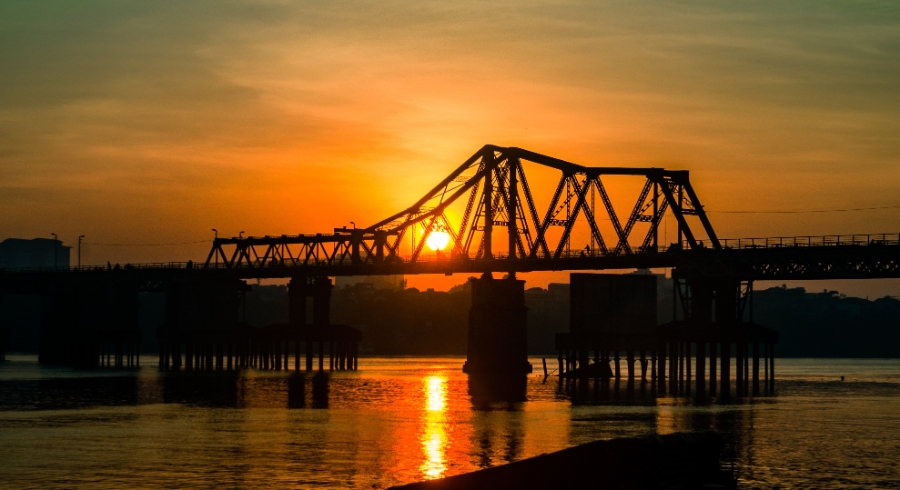
| 5:00 – 6:30 PM | The late afternoon is a popular time for both locals and visitors. As the sun goes down, vendors selling grilled corn appear, and the river view becomes more vivid. |
| After 7:00 PM | The city lights are lovely, but the unlit bridge is only suitable if you’re comfortable walking in the dark. |
How To Get To Long Bien Bridge
Long Bien Bridge is located just northeast of Hoan Kiem Lake, at the northernmost edge of Hanoi’s Old Quarter. It is close to and accessible from Tran Nhat Duat Street or Hang Dau Street, about 1.7 to 2.2 kilometers away from the center of Hoan Kiem Lake (where Ngoc Son Temple is). You can reasonably reach the Long Bien Bridge within 5 to 25 minutes, depending on your speed and means of transport.
| Transportation Method | Travel Time | Cost (One Way) | Notes |
| Bicycle (rental) | 10–15 minutes | 30,000–50,000 VND/day | Riding a bicycle is a fun way to explore the Old Quarter. It’s best done in the early morning or late afternoon to avoid heavy traffic and heat. |
| Motorbike (rental) | 5–10 minutes | 80,000–150,000 VND/day | A quick and flexible option. Motorbikes can go up the bridge, but you should park near the entrance for 10,000–30,000 VND if you plan to walk. |
| Taxi or Grab | 5–10 minutes | 25,000–40,000 VND | Taxis and ride-hailing apps can drop you off near the bridge entrance on Tran Nhat Duat Street. Cars are not allowed on the bridge itself. |
| Public bus | 12–20 minutes | 8,000-20,000 VND | Local buses such as routes 03A, 11, 18, 22 or 34 have stops just near Long Bien Bus Station. From there you can take a scenic and quick walk of 5 or 10 minutes to the entrance of Long Bien Bridge. |

Things To Know Before Traveling To The Long Bien Bridge
The Long Bien Bridge is free and open to the public, but a little preparation can make the visit much more comfortable. These are some notes drawn from the actual experiences of others who walked across the bridge, often multiple times.
- Some portions of the bridge have uneven planks and narrow walkways, so it is best to walk slowly and be aware of your footing.
- The brightest weather is almost certainly early in the morning or late in the afternoon, but the wind blowing across the river can be very strong depending on the season.
- Be aware that pedestrian paths are being shared with bicycles and motorbikes, so staying to one side can reduce the chance of an unexpected encounter.
- Most vendors and parking attendants only accept cash, and it is advisable to think about smaller notes for small purchases.
- Trains cross the middle of this bridge only a few times a day, and you may be tempted to take photos of those trains up close, but it is best to keep your distance for safety reasons.
- There is no lighting above the bridge in the evening, so if you walk over the bridge after dark, it is advisable to use a flashlight or walk with local pedestrians.
Final Thoughts: Is Long Bien Bridge Worth Visiting?
Long Bien Bridge is a calm section of the city that has been left as it is. While it is not a tourist destination, it shows how people are still living and going about their regular daily lives. It is best for individuals who enjoy walking without a plan while looking at small details and staying off the main path. If you would like assistance adding the Long Bien Bridge to your Hanoi itinerary, please let Seni World help.


