logo mobile sidebar
support-image-mobile
Share your ideas with our local expert team - we’re here to listen and help you shape a meaningful journey through Indochina.
(+84) 868 663 993
Asia Leading Tour Operator 2025
tripadvisor travelers choice awards 2024
Travelers' Choice Awards 2025

Author: Content

Vietnam Itinerary 7 Days: Exploring From North To South

There are many attractions for you to visit in the Vietnam itinerary 7 days, like Hanoi, Halong Bay, Da Nang, Hoi An, Hue, Ho Chi Minh City, and the Mekong Delta. Let’s read Seni World’s blog below to know more!

Why Visit Vietnam In 7 Days?

Vietnam has many beautiful attractions and an impressive culture that you need many days to explore. If you want to visit from Northern to Southern Vietnam, which this tour will not be rushed, and still relax, let’s choose the Vietnam itinerary 7 days from Seni World. Some people may ask, “Is 7 days enough for Vietnam traveling?”. Fear not, Seni World will craft this tour smartly for you to unveil this S-shaped country, as well as relax and refresh yourself.

What To Expect From The Vietnam Itinerary 7 Days
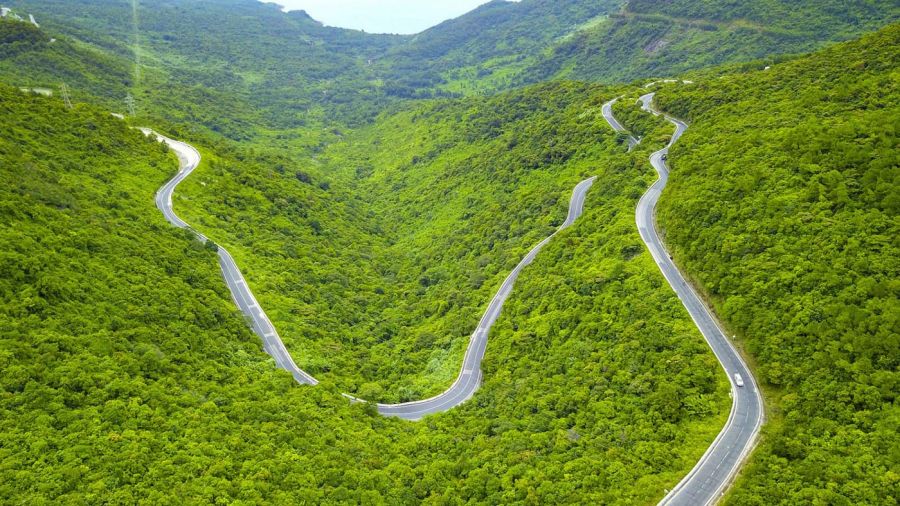
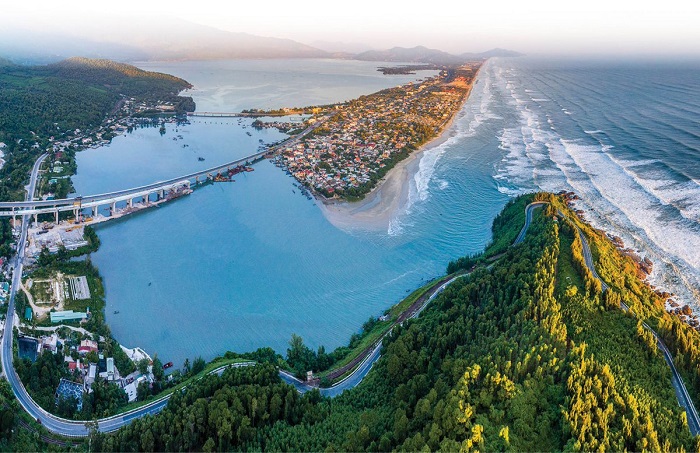
Hai Van Pass

In the Vietnam itinerary 7 days, you will go to many cities and provinces from the North to the South. Let’s find out what to see in Vietnam in 7 days.

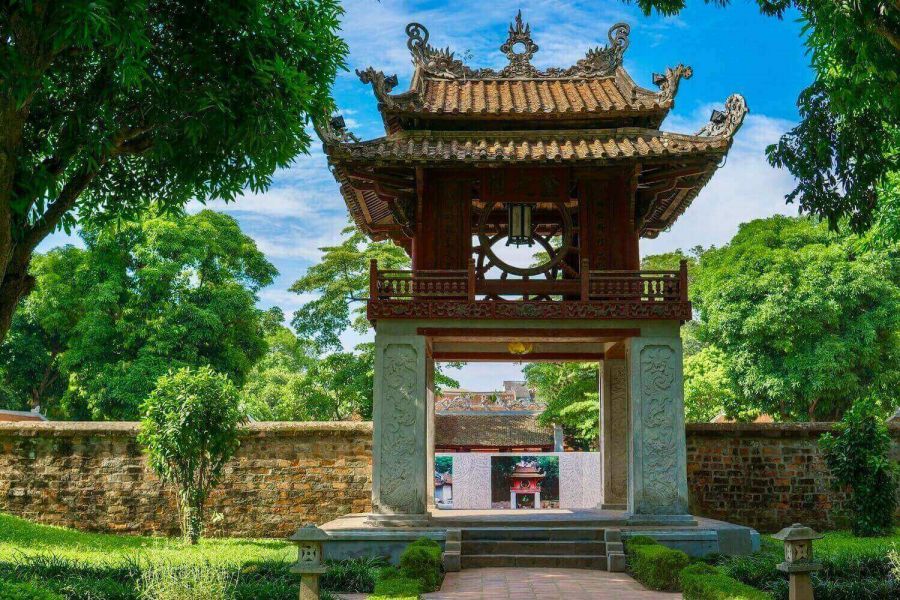
  • Hanoi: In Hanoi, you will visit the President Ho Chi Minh Mausoleum, Hoan Kiem Lake, Turtle Tower, and Ngoc Son Temple. Walk through the Hanoi Old Quarter and discover the Van Mieu Quoc Tu Giam (Temple of Literature), and enjoy Hanoi’s traditional foods.
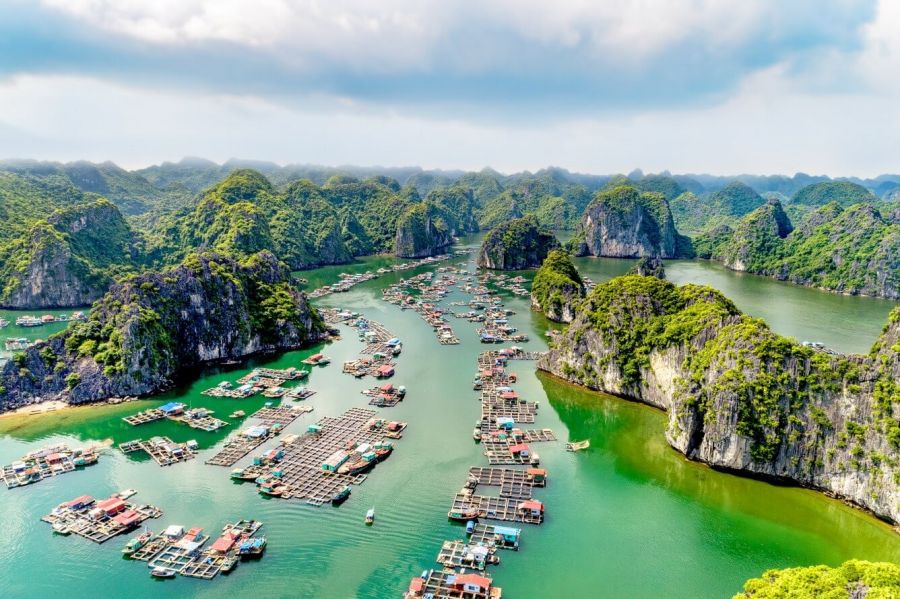
  • Halong Bay: Let’s explore some traditional fishing villages like Cua Van or Vung Vieng. Then, take part in water sports, such as swimming, kayaking,… and overnight on a cruise.
  • Da Nang: In Da Nang, don’t forget to explore the street food corners and try traditional local cuisines, then head to My Khe Beach for a refreshing swim and to relax by the soft white sands.
  • Hoi An: First, you can visit Tan Ky Old House and the Japanese Covered Bridge. Next, go to An Bang Beach and try water sports including swimming, beach volleyball, or soccer,… Finally, watch the sunset on a boat trip on the Thu Bon River.
  • Hue: You should go through Hai Van Pass and see Lang Co, navigate the Royal Citadel, the Thien Mu Pagoda, as well as the Mausoleum of King Tu Duc, and discover the Dong Ba market.
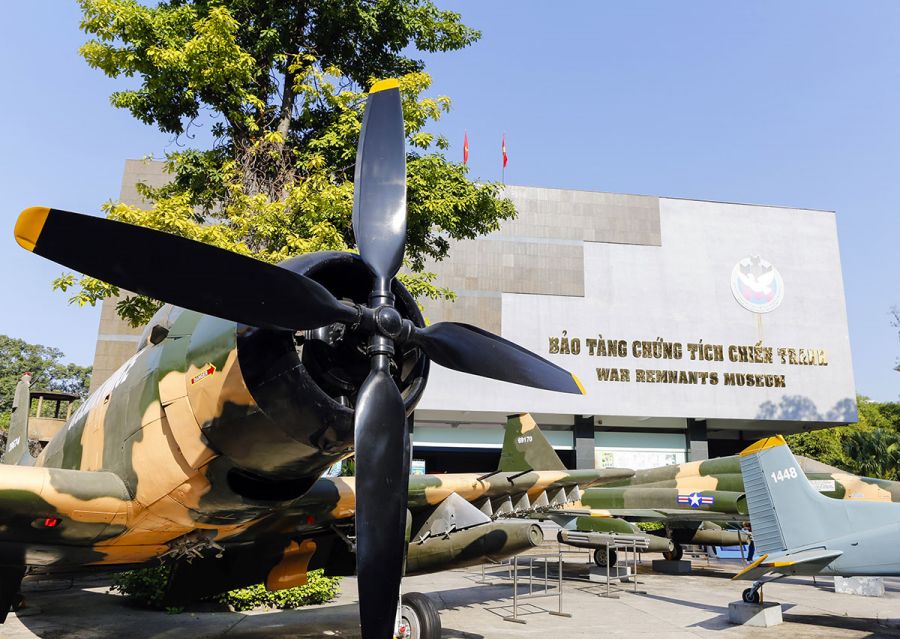
  • Ho Chi Minh City: Your HCMC trip will include the War Remnants Museum, the Reunification Palace, the Notre Dame Cathedral, the Nguyen Hue walking street, the Ben Thanh market, and enjoying a roof bar at night.
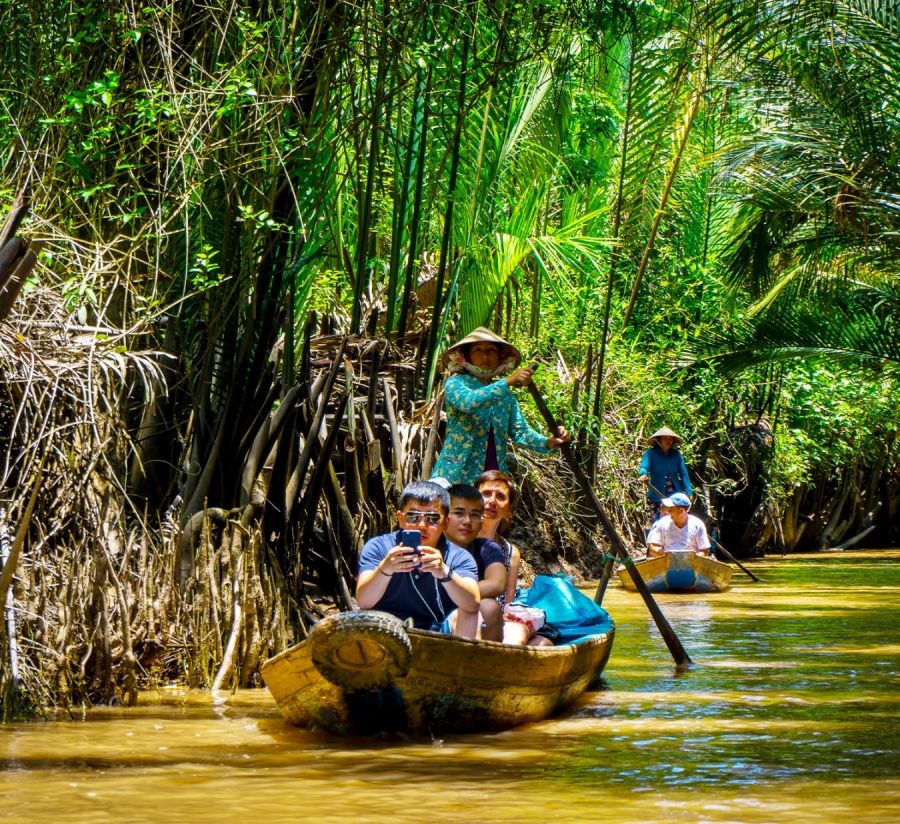
  • Mekong Delta: The Mekong Delta has its floating markets like Cai Rang and Cai Be, with colorful boats filled with fresh fruits and local delicacies. While going through the serene canals, you can stop at green fruit orchards to experience tropical fruits and a bee farm.

Detailed Itinerary

Seni World will show you a detailed Vietnam itinerary 7 days with kids, friends, and family. This is a flexible trip that will be customized to be suitable for you.

Day 1: Hanoi Full Day Trip
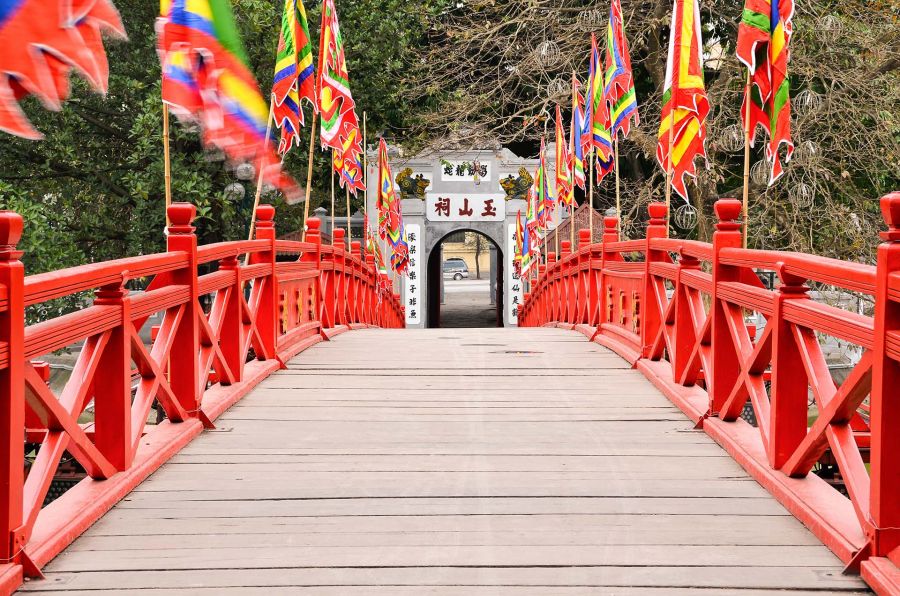
The Huc Bridge to Ngoc Son Temple

On the first day of the 7 days in Vietnam, our tour guide will meet you at Noi Bai International Airport, Hanoi, and drive you to your accommodation in the center of Hanoi. It may take about 45 minutes, and you can take a short break in the car. After checking in the hotel, you will store your luggage and rest for a moment before exploring Hanoi in the afternoon.

Hanoi, the capital of Vietnam, has many perfect destinations that attract you. First, let’s visit the President Ho Chi Minh Mausoleum and pay respects to Vietnam’s revered president. The President Ho Chi Minh Mausoleum closes early at 05:00 PM, so you need to plan suitably. After that, don’t forget to go to Hoan Kiem Lake, Turtle Tower, and Ngoc Son Temple, the famous symbols of Hanoi. They are serene spots in the bustling Hanoi.

In the evening, you will walk through the Hanoi Old Quarter, see narrow streets full of shops, avenue carriers, and historic homes. You can also visit alleyways and street corners to enjoy the traditional and iconic Hanoi food, including: Pho (Vietnamese Noodles), Bun Cha (Kebab Rice Noodles), Nem Ran (Fresh Spring Rolls).

Day 2: Hanoi – Halong Bay
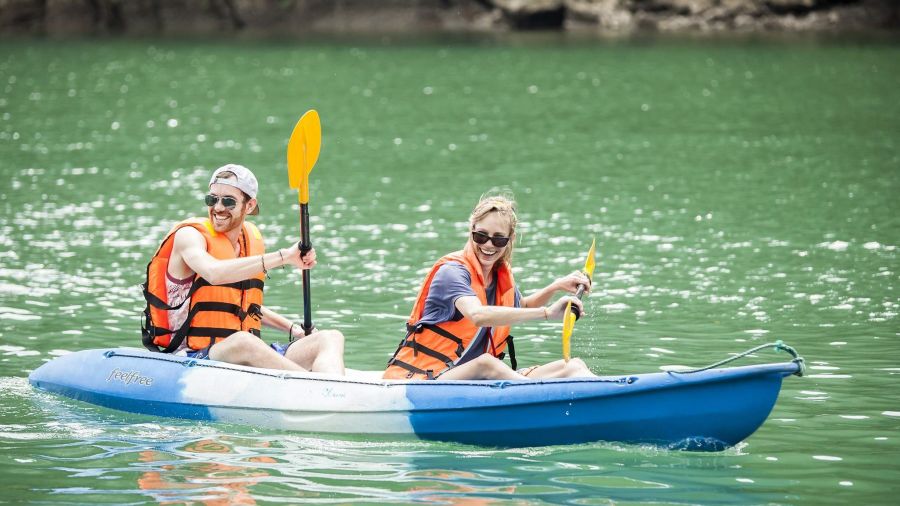
Kayak Halong Bay

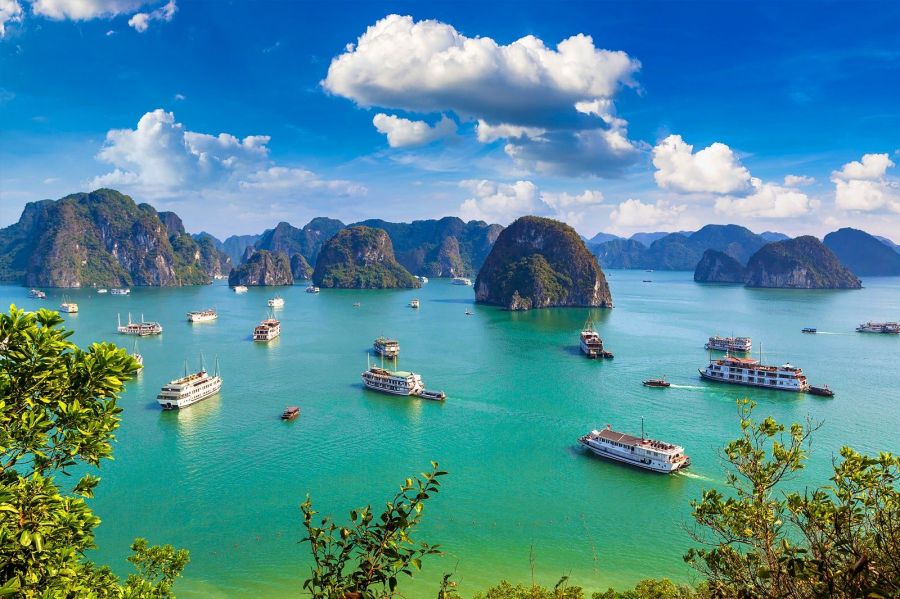
On day 2 of the North Vietnam itinerary 7 days, you will discover the Van Mieu Quoc Tu Giam (Temple of Literature), the first university in Vietnam. Then, you will check out the hotel and we will take you to Halong Bay (170 kilometers east of Hanoi and need to spend about 3 to 4 hours by car or sleeper bus) to see the beautiful limestone islands and caves.

You will unveil Halong Bay on an overnight cruise. After that, don’t forget to take part in water sports, such as swimming, kayaking, and relaxing under the peaceful sunset of Halong Bay. Next, you will be served fresh seafood. In the evening, you can choose fishing, drinking wine while talking with friends and family. With this romantic atmosphere, the night on the cruise in Halong Bay is a perfect Vietnam itinerary 7 days for couples.

Day 3: Halong Bay – Hanoi – Da Nang
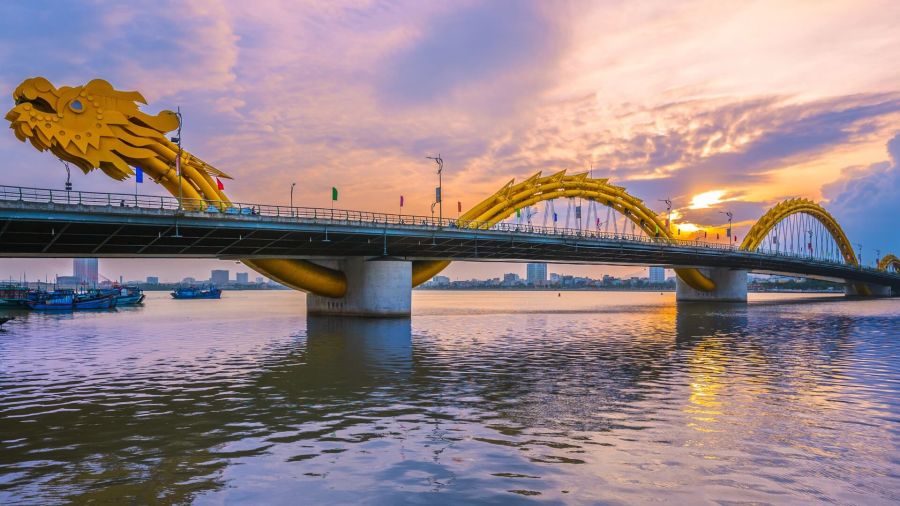
Dragon Bridge

In the early morning, you will see the sunrise on the cruise. After breakfast, you will return to shore, return to Hanoi, and catch your flight to Da Nang. We will leave Northern Vietnam to enter Central in a great 7-day trip to Vietnam. After checking into the hotel, you will store your luggage and rest for a moment before discovering Da Nang in the evening.

You can walk through the beautiful and peacefulness of Da Nang, arrive at street food corners and try traditional cuisines here, such as: Ca Bo Rim (Fried Starry Triggerfish), or Ca Phe Chon (Weasel Coffee),… At the end of the third day of the Vietnam itinerary 7 days, you will stay overnight in Da Nang.

Day 4: Hoi An Full Day Trip
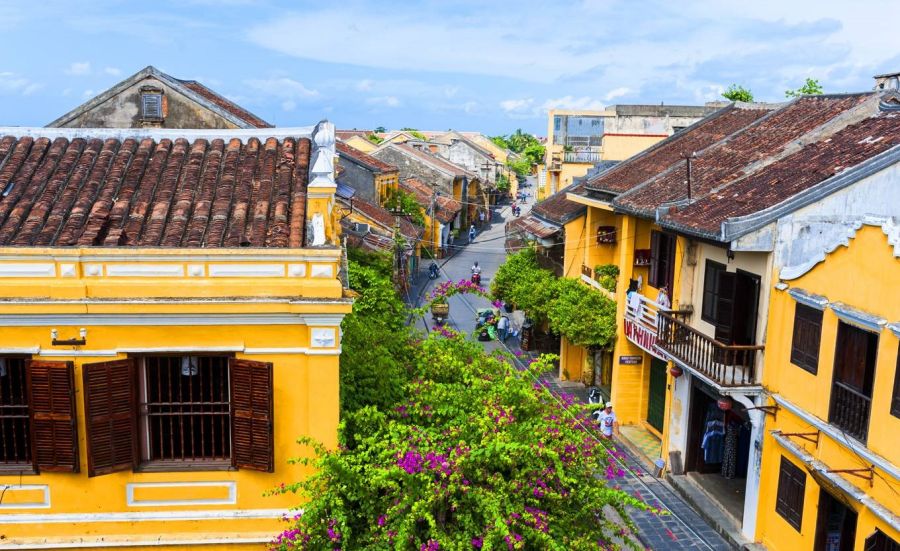
Hoi An Ancient Town

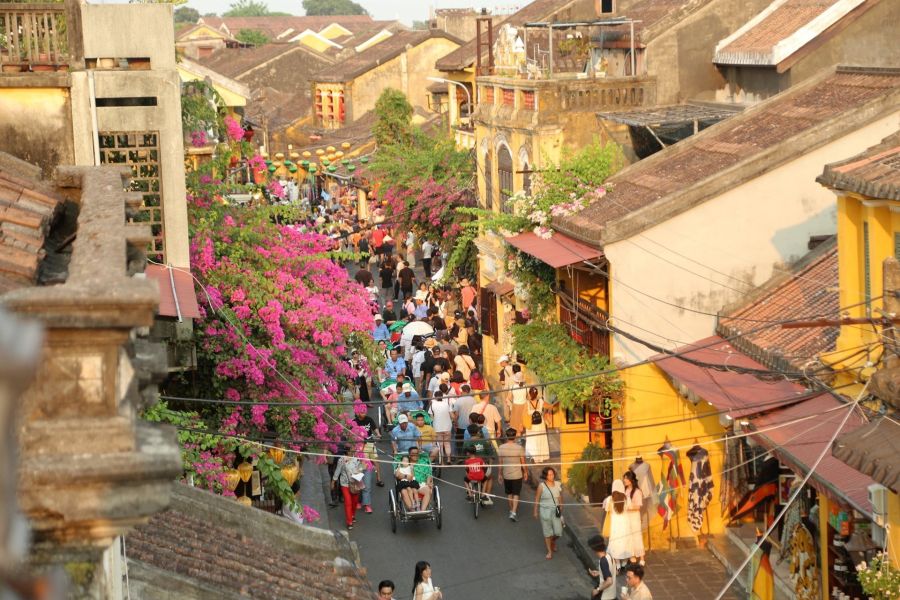
On day 4, you will navigate Hoi An Ancient Town, a UNESCO World Heritage Site with old architectural houses (like the famous Tan Ky Old House) and colourful lanterns. You should also visit the Japanese Covered Bridge, a pretty, historic bridge built in the 16th century.

In the afternoon, let’s book a bike to ride freely or book a taxi to go faster to An Bang Beach. At this beach, you can enjoy the clean atmosphere, walk on soft sands, and relax under calm waters. There are many water sports here, which you can try, including swimming, beach volleyball, or soccer,… After playing, if you want to eat fresh seafood, go to a local store and try.

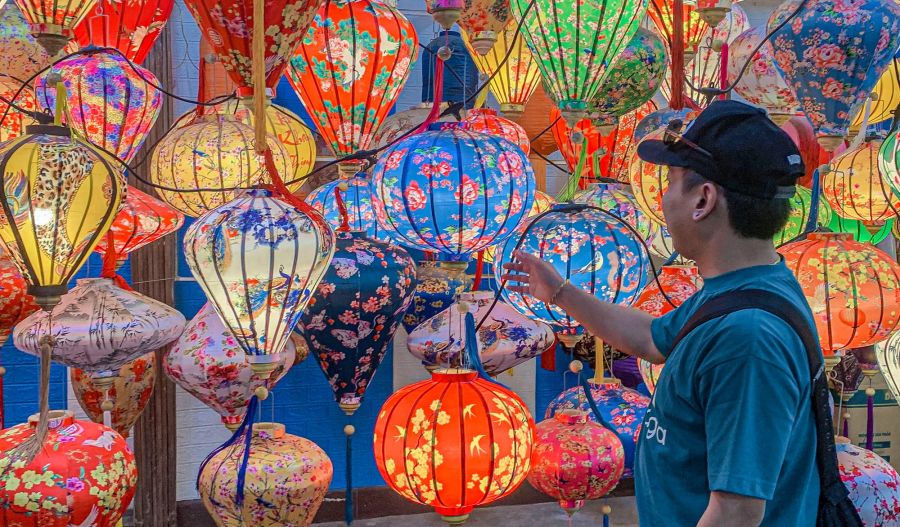
Watching sunset on a boat trip in the Thu Bon River is really an unforgettable experience, in particular when the Hoi An town’s lanterns begin to glow. Besides, buy some local souvenirs like Non La, Ao Dai, or Hoi An lanterns for your friends and family. Finally, you will spend your night in the hotel in Hoi An.

Day 5: Hoi An – Hai Van Pass – Hue
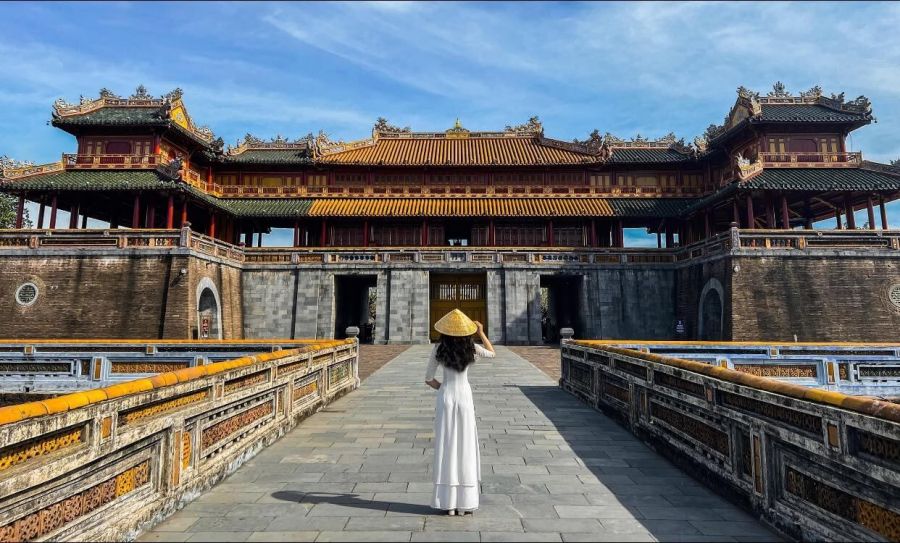
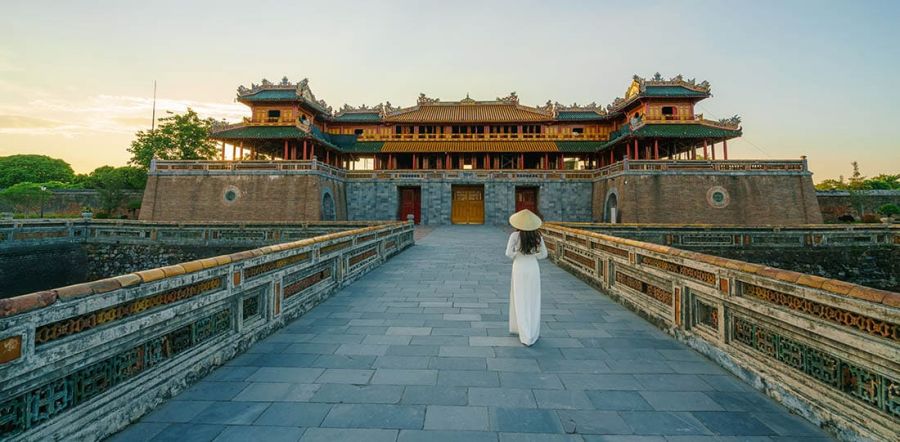
Imperial Citadel of Hue

You will say bye to Hoi An and travel via the mountains to Hue, and continue the Central Vietnam itinerary 7 days. We will take you alongside the Hai Van Pass, known as the captivating dividing line between North and South Vietnam. You will have a little time to visit a conventional fishing village named Lang Co and feel the real flavor of the remote life of locals in Vietnam.

Then, you will arrive in Hue, which is Vietnam’s ancient capital. On the road to the city center, you can explore the many beautiful ancient attractions, consisting of the Royal Citadel, the Thien Mu Pagoda, as well as the Mausoleum of King Tu Duc. In these destinations, you can take some memorable photos to show your admiration for the wonderful historic journey of Vietnam.

In the evening, unveil the Dong Ba market for a treasure hunt for crafts and an insightful understanding of local life. Besides, let’s try some traditional Hue foods. At the end of the day, you will stay overnight in an accommodation in Hue.

Day 6: Ho Chi Minh City Full Day Trip
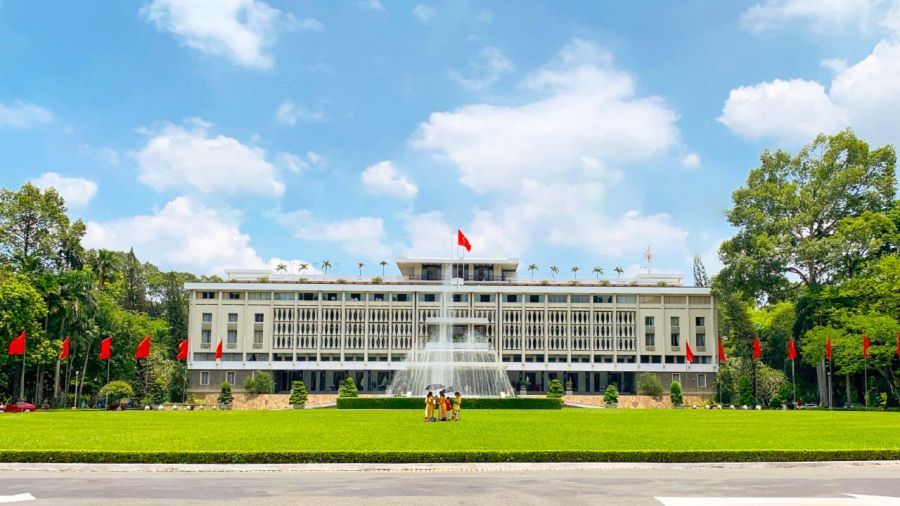
Independence Palace

On the sixth day of the Vietnam itinerary 7 days, we will take you to Hue’s local Phu Bai Airport and fly to Ho Chi Minh City. After arriving in and having an extremely good lunch in Ho Chi Minh City, let’s explore the city with the nickname “the city doesn’t sleep”.

In this South Vietnam itinerary 7 days, you will go to the War Remnants Museum and the Reunification Palace to learn more about the proud history of Vietnam. Moreover, exploring the Notre Dame Cathedral and the Nguyen Hue walking street. Finally, visit Ben Thanh market for souvenir buying, then pick one of the delicious restaurants and try local foods, or go to a roofbar and enjoy the nightlife. Today, overnight in this city.

Day 7: Mekong Delta – Departure
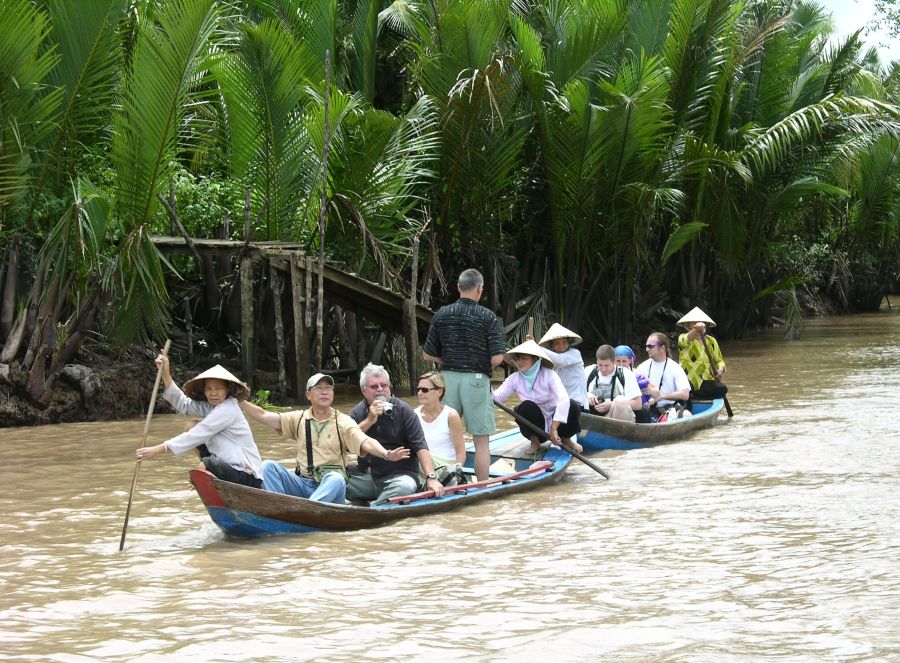
Mekong Delta boat trip

On the last day of Vietnam, you will take a one-day trip to the Mekong Delta. This is the region of waterways, agricultural life, handicrafts, as well as floating markets. You can have the opportunity to visit the world-famous Cai Be floating market and nearby craft workshops. In the afternoon, you can try traditional lunch served in a local people’s house, and walk alongside the rice farms to enjoy a peaceful atmosphere.

Afterwards, we will take you to return to Ho Chi Minh City, go to the Tan Son Nhat International Airport, say goodbye to Vietnam, and depart to your country. See you again on another trip to Vietnam.

Final Thoughts: Is Vietnam Worth Visiting?

Vietnam is a wonderful country for you to travel from the North to the South in a week. If you want to take a Vietnam itinerary 7 days trip, as well as consult the Vietnam 7-day trip cost, and receive support for the visa process, let’s contact Seni World, a reputable tour operator from Vietnam. We are here to help you from A to Z on your Vietnam discovery journey.

A Traveler’s Guide To Top 12 Most Iconic Waterfalls in Vietnam

Explore top 12 most iconic waterfalls in Vietnam, where stunning geographies and refreshing waters await you. From hidden jungle gems to notorious natural prodigies, each spot has a unique experience. Let Seni World help you start the perfect adventure!

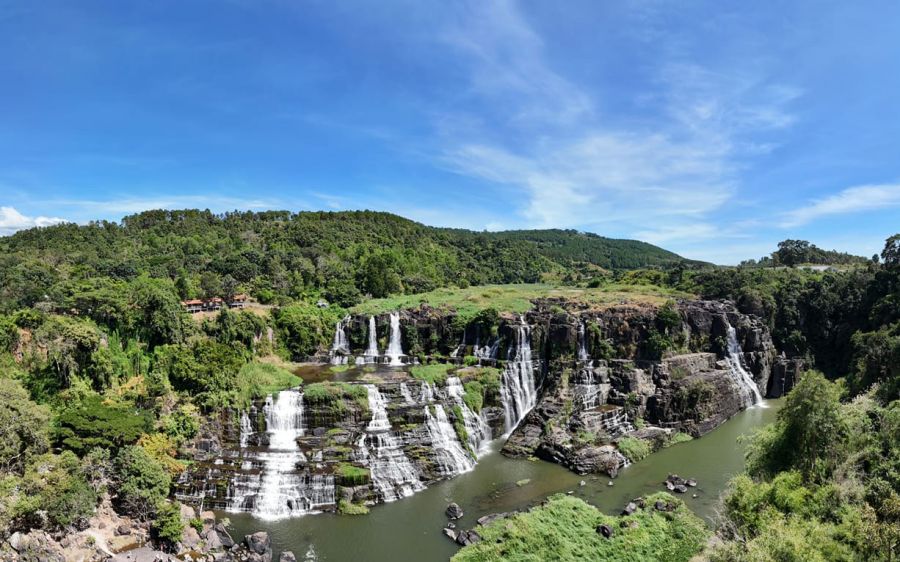
Pongour Waterfall

Pongour Waterfall

Pongour Waterfall is one of Vietnam’s most stunning waterfalls and is located approximately 50 kilometers south of Da Lat in Lam Dong Province. The “Seven-Level Waterfall,” as it is locally known, cascades down a series of wide rock steps, creating a majestic effect. Situated in untouched nature, this stunning waterfall is not only a natural wonder but also a cultural symbol to the local K’Ho ethnic minority group. The fall is especially picturesque during the rainy season when water levels are full, and therefore it is a perfect spot for nature photography and nature lovers.

Visitors to Pongour Waterfall can enjoy numerous outdoor activities like picnicking, hiking, and strolling the calm forest trails of the waterfalls. It’s also a perfect spot to relax and recharge in a cool, fresh environment amidst city mayhem. Though tourists must be dressed in hiking shoes, use insect repellent, and avoid climbing up the slippery rocks surrounding the falls, especially in rain and after rain. The best time to visit is the rainy season (July-October), when the weather is pleasant and trails become easier to walk on.

Dambri Waterfall

Dambri Waterfall

Dambri Waterfall is a must-see natural gem tucked away in Bao Loc, Lam Dong Province, about 130 kilometers from Da Lat. Standing at around 60 meters high, it’s one of the loftiest falls in the Central mounds of Vietnam. What makes Dambri special isn’t just its emotional height, but also the important streams of water crashing down through a forested valley, creating a stimulating mist that cools the entire area. The original legend says the cascade was named after a love story, giving the place a romantic touch that adds to its charm.

There’s plenty to do then for all kinds of tourists. You can take a scenic walk through the forests or ride a thrilling alpine coaster down to the base of the cascade. There’s indeed a small recreation area here, making it a fun stop for families. Just flash back to wear proper footwear and be cautious on slippery paths, especially after it rains. However, Dambri Waterfall is a great choice if you are looking for a mix of adventure and relaxation.

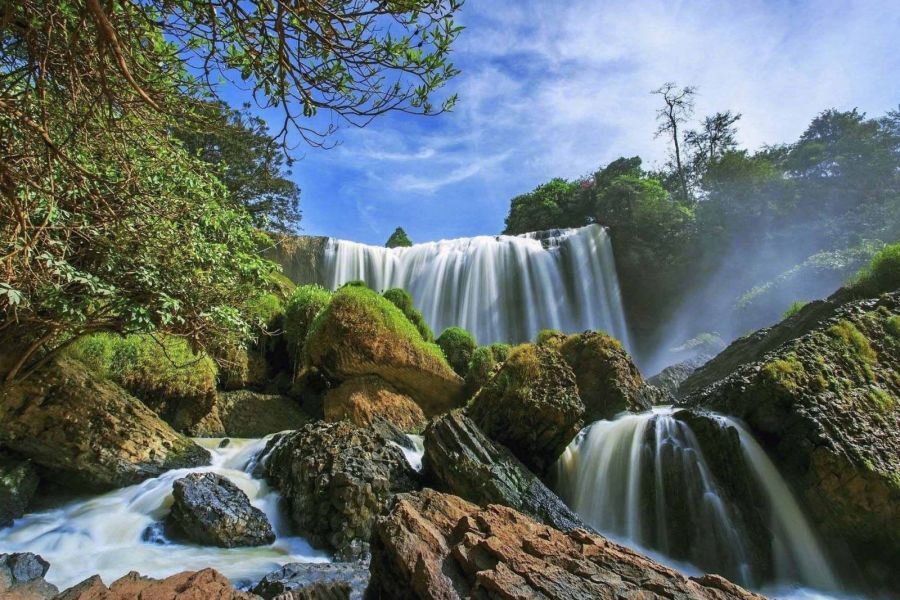
Elephant Waterfall

Elephant Waterfall

Elephant Waterfall, or Thac Voi, is a significant and moving place in Nam Ban Town, about 25 kilometers from Da Lat City. Elephant Waterfall is named for the massive gemstone formations at the base that look like mammoths from thousands of years ago. The cascade itself is around 30 measures tall, and it roars with vigor as it crashes into the valley below. There are also thick verdure with huge moss-covered boulders, which provide untamed raw beauty to the site and attract explorers’ gazes.

A visit to Elephant Waterfall is great for lovers of nature with a little bit of adventure. There is a rocky trail leading down to the base of the cascade, where you can feel the cool mist on your face and see the view from below. It’s a steep and sometimes slippery climb, so it’s best to wear decent walking shoes and take your time. However, if you prefer to stay dry, you can also visit a tranquil abbey and a giant Buddha statue.

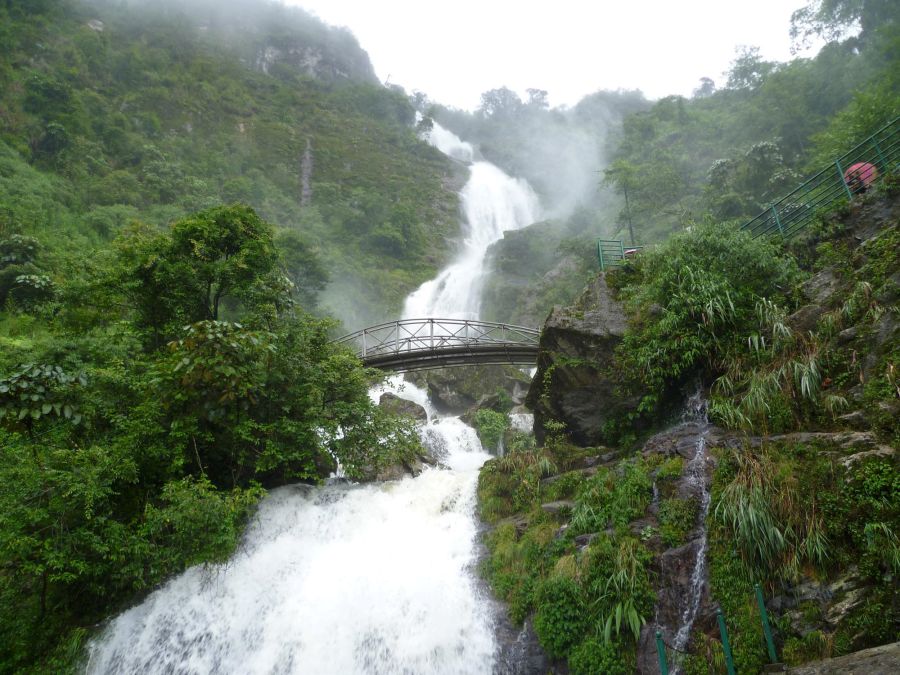
Silver Waterfall Sapa

Silver Waterfall

Silver Waterfall is a well-known natural site, situated approximately 12 kilometers from the main Sapa Quarter downtown area, northern Vietnam. Locals refer to the place by the name Thac Bac, as the water shines like silver to flatware, flowing from a height of around two hundred meters. The area is surrounded by green mountains and pine trees and provides heart-wrenching views with a peaceful setting, which is important to have as a stopover when experiencing the Sapa region as a tourist.

You’d better check out a set of gravestones to enjoy the cool water and relief from the highland air. This is an excellent place to take photos and, overall, enjoy the ambiance of nature. The rainfall is then frequently cool, so you should bring a light jacket to keep warm after swimming. The path can also be a bit slippery, especially after rain. Comfortable walking shoes are recommended. There are various options for you, like driving a motorbike trip or a guided stint. At that time, Silver Waterfall is truly a stimulating and scenic pause for your trip.

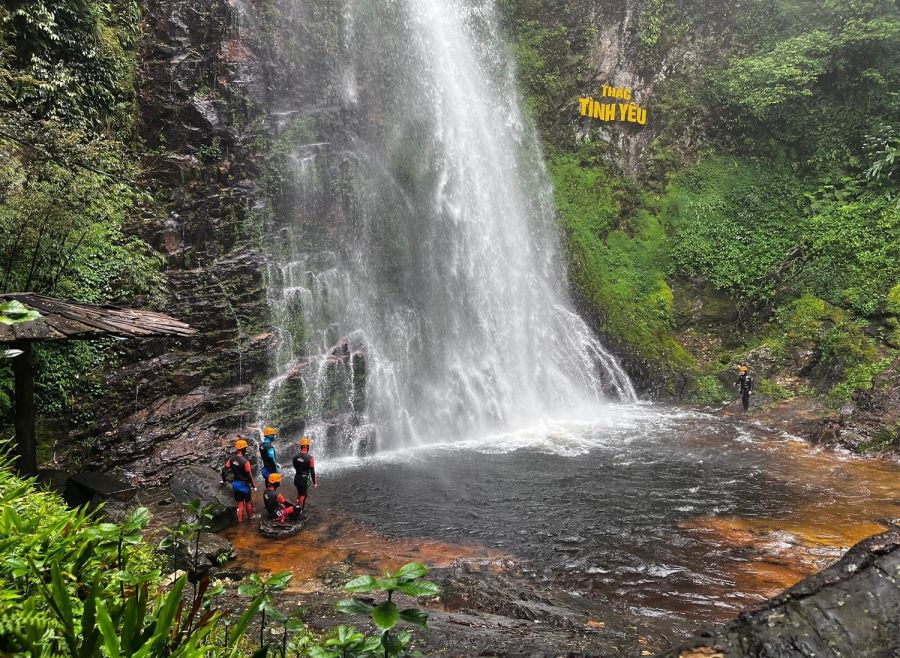
Love Waterfall Sapa

Love Waterfall

Love Waterfall Sapa, or Thac Tinh Yeu, is a brilliant natural love symbol found tucked in Hoang Lien National Park, about 14 kilometers southwest of Sapa City. The waterfall drops almost 200 meters at an elevation of around 1,800 meters above sea level, and cascades down into the Golden Stream (Suoi Vang), providing a peaceful and beautiful view for you. This waterfall is located on a short 1.5-kilometer-long trek via bicycle, private vehicle, or on foot from the main entrance through bamboo and flower blooms.

Beyond its natural beauty, Love Waterfall is steeped in original legend. According to myth, a fairy fell in love with a mortal man who played alluring flute warbles with the sluice. Interdicted by her Elysian realm to return, she transformed into a golden bird, eternally circling the mountain in the search for her love. Don’t miss some fun activities like gentle trekking, picnicking by the cascade, and indeed swimming in the cool, clear waters during warmer months.

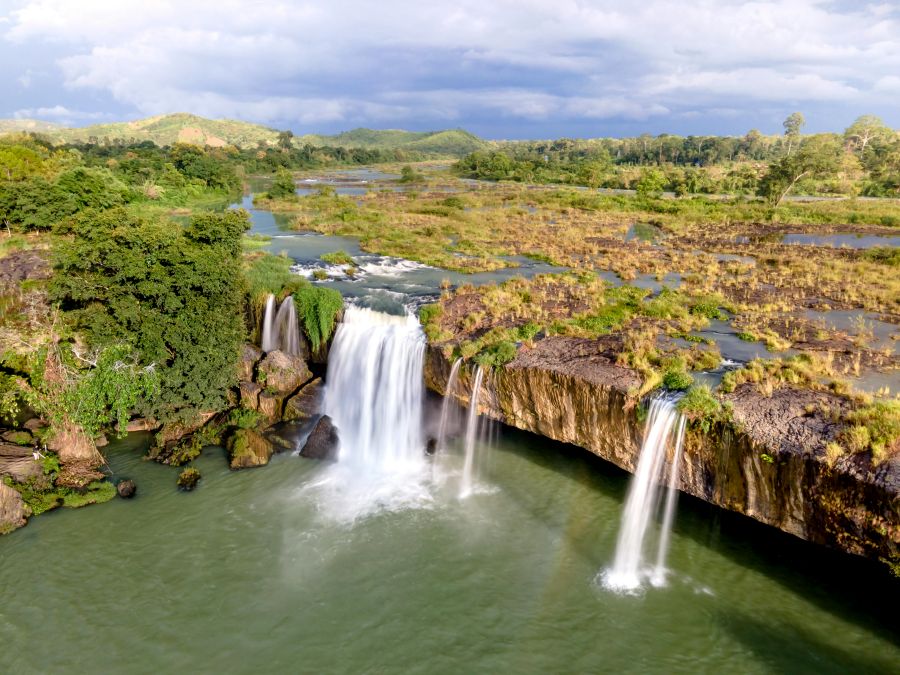
Dray Nur Waterfall

Dray Nur Waterfall

Dray Nur Waterfall is a stunning natural point located about 25 kilometers from Buon Ma Thuot City in Dak Lak Province. Known as the” womanish Waterfall,” Dray Nur is part of the fabulous Serepok River and is well-known for its impressive inflow and wide curtain of water stretching nearly 250 meters.

You can also walk along timber trails, explore grottoes hidden behind the cascade, or simply relax and enjoy the cool mist. The area is especially beautiful in the stormy season, but be sure to wear sturdy shoes and watch your step on the wet jewels. A visit to Dray Nur is a stimulating break and a great way to witness the beauty of Vietnam’s Central Highlands.

Ba Ho Waterfall

Ba Ho Waterfall

Ba Ho Waterfall is a beautiful, hidden gem located about 25 kilometers north of Nha Trang, Khanh Hoa Province. The name” Ba Ho” means “Three Lakes” in ancient legend, about the three natural pools formed by the cascade’s three categories. The cascade flows gently through lush tropical areas, creating clear blue pools that are perfect for swimming and relaxing. The whole area is peaceful and girdled by verdure, making it a great escape from the megacity heat.

Visitors can enjoy hiking along a scenic trail to reach the cascade, which takes about 30 to 45 minutes through the forest. The path can be a bit rocky and slippery in places, so wearing good shoes is important. Swimming in the cool, fresh pools is a popular exercise, but be aware of slippery rocks. Ba Ho Waterfall is ideal for nature suckers looking for a quiet spot to swim, fun and games, and explore the beauty of Vietnam’s littoral region.

Yang Bay Waterfall

Yang Bay Waterfall

Yang Bay Waterfall is a serene and stunning waterfall located around 45 kilometers from Nha Trang in Khanh Vinh District. This is a terrific area for swimming and relaxing in the natural surroundings. It’s a wonderful place to beat the megacity and be closer to nature.

Besides, adventurers can partake in some fun activities that include feeding fish, riding a horse, exploring a gallery of musical instruments revealing the original Raglai culture, hot mineral springs, and a flower demesne, among other things. Just be sure to have comfortable-sized shoes and be careful of the rocks if you are going. Yang Bay Waterfall is a fantastic mixture of nature, culture, and adventure for travelers’ experiences.

Mu Waterfall

Mu Waterfall

Mu Waterfall is a hidden beauty, which is nestled in the lush mountains of Lac Son District, Hoa Binh Province, roughly 130 kilometers from Hanoi. This pristine cascade has six slinging categories that descend over 100 measures, creating amazing natural geography. The area is also filled with thick trees and clear aqueducts, offering a tranquil retreat for nature suckers.

Travellers can enjoy swimming in the cool water, clear pools at the base of the cascade, hiking through the surrounding forests, and camping under the stars. That sounds amazing! Original homestays give you priceless opportunities to witness the traditional Muong culture, with authentic reflections and insight into original customs. The ideal time to visit is during the dry season, from May to September, when the rainfall is infrequent, and the cascade is at its most majestic.

Tac Tinh Waterfall

Tac Tinh Waterfall

Tac Tinh is another fascinating and peaceful Waterfalls In Vietnam, in Lai Chau Province. Known for its gentle falls and clear, fresh water, this fall has a quiet escape filled with lush green trees and beautiful nature. It’s less crowded than some of the further notorious falls, making it a perfect place for tourists who want to enjoy calm and comforting moments.

Besides that, you will spend time hiking near trails, taking pictures, or simply sitting by the water to enjoy the cool breeze and sounds of nature. When visiting, it’s a good idea to wear comfortable shoes as some paths can be uneven. Also, bring water and snacks since there aren’t many shops nearby. Tac Tinh Waterfall is a lovely spot to reconnect with nature and enjoy a peaceful day away from the busy megacity of life.

Suoi Tranh Waterfall

Suoi Tranh Waterfall

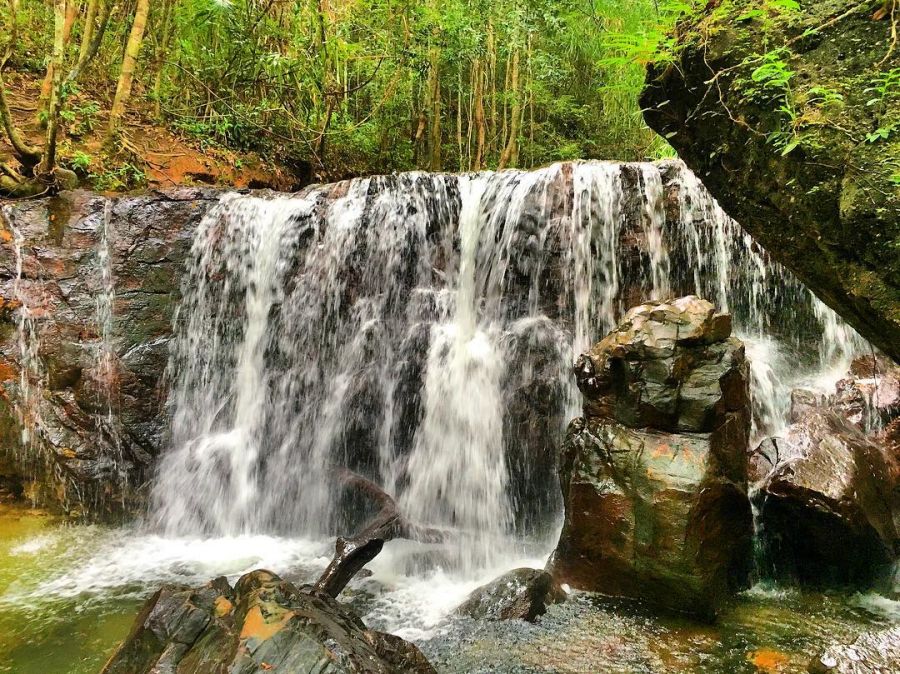
Suoi Tranh Waterfall is a tranquil and beautiful natural site about 10 km away from Duong Dong Town on Phu Quoc Island. Situated in Suoi May Hamlet, Duong To Commune, Suoi Tranh will capture your heart with its peaceful atmosphere and a continual abundance of trees, clean and cool waters. The term “Suoi Tranh,” which translates to “Oil Stream”, was bestowed by minstrel Dong Ho when he was smitten by the area and the lyrical beauty that resembled smooth oil.

You will take a leisurely 20-nanosecond walk along a shadowy path to reach the waterfall, with thick tropical forests and gem-like rocks partly covered by moss along the way. The waterfall softly flows down smooth stones into natural pools that will be an eye-catching area to swim in. Also, the Bat Cave is nearby, with fantastic stalactites and a mysterious atmosphere to ponder. There will also be opportunities for camping, fishing, and photography within the area. So if you’re a nature lover looking for a relaxed adventure, you should check out this spot!

Ban Gioc Waterfall

Ban Gioc Waterfall

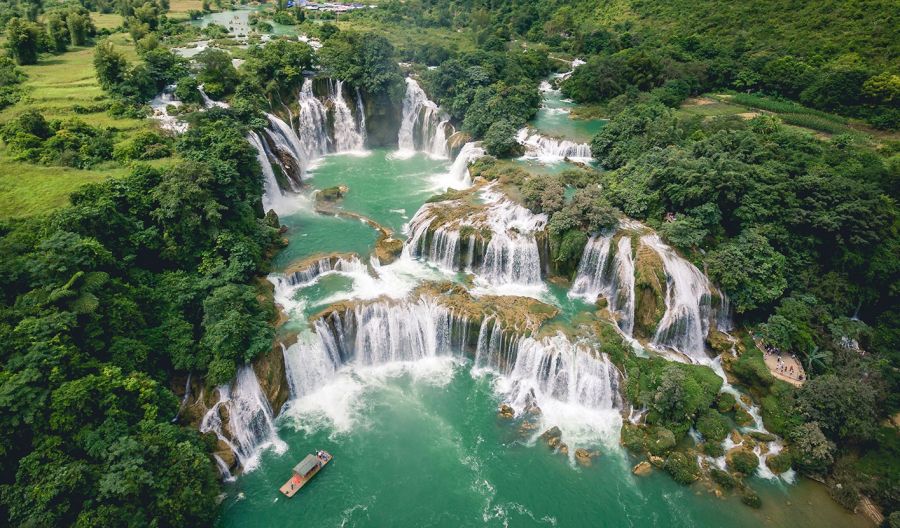
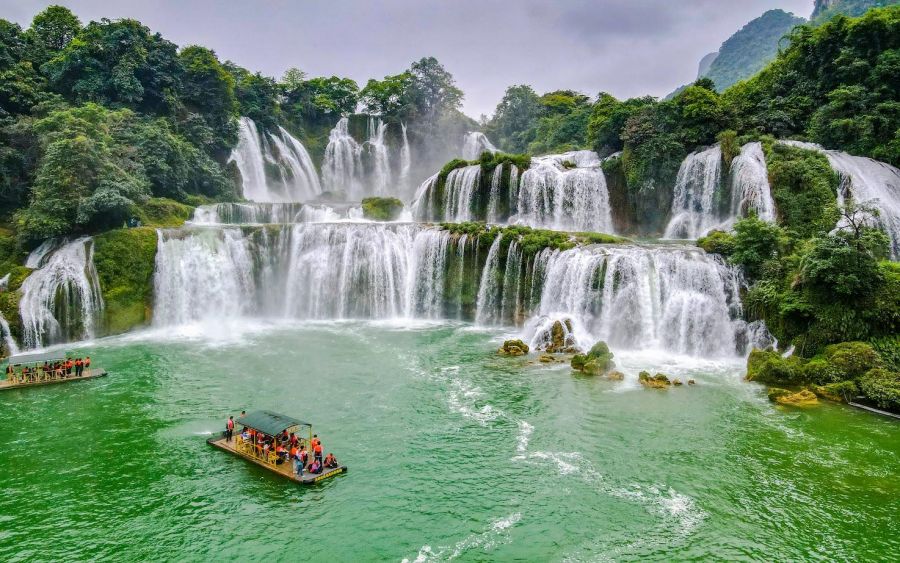
Ban Gioc Waterfall is a stunning natural site located in Cao Bang Province in northeast Vietnam. It is on the Quay Sơn River, precisely at the border with China. Ban Gioc is the biggest waterfall in Vietnam and the fourth biggest in the world across national borders. It has three tiers plunging approximately 30 meters and is approximately 300 meters wide. The waterfall is surrounded by lush green forests and steep rocky mountains.

Visitors can explore the falls by taking bamboo raft tours for up-close views of the water. They can hike nearby paths, as well as travel to and from iconic sites such as Nguom Ngao Cave. The best time to go is between October and April, when the weather is cooler and drier. Ban Gioc is about 90 kilometers away from Cao Bang City, so it takes a bus or motorbike to reach the falls and take a scenic countryside route.

Final Thoughts: Are Waterfalls In Vietnam Worth Visiting?

Absolutely! As you can see, waterfalls in Vietnam are surely worth visiting on every trip. They are stunning views, peaceful natural settings, and a fun break from busy megacity life. Each stream has its beauty, from hidden deep in the lush forests to thundering down rocky escarpments. Let Seni World guide you to Vietnam’s most incredible nature spots!

Why 10 National Parks In Vietnam Belong On Your Bucket List

Vietnam’s public national parks have stunning nature, unique wildlife, and indelible adventures. From lush forests to beautiful grottoes, these 10 areas showcase the uniqueness of Vietnam’s natural beauty and are must-visit destinations for every traveller.

Cuc Phuong National Park

Cuc Phuong National Park

  • Location: Cuc Phuong Commune, Nho Quan District, Ninh Binh Province
  • Entrance fee: 60.000 VND/adult, 20.000 VND/student, 10.000 VND/child

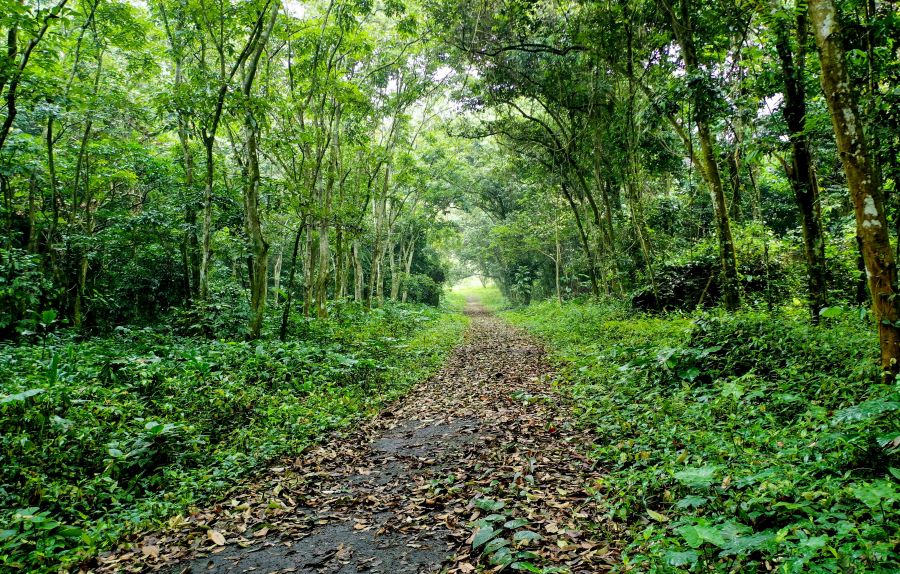
Cuc Phuong National Park is Vietnam’s first and largest public demesne, located in Ninh Binh Province, about 120 kilometers south of Hanoi. It’s famous for its rich biodiversity, ancient trees, and thick tropical rainforests. The demesne is home to multitudinous rare and fantastic species of shops and creatures, including primates, orchids, and butterflies. Callers come to substantiate the natural beauty and explore caves, hiking trails, and peaceful terrain.

This area is ideal for various recreational activities, such as hiking, raspberry picking, and visiting the Exposed Primate Deliverance Center. Excursionists can also enjoy cycling through the demesne’s scenic routes or taking guided tours to learn about the original foliage and fauna. When visiting, it’s important to admire the terrain by not littering, staying on marked paths, and following demarcation regulations to protect the wildlife.

Cat Tien National Park

Cat Tien National Park

  • Location: Dong Nai, Lam Dong, and Binh Phuoc Provinces
  • Entrance fee: 60.000 VND/adult, 30.000 VND/elderly, 20.000 VND/student, 10.000 VND/child

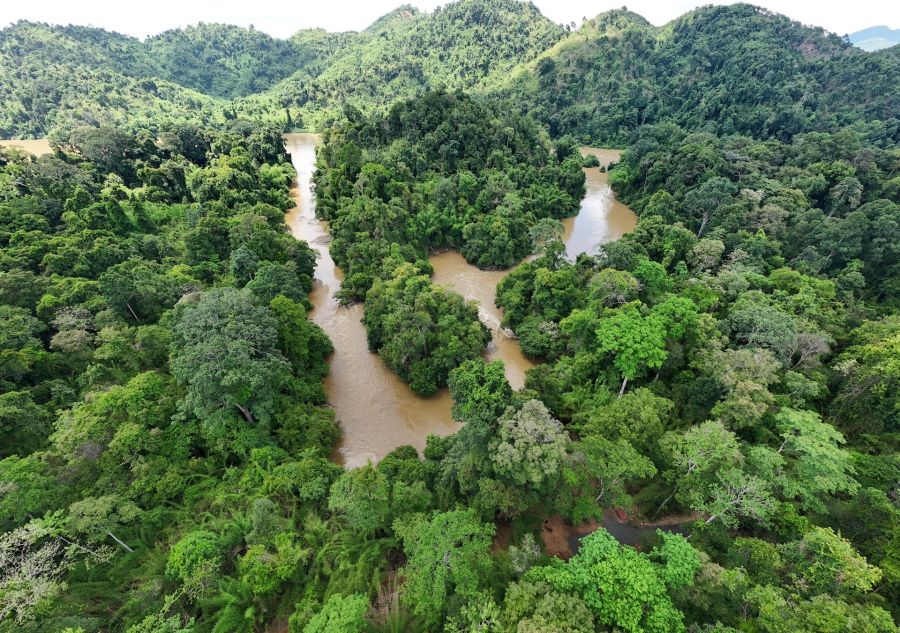
Cat Tien National Park is one of Vietnam’s largest defended areas, located in the southern part of the country, spanning across Dong Nai, Lam Dong, and Binh Phuoc provinces.

The demesne is known for its different ecosystems, including tropical timbers, plains, and wetlands. It’s a vital niche for multitudinous exposed species such as the Javan rhinoceros (now unfortunately extinct in the wild), gaur, and a variety of deer species.

The demesne is perfect for eco-tourism activities, like touring, wildlife watching, and boat passages along the Dong Nai River. Trippers can explore jungle trails, visit the bear sanctuary, or join night safaris. When planning a visit, it’s important to bring insect repellent, wear sturdy shoes, and be prepared for hot and sticky conditions. Respecting the park’s rules and habitat is pivotal to help save this unique terrain for unborn generations.

Cat Ba National Park

Cat Ba National Park

  • Location: Cat Ba Island Crossroad, Tran Chau Town, Cat Hai District, Hai Phong City
    Entrance fee: 80.000 VND/adult, 40.000 VND/child

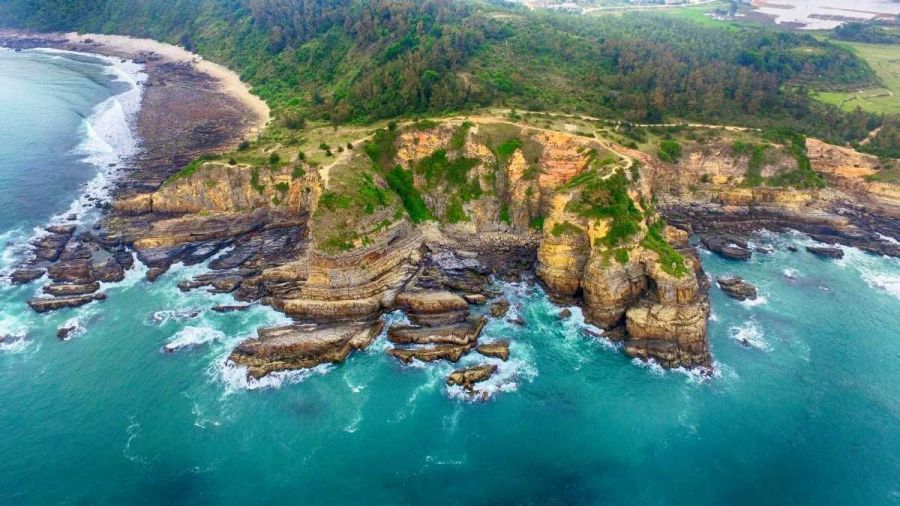
Cat Ba National Park is located on Cat Ba Island, the largest islet in the Halong Bay area of northern Vietnam. The demesne is known for its stunning limestone karsts, thick tropical timbers, and rich biodiversity. It’s home to numerous rare and endangered species, including the notorious Cat Ba langur, one of the world’s rarest primates. The demesne offers a unique combination of mountain, timber, and littoral ecosystems, making it a special destination for nature suckers.

Explorers to Cat Ba National Park can enjoy activities similar to hiking, rock climbing, bird watching, and exploring grottoes. The demesne’s trails give spectacular views of the islet’s geography and the surrounding ocean. When visiting, excursionists should be aware of staying on marked paths to cover the fragile terrain and wildlife. It’s also judicious to bring sufficient water, wear applicable footwear, and prepare for unforeseen rainfall changes, as the climate can be changeable in this littoral region.

Ba Be National Park

Ba Be National Park

  • Location: Nam Mau Commune, Ba Be District, Bac Kan, Vietnam
  • Entrance fee: 70.000 VND/pax.

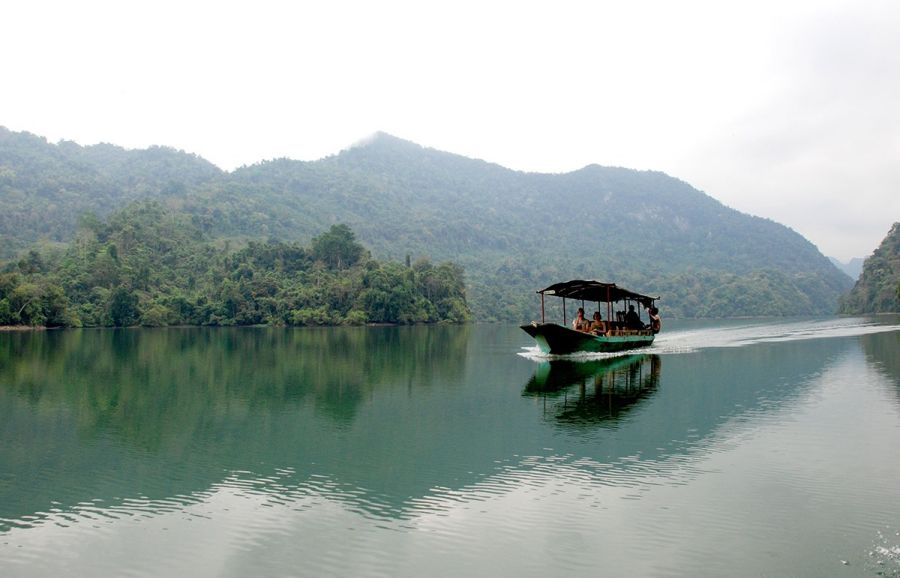
Ba Be National Park lies in Bac Kan Province in northern Vietnam and is infamous for Ba Be Lake, the biggest natural freshwater lake in Vietnam. The demesne has beautiful limestone mountains, dense timbers, falls, and grottoes, forming a moving natural geography. It’s also inhabited by various wildlife, such as many rare species and mammals. Ba Be National Park provides tourists a serene retreat encircled by nature and traditional ethnical townlets.

The area is ideal for exercise, including riding over Ba Be Lake, hiking on forest paths, visiting caves such as Puong Cave, and experiencing local culture in nearby towns. Visitors should come ready for different rain conditions and bring insect repellent because of the area’s tropical landscape. It’s important to keep nature intact by not disturbing wildlife and not leaving trash, so Ba Be National Park remains an attractive destination for future visitors.

Bach Ma National Park

Bach Ma National Park

  • Location: Loc Tri Commune, Phu Loc District, Thua Thien Hue Province, Vietnam
  • Entrance fee: 65.000 VND/adult, 25.000 VND/child or student

Bach Ma National Park is located in central Vietnam, encompassing Thua Thien Hue. It’s notorious for its cool climate, lush evergreen timbers, and different ecosystems ranging from tableland to montane territories. The demesne is home to numerous rare and exotic species of plants and creatures, including langurs, hornbills, and colorful orchids. Its rich biodiversity and scenic beauty make Bach Ma a popular destination for nature suckers and experimenters likewise.

Goers to Bach Ma National Park can enjoy hiking on well-pronounced trails, visiting beautiful falls like Do Quyen and Bach Ma falls, and raspberry watching. The demesne also offers stunning panoramic views from its peak, frequently called the “Cloudy Mountain”. When visiting, excursionists should wear comfortable hiking shoes, carry enough water, and be prepared for unforeseen changes in rainfall, as the area can be misty and cool.

Ba Vi National Park

Ba Vi National Park

  • Location: Tan Linh Commune, Ba Vi District, Hanoi, Vietnam
  • Entrance fee: 60.000 VND/adult, 30.000 VND/elderly, 20.000 VND/student, 10.000 VND/child

Ba Vi National Park is located close to Hanoi, in the Ba Vi District of Hanoi Province, northern Vietnam. It is famous for its scenic mountains, green forests, and a variety of plants and animals. The park specializes in the Ba Vi mountain range, which has three peaks dominated by dense forests and rare plant species. Ba Vi is renowned for its good weather and beautiful landscapes, thus making it a popular spot for both locals and visitors.

Tourists in Ba Vi National Park can engage in hiking to the tops of the mountains, ancient temples and cathedrals, bird species, and picnicking in the peaceful scenery. The area suits family outings and nature enthusiasts seeking calm from the mad metropolis. Walking shoes, water, and sun block should be brought along when visiting.

Tam Dao National Park

Tam Dao National Park

  • Location: Ho Son Commune, Tam Dao District, Vinh Phuc Province, Vietnam
  • Entrance fee: 40.000 VND/adult, 20.000 VND/child or student

Tam Dao National Park, located in Vinh Phuc Province just north of Hanoi, is notorious for its cool climate and misty mountain decor. The demesne boasts a rich variety of tropical timbers and is home to numerous unique flora and beast species, including rare orchids and different birdlife. Its stunning natural beauty and biodiversity attract numerous visitors looking to escape the megacity and enjoy nature.

The demesne offers excellent opportunities for hiking along scenic trails, discovering falls, and exploring the nearby Tam Dao city, known for its tranquil atmosphere. Out-of-doors conditioning, like bird watching, and nature walks, is more popular. Travellers should come set with insect repellent, comfortable hiking shoes, and warm apparel for cooler weather. It’s important to follow demesne rules, stay on designated paths, and cover the wildlife to maintain the demesne’s pristine condition.

Pu Mat National Park

Pu Mat National Park

  • Location: Tra Lan Town, Con Cuong District, Nghe An Province, Vietnam.
  • Entrance fee: 5.000-50.000 VND/adult, 10.000-50.000 VND/child or student

Located in Nghe An Province in north-central Vietnam, Pu Mat covers a vast area of thick tropical rainforest and rugged mountains. This region is known for its inconceivable biodiversity and is home to several rare and endangered species, including the fugitive saola, frequently called the” Asian unicorn.” The natural beauty and untouched nature of Pu Mat attract both wildlife suckers and scientific experimenters likewise.

Exploring Pu Mat offers explorers the chance to hike through untouched timber trails, observe wildlife in their natural habitat, and visit traditional ethnical townlets that surround the area. The demesne’s grueling terrain makes it ideal for adventurous hikers and shutterbugs eager to capture rare species and scenic views. It’s judicious to come well-prepared with hiking thrills, insect repellent, and plenty of water. Observing demesne rules and esteeming the terrain are essential to help maintain this extraordinary natural area.

Con Dao National Park

Con Dao National Park

  • Location: Con Dao, Ba Ria – Vung Tau Province, Vietnam
  • Entrance fee: 60.000 VND/adult, 20.000 VND/student, 10.000 VND/child

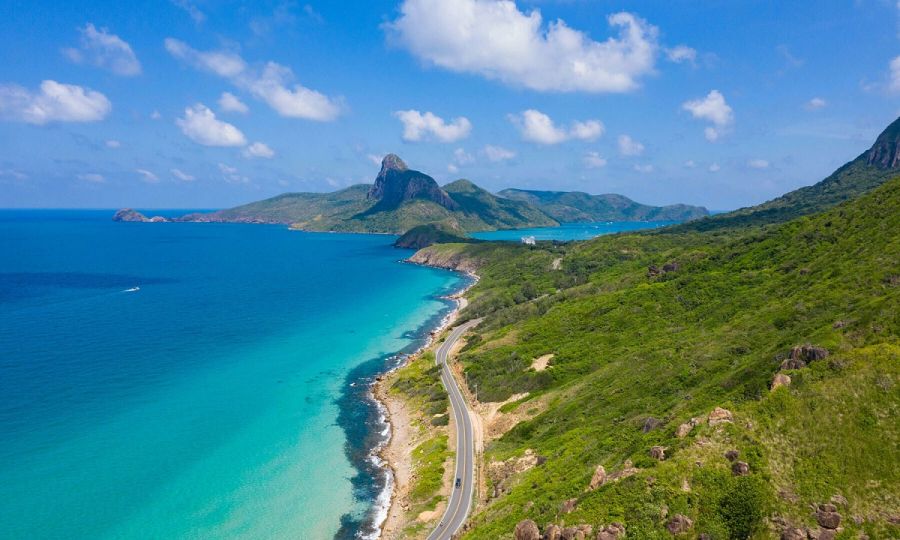
Located on the Con Dao islands along Vietnam’s southern coastline, the public area is famous for beautiful beaches, colorful coral reefs, and dense tropical forests. It is an essential habitat for endangered sea turtles that come onto the shore to lay eggs, along with many rare sea and land animals. The distinctive combination of land and aquatic ecosystems renders Con Dao a perfect spot for nature enthusiasts and conservationists of wildlife.

Visitors are able to swim in clear water for snorkeling or scuba diving, walk through green woodsy trails, and see a range of animals in their own habitats. The ocean ecosystem around the area is very varied, creating great underwater landscapes for explorers. To protect this delicate site, visitors should not disturb turtle nesting areas and use less plastic. Planning for the hot weather with the right gear guarantees a comfortable and ecotourism-friendly holiday.

Phong Nha – Ke Bang National Park

Phong Nha - Ke Bang National Park

  • Location: Bo Trach District and Minh Hoa District, Quang Binh Province, Vietnam
  • Entrance fee: 150.000 VND/adult, 75.000 VND/under 1m3, free for children under 1m.

Located in Quang Binh Province, central Vietnam, Phong Nha-Ke Bang National Park is one of the most spectacular natural prodigies in Southeast Asia. honored as a UNESCO World Heritage Site, the demesne is notorious for its stunning karst geographies, underground gutters, and vast cave systems — including Son Doong, the world’s largest cave. With limestone formations that date back over 400 million years, this area offers a rare glimpse into the Earth’s geological history.

Visitors come to Phong Nha-Ke Bang not only to explore grand grottoes like Paradise Cave or Phong Nha Cave by boat, but also to journey through lush jungles, spot wildlife, and enjoy original village life. Adventure conditioning, similar to zip-lining, kayaking, and multi-day cave expeditions, is available for adventure enthusiasts. While visiting, it’s essential to follow safety instructions, wear suitable gear for delving, and admire the original terrain to help save the demesne’s fragile ecosystems

Final Thoughts: Are National Parks In Vietnam Worth Exploring?

Absolutely! Vietnam’s rich network of public premises offers a commodity for everyone, from families to adventure campaigners. With different geographies and abundant wildlife, they give indelible memories for all ages. Ready to explore? Let Seni World guide you on your upcoming nature adventure in Vietnam!

Top 15 Famous Bridges in Vietnam You Should Explore

Bridges in Vietnam offer many stunning scenes that leave a lasting impression. From the Golden Bridge held by stone hands to the Dragon Bridge that breathes fire. Follow the article to unveil 15 beautiful bridges in Vietnam.

Golden Bridge Vietnam

Golden Bridge Vietnam

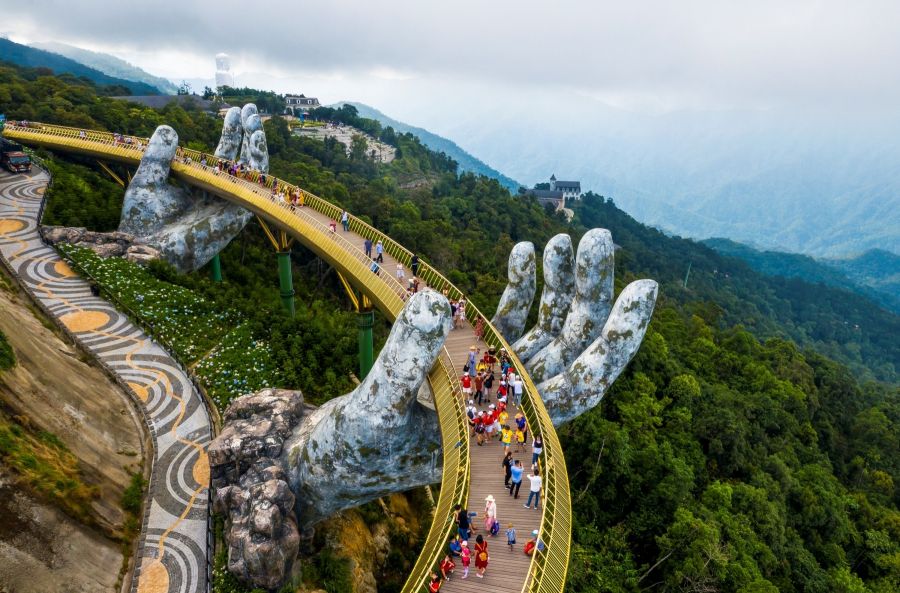
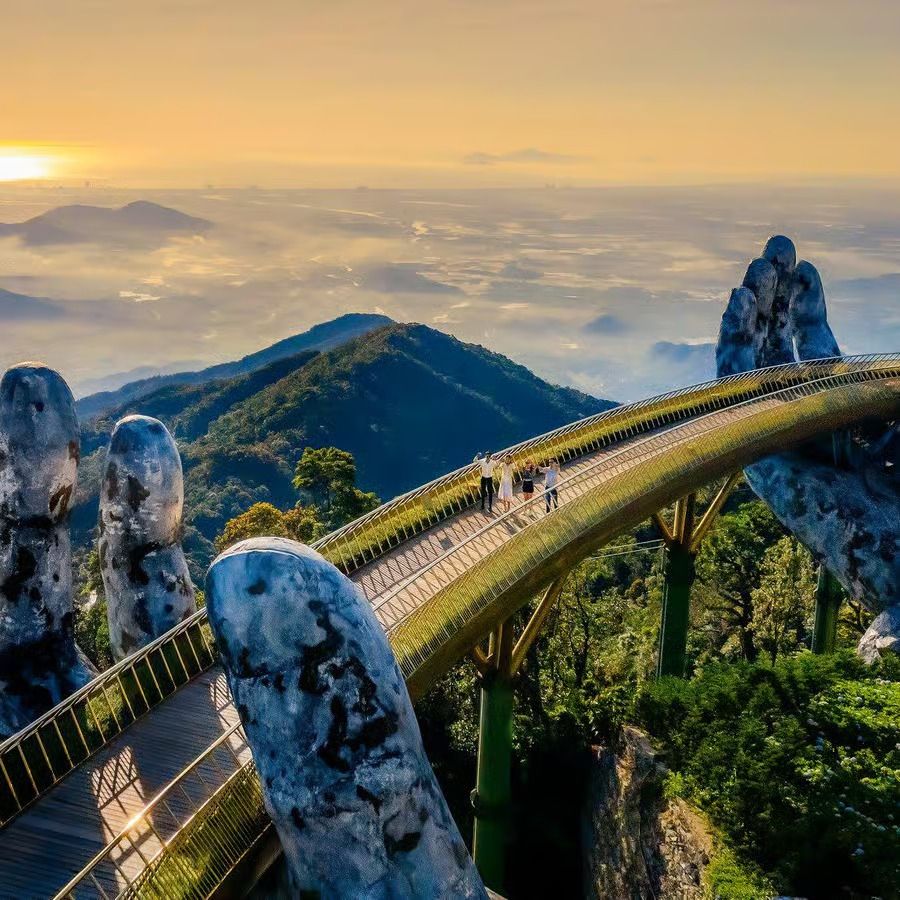
The Golden Bridge in Vietnam ranks as one of the most famous landmarks in the country, drawing millions of tourists each year. This 150-meter-long pedestrian bridge seems to rest in the grasp of two enormous stone hands rising from the hillside.

The Golden Bridge is part of the Sun World Ba Na Hills complex, which includes a French village, gardens, and a cable car system. First opened in 2018, the Golden Bridge gained worldwide attention almost immediately. Perched at 1,400 meters above sea level, it provides stunning views of both the coastline and the mountains around it. Its unusual design makes it look like ancient giants are holding up the shiny golden path, turning it into one of the most remarkable bridges in Vietnam.

Dragon Bridge

Dragon Bridge

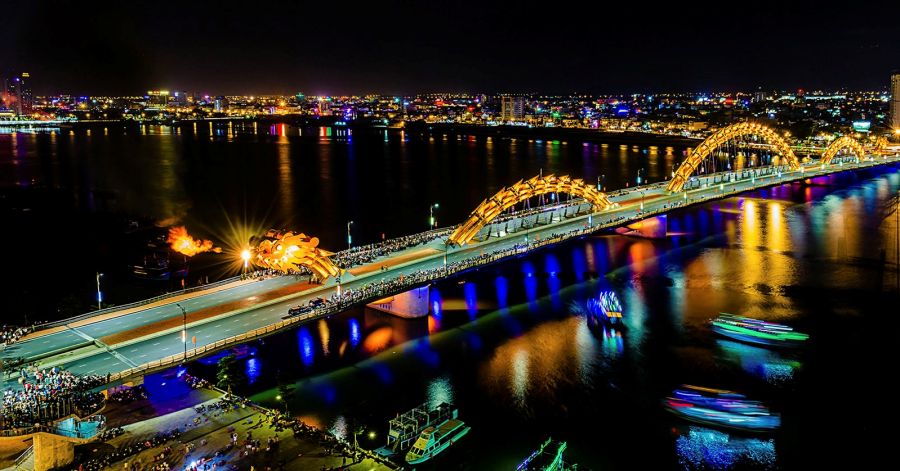
The Dragon Bridge in Da Nang is truly a sight to behold! Stretching a breathtaking 666 meters over the Han River, it beautifully mimics a golden dragon soaring through the sky. At night, Dragon Bridge becomes a true spectacle. Bright lights in various colors shine and reflect on the water, forming a vibrant image that seems to fill the sky with its glow.

The Dragon Bridge puts on an unforgettable fire and water show every weekend, with fire shooting out of its mouth and water spraying alongside. Since it opened its doors in 2013, the Dragon Bridge has cemented its status as a beloved symbol of Da Nang, embodying the hopes of prosperity and good fortune that are central to Vietnamese culture.

And if you’re in the area, be sure to catch the timed show at 9 PM on Saturday and Sunday nights!. It is an experience that you will never forget and shows off this engineering marvel for all it is worth.

Bach Long Glass Bridge

Bach Long Glass Bridge

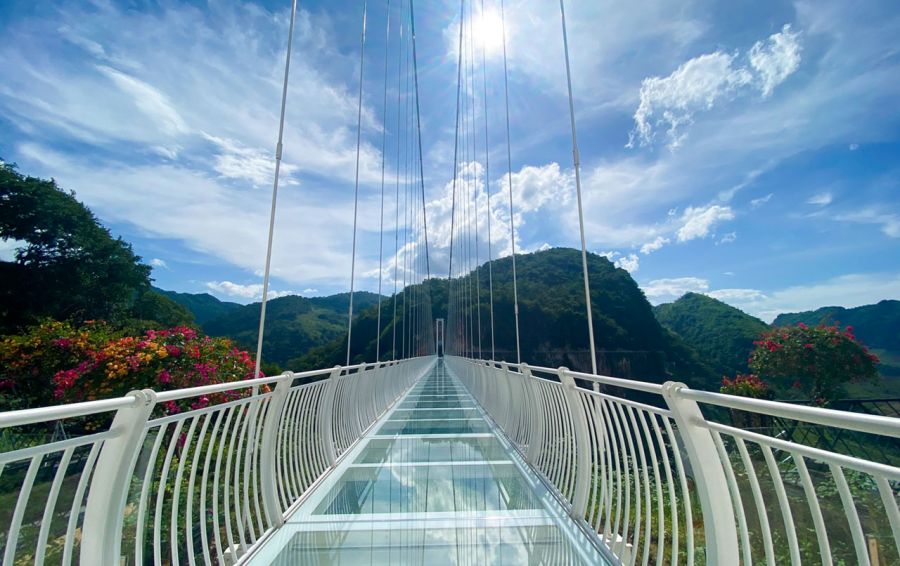
The Bach Long Glass Bridge, the longest of its type in the world, stands 632 meters above the idyllic land of Moc Chau. Perched over Son La Province’s bowl-like valley is the glass-bottomed bridge, which sits 150 meters above the ground and promises visitors heart-stopping views from above.

The Bach Long Bridge was first opened in 2022 and has attracted daredevils due to its reinforced glass panels that give the illusion of walking on air. And for the snap-happy among us, there are a few glass platforms created exactly for that purpose, where visitors can take their Instagram selfies. But people with a fear of heights may find it hard to walk across.

Long Bien Bridge

Long Bien Bridge

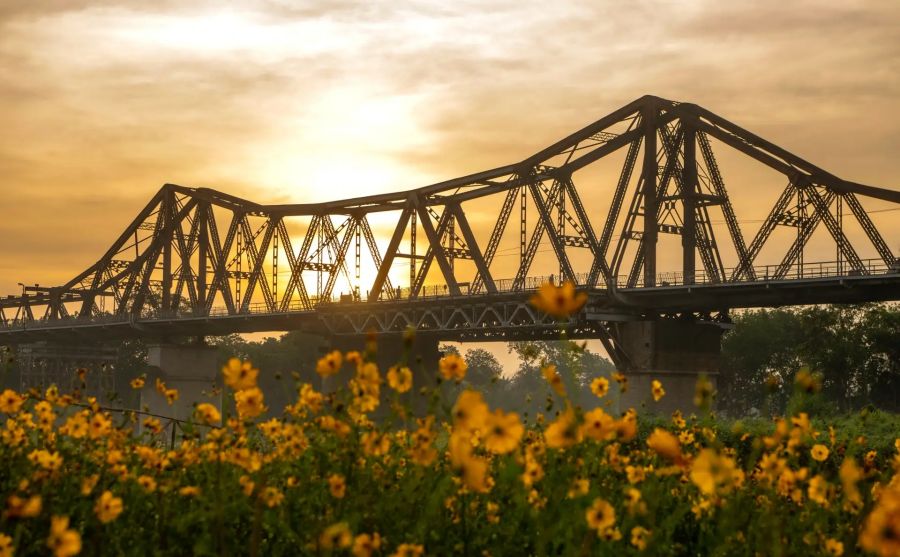
The Long Bien Bridge is more than just an elevated roadway; it is a testament to Vietnam’s profound legacy and unbreakable attitude. Built from 1899-1902 by Gustave Eiffel’s team, it spans the Red River in Hanoi.

Despite the wear and tear of the wars, Long Bien Bridge is a artery serving both trains and pedestrians. Frail with age but proud of stature, it has over time been fetishized as a favourite spot among untold numbers of local photographers and history-hounds out to discover the rhythmic heartbeats of Vietnam’s capital.

Nhat Tan Bridge

Nhat Tan Bridge

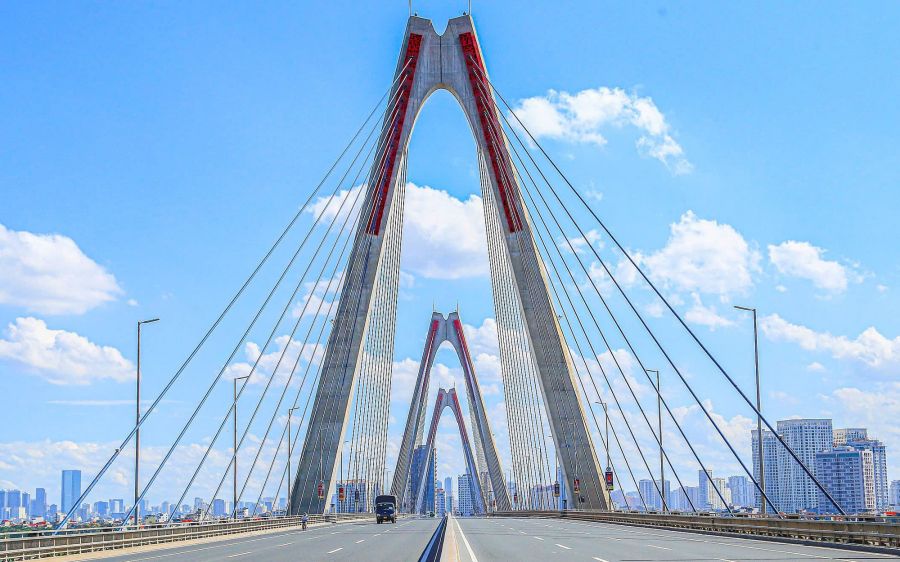
Nhat Tan Bridge is a stunning example of modern Vietnamese engineering. This beautiful cable-stayed bridge spans the Red River and connects the heart of Hanoi to the Noi Bai International Airport. Moreover, it is also lovingly dubbed the “White Bridge” thanks to its striking white towers. Finished in 2015, the bridge stretches an impressive 8.9 kilometers, making it one of the longest cable-stayed structures in Southeast Asia.

The bridge acts as more than just a way to get around. It stands out as a key architectural and scenic feature of the northern gateway to Hanoi. At night, the five towers light up and form a glowing structure against the dark sky. Many young folks head to Nhat Tan Bridge to unwind and feel the cool breeze after a long day at work.

Truong Tien Bridge

Truong Tien Bridge

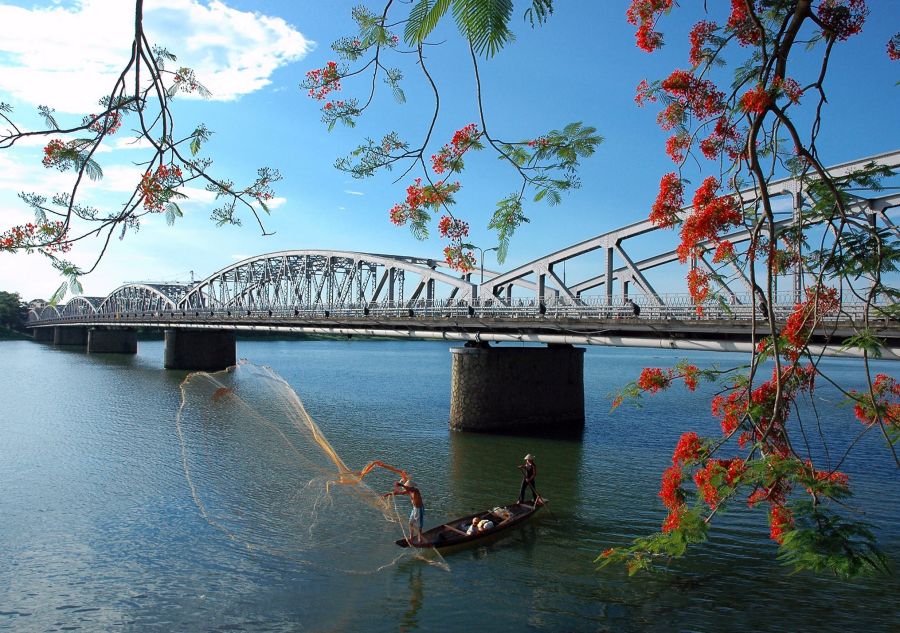
The beautiful Truong Tien Bridge stretches gracefully over the Perfume River in Vietnam’s historic city of Hue. From its first construction in 1899, the bridge has been lovingly rebuilt a few times since. Nowadays, this six-span steel bridge has truly become the heart of Hue, recognizable to anyone who roams its charming streets.

When the sun sets, the evening lights transform it into something magical. It’s such an amazing experience to watch the glow of the bridge reflected on the water as traditional dragon boats glide by. It’s a scene that captures the soul of the city, one that tugs at your heartstrings and makes you fall in love with Hue all over again.

Japanese Covered Bridge

Japanese Covered Bridge

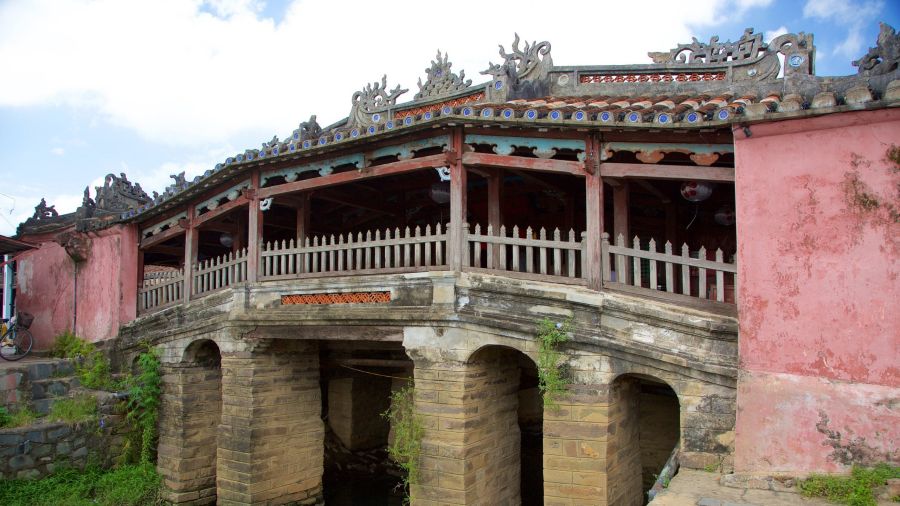
This beautiful Japanese Covered Bridge of Hoi An Ancient Town was built in the 1950s and restored in 1653. It is one of the oldest bridges in Vietnam. At 18 metres long, this wooden bridge connects the Japanese and the Chinese parts of this UNESCO heritage site.

The bridge had been built by Japanese merchants, combining traditional styles and containing a small temple within it. With its distinct structural form, it provides shelter from the elements and doubles as a peaceful spiritual sanctuary for walkers. It is a testament to the mix of cultures that is Hoi An.

Han River Bridge

Han River Bridge

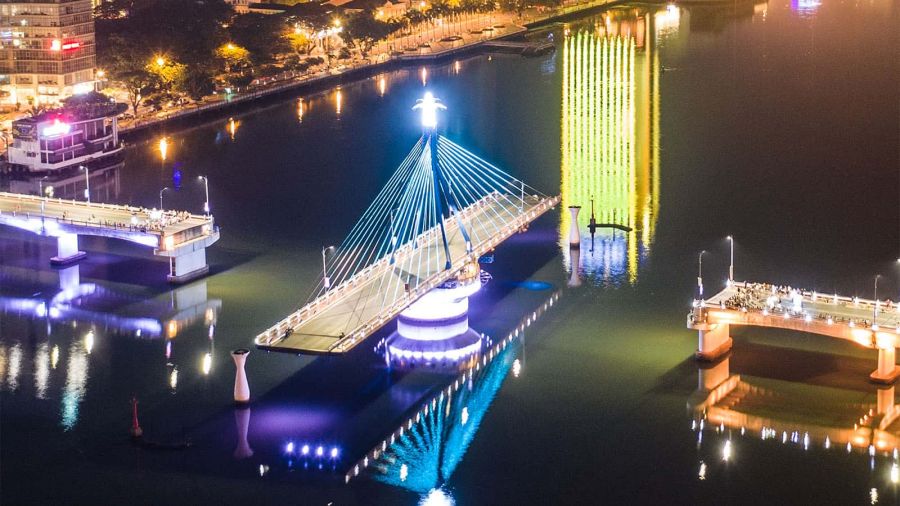
The Han River Bridge is the first swing bridge built in Vietnam. The rotation usually takes place around 11 PM on weekends and 1 AM on weekdays. And this beautiful thing swings 90 degrees, to let those big ships in.

This amazing show draws flocks of people. The entire process of transformation, which takes around 15 minutes, feels like watching a gigantic machine awaken. It’s more than just a bridge. It’s an experience that you must see when visiting Da Nang.

Kiss Bridge

Kiss Bridge

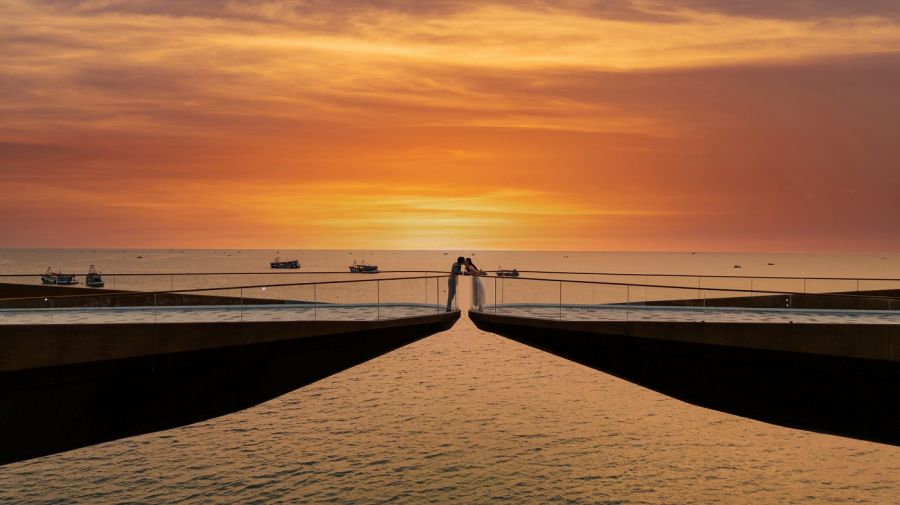
If you’re on the lookout for an idyllic romantic escape, you need look no further than Kiss Bridge on Phu Quoc Island. This picturesque wooden bridge extends over the glittering blue waters and has been known to couples as the dreamiest.

A lot of people say this is the best sunset spot in Vietnam. In fact, towards sundown, you’ll find couples here, and capturing those special moments together.

Can Tho Bridge

Can Tho Bridge

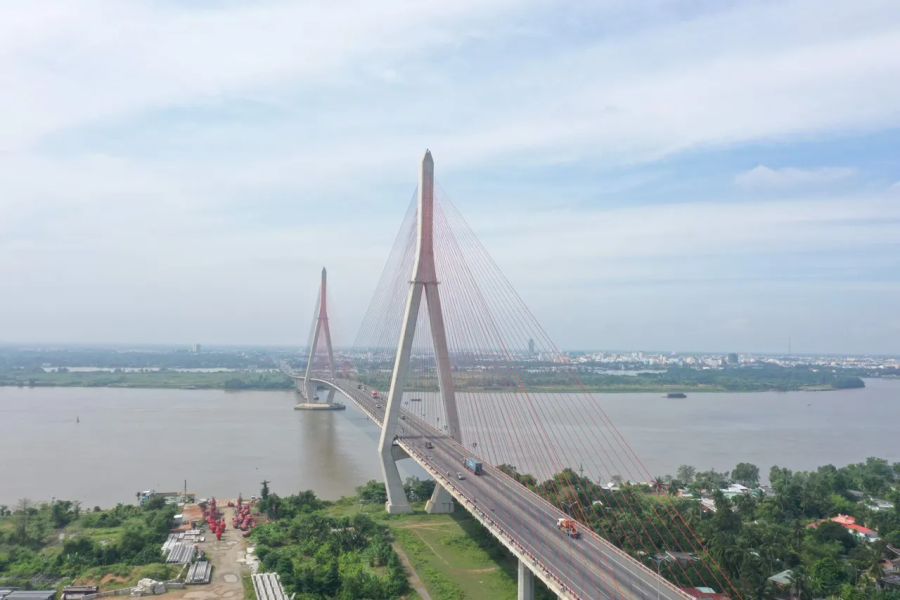
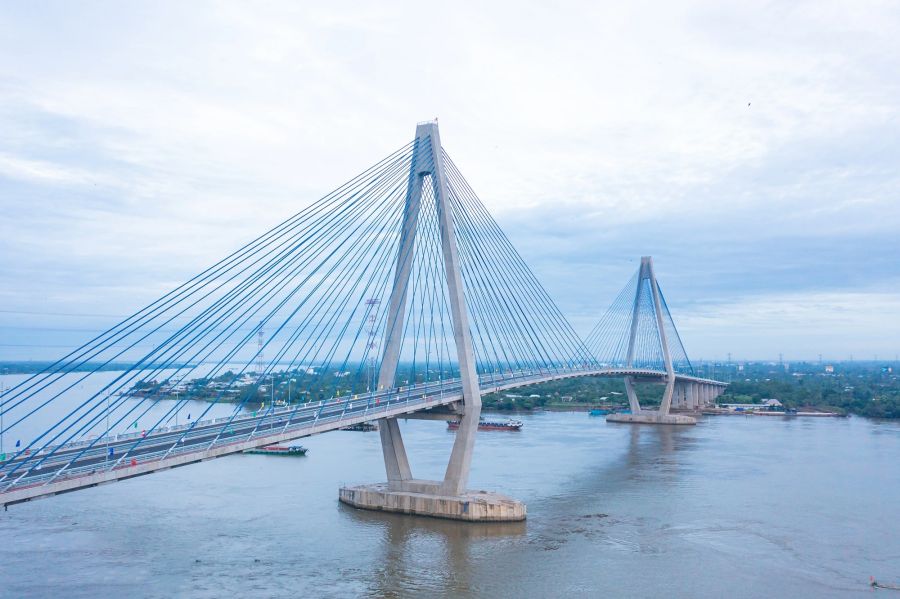
The Can Tho Bridge is the longest in the Mekong Delta, a reportedly awesome 2.75 km long! This glorious cable-stayed bridge crosses the Hau River and connects Can Tho City to the other provinces.

As you make your way across the bridge, you can’t help but admire the view, observe the local boats that pass, and down below, lively floating markets. It’s a pretty picture that sums up the lively spirit of the Mekong Delta.

Rong May Glass Bridge

Rong May Glass Bridge

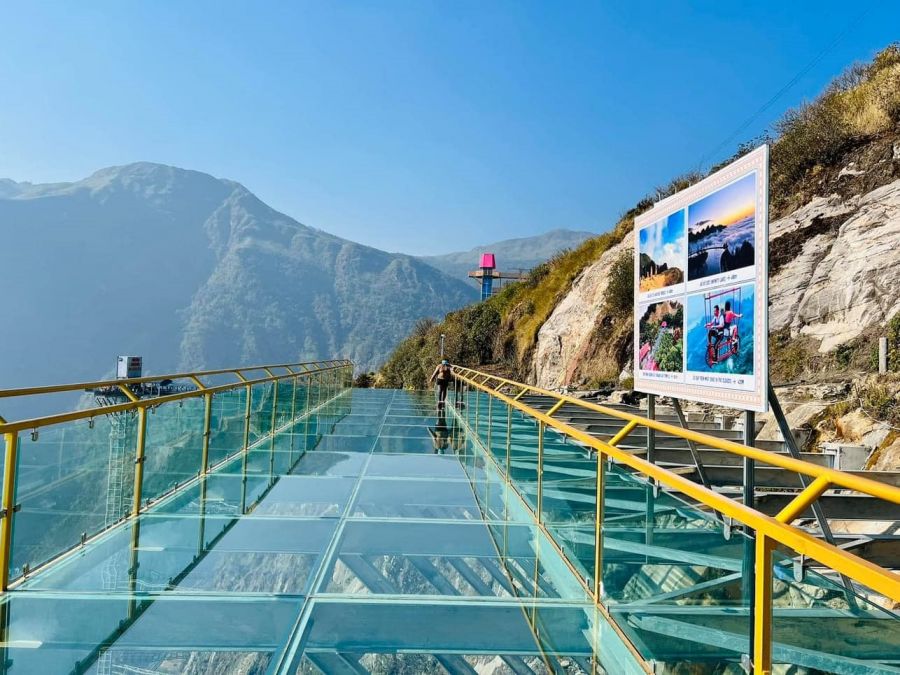
Rong May Glass Bridge is a must-visit in the mountains of Lai Chau Province in Vietnam. This magnificent glass bridge creates an incredibly unique walking experience. And as with other glass bridges, those transparent floors let you look straight down into the depths.

From the bridge, you can see magnificent mountain scenery, deep valleys, and a pretty group of ethnic minority villages scattered on the hill. It’s a photographer’s dream and a nature lover’s heaven, and so appealing to anyone who wants the best of adventure and beautiful views.

Bai Chay Bridge

Bai Chay Bridge

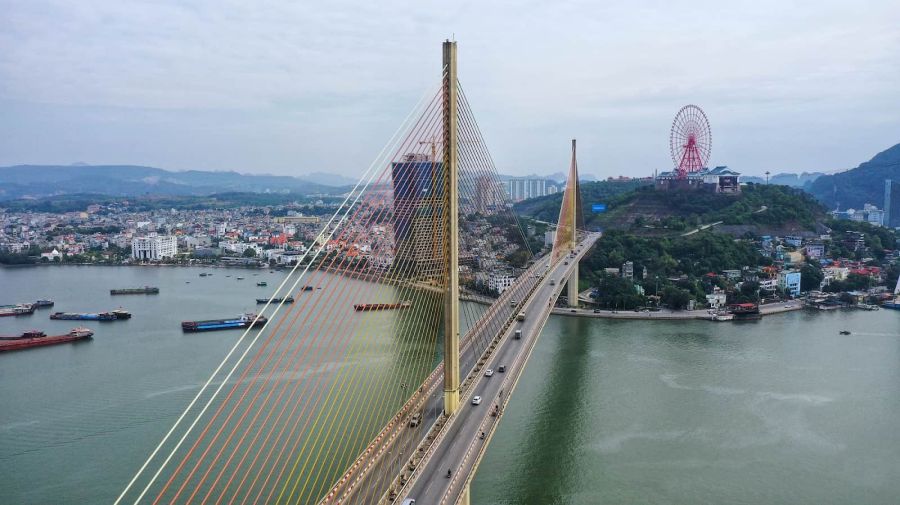
When considering the prettiest bridges in Vietnam, you simply can’t ignore Bai Chay Bridge. It is over 900 metres long and features an elegant single-plane cable-stayed design with only one impressive upright pylon. It looks like a lean, elegant guitar when seen from above, and it’s a welcome sight in the city.

The bridge is beautifully illuminated at night. Looking out from Bai Chay Bridge, you can either take in beautiful scenes of Ha Long Bay or the busy hub of city life around you.

Thuan Phuoc Bridge

Thuan Phuoc Bridge

Thuan Phuoc Bridge isn’t just any ordinary bridge, it’s a contemporary suspension bridge, spans 18 meters across and is 1.8 kilometers long, elegantly connecting the banks of Da Nang Bay.

It commands attention from every angle at an unusual place where the Han River meets the sea, just at the mouth of Da Nang Bay. This is the Thuan Phuoc bridge linking Nguyen Tat Thanh and Hoang Sa – Truong Sa coastal streets. It helps bring together this coastal traffic system, which stretches from the Hai Van tunnel to the stunning Son Tra peninsula.

Phu My Bridge

Phu My Bridge

Phu My Bridge is currently the largest cable-stayed bridge in Ho Chi Minh City. Beauty contributes to Ho Chi Minh City and affirmation of one of the most developed and modern cities of Vietnam.

Phu My Bridge in Saigon is not just a significant traffic link. It makes for one of the best sunset spots in the city, too. Anyone standing on the bridge that faces District 7 can see towering buildings glowing with lights in the distance as the sun continues to sink lower. It feels almost magical. Glance eastward to District 2, and you’ll notice the glistening of the streets that cut through there. Vehicle traffic becomes busy, first on motorcycles, then multiplying until every lane is full, all creating a rollicking vibe that the locals call the busy energy of Saigon after dark.

My Thuan Bridge

My Thuan Bridge

My Thuan Bridge is really the most beautiful bridge in Southern Vietnam. It’s a modern wonder, the delicate curves of My Thuan cut a dramatic scene that almost appears to dance between the clouds and the glistening Tien River that flows beneath it.

Linking Tien Giang and Vinh Long provinces, the bridge provides wonderful sights. Up here, you get a cooling panorama of the relaxing beauty of the Mekong Delta, a land that seems quiet and wonderfully benign.

Final Thought

Spanning heights from breathtaking like Golden Bridge to romantic beauty like Kiss Bridge, Vietnam bridges provide gorgeous views and historic aesthetics. Are you planning to enjoy these? Allow Seniworld to aid you in designing your dream Vietnam holiday. With guided tours, personalized itineraries, you’re in for an unforgettable journey!

Top 13 Most Stunning Islands In Vietnam For Your Trip

Vietnam boasts a wide array of islands along its coastline, showcasing everything from untouched beaches and thriving marine ecosystems to deep cultural roots and notable historical importance. This guide dives into 13 islands in Vietnam that you shouldn’t miss.

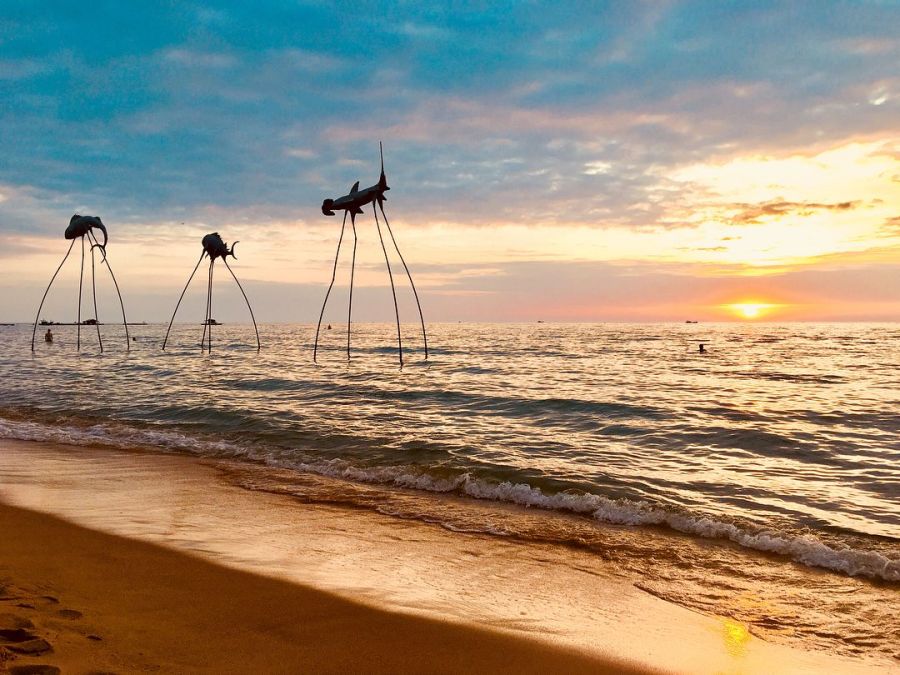
Phu Quoc Island – The Pearl of the South

Phu Quoc Island

  • Location: Kien Giang Province, Gulf of Thailand
  • Best time to visit: November to April.

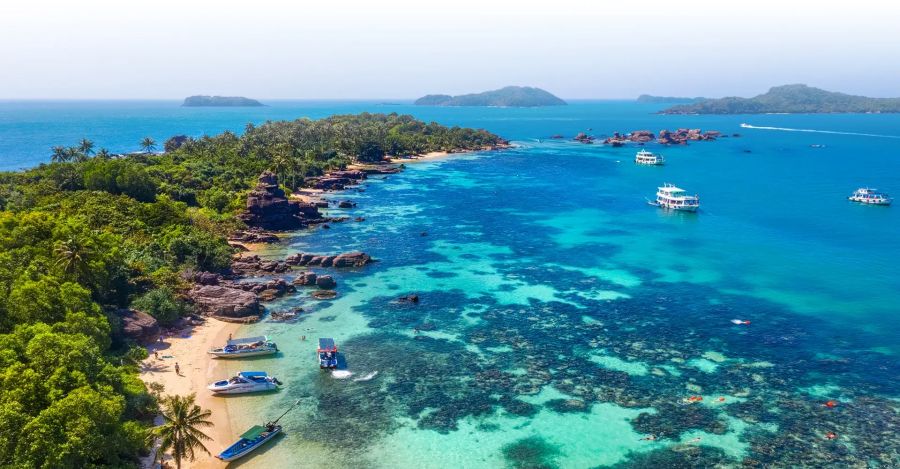
Phu Quoc is one of the most stunning islands in Vietnam. Resting in the emerald waters of the Gulf of Thailand, this untouched paradise awaits with white sandy beaches, tropical jungle, and oceans of crystal blue. Phu Quoc owns an array of beautiful beaches, such as the powdery white sands and turquoise waters of Bai Sao (Sao Beach) or the coastline-hugging Bai Truong (Long Beach) on the west coast, known for hypnotic sunsets.

Away from the beach, there are plenty of thrilling activities available, from diving to see coral reefs, to jet skiing, windsurfing, kayaking, or simply lounging by the pool or having a pampering spa treatment. It also has a rich tradition to boast of. Phu Quoc fish sauce and black pepper are considered some of the best specialities in Vietnam. Besides, don’t miss the cultural landmarks such as Dinh Cau Rock (Cau Temple), where local fishermen pray for safe voyages.

Cat Ba Island

Cat Ba Island

  • Location: Halong Bay, Quang Ninh Province
  • Best time to visit: April to October

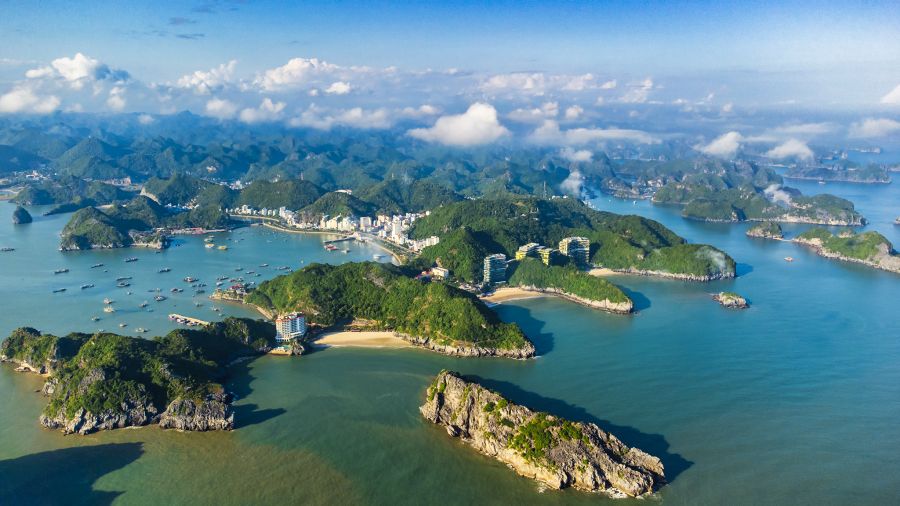
Cat Ba is a UNESCO World Heritage site. With long white dune stretches and rows of green trees, Cat Ba Island has long been the place of mesmerizing natural scenery.

The island hosts Cat Ba National Park, which is characterized by lots of tropical ecosystems and wildlife, including the endangered Cat Ba langur. More adventurous travelers may tackle limestone cliffs, kayak in secret lagoons, or trek to Ngu Lam Peak for sweeping views of the bay.

Cat Ba Town brings Vietnamese island vibes with floating fishing villages, fresh seafood restaurants, and local markets. The island has beaches such as Cat Co 1, 2, and 3, where visitors can enjoy moments of relaxation after discovering the caves of the bay.

Cham Island

Cham Island

  • Location: Hoi An, Quang Nam Province
  • Best time to visit: March to September

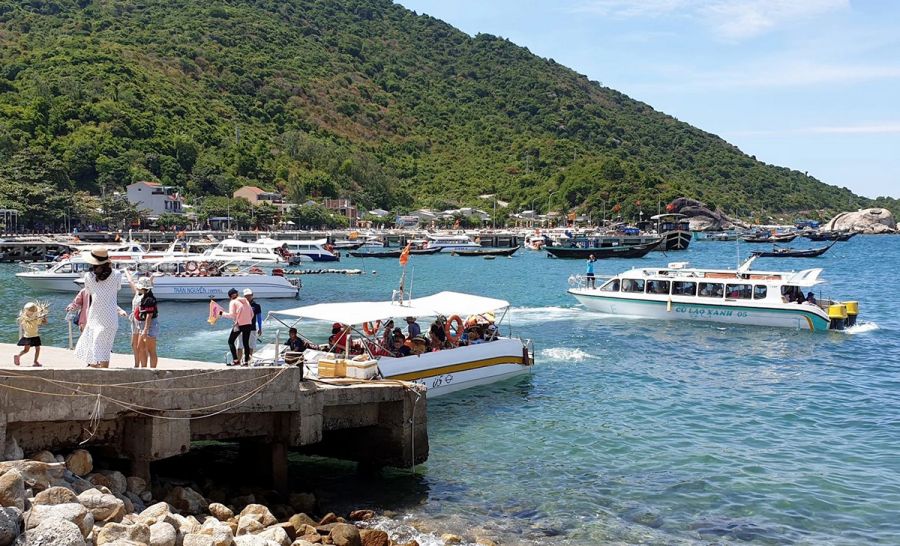
Cham Island, known as Cu Lao Cham in Vietnamese, is made up of eight small islands identified as a UNESCO Biosphere Reserve. These islands are only 20 km away from Hoi An Town, so travelers can easily reach them.

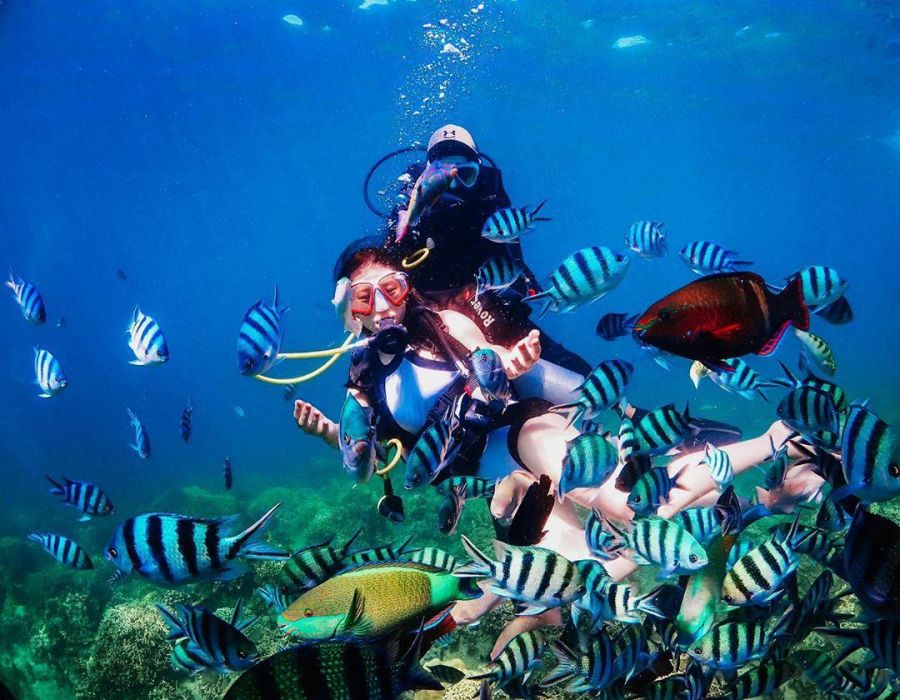
The island’s primary region has stunning beaches such as Chong and Bai Huong, where tourists can bathe in clear sea waters and snorkel or dive amongst dazzling coral reefs. The islands’ sea reserve area is home to over 165 species of corals and a multitude of tropical fish.

Tourists can visit customary villages, enjoy local delicacies like garlic from Cham Island, seaweed noodles, and get to know the captivating ocean history of the island.

Con Dao Island

Con Dao Island

  • Location: Ba Ria-Vung Tau Province
  • Best time to visit: November to March

Among the islands in Vietnam, Con Dao Island is considered the most emotionally stirring destination, experiencing a unique blend of historical significance and breathtaking scenic beauty. The centerpiece of this 16-island archipelago is a former prison complex that served as a punitive penitentiary during the French colonial era and the Vietnam War.

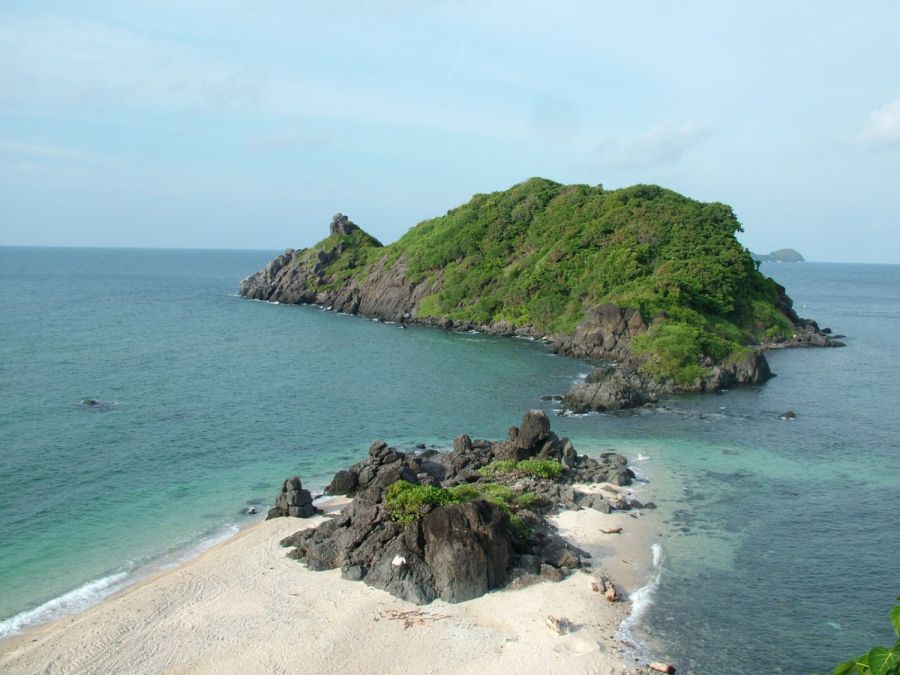
Moreover, Con Dao is home to some of the best beaches in Vietnam. Among them is Dam Trau Beach, the best swimming destination known for its tranquility and soft sands. While Lo Voi provides serenity along with shimmering waters, Nhat Beach offers stunning, clear waters as well as dramatic rocky structures.

Ly Son Island

Ly Son Island

  • Location: Quang Ngai Province
  • Best time to visit: March to September

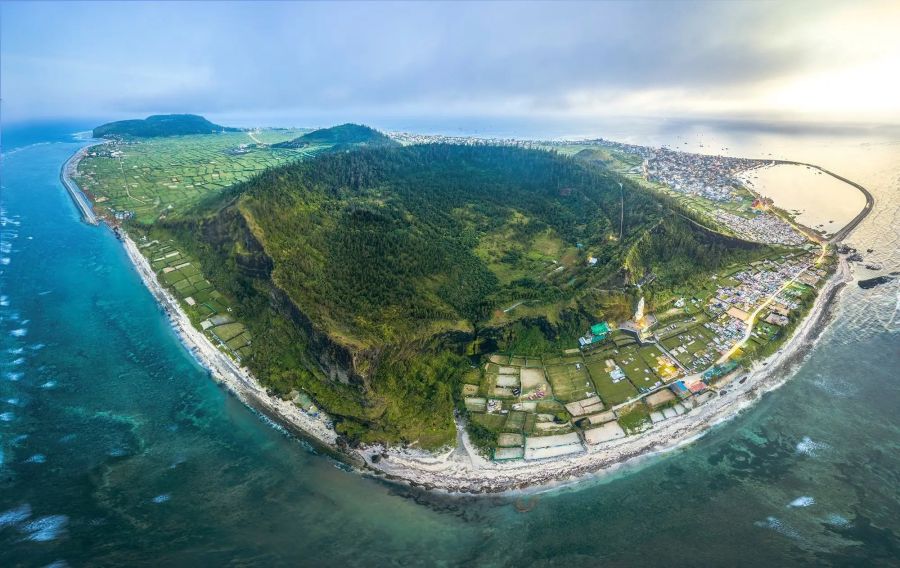
Resulting from old volcanoes, Ly Son Island has a strange and wonderful beauty that is unbeatable in Vietnam. This island owns beautiful black sand beaches, stunning volcanic craters, such as Thoi Loi or Gieng Tien, and unique archaeological relics, reflecting the island’s diverse geological and cultural past.

Tourists also come to see old pagodas like Duc Pagoda (Chua Duc); it provides wide views of the island and Hang Pagoda (Chua Hang), located in a cave on a cliff of the volcano. The old fishing villages of An Hai and An Vinh are pretty and authentically Vietnamese in appearance, and demonstrate the daily life of fishermen.

Also, Ly Son is well known in the country for its special kind of garlic, known as “white gold”. Ly Son garlic has a characteristic taste and medicinal properties, grown on rich volcanic soil that gives the garlic its unique taste and quality.

Hon Tre Island

Hon Tre Island

  • Location: Nha Trang Bay, Khanh Hoa Province
  • Best time to visit: January to August

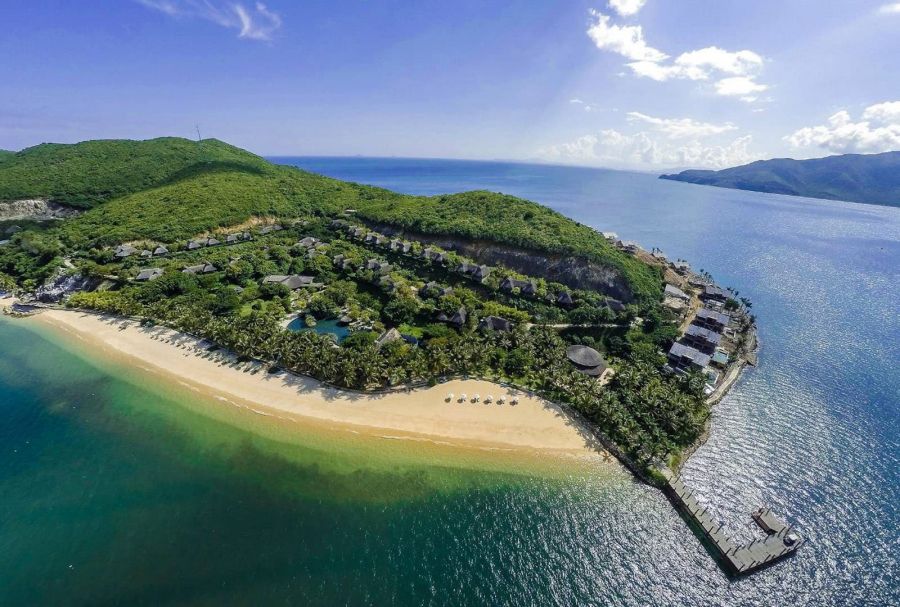
A trip to Hon Tre Island takes the spotlight as Nha Trang’s most popular island excursion. The island is famous for being connected to the mainland by the Vinpearl Cable Car, the longest cable car in Southeast Asia and the longest cable car over water in the world.

Hon Tre Island is home to spectacular beaches for swimming and sunbathing, complemented by a stunning view, unlike any seen before, with golden sand beaches, turquoise waters, and endless opportunities for water sports.

Hon Tre island is also the ideal spot for adventurous activities: keen jet skiers can tackle the open water, and daredevil boat passengers have the option of diving or snorkeling through the vibrant coral reefs. In addition to modern conveniences with world-class service in one of the island’s luxury resorts, breathtaking views of Nha Trang Bay can also be witnessed through cable car rides.

Hon Mun Island

Hon Mun Island

  • Location: Nha Trang Bay, Khanh Hoa Province
  • Best time to visit: February to September

Hon Mun Island is celebrated as the go-to spot for diving and snorkeling. Located in the stunning Nha Trang Bay, this little island boasts some of the most breathtaking coral reefs and rich marine life you’ll find in all of Southeast Asia.

The popular diving sites around Hon Mun include Madonna Rock, Mushroom Reef, and Coral Garden. When being beneath the waves, you’ll discover an underwater kingdom teeming with over 350 types of coral and countless tropical fish, creating a vibrant painting.

When you join a day trip to Hon Mun, you can still expect a well-rounded adventure that includes all the snorkeling gear you’ll need, boat rides across the sparkling sea, and delicious seafood lunches served on floating restaurants.

Phu Quy Island

Phu Quy Island

  • Location: Binh Thuan Province
  • Best time to visit: March to September

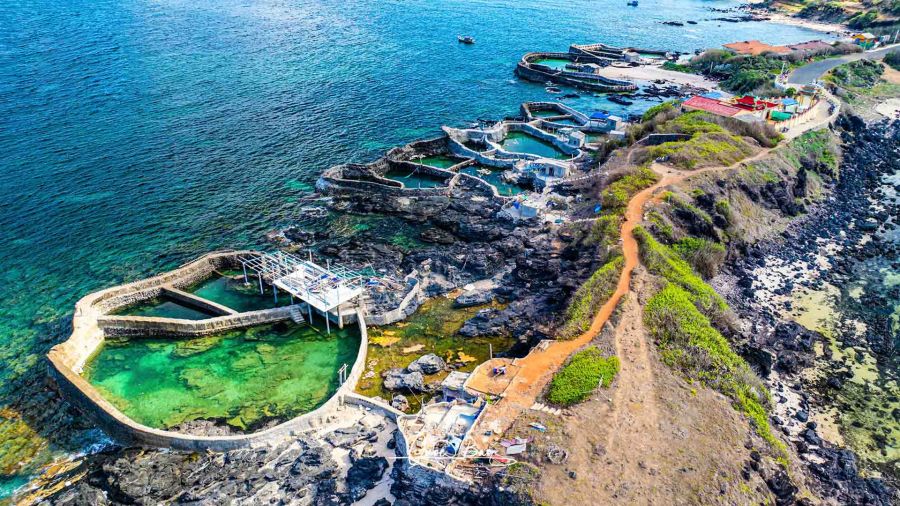
Phu Quy Island gives people a chance to experience real Vietnamese island life without crowds of tourists. This island sits far from the mainland and has kept its natural beauty. You’ll find dramatic coasts, old fishing villages, and stunning scenery that hasn’t changed much over time.

As you explore, you’ll find rugged cliffs and unique rock formations that have been shaped by elements for centuries. In particular, at Ganh Hang Beach, you can admire unique rock sculptures shaped by wind and waves for hundreds of years. Trieu Duong Bay has calm waters that are great for swimming and kayaking.

Don’t pass up the opportunity to see the island’s most religious landmarks, Linh Son Pagoda and Cao Cat Pagoda. The ancient temples are not only an ideal place to meditate but also display traditional Vietnamese architecture and religious history.

Hon Tam Island

Hon Tam Island

  • Location: Nha Trang Bay, Khanh Hoa Province
  • Best time to visit: March to September

If you’re looking for a Vietnam island that is away from the hustle and bustle of Nha Trang, Hon Tam Island is the perfect getaway. It boasts unspoiled beaches, high-end resort amenities, and great options for water sports.

The main beach on the island has soft white sand and crystal-clear blue water. It comes equipped with comfy beach amenities, including places to eat, drink, and rent gear for water sports. Tourists can try jet skiing, parasailing, banana boat rides, and other fun water activities in the protected bay.

Hon Tam’s spa centers and beachfront eateries let guests unwind and enjoy tasty meals. The island’s lush gardens and walking trails offer a peaceful way to explore. People staying in Nha Trang can visit the island using day passes.

Nam Du Island

Nam Du Island

  • Location: Kien Giang Province, Gulf of Thailand
  • Best time to visit: November to April

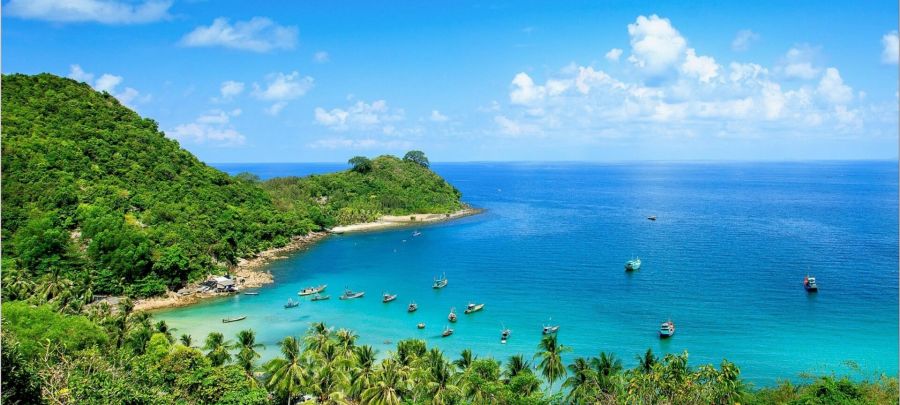
Nam Du Island is truly a hidden gem, the last untouched paradise in Vietnam. It’s made up of 21 tiny islands, each boasting stunning beaches, crystal-clear waters.

On the main island, you’ll find magnificent spots like Chuong Beach and Men Beach, which are perfect for swimming, snorkeling, or just wandering along the shore in peaceful solitude. And for those who crave a bit of adventure, the smaller islands around give fantastic opportunities for island hopping, fishing, and discovering secluded coves that can only be reached by boat.

Co To Island

Co To Island

  • Location: Bai Tu Long Bay, Quang Ninh Province
  • Best time to visit: May to September

Another among the untouched islands in Vietnam is Co To, a gem in northern Vietnam. On the main island, Van Chay Beach invites you to kick back on its soft, white sands, where the vibrant emerald waters beckon for a swim. Then there’s Hong Van Beach, with its striking rocky cliffs and secret little coves that are perfect for swimming and snorkeling.

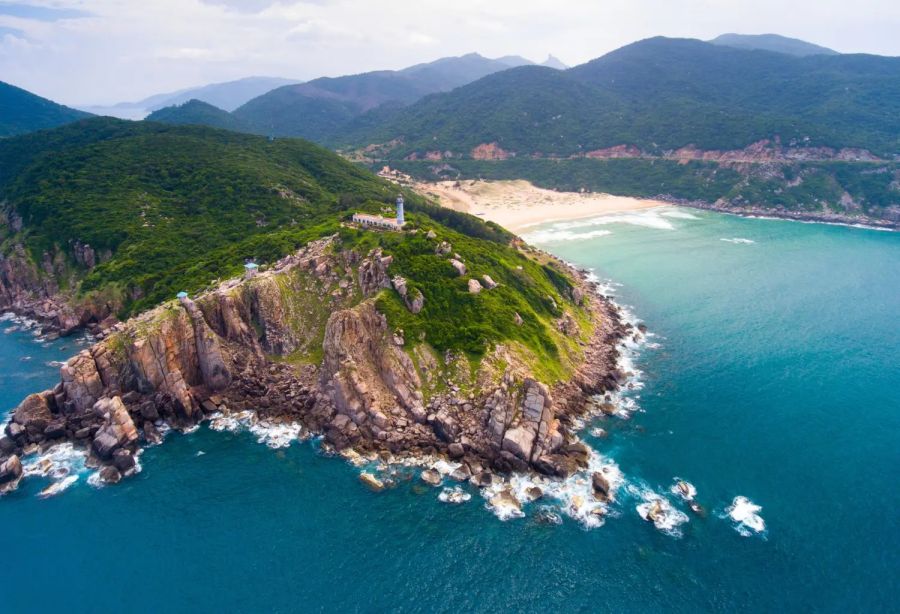
Co To has plenty of activities to explore. Hop on a local boat for some island-hopping thrills, explore hidden caves and grottoes, or even join the fishermen for a day out at sea. And you can’t miss the lighthouse; it not only has a rich history but also offers some of the best sunset views you’ll ever see.

For being more local, a historic Catholic church nestled among thick foliage, or a tribute built for President Ho Chi Minh, is available for those seeking a reminder of the deep historical and cultural ties on the island.

Binh Ba Island

Binh Ba Island

  • Location: Cam Ranh Bay, Khanh Hoa Province
  • Best time to visit: March to September

Binh Ba Island is lovingly called “Lobster Island”, a little slice of paradise that perfectly blends tropical beauty with Vietnam’s incredible seafood experience.

Although the golden sands and inviting waters are a huge draw, the mouthwatering lobster is the real highlight here. Local farms provide the freshest, top-notch lobster, which is prepared in traditional Vietnamese styles. Imagine enjoying fresh lobster while lounging at Bai Chuong Beach, where the soft white sand, calm waters, and stunning ocean views create a perfect backdrop for a meal.

If you’re seeking a little more tranquility, Nha Cu Beach may be just the spot for you. And do not forget Bai Nom Beach, where the striking black volcanic sand creates a stunning contrast against the turquoise waves. On Binh Ba Island, visitors can go kayaking through enchanting mangrove forests and snorkeling in pristine coral gardens.

Quan Lan Island

Quan Lan Island

  • Location: Bai Tu Long Bay, Quang Ninh Province
  • Best time to visit: April to October

Unlike the bustling crowds of nearby Halong Bay, Quan Lan invites you to explore beautiful beaches, charming fishing villages, and stunning natural landscapes at your own pace.

One of the highlights of the island is Minh Chau Beach, a breathtaking stretch of white sand that seems to go on forever. Its calm, clear water is perfect to swim in, and shady casuarina trees are great to relax under. Son Hao Beach feels more private with its striking rocky cliffs and clean, untouched dunes.

People can try different activities here, like riding motorbikes through the beautiful countryside, taking boats to explore limestone rocks around the area, or strolling along quiet beaches far from crowds. Especially, as you wander through traditional villages, don’t forget to try some of the freshest seafood in local eateries.

Final Thought

Shortly, the islands in Vietnam provide visitors with beauty, culture, and unforgettable adventures. Turquoise waters surround Phu Quoc, Ly Son shows off rocky volcanic cliffs, and Nam Du offers a quiet charm. Every island gives a special experience to suit different kinds of travelers. If you are planning to visit any islands in Vietnam, find one that matches. More easily, let SeniWorld make it for you and customize your trip for the best experience!

Top 12 Caves in Vietnam You Must Explore in 2026

Vietnam’s most breathtaking caves await, from Son Doong to hidden wonders deep in the jungle. Let’s jump into nature’s heart with Seni World by your side.

Caves in Vietnam are natural wonders formed over millions of years, not just tourist spots. Certain rides will take you through limestone caves, but other attractions drop you into lush green surroundings. These are the ones you’ll remember.

Son Doong Cave

Son Doong Cave

  • Location: Phong Nha-Ke Bang National Park, Quang Binh

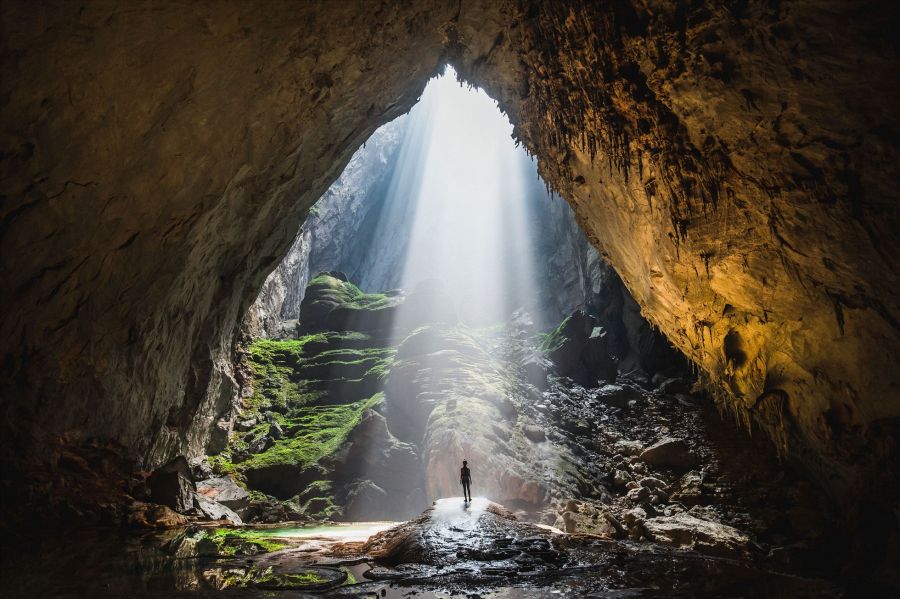
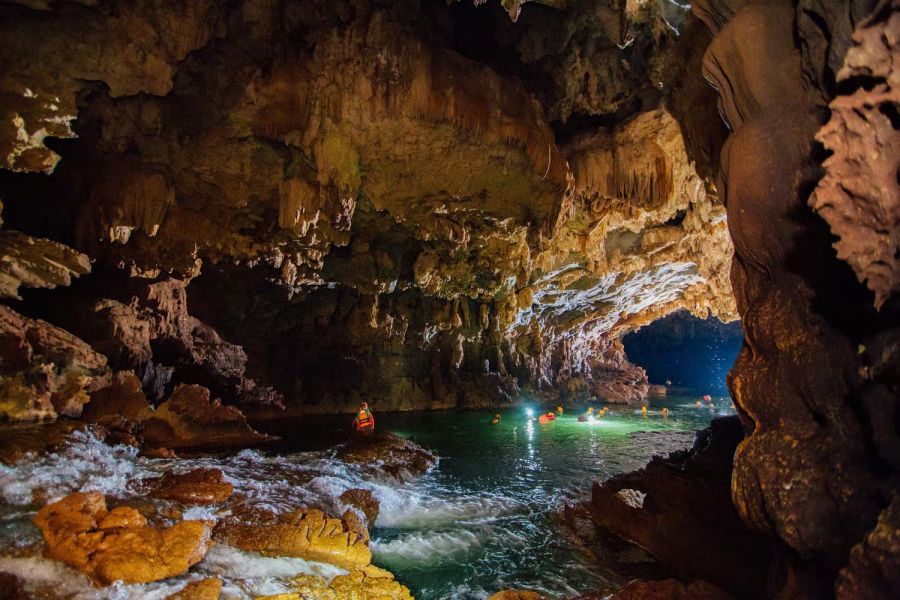
Son Doong belongs on every top list of world-class caves in Vietnam. It is the world’s biggest cave and could easily hold a Boeing aircraft inside. You will find the cave in Phong Nha-Ke Bang National Park, central Vietnam, and it covers over 5 kilometers with its ceiling reaching 200 meters. Upstairs, you’ll find a jungle, a river, and a skylight that lets clouds develop underground.

Getting in isn’t easy. You will trek through dense jungle, cross rivers, and camp in tents near massive limestone cliffs. The trip is challenging, but the sights you’ll find inside are different from anything else in Vietnam’s caves. Are you interested in exploring Vietnam’s best caves and seeking a unique vacation? This place will not disappoint you.

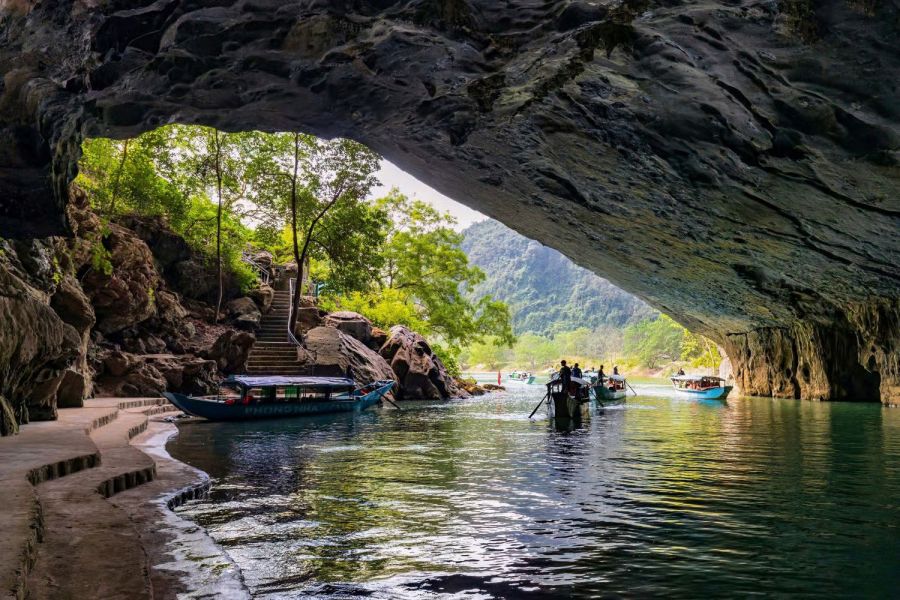
Phong Nha Cave

Phong Nha Cave

  • Location: Phong Nha-Ke Bang National Park, Quang Binh

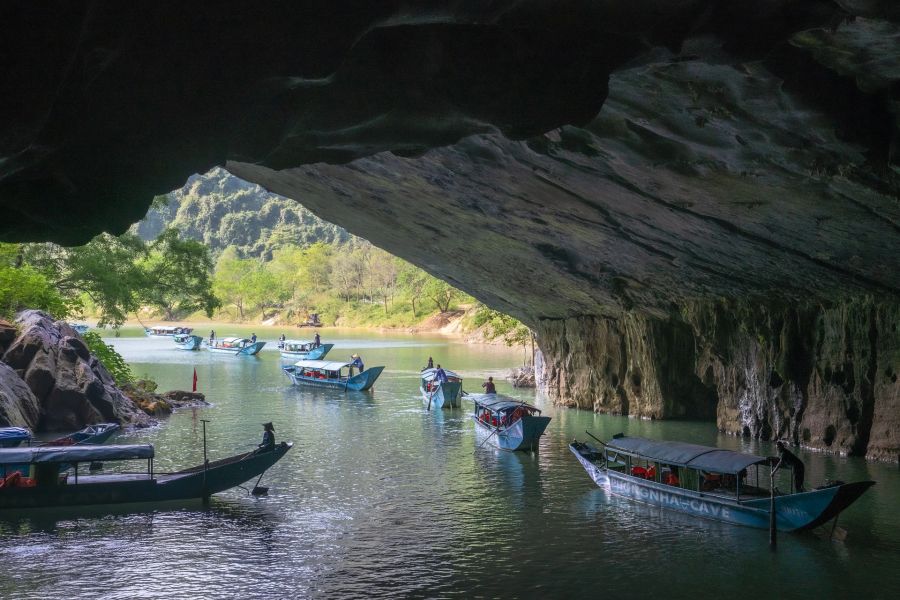
Phong Nha Cave is found in the center of Vietnam’s extensive cave region for simple access to its many underground attractions. That this cave is famous in Vietnam isn’t surprising, as most people can get there quickly. The cave can be reached by boat from Phong Nha town, bringing you in through the cave’s dark opening along the Son River.

As you move into the caves, you’ll encounter limestone corridors stretching over 7 kilometers. Along the way, you’ll see many cool features, including stalactites, feel fresh breezes, and enjoy an interesting background. Some of the cave’s most famous stalactites have earned nicknames for their shapes, like the “Lion”, “Fairy”, “Buddha”, and “Kneeling Elephant”. As you only need about 2 hours for the trip, it’s perfect for both groups and people new to this kind of adventure.

Mua Caves

Mua Caves

  • Location: Ninh Binh, near Tam Coc

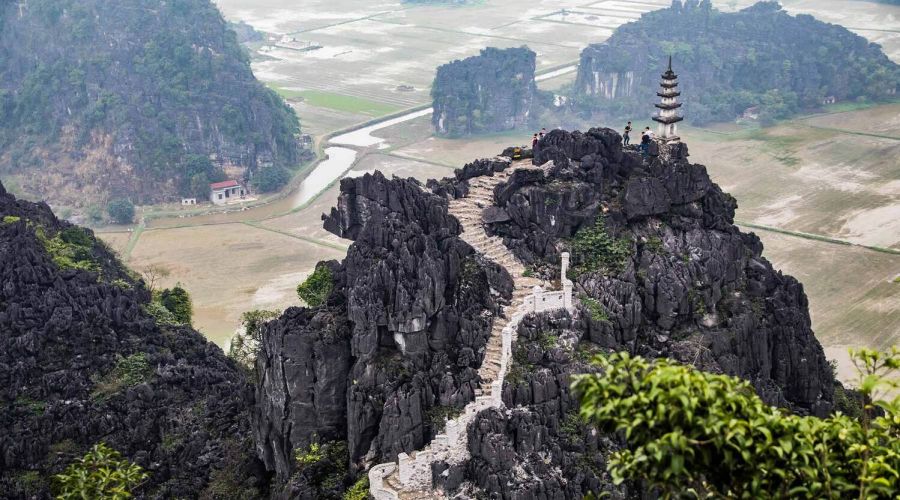
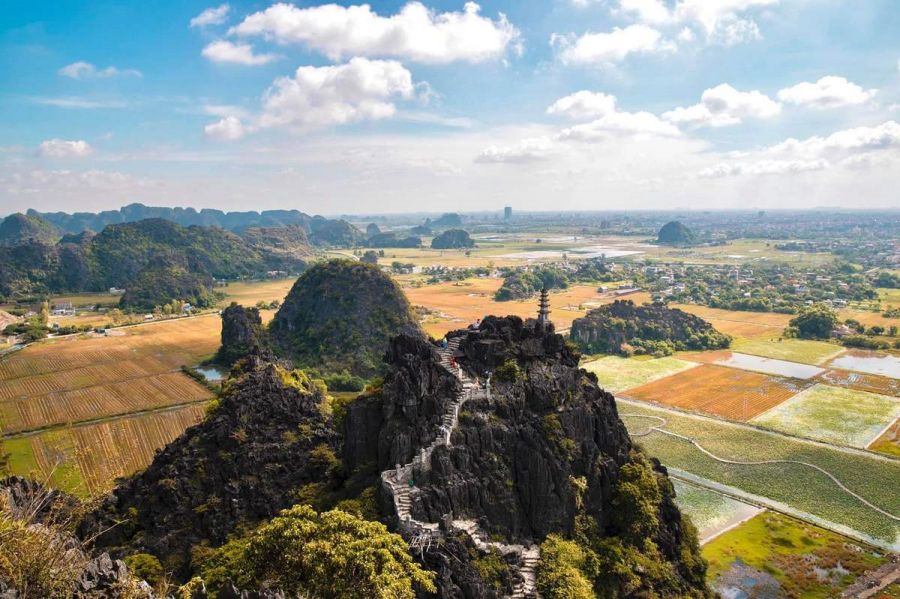
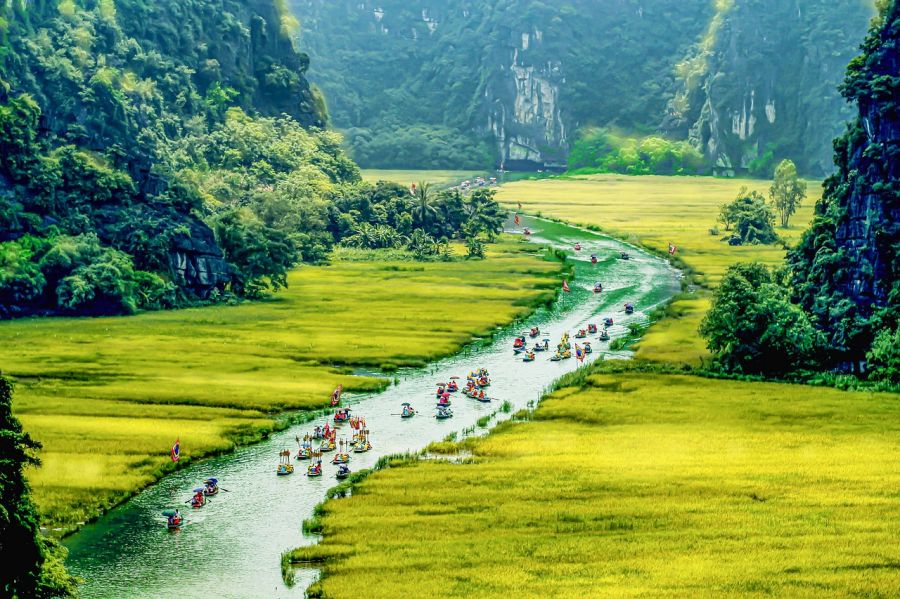
Mua Caves isn’t famous for its underground chambers, but for the view after 500 steps straight up a limestone mountain. In Ninh Binh, this area is commonly referred to as “Halong Bay on land” because it provides beautiful panoramas you won’t find in other places in northern Vietnam.

The cave is relatively small and peaceful, and the real highlight is the scenic hike to reach it. From the top, you’ll see winding rivers, golden rice fields, and karst peaks stretching into the mist. It’s not a technical climb, but it’s steep, so bring water. Though Mua Caves isn’t famous among other caves here, it is perfect for those who love nature and photography.

Hang En Cave

Hang En Cave

  • Location: Phong Nha-Ke Bang, Quang Binh

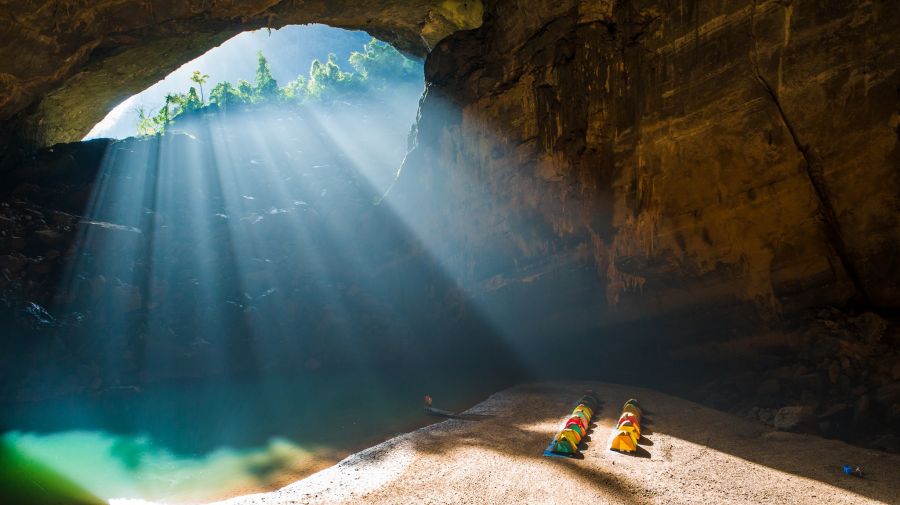
Hang En gets its name from the thousands of swallows that live inside, filling the cave with lively sounds and a vibrant atmosphere. It stands out as one of Vietnam’s top caves, offering a sense of adventure and awe with its vast chamber and remote jungle setting. It’s the third-largest cave in the world and features a sandy beach, a jungle at the entrance, and a massive arch where sunlight streams in like a spotlight.

To reach it, you’ll trek 2 days through the forest and ethnic minority villages. It’s common for most people to camp right in the cave, allowing them to be woken by the birds singing quietly above. It may feel open and adventurous, but all experiences are safe when organized by the workers in the area. If you’d like to visit a deep jungle cave without waiting in line forever, Hang En is the place for you.

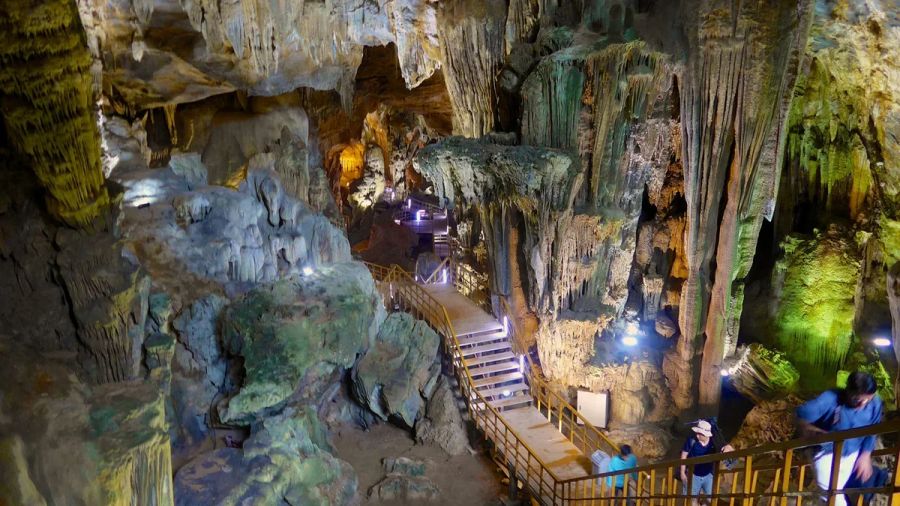
Paradise Cave

Paradise Cave

  • Location: Phong Nha-Ke Bang National Park, Quang Binh

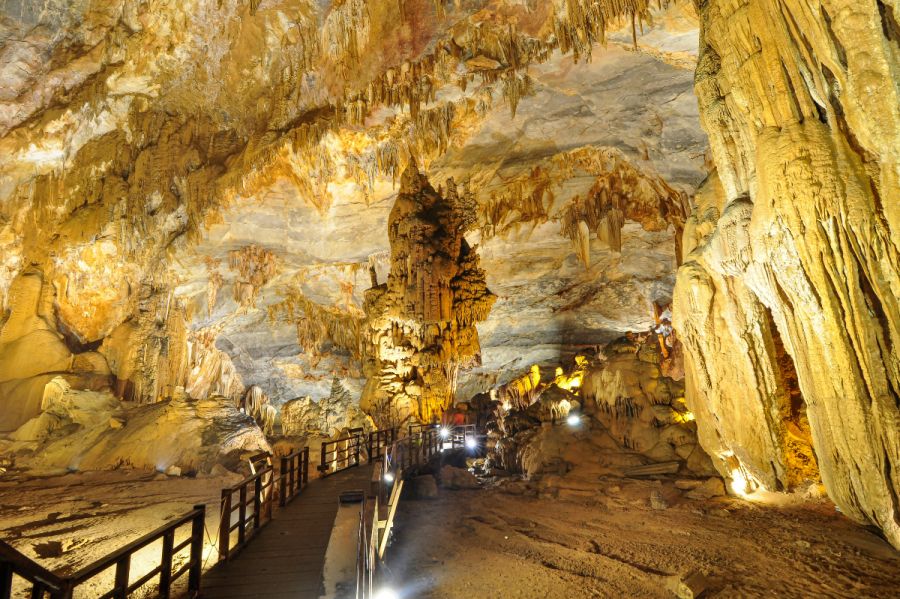
Paradise Cave has earned the name of Vietnam’s most beautiful dry cave. Stretching over 30 kilometers, it’s one of the most spectacular caves in Vietnam that’s also easy to explore. Discovered in 2005, it is also the longest dry cave in Asia. You reach the inner part of the park if you cross the wooden bridge. Here, you see huge chambers, sparkling rock walls and interesting lights everywhere.

Paradise Cave is one of the finest caves in Vietnam and can be enjoyed without special equipment or athletic abilities. You can walk or ride an electric bus to get to the entrance and the space available to visitors is lit and clean. It’s ideal for those who want to experience the scale and beauty of Phong Nha’s cave system without going full expedition mode.

Dark Cave (Hang Toi)

Dark Cave

  • Location: Phong Nha-Ke Bang, Quang Binh

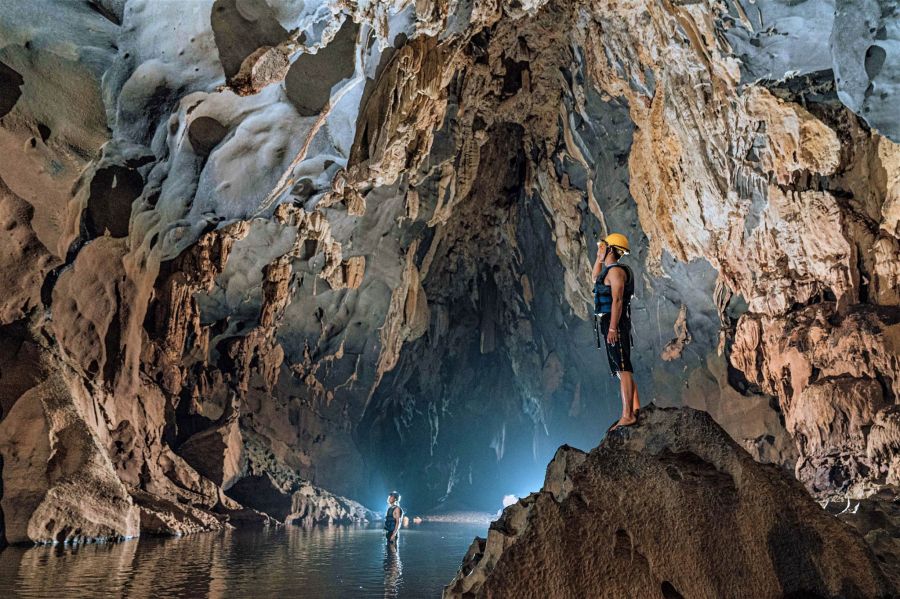
Operating inside Dark Cave is unlike anything else found in Vietnam. It’s not just about sightseeing—you zipline over a river, swim into the cave entrance, wade through underground mud pools, then kayak back. Most of the cave is unlit and it feels untamed because of this.

While it’s smaller than other famous Vietnam caves, the experience is unforgettable. It’s a top choice among the best caves in Vietnam for travelers who want a bit of adrenaline with their cave exploration. This spot is made for teens and people who enjoy active adventures and it’s more about adventures than geology.

Sung Sot Cave

Sung Sot Cave

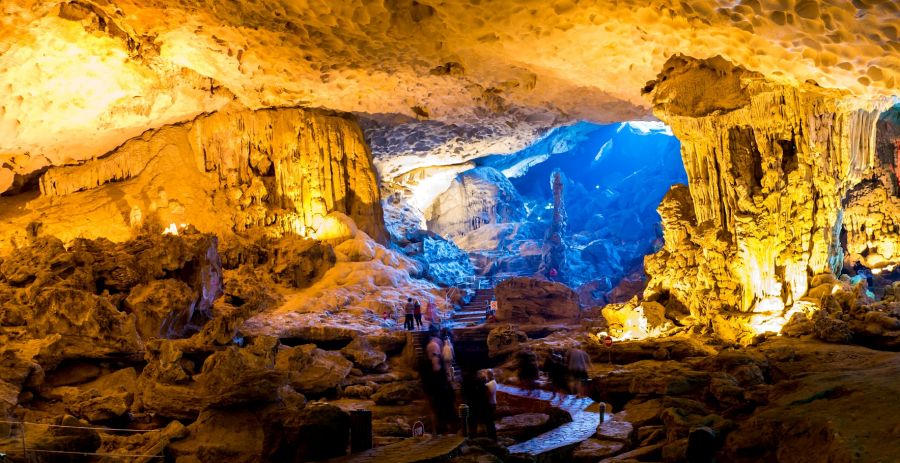
  • Location: Bo Hon Island, Halong Bay

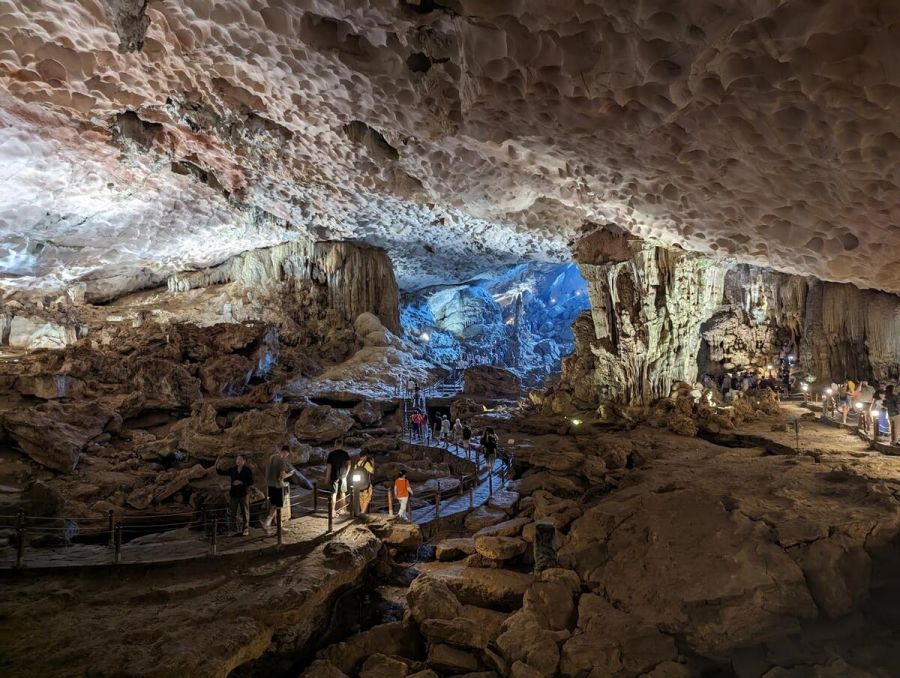
The French found Sung Sot in 1901, and since then, it has become the most famous and commonly visited of all the caves in Halong Bay. This cave is hard to spot, since its entrance is plain on a cliffside. Inside, you’ll see two huge chambers holding unusual limestone formations that create interesting echoes. Fascinating lighting highlights the cave’s special features, making the place feel magical and theatrical.

Most people visiting Halong Bay with a cruise see the cave by walking a short distance uphill, as it’s included in many cruise schedules. Visiting early means you won’t have to fight the crowds. Even though it is more advanced than many local caves, Sung Sot is a favorite for newly arrived visitors at the bay.

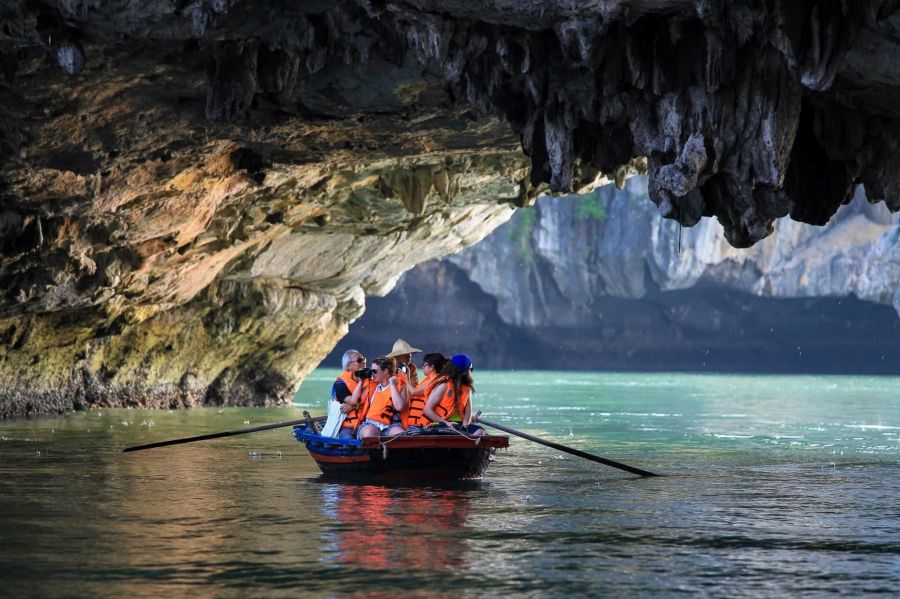
Luon Cave

Luon Cave

  • Location: Halong Bay, near Titov Island

Luon Cave was created by water flooding through the base of a limestone cliff, and it can be accessed only by kayak or bamboo boat. Once you enter, you are taken into a peaceful lagoon surrounded by tall rock and greenery. It’s nearly 60 meters long and only high enough for a person to stand upright on low tide.

Best visited in the morning when the water is calm and light filters through the entrance, Luon offers a peaceful contrast to Halong Bay’s busier stops. It’s not a grand cave by size, but among the many caves in Vietnam, this one stands out for its stillness and setting.

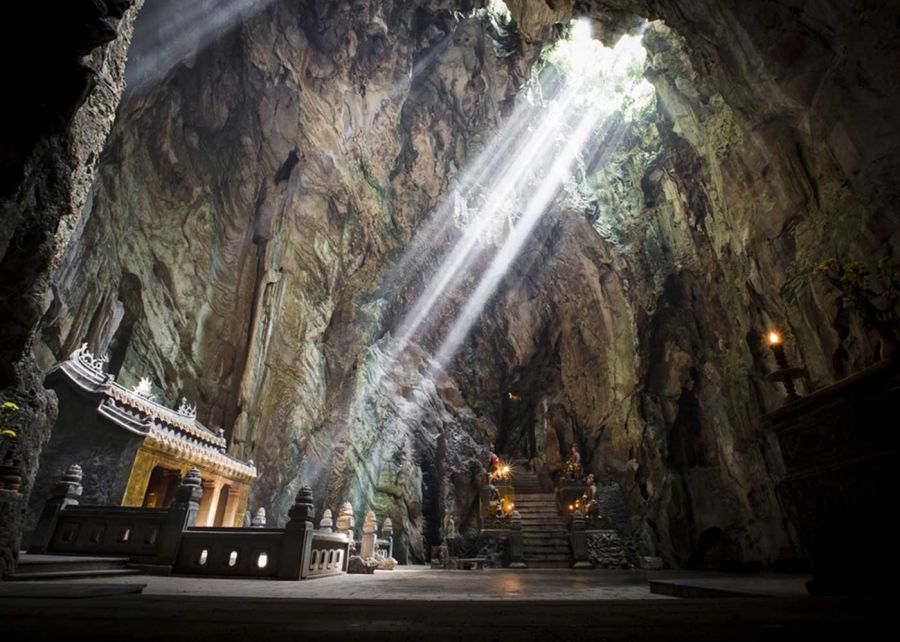
Am Phu Cave

Am Phu Cave

  • Location: Thuy Son Mountain, Marble Mountains (Ngu Hanh Son), Da Nang City

Am Phu Cave, sometimes called “Hell” Cave, has religious meaning as well as geological features. Characterized as a Buddhist hell and heaven, this cave sits in the Marble Mountains close to Da Nang and is popular with tourists. The dark tunnels, ghostly statues and impressive lighting help create a setting as you look at scenes with sinners and underworld guards. This is sure to both shake us and fill our thoughts with questions.

Climbing down the stairs brings you into more areas and the smells of incense and sounds from the chanting make things even more spooky. We appreciate this cave a lot, even though it does not require much physical effort. This site offers culture, religion and a small amount of the surreal to visitors.

Tien Son Cave

Tien Son Cave

  • Location: Phong Nha-Ke Bang National Park, Quang Binh

Though Phong Nha Cave lies just below it, the two feel worlds apart—one shaped by water, the other by dry stone formations and silence. Unlike its neighbor’s underground river, Tien Son is dry, filled with fossil-like stalactites and echoing stone chambers.

To get there, you’ll climb around 400 steps—but the quiet view and cool air inside make it worth the effort. Tien Son Cave keeps a low profile, but that’s part of its appeal. Tien Son cave doesn’t get a lot of news coverage, yet it’s a great site for anyone seeking a peaceful adventure.

Tu Lan Caves

Tu Lan Caves

  • Location: Tan Hoa Village, Quang Binh Province

Though tucked away in the backwoods of Quang Binh, Tu Lan is home to more than 10 caves, each with a different charm. If you avoid the usual tourist places, Tu Lan promises real expedition. You will hike in river valleys, swim through dark tunnels and set up camp by rivers beneath the ground.

Inside the caves, there are stalactites above your head and rooms so high that everything sounded like music. People looking for adventure and nature can explore Tu Lan only on a guided trip. Filmmakers and travelers have featured the cave system because of how attractive and difficult it is.

Dau Go Cave

Dau Go Cave

  • Location: Driftwood Island (Dao Dau Go), Halong Bay

Because its neighbor, Sung Sot, stands out more, Dau Go Cave is actually one of the biggest and oldest in Halong Bay. It goes by the name “Grotte des Merveilles” among the French and each of its three main chambers has a ceiling that rises to 25 meters. The natural sculptures on the cave’s walls look like animals, dragons, and stories from legends.

Many legends surround Dau Go, and it also matters historically—according to stories, Vietnamese General Tran Hung Dao kept his wooden stakes for catching Mongol ships here in the 13th century. Visitors have the opportunity to see the cave by booking a Halong Bay cruise, reaching its entrance at the top of a flight of stone steps.

Final Thought

There’s something quiet and powerful about stepping into a cave in Vietnam. The air shifts, the light fades, and the world narrows to stone and shadow. Together, they reflect a slower, more mindful side of Vietnam’s rapid transformation. It’s an ideal choice for those wanting to avoid the crowds, and Seni World offers guided tours led by knowledgeable locals, with a focus on peaceful, meaningful travel.

Discover 12 Amazing Mountains in Vietnam You Should See

Although Vietnam’s cities and beaches are famous, not many tourists know about the breathtaking mountains hidden throughout the country. These are the most iconic mountains in Vietnam that are worth adding to your bucket list.

Fansipan

Fansipan

  • Location: Sapa, Lao Cai Province, Northwest Vietnam
  • Height: 3,147 meters (10,326 feet)

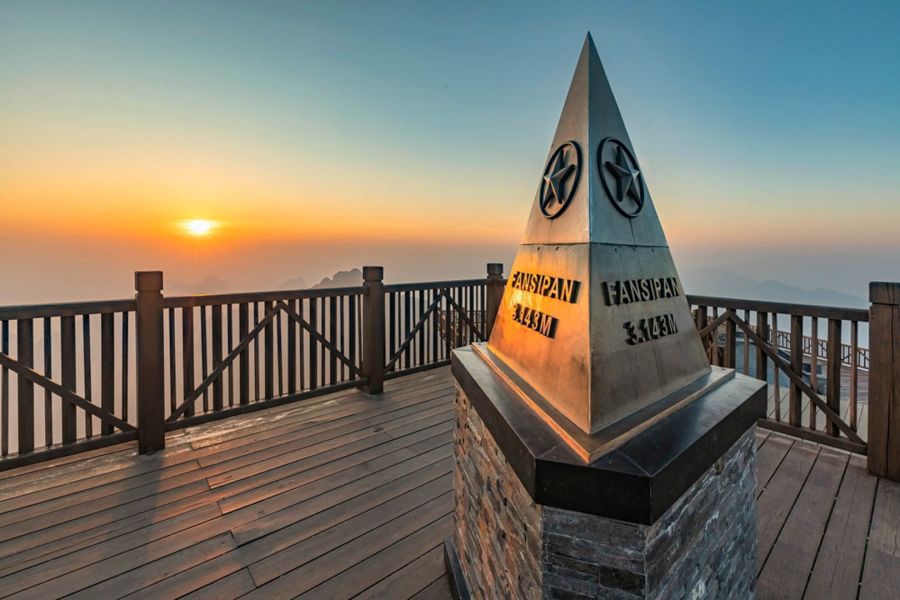
Among the mountains in Vietnam, Fansipan, known as “the Roof of Indochina”, stands out because of its popularity. It is the highest peak in Vietnam and all of Indochina, located in the Hoàng Liên Sơn mountain range, about 9 kilometers southwest of Sapa town. It’s located just outside Sapa, a picturesque mountain town famed for its lush rice terraces and vibrant local culture. Its spectacular views and misty, high peaks attract people to Fansipan.

Visitors typically reach the summit by taking a scenic 15-minute cable car ride, one of Asia’s longest and most stunning journeys. A trip to Fansipan should be made between March and May or between September and November, for the best weather and views. Right before you reach the top, there are quiet temples and a mighty Amitabha Buddha statue for visitors to explore.

Ba Na Hills

Ba Na Hills

  • Location: Da Nang, Central Vietnam
  • Height: 1,487 meters (4,878 feet)

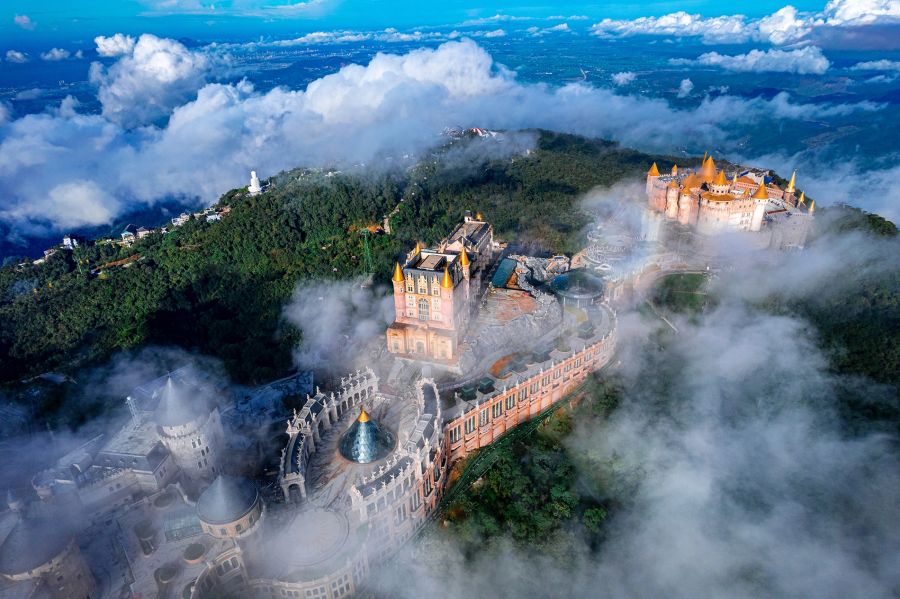
Among all the mountains in Vietnam, Ba Na Hills stand out for being more playful than wild. Just 25 km from Da Nang, this mountaintop getaway offers fresh air and striking sights. The famous Golden Bridge, held by giant hands, is just the beginning.

Ba Na Hills has more than just the bridge. You’ll find cloud-high cable cars, flower gardens, and a quirky French village on the mountain. Between February and May, the weather is mild and the skies stay clear, making it perfect for photos and sightseeing.

Marble Mountains (Ngu Hanh Son)

Marble Mountains

  • Location: Da Nang, Central Vietnam
  • Height: Approximately 106 meters (347 feet)

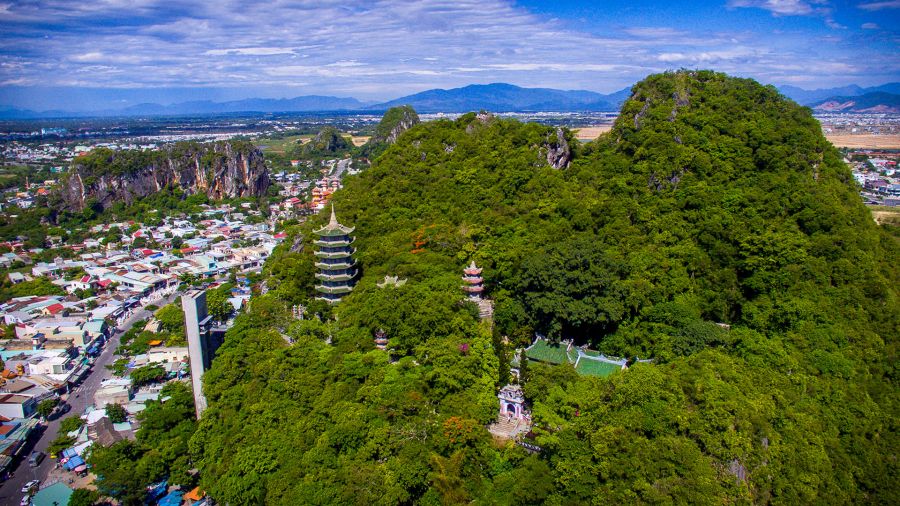
Marble Mountains, locally known as Ngu Hanh Son, is a cluster of five limestone and marble hills, each representing one of the five elements: water, wood, fire, metal, and earth. Among the mountains in Vietnam, it stands out for its history and caves filled with Buddhist sanctuaries.

Visitors can explore old pagodas, grottoes, and stone stairs carved into the hills. From the peak, the view stretches over Da Nang city, the coastline, and the azure waters of the East Sea. As one of the most culturally significant mountains in Vietnam, Marble Mountains attract both tourists and pilgrims seeking spiritual reflection.

Monkey Mountain (Son Tra Mountain)

Monkey Mountain

  • Location: Da Nang, Central Vietnam
  • Height: 693 meters (2,274 feet)

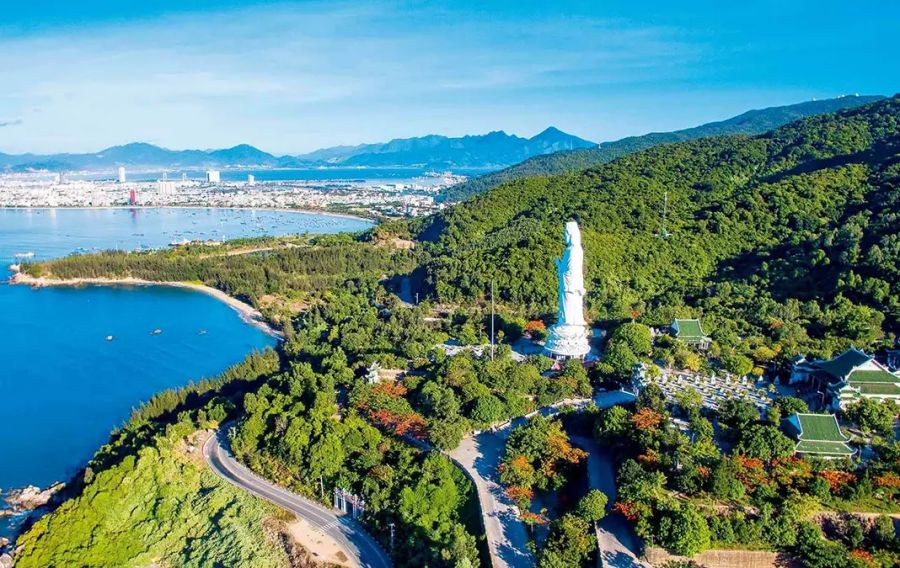
Only a few mountains in Vietnam let you see both rare animals and the jungle and the sea. And Monkey Mountain on the Son Tra Peninsula is one of them. It takes only a 20-minute drive from Da Nang to reach this natural getaway. Here, you’ll find red-shanked douc langurs plus beautiful forest and winding roads near the sea.

You won’t find temples or resorts here; what Monkey Mountain is famous for is its undisturbed nature. You can stop by Linh Ung Pagoda to see the tallest statue of the Lady Buddha in Vietnam. The statue is 67 meters tall, represents the Goddess of Mercy, and is home to rare red-shanked douc langurs. You can head up the ridge for wide views of the city, the bay, and Hai Van Pass. The sunset here is unforgettable.

Ham Rong Mountain

Ham Rong Mountain

  • Location: Sapa, Lao Cai Province, Northwest Vietnam
  • Height: Approximately 1,800 meters (5,906 feet)

Sapa town is bordered by Ham Rong Mountain, which makes it one of the easiest mountains in Vietnam to reach. It may not be the tallest viewpoint, but it has lovely gardens, simple walking trails, and excellent views you can reach without effort. The name means “Dragon’s Jaw,” inspired by the peak’s shape from afar.

It’s perfect for a relaxed afternoon stroll if you’re staying in Sapa. If it’s a clear day, you’ll be able to spot the town, Muong Hoa Valley, and even Fansipan. Visiting from March to May allows you to see the flowers blooming everywhere.

Black Virgin Mountain (Nui Ba Den)

Black Virgin Mountain

  • Location: Tay Ninh Province, Southern Vietnam
  • Height: 986 meters (3,235 feet)

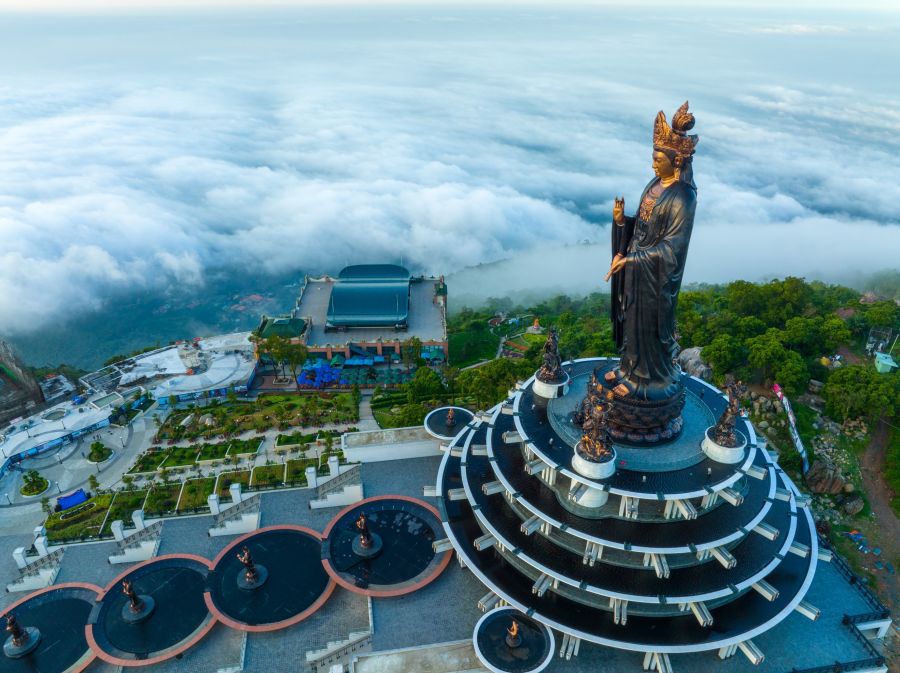
The Black Virgin Mountain is the tallest in southern Vietnam and one of the most spiritually important mountains in Vietnam. Over the years, pilgrims from all over have visited, and a number of shrines, strange cave pagodas, and temples are found on the edges near the Cambodian boundary.

The reason it’s distinctive in Vietnam is the way nature, history, and present-day life come together. People can hike up, or they can now ride the cable car to get to the forest’s highest point. At the top of the hill, you see rice fields leading to Cambodia and Vietnam’s Mekong basin.

Ta Cu Mountain

Ta Cu Mountain

  • Location: Binh Thuan Province, Southern Vietnam
  • Height: 649 meters (2,129 feet)

Outside Phan Thiet stands Ta Cu Mountain, famous for its largest sleeping Buddha place in the country. You’ll find forest trails, amazing temple sights, and gorgeous mountain scenery here. Unlike other mountains in Vietnam, Ta Cu is more peaceful and spiritual than difficult to climb.

Ta Cu Mountain is known for its 49-meter reclining Buddha, the largest of its kind in Southeast Asia. You can ride a short cable car into the jungle, continue on foot to the main site, and then climb up to a giant Buddha. From the summit, you’ll see rice fields and dragon fruit farms stretching across the lowlands. Anyone interested in discovering lesser-known mountains in Vietnam will find Ta Cu is an excellent place to start.

Lying Dragon Mountain (Ngoa Long Mountain)

Lying Dragon Mountain

  • Location: Ninh Binh Province, Northern Vietnam
  • Height: Approximately 100 meters elevation; around 500 stone steps to the summit

Lying Dragon Mountain, or Ngoa Long, is widely known as one of the favorite photographed mountains in Vietnam. Not far from Tam Coc, you can hike up 500 steps to arrive at a statue of a dragon on the ridge. From the top, you’ll see sweeping views of rice fields, limestone cliffs, and the Ngo Dong River below.

Though not tall, it’s one of the most rewarding climbs. Mountain lovers exploring Vietnam can find Ngoa Long to be easy to reach and very beautiful. Late May to early June is when you’ll see the rice fields look their brightest before the harvest.

Poem Mountain (Bai Tho Mountain)

Poem Mountain

  • Location: Halong City, Quang Ninh Province, Northern Vietnam
  • Height: Approximately 200 meters (656 feet)

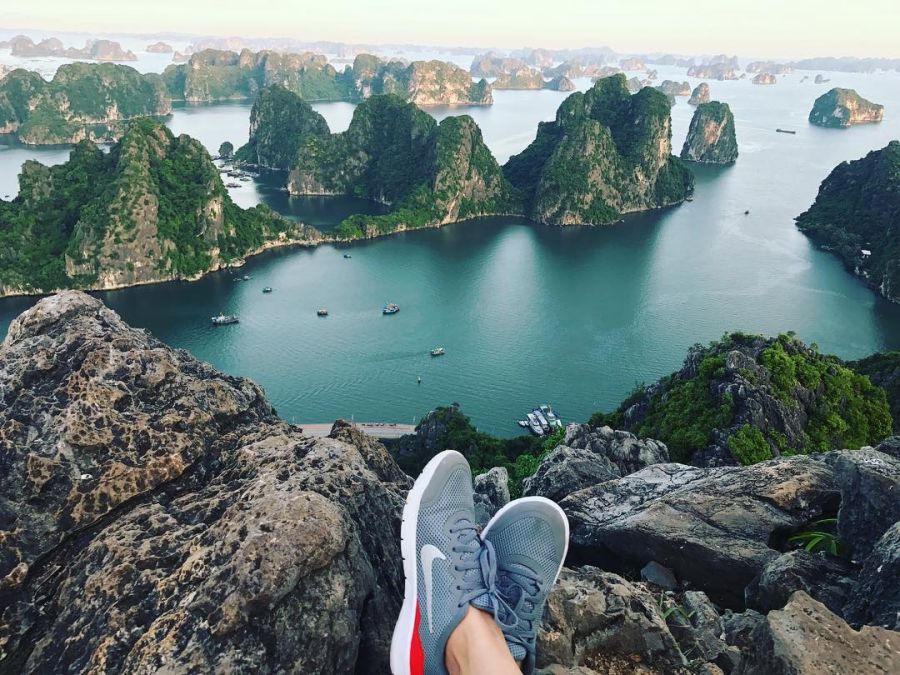
Poem Mountain is one of the more hidden yet rewarding mountains in Vietnam. Nestled behind a residential area in Halong City, it offers panoramic views of the bay’s emerald waters and limestone islands. This site was named for a poetic inscription that Emperor Le Thanh Tong placed on the cliffs in the 15th century. Access is now restricted, so it’s best to check with locals or guesthouses before planning a hike. The best months to go are October through April, because the weather is dry and the scenery is easy to enjoy.

Lang Biang Mountain

Lang Biang Mountain

  • Location: Dalat, Lam Dong Province, Central Highlands
  • Height: 2,167 meters (7,110 feet)

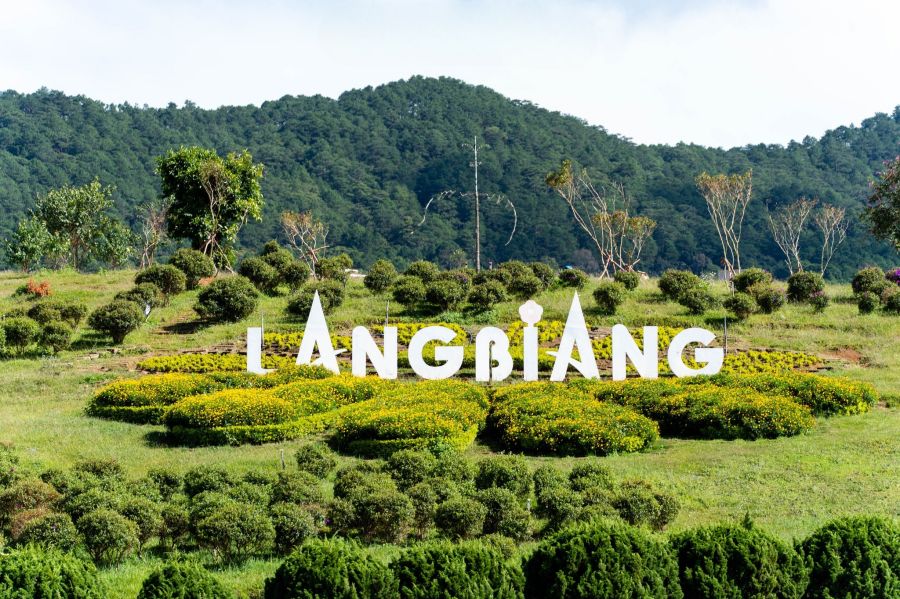
Lang Biang is one of the most iconic mountains in Vietnam’s Central Highlands, tied to the love story of K’lang and H’biang. Only 12 km from Dalat, it captures the attention of both those who enjoy adventure and those who travel. Although the base is home to a ticketed park and shops, the most impressive part is the summit. You can hike the forest trail in 2–3 hours or take a jeep to Radar Peak. On clear days, the view spans pine forests and Dalat’s farmland, making it well worth the climb.

Yen Tu Mountain

Yen Tu Mountain

  • Location: Quang Ninh Province, Northern Vietnam
  • Height: 1,068 meters (3,504 feet)

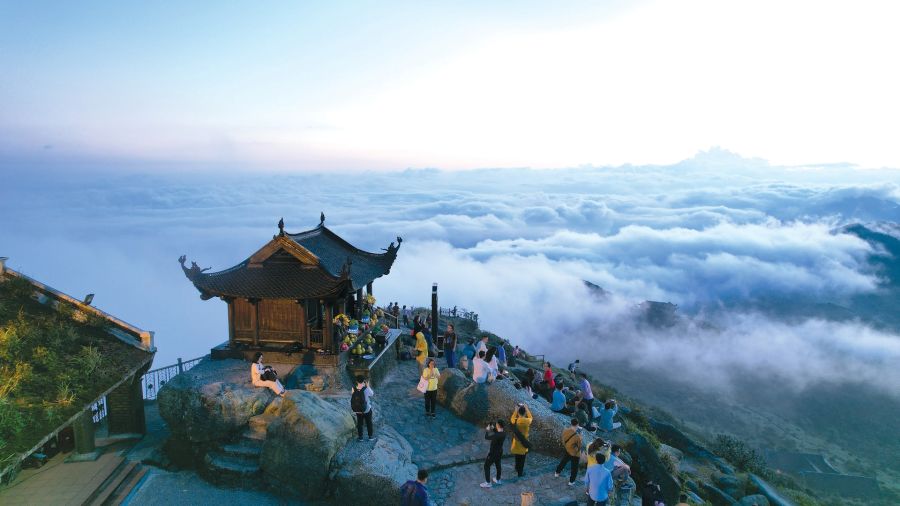
Considered one of the most sacred mountains in Vietnam, Yen Tu is where Vietnamese Zen Buddhism began. Over the years, many visitors have come to worship at Yen Tu’s ancient pagodas, stone stupas, and holy temples in the forest. If you prefer, you can climb using ancient stone paths or get up to the top using a cable car. It doesn’t matter the path you choose; the journey has great importance.

Angel Eye Mountain (Nui Mat Than)

Angel Eye Mountain

  • Location: Cao Bang Province, Northern Vietnam
  • Height: Approximately 50 meters (distinctive geological feature)

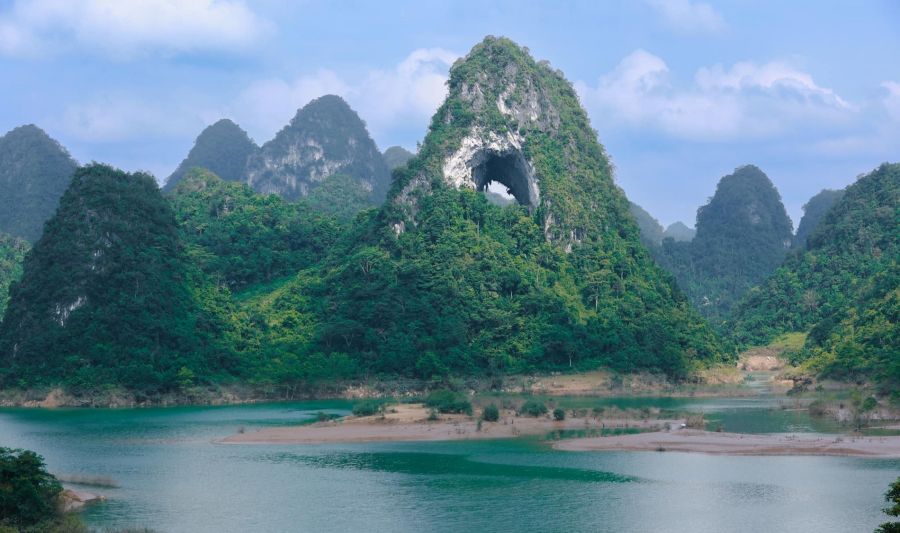
Angel Eye Mountain, known as Nui Mat Than by locals, is sure to impress anyone who visits northern Vietnam. This landmark is called Giant’s Eye because a perfect round hole in the cliff looks like an eye on a giant face.

The mountain is located near Thang Hen Lake on a calm grassy plain surrounded by karst mountains. Unlike many other mountains in Vietnam, this one isn’t about climbing. It’s about the view, the peace, and the surreal beauty of the landscape.

Conclusion

Looking into the various mountains in Vietnam can give you an experience that’s richer than just taking in the scenery. All of them are different: some are calm and quiet, others tell many stories or call for excitement. So pack your bags, set your sights high, and embark on your next mountainous adventure across Vietnam with Seni World now!

Top 15 Wonderful Beaches In Vietnam For You To Explore

There are many beautiful and brilliant beaches in Vietnam that bring you a natural and raw feeling, as well as memorable experiences. If you want to learn more about them, read the Seni World travel guide now.

My Khe Beach

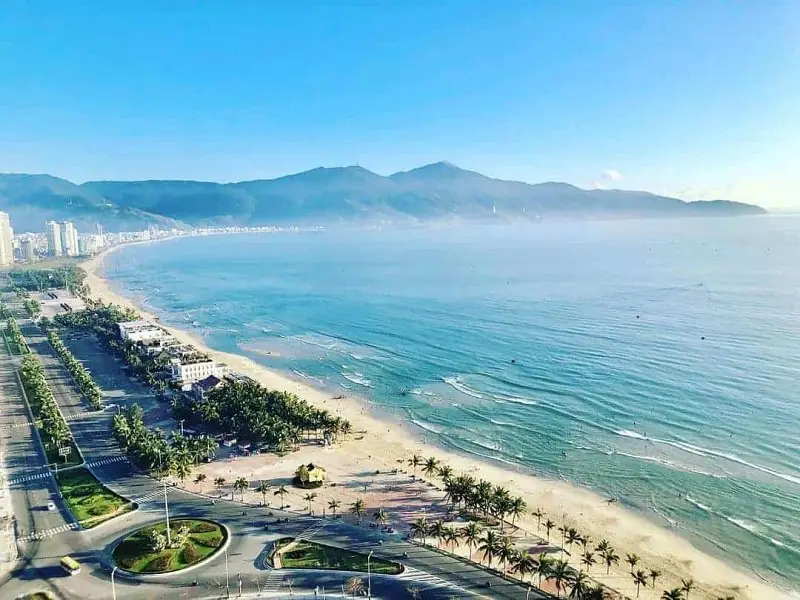
My Khe Beach is one of the most well-known, splendid sandy beaches in Vietnam. In 2006, this beach was voted as one of the most beautiful seashores in the world by Forbes magazine. It is easier for you to move from the Da Nang center to My Khe Beach than to other beaches in this city. The seashore of My Khe Beach has an extended stretch of shoreline (up to 9 kilometers long), perfect white sand, and very clear sea water.

In particular, the waves at this beach are not too sturdy, making it an excellent destination for travelers to try water sports activities like water skiing, diving, or yacht racing. My Khe seaside also has many luxurious accommodations, first-class restaurants, luxurious 5-star resorts, and spas, which are very suitable for you to have a leisure stay in Vietnam.

My Khe Beach

An Bang Beach

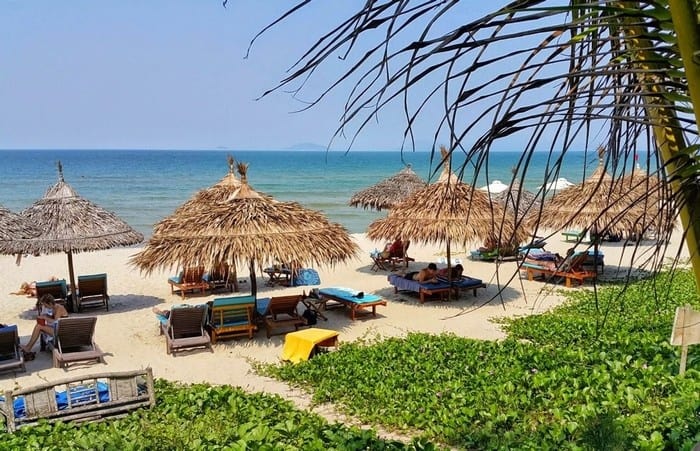
Positioned near Hoi An city, An Bang Beach is one of beaches in the top 10 Asia’s Best of the Best Beaches by the Travelers’ Choice Awards Best of the Best 2024 (according to Vietnamtourism). This seaside features cool blue water, lengthy white sand, and beautiful mild waves. It is the perfect destination for every traveler who wants to refresh themselves with some sea air and natural scenery in their Hoi An journey.

In An Bang Beach, you can participate in a yoga session on the seashore, see the sunrise, or walk on the white sand to relax in the morning or in the early evening. It’s also captivating to come to this beach in the afternoon, while the sunset, for a feeling of peace.

An Bang Beach

Sao Beach

Sao Beach, Phu Quoc Island, has long, stunning white sand and bathtub-warm turquoise water. In case you are looking for a place to take a photo and print it into a postcard, Sao Beach is an excellent place for you among the beaches in Vietnam.

Sao Beach is very peaceful, so it is very suitable for you to have a relaxing time with your friends and family. An interesting point of Bai Sao, the name Bai Sao (Star Beach) comes from the many red starfish that appear on the sand at dusk. In addition to participating in water games such as diving, windsurfing, or renting a boat, you can also enjoy fresh seafood at this beach with friends and family.

Sao Beach

Nha Trang Beach

Nha Trang Beach is one of the beautiful beaches in Vietnam that travellers can not miss. Among the Nha Trang beaches, Doc Let Beach is the most beautiful and famous for both Vietnamese and global tourists. Doc Let beach is located about 50 km north of Nha Trang center. Here, the water is shallow and the waves are calm, making it a safe location for swimming, especially for kids and children.

Doc Let Beach is not only perfect for swimming but also for many different beach sports. You can go paragliding to see the seashore or take part in a few sports on the beach with the locals, like volleyball and soccer. Besides, it will also be an exciting journey if you choose to take a boat to the local fishing village to understand the lifestyle of fishermen as well as try freshly-caught seafood.

Nha Trang Beach

Khem Beach

Khem Beach is one of the most natural and raw beaches in Vietnam. It is located in the South of Phu Quoc, approximately 25km from Duong Dong Ward, in An Thoi Ward. Khem Beach was once an army region of Vietnam and just became open to tourists in 2014.

Khem Beach is very well-known for its pristine beauty, blue sea, white sand, and crescent-shaped beach. The highlight of this seaside is its quiet space, appropriate for vacationers seeking relaxation with friends and family. Travelers can freely swim, sunbathe, enjoy water sports, and eat fresh seafood here.

Khem Beach

Lang Co Beach

Voted as one of the international’s maximum beautiful bays in 2009, Lang Co Bay in Thua Thien Hue Province is a must-visit seaside holiday destination when you travel to Vietnam. Located 70 kilometers south of Hue, Lang Co Beach is very famous for its white sandy seashore and cobalt-blue water.

Not only enjoying the sea water, but you also relax with the sunrise on Lang Co Beach. You should also go to the Lap An Lake for fishing and feel the tranquility of nature. Moreover, it will be very exciting to book a motorbike and ride along the winding roads of Hai Van Pass and take a panoramic view of Lang Co Bay.

Lang Co Beach

Cua Dai Beach

Cua Dai Beach, located near Hoi An, Quang Nam Province, is very famous for its raw white sands, clear blue waters, and tranquil scenery. Cua Dai Beach is the best choice for those who love the peace, quiet, as well as natural and raw views.

Here, travelers can enjoy swimming, sunbathing, and other exciting beach sports. It is also a romantic destination, especially when you see the sunset with your lover. From Cua Dai Beach, you can rent a motorbike to ride to the historical attraction of Hoi An, and have a wonderful trip in this ancient town.

Cua Dai Beach

Ky Co Beach

Located about 25 kilometers away from Quy Nhon city, Ky Co Beach has a pristine beauty with blue sea and white sand. Attracting both Vietnamese and global travellers in recent years, Ky Co Beach is now one of the most well-known beaches in Vietnam.

With extremely clear water, travelers can immediately see the pebbles and small fish swimming beneath the blue water of Ky Co beach. Another element that makes Ky Co Beach uniquely famous among different beaches is its “natural swimming pools”, which are tiny ponds surrounded with the aid of rocks.

Ky Co Beach

Long Beach Phu Quoc

World-famous as one of the paradise beaches in Vietnam, Long Beach Phu Quoc is overwhelmingly appealing. A large number of both Vietnamese and global travelers pick Phu Quoc in general and Long Beach Phu Quoc in particular as the destination for their beach excursion. Bai Truong (Long Beach Phu Quoc) is the longest beach in Phu Quoc, stretching over 20 km along the west coast.

This beach impresses travelers with its grainy yellow sand and transparent, clear seawater. It is the best beach for swimming and kayaking. Besides, the sunset on this seaside is also enormously wonderful for couples. Long Beach Phu Quoc has many world-class accommodations, such as luxury resorts and spas, or 5-star hotels. Therefore, it is very suitable for you to have a luxurious enjoyment experience in Vietnam.

Long Beach Phu Quoc

Non Nuoc Beach

Non Nuoc Beach is located about 8 kilometers Southeast of Da Nang center, Vietnam, and is known as an “emerald green lake”. It lies under Ngu Hanh Son (Marble Mountains). Forbes magazine has recognized it as one of the global’s most beautiful seashores.

Travelers can swim in its calm, clean waters, walk alongside the sandy shore, or relax under the shade of casuarina trees. You can also try windsurfing, jet skiing, parasailing, kayaking, and stand-up paddleboarding. Non Nuoc Beach is really the best destination for both Vietnamese and global travelers to Vietnam.

Non Nuoc Beach

Ly Son Beach

Ly Son Beach in Ly Son Island, Quang Ngai Province, is also one of the beautiful beaches in Vietnam. Located 30 kilometers from the mainland, Ly Son Beach attracts travelers with its pretty white sand, clear blue water, and excellent sunshine. This beach is surrounded by astonishing lava cliffs, offering a wonderful view.

Still keeping the raw and natural beauty, Ly Son Beach is quiet and peaceful. Here, you can leisurely swim in the crystal-clear blue water and enjoy unspoiled nature. Moreover, there are many green palm groves along the seashore, so travelers can choose to camp overnight here.

Ly Son Beach

Ti Top Beach

Halong Bay is nearly the first choice for global travelers when they arrive in Vietnam for the first time. Ti Top Beach in Halong Bay is one of the top-rated beaches in Vietnam in general and in Halong Bay in particular. The limestone islets and emerald water in this beach have attracted millions of travelers each year. The waves here are notably calm, which is the perfect selection for sea sports like swimming and kayaking.

Ti Top Beach also has a marvelous view that impresses most of the travelers who come here. From the beach, you can see a dazzling view of the green and raw islets of Halong Bay. In particular, travelers can also hike up the Ti Top mountain for a better view of the encompassing seascape and take some memorable photos.

Ti Top Beach

Do Son Beach

Do Son Beach in Hai Phong is one of the first-class beaches in Vietnam in summer due to its comfortable location and extremely beautiful scenery. Just need to spend about 1 hour from the Ha Phong center, you can arrive at the Do Son Beach and enjoy the pure air of the sea, and try clean and delicious local seafood.

Do Son Beach has more than 2 kilometers of soft sandy shoreline, shaded with the aid of sandalwood trees, as well as surrounded by pine hills and mountains. Besides, the salt stage of the water in Do Son Beach is not too high, so it is appropriate for swimming all day without negatively affecting your skin.

Do Son Beach

Sam Son Beach

Sam Son Beach, Thanh Hoa Province, is not too far from Hanoi, the capital of Vietnam. This is a wonderful vacation spot for travelers who want to escape from the bustling and busy city life. The encompassing region of Sam Son Beach has verdant hills and rich forests that bring harmony to the shimmering waters here.

This interesting combination of mountains and sea makes this beach breathtakingly beautiful. You can not miss out walking alongside the shore, invigorating hikes up the close by peaks, or definitely enjoying moments of relaxation on the seashore with your friends and family.

Sam Son Beach

Vung Tau Beach

Vung Tau has many beautiful beaches, the most famous being Bai Sau (Back Beach) and Bai Truoc (Front Beach). Bai Sau is a long beach with many sea activities and travel services. Bai Truoc is a beach near the city center, which has many entertainment options as well as seafood corners.

When exploring Vung Tau Beach, you can swim in the sea, relax and take photos on the beach, participate in water sports, sit and watch both the sunrise and the sunset, walk along the coast, and enjoy fresh seafood. Besides Bai Truoc and Bai Sau, Vung Tau Beach also has other beautiful beaches like Bai Dua (Pineapple Beach), Bai Dau (Mulberry Beach), Bai Vong Nguyet (Moon Gazing Beach), and Bai Dat Do (Red Earth Beach).

Vung Tau Beach

Final Thoughts: Are Beaches In Vietnam Worth Visiting?

Most of the beaches in Vietnam have their natural and raw beauty with long white sand, blue water, beautiful sunrises and sunsets, which attracts many travelers. If you want to explore beaches in Vietnam, as well as consult travel tips, and receive support for the visa process, let’s contact Seni World, a reputable tour operator from Vietnam. We are here to help you from A to Z on your beach discovery journey.

What To Buy In Vietnam? Top 15 Perfect Vietnamese Souvenirs

If you want to know what to buy in Vietnam, read Seni World’s guide. We will show you Vietnamese souvenirs that are a part of the culture and history here.

Vietnam has many wonderful souvenirs for travelers all over the world. If you want to learn more about what to buy in Vietnam when traveling here, read the top 15 Vietnamese souvenirs Seni World introduces below now.

Ao Dai

  • Where to buy: Ben Thanh Market (Ho Chi Minh City), Dong Xuan Market (Hanoi), a tailor store in Ho Chi Minh, Hanoi, as well as in the Hoi An Ancient Town area,…
  • Price of Ao Dai: 50 – 300 USD for custom-made designs, and 20 – 100 USD for available designs.

Shopping in Vietnam after traveling, you can not miss out on the most iconic Vietnamese item – Ao Dai. Ao Dai is not only an item of casual clothing of Vietnamese women (for female teachers or officers in some fields), but it’s also a nationwide symbol showing femininity and timeless beauty. Ao Dai is featured with long flowing sleeves, a stand-up collar, and 2 slits that reach the waist. You can pair Ao Dai with palazzo-fashion pants, or with the modern version, you can pair Ao Dai with a silk skirt.

Ao Dai

Non La

  • Where to buy: Ben Thanh Market (Ho Chi Minh City), Dong Xuan Market (Hanoi), Hoi An Ancient Town area, Chuong Craft Village, and Kim Bong Craft Village,…
  • Price of Non La: 2 – 20 USD.

Non La (Conical Hat) is the next souvenir for the question of what to buy in Vietnam. This is a cultural icon and also a point of elegance for many traditional Vietnamese clothing, especially when combined with Ao Dai. Non La is made from palm leaves, bamboo, or straw. The top of this hat has a large brim and gracefully slopes down from its conical crown. This design brings comfort, making it both beautiful and useful when helping you to protect yourself from the sun and humid climate.

Non La

Silk

  • Where to buy: Dong Xuan Market and Hang Gai Street (Hanoi), Hoi An’s boutiques and tailor shops, Ben Thanh Market and Saigon Square (Ho Chi Minh City),…
  • Price of Vietnamese silk: 6.5 – 22 USD (silk scarves), 22 – 87 USD (silk apparel), 9 – 35 USD (silk accessories like pocket squares, ties, bowties, or handkerchiefs), 13 – 130 USD (decoration like cushions, covers, or wall hangings),…

One of the best things to buy in Vietnam while traveling here is silk. Vietnamese silk is spun from the cocoons of silkworms, which gives it a luxurious texture and a luminous quality that catches light fantastically. According to Vietnamnews, nowadays, Vietnam has become the world’s sixth-largest manufacturer of silk, as well as the third-largest silk exporter in Asia.

Silk

Ceramics

  • Where to buy: Bat Trang Pottery Village and Phu Lang Pottery Village (Hanoi), Chu Dau Ceramic Village (Hai Duong),…
  • Price of Vietnamese ceramics: 20 – 30 USD (small ornamental objects like small bowls, figurines, and decorations), 30 – 100 USD (medium vases and bowls), from hundreds to thousands USD (massive pieces like elaborate sculptures),…

The fourth item for the answer to what to buy in Vietnam is ceramics. Vietnamese ceramics were first stimulated by the culture of the Chinese and Cham. Over time, Vietnamese artisans created a unique and personal route for shapes, styles, and making methods of Vietnamese ceramics. They are a mixture of classic and modern, providing a bit of historical vibe and creativity for buyers.

Ceramics

Paper Lanterns

  • Where to buy: Hanoi Old Quarter, Hoi An Ancient Town, Ben Thanh Market (Ho Chi Minh City),…
  • Price of Vietnamese paper lanterns: 2 – 50 USD.

Paper lanterns have a deep importance within Vietnam’s culture, not only lighting houses or streets, but also the Mid-autumn festival, Tet Holiday, and other traditional festivals’ symbols. Besides being a beautiful ornament, paper lanterns will be the icon for preventing ugly evil spirits and welcoming luck and wealth for the Vietnamese.

Paper Lanterns


Vietnamese Coffee

  • Where to buy: Markets in local areas, supermarkets, specialty coffee shops throughout Vietnam,…
  • Price of Vietnamese coffee: 5 – 15 USD for packaged coffee, and 1 – 3 USD for a cup of coffee.

Coffee is one of the famous things to buy in Vietnam when traveling. Vietnam is very proud of the unique coffee lifestyle, which has robust flavors and exclusive brewing techniques. You can try to drink cups of hot or iced coffee in Vietnamese cafés to taste the special flavor, especially Capuchino and Egg Coffee – a Hanoi specialty. After that, let’s buy Vietnamese coffee in the form of packaged coffee beans or ground coffee.

Vietnamese Coffee

Vietnamese Tea

  • Where to buy: Dong Xuan Market (Hanoi) or Ben Thanh Market (Ho Chi Minh City), tea shops in Hanoi, Hoi An, and Ho Chi Minh City, tea plantations of Moc Chau, Thai Nguyen, Bao Loc,…
  • Price of Vietnamese tea: 2 – 11 USD for 100 grams of tea.

If global travelers ask, “What is famous in Vietnam to buy?”, the answer is Vietnamese tea. There are various types of tea in Vietnam, each with particular special features. For example, green tea has diffused grassy notes, black tea has the bold richness, oolong tea gives a middle flavor, or jasmine and lotus tea have slight floral fragrances,…

Vietnamese Tea

Vietnamese Fish Sauce

  • Where to buy: Markets in local areas, supermarkets, and souvenir stores on Phu Quoc Island, Phan Thiet, and Nha Trang,…
  • Price of Vietnamese fish sauce: 2 – 10 USD.

Fish sauce has a long-lasting history in Vietnamese cuisine, as well as being one of the Vietnamese souvenirs when travelers ask what to buy in Vietnam. With fish sauce, both fish and salt undergo months or years of fermentation, changing into a deep amber liquid. Vietnamese fish sauce has a sturdy, savory depth that makes meat more delicious.

Vietnamese Fish Sauce

  • Where to buy: Dong Xuan Market (Hanoi) or Ben Thanh Market (Ho Chi Minh City), Mekong Delta,…
  • Price of Vietnamese herbs and spices: 0.5 – 4 USD.

Don’t forget to buy Vietnamese herbs and spices when traveling here. Vietnamese food can be full of flavor thanks to the blend of various herbs and spices. Among them, there are many highlights, including lemongrass, mint, cilantro, star anise, cloves, cinnamon, and ginger. You can buy them in packages for better preservation and bring them to your home.

Vietnamese Herbs And Spices

Vietnamese Rice Wine

  • Where to buy: Markets in local areas and rural areas throughout Vietnam,…
  • Price of Vietnamese rice wine: 1 – 22 USD based on quantities and quality.

Vietnamese rice wine has a long-lasting history through the centuries. Rice wine appears on many different occasions, like weddings, birthdays, galas, parties, and intimate gatherings of relatives and family. The making process of Vietnamese rice wine is quite simple. Glutinous rice will be meticulously cooked before being fermented with yeast.

Vietnamese Rice Wine

Hand Embroidery

  • Where to buy: Hanoi Ancient Town, Dong Xuan Market (Hanoi), Hoi An Ancient Town area, Ben Thanh Market, and Saigon Square (Ho Chi Minh City),…
  • Price of Vietnamese hand embroidery: 5 – 5,000 USD based on the size and the complexity.

Next, when searching for what to buy in Vietnam, you can see the hand embroidery as one of the high recommendations. The highlight of Vietnamese embroidery is the method of meticulous hand sewing of complicated designs onto many types of fabric. Besides the outstanding skill level of artisans, the chosen fabrics are also important, regularly expensive items like silk, satin, and luxurious cotton. This combination makes a perfect art for Vietnamese hand embroidery.

Hand Embroidery

Mung Bean Cake

  • Where to buy: Markets in local areas and souvenir stores in Hanoi, Da Nang, Ho Chi Minh City, and especially in Hai Duong, known as “the hometown” of this cake.
  • Price of Mung Bean Cake: 10 – 15 USD.

Originating from Northern Vietnam, especially famous in Hanoi, Banh Dau Xanh (also called Mung Bean Cake) is soft, sweet, and you can chew it, and it will melt in your mouth. The sweetness of the nature of mung beans brings a subtle and pleasurable taste. Regularly, this cake is made in small-sized squares or rectangular blocks for easy enjoyment, and when eating, you can drink Vietnamese tea to neutralize the sweetness.

Mung Bean Cake

Dried Candied Fruits

  • Where to buy: Markets in local areas and souvenir stores throughout Vietnam,…
  • Price of dried candied fruits: 4 – 20 USD.

Dried candied fruits, the English name as Mut Trai Cay, are a popular traditional souvenir when travelers ask what to buy from Vietnam. Dried candied fruits are made by keeping fruits in sugar syrup, resulting in a candy and flavorful snack. There are many types of fruits to make dried candied fruits, such as ginger, coconut, lotus seeds, pineapple, tamarind, kumquats,… Dried candied fruits are really one of the important snacks in the Tet Holiday in Vietnam, and especially famous in Ben Tre.

Dried Candied Fruits

Coconut Candy

  • Where to buy: Markets in local areas, souvenir shops, and supermarkets throughout Vietnam,…
  • Price of coconut candy: 2 – 6 USD.

Coconut candy is also called Keo Dua in the local tongue, and this is a famous type of candy in the Mekong Delta. Coconut candy is a mixture of both coconut milk and malt, which brings a sweet and greasy flavor to the enjoyment. When traveling to the Mekong Delta, Vietnamese coconut manufacturing, you can customize to visit a coconut candy workshop and see the real making process.

Coconut Candy

Young Green Rice Flakes

  • Where to buy: Markets in local areas, specialty stores, and even souvenir shops throughout Vietnam, especially in Hanoi,…
  • Price of young green rice flakes: 5 – 10 USD.

Young green rice flakes are also called Com in the local tongue. This Vietnam shopping souvenir typically appears throughout the autumn months, when rice fields in Northern Vietnam teem with life. Young green rice flakes are made from younger glutinous rice, which is then roasted and carefully pounded to do away with the husks. This process makes the feature vibrant, green in colour, and has a wonderful fragrance.

Young Green Rice Flakes

Final Thoughts: Are Vietnam Souvenir Worth Buying?

There are many specialties from Northern to Southern Vietnam, and after the article above, you know what to buy in Vietnam. They are an important part of history and culture in the S-shaped country. If you want to explore Vietnam, as well as consult travel tips, learn more about souvenirs, and receive support for the visa process, let’s contact Seni World, a reputable tour operator from Vietnam. We are here to help you from A to Z on your Vietnam discovery journey.
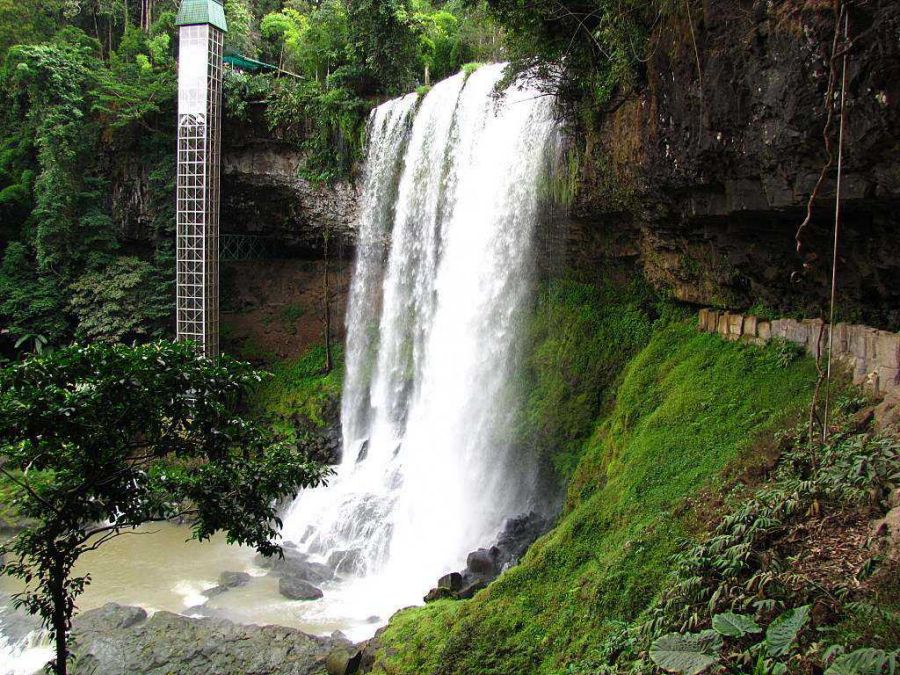
Top 15 Things to Do in Vietnam That Will Blow Your Mind

From the misty mountains of the north to the tropical Mekong Delta in the south, Vietnam is a mixture of natural beauty and ancient traditions. Explore what to do in Vietnam through the article below.

Cruise Through Ha Long Bay

One of the top places to visit in Vietnam is Ha Long Bay, which is Vietnam’s iconic natural wonder and UNESCO World Heritage Site. This stunning seascape is created from over 1,600 limestone karsts and islets that emerge from a sea of emerald waters.

Kayaking through secret caverns and lagoons allows visitors to discover untouched beaches that are only accessible by water. The fabulous Surprise Cave (Sung Sot) is adorned with impressive formations of stalactites and stalagmites, and panoramic views can be seen from the summit of Ti Top Island. Many cruise tours provide cooking classes, traditional fishing, and sunrise deck Tai Chi.

Cruise Through Ha Long Bay

Wander In Hoi An Ancient Town

With its meticulously preserved centuries-old buildings and way of life, Hoi An Ancient Town is a “living museum.” Exploring Hoi An is one of the things to do in Vietnam. This place fuses the influences of Japanese, Chinese, and French colonial architecture, giving a unique atmosphere that seems to remain frozen in time. The streets of the town are decorated with hundreds of colorful silk lanterns that bathe the town with a magical glow, especially at night.

Visitors can wander through the Ancient Quarter and sign up for cooking classes to learn how to make “cao lau” and “banh bao banh vac” (white rose dumplings). Not only that, the town is known for its fine tailors who promise one-day completion of made-to-order garments. For a natural vibe, you can ride a bike through nearby rice paddies, uncover traditional farming, and take basket boat tours through the coconut forest, providing tranquil escapades.

Wander In Hoi An Ancient Town

Admire The Golden Terraced Fields In Sa Pa

The mountainous north of Sa Pa is considered the country’s most stunning scenery, with cascading rice terraces clinging to the steep sides of the mountains. These all create a living masterpiece.

Multi-day treks in remote villages in Sa Pa give you cultural experiences, including sharing meals, learning traditional crafts, and understanding sustainable farming practices that have remained in place for generations.

Especially, Vietnam’s highest mountain, 3,147-meter Mount Fansipan, forces serious hikers to their limits with challenging trails and beautiful summit views that make it well worth the effort. In the September-October harvest season, the terraces turn golden waves. In addition, weekend markets at Bac Ha, near Sapa, display vibrant and colorful hilltribe culture at its best, where ethnic minorities gather to trade goods, socialize, and maintain cultural connections in traditional dress.

Admire The Golden Terraced Fields In Sa Pa

Float On the Mekong Delta

Vietnam’s “rice bowl,” the Mekong Delta, is a network of rivers, wetlands, and islands in southern Vietnam that provides a large portion of the country’s rice and tropical fruits.

The traditional boat tours through narrow canals offer a glimpse of floating markets, where vendors paddle their wares between boats in a bright blue aquatic bazaar. Among the top things to do in Vietnam, joining the Cai Rang floating market in Can Tho can not be missed. It is famous with traders bartering everything from fresh fruit to steaming bowls of pho served, boat-to-boat.

Moreover, visitors can take a gander at traditional villages which focus on the production of coconut candies, rice paper, and vermicelli noodles. Riding past dragon fruit, rambutan, and durian-heavy orchards gives you a taste of the countryside. Homestays with local families let guests sleep over the river while feasting on a traditional Mekong diet of elephant earfish and fresh spring rolls.

Float On the Mekong Delta

Discover Ho Chi Minh Dynamic City

Vietnam’s biggest city is filled with energy and history, a seamless mix of French colonial architecture, skyscrapers, and ancient temples.

The Reunification Palace is a must-see location in Ho Chi Minh City. It preserves the precise moment that North Vietnamese tanks burst through its gates, heralding the close of the Vietnam War in 1975. Also, visiting the War Remnants Museum will show you the terrible effects of the war on Vietnamese civilians.
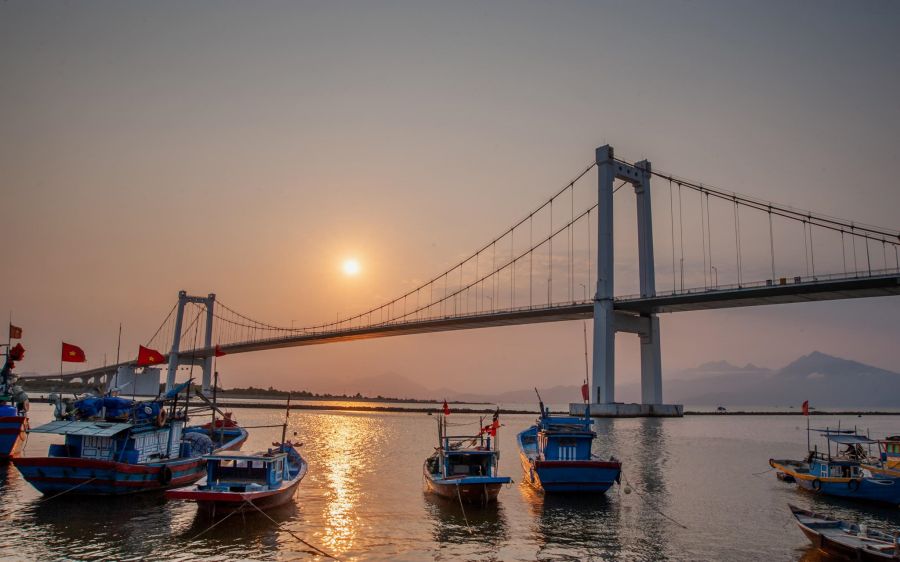
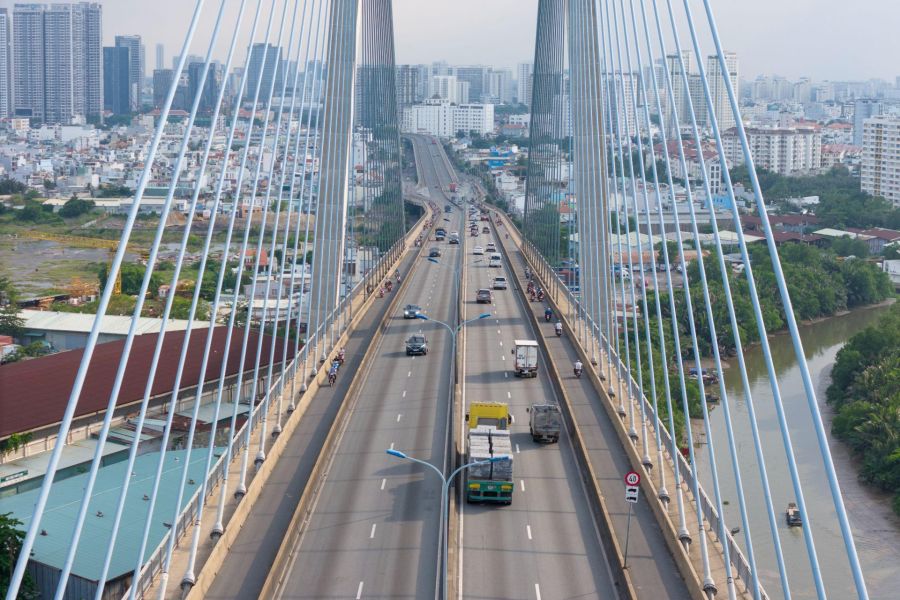
In the Ben Thanh Market, vendors sell everything from silk scarves to uncommon fruits, and nearby streets sell the extraordinary street food.

Day trips to the Cu Chi Tunnels, an ingenious underground network that helped Vietnamese forces survive bombing campaigns with booby traps, hidden entrances and narrow crawl spaces, make it worth the visit.

War Remnants Museum

Experience Hanoi – The Capital Of Vietnam

Among the best places to visit in Vietnam, this city mixes French-colonial architecture and traditional Vietnamese design in the historic Old Quarter’s narrow streets.

Hanoi – Vietnam’s capital is well-known for its 36 Street Area, each formerly associated with a particular trade. It’s exciting to witness the infamous train street, which happens twice a day when the trains barrel through a neighborhood and locals and visitors drink coffee on both sides.

Visitors can also see the Temple of Literature, Vietnam’s earliest university, which was established in 1070 as a tribute to Confucius and his most illustrious scholars. Trying street foods unveils culinary treasures such as Pho Ga (Chicken Noodles), Bun Cha (Grilled Meat and Noodles), Ca Phe Trung (Egg Coffee), and so on. Locally produced handicrafts are highlighted in weekend night markets around Hoan Kiem Lake, while ancient Vietnamese folk tales are told by water puppets in traditional water puppet shows.

Temple of Literature

Lounge On Phu Quoc Island

Phu Quoc Island, Vietnam’s largest, boasts some of the country’s most beautiful beaches and clear waters in the Gulf of Thailand. There, it’s recommended to enjoy Long Beach (Bai Truong) stretching for kilometers with powdery sand and spectacular sunset views.

Sao Beach (Bai Sao) is ideal for diving and taking underwater photography while admiring the island’s coral reefs. Also, night markets in Duong Dong town serve excellent street-side seafood, grilled squid, sea urchin, and the island’s specialty herring salad.

Sunset Sanato Long Beach, Phu Quoc

Explore Phong Nha-Ke Bang Caves

This UNESCO-designated World Heritage Site harbours some of the world’s most extraordinary cave systems, including the world-famous Son Doong Cave, one of the planet’s largest passages.

One of the must-do things in Vietnam is adventuring in this subterranean wonderland. Massive limestone formations create cathedral-type rooms adorned with spectacular stalactites and underground streams.

Paradise Cave stretches 31 kilometers (20 miles) deep beneath limestone karsts, visitors can explore the first kilometer along wooden platforms. In Dark Cave, tourists participate in adventure activities such as zip-lining along underground rivers, kayaking in cave systems, and participating in a therapeutic mud bath in mineral-rich clay.

Phong Nha-Ke Bang Caves

Visit the Imperial City of Hue

Under the Nguyen Dynasty, Hue served as the capital of Vietnam from 1802 until 1945 and is now recognized as a UNESCO World Heritage Site. The Vietnam’s Old Imperial City, Hue, is a wonder to visit and get a taste of the elegant history of the country manifested through its palaces and temples that can be found here along the romantic Huong River.
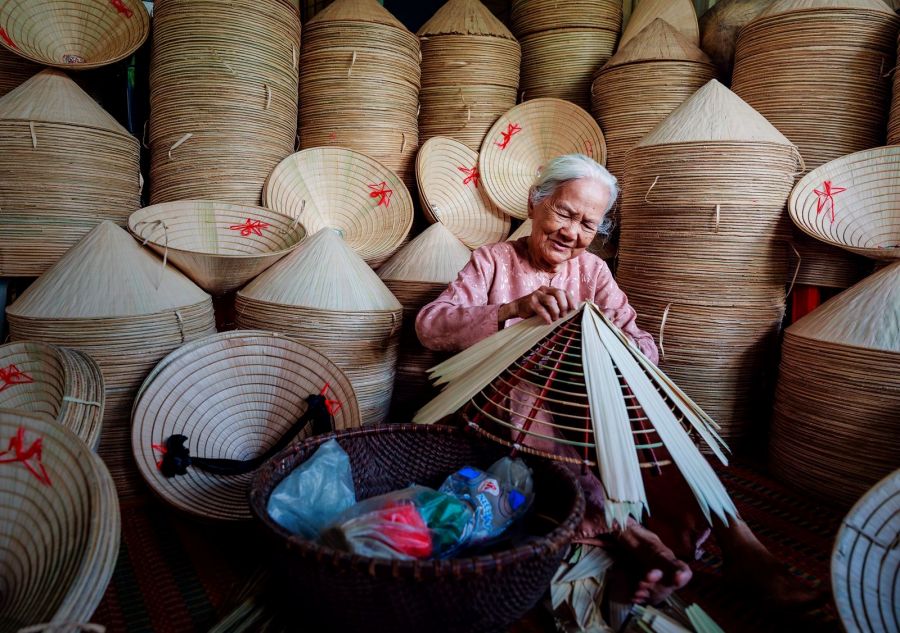
Elaborate tombs such as Emperor Minh Mang or Khai Dinh display an array of architectural styles inspired by both Vietnamese and European designs. If you are interested in Buddhism, take a tour to historic pagodas such as Thien Mu, Vietnam’s tallest religious building, which is quite impressive.

It’s worth experiencing Hue’s royal cuisine through a carefully prepared meal and traditional court music performances, a UNESCO-recognised intangible cultural heritage offering a sense of high life during the time of the Vietnamese royals.

Imperial City of Hue

Relax With A Peaceful Scene In Ninh Binh

Ninh Binh has one of the most impressive places to see in Vietnam, with landscapes and a long history as well. Hundreds of giant limestone towers emerging from rice paddies create some of Vietnam’s most photogenic scenery.

Begin your adventure at Trang An, a UNESCO World Heritage site famous for its tranquil boat trips through caves, river valleys and old temples. A little farther away, Hoa Lu, Vietnam’s capital in the 10th century, offers a taste of the country’s deep royal and cultural past.

Moreover, Bai Dinh Pagoda, the largest pagoda in Southeast Asia, will show you how magnificent Vietnamese religious architecture is. Here, tourists participate in peaceful boat rides along Tam Coc’s three caves, which unveil the rhythms and routines of rural Vietnamese life. Additionally, those who make the effort to ascend Hang Mua Peak are rewarded with sweeping views over the entire karst landscape, which is particularly breathtaking at sunrise and sunset.

Tam Coc

Conquer Ba Na Hills And Golden Bridge In Da Nang

Ba Na Hills has become one of Vietnam’s most photographed destinations. It has the longest and highest cable car system in the world, whisking you from tropical lowlands to temperate mountains in just 20 minutes.

The iconic Golden Bridge, which opened in 2018, is 150 meters long and spans across mountain peaks. Taking photos from this view is extremely impressive.

Other interesting activities include visiting flower parks, wine cellars, fantasy parks, and adventure activities. Nature and man-made beauty create a blend so unique that it becomes a destination itself for photographers, families, and adventurous travelers alike.

Golden Bridge, Da Nang

Witness The Sunrise In Phu Yen

Bai Xep has mild and wild beauty with long green grass hills for young people to watch the sunrise or tent. Especially in Phu Yen, the land protrudes into the sea, which is Mui Dai Lanh, the Easternmost point. This is the place to welcome the first sunrise on the mainland of Vietnam. Especially with the first light of the day here, you can hold infinity, see the beauty of the sea, and the sunrise that conquers people’s hearts.

Mui Dai Lanh

Overwhelm Before Waterfalls In Cao Bang

Cao Bang is a northeastern province of Vietnam, well-known for both its historical significance and breathtaking natural beauty, with spectacular waterfalls in Vietnam. The biggest and most amazing waterfall in the nation is the Ban Gioc waterfall. It’s also worthwhile to explore additional waterfalls, such as the Thac Khuoi Ky waterfall, Pac Bo waterfall, and Nguom Ngao cave waterfall.

You can also visit some of Cao Bang’s cultural and historical sites, including the Pac Bo cave, where Ho Chi Minh President, spent time in hiding in 1941, and the Dong Khe battlefield, where a key battle of the First Indochina War was fought.

Ban Gioc waterfall

Adventure On Cat Ba Island

On Cat Ba Island, you have the best of both worlds: beaches and national parks. Cat Ba National Park is home to the world’s most endangered primate. Visitors walk through the jungle to hidden caves, waterfalls, and panoramic viewpoints.

Not only that, with 400 limestone islands, Lan Ha Bay provides ideal conditions for sea kayaking through secret lagoons and to secluded beaches that can only be reached by water. The mix of adventure sports, unspoilt nature, and cultural encounters means Cat Ba is ideal for travelers seeking ambitious activities beyond tourist tours.

Lan Ha Bay

Learn Culture Through My Son Sanctuary

The My Son Sanctuary is a captivating glimpse into the ancient Champa Kingdom, offering a rich perspective on Vietnam’s vibrant cultural tapestry. As a UNESCO World Heritage site, it boasts the ruins of over 70 Hindu temples, which were constructed between the 4th and 14th centuries.

One of the most enchanting aspects of My Son is the traditional Cham dance performances. These graceful displays not only showcase beautiful movements but also breathe life into ancient rituals, all while honoring artistic traditions that have been cherished for centuries. Exploring My Son is truly a treat for the senses, especially when paired with a visit to Hoi An. Together, they draw a thorough understanding of the multicultural heritage that defines central Vietnam.

My Son Sanctuary

Final Thought

The best things to do in Vietnam allow visitors a feast for all the senses, from culture to flavor to history to jaw-dropping landscapes. From floating through the enchanting limestone spires of Ha Long Bay to strolling the historic lantern-lit streets of Hoi An, Vietnam has it all. Plan your trip to Vietnam now, and let Seni World personalize your travel planning with the best places to go in Vietnam that will help you discover this country like a local.