


That Dam Stupa is one of the most iconic historical landmarks in Vientiane, Laos, with its dark, weathered exterior and powerful local legends. This ancient stupa has come to represent spiritual protection, resilience, and endurance of the cultural identity of the Lao people.
Introduction to That Dam Stupa
That Dam Stupa is one of the most popular historical monuments in Vientiane, Laos, which attracts tourists due to its unique black look. It is believed that the stupa was built as early as the 16th century, and it is a testament to the power of these monuments to survive various wars and the effects of time. In addition, the monument is located in the heart of the capital, which links its history with stories about the seven heads of a naga protecting the town.
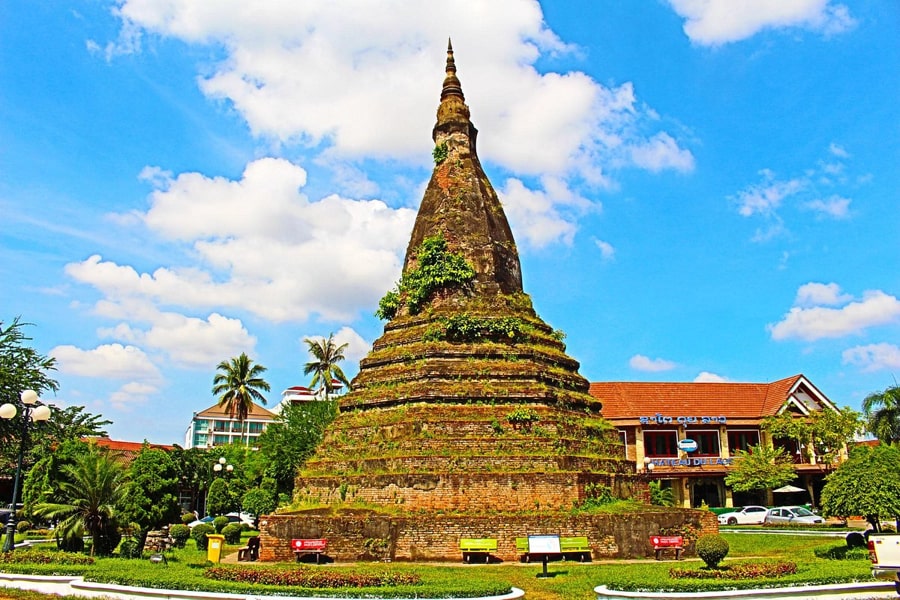
Visiting That Dam Stupa would give travelers insight into Lao history, culture, and architectural achievements. It is an excellent place for spiritual contemplation, as it is designed following traditional stupa architectural styles. Additionally, its location in the heart of Vientiane makes it easy to include in one’s travel plans, and its legendary background makes it worth visiting for those interested in culture and spirituality.
History of That Dam Stupa
The That Dam Stupa is also believed to have been constructed in the 16th century when King Setthathirath ruled. This time frame is considered an important period in Lao history because of its association with Buddhism. The original form of the That Dam Stupa had its surface covered by gold. This represented prosperity and protection by Buddhism. Due to invasion and war, the gold covering later disappeared, and the That Dam Stupa assumed its new look, thus being nicknamed the “Black Stupa.”
Apart from its physical history, That Dam Stupa has significant cultural and spiritual values among the local population. The stupa, by legend, was said to have been protected by a seven-headed Naga that ensured Vientiane remained untouched by negative energies. The site had, over time, represented strength, faith, and protection for the local population. That Dam Stupa today serves as a historic reminder of Vientiane’s struggles, spiritual values, and Buddhist traditions.
Unique Architecture of That Dam Stupa
That Dam Stupa is uniquely raw in appearance, a testament to both transformation over time and a deep sense of symbolism. Its architecture follows the traditional Lao Buddhist stupa design while carrying unique features shaped by time, legend, and cultural belief.
The Base Structure
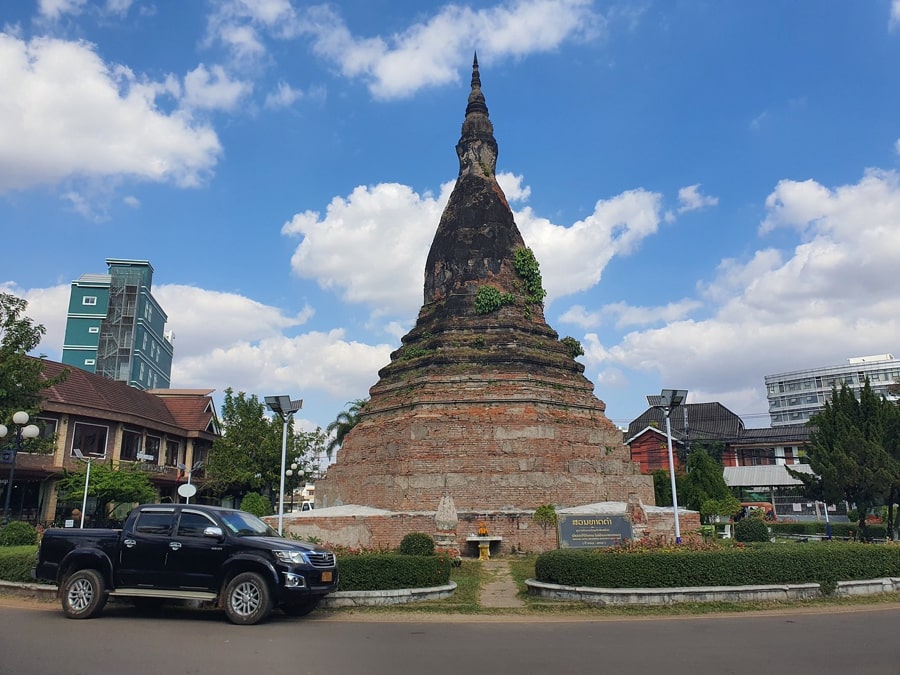
The base of That Dam Stupa is solid, square, and represents stability and the foundation of Buddhist teachings. Made of brick and later finished with stucco, this lower section was designed to support the monument’s towering mass. Over the centuries, weathering has removed decorative layers to expose a rough, dark surface that adds to its mysterious character. This wide base also follows the traditional Lao stupa proportions and grounds the structure firmly into the surrounding urban landscape. This level represents the earthly realm and strongly stresses balance, resilience, and the physical linkage between spiritual belief and daily life.
The Main Body
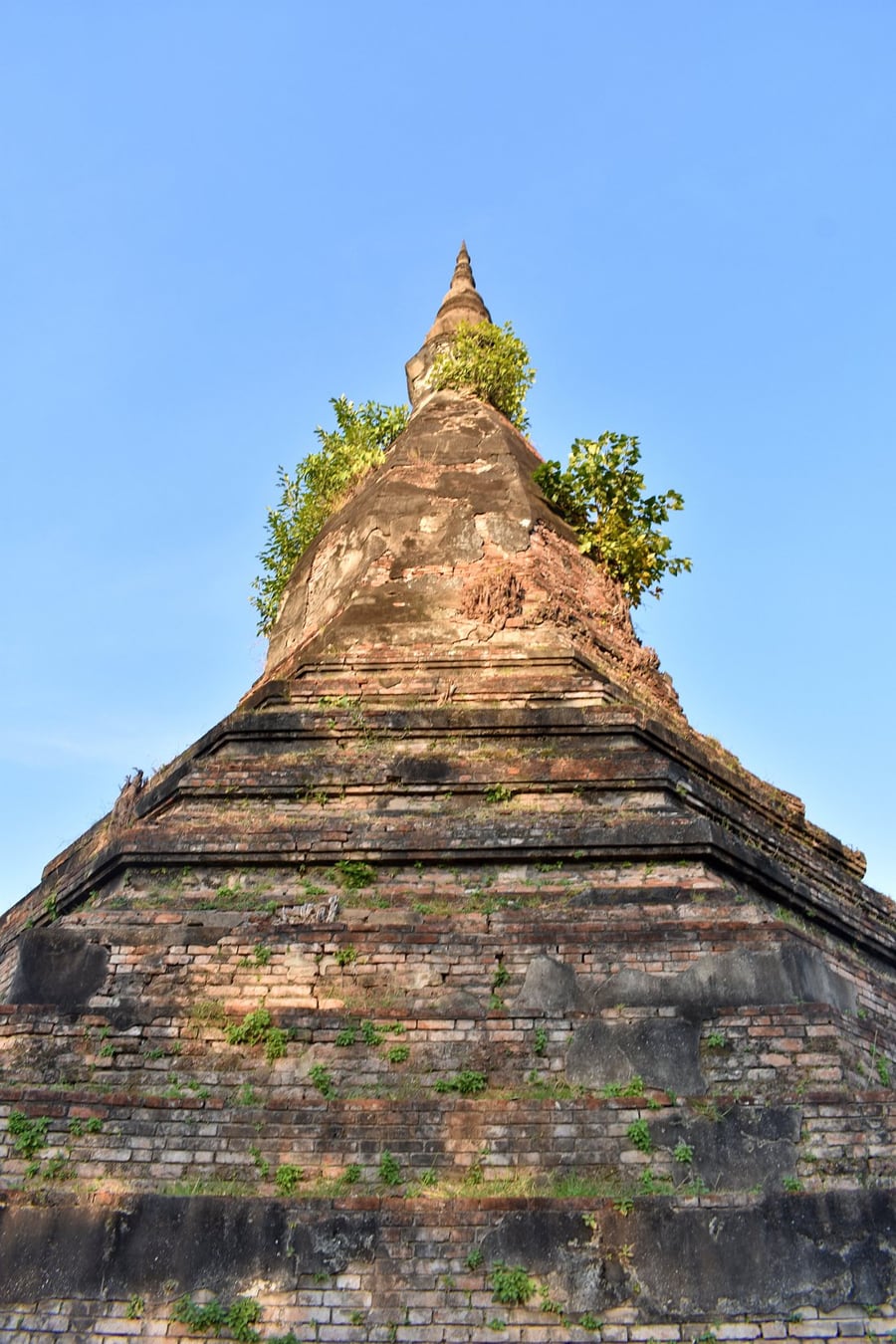
As it rises from the base, the main portion of the That Dam Stupa is designed to be a long, cone-shaped structure that captures the eye’s attention and causes it to ascend upwards. This is a classic manifestation of Buddhist cosmology, embodying the path from the earthly world to spiritual enlightenment. Previous components of the stupa were said to be equally gold-coated, but now have the characteristic black color due to aging. The lack of decoration on this stupa differentiates it from other stupas in this region because it emphasizes its simplicity and spiritual power.
The Upper Spire
That Dam Stupa’s upper section of the spire tapers rapidly towards the sky to symbolize transcendence and spiritual enlightenment. While the details of That Dam Stupa are limited compared to those of the Lao stupas, the emphasis on verticality makes for a dramatic visual effect. The upper section of this particular stupa contains spiritual energies that protect the site of That Dam Stupa, according to legend; the mythical protective Naga of Vientiane is part of these defensive energies. The spire also signifies the ascent from earth to heaven.
3 Unforgettable Experiences You Shouldn’T Miss
Visit at That Dam Stupa is not just about sightseeing. It is also about establishing connections with Lao culture, history, and spirituality. These experiences will always be memorable and provide you with an appreciation of the culture associated with this landmark.
Explore Legends and Local Beliefs
Probably the most unforgettable feeling one gets in Vientiance is learning about the legends attached to the site. Local legends say that a strong naga spirit protects the stupa and the city of Vientiane against dangers. Listening to these myths or reading the local interpretation provides an understanding of how folklore, religion, and history are intertwined in Lao culture. This experience gives meaning to the visit beyond architecture and makes the stupa a living symbol of spiritual protection.
Observe Daily Spiritual Practices
Although That Dam Stupa is not an active temple, locals still visit the site to pray, leave offerings, and pay respect. A good way to learn about daily religious life in Laos, quiet spiritual practices can be observed on-site. Incense may be given as an offering, and one may see people taking some time for themselves when the morning is the most active. It provides quite a serene atmosphere and, moreover, allows travelers to respectfully engage with locals and Buddhist traditions.
Walking Around The Historic City Center
Dam Stupa is situated in the heart of Vientiane City. Therefore, one can explore the surrounding historical and cultural sites on foot. For a casual stroll through the city, tourists can visit this site and appreciate the colonial architecture of the surrounding buildings. Through this, travelers will witness the natural blending of their structure with the current times without compromising their historic value.
Entrance Fee
Visiting That Dam Stupa is free, as there are no special entrance fees or the need for a ticket to the monument. The monument is open to the public throughout the day, and visitors can add this to their travel itinerary to Vientiane. There might be a small entrance fee to temple sites located in the vicinity, around 1-2 USD. While not necessary, visitors can take some flowers with them as a symbol of respect for the beliefs and traditions of the population.
Opening Hours
That Dam Stupa is a public monument, which means it does not have controlled entry gates, so travelers can explore it at any time of the day. Visitors can visit this stupa at any time, but it is better if they visit during daylight. Early morning or late afternoons would be a better time to spend at a sightseeing location, as it is a better time for photography and sightseeing, particularly for cultural sightseeing travelers.
The best time to visit That Dam Stupa would be during the dry season, from November to February. During this time, the weather in Vientiane is slightly more pleasant compared to other seasons. Visiting the place early in the morning or during sunset would be advantageous since the conditions are more favorable.
How to Get to That Dam Stupa
The location of That Dam Stupa is highly ideal because it is situated in the center of Vientiane City. There are many transport possibilities to reach That Dam Stupa. Therefore, visitors may visit the site with ease because of its location in the center of the city.
| Transportation | Estimated Time | Estimated Cost (USD) | Notes |
| Taxi / Ride-hailing car | 5 to 10 minutes | 2 to 4 USD | Comfortable and suitable for all travelers |
| Motorbike rental | 5 to 10 minutes | 8 to 12 USD per day | Valid driving license recommended |
| Bicycle | 10 to 15 minutes | 2 to 4 USD per day | Ideal for short distances and city exploration |
| Walking | 15 to 20 minutes | Free | Suitable if staying in central Vientiane |
While traveling by motorbike, tourists should carry an international or local driving license and must also carry a helmet since traffic control may be conducted along the roads. The roads around That Dam Stupa are flat and in good condition, making access easy for most tourists.
Things to Know Before Traveling to That Dam Stupa
As mentioned, That Dam Stupa is a landmark famous for its spiritual value, legends about it, and its appearance, which is the result of its long and complex history. Proper preparation is needed to have a comfortable visit.
- To avoid heat, enjoy a peaceful environment, and capture good photographs, it’s best to visit during early mornings or late afternoons.
- Dress modestly with knees and shoulders covered, especially when praying or observing local people, to demonstrate cultural sensitivity and follow Buddhist practices concerning the stupa.
- Water and sun protection should be brought, as the place is located outside with limited shade, especially during a visit around midday during the warmer months of the year.
- There is no entrance fee to That Dam Stupa, and it is a good idea to bring some cash for transportation and other expenditures around here.
- Demonstrate respect for it by avoiding climbing, touching, and littering, and help preserve its present state for visiting tourists and enthusiasts who come in the coming years.
- Try visiting during the dry season, from November to February, when it is cooler and clearer for more comfortable sightseeing for international tourists only.
FAQS About That Dam Stupa
Many travelers to Vientiane have questions about the That Dam Stupa because of its structure and the legendary background. These frequently asked questions are quite helpful in understanding the site and planning a meaningful visit.
What Is The Historical Significance of That Dam Stupa?
This Dam Stupa is said to have been constructed in the 16th century under the reign of King Setthathirath. This stupa, once covered in gold, lost its outer covering due to war and neglect. Today, its black surface reflects the struggles of the past in the country’s history, making it a cultural and historical monument in Vientiane.
What Are The Reasons for Calling That Dam Stupa Black Stupa?
The name “That Dam” actually refers to “Black Stupa.” This is because the stupa is usually blackened. According to legend, the top of the stupa was originally made of gold but was later changed to black. Another legend claims that there is a mythical naga inside the stupa, which safeguards the town.
Is That Dam Stupa Worth Visiting for Tourists?
Yes, That Dam Stupa is worth visiting, especially for any traveler who is interested in history and legends associated with a place and wants to learn more about the culture. It is quite central and therefore easily accessible; although the place may be quite simple, it can provide you with a lot of information about Lao culture, spirituality, and architectural legacy.
Final Thoughts: Is That Dam Stupa Worth Visiting?
That Dam Stupa is an important travel site for anyone interested in visiting a place that is steeped in history, mythology, and culture, and is centrally located in Vientiane. The enigmatic black look, stories, and legends surrounding it, and tranquil settings, make for an interesting travel experience into the history and culture of Laos. And because it is accessible and free, it is an important component that Seni World can help you include in your travel to Laos itinerary.


