


Wat Sisaket is the oldest surviving Buddhist temple in Vientiane, Laos, known for its peaceful courtyard and thousands of Buddha images. Built in the early 19th century, it reflects classic Lao architecture and deep spiritual heritage.
Introduction to Wat Sisaket
Wat Sisaket is one of the most popular and significant tourist sites in Vientiane, the capital of Laos. This ancient temple has a rich history. It was constructed in the year 1818 and is the oldest existing temple in the city. Wat Sisaket has become highly famous due to the wall of thousands of Buddha images that can be found here, offering a calm ambiance that speaks of tradition. Because of its location in the heart of the city, Wat Sisaket has become an inevitable tourist destination.
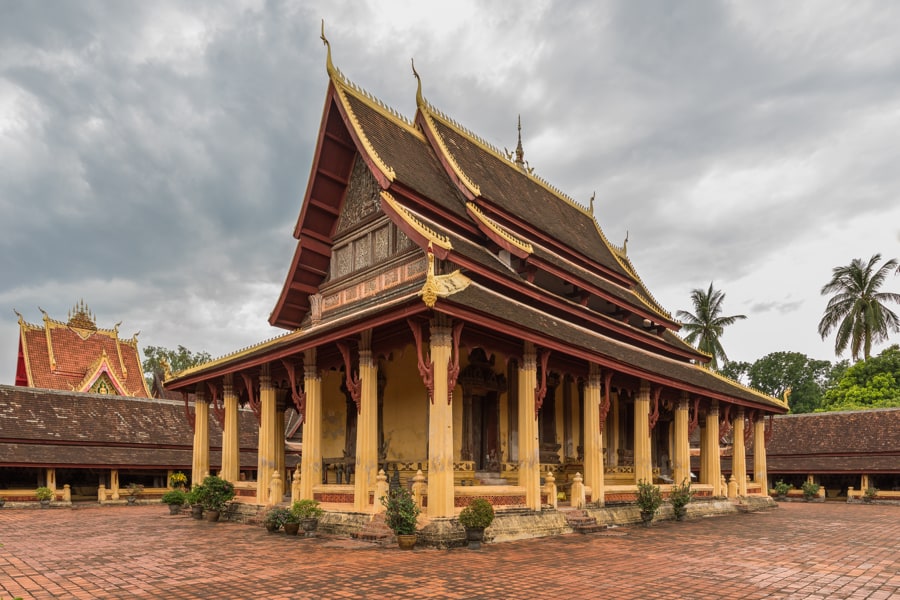
Therefore, it would be important for tourists to visit Wat Sisaket not only for its historical value, but they will also have a reflective environment to enjoy, which may not be the case with other tourist attractions around the area. The peaceful environment will, therefore, enable tourists, especially traveling through the country, to understand and appreciate Laos and its Buddhist culture in a more reflective and slower traveling experience.
History of Wat Sisaket
Wat Sisaket was constructed in 1818 when King Anouvong ruled over Laos; King Anouvong was the last ruler in Vientiane and ruled over it until his death. Wat Sisaket was the only temple that remained intact when the Siamese invaded Laos in 1828; it was due to its architectural design, which resembled that of temples in Thailand rather than Laos. Therefore, Wat Sisaket stands out as a cornerstone and a symbol of cultural and religious continuity in Laos despite the destruction that came with it.
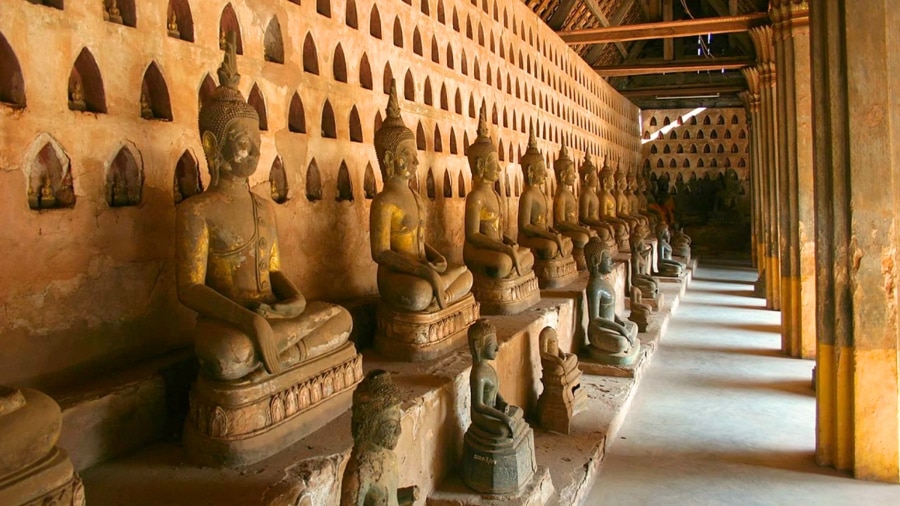
Over time, Wat Sisaket has continued to play an important role as a place of worship for the Buddhist population of the area. The cloisters around Wat Sisaket contain thousands of Buddha statues, most of which are in wood, stone, and metal, and were donated through the years by Buddhist devotees. Clearly, Wat Sisaket is a product of long-standing Buddhist tradition and passion for worship, most especially of the Lao people. Wat Sisaket is, today, a symbol of Laos’ Buddhist heritage and identity as a people.
Unique Architecture of Wat Sisaket
Amongst all the temples in Vientiane, Wat Sisaket is unique in both its architecture and composition, reflecting styles from both Laos and Thailand. Here, visitors will find some of the best-preserved buildings, enabling them to appreciate traditional Buddhist structures, which have changed very little over many centuries.
Cloister with Thousands of Buddha Images
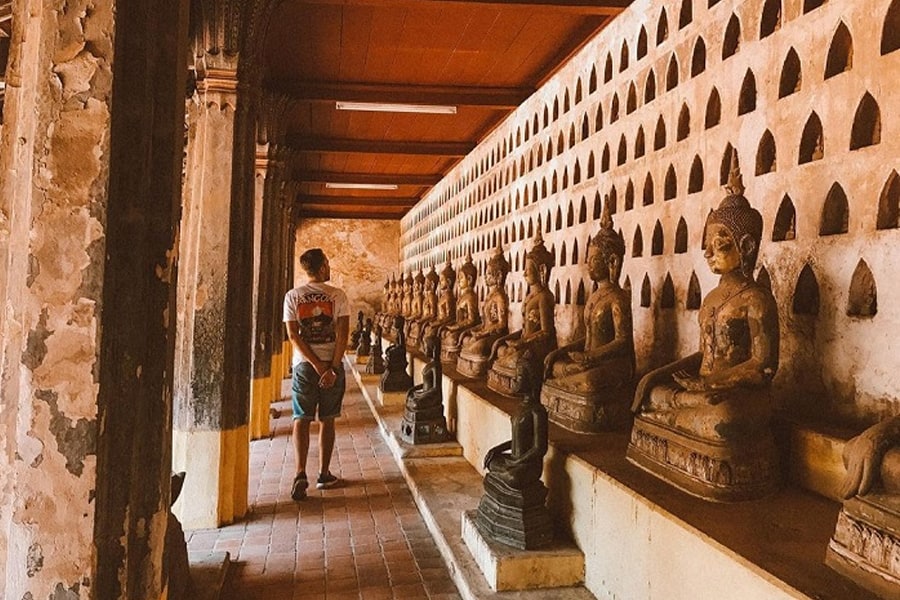
Perhaps one of the most remarkable architectural features of Wat Sisaket is the surrounding cloister, featuring thousands of small Buddha images in recessed niches. These images, made from stone, wood, silver, and bronze, adorn interior walls and combine to create a striking visual space that can be described as quite meditative. Architecturally, the cloister forms a continuously covered walkway that encloses the main courtyard, symbolizing spiritual protection and harmony. This design is rarely seen in other Lao temples and adds to the timeless character of Wat Sisaket.
Main Hall (SIM)
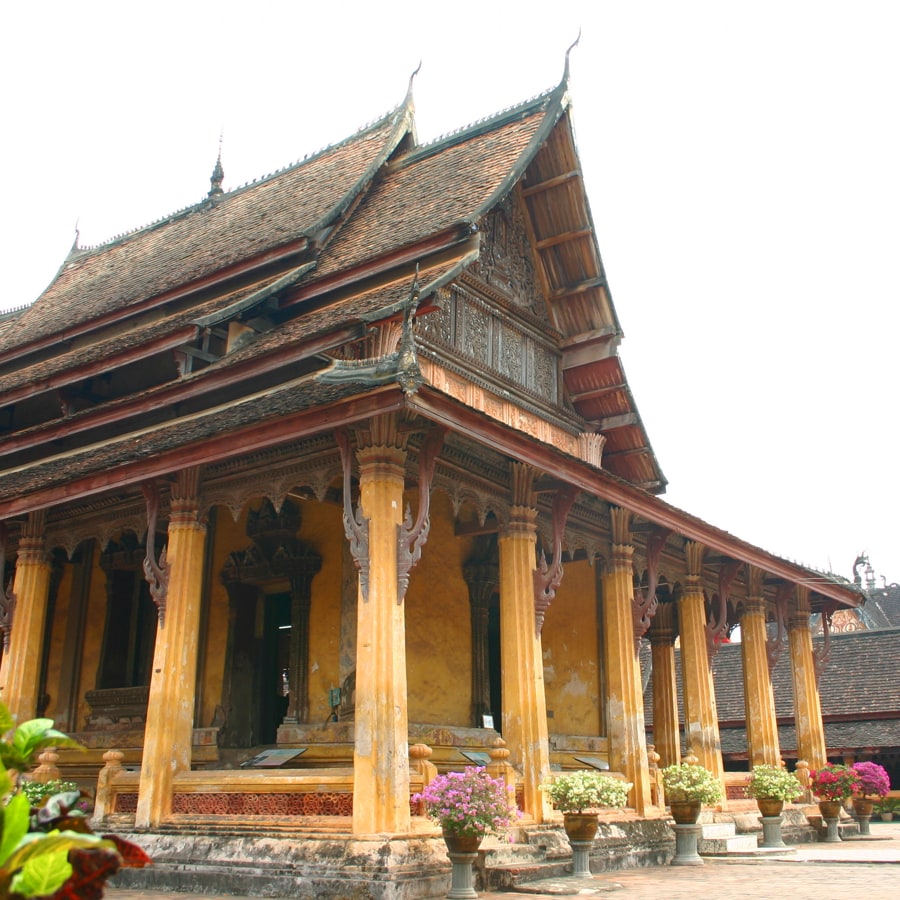
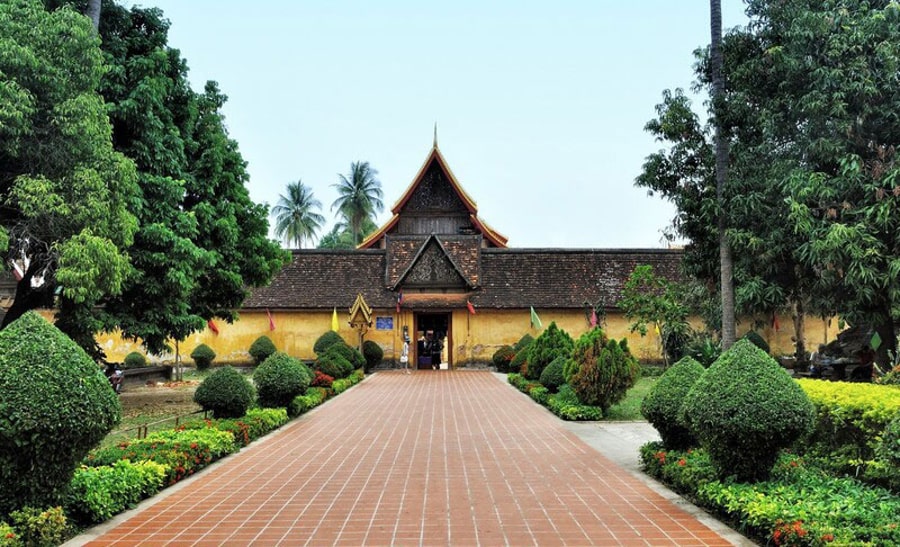
The main hall, or sim, displays a considerable Thai influence in terms of architecture, which explains the durability of the temple even in the face of previous wars. It has a tiered roof, refined columns made of wood, and decorated doors and windows. Inside, visitors may find important Buddha relics and murals portraying Buddhist ideals. The structure and design of the hall, for example, show balance and harmony, which affirm the role of such a hall in the overall compound as one of serenity.
Traditional Courtyard Layout
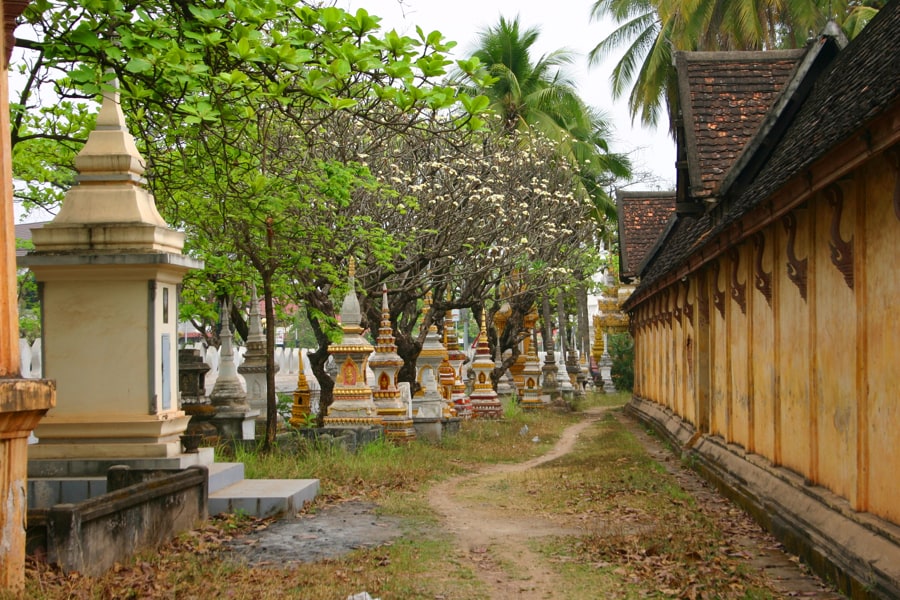
The design of the courtyard at Wat Sisaket appears to be effective in creating a space filled with open and peaceful feelings. The open area in the middle creates the opportunity for natural light to come freely and highlight the cloisters and the main hall within the area. The simple design of the courtyard at the temple creates a peaceful environment, helping the space function as a spiritual and cultural landmark.
3 Unforgettable Experiences You Shouldn’T Miss
Visiting Wat Sisaket not only provides a tour experience, but it also allows tourists to take time and engage in various experiences related to spirituality and culture in Laos. Such experiences are well-planned and aid in the appreciation of a different environment and culture.
Walk Through The Buddha Cloisters
One of themost unforgettable experiences in Vientiane is the slow and leisurely stroll down a corridor lined with thousands of Buddha shrines at Wat Sisaket. Each shrine has a small history of devotion to Buddhas of all sizes and from various time periods. Walking down this corridor provides tourists with the opportunity of getting insights into the small architectural details of the structures while enjoying the serene atmosphere of devotion. This is perhaps the best experience for any tourist who wants to get a real feel of the spiritual essence of the temple.
Going to Early Morning for A Peaceful Atmosphere
Visiting Wat Sisaket early in the morning gives a different impression from visiting the site during peak hours. The early-morning light helps to illuminate the structure of the building, while the relative quietness of the atmosphere creates a spiritual atmosphere. When visiting Wat Sisaket in the early morning, travelers are able to see monks and locals going about their daily routines, thus learning a great deal about the functionality of the site outside of tourism.
Learn About Buddhist Symbols and Rituals
Taking some time to study Buddhist icons and religious practice at Wat Sisaket will definitely provide much richness to the visit because, as one enters the main hall, one can observe that every detail in the building has symbolic meaning, and by reading some signs or pursuing some explanation given by experts, one can have a much better understanding of religious elements, since this visit will not be only to religious sites but also an educational experience.
Entrance Fee
For Wat Sisaket, foreign visitors pay a small fee to enter the grounds; this makes it one of the less expensive culturally oriented attractions in Vientiane. The ticket costs roughly USD 1–1.50 per person, depending on the current exchange rate at the time of visit. Local visitors generally pay less, while children may enter for free. This minimal cost helps to go toward the preservation of the temple and the thousands of Buddha images within for travelers to view at their own pace without considerable expense.
Opening Hours
Wat Sisaket is open for visitors every day between 8:00 AM and 5:00 PM, providing visitors with plenty of time to explore the entire temple area at a leisurely pace. Wat Sisaket is accessible at all times of the year, including weekends and public holidays, making it a fantastic and accessible location for visitors traveling through Vientiane City Centre. It is recommended that visitors arrive at Wat Sisaket early in order to experience a peaceful atmosphere and avoid the heat of the day.
The best time to visit Wat Sisaket is the dry season in Vientiane, from November to February: during this period, it is cooler and more pleasant for walking. Early mornings serve best for photography and quiet exploration. The high season usually falls in December and January, the months when the greatest number of visitors arrive.
How to Get to Wat Sisaket
It is located in the heart of Vientiane and, therefore, can be easily reached from most parts of the city. Its central location allows travelers to choose flexible transport options depending on distance, budget, and travel style.
| Transport Method | Estimated Cost (USD) | Travel Time | Notes |
| Walking | Free | 5 to 15 minutes | Ideal if staying near the city center |
| Bicycle | 1 to 3 (rental/day) | 5 to 10 minutes | Flat roads, easy navigation |
| Motorbike | 5 to 8 (rental/day) | 5 to 10 minutes | License recommended, helmet required |
| Tuk-tuk | 2 to 5 per trip | 5 to 10 minutes | Agree on price before departure |
| Taxi / Ride-hailing | 4 to 7 per trip | 5 to 10 minutes | Convenient for groups or hot weather |
Travel tips: always confirm, in advance, the price of rides by tuk-tuk; ensure proper safety gear when going by motorbike; dress appropriately upon arrival, as Wat Sisaket is an active religious site.
Things to Know Before Traveling to Wat Sisaket
Visiting Wat Sisaket is a culturally enriching experience; however, let me highlight some practical points to make your visit both respectful and comfortable. These basic tips will ensure a comfortable visit with respect to local customs and traditions.
- Dress modestly with shoulders and knees covered, as Wat Sisaket is an active Buddhist temple where respectful dress is expected at all times.
- If you want to visit the Memorial early in the morning, you can do so to enjoy the cooler weather and fewer people around.
- Remove shoes, if necessary, before entering sacred buildings, and comply with signs prohibiting entry into areas reserved for prayer.
- Noise should be kept to a minimum to show respect for monks, worshippers, and the serenity of the environment within the grounds of the temple.
- Photography is permitted, but flashing near the Buddha images should be avoided, and never photograph monks without permission.
- Bring small cash in local currency or USD for entrance fees, donations, or nearby local vendors.
FAQS About Wat Sisaket
There are many questions asked by travelers concerning Wat Sisaket, especially while planning a cultural trip or a slow trip. Questions asked by travelers help to clarify information concerning the site, thereby creating a better experience for visitors.
What Amount of Time Should I Devote to Wat Sisaket?
Most tourists spend one or two hours within the temple compound of Wat Sisaket. This is adequate time for strolling around, touring its central hall, and reviewing its architectural features without being rushed. To photography hobbyists, history enthusiasts, or simply anyone in search of a peaceful haven, especially if they visit Wat Sisaket early in the morning, it is advisable to spend more time here.
Is It Possible to Visit Wat Sisaket with Children?
Wat Sisaket is appropriate for a family trip with children, as long as general temple etiquette is practiced. This is due to the fact that the courtyard provides an easy means of exploring, with parents being considerate of their children, keeping quiet. This is also an opportunity to enlighten children on local cultural practices, thus ensuring the trip is not only entertaining but also highly informative.
Final Thoughts: Is Wat Sisaket Worth Visiting?
Wat Sisaket is highly recommended for travelers who want to experience culture, history, and serenity in the center of Vientiane. A timeless, architecturally and spiritually important temple, it invites slow, meaningful visits. It is not a place to hurry through; instead, it is a place where guests are rewarded for observing and taking their time. Experience Wat Sisaket in a truly slow and thoughtful way with Seni World’s customized travel Vientiane itinerary that best suits your pace, interests, and travel style.


