logo mobile sidebar
support-image-mobile
Share your ideas with our local expert team - we’re here to listen and help you shape a meaningful journey through Indochina.
(+84) 868 663 993
Asia Leading Tour Operator 2025
tripadvisor travelers choice awards 2024
Travelers' Choice Awards 2025

Author: Content Seniworld

Slow Travel: A Complete Guide To Mindful And Sustainable Travel

Slow travel attempts to put in mind a much better way to experience this world by slowing down and focusing on in-depth experiences instead of moving more quickly to another destination. In essence, by being in one location, people will get to associate with the culture, people, and nature.

What Is Slow Travel?

Slow travel is an ongoing approach to exploring a destination that requires a traveler to take time at each location. It is a philosophy that requires one to take the time to “slow down” so that it all works towards a better understanding of a particular destination, rather than rushing through it with a scheduled tour. Quality is what matters in slow travel, not quantity. That is, a person is meant to take his or her time to one location.
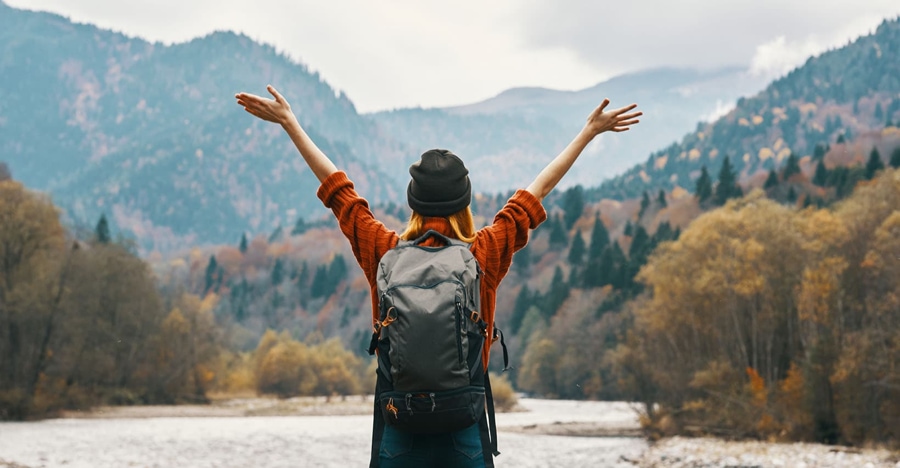
Slow Travel
Fundamentally, slow travel concentrates on mindfulness, sustainability, and connection. It encourages travelers to make environmentally friendly choices, such as using local transportation, engaging with small businesses, and avoiding unnecessary travel. Moreover, by slowing down, travelers have opportunities to connect with new places and people, thus avoiding travel fatigue and creating unique and enduring travel memories beyond those enjoyed by tourists.

Why Slow Travel Is Becoming So Popular in 2026

“Slow travel” has picked up tremendous pace in 2026 as travelers are increasingly focusing on health and mental well-being. Over time, many travelers have become accustomed to hectic lifestyles and screen time, and hence, they are looking for a relaxed way of living by reducing the time for faster travel. The global travel surveys have revealed that 60%+ travelers desire fewer destinations with longer stays.
Sustainability is another major driver. Overtourism has pushed travelers to rethink both how and where they travel. Many travelers want their trips to have less environmental impact, leading to increased interest in slower transport, local businesses, and lesser-known destinations. Slow travel would, of course, support this naturally by reducing the amount of frequent movement and encouraging responsible tourism.

Key Benefits Of Slow Travel

Not only does slow travel provide a different means for traveling, but, even more importantly, it reconfigures the manner in which one experiences the world with different, greater, and enhanced benefits, both individually and socially.

Deeper Cultural Connection

Slow travel provides an opportunity for a traveler to form meaningful cultural connections since they spend longer durations in a particular place. A traveler gets to experience culture and life in a foreign place rather than just scratching the surface of particular experiences. When one stays in a place for an extended period, they get to participate in a community and develop an appreciation for the culture of the people in that community.
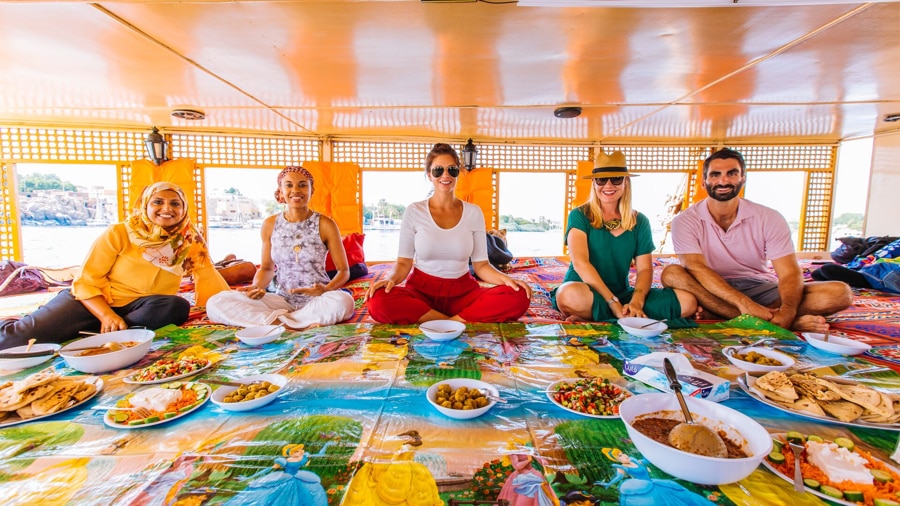
Deeper Cultural Connection

Lower Travel Costs

By curtailing the back-and-forth traffic between destinations, slow travel can greatly reduce travel costs. This is because the costs of transport, such as flights and trains, are reduced, as are the costs associated with accommodation, especially since they are usually on discounted prices for longer stays. Slow travel may also lead tourists away from highly priced tourist attractions, opting for alternative meals and experiences at local eateries and markets instead. Eventually, this would lead to a more balanced travel cost.

Less Stress & Better Mental Health

A slower pace of travel minimizes pressure, fatigue, and decision overload. With more relaxed itineraries and no feeling of constant packing and moving, travelers can be more present. In this way, the slow travel approach takes care of mental well-being by allowing rest, contemplation, and spontaneity. It is also a good approach in which travelers are helped to disconnect from digital stress and reconnect to themselves by turning travel into a restorative experience rather than an exhausting one.

More Sustainable & Eco-Friendly

Slow traveling is a practice that also aids sustainability since it minimizes environmental destruction from transportation while also practicing responsible consumption. Staying in one location for a long time reduces the carbon footprint that is usually left behind due to traveling. At the same time, the local economy is supported by local businesses since they are relatively small. People then become aware of their sustainability and opt to be environmentally friendly by preserving the environment.

More Authentic Experiences

This way, slowing down helps travelers get exposure to genuine experiences that would have otherwise been overlooked in a rush. Time helps travelers engage in unexpected interactions with locals, get travel tips from them, and experience moments that bring out the authentic essence of a place. Be it participating in a local event or finding a hidden café, what matters most with slow travel is genuine experiences over tourist sites.

Best Destinations For Slow Travel

Such destinations where slow travel is fostered include those with attributes favoring longer stay durations and simple traditions. Many destinations in Vietnam, Laos, and Cambodia naturally lend themselves to slow travel through towns or communities.

Hoi An, Vietnam

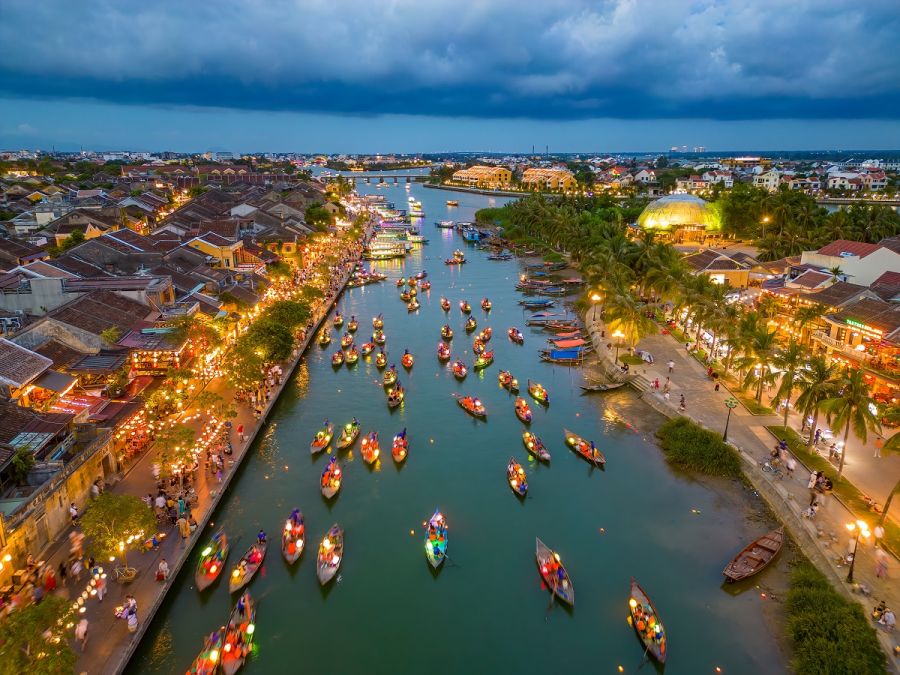
Hoi An is one of the best places in Vietnam to try slow travel, and this is due in part to its small size and tranquil pace of life. Hoi An’s heritage streets are perfectly walkable, and the pace of life allows travelers the chance to engage in this way without needing a mode of transport. By visiting Hoi An and making an extended stay, tourists are able to engage in a culture beyond merely touring around and can enter a pace of life that allows them to make meaningful connections
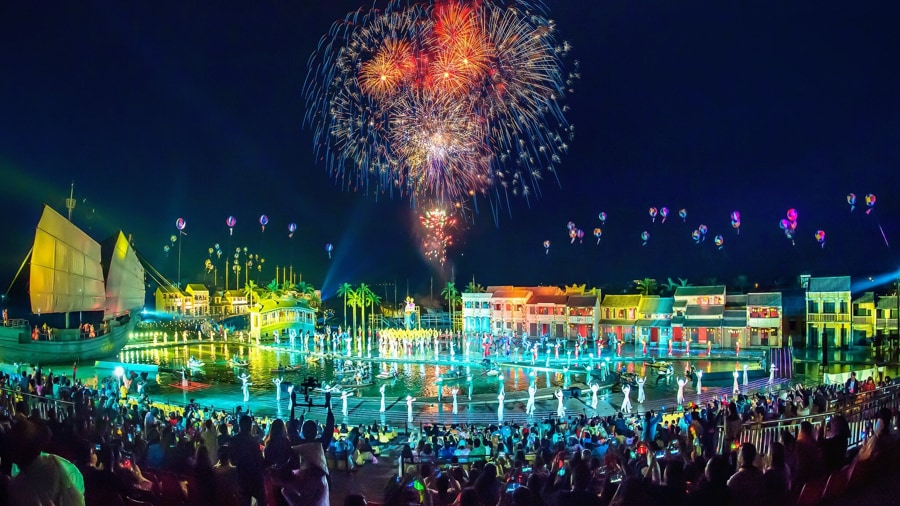
Hoi An Memories Show

Luang Prabang, Laos

Luang Prabang is a perfect example of slow travel, with its spiritual atmosphere and relaxed pace. The daily rituals, like morning almsgiving, create a rhythm in life that invites one into a mindfulness of reflectiveness. With few distractions and little traffic, visitors naturally take their time as they spend it in the temples, local markets, and along the Mekong River. With longer stays, travelers are allowed to delve deep into the culture, and these traditions are understood not as some kind of performance but as part of their normal way of life.

Kampot, Cambodia

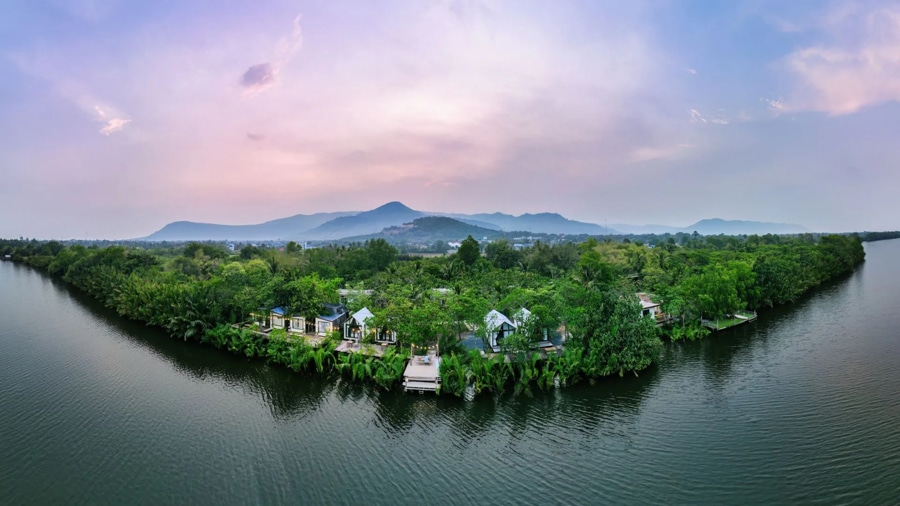
Kampot is an ideal slow travel destination for those looking for a laid-back life in a quiet riverside town. Life is slow here: mornings are long by the river, the café culture is casual, and nature is always nearby. Travelers often stay for weeks, exploring pepper farms, the nearby countryside, and local neighborhoods at their own relaxed pace. Kampot is simple, and that simplicity lends to presence and routine-easily let go of rush and reconnect with the day-to-day here.
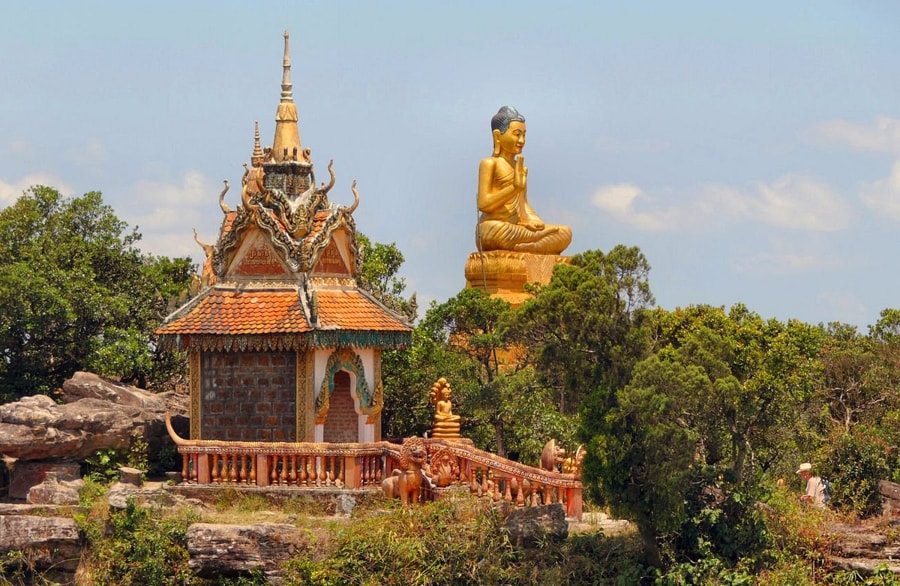
Kampot Pagoda (Wat Kampot)

Common Mistakes To Avoid When Slow Traveling

This is where Seni World comes in with its approach to slow travel; an approach that has the hope of allowing those who participate in the journey to actually experience the journey on a greater scale rather than merely traveling slowly. However, there are certain pitfalls that the first-time slow traveler could fall into, and that could actually keep them from embracing the real meaning of philosophy.

Overplanning

Probably one of the main mistakes people make when slow traveling is in overplanning every single detail of a trip. Most travelers carry over fast-travel habits into the slow variety, filling out schedules with activities to be done, checklists, and unyielding timelines. This makes for undue pressure and provides little room for spontaneity-the very foundation of slow travel. Seni World encourages travelers to allow room for flexibility, letting daily plans work themselves out naturally with local rhythms, personal energy levels, and unexpected experiences. True slow travel values presence and adaptability over constant structure.

Moving Cities Too Often

Slow travel would not have any purpose if one changes cities too rapidly. When one changes cities too fast, they are not gaining familiarity; they are stuck in transit mode. In a way, Seni World emphasizes that staying longer in one place helps the tourist establish a routine, build further connections, and better understand a daily way of life beyond the tourist attractions. By not changing cities too rapidly, one can rest and establish a better connection with the places they are visiting.
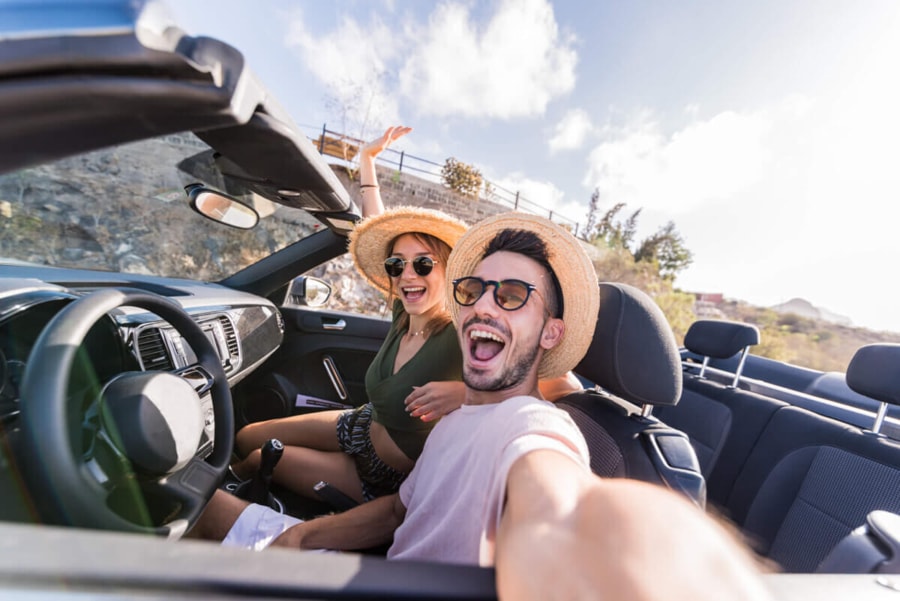
Siem Reap to Vientiane by car

Staying Only In Tourist Areas

Many slow travelers wrongfully restrict their stay within tourism zones, thinking that ease translates into comfort. In truth, tourism zones disconnect tourists completely from real life and culture. According to Seni World, slow travelers should explore and stay in residential areas, markets, and other areas where locals really interact and engage in their lives. When we do this, we change slow travel from merely observing life into participating in life, and we gain a real sense of the place we visit.

Not Learning Local Culture

Lacking an appreciation of local cultures is another major mistake if the depth of slow travel is considered. While learning about cultures does not require someone to learn a particular language, there is a need for someone to remain curious and interested. Seni World suggests that learning simple terms, cultures, and social norms is important for meaningful travel. Lacking cultural understanding, however, can lead to slow travel being viewed as mere consumption, not as a two-way phenomenon.
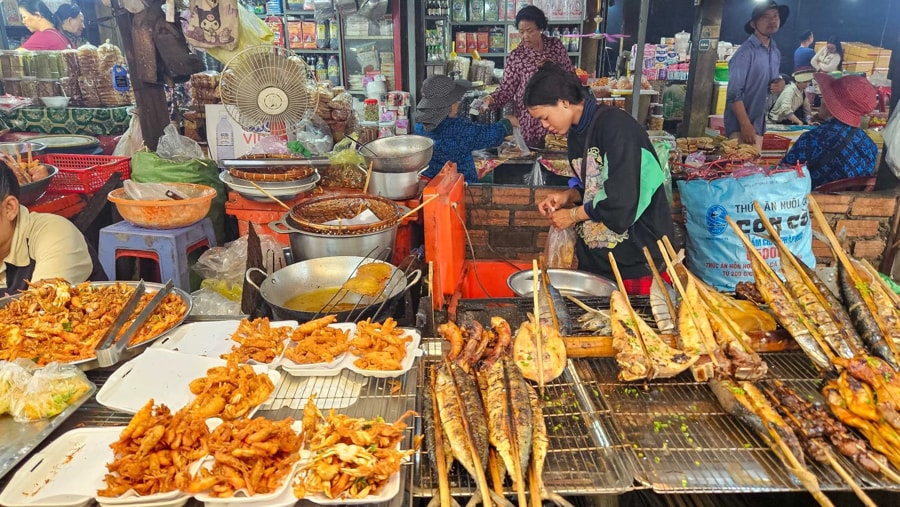
Experience food in Kampot Market

Skipping Rest Time

Some tourists forget about rest, thinking that slow travel means exploring something new every day. In fact, rest is at the heart of slow travel. Without rest, there is exhaustion and a lack of being present. Seni World communicates that rest is intentionally taking time for reflection, looking around, and headspace. Whether it is a morning spent in a quiet café or an afternoon break, rest allows travelers to truly internalize what’s happening. For slow travel, there’s also a balance in understanding that a good trip is made of motion and rest, combined.

Final Thoughts: Why Slow Travel Might Change the Way You See the World

Slow travel asks you to receive an invitation to experience the world in terms of intention, presence, and awareness. As you start to travel slowly, you begin to notice the world, and traveling becomes less about moving around and more about meaning. Are you ready to have an experience of a truly slow journey-one of the trendy journeys in the world? Well, rest assured that at Seni World, we have people ready to customize an unforgettable journey that suits your travel pace, interests, and style.

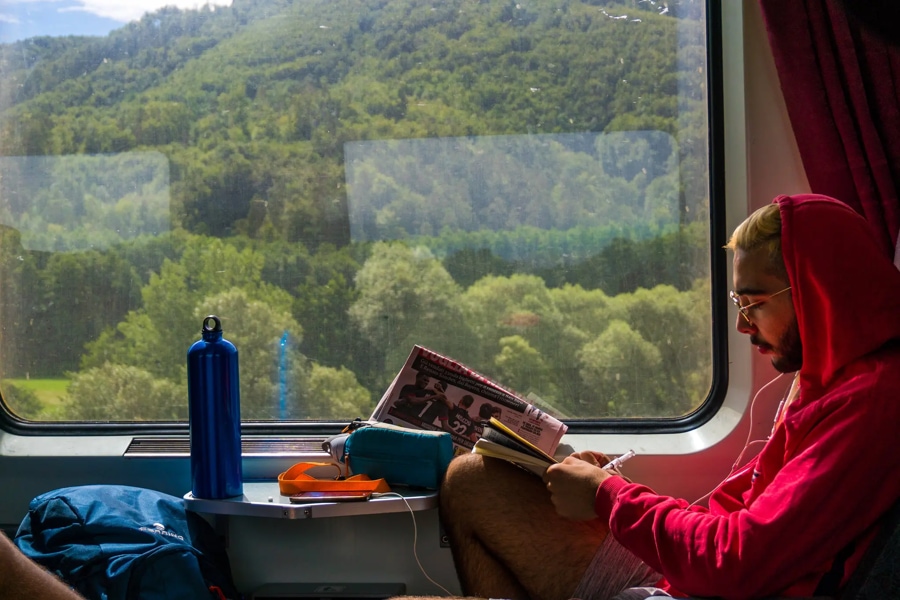
Travel Trends in 2026: What’s Hot, What’s Next & Why They Matter

Travel trends in 2026 are a reflection of the changing values that travelers are looking for in their travel experiences. Sustainable tourism, cultural immersion, and the use of technology are some of the factors that are changing the way people travel.

Slow Travel

Slow travel is a travel philosophy that emphasizes the idea of visiting more destinations but spending more time in fewer places, immersing oneself in the local culture, and experiencing the destination in a more meaningful way rather than rushing from one place to another. The idea of slow travel has become a hallmark of travel in 2026 as people are becoming increasingly interested in authenticity, wellness, and sustainability. According to recent surveys of global travel patterns, the majority of travelers are now indicating a preference for visiting fewer destinations and having more meaningful experiences rather than rushing from city to city.
Slow Travel
The trend of remote work and digital nomadism, as well as the pandemic-induced reevaluation of work-life balance, has also contributed to this trend. The benefits of slow travel include reduced travel stress, increased understanding of the local culture, reduced impact on the environment, and more personal memories. Examples of slow travel include staying in a small town for a month, immersing oneself in a local culture for an extended period of time, and traveling by train or overland to focus on the scenery and the local experience.
Slow travel is a travel philosophy
This is particularly well-suited to Southeast Asia, where the culture, geography, and society are such that slow travel is a perfect fit. In Vietnam, slow travelers can easily spend weeks in heritage towns, learning local crafts, or immersing themselves in regional cuisine outside of the big cities. In Laos, the easy-going nature of river towns and countryside is such that slow travel is almost an inevitability. And in Cambodia, slow travelers can easily combine cultural exploration with local community experiences, ranging from village life to slow historical exploration. These are places where slow travel is not only possible, but also highly rewarding.

Wellness Travel

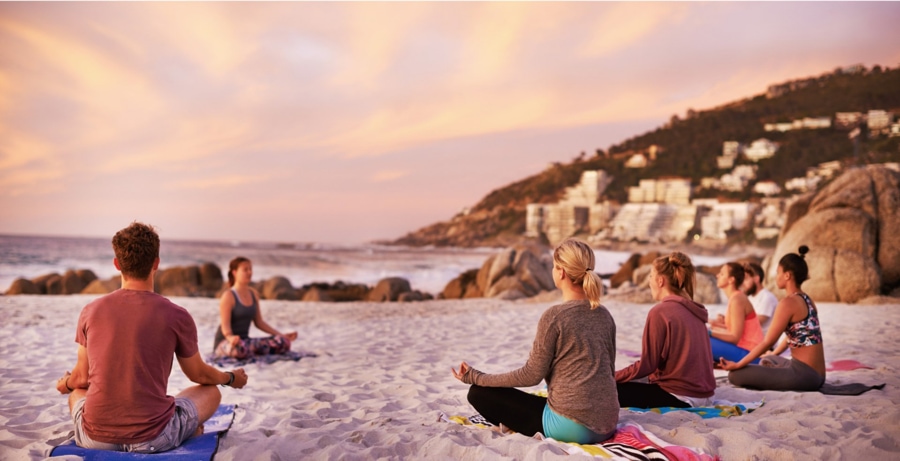
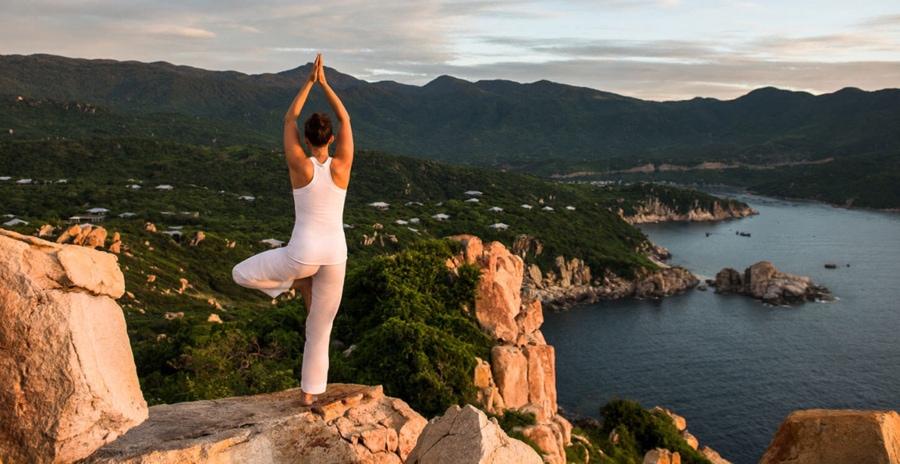
Wellness travel is centered on enhancing physical, mental, and emotional health through activities such as spa retreats, meditation retreats, nature immersion, fitness vacations, and holistic healing. In 2026, wellness travel remains a rapidly growing trend in the travel industry as people become increasingly concerned with health, stress relief, and life balance as a result of global uncertainty and fast-paced living.
Wellness Travel
According to research by the Global Wellness Institute, the global wellness tourism industry has been steadily growing and is expected to break past pre-pandemic levels of growth as more people take vacations for relaxation, mental rejuvenation, and health prevention. Additionally, most surveys indicate that the majority of travelers have come to view well-being as a fundamental aspect of travel planning, as opposed to a luxury component. Wellness travel components include stress relief, improved physical fitness, enhanced sleep, mental clarity, and nature immersion. Wellness travel examples include destination spa retreats with multi-day detox programs, yoga and meditation retreats in nature-based environments, and full immersion wellness resorts that integrate nutrition, fitness, and mindfulness.
Southeast Asia is now one of the most popular destinations for wellness travel
Southeast Asia is now one of the most popular destinations for wellness travel, thanks to its natural beauty, traditional healing practices, and serene settings. In Vietnam, tourists can indulge in beach yoga retreats, herbal therapy practices, and nature wellness getaways in the mountains or by the beach. Laos provides a laid-back atmosphere that is perfect for mindfulness retreats, meditation by the river, and digital detox programs in pristine surroundings. At the same time, Cambodia combines its rich spiritual history with contemporary wellness tourism, ranging from holistic retreats near ancient temples to eco-resorts built specifically for relaxation and rejuvenation. In all three countries, wellness tourism is more than just indulging in luxury; it is about rediscovering one’s body and mind through culture, nature, and meaningful downtime.

Travel for Mental Health

Mental health travel is an emerging trend that specifically targets emotional healing, stress management, and mental wellness, aside from the usual sightseeing. In 2026, more travelers are opting for destinations and activities that can alleviate anxiety, burnout, and emotional imbalances. This is in response to the rising global consciousness about mental health issues and the long-term consequences of living a stressful life. Mental health issues such as anxiety and burnout have significantly risen globally in recent years, as reported by the World Health Organization, which has shaped the way people value rest.
Travel for Mental Health
Data from global online travel agencies also indicate that a huge number of travelers today take trips for the sole purpose of emotionally rejuvenating themselves, aside from discovering new destinations. Mental health travel benefits include stress management, mood enhancement, digital detox, emotional clarity, and increased resilience. Examples of mental health travel include nature-based healing retreats for mindfulness, quiet travel for minimizing stimulation, and healing vacations for journaling, therapy workshops, or guided reflection activities.
Southeast Asia provides the perfect conditions for mental health-centered travel due to its soothing landscapes, relaxed pace of living, and rich spiritual heritage. In Vietnam, travelers can look forward to serene mountain getaways, beach relaxation, and homestay experiences that are centered on wellness and emphasize reflection and breaking away from the routine of daily living. Laos is a particularly good destination for emotional renewal travel, as it provides serene river-side towns, conducive meditation environments, and little to no city pressure. On the other hand, Cambodia provides very spiritual environments, reflective cultural experiences, and nature-based escapes that are conducive to emotional renewal.

Purpose-Driven Travel

Purpose-driven travel is an emerging trend where travelers opt for trips that have a positive impact, social, cultural, environmental, or personal, beyond just leisure or sightseeing. In 2026, more travelers feel that their travel decisions should reflect their personal values, such as supporting local communities, conserving nature, protecting heritage sites, or contributing to social causes. This trend is a result of the overall global awakening to sustainability, responsible consumption, and responsible travel.
As per the World Tourism Organization, the majority of international travelers feel that their travel dollars should positively impact local communities and the environment. Purpose-driven travel, on the other hand, provides immense value to travelers, including a better understanding of cultures, meaningful interactions with locals, and a sense of doing good in the destinations visited. These include volunteering for tourism projects, community-based homestays where the primary beneficiaries are local families, and conservation travel, like protecting wildlife or restoring the environment.
Purpose-Driven Travel
This travel trend is particularly significant in the Southeast Asia region, where tourism can have a direct positive impact on the preservation of culture. In Vietnam, tourists can participate in community-based tourism initiatives in rural villages, learn about traditional crafts, or engage in sustainable agriculture initiatives. In Laos, tourists can stay in locally operated eco-lodges, engage in cultural exchange activities, or contribute to the preservation of heritage sites in smaller towns. On the other hand, Cambodia is famous for social enterprise tourism, where tourists can eat, shop, or stay at establishments that support education and community development initiatives.

Solo Travel And Community Travel

Solo travel and community travel appear to be contrasting approaches, but in 2026, they are increasingly interwoven. Solo travel pertains to people discovering destinations on their own, whereas community travel revolves around establishing links with other people, either by sharing experiences, participating in group activities, or using social travel networks. This is a rising trend because people want to enjoy both the liberty of traveling alone and the benefits of human interaction. Many people want to enjoy liberty, self-discovery, and flexible travel options, but they also want to have the chance to interact with other people who share similar interests.
As per the global research conducted by Booking.com, a large number of travelers indicate that they want to go for solo travel but also want to have fun with other people through activities like group tours, shared accommodations, or community-based activities. The advantages include personal development, boosting self-confidence, cultural immersion, and overcoming loneliness when traveling alone.
Community Travel
This is particularly evident in the Southeast Asian region, where travel is accessible, social, and immersive. In Vietnam, solo travelers can participate in food tours, language meetups, or adventure-sharing activities while discovering cities and nature on their own. In Laos, there are laid-back settings where solo travelers can meet others through river experiences, small-group activities, and community-based accommodations.
In Cambodia, solo travelers can experience social travel through guided cultural tours, shared cultural activities, and community-led experiences. In all three countries, solo travelers can have the freedom of traveling alone while still being part of a global community, making these countries perfect for experiencing this new wave of travel.

Other Emerging Travel Trends To Watch

With the evolution of global travel, new trends are emerging that are changing the way people plan, experience, and prioritize their travel. Below are some of the trends that are expected to shape the behavior of travelers and the development of tourism in the coming years.

Digital Nomads and Work-Cations

Telecommuting is no longer a temporary solution. It’s becoming a lifestyle. With the increasing number of companies embracing flexible work arrangements, professionals are now combining travel and work through extended work trips or “work-cations.” In response to this, destinations are now developing digital nomad visas, co-working spaces, and packages for extended stays. This is expected to continue as younger travelers now value flexibility, immersion, and work-life balance over traditional office life. Destinations will likely position themselves as remote work-friendly ecosystems rather than just vacation destinations.
Digital Nomads and Work-Cations

AI-powered trip planning

Artificial intelligence is changing the way people research and plan their travel. AI technology has reached the stage where it can plan entire itineraries based on individual preferences, budget, travel history, and even the user’s mood. Right from notifications about dynamic pricing to real-time language translation and intelligent travel assistants, AI is making travel planning less stressful and more efficient. With advancements in technology, the need for conventional travel agents may decrease, and intelligent digital travel planners may become the norm.

Hyper-personalized travel experiences

But what about hyper-personalization, which goes beyond customization by using data and predictive analytics to create highly personalized experiences? The travel industry is already seeing the beginnings of this, as hotels, airlines, and tour companies begin to anticipate the needs of travelers before they even arrive, such as room temperature, eating habits, exercise levels, and cultural interests. The future of travel may see every aspect of the trip personalized.
Hyper-personalized travel experiences

Micro-travel (micro vacations/short breaks)

The idea of taking short and frequent trips is becoming more attractive than taking long vacations every year. Micro-traveling involves taking short escapes, such as weekend nature getaways, 48-hour city breaks, or short wellness escapes. This is a result of people’s busy lifestyles and the ability to work remotely, as well as the need for stress relief. Travel companies are now offering short and experience-packed itineraries for people with limited time.

Responsible culinary travel

Food tourism is also evolving from just eating food to learning about the production, procurement, and preservation of food. Tourists are now looking for authentic food experiences that help support local farmers, preserve traditional methods of cooking, and reduce the negative impact on the environment. Farm-to-table restaurants, zero-waste cooking workshops, and community-led food tours are on the rise. This is a result of the increasing awareness about sustainability and preservation of culture through food.
Responsible culinary travel

Space tourism begins

Although it is still costly, commercial space travel is slowly transitioning from science fiction to reality. Already, private space companies such as SpaceX and Blue Origin have successfully transported civilians on suborbital flights. While it may take years for it to become widely accessible, the mental breakthrough is immense – travel is no longer confined to Earth. Eventually, advancements in technology may drive down prices, ushering in a new era of tourism.

Final Thoughts

As the world of travel continues to shift and change, these trends represent an increasing need for meaning, wellness, and connection that is being sought after on a global scale. They represent the exciting possibilities that may lie ahead for how the world may be experienced in the year 2026 and beyond. At Seni World, we are currently launching these trends for inspiration and awareness, but not necessarily as a fully fleshed-out product just yet. We look forward to bringing these experiences to life in the future, with your eager support and interest.
Is Vietnam Cheaper Than Thailand? A Real Cost Breakdown (2026 Guide)

Many people traveling to Southeast Asia are curious if Vietnam is cheaper than Thailand. While both are relatively affordable options, the cost will depend on the type of accommodation, food options, transportation, and time of travel. Vietnam is considered more budget-friendly for backpackers, while Thailand has a wide range of options at a relatively affordable price.
Quick Answer: Is Vietnam Cheaper Than Thailand Overall?

Yes, in most cases. On average, Vietnam is around 20-30% cheaper compared to Thailand. If we talk specifically about accommodations, food, and local transport, Vietnam is cheaper. Hotels in Vietnam tend to be less expensive in comparison to Thailand, as is street food. In Vietnam, local transport is cheaper, which is a big advantage. Thailand is more developed in terms of infrastructure compared to Vietnam, but Vietnam is a better option for travelers due to lower prices.
Phu Quoc in July

Daily Travel Costs At A Glance (Vietnam vs Thailand)

Here is a brief overview of the cost of daily travel comparing Vietnam and Thailand. Although these countries offer relatively cheaper travel, Vietnam is more cost-efficient compared to Thailand, particularly with food and accommodation.
Travel Style
Vietnam (USD/day)
Thailand (USD/day)
Backpackers
20 to 35
30 to 50
Mid-range Travelers
40 to 70
60 to 100
Luxury Travelers
100 to 200+
150 to 300+

Accommodation Prices: Hotels, Hostels And Resorts

While comparing the prices for accommodations in Vietnam and Thailand, Vietnam is cheaper than Thailand, particularly in major cities. Thus, the question relating to the comparison in costs between the two places has been implicitly addressed in this way, highlighting the fact that Vietnam is indeed cheaper than Thailand.
Destination
Budget (USD/night)
Mid-range (USD/night)
Luxury (USD/night)
Hanoi
8 to 20
30 to 70
120 to 250+
Bangkok
15 to 30
50 to 100
180 to 350+
Da Nang
10 to 25
35 to 80
130to 280+
Phuket
25 to 50
80 to 150
250 to 500+
Insight: In Thailand, the islands such as Phuket, Koh Samui, and Krabi tend to be costlier cities compared to the Vietnamese beach cities. The best accommodation deals in Thailand and Vietnam are available through contacting Seni World, which offers bookings at the most competitive price.
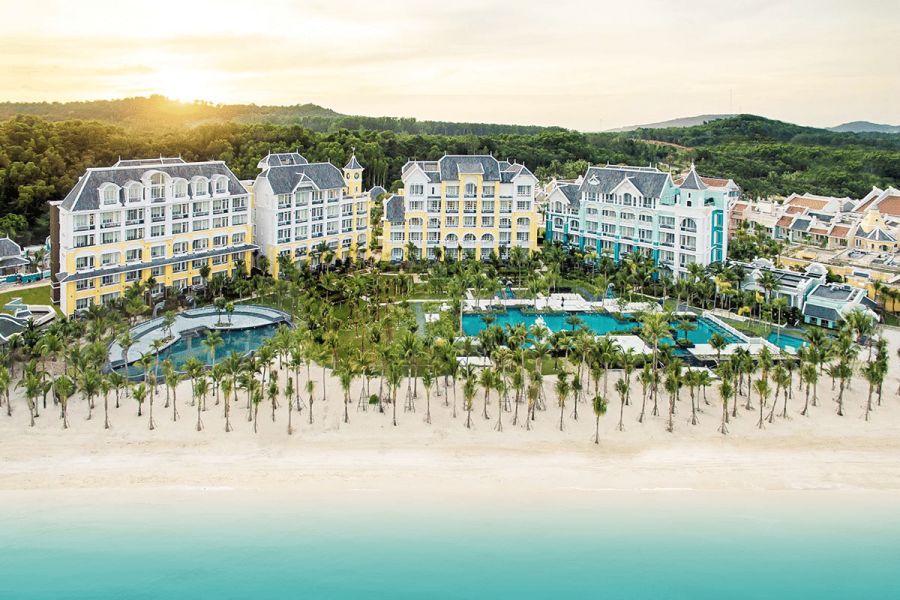
JW Marriott Phu Quoc Emerald Bay Resort & Spa

Food And Drink: Street Food Vs Restaurants

Food and drinks are big factors when comparing travel budgets in Southeast Asia. Both countries, Vietnam and Thailand, are famous for their meals at budget-friendly prices, but Vietnam often offers slightly lower prices, especially for street food and coffee.
Category
Ho Chi Minh City (USD)
Chiang Mai (USD)
Street Food Costs
1 to 3 per meal
2 to 4 per meal
Local Restaurants
3 to 7 per meal
5 to 10 per meal
Coffee, Beer & Nightlife
1 to 2 coffee / 1 to 2 beer
2 to 4 coffee / 2 to 4 beer
Overall, Ho Chi Minh City is generally cheaper for daily food and drinks, while Chiang Mai remains affordable but slightly higher in price.
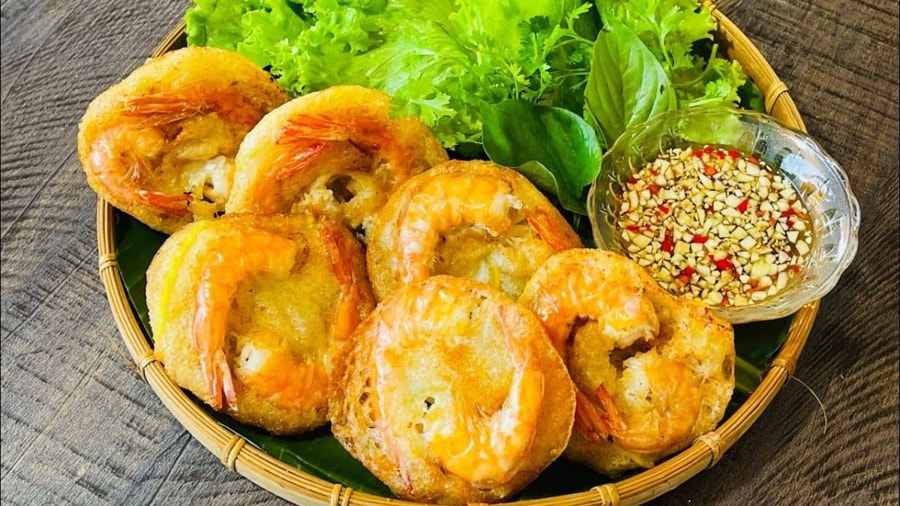
West Lake Shrimp Cakes

Transportation Costs In Vietnam And Thailand

The cost of transportation is a significant part of total travel expenses. In moving between cities or tourist areas, Vietnam is relatively more cost-effective, while traveling between islands in Thailand could blow your budget, particularly for the costs of water transportation.
Aspect
Vietnam (USD)
Thailand (USD)
Local transport (Grab, taxi, bus)
0.5 to 2 (short trips)
1 to 3 (short trips)
Intercity buses/trains
5 to 15 (sleeper buses)
10 to 25
Flights & island hopping
30 to 60 (domestic flights)
40 to 80 + ferry fees
Motorbike rental
4 to 7 per day
6 to 10 per day
Note: Vietnam’s sleeper buses are very cheap and comfortable for long distances, while Thailand’s island routes often involve extra boat and speedboat costs that make transportation more expensive overall.

Attractions And Activities: Tours, Entrance Fees, Experiences

Attractions and activities also play a major role in affecting the traveling budgets, particularly for those who like to tour and explore different destinations. Is Vietnam cheaper than Thailand in all contexts? The answer in most instances would be positive, as Vietnam charges lower entrance fees and local tours.
Category
Vietnam (USD)
Thailand (USD)
Nature & Islands
3 to 10 (national parks, beaches)
10 to 25 (islands, marine parks)
Cultural Sites
2 to 5 (temples, museums)
5 to 15 (temples, heritage sites)
Tours & Day Trips
15 to 40
30 to 70
In general, Thailand’s island activities and guided tours tend to cost more, while Vietnam offers similar experiences at lower prices.
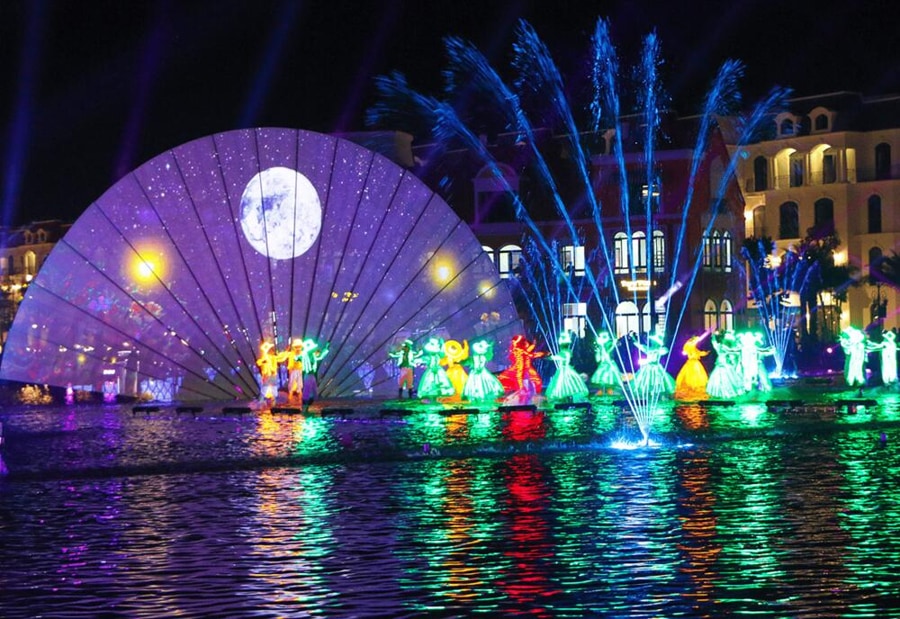
Explore Nightlife and Street Performances

Money-Saving Tips for Both Countries

Saving money while traveling in Vietnam and Thailand is not a difficult task if proper knowledge and strategies are employed, and tourists avoid visitors’ common mistakes. Proper strategies will allow you to enjoy your trip to both places without overspending and still have the experience of native culture.
  • Eat local street food. Select street food stalls and local markets over tourist restaurants to enjoy the true flavors of these cuisines at much cheaper rates every day.
  • You can also use ride hailing apps like Grab, which are cheaper than taxis and can prevent overcharging, particularly in big cities or tourist destinations.
  • Traveling in off season travel can lead to a reduction in costs as much as 30 percent.
  • Book accommodations early Booking your accommodations early will help you find good deals on your hotel stay.
  • Tourist traps some of these spots will charge higher rates, but lesser known sites will provide a similar experience at a fraction of the price.
  • Local SIM cards cheap data connections will help you find cheap transportation, restaurants, and room deals while you are traveling.
  • Taking overnight transport using sleeper buses/trains can save accommodation costs, as well as economical transport, for long-distance traveling between two cities.
  • Pay in local currency you must always pay in local currency and not the currency you carry from home to avoid low exchange rates and other charges.

FAQS About Traveling In Vietnam And Thailand

When planning your trip to Vietnam and Thailand, a number of questions may arise, and below are answers to the most frequently asked questions to help you have a smooth and enjoyable trip to Southeast Asia.
  1. How much cheaper is Vietnam compared to Thailand for travelers?
Generally speaking, Vietnam is slightly cheaper than Thailand for travelers. For backpackers in Vietnam, it is possible to live comfortably at $25t o $40 per day, whereas in Thailand, you would need $30 to $50 per day. However, there can be significant variations depending on the location and the season. The popular islands in Thailand tend to be more expensive than those in Vietnam.
  1. Do I need a visa to go to Vietnam and Thailand?
The visa policy varies depending on the country of origin. Thailand allows visa-free entry into the country for 30-45 days from many countries worldwide. Vietnam also allows visa-free entry into the country for certain nationals, while others can apply for an e-visa before arriving in Vietnam. It is recommended that you check the visa policy in 2026 before traveling to Vietnam and Thailand because visa policies can change without notice.
  1. What is the best time to visit Vietnam and Thailand?
The best time to visit both countries is from November to February, when the weather is cooler and drier. Vietnam has different climatic conditions, and the northern part can be quite cold, while the southern part is always warm. The peak season for Thailand is also from November to February.
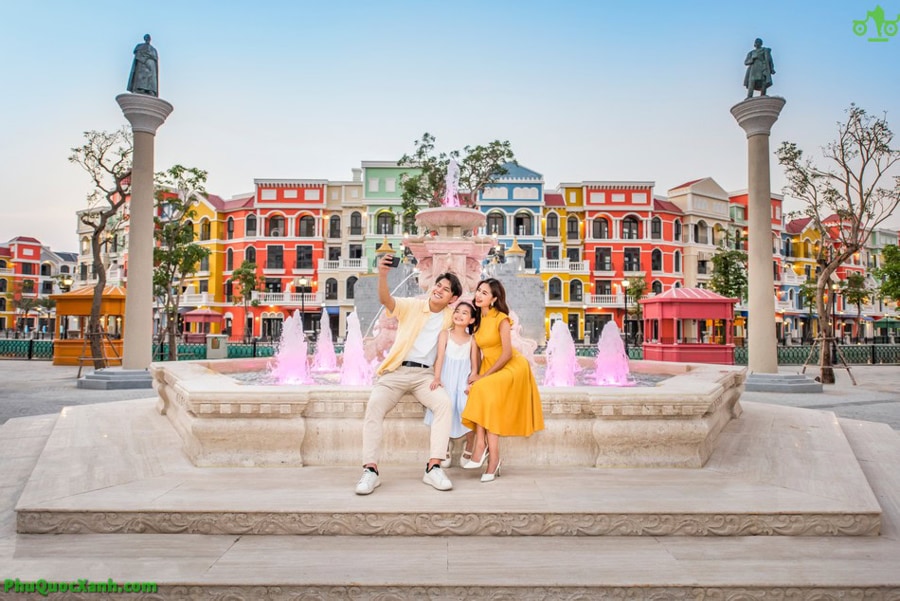
take photos in grandworld phu quoc
  1. Is it safe to travel in Vietnam and Thailand?
Vietnam and Thailand are safe destinations for travelers, including solo travelers. There are cases of petty crimes like pickpocketing in tourist areas, but otherwise, these are safe destinations for travelers. It is recommended to use reliable transport services and take out insurance for a safe and hassle-free journey in these destinations.

Final Thoughts

The answer to the question of whether Vietnam is cheaper than Thailand, our answer is yes, Vietnam is generally cheaper. When you want to travel to Vietnam, however, it is important to note that tourist prices may change over time, although generally, Vietnam is notably cheap. During the peak season, however, Vietnam and Thailand may be very expensive. When looking for the best deals and tours to Vietnam, Seni World can be of interest, since tours to Vietnam, Laos, and Cambodia can be sought there.

The Savvy Traveler’s Guide: Key Vietnamese Phrases For Your Trip

Learning Vietnamese phrases is an important resource for interacting with locals and gaining insight into life in Vietnam. From basic greetings to travel phrases, knowing a few key phrases can help visitors communicate effectively, demonstrate respect for the culture, and have more meaningful experiences.

Why Learn Basic Vietnamese Phrases?

Learning a few basic phrases in Vietnamese can make a world of difference to your experience in Vietnam. Even basic phrases help you communicate better and reach out to the people of Vietnam.

English is Not Commonly Spoken in Rural Areas

Although English is becoming more popular in large cities such as Hanoi or Ho Chi Minh City, it is still not very common in rural areas. Being able to speak a few key phrases in Vietnamese will enable you to ask basic questions and prevent confusion if English is not spoken.

Useful for Taxis, Food, and Prices

Whether you’re telling a taxi driver where you want to go, ordering street food, or asking “bao nhiêu tiền?” (how much?) Basic phrases are extremely useful. They allow you to double-check prices, understand menu items, and get around town with more confidence without relying solely on translation apps.
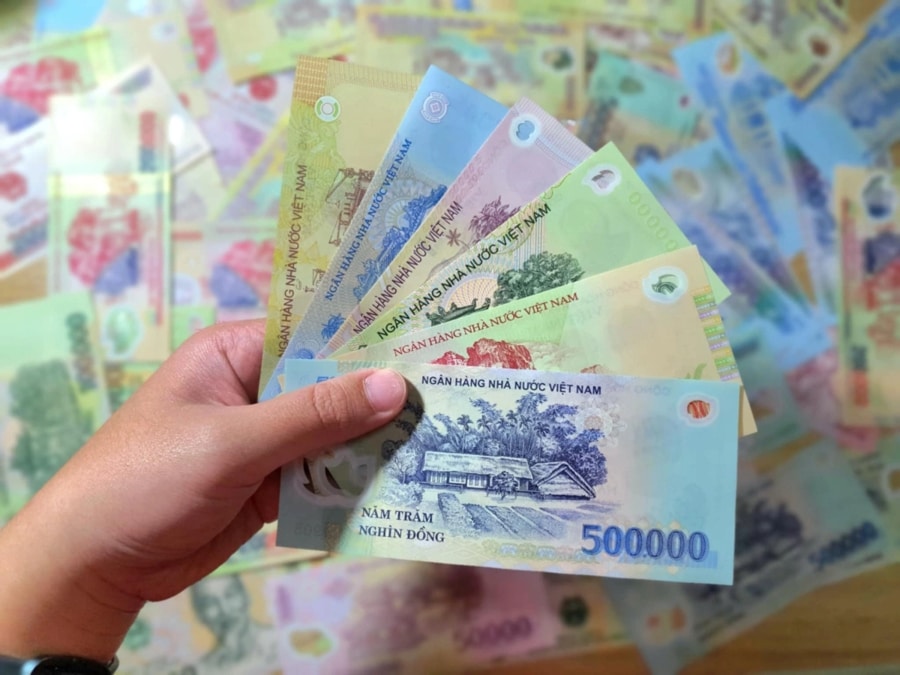
Vietnamese Money

Respects Locals

Even attempting to speak Vietnamese, such as using common phrases like “xin chào” (hello) or “cảm ơn” (thank you), goes a long way in showing respect for the local culture. This is often met with positive reactions from the locals, who may then treat the traveler with warmth and hospitality.
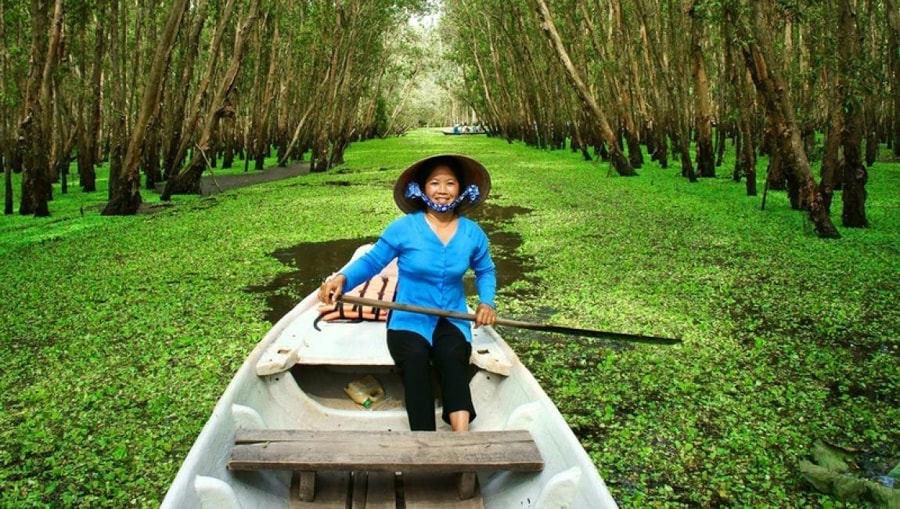
Boat Riding Through Flooded Melaleuca Forests

Makes Travel Easier

When you are able to deal with small talk by yourself, your travel experience will be less stressful. Whether it is checking into a guesthouse, shopping at a local market, or asking for directions, learning basic Vietnamese phrases will make all of these processes easier and more efficient.

Basic Greetings And Polite Expressions

Basic greetings and phrases are very important in Vietnamese communication. Learning how to greet someone correctly not only helps you initiate conversations with confidence, but it also indicates your familiarity with the culture and your friendliness.

Hello in Vietnamese

To say hello in Vietnamese, you can say: “Xin chao” (pronounced: sin chow), meaning “Hello.” This is a polite and neutral greeting that works in both formal and informal situations. “Xin” adds politeness, while “chao” means greeting. Because Vietnamese is tonal, “chao” has a falling tone, so your voice should go slightly down at the end.
Party At Lively Bars And Nightclubs

Goodbye in Vietnamese

To say goodbye, you can say: “Tam biet” (pronounced: tahm bye-et), meaning “Goodbye.” This is commonly used in more formal situations or when leaving someone you do not know well. In daily life, many people simply say “Chao anh,” “Chao chi,” or “Chao em,” depending on who they are speaking to. If you expect to see the person again, you can say: “Hen gap lai” (hen gap lie), which means “See you again.”

Thank You in Vietnamese

To say thank you, say: “Cam on” (pronounced: gahm uhn), meaning “Thank you.” This is the standard and most widely used expression of gratitude. In real conversations, Vietnamese speakers usually add a pronoun after it, such as “Cam on anh,” “Cam on chi,” or “Cam on em,” to show respect. For stronger appreciation, you can say: “Cam on nhieu,” which means “Thank you very much.”

Sorry in Vietnamese

To apologize or say sorry, say: “Xin loi” (pronounced: sin loy), meaning “Sorry” or “I apologize.” “Xin” makes the phrase polite, and “loi” means mistake or fault. This phrase can also be used like “excuse me” when you need to get someone’s attention. You can add pronouns to make it more respectful, such as “Xin loi anh” or “Xin loi chi.”

Please in Vietnamese

Vietnamese does not always use one single word for “please,” but you can say: “Lam on” (pronounced: lahm uhn), meaning “Please,” especially when asking for help. For example, “Lam on giup toi” means “Please help me.” In more formal situations, you may hear “Vui long” (vwee long), which also means “Please,” such as in “Vui long doi mot chut,” meaning “Please wait a moment.” A polite tone and respectful pronouns are just as important as the words themselves.

How Are You in Vietnamese

To ask “How are you?” you can say: “Ban khoe khong?” (pronounced: ban kweh khong?), meaning “Are you well?” This is a neutral and safe option when speaking with someone around your age. If speaking to someone older or younger, you can adjust the pronoun, such as “Anh khoe khong?” or “Em khoe khong?” To respond, you can say: “Toi khoe, cam on,” meaning “I am fine, thank you.”

Vietnamese Phrases for Restaurants & Food Orders

Trying local food is one of the best parts of traveling in Vietnam, and knowing a few useful phrases can make your dining experience smoother and more enjoyable. Below are essential expressions to help you confidently order food, ask questions, and handle payment in Vietnamese restaurants.

Ordering Food

A simple and polite way to order is: “Cho toi…” (pronounced: chaw toy), which means “I would like…”. For example, “Cho toi mot pho bo” means “I would like one beef pho.” You can also say “Lam on cho toi…” (lahm uhn chaw toy), meaning “Please give me…”, to sound more polite when ordering dishes or drinks.
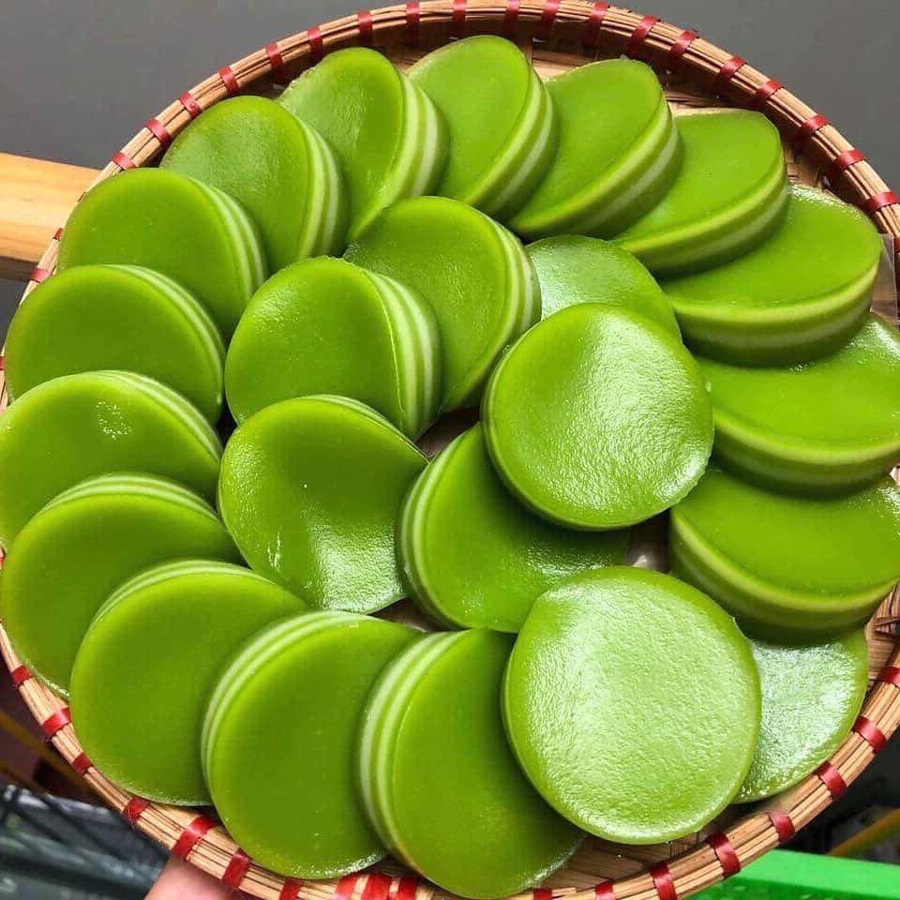
Pig skin cake is a steamed layered cake

Asking for the Menu

To ask for the menu, say: “Cho toi xem menu” (pronounced: chaw toy sem men-yu), which means “Please let me see the menu.” In smaller local restaurants, you might hear “thuc don” instead of “menu,” as it means the same thing. Saying this politely with a smile will usually get a quick and friendly response.

Vegetarian Phrases

If you are a vegetarian, you can say: “Toi an chay” (pronounced: toy an chai), meaning “I eat vegetarian food.” To ask whether a dish contains meat, say: “Mon nay co thit khong?” (mon nai kaw tit khong?), which means “Does this dish have meat?” These phrases help avoid misunderstandings, especially in local eateries.
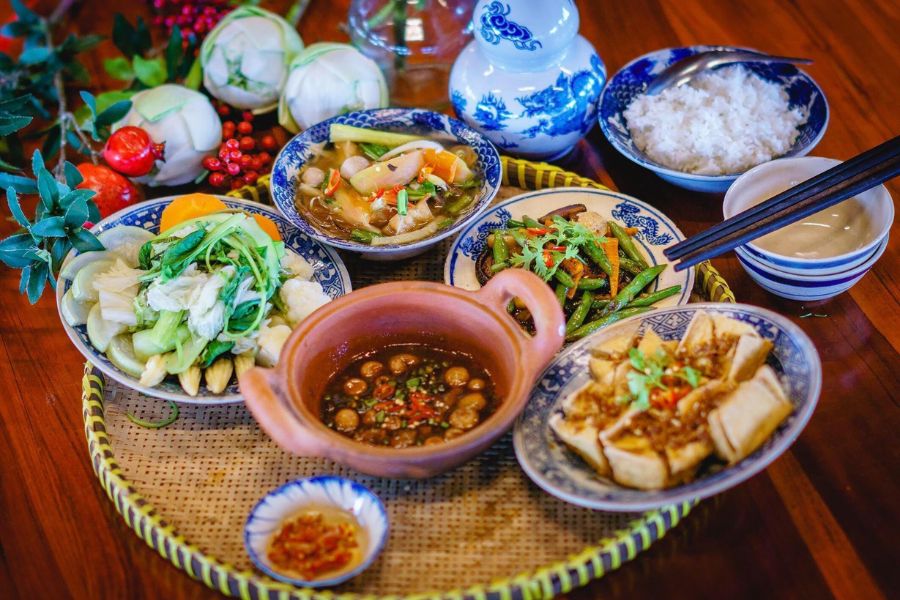
Local Vegetarian Meal Outside The Temple

Asking the Price

To ask how much something costs, say: “Bao nhieu tien?” (pronounced: bao nyew tyen?), meaning “How much is it?” Vendors may respond with the price in Vietnamese numbers, so learning basic numbers can be helpful. This phrase is useful not only in restaurants but also in markets and street food stalls.

Paying the Bill

When you are ready to pay, say: “Tinh tien” (pronounced: ting tyen), which means “Please calculate the bill.” You can also say “Cho toi thanh toan” (chaw toy tahn toan), meaning “I would like to pay.” Using these phrases makes the payment process smoother and shows respect for local language and culture.

Vietnamese Phrases for Transportation

Getting around Vietnam can feel busy at first, especially in big cities with heavy traffic and many motorbikes. Knowing a few key transportation phrases will help you communicate clearly with drivers and feel more confident when taking taxis, ride-hailing services, or local buses.

“How much?”

To ask the price of a ride, say: “Bao nhieu tien?” (pronounced: bao nyew tyen?), which means “How much is it?” If you want to ask about a specific destination, you can say: “Den [place name] bao nhieu tien?”, meaning “How much to go to [place]?” This phrase is especially useful when taking traditional taxis or motorbike taxis where prices may need to be agreed upon before departure. Learning Vietnamese numbers can also help you better understand the driver’s response.
What to buy in Vietnam

“Stop here.”

When you want the driver to stop, say: “Dung o day.” (Northern pronunciation: zoong uh day; Southern pronunciation: zoong uh zai), meaning “Stop here.” For extra politeness, add “Lam on” at the beginning: “Lam on dung o day.” This phrase is very practical when you see your destination ahead or need to get off quickly. You can also gently point to the location while speaking to make your request clearer.

“Go straight.”

To tell a driver to continue forward, say: “Di thang.” (Northern: yee thang; Southern: zee thang), which means “Go straight.” This phrase is helpful if you are giving directions manually or correcting a route. You can combine it with simple hand gestures to avoid confusion, especially if pronunciation is not perfect. Knowing this phrase helps you feel more in control during your journey.

Vietnamese Phrases for Shopping & Markets

Shopping at local markets in Vietnam is a fun and cultural experience, especially when you know a few useful phrases. Whether you are buying souvenirs, street food, or handmade products, these expressions will help you communicate more confidently and politely.

Asking Price

To ask the price of an item, say: “Bao nhieu tien?” (pronounced: bao nyew tyen?), meaning “How much is it?” If you want to refer to a specific item, you can say: “Cai nay bao nhieu tien?” (kai nai bao nyew tyen?), which means “How much is this?” Sellers will usually respond with the price in Vietnamese numbers, so listening carefully is important.

Bargaining

Bargaining is common in traditional markets. To negotiate politely, you can say: “Bot di duoc khong?” (pronounced: bot zee duoc khong?), meaning “Can you reduce the price?” Another simple way is “Giam gia duoc khong?”, which means “Can you give a discount?” Always smile and keep a friendly tone, as bargaining in Vietnam is usually lighthearted and respectful.

Numbers & Money

Understanding basic numbers will make shopping much easier. For example, “mot” (1), “hai” (2), “ba” (3), “muoi” (10), “tram” (100), and “nghin” (1,000). The Vietnamese currency is called “dong.” When sellers say the price, they may shorten large numbers, so paying attention to context is helpful to avoid confusion.

Discounts

If you want to ask directly about promotions, say: “Co giam gia khong?” (pronounced: kaw zam za khong?), meaning “Is there a discount?” In some shops, especially larger stores, prices may be fixed, so bargaining might not apply. However, in markets or when buying multiple items, asking politely for a small discount is quite common and often accepted.

FAQs About Vietnamese Phrases

Knowing some basic Vietnamese words can ease your travel and help you relate better to the locals. Here are some of the basic questions tourists usually ask at the beginning of their learning of basic Vietnamese words.
  • Is it hard to pronounce Vietnamese words?
Vietnamese pronunciation may be tricky at the beginning, but it is not extremely difficult. This is because it is a tonal language with six tones in the Northern accent. The meaning of words changes according to the tone used. However, after careful attention to the pronunciation of native speakers, it is easy to learn basic words and phrases.
  •  Do Vietnamese people appreciate foreigners speaking Vietnamese?
Yes, the people of Vietnam appreciate and welcome foreigners who show some interest in learning and using some of the basic Vietnamese words. For example, using a simple word like “xin chao” for “hello” and “cam on” for “thank you” can give you a warm welcome.
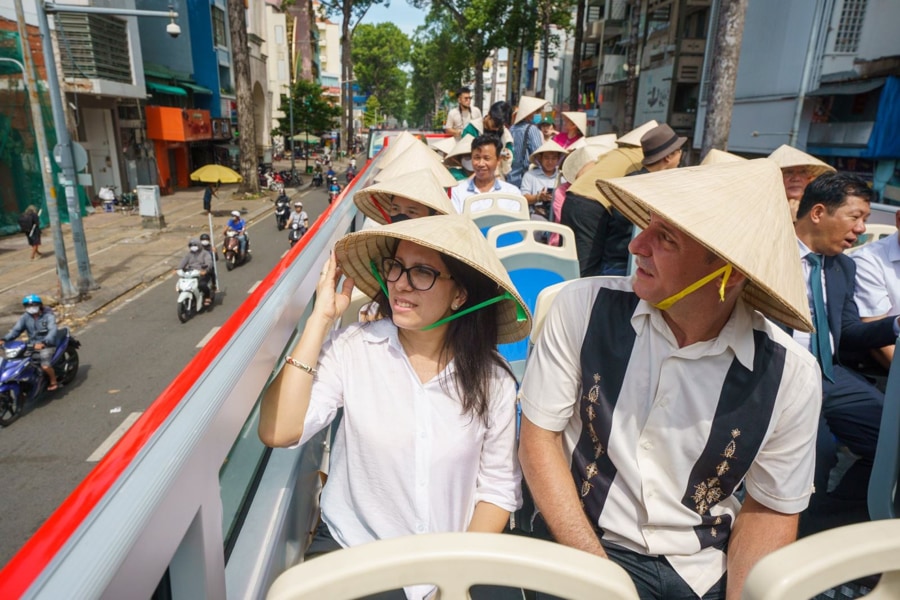
sun protection when visit ho chi minh city
  • Is English commonly spoken throughout Vietnam?
Yes, English is commonly spoken, especially in big cities, tourist areas, hotels, and restaurants. Nevertheless, if you are traveling through rural areas, such as local markets, English might not be spoken so well. It is always a good idea to know a few basic Vietnamese phrases, which can be very useful, especially if you are not staying in big cities.
  • Do I need to know Northern or Southern Vietnamese phrases?
Both the northern and southern accents are generally understood throughout Vietnam. Although the northern accent, based on Hanoi, is usually taught, the southern accent, based on Ho Chi Minh City, has a softer sound.
  • Is English commonly spoken throughout Vietnam?
Yes, English is commonly spoken, especially in big cities, tourist areas, hotels, and restaurants. Nevertheless, if you are traveling through rural areas, such as local markets, English might not be spoken so well. It is always a good idea to know a few basic Vietnamese phrases, which can be very useful, especially if you are not staying in big cities.
  • Do I need to know Northern or Southern Vietnamese phrases?
Both the northern and southern accents are generally understood throughout Vietnam. Although the northern accent, based on Hanoi, is usually taught, the southern accent, based on Ho Chi Minh City, has a softer sound.

Final Thoughts: Speak A Little, Travel Better

Making an effort to learn Vietnamese phrases can really make a big difference in enhancing your travel experience by allowing you to connect with people in a more endearing manner. While traveling to Vietnam, making an effort to speak a few words in Vietnamese can really make a big difference in enhancing your travel experience by allowing you to connect with people in a more endearing manner. If you are interested in exploring Vietnam in a more meaningful manner, then look no further than Seni World.

Budget Travel Southeast Asia: Explore More For Much Less In 2026

One of the best options for budget travel in Southeast Asia is a great choice for adventurous travelers, and it is sure to provide you with a rich experience without burning a hole in your pocket. From a variety of budget-friendly accommodations, delicious street food, and transportation options, Southeast Asia has it all for you. The region has a lot to offer, be it cities, temples, islands, or mountains, and it is sure to provide you with a rich experience without burning a hole in your pocket.

  1. Why Choose Vietnam, Laos & Cambodia for Budget Travel?

Selecting Vietnam, Laos, and Cambodia as budget travel destinations is a mix that is hard to beat. These countries offer tremendous value for money, with budget-friendly options for accommodation, transportation, and food that suit every budget. Whether it is the city or the countryside, travelers can enjoy varied landscapes without burning a hole in their pockets.
Apart from being budget-friendly, these countries have plenty to offer in terms of heritage and local experiences. Temples, rivers, markets, and friendly locals are some of the experiences that make travel memories. The connectivity between the destinations also makes it easy to travel between countries and explore more on a budget.
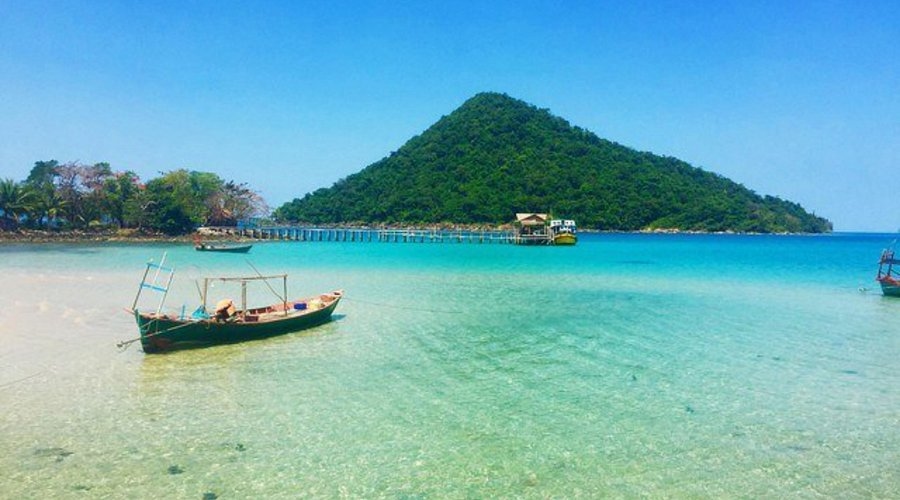
Saracen Bay in Koh Rong
  1. Budget Travel in Vietnam (Cost Breakdown And Tips)

Vietnam is one of the most affordable destinations in Asia, offering excellent value for food, transportation, and accommodation. For travelers interested in budget travel Southeast Asia, Vietnam stands out as a place where you can enjoy rich cultural experiences and diverse landscapes without overspending. Below is a simple cost breakdown to give you a clearer idea of how much you might need per day.

Hanoi

Category
Budget Traveler
Mid-Range Traveler
Notes
Accommodation
8 to 20 / night
30 to 80 / night
Hostels & homestays are very affordable
Food & Drinks
8 to 15 / day
20 to 40 / day
Street food is the cheapest and most widely available
Local Transportation
3 to 10 / day
10 to 20 / day
Includes Grab, buses, or short taxi rides
Attractions & Activities
5 to 15 / day
15 to 30 / day
Museums, temples, tours
Estimated Daily Total
25 to 60
80 to 170
Depends on travel style

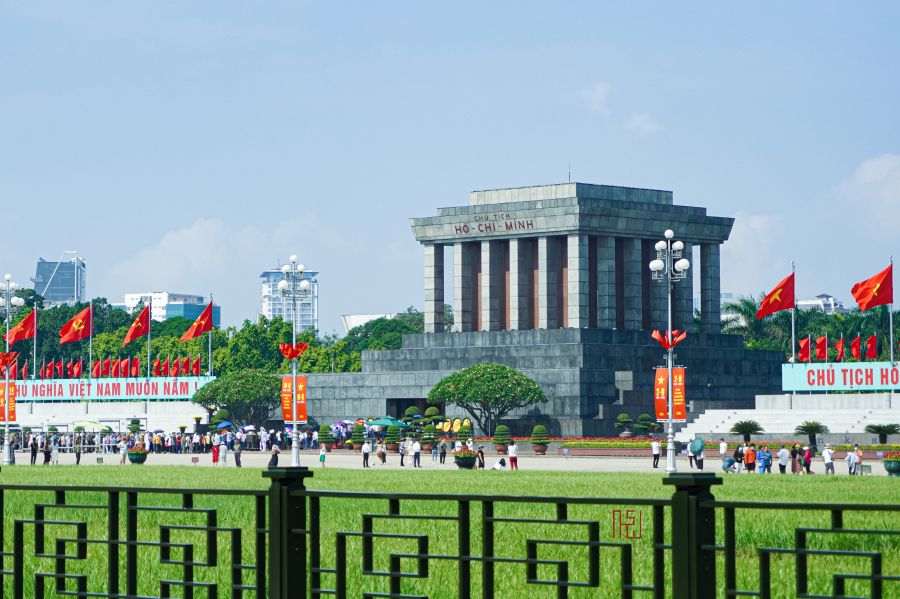
Ho Chi Minh Mausoleum

Hoi An

Category
Budget (USD)
Mid-range (USD)
Luxury (USD)
Unit / Notes
Accommodation
8 to 15
25 to 50
100 to 300+
Per night (hostel → hotel → resort)
Food & Drinks
7 to 12
15 to 25
40 to 80+
Per day
Local Transportation
3 to 8
10 to 20
40 to 70
Per day (walking, bike, taxi, private car)
Airport Transfer (Da Nang → Hoi An)
12 to 20
12 to 20
25 to 50
One way
Sightseeing & Activities
5 to 10
10 to 25
30 to 80+
Per day (tickets, tours, boat rides)
Coffee / Alcohol / Nightlife
2 to 6
6 to 15
20 to 50
Per day
Shopping & Souvenirs
5 to 30
30 to 100
100 to 500+
Per trip
Miscellaneous (SIM, tips, water, etc.)
3 to 8
8 to 15
15 to 40
Per day
Estimated Total Per Person / Day
20 to 35
50 to 80
150 to 300+
Overall daily budget
Estimated Total for 3 Days
60 to 105
150 to 240
450 to 900+
Per person
Estimated Total for 1 Week
140 to 245
350 to 560
1,050 to 2,100+
Per person

Thu Bon River by night at Hoi An ancient town

Da Nang

Category
Budget (USD)
Mid-range (USD)
Luxury (USD)
Unit / Notes
Accommodation
10 to 20
30 to 70
120 to 350+
Per night (hostel → hotel → beachfront resort)
Food & Drinks
8 to 15
18 to 30
45 to 90+
Per day
Local Transportation
4 to 10
12 to 25
45 – 80
Per day (bike, motorbike, taxi, private car)
Airport Transfer (from Da Nang International Airport)
5 to 12
8 to 15
20 to 40
One way
Sightseeing & Activities
8 to 15
15 to 40
40 to 120+
Per day (attractions, tours, cable car, etc.)
Coffee / Alcohol / Nightlife
3 to 8
8 to 20
25 to 60
Per day
Shopping & Souvenirs
10 – 40
40 to 120
120 to 600+
Per trip
Miscellaneous (SIM, tips, water, etc.)
4 to 10
10 to 18
20 – 50
Per day
Estimated Total Per Person / Day
30 to 45
70 to 110
180 to 350+
Overall daily budget
Estimated Total for 3 Days
90 to 135
210 to 330
540 to 1,050+
Per person
Estimated Total for 1 Week
210 to 315
490 to 770
1,260 to 2,450+
Per person

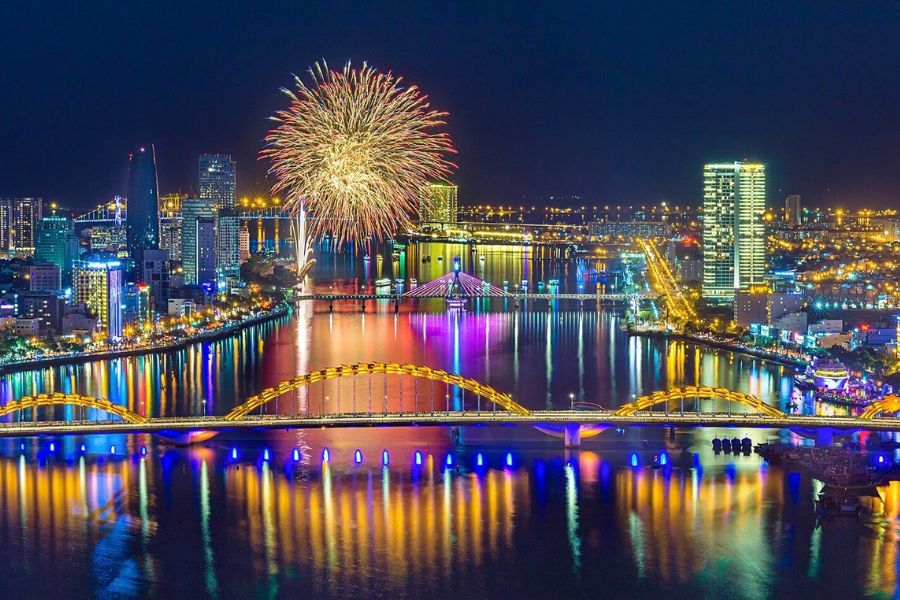
The Dragon Bridge (also called Cau Rong)

Ha Long Bay

Category
Budget (USD)
Mid-range (USD)
Luxury (USD)
Unit / Notes
Accommodation (on cruise / hotel)
45 to 80
90 to 180
250 to 600+
Per night (overnight cruise or hotel stay)
Food & Drinks
Included or 10 to 20
Included or 20 to 40
Included or 40 to 100+
Often included in cruise packages
Local Transportation
5 to 15
15 to 30
40 to 80
Per day (taxi, shuttle, private car)
Transfer from Hanoi (round trip)
15 to 25
25 to 50
80 to 150
Shuttle or private transfer
Cruise / Sightseeing Activities
40 to 70
80 to 180
250 to 600+
Kayaking, caves, islands, boat tours
Coffee / Alcohol / Bar
3 to 10
10 to 25
30 to 80
Per day (higher prices on cruises)
Shopping & Souvenirs
5 to 25
25 to 80
80 to 300+
Pearls, handicrafts, gifts
Miscellaneous (tips, fees, extras)
5 to 12
12 to25
30 – 70
Per day
Estimated Total Per Person / Day
70 to 120
150 to 300
400 to 900+
Cruise-based destination
Estimated Total for 2 Days / 1 Night
140 to 240
300 to 600
800 to 1,800+
Most common trip length
Estimated Total for 3 Days / 2 Nights
210 to 360
450 to 900
1,200 to 2,700+
Full cruise experience
  1. Budget Travel in Laos (Cost Breakdown And Tips)

Budget travel in Laos can be considered relatively cheap, with each city having slightly different prices depending on the level of tourism. The following table compares the estimated daily cost of travel in three major cities, taking into account transportation, accommodation, food, and activities.

Luang Prabang

Category
Budget (USD)
Mid-range (USD)
Luxury (USD)
Unit / Notes
Accommodation
10 to 25
35 to 80
120 to 300+
Per night (guesthouse → boutique hotel → luxury resort)
Food & Drinks
8 to 15
18 to 30
40 to 90+
Per day (street food → restaurants → fine dining)
Local Transportation
5 to 12
12 to 25
40 to 70
Per day (bike, tuk-tuk, private car)
Airport Transfer
5 to 10
10 to 15
20 to 40
One way
Sightseeing & Activities
8 – 20
20 to 40
50 to 120+
Waterfalls, temples, boat trips, tours
Coffee / Alcohol / Nightlife
3 to 6
6 to 15
20 to 50
Per day
Shopping & Souvenirs
5 – 30
30 to 100
100 to 400+
Per trip (night market, handicrafts)
Miscellaneous (SIM, tips, water, etc.)
3 to 8
8 to 15
15 to 40
Per day
Estimated Total Per Person / Day
35 to 70
70 to 140
180 to 450+
Overall daily budget
Estimated Total for 3 Days
105 to 210
210 to 420
540 to 1,350+
Per person
Estimated Total for 1 Week
245 to 490
490 to 980
1,260 to 3,150+
Per person

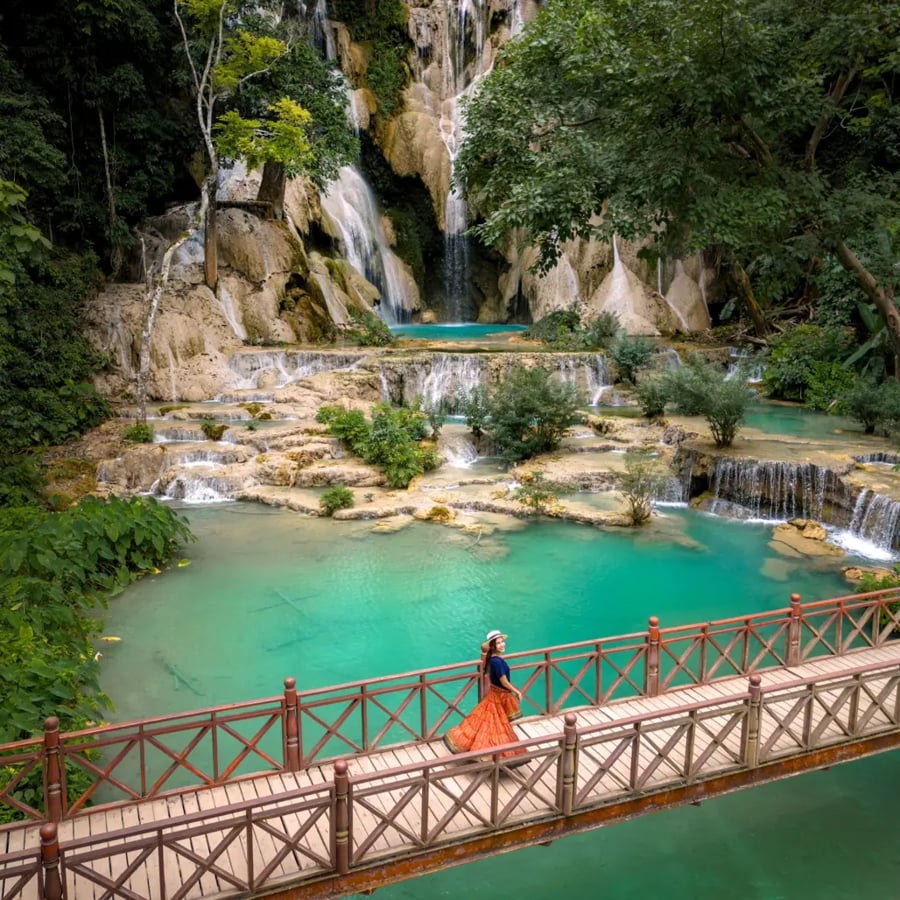
Kuang Si Waterfalls is one of Laos’ most stunning natural attractions

Vang Vieng

Category
Budget (USD)
Mid-range (USD)
Luxury (USD)
Unit / Notes
Accommodation
8 to 20
25 to 60
100 to 250+
Per night (guesthouse → hotel → resort)
Food & Drinks
7 to 12
15 to 25
35 to 70+
Per day (local food → restaurants → premium dining)
Local Transportation
4 to 10
10 to 20
35 to 60
Per day (bike, motorbike, tuk-tuk, private car)
Intercity Transport (bus / train)
8 to 20
15 to 30
50 to 120
One way to/from nearby cities
Activities & Adventure Tours
10 to 25
25 to 60
80 to 180+
Tubing, kayaking, caves, hot air balloon
Coffee / Alcohol / Bars
3 to 6
6 to 15
20 to 45
Per day
Shopping & Souvenirs
5 to 20
20 to 60
60 to 250+
Per trip
Miscellaneous (SIM, water, tips, etc.)
3 to 8
8 to 15
15 to 35
Per day
Estimated Total Per Person / Day
30 to 60
60 to 120
160 to 400+
Overall daily budget
Estimated Total for 3 Days
90 to 180
180 to 360
480 to 1,200+
Per person
Estimated Total for 1 Week
210 to 420
420 to 840
1,120 to 2,800+
Per person

Vientiane

Category
Budget (USD)
Mid-range (USD)
Luxury (USD)
Unit / Notes
Accommodation
12 to 30
35 to 80
120 to 300+
Per night (guesthouse → hotel → upscale hotel)
Food & Drinks
9 to 18
18 to 35
45 to 90+
Per day (local eateries → restaurants → fine dining)
Local Transportation
6 to 15
12 to 25
40 to 70
Per day (bike, tuk-tuk, taxi, private car)
Airport Transfer
5 to 10
10 to15
20 to 40
One way
Sightseeing & Activities
5 to 15
15 to 35
40 to 100+
Temples, museums, riverfront tours
Coffee / Alcohol / Nightlife
4 to 8
8 to 18
25 to 60
Per day
Shopping & Souvenirs
8 to 40
40 to 120
120 to 500+
Per trip
Miscellaneous (SIM, tips, water, etc.)
4 to 10
10 to 18
20 to 50
Per day
Estimated Total Per Person / Day
40 to 80
70 to 150
180 to 450+
Overall daily budget
Estimated Total for 3 Days
120 to 240
210 to 450
540 to 1,350+
Per person
Estimated Total for 1 Week
280 to 560
490 to 1,050
1,260 to 3,150+
Per person

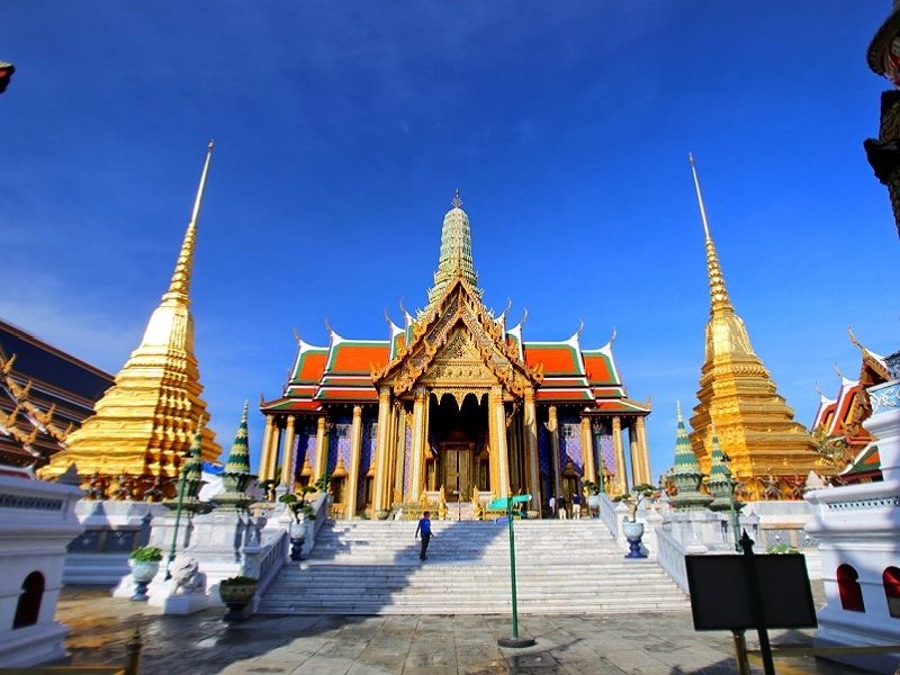
Timeless Age-Old Architecture of Wat Ho Phra Keo

  1. Budget Travel in Cambodia (Cost Breakdown And Tips)

Budget travel in Cambodia is relatively cheap, and the cost depends on the level of tourism and how close it is to the tourist sites. The following table indicates the estimated cost of travel per day in Siem Reap for foreign tourists (USD).

Siem Reap

Category
Budget (USD)
Mid-range (USD)
Luxury (USD)
Unit / Notes
Accommodation
8 to 20
25 to 60
100 to 300+
Per night (hostel → hotel → luxury resort)
Food & Drinks
7 to 12
15 to 30
40 to 90+
Per day (street food → restaurants → fine dining)
Local Transportation
5 to 12
12 to 25
35 to 70
Per day (bike, tuk-tuk, taxi, private car)
Airport Transfer
6 to 12
12 to 20
25 to 45
One way
Sightseeing & Activities
15 – 40
40 to 80
80 to 180+
Temple passes, tours, cultural shows
Coffee / Alcohol / Nightlife
3 to 8
8 to 18
25 to 60
Per day
Shopping & Souvenirs
5 to 25
25 to 80
80 to 350+
Per trip (markets, handicrafts)
Miscellaneous (SIM, tips, water, etc.)
3 to 8
8 to 15
15 to 40
Per day
Estimated Total Per Person / Day
40 to 75
80 to 160
200 to 500+
Overall daily budget
Estimated Total for 3 Days
120 to 225
240 to 480
600 to 1,500+
Per person
Estimated Total for 1 Week
280 to 525
560 to 1,120
1,400 to 3,500+
Per person

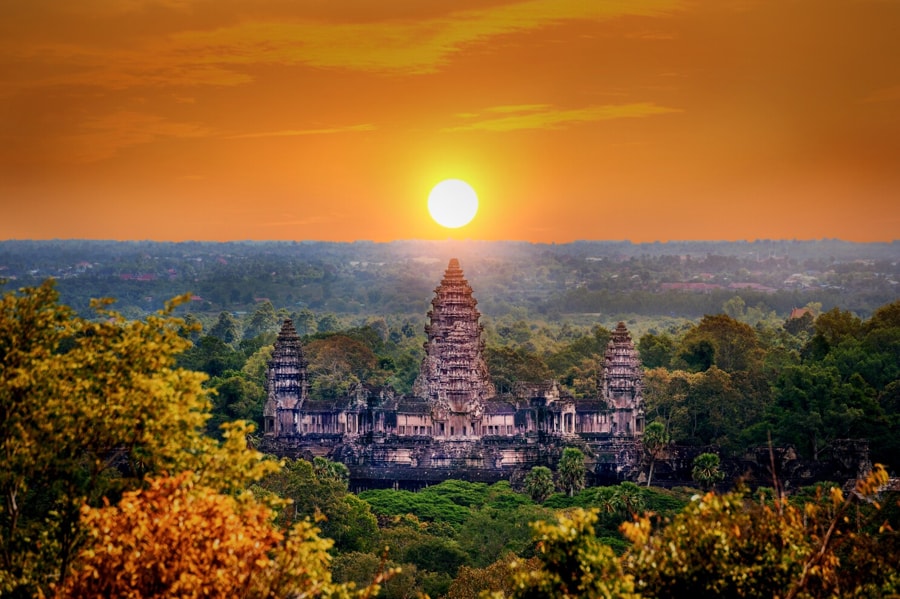
Angkor Wat

Category
Budget (USD)
Mid-range (USD)
Luxury (USD)
Unit / Notes
Temple Pass
37
62
72
1-day / 3-day / 7-day pass
Accommodation
8 to 20
25 to 60
100 to 300+
Per night nearby
Food & Drinks
7 to 12
15 to 30
40 to 90+
Per day
Local Transportation
10 to 15
15 to 30
40 to 80
Tuk-tuk or private car around temple complex
Tour Guide
15 to 25
25 to 40
50 to 100+
Optional, per day
Sunrise / Special Tours
5 to 10
10 to 25
30 to 80
Optional experiences
Coffee / Snacks
2 to 6
6 to 12
15 to 30
Per day inside complex
Souvenirs
5 to 20
20 to 60
60 to 250+
Per trip
Miscellaneous (tips, water, etc.)
3 to 8
8 to 15
15 to 40
Per day
Estimated Total Per Person / Day
50 to 90
90 to 180
220 to 500+
Including visit costs

angkor wat temple in siem reap

Phnom Penh

Category
Budget (USD)
Mid-range (USD)
Luxury (USD)
Unit / Notes
Accommodation
10 to 25
30 to 70
120 to 300+
Per night (guesthouse → hotel → luxury hotel)
Food & Drinks
8 to 15
18 to 35
45 to 90+
Per day (street food → restaurants → fine dining)
Local Transportation
5 to 12
12 to 25
35 to 70
Per day (tuk-tuk, ride-hailing, taxi, private car)
Airport Transfer
6 to 12
12 to 20
25 to 45
One way
Sightseeing & Activities
8 to 20
20 to 45
50 to 120+
Museums, palaces, river cruises
Coffee / Alcohol / Nightlife
3 to 8
8 to 20
25 to 60
Per day
Shopping & Souvenirs
5 to 30
30 to 100
100 to 400+
Per trip (markets, handicrafts)
Miscellaneous (SIM, tips, water, etc.)
3 to 8
8 to 15
15 to 40
Per day
Estimated Total Per Person / Day
40 to 75
80 to 160
200 to 500+
Overall daily budget
Estimated Total for 3 Days
120 to 225
240 to 480
600 to 1,500+
Per person
Estimated Total for 1 Week
280 to 525
560 to 1,120
1,400 to 3,500+
Per person

Koh Rong

Category
Budget (USD)
Mid-range (USD)
Luxury (USD)
Unit / Notes
Accommodation
10 to 25
35 to 90
120 to 350+
Per night (bungalow → beachfront resort)
Food & Drinks
10 to 18
20 to 40
50 to 100+
Per day (imported goods raise prices)
Local Transportation
2 to 8
8 to 15
20 to 50
Walking, boat taxi, motorbike rental
Ferry Transfer (round trip)
20 to 30
25 to 40
50 to 80
From mainland port
Activities & Tours
5 to 15
15 to 40
40 to 120+
Snorkeling, diving, boat trips, plankton tours
Coffee / Alcohol / Beach Bars
4 to 10
10 to 25
30 to 80
Per day
Shopping & Souvenirs
5 to 20
20 to 60
60 to 250+
Limited island shopping
Miscellaneous (tips, water, etc.)
3 to 8
8 to 15
15 to 40
Per day
Estimated Total Per Person / Day
45 to 85
90 to 180
250 to 550+
Overall daily budget
Estimated Total for 3 Days
135 to 255
270 to 540
750 to 1,650+
Per person
Estimated Total for 1 Week
315 to 595
630 to 1,260
1,750 to 3,850+
Per person

Saracen Bay in Koh Rong

  1. Transportation Between Countries (Money-Saving Routes)

The cost of traveling between Vietnam and Laos is quite reasonable, and there are a number of ways to make the journey by land or air. The following table compares the different modes of transportation that can be used to travel between the two countries and the approximate costs associated with each mode.

Vietnam ↔ Laos

Transport Type
Price Range (USD)
Travel Time
Typical Route / Notes
Best For
Local Bus
20 to 35
18 to 30 hrs
Basic sleeper or standard bus across land borders
Lowest cost travelers
Sleeper / Tourist Bus
30 to 60
16 to 24 hrs
More comfortable long-distance cross-border service
Budget comfort
Minivan / Coach Combination
35 to 70
14 to 22 hrs
Transfer via major border crossings
Flexible routing
Train + Bus Combination
40 to 80
18 to 30 hrs
Train in Vietnam + bus crossing border
Mixed comfort option
Budget Flight
80 to 160
1 to 1.5 hrs flight
Direct international routes
Fastest option
Full-service Airline
150 to 300+
1 to 1.5 hrs flight
Checked baggage + flexible ticket
Comfort and convenience

Laos ↔ Cambodia

Transport Type
Price Range (USD)
Travel Time
Typical Route / Notes
Best For
Local Bus
25 to 40
10 to 16 hrs
Basic cross-border buses via southern Laos
Lowest cost travel
Tourist / Sleeper Bus
35 to 60
10 to to 14 hrs
More comfortable long-distance bus service
Budget comfort
Minivan / Bus Combination
40 to 75
9 to 14 hrs
Transfer between border towns + vehicle change
Flexible schedules
Private Car Transfer
120 to 250
7 to 10 hrs
Direct cross-border private transport
Convenience & groups
Budget Flight (with stopover)
120 to 250
3 to 6 hrs total
Usually requires connecting flight
Faster travel
Full-service Airline
200 to 450+
3 to 6 hrs total
Premium ticket with baggage & flexibility
Comfort & speed
  1. FAQs About Budget Travel Southeast Asia

Budget travel in Southeast Asia is popular because the region provides varied cultures, cuisine, and scenery at affordable prices. Some of the questions that people ask when planning a budget-friendly trip to the region are highlighted below.
  1. Do I need travel insurance for budget travel?
Yes, it is highly recommended to purchase travel insurance even for budget travel. Medical emergencies, lost luggage, or trip delays can occur anywhere, and the cost of medical treatment can be high for foreigners. Basic travel insurance plans are generally inexpensive and can save a lot of money in unexpected situations.
  1. Which is more helpful, cash or credit cards, when traveling on a budget?
Cash is still the most widely accepted form of payment, especially in local markets and small restaurants. Credit cards are accepted in major cities, but there may be charges for withdrawing cash from ATMs. It is always a good idea to have small bills handy and a backup card in case of an emergency.
  1. How safe is budget travel in Southeast Asia?
Overall, Southeast Asia is a very safe place to travel, whether it’s your first time traveling alone or you are an experienced traveler. Nevertheless, there is always the risk of petty theft, such as pickpocketing or bag snatching, in crowded tourist spots.
  1. When is the cheapest time to travel?
The low or shoulder season is the cheapest time to travel. During this time, accommodation is cheaper, and there are fewer tourists. This period usually coincides with the rainy season. Rainy seasons are characterized by short bursts of rain, and hence, travel is still very feasible.
  1. Is bargaining expected when shopping?
Yes, bargaining is expected in many street markets and small shops. The sellers always expect some bargaining, especially when it comes to souvenirs and clothing. Politeness and friendliness are always expected to result in a better price.
  1. Final Thoughts

Budget travel Southeast Asia is an incredible bargain, enabling you to discover the region’s diverse cultures, delicious food, and breathtaking scenery without breaking the bank. Whether you’re interested in exploring bustling cities or serene islands, Southeast Asia is a region that makes it simple to see more for less. With a little planning and resourcefulness, your budget can go even further. If you are ready to begin your budget-friendly adventure, Seni World can help you travel better in Southeast Asia.
Pu Luong Nature Reserve

Pu Luong Nature Reserve: Vietnam’s Quiet Green Retreat

Pu Luong Nature Reserve, which is located in the north of Vietnam, is a secret paradise of green forests, rice terraced fields, and picturesque Thai villages. This area provides visitors with amazing landscapes, diverse wildlife, and opportunities to experience the local culture.

Introduction To Pu Luong Nature Reserve

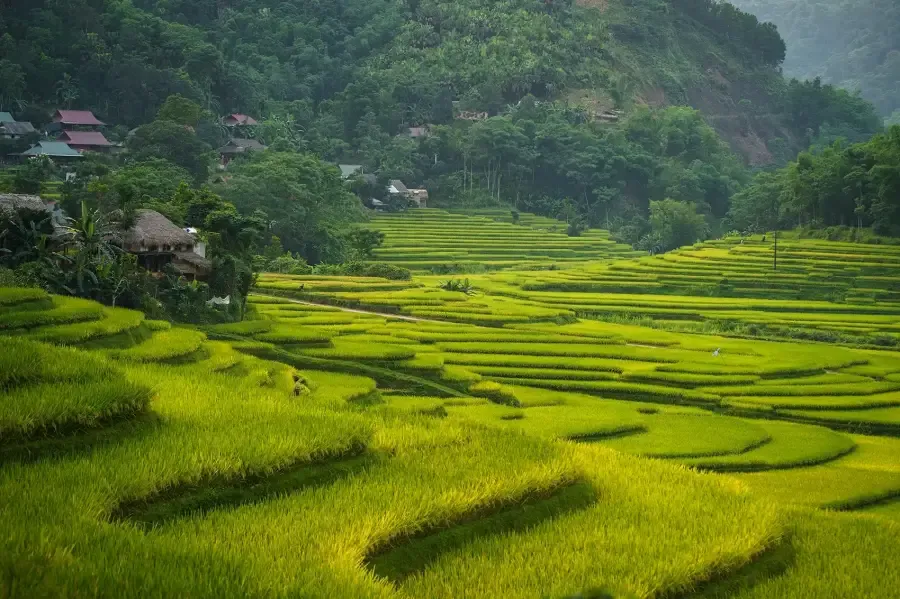
Pu Luong Nature Reserve, located in northern Vietnam and extending to 17600 hectares, is a beautiful protected area, featuring stunning limestone mountain ranges with lush tropical forests, vast terraced rice fields like an emerald patchwork throughout the valley, etc. This reserve is home to a diverse flora and fauna, providing an ecosystem that is environmentally responsible while preserving a traditional, peaceful landscape for the ethnic groups of the local Thai and Muong people, who live in this location.
Pu Luong Nature Reserve Vietnam’s Quiet Green Retreat
People who visit Pu Luong will find that the combination of being able to experience untouched natural beauty, combined with authentic village living, makes it an excellent choice for trekking, eco-tourism, and cultural immersion. You will find opportunities to hike through pristine forests, visit interesting stilt house settlements, see waterwheels turning as you walk along the terraced rice fields, and unwind in a peaceful homestay nestled within the valleys of Pu Luong.

History Of Pu Luong Nature Reserve

Established in 1999 as part of the creation of the Pu Luong Nature Reserve in Vietnam, the reserve encompasses a total area of 17,662 ha, with the area designated for strict protection comprising 13,320 ha, while the ecological restoration zones comprise 4,343 ha. The word Pu Luong means “highest peak” in the language of the Thai minority living in the area. As a nature reserve with significant ecological and economic value, Pu Luong also serves to preserve the waters that flow to the Ma River in Thanh Hoa Province.

Top 7 Iconic Attractions In Pu Luong Nature Reserve

With its pristine natural settings, quiet rural landscape, and cultural diversity, Pu Luong Nature Reserve is a perfect destination for nature lovers and adventurers. Visitors can explore the many attractions that represent Pu Luong’s culture and history, as well as see how the natural environment meets local lifestyles.

Son – Ba – Muoi Villages

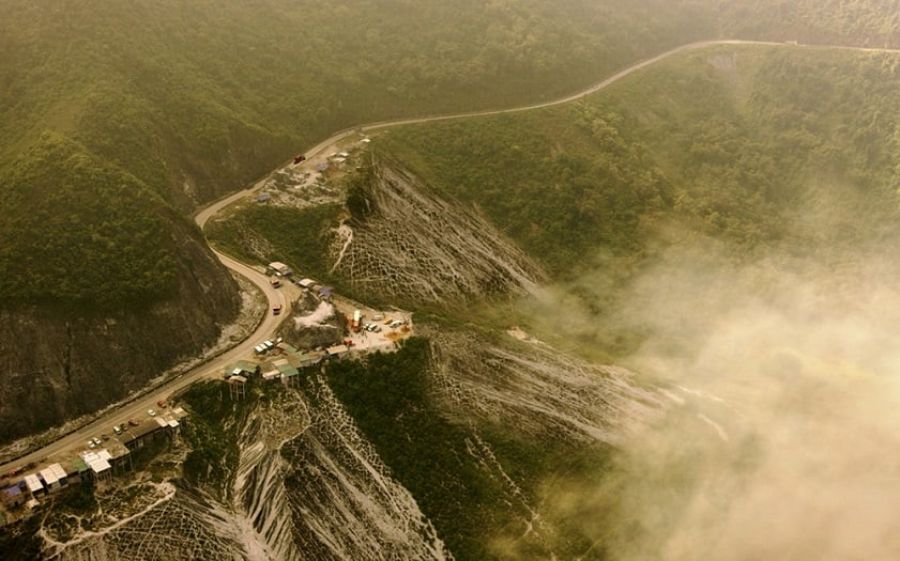
The Son, Ba, and Muoi villages are the highest communities in Lung Cao Commune, located at approximately 1,180 meters above sea level. The Cao Son villages are located in the very heart of Pu Luong and are surrounded by a unique limestone ecosystem and stunning views of nearly untouched mountain beauty.
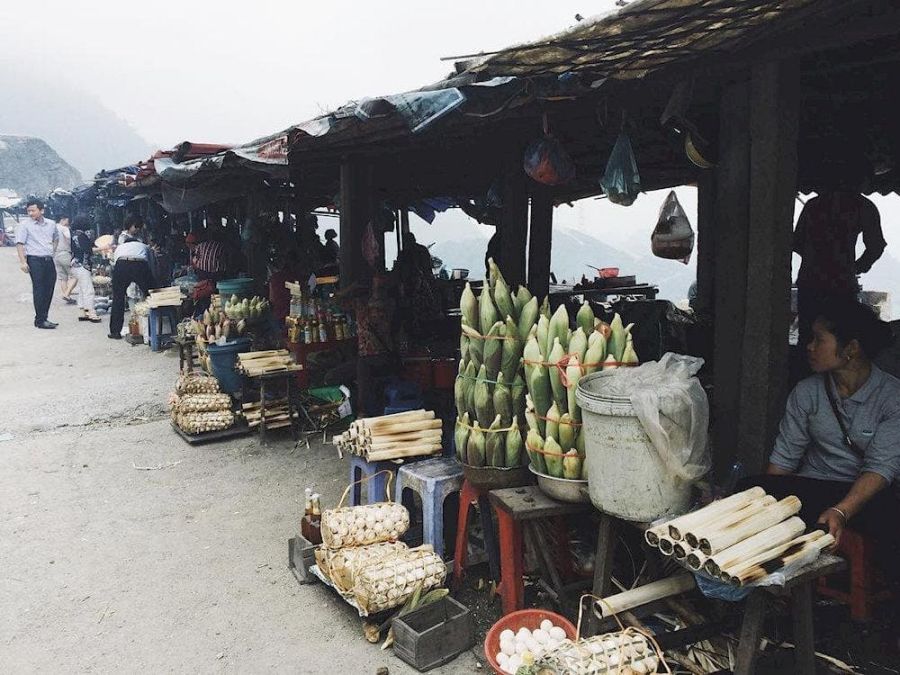
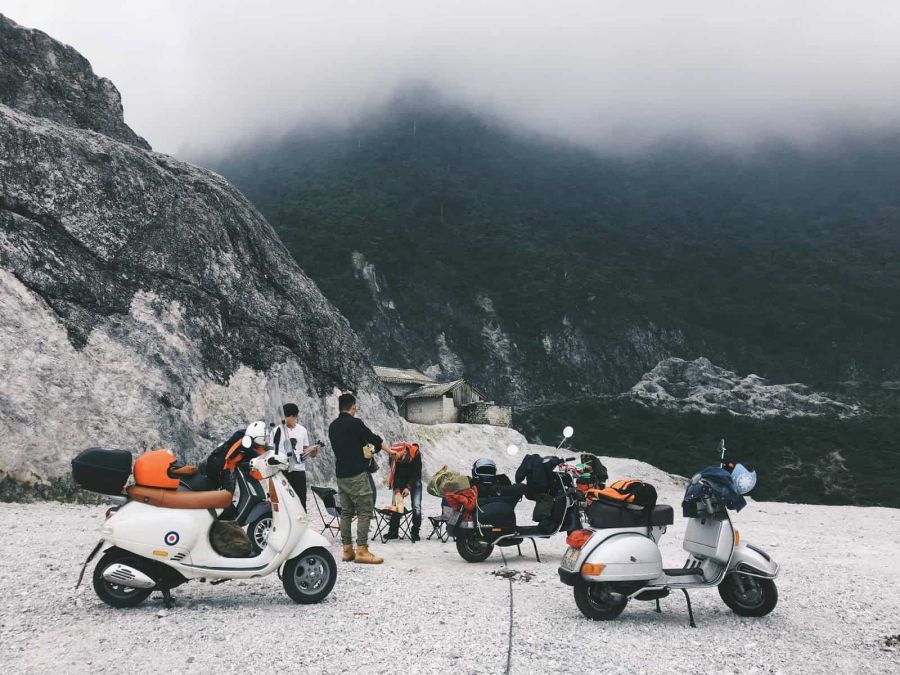
The trip to the Son-Ba-Muoi region is filled with breathtaking views and incredible scenery as you drive along winding mountain roads, through lush forests, and rolling hills. The region enjoys a mild climate year-round, cloud cover, and clean air, creating the impression that the villages are in the sky. While visiting these beautiful villages, visitors can also sample traditional Thai dishes such as bamboo-tube rice, wild chicken, and wild bamboo shoots while enjoying the heat, simplicity, and warmth of local life.
Son - Ba - Muoi Villages

Don Village (Ban Don Pu Luong)

Don Village is a fantastic place to see and experience when visiting Pu Luong Nature Reserve in Thanh Lam Commune because it is so easily accessible. One of its most recognizable features is its winding, S-shaped roadway that elegantly winds its way through luscious, expansive terraced rice paddies. As a result, this area is one of the most photographed areas in Pu Luong.
Besides its scenery, Don Village also offers cultural experiences where tourists can witness the weaving of brocades, which has long been an art of the Thai and Muong ethnic groups. Highly skilled artisans produce designs on fabrics used for garments, blankets, bags, and other home items. Staying in Don Village will enable tourists to explore the customs of the local communities, as they will have time to witness the sunrises and sunsets on the rice terraces, as well as experience the local lifestyles.
Don Village (Ban Don Pu Luong)

Hieu Waterfall

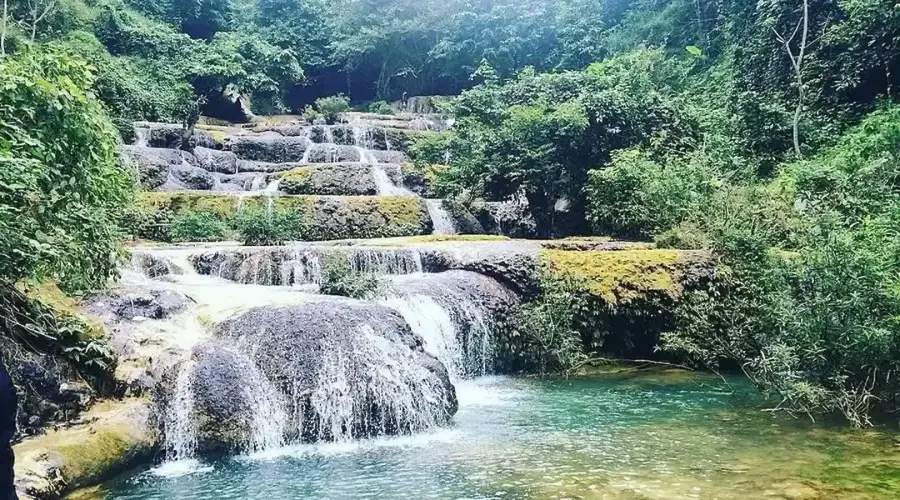
Hieu Waterfall is located in Co Lung Commune, which is one of the most stunning features of Pu Luong Nature Reserve. The waterfall is operational in all seasons, with an average of cool, clear streaming water in summer and a slightly warmer temperature during winter. It runs over white limestone rocks through thick greenery.
The exceptional quality of Hieu Waterfall is that both the stream that flows through it, branches off and comes back together, and then drops down again, thus leading to a large natural pool at the bottom of the waterfall. This shallow pool allows guests to enjoy swimming and relaxation or simply being in nature’s splendour. Being surrounded by the sound of the running water and the chirping of birds coming from the trees surrounding the waterfall makes Hieu Waterfall seem like a hidden natural spa nestled deep within the mountain.
Hieu Waterfall

Cham Stream and Traditional Water Wheels

Cham Stream, situated within Chieng Lau Hamlet in Ban Cong Commune, provides a more tranquil and personal encounter with the magnificence of Pu Luong’s environment. The stream softly winds its way through bamboo trees and limestone mountains, creating a serene and cool setting, especially during summer.
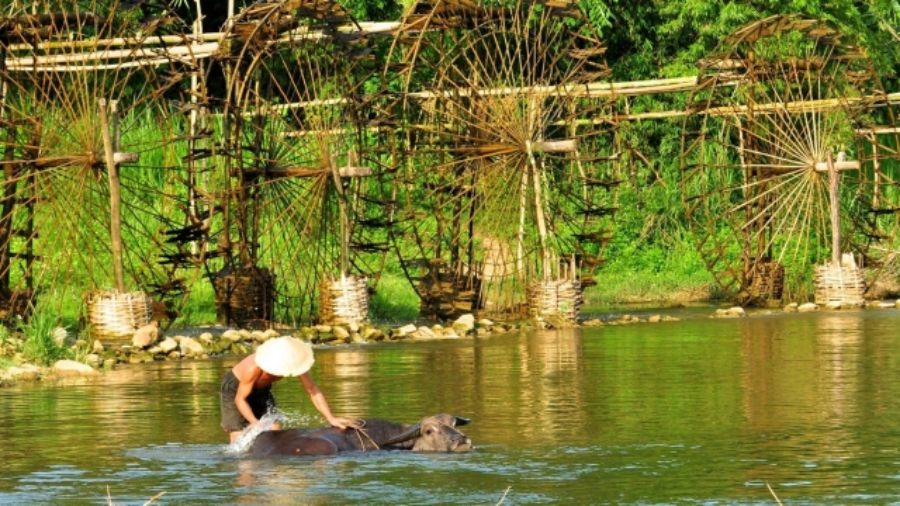
Bamboo rafting on this stream is one of the best ways to enjoy the natural scenery. As you float down the stream, you will hear the rush of water and the song of birds and insects buzzing around the stream bank. Traditional wooden wheels made for watering rice paddies are placed throughout the stream bank and make excellent photo opportunities. Guests can also take advantage of the opportunity to relax by the water, swim, or observe the everyday life of the people living nearby.
Chieng Lau Hamlet in

Pu Luong Heaven Gate

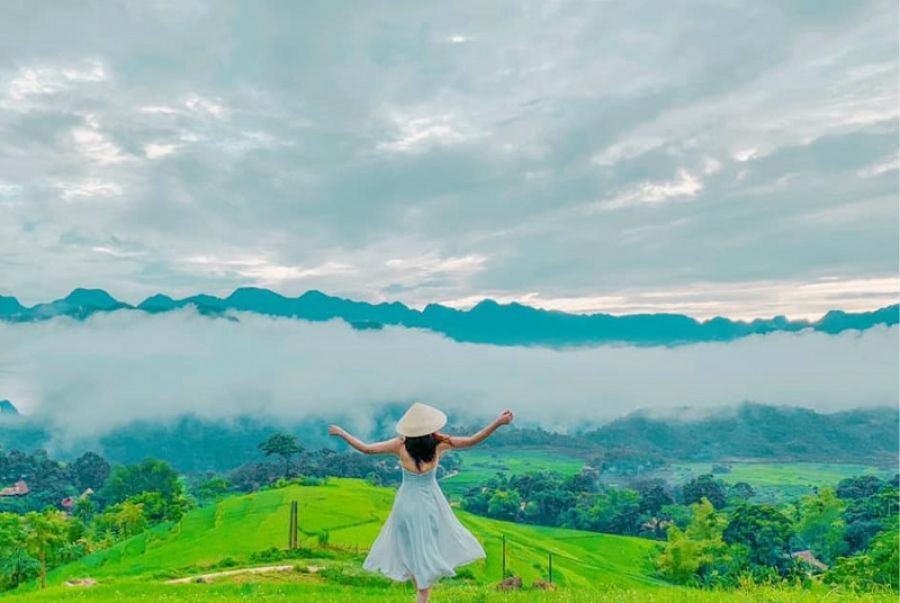
Heaven Gate is a popular lookout located high up in the reserve and is commonly referred to as the “roof of Pu Luong.” Visitors will have the chance to take in stunning views from their location. They will be able to see the beautiful Valley below them with all of its rice terraces, and also see many of the small villages that have been built on mountaintops throughout the region.
To get the best experience from Heaven Gate, visit during the early morning hours, especially between September and November when Heaven Gate becomes a hotspot for cloud-hunters. While the sun rises, thick clouds roll off the valleys across the mountains and encircle them.
Pu Luong Heaven Gate

Kho Muong Village and Bat Cave

Kho Muong Village is located deep in the heart of Pu Luong Nature Reserve and is among the most secluded and untouched villages in the region. Nestled between towering mountains and terraced rice paddies, Kho Muong has Traditional stilt houses and provides an atmosphere of tranquility that is distant from urbanization.
Bat Cave, a stunning limestone cave system, is located within the hills surrounding Kho Muong. Though the access to the cave appears to be relatively small, once inside, the passage is over 2.5 km. In addition to stunning rock formations, coloured stalagmites are visible along with continuous sound from water falling onto rocks. At various times of the year, several different species of bats can be found there, providing a unique travel destination for those interested in geology and the study of nature.
Kho Muong Village and Bat Cave

Pho Doan Weekend Market

Pho Doan Market originates from the colonial French period. It is held at certain times of the year at the Village of Lung Niem and is one of the greatest cultural experiences Pu Luong provides. This traditional highland market sees a gathering of Thai and Muong people selling, bartering, and exchanging items including agricultural products, herbs from the forest, handmade brocade, pottery, and traditional clothing. Visitors are exposed to an array of conversations, laughter, and aromas of local dishes being made when walking around the market.
 Pho Doan Weekend Market

6 Unforgettable Experiences You Shouldn’t Miss

A trip to the Pu Luong Nature Reserve provides the best of both worlds as it involves a mix of nature, culture, and adventure. Be it the experience of Thai villages or the sight of the mountains or the waterfalls, each opportunity provides an immersive experience in itself.

Village Discovery In Pu Luong

Pu Luong provides an opportunity to experience the traditions of some of the villages of the Thai ethnicities that are unique and richly endowed with culture. Kho Muong Village is a unique experience deep inside the nature reserve. The stilt houses are over 300 years old, and the entire setting is a natural reserve that houses unspoiled villages and forests. Hieu Village is known for its Hieu Waterfalls that meander through the village and offer trekkers a path as well as an opportunity to bathe within the natural waters that are accompanied by the song of the streams.
Village Discovery In Pu Luong
The Lac Village provides a vibrant cultural experience through activities like textile weaving, dances performed using bamboo, and local art. Visitors are able to rent local clothes and engage in other cultural activities, and thus, the relationship between nature and culture is made even clearer. The Don Village allows visitors to engage in easy trekking and relaxation as they watch the Thai meals, textile weaving, and the warmth of Thai hospitality.

Savor Panoramic Views and Mountain Peaks

The topography of Pu Luong offers an abundance of options for nature and photography enthusiasts to enjoy stunning vistas. Visitors to the peak of Pu Luong will enjoy watching the sunrise, and it turns into a sensational opportunity to travel through the clouds while providing spectacular vistas over valleys and mountains covered in mist.
Savor Panoramic Views and Mountain Peaks
Tourists can choose to stand at the top of the hill with their arms open wide, feeling the cool breeze of the mountain air, or take pictures of the sunlight breaking through the clouds to illuminate the terraced rice fields below. Early mornings provide breathtaking views with mist hovering over rice terraces and the green rolling hills of the forest, creating an illusion that you are floating over the area.

Trek Through Forests And Terraced Fields

Pu Luong is a hiker’s dream. The most popular hiking trails in the area are Don-Hieu-Muon Waterfall, which can take anywhere from 2-4 hours and cover approximately 6 – 8 km; these trails travel along rolling hills, past bamboo forests, and through numerous rivers and terraced agriculture.
Trek Through Forests And Terraced Fields
For the experienced hiker, the Kho Muong – Doi Cave – Don Village route will be approximately 15 km and entails a lot of rough terrain. However, this route also provides amazing views, hidden caves, and panoramic views of valleys. Hiking in Pu Luong enables the hiker to get up close and personal with nature and see new vistas and wildlife, as well as see the village communities living in the hills, which become increasingly apparent with each step taken while hiking through the area.

Experience Waterfalls And Natural Pools

Waterfalls and Natural Pools are a highlight of Pu Luong. Waterfalls in Pu Luong are very distinct from each other, with their own individual style and characteristics. Muon Waterfall is located in Dien Quang, where visitors can lounge on the terraced pools beneath the waterfall and get pictures taken with the wonderful backdrop of the lush green landscape and the cascading limestone cliffs.
Experience Waterfalls And Natural Pools
Hieu Waterfall is located at Hieu village, where visitors can swim in the cool, clear waters at the foot of the waterfall and take in the scenic view of nature surrounding the waterfall. Swimming or lounging at the foot of the waterfall while enjoying the sound of the rushing water creates a special memory and closeness to nature for every visitor.

Enjoy Hands-On Cultural Experiences

Through local cooking and weaving classes, visitors gain an appreciation for the history and culture of the Thai people. Visitors can not only learn how to prepare sticky rice cooked in bamboo or grilled river fish, but also create textiles using the techniques of local artisans. Participating in these hands-on experiences provides insight into the cultural background and daily life of the Pu Luong community. Hands-on activities are fun, educational, and will be the highlight of any visit to Pu Luong.
Enjoy Hands-On Cultural Experiences

Taste The Local Cuisine In Thanh Hoa

The culinary traditions of Pu Luong are based on the rich resources of the region; forest items, river foods, and rice field crops create a simple cuisine whose taste is complex. Hill chicken is highly recommended. It is free-range and grilled over charcoal, then served with a variety of aromatic herbs.
Other locally-sourced and produced traditional dishes include sticky rice cooked in bamboo, grilled fish from local rivers, Co Lung duck, wild mountain pork, stone snails during season, bitter bamboo shoots, and various seasonal vegetables. The food in Vietnam is fresh, and it represents the natural flavours and essence of the region as well.
Taste The Local Cuisine In Thanh Hoa

Entrance Fee

Pu Luong Natural Reserve does not typically levy any general entry fee but may require small entry fees to certain points of interest within the reserve itself (e.g., streams, caves) or for tour or homestay services, etc. Popular areas, including Don Village, Kho Muong, and Hieu Waterfall, may impose service or entry fees depending upon what services and facilities you use; therefore, costs could differ from your original itinerary.

Best Time To Visit Pu Luong Nature Reserve

For a complete appreciation of Pu Luong Nature Reserve and for taking the best photos, it is highly recommended to time your visit around the time of the rice season. Between May and June in Vietnam, the harvest season for the new rice is marked by Pu Luong, which is full of life and gentle, with green rice fields hugging the sides of the mountains. The climate is cool and pleasant, with opportunities to experience the life of the peasants.
Secondly, the best time to visit Pu Luong Nature Reserve is between the months of September and October, which is the golden rice harvest season. During this time, the hills appear yellow due to the sun, thus forming a beautiful scene of nature versus human effort. It is not advisable to visit the nature reserve between the months of July and August because the rains can cause slippery roads.
best Time To Visit Pu Luong Nature Reserve

How To Get To Pu Luong Nature Reserve

To reach Pu Luong Nature Reserve from Hanoi, you have a number of ways to reach your destination without too much trouble: take a bus, motorbike the ride yourself, or reserve a transportation service from a homestay or eco-resort that will bring you directly to your destination. Taking the road will put you on approximately 160 to 170 kilometers of travel that will take about 4 to 5 hours, depending on the traffic and the weather conditions. Most transportation routes will take you to Canh Nang Town in Ba Thuoc District before reaching Pu Luong Nature Reserve.
You can travel from Hanoi to Canh Nang, and then go to your homestay and resort in Pu Luong. There is also a shuttle service offered in homestays and resorts, and this is best for new visitors and in groups. You can also drive your vehicle because the most popular route to Pu Luong is along Thang Long Boulevard, Highway 6, and then CT03/CT02 and DT440, providing you with great scenic views of mountains along the way. However, driving to Pu Luong is relatively easy, but the roads have steep and winding parts, and you should be careful, particularly when it is raining.

Things To Know Before Traveling To Pu Luong Nature Reserve

While your trip to Pu Luong Nature Reserve is likely to be an experience you won’t forget anytime soon, here is some advice to make your time there a little more enjoyable. To begin with, you must familiarize yourself with the terrain and respect the cultural norms of the area.
  • The terrain consists of hills and terraced rice fields, as well as a network of forest trails. For safe trekking and touring, please ensure you have good walking shoes or hiking boots.
  • The most pleasant seasons of the year to visit are September-November, when the weather is relatively mild, and the terraced rice fields are at their peak beauty, and March-May.
  • Pu Luong is home to the Muong and Thai ethnic communities, so if you would like to take photographs of these communities, please ask for permission first and observe the local customs.
  • Limited accommodation is available in villages such as Ban Don and Kho Muong, so please be sure to book well ahead of your trip, especially if you are planning to travel during peak tourist season.
  • When trekking in Pu Luong, please remember to pack plenty of water, snacks for energy, sunblock, insect repellent, and a light waterproof jacket to stay dry if rain begins suddenly.
  • Don’t forget to sample local dishes such as grilled fish from local streams, sticky rice, and corn wine at homestays.
  • Those who want to experience more culture may consider a visit to nearby sites, such as Mai Chau, Nho Quan, or some Muong ethnic villages.

Final Thoughts: Is Pu Luong Nature Reserve Worth Visiting?

Pu Luong Nature Reserve is truly a hidden gem for travelers looking for adventure, as well as some time immersed in beautiful natural landscapes and offbeat cultural experiences. Whether it’s the breathtaking rice terraces, the peaceful woods, or the lively ethnic communities, every aspect of Pu Luong Nature Reserve promises breathtaking adventures and memories. Trekking through enthralling routes or taking it easy in a stilt-house homestay, one can truly absorb the serene tranquility of northern Vietnam. Let’s experience all of Vietnam with Seni World today.

Thung Khe Pass: High Mountain Views In Northwest Vietnam

Thung Khe Pass, known as the “White Rock Pass,” is a scenic mountain route in northern Vietnam, famous for its winding roads, limestone cliffs, misty valleys, and panoramic views, offering travelers a perfect blend of natural beauty and adventure.

Introduction To Thung Khe Pass

Thung Khe Pass is a stunning mountain route located along National Highway 6 in Hoa Binh Province of northern Vietnam. Perched at over 1,000 meters above sea level, this scenic pass stretches for about 30 kilometers and is famous for its dramatic limestone cliffs and winding roads that offer panoramic views of valleys, forests, and distant mountains. Often called “White Rock Pass” due to the white limestone dust that covers parts of the landscape, Thung Khe creates a unique, almost surreal atmosphere that feels like a snow‑covered hillside in the tropics.
Thung Khe Pass High Mountain Views In Northwest Vietnam
Travelers visit Thung Khe Pass not only for its breathtaking natural beauty but also for the adventure and cultural experiences it offers. The cool mountain air, ever‑changing weather, and sweeping vistas make it a favourite stop for photographers, nature lovers, and road‑trip enthusiasts exploring Vietnam’s Northwest. Along the pass, you can find small roadside markets where local snacks and specialties are served, and viewpoints that capture the majestic Mai Chau Valley below. With its stunning scenery and peaceful ambiance, Thung Khe Pass is an unforgettable destination on any journey from Hanoi toward the highlands

History Of Thung Khe Pass

Thung Khe Pass, also known as the “White Rock Pass,” gets its name from the striking limestone cliffs and scattered white rocks that line the road and surrounding slopes. These pale stones create the illusion of snow-covered mountains, a rare sight in tropical Vietnam, and give the landscape a surreal, almost otherworldly beauty.
The dazzling white rocks, especially when illuminated by sunlight or shrouded in mist, have made Thung Khe Pass a favorite spot for photographers and nature lovers. Over time, its unique terrain and scenic charm have not only attracted travelers but also established the pass as an iconic symbol of the dramatic landscapes found in Northwest Vietnam.

Unique Location Of Thung Khe Pass

Thung Khe Pass, located along National Highway 6 in Phu Cuong Commune, Tan Lac District, Hoa Binh Province, is a must-stop destination for travelers heading to Northwest Vietnam. About 120 km from Hanoi, the pass offers both a scenic driving experience and a peaceful place to rest, allowing visitors to escape the bustle of the city while enjoying stunning mountain landscapes.
Introduction To Thung Khe Pass
Situated over 1,000 meters above sea level, Thung Khe Pass boasts cool, fresh air and panoramic views of the surrounding valleys and peaks. Stretching roughly 30 km, the road is marked by gentle, winding curves along the mountainside, making the journey itself an enjoyable adventure. One of the pass’s most distinctive features is its limestone terrain; the white limestone dust covering the rocks gives the landscape a snow-like appearance, creating a unique and graceful charm that sets Thung Khe apart.
Travelers often notice dramatic changes in weather throughout the day, from warm sunlight to chilly mist, adding a memorable element to the trip. With its majestic scenery, tranquil atmosphere, and striking natural features, Thung Khe Pass has become a favorite stop for those exploring the beauty and culture of Northwest Vietnam.

5 Unforgettable Experiences You Shouldn’t Miss

Thung Khe Pass is full of thrilling adventures and breathtaking sights that make every visit unforgettable. From daring mountain roads to local markets, hidden waterfalls, and cozy cafés, every corner offers a chance to connect with nature and local culture. Whether you seek adventure, relaxation, or scenic beauty, Thung Khe has something for everyone.

Challenge Yourself on the Winding Mountain Roads

One of the most exhilarating experiences at Thung Khe Pass is navigating its steep, winding mountain roads. The curves are sharp, and the slopes can be steep, making it both a test of skill and nerve, especially for motorbike riders or first-time visitors to mountainous terrain. Each turn offers a new perspective of the surrounding cliffs and valleys, with moments that will leave your heart racing and your senses heightened.
Challenge Yourself on the Winding Mountain Roads
For those seeking a true adventure, riding carefully through the twists and turns is incredibly rewarding. Always keep safety in mind by riding at a moderate pace, wearing protective gear, and staying alert, particularly when the fog rolls in or after rainfall makes the roads slippery. The sense of accomplishment after completing the pass is unmatched, creating memories that will stay with you long after your journey.

Admire the Majestic White Rock Scenery

Thung Khe, often called the “White Rock Pass,” is renowned for its striking limestone cliffs that appear dusted with white powder, creating a surreal, almost dreamlike landscape. The contrast between the pale cliffs and the lush green valleys below is breathtaking, making it a paradise for photographers and nature lovers alike.
Admire the Majestic White Rock Scenery
Cycling or driving slowly along the pass allows you to fully appreciate the scenery, spotting hidden caves, unusual rock formations, and rare plants clinging to the cliffs. Sunrise and sunset are particularly magical, as the soft golden or pink light transforms the rocks into glowing works of art, giving the landscape a mystical ambiance. For travelers seeking both awe-inspiring views and serene moments in nature, this scenery is simply unforgettable.

Enjoy Panoramic Views of Mai Châu Valley

One of the highlights of traveling through Thung Khe Pass is the opportunity to gaze down at the stunning Mai Châu Valley. The valley is a patchwork of green rice fields, traditional stilt houses, and winding rivers that weave through the landscape like ribbons. There are several ideal viewpoints along the pass, such as the Thung Khe Flag Pole, which offers an elevated perspective over the entire valley, and Dragon Jaw Peak, where jagged rocks provide a dramatic foreground to the sweeping panorama.
Enjoy Panoramic Views of Mai Châu Valley
Visiting early in the morning or during sunset can reward you with a layer of mist hovering over the fields, creating an almost magical scene that feels straight out of a painting. Spending time at these vantage points, taking photos, and simply soaking in the view will make your journey richer and more memorable.

Immerse Yourself in Local Culture at Thung Khe Market

Thung Khe Market is a vibrant hub where travelers can experience the traditions and daily life of the local ethnic communities. Open from early morning until noon, the market bustles with activity as H’mong and Thai vendors sell fresh vegetables, fruits, handmade crafts, and colorful textiles. Walking through the stalls, you’ll hear the lively chatter of bargaining, smell the aroma of local delicacies, and see authentic crafts made with skill passed down through generations.
 Immerse Yourself in Local Culture at Thung Khe Market
Don’t miss trying traditional dishes such as Thang Co, a rich horse-meat stew, sticky rice paired with grilled meat, or fresh tropical fruits harvested from nearby farms. Exploring this market is more than just shopping; it’s a cultural immersion that allows you to connect with the people and traditions of the region, giving your visit a deeper sense of meaning beyond the natural beauty of the pass.

Discover Hidden Waterfalls Near the Pass

For nature enthusiasts, exploring the hidden waterfalls around Thung Khe Pass is a true adventure. These waterfalls, often tucked away in dense forests or off the main road, offer cool, refreshing stops and a sense of serenity away from the crowds. To find them, it’s best to ask locals or hire a guide, as many are unmarked and require navigating narrow, rugged trails. Wear sturdy hiking shoes, bring water, snacks, and a camera to capture the natural beauty.
Discover Hidden Waterfalls Near the Pass
Notable waterfalls include Pung Waterfall, about 12 km from the pass, known for its multi-tiered cascades; Mini Ban Gioc, around 20 km away, a quieter spot perfect for reflection; and Mo Waterfall, 15 km from the pass, surrounded by lush vegetation and ideal for cooling off on a hot day. These hidden gems provide both adventure and relaxation, rewarding travelers with unforgettable encounters with nature.

Entrance Fee

There is no entrance fee to visit Thung Khe Pass, as it is a natural mountain pass open to the public. Travelers can freely explore the scenic route, enjoy panoramic views, and stop at viewpoints without any charges.

Best Time To Visit Thung Khe Pass

The best time to visit Thung Khe Pass is early in the morning, between 5:00 and 7:00, when the sky is clear and the mist gradually lifts from the valley below. At this hour, the landscape feels like it has “worn a new coat,” with clouds drifting around the cliffs and greenery stretching endlessly. This is the perfect time for panoramic views, stunning photographs, and experiencing the magical atmosphere of “cloud hunting” in the mountains.
Late December to January is another ideal period, as the air turns cool and crisp, and plum and peach blossoms bloom across the region, creating a romantic, picturesque scene. The months from September to November also offer mild temperatures, colorful wildflowers, and lush green tea hills. It is best to avoid visiting at night or during heavy rain due to thick fog and poor visibility, as well as midday when the sun is strong, so you can fully enjoy the beauty and safety of this breathtaking mountain pass.

How To Get To Thung Khe Pass

Traveling to Thung Khe Pass takes you along a winding, scenic mountain road that offers breathtaking views of lush forests, terraced fields, and local villages. Located along National Highway 6, about 120 km from Hanoi, the journey gives a glimpse of rural life in Vietnam’s Northwest. The road to Thung Khe stretches roughly 30 km and includes sharp turns and steep cliffs, which can be dangerous, especially in fog or rain. Drivers should take care, reduce speed, and remain alert on narrow or twisting sections.
How To Get To Thung Khe Pass
Visitors can choose from several transportation options depending on their preference for adventure, comfort, and convenience:
  • Motorbike: Riding a motorbike is popular among thrill-seekers who want flexibility and closer contact with nature. The mountain road is suitable for experienced riders, but beginners should be cautious due to sharp turns and changing weather conditions.
  • Car: Traveling by car provides safety and comfort, making it ideal for families or groups. Hiring a local driver is a convenient option, and car rental typically costs around $40–$60 per day. Drivers still need to be careful on steep slopes and sharp curves.
  • Bus: Public buses run from Hanoi to Hoa Binh Province and nearby towns, such as Tan Lac or Phu Cuong. From these stops, you can arrange local transport to reach the pass. Bus fares are affordable, usually around $5–$10 per person, though buses are less flexible compared to private vehicles.

Things To Know Before Traveling To Thung Khe Pass

Before heading to Thung Khe Pass, it’s important to be prepared for the mountainous terrain and changing weather. A little planning can make your trip safer, more comfortable, and far more enjoyable.
Things To Know Before Traveling To Thung Khe Pass
  • Check the weather forecast, as Thung Khe Pass can be foggy, rainy, or windy, especially in the early morning or during the rainy season. Plan your visit for clear days to enjoy the best views.
  • Wear suitable clothing and shoes, bringing layers for cool mountain air, comfortable shoes for walking or hiking, and rain gear if needed.
  • Travel carefully on winding roads, as the pass has sharp curves and steep slopes. If riding a motorbike, drive slowly and stay alert, especially in misty or slippery conditions.
  • Bring cash for local markets, since many small vendors in Thung Khe Market or roadside stalls do not accept cards.
  • Plan your visit for early mornings or sunset to experience the most breathtaking views and magical lighting for photography.
  • Carry water, snacks, a small first-aid kit, and a camera if exploring hidden waterfalls, as trails can be rugged and uneven.
  • Respect local culture and traditions by being polite, asking before photographing people, and supporting local businesses by purchasing handmade crafts or local food.

Final Thoughts: Is Thung Khe Pass Worth Visiting?

Thung Khe Pass is truly a must-visit destination for anyone exploring northern Vietnam, offering a rare blend of breathtaking mountain scenery, winding roads, and peaceful natural beauty. Its dramatic limestone cliffs, misty valleys, and panoramic viewpoints create picture-perfect moments that stay in your memory long after the trip. Beyond the scenery, travelers can experience local culture through small markets and roadside interactions, adding a warm, authentic touch to the adventure. Plan your visit with Seni World to make the most of this spectacular destination and enjoy a seamless travel experience.

Sihanoukville To Kampot With Detailed Travel Options and Useful Tips

Traveling from Sihanoukville to Kampot is a short but rewarding journey that many visitors use to shift from busy beaches to slower riverside life and countryside scenery. It fits easily into Cambodia itineraries and works well for budget-minded travelers.

Overview of Sihanoukville to Kampot

Half a day’s journey links Sihanoukville and Kampot through southern Cambodia, roughly 100 kilometers apart. Beach seekers land in Sihanoukville first, drawn by nearby islands and coastal stretches. From there, it makes sense to drift inland toward Kampot, where riverside walks and local flavors take center stage. The journey links up without detours, saving time on the road. That smooth shift draws both new arrivals and those passing through after weeks on the move. Travelers often choose buses, minivans, or personal vehicles for the trip.

Kampot is a Hidden Gem in Cambodia

How Far Is It from Sihanoukville to Kampot?

About 100 to 105 kilometers or so separates Sihanoukville from Kampot, give or take a few, along National Road 3 that stretches cutting across from shore to interior regions down south. Paved entirely, it sees steady traffic. Around three or four hours covers most trips, with brief pauses along the way. Crowds tend to favor moving between November and April (as the peak time to visit Sihanoukville), drawn by clearer paths. Dryer conditions mean fewer delays, and ferry schedules hold steady. Getting through to Kampot feels easier than almost effortless.

How to Travel from Sihanoukville to Kampot?

Travelers usually pick one of several options below to go between these cities. Some prefer doing it on their own; speed matters to some, and comfort draws others. Each path fits a different need.

By Motorbike

A stretch of road links Sihanoukville to Kampot, roughly 100 to 105 kilometers long. Most riders spend between three and four hours moving, if they do not pause along the way. Travelers aiming straight ahead will take National Road 3. Traveling by light of day works fine, yet knowing how traffic moves helps, along with going slow enough to stay safe. Fatigue gets worse in heat, so stopping now and then makes sense. Before heading out from Sihanoukville, check that the tank is full of fuel; running low later brings trouble.

Sihanoukville to Kampot by motorbike

Aspect Details
Route Option 1 Sihanoukville → National Road 3 → Kampot. That path gets you there quickest – most buses stick to it. Fuel stops pop up every so often, making refills easy while moving between the two towns.
Route Option 2 Sihanoukville → Veal Renh → Kampong Trach → Kampot.
Towns along here stay low-key, lived-in. Travelers choosing quiet over speed often pick this way.
Route Option 3 Sihanoukville → National Road 4 (short section) → connect to Road 3 → Kampot. This way links up smoothly when coming from Sihanoukville’s east. Junction spots might slow you down with busier crossings.
Distance Around 100 to 105 kilometers separates the locations, varying slightly with path choice. The entry spot into Kampot affects the total length a bit.
Travel Time Expect three to four hours in the saddle. New riders usually lean toward the longer end once rest stops are factored in.
Road Conditions Smooth stretches appear alongside rough patches, depending on recent weather. After heavy rains, parts of the route are slow travel.
Suggested Stops Veal Renh: Fuel up here. This spot offers a break plus warm meals from small-town kitchens along the road.
Prey Nob area: A stretch near Prey Nob offers a spot to pause under cover. Some little stores sit there, good for water or something to eat.
Kampong Trach outskirts: Limestone bluffs rise beside hushed roadways, a calm stretch just ahead of Kampot’s busier lanes.

By Bus or Minivan

Travelers heading from Sihanoukville to Kampot usually find that buses or minivans work best when they want things simple. Daily rides leave regularly, so timing works out naturally. Booking happens online, at guesthouses, or local travel shops around town. Some companies meet travelers at a bus station or their own office in Sihanoukville. Others offer hotel collection, but only if your place is close to downtown. Arriving in Kampot, vans usually stop at the agency location or another main spot. From there, a brief tuk-tuk ride takes you onward when necessary.

Sihanoukville to Kampot by minivans

Vehicle Type Price (USD) Travel Time Notes & Practical Tips
Standard Minivan (1215 seats) 8 to 12 USD 3 to 4 hours Most people go this way. When vans leave Sihanoukville, they might stop a few times to collect others-it slows things down. Room for bags is tight; that means backpacks beat big suitcases every time.
VIP / Tourist Minivan 12 to 18 USD 3 to 3.5 hours Fewer people on board means extra space for your legs, unlike regular vans. With set departure moments plus fewer pulling over along the way, the journey feels calmer and easier to plan around.
Local Bus
(limited availability)
7 to 10 USD 3.5 to 4.5 hours Buses show up less often than vans here. The chairs are simple, yet there’s more room for bags. Since pickup spots can sit beyond downtown, give yourself added minutes to get to the stop.

By Private Car

When time counts, picking a private ride between Sihanoukville and Kampot just works better. What stands out most? It’s reliable. Instead of waiting through several stops like shared shuttles, a private ride skips the detours across Sihanoukville. You arrive directly at your chosen lodging in Kampot, no extra walk needed. Luggage piles up less when two or three share the cost. Couples hauling bags, parents with kids, it balances out in the end.

Sihanoukville to Kampot by Car

Vehicle Type Estimated Price (one-way) Estimated Travel Time Notes & Tips
4-Seater Sedan Around $60 to 80 2.5 to 3.5 hours Travelers going alone or in pairs with small bags find this works well. Moving between hotels feels smooth, since the route sticks close to plan – stops stay few unless asked. Most people like how simple it stays.
7-Seater SUV Around $75 to 100 2.5 to 3.5 hours Families with kids often need room. When traveling back from islands, that cabin space helps, especially when loaded down with towels, coolers, or big suitcases.
1012 Seater Minivan Around $95 to 140 3 to 4 hours Families on the move find this setup works well when staying in one vehicle matters. Room for bags means less hassle at stops, keeping everyone fed and together without delays.

By Train

One way to move between Sihanoukville and Kampot is by rail, though the timing is prone to delays. This route belongs to Royal Railway Cambodia’s southern track, stretching from Sihanoukville through Kampot all the way to Phnom Penh. Speed isn’t its strength, yet the journey stays smooth without bumps from highway congestion. On certain days, the service only operates, with few departures, while delays sometimes happen. If timing works out, passengers get a reserved spot, extra space compared to minibuses, plus a hushed trip.

Sihanoukville to Kampot by Royal Railway Cambodia southern track

Aspect Details
Route Sihanoukville Station → Kampot Station → onward to Phnom Penh. Though passengers often pause there, the journey doesn’t end in Kampot; it’s just one point along the southern route.
Distance Some 105 kilometers stretch along the railway linking Sihanoukville to Kampot.
Travel Time Most trips take between four and a half to six hours, though exact timing shifts with each train’s schedule and how long it stops along the way. Rainy months tend to bring more wait times than usual.
Seat Types Soft seat (AC) is the most practical choice for this short route. Hard seats are cheaper but can be hot and crowded. Sleeper berths may appear on some services but offer little advantage for this distance.
Estimated Price Folks often pay around $6 to $8, though what you spend can shift based on where you sit, plus how you book.
Stations & Access Just beyond the main part of town lies Kampot Station. Once you step off the train, it is roughly ten to fifteen minutes by tuk-tuk to reach lodgings near the riverbank.
Practical Notes Stay ready with your own drinks and food; supplies on board are limited. Plans might shift if delays happen, so stay loose about timing. Best used when getting there right away isn’t required.

Recommended Stops Along The Way

Not long, this path still gains from small pauses now and then. Some spots stand out, tasting nearby dishes, or peeking past big settlements into southern stretches of Cambodia.

Veal Renh

A third of the distance between Sihanoukville and Kampot brings you to Veal Renh. This spot often draws visitors needing fuel, something cool to drink, or basic food by the road. Small eateries and street vendors line the area, faster and less costly than places built for tourists. A stop here lets people move their bodies after sitting too long, look at maps again, and take things slower instead of pushing ahead nonstop.

Prey Nob

Folks passing through often find Prey Nob just right when they need rest under cover and quick supplies. Not far off the highway, this spot offers small stands where people buy food, fresh fruit, or drinks. You won’t see polished tourist spots, only everyday scenes most visitors miss. Taking time to pause here keeps travel smooth, saves miles, and breaks long drives naturally.

Kampong Trach

Down near Kampot sits Kampong Trach, just eight kilometers out from the town center, lies Phnom Chhnork Cave. This limestone hollow holds within it a 7th-century brick temple, quietly standing through the centuries. Away from crowded beaches, this patch breathes slower, almost hushed, compared to what came before. As you draw closer to town, the land flattens, and fields open wide. For anyone nearing Kampot by midday, it makes a natural last break.

scenic limestone karst landscape of Kampong Trach

Tips for Traveling from Sihanoukville to Kampot

Might seem quick on paper, yet this hop often drags when timing falls flat, or rides misalign. What follows leans into real choices – ones that steady the trip, make it behave.

  • Few choose it, yet the dawn from Sihanoukville works best. Mornings work fine or just past noon. Going later raises the chances of reaching Kampot when it’s already night.
  • Spending a spare evening in Sihanoukville makes sense if you are island hopping or still finishing a few things to do in Sihanoukville. Ferry hiccups can mess up tight connections, and a single extra night cushions the risk when boats run late.
  • Most travelers prefer buses or minivans, skipping several hotel stops – they arrive in Kampot sooner. Skipping extra pickups saves noticeable time.
  • Fuel up early, since gas stations grow fewer once you ride past the shore. Rest when you can, because quiet roads are more spaced out inland.
  • Morning departures might fit better if planned early, since timing decides whether train trips succeed. Missing a date could mean waiting much longer, making it wise to review arrival times ahead of leaving.
  • Few places to stay are right in the middle of Kampot, so when you arrive in the late part of the day, check where exactly your lodging is located. Some places require a short ride from central drop zones, so clarity helps avoid delays after dark.

Final Thoughts

Traveling from Sihanoukville to Kampot feels smoother when seen as its own experience. Though the stretch isn’t long, how you move shapes your mood upon reaching Kampot. For those who like things predictable and well-organized, Seni World offers help with Cambodian travel routes, schedules, and reservations. Booking through us means stepping into Kampot alert and free to wander.

Sihanoukville To Siem Reap: Distance, Transport Options, Travel Tips

Traveling from Sihanoukville to Siem Reap takes you from laid-back beaches to Cambodia’s cultural heart, linking sea air with ancient stone. This long overland journey rewards patient travelers with shifting landscapes, local encounters, and multiple transport choices worth planning carefully.

Overview of Sihanoukville to Siem Reap

From Sihanoukville to Siem Reap lies a journey shaped by sharp shifts. Sihanoukville, hugging the gulf, a salty breeze greets you first. Siem Reap waits inland, with lively night markets and Angkor’s stone corridors. Going from one place to the next helps travelers see both spots smoothly, no doubling back needed. Even though it is far, there are rides every day that suit various budgets, so it seems to work out instead of tricky.

Bayon Temple in Siem Reap

How Far Is It from Sihanoukville to Siem Reap?

Traveling from Sihanoukville to Siem Reap covers about 530 to 560 kilometers by road, give or take, depending on whether you go straight through Phnom Penh or skirt around it. For most people, reaching the destination takes an entire day, not just a few hours between cities. Twelve to fourteen hours is typical for buses or minibuses include rest breaks, which pile up, plus roads get rough. A private car might shave off two hours, especially when starting before sunrise and pausing only when needed.

How to Travel from Sihanoukville to Siem Reap?

Depending on what you’ve done in Sihanoukville, getting to Siem Reap can take more or less time. Your choice shapes how relaxed you feel once you arrive. Comfort levels differ widely across options. While speed matters, so does how refreshed you stay for exploring later.

By Motorbike

Heading north on two wheels from Sihanoukville to Siem Reap works well if you’ve logged plenty of riding time and value moving at your own pace. Stretching beyond five hundred kilometers, the ride unfolds across busy main roads, open farmland, and then smaller local hubs tucked between provinces. Two whole days usually pass before reaching the destination. Staying one night happens around Phnom Penh or Kampong Thom. A driver’s permit from your country helps, yet an International Driving Permit works better, particularly on motorcycles larger than 125cc.

Sihanoukville To Siem Reap by motorbike

Aspect Details
Route Option Heading out from Sihanoukville, stick to National Road 4 as it leads straight into Phnom Penh. From there, turn onto National Road 6 and keep moving north until you reach Siem Reap. That path cuts through without detours, offering gas stops and mechanics when needed.
Alternative Route Route Option 2 Sihanoukville → Kampot → Phnom Penh → Siem Reap. This option adds distance but allows a coastal stop before heading inland.
Route Option 3 Sihanoukville → Kampong Speu → Phnom Penh ring road → Siem Reap. Used to reduce inner-city traffic in Phnom Penh.
Distance Covering around 530 to 560 kilometers, the route shifts if you take ring roads near Phnom Penh to skip downtown jams.
Travel Time Most people take two days, sleeping somewhere along the way. Going the whole route in just one day requires serious effort. Staying safe gets harder when you rush like that.
Road Conditions Farther out from towns, main roads stay paved but fill up with big trucks. Outside urban spots, surfaces can turn patchy under tires and rain. Some country lanes wear cracked blacktop, others shift into gravel when storms hit.
Suggested Stop Phnom Penh: Opens doors to beds, meals, gas, plus fixes for your ride. Found at the center of it all, this city handles needs without fuss.
Kampong Thom: Folks often pause here, halfway along Route 6, when heading up toward Siem Reap.
Kampot: Folks on bikes might swing through Kampot if they veer toward the shore first. Not required, just there for those who want it.

By Bus or Minivan

Most folks heading from Sihanoukville to Siem Reap hop on a bus or minivan. These rides happen daily, rain or shine. You can grab a ticket through websites or at travel shops nearby. Many of the trips go straight there, no switching vehicles halfway. That kind of setup works well when you like knowing what time you’ll leave and how much it will cost. Leaving mostly from four in the afternoon until seven, buses head out under fading light. Breaks pop up every three or so hours, and roadside spots slow things down a bit.

Sihanoukville to Siem Reap by minivans

Vehicle Type Price (USD) Travel Time Notes & Tips
Standard Sleeper Bus 15 to 22 USD 9 to 12.5 hours What you get here is a low-cost choice, featuring simple beds or seating areas inside small compartments. Because buses pull over often, it works well for those carrying just a backpack, people okay with minimal comforts and shared sleeping compartments.
VIP / Cabin Sleeper Bus 25 to 32 USD 9 to 12 hours Fewer people pass by inside these private or partly closed sleep spaces. When travel gets busy, spots run low, and getting a reservation early helps.
Limousine Minivan (9–15 seats) 25 to more than 35 USD 8 to 10 hours Fewer seats fill these small vans, yet they move more quickly between points compared to long-haul coaches. Check how much baggage fits inside prior to reserving a seat, since room for suitcases runs tight.
Standard Minivan / Shared Van 25 to 30 USD 8 to 10 hours Most shared minivans fit between eight and thirteen people. When speed matters more than a sleeping seat but saving money still counts, many pick these rides instead.

By Private Car

Traveling by private vehicle between Sihanoukville and Siem Reap helps reduce strain during the long journey covering more than five hundred kilometers. A single car fare covers the whole ride, often coming with a guide who speaks English, plus gas and small bridge or road charges. Since there aren’t many drop-offs and paths skip busy stations, getting there takes less time than riding a bus, and it’s easier to count on. People tend to pick this way if they’re moving together as a team or landing after dark.

Sihanoukville to Siem Reap by car

Vehicle Type Estimated Price (one way) Estimated Travel Time Notes & Tips
4 Seater Sedan Around 135 to 170 USD Around 9 to 11 hours Morning departures work better here because sedans move well on highways yet wear you down if driven late at night after too many miles.
6 Seater SUV Around 160 to 185 USD Around 9 to 11 hours Bumpy roads don’t faze SUVs quite like they do smaller cars, particularly when highways clog near Phnom Penh at rush hour. For daily routes off smooth asphalt, they handle what comes.
7 Seater Minivan Around 210 to 250 USD Around 9 to 11 hours Driving a minivan tends to feel smoother on extended trips, especially when heading out at night or after dark. Some people pick them just for that reason.
12 to 13 Seater Van Around 235 to 285 USD Around 9 to 11 hours Fewer hiccups pop up over big distances using this method, especially when schedules run thin and showing up on time matters most.

By Flight

Few planes go straight from Sihanoukville to Siem Reap; those that do only run at certain times of year. Because of this gap, hopping through Phnom Penh often becomes the practical move for passengers. Air travel can skip the sore back from driving, yet it sometimes still eats up hours. Getting to terminals, waiting at counters, plus sitting through stops adds stretch to the trip, often nearly twelve hours start to finish. Those avoiding lengthy drives might prefer it.

Sihanoukville to Siem Reap by flight

Aspect Details
Direct Flights Flying nonstop from Sihanoukville to Siem Reap isn’t always an option – some carriers run these routes just a few times weekly. When they do fly, it might depend on the time of year or what each airline has planned.
Connecting Flights Flying usually means a layover in Phnom Penh, switching planes along the way.
Total Travel Time Flying takes about four to six hours once you count waiting at the gate, getting through security, plus rides to and from both terminals.
Estimated Price A typical fare sits between 80 and 140 dollars. That amount shifts based on where you’re going.
Airlines Flying routes inside Cambodia usually run through local companies like Cambodia Angkor Air or AirAsia Cambodia; timings might shift without notice.
Best For Perfect if you hate lengthy drives. Ideal when your next flight leaves from Siem Reap anyway.
Notes Every now and then, flight times shift, best to confirm them nearer your trip. When there’s no direct plane option, hitting the road might get you there quicker.

Recommended Stops Along The Way

Breaks during travel from Sihanoukville to Siem Reap make the trip easier. Each stop becomes a chance to slow down and fit naturally after seeing what Sihanoukville offers.

Phnom Penh

Starting at dawn or late afternoon, Phnom Penh works best when breaking the trip across two days. Staying close to the water means easy access to Sisowath Quay, good for walking, eating, and unwinding after travel. Lodging options hold up well, with dependable places to sleep and shops for medicine. Instead of rushing through, some find space to step inside the Royal Palace or browse the Central Market during their layover.

Independence Monument in phnom penh

Kampot

Finding peace by the water might be why some choose Kampot. Exploring takes different shapes, walking at dusk, riding scooters down dusty lanes, or stepping into cool cave mouths. Time bends more easily here, fitting those who prefer wandering without strict plans. Caves near town tempt those who like detours.

Kep

Out by the water, Kep makes a quiet sidestep for those stepping off the main route. Come late in the day, that is when the crab market wakes up with boats arriving, stalls filling, and cooks start grilling. Kep National Park offers forest paths cut through green hills, most opening onto wide ocean sightlines. Some come only for the spice-dipped claws, others linger for quiet forest shade.

Tips for Traveling from Sihanoukville to Siem Reap

Travel from Sihanoukville to Siem Reap shifts a lot, whether you travel during peak time to visit Sihanoukville, how busy the roads get, or which bus company you pick. These tips focus on real situations travelers face on one of Cambodia’s longest routes.

  • Leaving after four but before six on night coaches often means reaching Siem Reap sooner the next day. Later trips tend to slow down due to breaks along the way.
  • Avoid flights landing past nine if temples are first on your list; tiredness hits hard if you want to explore Angkor right after.
  • A break in Phnom Penh cuts down exhaustion while traveling. It suits people who find it hard to rest on long bus rides.
  • If you travel during the rainy season between May and October, expect delays, roughly one or two hours more than usual.
  • Few who chase dawn at Angkor choose the night bus, timing rarely lines up with the morning gates. And showing up late means missing the light on stone.
  • When there are three people or more, picking a private vehicle often works out cheaper per head than high-end coaches. Riding together in a hired vehicle often balances out at that point.
  • Once the sun drops, driving gets harder on Route 6. Choosing a stop while it’s still light means calmer roads and clearer views.

Final Thoughts

One way or another, traveling from Sihanoukville to Siem Reap means moving through wide stretches of Cambodian landscape. This path links the primary seaside gateway to the top historical site that tourists head toward. When arranged well, shifting from sand to ancient stones feels natural. Along the journey, support from Seni World offers straightforward routes, varied rides, and reliable reservations nationwide.

Sihanoukville To Koh Rong: Mainland Coast To Famous Island

There are some ways for vacationers to travel from Sihanoukville to Koh Rong, such as a ferry, a speedboat, and a private boat. Based on your preference, and budget, let’s choose a wonderful way to have a memorable journey.

Overview of Sihanoukville to Koh Rong

The trip from Sihanoukville to Koh Rong is a short and poetic sea journey that mixes Cambodia’s mainland coast and one of this country’s most well-known island destinations. Positioned about 25 kilometers offshore, there are many great things to do in Koh Rong, consisting of enjoying beautiful white-sand beaches, relaxing in clear turquoise waters, and reveling in a chilled island vibe. Vacationers usually choose to depart from Serendipity Pier in Sihanoukville and then arrive at some key areas in Koh Rong, such as Koh Touch Pier, Long Set Beach, or Sok San.

There are some different types of transportation from Sihanoukville to Koh Rong, including ferries, speedboats, and private boats, with travel times varying about 30 to 60 minutes. Depending on the review of travelers, a ferry is the most economical and widely used, a speedboat will provide a faster trip and more flexible drop-off points for travelers, while a private boat brings maximum privacy and personalization. At present, with common daily departures, quick and easy booking, going from Sihanoukville to Koh Rong becomes very simple and accessible for families, solo travelers, backpackers, and luxury tourists.

How Far Is It from Sihanoukville to Koh Rong?

How Far Is It From Sihanoukville To Koh Rong

The Sihanoukville to Koh Rong distance is about 25 kilometers (approximately 15 to 16 miles), depending on your specific direction taken. With the distance above, the regular Sihanoukville to Koh Rong travel time is about 45 to 60 minutes (by ferry), from 30 to 45 minutes (by speedboat), and about 30 to 60 minutes (by private boat).

How to Travel from Sihanoukville to Koh Rong?

Traveling from Sihanoukville to Koh Rong, you can choose from some types of transportation, such as a ferry, a speedboat, or a private boat. In this section of this article, Seni World will show you how to get from Sihanoukville to Koh Rong.

By Ferry

Sihanoukville to Koh Rong

Touring from Sihanoukville to Koh Rong by ferry is an economical choice that is suitable and great for most travelers. Ferries are stable and have indoor seating, so they will be more pleasant for families and first-time vacationers, particularly in moderate sea conditions in this Sihanoukville itinerary to Koh Rong. With common daily departures, low-priced tickets, and numerous drop-off points on Koh Rong, this type of transportation provides a balance of comfort, safety, and affordability.

With multiple trips daily from the morning to the afternoon, you can book a ferry ticket through online apps or websites, the hotel desk, or the pier ticket office. For a wonderful experience, you need to arrange a suitable Sihanoukville to Koh Rong ferry schedule, arriving at the departure point at least 30 minutes before departure. However, sometimes, the ferry can be delayed or canceled during rough seas, so don’t forget to check the weather forecast carefully before starting your trip.

Aspect Details
Departure Point Sihanoukville Port or Serendipity Pier in Sihanoukville.
Arrival Points Koh Touch Pier (main beach), Long Set Beach (4K Beach), or Sok San in Koh Rong. It depends on the ferry company.
Travel Time About 45 to 60 minutes.
Ferry Type It is a passenger ferry, like a large boat, and a stable ride.
Estimated Price (USD) The Sihanoukville to Koh Rong ferry price is about 10 to 15 USD per person (one-way).
Luggage Allowance They include small or medium luggage and baggage.

By Speedboat

Sihanoukville to Koh Rong by speedboat

Going from Sihanoukville to Koh Rong by speedboat, you can enjoy the fastest and most flexible adventure from the mainland coast to the famous island in Cambodia. With shorter travel times than a ferry and several trips daily (especially more in the high season), this choice is wonderful for tourists with limited time. Speedboat is also good for those who want to unwind in a quicker adventure, while still having typical departures and a convenient ride in comparison to larger ferries.

Travelers can easily book a speedboat ticket through online apps or websites, the hotel desk, or the pier ticket office. You need to arrive at the departure point for this journey at least 30 minutes before departure to feel pleasant. Sometimes, the speedboat can be canceled or rough in bad weather, so you need to check the weather forecast to arrange a suitable day or schedule a backup plan for another attraction in Sihanoukville at that time.

Aspect Details
Departure Point Sihanoukville Serendipity Pier or Ochheuteal Pier.
Arrival Points Koh Touch Pier (main beach) or Long Set Beach (4K Beach) in Koh Rong.
Travel Time About 30 to 45 minutes.
Ferry Type Speedboat (fast boat). It is higher than the ferry (faster, but can be bumpier).
Estimated Price (USD) The speedboat Sihanoukville to Koh Rong adventure’s price is about 10 to 15 USD per person (one-way).
Luggage Allowance They are usually small bags. The larger luggage may cost extra.

By Private Boat

Sihanoukville to Koh Rong by private boat

Journeying from Sihanoukville to Koh Rong by private boat, this will bring travelers maximum privacy, flexibility, and pleasure. The private boat allows vacationers to select their own departure time and arrival beach. So travelers can avoid crowds and revel in a personalized trip that can consist of many different stops for snorkeling or sightseeing. This transportation is ideal for families, groups of friends, luxury travelers, or those who love convenience and a customized tourism arrangement over cost.

When choosing a private boat for the journey from Sihanoukville to Koh Rong, you can unwind in many additional services, such as food, drinks, a snorkeling stop, and hotel pickup. It is very easy for you to book a private boat ticket through online apps or websites, the hotel desk, or tour agencies. Like the ferry and the speedboat, sometimes, when it is in rough seas, it may be delayed to ensure the safety of all the guests on this trip. Let’s arrange a backup travel plan in Sihanoukville in this situation for you and your family.

Aspect Details
Departure Point Sihanoukville Marina or Private Pier.
Arrival Points Koh Touch Pier (main beach), Long Set Beach (4K Beach), or Sok San in Koh Rong. It is based on your selection.
Travel Time About 30 to 60 minutes. It depends on your boat type.
Ferry Type It is a speedboat, a Longtail boat, and a private yacht. The departure time is at your convenience (set with the operator).
Estimated Price (USD) The private boat from Sihanoukville to Koh Rong costs about 150 to 400 USD. It varies by size, route & season.
Luggage Allowance This is high (store on deck or cabin).

Tips for Traveling from Sihanoukville to Koh Rong

If you want to have a relaxing, comfortable, and safe adventure from Sihanoukville to Koh Rong, you need to find out more about the important travel tips. Seni World has listed them for you to have a brilliant journey in this Cambodia itinerary.

  • You should arrive at the pier in Sihanoukville from 30 to 45 minutes early to comfortably check in. Then, let’s carefully check your exact drop-off beach before boarding.
  • Morning departures from Sihanoukville to Koh Rong often have calmer sea conditions. However, you should still prepare motion-sickness medicine in case you are sensitive to waves. You can also choose to sit mid-ship or at the back of the boat, and avoid last departures if the sea is rough, to reduce your seasickness.
  • Keep your valuables in a waterproof or dry bag. This will help you protect your belongings, especially your electronics, from sea spray.
  • Applying sunscreen with a high level of SPF and wearing a hat while waiting at the pier to protect your skin from the sun. Besides, let’s wear non-slip footwear for boarding and disembarking.
  • Bring light baggage and luggage, especially for speedboats. Especially, you need to keep your luggage tags visible to say no to mix-ups.
  • Don’t forget to bring cash, because ATMs on Koh Rong are limited, and many local stalls or vendors cannot accept online payments or cards.

FAQS About Traveling from Sihanoukville to Koh Rong

Besides travel tips in the previous section, let’s find out more about some FAQs below. Seni World has collected and listed these insights from various travelers going from Sihanoukville to Koh Rong, throughout time.

Is Booking Tickets In Advance Necessary?

You need to book the tickets for ferries, speedboats, or private boats in advance during weekends and the peak travel season. Booking on the day of travel is still suitable, but seats may be limited.

Can I Travel with Pets On The Boat from Sihanoukville to Koh Rong?

Bringing your pets on the boat will depend on each operator. So you need to check this point with the operator’s consultant or manager in advance.

Is Mobile Signal Available On Koh Rong?

Koh Rong is an island, so the mobile signal at this place is limited, particularly outside Koh Touch. So you should download the offline map to ensure a smooth journey on this island.

Is There Any Land Transportation Froccheuteal Pierom Sihanoukville to Koh Rong?

No, Koh Rong is accessible only by boat. To have an exciting and safe adventure, let’s choose licensed and reputable operators and prepare your travel insurance, which is not required but recommended.

Final Thoughts

Traveling from Sihanoukville to Koh Rong, you can select many different types of transportation, consisting of a cost-effective ferry, the fastest and most flexible speedboat, or a comfortable private boat. This choice will be based on your money, demand, and your favorite. If you want to take a scenic adventure from Sihanoukville to Koh Rong, know more about what to see, things to do, or where to stay in Sihanoukville as well as Koh Rong, and receive support for the visa process, let’s contact Seni World!