logo mobile sidebar
support-image-mobile
Share your ideas with our local expert team - we’re here to listen and help you shape a meaningful journey through Indochina.
(+84) 868 663 993
Asia Leading Tour Operator 2025
tripadvisor travelers choice awards 2024
Travelers' Choice Awards 2025

Author: Content Seniworld

Top 7 Floating Markets In Vietnam To Explore Local Life

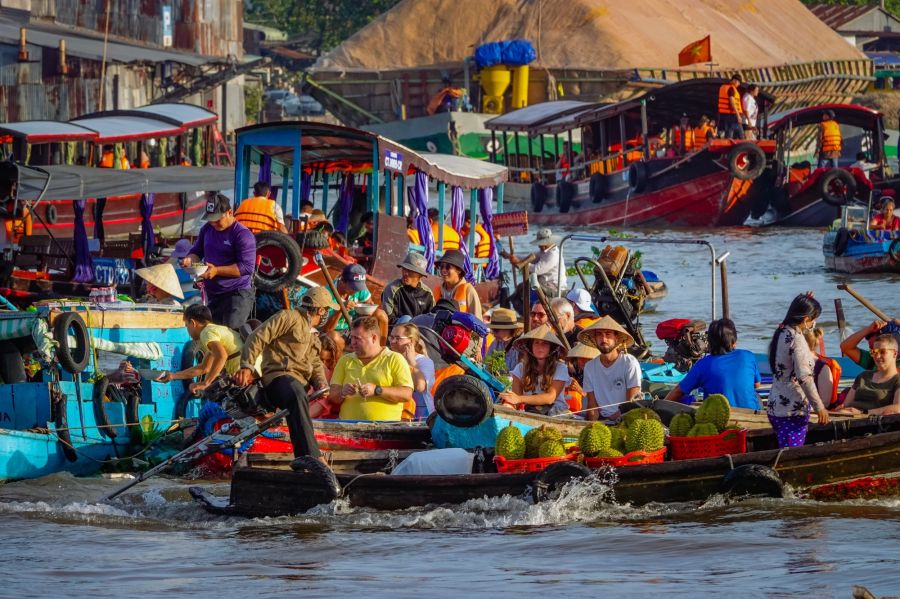
The floating markets in Vietnam are a vibrant experience of daily life in the Mekong Delta. Here, boats replace the streets, and trading takes place on the boats. In the early morning, scores of wooden boats assemble to sell fresh fruits and vegetables, as well as local food. It is a unique cultural experience that highlights the river-based lifestyle of the people.

Cai Rang Floating Market (Can Tho)

  • Location: Can Tho River, located in Cai Rang District, Can Tho City
Located six kilometers away from the center of the city of Can Tho on the Hau River, Cai Rang Floating Market is the largest and most dynamic floating market in the Mekong Delta region. The name “Cái Răng” is believed to derive from ancient local or Khmer language terms, as the area has a rich history of trading communities along the waterways. For centuries, the waterways have been the roads of the region. Hence, the culture of buying and selling on boats has been an integral part of the lives of the people in the area.
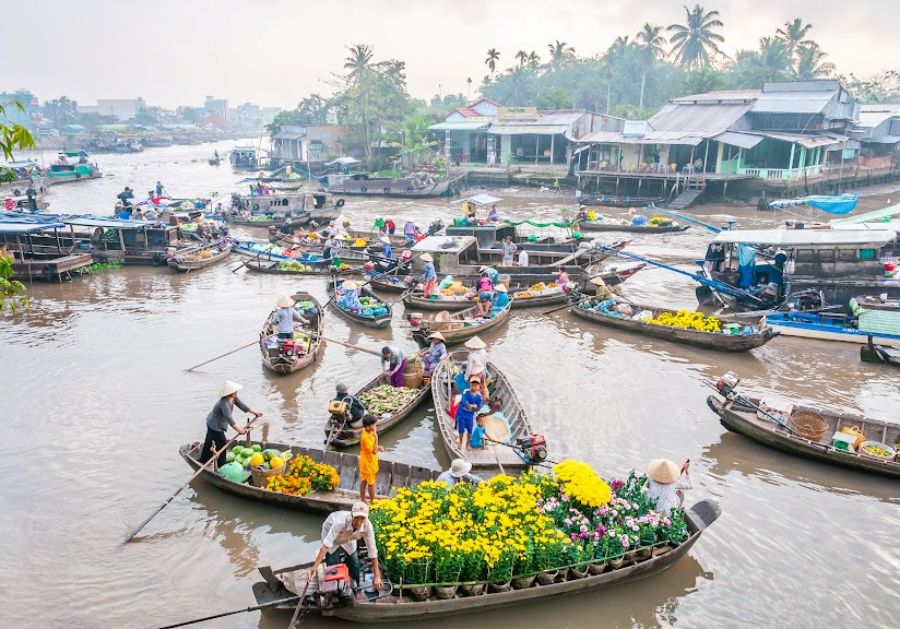
Cai Rang Floating Market
The market starts before dawn; the market is composed of hundreds of boats waiting to sell fresh fruits, vegetables, rice, and other local products. The vendors display their goods on long bamboo poles so that the customers could easily recognize what the vendors sell from far away. Tourists could eat noodle soup, coffee, or fruits right on the water while enjoying the beautiful scene of the market. Cai Rang Floating Market is not only a market but also a cultural experience you should not miss when you visit southern Vietnam.

Phong Dien Floating Market (Can Tho)

  • Location: Provincial Road 923, Nhon Loc Hamlet, Nhon Ai Commune, Phong Dien District.
Located 30 kilometers from the city center of Can Tho, the Floating Market at Phong Dien is in the rural area of the Mekong Delta on the Hau River tributary. While the larger and more famous market at Cai Rang is bustling and busy, the market at Phong Dien is quiet and more local, with a slower pace and a more genuine feeling of rural river life. The name “Phong Dien” is derived from the fertile plains and orchid-filled lands that play an important role in the goods available at the market each day. Long before the construction of roads to the small towns in the Delta, the people relied on the rivers to exchange rice, fruit, and other necessities, and the floating market was an essential tradition.
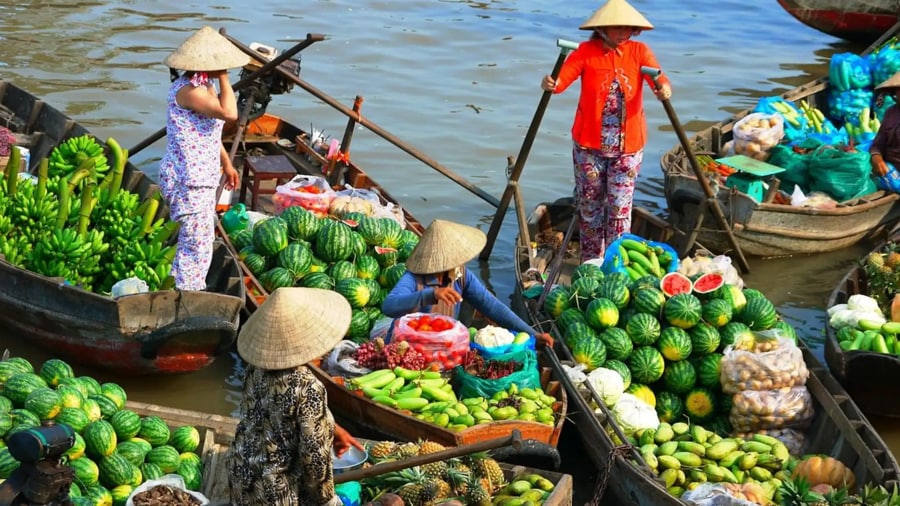
Phong Dien Floating Market
The market is lively before the break of dawn as small wooden boats and sampans assemble to sell fruits, vegetables, flowers, and home-made products. Instead of large boats used for wholesale trading, one will mostly find farmers selling garden-fresh products like mangoes, pineapples, sweet potatoes, herbs, and regional delicacies. It is a picturesque yet serene sight. Travelers can have a simple breakfast like noodle soup or Vietnamese coffee on the boat while engaging in conversation with the vendors. For travelers who want to experience the authentic floating market without the tourist crowds in Mekong Delta, Phong Dien floating market is a delightful experience.

Long Xuyen Floating Market (An Giang)

  • Location: On the Hau River, near O Moi Ferry Terminal, My Long Ward, Long Xuyen City, An Giang Province.
Located on the Hau River in Long Xuyen city, An Giang Province, Long Xuyen Floating Market provides a quieter and more authentic view of the daily lives of people in the Mekong Delta region. The name “Long Xuyen,” which can be translated to “dragon crossing,” symbolizes the close relationship between people and the river that has been a significant factor in trade and agriculture throughout the region. Unlike the floating markets that are popular with tourists, this one appears to be more intimate and local, where most people are residents who come to this place not for tourism but for business.
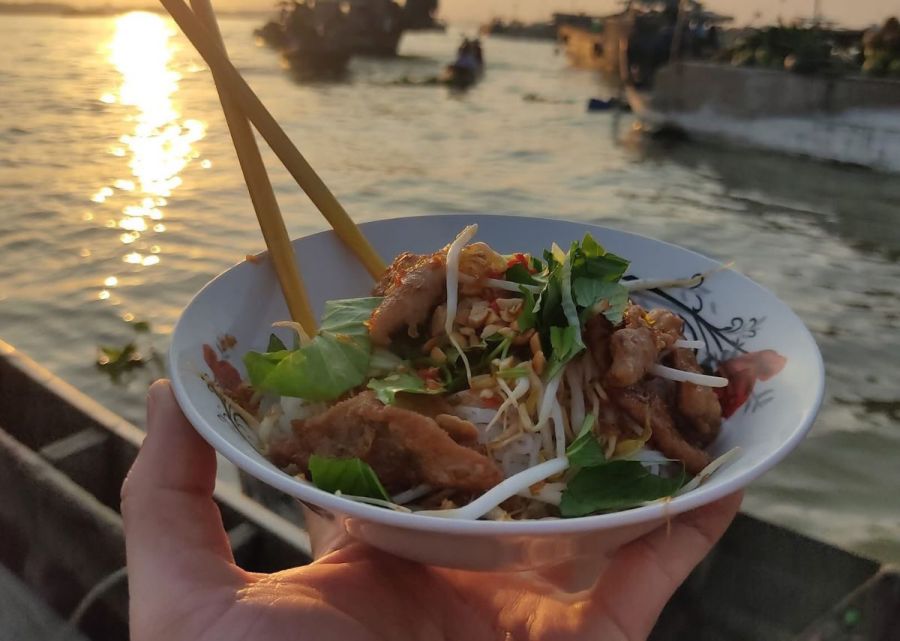
Breakfast on Long Xuyen Floating Market
The market is busiest at sunrise, when many small boats congregate to sell fresh vegetables, fruits, fish, and homemade dishes from the surrounding countryside. You can find simple sampans loaded with fruits and vegetables, bamboo sticks used as display racks, and some vendors cooking noodle soup or coffee on the boat. The setting is casual and authentic, where visitors can witness the authentic river activities rather than commercialized performances. For adventurous tourists, Long Xuyen Floating Market is an interesting site where the essence of the waterways in the south of Vietnam can be found.

Cai Be Floating Market (Tien Giang)

  • Location: Located on the Tien River, in Cai Be Town, Cai Be District, Tien Giang Province, at the border of Tien Giang, Vinh Long, and Ben Tre.
Situated at the point where the Tien River divides into smaller canals, Cai Be Floating Market has been an important trading center, connecting Tiengiang with other provinces in the Mekong Delta region. Because of this strategic position, the floating market was naturally formed as an important meeting point for gardeners and traders carrying goods by boat. The name “Cái Bè” is closely associated with the rich land and water, which have been conducive to lush orchards and rice paddies over time. The floating market has become not just an important trading center, but it has also become a cultural symbol of the river-based lifestyle, which takes place directly on the water.
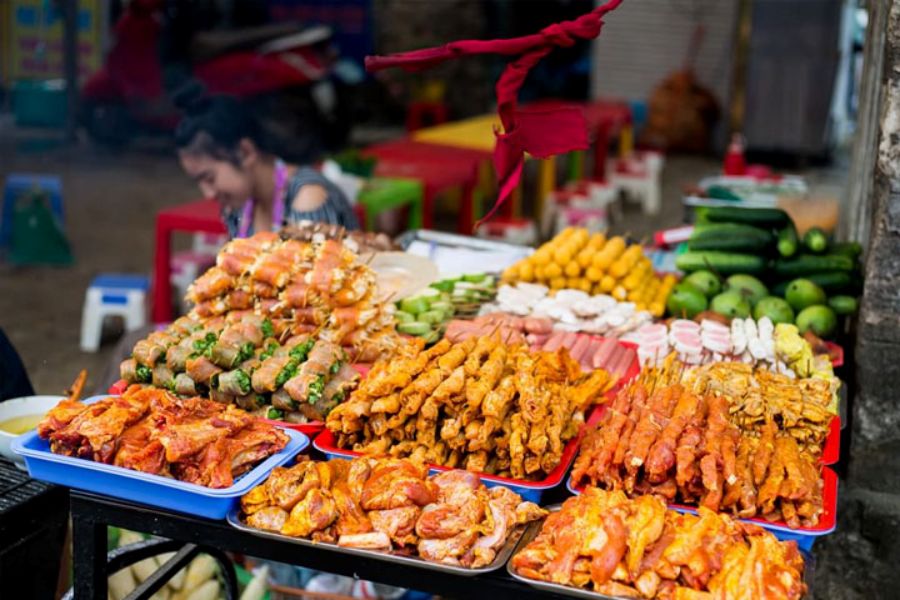
Local Food And Lao Cai Specialties Area
The market is busiest at sunrise, with dozens of wooden boats waiting to sell their goods, which include fresh produce, flowers, and local specialties. You might see boats filled with pineapples, mangoes, dragon fruits, sweet potatoes, coconut candies, and homemade rice paper, while bamboo poles are used to display samples of the goods for sale to entice buyers from far and wide. It is possible for tourists to take a ride on a small sampan boat, eat a bowl of hot noodle soup or drink a cup of Vietnamese coffee while on the river, and experience the friendly dynamics between vendors and buyers during the bargaining process.

Tra On Floating Market (Vinh Long)

  • Location: Located in Tra On District, Vinh Long Province.
Situated at the confluence of minor waterways and the Hau River in Vĩnh Long Province, Tra On Floating Market is one of the most traditional and least touristy floating markets in the Mekong Delta. The name “Trà Ôn” refers to the fertile lands and orchards of the region, which have been home to various farming communities. The waterways in this region have been the principal transport routes for generations, and trade via waterways has been an integral part of the culture.
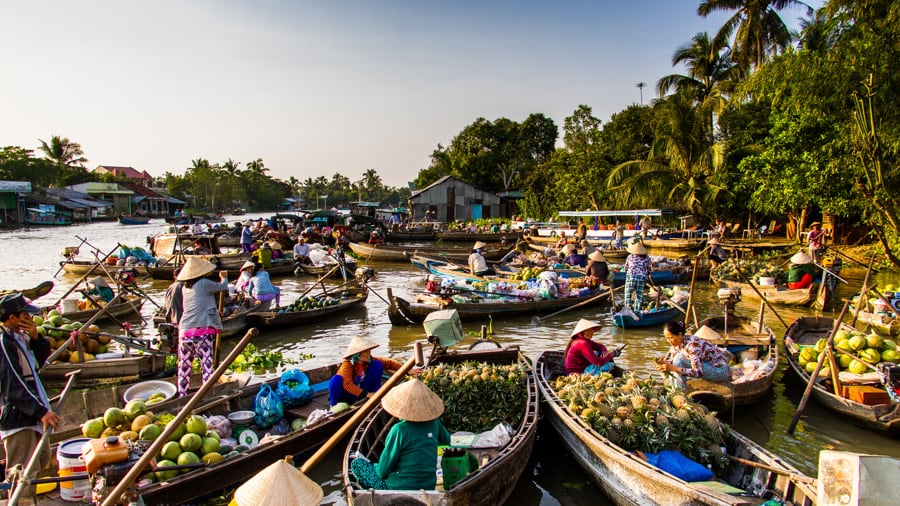
Tra On Floating Market (Vinh Long)
The market starts as early as before sunrise, with scores of wooden boats gathering to sell their produce, such as fresh fruits and vegetables, rice, fish, and homemade food. You will see boats loaded with bananas, pomelos, coconuts, and other tropical fruits, as well as vendors preparing noodle soup or coffee directly over their stoves, ready to serve their customers at this early hour. Compared to other floating markets, the floating market at Tra On is quiet, friendly, and authentic, offering tourists the chance to experience the “real” river life at their own pace. If you want to experience the authentic culture of the Mekong Delta, then the floating market at Tra On is definitely worth visiting.

Nga Bay Floating Market (Hau Giang)

  • Location: Nga Bay City, Hau Giang Province, located at the junction of seven intersecting rivers.
Located on the quiet waters of the Hau River in Hậu Giang Province, Nga Bay Floating Market is a quaint and off-the-beaten-path river market that embodies the spirit of daily life in the Mekong River Delta region. The name Nga Bay literally translates to the broad curve of the river on which it is situated, where the quiet waters and fertile land provide the best conditions for agriculture. For decades, river-dwellers have used river trade as a way to purchase and sell their produce and daily needs, making this floating market a quintessential representation of river delta life far removed from the tourist scene.
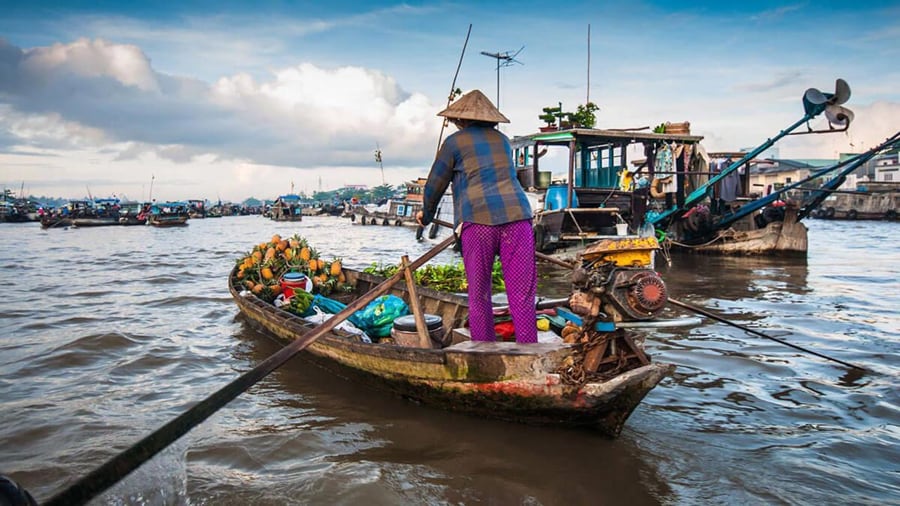
Nga Bay Floating Market (Hau Giang)
The busiest time at the market is at dawn, when scores of small boats arrive with fresh fruits, vegetables, fish, rice products, and homemade snacks from the surrounding areas. Vendors display their goods by hanging samples on long bamboo poles as advertisements, and this creates a beautiful and lively scene from the water. You can enjoy a light breakfast, such as noodle soup or Vietnamese coffee, directly on the boat while observing the friendly process of bargaining and the bustling river life. With its tranquil atmosphere and authentic charm, Nga Bay presents a true picture of the culture of the Mekong Delta region.

Ca Mau Floating Market (Ca Mau)

  • Location: At the end of the Ganh Hao River, in Ward 8, Ca Mau City.
Situated in the southernmost province of Vietnam, Ca Mau Floating Market is located along a complex network of waterways, which are at the heart of daily life in this distant part of the Mekong Delta. The name “Cà Mau” is often linked to wetlands and fertile lands, which speaks of the strong affinity of this place with water, fishing, and farming. Through the course of time, the people of this place have been using boats as their primary means of transport, which eventually gave rise to this thriving floating market.
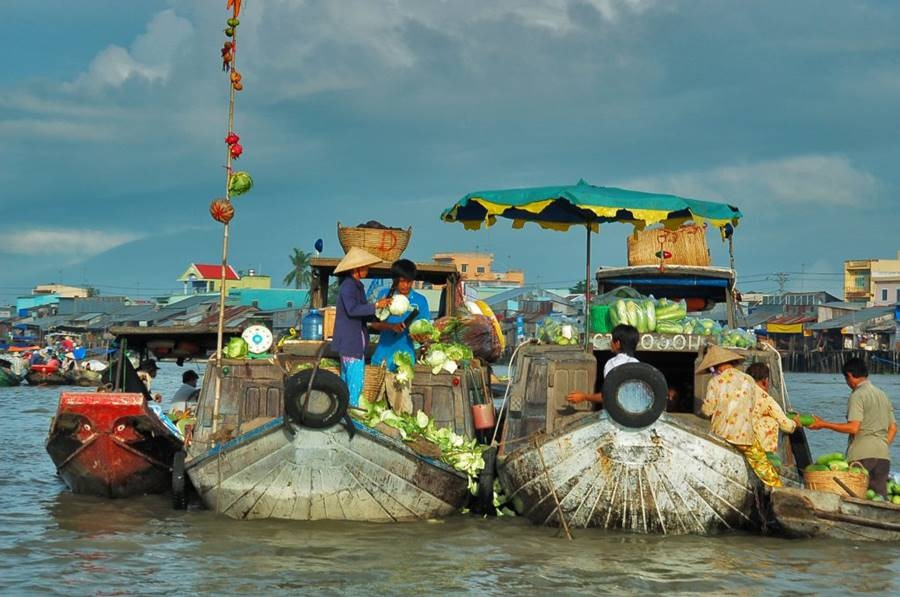
Ca Mau Floating Market (Ca Mau)
The market is most crowded during dawn time when small wooden boats congregate to sell fresh seafood like shrimp, crab, and fish, as well as fruits, vegetables, rice, and homemade foods. Due to its proximity to the sea, Ca Mau excels in its seafood culture, which provides a taste not often available elsewhere at floating markets. Visitors can savor hot breakfast or snack on the water while observing lively haggling between vendors. With its idyllic ambiance and authentic riverside experience, Ca Mau Floating Market promises a genuine Mekong Delta experience.

FAQs About Floating Markets In Vietnam

One of the most fascinating cultural attractions in southern Vietnam, floating markets are a rare opportunity to experience daily life on water. The following common questions will help you plan a smoother experience if it’s your first time visiting the Mekong Delta.
  1. What time should I visit the floating market?
Typically, the best time to visit the floating market is early in the morning, between 5:00 and 8:00 AM. The vendors usually arrive at sunrise to exchange goods while the weather is still cool and nice. Visiting the market early in the morning will allow you to witness the most colorful and vibrant scene and avoid the scorching sun.
  1. How do I explore the floating market?
The best way to explore the floating market is by renting a small boat or by joining a local boat tour from the surrounding towns. A boat driver will take you through the most crowded areas and allow you to visit different vendors.
  1. What can I buy or eat there?
You will be able to find a variety of fresh fruits, vegetables, seafood, and home-made snacks sold from the boats themselves. You will be able to enjoy breakfast dishes such as noodle soup, grilled bananas, or Vietnamese coffee served directly from the boats. It’s a wonderful opportunity to try local cuisine at very reasonable prices.

Final Thoughts

While the bustling and busy Floating Market at Cai Rang is a sight to behold, the serene and quiet Floating Market at Phong Dien and the genuine and authentic Floating Market at Ca Mau are all windows to the colorful world of the Mekong Delta River. Waking up early to explore the Floating Market is an experience you cannot find elsewhere, and if you are looking to experience the unique river traditions with ease and comfort, then allow Seni World to craft your perfect Mekong Delta journey and turn your experience into an adventure!

Markets in Vietnam: A Guide to Local Shopping Experiences

Vietnamese markets can be described as vibrant cultural destinations that bring the essence of daily life and tradition in the country. Indeed, the markets in Vietnam and the numerous floating bazaars and street markets offer fresh and authentic experiences.

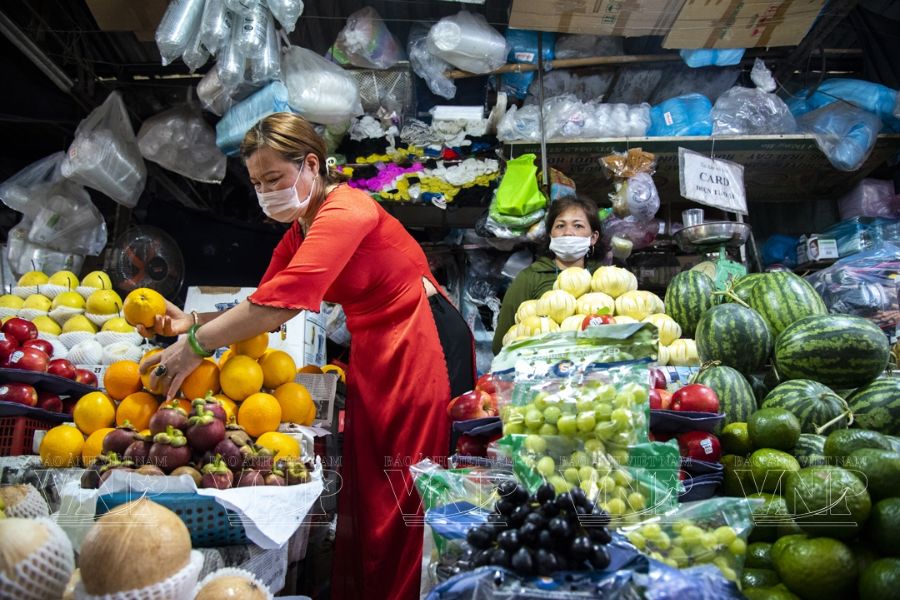
Ben Thanh Market (Ho Chi Minh City)

  • Location: Ben Thanh Market is located at Le Loi Street, District 1, Ho Chi Minh City, right in the heart of the city center and close to major attractions
  • Opening hours: The market is open daily from 6:00 AM to 6:00 PM, with a lively night market operating in the surrounding area from 6:00 PM to 10:00 PM.
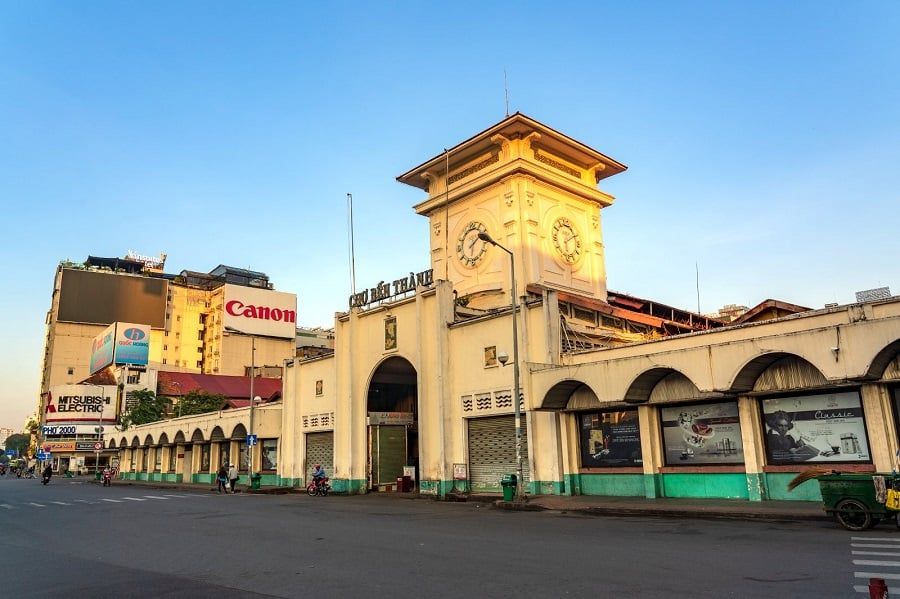
Ben Thanh Market is considered one of the best-known and oldest markets in Ho Chi Minh City, with a location in the city center, close to all major streets and tourist attractions in District 1. This marketplace was founded in the early 20th century, and throughout its long history, it has become a true symbol of a dynamic lifestyle. In addition, its unique clock tower makes this marketplace quite recognizable due to its intense location. It is worth mentioning that due to its location, Ben Thanh Market is always involved in city tours and is accessible to local people and international visitors.
Ben Thanh Market
Inside the market, visitors can explore a variety of items, which range from traditional street food, fresh produce, souvenirs, handicrafts, textiles, and ao dai fabrics. The food available in the market can be considered a highlight, since visitors can enjoy popular Vietnamese dishes such as pho, bun thit nuong, banh xeo, and tropical fruits. However, what makes Ben Thanh Market unique is its lively atmosphere, which consists of different colors and aromas, as well as vendors who are friendly. Overall, the market represents the true cultural experience, which encapsulates the true spirit of southern Vietnam.

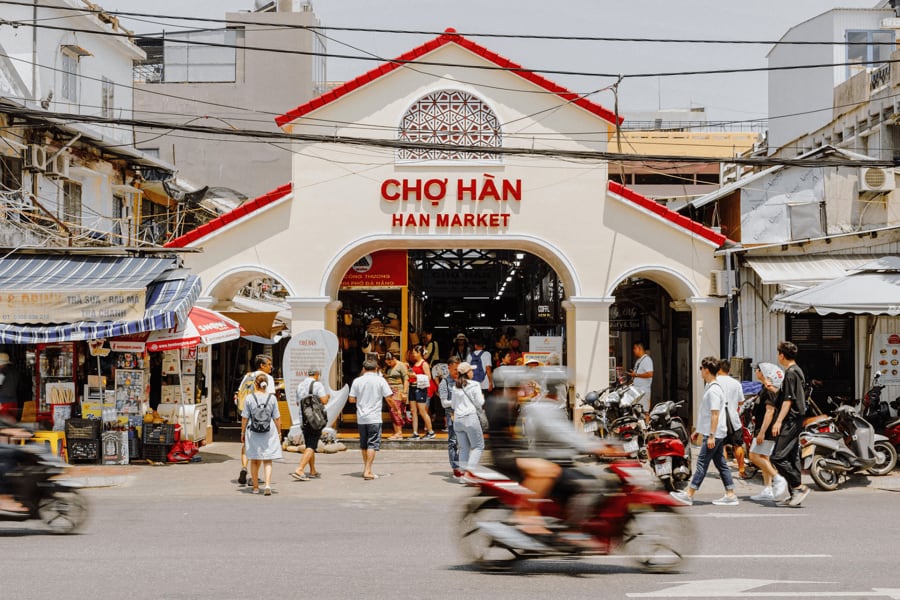
Han Market (Da Nang)

  • Location: Han Market is located on Tran Phu Street, Hai Chau District, right in the heart of Da Nang city. Positioned near the Han River, the market is within walking distance of major hotels, riverfront areas, and popular city attractions.
  • Opening hours: The market is generally open from 6:00 AM to 7:00 PM daily, making it a convenient spot for shopping, local food, and souvenirs throughout the day.
Han Market is one of the oldest and most famous traditional markets in Da Nang City Center. The Han Market is located on Tran Phu Street, near the Han River and the famous Han River Bridge. Therefore, tourists can easily find time to visit this market during their exploration of Da Nang City. For many years, Han Market has played an important role in Da Nang City. It is considered not only a commercial trading center but also a famous destination for tourists who want to experience the real Da Nang.
Han Market is one of the oldest and most famous traditional markets in Da Nang City Center
Inside the Han Market, visitors can find a range of goods on sale, including food, dried seafood, local fish sauce, clothing, fabrics, handicrafts, and souvenirs, amongst other items. The food section of the market should not be passed up, especially because there are many local delicacies on offer, including Mi Quang, banh beo, banh nam, as well as traditional Vietnamese desserts. The uniqueness of the Han Market mostly lies in its environment, vendors, and local features. By visiting this market, travelers get to have an insight into how life unfolds in Da Nang, as well as buy some great souvenirs to bring back home.

Dong Ba Market (Hue)

  • Location: Tran Hung Dao Street, Phu Hoa Ward, Hue City, located on the northern bank of the Perfume River and near Trang Tien Bridge.
  • Opening hours: Approximately 6:00 am to 6:00 pm daily, with some food stalls and vendors operating earlier in the morning or staying open later in the evening.
Dong Ba Market is considered the biggest and most well-known traditional market in Hue, with its location on Tran Hung Dao Street, along the northern side of the Perfume River, and close to Trang Tien Bridge. Being one of the oldest commercial centers in Hue, Dong Ba Market has a crucial place in the life of this city and contains a big share of its cultural identity. Due to its central location, Dong Ba Market is accessible from the Imperial City and other major tourist attractions.
tropical fruits in dong ba market
Inside the Dong Ba Market, tourists are able to see a variety of products for sale, from fresh fruits and dried seafood items to Hue specials such as shrimp paste, sesame candies, banh loc, and bun bo Hue, among others. The food stalls are particularly interesting, considering that they give the tourists an insight into the culinary heritage of the city. What is particularly unique about the Dong Ba Market is the vibrant and lively atmosphere prevailing within the market. Thus, visiting the market gives the tourists an opportunity to learn about the life and culture of the people in Hue, besides the food and souvenirs available for purchase.

Dong Xuan Market (Hanoi)

  • Location: Dong Xuan Ward, Hoan Kiem District, Hanoi, at the northern edge of the Old Quarter and close to the Red River.
  • Opening hours: Daily from around 6:00 am to 6:00 pm; the surrounding night market operates on weekend evenings, usually from 7:00 pm to 11:00 pm.
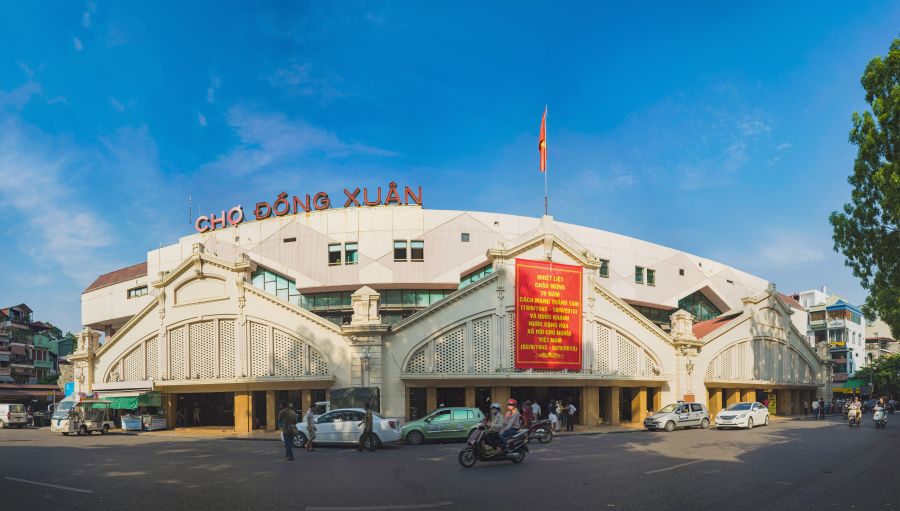
Dong Xuan Market is considered one of the largest and oldest wholesale markets Hanoi has to offer. It is located at Dong Xuan Ward, Hoan Kiem District, located at the northern end of the Old Quarter but near the Red River. As one of the oldest wholesale markets in Hanoi, it was established in the late 19th century and has become an essential hub for trade within the capital. Due to the location of Dong Xuan Market, it can be easily accessed on foot from some of the streets within the Old Quarter.
Dong Xuan Market
Within Dong Xuan Market, a variety of products are available, encompassing all kinds of clothing, fabrics, household items, souvenirs, and handicrafts. Moreover, food enthusiasts can indulge in a variety of Northern Vietnamese delicacies, including bun cha, rolls of Pho, fried fermented pork, and sweet treats. What makes Dong Xuan Market unique is the factor of excitement and local vibes, which are efficiently captured within the context of wholesale trading and street life. As a tourist, visiting Dong Xuan Market can be a way to experience true Hanoi culture and taste a sense of excitement.

Da Lat Market (Lam Dong)

  • Location: Nguyen Thi Minh Khai Street, Da Lat City, Lam Dong Province, located in the city center and close to Xuan Huong Lake.
  • Opening hours: Daily from around 5:00 am to 6:00 pm; the night market area nearby becomes lively from about 6:00 pm to late evening.
Da Lat Market is the central and most vibrant traditional market in Da Lat City, located on Nguyen Thi Minh Khai Street in Lam Dong Province, just a short walk from Xuan Huong Lake. Representing the city’s main trading hub, the cool highland lifestyle and agricultural richness of Da Lat are reflected in this market. Centrally located in the city, the convenience offered by its location makes it quite easily accessible to tourists going to other nearby spots, cafes, and streets lined with scenic beauty.
Inside Da Lat Market, visitors will find fresh vegetables, flowers, strawberries, avocados, and artichokes, as well as dried fruits, jams, teas, and local specialties. The food area is especially appealing, with hotly favored street foods: grilled banh trang, grilled corn, soy milk, and hot snacks that are great for the cool weather. What makes Da Lat Market special is its liveliness, especially in the evening when the night market around it bustles into life. Visiting the market offers tourists a chance to try local flavors, shop for highland products, and enjoy unique Da Lat magic.

An Dong Market (Ho Chi Minh City)

  • Location: An Dong Ward, District 5, Ho Chi Minh City, located near An Dong Plaza and in the heart of the city’s Chinatown area.
  • Opening hours: Daily from around 6:00 am to 6:00 pm, with some stalls opening earlier or closing later depending on the type of goods.
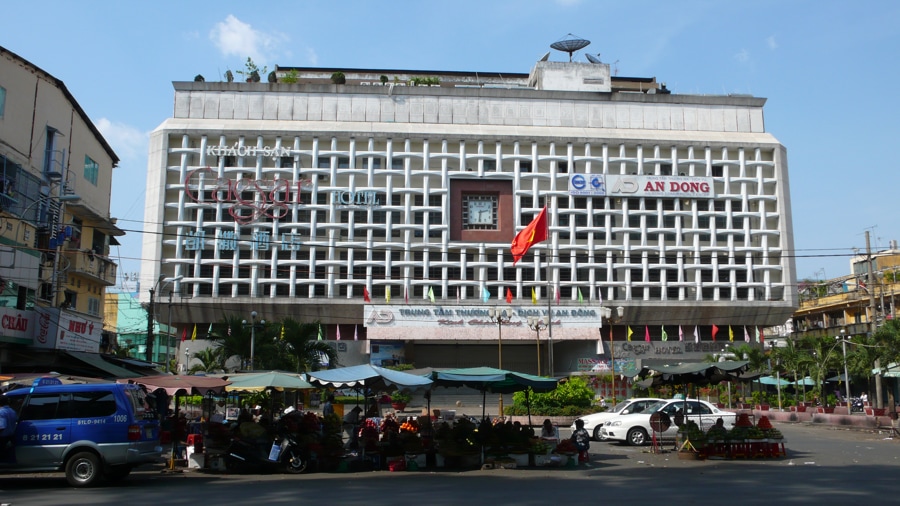
Situated in District 5, the heart of Ho Chi Minh City’s Chinatown area, and proximal to An Dong Plaza, An Dong Market is certainly one of the city’s key wholesale markets. It acts as one of the big distribution centers, feeding retailers all over town and southern Vietnam. Its convenient location makes An Dong Market easily reachable from District 1 and other central areas to allow visitors to discover the less touristy side of Ho Chi Minh City while discovering local trading culture.
An Dong Market (Ho Chi Minh City)
Inside An Dong Market, one will find everything, but more specifically, cloth, fabrics, fashion accessories, and textiles sold at wholesale prices, not to mention food stalls with local dishes and snacks adding liveliness. What is important about An Dong Market is that it has strong commercial energy and is home to a range of genuine local characters, daily activities embracing business matters at a fast pace. An Dong Market would fall into the category of trips targeting tourists interested in shopping, local culture, and daily urban life as a showcase of the dynamic spirit of Ho Chi Minh City.

Quang An Flower Market (Hanoi)

  • Location: Quang An Ward, Tay Ho District, Hanoi, located near West Lake and along Au Co Street.
  • Opening hours: Open daily, mainly from late night to early morning, approximately 11:00 pm to 6:00 am, with the busiest hours between 2:00 am and 4:00 am.
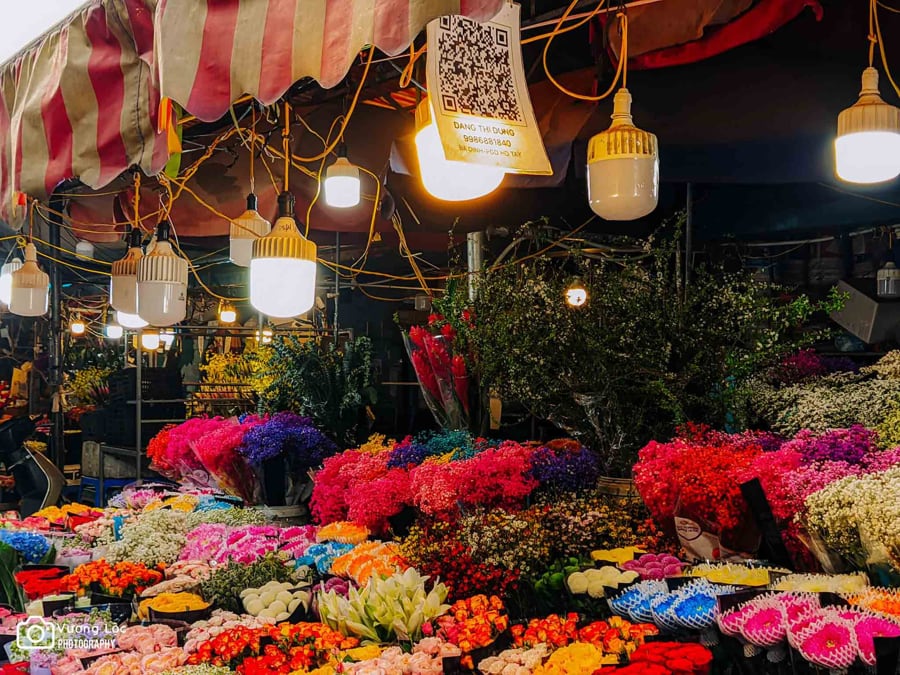
Quang An Flower Market is the biggest flower wholesale market in Hanoi City and is situated in Quang An Ward, Tay Ho District, near the City’s famous West Lake, and on Au Co Street. Unlike other traditional markets, the Quang An Market is operational only at night and before sunrise, and the ambiance appears to depict the flourishing culture of the early morning hours. The proximity of the market to the Old Quarter and other popular living areas adds to the accessibility of the place for the locals as well as travelers.
Quang An Flower Market (Hanoi)
Varying kinds of fresh flowers can be seen at the market, with sources from all over Vietnam, including roses, lilies, orchids, chrysanthemums, and many others. However, the most unique feature of the Quang An Flower Market is that it is filled with life in the evenings, with many vendors and trucks that bring a sense of color to the night. By visiting this market, travelers can see some of the real local activities going on around Hanoi that is hard to discover during daytime travel.

Hoi An Market (Hoi An)

  • Location: Tran Phu Street, Minh An Ward, Hoi An Ancient Town, Quang Nam Province, located near the Thu Bon River.
  • Opening hours: Daily from around 6:00 am to 9:00 pm, with the busiest hours in the morning and late afternoon.
Hoi An Market is the central and liveliest traditional market in Hoi An Ancient Town, located on Tran Phu Street, which is alongside the Thu Bon River in Quang Nam Province. As part of the traditional activities in the ancient town, the market provides a unique experience for tourists to get a glimpse into traditional culture and trade activities. The market’s strategic location means that it is accessible from other major heritage sites in the region, enabling tourists to visit, dine, and shop at one stop.
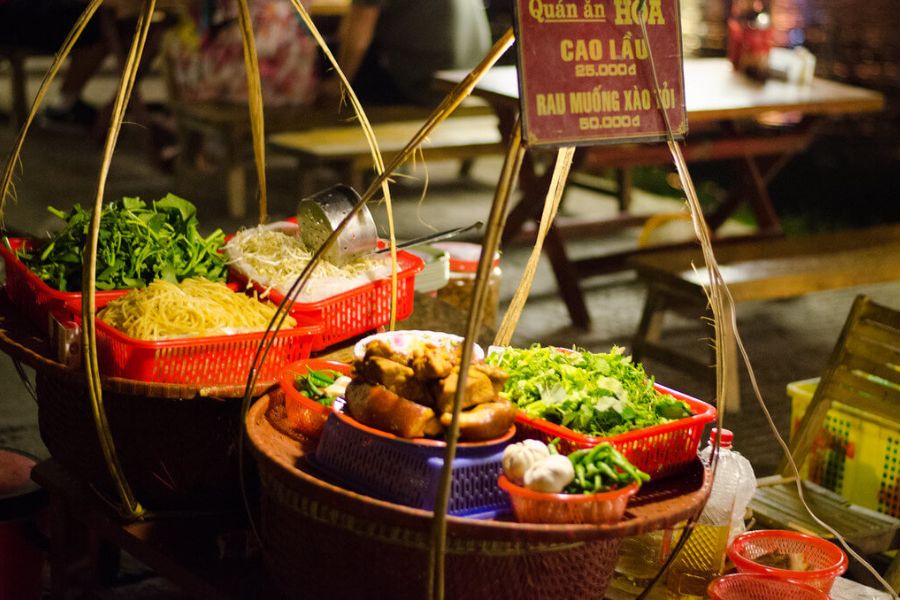
street food in hoi an night market
There are available foods, spices, dried food, seafood, lanterns, handicrafts, and souvenirs, among others, available within the market. It should, however, be noted that the food option is popular because of the availability of specialties like cao lau, mi Quang, banh mi, and seafood dishes. It should be noted that the Hoi An Market is popular because of the lively atmosphere that can be experienced. The lively atmosphere is the major distinguishing aspect of the Hoi An Market. The lively atmosphere and the ancient town are the major attractions in the Hoi An Market.
Hoi An night Market

Bac Ha Market (Lao Cai)

  • Location: Bac Ha Town, Bac Ha District, Lao Cai Province, located about 70 km northeast of Lao Cai City in Vietnam’s northern highlands.
  • Opening hours: Every Sunday morning, from around 7:00 am to 2:00 pm, with the busiest time between 8:00 am and 11:00 am.
One of the most famous ethnic markets in North Vietnam is the Bac Ha Market, which is situated in Bac Ha Town in the Lao Cai Province, approximately 70 km from Lao Cai City. Every Sunday morning is the time for the market to take place. In terms of culture, the market is an important junction for many ethnic groups like the Hmong, Tay, Nung, and Phu La. In the mountainous highlands, the Bac Ha Market is a very special place for people to discover the traditional ways of living in a picturesque rural atmosphere.
A variety of items are available at Bac Ha Market for travelers. Such items include handicrafts, clothing, accessories like embroidery, farming tools, fruits and vegetables, and animals. In addition to this, visitors can also indulge in special local products like corn wine. However, what makes Bac Ha Market different from other markets is that people dressed traditionally come together to socialize and celebrate their week. Therefore, by visiting Bac Ha Market, travelers get to encounter ethnic culture and are also able to take some excellent pictures.

Phu Quoc Night Market (Phu Quoc)

  • Location: Bach Dang Street, Duong Dong Town, Phu Quoc City, Kien Giang Province, located near the Duong Dong River and the town center.
  • Opening hours: Daily from around 5:00 pm to 11:00 pm, with the busiest hours in the evening.
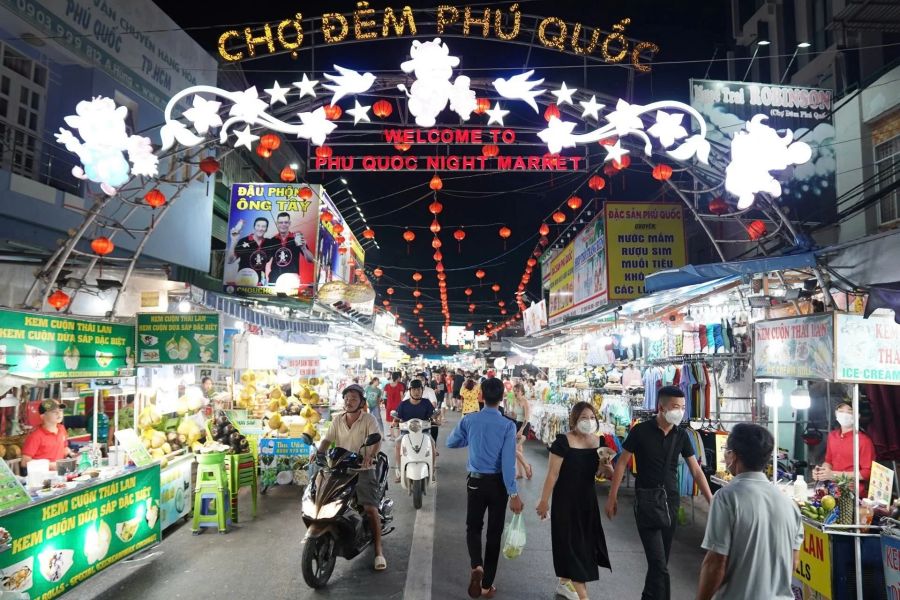
Phu Quoc Night Market is the most popular night destination for shopping and eating on Phu Quoc Island. Its location is on Bach Dang Street in Duong Dong Town, which is near the Duong Dong River. Phu Quoc Night Market is a very lively place to visit during the evenings. It is popular not only among locals but also among tourists because of its location and the lively atmosphere the place offers due to the numerous hotels built nearby.
Phu Quoc Night Market
Its most famous feature is the fresh seafood that can be bought at the market, such as grilled squid, shrimps, scallops, sea urchins, and other seafood delicacies prepared on the spot. Visitors may also find various souvenirs, pearls, handicrafts, and Phu Quoc specialties such as fish sauce and pepper. What makes the night market of Phu Quoc special is that it provides visitors with a delightful night out with excellent street food and beautiful decorations. Visiting the night market gives travelers a chance to explore the best of the island and have an incredible night out.

Sat Market (Hai Phong)

  • Location: Sat Ward, Hong Bang District, Hai Phong City, located near the Cam River and close to the city center.
  • Opening hours: Daily from around 5:00 am to 6:00 pm, with early morning hours being the busiest.
Sat Market is one of the most renowned traditional markets in the city of Hai Phong, situated in the Hong Bang district near the Cam River and the city center. As a traditional market with a long history of operation as a business center, the Sat Market reflects the dynamic tempo of one of the most significant ports in the country. The location of Sat Market guarantees its accessibility for tourists having visited other sites in the city of Hai Phong.
Within the Sat Market, there are a variety of products that are available, ranging from seafood, vegetables, meat, and spices. The variety of food is probably more appealing, with delicacies such as banh da cua, fresh noodles, and other local food, which are usually favorites in Hai Phong. What could make Sat Market unique and worth visiting is its lively and local character, as it brings fishermen, local vendors, and locals altogether in one place. Tourists who visit this place are then able to get a glimpse of life and experience the local identity of Hai Phong.

Final Thoughts

Those interested in exploring Vietnam’s traditional markets can enjoy a delightful and effective way of getting familiar with Vietnam’s original culture, original Vietnamese cuisine, and original Vietnamese style of life. Traditional markets include city markets, ethnic markets, night markets, and so forth. Each of them is special and original. For instance, one could visit city markets, ethnic markets, and night markets. During a visit to traditional markets in Vietnam, any traveler can become familiar with the local community, Vietnamese culture, and other significant aspects of this wonderful land.

That Dam Stupa: The Legendary Black Stupa of Vientiane

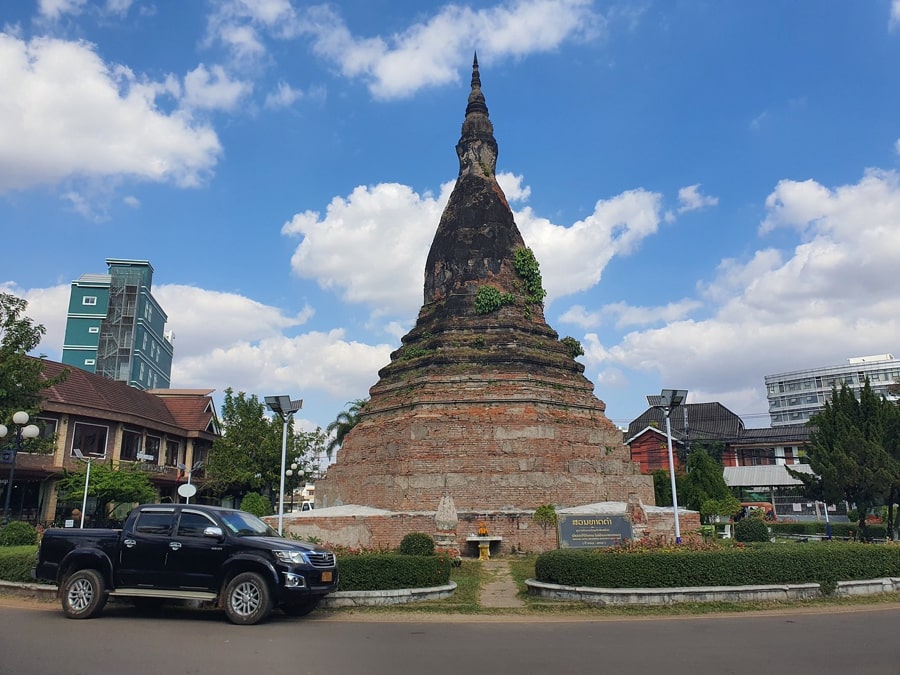
That Dam Stupa is one of the most iconic historical landmarks in Vientiane, Laos, with its dark, weathered exterior and powerful local legends. This ancient stupa has come to represent spiritual protection, resilience, and endurance of the cultural identity of the Lao people.

Introduction To That Dam Stupa

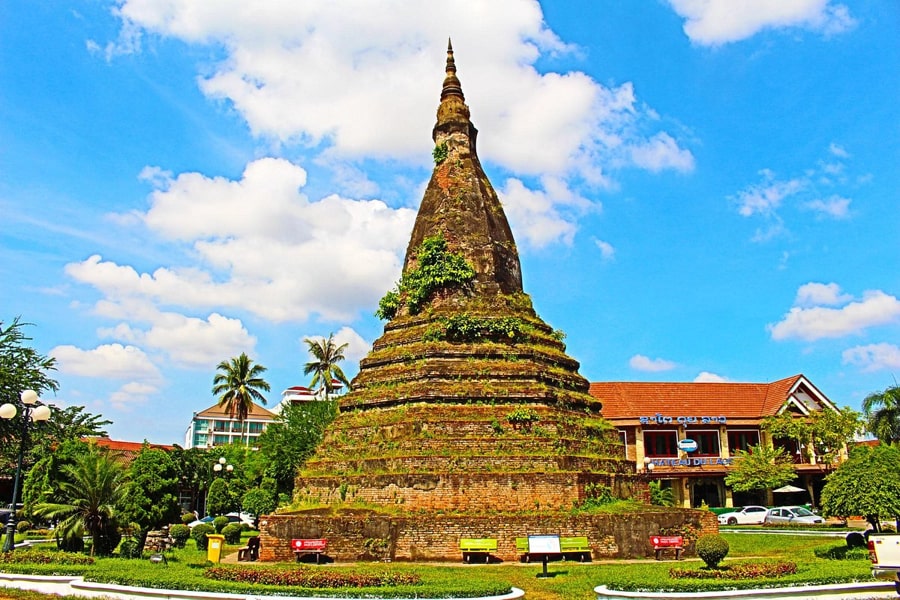
That Dam Stupa is one of the most popular historical monuments in Vientiane, Laos, which attracts tourists due to its unique black look. It is believed that the stupa was built as early as the 16th century, and it is a testament to the power of these monuments to survive various wars and the effects of time. In addition, the monument is located in the heart of the capital, which links its history with stories about the seven heads of a naga protecting the town.
That Dam Stupa is one of the most popular historical monuments in Vientiane, Laos
Visiting That Dam Stupa would give travelers insight into Lao history, culture, and architectural achievements. It is an excellent place for spiritual contemplation, as it is designed following traditional stupa architectural styles. Additionally, its location in the heart of Vientiane makes it easy to include in one’s travel plans, and its legendary background makes it worth visiting for those interested in culture and spirituality.

History Of That Dam Stupa

The That Dam Stupa is also believed to have been constructed in the 16th century when King Setthathirath ruled. This time frame is considered an important period in Lao history because of its association with Buddhism. The original form of the That Dam Stupa had its surface covered by gold. This represented prosperity and protection by Buddhism. Due to invasion and war, the gold covering later disappeared, and the That Dam Stupa assumed its new look, thus being nicknamed the “Black Stupa.”
Apart from its physical history, That Dam Stupa has significant cultural and spiritual values among the local population. The stupa, by legend, was said to have been protected by a seven-headed Naga that ensured Vientiane remained untouched by negative energies. The site had, over time, represented strength, faith, and protection for the local population. That Dam Stupa today serves as a historic reminder of Vientiane’s struggles, spiritual values, and Buddhist traditions.

Unique Architecture Of That Dam Stupa

That Dam Stupa is uniquely raw in appearance, a testament to both transformation over time and a deep sense of symbolism. Its architecture follows the traditional Lao Buddhist stupa design while carrying unique features shaped by time, legend, and cultural belief.

The Base Structure

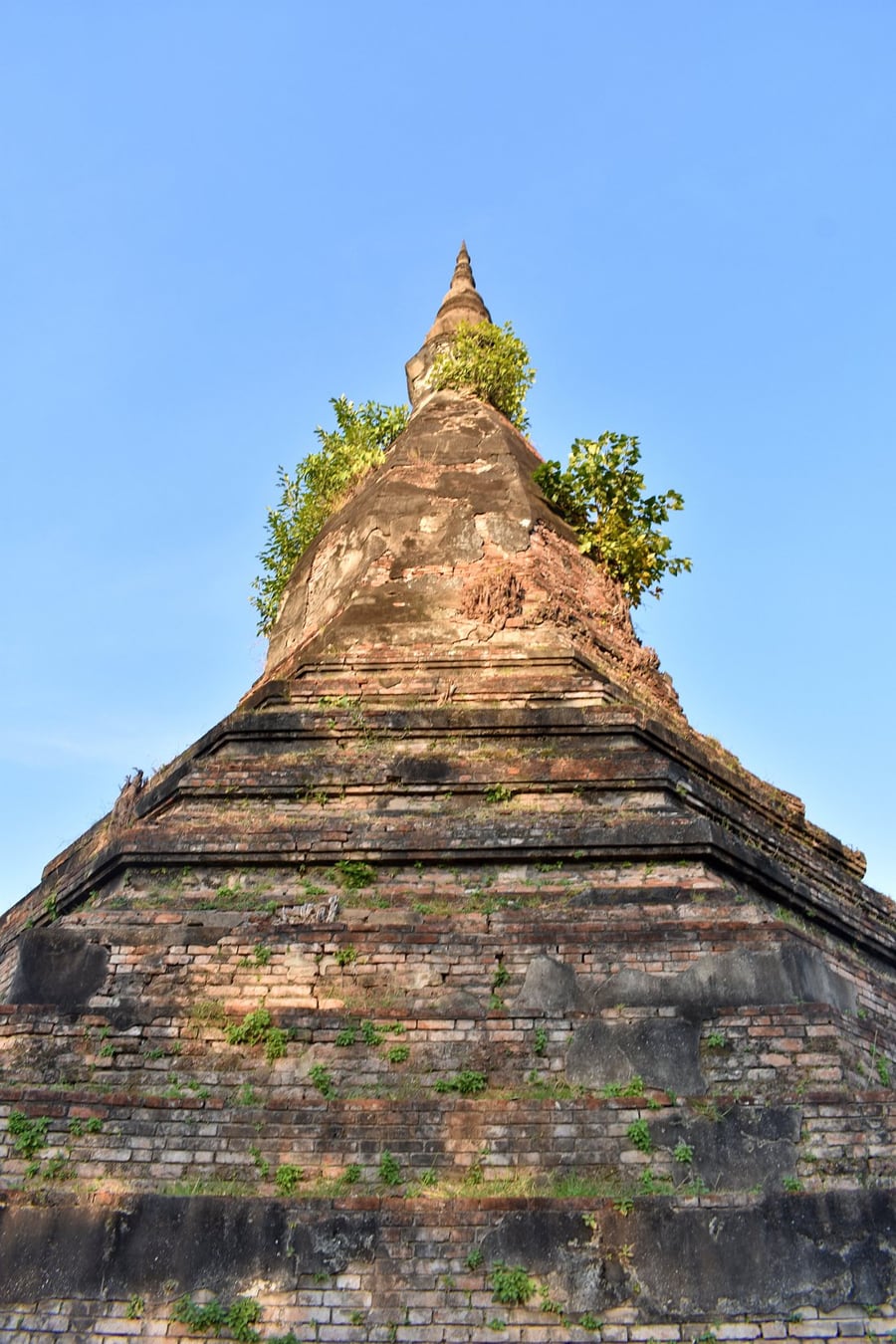
The base of That Dam Stupa is solid, square, and represents stability and the foundation of Buddhist teachings. Made of brick and later finished with stucco, this lower section was designed to support the monument’s towering mass. Over the centuries, weathering has removed decorative layers to expose a rough, dark surface that adds to its mysterious character. This wide base also follows the traditional Lao stupa proportions and grounds the structure firmly into the surrounding urban landscape. This level represents the earthly realm and strongly stresses balance, resilience, and the physical linkage between spiritual belief and daily life.
Unique Architecture Of That Dam Stupa

The Main Body

As it rises from the base, the main portion of the That Dam Stupa is designed to be a long, cone-shaped structure that captures the eye’s attention and causes it to ascend upwards. This is a classic manifestation of Buddhist cosmology, embodying the path from the earthly world to spiritual enlightenment. Previous components of the stupa were said to be equally gold-coated, but now have the characteristic black color due to aging. The lack of decoration on this stupa differentiates it from other stupas in this region because it emphasizes its simplicity and spiritual power.

The Upper Spire

That Dam Stupa’s upper section of the spire tapers rapidly towards the sky to symbolize transcendence and spiritual enlightenment. While the details of That Dam Stupa are limited compared to those of the Lao stupas, the emphasis on verticality makes for a dramatic visual effect. The upper section of this particular stupa contains spiritual energies that protect the site of That Dam Stupa, according to legend; the mythical protective Naga of Vientiane is part of these defensive energies. The spire also signifies the ascent from earth to heaven.

3 Unforgettable Experiences You Shouldn’t Miss

Visit at That Dam Stupa is not just about sightseeing. It is also about establishing connections with Lao culture, history, and spirituality. These experiences will always be memorable and provide you with an appreciation of the culture associated with this landmark.

Explore Legends and Local Beliefs

Probably the most unforgettable feeling one gets in Vientiance is learning about the legends attached to the site. Local legends say that a strong naga spirit protects the stupa and the city of Vientiane against dangers. Listening to these myths or reading the local interpretation provides an understanding of how folklore, religion, and history are intertwined in Lao culture. This experience gives meaning to the visit beyond architecture and makes the stupa a living symbol of spiritual protection.

Observe Daily Spiritual Practices

Although That Dam Stupa is not an active temple, locals still visit the site to pray, leave offerings, and pay respect. A good way to learn about daily religious life in Laos, quiet spiritual practices can be observed on-site. Incense may be given as an offering, and one may see people taking some time for themselves when the morning is the most active. It provides quite a serene atmosphere and, moreover, allows travelers to respectfully engage with locals and Buddhist traditions.

Walking Around the Historic City Center

Dam Stupa is situated in the heart of Vientiane City. Therefore, one can explore the surrounding historical and cultural sites on foot. For a casual stroll through the city, tourists can visit this site and appreciate the colonial architecture of the surrounding buildings. Through this, travelers will witness the natural blending of their structure with the current times without compromising their historic value.

Entrance Fee

Visiting That Dam Stupa is free, as there are no special entrance fees or the need for a ticket to the monument. The monument is open to the public throughout the day, and visitors can add this to their travel itinerary to Vientiane. There might be a small entrance fee to temple sites located in the vicinity, around 1-2 USD. While not necessary, visitors can take some flowers with them as a symbol of respect for the beliefs and traditions of the population.
Visiting That Dam Stupa is free

Opening Hours

That Dam Stupa is a public monument, which means it does not have controlled entry gates, so travelers can explore it at any time of the day. Visitors can visit this stupa at any time, but it is better if they visit during daylight. Early morning or late afternoons would be a better time to spend at a sightseeing location, as it is a better time for photography and sightseeing, particularly for cultural sightseeing travelers.
The best time to visit That Dam Stupa would be during the dry season, from November to February. During this time, the weather in Vientiane is slightly more pleasant compared to other seasons. Visiting the place early in the morning or during sunset would be advantageous since the conditions are more favorable.

How To Get To That Dam Stupa

The location of That Dam Stupa is highly ideal because it is situated in the center of Vientiane City. There are many transport possibilities to reach That Dam Stupa. Therefore, visitors may visit the site with ease because of its location in the center of the city.
Transportation
Estimated Time
Estimated Cost (USD)
Notes
Taxi / Ride-hailing car
5 to 10 minutes
2 to 4 USD
Comfortable and suitable for all travelers
Motorbike rental
5 to 10 minutes
8 to 12 USD per day
Valid driving license recommended
Bicycle
10 to 15 minutes
2 to 4 USD per day
Ideal for short distances and city exploration
Walking
15 to 20 minutes
Free
Suitable if staying in central Vientiane
While traveling by motorbike, tourists should carry an international or local driving license and must also carry a helmet since traffic control may be conducted along the roads. The roads around That Dam Stupa are flat and in good condition, making access easy for most tourists.

Things To Know Before Traveling To That Dam Stupa

As mentioned, That Dam Stupa is a landmark famous for its spiritual value, legends about it, and its appearance, which is the result of its long and complex history. Proper preparation is needed to have a comfortable visit.
  • To avoid heat, enjoy a peaceful environment, and capture good photographs, it’s best to visit during early mornings or late afternoons.
  • Dress modestly with knees and shoulders covered, especially when praying or observing local people, to demonstrate cultural sensitivity and follow Buddhist practices concerning the stupa.
  • Water and sun protection should be brought, as the place is located outside with limited shade, especially during a visit around midday during the warmer months of the year.
  • There is no entrance fee to That Dam Stupa, and it is a good idea to bring some cash for transportation and other expenditures around here.
  • Demonstrate respect for it by avoiding climbing, touching, and littering, and help preserve its present state for visiting tourists and enthusiasts who come in the coming years.
  • Try visiting during the dry season, from November to February, when it is cooler and clearer for more comfortable sightseeing for international tourists only.

FAQs About That Dam Stupa

Many travelers to Vientiane have questions about the That Dam Stupa because of its structure and the legendary background. These frequently asked questions are quite helpful in understanding the site and planning a meaningful visit.
  1. What is the historical significance of That Dam Stupa?

This Dam Stupa is said to have been constructed in the 16th century under the reign of King Setthathirath. This stupa, once covered in gold, lost its outer covering due to war and neglect. Today, its black surface reflects the struggles of the past in the country’s history, making it a cultural and historical monument in Vientiane.
  1. What are the reasons for calling That Dam Stupa Black Stupa?

The name “That Dam” actually refers to “Black Stupa.” This is because the stupa is usually blackened. According to legend, the top of the stupa was originally made of gold but was later changed to black. Another legend claims that there is a mythical naga inside the stupa, which safeguards the town.
  1. Is That Dam Stupa worth visiting for tourists?

Yes, That Dam Stupa is worth visiting, especially for any traveler who is interested in history and legends associated with a place and wants to learn more about the culture. It is quite central and therefore easily accessible; although the place may be quite simple, it can provide you with a lot of information about Lao culture, spirituality, and architectural legacy.

Final Thoughts: Is That Dam Stupa Worth Visiting?

That Dam Stupa is an important travel site for anyone interested in visiting a place that is steeped in history, mythology, and culture, and is centrally located in Vientiane. The enigmatic black look, stories, and legends surrounding it, and tranquil settings, make for an interesting travel experience into the history and culture of Laos. And because it is accessible and free, it is an important component that Seni World can help you include in your travel to Laos itinerary.

Wat Sisaket: A Timeless Buddhist Temple in Vientiane

Wat Sisaket is the oldest surviving Buddhist temple in Vientiane, Laos, known for its peaceful courtyard and thousands of Buddha images. Built in the early 19th century, it reflects classic Lao architecture and deep spiritual heritage.

Introduction To Wat Sisaket

Wat Sisaket is one of the most popular and significant tourist sites in Vientiane, the capital of Laos. This ancient temple has a rich history. It was constructed in the year 1818 and is the oldest existing temple in the city. Wat Sisaket has become highly famous due to the wall of thousands of Buddha images that can be found here, offering a calm ambiance that speaks of tradition. Because of its location in the heart of the city, Wat Sisaket has become an inevitable tourist destination.
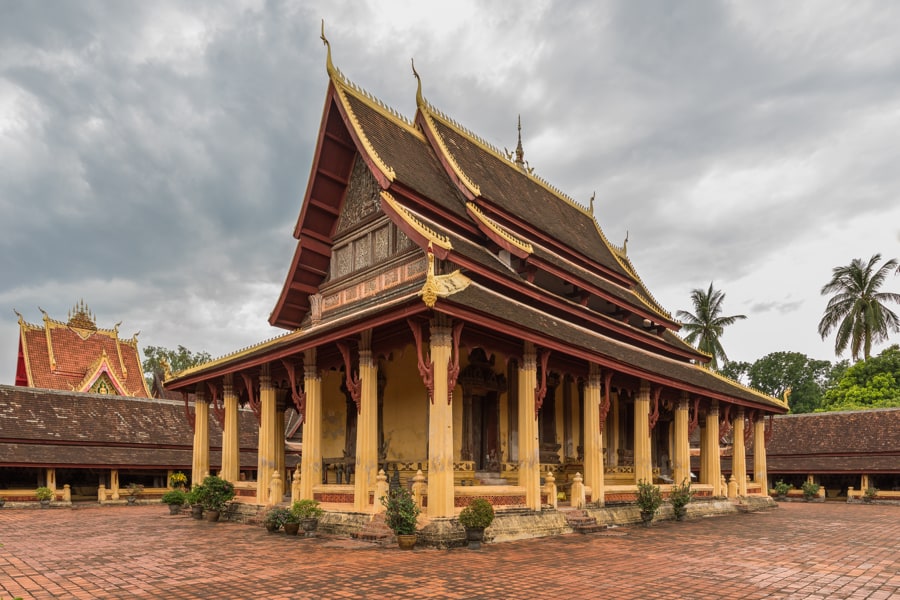
Wat Sisaket in Vientiane, Laos
Therefore, it would be important for tourists to visit Wat Sisaket not only for its historical value, but they will also have a reflective environment to enjoy, which may not be the case with other tourist attractions around the area. The peaceful environment will, therefore, enable tourists, especially traveling through the country, to understand and appreciate Laos and its Buddhist culture in a more reflective and slower traveling experience.

History Of Wat Sisaket

Wat Sisaket was constructed in 1818 when King Anouvong ruled over Laos; King Anouvong was the last ruler in Vientiane and ruled over it until his death. Wat Sisaket was the only temple that remained intact when the Siamese invaded Laos in 1828; it was due to its architectural design, which resembled that of temples in Thailand rather than Laos. Therefore, Wat Sisaket stands out as a cornerstone and a symbol of cultural and religious continuity in Laos despite the destruction that came with it.
Over time, Wat Sisaket has continued to play an important role as a place of worship for the Buddhist population of the area. The cloisters around Wat Sisaket contain thousands of Buddha statues, most of which are in wood, stone, and metal, and were donated through the years by Buddhist devotees. Clearly, Wat Sisaket is a product of long-standing Buddhist tradition and passion for worship, most especially of the Lao people. Wat Sisaket is, today, a symbol of Laos’ Buddhist heritage and identity as a people.

Unique Architecture Of Wat Sisaket

Amongst all the temples in Vientiane, Wat Sisaket is unique in both its architecture and composition, reflecting styles from both Laos and Thailand. Here, visitors will find some of the best-preserved buildings, enabling them to appreciate traditional Buddhist structures, which have changed very little over many centuries.

Cloister with thousands of Buddha Images

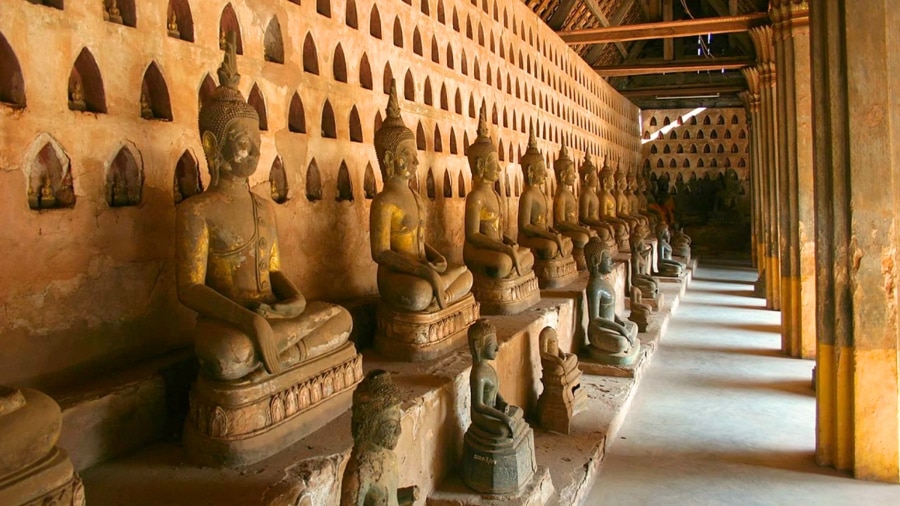
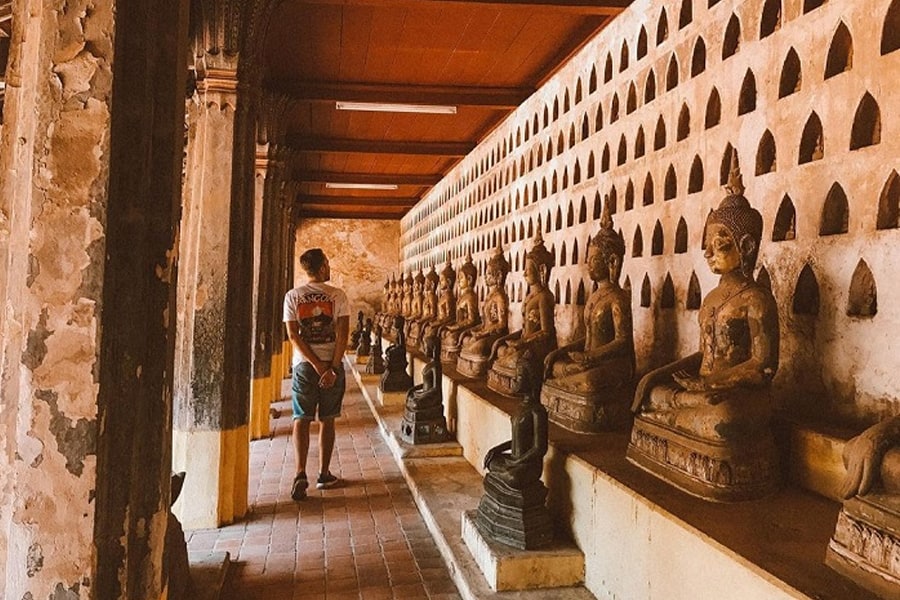
Perhaps one of the most remarkable architectural features of Wat Sisaket is the surrounding cloister, featuring thousands of small Buddha images in recessed niches. These images, made from stone, wood, silver, and bronze, adorn interior walls and combine to create a striking visual space that can be described as quite meditative. Architecturally, the cloister forms a continuously covered walkway that encloses the main courtyard, symbolizing spiritual protection and harmony. This design is rarely seen in other Lao temples and adds to the timeless character of Wat Sisaket.
thousands of Buddha Images in Wat sisaket

Main Hall (Sim)

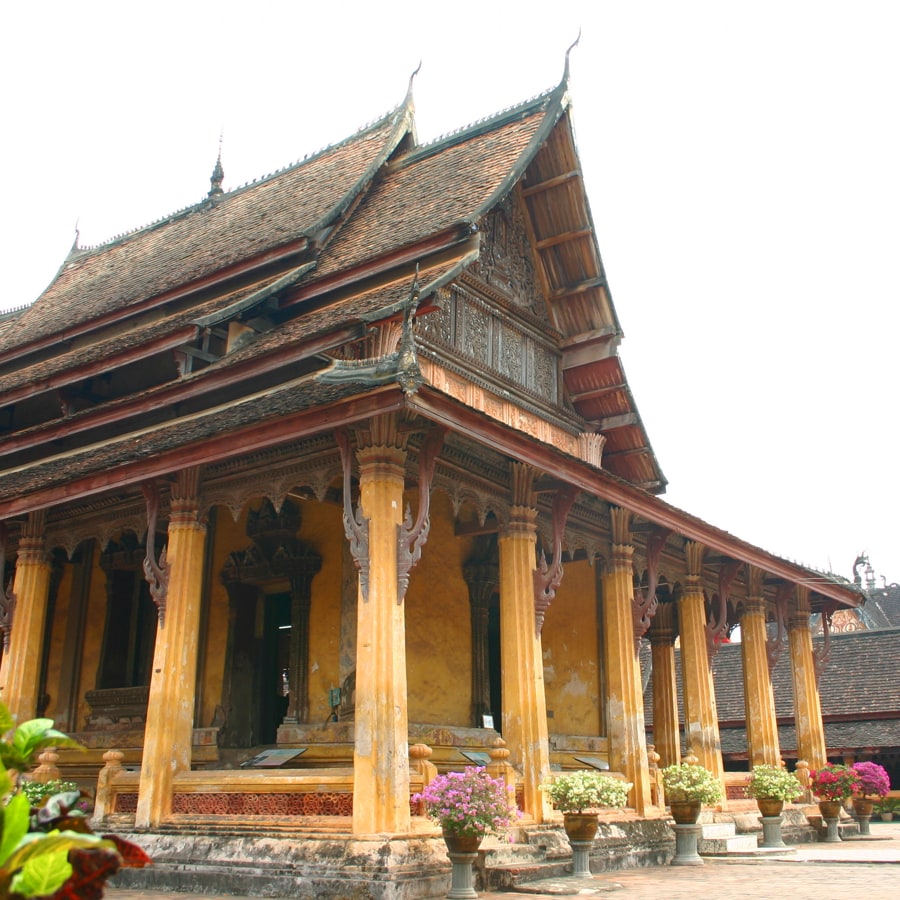
The main hall, or sim, displays a considerable Thai influence in terms of architecture, which explains the durability of the temple even in the face of previous wars. It has a tiered roof, refined columns made of wood, and decorated doors and windows. Inside, visitors may find important Buddha relics and murals portraying Buddhist ideals. The structure and design of the hall, for example, show balance and harmony, which affirm the role of such a hall in the overall compound as one of serenity.
Main Hall (Sim)

Traditional Courtyard Layout

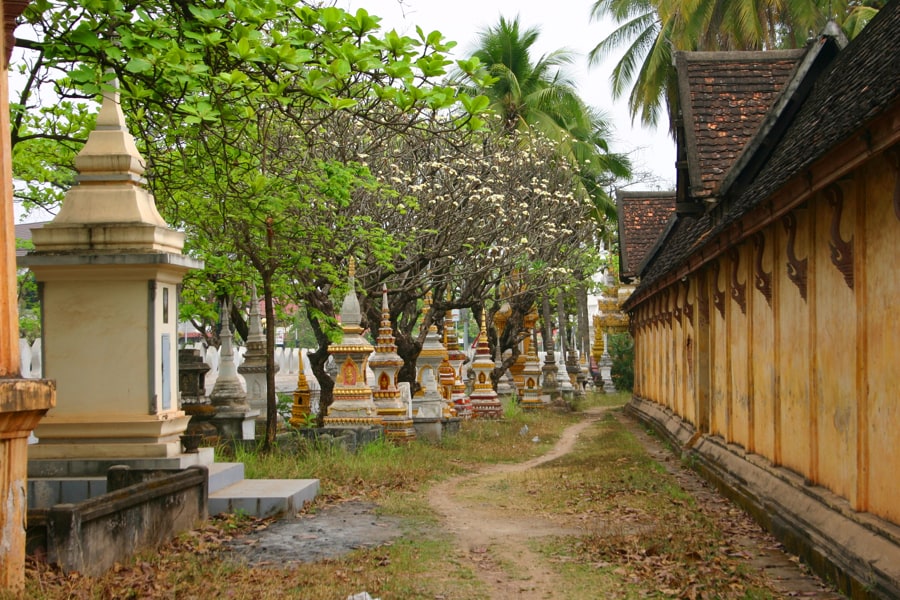
The design of the courtyard at Wat Sisaket appears to be effective in creating a space filled with open and peaceful feelings. The open area in the middle creates the opportunity for natural light to come freely and highlight the cloisters and the main hall within the area. The simple design of the courtyard at the temple creates a peaceful environment, helping the space function as a spiritual and cultural landmark.
Traditional Courtyard Layout at Wat Sisaket

3 Unforgettable Experiences You Shouldn’t Miss

Visiting Wat Sisaket not only provides a tour experience, but it also allows tourists to take time and engage in various experiences related to spirituality and culture in Laos. Such experiences are well-planned and aid in the appreciation of a different environment and culture.

Walk Through The Buddha Cloisters

One of the most unforgettable experiences in Vientiane is the slow and leisurely stroll down a corridor lined with thousands of Buddha shrines at Wat Sisaket. Each shrine has a small history of devotion to Buddhas of all sizes and from various time periods. Walking down this corridor provides tourists with the opportunity of getting insights into the small architectural details of the structures while enjoying the serene atmosphere of devotion. This is perhaps the best experience for any tourist who wants to get a real feel of the spiritual essence of the temple.
Walk Through The Buddha Cloisters

Going to Early Morning for A Peaceful Atmosphere

Visiting Wat Sisaket early in the morning gives a different impression from visiting the site during peak hours. The early-morning light helps to illuminate the structure of the building, while the relative quietness of the atmosphere creates a spiritual atmosphere. When visiting Wat Sisaket in the early morning, travelers are able to see monks and locals going about their daily routines, thus learning a great deal about the functionality of the site outside of tourism.

Learn About Buddhist Symbols and Rituals

Taking some time to study Buddhist icons and religious practice at Wat Sisaket will definitely provide much richness to the visit because, as one enters the main hall, one can observe that every detail in the building has symbolic meaning, and by reading some signs or pursuing some explanation given by experts, one can have a much better understanding of religious elements, since this visit will not be only to religious sites but also an educational experience.

Entrance Fee

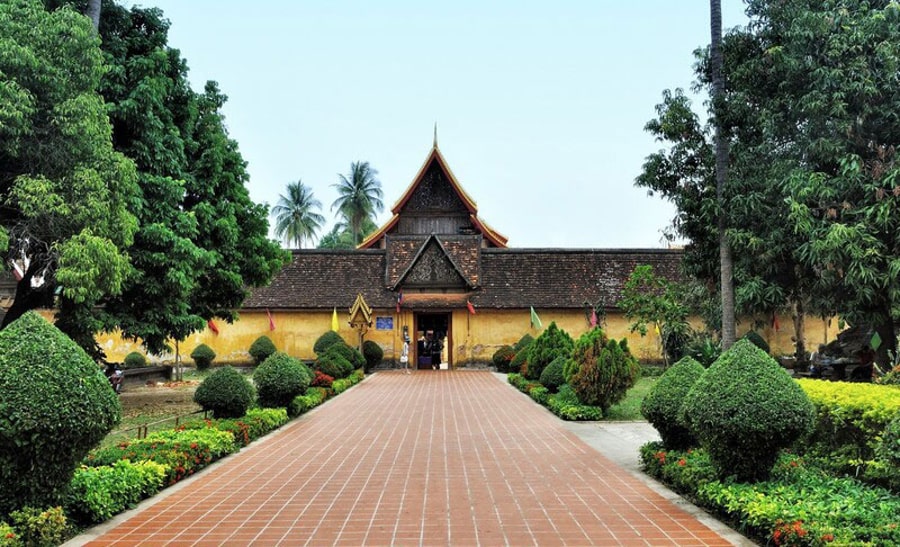
For Wat Sisaket, foreign visitors pay a small fee to enter the grounds; this makes it one of the less expensive culturally oriented attractions in Vientiane. The ticket costs roughly USD 1–1.50 per person, depending on the current exchange rate at the time of visit. Local visitors generally pay less, while children may enter for free. This minimal cost helps to go toward the preservation of the temple and the thousands of Buddha images within for travelers to view at their own pace without considerable expense.
Entrance Way of the Wat Sisaket,

Opening Hours

Wat Sisaket is open for visitors every day between 8:00 AM and 5:00 PM, providing visitors with plenty of time to explore the entire temple area at a leisurely pace. Wat Sisaket is accessible at all times of the year, including weekends and public holidays, making it a fantastic and accessible location for visitors traveling through Vientiane City Centre. It is recommended that visitors arrive at Wat Sisaket early in order to experience a peaceful atmosphere and avoid the heat of the day.
The best time to visit Wat Sisaket is the dry season in Vientiane, from November to February: during this period, it is cooler and more pleasant for walking. Early mornings serve best for photography and quiet exploration. The high season usually falls in December and January, the months when the greatest number of visitors arrive.

How To Get To Wat Sisaket

It is located in the heart of Vientiane and, therefore, can be easily reached from most parts of the city. Its central location allows travelers to choose flexible transport options depending on distance, budget, and travel style.
Transport Method
Estimated Cost (USD)
Travel Time
Notes
Walking
Free
5 to 15 minutes
Ideal if staying near the city center
Bicycle
1 to 3 (rental/day)
5 to 10 minutes
Flat roads, easy navigation
Motorbike
5 to 8 (rental/day)
5 to 10 minutes
License recommended, helmet required
Tuk-tuk
2 to 5 per trip
5 to 10 minutes
Agree on price before departure
Taxi / Ride-hailing
4 to 7 per trip
5 to 10 minutes
Convenient for groups or hot weather
Travel tips: always confirm, in advance, the price of rides by tuk-tuk; ensure proper safety gear when going by motorbike; dress appropriately upon arrival, as Wat Sisaket is an active religious site.

Things To Know Before Traveling To Wat Sisaket

Visiting Wat Sisaket is a culturally enriching experience; however, let me highlight some practical points to make your visit both respectful and comfortable. These basic tips will ensure a comfortable visit with respect to local customs and traditions.
  • Dress modestly with shoulders and knees covered, as Wat Sisaket is an active Buddhist temple where respectful dress is expected at all times.
  • If you want to visit the Memorial early in the morning, you can do so to enjoy the cooler weather and fewer people around.
  • Remove shoes, if necessary, before entering sacred buildings, and comply with signs prohibiting entry into areas reserved for prayer.
  • Noise should be kept to a minimum to show respect for monks, worshippers, and the serenity of the environment within the grounds of the temple.
  • Photography is permitted, but flashing near the Buddha images should be avoided, and never photograph monks without permission.
  • Bring small cash in local currency or USD for entrance fees, donations, or nearby local vendors.

FAQs About Wat Sisaket

There are many questions asked by travelers concerning Wat Sisaket, especially while planning a cultural trip or a slow trip. Questions asked by travelers help to clarify information concerning the site, thereby creating a better experience for visitors.

What amount of time should I devote to Wat Sisaket?

Most tourists spend one or two hours within the temple compound of Wat Sisaket. This is adequate time for strolling around, touring its central hall, and reviewing its architectural features without being rushed. To photography hobbyists, history enthusiasts, or simply anyone in search of a peaceful haven, especially if they visit Wat Sisaket early in the morning, it is advisable to spend more time here.

Is it possible to visit Wat Sisaket with children?

Wat Sisaket is appropriate for a family trip with children, as long as general temple etiquette is practiced. This is due to the fact that the courtyard provides an easy means of exploring, with parents being considerate of their children, keeping quiet. This is also an opportunity to enlighten children on local cultural practices, thus ensuring the trip is not only entertaining but also highly informative.

Final Thoughts: Is Wat Sisaket Worth Visiting?

Wat Sisaket is highly recommended for travelers who want to experience culture, history, and serenity in the center of Vientiane. A timeless, architecturally and spiritually important temple, it invites slow, meaningful visits. It is not a place to hurry through; instead, it is a place where guests are rewarded for observing and taking their time. Experience Wat Sisaket in a truly slow and thoughtful way with Seni World’s customized travel Vientiane itinerary that best suits your pace, interests, and travel style.

Tad Sae Waterfalls 2026 Guide: Boat Trips And Natural Pools

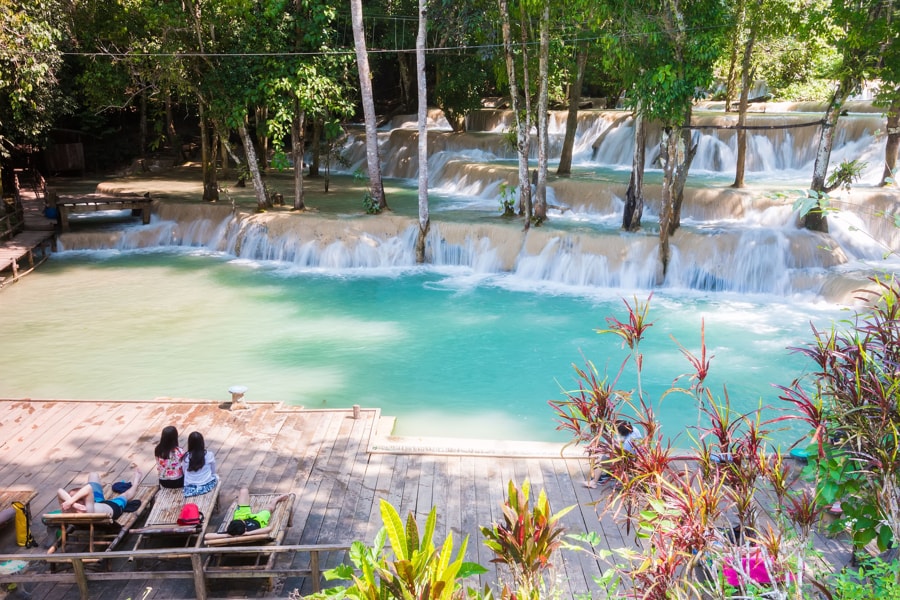
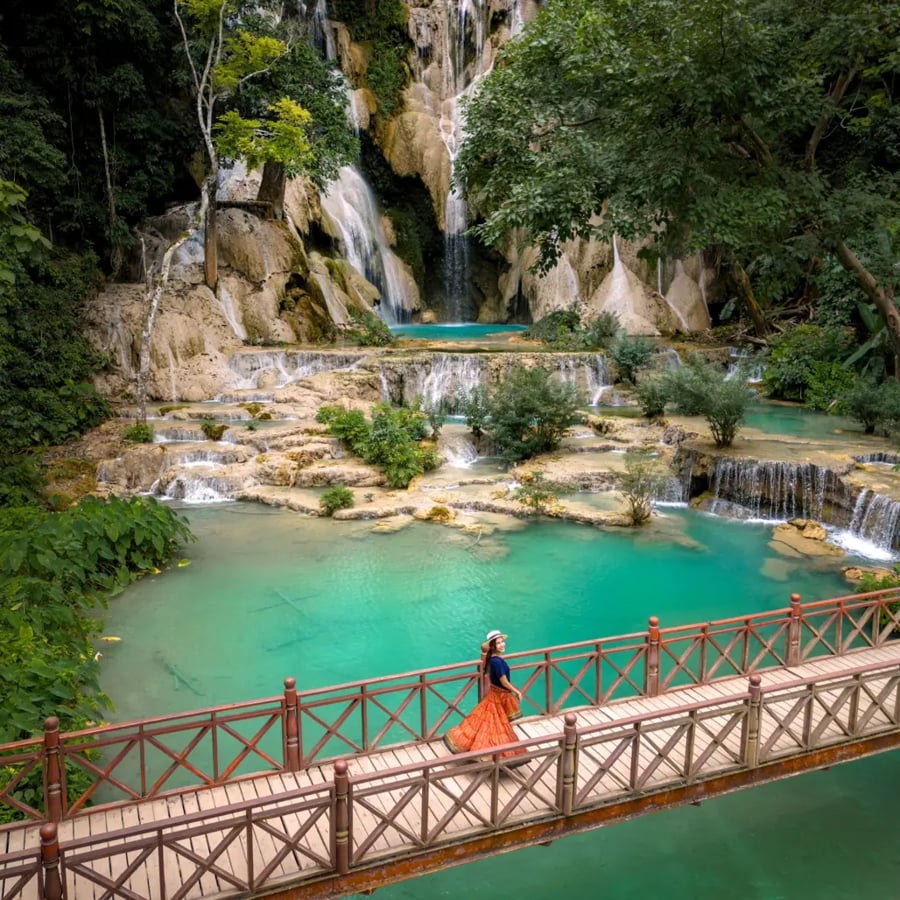
The Tat Sae Waterfalls, located close to the town of Luang Prabang in Laos, are a spectacular multi-tiered waterfall that’s surrounded by green and lush tropical rainforest. The area is famous for its serene swimming holes and beautiful natural scenery, providing visitors with an opportunity to escape from the heat and enjoy a peaceful natural setting, whether to simply relax or explore.

Introduction To Tad Sae Waterfalls

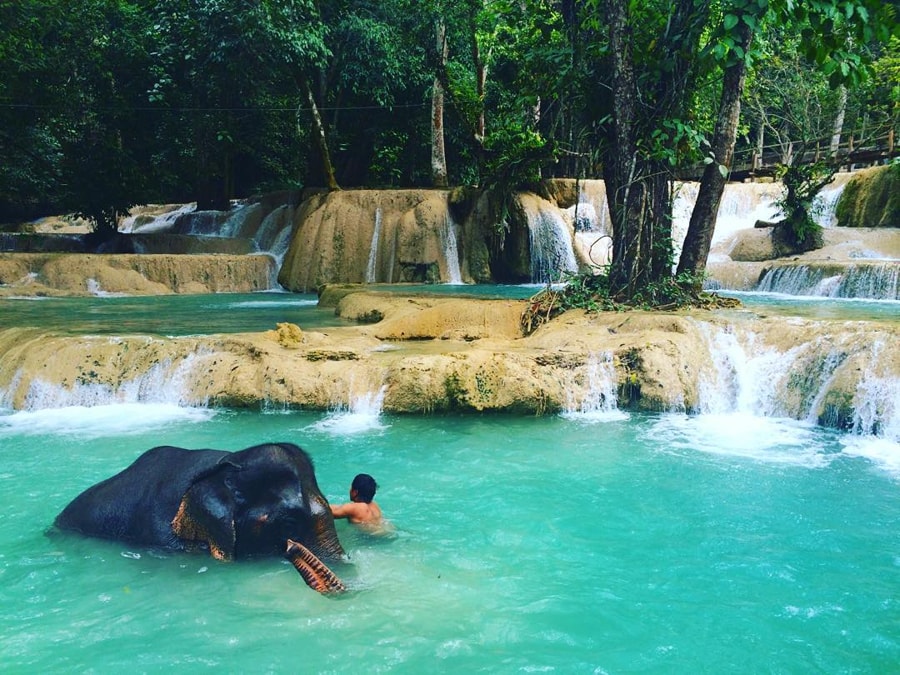
Tat Sae Waterfalls is one of the most popular natural tourist spots near the city of Luang Prabang in Laos, famous for its natural beauty and serene environment. Located 15 kilometers southeast of the city of Luang Prabang, the waterfalls run through the dense tropical forests of the region, forming gentle limestone waterfalls and turquoise pools of water. The tropical environment and fresh mountain air of the region provide tourists with an opportunity to relax and enjoy the natural beauty of Laos.
What makes Tat Sae Waterfalls an attractive location for tourists is the serene and relaxing environment it offers, combined with its easy access. One can enjoy swimming in natural pools, trekking through the forest, and relaxing in a serene environment. The picturesque location and serene environment of the waterfalls make it a popular tourist destination for those interested in nature and those who seek unique experiences.

History Of Tad Sae Waterfalls

Tat Sae Waterfalls have been an integral part of the natural landscape of Luang Prabang for a long time. It has been created by seasonal mountain streams running through the limestone landscape for thousands of years. Over time, the waterfalls and the minerals in the water have created the gentle slopes and the pristine water that we see today. It has been a source of solace for the locals and has been associated with nature and the surrounding forest for a long time.
In the recent past, Tat Sae Waterfalls has played a vital role in the development of tourism in Luang Prabang. This is because the site provides an opportunity to showcase the beauty of the region beyond the historic temples. The site provides economic benefits to the locals through the development of small businesses. It is a reflection of the country’s ability to strike a balance between nature and tourism.

Top Iconic Attractions In Tad Sae Waterfalls

Situated deep in the heart of the Lao tropical jungle, Tat Sae Waterfalls captures the imagination of tourists by providing a visual presentation of layered drops that flow into a peaceful landscape of rivers, limestone, and diverse wildlife.

Multi-Tiered Limestone Cascades And Natural Pools

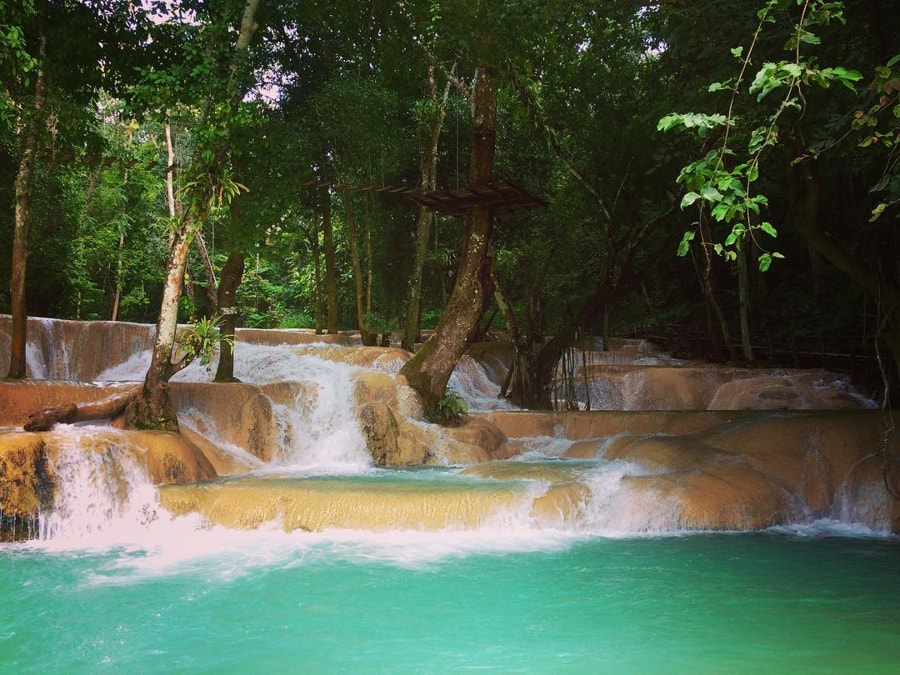
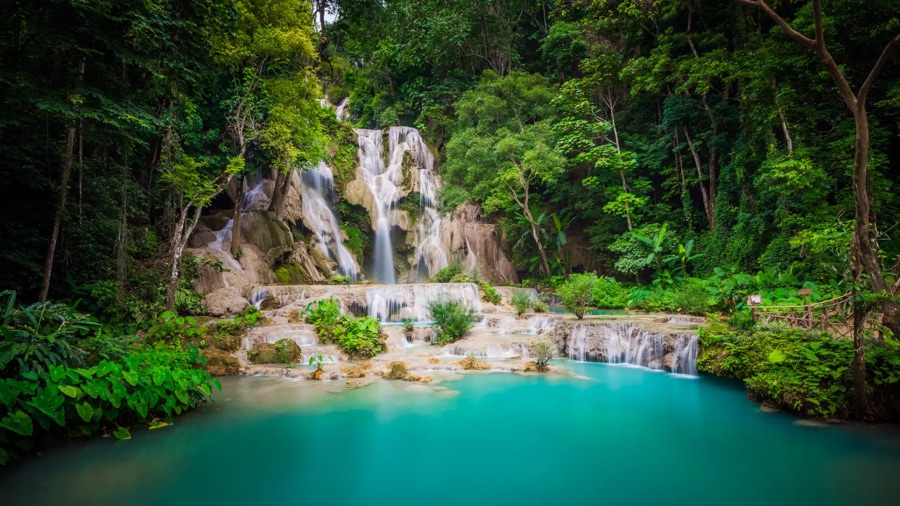
Tat Sae Waterfalls is most famous for the multi-level waterfall system, where water from the mountains runs smoothly over the limestone rocks and into the blue water. This waterfall does not plunge dramatically, unlike most waterfalls, and instead runs smoothly through the jungle, creating a swimming hole for a relaxing experience. The jungle surroundings add to the beauty of the waterfalls, with the dense foliage, the towering trees, and the sunlight filtering through the leaves and dancing across the water.

Lush Forest Ecosystem And Rich Biodiversity

In addition to its aesthetic appeal, the location has substantial ecological value, with a variety of flora and fauna present in a thriving ecosystem. The shaded trails, damp limestone rock, and waterfalls provide an optimal environment for tropical flora and fauna to thrive. The sounds of waterfalls and birdsong provide a soothing background noise that blends naturally with the environment. The harmony between waterfalls, lush greenery, and pure water makes Tat Sae Waterfalls not only visually pleasing but also an important ecological sanctuary that reflects the region’s rich heritage.

4 Unforgettable Experiences You Shouldn’t Miss

Nestled in the lush countryside near Luang Prabang, Tad Sae Waterfalls offers a refreshing escape into nature with its turquoise pools and multi-tiered cascades. Here are four unforgettable experiences that will make your visit truly memorable.

Swimming In Natural Limestone Pools

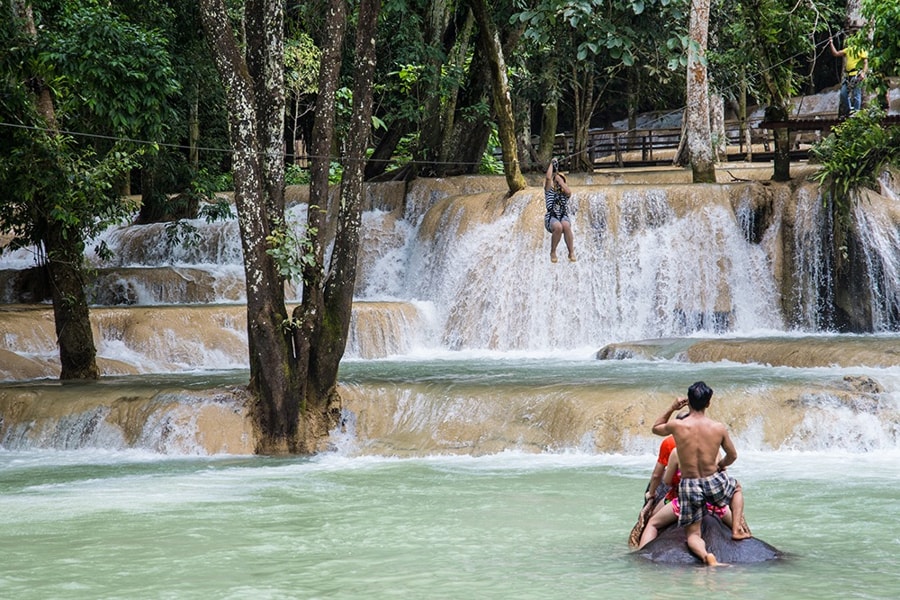
One of the most enjoyable activities to do in Luang Prabang is swimming in the waterfalls’ crystal-clear pools at Tat Sae Waterfalls. The water flows gently, creating an ideal place to relax and cool off on a hot day in the tropics. Surrounded by lush greenery and the soothing sounds of falling water, this is an ideal place to relax and unwind, and it feels both peaceful and rejuvenating. Many people spend hours just soaking in the natural beauty of this place, and it is certainly one of the most refreshing and enjoyable experiences to have while there.
Swimming In Natural Limestone Pools

Photography Among Cascades And Jungle Scenery

Tat Sae Waterfalls is a dream destination for photography enthusiasts looking for natural beauty in every direction. The waterfalls, the green surroundings, and the natural scenery present beautiful contrasts, especially during the natural lighting provided by the sun passing through the green foliage. The natural scenery is perfect for photography enthusiasts, and visiting these waterfalls in the early morning allows photography enthusiasts to enjoy the natural scenery in peace, appreciating the serene surroundings.
Photography Among Cascades And Jungle Scenery

Relaxing And Unwinding In A Peaceful Natural Setting

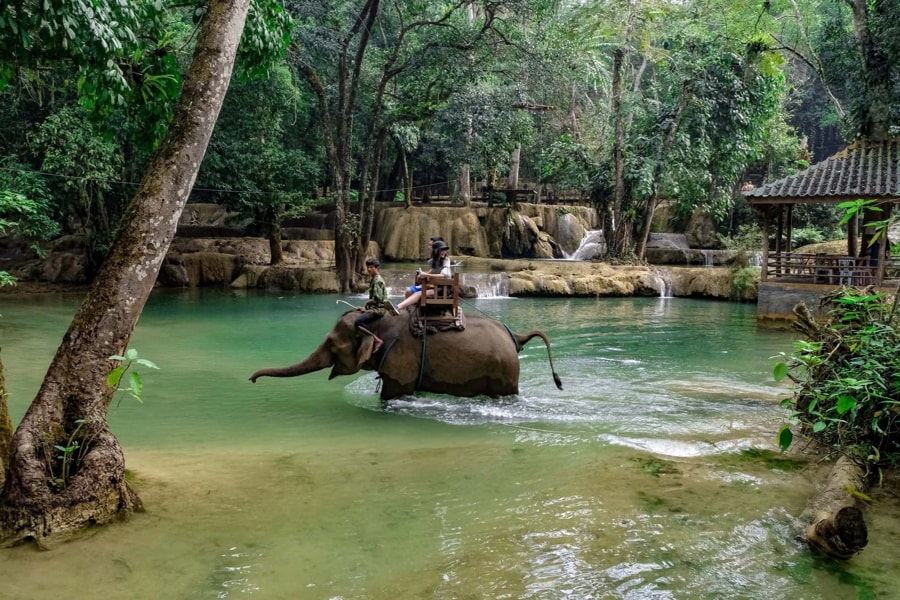
Aside from the sightseeing, Tat Sae Waterfalls is the perfect place to unwind and take pleasure in the serene melody of nature. Visitors can choose to sit by the water, listen to the songs of the birds resounding in the woods, or relax under the shade of the trees. The serene environment of the place is one of the most attractive features of the waterfall, making it the perfect spot to unwind and relax after the hustle and bustle of the city.
Relaxing And Unwinding In A Peaceful Natural Setting

Boat Ride To Reach The Waterfalls

To go to Tat Sae Waterfalls, you will need to take a short ride on a boat across the Nam Khan River, which will give you an adventurous experience. The ride will give you an opportunity to see the natural scenery around the river, which will serve as a transition from the city to the natural environment. The experience will give you a sense of adventure, which is quite memorable. The level of water may vary depending on the time of year, so it is advisable to check the situation before you go to the waterfalls.

Entrance Fee

The entrance fee for those who wish to visit Tat Sae Waterfalls is quite reasonable, which makes it a budget-friendly option for tourists who wish to explore the area around Luang Prabang. However, aside from paying the entrance fee, tourists also have to pay a small fee for crossing the Nam Khan River by boat, so it is recommended that tourists bring some cash with them.
Service
Price (USD)
Foreign adult entrance fee
1.3 USD
Lao national entrance fee
0.65 USD
Children under 8
Free
Small boat crossing (round trip)
1-2 USD

Opening Hours

Tat Sae Waterfalls opens every day from 8:00 AM to 5:00 or 5:30 in the evening, depending on weather conditions and the season in Luang Prabang. It is recommended to visit earlier in the day to have enough time to explore and visit the various areas and natural scenery. The dry season is usually not as busy as other seasons, and this is when the water levels are relatively low.
Tat Sae Waterfalls opens every day
The most beautiful time to visit during the day is late morning to early afternoon, when sunlight filters through the trees and highlights the turquoise pools. The waterfalls look their most spectacular from August to November, after the rainy season, when water flow is strong, and the scenery is particularly lush and colorful.

How To Get To Tad Sae Waterfalls

The journey to Tat Sae Waterfalls is a scenic and easy one from Luang Prabang. The journey involves road travel and crossing a river. There are many options for getting there, and visitors can select the one that suits them best.
Transport Option
Route From Luang Prabang City Center
Estimated Time
Estimated Cost (USD)
Notes
Tuk-tuk (round trip)
Direct ride to Nam Khan River pier, then a short boat crossing
25 to 30 min drive + 5 min boat
10 to 15 per group (shared cost) + 1 to 2 boats
Good for groups; negotiate price before departure
Private car/taxi
Drive to the waterfall entrance area, then boat crossing
25 min drive + 5 min boat
15 to 25 per car + 1 to 2 boat
Most comfortable and convenient option
Motorbike rental
Self-drive southeast of Luang Prabang to the river pier
30 to 40 min ride + 5 min boat
7 to 12 rental/day + fuel + 1 to 2 boat
Requires a valid license and confident riding skills
Guided tour/minivan
Organized transport + boat included
3 to 5 hours total trip
20 to 40 per person
Often includes other nearby attractions
Travel tips: It is always important to carry some cash to pay the boat charges and parking fees. The road condition is generally good, though sometimes the roads are muddy during the rainy season. When on a motorbike, it is important to wear a helmet and ensure your license is valid for Laos.

Things To Know Before Traveling To Tad Sae Waterfalls

Before you visit Tat Sae Waterfalls, it is important to prepare yourself for a safe and enjoyable experience. Understanding the weather and terrain will make your visit comfortable and enjoyable.
  • Visit during the rainy season, from August to November, when the water flow is at its peak, the water pools are at their deepest, and the jungle surroundings are at their most vibrant and green.
  • Wear non-slip footwear when walking on the limestone terraces, as the ground can be very slippery, especially in the areas with the stronger waterfalls.
  • Pack light clothing for the humid jungle and modest clothing if visiting the nearby temples and rural community areas.
  • Bring some cash in Lao kip to buy entrance fees, boat fees, snacks, and parking fees, as card facilities and ATMs are not readily available near the waterfall.
  • Always check the weather forecast before you go, as heavy rainfall may cause river levels to rise, which may affect boat crossings and some trails and swims.
  • Be a responsible visitor by not littering, staying on designated trails, and using reef-safe sunscreen to ensure water quality and protection of sensitive aquatic life.

FAQs About Tad Sae Waterfalls

Planning a visit to Tat Sae Waterfalls is often accompanied by many practical questions and concerns. Here are some useful answers to common questions that travelers may have in mind when planning their visit.
  1. Can visitors swim at Tat Sae Waterfalls?
Yes, one of the most popular activities at Tat Sae Waterfalls is swimming. The natural limestone pools are usually peaceful and cool, making them perfect for a relaxing dip in a beautiful atmosphere. However, one should always be careful with slippery surfaces and water depths. The water may also be affected by rainfall, so always follow local advice for safe water activities.
one of the most popular activities at Tat Sae Waterfalls is swimming
  1. How much time should you spend at Tat Sae Waterfalls?
Visitors usually spend between two and four hours exploring the waterfalls, depending on their speed of movement and other activities of interest. Those who love the quietness of nature spend more time enjoying the serene environment. It is recommended that visitors arrive early in the day to escape the crowd and enjoy the cooler weather.

Final Thoughts: Are Tad Sae Waterfalls Worth Visiting?

Tat Sae Waterfalls offers a wonderful escape for those who seek to experience nature and adventure in a serene and picturesque setting, just outside the town of Luang Prabang. Though the waterfalls appear to change with the seasons, the best time to visit will surely give you an experience you will always remember. Are you planning your Laos vacation? Let Seni World help you explore the most inspirational and memorable places and make the most of each and every Luang Prabang unforgettable experience.

Pak Ou Caves: A Sacred River Sanctuary Of Ten Thousand Buddhas

Pak Ou Caves are a shrine for Buddhists located near Luang Prabang, Laos, that contains an assortment of Buddha images within limestone caves overlooking the Mekong River, making them popular among travelers interested in spirituality and history and seeking cultural heritage.

Introduction To Pak Ou Caves

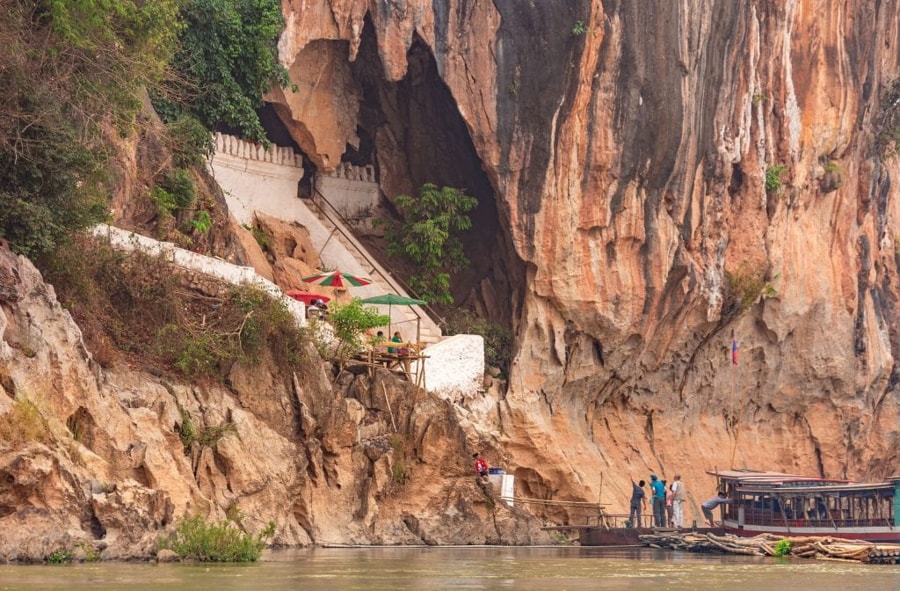
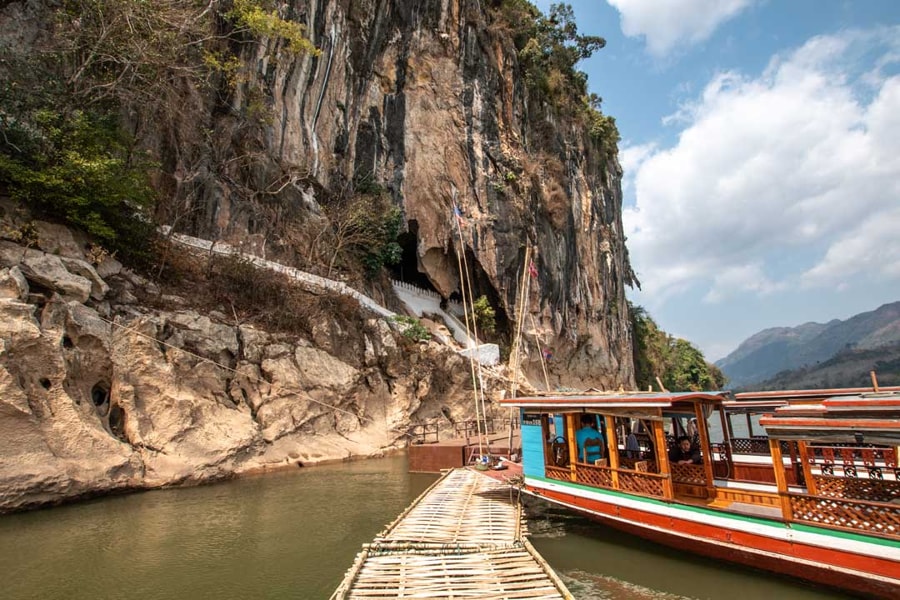
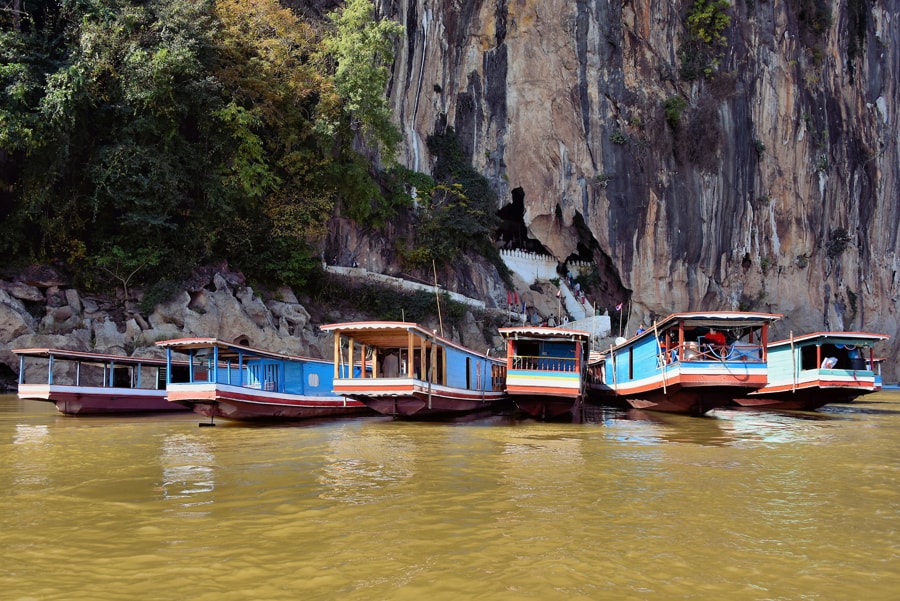
The Pak Ou Caves are among the most famous cultural attractions in Laos and are situated at the confluence of the Mekong and Nam Ou rivers, about 25 kilometers from Luang Prabang. It consists of a pair of limestone caves carved into the cliff overlooking the river, which forms a dramatic natural setting. Pak Ou has been a significant religious destination for centuries, with thousands of Buddha statues left by pilgrims and local people. Its riverside location also makes the journey itself memorable, often combined with a scenic boat trip along the Mekong.
The Pak Ou Caves are among the most famous cultural attractions in Laos
A visit to Pak Ou Caves provides travelers with a deep connection to spirituality, history, and landscape all at once. The caves offer insights into traditional Lao Buddhism yet remain accessible to international visitors. More than religiously valuable, the site offers peaceful surroundings, river views, and cultural depth not found in modern attractions. In fact, Pak Ou Caves are ideal for travelers who look for authentic culture when exploring northern Laos outside of Luang Prabang.

History Of Pak Ou Caves

The Pak Ou Caves have a long history that dates back to the tradition of Lao Buddhists living around the river banks of the Mekong River. Centuries ago, the local people would travel to the caves to install Buddha images as a form of devotion while on a boat cruise. The caves were thus spiritual and not for residential purposes, having strong affiliations to the ethnic groups surrounding the area, including the Lao Loum and other groups like the H’Mong, who lived in the mountainous areas surrounding the river.
the way to Pak Ou Caves
In due course, Pak Ou Caves grew into a significant religious site backed by royal patronage and local conventions. Seasonal ceremonies and merit-making rituals usually took place here and contributed to the development of the caves into a sacred role within Lao culture. The practice of offering Buddha statues continues to this day as a symbol of faith, respect, and continuity. This tradition has kept Pak Ou Caves as a cultural and spiritual destination and, at the same time, allowed visitors to experience living heritage, not a historical site.

Unique Architecture Of Pak Ou Caves

Unlike constructed temples or pagodas, Pak Ou Caves represent a unique form of spiritual architecture shaped by nature and human devotion. That blend of the beauty of the limestone formations with centuries of religious offerings creates a place of sanctity that is organic, quiet, and deeply symbolic.

Tham Ting Cave (Lower Cave)

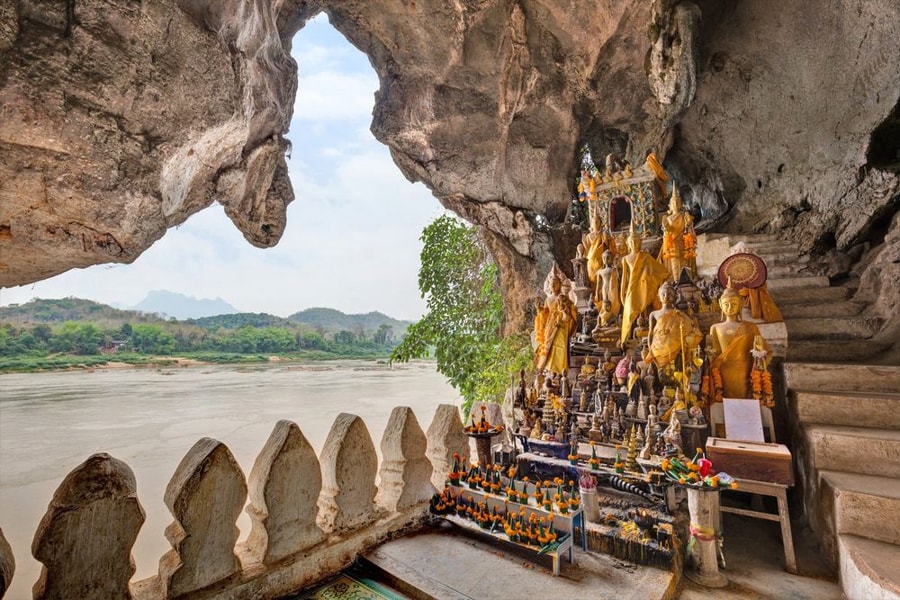
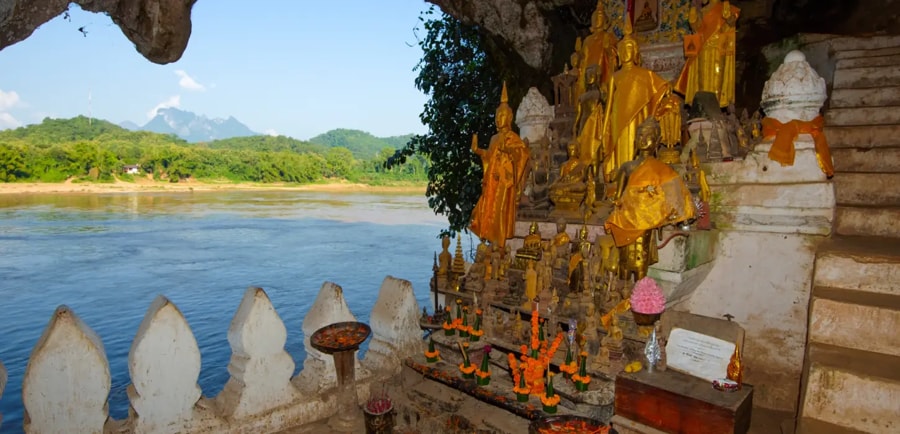
Tham Ting is the lower cave, which is the most accessible section of the two main caves in Pak Ou, located just above the riverbed of the Mekong River. The large entrance is flooded with natural light, illuminating the many Buddha images placed along the rock ledges. The design of this cave is peaceful and serene, enabling visitors to have an unhindered view of the intricate design of each Buddha’s image. The design of this cave is an epitome of harmony between nature and religion.
Tham Ting Cave (Lower Cave)

Tham Theung Cave (Upper Cave)

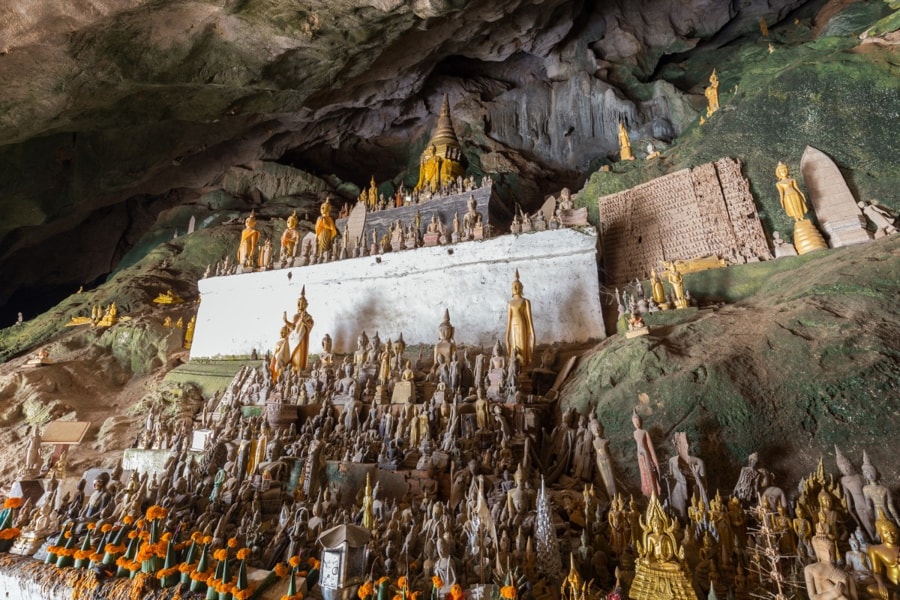
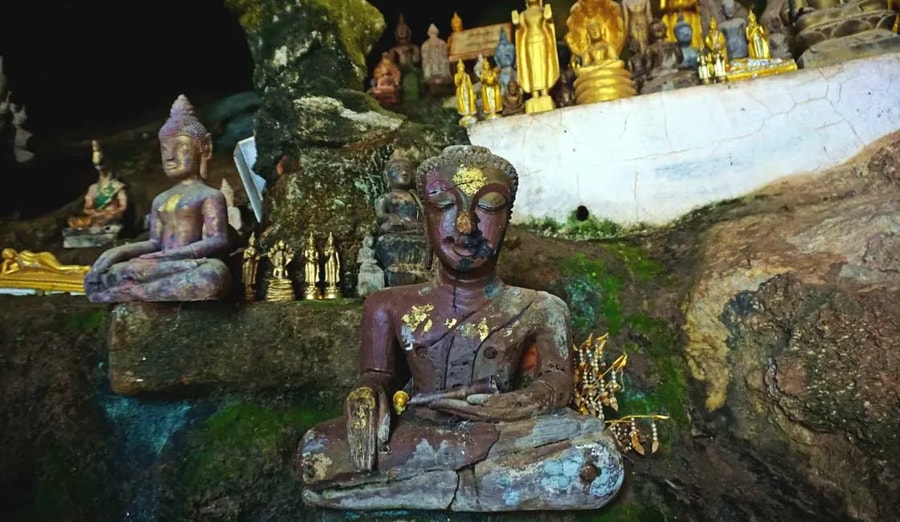
Tham Theung is the upper cave, accessible by climbing a steep staircase carved out of the side of the rock cliff. Unlike the lower cave, this cave is darker and more confined, where artificial lighting is required to illuminate the rows of Buddha images placed deep within the cave. From an architectural viewpoint, Tham Theung appears to be a more intimate and sacred place, where solitude, meditation, and spirituality are more significant than openness and decoration.
inside the Tham Theung Cave (Upper Cave)

4 Unforgettable Experiences You Shouldn’t Miss

In addition to the exploration of the caves, Pak Ou Caves also offers other experiences that facilitate and enhance cultural and spiritual knowledge. These experiences emphasize the relationship between living on the river, religion, and the peaceful environment.

Scenic Boat Journey Along The Mekong River

A very integral part of going to Pak Ou Caves is cruising aboard a boat down the Mekong River. As one cruises along, one will be able to see and experience the limestone cliffs, villages, and fishermen at work, giving one a glimpse of the daily lives of people living along the most significant river in Laos. A very serene experience from Luang Prabang to the sacred site of Pak Ou Caves is cruising aboard a boat.
Scenic Boat Journey Along The Mekong River to Pak Ou Caves

Observe Buddhist Rituals And Offerings

Within the walls of the Pak Ou Caves, travelers can witness ongoing religious traditions within Buddhism and the placement of Buddha statues and offerings to them. This provides travel visitors with an insight into traditions that have been around for centuries without any interference from time. Therefore, instead of focusing on history and tourism, travelers can appreciate the religious significance that these caves hold for Buddhists.

Explore The Local Villages Along The River

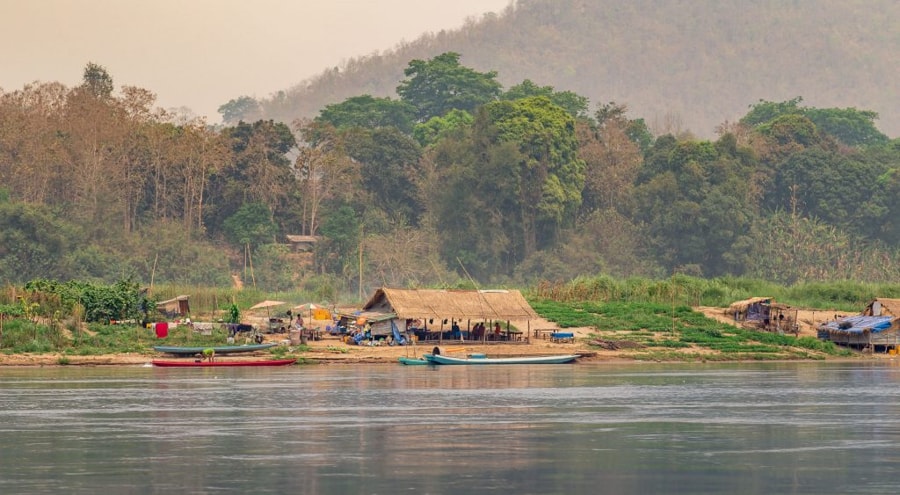
Visits to the Pak Ou Caves often involve stops at small villages that are located along the Mekong River. Visiting the villages provides an opportunity to walk through and discover traditional village life and appreciate how life moves at its own pace due to its location along the river. This experience provides an insight into cultural life and how it relates to the surrounding environment and religion.
Local Villages Along The River

Experience The Quiet Spiritual Atmosphere

Spending time within these caves, however, provides individuals with an opportunity to soak up an ambience that is normally not found within popular tourist sites. The dim lighting, air temperature, and presence of Buddha statues all serve to calm the mind. This has the effect of causing individuals to appreciate these caves not just as an entity to be visited, but as an opportunity for contemplation and spirituality as well.
Experience The Quiet Spiritual Atmosphere

Entrance Fee

There is a small fee to enter the Pak Ou Caves, and this fee is collected before entering the caves around the access point. This fee helps to maintain the caves while retaining their culture and religiosity. The cost of transportation also varies, especially if tourists plan to use a boat to traverse the Mekong River.
Aspect
Estimated Cost (USD)
Notes
Adult entrance ticket
2 to 3 USD
Access to both lower and upper caves
Children
Free
Usually free for young children
Shared boat (round trip)
4 to 6 USD
Common option from Luang Prabang
Private boat
15 to 20 USD
Ideal for families or small groups
Land transport + ferry
8 to 12 USD
Alternative route with a short river crossing
The ticket price for access to the caves only covers access to both caves, while the charges for the transportation services are paid separately. The prices may differ slightly based on the season and other circumstances; therefore, the prices should be confirmed before the journey

Opening Hours

The visiting hours at Pak Ou Caves are generally between 8:00 AM and 5:00 PM. This gives one ample time to visit both Tham Ting (lower cave) and Tham Theung (upper cave). Of course, as most tourists are picked up by boats from Luang Prabang, the visiting hours may also be slightly governed by the boat schedules. It is recommended to visit early in the morning to avoid crowds.
The best time to travel to Pak Ou Caves is during the dry season, from November to March. This time of year offers comfortable temperatures and clear views along the Mekong River, where conditions are smooth for travel, and the weather conditions are cool. Traveling to Pak Ou Cave between 8:00 AM and 10:00 AM promises to offer a peaceful atmosphere and favorable lighting conditions for photography and exploring within the caves.

How To Get To Pak Ou caves

In addition, the Pak Ou Caves are easily accessible as they are near Luang Prabang, and there are various means of transport to visit the site, which depend on the interests and preferences of the tourists.
Transportation Method
From Luang Prabang
Travel Time
Estimated Cost (USD)
Slow boat (shared)
Mekong River Pier
1.5 to 2 hours
10 to 15 USD / person
Private boat
Mekong River Pier
1.5 hours
60 to 90 USD / boat
Car + ferry
City center
1 to 1.5 hours
30 to 45 USD
Motorbike
City center
1 to 1.5 hours
8 to 12 USD (fuel)
When traveling using motorbikes, tourists are required to have a driving license, in addition to being comfortable traveling on rural roads, which might be dusty or slippery during different seasons. During the rainy season, the state of the river may affect the boat trip, and tourists are therefore advised to check the weather beforehand.
Get To Pak Ou caves by boat

Things To Know Before Traveling To Pak Ou Caves

Before traveling to the Pak Ou Caves, travelers need to plan so they can be prepared for the trip and show respect. Practical suggestions for visiting in comfort and keeping in line with local conditions and cultural values include the following.
  • Dress in modest attire that covers your shoulders and knees, as the Pak Ou Caves are a sacred site for Buddhists, and people should dress correctly to visit.
  • Carry money in various denominations to pay the entrance fee, boat hire, and other expenses, as card facilities are not available around the caves.
  • Plan a visit early in the morning to avoid crowds, as the weather is cooler and the ambiance is serene within the caves.
  • Wear shoes that offer traction because the steps in the caves can be steep and slippery, especially during the rainy season.
  • • Bring water and sun protection, especially when traveling by boat on the Mekong River.
  • • Always check the condition of the river in advance during the rainy season because the waters may be high, especially when it rains.
  • • Respect local laws, do not touch Buddha images, and refrain from loud noises to respect the spiritual ambiance of the caves.

FAQs About Pak Ou Caves

Travelers interested in visiting the Pak Ou Caves have some questions about the timing, convenience, and proper etiquette that they should be made aware of, and the following answers will guide them about the proper etiquette for visiting the place.

Should I visit Pak Ou Caves during a short visit from Luang Prabang?

Yes, the Pak Ou Caves are suitable for a half-day trip from Luang Prabang, mainly for those with an interest in culture and religion. The trip is further enriched by the travel along the banks of the Mekong River, as well as the spiritual experience within the caves. The trip to the caves requires three to four hours, including the journey, which is quite comfortable.

Can I visit Pak Ou Caves without joining a tour?

Independent travel is extremely common, though. Many visitors take shared boats, private boats, or go by road, crossing over by ferry. In that way, travelers are afforded the freedom to create their own schedule and pace. Casual visitors, though, might still prefer a guided one for insights into culture and logistics, easier in peak months.

What clothing should I wear when visiting Pak Ou Caves?

Visitors are recommended to be modestly dressed, covering their shoulders and knees, since it is an active Buddhist worship area. Comfortable shoes with good traction are necessary, as the steps are steep. Lightweight and airy clothing is advised, especially during the warmer months, for optimal comfort while moving around the two levels of the caves.

Final Thoughts: Is Pak Ou Caves Worth Visiting?

However, for travelers, these caves hold significant meaning for cultural travelers, as they wish to explore and experience the cultural and spiritual elements and scenery of the River. Visiting these caves, whether individually or as part of a half-day trip, provides an opportunity for cultural travelers to learn about and explore a unique cultural landmark without needing extensive time to do so. As such, explore and make use of the services provided by Seni World to plan and design an effective and enriching travel experience to this cultural landmark and much more.

Top 15 Phu Quoc Beaches for Sun, Sand & Scenic Views

The beaches of Phu Quoc Island are renowned for their white sandy shores, crystal-clear blue waters, and serene tropical surroundings. The island has a lot to offer when it comes to beaches, ranging from lively shores to secluded bays, which is why it is considered one of Vietnam’s best destinations.

Rach Vem Beach

Rach Vem Beach, which is located in the northern part of Phu Quoc Island, is also known as the “Starfish Kingdom” because of the numerous red starfish that can be seen in the waters of the beach. The area is a peaceful fishing village that provides a respite from the bustling tourist destinations. The area has long stretches of sand, peaceful sea waves, and wooden piers that stretch out to sea. The area is very picturesque, especially on sunny days.
Rach Vem Beach
Tourists can take a leisurely stroll through the floating seafood restaurants or wade through the waters to view the numerous starfish in their natural habitat. The area can also be visited during the dry season because the waters are very calm. The area is also great for kayaking, taking photographs, and relaxing at the sea.

Ganh Dau Beach

Located on the northwestern tip of Phu Quoc Island, Ganh Dau Beach is famous for its untamed beauty and serene ambiance. This beach has white, golden sand, calm emerald water, and a beautiful view of the Gulf of Thailand. On a clear day, one can even spot the distant coastline of Cambodia. This place is quiet and open due to the presence of lush greenery and a lack of crowds.
Tourists visit this place to swim in the calm waters of the sea, have delicious seafood at the seafront restaurants, or just relax while enjoying the sunset on the sea. This fishing village nearby gives the place a touch of local culture.

Doi Moi Beach

Situated on a more secluded area of the beach on the island of Phu Quoc, the beach is a wonderful place for a relaxing day out from the more tourist-populated areas. The beach is surrounded by the natural greenery of the area, and the sand stretches into the rolling waves. It is a wonderful place to visit for anyone who is looking for a secluded area to relax and get away from the crowds. It is particularly beautiful in the early morning hours when the sunlight reflects off the water.
Doi Moi Beach
It is a wonderful place for anyone who is looking for a relaxing day out on the beach or a chance to swim in the quiet waters. It is a wonderful place for a relaxing day out on the beach or a chance to swim in the quiet waters.

Long Beach

Situated along the west coast of Phu Quoc Island, Long Beach is the most popular and most vibrant beach in the area. Living up to its name, the beach indeed stretches over kilometers with golden sand, palm trees, and expansive views of the ocean. The serene waters and expansive views make for a perfect relaxing experience. The sunsets here are breathtaking, with the sky turning hues of orange and pink during these times.
Long Beach in Phu Quoc
Long Beach presents a vibrant balance of activities to enjoy. Visitors can swim, engage in water sports, or simply lounge at one of the many cafes or resorts. It’s a perfect spot to experience the relaxing atmosphere as well as the energy of the island.

Starfish Beach

Starfish Beach is one of the visually appealing beaches on the northern shores of Phu Quoc Island. The water is shallow and glass like, with the sandy seabed covered with red starfish, making it an almost surreal sight. The beach is still untouched, with rustic wooden paths and structures that complement the surroundings.
Travelers visit Starfish Beach for relaxation and quiet activities such as wading and picture-taking. Seafood houses float on the water and provide local delicacies served right above the water. Many tourists also visit the place to spot wildlife, relax in a quiet atmosphere, and take unique photos in one of the most unique settings on Phu Quoc Island.

Khem Beach

Situated on the southern coast of Phu Quoc, Khem Beach is famous for its white sandy beach and calm, crystal-clear waters. The beach stretches gently between two green hills, forming a secluded beach with a serene and elegant look. The beach has smooth sand with an almost creamy texture, and the waters reflect shades of turquoise and blue, changing beautifully with the lighting conditions.
Relax At Bai Khem Beach
Tourists visit this beach to swim in calm waters, enjoy the natural beauty of the surroundings, and dine at high-class beach restaurants. This beach is also suitable for sunbathing, photography, and walking along the beach. It has an elegant look and a serene atmosphere, making it a more refined beach experience.

Truong Beach

Situated on the southwest coast of Phu Quoc Island, Truong Beach extends along a wide shoreline in the vicinity of the primary tourist area on the island. The beach provides a sandy shoreline, calm waters, and a broad horizon with views of the sea and a line of palm trees and modern buildings along the shoreline. The extensive shoreline along Truong Beach provides one of the most convenient experiences on Phu Quoc Island, particularly with the sunset views on the horizon.
Truong Beach provides a lively beach experience with a relaxing ambiance and a variety of things to do and see along the shoreline. The beach offers a range of activities, such as swimming, dining at beachfront cafes, and relaxing at trendy beach clubs, making it a lively and scenic beach experience on Phu Quoc Island.

Hon Thom Beach

Hon Thom Beach, which is situated on Hon Thom Island, is a tropical retreat with transparent waters and green surroundings. It is located just off the southern coast of Phu Quoc and is famous for its pristine beach, white sand, and ocean view. It is a peaceful retreat, which is quite secluded compared to other beaches on the mainland. It is an ideal location for those who want to relax and enjoy the beauty of nature.
hon thom phu quoc in summer
One can swim in the transparent waters or enjoy the view of the ocean from the beach, which has a panoramic view of the surrounding islets. It is an ideal location for those who want to enjoy the beauty of the ocean through snorkeling.

Ong Lang Beach

Situated on the west coast of Phu Quoc Island, Ong Lang Beach is an ideal location for those looking to escape the more popular tourist destinations on the island. The area has a beautiful landscape of golden sand and rocks, which gives it a natural beauty. The area is also known for having calm and clear waters. The area is also best suited for viewing sunsets because of its west-facing location.
Swimming at Ong Lang Beach
The area is mostly visited by tourists who want to engage in swimming, sunbathing, and strolling along the coastline. The area is also inhabited by small restaurants and boutique resorts that provide a serene environment for relaxation. The area is also best for those who want to engage in kayaking and sunsets.

Cua Can Beach

Located on the peaceful western side of Phu Quoc, Cua Can Beach is an ideal destination where the beauty of nature and the peaceful scenery of the riverside combine. The beach is located near the river mouth of the Cua Can River, making it a special place where freshwater flows gently into the water. The peaceful atmosphere and the scenery of the surrounding greenery and peaceful fishing villages make the place feel serene and untouched.
This destination is perfect for kayaking, swimming, and exploring the beauty of nature, making it an ideal destination for tourists and travelers. The peaceful scenery and the beauty of the riverside and the beach make it a refreshing and unique destination on the water.

Vung Bau Beach

Vung Bau Beach, located in the northwest coast of Phu Quoc Island, is a peaceful crescent-shaped beach recognized for its untamed beauty. The beach offers golden sand, clear waters, and a crescent shape that creates a peaceful bay sheltered from strong winds. The landscape appears serene with open views of the sea, making Vung Bau Beach a perfect destination for travelers looking for peace and privacy.
Vung Bau Beach
Travelers visit Vung Bau Beach to swim in the clear waters or take a rest in the shade of trees lining the coast. The peaceful atmosphere is perfect for long walks on the beach, watching the sunset, and capturing the beauty of nature through photography. Travelers also enjoy a picnic on the beach or explore the coral area, providing a break from the usual tourist spots.

Mot Beach

Situated on the eastern coast of Phu Quoc, Mot Beach is a secluded beach located on the island, famous for its serene waters and pristine natural surroundings. Unlike the other beaches located on the western side of Phu Quoc, which are more crowded, Mot Beach offers a serene and natural experience, with a small stretch of sandy beach surrounded by lush greenery and serene waters. During low tide, the waters recede slowly, leaving a sandy bed and a wide open space.
One can enjoy wading through the waters, lounging in hammocks, or strolling along simple wooden piers constructed over the waters. The beach is also an ideal location for photography, especially during the morning. The serene surroundings of the beach make it an ideal location to escape the crowds.

Ba Keo Beach

Located in the vicinity of the main tourist area in Phu Quoc Island, Ba Keo Beach is recognized for its prime location and dynamic seaside atmosphere. The shoreline boasts soft golden sand, crystal-clear waters, and a line of palm trees swaying in the wind. The location provides a perfect combination of wide open views and easy access to nearby hotels and restaurants.
This beach attracts visitors for swimming, sunbathing, and soaking up the dynamic energy of the seaside. The presence of bars and cafes along the shoreline creates a social scene, while the views at sunset add a touch of romance to the evening. The location of Ba Keo Beach in the main tourist area makes it perfect for its function.
Ba Keo Beach is recognized for its prime location

Dinh Cau Beach

Situated close to the heart of Phu Quoc, Dinh Cau Beach is a beautiful coastal location that is deeply associated with culture and tradition. The location of this beach is close to the renowned Dinh Cau Temple, which is situated on rocky outcroppings that face the sea. The combination of beautiful sandy stretches and dramatic rocky outcroppings is an attractive sight. The late afternoon is an especially good time to be on this beach because of the gentle waves and expansive sea views.
The location of this beach is especially attractive because of its close proximity to the temple, fishing boats returning to shore during the late afternoon, and other associated factors. The beach is an attractive location for a walk and is especially suited for photography and enjoying fresh seafood from local restaurants.

An Thoi Island

An Thoi Island, which is located to the south of Phu Quoc, is part of a breathtaking collection of small tropical islands known for their unspoiled beaches and diverse marine life. The island is surrounded by pristine turquoise waters, soft white sand, and rugged rock formations that make for a breathtaking view. The area is not too crowded, and with its unspoiled beauty, the island offers a peaceful atmosphere that makes it one of the most picturesque islands in southern Vietnam.
The island offers a chance to explore the nearby coral reefs through snorkeling or diving, as they are home to diverse marine life. The island’s pristine waters and unspoiled beauty make it perfect for nature lovers and ocean explorers.
An Thoi Archipelago

Final Thoughts: Are Phu Quoc Beaches Worth Visiting?

From the serene hidden shores to the vibrant resort shores, the shores of Phu Quoc Island promise a wonderful experience for all kinds of travelers. With the pristine waters of the ocean and the fine sands of the shores, the island promises a wonderful tropical experience. So why not plan your perfect beach vacation today with Seni World and explore the shores of the island?

Top Places to Go in Winter Around the World

Winter is a magical season to visit new places, especially snowy mountain towns, Christmas markets, and sunny tropical islands. Whether your idea of fun involves hitting the slopes, snuggling up in mountain lodges, or getting away from the cold weather, there are plenty of places to visit in the winter season to create an unforgettable vacation experience.

Introduction to Winter Travel in Southeast Asia

Southeast Asia is best explored during the winter months, especially for tourists trying to escape frozen temperatures in Europe, North America, or Northeast Asia. From November until February, much of the region enjoys its dry season, offering pleasant temperatures, relative low humidity, and plenty of sun. Many countries, such as Thailand, Vietnam, Malaysia, and Cambodia, can boast very ideal conditions for beach holidays, cultural explorations, and outdoor adventures-not too hot compared with summer or swollen monsoon rain. Instead of snowstorms and gray skies, you get turquoise waters, lush landscapes, vibrant street markets, and world-famous cuisine. Winter is also peak season for festivals and local celebrations, affording visitors a much deeper immersion into the culture than sightseeing alone could provide.
Winter Travel in Southeast Asia
Another big advantage of traveling in Southeast Asia is the money’s worth for the variety offered. You can visit tropical destinations, ancient temples, mountains, and cities within short flying hours. It is still cheap in terms of accommodations, food, and transportation compared to the West, regardless of the season being over in the West. Not only that, but the destinations are also perfect for couples, families, and solo adventurers, providing the best feelings and memories for those who visit.

Best Places To Go In Winter In Vietnam

Best Places to Go in Winter in Vietnam: The best places to visit during winter in Vietnam feature varying scenery, such as misty mountains and sun-kissed beaches. Learn about Vietnam as a perfect winter destination with near-perfect weather, rich culture, and exciting experiences.

Sa Pa

Sapa is one of the best places to go in winter in Vietnam-if you are a fan of cool weather, dramatic landscapes, and cultural immersion. The temperature drops significantly from December to February. Sometimes, even snow falls because of it, drawing scenes in which the terraced rice fields and mountain peaks have been transformed into a magical picture.
Sapa is one of the best places to go in winter in Vietnam
A more comfortable trek compared to the sweltering summer months allows for the crisp air. Winter is ideal for hiking across ethnic minority villages, where you can discover traditions about the Hmong and Dao communities. And then there is the fog that creeps over Fansipan Mountain, lending it a mystical atmosphere that is especially loved by photographers. At the end of a day spent trekking, you can retire to a cozy lodge, be served a hot pot meal, and experience the peacefulness of the highlands. For nature, culture, and a different kind of winter landscape, Sapa gives you an unforgettable northern Vietnam adventure.

Nha Trang

Nha Trang is one of the best locations to visit during the winter season if you seek sunny weather, a pleasant atmosphere, and a lively sea environment. The dry season, between December and February, is characterized by cool, dry conditions unlike during the rainy season, with pleasant weather suitable for activities on the beaches as well as exploratory visits to numerous sites. The sea is calm, providing an excellent environment for swimming, snorkeling, or diving, especially near locations such as Hon Mun, known for their rich coral reefs.
Hon Mun in Nha Trang
In addition to its beach, Nha Trang has many other offerings: relaxation, culture, and adventure. One may visit the historic Cham Towers, indulge in some mineral mud treatments, or ride the cable car to VinWonders for family entertainment. Several fresh seafood restaurants along the coast provide excellent cuisine, which helps to round off the holiday experience. With all its offerings of serenity, luxury, and excitement, Nha Trang promises to be an excellent winter getaway for couples, families, and adventure enthusiasts alike.

Phu Quoc

If you prefer escaping the cold entirely, Phu Quoc is among the best places to go in winter in Vietnam for warm sunshine and beach relaxation. Winter falls within the island’s dry season, meaning the seas are calm, the skies a clear blue, and the rainfall at minimal levels-perfect conditions for swimming, snorkeling, and island hopping. The temperatures are warmly comfortable without being sweltering hot, which makes doing outdoorsy things quite pleasant throughout the day.
Sao Beach in Phu Quoc
You can explore coral reefs, take boat tours to nearby islets, or simply unwind on white sandy beaches like Sao Beach and Long Beach. Beyond the coast, Phu Quoc offers night markets, fresh seafood, pepper farms, and luxury resorts for every kind of travel style. Winter is also the peak season for sunsets, with golden skies reflecting over the Gulf of Thailand. For couples, families, or solo, Phu Quoc combines deep relaxation and adventure in one tropical winter escape.

Mekong Delta

The Mekong Delta can be one of the best tourist destinations in the winter season in Vietnam for tourists who want to experience the authentic Vietnamese culture and the beauty of the Mekong River landscape. The Mekong Delta is a great experience during the winter season, as the weather is dry, sunny, and warm. The winter season provides a stark contrast to the summer season in the Mekong Delta, where the hot weather is paired with humidity. The waterways in the Mekong Delta provide a great view of the golden sun in the early mornings, making it an ideal season for boat trips, cycling, and visiting floating markets like Cai Rang or Cai Be.
Cai Rang Floating Market
Apart from the natural beauty of the Mekong Delta, travelers also have plenty of opportunities for cultural exploration and food. Travelers here can enjoy tropical fruits from the orchard itself, watch a traditional coconut candy-making class, or read about various handicrafts. Staying at homestays would allow travelers to get familiar with friendly locals. The calmness of the Mekong Delta makes it the ideal place for travelers to plan their winter vacation.

Best Places To Go In Winter In Laos

The best places to visit during winter in Laos include a cool and pleasant climate, clear sky, and good conditions to delve into cultural as well as adventurous experiences. The temples, limestone mountains of Laos create a pleasant environment during winters.

Luang Prabang

Luang Prabang is one of the best places to visit during winter because of the cool weather, clear blue skies, and a general calmness that permeates the area. During the period from November to February, the weather is dry with pleasant cool temperatures, making Luang Prabang an ideal base to explore the temples, waterfalls, and colonial towns. The UNESCO heritage town is beautiful during the winter period, with the mist that commonly covers the area rolling over the Mekong River at dawn.
Kuang Si Waterfall
During this period, visitors can walk along the temples, waterfalls, and colonial town with the sun shining under clear blue skies. Luang Prabang offers travelers a serene getaway during the winter months. With the cool weather, Luang Prabang offers the ideal getaway, with Mount Phousi offering the perfect platform from which to watch the sunset. A short trip to the turquoise-colored Kuang Si Waterfalls is possible with cool weather. During the winter period, the night markets become more inviting with cool temperatures.

Vang Vieng

Among the very best areas to visit in winter in Laos for the adventure-conscious traveler with an appetite for exposure amidst nature’s most incredible works of art is the beautiful town of Vang Vieng. During winter, the dry season makes the place ideal for outdoor adventures because of the cool weather and absence of rainfall. Towering over the otherwise blue sky, the limestone karsts present an incredible spectacle of nature’s splendor – perfect for hiking, biking, or hot air balloon rides.
Tham Chang Cave, near Vang Vieng, Laos
A kayaking trip along the Nam Song River is a treat during winter as powerful currents or torrential rains do not pose a hindrance. There’s also a greater chance of visiting the blue lagoons, where one could indulge in swimming amidst the cool waters under the warm sun of the Asian winter season. During the evening, the town is alive with an inviting sense of calmness as one dines at riverside restaurants with a view of the mountain ranges.

Vientiane

Vientiane is one of the best places to visit in Laos during the winter season, especially for people who are interested in culture and history. During the winter season, which is between November and February, Vientiane, being the capital, enjoys dry and sunny weather along with cooler nights. In winter, travelers can easily spend their time visiting attractions like Pha That Luang, Patuxai Victory Monument, and Wat Si Saket, without worrying about the extreme weather of tropical Laos.
Explore Cultural And Historical Heritage Wat Si Saket
During the winter season, Vientiane boasts the best weather for walking along the Mekong Riverside Park, best appreciated when the sun sets, reflecting different hues of brown and orange. During nights, markets and restaurants come alive, filling spaces where people gather and socialize in the refreshing winter evening weather. With the absence of weather interruptions and clearer skies, winter is the best time for travelers to appreciate the blend of French and Buddhist cultures seen in the capital of Laos.

Luang Namtha

One of the best destinations to visit in the winter season is the region of Luang Namtha, which stands out as one of the best areas to visit for enthusiasts of eco-tourism and trekking, especially as it coincides with the dry season, offering cooler temperatures as the winter season approaches. Within this region, enhanced trekking experiences can be enjoyed through the dense forests and lush rice fields, as well as visits to remote ethnic minority communities, as the sky is bright with blue and offers tantalizing opportunities to view breathtaking mountain scenery as one journeys through this region.
Compared to the wet and muddy trekking trails encountered during the rainy season, crossing rivers is easier, and as the nights are cool and refreshing, this is definitely an experience worth undertaking and exploring, especially as this region presents a unique and fascinating experience of interacting with local communities and enjoying the other natural attributes and attractions of this region.

Best Places To Go In Winter In Cambodia

The best places to go in Cambodia in winter provide sunny weather, cooler temperatures, and an ideal setting for cultural explorations and tropical living. Cambodia offers the best winter experience in Southeast Asia from November to February, which is the dry season.

Siem Reap

One of the best destinations to visit this winter in Cambodia is Siem Reap, mainly due to the good weather during the dry season. During the period between November and February, the weather is cooler and the humidity level is low, making it really great to visit the amazing Angkor Wat temples. During this period, one can be able to witness the amazing sunrise over Angkor Wat without having to worry about the hot weather one has to encounter during the other months of the year.
Siem Reap Pub Street
Apart from that, winter is the best season to experience and get a deeper insight into the culture and cuisine available in the city of Siem Reap. Moving around Pub Street and the Angkor Night Market on a winter evening doesn’t turn out to be a tedious affair, and tourists get to experience Apsara dances, visit the floating villages on Tonle Sap Lake, and enjoy their native cuisine. So, the city promises a wonderful winter experience for tourists.

Phnom Penh

Phnom Penh happens to be one of the best options for visiting during winter in Cambodia. For people who are more inclined toward history and architecture, Phnom Penh is a fantastic place to visit. In the winter dry season, Phnom Penh receives enough sunshine and pleasant temperatures. For tourists willing to visit Phnom Penh, they can visit popular spots like the Royal Palace, Silver Pagoda, and National Museum during these pleasant weather conditions. Evenings are perfect for taking a stroll along the rivers Mekong and Tonle Sap.
The Silver Pagoda, or Wat Preah Keo Morakot, was originally constructed back in 1892
Indeed, the winter nights within Phnom Penh are wonderful, especially due to the presence of riverside restaurants as well as bars which enable the experience of nature’s breezes along with the sunset views. Tourists can also visit the Tuol Sleng Genocide Museum, as well as the Killing Fields, for a more profound understanding of the overall history of the place. Central Market, along with the Russian Market, can also be visited during the favorable weather conditions.

Sihanoukville

Among such places for warm beaches and coastal relaxation in Cambodia during winters, Sihanoukville is the best destination. The weather is characterized by clear skies, calm seas, and low humidity, which creates perfect conditions for swimming and sunbathing. In winter, compared to rainy months, one will enjoy smooth boat transfers and better visibility during snorkeling trips to nearby islands. Beaches, like Otres Beach, offer golden sand with tranquil waters, which make them perfect for relaxing under the tropical sun.
best time for you to visit Otres Beach is during its dry season
In addition to beach time, winter brings the possibility to enjoy seafood restaurants and seaside cafes without heavy rains destroying all plans. The pleasant climate further makes island hopping more reliable, with ferries operating regularly to surrounding destinations. Walks along the shore at sunset feel particularly peaceful in the cooler evening air. With improved weather conditions and vibrant coastal energy, Sihanoukville is gradually becoming a convenient and sunny winter escape on Cambodia’s southern coast.

Koh Rong

Koh Rong is one of the top recommendations to visit during the Cambodian winters and is known to offer the ultimate tropical island experience. During the dry and sunny months of the year, the island is bathed in sunlight with calm turquoise waters and limited rainfall. The weather is suitable for participating in water sports like snorkeling, kayaking, paddleboarding, and swimming in the pristine sea. Long Beach, with its soft white sand, appears particularly spectacular under the bright sunlight of the Cambodian winters.
The nights on Koh Rong during the winter season may also be equally mesmerizing. The bioluminescent plankton in the waters may glow in the darkness. This is best enjoyed on nights when the waters are calm. The bungalows on the beach allow visitors to stay in nature. With less interruption of weather conditions and picturesque scenery, Koh Rong is the perfect winter destination. This is suitable for couples looking for a romantic retreat and honeymooners.

Kampot

Kampot is one of the best places to visit in the winter in Cambodia, especially for the slow traveling crowd who enjoy the beauty of the countryside. The dry season provides perfect conditions, with warm sunshine and cooler temperatures, for visiting the colonial architecture, the riverside setting, and cycling around the countryside, visiting the famous pepper plantations, or boat trips on the Kampot River in pleasant weather. Nearby Bokor National Park is more accessible in the dry season, with its great mountain views and pleasant breezes.
Giant Durian Statue in Kampot
The winter nights in Kampot have a soothing effect as there are restaurants and cafes alongside the rivers with peaceful environments and beautiful scenes of sunset. Visitors can eat delicious seafood and vegetables with the views of the calm waters of the river. The weather is suitable for kayaking and hiking as it is neither too hot nor rainy in winter. A beautiful Khmer experience in winter in Kampot is very soothing and adorable.

Travel Tips for Visiting Southeast Asia in Winter

When you visit Southeast Asia during winter, you can enjoy sunshine, festivals, and favorable weather to enjoy outdoor activities. For a successful visit during a dry winter, planning your visit and getting insider tips are crucial.
  • It is advisable to book flights and hotels in advance since the winter months are a peak travel season in Southeast Asia, particularly from December to February.
  • Backpack light clothing, but not lightweight clothing, as the days in the tropics will be warm, while Sapa or Luang Prabang in the north can have cooler nights.
  • Since it is during the dry season, pack your sunscreen, sunglasses, and hat to protect yourself from the strong sun.
  • Plan your outdoor activities well in advance, for instance, island hopping, trekking, or temple visits, since winter would offer the best weather for such tours.
  • Check for any festivals or holidays such as the Tet festival in Vietnam. Festivals like these can greatly enrich the cultural experience of visiting a particular location.
  • Stay hydrated as the tropical climate may become overwhelming even in the midst of winter; especially so during the noonday sightseeing or beach adventures.
  • Keeping some local cash handy for the night market, street food, and rural areas where cards may be virtually useless.

FAQs About Places To Go In the Winter

The key to having an effective and amazing trip at such times is choosing the right places to visit during the winter season. These frequently asked questions will help you make smarter decisions and travel with confidence during the winter season.
  1. Is travel in winter more expensive than travel in other seasons?
The cost of winter in a warm climate can be high since it is the peak season for tourism. However, you can look for good deals by booking early, traveling mid-week, or avoiding the major holiday season. The use of alternative destinations can save you a lot of money.
  1. How do I make a decision between a cold destination and a hot destination?
This depends on your travel intention and comfort level. If you enjoy winter sports, Christmas markets, and wintry landscapes, then snowy climates should be your choice. If you enjoy relaxation, swimming, and exploring an environment without the need for constant clothing layers, then tropical destinations would be your best option.
  1. What are the mistakes travelers often make when planning winter trips?
Travelers tend to be unaware of the daylight hours, especially in cold destinations where the sun sets early. In other cases, travelers may not be aware of seasonal closures of certain facilities. Researching weather patterns and scheduling helps travelers avoid disruptions.
  1. Is winter a good time for cultural experiences?
Yes, winter brings different seasonal traditions, festivals, and local events. Many cities provide special seasonal performances, holiday markets, or food celebrations. Winter travel will give one more opportunity for cultural immersion beyond usual sightseeing.

Final Thoughts

Knowing the best winter destinations opens up a world of possibilities-from the adventure-filled snowy mountains to a tropical island retreat in Southeast Asia. Winter travel presents unique scenery, delectably vibrant moments of culture, and comfortable weather in many global destinations. With the right planning, you can surely make the coldest season of the year the most memorable. Let Seni World inspire you towards amazing journeys and assist you in preparing the perfect winter getaway today.

The Ultimate Autumn Bucket List: Best Places To Go In The Fall

One of the best seasons to take a trip, fall offers cooler weather and golden-colored landscapes, along with smaller crowds. From vivid foliage destinations to cozy country towns and cultural events, there are so many places to go in fall with endless possibilities and unforgettable seasonal experiences for travelers of any type.

Introduction to Fall Travel in Southeast Asia

The fall season is a great time to visit Southeast Asia, particularly from September to November, when the weather becomes more pleasant in certain destinations. The extreme summer heat of Southeast Asia gradually dissipates during the fall season, and tropical rains occur less often. The fall season is a great time to visit Southeast Asia as the destinations, including Vietnam, Thailand, Indonesia, and Malaysia, promise a fine balance of pleasant weather and smaller tourist crowds.
Mid-Autumn Festival in Hoi an
In addition to the favorable climate, autumn is replete with local celebrations, gastronomic delights, and activities of historical and cultural interest. Travelers can “explore ancient temples and lantern-lit streets, taste local seasonal delights, and look forward to a relaxing vacation on a serene tropical isle without the crowds because the autumn season is off-peak.” Travelers can look forward to more attractive offers on accommodations and airfare. If you wish to have an unforgettable experience of autumn travel, explore your travel inspirations at Seni World and get started with planning your ideal autumn travel to Southeast Asia.

Best Places To Go In Fall In Vietnam

When one speaks of places to visit in the fall in Vietnam, not many recommendations can be considered quite as alluring and captivating as the capital itself, where autumn injects the landscape, culture, and general environment with a quality that is simply unforgettable.

Hanoi

Hanoi is also widely regarded as the most beautiful place to visit in the fall in Vietnam. Between the months of September to November, the cool and dry weather starts, ideal for touring outdoors. Starting from 20-28°C, the scorching summer heat gives way to gentle sunshine and a crisp wind to make walking very comfortable in Hoan Kiem Lake or in the Old Quarter. During these periods, the soft golden light of autumn often bathes the streets, and the tree-lined boulevards of the city look particularly stunning.
Tran Quoc Pagoda And West Lake in Hanoi
Fall is also the season when Hanoi flowers, such as milk flowers and daisies, bloom all over the city, adding fragrance and romance to the air. This is a great time to enjoy sidewalk coffee, explore historical attractions such as the Temple of Literature, or enjoy some seasonal delicacies like green rice. With its poetic scenery, comfortable weather, and rich cultural charm, Hanoi stands out as one of the best places to go in the fall in Vietnam.

Ninh Binh

One of the most beautiful destinations for a visit in the fall season in Vietnam, especially for those who are fond of nature and tranquil surroundings, is Ninh Binh. During the fall season, the climate becomes drier and cooler, making it the perfect time of the year to explore and get engaged in activities such as boat cruising, hiking, and cycling. The rice paddies of Tam Coc are most likely to be harvested during September and October.
Fall is also a good season to visit Trang An Scenic Landscape Complex, a UNESCO World Heritage Site, as you can avoid the scorching heat of summer as well as rainfall. You will get to take a peaceful boat ride along caves and emerald green water routes surrounded by greenery, as the rainfall has nourished the environment. Hiking up to Mua Cave Viewpoint is also much easier in autumn, allowing you to capture the picturesque scenery of the surroundings. Ninh Binh town is said to be magical, and this magic is enjoyed in autumn, as the scenery is tranquil and picturesque.
Explore Tam Coc By Sampan Boat in ninh binh

Quang Binh

Quang Binh is a perfect place to visit in the fall, as it has countless things for adventure lovers and nature lovers alike. The weather starts to get cooler from September to November, with rainfall easing toward the end of fall, therefore affording more pleasant conditions for tourism exploration. It is the provincial home of the Phong Nha – Ke Bang National Park, which boasts some of the world’s most breathtaking caves: Son Doong, Paradise Cave, and Phong Nha Cave. Refreshing autumn weather provides much more pleasant treks, cave tours, and jungle expeditions than during the burning summer months.
phong nha ke bang national park
Besides the adventure inside caves, the natural landscapes of Quang Binh become lush and green after the rainy season. Its rivers stream clearly, its forests appear greener, and a peaceful countryside offers relaxation from crowded city life. Quiet beaches like Nhat Le Beach are other places people can visit, and on top of that, walks along these beaches feel especially pleasant due to the cooler breeze. Dramatic scenery, outdoor activities, and its fresh atmosphere place Quang Binh at the highest position among the most exciting places to go in fall in Vietnam.

Phu Quoc

Phu Quoc is one of the best tropical places to visit during the fall season in Vietnam, specifically during the latter part of October and November, when the rain slowly subsides. This is the season when it is calm, sunny, and perfect humidity-wise, unlike the summer months. The weather is perfect for swimming, snorkeling, island-hopping, and viewing beautiful sunset views along Long Beach.
Long Beach Phu Quoc
Another good opportunity to visit the natural sights of Phu Quoc Island like the Phu Quoc National Park, pepper farms, and traditional fish sauce villages, is offered by autumn. The weather and environment during autumn make it an ideal photo opportunity. Visiting Phu Quoc during autumn provides an opportunity to experience a more serene environment and take advantage of better deals on accommodation packages as compared to the peak season, which runs from December. Besides being a perfect destination because of its crystal-clear waters and serene environment, Phu Quoc Island can also serve as a perfect destination for couples and families during autumn.

Mekong Delta

The Mekong Delta forms part of the most culturally enriching places to visit in the fall, especially for travelers who seek back-to-reality experiences. From September to November, the region enters the floating season-the time of the year when the Mekong River rises and fertilizes the vast fields and rivulets. This particular natural cycle brings an exuberant landscape of lush greenery and water-filled canals, along with busy floating markets.
Cai Rang Floating Market
Autumn is a good time to visit famous floating markets like Cai Rang or Phong Dien, where early in the morning, the boats can assemble together to sell fresh fruits, vegetables, and specialties. Visitors will take a boat ride through narrow canals with the setting of coconut palms, taste seasonal fruits, and experience rural life at a close range. Biking through villages in the countryside and spending time in traditional craft workshops can also be done more comfortably amid the cool atmosphere. With serenity over the waterways, warm hospitality, and a distinctive culture along rivers, the Mekong Delta promises a truly unforgettable fall journey in southern Vietnam.

Best Places To Go In Fall In Laos

Fall is perhaps one of the best times of the year to visit Laos since, during that season, the environment is generally cooler. In terms of top places to visit during the fall in Laos, Luang Prabang is worth visiting, among other attractions, because of its serene quality.

Luang Prabang

Luang Prabang, which is a UNESCO Heritage town, looks even more charming during the fall season from September to November. During these months, the intense monsoon rains cease, and the greenery looks revitalized. The temperature is moderate, ranging from 20 to 30 degrees, making it perfect for a walking tour. Moreover, waterfalls look serene during these months. The air is also fresh, making it perfect for a river cruise.
Royal Palace Museum in Luang Prabang
Autumn is an ideal time to visit and explore Kuang Si Waterfall, with its powerful flow of water during the rainy season. There are also opportunities to witness the serene morning alms-giving process, navigate the picturesque Old Town, and watch the sunset over the Mekong River from Mount Phousi. This gentle pace of life and a lower volume of tourists attracted to the site during the peak season make Luang Prabang one of the top recommendations for autumn visitors who are drawn to culture, spirituality, and natural beauty.

Vang Vieng

Vang Vieng is one of the most stunning places to visit during fall in Laos, much appreciated by travelers in love with outdoor activities and dramatic landscapes. From September to November, the rainy season is gradually over, leaving behind lush green rice fields, misty limestone mountains, and rivers with flowing waters. The cooler temperature and clearer skies create perfect conditions for exploring the natural attractions of the town without intense summer heat.
Blue Lagoon 2 - A Quieter and More Scenic Escape
This is the best time of year to kayak or go tubing along the Nam Song River, whose karst formations are really striking after the rains. Light hiking to lookout points like Nam Xay Viewpoint becomes more comfortable, richly repaying the visitor with stunning panoramas. The Blue Lagoons look also more appealing this time of year, offering refreshing swimming spots in a serene environment. Vang Vieng has a mix of adventure, a relaxed vibe, and stunning scenery, making it a great destination for fall in Laos.

Vientiane

Vientiane, the capital of Laos, is known for its laid-back atmosphere. It is an ideal place to visit during fall as it offers quite favorable weather. During these months, from September to November, the weather is cool, with temperatures between 22-30°C. The sky is clear, as it is after the rainy season. It is a good time to see the well-planned wide roads, riverfront parks, and historical sites, as it is cooler compared to summer.
Autumn is the best time to visit prominent tourist spots like Pha That Luang, Patuxai Victory Monument, and Wat Si Saket. In the evenings, the promenade along the banks of the Mekong River is also particularly bustling it. It is here that travelers can enjoy the setting sun and try the street food the city has to offer. Since it is a little less busy during the fall than other seasons, Vientiane provides travelers with a chance to experience the authentic culture of Laos.

Champasak (Bolaven Plateau)

Champasak Province, specifically the Bolaven Plateau, is considered one of the best and most refreshing places to go during the fall in Laos. From September to November, Champasak is turned into stunning scenery because of the end of the rainy season, when waterfalls are at their peak and greenery is everywhere. Its highland climate, several degrees cooler than other parts of Laos, makes the Champasak Plateau perfect for outdoor explorations.
In the fall, it makes for the perfect opportunity to visit famous waterfalls, including Tad Fane, Tad Yuang, and Tad Lo, where the mist creates dramatic photographs amid the rich backdrops of the jungle. In addition, the Bolaven Plateau also attracts tourists due to the coffee farms found in the area. Fall is the perfect season to visit and learn about coffee farms and to enjoy a fresh cup of coffee. Not to mention, tourists can visit the UNESCO World Heritage site of Wat Phou, located in the midst of countryside views, in Champasak town.
The Tad Lo waterfall area is the site of three separate waterfalls

Best Places To Go In Fall In Cambodia

Visiting Cambodia during the fall season is very rewarding as the rainy weather makes way for the lush green landscape of the Cambodian terrain. The best destination in Cambodia during the fall season would be Siem Reap, due to the cultural and tourist attractions and sites.

Siem Reap

Siem Reap is the entrance to the incredible Angkor Wat heritage site, and fall is a great season to visit this world-famous place. As the rainy season winds down, from September to November, the area surrounding the magnificent temples at Angkor Wat is exceptionally green, with the water reservoirs providing even more reflection of these incredible ancient structures. The temperatures are slightly lower than those of the summer season.
Autumn is also an ideal time to enjoy spectacular sunrises and sunsets over Angkor Wat, as clearer skies will prevail in late October and November. Apart from the temples, there are opportunities to visit Tonle Sap Lake, as there will be high water levels, making it perfect for boat tours to the floating villages. Additionally, there are night markets and traditional Cambodian dances to watch, and Siem Reap offers plenty of culinary delights. This season offers travel enthusiasts an ideal opportunity to explore the beauty and sights of the temples in Siem Reap without the crowds.
Private Boat from Siem Reap to Battambang via Tonle Sap Lake

Phnom Penh

Phnom Penh is one of the most interesting places to visit during the fall season in Cambodia. It is most suitable for travelers who want to explore interesting places, cultures, and history. It is important to note that rainy days start tapering off in September and October, but the city looks fresher and greener during the fall, with a slight coolness in the weather.
Admire The Silver Tiles in Silver Pagoda
Autumn is an excellent time to visit prominent landmarks such as the Royal Palace, Silver Pagoda, and the National Museum, as Cambodia’s rich heritage and tradition are beautifully preserved in these areas. Walking on the riverside promenade on both the Mekong and Tonle Sap Rivers is also quite vibrant in the late part of the afternoon and is perfect for viewing the sunset. One may also explore shopping areas in Central Market and Russian Market and find interesting handicrafts and street food. Having fewer tourists than in the peak season of dry weather, fall offers an opportunity to experience the vibrant culture and tradition of Phnom Penh intensely and personally.

Battambang

Battambang is one of the most charming places to visit in the fall, especially for travelers to Cambodia seeking real countryside experiences. From September to November, the surrounding rice fields, after the rainy season, turn lush green, making for picturesque rural landscapes. The cooler temperatures and refreshed scenery make it ideal for cycling tours through small villages and exploring the peaceful countryside.
Ride The Bamboo Train
Autumn is also an excellent time to visit Phnom Sampeau, offering a panoramic view of the region, while at sunset, thousands of bats make their way out of caves. The famous Bamboo Train Battambang offers a fun and unique way to experience Battambang’s rural setting. Moreover, colonial architecture, local art galleries, and traditional markets give a great deal of insight into Cambodia’s creative and cultural life. Because of the less crowded atmosphere in Battambang during fall, coupled with a laid-back aura, it presents a quiet yet fulfilling travel adventure away from heaving centers of tourism.

Kep

Kep is one of the most relaxing places to visit during the fall season in Cambodia, especially for tourists who are looking for a relaxing beach holiday. Visiting from September to November, the rainy season will come to an end and leave the environment fresh and green. During these months, the weather is relatively mild and perfect to spend on the beach.
Autumn is a wonderful season for exploring Kep’s famous Crab Market, where one can taste freshly caught seafood while enjoying the beautiful views of the Gulf of Thailand. Kep National Park boasts beautiful hiking trails with views of the coast, especially picturesque after the rain when the flora is green. A short boat ride will bring travelers to Rabbit Island (Koh Tonsay), famous for its sandy beaches and crystal-clear water. Kep is a perfect autumn getaway for those who want to unwind in this beautiful corner of southern Cambodia.
visit Kep Crab Market

Travel Tips for Visiting Southeast Asia in the Fall

Autumn is a great season to visit Southeast Asia, with beautiful scenery and good weather having cleared up after the monsoons. However, to have a successful trip to Southeast Asia in autumn, careful planning is necessary to take into consideration the regional climate.
  • Also, it is best to check the weather of each country and see that some countries might still have occasional showers despite it being early fall.
  • It is a good idea to pack lightweight clothing, as well as a light rain jacket or umbrella, to be prepared for unexpected tropical rain and humidity.
  • Advance bookings can be made for accommodations as well as tours, as fall festivals and favorable weather may cause an increase in tourists.
  • Schedule outdoor activities such as hiking, visiting temples, or taking a boat in the morning or late afternoon to avoid humidity during midday.
  • Insect repellent is a must to bring along, especially when you’re in a rural area near an island or a river, since mosquitoes can still be a problem even after the rainy season.

FAQs About Places To Go In the Fall

Planning your fall vacation may also raise many important questions, particularly in deciding between nature spots, culture, and beach options to visit. Below are some unique and helpful FAQs to help you decide on the best places to go in the fall.
  1. Is fall a good time for budget travel?
Yes, fall is usually a shoulder season for various places. You might be able to get cheaper tickets for air travel as well as a stay, compared to the peak season of either summer or winter. Additionally, the crowds at popular places might be less, which is always beneficial.
  1. How far in advance should a fall trip be planned?
It is recommended to make plans at least one or three months in advance, depending on the destination. This is because it is essential to make bookings well in advance, especially if one is traveling to popular fall foliage spots and festival venues. This will enable one to take advantage of good prices and accommodation.
  1. Are outdoor activities considered to be safe during Fall?
For most areas, fall is a good season for the weather when you want to enjoy comfortable and stable weather conditions for your activities outdoors. There are certain checks you will always need to make, especially those areas affected by the rainy season.
  1. What are the ideal destinations for fall photography?
The best places to shoot will have changes in seasonal color, misty mountains, or greenery just after the monsoon season. A coastal sunset or even cultural festivals will provide ample opportunities for vibrant visual moments. The softer natural light of fall makes photos seem warmer and more atmospheric.

Final Thoughts

From exciting cities and cultural attractions to island paradises and serene country breaks, there is a tremendous number of places to visit during the fall season, promising unique travel experiences. This season is perfect for traveling to Southeast Asia owing to its pleasant weather, beautiful scenery, and fewer crowds. If you are looking for a unique travel experience, the fall season is the perfect time for it, promising the best conditions for a comfortable and beautiful atmosphere. You can explore curated travel ideas and inspiration with the expert advice of Seni World.

Top 11 Trending Places To Go In The Summer For Your Next Vacation

Summer is the best time to start packing your bags and start exploring new and interesting travel destinations that include beaches and islands with sunshine, mountains with cool weather, and rural towns with a relaxed atmosphere. Summer is the best time to start looking for travel destinations that include adventure, cultural experiences, and a relaxing getaway. There are a number of inspiring travel destinations that include a lot of fun and excitement during the long days of summer, with warm weather and local festivities that add to the fun of traveling during the summer season.

Introduction to Summer Travel in Southeast Asia

Summer is perhaps one of the best times to visit Southeast Asia, which is famous for its beaches, cultures, and the sheer variety of its geography. While people usually associate summer with scorching heat or torrential rains, the truth is that summer means life, colors, and fewer crowds in Southeast Asia. From island-hopping in turquoise waters to trekking in the misty mountains or exploring ancient ruins and night markets, Southeast Asia has it all to offer to every type of traveler. The weather can still be suitable for beach activities, although short tropical showers are common, and tropical fruits, food, and festivals will ensure that the journey is always colorful.
Phu Quoc in April
Besides the scenery, summer travel in these destinations can be more cost-effective, with better deals available on flights, accommodations, and tours compared to other peak travel seasons. Vietnam, Thailand, Indonesia, and Malaysia are some of the countries that can offer a great mix of relaxing and exploring, which can be done on a single trip. Whether you want to unwind at some of the best beaches or experience the thrills of the cities, Southeast Asia has so much to offer in terms of creating lifelong memories. Let Seni World help you plan the ultimate summer vacation experience and get to enjoy the best of the region.

Best Places To Go In Summer In Vietnam

Summer in Vietnam promises to unlock a world of sunshine, turquoise waters, green mountains, and exciting cultures, making it one of the best times to visit the country. Whether you are looking for cool highland retreats or a relaxing stay in the coastal areas, these destinations are some of the best places to go in the summer.

Da Nang

Da Nang is at its best in the summer with clear blue skies, warm sunshine, and long days spent on the beach. The city’s popular My Khe Beach is in its best state for swimming, surfing, and strolling in the evenings with the calm waters of the sea. Unlike other popular beach destinations, the city retains its laid-back atmosphere with clean streets, modern cafes, and seafood restaurants. The dry weather also makes it an ideal destination for exploration and sightseeing.
Ba Na Hills is a beautiful mountain resort
Besides the beach, you can also head to the top of the Ba Na Hills for some mountain air, visit the popular Golden Bridge, and explore the lush greenery of the Son Tra Peninsula. As the night falls, the city comes alive with a stroll along the river and the popular Dragon Bridge fire show. With the beach, nature, and the city in one destination, Da Nang is the perfect destination for a well-rounded summer vacation.

Ha Long Bay

Summer is an ideal time to visit Ha Long Bay, as it is in the midst of summer, and the sky is painted with shades of blue. The waters of the bay sparkle like emeralds under the sun. The karst formations look more picturesque on such days. The weather is also suitable for activities like swimming and visiting the caves. This is the best time to get the real experience of the bay and not just see it.
It is recommended that you take an overnight cruise to Ha Long Bay, as you get to see the sun rising and setting over the water. The rain does not last for long, and the weather is always cool and refreshing.
Halong bay in july

Sapa

If you prefer cooler weather during the summer, Sapa is the ideal getaway. This mountain town is located in the northern region of the country and boasts fresh air and cooler temperatures compared to the lowland regions. Summer is the best time to see the rice fields turn vibrant shades of green, creating an artistic landscape of breathtaking beauty. Hiking through the villages, waterfalls, and hills is not only comfortable but also picturesque.
Tourists get the chance to interact with ethnic minority groups and learn about their culture. Hiking to the top of Fansipan Mountain or through the rice fields offers breathtaking views. If you want to get away from the hustle and bustle of the city and enjoy the beauty of nature, Sapa is the ideal summer getaway.

Hoi An

The town is particularly beautiful in the summer when the sun shines brightly to illuminate the golden hues, colorful lanterns, and cafes by the river. The weather is also dry, making it a joy to walk or cycle around the Ancient Town to take in the sights and soak up the relaxed atmosphere. A short bike ride away is An Bang Beach, which is a perfect spot to relax and unwind after a day of exploration.
The evenings are also beautiful, especially when the lanterns light up the streets, and the boats bob gently on the river. The combination of history, romance, and beach activities is what makes Hoi An a must-visit destination in Vietnam for the summer.
an bang beach in hoi an

Phu Quoc

Phu Quoc can still be visited in summer, although it is part of the island’s rainy season, to bask in the warm sunshine, swim in the pristine waters, and indulge in the relaxing island life. Phu Quoc is a tropical haven of golden sandy beaches, crystal-clear waters, and a range of activities such as swimming, snorkeling, and kayaking.
In addition to the beaches, Phu Quoc offers a range of activities such as visiting the waterfalls, fishing villages, pepper gardens, night markets with a variety of seafood and snacks, a cable car ride to Hon Thom Island with panoramic views of the sea, and a range of islands and coral reefs. Phu Quoc is definitely one of the best summer destinations in Vietnam.
hon thom phu quoc in summer

Best Places To Go In Summer In Laos

In the summer, Laos shows a different, softer, and greener face, with rivers in full flood, waterfalls in full flow, and the countryside fresh and green after light tropical rains. If you’re looking for a relaxing cultural experience and nature-based adventure, some of the most relaxing places to go in Southeast Asia in the summer can be found in Laos.

Luang Prabang

Luang Prabang is an excellent choice for a summer vacation due to the laid-back atmosphere, serene environment, and picturesque landscape. During the summer, the nearby Kuang Si Waterfalls are breathtakingly beautiful, with strong blue streams pouring into the swimming areas. The vegetation in the city also looks particularly healthy and green due to the rains that fall from time to time, providing a nice backdrop for temple visits and strolls in the countryside.
Kuang Si Waterfalls is one of Laos’ most stunning natural attractions
In addition to the beauty of nature, Luang Prabang also provides many cultural delights for travelers. You can rise early to see the monks’ alms-giving ceremony, visit ancient temples, go on a sunset cruise on the Mekong River, or visit the night market to see the crafts for sale.

Vang Vieng

Vang Vieng is the perfect summer destination for travelers who love adventure and nature. This place offers a picturesque view because of the towering limestone mountains that surround it. However, the place looks even better during the rainy season because of the bright green rice fields. The cool weather also makes trekking and cave explorations enjoyable. Summer is also a great season to visit Vang Vieng because of the water activities that can be done at the Nam Song River. The river is perfect for kayaking and swimming.
However, aside from adventure and nature, Vang Vieng also offers moments of serenity. Travelers can relax at the popular Blue Lagoons or go for a sunrise hot air balloon ride. The combination of adventure and serenity makes Vang Vieng a perfect place for those seeking nature and adventure. This place is definitely worth visiting during the summer.

Best Places To Go In Summer In Cambodia

The weather in the summer is perfect with the lush green landscapes and the dramatic skies. Also, the number of tourists is less, making the place a perfect destination for a relaxing and authentic experience. Cambodia has a lot to offer, from temples to tropical islands and cities.

Siem Reap

However, Siem Reap is more than an entrance to the temples; it is a vibrant town that is filled with culture, cuisine, and charm that becomes even more delightful during the summer. During the summer, tropical rains bring a welcome relief from the heat and make the countryside around Siem Reap look particularly green and beautiful. Additionally, the summer is less busy than other seasons of the year, so visitors can enjoy the streets, markets, and cafes without the hustle and bustle of other travelers.
Apsara Dance in Shadow Puppet Theater
Visitors can enjoy strolling around night markets, try authentic Khmer cuisine, take cooking classes, and even enjoy performances of traditional Apsara dance. Visitors can also take a boat tour of the floating villages on Tonle Sap Lake that becomes particularly beautiful during the summer due to high water levels.

Angkor Wat

Visiting Angkor Wat in the summer season is a surprisingly magical experience. While many tourists avoid the rainy season, this is the time of the year when the temples look the most beautiful. The jungle surroundings look lush and green, the moats are full of water, and the temples look more dramatic under cloudy skies.
There are fewer tourists to compete with while visiting famous temples like Ta Prohm and Bayon. These are the places where you can take better photographs for your photo album. Culture enthusiasts and photographers will both agree that Angkor Wat is one of the best places to go in the summer.
Visit Bayon Temple And The Smiling Faces

Phnom Penh

Phnom Penh is an interesting place with a lot of history and culture, and it is an interesting place to visit on a summer vacation. Phnom Penh has rainstorms that come through in the late afternoons, leaving the mornings clear and fresh. Phnom Penh has tree-lined boulevards and riverside walks that make it a pleasant place to visit. There is the Royal Palace, the Silver Pagoda, and the National Museum to visit.
There is also the Killing Fields and the Tuol Sleng Museum for those interested in history. On the riverside of the Mekong River, there is food and a view of the sunset. Phnom Penh is an interesting place to visit and gives an understanding of the history of Cambodia.

Koh Rong

For a summer holiday filled with sunshine and beaches, no place is better than Koh Rong for a traveler looking for an island getaway in Cambodia. The island offers white sand beaches, clear waters, and a tranquil atmosphere that is away from the hustle and bustle of city life. The tropical rain is a welcome change, as most days are sunny and bright, with rain only falling occasionally. The rain also makes the jungles inside the island lush and green, adding to the beauty of this island getaway.
Saracen Bay in Koh Rong
Days are spent lounging around, relaxing in hammocks, or watching a fiery sunset over the waters. The nights are spent at beaches that are filled with bioluminescent plankton, offering a magical experience for a swim at night. The island is a perfect getaway for anyone looking for a tropical summer holiday.

Travel Tips for Visiting Southeast Asia in Summer

Traveling around Southeast Asia during the summer provides an opportunity to enjoy the beautiful scenery of nature and the active local life with fewer tourists around. However, tropical weather with intense heat and sudden rain showers requires smart planning to make your tour enjoyable and memorable.
  • Wear lightweight clothing and shoes because the weather is normally hot and humid, and you are most likely to spend your days walking around outside.
  • Plan your sightseeing activities during the early morning or late afternoon to avoid the scorching sun and enjoy the pleasant weather.
  • Wear sunscreen, sunglasses, and a cap to protect yourself from the scorching tropical sun, especially when visiting beaches, temples, and other outdoor locations.
  • Carry an umbrella with you because of the sudden and intense rain showers during the rainy season.
  • Drink plenty of water or fresh coconut juice to keep yourself hydrated during the day, especially during trekking, city tours, or island activities.
  • Book your tour and transportation with flexible time schedules to accommodate the occasional impact of weather conditions on your activities, such as a boat tour, trekking, or other outdoor activities.
  • Use insect repellents during the evening or when you plan to visit rural or forest areas, as there is a higher possibility of encountering mosquitoes after a rainy spell.

FAQs About Places to Go in the Summer

Summer travel offers a lot of opportunities, but it also poses some interesting questions. The following are some of the most frequently asked questions that will help you prepare better for your summer travel experience.
  1. How can I make the most of outdoor activities during the hot season?
The best time to start your day is early, as the weather is cool. You can save the activities to be done indoors for the midday period. By doing so, you will be able to explore the outdoors for a longer time without getting exhausted.
  1. Are beach or island trips still enjoyable during the rainy season?
Yes, as the rain is usually not consistent throughout the day. You will still get to enjoy the sunny morning and afternoon, which is best for swimming. You can check the weather forecast on a daily basis to determine the best time to engage in such activities.
  1. What type of destinations will work best for a balanced summer trip?
Places that offer a mix of nature, culture, and relaxation will work the best, as you can always change activities based on the weather. For instance, you can visit temples or museums on rainy days and go outdoors when the sun is shining. This way, you can ensure that your trip is always enjoyable.

Final Thoughts

Summer is the perfect time to take a step out of your comfort zone and explore new landscapes, cultures, and experiences. There are so many places to go in the summer, and they all offer a variety of experiences for every kind of traveler. If you plan your trip well, you can visit places with fewer tourists and take in the beauty of nature in all its colors. If you want adventure and relaxation, Southeast Asia has everything to offer. Let us at Seni World plan the perfect summer vacation for you.