logo mobile sidebar
support-image-mobile
Share your ideas with our local expert team - we’re here to listen and help you shape a meaningful journey through Indochina.
(+84) 868 663 993
Asia Leading Tour Operator 2025
tripadvisor travelers choice awards 2024
Travelers' Choice Awards 2025

Author: Tung Ngo

Son Tra Night Market: A Must-Visit Nightlife Spot In Da Nang

Son Tra Night Market serves as a dynamic nightlife hub in Da Nang, renowned for its local street cuisine, budget-friendly shopping options, and lively street performances. This destination draws both tourists and residents in search of genuine flavors, unique souvenirs, and an enjoyable evening ambiance adjacent to the Han River.

Introduction To Son Tra Night Market

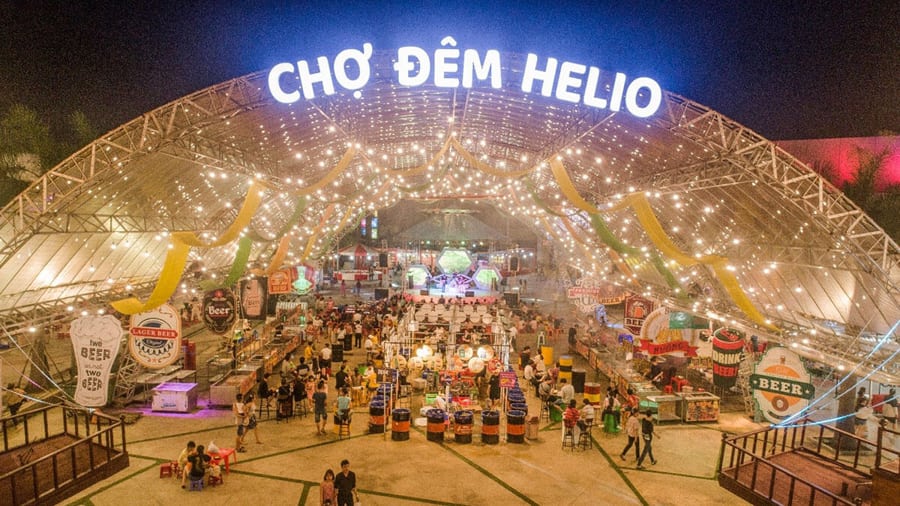
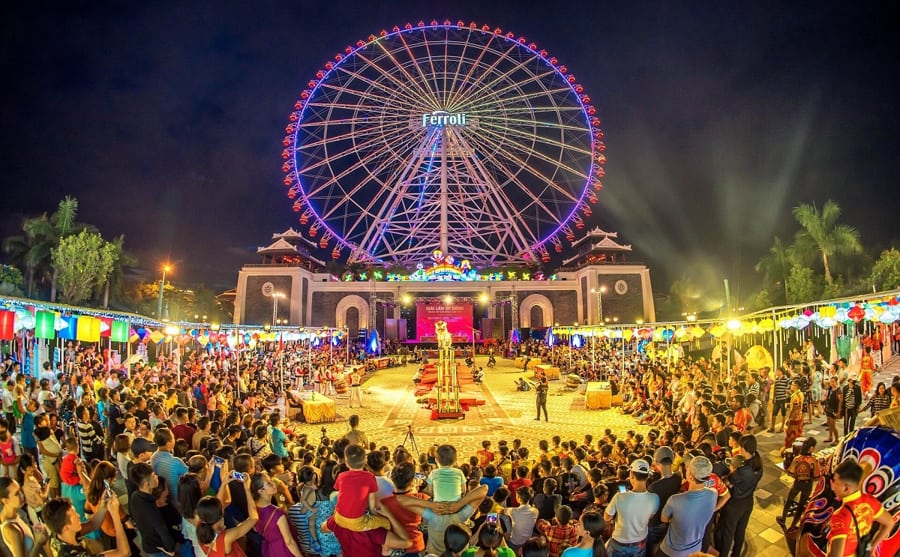
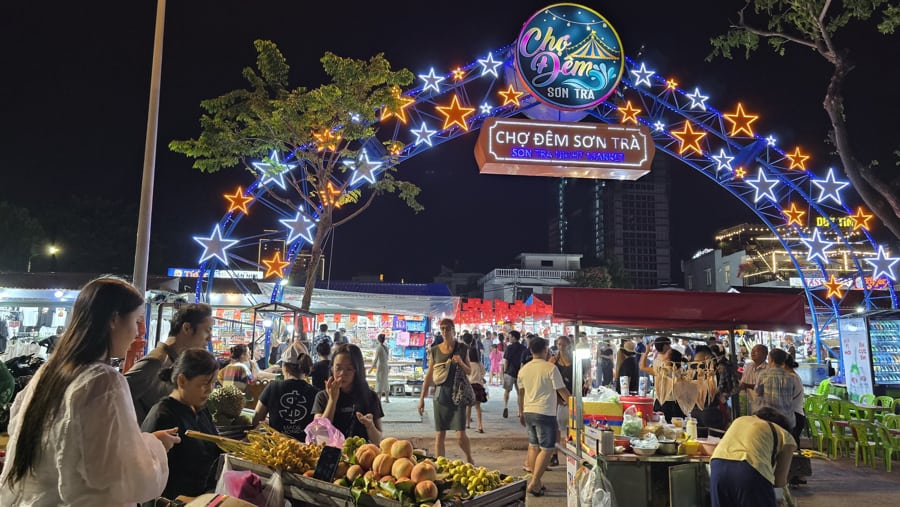
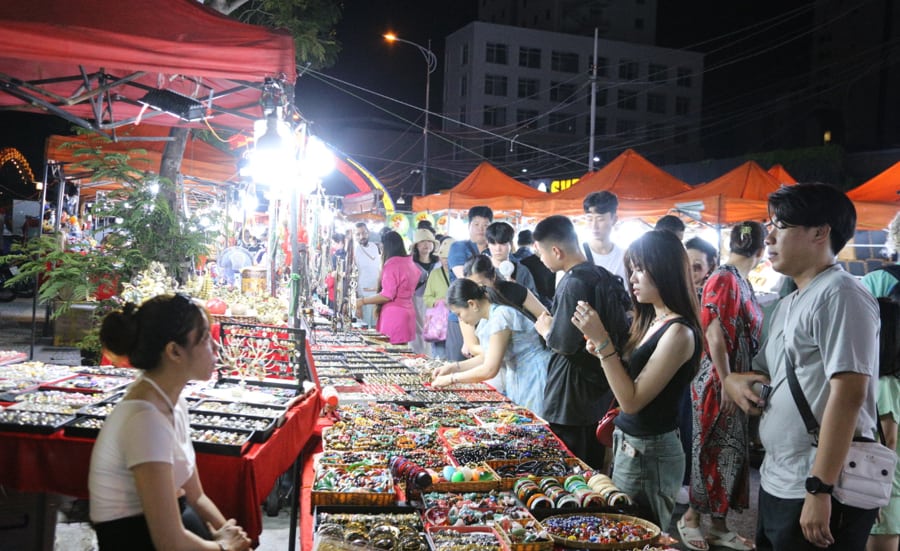
Son Tra Night Market stands out as one of the most dynamic evening markets in Da Nang, captivating both residents and international visitors with its lively ambiance. Situated in proximity to the renowned Dragon Bridge, the market transforms into a bustling hub after dusk, featuring an array of vibrant stalls offering street food, souvenirs, clothing, and local handicrafts. The atmosphere is enriched by the sounds of music, the sizzling of grills, and the lively exchanges of bargaining, all contributing to a genuine Vietnamese night market experience.

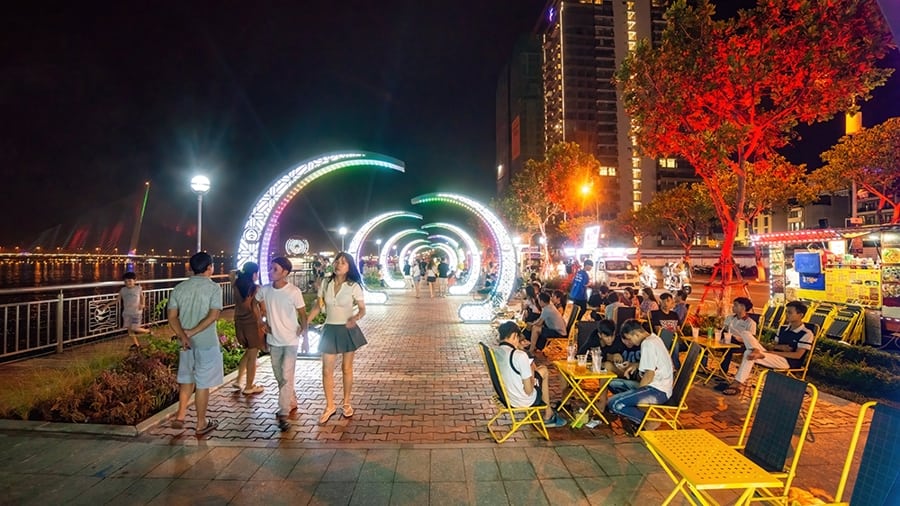
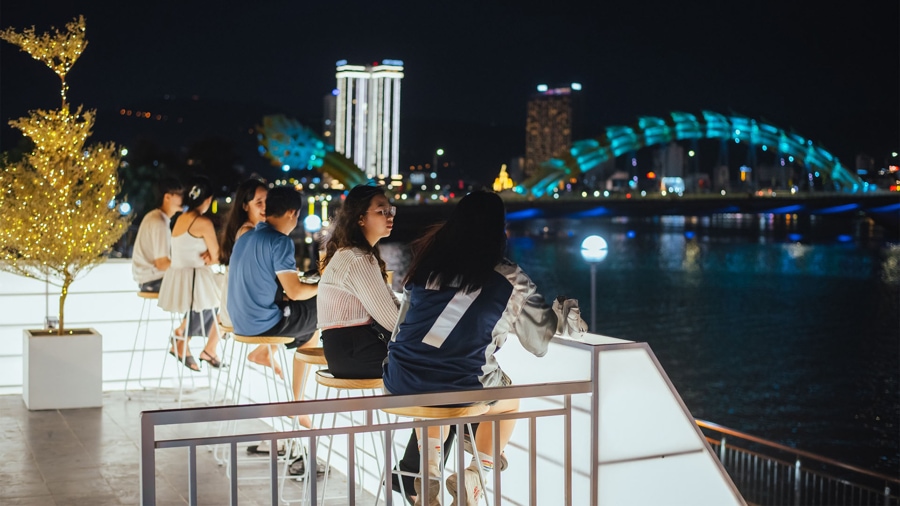
Son Tra Night Market serves as a dynamic nightlife hub in Da Nang

Son Tra Night Market should be visited not solely for the purpose of shopping but also for a rich cultural experience. Renowned for its delectable local delicacies, including grilled seafood, Vietnamese pancakes, and refreshing desserts, the market provides these culinary delights at reasonable prices. It is accessible, family-friendly, and ideal for an evening walk. In Da Nang, Son Tra Night Market presents a memorable combination of cuisine, culture, and entertainment.

History Of Son Tra Night Market

The establishment of Son Tra Night Market coincided with the swift expansion of tourism in Da Nang, aiming to develop a dynamic evening destination that bolsters local enterprises and enriches the city’s nighttime economy. Situated in Son Tra District, close to Dragon Bridge, the market was designed to embody the essence of traditional Vietnamese night market culture while harmonizing with Da Nang’s contemporary urban setting. Since its inception, it has drawn both residents and tourists seeking street food, informal shopping, and a vibrant ambiance after dusk.

Throughout the years, Son Tra Night Market has evolved in accordance with the growing demand from tourists. Vendors have broadened their selections to feature local specialties, budget-friendly souvenirs, and products crafted within the community, thereby enhancing the market’s prominence among visitors. Currently, it serves a significant function in Da Nang’s tourism landscape, exemplifying the effective integration of cultural heritage, community sustenance, and sustainable urban tourism development.

Top 3 Iconic Attractions on Son Tra Peninsula

In contrast to conventional markets, Son Tra Night Market is conceived as an expansive cultural venue where the architecture harmoniously integrates with the contemporary urban landscape of Da Nang. Rather than being contained within a single building, the market is segmented into various zones, each enhancing its vibrant visual character. The presence of bright lighting, spacious walkways, and neatly arranged stalls fosters a welcoming and appealing atmosphere for evening visitors, distinguishing it as a notable attraction within Da Nang’s nighttime offerings.

Culinary Street District

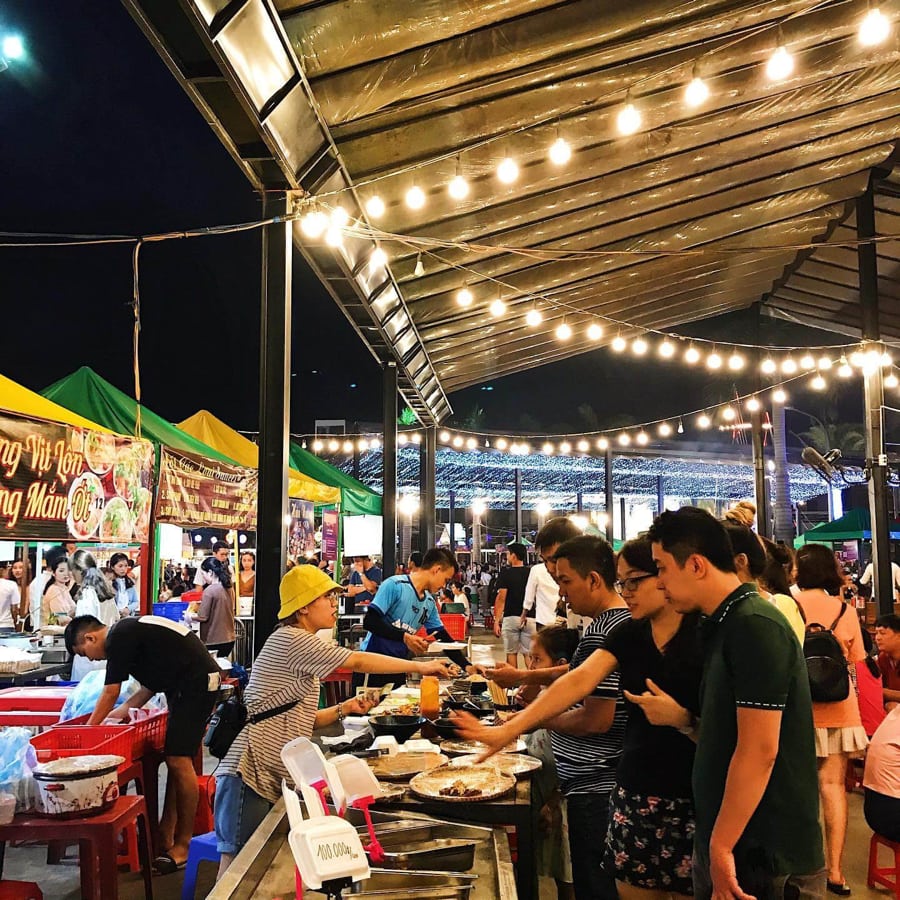
This region is characterized by a series of compact stalls adorned with vibrant signage and equipped with open grills. The design, which is both straightforward and practical, enables visitors to readily witness the process of food preparation, thus fostering an immersive street-food experience that authentically embodies Vietnamese market culture.

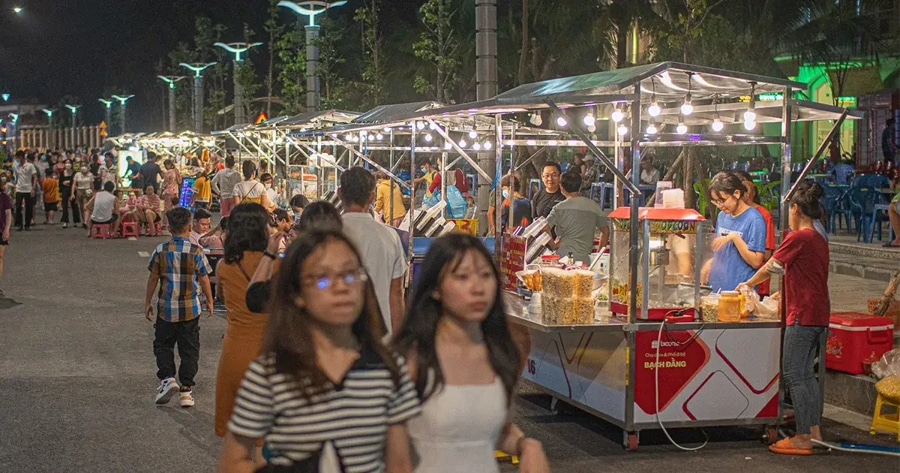
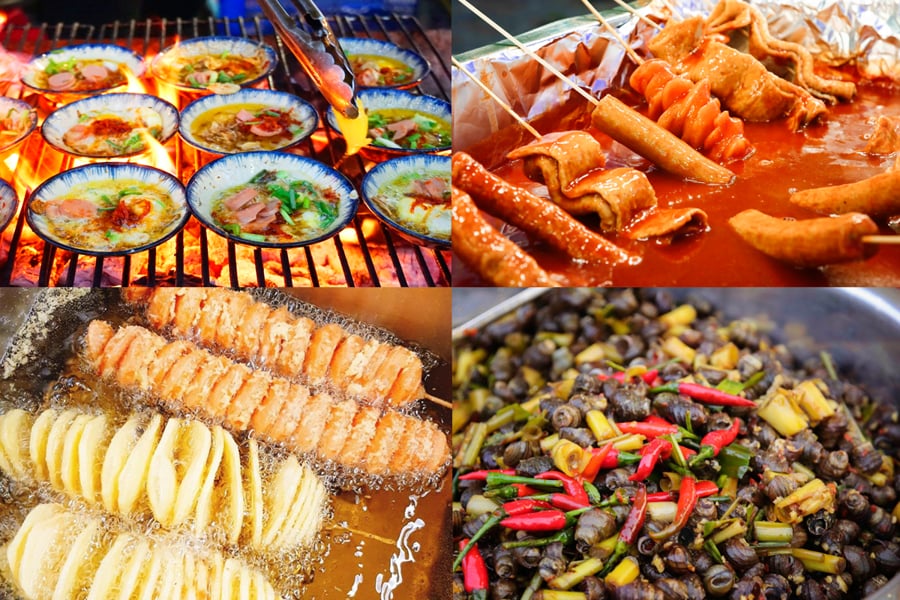
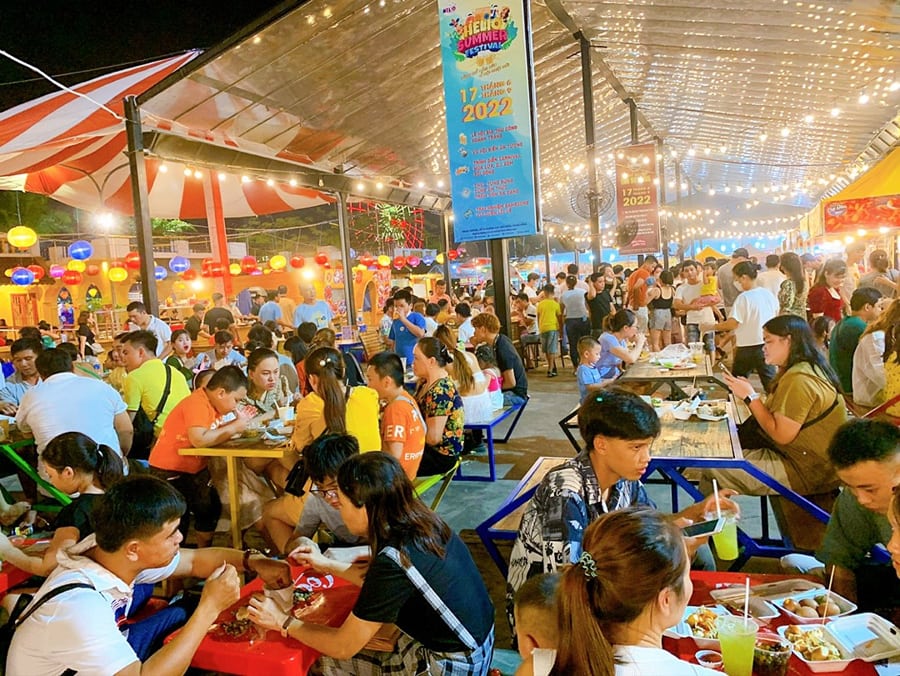
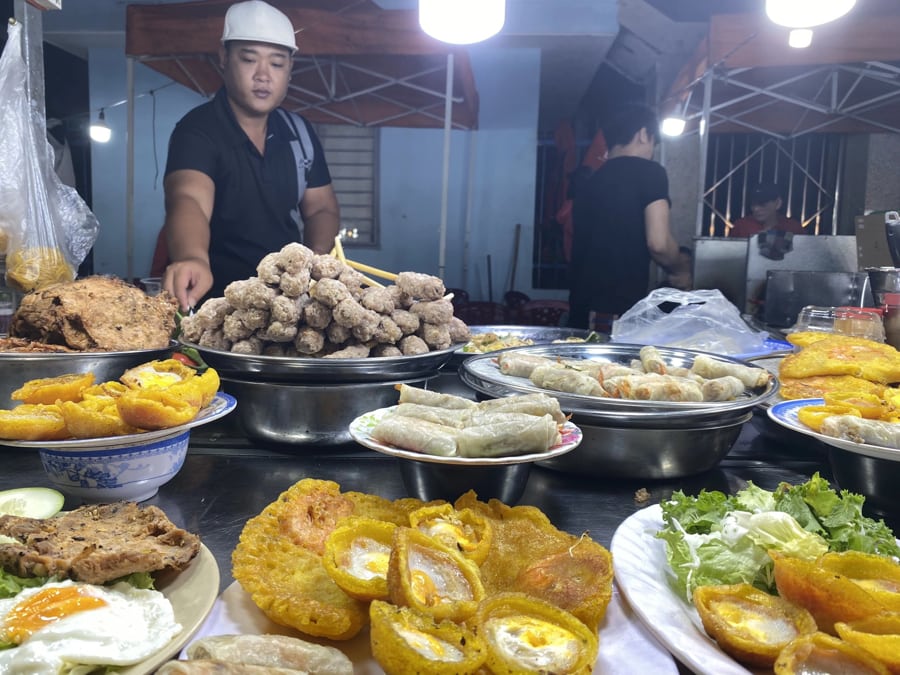
Street food in Son Tra Night Market

Retail And Memorabilia Section

This area features a contemporary and organized appearance, characterized by uniform stalls and well-defined layouts. The ambiance is enriched by decorative lighting and regional patterns, which serve to accentuate handicrafts, apparel, and souvenirs themed around Da Nang.

Recreational And Pedestrian Areas

Key architectural features include expansive pedestrian pathways and open areas. These spaces provide ideal settings for leisurely walks, street performances, and photographic moments, particularly in the proximity of Dragon Bridge, which enhances the visual appeal of Son Tra Night Market as an iconic destination during the evening hours.

4 Unforgettable Experiences You Shouldn’t Miss

Son Tra Peninsula is a destination that offers much more than breathtaking views—it is a destination where one can experience a deep connection with nature and the culture of the location. From spiritual areas to adventure zones, these are the experiences that showcase the true Son Tra.

Experience The Genuine Flavors Of Street Food In Da Nang

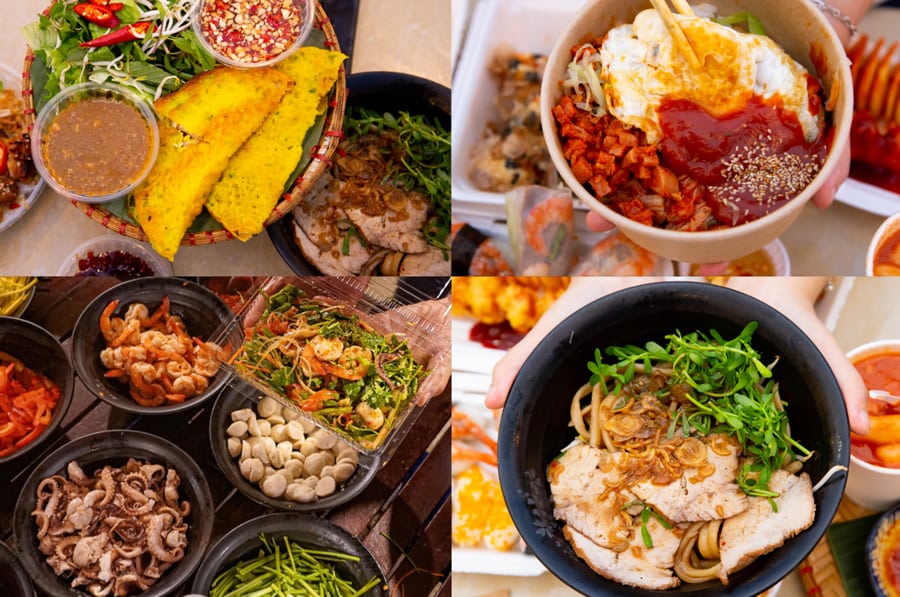
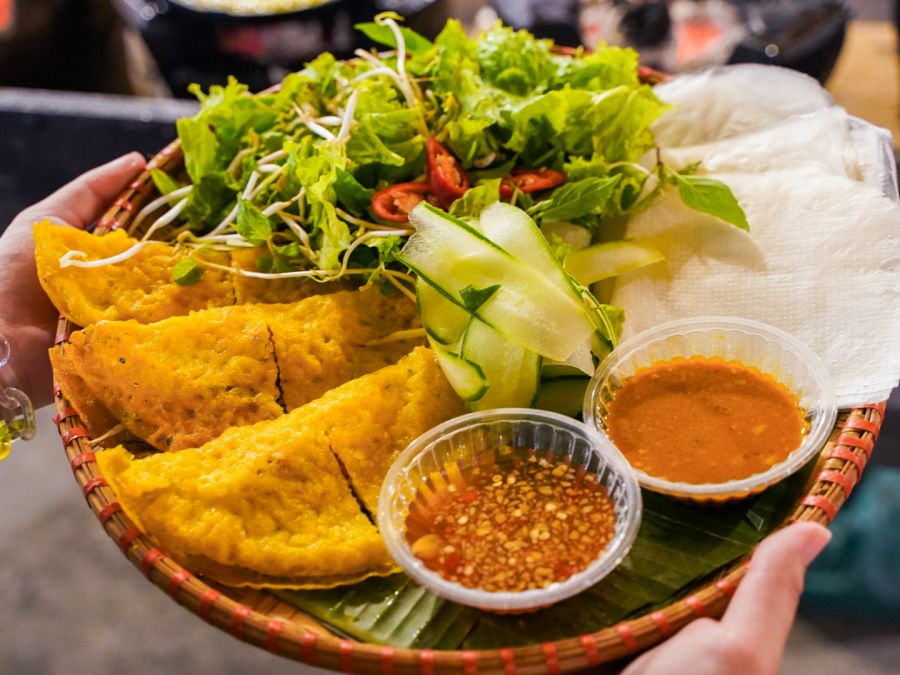
An experience that remains etched in memory at Son Tra Night Market is the opportunity to savor genuine street food from Da Nang. The selection is remarkable, featuring freshly grilled seafood, Banh Xeo, skewers, noodles, and delectable desserts.

enjoy banh xeo in son tra night market

Numerous stalls prepare their offerings in plain view, creating an atmosphere enriched by enticing aromas and vibrant sounds. The flavors embody the essence of central Vietnamese cuisine, fresh, robust, and reasonably priced. This venue serves as an ideal setting to explore a variety of local dishes in a single evening while immersing oneself in the authentic culture of the night market.

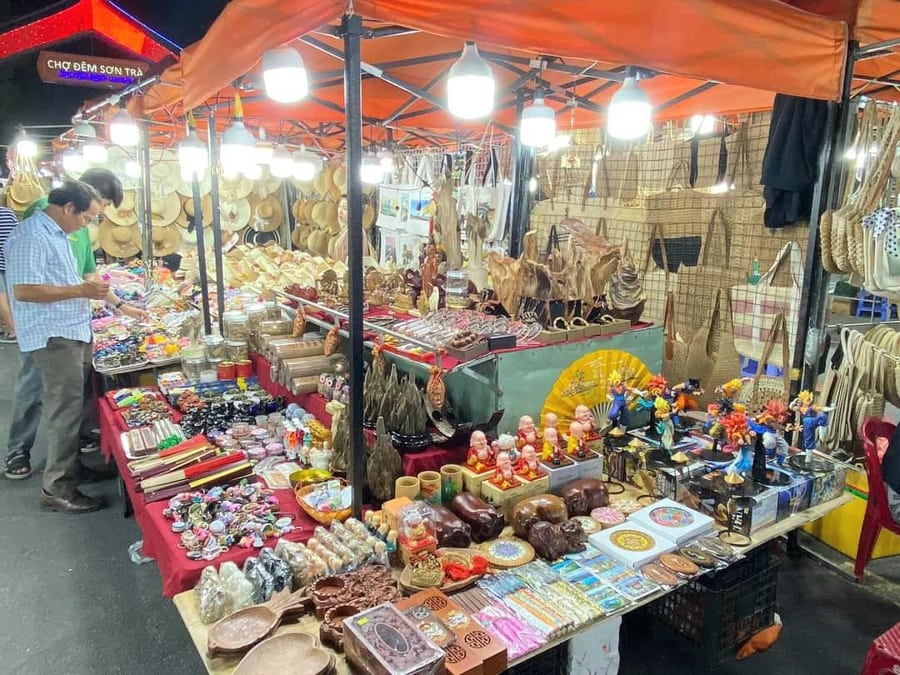
Explore Local Souvenirs And Handcrafted Goods

Visiting Son Tra Night Market provides one of the most enjoyable and laid-back experiences for guests in Da Nang. The market boasts numerous stalls offering souvenirs themed around Da Nang, along with handmade accessories, clothing, and various small gifts. Prices tend to be quite reasonable, and the engaging practice of bargaining enhances the overall thrill of the experience. In contrast to shopping malls, this open-air market facilitates direct interaction with local vendors, allowing visitors to discover the narratives behind the products. It serves as a perfect venue for acquiring significant souvenirs while simultaneously supporting local artisans and businesses.

Local Souvenirs And Handcrafted Goods

Enjoy The Vibrant Ambiance Of The Night Market

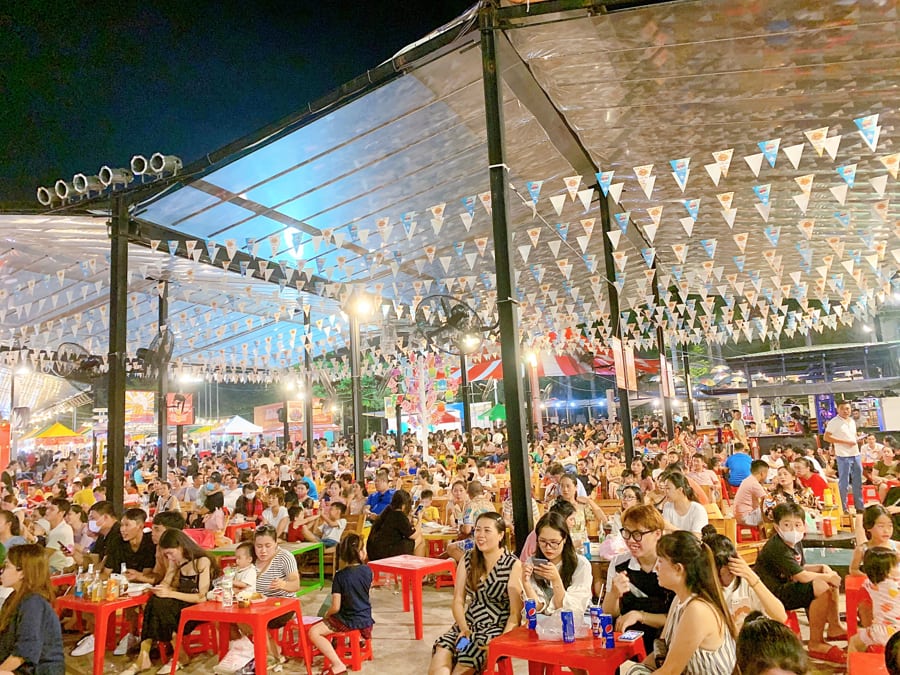
The defining characteristic of Da Nang at night is its lively atmosphere. An energetic nighttime environment is fostered by bright lights, throngs of people, background music, and the perpetual motion of visitors. Guests have the opportunity to wander at their leisure, engage in casual discussions, and experience the vibrant pulse of Da Nang after sunset. The market is inclusive and family-oriented, rendering it appropriate for individuals of all ages. Time spent in this locale provides an authentic insight into the local nightlife and the everyday social interactions within the city.

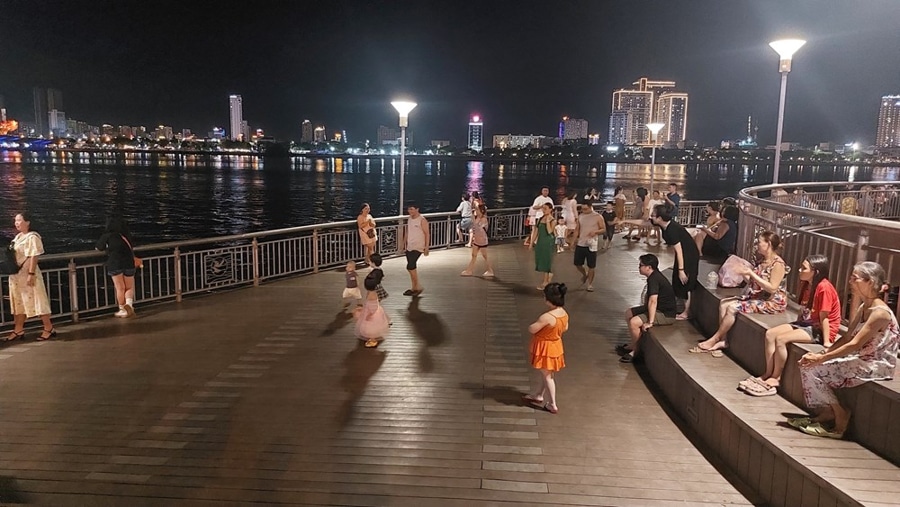
Vibrant Ambiance Of The Night Market

Capture Images Adjacent To The Renowned Dragon Bridge

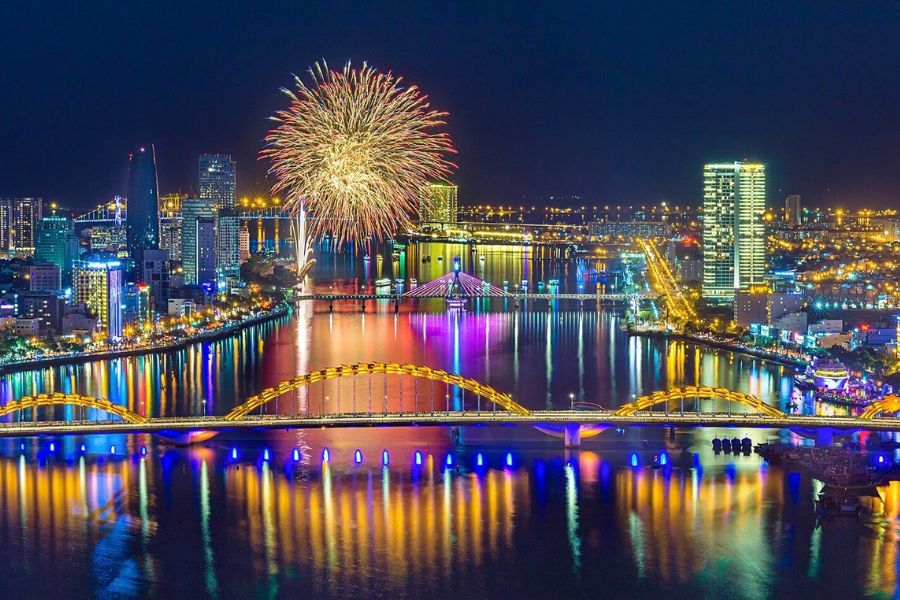
The Son Tra Night Market is situated near the renowned Dragon Bridge, positioning it as an ideal location for nighttime photography. As the bridge illuminates in the evening hours, the area transforms into a breathtaking visual spectacle. Guests have the opportunity to take remarkable photographs that blend the vibrant market atmosphere with Da Nang’s contemporary landmarks. During weekends, when the Dragon Bridge showcases its fire and water display, the experience is elevated further, transforming an ordinary visit into an unforgettable memory of Da Nang.

Entrance Fee

The Son Tra Night Market offers free admission, rendering it a perfect choice for travelers mindful of their budget. Guests can enter the market without charge, allowing them to stroll through, capture photographs, relish the energetic ambiance, and investigate an array of stalls without the necessity of purchasing a ticket. This policy of open access contributes to the attraction of both residents and visitors, fostering a lively and inviting nighttime environment in Da Nang.

While entry is complimentary, it is important for visitors to be aware that minor parking charges may be incurred when arriving by motorbike or car at adjacent parking facilities. These fees are generally reasonable and may vary slightly depending on the specific location.

Opening Hours

Typically, Son Tra Night Market operates daily from approximately 6:00 PM to 11:00 PM, with peak activity commencing after sunset. The majority of food stalls, shopping booths, and entertainment offerings reach their full vibrancy between 7:00 PM and 10:00 PM, creating the most animated atmosphere. On weekends and public holidays, the market frequently remains bustling until late in the evening, largely due to its proximity to Dragon Bridge and well-frequented riverside locations.

Son Tra Night Market operates daily

The optimal period for visiting Son Tra Night Market is between April and September, coinciding with the dry season in Da Nang. This timeframe offers agreeable evening weather, which is conducive to strolling, dining, and sightseeing. It is advisable to arrive after 7:30 PM to take advantage of the cooler temperatures, lively crowds, and picturesque nighttime scenery, particularly on weekends when the Dragon Bridge show draws numerous visitors.

How To Get To Son Tra Night Market

The Son Tra Night Market is situated in close proximity to Dragon Bridge, facilitating easy access from various beaches, hotels, and the center of Da Nang. Travelers have the opportunity to select from a range of transportation options that cater to diverse budgets and preferences.

Transport Option Estimated Price
(VND / USD)
Travel Time Notes & Tips
Motorbike / Scooter 120,000-150,000 VND / 56 USD per day 5–10 minutes Flexible and popular. Parking costs 5,000-10,000 VND (0.2-0.4 USD)
Taxi 60,000-100,000 VND / 2.54 USD 5–10 minutes Good for families or groups, use the meter
Grab (Ride-Hailing) 40,000–80,000 VND / 1.53.5 USD 5–10 minutes Fixed price shown in the app
Walking Free 10–20 minutes Ideal if staying near Dragon Bridge or Han River

Things To Know Before Traveling To Son Tra Night Market

Prior to exploring Son Tra Night Market, it is beneficial to be aware of several practical tips that can enhance the smoothness and enjoyment of your experience. These crucial insights will assist travelers in circumventing typical challenges and fully appreciating the vibrant atmosphere of Da Nang’s night market.

  • For an optimal experience, it is advisable to visit after 7:00 PM, when the majority of stalls are fully operational, the ambiance is more animated, temperatures are more moderate, and nearby attractions exhibit greater vibrancy.
  • It is advisable to carry small denominations of Vietnamese Dong, as numerous vendors, particularly food stalls and informal parking areas in the market, may not accept credit cards or e-wallets.
  • Anticipate increased crowds during weekends and holidays, especially in the vicinity of Dragon Bridge; therefore, it is advisable to secure personal belongings and maintain vigilance while navigating through crowded spaces.

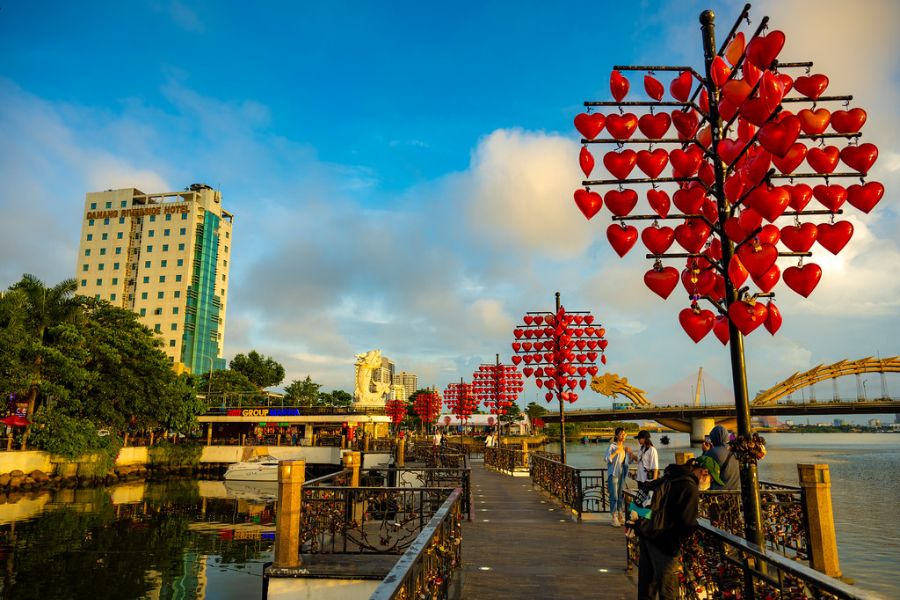
The Dragon Bridge (also called Cau Rong)

  • Inquire about prices prior to placing an order for food or making purchases, as prices may differ among vendors, thereby aiding in the prevention of misunderstandings and contributing to a more pleasant shopping experience.
  • Wear comfortable attire and suitable walking footwear, as the market spans a considerable area and one may find themselves engaged in exploration of food, shopping, and entertainment venues for several hours.
  • It is advisable to schedule your visit in conjunction with the Dragon Bridge show, particularly on weekend evenings, to fully appreciate the captivating fire and water performances while also experiencing the vibrant ambiance of the nearby night market.

FAQs About Son Tra Night Market

Presented below are frequently asked questions by travelers before their visit to Son Tra Night Market, designed to assist in the effective planning of your itinerary, budget, and overall experience. These concise responses offer

What items are available for purchase at Son Tra Night Market?

A diverse selection in Da Nang of local street food, grilled seafood, desserts, and beverages can be enjoyed by visitors. Additionally, the market features clothing, accessories, handmade products, and souvenirs themed around Da Nang, all offered at affordable prices, making it an ideal destination for both leisurely shopping and culinary exploration.

Is the Son Tra Night Market appropriate for families and children?

Indeed, the Son Tra Night Market is typically considered family-friendly, offering spacious walking areas and a variety of food selections suitable for individuals of all ages. Nevertheless, it tends to become congested on weekends; thus, it is advisable for parents to keep their children nearby and, if feasible, to visit earlier in the evening.

Final Thoughts: Is Son Tra Night Market Worth Visiting?

The Son Tra Night Market is undeniably a destination of great value for those travelers in search of an authentic, vibrant, and budget-friendly nightlife experience in Da Nang. Offering free admission, a wide variety of street food, local shopping options, and its advantageous proximity to Dragon Bridge, the market seamlessly merges culture, entertainment, and accessibility. It caters to families, couples, and solo travelers alike who wish to immerse themselves in local life after dusk. If you are organizing your itinerary for Da Nang, be sure to include this lively attraction. For further travel inspiration and to craft your ideal journey, explore Seni World today.

Huyen Khong Cave Da Nang Travel Guide For Visitors

Huyen Khong Cave is a sacred cave located in the Marble Mountains of Da Nang, famous for its natural skylight, spiritual atmosphere, and ancient shrines, making it one of the most peaceful and meaningful attractions in central Vietnam.

Introduction To Huyen Khong Cave

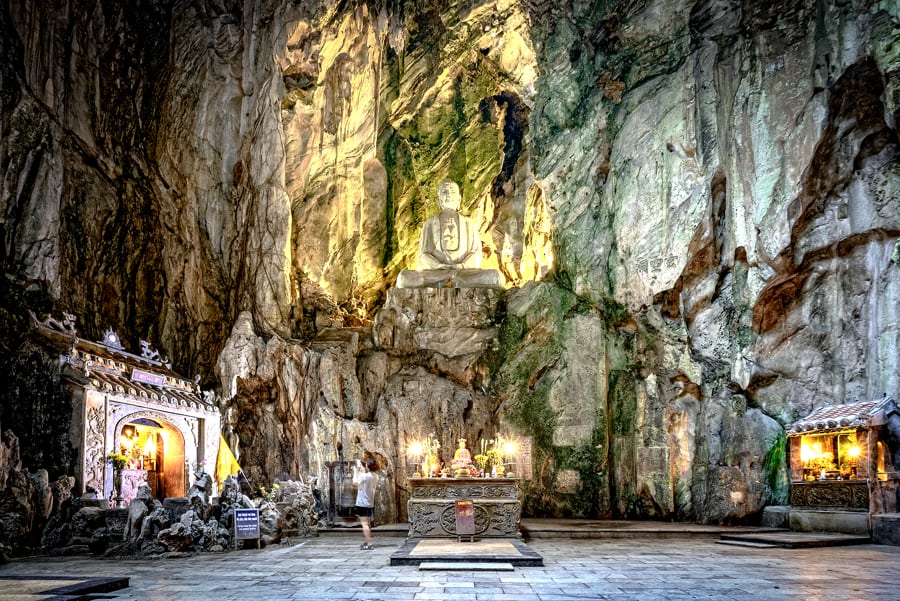
Huyen Khong Cave is one of the most famous attractions within the Marble Mountains in Da Nang, drawing visitors with its unique combination of natural beauty and spiritual significance. Located inside Thuy Son Mountain, the cave is known for its high ceiling and natural skylight that allows sunlight to stream in, creating a mystical and peaceful atmosphere. Inside the cave, visitors can find ancient Buddhist altars, stone statues, and incense-filled corners that reflect the deep religious traditions of the region. This harmonious blend of nature and spirituality makes Huyen Khong Cave a standout destination among Da Nang’s cultural landmarks.

Huyen Khong Cave is a sacred cave

Visiting Huyen Khong Cave offers travelers a meaningful experience beyond sightseeing. The calm environment provides a place for reflection, meditation, and quiet escape from the busy city. Its dramatic lighting and sacred setting also make it a favorite spot for photography and cultural exploration. Easily accessible and rich in history, Huyen Khong Cave is an ideal stop for travelers seeking spiritual depth, natural wonder, and cultural insight in central Vietnam.

History Of Huyen Khong Cave

Huyen Khong Cave has a long history closely connected to the formation of the Marble Mountains, which date back millions of years through natural erosion and geological processes. Over time, the cave became known not only for its impressive structure but also for its spiritual value. During the Nguyen Dynasty, Huyen Khong Cave was recognized as an important religious site, where monks and locals came to pray, meditate, and practice Buddhism. The natural skylight inside the cave was believed to symbolize enlightenment, reinforcing its sacred meaning.

Huyen Khong Cave has also played a role in local cultural and spiritual life

Throughout history, Huyen Khong Cave has also played a role in local cultural and spiritual life. During periods of conflict, the cave served as a place of refuge and shelter due to its hidden location and solid rock formations. After the war, it gradually became a place of worship again, with temples, altars, and statues restored inside. Today, Huyen Khong Cave stands as a living historical site, preserving religious traditions while attracting visitors interested in Vietnam’s spiritual heritage and cultural history.

Top 4 Iconic Attractions In Huyen Khong Cave

Huyen Khong Cave is home to several iconic features that reflect its spiritual depth and natural beauty. Each area inside the cave offers a unique experience, blending sacred architecture, dramatic lighting, and ancient rock formations.

Natural Skylight And Open Ceiling

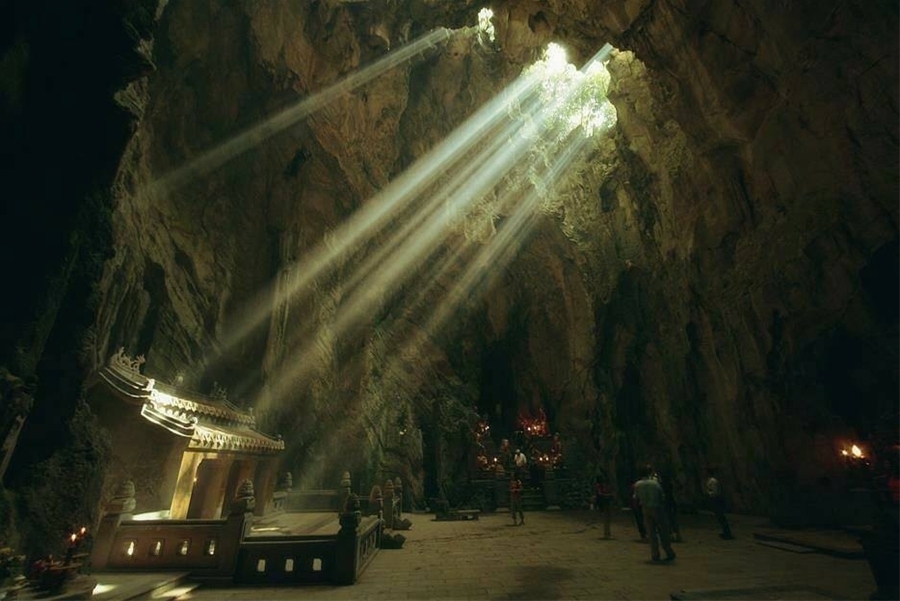
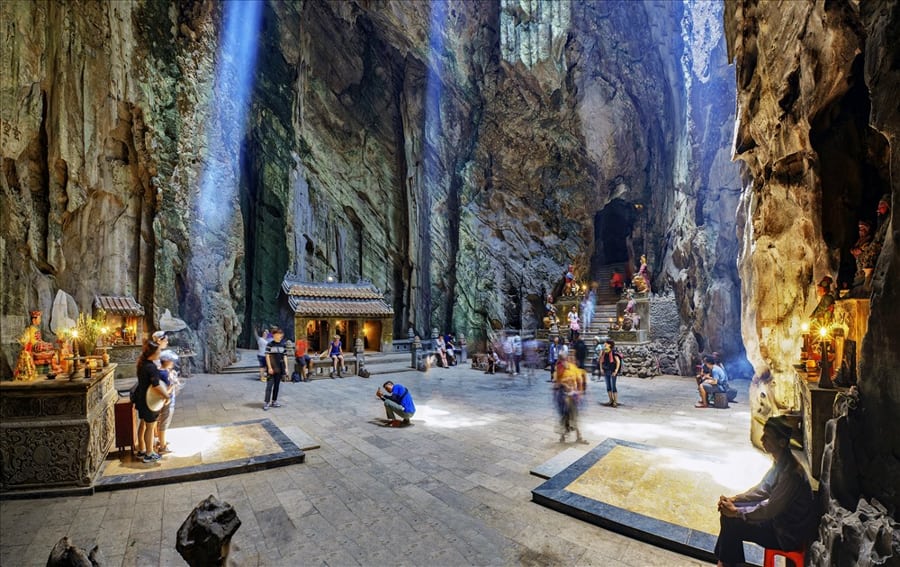
The most iconic feature of Huyen Khong Cave is its natural skylight, created by a large opening in the cave ceiling. Sunlight streams down through this opening, illuminating the cave interior with soft, mystical light. This natural phenomenon creates a peaceful atmosphere and symbolizes spiritual enlightenment in Buddhist belief. The contrast between light and shadow makes this area especially captivating for visitors and photographers, turning the cave into a living blend of nature and spirituality.

Natural Skylight And Open Ceiling of Huyen Khong Cav

Main Buddhist Shrine Area

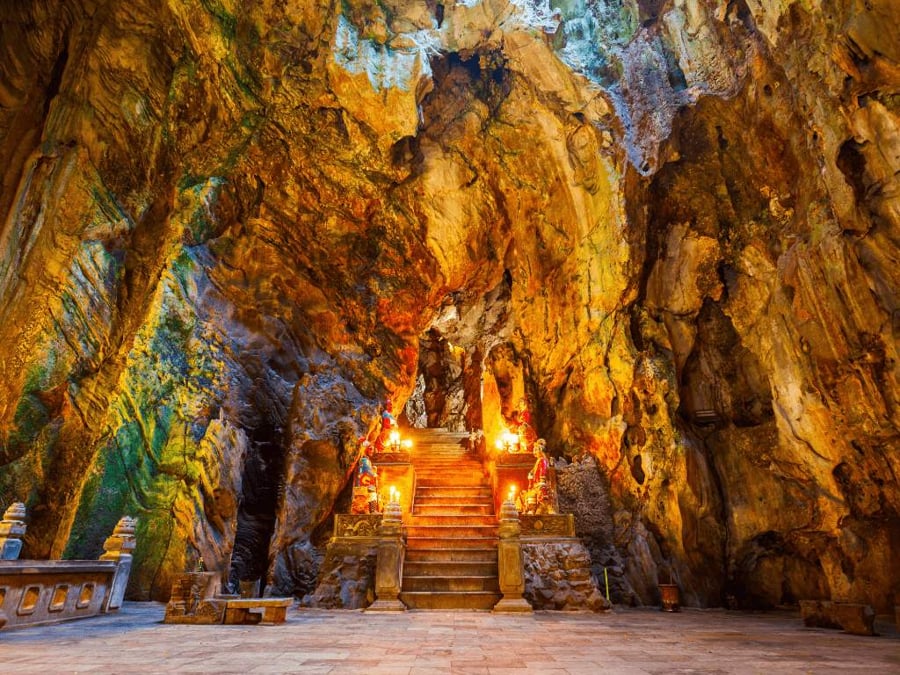
At the heart of Huyen Khong Cave lies the main Buddhist shrine, where visitors can find stone statues, incense burners, and small altars dedicated to Buddha and bodhisattvas. This sacred space is still actively used for worship and prayer by local monks and pilgrims. The quiet surroundings, combined with natural light filtering in, create a deeply calming environment. Many visitors pause here to reflect, pray, or simply absorb the spiritual energy of the cave.

Main Buddhist Shrine Area

Stone Statues And Ancient Altars

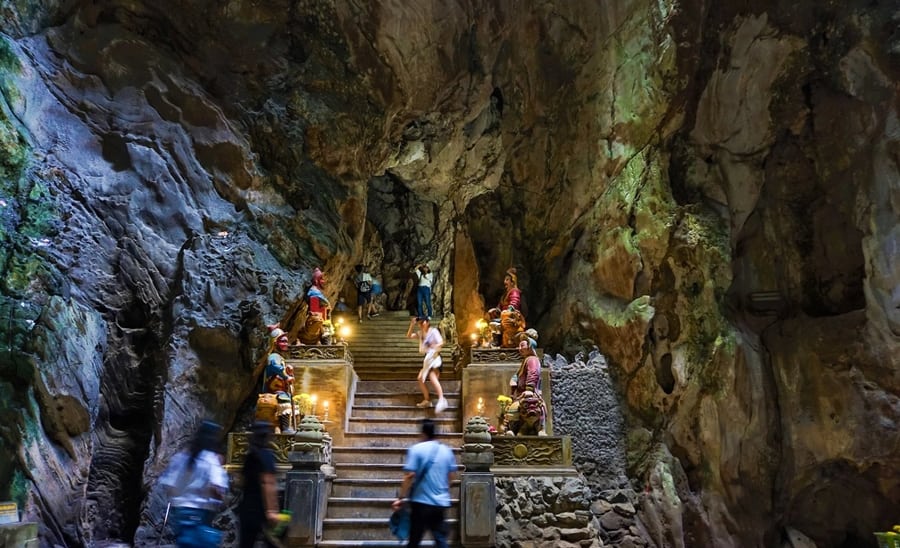
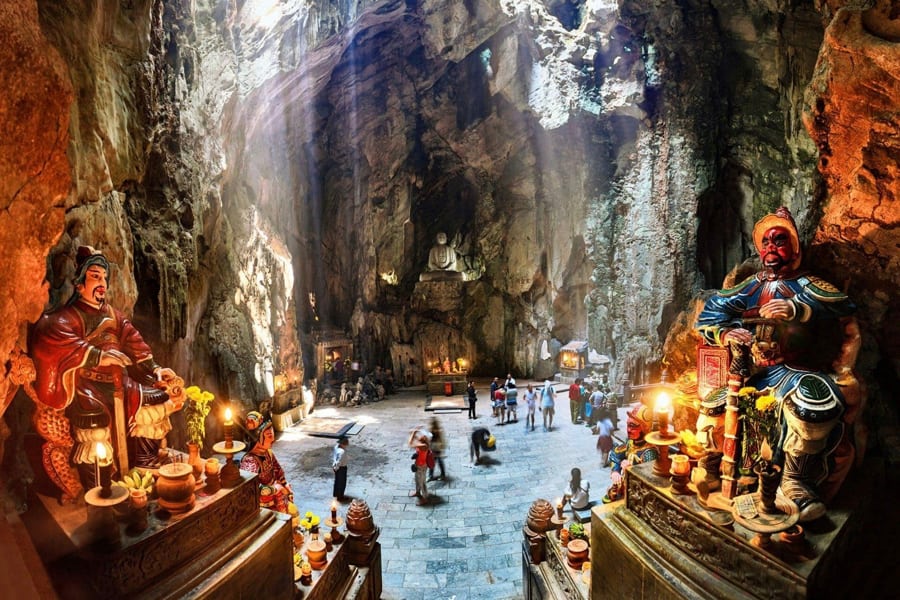
Scattered throughout the cave are ancient stone statues and altars that reflect the long religious history of Huyen Khong Cave. These elements were placed over different periods, showing the evolution of Buddhist practices in the region. Carved directly into the rock or carefully positioned along the cave walls, they blend seamlessly with the natural surroundings. This area offers insight into local beliefs and the enduring connection between faith and nature.

Stone Statues And Ancient Altars

Cave Chambers And Rock Formations

Beyond the main shrine, Huyen Khong Cave features smaller chambers and impressive limestone formations shaped by time. Stalactites, uneven rock surfaces, and narrow passages add to the cave’s mysterious charm. Exploring these areas allows visitors to appreciate the raw beauty of the Marble Mountains while experiencing the quiet, sacred atmosphere that defines Huyen Khong Cave as a unique cultural and natural attraction.

4 Unforgettable Experiences You Shouldn’t Miss

Huyen Khong Cave offers more than sightseeing, providing meaningful moments that connect visitors with nature, spirituality, and local culture. These unforgettable experiences highlight why this sacred cave is a must-visit destination in the Marble Mountains of Da Nang.

Admire The Magical Natural Skylight

One of the most unforgettable experiences at Huyen Khong Cave is witnessing sunlight streaming through the natural opening in the cave ceiling. As the light shifts throughout the day, it creates a mystical atmosphere that highlights stone walls, statues, and altars. This natural illumination symbolizes spiritual enlightenment in Buddhist belief and gives the cave its unique character. Many visitors pause here to reflect, meditate, or capture stunning photos, making this moment both visually impressive and spiritually meaningful.

Admire The Magical Natural Skylight

Pray Or Meditate At Buddhist Shrines

Spending time at the Buddhist shrines inside Huyen Khong Cave offers a peaceful and spiritual experience. Visitors can light incense, say prayers, or simply sit quietly in the calm surroundings. The combination of sacred statues, soft natural light, and echoing silence creates an ideal environment for meditation and inner reflection. This experience allows travelers to connect with local religious traditions while enjoying a rare moment of calm away from busy tourist areas.

Explore The Cave’s Ancient Rock Formations

Walking through the chambers of Huyen Khong Cave allows visitors to admire impressive limestone formations shaped over millions of years. Stalactites, uneven stone surfaces, and hidden corners give the cave a mysterious charm. Exploring these natural features provides insight into the geological history of the Marble Mountains while enhancing the sense of discovery. This experience appeals to nature lovers, photographers, and travelers curious about the natural wonders of central Vietnam.

Explore The Cave’s Ancient Rock Formations

Experience The Sacred Atmosphere Of Marble Mountains

Beyond individual sights, the overall atmosphere of Huyen Khong Cave is an experience in itself. The quiet environment, combined with incense scent and filtered sunlight, creates a deep sense of peace. Visitors often describe feeling a strong spiritual energy here. This immersive experience makes Huyen Khong Cave not just a place to visit, but a place to slow down, reflect, and truly feel the cultural and spiritual heart of the Marble Mountains.

Entrance Fee

Before visiting Huyen Khong Cave, understanding the entrance fees helps travelers plan their budget and time more effectively. Ticket prices are affordable and include access to key attractions within the Marble Mountains complex.

Ticket Type Price (VND) Approx. Price (USD) Notes
General Entrance Ticket 40,000 VND 1.60USD Includes access to Huyen Khong Cave and main sites
Student Ticket 10,000 VND ~0.40USD Valid student ID required
Children Under 6 Free Free No ticket needed
Elevator Ticket (Optional) 15,000 to 30,000 VND 0.60 to 1.20USD Optional, helps avoid climbing stairs

Entrance tickets are purchased on-site and cover most major attractions within the Marble Mountains area. Prices may change slightly over time, so visitors should check at the ticket counter upon arrival.

Opening Hours

Huyen Khong Cave is open daily as part of the Marble Mountains complex, typically from early morning to late afternoon. Visiting hours usually run from around 7:00 AM to 5:30 PM, allowing travelers enough time to explore the cave, temples, and surrounding viewpoints. It is recommended to arrive earlier in the day to enjoy a quieter atmosphere, as the site can become crowded during midday, especially on weekends and holidays. Access may be limited during severe weather for safety reasons.

Huyen Khong Cave is open daily

The best time to visit Huyen Khong Cave is during the dry season from March to September, when weather conditions are favorable, and visibility inside the cave is at its best. Early morning visits offer cooler temperatures and beautiful natural light streaming through the cave’s skylight. Peak tourist season falls between May and August, so visiting on weekdays helps avoid crowds and enhances the overall experience.

How To Get To Huyen Khong Cave

Huyen Khong Cave is located inside the Marble Mountains (Ngu Hanh Son), about 8 km from Da Nang city center. Visitors can easily reach the site by motorbike, car, or taxi, making it a convenient stop on most Da Nang travel itineraries.

Transportation Option Estimated Cost (USD) Travel Time Notes
Motorbike Rental 6 to 10 / day 20 to 25 minutes Flexible, ideal for independent travelers
Taxi / Grab Car 10 to 18 / one way 15 to 20 minutes Comfortable and convenient
Private Car With Driver 35 to 50 / half day Flexible Combine with nearby attractions
Guided Tour 50 to 80 / person Half day Transport included, hassle-free

Travel tips: If traveling by motorbike, visitors should hold a valid driving license and be confident in city traffic. Wear a helmet at all times, follow local traffic rules, and avoid visiting during heavy rain. Comfortable shoes are recommended, as reaching the cave requires climbing stone steps inside the Marble Mountains complex.

Things To Know Before Traveling To Huyen Khong Cave

Before visiting Huyen Khong Cave, travelers should prepare properly to enjoy a smooth and meaningful experience. These essential travel tips help visitors explore this sacred site safely, respectfully, and comfortably within the Marble Mountains.

  • Visit early in the morning to enjoy cooler temperatures, softer natural light, and a quieter atmosphere inside Huyen Khong Cave.
  • Wear comfortable shoes with good grip, as the Marble Mountains require climbing stone steps and walking on uneven surfaces.
  • Dress modestly and respectfully because Huyen Khong Cave is an active spiritual site with Buddhist shrines and worship areas.
  • Bring water and sun protection, especially during the dry season, as facilities are limited and the weather can be hot.
  • Check weather conditions before visiting, since rain can make the steps slippery and reduce visibility inside the cave.
  • Respect the sacred environment by keeping quiet, avoiding litter, and not touching statues or altars inside the cave.

FAQs About Huyen Khong Cave

Travelers often have questions when planning a visit to Huyen Khong Cave, one of the most spiritual attractions in the Marble Mountains. The FAQs below provide useful information to help visitors prepare and enjoy a smooth, meaningful experience.

Is Huyen Khong Cave included in the Marble Mountains entrance ticket?

Yes, Huyen Khong Cave is included in the general entrance ticket to the Marble Mountains (Thuy Son). Once you purchase this ticket, you can access Huyen Khong Cave along with other main caves, pagodas, and viewpoints in the complex. There is no separate ticket required specifically for the cave itself. Optional services, such as elevator use or guided tours, may require additional payment.

Is Huyen Khong Cave suitable for elderly visitors or children?

Huyen Khong Cave can be visited by elderly travelers and children, but some caution is needed. Accessing the cave involves climbing stone steps, which may be challenging for those with limited mobility. Using the elevator can reduce walking distance, but there are still steps inside the complex. Visitors should move slowly, wear proper footwear, and take breaks when needed.

Huyen Khong Cave can be visited by elderly travelers and children

How long does it take to explore Huyen Khong Cave?

Most visitors spend about 30 to 45 minutes exploring Huyen Khong Cave. This includes time for sightseeing, photography, and quiet reflection at the Buddhist shrines. Travelers who enjoy photography or meditation may choose to stay longer. The cave is often combined with other Marble Mountains attractions, making it an easy and rewarding stop within a half-day visit.

Final Thoughts: Is Huyen Khong Cave Worth Visiting?

Huyen Khong Cave is truly worth visiting for travelers seeking a unique blend of spirituality, nature, and culture in central Vietnam. Its dramatic natural light, sacred atmosphere, and historical value create a peaceful yet impressive experience within the Marble Mountains. Whether you enjoy photography, quiet reflection, or cultural exploration, this cave offers lasting memories. To make the most of your journey and discover more inspiring destinations, plan your Da Nang itinerary today with Seni World and travel with confidence.

Ban Co Peak Travel Guide: The Best View In Son Tra Peninsula

Ban Co Peak is a scenic viewpoint on Son Tra Peninsula, Da Nang, famous for its panoramic views of the city, coastline, and mountains. This peaceful spot combines natural beauty with local legend, making it a must-visit destination for travelers.

Introduction To The Ban Co Peak

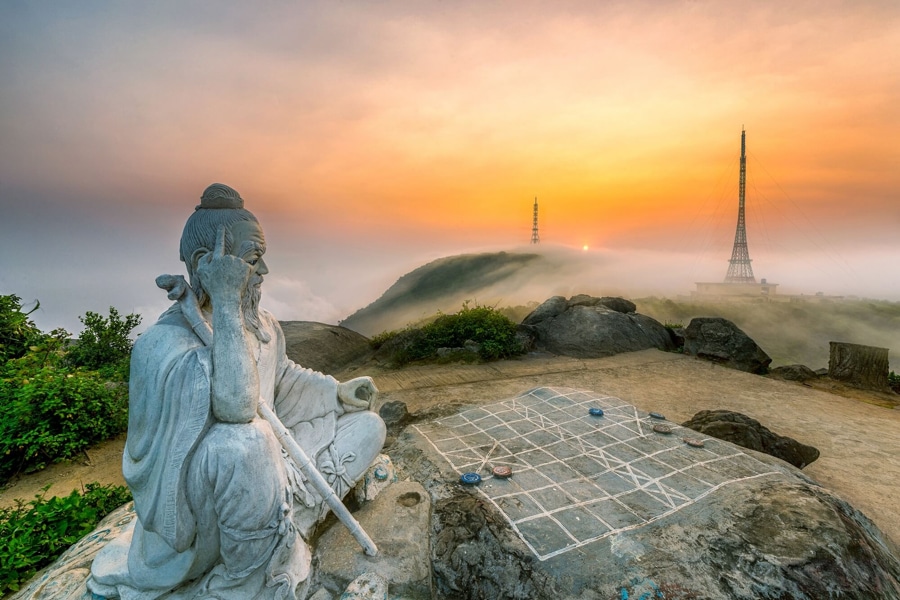
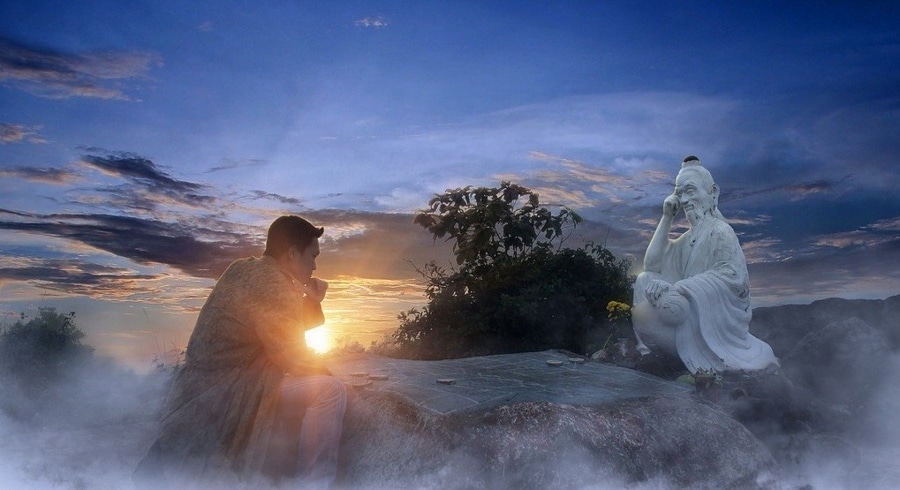
Ban Co Peak is one of the most famous tourist attractions in Da Nang, located on the scenic Son Tra Peninsula. This viewpoint is well known for its panoramic views overlooking Da Nang city, the coastline, and the vast East Sea. Surrounded by lush forests and fresh mountain air, Ban Co Peak offers a peaceful escape from the busy city below. The site is also closely linked to a local legend about a chess-playing fairy, adding cultural value and storytelling appeal to the destination. Thanks to its high elevation and open landscape, Ban Co Peak is a popular spot for sightseeing, photography, and nature lovers seeking breathtaking scenery.

Ban Co Peak is one of the most famous tourist attractions in Da Nang

Visiting Ban Co Peak is highly recommended for travelers who want to experience both natural beauty and local culture in one place. From the summit, visitors can enjoy stunning sunrise and sunset views, making it ideal for photographers and couples. The cool climate and quiet atmosphere create a relaxing environment, perfect for short breaks or scenic stops during a Son Tra exploration. In addition, Ban Co Peak is easily combined with nearby attractions, making it a convenient and rewarding destination in any Da Nang travel itinerary.

History Of The Ban Co Peak

Ban Co Peak has long been associated with the natural and cultural history of the Son Tra Peninsula in Da Nang. In the past, this area was largely untouched, covered by dense forests and used mainly by local communities for hunting, forestry, and spiritual practices. Over time, as Da Nang developed, Ban Co Peak gradually became known as a scenic high point offering a strategic view over the city and coastline. Its elevated position also made it an important natural landmark, symbolizing the harmony between mountains, sea, and human settlement in central Vietnam.

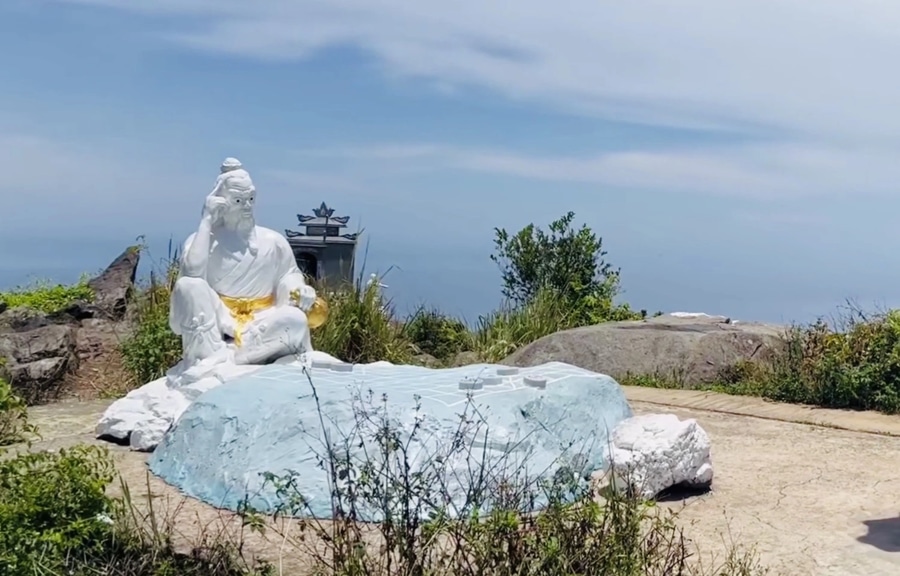
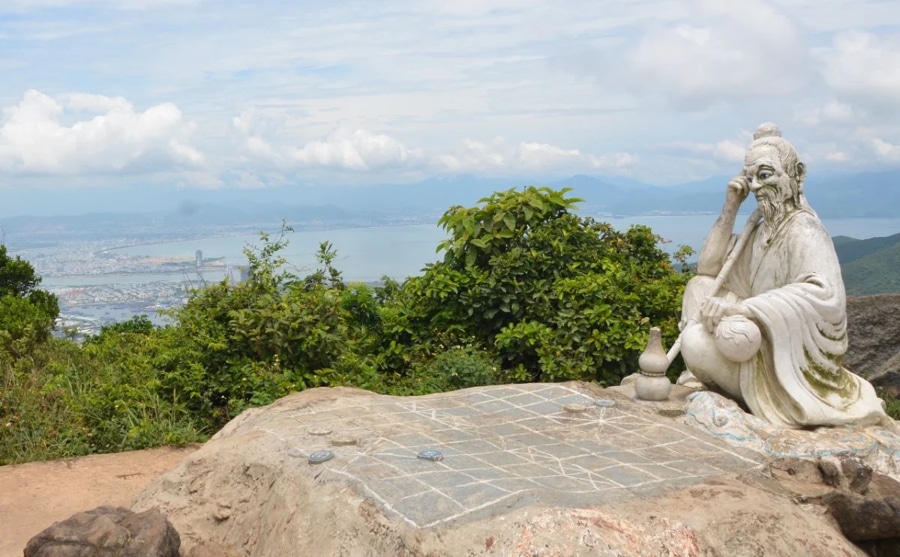
The name “Ban Co,” meaning “Chessboard,” comes from a well-known local legend about a fairy who played chess atop the mountain. According to folklore, the fairy was so absorbed in the game that he remained forever at the peak, overlooking the land below. This story has been passed down through generations, giving Ban Co Peak strong cultural significance. Today, the legend, combined with its historical setting and breathtaking views, makes Ban Co Peak a meaningful destination that blends history, mythology, and natural beauty.

Unique Architecture Of Ban Co Peak

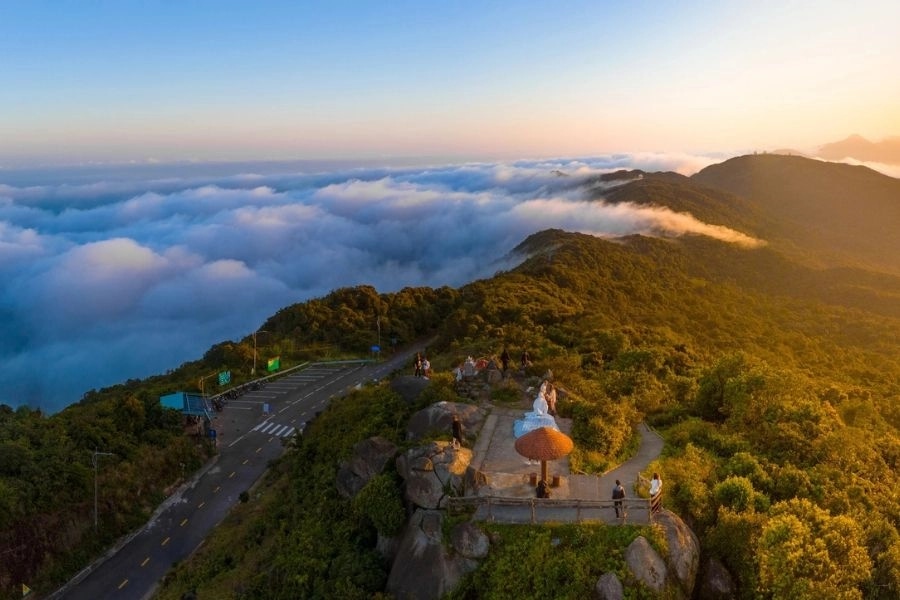
Although Ban Co Peak is primarily known as a natural viewpoint rather than a large architectural complex, it still features distinctive man-made elements that enhance its identity and cultural value. The most iconic structure is the stone statue of the chess-playing fairy, positioned at the summit and facing Da Nang city. This statue represents the local legend behind the name “Ban Co” and serves as a symbolic focal point for visitors. Simple stone platforms and viewing terraces are carefully integrated into the rocky landscape, allowing travelers to admire panoramic views without disrupting the natural surroundings.

Unique Architecture Of Ban Co Peak

The overall architectural style at Ban Co Peak emphasizes harmony with nature rather than grand construction. Paths, railings, and rest areas are designed in a minimal, rustic manner, often using stone and concrete in neutral tones to blend with the mountain environment. This understated approach preserves the wild beauty of Son Tra Peninsula while still providing essential facilities for sightseeing. As a result, Ban Co Peak stands out not for elaborate buildings, but for how its modest architectural elements support storytelling, scenery, and the authentic outdoor experience.

5 Unforgettable Experiences You Shouldn’t Miss

Ban Co Peak offers unforgettable moments for travelers seeking nature, scenery, and local legends in Da Nang. From breathtaking views to peaceful surroundings, each experience here adds a unique highlight to your Son Tra Peninsula journey.

Watch The Sunrise Over Da Nang City

Watching the sunrise at Ban Co Peak is one of the most memorable experiences for visitors in Da Nang. As dawn breaks, soft sunlight gradually illuminates Da Nang city, the coastline, and the East Sea below. The calm atmosphere, cool mountain air, and changing colors of the sky create a peaceful and inspiring moment. This early-morning experience is especially popular with photographers and travelers who want to enjoy the natural beauty of Da Nang before the city fully wakes up.

Watching the sunrise at Ban Co Peak

Admire Panoramic Views From The Summit

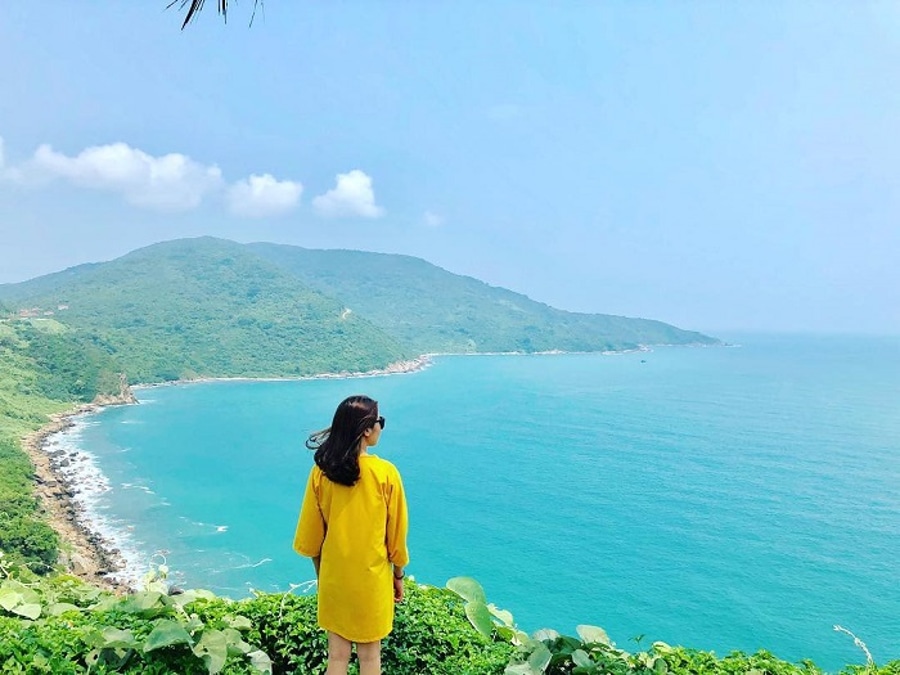
Ban Co Peak is widely regarded as one of the best viewpoints in Da Nang thanks to its high elevation and open landscape. From the summit, visitors can enjoy sweeping views of the city skyline, My Khe Beach, and the surrounding mountains. On clear days, the scenery stretches far into the distance, offering a stunning contrast between urban life and untouched nature. This panoramic perspective makes Ban Co Peak a must-visit spot for sightseeing lovers.

Admire Panoramic Views From The Summit

Visit The Chess Fairy Statue

The chess-playing fairy statue is the cultural centerpiece of Ban Co Peak and a key reason many travelers visit. Inspired by a local legend, the statue represents wisdom, patience, and the timeless connection between humans and nature. Standing beside the statue, visitors can learn about the story behind the peak’s name while enjoying impressive views of Da Nang below. This spot is also a popular photo location, combining culture, legend, and scenery.

Enjoy Fresh Air And Peaceful Nature

One of the greatest attractions of Ban Co Peak is its quiet and refreshing natural environment. Surrounded by forests and far from the busy city center, the area offers clean air and a calm atmosphere ideal for relaxation. Visitors often stop here to slow down, enjoy the breeze, and appreciate the sounds of nature. This peaceful setting makes Ban Co Peak perfect for short breaks, mindful moments, and nature-focused travel experiences.

Take Scenic Photos Along Son Tra Peninsula

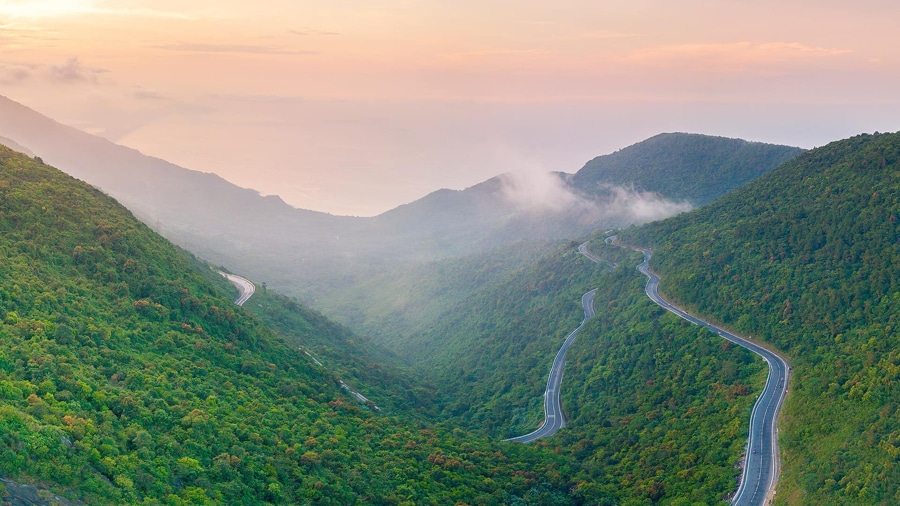
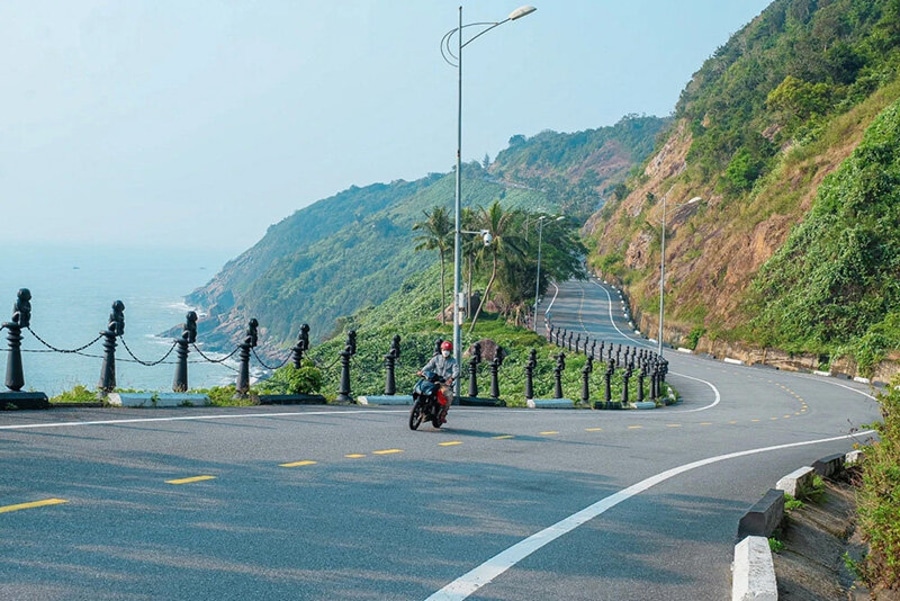
The journey to Ban Co Peak is just as memorable as the destination itself. The winding roads of Son Tra Peninsula offer stunning coastal views, lush greenery, and dramatic curves ideal for photography. Many travelers stop along the way to capture panoramic shots of the sea and mountains. Whether you travel by motorbike or car, this scenic route provides countless opportunities to create unforgettable travel photos in Da Nang.

Take Scenic Photos Along Son Tra Peninsula

Entrance Fee

Ban Co Peak is completely free to visit, with no entrance fee required for travelers. Visitors can access the viewpoint, explore the surrounding area, and enjoy panoramic views of Da Nang city and the coastline without purchasing tickets. There are no separate charges for adults, children, or seniors, making Ban Co Peak a budget-friendly destination. However, personal expenses such as transportation, guided tours, or refreshments along the way are not included and should be planned separately.

Opening Hours

Ban Co Peak is open daily and does not have official opening or closing hours, as it is a natural viewpoint on Son Tra Peninsula. Visitors can access the area throughout the day, depending on weather and road conditions. However, local authorities may occasionally restrict access during bad weather or for environmental protection. While there is no ticket booth or gate, travelers are advised to visit during daylight hours for safety, especially when driving along winding mountain roads.

Ban Co Peak is open daily

The best time to visit Ban Co Peak is during the dry season, from March to September, when Da Nang’s weather is clear, and visibility is at its best. Early morning is ideal for watching the sunrise and enjoying the cool air, while late afternoon offers beautiful sunset views. The peak season falls between May and August, when Da Nang attracts many tourists, so visiting early helps avoid crowds and traffic.

How to Get To Ban Co Peak

Ban Co Peak is located on Son Tra Peninsula, around 10-12 km from Da Nang city center. Visitors can easily reach the peak by motorbike, car, or taxi. The route is well-paved and scenic, offering beautiful coastal and mountain views along the way, making the journey part of the experience.

Transportation Option Estimated Cost (USD) Travel Time Best For
Motorbike Rental $6 to 10 / day 30 to 40 minutes Independent travelers, adventure lovers
Taxi / Grab Car $15 to 25 / round trip 25 to 30 minutes Comfort, families, small groups
Private Car With Driver $40 to 60 / half day Flexible Luxury travel, sightseeing combined
Guided Tour $60 to 90 / person Half day First-time visitors, convenience

Important travel notes:

Visitors riding motorbikes should hold a valid international or Vietnamese driving license and be confident on steep, winding roads. Wearing a helmet is mandatory. Avoid visiting during heavy rain or fog, and travel only during daylight hours for safety. Refuel before entering Son Tra Peninsula, as fuel stations are limited along the route.

reach the Ban Co peak by motorbike

Things To Know Before Traveling To Ban Co Peak

Traveling to Ban Co Peak offers breathtaking views and peaceful nature, but proper preparation ensures a safe and enjoyable experience. These essential travel tips help visitors plan better and make the most of their trip to this famous Da Nang viewpoint.

  • Visit during daylight hours to ensure safe travel on winding mountain roads and enjoy clear views of Da Nang city and the coastline.
  • Check weather conditions in advance, as fog, rain, or strong winds can reduce visibility and make the route slippery.
  • Wear comfortable shoes and clothing suitable for short walks, uneven surfaces, and changing mountain weather conditions.
  • Bring water and sun protection, since facilities are limited and the summit can be hot during dry season afternoons.
  • Ride carefully if using a motorbike, as steep slopes and sharp curves require good riding skills and focus.
  • Respect nature and local culture by keeping the area clean and avoiding damage to the natural landscape.

FAQs About Ban Co Peak

Visitors often have common questions when planning a trip to Ban Co Peak, one of the most scenic viewpoints in Da Nang. The FAQs below provide helpful information to ensure a smooth, safe, and enjoyable travel experience.

How long should I spend at Ban Co Peak?

Most visitors spend about 30 to 60 minutes at Ban Co Peak, which is enough time to admire the views, take photos, and relax. If you plan to visit during sunrise or sunset, you may want to stay longer to enjoy the changing scenery. Many travelers combine Ban Co Peak with other Son Tra Peninsula attractions, making it a convenient stop within a half-day itinerary.

Is Ban Co Peak safe for motorbike travel?

Ban Co Peak is generally safe for motorbike travel, but riders should have good riding skills and a valid driving license. The road includes steep slopes and sharp curves, so caution is required. It is recommended to travel during daylight hours, avoid rainy or foggy weather, and always wear a helmet for safety.

Final Thoughts: Is Ban Co Peak Worth Visiting?

Ban Co Peak is absolutely worth visiting for travelers seeking stunning panoramic views, fresh mountain air, and a peaceful escape from Da Nang’s busy city life. Its unique location on Son Tra Peninsula, combined with local legend and free entrance, makes it an accessible yet meaningful destination. Whether you visit for sunrise, photography, or a scenic stop along the peninsula, Ban Co Peak offers memorable moments without crowds or high costs. Plan your Da Nang journey wisely and discover more inspiring destinations across Vietnam with Seni World.
Museum of Cham Sculpture Da Nang: Discover Cham Civilization

The Museum of Cham Sculpture, located in the city of Da Nang, preserves the largest collection of Cham artifacts in the world, featuring ancient sandstone sculptures that reflect the history, beliefs, and artistic achievements of Cham culture in Central Vietnam.

Introduction to the Museum of Cham sculpture

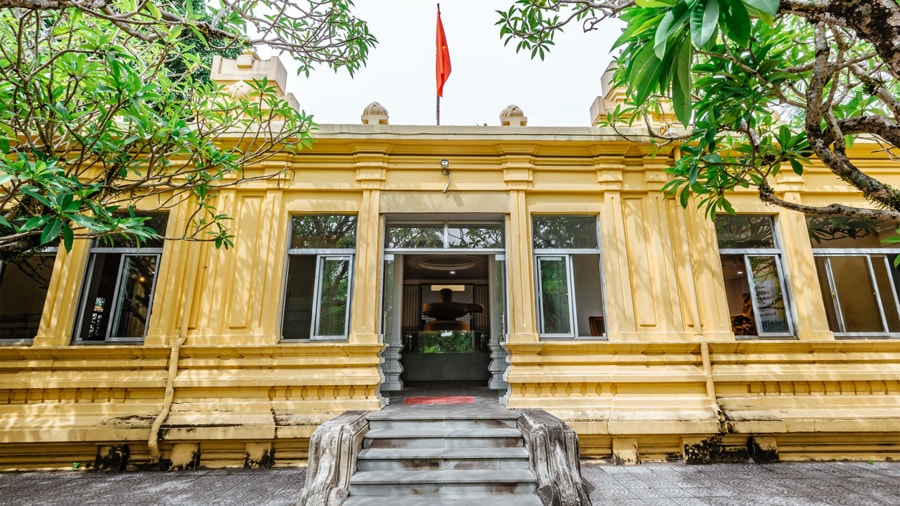
The Museum of Cham Sculpture in Da Nang is a famous cultural monument that protects the largest collection of Cham sculptures in the world. Established in the early 20th century, this museum preserves ancient sandstone sculptures, altars, and rock reliefs from the 7th to 15th centuries. Every artwork in this museum reflects the high skill and artistic legacy of the Cham culture in Vietnam’s central coast region. Well-organized galleries in this museum guarantee that visitors gain a clear understanding of the cultural legacy in artwork that existed in the history of Cham culture.

The Museum of Cham Sculpture, located in the city of Da Nang

One of the options to learn more about the cultural heritage of Vietnam, which is beyond the normal lifestyle that can be observed in modern cities, is to visit the Museum of Cham Sculpture. The museum is located in Da Nang, which is very convenient. The peaceful surrounding area is an excellent place to visit the museum. The museum is recommended to those who are interested in history and art, and those who wish to experience something different regarding the culture of Vietnam.

History of the Museum of Cham sculpture

The Museum of Cham Sculpture was founded in 1915, during the French colonial period, as a result of research conducted by academics of the “École Française d’Extrême-Orient” or EFEO. The idea for creating such a museum originated after the collection of artifacts of the ancient civilization of “Cham,” which existed in ancient temples in the central region of Vietnam, namely My Son, Tra Kieu, and Dong Duong. Later, after renovation, it became the most important place for the preservation of Cham sculpture in Vietnam.

The museum exhibits reflect the rich history of Champa culture, which flourished from the 2nd century to the 15th century. The Chams had a rich cultural heritage, which was influenced by Hinduism, later developing into Buddhism. Today, the most important source of preserving the cultural heritage of the Chams is the Museum of Cham Sculpture, making tourists aware of the historical importance of the Chams in the cultural heritage of the people of Vietnam.

Top 4 Iconic Attractions in the Museum of Cham sculpture

The Museum of Cham Sculpture has galleries dedicated to specific collections, with each collection representing an archaeological site of the ancient civilization of the Cham people. The signature galleries give a chance to understand the development, beliefs, and intricacies of Cham culture.

My Son Gallery

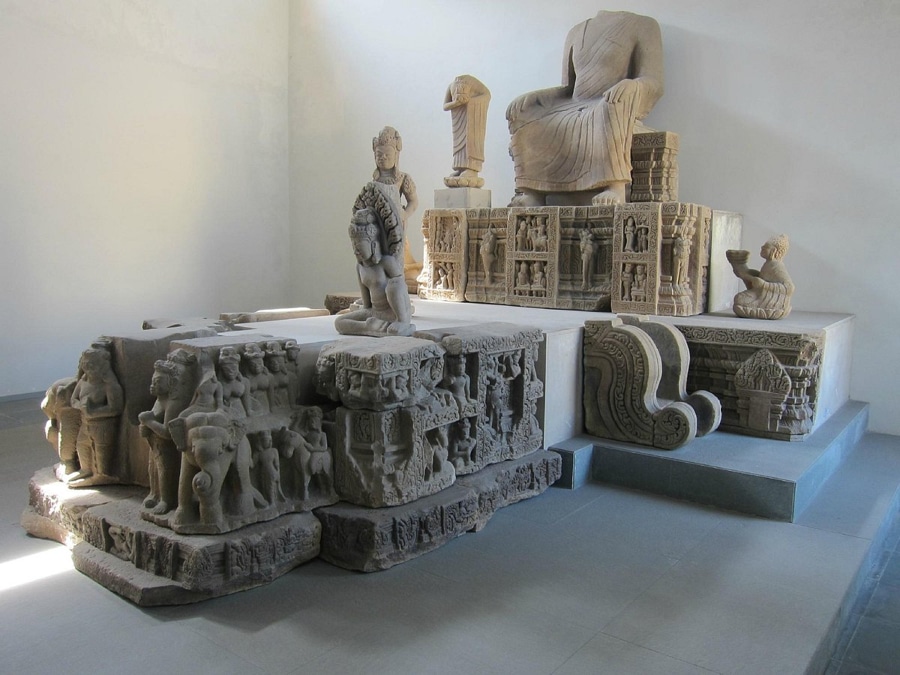
The My Son Gallery has statues that were discovered at the My Son Sanctuary, a spiritual center of the Cham Empire. The statues have a strong influence of Hinduism, as they display depictions of Lord Shiva, lingas, and carvings. The statues are carved out of sandstone, showing a high level of craftsmanship for spiritual expressions. The gallery provides a lot of insight into why this particular spot in central Vietnam is spiritually very significant.

statues that were discovered at the My Son Sanctuary

Tra Kieu Gallery

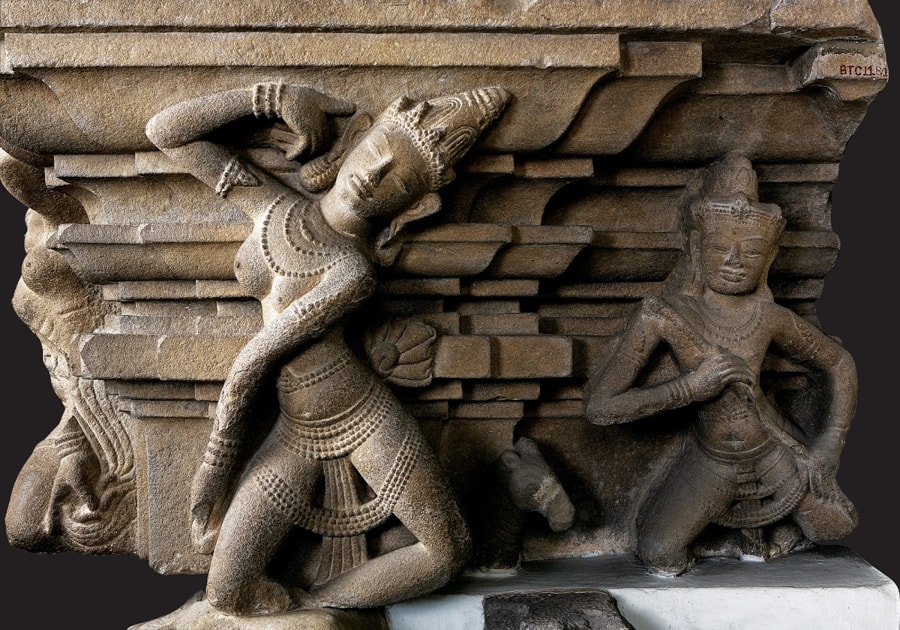
Tra Kieu Gallery features the masterpieces of Tra Kieu, which was once considered the ancient capital of Champa. Its most prominent pieces include the detailed bas-reliefs that show the king’s procession, dancers, and stories of mythology. They are the manifestations of the particular period of the kingdom’s life, social stratification, and the level of refinement in art that the Chams had achieved in the heyday of civilization. It is highly treasured for its narrative carvings, which provide historical insights into themes that do not involve religious overtones.

Tra Kieu Gallery features the masterpieces of Tra Kieu

Dong Duong Gallery

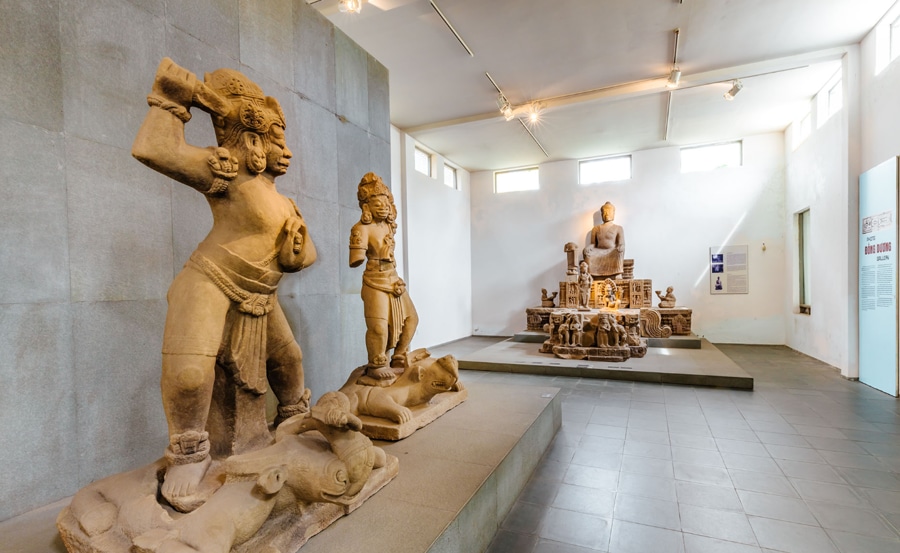
The Dong Duong Gallery is unique in the sense that it has a special Buddhist influence, which represents a unique period in the culture of Champa. The sculptures of Buddhist statues with powerful expressions and robust bodies are found in this gallery. The artifacts found in this gallery are representative of the fusion of Buddhism and Hindu cultures in this region. This gallery provides information about the religious and adaptive aspects of Cham culture related to their arts and beliefs.

special Buddhist influence in statues of Dong Duong Gallery

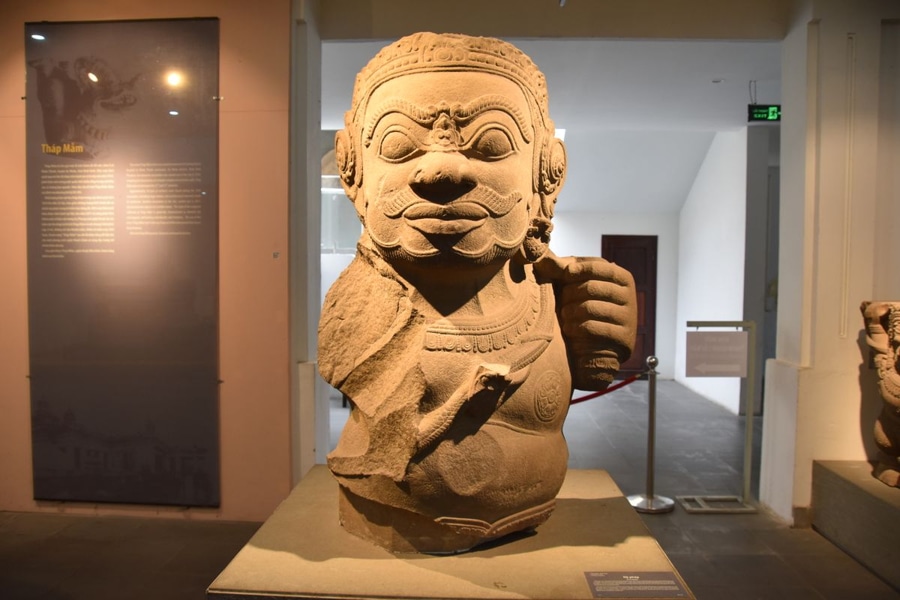
Thap Mam Gallery

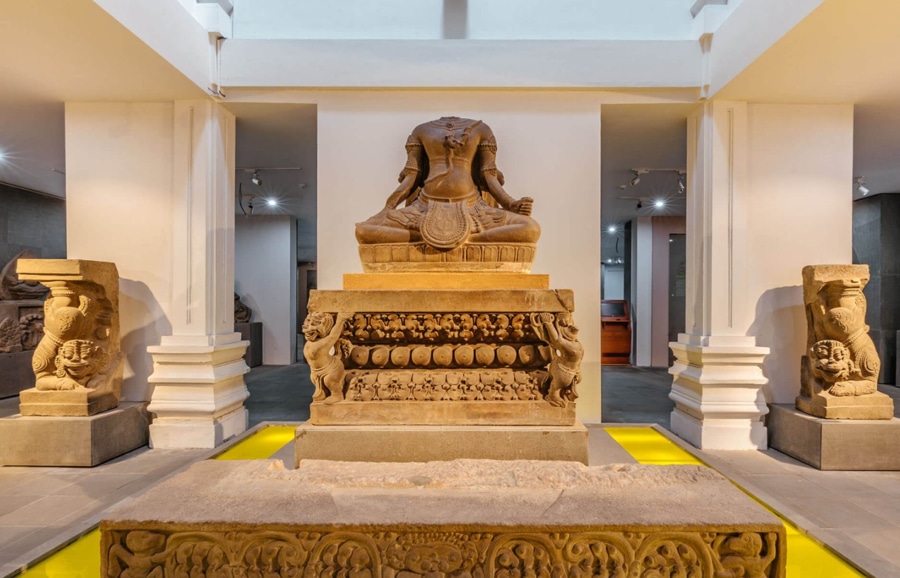
Thap Mam Gallery represents the later phase of Cham sculptures, which marked this era because of their bold designs and ‘dynamic forms.’ The sculptures in this gallery are full of ‘expressions, vigor in body, and ornate detail,’ which reveal ‘artistic maturation and external influences.’ This gallery represents the ‘final phase of the evolution of Cham Art’ in order to reveal the ‘techniques used in sculpture over the centuries.’

Thap Mam Gallery represents the later phase of Cham sculptures

4 Unforgettable Experiences You Shouldn’t Miss

A visit to the Museum of Cham Sculpture offers a rare opportunity to learn about the artistic and spiritual legacy of Cham culture. Besides visiting the museum, there are also opportunities for culture related to the ancient history of the Chams.

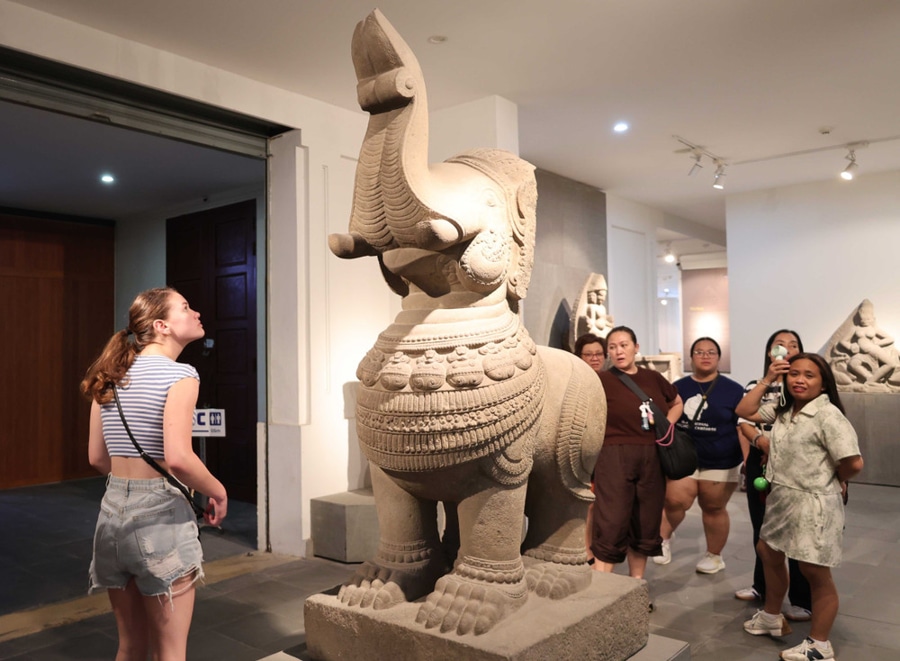
Get A Close-Up Look At Ancient Cham Sculptures

A visit to the Museum of Cham Sculpture will give visitors the opportunity to take a closer look at many sandstone statues that are several centuries old. Every statue will show fine details of craftsmanship, religious symbols, and other techniques that are unique to the Cham culture. Taking a closer look at these works of art will give visitors a better appreciation of the historical significance and spiritual meaning of every exhibit.

Ancient Cham Sculptures of the Museum of Cham Sculpture

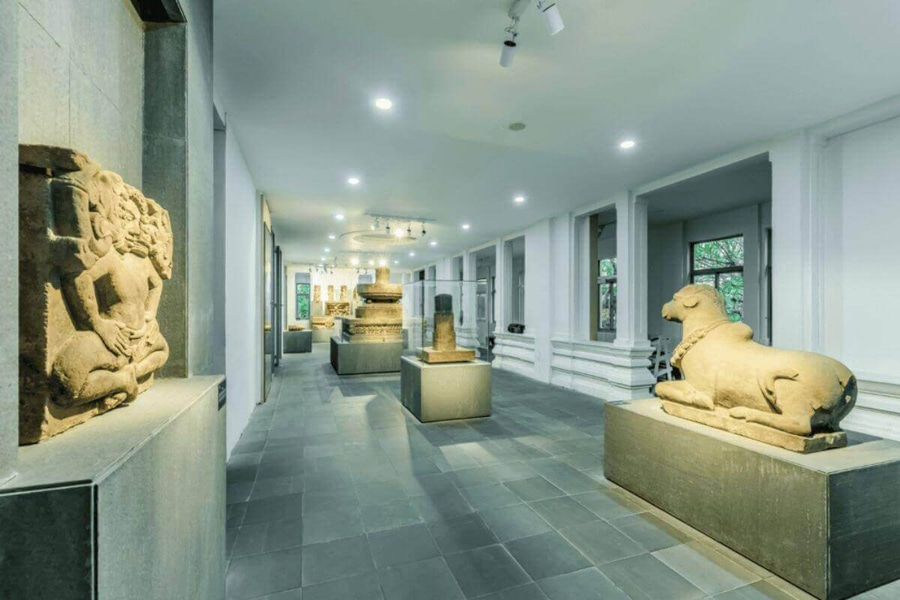
Discover Cham History Through Informative Exhibits

It also comes with well-organized exhibition rooms, together with descriptions of the history in an easily understandable manner. One will also learn more about the emergence and collapse of the Champa civilisation, the impacts on religion, and many other things. It will be the best place for those interested in learning more about the ancient civilisations in central Vietnam.

Discover Cham History Through Informative Exhibits

Hindu And Buddhist Influences Abound

One of the most unforgettable moments is when one realizes how both Hinduism and Buddhism are combined in all those exhibits, from Shiva to Buddhist bodhisattvas, the religious contrast is well represented in Cham culture. This kind of contrast would help visitors realize how religious beliefs have impacted Cham art and architectural traditions throughout the ages.

Enjoy A cultural Atmosphere

Despite its location in the heart of Da Nang, this museum remains a place of peace and tranquility. This enables visitors to have a look at the items at a leisurely pace, take photographs, and have a moment of peace and quiet from the hustle and bustle of the more modern city attractions. It is a peaceful place that enriches the experience in Da Nang and makes cultural exploration worthwhile.

Entrance Fee

The fees charged as an entrance fee at the Museum of Cham Sculpture are very affordable, and this makes the museum accessible to both local and foreign tourists. The information regarding the fees and any other discounts that you may be entitled to is as follows:

Ticket Type Price (VND) Approx. Price (USD)
Adults
(Vietnamese & International visitors)
60,000 VND 2.5 USD
Students (with valid ID) 10,000 VND 0.4 USD
Children 10,000 VND 0.4 USD
Free Admission Eligible priority groups* Free

Discount and Free Admission Policy: Free or discounted admission is available for children, students with a school ID, and some individuals with high priority status according to local regulations. Special public holidays occasionally serve as free visit days for all. The fees are subject to change, and it is best to verify this by visiting the ticket booth.

Opening Hours

The Museum of Cham Sculpture is open every day, with visitors coming in the morning until late in the afternoon. The museum has fixed operating hours, making it easy to fit it into your schedule in Da Nang, regardless of which tour you are on, be it private or guided. The museum is open throughout the year, including weekends and public holidays.

Museum of Cham sculpture is open every day

It would be better to visit this museum during early morning or late afternoon when the surroundings are not crowded, and the climate in Da Nang is favorable. This will help the visitors to explore the museum at a slow pace and enjoy the exhibits without any disturbance. It would be a good idea to visit the museum at other times when there are fewer tourists, especially when it is vacation time for tourists.

How To Get To Museum of Cham sculpture

The Museum of Cham Sculpture is located in the heart of the city of Da Nang, close to the Han River and other tourist attractions in the city, making it easy to get there by transport from the airport, train station, or beach. One can use different modes of transport, depending on the time and budget.

Transport Type Estimated Time Price (VND) Approx. Price (USD)
Taxi / Private Car 10 to 15 minutes 70,000 to 100,000 3 to 4 USD
Motorbike (self-ride) 10 to 20 minutes 100,000 to 150,000 / day 4 to 6 USD
Public Bus 15 to 30 minutes 5,000 to 10,000 0.2 to 0.4 USD
Walking (nearby areas) 10 to 25 minutes Free Free

Travel Notes: If one is motorbiking, it would be necessary to carry a driving license, and it would be good to know how to drive on the roads. Public transport via buses would be inexpensive, but they might not be readily available, whereas taxis and cars would be the most convenient form of transport. It would be very easy to reach the museum.

Things to Know Before Traveling to the Museum of Cham Sculpture

Before visiting the Museum of Cham Sculpture, there are some information or tips that you need to consider before having a smooth visit. This information is very significant in terms of planning effectively before visiting any museum.

  • Dress in a modest and comfortable manner because it is a cultural place. Wearing light clothes is advisable because they can be of great importance in moving from one gallery to another.
  • The best time to visit this statue is in the early morning or in the late afternoon because it is not congested, especially during peak season in Da Nang.
  • Photography is allowed in most areas, but flash photography could be prohibited to protect ancient sandstone sculptures from the effects of flash.
  • Allocate a minimum of one to two hours to explore the museum and read each description of the exhibits.
  • It is advisable to carry money with you for museum entry fees, as it is not always possible to pay using credit cards.
  • Visitors are required to follow the rules provided by the museum to preserve valuable artifacts and ensure a quiet environment.
  • You could consider visiting other sites in the area, as it is very easy to access other cultural sites from where the museum is located.

FAQs About the Museum of Cham sculpture

The Museum of Cham Sculpture is a popular destination for travelers who are interested in history and antique art. Below are some of the most frequently asked questions and answers that will help one understand what to expect when visiting the site.

How much time should I allocate to the Museum of Cham Sculpture?

This would take, on average, one to two hours. Hence, visitors would have enough time to visit the galleries, as well as the sculptures, and also enough time to read the information provided. Visitors who may be history or art enthusiasts may choose to spend more time in the museum.

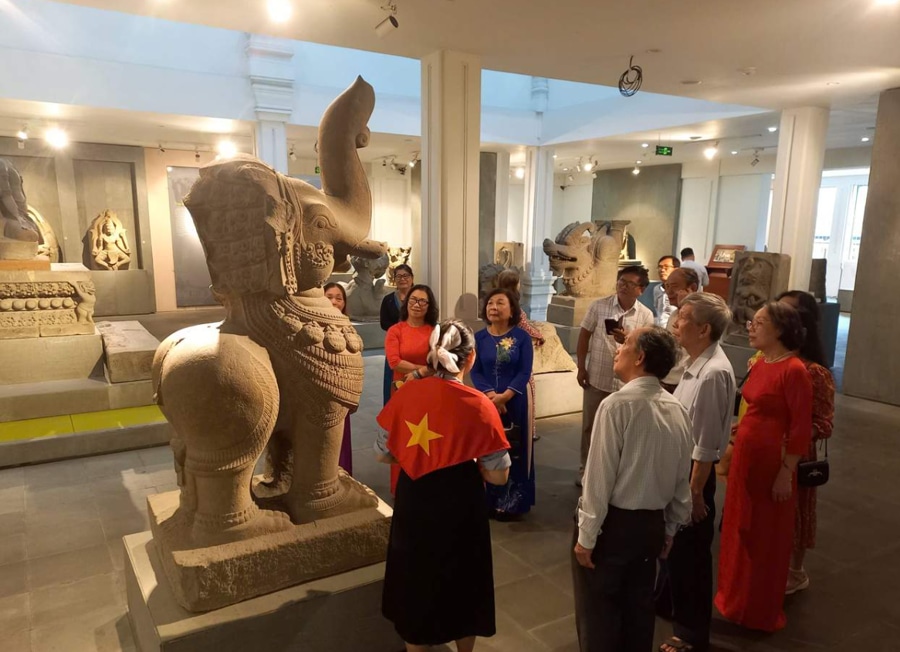
Learn about Cham History Through Informative Exhibits

Is the Museum of Cham Sculpture suitable for families and kids?

The museum welcomes families, including those whose children have an interest in history and culture. The museum is roomy, well-designed, and calm. Both parents and children can learn something from this experience. The museum can provide an educational experience for older children regarding ancient civilizations. There is visual storytelling and well-preserved artifacts, so this experience can be considered educational.

Is it possible to visit the Museum of Cham Sculpture with other tourist sites?

Yes, this is a major advantage because the museum is located in the central part of the city. It can be combined with any other place of visit in Da Nang. A half-day visit can be organized to include any of the cultural sites, river walks like Han River Bridge, or any of the landmarks in Da Nang.

Final Thoughts: Is the Museum of Cham sculpture Worth Visiting?

A must-visit attraction for every traveler who is interested in culture, history, and authenticity, the Museum of Cham Sculpture is a treasure trove of cultural and historical riches, offering the world’s largest collection of Cham artifacts to discover in a peaceful and enlightening environment. Situated in the heart of the city, with a design that is easy to follow, the Museum of Cham Sculpture is a must-visit attraction, irrespective of whether it is your first visit to Da Nang or if you are looking to experience culture that is of interest to you. Begin your journey of discovery with us at Seni World.
Discover Thuan Phuoc Bridge, Da Nang’s Longest Bridge

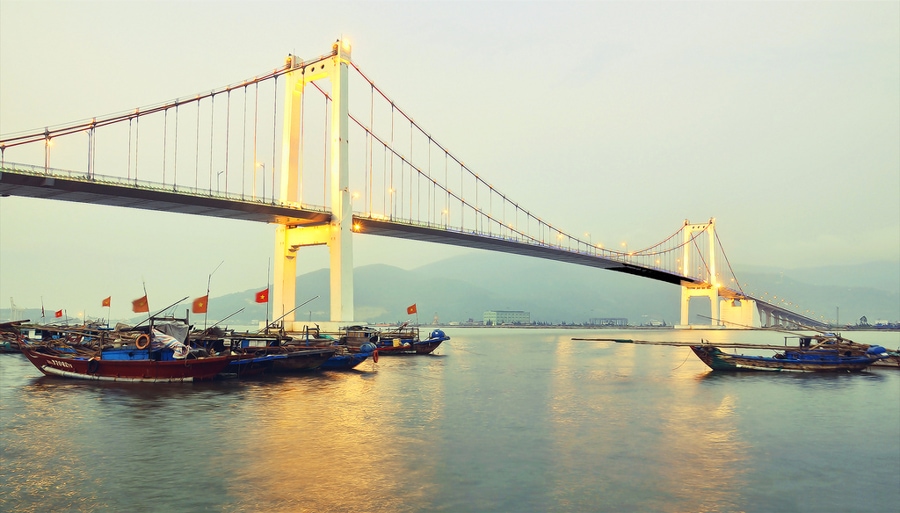
Thuan Phuoc Bridge is an iconic landmark in Da Nang that arches over the Han River, graciously designed with cable stays to connect the center of the city with the Son Tra Peninsula. It has great views down the river and of the coastline and cityscape, and is especially beautiful at sunset and night.

Introduction To Thuan Phuoc Bridge

Thuan Phuoc Bridge is one of the famous tourist spots in Da Nang, which spans the lower section of the Han River, thus connecting the city center with the Son Tra Peninsula. It is one of the longest suspension bridges in the country, with the design resembling a modern cable-stayed bridge, which symbolizes the pace of the city of Da Nang’s growth. Aside from its practical use, the bridge has become famous for its view of the Han River estuary, the East Sea, and the coastline.

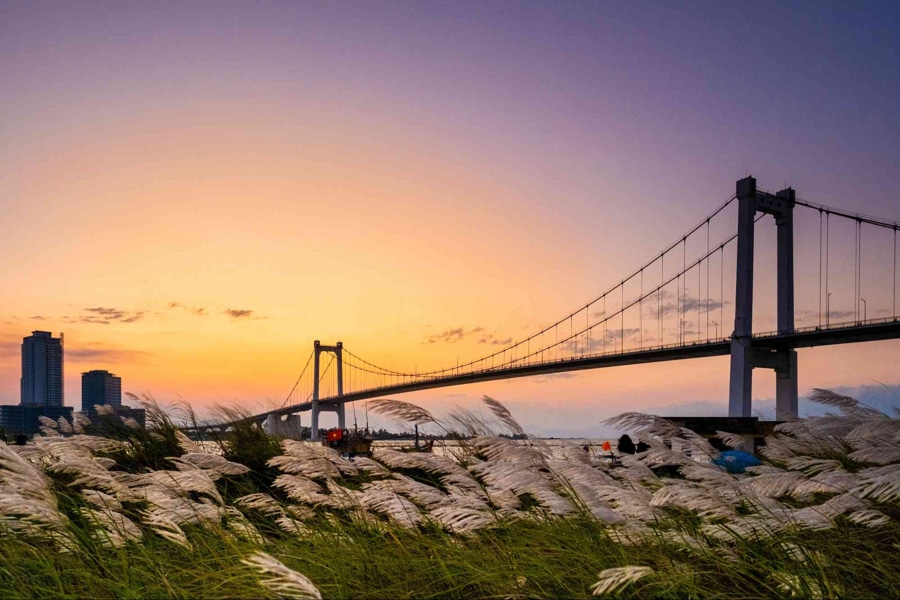
Thuan Phuoc Bridge is one of the famous tourist spots in Da Nang

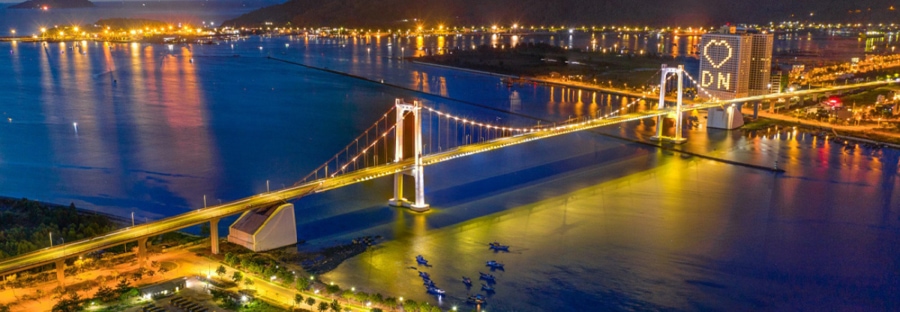
Travelers visit Thuan Phuoc Bridge due to the beauty of the environment and the visual appeal it presents. As a result, with the turning on of the city lights, the bridge presents a strong contrast with the darkness of the river and sea, creating good opportunities for photography. The surrounding areas of the river and sea are good places for a walk. For tourists who wish to have a peaceful and wonderful experience of the modern aspect of Da Nang, Thuan Phuoc Bridge is a good place to visit.

History Of Thuan Phuoc Bridge

The construction of Thuan Phuoc Bridge took place in compliance with Da Nang city’s long-term urban development master plan, with the goal of improving connectivity and expanding the city to the Son Tra Peninsula. The construction of this bridge commenced at the early part of the 2000s, and it was completed and inaugurated into traffic circulation in 2009. At that particular point, the bridge was recognized as one of the most modern suspension bridges in Vietnam, representing a significant landmark in the development of Da Nang city’s infrastructure and its Strategy of coastal development.

The bridge was to signify the transformation from a regional port city to a contemporary urban center. The Thuan Phuoc Bridge has made a great contribution to trade, transportation, and tourism development in the region, especially on the Han River and surrounding coast, as it connects major economic and tourism hubs. It is also symbolic, representing the development of the city, its engineering expertise, and urban planning for expansion; therefore, it is functional and iconic at the same time.

Unique Architecture Of Thuan Phuoc Bridge

The Thuan Phuoc Bridge is special in its sophisticated suspension cable stayed design, which skillfully integrates the strong, stable, and beautiful elements. The bridge has twin high pylons that stand out majestically above the Han River, supporting a long and streamlined span with evenly spaced steel cables. This not only makes the bridge strong but also allows it to have a light and symmetrical appearance that blends well with the surrounding environment.

Unique Architecture Of Thuan Phuoc Bridge

Thuan Phuoc bridge does not use excessive decoration. Its simplicity is intended to be the focus of attention. Its wide lanes and open side railings give a sense of openness, while its linear form directs the viewer’s eyes towards the river mouth and the East Sea. The dim lightings at night are intended to highlight the bridge’s form, making it a modern architectural landmark in Da Nang.

4 Unforgettable Experiences You Shouldn’t Miss

The Thuan Phuoc Bridge is not just a beautiful location, as it also offers simple and memorable experiences for travelers to enjoy, such as relaxation, taking pictures, and appreciating the beauty of the bridge due to the changing light. Such activities are available in Da Nang.

Watching The Sunset On The Han River

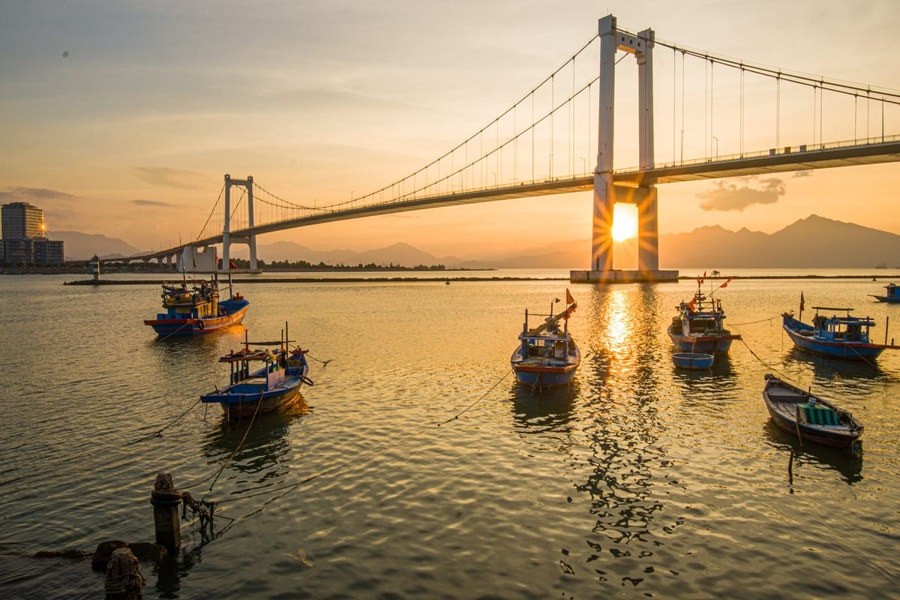
Sunsets at Thuan Phuoc Bridge is a must-visit activity for those interested in seeing serene environments. The sunset occurs near the river mouth, with the reflection of the sun lighting up the Han River and the structures of the bridge. The environment is free, with easy sighting of the sunset, which makes it the best time to view the sunset through photographs and enjoy the serene moment before the city lights up.

Watching The Sunset On The Han River

Night Views And Urban Lighting

During the evening hours, the Thuan Phuoc Bridge stands as a majestic feature of the city when the structure is lit with soft lights. The image reflected on the water also adds a peaceful view, and the image of the skyline of the city in the background adds depth to the view. The design of the bridge, which features straight lines and adds symmetry to the structure of the bridge, looks majestic when the structure is lit during the night.

Capture Scenic Photos From Nearby Riverbanks

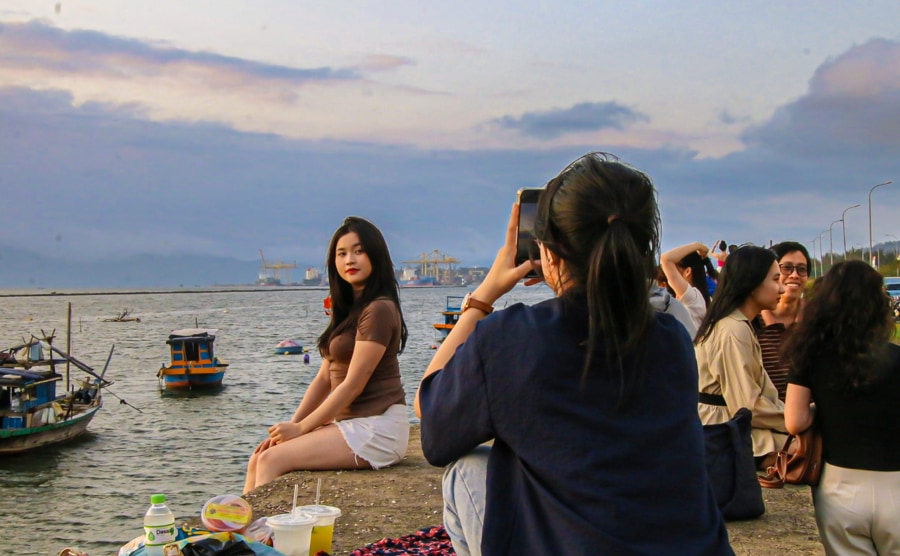
There are nice spots near the Thuan Phuoc Bridge for photography. One can take photos from these spots of the bridge’s architectural design with the river, sea, and sky as the background. According to one’s choice of time, one can have different moods, ranging from early morning to late in the evening. Therefore, it is a good activity in Da Nang for both tourists and photographers.

Capture Scenic Photos From Nearby Riverbanks

Take A Relaxing Walk Around The Bridge Area

Taking a walk on Thuan Phuoc Bridge provides an opportunity for exploration with a breathing atmosphere. The roads are spacious, and the river side is wide, which provides a kind of refreshment for someone who is fed up with the hustle and bustle of activities in the city center. It is suggested that the walk on the bridge should be taken in the early morning or in the evening.

Entrance Fee

The visiting of the Thuan Phuoc Bridge is absolutely free of charge. There are no charges for visiting this place, no ticket centers, and no restrictions for pedestrians as well as vehicles. People can visit this place for free to sightsee, take photographs, or enjoy the beautiful scenes of sunrise and sunset without a single penny. Hence, Thuan Phuoc Bridge can be considered a perfect place for tourists who want to visit a beautiful place without any charges while exploring the other tourist attractions in Da Nang.

Opening Hours

If you want to visit Thuan Phuoc Bridge, there is no problem accessing the bridge at any time of the day. This is because it does not close at night, and it does not have operating hours because it is used as a public transportation bridge. Therefore, it is easy to include it in your list of places to visit throughout the day. Accessing the bridge is allowed and does not have seasonal closures.

best time to visit Thuan Phuoc Bridge is late afternoon to evening

The best time to visit Thuan Phuoc Bridge is early morning and late afternoon to evening in Da Nang. During this time, the lighting conditions are ideal, and the place is quiet in the early morning due to the natural light, and it is simply perfect for photography. In the late afternoon and evening, the lighting conditions are dramatic, and the reflection of the city lights on the Han River makes it more beautiful. Moreover, these are the peak hours to visit this place due to the ideal lighting and temperature conditions.

How To Get To Thuan Phuoc Bridge

Thuan Phuoc Bridge is highly accessible to Da Nang City and can be easily reached by various transportation means. To make traveling easy for visitors, this article will provide a simple guideline on how to get to the bridge.

Transportation Estimated Time Estimated Cost (USD) Notes
Taxi / Grab (Car) 10 to 15 minutes 5 to 8 USD Comfortable, suitable for families
Motorbike 10 to 15 minutes 1 to 2 USD (fuel) Flexible, popular with solo travelers
Bicycle 20 to 30 minutes Free or rental fee Best for early morning or evening
Private Car 10 to 15 minutes Fuel cost only Ideal for groups

Notes: It is also important that the motorcycle driver has a driving license, and a helmet is worn as required by law. Visiting during early morning or evening hours can help avoid traffic, as well as good weather. Caution should be taken when stopping for a photograph, as the bridge is a traffic route.

Things To Know Before Traveling To Thuan Phuoc Bridge

With these few practical tips, the tourists could ensure that they would enjoy a smooth and enjoyable time visiting Thuan Phuoc Bridge. The essentials help tourists stay safe, observe the rules, and enjoy their time at the landmark.

  • One can prefer to come to this park during the early morning or in the evenings, when the weather is cool, with appropriate light, which would facilitate the sightseeing.
  • Wear appropriate clothes and flat shoes, especially if one is planning to walk around the area, since it is an open area with less shade.
  • It is better not to park the vehicles on the bridge for the sake of taking pictures, since the traffic rules are strictly followed.
  • Bringing a camera that can function well under low light conditions or a phone that can take good photos under night conditions is advisable.
  • Following traffic regulations is essential when moving from place to place, especially when using motorbikes. Bringing along your driving license and helmet is also essential.
  • Checking the weather conditions before leaving is advisable since strong wind and rain may interfere with clear vision and walking conditions around the bridge area.
  • Planning your visit should be done in a way that you can visit other places around the bridge, such as Son Tra Peninsula and Han River routes.

FAQs About Thuan Phuoc Bridge

It is normal for visitors to have questions about their visit to Thuan Phuoc Bridge. Therefore, answering these questions is vital for a smooth visit. Below are some frequently asked questions and their answers that could be useful for your visit.

Is Thuan Phuoc Bridge free to visit?

Yes, the Thuan Phuoc Bridge is always free to visit and can be accessed at any time. There is no entrance fee, ticket counter, or restricted area for pedestrians and vehicles. As a public bridge, it serves the daily transportation needs of the community and allows visitors to sightsee, take photos, or make short stops around the facility. It is a cheap sight to see, ideal for visitors who want to explore all the sights that Da Nang has to offer.

Thuan Phuoc Bridge free to visit

Can people alight on the bridge for photography sessions?

Tourists are recommended not to park their vehicles underneath the Thuan Phuoc Bridge if their intention is to take pictures, considering that this area is actually used as a traffic route. Nevertheless, there are great spots for photography near the location, such as the riverbanks, roads, and other areas near the Thuan Phuoc Bridge, where tourists can have a wide-angle shot of the structure without compromising their safety and at the same time get to see the river and the cityscape.

How many hours should a visit to Thuan Phuoc Bridge last?

The time that is needed in order to visit Thuan Phuoc Bridge can range from 20 to 40 minutes. It is supposed to allow one to see some interesting views and enjoy the atmosphere in the early morning, in the evening, or at night. It is believed that many people visit this place in combination with other nearby attractions, such as the Han River or the Son Tra Peninsula. Due to its ease of visitation, it is possible to include this place in a tourist route in Da Nang.

Final Thoughts: Is Thuan Phuoc Bridge Worth Visiting?

Thuan Phuoc Bridge would be one of the places worth a visit for the guests who are interested in the architecture, the view of the river, and the calm atmosphere away from the tourist crowds. The large size and refined architecture of the bridge, as well as its open view over the Han River and the coastline, make it one of the easiest and most memorable places for a visit in Da Nang. The bridge, whether viewed in the early morning, during the day, or at night, is a great spot for taking photographs and for a relaxed mode of sightseeing. For an ideal tour to Da Nang with the most iconic places, such as Thuan Phuoc Bridge, check out the ideas and advice at Seni World.
Da Nang Cathedral: A Must-Visit Religious Landmark

The Da Nang Cathedral is one of the most iconic structures in the city, known for its bright pink exterior and Gothic design. This cathedral was constructed during the French colonial period and is still a significant religious destination and tourist spot.ds.

Introduction To Da Nang Cathedral

Da Nang Cathedral is one of the most recognizable attractions in Da Nang and is known for its beautiful pink exterior and Gothic architecture. The cathedral was constructed in the early 20th century when the French were still in control of the country. The cathedral stands out in the heart of Da Nang and is one of the most recognizable attractions in the city. It is easy to get to Da Nang Cathedral, as it is situated near the Han River. This makes it easy to incorporate this attraction into any Da Nang sightseeing tour. Da Nang Cathedral has become synonymous with the city and its rich history, and many tourists who are interested in architecture and culture come to visit the attraction.

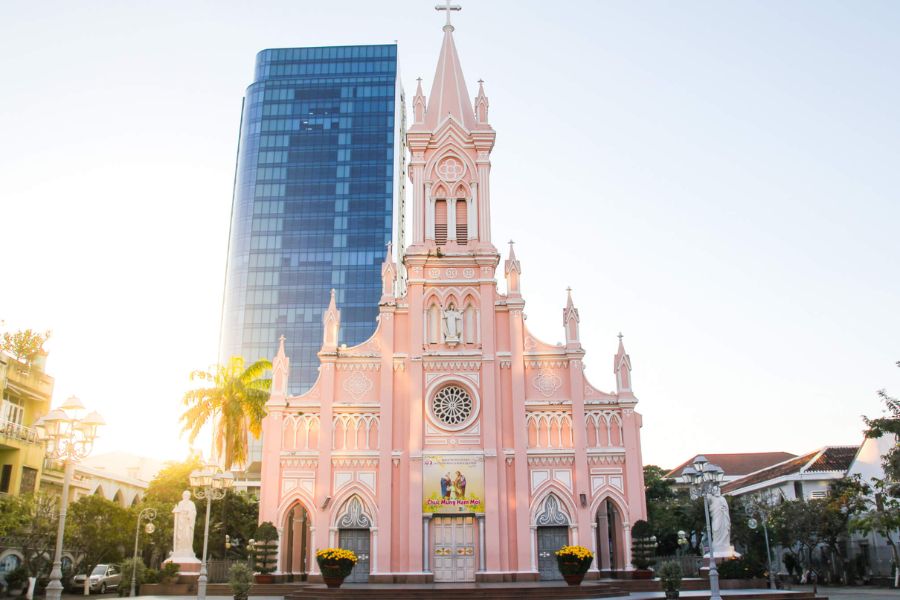
Da Nang Cathedral is a captivating Gothic-style building

It is worth noting that visiting Da Nang Cathedral is more than just taking good photos. This place offers visitors an opportunity to experience a peaceful environment that allows them to have time and appreciate the spiritual aspect of Da Nang. This is the most appropriate place where visitors can have a clear understanding of the French colonial legacy that affected central Vietnam, as well as observing the religious activities of the people of Da Nang. Da Nang Cathedral is a must-visit place for first-time visitors of Da Nang due to its strategic position and free entrance fee.

History Of Da Nang Cathedral

Da Nang Cathedral was built in 1923 under French colonial rule. This is a significant event in the history of the propagation of Catholicism in central Vietnam. The cathedral was built by French missionaries to serve the rising number of Catholics in the area. Da Nang was an emerging port city at that time, and the construction of the cathedral in the classic Gothic style marked it as an architectural landmark in the region. The pink color of the cathedral, which was added later, distinguished it from other French colonial buildings in the region.

Over the years, the Da Nang Cathedral has remained a worship site for the Catholic community in the region. Despite the wars and the changes that have occurred in the region, the Da Nang Cathedral has managed to maintain its original structure. Today, the Da Nang Cathedral not only symbolizes the Catholicism of the people living in the region but also the cultural and historical ties between Vietnam and France. This is why the Da Nang Cathedral is identified as a site of interest for tourists visiting the region.

Unique Architecture Of Da Nang Cathedral

Da Nang Cathedral is not only a place of worship, but it is also one of the most impressive architectural landmarks in Da Nang. Its style and historical interest make it a great place for observing religion and French colonial architecture.

Exterior Architecture

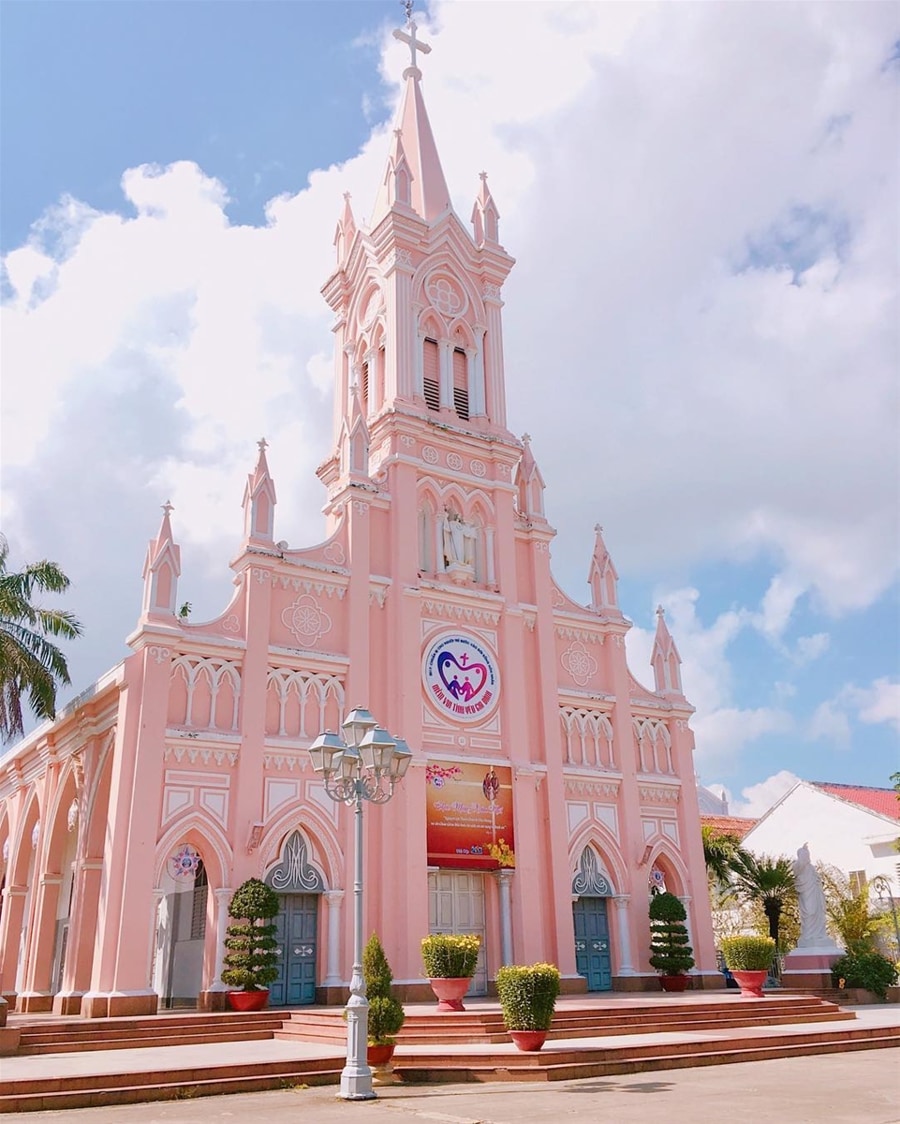
The external architecture of Da Nang Cathedral is marked by the use of classic Gothic architecture, which is not commonly used in Vietnam. The most distinctive feature of Da Nang Cathedral is the tall bell tower with a sharp spire rising high above the rest of the structures in the city. The soft pink color of Da Nang Cathedral gives the structure a unique identity and makes it easily identifiable and photogenic.

The external architecture of Da Nang Cathedral

It is also clear that the use of pointed arches, small windows, etc., is a result of European influence, specifically French, from the period of French colonial rule. The religious icons placed along the exterior walls of the Da Nang Cathedral add to the religious atmosphere while not compromising the original style of architecture.

Interior Architecture

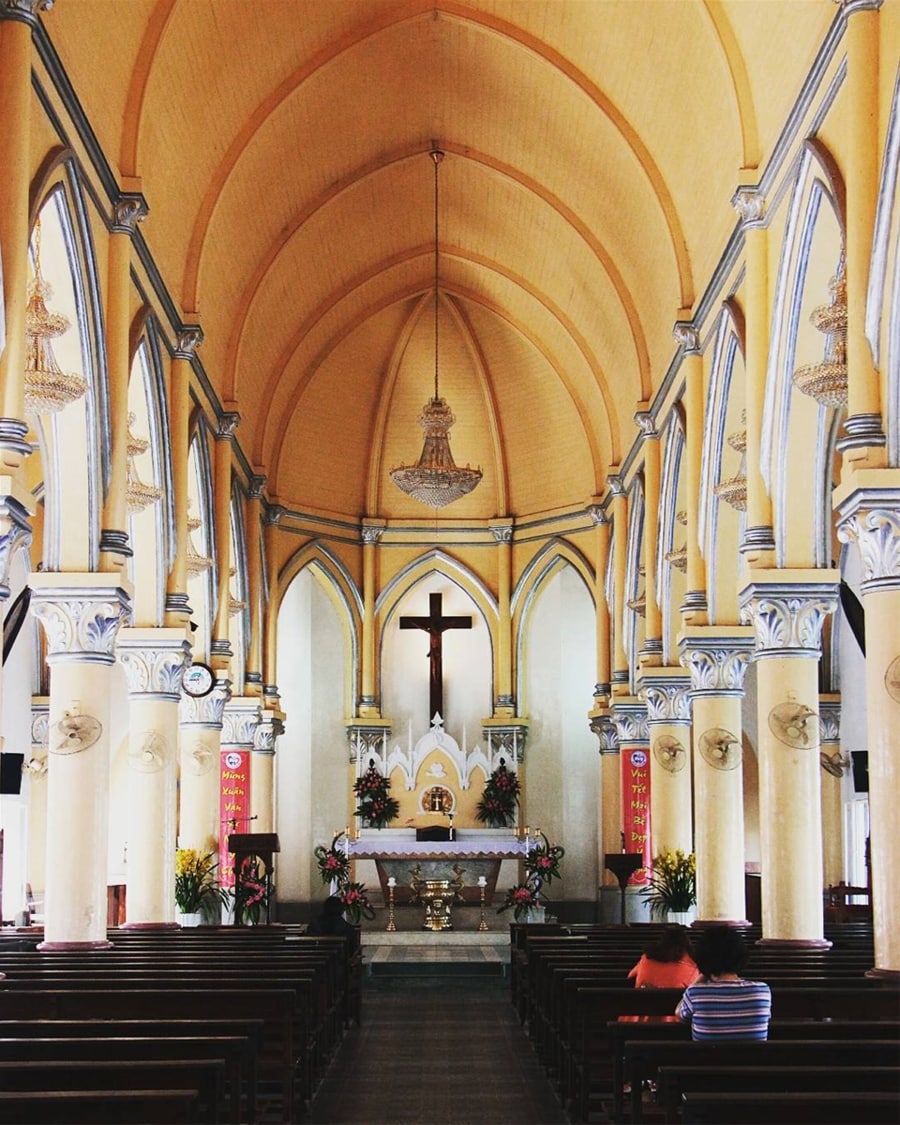
The Da Nang Cathedral interior is peaceful and somber, reflecting the conventional Gothic architectural styles for church designs. The vaulted ceiling provides a feeling of space and encourages the eyes to move towards the altar.

Da Nang Cathedral interior is peaceful and somber

The stained-glass windows on the walls of the Da Nang Cathedral are colorful and depict scenes from the Bible and the lives of saints. The long nave of the church encourages visitors to move towards the main hall, emphasizing the importance of symmetry and balance. The simple wooden pews and lack of decorations and details create a peaceful and historic feel.

3 Unforgettable Experiences You Shouldn’t Miss

Not only will a visit to the Da Nang Cathedral give you the opportunity to appreciate the architecture of the building, but you will also get to participate in various activities that will give you a chance to connect with the culture and the importance of the site to the people.

Photograph The Iconic Pink Cathedral

One of the most fascinating experiences that one will get at Da Nang Cathedral is taking pictures of its famous pink facade. The pastel color, combined with its gothic arches and towering spire, provides a striking contrast against the background of a modern city. The ideal time for taking photographs is in the early morning or late afternoon when there are fewer people around. Whether you are a photographer or a simple tourist, there is a lot of opportunity for taking great travel photos. This experience is best suited for first-time visitors to Da Nang.

Photograph The Iconic Pink Cathedral

Attend A Local Catholic Mass

Attending a mass at Da Nang Cathedral gives tourists the opportunity to feel the religious aspect of the Catholic community. The peaceful atmosphere, the chanting of prayers, and the colors produced by the stained glass windows make the experience emotionally enriching. The experience will also be valuable to those who are not religious, as it gives an insight into the culture. The masses are held at different times; therefore, planning ahead is advisable. The experience will give tourists the opportunity to feel the connection with the community and understand the religious significance of the cathedral.

Attending a mass at Da Nang Cathedral

Explore The Interior And Stained-Glass Windows

It also provides an opportunity to explore the intricacies of the architecture, which may be easily passed over when entering the building. The towering ceiling, long nave, and colorful stained glass windows show biblical tales. Taking a leisurely walk through the cathedral provides an opportunity to view the harmony of simple design and sacred art. The plaques and other visual displays help provide insight into the historical significance of the cathedral. This peaceful interlude is a welcome reprieve from the hustle and bustle of city life.

Entrance Fee

Visiting Da Nang Cathedral is free, and it is one of the budget-friendly tourist sites for all tourists. There is no entry fee for the tourists who want to visit the exterior and interior of the church. The tourists are free to visit the cathedral and enjoy the serene atmosphere and beautiful Gothic architecture of the church without paying a single penny. Even though there is no entry fee for the tourists who want to visit the cathedral, they can donate some money for the church activities, but it is completely voluntary.

Opening Hours

Da Nang Cathedral is usually open every day, and tourists can visit the outside of the cathedral at any time of the day. Visiting hours for the inside of the cathedral are usually available during the daytime. The best time to visit the cathedral would be in the morning or in the late afternoon, as it would be easier for tourists to visit at that time, as it would look peaceful.

The best time to visit the Da Nang Cathedral is between February and August, which falls during the dry season when the weather conditions are pleasant and favorable for visiting and photography. The early morning hours provide the best light and are cooler, which can be used to take photos of the pink-colored exterior of the cathedral.

How To Get To Da Nang Cathedral

Da Nang Cathedral is located in the city center. This makes it easy for one to access the cathedral from any tourist destination. There are various transport options for reaching the cathedral depending on one’s budget and mode of transport.

Transportation Estimated Time Price (VND) Price (USD) Notes
Taxi / Grab Car 5 to 15 minutes 60,000 to 120,000 2.5 to 5 USD Convenient, air-conditioned, ideal for families
Motorbike (rental) 10 to 20 minutes 120,000 to 150,000 / day 5 to 6 USD Requires valid driver’s license
Bicycle 15 to 30 minutes 50,000 to 80,000 / day 2 to 3 USD Best for nearby hotels
Walking 10 to 25 minutes Free Free Suitable if staying near Han River

Travel Tips: If the visitors are planning to visit this place on a motorbike, it is suggested that they carry their driver’s license with them, as traffic police may ask them to produce their license while driving their motorbike. The parking facility is less at this place when masses are conducted at the cathedral.

Things To Know Before Traveling To Da Nang Cathedral

It is important for tourists who want to visit the Da Nang Cathedral to have basic information and guidelines before they visit. This will not only give them a better experience but also show their respect for the locals.

  • Wear clothes that cover your shoulders and knees as a way of showing respect when visiting the cathedral, especially when they are having mass.
  • Visit the place outside the mass hours to be able to explore the area freely, take photos, and not interfere with the activities of the locals.
  • Photography is permitted, but please avoid using flash when inside. Be mindful of people praying or conducting religious rituals when inside the cathedral area.
  • Try visiting the cathedral early in the morning or in the late afternoon to avoid the crowds, enjoy the cool atmosphere, and take better photographs with the soft natural lighting.
  • Be quiet when inside, turn off your mobile phone, and move slowly when inside the cathedral area to maintain the peaceful atmosphere of the religious site.
  • The cathedral is also conveniently situated near popular tourist spots like Han Market, Han River Bridge, Dragon Bridge, Da Nang Museum, and Bach Dang Riverside Street, making it possible to visit the cathedral on a full day of sightseeing in Da Nang’s lively city center.
  • Be mindful of restricted areas, especially those reserved for religious personnel or church-related activities.

FAQs About Da Nang Cathedral

One of the most FAQs for first-time visitors planning their trip to Da Nang Cathedral is the following. The answers to these questions will help visitors better understand the rules and expectations for visiting this famous landmark.

Can you visit Da Nang Cathedral without paying?

Yes, Da Nang Cathedral is totally free for entry, and there are no tickets to be bought by tourists who wish to explore the church. Both the interior and exterior parts of the church are accessible to visitors during visiting hours, unless a service is ongoing inside the church. Although there is absolutely no entrance fee to be paid, visitors may choose to donate a certain amount in support of the maintenance and activities carried out by the Church.

Da Nang Cathedral is totally free for entry

Can tourists visit Da Nang Cathedral while mass is happening?

It is technically allowed for tourists to enter Da Nang Cathedral, but their movement inside the church could be limited, as could be taking photographs. Tourists are expected to remain silent and stand in one place throughout the time of the mass. If you want to move freely inside the church or take photographs of any part of the church, it is better to visit at a time when no mass is taking place. Having enough knowledge in advance about the mass timings would be advantageous for tourists, as it would be both respectful and convenient.

Final Thoughts: Is Da Nang Cathedral Worth Visiting?

Da Nang Cathedral is a must-visit place for tourists and travelers who are on a quest for culture, history, and architecture within the city center. Its pink-colored appearance, Gothic architecture, and peaceful ambiance make it a spiritually significant place that goes beyond the realm of simple tourism. This place is easily accessible, free of charge, and culturally significant, making it a great place to visit under any kind of travel style or preference. This is a place that photographers and historians alike will cherish forever as they leave Da Nang and move on to other destinations. Plan your trip with Seni World and find inspiration for your next travel plan to Da Nang.

Hoi An Memories Show: A Must-See Night Attraction

The Hoi An Memories Show is a large outdoor cultural show that attempts to recreate the history of Hoi An through music, light, and various forms of visual storytelling. It is a unique experience for tourists visiting Vietnam.

Introduction To Hoi An Memories Show

Hoi An Memories Show is one of the most outstanding cultural attractions Hoi An has to offer. Performed on an outdoor riverside stage, this spectacular production features music, dance, and spectacular visual effects to tell the story of four centuries of Hoi An’s past, from its bustling days as a trading port to its present status as a well-preserved ancient town. With hundreds of performers and scenes, this spectacular is an immersive experience of Vietnamese culture and modern technology.

Hoi An Memories Show is one of the most outstanding cultural attractions

Enjoying the Hoi An Memories Show is an excellent way to learn about the cultural identity of Hoi An in an entertaining manner. Unlike traditional museum or historical site experiences, the Hoi An Memories Show brings history to life in vivid colors and emotions, making it suitable for visitors of different ages. It is perfect for travelers looking to enjoy a meaningful activity in the evenings, where they can learn about the culture in an efficient and entertaining manner.

The History Of Hoi An Memories Show

Hoi An Memories Show was first staged in 2018 as a cultural tourism activity aimed at promoting and conserving the cultural heritage of Hoi An Ancient Town. The show is located on an island in the Hoai River, to create a narrative about the history of Hoi An’s development over time, spanning over four centuries. The show has been staged in five major acts, each representing a significant period in history, such as the settlement of Hoi An, the town’s development as a busy trading hub, scenes of traditional village life, and interactions with foreigners. By combining history with modern technology, a new form of cultural experience has been created.

The show gets its inspiration from the daily life, traditions, and values of the people living in Hoi An town. The show incorporates the folk cultures, costumes, and Vietnamese performing arts to celebrate the traditions of the town. The show does not focus on a specific ethnicity, but rather the rich cultural blend and the historical continuity that have made the town a UNESCO World Heritage Site. The show is a mix of education and entertainment for the visitors.

Top 4 Iconic Parts In Hoi An Memories Show

These are some of the most memorable moments of the Hoi An Memories Show – the most iconic attractions that capture the essence of its most memorable moments. In each episode, there is a central performance area that comes alive, capturing the history, culture, and traditional lifestyle of Hoi An.

Life Along The Hoai River

The opening piece describes the peaceful lives of Hoi An’s early residents along the Hoai River. Beautiful dancing and lighting effects create scenes of fishing, farming, and river activities that have paved the way for the development of Hoi An town. The spacious stage and flowing movements evoke a peaceful ambience, encouraging the audience to experience how water and nature have impacted Hoi An’s culture and history.

Life Along The Hoai River

The Ancient Wedding Ceremony

The most dazzling scenes in this performance include the traditional wedding ceremony, which consists of ancient Vietnamese customs. Many performers appear in a specific pattern, all dressed in beautiful traditional clothing. This performance represents the values of family, community, and faith, which have been passed down through the ages. The performance, which is enhanced by music and lights, becomes a touching tribute to the heritage of Hoi An at night.

The Ancient Wedding Ceremony

Hoi An As A Bustling Trading Port

The show is an imitation of the golden age of Hoi An as an international commercial port in the 16th to 18th centuries. This is achieved by the presence of ships, traders, and markets in the scene. Through its dynamic show, it aims to enlighten the viewer on the cultural exchange that took place between Vietnam, China, Japan, and Europe, thus becoming an important crossroads in Southeast Asia.

The Ao Dai And Cultural Legacy Scene

The final iconic moment revolves around Vietnamese culture, showcasing a breathtaking Ao Dai performance. The dancers are lined up on stage, moving with fluid grace that exudes both beauty and culture.

breathtaking Ao Dai performance in the Hoi An Memories Show

This segment showcases how the modern-day Hoi An community celebrates its heritage while embracing the new. This is a powerful finale that stays with the viewer, reassuring them that the heritage of Hoi An lives on.

breathtaking Ao Dai performance

4 Unforgettable Experiences You Shouldn’t Miss

The following are just some of the experiences that illustrate why the Hoi An Memories Show is an attraction not to be missed. Each experience allows you to develop an even deeper connection with the culture, history, and artistic narrative of Hoi An.

Watch A Large-Scale Outdoor Cultural Performance

Witnessing a performance at the large outdoor performance area for the Hoi An Memories Show is a completely unforgettable experience. The performance includes hundreds of performers, dance and music, lighting, and water effects, creating a captivating and engaging storytelling experience. Additionally, the outdoor performance area, along the river, provides a visual experience for those watching the performance. It is a grand and emotive experience. This memorable experience provides visitors with a captivating and engaging insight into the history of Hoi An.

A Large-Scale Outdoor Cultural Performance for the Hoi An Memories Show

Experience Traditional Dance And Live Music

Traditional Vietnamese dance and music are also an important part of this show. Each performance will include a combination of folk music, classical music, and dance movements, all of which are reflective of different time periods. The live music also adds an emotional dimension to the performance, and this is perhaps one of the best ways for foreigners to connect with the music and dance of Vietnam.

Enjoy Stunning Lighting And Visual Effects

One of the best features of the Hoi An Memories Show is the lighting and stage technology utilized during the show. The lighting, reflections of water, and other visual effects add a cinematic effect to the scenes being portrayed during the show. Lighting and stage technology are utilized to portray historical events in a smooth and visually attractive manner, making it unique.

Stunning Lighting And Visual Effects of the Hoi An Memories Show

Capture Iconic Nighttime Moments

There are a number of visually interesting scenes in the show that make for good photography and memory-making experiences. The traditional clothing, the number of performers, and the lighting on the backgrounds are all iconic and make for a good photography session. This is a good way for travelers to make the most of their time in Hoi An at night while still following the rules of the performances.

Entrance Fee

Ticket prices of Hoi An Memories Show are set within a range of prices based on different budgets and viewing interests. The table below will help international visitors compare seat prices and ticket availability policies before making a purchase.

Ticket Type Price (VND) Price (USD approx.) Notes
Eco Seat 600,000 VND 24 USD Standard seating with full stage view
High Seat 750,000 VND 30 USD Better angle and enhanced viewing distance
VIP Seat 900,000 VND 36 USD Central position with the best visibility
Children (under 1m) Free Free Must sit with an accompanying adult
Children (1m to 1.4m) 50% of adult price 12 to 18 USD Discounted child ticket

Notes: The cost of the ticket usually includes access to the show and the performance area. Discounts may be given for a group booking or an advance booking, depending on the season. The cost of the ticket may vary during the peak season for traveling, and booking is recommended for better availability and seats.

Opening Hours

The Hoi An Memories Show occurs in the evenings, and the show begins at about 8:00 PM and lasts for a duration of about one hour. The show does not occur daily, and the timing varies with the seasons. It is recommended that a visit should be made at least 30 minutes before the commencement of the show, and the evenings are quite pleasant with the outdoor seating arrangement to get the full visual experience.

Lighting And Visual Effects of the Hoi An Memories Show.jpg

The best time to enjoy the show is during the dry season, which is from February to August. The dry season is the best time to enjoy the show because the weather is perfect for the show, which is performed outdoors. It is during the dry season that it does not rain, and the show can be enjoyed to the fullest. If you want to enjoy the show with the most dynamic crowd, the best time to visit is between April and July. It is during this time that the show is most enjoyable because the crowd is most active during these months.

How To Get To Hoi An Memories Show

Hoi An Memories Show is easily accessible from Hoi An Ancient Town, and there are various ways to reach the show. Below is the best information for international visitors on how to get to the show, including travel time, expenses, and tips.

Transport Option Travel Time Estimated Cost (USD) Notes
Taxi / Ride-hailing Car 10 to 15 minutes 4 to 7 USD The most convenient and comfortable option
Motorbike 10 to 15 minutes 1 to 2 USD (fuel) Flexible, suitable for experienced riders
Bicycle 20 to 30 minutes Free / 1 USD rental Best for daylight, not ideal at night
Hotel Shuttle / Tour Transfer 15 to 20 minutes Included / 3 to 5 USD Available with some hotels or tour packages

Things To Know Before Traveling Thoi an memories show

The following tips and suggestions are intended to help the readers have a smooth and stress-free visit to the Hoi An Memories Show. By being aware of the essential information in advance, the readers can get better and more convenient seats and make the most of their cultural night out in Hoi An.

  • Book your tickets early for busy travel times so that you have a larger selection of seats and can avoid disappointment due to unavailability.
  • Arrive at the venue prior to the performance and complete check-in before settling into your seat so as to fully enjoy the excitement of the venue.
  • Wear comfortable clothes and shoes, as you will be outdoors for an extended period of time, walking or sitting in the evening air.
  • Before buying tickets, check the weather to be aware if it actually rains (possibly heavily), as it can negatively impact an event.
  • You must be aware of the venue’s photography policy, which may limit where you can take photographs without disturbing other patrons and performers.
  • Make sure to properly plan your transportation so as not to have to wait long for a taxi after the show ends at a late hour.

FAQs Abouthoi an memories show

Here are the most common questions that travelers ask about the Hoi An Memories Show. The guidance is based on the experience you are about to have, its suitability, and its meaning.

What makes Hoi An Memories Show special compared to other cultural shows?

What makes the show stand out is the huge stage, the number of performers, and the fact that the show is a story that takes the audience through more than four centuries of history, rather than the usual series of acts. The show is a seamless story told through music, dance, light, and water, which creates a bridge between the audience and the history of Hoi An, from a simple riverside settlement to the UNESCO heritage site it is now.

peaceful lives of Hoi An’s early residents along the Hoai River

Is Hoi An Memories Show appropriate for foreign guests?

The Hoi An Memories Show is suitable for those who cannot speak Vietnamese because it is based on images, dance, music, and drama rather than words. Therefore, the message is conveyed through images, and the message of history is conveyed clearly in any language. It is thus an inviting, entertaining, and enjoyable experience for international visitors of different ages and backgrounds.

Who should consider attending the Hoi An Memories Show during their trip?

Hoi An Memories Show is a must-visit for travelers who are interested in culture and history, and it is a great way to spend an evening. It is suitable for couples, families, and first-time visitors to Hoi An who are looking for an experience that is more cultural than a night out. As a popular attraction in Hoi An, the show combines history, art, and modern performance in a unique way.

Final Thoughts: Is Hoi An Memories Show Worth Visiting?

One of the standout experiences for travelers looking to have a meaningful and memorable cultural experience in Vietnam is the Hoi An Memories Show. This expansive outdoor show is a display of music, dance, lighting, and storytelling that brings Hoi An’s rich history to life in a way that can be appreciated by people of many different nationalities. It is a great way to end a day of exploration in Hoi An Ancient Town. For a unique and unforgettable experience that combines traditional heritage with modern-day performance art, plan your Hoi An Memories Show through Seni World.
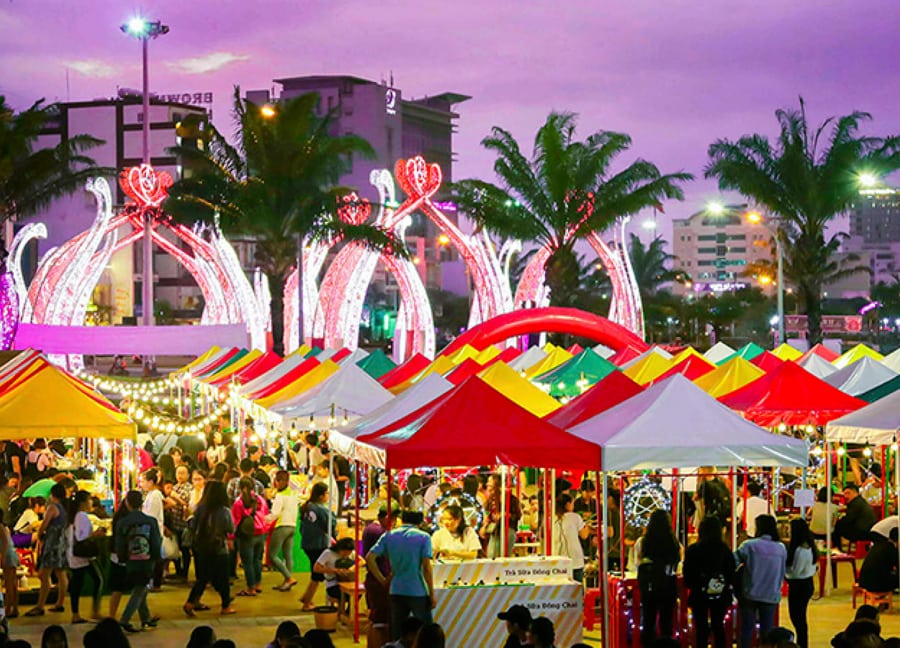
Thu Bon River: Timeless Beauty and Cultural Life of Hoi An

The Thu Bon River has great significance in the central part of Vietnam and meanders gently through Hoi An and its surroundings. The Thu Bon River has for centuries influenced the culture, agriculture, and economy of this region through its peaceful surroundings, riverine life, and tourist attractions.

Introduction To The Thu Bon River

The Thu Bon River is a very famous river in central Vietnam, stretching from the mountains of Truong Son to the East Sea. Passing through the town of Hoi An and the rural region, the Thu Bon River is a key factor in the history, cultures, and economies associated with the area. Acting as the primary trading route for the villages in the interior to the global ports, the Thu Bon River symbolizes prosperity and culture in the region. In contemporary conditions, the serenity of the Thu Bon River, along with the natural banks and fishing villages, symbolizes the authentic living rhythms in central Vietnam.

Thu Bon River stretches from the mountains of Truong Son to the East Sea

Visiting the Thu Bon River gives tourists a unique experience of natural and cultural richness. The boat rides along the Thu Bon River allow one to see green forests of nipa palms, ancient temples, and people living their lives around the river just the way their forefathers had done before them for many years. Of particular beauty is the view of the Thu Bon River at sunrise or sunset, with golden shades all over, making this river so captivating and alluring.

History Of The Thu Bon River

The Thu Bon River was created after a geological process where the water from the Truong Son Mountain flowed towards the east and eventually to the sea. The geological processes of erosion and sedimentation of the river contributed to creating fertile land along the River Thu Bon, and hence, it played a pivotal role in shaping the landscape of central Vietnam, where it offered fresh water and fertile land along the basin of the River Thu Bon.

Historically, the Thu Bon River has always served as an important channel through which trade, transport, and the spread of culture took place. The Thu Bon River used to be an important river through which villages in the interior were connected with the ancient trading port of Hoi An. In the Cham culture and other periods, trading ships used to transport products such as silk, ceramics, and spices.

Unique Architecture Of The Thu Bon River

Extending over a huge geographic space, the Thu Bon River is occupied by diverse architectural scenes. Every part of the Thu Bon River is characterized by iconic sites that demonstrate distinct design and the amazing relationship between the residents and the Thu Bon River.

Hoi An Ancient Town Riverside

The course of the Thu Bon River, as it passes through Hoi An Ancient Town, showcases some of the region’s most characteristic architectural styles. This includes traditional timber homes, mercantile shophouses, and Chinese and Japanese communal buildings, all of which are characteristic of the region along the Thu Bon River, where trade was once a prominent activity along the route of the river. The homes display characteristic decorative facades, roofing, and balconies, and the ambiance at night, illuminated with lanterns, is simply magical.

Thu Bon River by night at Hoi An ancient town

Japanese Covered Bridge Area

The Japanese Covered Bridge is an exemplary work of architecture, inextricably tied to the history of the Thu Bon River. This structure was erected in the early 17th century, representing the culmination of Japanese architectural styles with Vietnamese and Chinese artistic influences. As evidenced by its arched wooden design and tiled roofs, the structure was intended to resist floods and represent the confluence of cultures. This is because it was built in proximity to the Thu Bon River, representing how the Thu Bon River brought together various international trading communities.

architect of jananese covered bridge in Hoi an

Conventional Riverside Villages

Apart from the urban area, the villages following the Thu Bon River have architecture influenced by nature and people’s everyday lives. Houses have a wooden structure, terracotta roofs, and elevated foundations to be resilient to the floods that take place every year. Collective houses, temples, and small piers are positioned near Thu Bon, symbolizing the significance of Thu Bon in transportation and social events. Such architecture shows the significance of adaptability, robustness, and the special relationship that people have with nature.

Nipa Palm Forest Settlements

Where the Thu Bon River passes through nipa palm forests, the architectural style is more natural and eco-sensitive. Bamboo houses, fishing shelters, and pedestrian roads made of local materials blend well with the landscape. Such light structures enable fishing and ecotourism without harming the environment. In this section of the Thu Bon River, a compatible architectural style emerges, where the natural environment and local culture receive proper consideration.

Nipa Palm Forest Settlements

Unforgettable Experiences You Shouldn’t Miss At The Thu Bon River

The Thu Bon River has more to offer than just picturesque scenery, with everything welcoming tourists to engage in local experiences. Everything that happens in and around the river provides memories that go beyond sightseeing.

Enjoy Riverside Cuisine Locally In Hoi An

Trying the local food along the Thu Bon River is an indispensable travel activity. From riverside restaurants and village homes, real Central Vietnamese dishes are cooked with fresh ingredients sourced locally. Each meal demonstrates the region’s culinary heritage, from aromatic noodle soups to grilled river fish and traditional rice cakes. Having dinner along the waterside provides well-serene scenery while visitors learn how the river influences local cooking traditions, flavors, and daily life.

local food in hoi an

Watch Traditional Dance And Music Performances

Traditional dance and music shows along the Thu Bon River are more insightful into the culture of the place. Such shows may be staged during festivals or gatherings, with traditional songs, drumming, and elegant actions that have been handed down from years past. The shows are linked to stories of the river, agricultural activities, and religious traditions. Attending to this artwork within a riverside context gives a special and significant touch to the tourist encounter, so it is one of the must-try activities in Hoi An.

Attend A Textile Weaving Demonstration

The opportunity to take part in a textiles weaving demonstration is an unusual and fascinating experience for visitors interested in learning about arts and crafts in this region of Vietnam. The local weavers have been carrying out traditional methods of this craft using handloom weavers and basic instruments. The process of this craft is described, and its dependence on river resources is also explained.

Enjoy A Scenic Boat Ride During Sunset

A sunset boat trip on the Thu Bon River is one of the most unforgettable experiences that a tourist can ever have. As the sunset approaches, the sun turns golden in color while the water of the Thu Bon River reflects the image of the nearby towns, trees, and traditional boats. This remarkable boat ride gives one an opportunity to see the daily activities conducted by the Thu Bon River while enjoying a relaxed ambiance.

Beautiful Sunset on the Thu Bon River

Entrance Fee

The Thu Bon River is a natural sight where tourists can undertake river walks, sightseeing, and photography without the need to pay any entrance fees. It is, however, the case that boat rides and cultural events conducted on the Thu Bon River will require additional service charges.

Activity / Service Price (VND) Approx. Price (USD) Notes
Riverside access & sightseeing Free Free No ticket required
Short boat ride (20–30 minutes, 1–3 people) 150,000 – 180,000 6 to 7 USD Standard wooden boat
Boat ride for 4–5 people 200,000 – 250,000 8 to 10 USD Shared or private
Private sunset boat tour (1–2 hours) 300,000 – 500,000 12 to 19 USD Price varies by route
Lantern release (per lantern) 20,000 – 30,000 1 USD Optional add-on

Notes: Pricing may be for reference only and may change due to peak seasons or holidays.

Opening Hours

The Thu Bon River is always open for visits because it is a natural river and does not follow any opening and closing schedules. Travelers can walk around the banks, the villages, and the whole area any time they want. Boat services and tours, on the other hand, are usually available from early morning to evening, from 6:00 in the morning to 9:00 in the evening, depending on the weather and season.

The optimal time to visit the Thu Bon River is from February to August because of dry and pleasant weather conditions in Hoi An. During this period, low water levels and clear weather are favorable for boat rides and viewing around the Thu Bon River. Early mornings or late afternoons are the best times when the climate is cool with gentle lighting along the Thu Bon River banks.

How To Get To Thu Bon River

The Thu Bon River flows through the town of Hoi An and its countryside. Thus, the destinations are easily accessible by transportation from Da Nang. Tourists get to choose transportation modes based on their preferences and budget.

Transport Type From Da Nang / Hoi An Travel Time Approx. Cost (USD) Notes
Taxi / Grab Da Nang → Hoi An 45 to 60 mins 18 to 25 USD Convenient, door-to-door
Private Car Da Nang → Hoi An 45 to 60 mins 25 to 40 USD Ideal for families/groups
Motorbike Da Nang → Hoi An 60 mins 6 to 10 USD/day Flexible, scenic route
Bicycle Hoi An Old Town 10 to 20 mins 2 to 4 USD/day Best for short distances
Local Bus Da Nang → Hoi An 90 mins 1 to 2 USD Budget-friendly option

Notes: Weather should be checked before departure, and especially during the rainy season. A valid driving license and helmet are required for motorbike travel in Vietnam. Taxi or private cars should be used for a safe and smooth journey.

Things To Know Before Traveling To Thu Bon River

Prior to traveling to the Thu Bon River, there are things to be done in order to fully appreciate the natural and local cultural aspects. To ensure a smooth and enjoyable journey, it is important to be aware of some relevant tips.

  • Come during early morning or late afternoon to avoid the heat, take in serene views, and spot the best scenery of the river under natural light.
  • Bring some money in small denominations, as local boat services, lantern releases, or vendors around the rivers might not accept card payments.
  • Light clothing, sunscreen, and a hat are needed, even more so during the dry season, since there is little shade along the river banks during the peak hours of the sun.
  • Check the weather forecast. Thus, if it is raining heavily or there is flooding during the wet season, it may impact boats and outdoor activities.
  • Respect the local customs and the environment by being modestly dressed, avoiding noisy conduct, and not littering the river with trash.

FAQs About Thu Bon River

Some common questions that tourists may ask are shown below, which will help them understand better when planning their trip to the Thu Bon River. These questions and answers are important so that tourists are not left with many questions when planning their trip to another country.

Is it free to visit the Thu Bon River?

Yes, the Thu Bon River is open to visitors for free because it is a natural river. Tourists can take a stroll around the river banks and admire its scenic views without having to pay any entrance fees. However, services such as taking a riverboat ride, having a sunset river cruise, or the lantern-releasing ceremony do come with additional charges.

Thu Bon River is open to visitors for free

What kind of things can visitors do on the Thu Bon River?

Visitors can take a scenic boat tour of the area, especially around sunrise or sunset, which would allow them to view some of the rural villages and countryside along the river banks. Recreation could include the release of lanterns, visiting some of the local villages, enjoying local foods, and experiencing some of the local culture or crafts.

Can the Thu Bon River be suitable for families or seniors?

Nevertheless, the Thu Bon River is suitable for visitors, including families and the elderly, because it is a peaceful and easily accessible river. The boat rides are not tiring, and the riverbanks are flat enough for walking. Care should be taken, though, to select the right boat companies and prevent visiting during the hottest times of the day.

Final Thoughts: Is the Thu Bon River Worth Visiting?

The Thu Bon River in central Vietnam merits a visit for its balance of natural beauty, cultural depth, and peaceful experience that a traveler may look for. Everything from scenic boat rides to enchanting traditional riverside villages, from historic connections with Hoi An, presents moments in both an authentic and relaxing way. This tranquil atmosphere invites visitors to go slow and reach out to the local life beyond busy tourist areas. Allow Seni World to guide you in discovering this timeless waterway and to create meaningful travel memories along its tranquil banks.

Hoai River Hoi An: Top Riverside Attraction In The Old Town

It flows gently through the heart of Hoi An Ancient Town, thus forming a nice, gentle riverside environment that defines much of the town’s charm. Hoai River is known for its glowing lantern nights, traditional boat rides, and local life along the banks. It offers visitors an authentic view of the rich cultural heritage of Hoi An.

Introduction To Hoai River

Hoai River is a calm and symbolic stream running through the ancient center of Hoi An. The Hoai River played a very important role in the economic life of the town, helping Hoi An become a thriving port. Today, the Hoai River is appreciated for its peaceful surroundings, traditional wooden boats, and ancient houses. During the daytime, tourists can take a peaceful walk around the Hoai River and enjoy the tranquility of life in Hoi An.

Enjoy the Lantern Festival on the Hoai River

Hoai River, in the evening, transforms into a more magical and enchanting sight with colorful lanterns lighting the river, thus forming one of Vietnam’s most romantic nighttime views. Tourists come to the Hoai River to experience their lantern boat rides, festivals, and reflective moments by the Hoai River. A trip to the Hoai River provides tourists with not only picturesque views but also a sense of the heritage and calmness of Hoi An.

History Of The Hoai River

Hoai River originally branched from the Thu Bon River in nature and has always been an integral part of the historical development of Hoi An Ancient Town. Hoai River served as an important waterway in Vietnam during the period from the 15th to the 19th centuries, facilitating the growth of Hoi An Ancient Town as an international trading port. Trading vessels laden with silk, ceramics, spices, and farm produce often sailed through the Hoai River, linking local villages with Chinese, Japanese, and foreign merchants.

Hoai River has also been intertwined with the culture and society of Hoi An through the years. Villas and communal spaces have lined its banks, which portray the lifestyle that the river influenced. Many traditional practices and celebrations, particularly those that relate to lanterns, emerged in this place to commemorate prosperity and good luck. Hoai River remains a historical identity that maintains the heritage of Hoi An while still being a tourist destination for those seeking cultural immersion.

Top 5 Iconic Attractions In Hoai River

Although the Hoai River is a small waterway, it plays a central role in shaping the architectural identity of Hoi An Ancient Town. Rather than forming large districts, the river connects a series of iconic structures that reflect centuries of cultural exchange, traditional lifestyles, and harmonious river-based design

Japanese Covered Bridge

The Covered Bridge is the most iconic architectural landmark near the Hoai River. Built in the early 17th century, the bridge mingles a combination of Japanese, Chinese, and Vietnamese architectural styles. Its wooden structure has a curvilinear, tiling-covered roof and a small temple inside. It was built to be above flooding while maintaining spiritual importance. Located directly along the river itself, it symbolizes, historically, the importance of the Hoai River to this day as a trading and cultural crossroads.

Japanese Covered Bridge in Hoi an

Ancient Riverside Houses Along The Hoai River

Traditional houses along the Hoai River are perfect examples of architecture adapted to the river. These wooden houses have narrow façades, deep interiors, and balconies facing the water. The design allowed merchants to conduct trade directly from the river while protecting homes from seasonal floods. Today, many of these buildings have been preserved and now host cafes, shops, and cultural spaces with their original architectural charm intact.

Lantern-Lit Streets And Traditional Shophouses

In the Hoai River area, these traditional shophouses create a continuous architectural corridor. In the daytime, these yellow-hued buildings adorned with wood and tiles create a classic architectural view of Hoi An. Night falls, and lit-up lanterns turn the area into a lunar architectural wonder. Even though lanterns are purely ornamental, they also play a crucial role as an architectural feature of Hoi An that beautifies the architecture of the Hoai River banks.

Wooden Boats And River Piers

The wooden boats and river piers found around the Hoai River exhibit functional architecture. The architecture was created to facilitate fishing, travel, and lantern boat trips. Such architecture is an indicator of the relationship between the residents and the Hoai River. The architecture is simplistic and does not focus on aesthetics, but serves to add to the scenic Hoai River landscape.

Assembly Halls Near The Hoai River

There are a number of Chinese assembly halls like Phuc Kien Assembly Hall, which are within walking distance of the Hoai River. These buildings have intricate entrance gates and roofs decorated with rich detail. These assembly halls were constructed for Chinese merchants and reflect the rich multi-cultural architectural history of this region, which has been shaped by river trade. The closeness of these buildings to the Hoai River also confirms its commercial and cultural history.

4 Unforgettable Experiences You Shouldn’t Miss

Hoai River is not only a tourist destination but also the hub of the most memorable experiences of Hoi An tourists. Evening lanterns and cultural experiences along the river banks capture the beauty of the Hoai River and should be experienced by every tourist in Hoi An.

Romantic Lantern Boat Ride On Hoai River At Night

Taking a lantern boat ride on the Hoai River is one of the most iconic experiences in Hoi An. While the sun sets, small wooden boats glide across the quiet water, with colours of lanterns reflected on the river’s surface. Visitors can release onto the water floating lanterns, symbolizing wishes for peace and good fortune, thus creating a deeply emotional and romantic moment. This provides another perspective of the ancient town, and precisely shows why the Hoai River is considered the soul of Hoi An when night falls.

Take A Boat Ride Down the Hoai River in hoi an

Walking Along The Hoai River At Night

Taking a walk along the Hoai River in the evening will ensure that the visitor embraces the tranquility of Hoi An Ancient Town. The banks of the Hoai River will be filled with lights, performances, and vendors, yet the atmosphere is laid-back. Taking a walk along the banks of the Hoai River is the best opportunity for a photograph and the ability to see the slow motion of the lives of the people.

Participating In The Lantern Festival On The Hoai River

The Lantern Festival, which happens every month, makes the Hoai River a magical cultural area. At these events, electric lights are turned off, and the Hoai River is lit up by the magical lights of colorful lanterns, which gives the area a nostalgic look. Cultural performances and games, as well as releasing lanterns, happen in Hoai River, which makes it a cultural center of Hoi An, as participating in the festival gives one a deeper cultural experience of the area.

Lantern Festival in Hoi An

Supporting Riverside Cafes And Local Food

Lazing around at the riverside café while the Hoai River flows by is an excellent way to enjoy the scenery. There are numerous riverside cafes and eateries, which come with the opportunity to observe the passing boats as you enjoy the local food or Vietnamese coffee. This is an activity that mixes the idea of viewing and eating, and as such, there are many ways to enjoy the Hoai River ambiance, whether you visit during the day or night.

Entrance Fee

Hoai River is free to explore, and everyone touring the ancient town of Hoi An has access to it. Some activities and historical sites nearby, however, will require entrance tickets. It is good, therefore, to have some knowledge of these costs in advance.

Category Price (VND) Approx. Price (USD) Notes
Hoai River (walking and sightseeing) Free Free No ticket required
Hoi An Ancient Town ticket 120,000 VND 5 USD Includes access to 5 heritage sites
Children under 15 Free Free Applies to the ancient town ticket
Lantern boat ride on the Hoai River 100,000-200,000 VND 4 to 8 USD Price varies by time and service
Floating lantern 10,000-20,000 VND 0.5 to 1 USD Optional add-on

Note: Prices may vary slightly depending on the season and operator. A walk along the Hoai River is always free, making it an affordable option for all visitors.

Opening Hours

Hoai River is operational throughout the day and throughout the year because it is a public river flowing through Hoi An Ancient Town. Nonetheless, lighted boat rides, night markets, and riverside cafes, among other daily activities, take place from 4:00 PM to 10:00 PM, with the busiest time being after sunset.

Mid-Autumn Festival in Hoi an (2)

Hoai River has its prime time between the hours of 18:00 and 21:00, when beautiful lanterns illuminate Hoai River and make Hoi An’s romantic view. Regarding the best time, it’s considered from February to April in Hoi An, which enjoys a dry and pleasant climate. The peak season happens from March to August, while the Hoai River Lantern Festivals are held during full moon nights and provide the best experience.

How To Get To Hoai River

The Hoai River flows right in the center of Hoi An Ancient Town, ensuring ease of access in particular for international tourists, especially those from Europe and the USA. Access to most hotels is easy, and the ancient town is also pedestrian-friendly with restrictions on vehicles during peak hours.

Transportation Estimated Time Cost (VND) Cost (USD)* Notes
Walking 5 to 15 minutes Free Free Best option if staying in Old Town
Bicycle 5 to 10 minutes 20,000-40,000/day 1 to 2 Easy, eco-friendly, widely available
Motorbike 5 to 10 minutes Parking 5,000-10,000 0.2 to 0.4 Must park outside Old Town
Taxi / Grab 10 to 15 minutes 50,000-120,000 2 to 5 Convenient from beach areas
Private car 10 to 15 minutes Parking fee applies 1 to 3 Limited access hours

Note: Traffic restrictions apply strictly in the ancient quarters of Hoi An, particularly towards the end of the afternoon and at night. Thus, it is best to park the vehicle outside the area and explore on foot. For motorbikes, it is best to possess an international driving permit when abroad. This includes wearing comfortable shoes and arriving early when visiting Hoai River.

Things To Know Before Traveling To Hoai River

Hoai River is among the most frequented sites in the ancient city of Hoi An. In fact, prior knowledge of important travel tips is core to having a smooth and meaningful visit.

  • After sunset, visitation is recommended because the environment and scenery here, in the Hoai River, are most favorable for sightseeing and a nice time after sunset.
  • Many lantern releases, boat rides, and food stalls accept payments in cash only, so it’s a good idea to keep some cash with you.
  • Cars and motorcycles are banned from the old city during peak times, and tourists have to walk a short distance to reach the Hoai River.
  • Full moon lantern festivals can be very crowded, so getting there early would help one enjoy the experience more comfortably and without hassle.
  • Refrain from making noise, littering, and follow local rules to ensure that the peace and culture of the Hoai River are maintained.
  • The evenings can be very packed, so it is essential to protect your belongings, especially when you walk back home from dinner near night markets or when taking boats.

FAQs About Hoai River

Hoai River is among the most iconic attractions in Hoi An Ancient Town and often raises common questions among international travelers. Below are some frequently asked questions that help visitors understand better what to expect when planning a visit to Hoai River.

In which season should the Hoai River tour take place?

It is best to access Hoai River in the evening, from 6:00 PM to 9:00 PM, when the lanterns light up along the banks of Hoai River. It is because of the scenery, and this activity is more beautiful because the Hoai River has an event called the lantern festival, especially when there is a full moon. However, there are lots of people during this time of the month.

May in Hoi An is a comfortable, warm, and humid

Is the Hoai River suitable for family and senior travelers?

Indeed, the Hoai River is a suitable tourist spot for families, the elderly, and tourists of all ages. The place is flat, walkable, and illuminated during the evenings. Seating areas, cafes, and slow-moving boats offer convenience to tourists who seek to have a relaxed time. Even so, during peak times, the place can be quite packed, and so it may be better to visit earlier if one is elderly.

Final Thoughts: Is the Hoai River Worth Visiting?

Hoai River is certainly one of the attractions in Hoi An Ancient Town that is worth exploring for travelers who want to experience the heart and soul of Hoi An. This is because the gentle flow of the river, with its twinkling lighted lanterns in the evening and the aged architecture lining the banks of the river, presents a very serene and romantic ambiance. Its easy access, without any entrance fee, makes it very easy to explore. For an in-depth and meaningful experience in Vietnam, let Seni World be your guide to the best places in Vietnam.

Tu Hieu Pagoda: Exploring Hue’s Sacred And Peaceful Temple

Tu Hieu Pagoda is a peaceful place to find the serenity that comes from the philosophy and practices of Buddhism. Located in the Hue region among ever-present pine groves and lakes, this temple is recognized for its spiritual ambiance and historic value.

Introduction To Tu Hieu Pagoda

Just a couple of kilometers from Hue’s center lies the venerable Tu Hieu Pagoda, one of Vietnam’s most venerated Buddhist temples. Amidst pine groves and quiet lakes, this historical pagoda dates back to the 18th century and enjoys a good reputation with its tranquil atmosphere and Vietnamese traditional architecture. Its quiet courtyards, ornate statues, and nicely flowered and treed grounds combine for a very photogenic and excellent place to relax, meditate, or simply enjoy being away from the crowd. The temple also carries cultural weight as the final resting place of several royal monks and members of the Nguyen Dynasty, adding cultural weight to its spiritual appeal.

The fish pond right behind the Tu Hieu temple entrance

People come to this place for its blend of natural serenity, spiritual calm, and cultural riches. Walking down its covered ways, attending traditional Buddhist services, or simply being in its calming environment gives tourists an opportunity to leave behind the bustling streets of Hue for a more mindful path. Its distinctive mix of history, architecture, and calming environment makes Tu Hieu Pagoda an attraction not to be missed for those traveling to Hue.

History Of Tu Hieu Pagoda

Tu Hieu Pagoda was established in 1848 by Buddhist Master Thich Thanh, with the purpose of being a Buddhist retreat for monks. However, over the years, this Buddhist temple became significant to Hue, integrating the traditional architectural design of Vietnam. Tu Hieu attained its significance in history through the internment of some of the royal monks from the Nguyen Dynasty, including some eunuchs who held royal positions in the court of royalty. All these aspects are mentioned in the ancient statues, stele, and wooden halls, depicting the rich culture of Vietnam.

Tu Hieu Pagoda was established in 1848

Since its existence, Tu Hieu Pagoda has always adhered to its role in following Zen practices, meditating, and offering services. It has managed to overcome times of political change and warfare while maintaining its religious practices and architectural attractiveness. Even today, it is still used for promoting Buddhist teachings, together with offering accommodations for international visitors. One can walk through its peaceful gardens, study Vietnamese Buddhist teachings, and appreciate the rich history that has managed to shape it for close to two centuries.

Unique Architecture Of Tu Hieu Pagoda

Tu Hieu Pagoda, which is tucked away in a serene pine forest, is notable for its tasteful fusion of traditional Buddhist architecture and the natural world. Its distinctive architecture offers guests a peaceful area for introspection and contemplation while reflecting simplicity, tranquility, and profound spiritual symbolism.
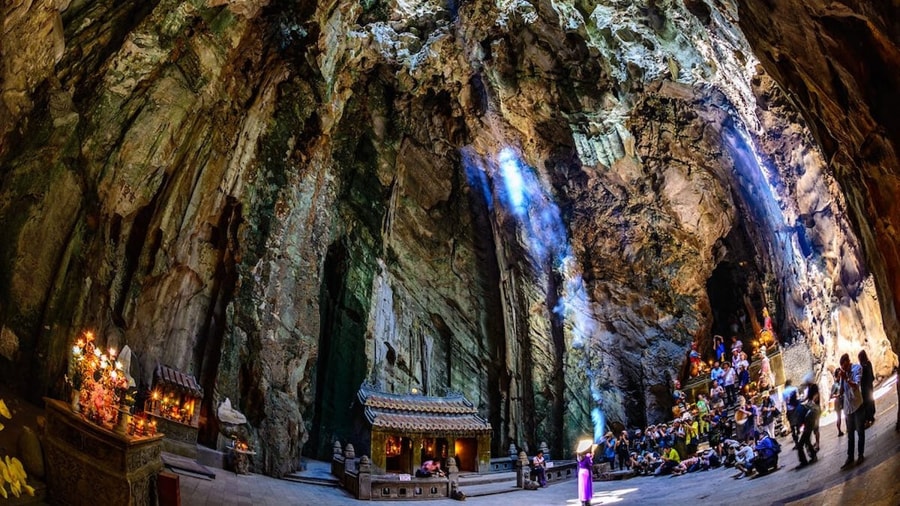
External Surroundings

The outer areas of the Tu Hieu Pagoda are characterized by their unity with nature, so that a smooth transition from the outside world leads to sacred space. The pagoda lies in the heart of the pine trees, the hills, the ponds of lotuses, and the little streams, so that the peaceful, meditative environment of the pagoda is created. The Bodhi Tower, constructed in 1896 and encircled by royal tombs from the Nguyen Lords’ era, is perched on the hillside. Two hexagonal stele pavilions that preserve inscriptions detailing Tu Hieu Pagoda’s construction history are located next to the temple courtyard.
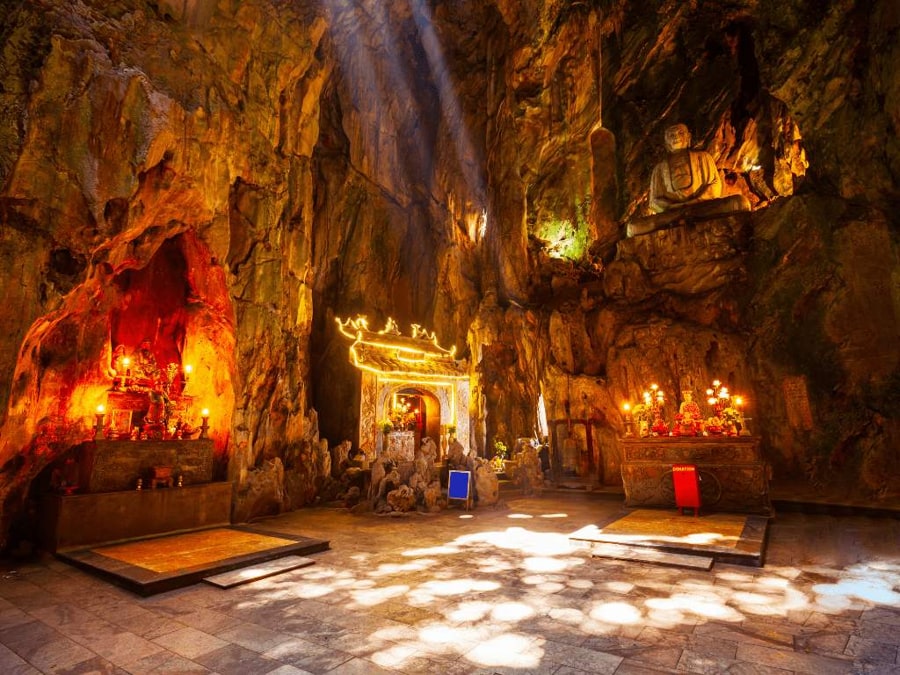
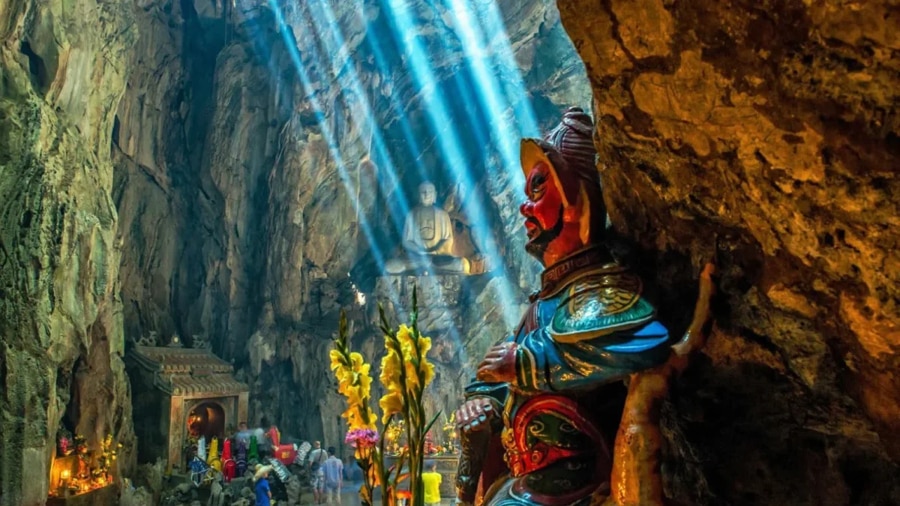
The outer areas of the Tu Hieu Pagoda

The Inner Structure

Shakyamuni Buddha is worshipped in the front hall of the pagoda’s main sanctuary, which is designed in the classic “three bays and two wings” architectural style. Beyond the main hall is a peaceful inner courtyard that monks and nuns have carefully decorated with flowers and decorative plants to create a serene and reflective ambiance. From here, tourists arrive at Quang Hieu Hall, also called the Rear Hall, where Holy Guardian Quan, the spirits of devoted lay Buddhists, the eunuchs who helped build the pagoda, and General Le Van Duyet and other deities are revered.

Shakyamuni Buddha is worshipped in the front hall of the Tu Hieu Pagoda

The architecture of the complex is based on traditional Vietnamese Buddhist principles, which emphasize spirituality, harmony, and simplicity. Wooden buildings with gently curved tiled roofs, delicate carvings, and strong columns blend in perfectly with the surrounding natural environment. The buildings blend in silently with their surroundings because the decoration is modest and restrained rather than striking out.

4 Unforgettable Experiences You Shouldn’t Miss

Visiting Tu Hieu Pagoda is more than just a sightseeing trip. It can be an absorbing experience for tourists who can immerse themselves in architecture, scenic surroundings, and religious practices, and gain an insight into the rich cultural past of Vietnam.

Discover Traditional Architecture

Tourists at Tu Hieu Pagoda are able to walk through wooden halls, gates, and carved pillar corridors to appreciate the architectural designs. The architecture of wood beams with painted designs depicts typical Vietnamese architectural concepts, which have been maintained over the centuries. This is a memorable experience as tourists can travel back through history to appreciate the handcrafted work of traditional artisans. Each of the structures, from the prayer halls to meditation rooms, has a story to tell to enhance tourists’ experience of Vietnam’s religious architecture.

Traditional Architecture of the Tu Hien Pagoda

Soak In The Serenity of Nature

Situated amongst the pine forest, mild hills, and quiet ponds, the temple serves as a haven of quietude away from the bustling city life of Hue. Shaded pathways take travelers for pleasant strolls along lotus-filled ponds or to quietly sit under tall pine trees. The interaction with nature is unforgettable, not only providing a sense of tranquility but also highlighting the careful integration of the temple within its surroundings. For nature lovers and photographers alike, capturing the beauty and harmony of this spiritual sanctuary will provide countless opportunities to photograph nature at its best.

Serenity of Nature of the Tu Hieu Pagoda

Engage In Buddhist Rites

Visitors can witness or participate in the daily Buddhist practices of chanting, meditation, and offerings. Participating in these activities enables tourists to appreciate the spiritual practice that pervades Vietnamese Buddhism. Thus, it is highly recommended that you go to this place and experience one of the best things to do in Hue. The memory created through the visit is that it enables the visitor to have a firsthand experience of the living culture of the temple, which promotes an experience of tranquility.

Learn About Local History And Culture

Tu Hieu Pagoda is home to the historical steles, tablets, and tombs of royal monks and members of the Nguyen Royal Family. Walking through these places, one can appreciate the history with which the temple is connected, its importance in the spiritual lives of the people in the region, as well as its connection with the royal families of Vietnam. The entire activity will be remembered for a lifetime.

Entrance Fee

A visit to the Tu Hieu Pagoda is free of cost, and that is one of the reasons why all tourists can easily visit the place without having to spend money on the entrance fees and other required payments that usually come along with them, while other optional tasks like conducting meditation sessions can cost a small amount of money in the form of donations.

Even though there is no charge for visiting the site, it is encouraged by the pagoda to respect the temple and surroundings, to preserve silence, and not to interrupt monks and devotees. Donations for maintaining the temple and garden can be made, but this is optional.

Opening Hours

The Tu Hieu Pagoda operates on a daily schedule from 7:00 AM to 5:00 PM. This makes it convenient to schedule either a morning or an afternoon visit to this temple. The peak period to visit Tu Hieu Pagoda occurs between November and April in Hue, during which time Hue experiences cooler and drier climatic conditions perfect for temple sightseeing and pine forest explorations. Weekends and holidays may constitute a slight difference, during which you may need to arrive early to have a peaceful experience.

Way to the main hall of tu hieu pagoda

The best season to visit this pagoda is during the low season, which is from May to October. It is characterized by some rainfall and increased humidity. However, this season allows visitors to enjoy a less crowded visit with green surroundings. In addition, there are reflection images in the ponds. Early morning or late afternoon is the best time to visit this pagoda because of its warm temperatures and soft light. Therefore, visitors can enjoy a peaceful environment to feel the spiritual aspect of this pagoda.

How To Get To tu hieu pagoda

The Tu Hieu Temple is only 7 km away from the Hue City Center. Visitors can fly into Hue through airports in the area, take a train to Hue, and then use a bus to reach the temple site.

Transport Option Time Cost Notes
Taxi / Grab car 15-20 min USD 5-8 Comfortable and convenient
Rental motorbike 20-25 min USD 5-7/day Ideal for confident riders, follow traffic rules
Bicycle 30-40 min USD 2-3/day Good for leisurely exploration

Things To Know Before Travelling To Tu Hieu Pagoda

Located deep in the tranquil environs of Hue, the Tu Hieu Pagoda is the perfect destination to find solace from the hustle and bustle of everyday activities. There are a number of considerations that must be made before paying homage to this holy and historical place.

  • Wear comfortable, breathable, and modest clothing suitable for visiting religious sites. Sturdy walking shoes are recommended for exploring the temple grounds and gardens.
  • Health carries personal medications, sunscreen, and insect repellent. Walking around the temple and nearby paths may require light physical activity.
  • Safety follows temple rules, stay on marked paths, and be cautious near ponds, steps, or slippery areas. If riding a motorbike, drive carefully and wear a helmet.
  • Maintain silence in prayer halls, avoid touching sacred objects, and ask permission before photographing monks or rituals.
  • Bring small cash for optional donations or refreshments, and keep your personal ID or passport handy.
  • Environmental protection does not litter, avoids damaging plants, and respects the peaceful temple environment.
  • Very morning or late afternoon offers cooler temperatures, soft light for photography, and a more tranquil experience, so you should go to the pagoda at this time.
  • If you love admiring historical and cultural sites in Hue, you can consider other attractions, such as An Dinh Palace, Hue Imperial City, Thien Mu Pagoda,…

FAQs About Tu Hieu Pagoda

Tourists have questions before they are able to visit Tu Hieu Pagoda, from opening time to local customs. Here are some questions that are usually asked to make you better prepared to have a hassle-free experience at this peaceful spiritual site.

Is the Tu Hieu Pagoda free to visit?

Yes. A visit to Tu Hieu Pagoda is completely free of charge. Therefore, it is one of the destinations that any traveler, regardless of their financial abilities, can visit. Exploring the temple site, meditation halls, gardens, and other activities, such as meditation lessons, learning about Vietnamese culture, or offering money for the maintenance of the temple, are all done without any charge.

Foreign visitors visit tu hieu pagoda

When is it best to explore Tu Hieu Pagoda?

It is best to visit the garden in the morning or in the late afternoon when the weather is temperate, the light is soft and great for photography, and the surroundings are quiet, and serenity prevails.

How long should you plan to visit the pagoda for?

A usual visitor to the temple stays there for 1 to 2 hours, while others who attend meditation sessions and cultural programs may spend considerable time there.

Is Tu Hieu Pagoda family and child-friendly?

Yes, the temple is child-friendly because it has safe walkways and a serene atmosphere where children can discover and learn all about Vietnamese culture and Buddhist customs.

Final Thoughts: Is Tu Hieu Pagoda Worth Visiting?

Tu Hieu Pagoda is definitely a place worth visiting for travelers in Hue who are searching for a place where they can find serenity, culture, and depth in their spiritual experiences. This pagoda, which is located deep in the forest, provides travelers with a serene environment away from the hustle and bustle of tourist routes. This place also has an immense amount of historical and religious value, giving one an insight into monastic life, which could be both interesting and educational.