logo mobile sidebar
support-image-mobile
Share your ideas with our local expert team - we’re here to listen and help you shape a meaningful journey through Indochina.
(+84) 868 663 993
Asia Leading Tour Operator 2025
tripadvisor travelers choice awards 2024
Travelers' Choice Awards 2025

Author: Content Seniworld

Ancient Temples, Secrets And Travel Tips Inside Angkor Wat

As a treasured symbol of Cambodia and the Khmer People, Angkor Wat has been recognized for its unique Khmer architecture, many intricate stone carvings, and spiritual significance. Truly a destination for visitors who appreciate culture, history, and the arts.

Introduction to Angkor Wat

Angkor Wat is one of the most famous and majestic tourist spots in Southeast Asia. Situated near the town of Siem Reap in Cambodia, this historic temple structure dates back to the early 12th-century reign of King Suryavarman II and was first a Hindu shrine and later converted into a Buddhist temple. Its massive structure covers several hundred hectares with magnificent stone structures, intricate bas-reliefs, and a design reflecting the mythical Mount Meru, attracting tourists from all over the globe to marvel at its rich history. Angkor Wat has been designated a UNESCO World Heritage Site.

Angkor Wat is one of the most famous and majestic tourist spots in Southeast Asia

Visitors flock to Angkor Wat not only for its historical value, but also for the experience that it provides. Many visitors wake up early to witness the sunrise over Angkor Wat, creating a sight that is awe-inspiring, taking in the essence of Khmer culture. The carvings on Angkor Wat, with gods, dancers, and mythological stories, make every corner of this historical site come alive. Angkor Wat is a sign of Cambodia’s culture, a source of national pride, and its beauty never ceases to amaze visitors.

History of Angkor Wat

Angkor Wat dates back to the early 12th century during the period of King Suryavarman II and was initially dedicated to the worship of Hindu deities, including Vishnu. This temple was intended to be the state temple and final resting place for the Khmer king and symbolized the Khmer power and religion during the height of the Khmer Empire. However, during the late 14th and early 15th centuries, during the period of King Ang Chan, the Angkor Wat temple slowly changed from a Hindu worship site to a Buddhist worship site by substituting the statues of the Hindu deities with Lord Buddha statues.

The subsequent centuries saw the political deterioration and invasions by neighboring kingdoms that led to the gradual abandonment of Angkor Wat and the Angkor complex as a whole. Lost to the jungle and the ages, Angkor Wat was all but forgotten until it again appeared on the radar of the French explorers and scholars in the latter part of the 19th and the early 20th centuries.

It was in 1992 that Angkor Wat, along with the other temples within Angkor, was classified as a UNESCO World Heritage Site, underscoring the sheer importance of the temple complex. Angkor Wat now exists as an impressive Buddhist temple and an icon of the nation of Cambodia, attracting millions of tourists each year.

Top 5 Iconic Attractions in Angkor Wat

The Angkor Archaeological Park consists of over 1,000 temples that are either large or small. Each temple has its own unique structure, each tells a different story, and each has its own sense of mystery. Of these temples, there are several that stand out and highlight Angkor Wat. These temples provide visitors with a more in-depth understanding of Khmer religion, culture, and history through their architecture.

The Angkor Wat Temple

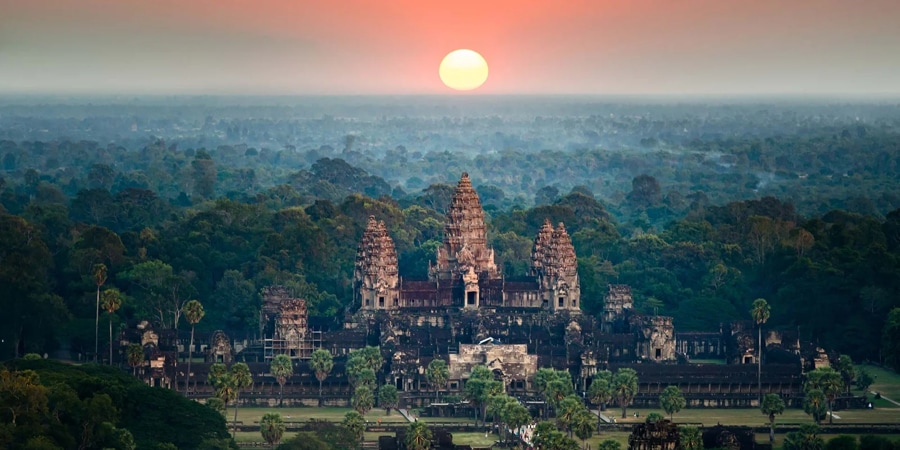
Angkor Wat is the heart of Angkor, both culturally and spiritually. It is also the largest temple in Cambodia and has the most prevalent architectural style. Angkor Wat was built in a grand manner with lotus-shaped towers, many great cross-shaped terraces, and nearly 400 chambers. The chambers are connected to each other by long, narrow corridors that are over 1,500 meters long. The five famous towers are meant to be symbolic of Mount Meru – the home of the Hindu Gods – with the middle tower rising to an incredible 65 meters tall.

Angkor Wat Temple

Unlike all Khmer temples, which face East, Angkor Wat faces West, and this is a traditional direction of death in the Hindu community. This has led many historians to believe that it was created as a royal burial site. One of the best examples of the high level of craftsmanship that went into the making of this temple is the sculpted bas-relief walls that depict Hindu epics such as the Ramayana and the Mahabharata.

Angkor Thom and Bayon Temple

Angkor Thom was the capital of the Khmer Empire, and today it is one of the most mysterious places in Angkor. It is surrounded by an enormous stone wall and a large moat, and can be entered by huge gates with four large stone faces carved into them on either side of the gates.

Bayon Temple - The Temple Of Smiling Stone Faces

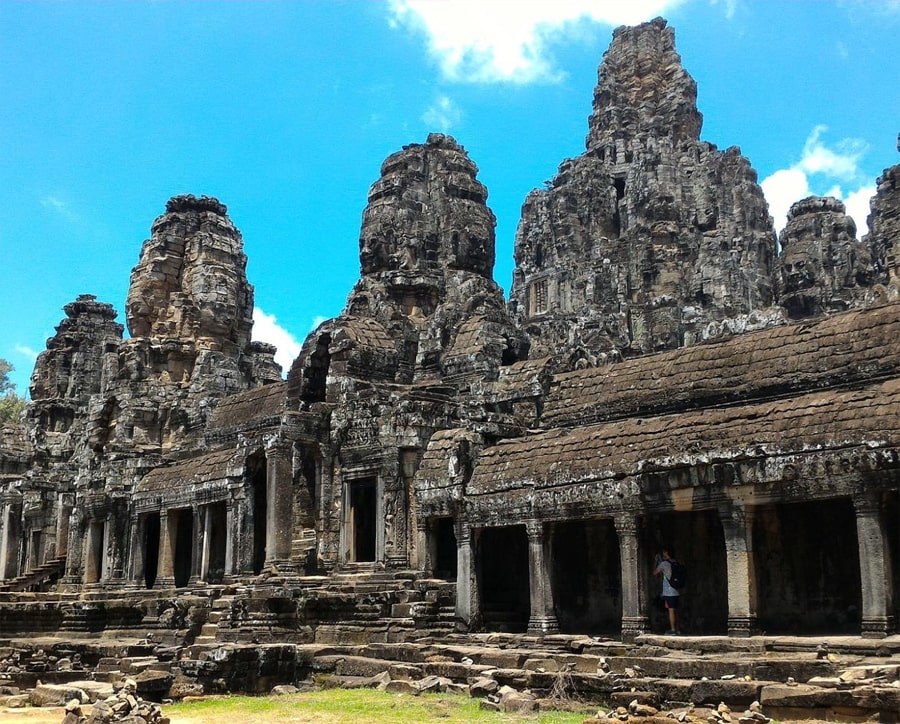
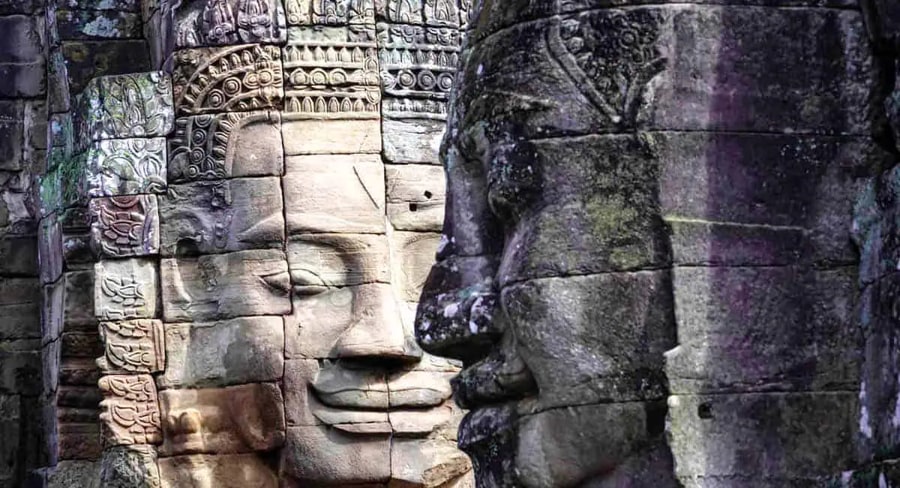
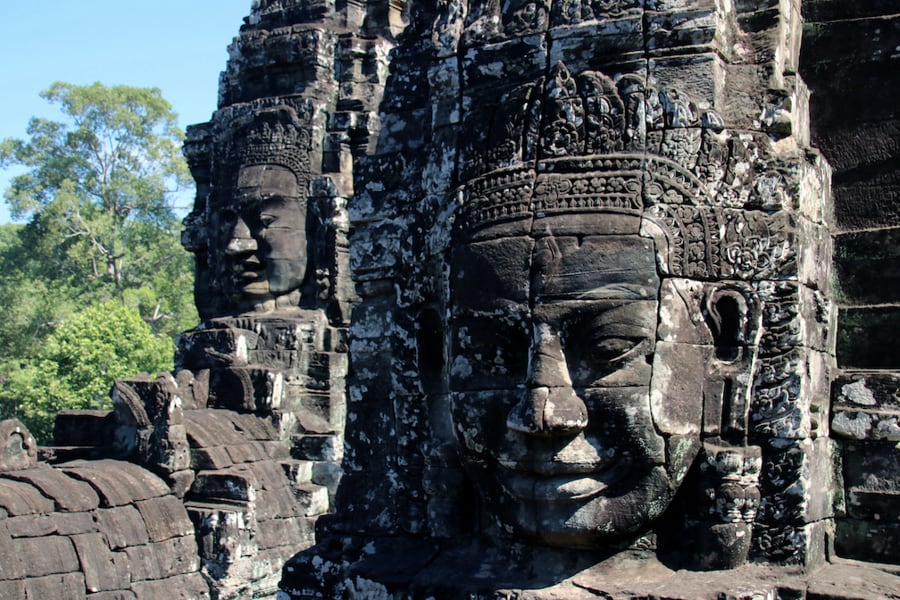
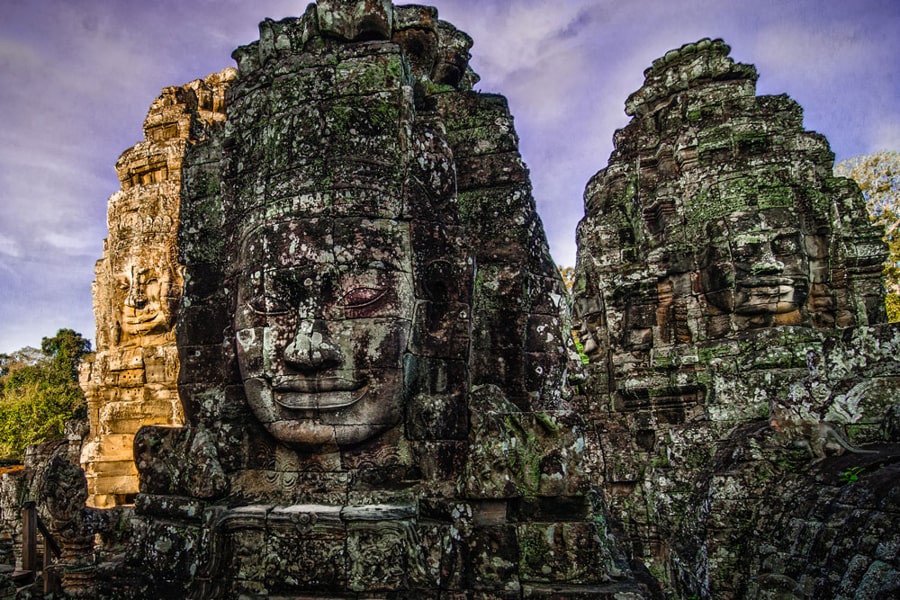
Bayon Temple is located at the heart of Angkor Thom and represents the artistic centre of this vast city of about 9 square kilometers. Bayon Temple has three platforms and 54 towers with a total of 216 beautiful, gentle, and enigmatic faces carved into white stone. These faces are said to represent either the Bodhisattva Avalokiteshvara or King Jayavarman VII himself, reflecting his power and compassion, as well as his spiritual enlightenment.

Ta Prohm Temple (Tomb Raider)

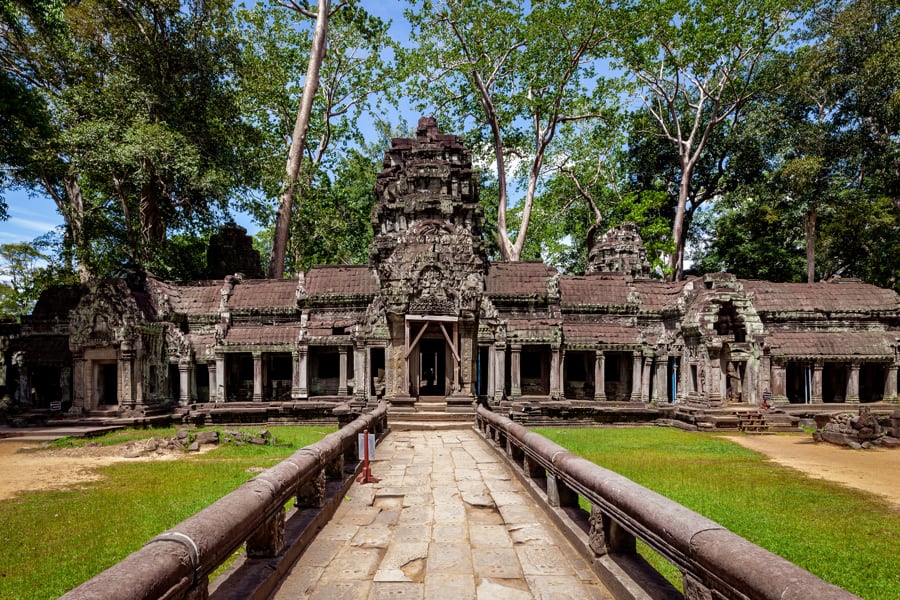
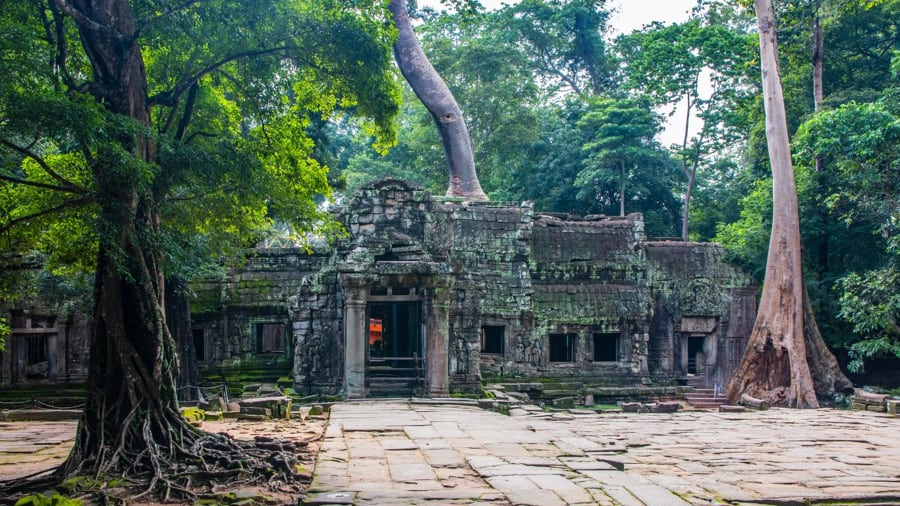
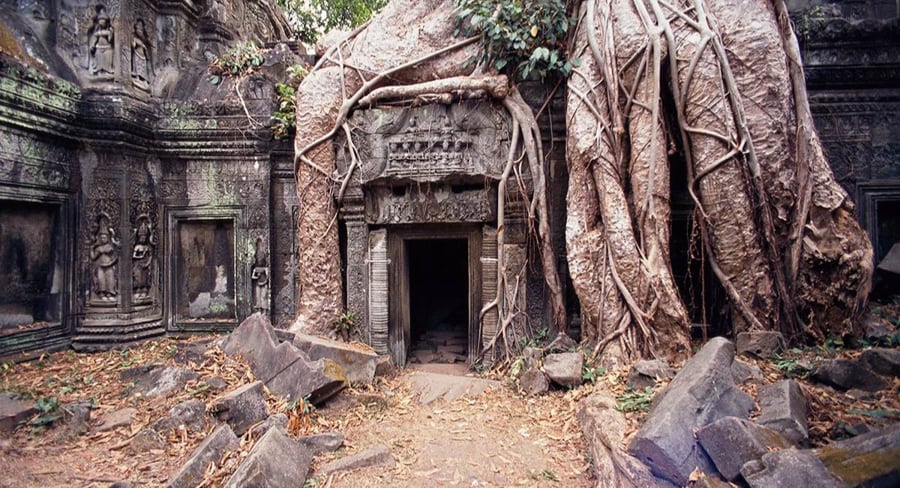
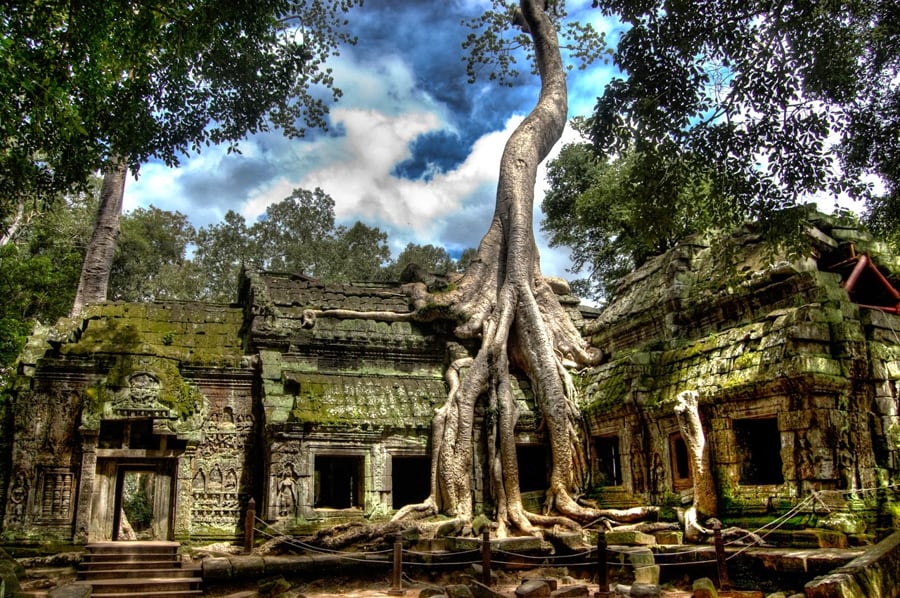
Ta Prohm, which gained international fame due to the movie Tomb Raider, is an incredibly scenic temple within the Angkor complex. Unlike other temples that have been restored or rebuilt to their former glory, Ta Prohm has remained largely unaltered since its construction.

Ta Prohm - The Temple Embraced By Nature

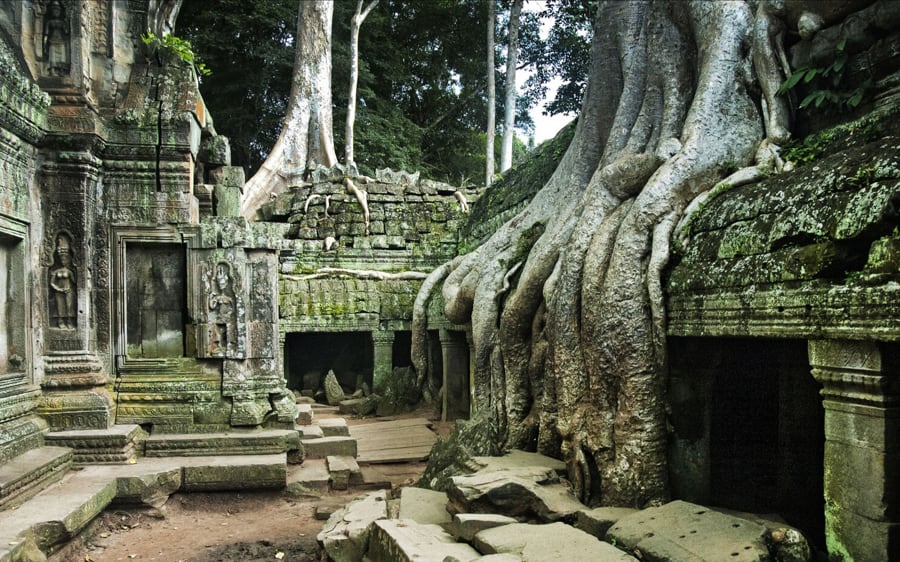
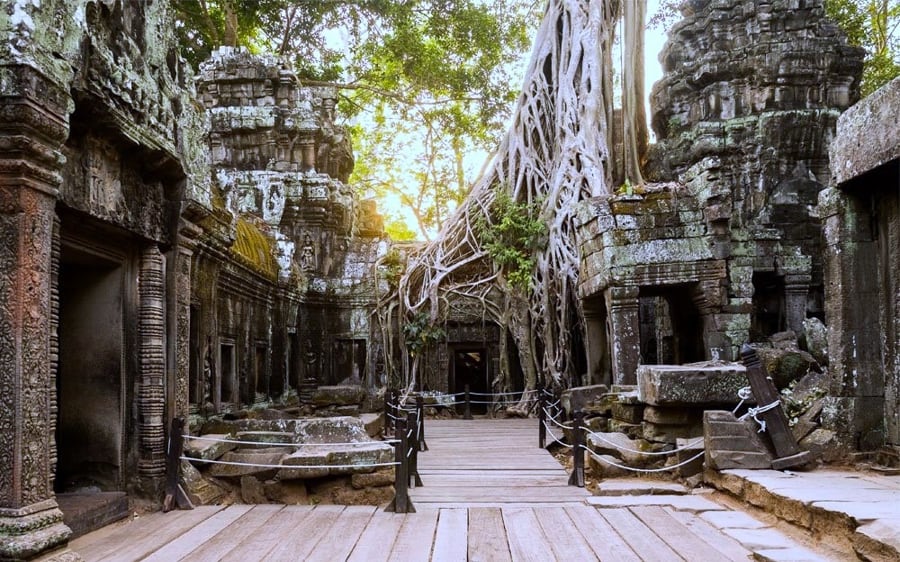
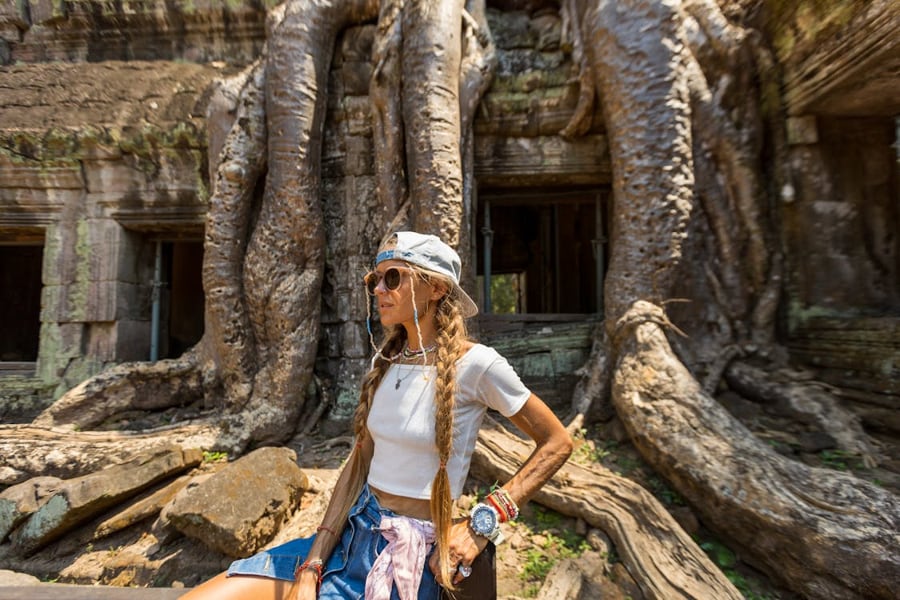
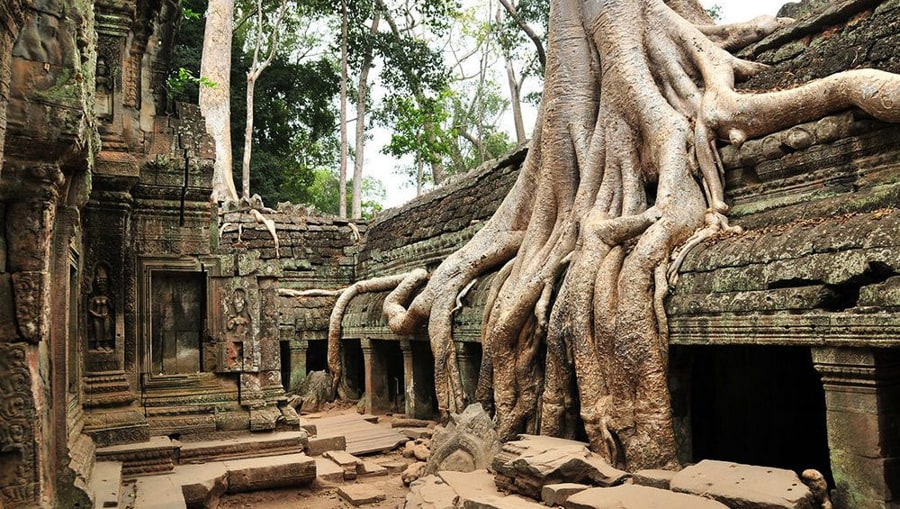
You will find that many of Ta Prohm’s walls, doorways, and towers are wrapped with large tree trunks and vines around them. The large roots intertwined with the walls create a striking combination of nature and man-made structure and give off an aura of mystery and endlessness. Walking around Ta Prohm is like finding a hidden city in the jungle. It’s both tranquil and mysterious and emphasizes how much time can change the physical world.

Roluos Group Temples

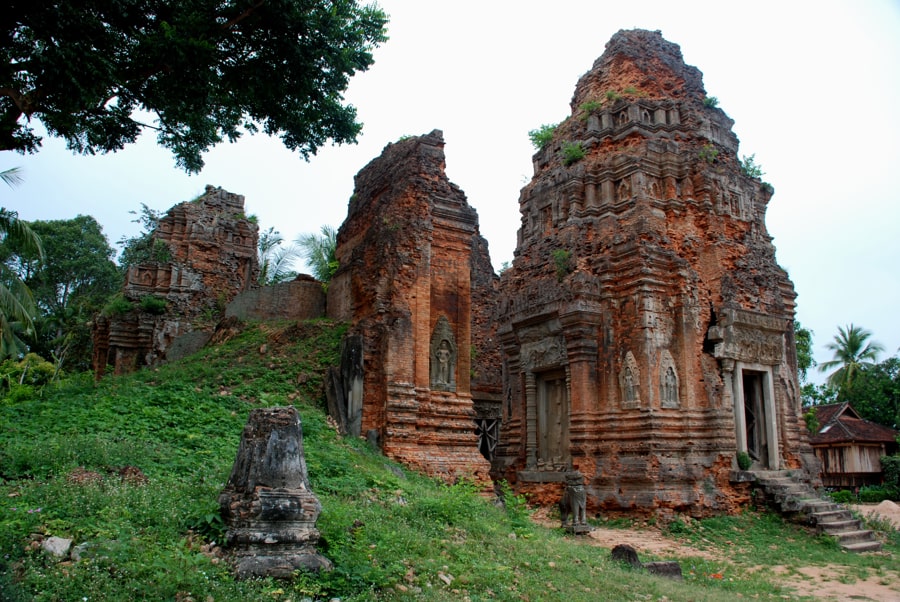
The Roluos Group features Preah Ko, Bakong, and Lolei Temples, which lie beyond the Main Angkor area, represent the earliest Khmer Temple architecture and were the site of the Ancient City of Hariharallaya, and were the models for the later developments of Angkor.

Roluos Group Temples

The Bakong Temple, in particular, became one of the early large-scale temple mountains that had been created by the Khmer. Visiting the Roluos Group is an excellent way to gain an understanding of the origins of the Angkorian civilization and how the Angkorian architectural development transitioned into the monumental splendor that we regard as Angkor Wat.

Banteay Srei Temple (Outer Angkor Area)

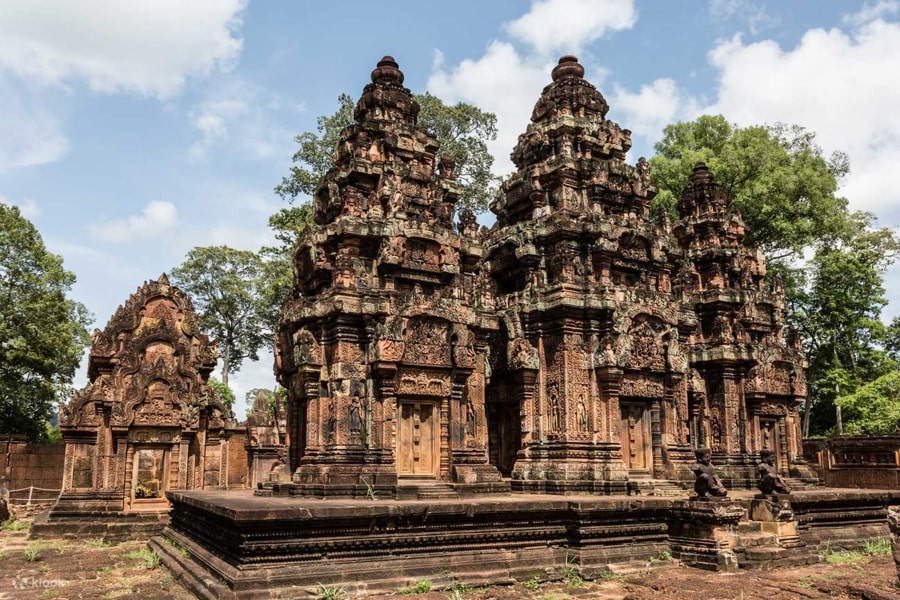
Often called “the Citadel of Women,” Banteay Srei is located approximately 25 kilometers away from the Angkor temples and was constructed in the 10th century using pink and red sandstone. Banteay Srei is well known for its fine detail of carvings, with many of the Hindu Mythologies represented on the temple so finely carved.

Banteay Srei Temple (Outer Angkor Area)

Many historians and archaeologists believe that they were hand-carved rather than created with stone tools. Despite the size of the building being less than other Angkorian temples, Banteay Srei is still considered one of the best examples of Khmer art, leaving visitors impressed by its beauty, artistry, and cultural history.

5 Unforgettable Experiences You Shouldn’T Miss

Angkor Wat is more than simply ancient temples; it’s a chance to experience Cambodia’s culture, history, and natural beauty. Here are great ways to make your visit to the Angkor complex enjoyable and memorable.

Watch The Sunrise at Angkor Wat

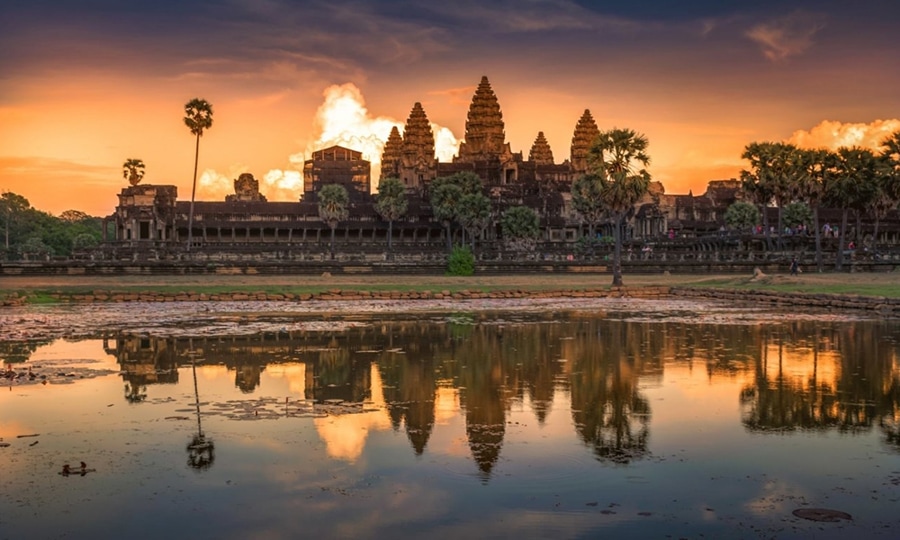
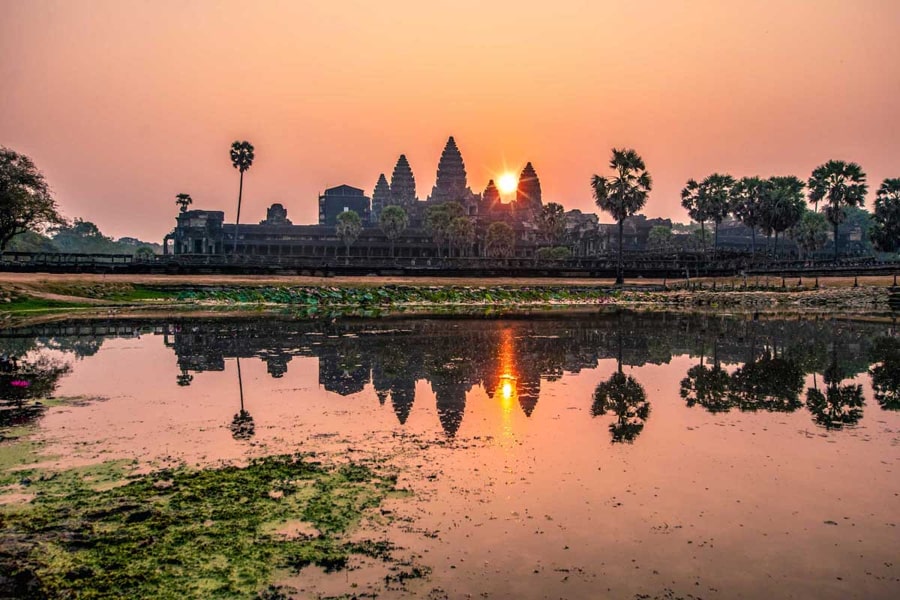
Watching the sunrise at Angkor Wat is anincredible experience and something that all visitors should experience in Siem Reap. Visiting in the early morning is a good way to see how the golden rays of sunlight light the temple’s pools and present a reflection of both the temple’s central towers and ornate features.

Sunrise at Angkor Wat

This peaceful setting is not only good for taking pictures, but it also gives visitors a chance to have a peaceful start to their day and a time to appreciate the size and amount of spirituality of one of the world’s most famous structures. For a lot of visitors, this quiet time offers the chance for reflection and to take in the size and beauty of one of the world’s most popular monuments.

Explore Bayon Temple and The Faces of Angkor Thom

Bayon Temple is found within the ancient city of Angkor Thom and epitomizes the artistic achievements and spiritual beliefs of the Khmer Empire. Bayon Temple is well-known for its 54 towers and the 216 giant, mysteriously created stone images of faces that give the illusion of following visitors through the temple complex.

The Faces Of Angkor Thom

Visitors can also view many of the temple’s bas-reliefs, which depict daily life, the practice of Buddhist and Hindu rituals, and armed conflict. A visit to Bayon will enable a visitor to appreciate the artistry and history of this important Southeast Asian civilization and to understand the place these peaceful, pleasant stone faces have occupied in the hearts of those who have visited for centuries.

Jungle Adventure at Ta Prohm

Ta Prohm is one of the temples in Angkor that exudes a special atmosphere. This temple is particularly famous for its surreal combination of nature and architecture. The temple is overgrown with tree roots, resulting in a mystical environment. Visiting Ta Prohm is like entering a secret world that is lost to civilization, a place where nature and architecture are in a state of perfect harmony. Anyone who wishes to explore, take some remarkable photographs, and experience the unspoiled beauty of a place that is slowly being reclaimed by nature should definitely visit Ta Prohm.

Ta Prohm in Siem Rep

Discover Hidden Gems In The Roluos Group

A treasure trove for those interested to learn more about the origins of Khmer architecture awaits at the Roluos Group Temples, consisting of Preah Ko, Bakong, and Lolei. This group of temples was located just beyond the main temples of Angkor and formed the city of Hariharalaya, which dates back to the earliest stone structures in the area. This site presents an excellent opportunity for the visitor to study the design and carvings on the surfaces of the earliest temples and learn more about the evolution of the Khmer architectural style while having the added bonus of a peaceful visit away from the main hustle and bustle of the central temples.

Appreciate Art and Craft at Banteay Srei

Banteay Srei, called the ‘Citadel of Women,’ is renowned for its fine features and fine artistry. This temple was created in the 10th century out of pink and red sandstone and boasts Hindu mythological carvings with an incredibly fine degree of detail.

At Banteay Srei, tourists are able to explore the temple grounds to their hearts’ content and admire the fine detail of the reliefs, as well as the skill of the Khmer artists. Apart from the fine features, Banteay Srei is also an important experience for tourists to learn more about the value systems and beliefs of the civilization that created the temple.

Entrance Fee

All foreign visitors need an entrance fee to Angkor Wat, whereas Cambodian nationals can get into the site for free. The entrance ticket is only usable for a certain number of days, depending on the type chosen. It is advisable to ensure you have cash with you when buying entrance tickets. Additionally, be cautious with your ticket as, oftentimes, guards check them at the entrance to major temples. Entrance tickets purchased after 5 PM can be used from the next day.

Ticket Type Price (USD) Validity
1-Day Pass 37 USD Valid for 1 day from the time of purchase
3-Day Pass 62 USD Valid for 7 days from the time of purchase
7-Day Pass 72 USD Valid for 1 month from the time of purchase

Opening Hours

The operating hours of Angkor Wat Temple range from 5:00 AM to 5:30 PM, giving enough time to explore the temple during the day. Other temples with extended hours to enable sunrise and sunset visits include the Pre Rup and Phnom Bakheng temples, which operate from 5:00 AM to 7:00 PM, while the rest of the temples operate from 7:30 AM to 5:30 PM.

It is best to visit Angkor Wat during the dry season in Siem Reap, which is from November to March, since the weather is cool and perfect for visiting. Visiting during sunrise or sunset is best since you get to see the magnificent view, especially when reflected in ponds or from up high in the temple structures. Visiting during the early morning or late afternoon enables you to escape the crowds and take advantage of the perfect lighting, which is perfect for photography.

How to Get to Angkor Wat

Visiting the Angkor Wat temples requires that one select a means of transport according to preference, comfort, and pace. Below are some of the most common means of transport accessible when navigating the Angkor temples.

By Tuk Tuk

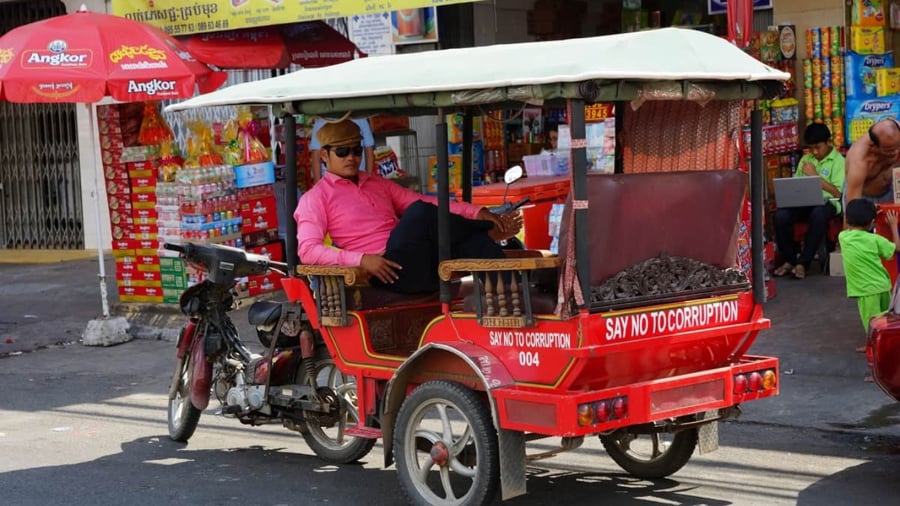
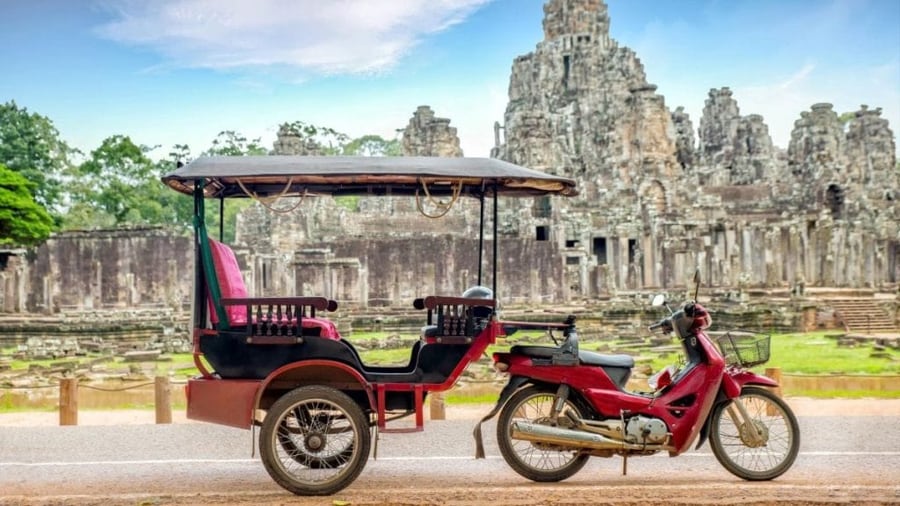
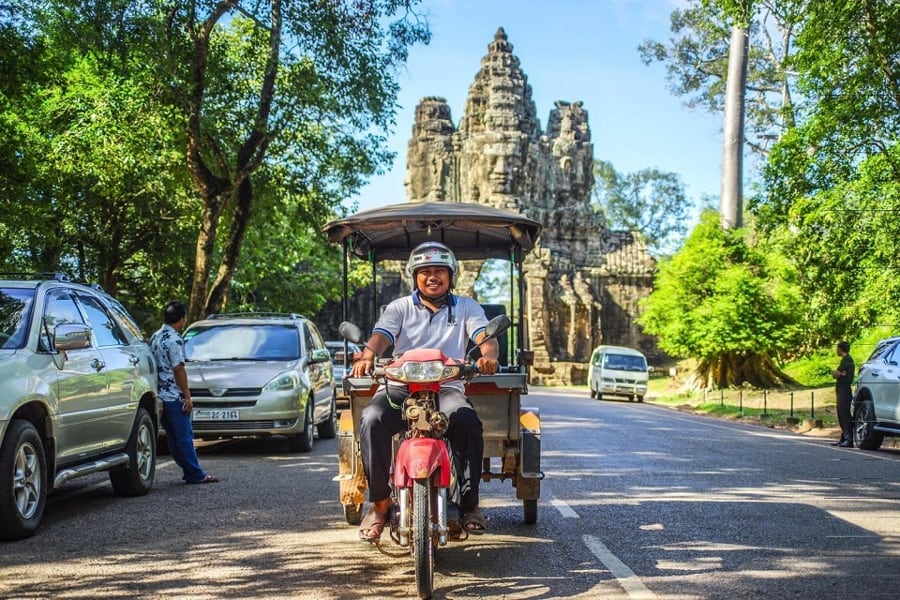
Tuk tuk is one of the most conventional ways people use in transportation in Cambodia, primarily in and around the temples of Angkor. It is a great opportunity to see this ancient site while taking in the interesting outdoor experience. Many tuk-tuk drivers provide full-day rental services. They come and take customers right from their hotel or guesthouse, visiting most places.

On average, one has to shell out only 25 USD for a full day with a tuk-tuk driver. One major advantage of the tuk-tuk is that people are given ample opportunities to take in the local culture and surroundings at their own sweet time.

tuk tuk in cambodia

Private Car or Taxi

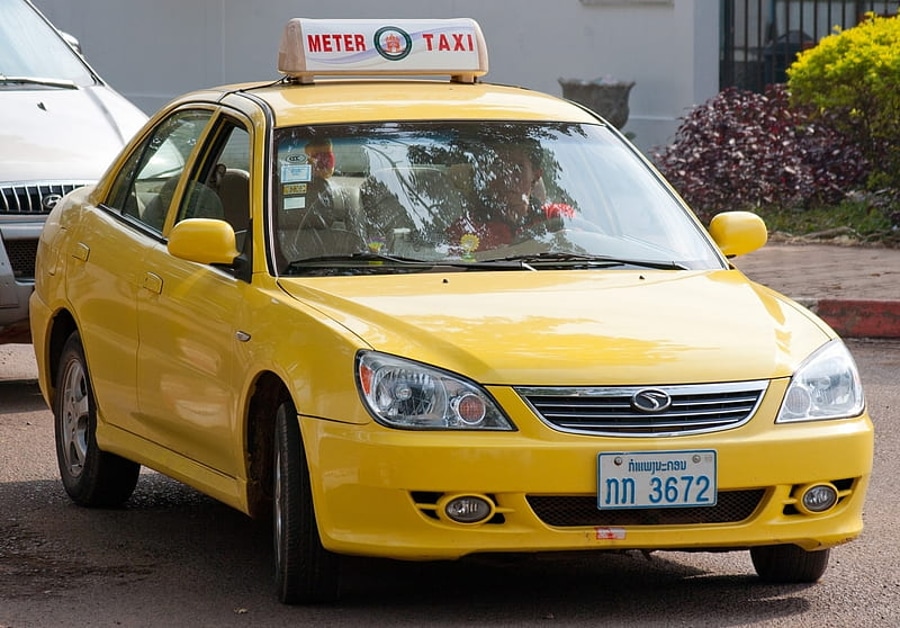
Taking a private car or taxi will prove to be a great option for those who want comfort, privacy, and some respite from the scorching heat. This will enable you to travel from one temple to another faster and would prove to be a better option if you want to customize your own itinerary. Private cars and taxis can be booked on online websites or rented from local points in Siem Reap and cost anywhere between 30 to 40 USD per day. This will prove to be the best option for families, people with less time, or those who want to experience all the major sites stress-free.

By Bicycle

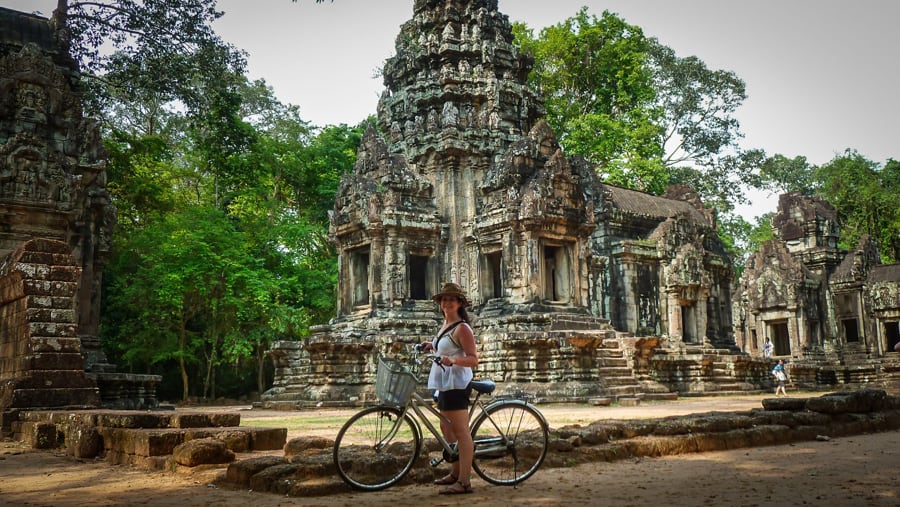
Renting a bike to explore Angkor Wat is also a wonderful experience for adventure lovers who enjoy physical activity and an even more personal exploration of the site. The use of bicycles offers participants the opportunity to explore the site at their own rate and enjoy the wonders of the natural environment and the beauty of the temples around them in comfort and serenity. The bikes for this experience are easily available from many stalls in Siem Reap for a relatively low price of 1 USD per day.

Things to Know Before Traveling to Angkor Wat

Preparing ahead of time for your trip to Angkor Wat is one way in which you can maximize your time at this wonder and steer clear of pitfalls. There are several things that you may want to keep in mind.

  • The sunrise over Angkor Wat is magnificent, though rather crowded. Getting there before 5:30 will get you a better location for a photograph and a quieter experience.
  • Religious site attire should be conservative. This means wearing clothing that covers both shoulders and knees, while avoiding clothes that show too much skin.
  • The sun is very strong in Cambodia, and it is quite tiring to walk across the massive temple grounds. Water and sunscreen must be taken along.
  • Having an educated guide at your beck and call can discuss the history and architecture associated with each of the temples you visit.
  • There is a lot of walking involved in exploring the area of Angkor Wat, so it is essential to wear comfortable shoes.
  • Motor rickshaws, bicycles, and personal transport are common vehicles used when accessing the Angkor complex. You can select a means depending on your speed preference.
  • Do not touch any holy objects, step on any carvings, or disturb the monks. Always follow the signs and the customs to display courtesy.

Final Thoughts: Is Angkor Wat Worth Visiting?

Angkor Wat is a must-see destination for travellers who want to connect with culture, history, and the experience of travel that will last forever. There is something magical about watching the sun rise over Angkor Wat or strolling along the same stone-cast corridors of Angkor Wat from centuries past. It is a privilege to have such direct contact with one of the greatest empires of history, while being a part of the vibrant culture of Siem Reap today. If you desire a true journey of discovery in Southeast Asia, let Seni World do the planning for you to visit Angkor Wat in the most enriching and comfortable way possible.

Hotels In Siem Reap Compared By Neighborhood Patterns And Access

Hotels in Siem Reap are spread across compact but functionally different areas, from nightlife-heavy streets to quieter river and residential zones. Where a hotel sits often matters more than star rating when planning daily routes, meals, and transport.

Top 10 Hotels in Siem Reap by Area

Picking a good spot matters when you reserve a place in Siem Reap, more so if days are few. Staying near Pub Street or the Old Market makes sense for newcomers, since most spots sit just steps away.

Pub Street/Old Market Area

This place is where most Cambodian-bound visitors hang out in hotels in Siem Reap – full of food spots, evening markets, but also tour shops, all tucked into a compact zone perfect for walking. Staying close by means less time getting around, which works great if you’d rather explore on foot instead of taking tuk-tuks every night.

Khmer Mansion Boutique Hotel

Khmer Mansion Boutique Hotel fits fine when nights out matter to you. Only 200 meters down the road lies Pub Street, near Angkor’s evening market, while cafes and joints line Sivatha Road, making meals or drinks super easy to grab. A typical stay runs from $60 up to $85 per night, costing less than many other places just as centrally placed.

Khmer Mansion Boutique Hotel

The hotel runs smoothly mostly due to its layout, not fancy rooms. Near the center, there’s a pool tucked away from roads, keeping noise down when Pub Street heats up past 10 pm. Inside, rooms feel airy; cooling stays constant and walls block street ruckus pretty well for this crowded area. Better suited for solo travelers or couples after comfort, not high-end perks.

Two Seasons Siem Reap Hotel

Two Seasons Siem Reap Hotel works fine when you want to stay close to the nightlife but also crave peace once in a while. Only a quick walk, less than five minutes, gets you to places such as Angkor Night Market, the Old Market, or Pub Street. There’s a complete spa on site, together with a steam room; meanwhile, each morning brings a filling breakfast buffet.

Spaces here tend to be roomier compared to others close by – each comes with its own balcony, which isn’t common near the Night Market. With only 30 units, it avoids the packed hotel feel found in central areas. Rates typically range from $98 to $130 per night, putting Two Seasons on the pricier side among middle-range stays in Siem Reap.
Two Seasons Siem Reap Hotel

Park Hyatt Siem Reap

Park Hyatt Siem Reap sits close to Old Market, also near Pub Street. Back then, in 2005, Bill Bensley dreamed it up – shaded courtyards keep things quiet, mostly because of tall banyan trees. The real draw is two free pools, perfect when you’re hot from visiting temples, plus a reliable spa to unwind before heading out again.

It’s not tiny like most spots nearby – this place packs 104 rooms and suites, giving plenty of breathing room. Folks usually grab meals here since the flavors stand out. Nights run from $670 up past $700; nothing feels mass-produced. There’s always something fun to dive into without leaving the spot, while that fresh 2025 Michelin Key gives it real clout.

Park Hyatt Siem Reap

Sok San Road Area

Sok San Road makes sense if you’re after a spot near Pub Street yet off the busy party stretch. Places to sleep tend to offer more room and better setup for your dollar than joints right on Pub Street.

Sakaban Suite

Staying at SAKABAN Suite means night plans start right outside your door. Step out and head to Angkor Night Market, great for quick bites plus picking up small keepsakes. Keep moving just a bit longer, you’ll hit Pub Street when drinks or tunes call. That freedom is why Sok San Road beats staying right on Pub Street.

SAKABAN Suite

The hotel’s set up for relaxed, extended visits. Spacious rooms stand out here, each one offering a personal balcony or patio. Breakfast is on the house, and bike hires let you zip across town by day instead of hailing tuk-tuks. You’ll typically pay between $56 and $90, which tends to beat prices for similarly sized spots nearer to Pub Street.

Central Suite Residence

The hotel really stands out because it keeps things steady. One big draw is that visitors pick off a larger list, mixing local and familiar dishes, making mornings easier on longer trips. Getting in early isn’t a hassle, plus you’re handed a cool drink or towel after being outside, all small touches adding up.

Central Suite Residence shines if you like having things close, like super close. Head outside and bam, there’s spas left and right, real-deal food spots, plus coffee places folks hit every day. A lot of visitors start with a rubdown, grab a bite near the hotel, and after that, they figure out if it’s worth a short stroll to Pub Street for eats or stuff to do in Siem Reap generally. Rooms normally run between $64 and $75, making this place solid for those wanting comfort without overspending.

Apsara Centrepole Hotel

Apsara Centrepole Hotel fits well if you’re just stopping by in Siem Reap. The rooms stay basic but tidy, some with their own balcony or patio space, so fresh air’s an option. If you need to zip across town midday, bike hire’s handy here. Compared to flashier suite spots close by, prices tend to run cheaper, landing somewhere between $125 and $230 most times.
Apsara Centrepole Hotel

Pretty handy having airport transfers, places to swipe your card, or swap cash when you’re just hanging around for a bit. Grabbing food on site or sipping drinks by the pool works fine if you don’t feel like trekking outside again. The Night Market and Pub Street are roughly five minutes down the road on foot, helping you easily eat nearby, hit up a massage spot, wander through market stands briefly, then head upstairs to chill.

Wat Bo Road Area

Wat Bo Road sits just east of central Siem Reap, quieter than the busy core. You can reach places like Old Market, Angkor Night Market, or Pub Street quickly from this spot; even so, traffic stays light, while nighttime bar action remains rare.

Viroth’S Hotel

Viroth’s Hotel is a short walk from Wat Bo Temple, near the Old Market – easy to reach whether you’re walking or hopping on a tuk-tuk. Thanks to its location, getting around town feels smooth, but you still dodge the noise of Pub Street. A lot of guests go here if they prefer wandering after dark instead of arranging transport.

Viroth’s Hotel

Food quality comes up a lot when guests think about staying longer or returning later. Since the rooms feel spacious, feature durable materials, and include personal patios, they work well for lengthy stays. Prices usually land on the upper side of mid-range, around $265 to $315 per night. People booking several nights often spot green practices such as reduced waste and reusable amenities.

Riversoul Boutique

Riversoul Boutique pulls in travelers who care more about charm than flashy frills. With only 25 rooms, it feels relaxed, no crowded lounges like those city-area hotels. Every space comes with its own balcony along with a built-in fireplace, which is rare for this part of Siem Reap. Prices tend to run cheaper than larger boutique places close by, mostly between $75 and $85 per night.

Riversoul Boutique sits close to Wat Bo Road, only a short trip from Pub Street, yet within walking distance of the temple and the Royal Garden. Around that area, you’ll come across small cafes, neighborhood food joints, plus spots for massages. Getting settled takes no time at all; staff lend a hand with airport transfers, while daily cleaning keeps everything fresh without hassle.

Siem Reap River Area

The Siem Reap River stretch cuts through town from north to south, unlike Old Market or Wat Bo. Stays along this spot get picked thanks to riverside spots, room to breathe, and less crowded streets instead of nearby bars and shops. Guests often go for these places because of where they’re at; a good setting matters more than just being close to things.

Jaya House River Park Hotel

Jaya House River Park sits along the upper part of the Siem Reap River, not near the Old Market or Pub Street scene. Because it’s set apart like this, fewer crowds pass by, making things calmer. Being farther from downtown also means quicker routes to Angkor Wat, so guests leave earlier without delays. Instead of focusing on bars or loud evenings, the place leans into peaceful riverside times and easy visits to temples.

Jaya House River Park Hotel

Rates tend to stay between $339 and $369, placing Jaya House higher than Wat Bo’s small hotels yet lower than big resorts. The two outdoor pools operate on split schedules, avoiding busy gathering times. Guests eat at the hotel often since there aren’t many restaurants close by. Transport to the airport or Angkor is mostly set up through staff rather than outside services.

Fcc Angkor

This place sits right on the river, a central spot with easier reach into town. From FCC Angkor, days can be split into two steady patterns. Mornings involve strolling by the water toward the Royal Garden plus the museum zone, whereas nights shift via a quick tuk-tuk ride to the Old Market and Angkor Night Market scene. This keeps daily routes predictable and avoids traffic bottlenecks common in the Old Market grid.

FCC Angkor

What distinguishes FCC Angkor is its colonial-era setting and layout. The hotel occupies a former French compound, with wide lawns and shaded outdoor spaces. Rooms are arranged to face inward gardens or the river rather than streets, reducing noise while keeping the hotel visually open. Prices typically fall in the $155-$375 range.

Tips to Choose Comfortable Hotels in Siem Reap

Travel in peak weather in Siem Reap shapes how much you’ll pay for a room and how comfy your stay feels. Picking where to sleep based on the time of year can weigh more heavily than which bed size you get.

  • First-timers might like spots close to Pub Street; being nearby means more freedom at night while cutting down hassle when days are tight or travel time’s short.
  • Staying along Sok San Road often means more bang for your buck compared to spots near Pub Street with the same convenience, yet quieter after dark, while dodging the crowds.
  • Riverfront stays make sense when you wanna stroll, bike, or just chill near the water; elsewhere, spots away from the shore usually offer the same ease for less cash.
  • Choosing hotels in Siem Reap near Wat Bo Road works well when you’re hopping between temples. Places here are often peaceful, plus they’ve got extra room to stretch out.
  • In high season from November to February, hotels right by the river get booked fast, so nailing down a good spot counts way more than extra room perks.
  • Boutique spots usually give cozier rooms plus sharper upkeep compared to big old hotels for similar cash – this hits harder in the middle tier.

Final Thoughts

Picking a place to stay in Siem Reap? Focus on where it is, not how many stars it’s got. Stay downtown, surely everything’s close by, though you might get stuck with loud streets and tight spaces. On the flip side, quieter zones just outside still keep you near action without the hassle. Instead of guessing, check out Seni World – we break down neighborhoods clearly, plus give honest tips so picking lodging feels less like luck.

Siem Reap To Phnom Penh Trip: Estimated Time, Cost, And Options

Siem Reap to Phnom Penh is one of the most frequently traveled routes in Cambodia. Travelers can experience all of the incredible attractions of Angkor Wat as well as all of the sights, sounds, and lifestyle of the Kingdom of Wonder.

Overview of Siem Reap to Phnom Penh

A journey from Siem Reap to Phnom Penh is among the most sought-after in Cambodia, since it covers two different destinations, which symbolize two contrasting but complementary aspects of the country. While Siem Reap boasts a reputation for ancient treasures in the form of Angkor and a laid-back cultural vibe, Phnom Penh presents a more in-depth exploration of life in contemporary Cambodia and a connection to the country’s political culture. Taking a trip from Siem Reap to Phnom Penh will enable one to tap into both the spiritual foundations and the dynamic pace of life in Cambodia.

Bayon Temple in Siem Reap

A lot of people have incorporated both Siem Reap and Phnom Penh in their travel itinerary in order to have a complete Cambodian experience. Traveling between these two places can be very easy because travel options include buses, a private car, and a cruise. Therefore, incorporating these two travel destinations gives you a complete travel experience in Cambodia since you can visit temples, museums, walk along riversides, and enjoy local dishes.

How Far Is It from Siem Reap to Phnom Penh?

Siem Reap is approximately 318 km from Phnom Penh, which makes it an easily accessible trip for people visiting Cambodia. The drive will take you a total of five hours and thirty minutes, depending on traffic and how you plan to travel. The road is a busy one and links two major cultural centers in this country.

Due to this convenient proximity, a good number of tourists have found it appealing to make both cities part of a single itinerary. While Siem Reap will treat you to ancient wonders and a laid-back small-town atmosphere, Phnom Penh will give you a glimpse into Cambodian life, including the royal side and a picturesque riverside setting.

How to Travel from Siem Reap to Phnom Penh?

Depending on your preference for budget, time, and travel type, several efficient methods are available that allow you to get from Siem Reap to Phnom Penh. All of these methods are very popular. However, each method provides a unique experience on this well-trodden path.

By Bus

While taking a bus is the most popular and economical method of travelling from Siem Reap to Phnom Penh, there are also many other transportation methods available.

All public buses operate on a daily basis by numerous private bus companies and can be purchased for as little as 10 to 18 USD per ticket. The typical time frame to travel from Siem Reap to Phnom Penh is approximately 5-7 hours, depending on the amount of time you spend at stops along the way, which include Kampong Thom and Skun.

Most bus stations in Siem Reap can be found in the vicinity of the Old Market, whereas most bus drop-off points in Phnom Penh are located in close proximity to the central market (Phsar Thmey).

siem reap to phnom penh by bus

By Taxi

If you need to travel quickly and comfortably to a location, a private taxi can be a good option. For people who want more flexibility or share the car with other travellers, the taxi will come as a shared ride on a per-seat basis, or you can rent an entire car. The price for either ticket will usually be in the ballpark of 38-45 USD per vehicle. If everything goes well and traffic is good, it takes about 5 to 6 hours to drive from the two cities. Choosing this route is a good choice for those who prefer a door-to-door service and a relaxing way to travel between locations.

By Ferry

Another option to get to your destination is by taking a ferry across Tonle Sap Lake. Ferries leave every day from Sisowath Port in Phnom Penh or Chong Khneas Pier in Siem Reap. The price of a ferry varies from approximately 18-25 USD per ticket, and reservations can be made through a local hotel or travel agency with at least a one-day advance notice. If you want to travel in the rainy season when the water level is high, this would be the ideal way to do so because the journey will be smoother and more enjoyable.

ferry across Tonle Sap Lake

By Plane

The quickest option for traveling to Phnom Penh from Siem Reap is by air, taking only 45 minutes on average via a domestic flight with Cambodia Angkor Air or Lanmei Airlines. Prices for tickets can range between 30-100 USD and depend on the time of year and ticket type. Flying, although more costly than ground transportation, is ideal for those travelers on limited schedules who need to make a fast transfer.

Tips for Traveling from Siem Reap to Phnom Penh

Getting from Siem Reap to Phnom Penh can be pretty simple, but with a little foresight, you can make your trip go much more smoothly. Here are a few tips to ensure you have a hassle-free experience during your travel.

  • It is important to pre-book your means of transport in case you are traveling during peak times. Besides that, make sure to book your suitable accommodations in Phnom Penh ahead to have
  • Select an appropriate mode of transportation according to your schedule, as buses are budget-friendly, taxis are quicker, and flights will prove to be time-saving if you have a tight schedule.
  • Early in the morning, you can start your journey to reach Phnom Penh without encountering traffic and have sufficient time to explore.
  • Pack some snacks and water because sometimes rest stops may not be available along the way.
  • Money can be set aside in smaller denominations for stops and meals or unforeseen expenses encountered during travel.
  • Be mindful of your luggage and keep your valuables with you, especially when taking buses.
  • Look out for any weather beforehand, in case rain can impact your travel times.

Recommended Stops Along The Way

The travel route between Siem Reap and Phnom Penh is more than merely a means of transportation from point A to B. Travel is an opportunity to discover hidden gems off the beaten path that provide insight into Cambodia’s history, culture, and gastronomy. To enhance your travel experience, consider incorporating some of these must-see stops into your travels.

Sambor Prei Kuk (Kampong Thom Province)

Sambor Prei Kuk is considered one of the most vital pre-Angkorian archaeological sites in Cambodia and was designated as a UNESCO World Heritage Site due to its significance as an ancient temple complex that dates back to the 7th century, when it served as the capital city of the Chenla Kingdom. The temples are set within dense forest and constructed of red clay brick, which communicates a peaceful and enchanted atmosphere.

Sambor Prei Kuk Temples

This site is much less crowded than Angkor, creating a relaxed atmosphere for exploration. Visitors can see many temples surrounded by nature, with some trees and moss providing additional character. For historians and those with an interest in history, this site offers a unique insight into early Cambodian cultures.

Kampong Thom Town

Kampong Thom is an unassuming provincial town located halfway between Siem Reap and Phnom Penh, and is a nice place to stop for the night. The town allows visitors the opportunity to experience an authentic Cambodian town as opposed to touristy areas. Local foods are available, small markets can be visited, and there are opportunities to stroll along one of the rivers that run through the town.

For travelers planning to explore the nearby ruins of Sambor Prei Kuk, Kampong Thom is a good place to stay, as it serves as a base for that destination as well. The slower pace at Kampong Thom gives tourists time to rest their bodies before they continue their journey southbound.

Skun (Spider Market)

The small town of Skun is also referred to by some as the “Spider Market”, a great example of a quirky and somewhat fun roadside stop on your journey. One of the biggest attractions at the Spider Market is fried spiders, but many other insect-based snacks are sold here too. Many people go just to see what it’s all about, and take pictures, even if they don’t plan on sampling anything.

Skun is known for selling not just insects, but also fresh fruit, grilled meats, and local sweets, thus being a vibrant stopping point. An easily accessible way for tourists to break up their travel while providing a quick yet enjoyable cultural adventure, Skun serves as a very popular place for visitors to take short breaks while travelling via buses and taxis.

Skun (Spider Market)

Tonle Sap River Views (Near Phnom Penh)

While traveling towards Phnom Penh, you will see that the landscape is rich with the scenery found along the banks of the Tonle Sap and in the wetlands around the river. The views during this segment change significantly from what was experienced at the temples and rural areas before entering Phnom Penh, such as fishing communities, boats.

People who work off the river will be part of the travel experience, and by all accounts, a beautiful transition before the busy city. For many visitors, this marks a change from rural Cambodia to urban rhythm, and therefore a chance to enjoy and take in the last landscape to end their trip.

FAQS About Traveling from Siem Reap to Phnom Penh

Those planning a trip from Siem Reap to Phnom Penh may have their own set of queries with regard to travel options, time, and other specifics. Some of the most common ones have been highlighted below to make your travel a seamless experience.

How Easy Is It to Travel from Siem Reap to Phnom Penh?

Yes, it is quite easy to travel from Siem Reap to Phnom Penh. There are many different ways in which you can reach Phnom Penh, such as by bus, taxi, ferry, and plane. Taking a bus is a very comfortable way to travel to Phnom Penh from Siem Reap.

Can I Stop Along The Way at Attractions?

Yes, you can make some stops at attractions, especially if you go by private taxi. Some common stops include Kampong Thom, Sambor Prei Kuk, and Skun Market. Bus travel will follow a fixed route with minimal stops for a break. A private transfer service will be better if you want to sightsee.

Kampong Thom is a popular stop

What Is The Best Time of Year to Travel from Siem Reap to Phnom Penh?

The ideal time to visit Phnom Penh is during the dry season, which is from November to April, when the road network is good. However, during the rainy season, you may experience delays when taking a ferry ride on Tonle Sap Lake. Moreover, if you visit during the rainy season, you will have a chance to enjoy lush vegetation and fewer people in most places.

Do I Need to Reserve Tickets in Advance?

Booking in advance is advisable, especially during peak tourist seasons and holiday times. Booking in advance will allow you to get better seats and your desired departure time. Booking flights and ferries early is a critical consideration. Bus tickets can be readily obtained, but they may be exhausted during peak tourist times.

Final Thoughts

A trip from Siem Reap to Phnom Penh will give you both sides of Cambodian culture in one seamless travel experience. The travel route will connect you with the historical beauty of Angkor and the culture and history of Phnom Penh, which is a city alive with culture, and along a majestic waterbody like a river. The travel experience offers a mix of both worlds in a seamless manner. To make your travel to Cambodia an easy and enjoyable experience, your travel companion on this route will be Seni World.

Siem Reap Itinerary: The Best Way to Experience the City

A Siem Reap travel itinerary will provide you with an excellent mix of historical and cultural experiences, local markets, and Khmer culture. Having an itinerary will allow you to discover Angkor Wat, a floating village, and the local culture at your own convenient pace.

How Many Days to Spend in Siem Reap?

The ideal number of days to spend in Siem Reap, according to many travelers, is 3 to 4 days. A 3 to 4-day trip allows visitors enough time to see the Temple of Angkor, watch a spectacular sunrise at Angkor Wat, and enjoy cultural performances during the evening. With an organized itinerary, travelers will be able to see the best of the Angkor complex and other lesser-known temples.

In addition, a 3 to 4-day trip will allow for additional excursions outside of the Angkor complex. Visitors can take boat tours of the floating villages located on Tonle Sap Lake, try traditional Khmer food, shop at local markets, and visit the cafes located in the French Quarter. Each traveller (whether photographer or culture enthusiast) can expect a well-balanced and unforgettable trip while in Siem Reap.
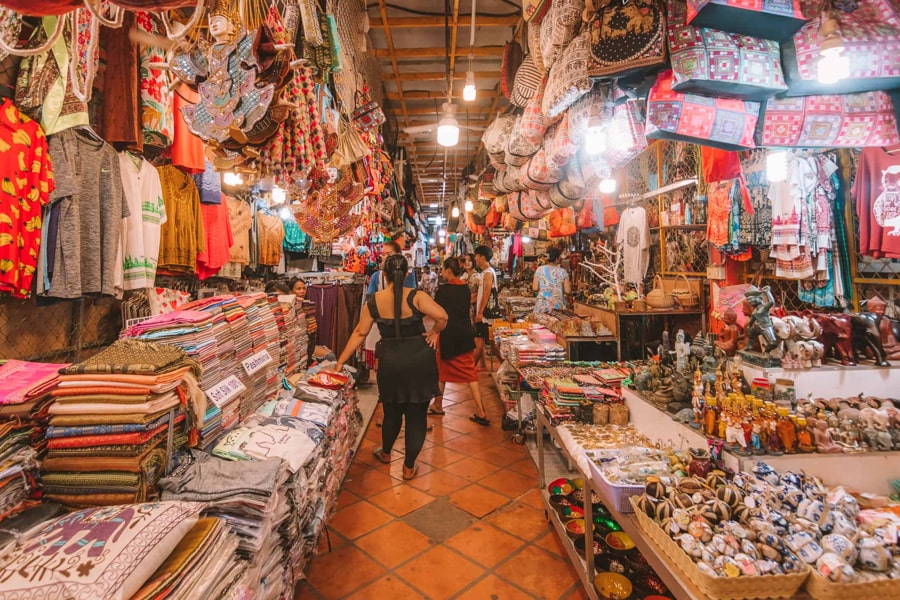
What to Expect from The Siem Reap Itinerary 4 Days

Angkor Wat

Angkor Wat is the hallmark of Cambodia and is famous for its towering spires and bas-reliefs. A trip to Angkor Wat will enable you to experience the stunning sunrises and discover one of the greatest architectural wonders of the world.

world-famous-Angkor-Wat.-in-Siem-Reap

Angkor Thom

Angkor Thom previously functioned as a royal capital for the Khmer Empire and boasts imposing stone gates, large terraces, and magnificent temples. Its enigmatic charm resides within a harmonious convergence of history, size, and intricate carvings that evoke its imperial Cambodian lineage.

Baphuon and Bayon

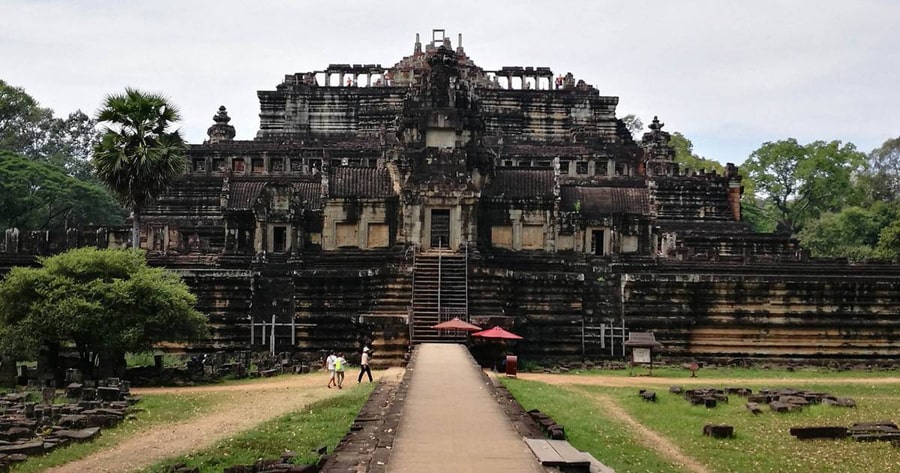
Baphuon and Bayon are two places that need to be visited once you enter Angkor Thom, as they have something unique about them. Baphuon will awe you with its sheer height and restored structure, and Bayon will fascinate you with its smiling stone faces.

Ta Prohm

Ta Prohm is known for its eerie and beautiful setting, which beautifully weaves together ancient structures and the roots of massive trees. Its cinematic setting, as seen in Tomb Raider, sets up a surreal background where nature and history merge into a single picture.

Ta Keo

Ta Keo boasts distinctive pyramid architecture and raw stone facades, giving a sense of ancient Angkorian architectural styles. Its simplicity, size, and symmetry make it very attractive for tourists who want a more rugged and unrenovated temple experience.

Ta Keo

Beng Mealea

A jungle temple with a sense of mystery, with collapsed corridors and ancient stones littering the ground among towering trees. It is commonly known as the ‘lost temple’. It boasts an exciting and eerie experience remote from tourists.

Banteay Srei

Banteay Srei boasts intricate pink sandstone carvings with some of the finest artistic details at Angkor. Banteay Srei is commonly known as the ‘Citadel of Women’ and is famous for its elegance, refined carvings, and timeless beauty.

Banteay Srei

Tonle Sap Lake

Tonle Sap Lake is the biggest freshwater lake in Southeast Asia and presents an interesting perspective on life on a waterbody. As you travel through Mechrey Floating Village, you will be able to see the floating houses, markets, and schools that showcase the special life within the region.

Angkor Night Market

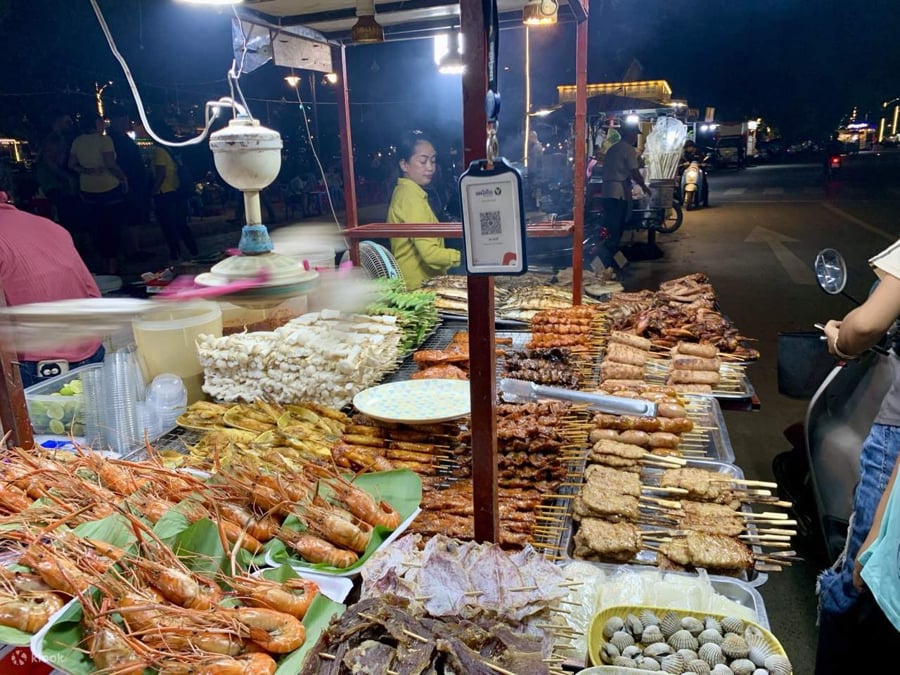
The Angkor Night Market is a great spot for unwinding in the evening. It houses local artworks, local crafts, and local cuisine. The lively scene and colorful lights make it an attractive destination.

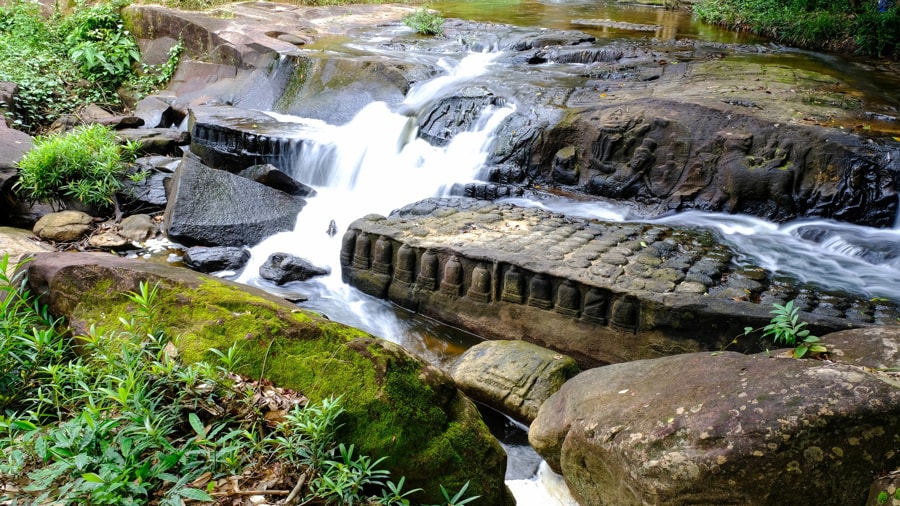
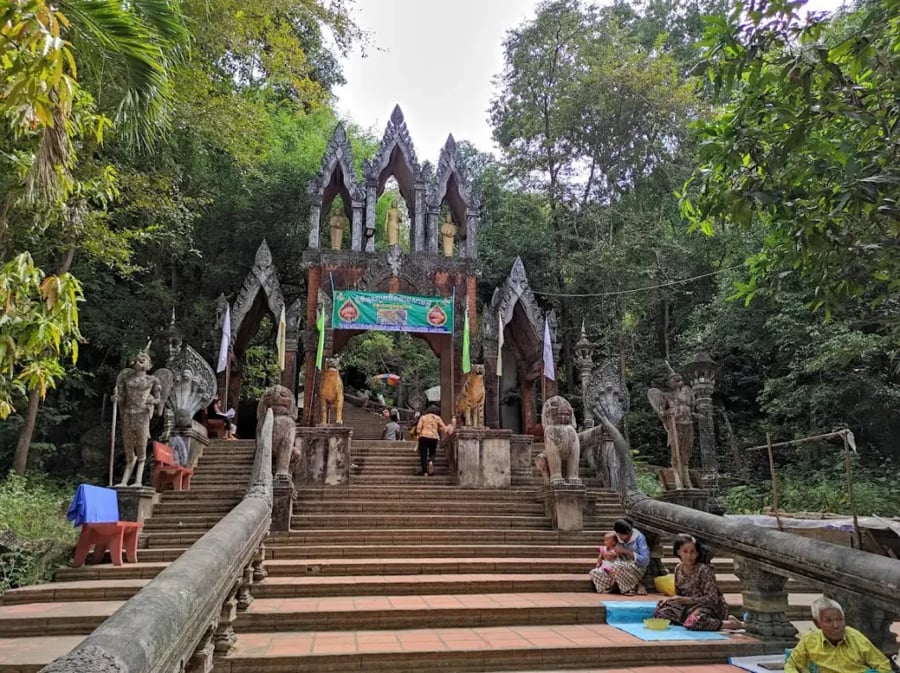
Phnom Kulen

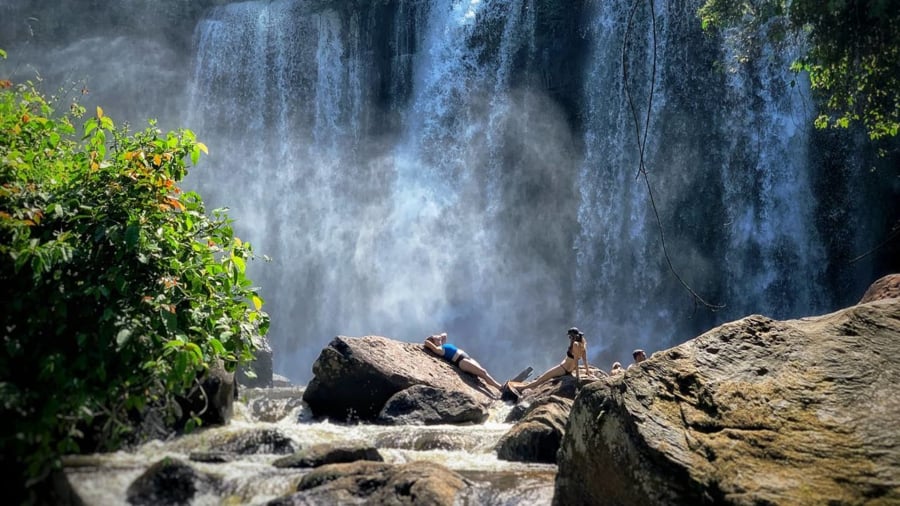
Phnom Kulen is a holy mountain that represents the origin of the Khmer Empire. Its holiness, reclining Buddha statue, and forest trails provide a refreshing respite from crowded temple sites. Regular visitors include spirituality seekers and photography buffs.

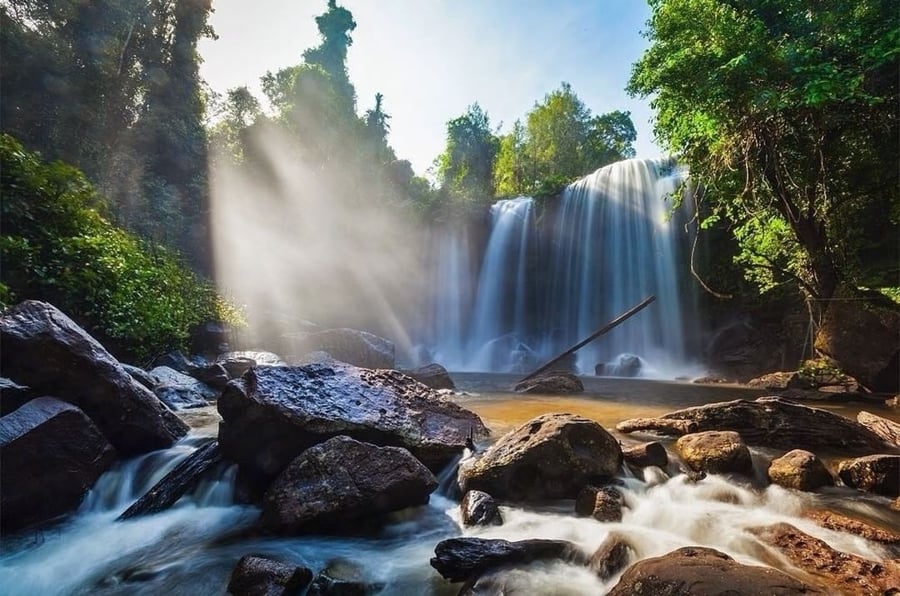
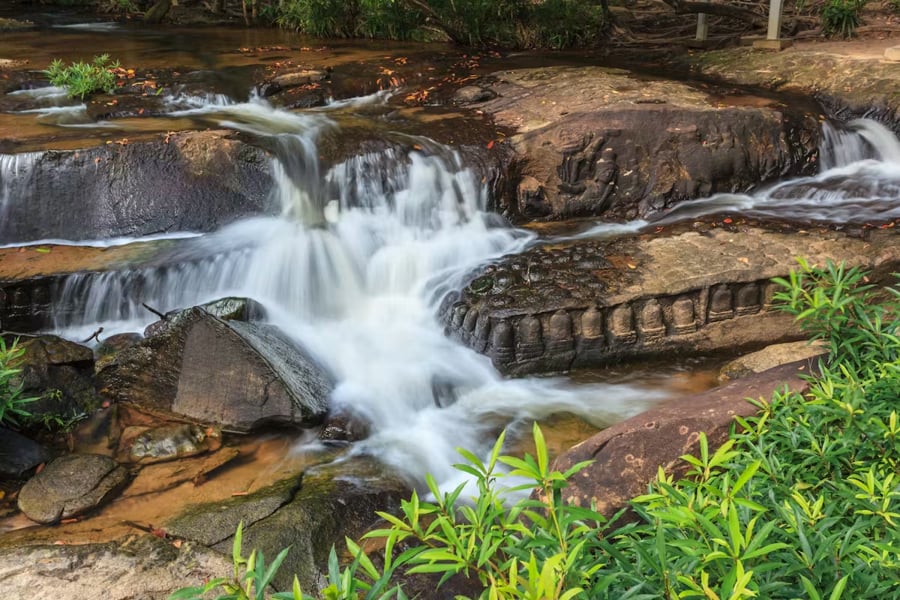
watefall in Phnom Kulen

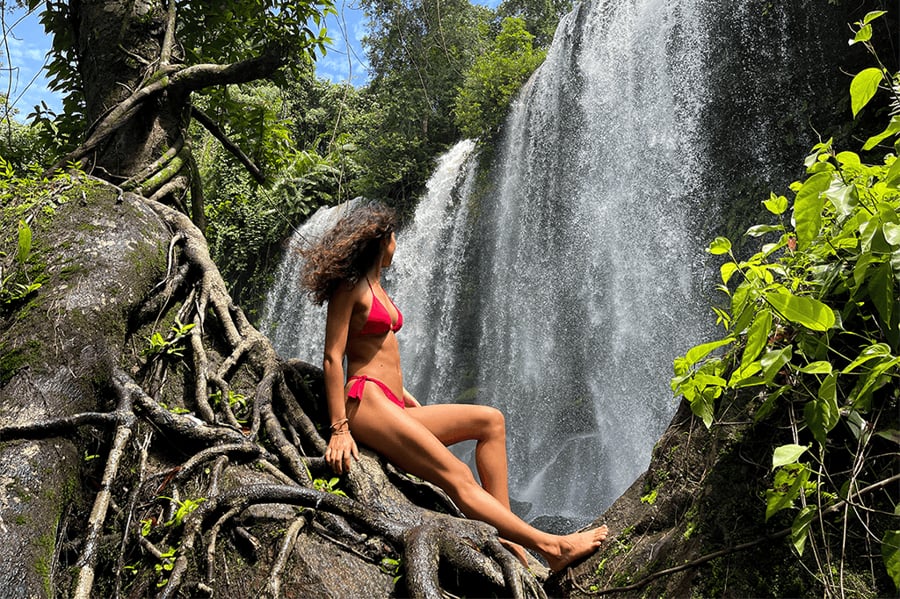
The Kulen Waterfalls here offer a relaxing getaway for tourists who want to swim amidst the waterfall and lush tropical surroundings. It’s a perfect spot for tourists to cool off and unwind amidst nature.

Detailed Itinerary

Siem Reap is the ideal place to enjoy a combination of both ancient temples and local cultures with an easy-going travel vibe. You can visit this exciting destination each day for all the local highlights of your trip. This detailed guide to the itinerary makes planning your trip a breeze and allows you to take in all the highlights of your visit to Siem Reap without feeling rushed or overwhelmed.

Day 1: Discover The Ancient Wonders of Angkor

Begin your Siem Reap itinerary early with a not-to-be-missed experience of the famous Angkor Archaeological Park. Once you are in the town, renting a bicycle is the easiest and most fun way of getting to the site, which lies about 7 kilometers out of the downtown area. Do not forget the entrance fee for the whole day, which will only set you back about 20 USD, allowing you to come and go whenever you wish.

If you are one of the early birds, do not miss the mystical sunrise view at Angkor Wat, where the golden light filters through the fog and shines upon the ancient moat of the temple. For those who do not prefer rising early, come during the afternoon when the light will be softer and the tourists fewer.

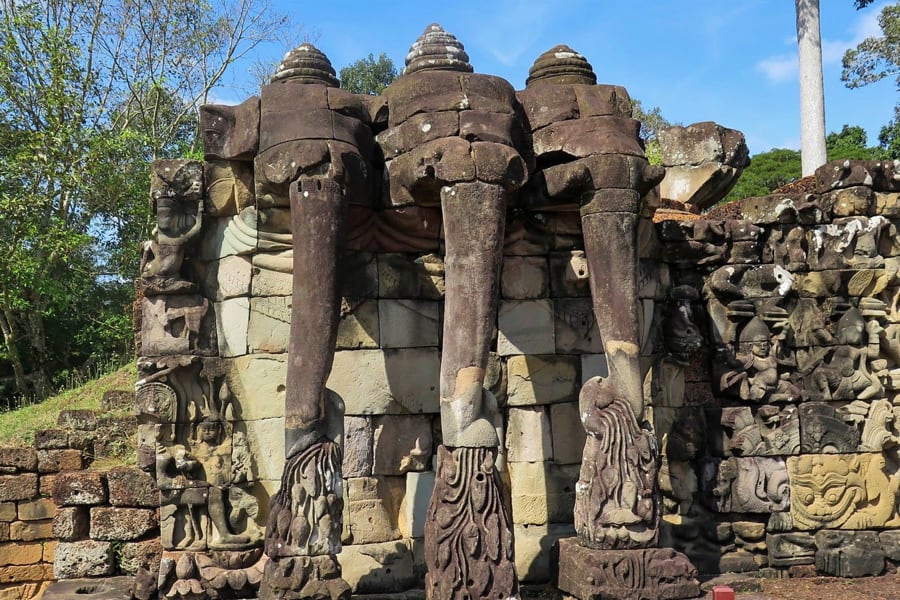
Next, you can explore Angkor Wat and proceed to Angkor Thom, the enormous temple complex that was believed to serve as the royal capital. The design of the said structure cannot help but seem monotonous, hence it is essential that the visitor gets the best parts: enter through the Victory Gate, walk along the Terrace of the Elephants, and go on to the grandiose temple of Baphuon and Bayon, also famous for the serene stone faces that gaze at one from everywhere.

Victory Gate in Ancient Wonders of Angkor

Having appreciated the majesty of these ancient ruins, it is time for you to venture deeper into the jungle in order to explore Ta Prohm, the enchanted temple that is entwined with the massive silk-cotton trees’ root systems. World-famous because of the film Lara Croft: Tomb Raider, this temple is as breathtakingly beautiful in real life as it appears in the film. A blend of nature and ancient architecture, visiting the temple you simply a must-visit activity in Siem Reap.
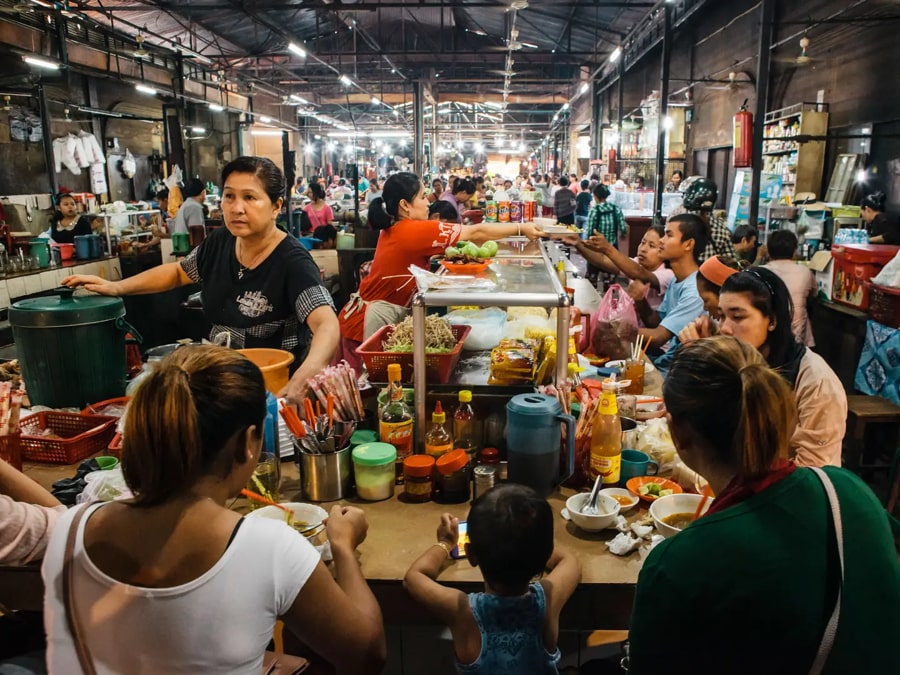
  • Travel Tip: Sometimes, when traveling on your own, it can get really overwhelming. This is where a local guided tour can make all the difference. It’s one of the best ways to explore the famous temples without any hassle.

Day 2: Hidden Temples and Siem Reap’S Market Life

The second day of fun Siem Reap itinerary will serve you well for exploring the well-tread path of Angkor, and exploring the hidden temples that quietly stand off the beaten path. Begin the day at Ta Keo, also known as the mini Angkor Wat, because of the pyramid-style architecture that features a large stone structure. Next, visit the temple of Beng Mealea, where the temple is completely hidden in the jungle and shares the same structure as Angkor Wat, making for a true “lost” experience where the trees and the temple are as one.

temple of Beng Mealea

Finally, make sure you get the chance to visit the temple of Banteay Srei, renowned for the beautiful pink sandstone carvings, displaying delicate relief carvings that have given it the poetic title of The Citadel of Women, because it celebrates the beauty of women.

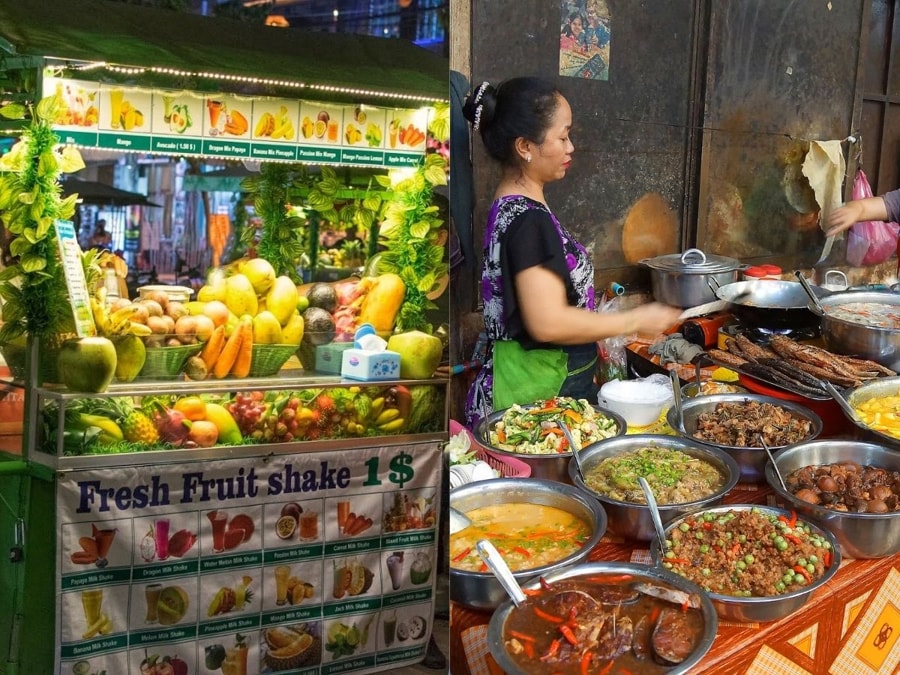
About 4:30 PM, you will get off at Phsar Chas, also known as the Old Market. This is one of the only markets that is still very much integrated into local culture, unlike other markets that tourists often visit. It is where local cooks and restaurateurs go to get the basics for their meals, and also where you can eat local snacks like kuy teav, a rich pork noodle soup, or bai sach chrouk, a sweet grilled pork dish served with rice. It’s also where you can get excellent souvenirs.

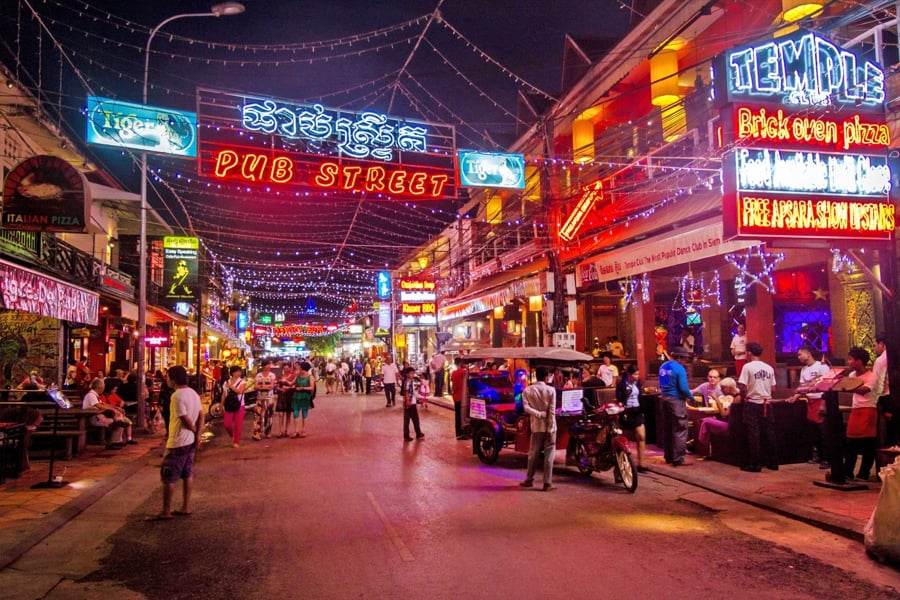
Pub Street in Siem Reap

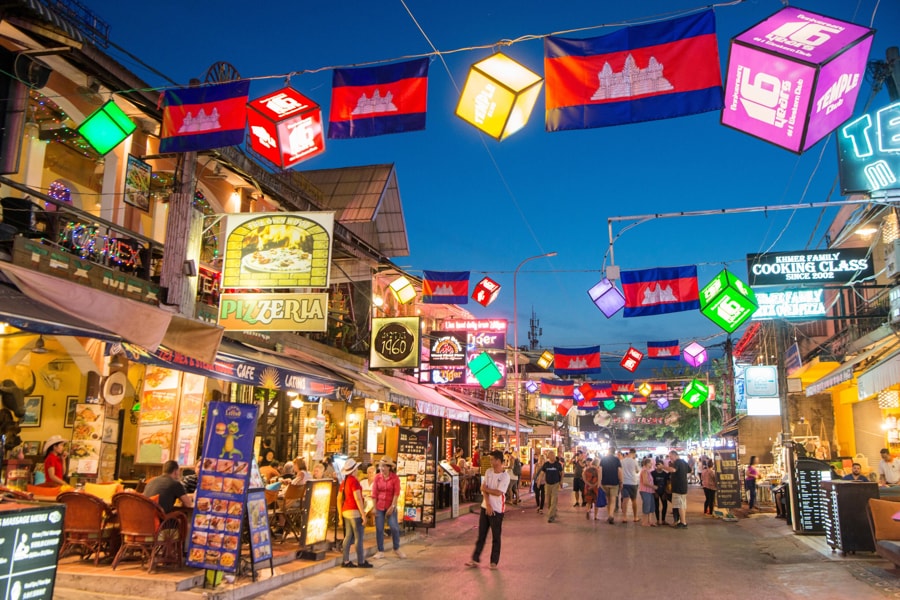
In the evening, head on over to Pub Street, the nightlife area of Siem Reap. This place is pretty famous among tourists, but it also offers a lively dinner and entertainment experience. To end the night, why not have dinner at the famous Angkor What? Bar or the Temple Club, which provides the ideal blend of culinary delights, entertainment, and good vibes to cap off the night with a bang amidst the lively night scene of Cambodia?
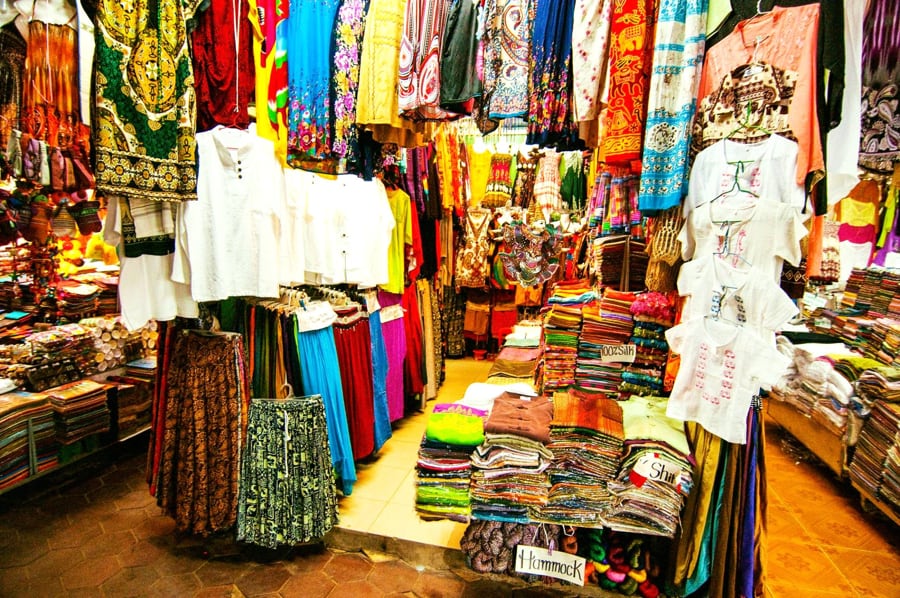
Insider Tip: To get the most out of your day, Seni World recommends doing a Cambodia tour. This will not only give you interesting history, but it will also give you the opportunity for lunch, allowing you to sample the delicious Cambodian cuisine.

Day 3: Floating Villages, Khmer Flavors, and Night Market Wonders

By the time you reach your third day, you have already experienced the ancient granite artworks. Now it is time for a new experience that will give you insight into the other facets of Cambodian culture. Begin the day with a morning tour of Tonle Sap, the largest freshwater lake in Southeast Asia. Basking beneath the warmth of the golden light of the morning sun, the lake appears as a massive, glistening mirror that stretches endlessly, mirroring the lives that live upon it. This tour will, of course, take you through the Mechrey Floating Village, where you will cruise through the homes, schools, and markets that float upon the surface of the Tonle Sap Lake.

unique floating villages on Tonle Sap Lake

Insider Tip: Most of the Tonle Sap tours take place around 7:00 AM, leaving you the rest of the day for something else that will surely live on in your memories. This is, of course, a Khmer cooking class. Learning about the lake is interesting, but learning how Khmer people live, eat, and breathe their culture is even better. Go to a countryside home where they teach you how to make three typical Khmer meals.

As the night sets in, the evening will see you exploring the Angkor Night Market, where you can spend the night wandering around the craft, artwork, and other local goodies on offer. As the lights hang above you and the sound of music carries through the night, the night market will make for the perfect end to the day, let alone the holiday, in Siem Reap.
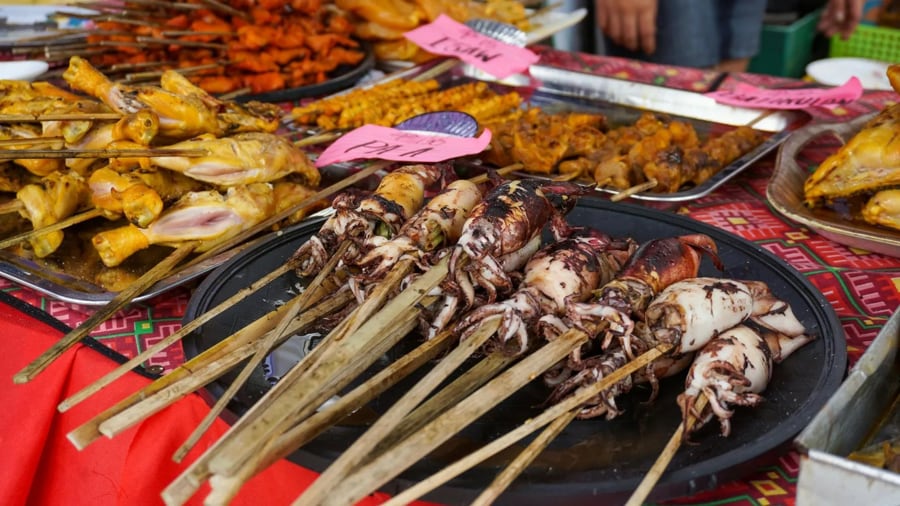
Day 4: Scenic Roads, Sacred Peaks, and a Relaxing Farewell

For the last day of your stay in Siem Reap, start trading the crowds of the temple ruins for open roads and breathtaking scenery. One of the best ways of doing exactly that is by renting a motorbike, the way the locals get around, and exploring the hidden gems of the area in your own time. For the start of this adventure, make the journey to Phnom Kulen, the holy mountain that sits northeast of Angkor Wat and the birthplace of the great Khmer Empire. This mountaintop is of great historical importance, but it also exudes a spiritual vibe that will make you feel at peace when you visit this important place of pilgrimage.

Later, let’s cool off at the cascading Kulen waterfalls, where a swim beneath the treetops awaits, a well-deserved relief for the morning’s explorations. To round off the day, ditch the motorbike for a bicycle, offering a more subdued ride through the countryside of Siem Reap, punctuated by temples, villages, and farmland. It’s a relaxing, scenic farewell, and a fitting tribute to the essence of Siem Reap, beyond the ancient ruins, that will serve as the last farewell to this captivating city.

FAQS About The Siem Reap Itinerary

Visiting Siem Reap brings up a lot of questions for new visitors, especially for first-timers. going to Cambodia. Below are answers to these common questions you may have.

Should I Hire a Guide When Visiting Angkor Wat?

You can certainly visit Angkor Wat by yourself. However, when you hire a guide, you have the advantage of having an expert who can give you a deeper understanding of the history, symbolism, and legends surrounding each temple. A guided tour will also assist you in navigating the enormous temple complex. If you are interested in culture and architecture, we highly recommend that you hire a guide.

sunrise in angkor wat

What Is The Best Time to Visit Siem Reap?

The coolest and driest months of November through February are typically considered to be the best time to visit, providing comfortable temperatures to explore the temples. The downside to this is that it is also the busiest time of year for many tourists. The months of March, April, and October are considered to be the “shoulder” months; they will be much less crowded than the cool months, but will also be significantly hotter.

Is Siem Reap an Expensive Place to Travel to?

Siem Reap is generally inexpensive compared to many cities worldwide. You will be able to find accommodations and food options for all budgets, from backpackers to luxury travelers. One of the biggest expenses while visiting Siem Reap will be entrance fees to the major attractions, such as Angkor Wat. Eating street food and shopping in local markets will allow you to enjoy many good meals without overspending.

Final Thoughts: Why Siem Reap Belongs on Your Travel List

From magnificent temples of Angkor to vibrant floating villages and lush mountain backdrops, Siem Reap offers an unforgettable combination of ancient traditions, spiritual beauty, and local charm. Siem Reap’s markets are full of flavors, handmade gifts, and authentic experiences that capture the essence of everyday Cambodian life. Are you ready to create your dream Siem Reap itinerary? Seni World is here to provide you with expert advice and hassle-free travel services during your journey.

Where To Stay In Siem Reap For Convenient And Chill Moments

There are various hotels and resorts for you to choose from when looking for where to stay in Siem Reap. Let’s learn more about the best places to stay in Siem Reap, favored and trusted by local people and travelers.
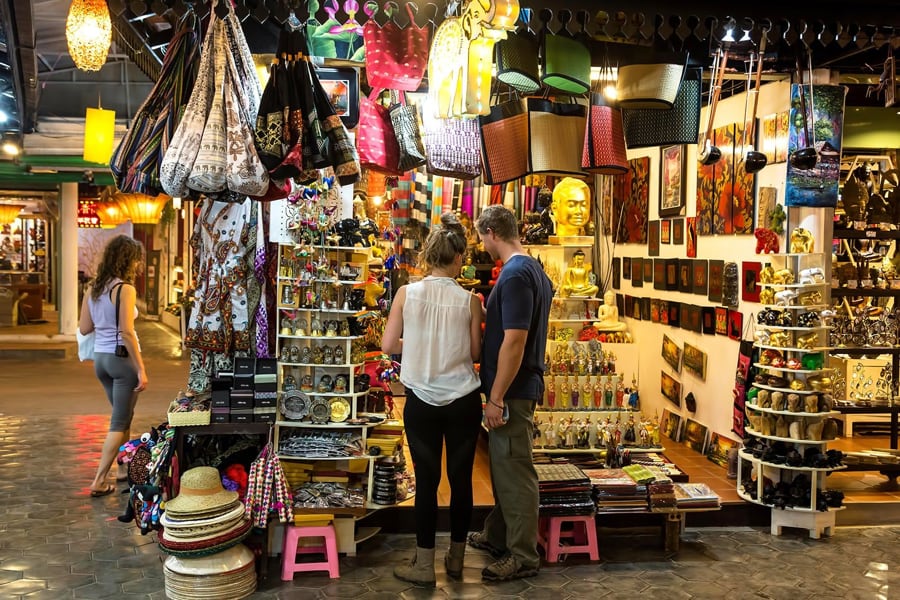
Top Hotels in Siem Reap

Seni World has summarized some highly recommended resorts, hotels, and hostels in Siem Reap for travelers when they schedule and look for where to stay in Siem Reap. It consists of the accommodations’ location, star standard, highlighted layout and style, all the benefits, services, amenities, and the typical price range.
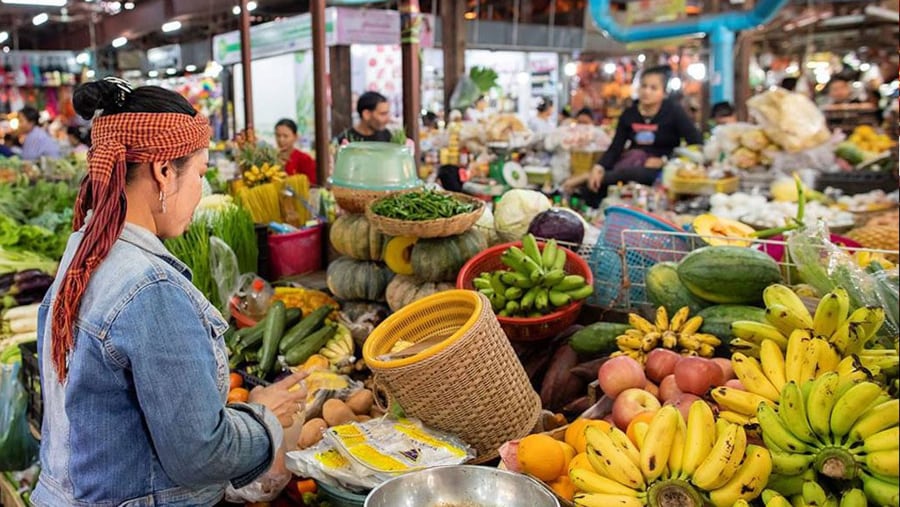
Siem Reap City Center

This area is the heart of Siem Reap, which is wonderful for vacationers to enjoy Siem Reap nightlife, such as walking to the famous Pub Street, visiting night markets, enjoying restaurants, and shopping. This is dynamic at day and night, with tons of places to eat and discover, so this is also the best area to stay in Siem Reap.
Angkor Holiday Hotel (4 ★)

Angkor Holiday Hotel (also called Baitong Heritage Hotel) is a classic-style hotel located close to National Road 6, which it easy for travelers to reach the Angkor temples. The hotel has a traditional layout with a central swimming pool, large corridors, and rooms. All of them are designed for comfort as opposed to trend-driven luxury. In particular, its decoration combines Khmer architectural touches and practical contemporary furnishings.

Angkor Holiday Hotel

There are many amenities and benefits at Angkor Holiday Hotel, consisting of a restaurant, outdoor swimming pool, a spa center, a health club, and a tour help desk. The hotel is suitable for both leisure and group vacationers who love reliability and smooth travel to Angkor temples. The price of the Angkor Holiday Hotel in Siem Reap is from $29.2 to $127.50 per night.

Kouprey Hotel (4 ★)

Kouprey Hotel is a contemporary lodging, where you can walk or book a tuk-tuk to visit attractions in the center of Siem Reap. The hotel’s layout is compact but efficient, bringing tourists clean lines, modern interiors, and beautiful decoration for each room. Its design highlights minimalism and functionality with warm neutral tones for a pleasant feeling. So the hotel is a good choice when you look for where to stay in Siem Reap.
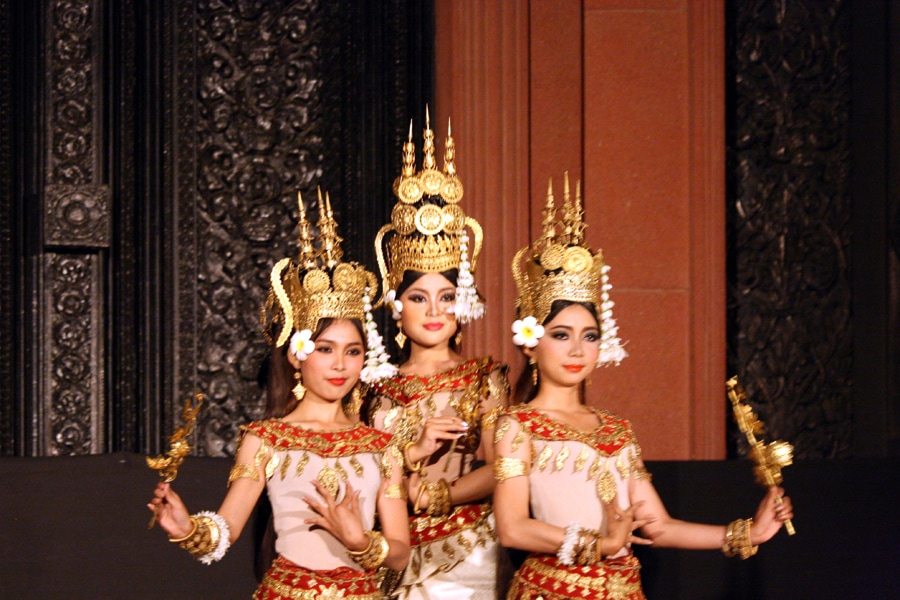
Kouprey Hotel

Travelers can enjoy many benefits and services at Kouprey Hotel, such as an outdoor swimming pool, a restaurant serving traditional dishes, spa services, free Wi-Fi, and airport transfers. Besides, hotel staff are very hospitable and always help you book transportation or consult tour arrangements. The price of the Kouprey Hotel in Siem Reap is from $49.2 to $123.9 per night.

Angkor Paradise Hotel (5 ★)

Angkor Paradise Hotel is recognized for its large space and classic luxurious design, particularly traditional Khmer layout elements. The hotel has a big outdoor swimming pool as its centerpiece, which is surrounded by green palm trees. All rooms in the hotel are generously sized, providing a great stability of elegance and convenience rather than ultra-modern decoration.

There are many amenities and benefits at Angkor Paradise Hotel, consisting of a spa, a gym, some on-site eating places serving delicious Khmer foods, meeting rooms, and excursion arrangement support. Angkor Paradise Hotel is ideal for travelers who want to unwind in traditional, luxurious, and complete hotel facilities. The price of the Angkor Paradise Hotel in Siem Reap is from $70.8 to $455.4 per night.

Angkor Paradise Hotel

Sokha Siem Reap Resort & Convention Center (5 ★)

Sokha Siem Reap Resort & Convention Center is a large-scale resort designed for leisure tourists, families, and corporate events. The resort has expansive green gardens, wide and brilliant internal roads, huge swimming pools, and multiple lodging wings. The design of Sokha Siem Reap Resort & Convention Center mixes grand traditional and Khmer-inspired architecture with cutting-edge resort luxury.

Travelers can enjoy many benefits and services at Sokha Siem Reap Resort & Convention Center, such as huge recreational centers, various dining venues, as well as convention-grade offerings. You can also enjoy a spa, a gym, pretty kids’ areas, professional business facilities, and shuttle transfers. The price of the Sokha Siem Reap Resort & Convention Center is from $90.7 to $1,100.9 per night.

Old Market Area

The Old Market area is the most colorful and famous for its energetic mix of local markets, coffee shops, and restaurants. Choosing to stay in the Old Market area, there are many things to do in Siem Reap when the sun sets, like walking to Pub Street, trying local street food, and joining in many exciting evening entertainment.

Hari Residence & Spa (4 ★)

HARI Residence & Spa is a boutique hotel recognized for its bold, creative atmosphere and comfortable vibe. The hotel features a villa-style design with a central swimming pool as a highlighted point and a garden courtyard. All of them create a homely but stylish surroundings. The hotel style is artistic and eclectic, combining modern art, local craft decoration, and warm textures.

HARI Residence & Spa

There are many amenities and benefits at HARI Residence & Spa, consisting of a large swimming pool, a modern spa, an on-site restaurant, and excursion assistance from hospitable staff. HARI Residence & Spa is wonderful for vacationers who want to unwind in a boutique setting and customized hospitality. The price of the HARI Residence & Spa in Siem Reap is from $68.3 to $185.3 per night.

Tara Angkor Hotel (4 ★)

Tara Angkor Hotel is a business-friendly hotel with a structured and practical design. The hotel has professional interiors and an elegant, understated layout that caters nicely to excursion communities and business travelers. Therefore, Tara Angkor Hotel is one of the great choices when business travelers search for where to stay in Siem Reap for their journey.

Travelers can enjoy many benefits and services at Tara Angkor Hotel, such as a swimming pool, various restaurants, a gym, a spa, and meeting rooms. With its excellent location, it is very easy to arrive at the Angkor temples, and the Tara Angkor Hotel will be a good selection for vacationers. The price of the Tara Angkor Hotel in Siem Reap is from $50.7 to $292.30 per night.

Tara Angkor Hotel

Borei Angkor Resort & Spa (5 ★)

Borei Angkor Resort & Spa is a luxury accommodation showcasing strong Khmer cultural identification. The layout emphasizes a grand front, spacious and impressive lobby, landscaped green gardens, and a massive resort-style swimming pool. The design of the resort carries conventional Cambodian motifs with upscale materials, bringing travelers, especially international tourists, a sense of place and elegance.

Borei Angkor Resort & Spa

There are many amenities and benefits at Borei Angkor Resort & Spa, consisting of spacious rooms, a spa, a fitness center, a pretty kids’ pool, eating places serving traditional iconic foods of Cambodia, and cultural activities. This lodging is suitable for vacationers who want to enjoy authentic luxury and a Khmer vibe with full resort services. The price of the Borei Angkor Resort & Spa in Siem Reap is from $79.6 to $579.2 per night.

Sala Kamreuk Area

Sala Kamreuk is a local neighborhood in Siem Reap, which is slightly south of the center. This area is well-known for its beautiful resorts and quieter vibe, so it is excellent in case you want to have a balance between town access and peaceful atmosphere in this Siem Reap itinerary.

Araya Angkor Residence (4 ★)

Araya Angkor Residence is designed for convenience, pleasure, and longer stays. The layout highlights apartment-style living, with many large rooms, private balconies, as well as practical spaces. The layout is contemporary and understated, specializing in practical elegance instead of ornamental luxury. So it is one of the great choices for travelers when looking for where to stay in Siem Reap during this adventure.

Araya Angkor Residence

Travelers can enjoy many benefits and services at Araya Angkor Residence, such as a swimming pool, an eating place, a gym, and concierge services. Araya Angkor Residence is excellent for families, digital nomads, or travelers who want to enjoy more space and flexibility in their trip. The price of the Araya Angkor Residence hotel in Siem Reap is from $64.5 to $151.8 per night.

Hotel Vellita Siem Reap (5 ★)

Hotel Vellita Siem Reap is a contemporary boutique accommodation bringing vacationers a tranquil experience near the Sala Kamreuk area. The hotel has a well-planned design with lush gardens, an elegant pool area, and low-rise homes that increase privacy for this place. The design of the hotel is modern and refined, with smooth strains and soft natural tones.

There are many amenities and benefits at Hotel Vellita Siem Reap, consisting of a big outdoor swimming pool, spa services, gym, an on-site restaurant, and customized guest services. The hotel is ideal for travelers who are looking for quiet luxury with contemporary aesthetics. The price of the Hotel Vellita Siem Reap is from $104.4 to $197.6 per night.

Hotel Vellita Siem Reap

Tips to Choose The Suitable Hotels and Resorts in Siem Reap

To feel pleasant, exciting, and safe in this Cambodia itinerary, you need to carefully remember the following essential travel tips to select the best lodging when searching for where to stay in Siem Reap.
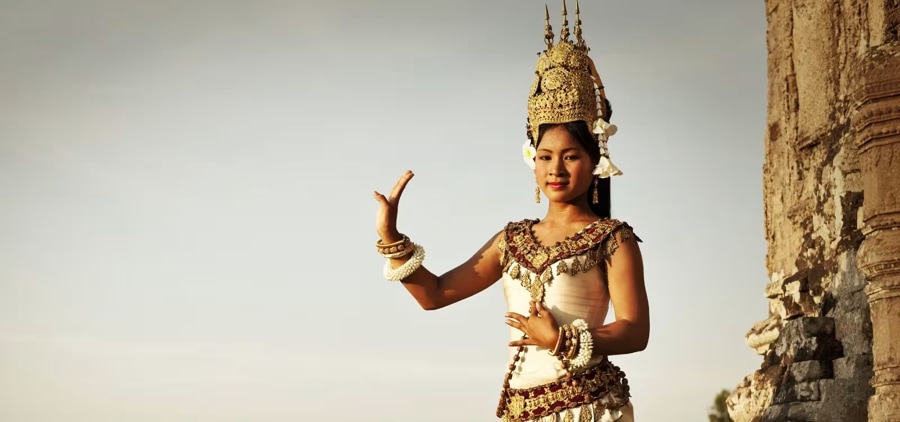
  • Read recent feedback and reviews from other guests carefully about staff friendliness and service quality. You should check if the hotel’s information matches real guest reviews, not just marketing.
  • Check the air-conditioning quality before booking the hotel to ensure your comfort, because Siem Reap can be very hot year-round.
  • Skillfully compare prices of accommodations across different booking platforms before booking to ensure you get the best rates this trip.
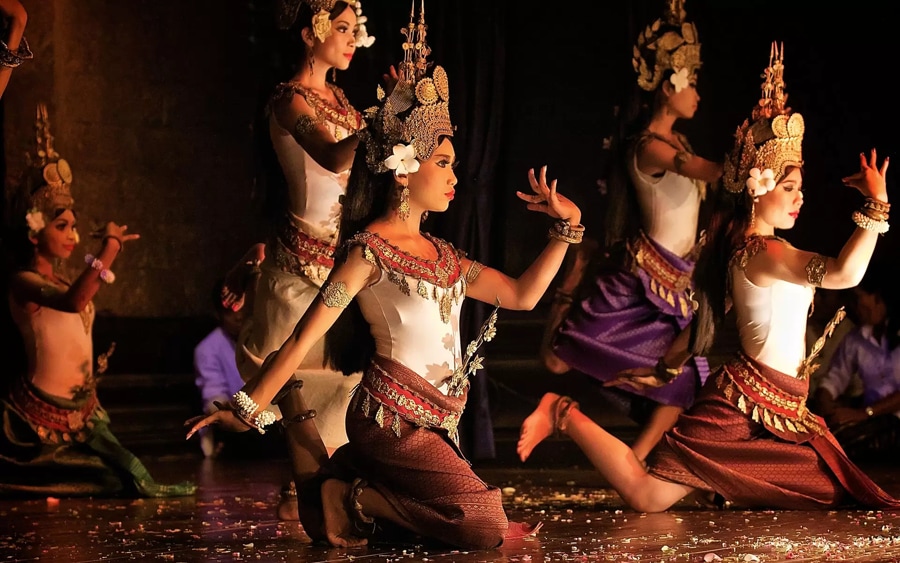
  • Decide whether you love staying at a city hotel or a resort retreat before booking, so you can choose a suitable one that fits your budget range (like affordable, mid-range, and luxury) and narrow your choices quickly.
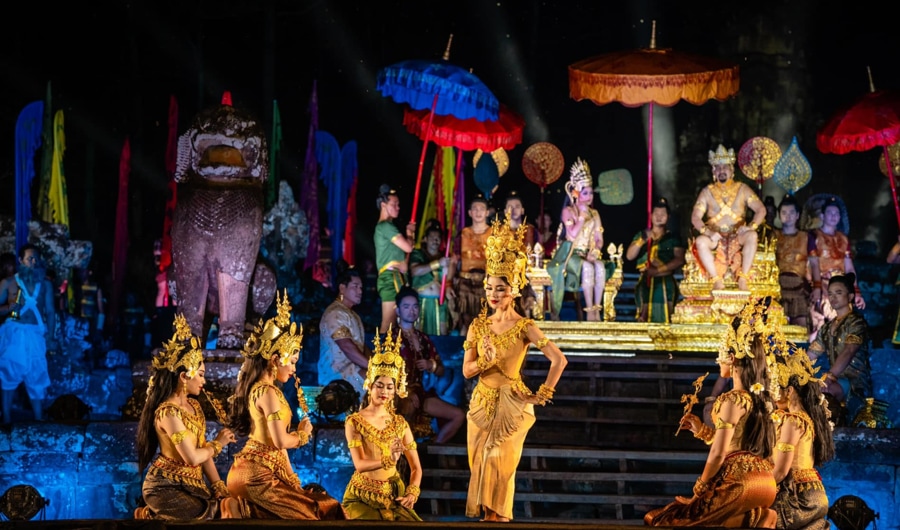
  • Book the accommodation in advance to ensure availability and better rates, especially when you choose to travel to Siem Reap to visit the Angkor temples during the peak tourism season.

Final Thoughts

There are many different hostels, hotels, and resorts, from affordable prices to high-end or luxury ones, for travelers to choose from when they are searching for where to stay in Siem Reap. Selecting a wonderful accommodation to stay in this city can make your adventure feel more comfortable, relaxed, and memorable. If you want to be consulted about this trip, like what to see and great things to do, or what is the best time to visit Siem Reap, as well as receive support for the visa process, let’s contact Seni World, a reputable tour operator from Vietnam.

14 Best Local Foods In Siem Reap: Top Dishes You Should Try

The food in Siem Reap is a merry romp through the cuisine of Cambodia, with a flavor profile that ranges from rich and earthy to creamy and a mixture of delicious Khmer spices. Wittily enough, the cuisine includes both soups and fermented foods.

Amok Trey (Traditional Steamed Fish Amok)

Amok Trey is the iconic dish of Khmer cuisine and a “must try” when in Siem Reap. Amok Trey is a fish curry made with freshwater fish, coconut milk, eggs, palm sugar, and the prized “kaffir lime leaves,” along with the “famous Kroeung paste made from a combination of lemons, gingers, and galangals.” The dish originated in Khmer cuisine and is believed to be prepared in a special manner where the curry paste was wrapped in banana leaves in the form of a bowl and steamed until thick and smooth.

Amok Trey (Steamed Fish Curry)

When served, the dish is topped with a generous scoop of coconut cream, slices of red chili, and chopped calamansi leaves. The dish is mild but full of flavor and delights the taste buds, making it an excellent choice even for those who find Khmer cuisine too hot and spicy. Modern variations include variations made out of “chicken, pork, and vegetables for a vegetarian option.

Nom Banh Chok – Khmer Noodles with Fish Curry

Known commonly as the “national breakfast dish” of Cambodia, Nom Banh Chok is a popular dish found in Siem Reap throughout the streets in various stalls and restaurants, and its popularity is a testament to the rich flavors and simplicity of Cambodian cuisine. The dish consists of soft noodles served with a topping of “banh chok,” a lemongrass and turmeric fish curry made from fish paste and “kaffir” lime leaves, served along with a variety of vegetables and herbs such as banana tree stems, cucumber slices, and coriander leaves.

Nom Banh Chok (Khmer Fish Curry Noodles)

This dish is commonly taken in the form of a breakfast dish by the locals, who purchase it from vendors carrying baskets full of steaming noodles and vegetables in their arms, while the dish is a source of comfort and satisfaction due to the light flavors and crunchy vegetables in it, because of the feeling of crunchiness in the vegetables, said to be a characteristic feature of this dish and the iconic taste of the dish, making it a source of

Palm Sugar Sponge Cake (Num Ansom Thnot)

Palm Sugar Sponge Cake is a delicious treat for any traveler who has a sweet tooth. The ingredients for the cake include ripe palm fruit and palm sugar, making the dessert golden and characterized by its fragrant sweetness. The light and sponge-like structure of the dessert is a result of the steaming process and is therefore soft but chewy to the touch.

Palm Sugar Sponge Cake (Num Ansom Thnot)

The vendors selling the dessert are widely available in Siem Reap’s streets and the surrounding village of Preah Dak. The importance of the dessert shows the significance of palm trees in the lives of the people of Cambodia, right from the production of sugar to the construction of materials.

Lap Khmer – Khmer Lime-Marinated Beef Salad

Lap Khmer is a refreshing beef salad from Cambodia, and Lap Khmer is the Khmer word for Cambodian salad in a scarf. The dish involves blanching slices of beef in hot water, seasoning them with fish sauce and lime juice, and mixing them with lemongrass, coriander, vegetables such as bean sprouts and cucumber slices, and the aromatic ingredients of the scarf: lemongrass, coriander, garlic, and fish sauce.

The combination of the flavors and ingredients results in an “intense flavor experience. Lap Khmer is a great option for visitors to the area in Siem Reap, especially if they need a refreshing dish to serve with a cold beer.

Cambodian Edible Insects

Trying the bugs in Siem Reap is more than a culinary experience. It’s an experience in and of itself. The typical manner in which the bugs are served in the street stalls in Siem Reap will include options of fried, toasted, and seasonings of chili and lime applied to the crickets, Silkworms, and tarantulas.

Cambodian Edible Insects

Another characteristic that Siem Reap stands out in comparison to Thailand is the taste and preparation methods applied to the meals, mainly because the people consider the bugs give a unique flavor to the dipping sauce, especially the water bugs.

Prahok Ktis – Coconut & Fermented Fish Dip

The creamy and savory dip known as Prahok Ktis has a comforting flavor that surprises many travelers. Prahok Ktis is made with fermented fish paste that is mixed with minced pork, lemongrass, and coconut milk, producing a salty flavor that has been slightly sweetened with palm sugar. It is usually eaten as a dip for fresh vegetables or rice.

Prahok Ktis - Coconut & Fermented Fish Dip

After being combined with both herbs and coconut, the fish paste’s fermentation becomes soft enough that even novice eaters feel comfortable eating Prahok Ktis. This dish exemplifies how Cambodian cooking has an exceptional ability to marry bold flavors together.

Green Papaya Salad

At first glance, the Cambodian version of Green Papaya Salad looks similar to its namesake in Thailand; the flavors are distinctly Cambodian and provide an entirely different taste experience. Shredded green papayas blended together with dried shrimp, peanuts, tomatoes, snake beans, garlic, fish sauce, and a spicy, vinegary dressing. The combination of flavors gives Green Papaya Salad a sweet, salty, sour, and spicy flavor that is a joy to experience on one’s tongue.

Green Papaya Salad

Green Papaya Salad can be enjoyed at market stalls, as a side dish at home, or in a family-style meal; when eating a plate of Green Papaya Salad between heavier curries or soups, it has a unique flavour that stands out and is refreshing.

Bamboo Sticky Rice

Bamboo Sticky Rice is a peasant cuisine in Cambodia and a fine expression of the Siem Reap countryside way of life, where the people live in harmony with nature and the staple food is indeed sticky rice and a bit of fish if they’re lucky enough to live along the riverbanks where fish abound. The dish consists of a mixture of sticky rice, coconut milk, salt, and optionally beans and shredded coconut, and is grilled in its pressing tool made of bamboo tubes and charcoal.

Vendors commonly sell Bamboo Sticky Rice in the areas where markets are usually situated, and in rural villages along the side of the road, especially where the paths of tourists pass through. Unwrapping the bamboo to savor the warm and sticky rice is an experience in itself. It is an easy, local, and comforting cuisine ideal for those people traveling and wanting to branch out into other dishes besides those in restaurants.

Bai Sach Chrouk – Cambodian Grilled Pork with Rice

Bai Sach Chrouk is a Cambodian breakfast dish that is extremely popular throughout Siem Reap in the morning. It consists of thinly sliced pork that has been marinated in coconut milk, garlic, and palm sugar before being cooked on the grill for an extended period of time to achieve a caramelised sweet flavour. The cooked pork is then served on a bed of warm rice with pickled vegetables and either a small bowl of broth or additional toppings. If you’re travelling, don’t forget to check out this local breakfast staple. It’s one of the delicious things to do in Siem Reap!

Bai Sach Chrouk - Cambodian Grilled Pork With Rice

Local Dessert and Specialty – Palm Sugar and Palm Cakes

Palm sugar is an integral part of the traditional cuisine in Siem Reap and is an absolute must-try for anyone who appreciates desserts. One of the best examples of a dessert made with palm sugar is Palm Sugar Sponge Cake, which offers consumers a beautiful golden hue and a lovely tropical scent. The cake is made from sticky rice flour, coconut cream, and ripe palm fruit, which gives it a soft, chewy texture that melts in your mouth. Palm sugar, which is derived from the sap of the palm tree, has a naturally sweet, caramel-like flavor.

Visitors to the Siem Reap area often take home palm sugar as a unique gift, as it adds an element of flavor to many different types of tea, desserts, or sauces. Additionally, palm sugar desserts typify the strong connection of Cambodian culture to palm trees.

Prahok – The Iconic Fermented Fish Paste of Cambodia

Prahok is one of the most commonly used seasonings and has a unique flavor among the different types of seasonings found in Cambodian food. The Khmer language translates to “fermented fish” and is also referred to as “fermented fish paste.” Fermented in a large ceramic container for several months, Prahok is made from freshwater fish that has been salted, resulting in a highly concentrated product.

Prahok - The Iconic Fermented Fish Paste of Cambodia

Prahok’s aroma may scare off some new visitors to the country. However, when combined with herbs, minced pork, coconut milk, or vegetables, Prahok becomes a smooth and flavourful addition to a dish. You can use Prahok for soups, stir-fried dishes, and well-known dips such as Prahok Ktis. For those who are adventurous, tasting Prahok is a rite of passage and provides insight into local culture and traditions.

Beef Lok Lak – a Classic Stir-Fried Favorite

Beef Lok Lak is one of the most popular dishes in Cambodia and a staple in the Siem Reap food scene. The dish consists of thin slices of beef that are marinated and stir-fried with garlic, onions, black pepper, and soy sauce to maintain their tenderness. The best part about a dish of lok lak, however, is the dipping sauce made out of a combination of lime juice, black pepper, fish sauce, and sugar, creating a refreshing and delicious flavor experience when consumed with a hot fried egg and a plate of vegetables.

Beef Lok Lak - A Classic Stir-Fried Favorite

The combination of soft beef, refreshing sauce, and crunchy vegetables offers a very addictive experience to the taste buds. Simple but very much a comfort food in the style of Khmer cuisine, the dish has the makings of a traveling man’s dish to be tried at any meal of the day.

Khmer Red Curry

Traditional Khmer Red Curry is a milder, less intense version of curry when compared to other South East Asian countries such as India and Thailand. Made from coconut milk, sweet potatoes, carrots, green beans, and meats (chicken, beef, or fish), this dish is slow-cooked so that the ingredients are tender and the flavors meld beautifully together.

Turmeric, lemongrass, kaffir lime leaves, and red chili paste add to the richness of this dish. Though it contains all of the wonderful scents that you will find in other curries, it does not have the extreme heat that many people associate with curries. The combination of sweet and warming spices creates a very comforting experience and is an excellent option for anyone who finds themselves sensitive to spicy foods.

Kuy Tieu – Cambodian Noodle Soup

Kuy Tieu is a very popular Cambodian noodle soup dish. Most find their great price and lovely taste highly favoured for breakfast or any time of the day, and yes, many stop there often to indulge in their Kuy Tieu. It can be served with a mix of three types of meat, usually either pork or beef, or even seafood. A light sauce is added to the dish as it cooks, and it contains a range of ingredients such as garlic, soy sauce, and black pepper. Fresh bean sprouts, chopped up green onions, and various types of herbs complement all the visual glamour of the Kuy Tieu when it arrives at the table.

Kuy Tieu - Cambodian Noodle Soup

Diners may finish their meal with a selection of dipping sauces that can be shared with others out of the pot, along with a selection of vegetables to suit their taste for hot peppers, lime juice, and so on. Kuy Tieu can be served very simply, and is mostly enjoyed by those who have traveled to Cambodia who wish to sample an inexpensive local dish.

Final Thoughts

Looking into the food in Siem Reap is more than experiencing a dish. It is an immersion into an entire culture and a way of life associated with the Khmer people. Street corner food stands and family dining options exude a sense of tradition in every dish served to the people. If you are preparing a trip to Siem Reap and are in search of the best dining experiences in the area, look to Seni World to guide you through the best experiences available in Siem Reap.

Siem Reap Nightlife: Best Things To Do, Where To Eat, Useful Tips

Siem Reap nightlife blends busy drink zones with traditional performances, also offering quick bites late. Figuring out the right spots means making better choices with your after real local taste, fun that feels genuine, or just chill corners to unwind.

Top 7 Things to Do in Siem Reap Nightlife

Siem Reap packs a mix of nighttime fun into a small area with lively bars or traditional performances. These options show exactly where to head, as well as what it feels like once you’re there, helping you pick an evening that suits how you like to unwind.

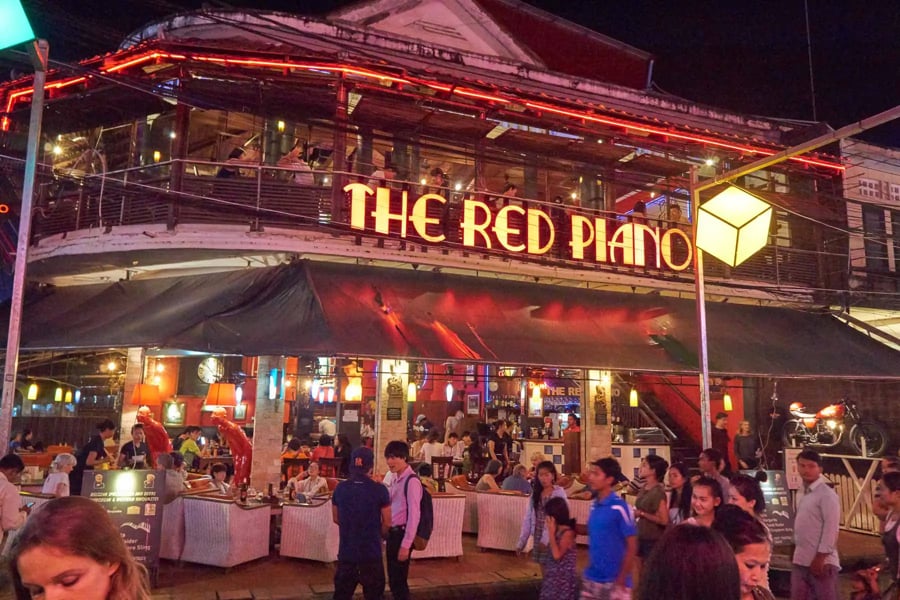
Experience The Full Energy of Pub Street and The Alley West

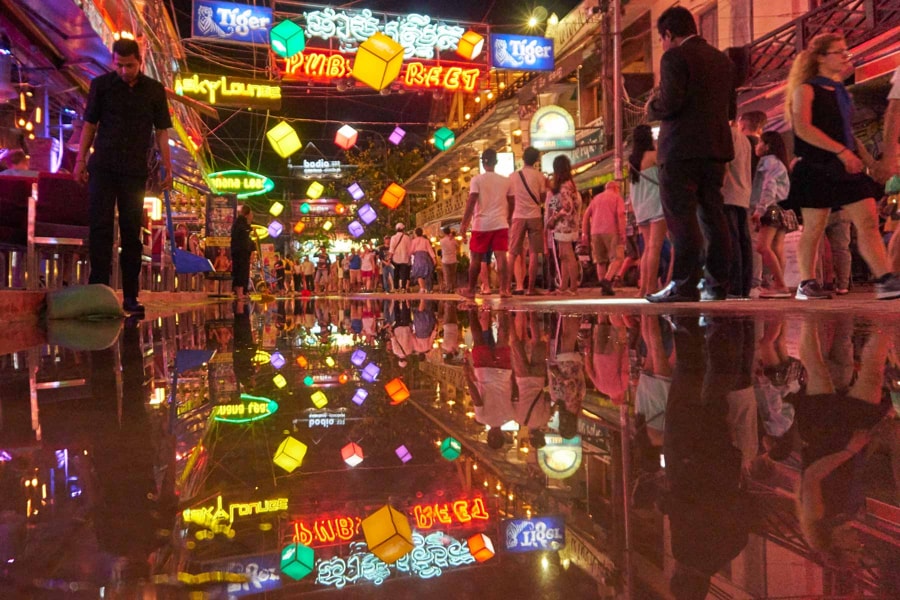
Pub Street starts buzzing by 9 PM, keeping the heart of Siem Reap nightlife going past midnight. This spot’s ideal to kick off your evening since drinks are just a short walk apart. A pint runs about $1 to $1.50; grab one at The Angkor What? Bar. For heavy beats and packed vibes, check out Temple Club instead. The latter’s got room to move with its big dance zone. If you’re into fast fun, beer pong at YOLO Bar or Cheers Bar works well.

Pub Street in Siem Reap nightlife

If you’re after something more low-key, check out Alley West or The Lane – both have cozy spots with thoughtfully made cocktails. For drink options, Miss Wong mixes up solid choices, while Elephant Bar at Raffles gives you the Angkor Sling if you’re into old-school luxury vibes. You’ll spot tuk-tuks moving around nonstop; hopping on one for a quick trip nearby runs roughly 2 to 3 bucks. Lights stay bright here, but it’s smart to hold tight to your phone and cash when crowds build up later in the day.

Watch Phare The Cambodian Circus

Phare performs nightly, running roughly an hour or more. One standout Siem Reap nightlife event, it mixes circus tricks with storytelling while musicians play on stage; each performer is a skilled local talent. Catching the show means hopping on a tuk tuk; it’s just a short ride from Pub Street, around seven to ten minutes. Locals will guide you there without hassle. You can grab water, soft drinks, or small bites right at the gate before heading in.

Big Top Circus Show In Phare Ponleu Selpak

Ticket types differ, yet spots priced between 18 and 28 bucks usually give a solid look at the stage. Grabbing them online feels more reliable when things get crowded, though buying directly at the place works fine on slower nights. Doing Phare early in the night fits nicely, particularly if you want some culture before drinks or eating out.

Enjoy Apsara Dinner Shows

Apsara shows a mix of old-style Khmer dancing with dinner, so it’s simple to add one to your night. Most places kick off around 7 or 7:30. For guests, Por Cuisine and Koulen Restaurant work well thanks to roomy spaces, good sightlines from tables, and regular showtimes every evening. At Koulen, you pick what you want from a spread full of local food; at Por Cuisine, meals come pre-arranged, giving things a calmer, neater vibe. Getting a seat is not a big deal; your hotel might handle it, or just drop by during the week.

Apsara Dinner Shows

The show often features multiple dances, with every piece sharing a unique tale from Khmer legends. It moves at a gentle rhythm, making it ideal when you’re after something peaceful instead of loud nightlife spots. Most performances run about sixty minutes, giving you time to head out right after eating. That way, you can either wander toward Pub Street or just go back to where you’re staying.

Join a Night Food Tour and Explore Siem Reap Night Markets

Night food crawls give you fast access to authentic Khmer meals. Instead of wandering alone, outfits like Lost Plate or Siem Reap Food Tours kick off near sunset, guiding you past open-flame grills, soup joints, and even pop-up stands dishing out crunchy bugs or fresh seasonal bites. Most outings serve endless samples, along with a quick pitstop for local rice liquor. Stick around just thirty minutes or stretch it out if time’s on your side.

Night Food Tour And Explore Siem Reap Night Markets

If you’d rather wander solo, check out the Made in Cambodia Market along with the Art Center Night Market, both are chill spots to hit after dark. One’s big on handcrafted stuff plus tiny studios where makers show their skills, whereas the other packs trinkets, tasty bites from carts, and tunes played live. They tend to run till about 9:30 or ten at night; just stroll over or hop a quick tuk-tuk that’ll cost close to 2 bucks.

Watch Cambodian Shadow Puppetry Performances

Shadow puppetry, called Sbek Thom or Sbek Touch around here, tells stories with hand-cut leather figures while musicians play live tunes. Shows aren’t on daily, meaning you’ve got to look up times at local culture spots or tiny venues putting them on. If there’s one happening, it generally kicks off soon after sunset, running nonstop for roughly three-quarters of an hour.

Cambodian Shadow Puppetry Performances

The tales come from old Cambodian legends, so even without knowing the history, you’ll catch on fast thanks to visuals, sound, and dance. Seats aren’t fancy, yet comfy enough since the event doesn’t last long. Cost-wise, tickets usually cost less than similar local shows; sometimes, you can just pay when you arrive. Pick this if you’d rather enjoy something calm and authentic instead of loud evening crowds.

Unwind with a Late-Night Spa and Massage

Siem Reap’s got decent spas open late, some even past 11, so they’re handy after hours of temple exploring. Instead of rushing back, you can unwind at places like Lemongrass Garden or Aroma Spa; both sit in the middle price range. These spots do foot rubs, scent-based therapy, plus old-style Cambodian healing methods. Want something sleeker? Try Sokkhak Spa, it’s pricier but calmer, cleaner, built for serious relaxation.

For one hour on your feet, expect to pay roughly $8 to $12; the longer packages cost more. Most spas let people drop by after dark, yet calling first helps lock in your preferred hour. Staff might set up a tuk-tuk ride should you require one, while the vibe tends to stay calm, no fuss.

What to Eat in Siem Reap Nightlife

Siem Reap serves up fast bites at night, handy when squeezing time between highlight sightseeing in Phnom Penh. Lots close late, giving you room to eat either side of a stroll through night markets or Pub Street.

What to eat in siem reap at night

Lok Lak (Stir-Fried Beef with Pepper Sauce)

Lok lak is a go-to Cambodian meal when dinner rolls around, using fast-cooked beef paired with a zesty lime-pepper sauce. It tastes rich yet light, ideal if you’re staying active later. Some spots toss in a crispy egg plus greens on the plate, turning it into a solid pick when hunger hits, but you don’t want surprises. You’ll get plenty on your plate while the cost stays low, no matter where you eat.

Where to try: Head to Khmer Kitchen Restaurant for a traditional take; Genevieve’s goes for a creamier twist on the sauce.

Lok Lak (Stir-fried Beef With Sauce)

Fish Amok (Steamed Coconut Curry)

Fish amok’s a creamy curry, sort of like custard, made with coconut milk and tender chunks of steamed fish. You can grab it at eateries or street stalls, usually served in small portions meant for sharing. Since it’s not spicy, it suits folks who don’t love strong tastes but still want real Cambodian food.

Where to try: Por Cuisine serves up a straightforward classic version; meanwhile, The Sugar Palm offers a spicier, aromatic twist.

Fish Amok - Signature Cambodian Curry

Khmer Bbq (Tabletop Grill)

Khmer BBQ’s a go-to evening spot when hanging out with pals. While meat sizzles on the grill, veggies soak up rich taste from warm broth below. Chilled atmosphere where folks chat and eat together, adjusting bites based on hunger levels. Cost depends on which plates you grab, yet plenty of places won’t drain your wallet.

Where to try: Over by the Cambodian BBQ Restaurant, you’ll find it right in the middle of things. Meanwhile, The Brothers pulls in both regulars from around town, along with folks just passing through.

Stuffed Frog (Grilled Local Specialty)

A stuffed frog’s a popular bite in Siem Reap, typically cooked on charcoal till the outside gets crunchy. Inside, you’ll find ground meat mixed with fresh herbs along with spices; it tastes milder than most expect at first. Grab one as a fast munch while checking out the night market goods. Sellers make just a few at once, which makes spotting a fresh batch pretty straightforward.

Where to try: Check out the Art Center Night Market – grills pop up there every night. A few spots start cooking when the sun goes down.

Kralan (Sticky Rice in Bamboo)

Kralan’s just sticky rice with coconut milk, sometimes beans, cooked slowly in bamboo tubes. A bit sweet, pretty light, good to munch while hopping from one night market to another. Size changes per seller, though bigger pieces still cost next to nothing. The person selling will split the bamboo open so you can dig in right there.

Where to try: Head to roadside stands near Angkor Night Market – they serve hot servings every night.

Kralan (Sticky Rice In Bamboo)

Tips to Experience Siem Reap Nightlife

Siem Reap nightlife gets simple when you catch its rhythm. These pointers zero in on real stuff that changes your evening, especially if you’re mapping out peak time to hit Phnom Penh ahead of your trip.

  • Tuk tuk drivers usually skip crowded spots, meaning picking a spot just off the main intersection means quicker service.
  • Card readers may act up most at night, so having cash on hand helps you skip delays when buying stuff.
  • Sudden rain happens fast when it does, sheltered areas get packed. Check the weather ahead of time; that way, you won’t rush around when clouds roll in.
  • Pub Street really comes alive past 9:30 p.m., so showing up late drops you right into the action – skip the quiet dinner crowd.
  • Bars change DJs every sixty minutes, which means a quick listen helps dodge tunes you won’t enjoy. Popping your head in first keeps you from wasting time on bad beats.
  • Catching a tuk-tuk just down the road from Pub Street saves time since drivers skip the crowded main drag.
  • Hotel fronts might seem alike after dark; snap a pic of your entrance area, then show it to the tuk tuk rider; that way, you won’t end up at the wrong spot.
  • Night markets have top picks plus hot eats right when they open – hitting them early means smarter choices instead of whatever’s left by midnight.

Conclusion

Siem Reap nightlife scene fits all kinds of travelers, from calm cultural spots or busy bar lanes. Once you get a feel for it, organizing your evenings gets way simpler. Getting ready ahead of time can keep you from typical issues new visitors run into. Traveling through both Cambodia? Seni World shares useful routes and tips to help out.

13 Top-Rated Things To Do In Siem Reap For Every Traveler

A trip planning guide for Siem Reap means more than organizing a visit to Angkor Wat. This ancient city is home to numerous temples, floating villages, cultural performances, and bustling night markets. Below are some of the most unforgettable experiences when visiting Siem Reap.

Discover The Ancient Wonder of Angkor Wat

A trip to Siem Reap would be incomplete without a visit to Angkor Wat. The largest religious monument and a symbol of Cambodia stands as testimony to Khmer culture. This 12th-century temple complex embodies sculptures and relief works expressing divine architecture, intended for the worship of Lord Vishnu. The sunrise views in this monument are breathtaking.

The Ancient Wonder Of Angkor Wat

One gets to see the sculptures of ancient art in galleries and witness spectacular sunrises. A guide would be extremely helpful for a better comprehension of this monument. Half a day would be sufficient for a visit around here!

Walk Through The Royal Ruins of Angkor Thom

Cambodia’s Angkor Thom was the final and most triumphant Capital of the Khmer Empire. Angkor Thom was surrounded by high brick walls and enormous gates and contained palaces, temples, and sacred open spaces. Bayon Temple, one of the most impressive architectural masterpieces of that era, has an intriguing aspect as well, as each of the great stone faces of Bayon bears an enigmatic smile.

The Royal Ruins Of Angkor Thom

Walking through the ancient roadways of Angkor Thom, one can appreciate what it was like during the height of the Khmer Empire when large armies invaded kingdoms, and pitched battles occurred frequently. Another noteworthy detour is either the Terraces of Elephants or the Terraces of Leper Kings, which both provide glimpses into the mists of time and the mystery that surrounded the Kingdom of Cambodia.

Explore Bayon Temple – The Temple of Smiling Stone Faces

Bayon Temple is right in the center of Angkor Thom and is renowned for having 216 giant faces carved onto temple structures. Most historians believe that those giant stone faces symbolize King Jayavarman VII, who watches over his kingdom with kindness and intelligence. Walking around Bayon Temple can be a disconcerting experience with smooth faces staring down from everywhere.

Bayon Temple - The Temple Of Smiling Stone Faces

Bayon Temple has sculptures of Cambodian daily life, such as fishing methods, kitchen scenes, trading scenes, and dancing scenes. Visitors love walking up to the upper levels using stairways for a closer look at those giant faces. A complex design makes for more interesting exploration. The lighting of the sculptures in the early morning and late afternoon sunsets looks great for photography. Bayon is a holy place and a work of art symbolizing religion and emotion.

Experience Ta Prohm – The Temple Embraced by Nature

Unlike other restored temples in Cambodia, Ta Prohm remains a largely uninhabited site where nature has taken back what was made by human hands. Bizarre tree roots entwine around moss-covered rocks in a manner that looks as if taken right out of a fantasy film. Ta Prohm first gained worldwide recognition for its role in ‘Tomb Raider,’ but more than anything else, this site remains magical because of its raw, almost chaotic quality. Walking amidst a series of compact passages with breached walls transports one to a forgotten land.

Ta Prohm - The Temple Embraced By Nature

Most visitors claim that it is this temple that comes alive. This occurs as if Mother Nature is exhaling life through her roots. This is because one finds a natural concert consisting of birds, butterflies, and wind. Taking a trip during the early morning hours amplifies this mystifying atmosphere. Ta Prohm symbolizes a perfect example of time and Mother Nature molding history.

Discover Tonle Sap Lake – Floating Villages and Wetland Animals

Tonle Sap Lake is considered to be a life source for Cambodia when considering freshwater ecosystems. The largest lake in Southeast Asia changes seasonally with a huge amount of expansion and contraction. Taking a boat trip gives one the chance to see homes, schools, and markets in Tonle Sap Lake that exist only on water.

unique floating villages on Tonle Sap Lake

Tonle Sap Lake also has rare bird species. This occurs mainly around the Prek Toal Bird Sanctuary. The pace of life in this place is also distinct. Here, life moves with a calming pace. This occurs because everything moves along with nature. The best time to visit Tonle Sap Lake is when one gets to witness the sun setting in its surrounding environment. This phenomenon occurs when sunlight reflects off the surface of Tonle Sap Lake. Visitors can also taste fresh seafood. This occurs because one gets to meet fishermen. Their culture can thus be understood.

Visit Retreat Phnom Kulen National Park

Located in Cambodia, Phnom Kulen is the birthplace of the Khmer Empire and is a very significant place for Cambodians to go to as a Pilgrimage site. The mountain has some very nice waterfall areas, hiking trails, and a few of the temples attached to the mountain are situated within the forest. One area of this Park with special interest is the River of a Thousand Lingas, which has various symbols carved into the stone, all located in a river area. The very top of the mountain has a large reclining Buddha that has been carved right into the rock.

Phnom Kulen National Park

The park is also a quiet retreat for those looking to get away from busy town life, with cool areas for swimming in the river surrounded by trees and vegetation, where many families picnic and relax. Visitors looking for culture and adventure would have an ideal vacation at Phnom Kulen.

Enjoy The Beauty of Kampong Phluk Floating Village

Kampong Phluk is a beautiful floating village surrounded by lush mangrove trees. Rising on stilts up to 8 feet tall in the dry season and being submerged by water in the rainy season in Siem Reap, the homes and businesses of Kampong Phluk are built using sustainable materials. Tourists can take boat excursions down canals to see how the locals fish, cook, and or build their homes above the water.

The mangrove boat ride provides a relaxing way to take pictures of this scenic area. In addition to seafood dining, many small temples can also be explored, as well as opportunities to learn about local conservation efforts. The slower pace of life in rural areas is a welcome relief from life in the city.

Stroll Through Siem Reap Night Market

The Siem Reap Night Market welcomes you to enjoy the vibrant colours of its lanterns and an abundance of locals and tourists strolling through its stalls as it continues to operate into the evening. The night market provides an opportunity to find locally made items such as silk scarves, wooden carvings, spices, and clothing, all while giving you the chance to improve your negotiating skills.

Siem Reap Night Market

With an energetic atmosphere filled with laughter and music, travellers can indulge in traditional Khmer cuisine, including dishes such as Fish Amok, Grilled Frogs, and Banana Sticky Rice. After visiting the temples during the day, spa and massage services are easily accessible on every street corner, making it an ideal time to unwind. As many of the vendors explain how the crafts are created, each piece has added value due to the personal relationship created when purchasing from them.

Experience Siem Reap’S Nightlife on Pub Street

Once the sun goes down, Pub Street becomes the hub of activity in Siem Reap. You can enjoy delicious Cambodian cuisine and interact with other travelers while enjoying restaurants, rooftop lounges, and bustling bars. You will be entertained by street performers who add an energetic vibe to the atmosphere. Cocktails are available at affordable prices along with many international foods, making it popular with backpackers.

The night market, located in close proximity to Pub Street, offers handmade items and other souvenirs. You can either enjoy a drink or dance until dawn; Pub Street offers many opportunities for an enjoyable and memorable experience.

Visit The Artisan D’Angkor Handicraft Center

This is where artisans come together to keep alive the Cambodian arts. Visitors can explore this place and witness artisans carving wood and stone and painting delicate designs using lacquer. This is one of those places where one can witness how art has continued to be a part of Cambodian culture. This institution also serves to train young artists.

Artisan D’Angkor Handicraft Center

You can also explore a boutique with interesting souvenirs such as silk scarves, ornaments, sculptures, and other decorative objects that have a great level of detail. This would be a great place to look for gifts with a story.

Learn Pottery with Local Artists

Siem Reap provides a practical and enjoyable activity via Khmer Pottery workshops, where one can make their own ceramic pieces. Under the tutelage of expert artisans, one gets a chance to mold and carve designs using a traditional spinning wheel with a focus on ancient Khmer designs. This exercise proves to be soothing for those who undertake this activity.

After creating your ceramic piece and completing the firing and glazing of your finished product, you will receive a unique keepsake from the experience. The workshops are a wonderful way to learn more about traditional practices of making ceramics, and at the same time promote support for local artisans. It is a great opportunity for couples or families wishing to experience Khmer culture in a way that they may not have previously experienced.

Go for a Fish Foot Massage on Pub Street

If you’re looking for something truly unique and entertaining to do in Siem Reap, then a fun and unique experience would be getting a Fish Foot Massage. The tanks, which are located on many of the streets in Siem Reap, are filled with lots of tiny fish that gently nibble at your feet to remove dead skin cells. It may seem like an odd thing to do, but it has become a hugely popular activity for tourists visiting Siem Reap as the sun sets.

The cost of the fish foot massage is quite reasonable, and you will receive a complimentary beverage while you relax and take in the vibrant atmosphere of Pub Street. A fish foot massage is a wonderful way to reminisce about all of the wonderful things you saw while exploring the impressive temples during the day, and is a great way to continue enjoying the nightlife of Siem Reap!

See The Incredible Performance at The Phare Circus

Enjoy a once-in-a-lifetime and unique cultural performance by attending a circus show at Phare, The Cambodian Circus, located in Siem Reap. This well-known evening performance provides a creative platform for the creative depths of Cambodia to shine through traditional tales with an integration of live music, dance, and acrobatics, mixing traditional Cambodian culture with contemporary creativity.

Incredible Performance At The Phare Circus

The shows are entertaining for all age groups, including children, making them an excellent activity for both families and travelers alike. In addition to being an enjoyable night out, attending a Phare show adds to your understanding of Cambodian culture and supports young artists in Cambodia as well as the local/cultural community.

Final Thoughts

With its unique combination of historic sites and modern conveniences, Siem Reap is an excellent place for travelers looking for many things to do in Siem Reap. The experience will be rapid and diverse, while creating a lasting impression on you, as you build your own story about Cambodia through everything you do. Be sure to check out Seni World for more tips, suggestions on things to do, and trip ideas to enhance your travel experience.

Choosing The Best Hostels In Phnom Penh For A Relaxed Trip

There are various pleasant hostels in Phnom Penh for travelers to choose from when looking for where to stay here. Let’s learn more about a suitable one for you, which is favored and trusted by both local people and tourists.

10 Best Hostels in Phnom Penh

With an impressive mixture of traditional culture and chilled modern life, there is a long list of things to do in Phnom Penh for vacationers to enjoy. After a full day of discovering, let’s refresh our energy by choosing the best hostels in Phnom Penh. The 10 lodgings below are usually mentioned first when vacationers share stories about the capital of Cambodia.

Pooltop Phnom Penh

Pooltop Phnom Penh is a comfort-oriented hostel featuring a rooftop swimming pool and a lounge area, providing vacationers with a relaxed atmosphere and a chilled outdoor space. Within walking distance of the Royal Palace, as well as the well-known attractions in the central area, Pooltop Phnom Penh is one of the wonderful hostels in Phnom Penh for budget travelers. Because this hotel is near famous attractions like the Royal Palace, Phnom Penh Silver Pagoda, and the Central Market, you can easily save costs and access them.

Pooltop Phnom Penh

Travelers can enjoy many different modern amenities and benefits at Pooltop Phnom Penh, such as air-conditioned rooms near rooftop seating, 24/7 reception, free Wi-Fi, laundry service, baggage storage, a tea and coffee maker in each room, excursion reservation support, and delicious local breakfast service with many traditional dishes. The price of the Pooltop Phnom Penh hostel is from $9.2 to $36.9 per night, depending on the type of room you book for your adventure.

Velkommen Phnom Penh

Velkommen Phnom Penh is a homely hostel in Phnom Penh with traditional guesthouse appeal and great individualized service. Velkommen Phnom Penh is among the Phnom Penh hostels that are located in a quiet area near local markets. So it is very suitable for vacationers who want to unwind in the authentic atmosphere of Phnom Penh society and culture.

Velkommen Phnom Penh

There are many different great benefits and services for travelers in the hostel, consisting of free Wi-Fi, a tea and coffee maker in each room, excursion desk assistance, and a warm shared breakfast area with various local foods in Phnom Penh. Each room in the hostel has a simple and neat decoration, with an air-conditioner and secure lockers. The price of the Velkommen Phnom Penh hostel is from $15.1 to $30.4 per night.

Mad Monkey Hostel Phnom Penh

Mad Monkey Hostel Phnom Penh is a dynamic and contemporary hostel with colourful murals, open social spaces for guests, and a large bar. All of them make it one of Phnom Penh’s most famous party hostels. Therefore, Mad Monkey Hostel Phnom Penh is a brilliant choice for both solo vacationers and backpackers who are looking to socialize in this Phnom Penh itinerary.

Mad Monkey Hostel Phnom Penh

There are many different great benefits and services for travelers in the hostel, such as a swimming pool, a sports area, a 24/7 reception with luggage and baggage storage, free excursion assistance, free breakfast, and laundry services. Both dorms and private rooms in the hostel are air-conditioned, with a tea and coffee maker, and safe lockers. The price of the Mad Monkey Hostel Phnom Penh hostel is from $11.5 to $56.9 per night.

The Big Easy Phnom Penh

The Big Easy Phnom Penh is among the cheap hostels in Phnom Penh, with spacious surroundings, as well as a chilled and home-style layout. There are numerous indoor and outdoor seating areas for travelers to have a short break after a full day of strolling around the city. Particularly, The Big Easy Phnom Penh is a good base for discovering city markets and the beautiful riverfront.

Travelers can enjoy many different modern amenities and benefits at The Big Easy Phnom Penh, including a social lounge, relaxing zones, journey booking support, and helpful staff. Both dorms and private rooms have air conditioning and a secure garage. In particular, the common area is wonderful for energetic community games and interesting nighttime chats. The price of The Big Easy Phnom Penh hostel is from $7.1 to $30.4 per night.

Bliss & Beats

Bliss & Beats is a suitable selection for budget vacationers near the well-known Boeung Keng Kang area. This is a chill hostel with simple but convenient decoration, which brings travelers a social atmosphere. With a great location, from the hostel, you can walk to local markets, enjoy an authentic nightlife in Phnom Penh, and communicate with friendly local people.

Bliss & Beats

Travelers can enjoy many different modern amenities and benefits at Bliss & Beats, consisting of a common front room, access to and support for local bars and tours, and free Wi-Fi. There are dorm and private room choices for different types of tourists, but all of them are comfortable with ventilation and air conditioning. The price of the Bliss & Beats hostel in Phnom Penh is from $7.1 to $46.2 per night.

Nawin New Star Guesthouse

Nawin New Star Guesthouse has a simple layout, with some floors of private rooms arranged along indoor corridors. This ensures privacy and clean access for vacationers. Interior is designed in impartial shades, tiled flooring, and essential furnishings, and focuses on cleanliness instead of decorative elements. So the hostel is wonderful for budget tourists and backpackers.

Nawin New Star Guesthouse

There are many different great benefits and services for travelers in the hostel, such as 24-hour reception, tuk-tuk and taxi preparation and ticket reservation support, journey consulting, air conditioning, free Wi-Fi, hot showers, cable TV, a tea and coffee maker in each room, laundry service, baggage storage, and convenient in-room desks. The price of the Nawin New Star Guesthouse in Phnom Penh is from $18.2 to $27.3 per night.

Julieka’S Guesthouse

Julieka’s Guesthouse is famous for its simple and functional style, which brings travelers a comfortable and welcoming experience. The decoration is closer to the traditional Khmer design, with timber furniture, tiled flooring, and minimal ornament. All of them focus more on the pleasant than the luxurious. The hostel is a great choice for travelers who seek authenticity, peace, and quiet in this Cambodia itinerary.

There are many different great benefits and services for travelers in the hostel, consisting of free Wi-Fi, air-conditioned rooms, an on-site restaurant, a coffee shop serving delicious local dishes, laundry service, baggage storage, daily housekeeping, and tour and transport arrangement assistance. So the hostel is good for both long-stay vacationers and short-term visitors in Phnom Penh. The price of Julieka’s Guesthouse in Phnom Penh is from $15.2 to $20.2 per night.

The Grey Guesthouse

The Grey Guesthouse has a more modern and urban aesthetic, despite being just a budget hostel in Phnom Penh. The layout is compact, but thoughtfully organized, with a small living room or shared seating area for visitors, based on the types of rooms. Its design is highlighted by monochrome tones, minimalist elements, and modern finishes. All of them create a slightly boutique feel in comparison to other guesthouses. From The Grey Guesthouse, you can quickly go to the well-known Wat Phnom Temple.

The Grey Guesthouse

Travelers can enjoy many different modern amenities and benefits at The Grey Guesthouse, such as air-conditioned rooms, free Wi-Fi, and daily housekeeping. Besides, the staff at this hostel always assist tourists with city navigation, excursion bookings, and transport services. So the hostel is great for solo travelers and couples seeking out a neat and hassle-free stay in Phnom Penh. The price of The Grey Guesthouse in Phnom Penh is from $10.1 to $25.3 per night.

The Place Hostel & Garden Bar Phnom Penh

THE PLACE Hostel & Garden Bar Phnom Penh is a garden-bar hostel with a green courtyard and pleasant vibe. It is located in the central area of Phnom Penh, close to Norodom Boulevard and many pretty coffee shops. The highlighted point of this hostel is offering an energetic bar and garden lounge, brilliant for social mingling and unwinding.

There are many different great benefits and services for travelers in the hostel, consisting of free Wi-Fi, friendly bar service, and occasional social or live-music nights. With the simple but elegant design, you can choose spacious dorms with private features or private rooms, according to your demand and budget on this trip. The price of THE PLACE Hostel & Garden Bar Phnom Penh is from $9.3 to $40.7 per night.

Onederz Phnom Penh

Onederz Phnom Penh is an elegant and sleek hostel with modern interiors combining urban and industrial decoration. Choosing Onederz Phnom Penh as a place to stay in this city, you can have an opportunity to revel in a friendly social atmosphere, free walking tours, and town tour desks support from hospitable staff. So this is one of the famous hostels in Phnom Penh for global travelers.

Onederz Phnom Penh

Travelers can enjoy many different modern amenities and benefits at Onederz Phnom Penh, consisting of a rooftop terrace, a bar, a front room location, a book exchange, free Phnom Penh maps, communal kitchen access, as well as delicious traditional group dinners. The hostel has mixed and female-only dorms with air-conditioned and private rooms, with storage and private curtains. The price of the Onederz Phnom Penh hostel is from $11.5 to $61.50 per night.

Tips to Choose The Best Hostels in Phnom Penh

If you want to feel pleasant, convenient, happy, and safe with your family and friends in this adventure to Phnom Penh, you need to remember the following essential travel tips to pick the wonderful hostels in the capital of Cambodia.

  • Book your accommodation in advance, especially if you choose to travel in the peak season, from November to February, which is the best time to visit Phnom Penh. This will help you ensure availability and have a better rate.
  • Read recent feedback and reviews from other guests, especially from the last 3 to 6 months. Based on them, you can know more about the quality of service in the hostel you plan to book for your trip.
  • Carefully check all amenities before using the room, such as a qualified air-conditioning system, as Phnom Penh’s heat and humidity may be intense year-round, or Wi-Fi quality, in case you are a business traveler who works remotely.
  • Confirm the safety and privacy of the hostel to protect yourself, which includes personal lights, lockers or secure storage for your valuables, 24-hour reception, CCTV, and key-card access.
  • Balance budget and comfort when booking where to stay in Phnom Penh in your journey, because the cheapest choice is not always the best value.
  • Carefully check with the manager of the hostel before booking to avoid hidden fees for towels, lockers, or air-conditioning. It will help you save your budget smartly.

Final Thoughts

If you know your pace and budget for this trip, you can easily choose the best hostels in Phnom Penh for you and your family. No matter when you visit, a suitable in the capital of Cambodia can increase your stay as much as activities do and provide you with memorable moments. If you want to be consulted about this adventure in Phnom Penh, exciting things to do and to see in this city, as well as receive support for the visa process, let’s contact Seni World, a reputable tour operator from Vietnam.

The Best Time To Visit Siem Reap For A Memorable Adventure

The best time to visit Siem Reap is from November to February, when the weather is dry and cooler with low humidity, making you feel pleasant, great for outdoor activities. Read Seni World’s guide to understand the weather and tips.

Where Is Siem Reap?

Siem Reap is a colourful city positioned in northwestern Cambodia, which is the primary gateway to the world-famous Angkor Archaeological Park. About 320 kilometers from Phnom Penh, Siem Reap sits alongside the Siem Reap River and is surrounded by pretty rural villages, green rice fields, and culturally beautiful landscapes. The city has grown strongly thanks to tourism, so now it has a mixture of conventional Khmer allure and modern facilities.

unique floating villages on Tonle Sap Lake

From Siem Reap, travelers can discover old temples, unique floating villages on Tonle Sap Lake, and impressive countryside sights. Siem Reap is also connected to important tour hubs in Southeast Asia thanks to an international airport with various flights from cities like Bangkok, Singapore, and Kuala Lumpur. No matter its popularity, Siem Reap still keeps a pleasant and inviting atmosphere, making it an ideal destination for both short exploration and longer cultural trips in Cambodia.

What Is The Best Time to Visit Siem Reap?

The best time to visit Siem Reap is from November to February, when the climate is cool, dry, and comfortable. At this season, temperatures in Siem Reap vary from mild mornings to pleasantly warm afternoons. Therefore, you can have an opportunity to visit famous temples, such as Angkor Wat, Bayon, and Ta Prohm, more enjoyably. The skies are commonly clear, the humidity is low, and the rain is minimal, which is great for photography, outdoor activities, and full-day sightseeing without feeling overheated.

world-famous-Angkor-Wat.-in-Siem-Reap

If you want to revel in an atmosphere with fewer travelers even as you still unwind in decent weather, you can choose to travel to Siem Reap in late October or early March. During these months, situations stay comfortable, but well-known attractions are less crowded. Overall, the dry season is the best time to visit Siem Reap, and you can enjoy exciting outdoor activities during this time, including taking part in dynamic festivals, going to local night markets, and enjoying cultural activities.

Siem Reap Weather Overview by Season

Siem Reap has three seasons in a year. It consists of the cool and dry season, the hot and dry season, and the rainy season. Seni World has summarized the Siem Reap weather by month and also the Siem Reap temperature by month for vacationers to refer to. So you can easily check, follow, and schedule a wonderful Siem Reap itinerary:

Season Months Temperature (°C) Typical Weather Experience
Cool and dry season November to February From 22 to 30 The weather is dry and cooler with low humidity, making you feel pleasant. This is the best time of year to visit Siem Reap and Angkor temples, as well as enjoy outdoor activities without discomfort.
Hot and dry season March to May From 30 to 38 Siem Reap will be very hot, particularly around midday. It is excellent for indoor attractions, but outdoor sightseeing is still good in the early morning and late afternoon.
Rainy or wet season June to October From 25 to 32 Frequent afternoon showers and high humidity. The old temples are more dramatic, with travelers being smaller, and hotel prices are regularly lower. Morning sightseeing will often be the most pleasant.

The Cool and Dry Season (from November to February)

The cool and dry season, which is in the period from November to February, is the best time to visit Siem Reap. Throughout these months, the climate is pleasantly mild, and the humidity in the cool and dry season is much lower than in other seasons, making it brilliant for long days of discovering Angkor Wat, biking around old temple complexes, or strolling through local markets. Clear blue skies and steady sunshine create superb lighting conditions for photos, particularly during sunrise and sunset at symbolic temples.

Tourism peaks in this season, so the surroundings become energetic and more colourful. With comfortable weather, there are various interesting things to do in Siem Reap for travelers, such as taking a Tonle Sap boat journey or a countryside tour, or taking part in some cultural shows. However, because of crowds, you need to pay higher accommodation charges and be surrounded by larger crowds at famous sights. Booking lodgings early, as well as starting temple visits early in the morning, will help you enjoy these attractions to the fullest.

The Hot and Dry Season (from March to May)

The hot and dry season in Siem Reap is from March to May, bringing excessive heat and sturdy sunshine, with daytime temperatures frequently rising above 35°C, and sometimes reaching 38°C. Humidity stays mild, but the sizzling midday heat will make outdoor visits challenging. Despite the high temperatures, the climate remains clear and dry, so you can still investigate temples and attractions early in the morning or in the late afternoon to avoid the peak heat.

Bayon Temple in siem rap

This season is less crowded, so you can have an opportunity to enjoy a calmer feeling at famous sites like Angkor Wat and Bayon Temple. Accommodations regularly offer better rates, and eating places, as well as tours, are also easier to book in comparison to the high season. Although the heat may also feel overwhelming at times, the hot and dry season is suitable for vacationers who prefer fewer crowds and do not mind the warm weather. You can revel in Siem Reap’s slower and more relaxed pace.

The Rainy or Wet Season (from June to October)

The period from June to October is the Siem Reap rainy season, or also the wet season, which changes this city into a lush and brilliant destination. Afternoon showers are typical, but they usually do not remain all day. Mornings regularly continue to be clear and wonderful for sightseeing. Higher humidity creates a refreshing feeling compared to the dry months, great for nature lovers. You can witness the Angkor temple moats fill up, the rice fields become shiny green, and the landscape is incredibly photogenic.

The rainy season in Siem Reap is also the time with fewer tourists and better rates of both lodgings and eating places. Budget travelers can choose this time to completely enjoy this city. There are some precise experiences for you, such as taking floating village tours, immersing yourself in dramatic stormy skies for memorable photography.

Tips for Visiting Siem Reap in Different Seasons

To have an enjoyable, interesting, memorable, and safe trip in Siem Reap, you should not only learn more about the city of Cambodia’s itinerary, or when is the best time to visit Siem Reap, but also need to remember the following important tourism tips. These tips will help you have a comfortable adventure to Siem Reap and protect yourself more effectively:

When traveling in the cool and dry season:

  • Book hotels and reserve restaurants and famous shows (like Phare Circus, Apsara Dance) in advance, because this is the peak tourist season. This will help you have better prices and ensure availability.
  • Wear light layers in mornings and evenings, when the weather can be slightly cool. Besides, you should prepare a light scarf or jacket in case you travel by tuk-tuk at night to keep your body warm enough.
  • Use sunscreen to protect your skin, because UV levels in Siem Reap are still high despite the cool weather.

Ta Prohm in Siem Rep

When traveling in the hot and dry season:

  • Schedule outdoor activities before 08:00 AM or when the sun sets to avoid the harsh midday heat and enjoy the cooler temperatures. Besides, let’s choose to unwind in indoor destinations, like a museum, a local workshop, a coffee shop, a spa, or your hotel swimming pool in the midday.
  • Apply sunscreen with a high level of SPF, wear hats, and sunglasses to protect your skin from intense sun in Siem Reap.
  • Drink enough water to avoid fatigue and dehydration, especially in case you go out in the sun.
  • Wear light and breathable clothing (such as linen or cotton), so you can feel more comfortable.
  • Choose air-conditioned transport when going out, instead of open tuk-tuks during peak heat.

When traveling in the rainy or wet season:

  • Bring a compact raincoat or a small umbrella in your baggage for sudden showers. You should also wear waterproof sandals or quick-dry footwear because of muddy paths.
  • Use mosquito repellent to protect yourself, as mosquitoes increase in wet months in Siem Reap.
  • Be cautious of slippery temple steps when visiting these places in the rainy season, and ensure to walk slowly and carefully.
  • Be flexible when you plan your journey in the wet season, because heavy storms may delay or cancel your tours or transport. You can arrange morning activities, as rain regularly comes in the afternoon. If you still do not know how to schedule a suitable trip in Siem Reap during its rainy season, let’s contact Seni World for more consulting.

FAQS About The Best Time to Visit Siem Reap

Seni World also listed some FAQs to help you find out more about the best time to visit Siem Reap. Let’s see them more in the part below!

Does Siem Reap Flood in Its Rainy Season?

Some roads in Siem Reap rainy season may get waterlogged, but major tourist areas in this place remain accessible. You need to check the real-time situation carefully to arrange a suitable journey to ensure a memorable experience in this city.

Should I Visit During The Khmer New Year (April)?

The Khmer New Year in Siem Reap is in April. It is fun culturally that you should enjoy at least once in this adventure. However, the climate is very hot, and some stores and vendors close, so you should prepare snacks and water in your baggage when visiting this celebration.

Khmer New Year in Siem Reap

What Season Is Best for Tonle Sap Floating Villages?

The rainy season is the best time to visit the Tonle Sap floating villages. This season is when water levels are high, and the scenery is beautiful, wonderful for both sightseeing and taking captivating photos.

Is Sunrise or Sunset Better in Each Season in Siem Reap?

In the cool and dry season, you can have a chance to witness the best sunrise. Then, if you travel to Siem Reap in the rainy season, you will see dramatic sunsets with clouds. Both are excellent natural images that you can not miss out on.

Can I Travel to Siem Reap Year-Round?

Of course you can. Each season in Siem Reap has its advantages, and all are wonderful for travel if you plan suitably and prepare enough baggage and luggage.

Final Thoughts: Is Siem Reap Worth Visiting?

The best time to visit Siem Reap is from November to February, when the climate is cool, dry, and comfortable, with temperatures varying from mild mornings to pleasantly warm afternoons. There are various wonderful things to do in Siem Reap for travelers, such as visiting Angkor Wat, Bayon, and Ta Prohm, taking a Tonle Sap boat journey or a countryside tour, and participating in some cultural shows. If you want to learn more about this Siem Reap adventure, like what to do and where to stay in Siem Reap, and receive support for the visa process, let’s contact Seni World, a reputable travel operator.